
New Thinking Allowed with Jeffrey Mishlove • Jim Roach, MD, is “double-boarded” in integrative medicine through the American Board of Integrative Medicine (ABOIM) and the American Board of Integrative Holistic Medicine (ABIHM). He hosts and has presented at international integrative holistic health conferences. Jim is a published researcher and author of Brilliance: The Pursuit of Hope, Wisdom, and the Divine, Vital Strategies in Cancer: Hope, Healing and Happiness in the Face of Cancer, and God’s House Calls: Finding God Through My Patients. His website is drroach.net. Jim shares the top stories of his 100 patients who have had near-death experiences and 900 patients who have had spiritually transformative experiences. He concludes that there is no need to fear death and that the ultimate lesson is to live with gratitude and unconditional love 24/7. 00:00 Introduction 03:12 Losing fear of death 10:15 Description of heaven 17:02 Car accidents 23:04 Validity of experiences 29:17 Saving souls 29:57 Shared death experience 43:07 Common features 48:01 Timing of death 52:40 Conclusion Edited subtitles for this video are available in English, French, German, Spanish, Italian, Portuguese, Russian, and Swedish. #holistic#doctor#spirituality#neardeath#gratitude#soul New Thinking Allowed CoHost, Emmy Vadnais, OTR/L, is a licensed occupational therapist, intuitive healer, and health coach based in St. Paul, Minnesota. She is the author of Intuitive Development: How to Trust Your Inner Knowing for Guidance With Relationships, Health, and Spirituality. Her website is https://emmyvadnais.com/ (Recorded on February 16, 2024)
Monthly Archives: March 2024
Rebecca Solnit on Writing, Gardening, and the Life of the Mind
By Maria Popova (themarginalian.org)

This is the great and terrifying truth about the creative life: Anything we make — all this longing for beauty and meaning, all these reckonings and raptures, these most passionate and personal fragments of being — is just a tiny seed compacting everything we are, blown into the wind that is the world.
Seeds are planted and come abloom generations, centuries, civilizations later — and we can never fully know, or know at all, when or where or how they might.
But in that uncertainty is also our redemption — the thing that sets the artist, that civilizational gardener of eternal ideas, apart from the politician or the entrepreneur or any other harvester of seasonal urgencies.
Rebecca Solnit — one of the eternals of our time — explores this in some lovely passages from her unsummarizably magnificent book Orwell’s Roses (public library).
Rebecca Solnit prior to her 2020 Universe in Verse performance.
She writes:
Writing is a murky business: you are never entirely sure what you are doing or when it will be finished and whether you got it right and how it will be received months or years or decades after you finish. What it does, if it does anything, is a largely imperceptible business that takes place in the minds of people you will mostly never see and never hear from (unless they want to argue with you). As a writer, you withdraw and disconnect yourself from the world in order to connect to it in the far-reaching way that is other people elsewhere reading the words that came together in this contemplative state. What is vivid in the writing is not in how it hits the senses but what it does in the imagination; you can describe a battlefield, a birth, a muddy road, or a smell.
And then, making her contribution to the canon of great writers whose gardening anchored their art, she holds up the counterpoint and vital counterpart to this ethereal uncertainty:

Elemental Forces by Maria Popova. (Available as a print and as stationery cards.)
And yet this is the paradox of the creative life: The world of ideas needs the world of atoms and forces — to believe otherwise is to dial back the centuries and go on perpetrating that amply confuted Cartesianism of regarding the life of the body as separate from the life of the mind. We are living embodiments of these selfsame forces of physics and biology. Walking hydrologies. Portable worlds with weather systems of biochemistry and feeling. Bodies moving through a world of other bodies in a particular stretch of spacetime.
All of these physical variables and the interactions between them shape our ideas, for they shape the interdependent chance-configuration of variables we experience as a self. We would not have Leaves of Grass or Beloved if Whitman’s and Morrison’s minds had been rooted in different bodies and different spacetimes.
If anyone knows this, of course, it is Rebecca Solnit — she who writes so beautifully about how the way we move shapes the way we think and about how the landscape colors the mind with feeling; she who thinks so deeply about trees and the shape of time; she who devotes two years of her life to writing a song of a book about how Orwell’s rose garden shaped his ideas.
Flowers by Clarissa Munger Badger — the artist who seeded Emily Dickinson’s botanial inspiration. (Available as a print and as stationery cards, benefitting The Nature Conservancy.)
Complement with two centuries of beloved writers on the creative and spiritual rewards of gardening, then revisit Rebecca Solnit’s stirring letter to tomorrow’s readers about why we read and write.
DANTE: INFERNO TO PARADISE
Part One: The Inferno

Explore the historical background of medieval Florence from 1216 to Dante’s birth in 1265, dramatic details of Dante’s childhood, education and early literary and political career, culminating in his exile in 1302, and his decision to begin The Divine Comedy in 1306.
Aired: 03/18/24
Expires: 04/15/24
Rating: TV-14
Link: https://player.pbs.org/viralplayer/3088539525/
(Contributed by Michael Kelly, H.W>)
Tarot Card for March 21: The Ten of Disks

| The Ten of Disks The Lord of Wealth talks not only about material wealth and its appropriate use, but about the inner wealth and resources that we all have. This is a card that teaches us that the harvest we gather in our lives is the end result of all that we have put into living – and more importantly, how we have used the riches at our disposal.We make our own realities with every thought, every deed, every wish. And when we direct our energies positively we shall arrive – as a perfectly natural consequence – at the Ten of Disks. Of course, if we direct our energies negatively we’ll find ourselves with the Ten of Wands, or the Ten of Swords – neither of which are happy cards!There is a warning connected to this card though. When we have created sufficient wealth to make ourselves comfortable and contented, if we have a surplus, then we must make that surplus work. We cannot expect energy to flow freely in our lives if we hoard it, and try to hang on to it. This is as pointless as trying to save up the breeze so that it will blow on a stuffy day! There are some things in life you cannot clutch tight in the hand without crushing their value out of them.If this card comes up in an everyday reading, it re-assures that financial and material matters are proceeding well, and that there is no cause for concern.If it comes up in a more spiritually based reading, then we need to be applying the underlying principles to our lives – so in this case, we need to be letting our inner wealth show, in order to manifest that into our lives. |
St. Augustine: Love is Everything

LOVE IS EVERYTHING (ST. AUGUSTINE)
If you are silent, keep silent for love. If you speak, speak for love.
If you correct, correct for love.
If you forgive, forgive for love.
May the root of love be always in you,
because only love can come from this root.
Love, and do what you want.
Love in adversity endures,
in prosperity it moderates,
in suffering it is strong,
in good works it is hilarious,
in temptations it is safe,
in hospitality it is generous,
among the true brothers it is happy,
among the false it is patient.
It is the soul of the sacred books,
it is virtue of prophecy,
it is the salvation of the mysteries,
it is the force of science,
it is the fruit of faith,
it is the richness of the poor,
it is the life of those who die.
Love is everything
Saint Augustine (templarstoday.us)
Augustine of Hippo, also known as Saint Augustine (November 13, 354 C.E. – August 28, 430 C.E.), was a theologian and philosopher of Berber origin and the bishop of Hippo Regius in Numidia, Roman North Africa. Wikipedia
You Cannot Control How Your Children Remember You
Children have long memories

Published in The Mom Experience
3 days ago (Medium.com)

If there’s one mantra I would like every parent in the world to repeat to themselves every day, I would choose “Our children don’t belong to us.”
They are not our trophies of adulthood. They are not mini-mes in which we can pour our failed dreams. They are not weapons of mass destruction against our ex. They are not our property.
We serve one of the most critical roles in their lives; that part is true.
Thanks to us, for better and sometimes for worse, they will build their early vision of the world. What is right, what is wrong, what is safe, who am I, where do I belong? All of this is filtered through their experiences with us.
And then, little by little, they start to find their own way. It begins with little steps that soon morph into a massive transformation that makes us wonder where our little child went.
Eventually, adulthood will come, and with it, the last freedom spurt. They have always had their own lives, but it won’t be until now that we’ll acknowledge we cannot keep pretending they are under our control.
Not that some people don’t try…
Their survival is in our hands
Some parents spend most of their children’s lives doing everything they can to ensure their kids will always depend on them. Whether they do this out of misguided love or narcissistic jealousy, the outcome can only be detrimental to their kids’ well-being.
When our children are little, their very survival is in our hands. However, as they grow up, we have to let go slowly — an art known as parenting. No one does it perfectly, of course. Still, the trick is to learn from every mistake we make instead of stubbornly trying to defy nature and gaslight our kids into staying as toddlers forever because it makes us uncomfortable to see how we lose control over them.
However, once our kids have jobs, homes, and even families of their own — once they are out in the world and they start telling the story of their lives — that’s when we will learn how they truly see us, and we might not like what we hear.
A matter of unconditional acceptance
We must keep in mind that what our children will remember the most is how we made them feel.
Was our presence a source of terror, or was the home we shared a temple of safety? Did they live with the knowledge that they could tell us anything and receive guidance, or did they build a double life just to escape our judgment?
Buying food and paying bills does not make us parents. Why do some people want credit for doing what it is their duty to do? Why do they want a parade for doing what is the bare minimum they have to achieve?
I know it is not easy to provide. After all, we spend many hours at work, trying to make ends meet, all in an effort to bring home the resources necessary for our family to survive.
However, the kids are right when they say they did not ask to come into the world. They are here because we made the decision to bring them. By the way, this is reason #57580 why reproductive rights are so important, so parenting will always be a choice.
When we decide to enter the world of parenthood, we must do so out of unconditional acceptance for the child we will receive. There are no ifs, no buts, no “they better be this and do that.”
Our children do not exist to fulfill us. They are not responsible for satisfying our emotional needs because it is not their job to provide what we refuse to work on.
If it feels like a one-sided relationship, that’s because it is. How else could it be when we are the ones in power, and they are at the most vulnerable stage of their lives?
This happened to me
Of course, all of this brings me back to my experiences with my parents and with my own child.
My parents demanded nothing but perfection from me. I was always informed when I was too fat, too stupid, or simply being bad. My grades had to be perfect, and my presence in the house had to be unnoticed. I was not to be a nuisance.
Predictably, this did a number on me. It’s so cliché that it’s embarrassing. From developing an eating disorder to making foolish decisions out of not knowing how to stand up for myself because no one ever taught me how to do that, I spent decades in misery. It was only recently that I started making the necessary changes to stop tormenting myself because, in the end, I’m the only person who can do that.
If you were to ask my parents about their role in this, they wouldn’t know what to say. In their view, since they put a roof over my head, fed me, and made sure I received an education, I should not be complaining. And yet, complain I did, and the erasure they tried to do of my feelings only made things worse.
It felt like they were trying to control my memories of my time with them. They asked why I didn’t visit them more or call them at least once a week, and I grew tired of explaining something they refused to understand.
It hasn’t been until recently, now that they have stopped pushing this narrative so hard, that I have felt more at ease. I am prepared to admit they have supported me through the rough patches I have experienced in the past few years and have even given me some good advice.
We still have some conversations pending, and they will not be easy, but I cannot stop noticing that only now that they are not constantly trying to convince me of how marvelous parents they were do I feel like I can trust them more.
Instead of telling me, they are trying to show me.
Will this happen to my son?
But the journey that worries me most now is with my son. And I’m not sure how I will look at the end of it.
After all, I am the one who left his father. Sure, I had my reasons, and they were powerful ones. I’m sure he somehow can understand that Mom couldn’t keep taking Dad’s emotional and financial abuse.
However, when it all happened, my son was heartbroken.
To my son, I was the one who broke the family apart. Since I was the breadwinner, when his father has financial issues, he feels it is because I’m not there anymore to take care of everything.
This tells me that, back in the day, I did a terrible job communicating what a healthy family should look like. I told him many things, but by normalizing his father’s behavior, I showed him something different.
I can’t help wondering what he will think of me in a couple of decades.
Will he remember me as someone who finally learned to set boundaries, or will he think Mom was selfish? Will he see my decision as an act of bravery, or will he think I abandoned my family?
I have no idea.
I tell myself that once he grows up, he will understand why I had to do what I did, and although it will still be painful, he will see how necessary this decision was.
Besides being there for him, I cannot control the outcome. I cannot control how he will remember me.
All I can do is show him who I really am and then respect his decision instead of trying to tell him what a fantastic mom I was. Easier said than done, I know, but one thing I’ve come to realize is that this is how parenting always goes.
Need some feedback? Hire me! Or you can subscribe to my Substack.
Our Children Don’t Belong To Us
Even though our souls reach out to them
This Is Why You Don’t Have the Right to Abuse Your Children
Violence does not equal discipline.

Written by GB Rogut
·Editor for The Mom Experience
Jack of all trades, mistress of poetry. Mom to a son. Teacher. Bi. Autistic.Mexicana. Need some feedback? Hire me! https://ko-fi.com/gabyrogut/commissions
J Pee – I’m Not Gay
J Pee • Aug 26, 2017 The official channel RE-RELEASE of J Pee’s first music video, I’M NOT GAY. A HUGE thank you to the video’s original producers, Branden Blinn and TBBMG, for allowing me to re-release this on my own channel. Check out more of their content at: / brandenblinn www.thebrandenblinnmediagroup.com www.brandenblinn.com Purchase audio on iTunes at https://itunes.apple.com/us/artist/j…. Also don’t forget to follow on Spotify J Pee created by Jesse Pepe I’M NOT GAY Written and Performed by: Jesse Pepe Directed by: Ryan Turner Song Engineering/Mastering: Jeeve Ducornet Produced by: The Branden Blinn Media Group and Lucid Media Distribution: The Branden Blinn Media Group, LLC, TBBMG ON Demand with Gregory Shelby, Matheiu Forget, Nicholas Rush Butler and Devin Wiggins (as the WEHO dude)
NEVER SHALL I FORGET – BY ELIE WIESEL
Never shall I forget that night, the first night in camp, that turned my life into one long night seven times sealed.
Never shall I forget that smoke.
Never shall I forget the small faces of the children whose bodies I saw transformed into smoke under a silent sky.
Never shall I forget those flames that consumed my faith for ever.
Never shall I forget the nocturnal silence that deprived me for all eternity of the desire to live.
Never shall I forget those moments that murdered my God and my soul and turned my dreams to ashes.
Never shall I forget those things, even were I condemned to live
as long as God Himself.
Never.
Never Shall I Forget from Night by Elie Wiesel.
Copyright © 1958 by Les Editions de Minuit.
Translation copyright © 2006 by Marion Wiesel.
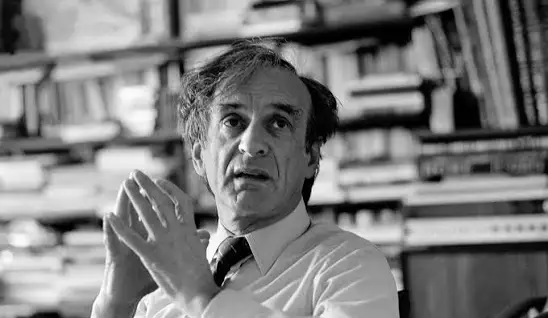
Elie Wiesel, the Holocaust survivor, author and Nobel Peace Prize laureate, at home in New York, March 7, 1985. Wiesel, whose writings including “Night” did as much as anyone to sear the memory of the Holocaust on the world’s conscience, died at home in Manhattan on July 2, 2016. He was 87. (Neal Boenzi/The New York Times)
Eliezer “Elie” Wiesel (September 30, 1928 – July 2, 2016) was a Romanian-born American writer, professor, political activist, Nobel laureate, and Holocaust survivor. He authored 57 books, written mostly in French and English, including Night, a work based on his experiences as a Jewish prisoner in the Auschwitz and Buchenwald concentration camps. Wikipedia
Can Russia disconnect from the World Wide Web? • FRANCE 24 English
Video by:Julia SiegerFollow
In the wake of Russia’s presidential election, we take a look at Moscow’s efforts to disconnect from the global internet. The Kremlin regularly expresses concerns about its dependence on the World Wide Web. In the past few years, Moscow has undertaken initiatives aimed at creating its own independent internet infrastructures. The goal is to increase government control over the flow of information accessible to Russians and strengthen digital sovereignty. FRANCE 24’s Julia Sieger tells us more.
