Bully Update: Putin’s Enemies of Choice

Timothy Snyder/Substack
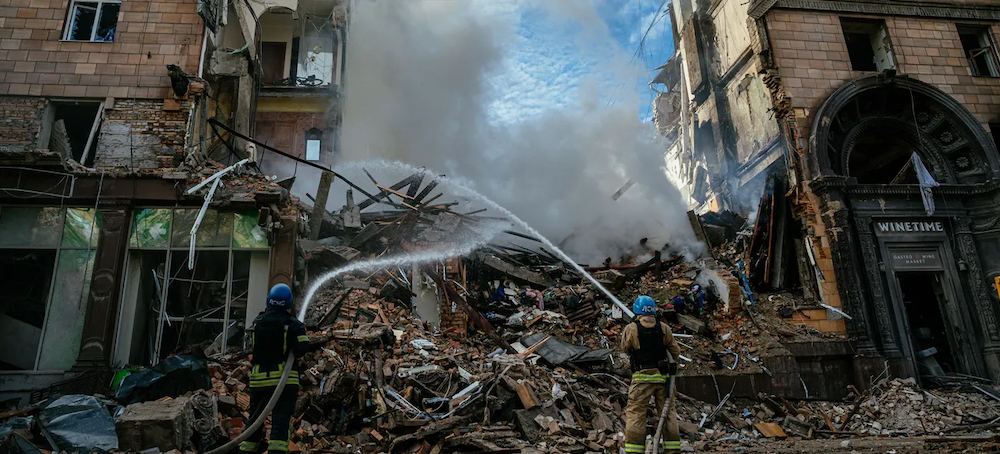
Putin’s Enemies of ChoiceThe aftermath of a Russian missile attack in the Ukrainian city of Zaporizhzhia. (photo: Patrick Colson-Price/USA Today)

26 march 24 (RSN.org)

ALSO SEE: Timothy Snyder: Thinking About (Substack)

This past Friday, 22 March, a horrifying terrorist attack took place in Crocus City Hall in the outskirts of Moscow. Islamic State plausibly claimed responsibility.

Earlier that day, Russian authorities had designated international LGBT organizations as “terrorist.” Also earlier that day, Russia had carried out massive terror attacks on Ukrainian cities. Those actions reveal the enemies Putin has chosen. As the attack on Crocus City Hall demonstrated, his choices have nothing to do with actual threats facing Russians.

Russia and the Islamic State have long been engaged in conflict. Russia has been bombing Syria since 2015. Russia and the Islamic State compete for territory and resources in Africa. Islamic State attacked the Russian embassy in Kabul. This is the relevant context for the attack outside Moscow. The horror at Crocus City Hall obviously has nothing to do with gays or Ukrainians or any other of Putin’s enemies of choice.

Putin had publicly dismissed the real threat. The United States had warned Russia of a coming attack by Islamic State. The United States operates under a “duty to warn,” which means that summaries of intelligence about coming terrorist attacks are passed on, even to states considered hostile, including (to take recent examples) Iran and Russia. Putin chose to mock the United States in public three days before the attack.

People reasonably ask how a terror attack could succeed in Russia, which is a police state. Regimes like Russia’s devote their energy to defining and combating fake threats. When a real threat emerges, the fake threats must be emphasized. Predictably (and as predicted), Putin sought to blame Ukraine for Crocus City Hall.

What if Russians realize that Putin’s designations of threats are self-serving and dangerous? What if they understand that there are real threats to Russians ignored by Putin? He has devoted the security apparatus to the project to destroying the Ukrainian nation and state. What if Putin’s obsession with Ukraine has only made life worse for Russians, including by opening he way to actors who are in fact threats to Russian life, such as Islamic State?

These are the questions Putin must head off. It is not easy, however, to blame Ukraine for Islamic State terrorism. Putin’s first media appearance, nearly a day after the attack, was far from convincing. The specifics he offered were nonsensical. He claimed that the suspects in the terrorist act were heading for an open “window” on the Russian-Ukrainian border.

The term “window” is KGB jargon for a spot where the border has been cleared for a covert crossing. That the leader of the Russian Federation uses this term in a public address is a reminder of his own career inside the KGB. Yet Putin had obviously not thought this claim through, since a “window” must involve a clear space on both sides of the border. For escaping terrorists, it would be the Russian side that opened the window. By speaking of a “window” Putin indicated that the terrorists had Russian confederates preparing their exit, which he presumably did not mean. It seems that Putin was hastily making things up.

Setting aside the “window” business, though, the whole idea that escaping terrorists would head for Ukraine is daft. Russia has 20,000 miles of border. The Russian-Ukrainian part of it is covered with Russian soldiers and security forces. On the Ukrainian side it is heavily mined. It is a site of active combat. It is the last place an escaping terrorist would choose.

And there is no evidence that this is what happened. Russia claims that it has apprehended suspects in Bryansk, and claimed that this means that they were headed for Ukraine. (Western media have unfortunately repeated this part of the claim.) Regardless of whether anything about these claims is true, Bryansk would suggest flight in the direction of Belarus. Indeed, the first version of the story involved Belarus, before someone had a “better” idea.

In moments of stress, Russian propaganda tries out various ways to spin the story in the direction preferred by the Kremlin. The reputed suspects are being tortured, presumably with the goal of “finding” some connection to Ukraine. The Kremlin has instructed Russian media to emphasize any possible Ukrainian elements in the story. Russian television propaganda published a fake video implicating a Ukrainian official. The idea is to release a junk into the media, including the international media, and to see if anything works.

Amidst the flotsam and jetsam are those who spread Russian propaganda abroad, who try out versions more extreme than Putin’s. Putin does not directly deny that Islamic State was the perpetrator — he simply wants to direct attention towards Ukraine. But actors outside Russia can simply claim that Ukraine was at fault. Such actors push the discussion further than the Kremlin, and thereby allow Russia to test what might work abroad.

As a result, we have a bizarre discussion that leads to a harmful place. Islamic State claims responsibility for Crocus City Hall. The Islamic State publishes dreadful video footage. Russia cannot directly deny this but seeks help anyway in somehow pushing Ukraine into the picture. Those providing that help open a “debate” by denying that Islamic State was involved and making far more direct claims about Ukraine than the Kremlin does. (This brazen lying leads others to share of Islamic State perpetration video (don’t share it; don’t watch it). So the senseless “debate” helps Islamic State, since the reason it publishes perpetration videos is to recruit future killers.)

Meanwhile, Russia’s senseless war of aggression against Ukraine continues. In its occupied zones, Russia continues to kidnap Ukrainian children for assimilation and continues to torture Ukrainians and place them in concentration camps. It continues to send glider bombs, drones, cruise missiles and rockets at Ukrainian towns and cities.

On the same day as the attack at Crocus City Hall, Russia carried out its single largest attack to date on the Ukrainian energy grid, leaving more than a million people without power. Among other things it fired eight cruise missilesat the largest Ukrainian dam. Russia attacked the city of Zaporizhzhia (the consequences are in the four photos) and other cities throughout Ukraine.

On Friday Russia fired, in all, eighty-eight missiles and sixty-three explosive drones into Ukraine. And that represents just a single day (if an unusually bad one) of a Russian war of terror in Ukraine that has gone on for more than two years.

Putin is responsible for his mistakes inside Russia. And he is at fault for the war in Ukraine. He is trying to turn two wrongs into a right: into his own right to define reality however he likes, which means his right to kill whomever he chooses.
Bully Update: Netanyahu Put Israel on a Collision Course With America. The UN Cease-Fire Vote Is the Dire Result

Alon Pinkas/Haaretz

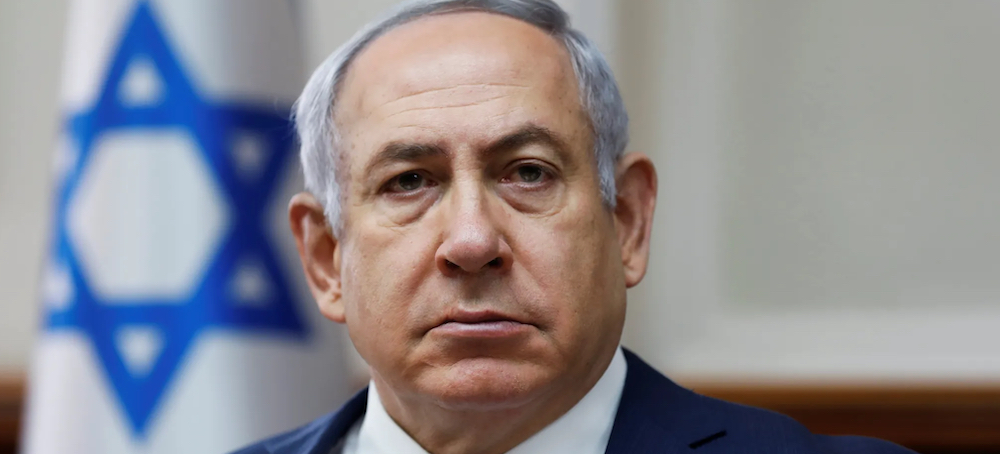
Netanyahu Put Israel on a Collision Course With America. The UN Cease-Fire Vote Is the Dire ResultIsraeli Prime Minister Benjamin Netanyahu. (photo: Brookings)

26 march 24 (RSN.org)

We have repeatedly written since last November that this would happen, and the U.S. warned Israel incessantly it was in the cards. Israel ignored the threats and is now disingenuously pretending to be surprised and shocked

Monday’s UN Security Council resolution “demanding” an immediate cease-fire – adopted by 14 members, with the United States abstaining – puts Israel on a collision course with both the UNSC and, particularly, the Americans.

No one should be surprised by this. We have repeatedly written since last November that this would happen, and the U.S. warned Israel incessantly it was in the cards. Israel ignored the threats and is now disingenuously pretending to be surprised and shocked.

When you ignore U.S. requests, dismiss a president’s advice, inundate the secretary of state with endless spin, casually deride American plans, exhibit defiance and intransigence by refusing to present a credible and coherent vision for postwar Gaza, and actively pursue an open confrontation with the administration – there’s a price to pay.

Alongside his unwavering and unconditional support, President Joe Biden warned Israel that there are also consequences. Vice President Kamala Harris followed suit, as did Secretary of State Antony Blinken on numerous occasions since October 7.

Most recently, Senate Majority Leader Sen. Chuck Schumer publicly warned Israel of the ramifications of Prime Minister Benjamin Netanyahu’s patterns of behavior and imprudent policies.

Seriously engaging the U.S. on any of the above issues, without necessarily agreeing to everything, would have prevented the current deep (and deepening) rift. However, Mr. Netanyahu deliberately preferred a showdown with the world and the United States. He managed to turn a just war and an imperative, justifiably harsh retaliation into world condemnation.

The U.S.’ decision to abstain, refraining from vetoing a cease-fire vote for the first time since October 7, puts substantial added political pressure on Israel and increases its already dire state of isolation in two arenas: the Security Council itself, and relations with the United States.

In terms of the Security Council, Israel will conveniently tell itself that the resolution is not a big deal, there will be no sanctions, the sun will shine today and, besides, the UN was always and remains anti-Israel.

Perhaps. But that’s not the point. A Security Council resolution binds all UN members. Furthermore, it requires that council member-states assist in the implementation of any adopted resolution. That doesn’t mean sanctions, but it is a very unpleasant place for any country – let alone a democracy, not to mention a U.S. ally – to be in.

The more significant arena is U.S.-Israeli relations. Their deterioration under Mr. Netanyahu has been written about extensively and profusely over the past year, but the Security Council resolution is a new low.

Most recently, Blinken warned Israel of an impending isolation that it is living in defiant and unwise denial of. “The Israelis seemed oblivious to the fact that they are facing major, possibly generational damage to their reputation not just in the region but elsewhere in the world. … We are concerned that the Israelis are missing the forest for the trees and are making a major strategic error in writing off their reputation damage,” wrote Assistant Secretary of State Bill Russo, the official overseeing global public affairs in the State Department, in a memo leaked to NPR.

For the past four months, the United States has negatively revised its assessment of Israel under Netanyahu: He does not behave as an ally. He has accrued a debilitating credibility deficit over the years on a multitude of issues and behavioral patterns. He failed to come up with a plan for postwar Gaza – and he is seriously suspected of prolonging the war for his own political survival.

His ongoing recalcitrance finally exhausted America’s patience.

Is AI More Creative Than Humans?

A new study answers the question but raises a few of its own.

Updated March 20, 2024 |  Reviewed by Ray Parker (psychologytoday.com)

KEY POINTS

  • A new study compared human and AI performance on various creative tasks.
  • It found AI excelled in originality and elaboration, sparking debate about the “soul” of AI creativity.
  • The study used objective scoring to evaluate creativity, avoiding human rating biases.
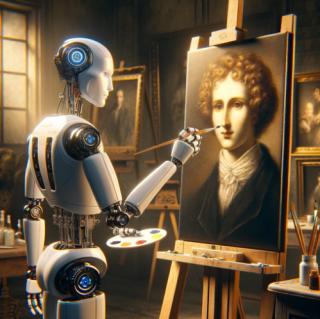
Shutterstock/AIGenerated

Source: Shutterstock/AIGenerated

Sometimes, it feels like the battle lines between artificial intelligence (AI) and humanity are drawn—a computational comparison that focuses on speed and accuracy. However, the domain of creativity provides a more complex basis for analysis and is often “the last holdout” for the uniqueness that defines humanity.

However, in the quest to unravel the creative potential of AI, particularly through the lens of large language models (LLMs), a simple question frames the discussion: Is AI more creative than humans? A new study puts man against machine to ask this simple question and reveal insights that might cut to the core of our very humanity.

Defining a Framework of Creativity

At the heart of this exploration are four distinct tasks, each crafted to probe various facets of creative thought:

Art: DALL-E/OpenAI

Source: Art: DALL-E/OpenAI

  • The Alternative Uses Task. Challenges participants to envision novel uses for everyday items, pushing the boundaries of conventional thinking.
  • The Consequences Task. Explores the ability to foresee the ripple effects of hypothetical scenarios, stretching the imagination to its limits.
  • The Divergent Associations Task. Tests the capacity to generate a list of unrelated nouns, showcasing the breadth of conceptual thinking.
  • The Visual Combinations Task. Engages participants in merging unrelated images to weave new, cohesive narratives, highlighting the ability to synthesize and create harmony from diversity.

article continues after advertisement

Setting an Even Playing Field

The study sought a balanced comparison between human creativity and GPT-4’s capabilities. With 151 human participants matched against 151 instances of GPT-4 responses, the evaluation focused on the quality, originality, and elaboration of ideas, transcending mere quantitative measures.

For this analysis, traditional human ratings, commonly used to evaluate divergent thinking tasks, were not employed for scoring. Instead, the study utilized the open creativity scoring (OCS) tool to automate the scoring of semantic distance, thus capturing the originality of ideas objectively by assigning scores based on the remoteness (uniqueness) of responses.

This method circumvents potential human-centered issues such as fatigue, biases, and the cost of time, which could influence the scoring process. The automated scoring approach has been found to correlate robustly with human ratings, suggesting that it effectively captures the essence of creativity without the need for a separate group of humans to evaluate the responses of both the human and AI arms of the study.​

AI Offers Bold Originality and Elaboration

The results of this comparative study offer compelling insights into the creative prowess of GPT-4. Notably, an independent sample t-test revealed no significant differences in total fluency between humans and GPT-4, indicating a level playing field in terms of the quantity of generated ideas.

However, the crux of creativity lies in originality and elaboration. A detailed analysis of variance for originality, based on semantic distance scores, uncovered significant main effects, favoring GPT-4 regardless of the prompt, with notable interaction effects between the group and prompt, highlighting GPT-4’s superior performance in originality across different scenarios.

Furthermore, when comparing elaboration scores, which quantify the detail within each valid response, GPT-4’s responses were significantly more elaborate than those of human participants. For instance, in response to using a fork, where a human might simply suggest “as a hair comb,” GPT-4’s elaboration would encompass a more detailed narrative, illustrating its ability to weave richer, more complex ideas from a single prompt.

Is AI Creativity Contrived?

The reliance on automated scoring systems like the OCS tool in evaluating the creative outputs of AI and humans raises questions about the nature of creativity itself. While these systems can objectively assess the originality and elaboration of responses based on semantic distance, they may overlook the intrinsic, intangible qualities that human creativity embodies.

article continues after advertisement

Creativity, in its purest form, is often seen as an expression of something uniquely human—some may even say the soul. It’s this manifestation of the innermost thoughts and feelings that transcend mere linguistic or conceptual novelty. The concern that AI-generated ideas, despite their originality or complexity, might lack the depth, intentionality, and emotional resonance that human creativity inherently possesses is poignant.

It touches upon the broader debate of whether creativity can be genuinely replicated or remains an inherently human trait, deeply intertwined with consciousness and subjective experience.

In this context, the study’s approach, while innovative and rigorous in its methodology, may inadvertently overlook these qualitative aspects of creativity, leading to a perception that AI’s creative endeavors, no matter how sophisticated, are somewhat contrived, lacking the “soul” that human artists infuse into their creations.

The Future of Collaborative Creativity

The findings of this study, particularly the detailed results supporting GPT-4’s superior originality and elaboration, prompt a reevaluation of the nature of creativity. It suggests a future in which AI’s creative potential not only rivals but in certain aspects surpasses human creativity, opening up new horizons for collaborative innovation. The question “Is AI more creative than humans?” thus evolves into a dialogue about the synergistic possibilities between human ingenuity and artificial intelligence, heralding a new era of creative exploration in which the fusion of human and AI creativity redefines the boundaries of innovation and artistic expression.

About the Author

John Nosta

John Nosta is an innovation theorist and founder of NostaLab.

Online:

 Nostalab Official WebsiteLinkedInTwitter

Tarot Card for March 27: The Four of Swords

The Four of Swords

The Lord of Truce marks a period where we are able to rest and recover, after a difficult time in our lives. It will appear after trauma – the breakdown of a relationship; a troublesome and worrying time financially; an operation or major illness.There will always have been conflict and stress beforehand, this card marks the kind of breathing space we often need in order to clarify our view of the situation, to gather our strength and to decide how best to move forward. When this card appears in a reading, the first thing it tells us is that it is time to rest, time to stop worrying about the things that have happened.However, it must be noted that Truce is not peace. This is a respite – a down time in which we can catch our breath, ease our tension and relax for a brief time. But once that has been done, we need to recognise that there is still more to be done – the battle isn’t over yet. So when acting under the influence of this card, bear in mind that first you must take it easy, but then you must begin to plan your next step.If we fail to do that, then when the effect of the Lord of Truce passes away, we shall be left high and dry, with no route planned for our future. And in that case the turmoil which preceded this card may well manifest again.Sometimes, when the card comes up with a ‘person’ card, it indicates that a rift can begin to be mended between two people who have been at loggerheads previously. In this case, again, it is important to stress that this card does not indicate peace – as before, much more work will need to be done before the damage is entirely healed. We need to be on our guard, too, for other people running personal agendas which may mean that the ‘truce’ is more convenient than sincere.

Morning Meditation

Haizhan Zheng

With every breath, I breathe in God’s love

Endless love and power are available to me, whenever I remember who I am. I am a child of the universe, a thought in the Mind of God, forever surrounded and sustained by the substance of divine mind.

I open my mind today to the recognition of my true nature and the nature of the universe. I open my eyes today to the love that is all around me. With every breath, I breathe in the holy substance that infuses all things.

On this day, I remember and will not forget that love is all around me. I acknowledge love’s presence in myself and others, and breathe in with every breath all the power it bestows.

With every breath, I breathe in God’s love

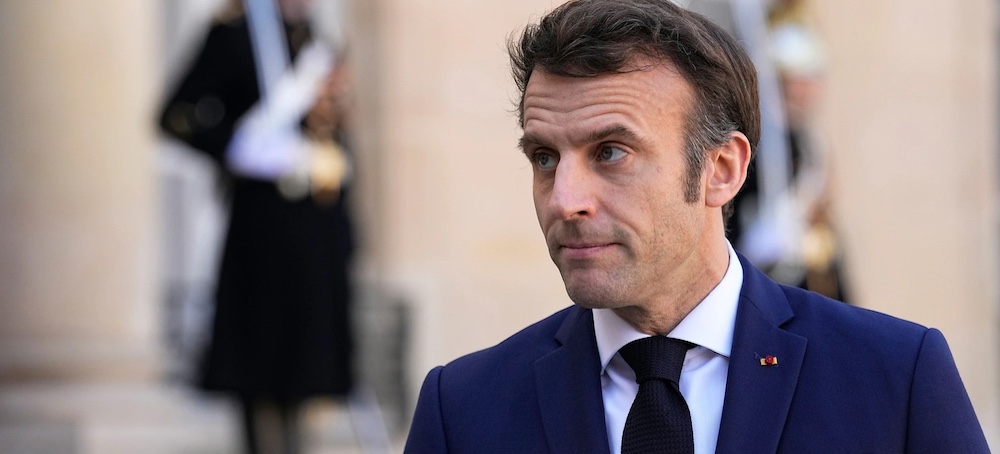
Macron: Believing Russia Will Stop at Donbas, Crimea Is a Mistake

Orysia Hrudka/Euromaidan Press

Macron: Believing Russia Will Stop at Donbas, Crimea Is a MistakeFrench President Emmanuel Macron. (photo: Michel Euler/AP)


25 march 24 (RSN.org)

French President Emmanuel Macron cautioned against underestimating Russia’s intentions.

In a statement following the conclusion of a European Union summit in Brussels, French President Emmanuel Macron warned against underestimating Russia’s ambitions in the ongoing war.

Speaking to reporters, Macron emphasized that it would be a misjudgment to assume that Russia’s aggressive actions would be limited to the Donbas and Crimea.

He also highlighted that the Kremlin’s portrayal of the situation as a war due to “Western intervention on Ukraine’s side” raises questions about the broader military goals of Russia. “By using this term, one is also even opening up uncertainty about Russia’s military objectives,” Macron said.

Macron’s assertion that it would be a mistake to think Russia plans to halt its aggression in the Donbas and Crimea regions aligns with his broader stance on the necessity for Europe to prepare for war to maintain peace. In an interview earlier this month, Macron emphasized that Europe’s security is directly linked to the situation in Ukraine and that the continent must not show weakness. He reiterated the importance of keeping the option of sending Western troops open. This marks Macron’s shift from a more diplomatic approach to a firmer stance on military readiness.

How business leaders can renew democracy

Daniella Ballou-Aares | TED Democracy

• November 2023

How much should business leaders speak out about threats to democracy? It’s a question many corporations are wrestling with these days. Business and democracy leader Daniella Ballou-Aares shows why companies have both the ability and the responsibility to engage in protecting elections and the rule of law — and why their bottom lines may depend on doing so.

About the speaker

Daniella Ballou-Aares

Business and democracy leaderSee speaker profile

Daniella Ballou-Aares helps business leaders use their influence to move democracy forward.

Morning Meditation

William Reagan

What I suffered through, I have learned from.

According to ancient Asian philosophy, life is not a straight line but a spiral. Every life lesson that has ever been presented to me (which means everything I have ever been through) will come back again, in some form, until I learn it. And the stakes each time will be higher. Whatever I’ve learned will bear greater fruit. Whatever I’ve failed to learn will bear harsher consequences.

Whatever didn’t work in my life before this point was a reflection of my failure to integrate the different parts of myself. Where I didn’t yet accept myself, I attracted a lack of acceptance in others. Where I hadn’t yet dealt with my shadows, I manifest shadowy situations. Broken parts of me encountered broken parts of others. But now I know! That was then and this is now.

What I suffered through, I learned from. What I’ve atoned for, became a path to self-improvement. All that I have lived through has taught me what it means to live at all.

Dear God,
May I learn from what I’ve suffered through,
that my suffering might end.
Amen

What I suffered through, I have learned from.

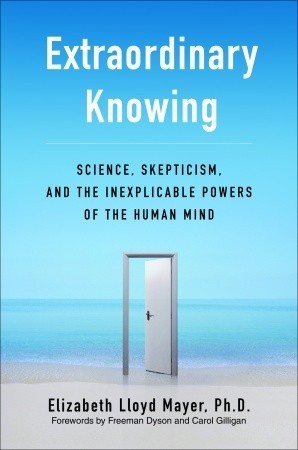
Book: “Extraordinary Knowing: Science, Skepticism, and the Inexplicable Powers of the Human Mind”

Extraordinary Knowing: Science, Skepticism, and the Inexplicable Powers of the Human Mind

Elizabeth Lloyd Mayer

In 1991, when her daughter’s rare, hand-carved harp was stolen, Lisby Mayer’s familiar world of science and rational thinking turned upside down. After the police failed to turn up any leads, a friend suggested she call a dowser—a man who specialized in finding lost objects. With nothing to lose—and almost as a joke—Dr. Mayer agreed. Within two days, and without leaving his Arkansas home, the dowser located the exact California street coordinates where the harp was found.

Deeply shaken, yet driven to understand what had happened, Mayer began the fourteen-year journey of discovery that she recounts in this mind-opening, brilliantly readable book. Her first surprise: the dozens of colleagues who’d been keeping similar experiences secret for years, fearful of being labeled credulous or crazy.

Extraordinary Knowing is an attempt to break through the silence imposed by fear and to explore what science has to say about these and countless other “inexplicable” phenomena. From Sigmund Freud’s writings on telepathy to secret CIA experiments on remote viewing, from leading-edge neuroscience to the strange world of quantum physics, Dr. Mayer reveals a wealth of credible and fascinating research into the realm where the mind seems to trump the laws of nature.

She does not ask us to believe. Rather she brings us a book of profound intrigue and optimism, with far-reaching implications not just for scientific inquiry but also for the ways we go about living in the world.


About the author

Profile Image for Elizabeth Lloyd Mayer.

Elizabeth Lloyd Mayer

Elizabeth Lloyd Mayer, Ph.D., was an internationally known psychoanalyst, researcher, and clinician, the author of groundbreaking papers on female development, the nature of science, and intuition, and a contributor to Consciousness and Healing , published by the Institute of Noetic Sciences. In addition to her private practice, she was associate clinical professor of psychology at the University of California, Berkeley, and also taught at UC Medical Center, San Francisco. She died just after completing Extraordinary Knowing .

(Goodreads.com)

Psychiatry and the Soul with Judy Tsafrir

New Thinking Allowed with Jeffrey Mishlove Mar 24, 2024 Judy Suzanne Reis Tsafrir, MD, is a holistic healer with a private psychiatry and psychoanalysis practice in Newton, Massachusetts. She is a board-certified adult and child psychiatrist and psychoanalyst, is on the faculty of Harvard Medical School and the Boston Psychoanalytic Institute, and teaches and supervises at the Cambridge Health Alliance. She is author of Sacred Psychiatry: Bridging the Personal and Transpersonal to Transform Health and Consciousness. Here she describes her transformation from a conventional psychoanalyst to a multi-modality psychiatrist who helps her patients get in touch with a larger, healing dimension. She also focuses on lifestyle changes and on chronic diseases that often elude other physicians. 00:00 Introduction 05:37 Chiron the wounded healer 11:34 Astrology: the realm of mythos 21:56 The white lions of Timbavati 29:13 Chronic diseases 39:51 Ketamine assisted psychotherapy 46:21 Psychedelics 50:31 John Mack and UFO Contact 59:46 Conclusion Edited subtitles for this video are available in English, French, German, Spanish, Italian, Portuguese, Russian, and Swedish. New Thinking Allowed host, Jeffrey Mishlove, PhD, is author of The Roots of Consciousness, Psi Development Systems, and The PK Man. Between 1986 and 2002 he hosted and co-produced the original Thinking Allowed public television series. He is the recipient of the only doctoral diploma in “parapsychology” ever awarded by an accredited university (University of California, Berkeley, 1980). He is also the Grand Prize winner of the 2021 Bigelow Institute essay competition regarding the best evidence for survival of human consciousness after permanent bodily death. (Recorded on March 8, 2024)