Yesterday, I found myself reflecting on how much I’ve changed in these past years. It’s like looking back at an old photo and realizing you’re not the same person smiling back at the camera.
If you had told me four years ago that I’d leave the city I’ve lived in my whole life, buy a house in the countryside, and work online instead of in a normal office job, I’d have told you that you were out of your mind. Or, if you had told me my family was filled with dysfunctional patterns, and I, too, was carrying those patterns in my relationships… I’d have flat-out laughed at you.
It’s funny how life unfolds, revealing layers we never knew existed.
Like most people, I was programmed to follow a script — the conventional narrative that society deems as the “right” path. I was programmed to have a certain job, follow a certain timeline, and have a certain lifestyle. It was as if everything was already planned and defined for me, and all I had to do was play my part.
I can’t pinpoint the exact moment when the shift began, but somewhere along the line, my mind opened to the idea that maybe, just maybe, there was another way to live.
Maybe, just maybe, the script I was handed was merely a suggestion, and I held the pen to write my own story.
I’m incredibly grateful for all the changes I’ve experienced. However, something I’m still learning is how to navigate the world once we realize how dysfunctional everything is.
I mean, how do we keep moving forward when the curtain has been pulled back, revealing the messy truth behind the polished performance we once thought was reality?
When you embark on the journey of inner work, peeling back the layers of your psyche, you begin to uncover a complex array of elements that have remained hidden.
Within yourself, you find the scars of past wounds, the remnants of coping mechanisms developed over time, the echoes of fears that have shaped your actions, and the insecurities that have silently influenced your choices. You begin to connect the dots between events and emotions, understanding why certain triggers evoke specific responses and recognizing the roots of your relational patterns.
Finally, everything makes sense. You understand how your past has shaped you, and why you are the way you are.
Then, as the layers of your own psyche become clearer, you begin to see those same layers in others. It’s like gaining a new set of lenses through which you view the world — lenses that reveal the intricacies and complexities that lie beneath the surface of every individual.
You observe the friend who habitually people-pleases, unable to utter the word “no”. You recognize their internal struggle, and you see how desperate they are for acceptance and validation.
You also observe the family member who reacts with anger every time you attempt to set healthy boundaries. You notice the emotional turbulence beneath the surface — suddenly, it’s clear that their inability to deal with your assertiveness stems from their inability to be honest with themselves.
As time goes by, you realize the dance of fears, wounds, and insecurities is not exclusive to your own story; it’s a universal ballet performed by every person you encounter.
This realization doesn’t stop at the personal level — it extends to societal dynamics.
The more you notice how people act together, follow the same rules, and share the same worries and fears, the more you see something’s not quite right. It’s like we’re all reading from the same script, even if it doesn’t make much sense.
As this awareness sinks in, you start questioning the so-called “normal” way of doing things.
Do I really have to live this way? Do I really have to keep friendships that drain me, or work a job that leaves me exhausted? Do I really need to drink alcohol to socialize? Do I really need to have an enmeshed relationship with my family, ignoring my well-being and personal boundaries?
Then, you go deeper.
Is there any possibility that I can choose a different path? Is there any possibility to cultivate relationships that uplift me and work in a job that aligns with my well-being? Is there any possibility to redefine my family dynamics and set healthy boundaries?
In asking these questions, a door opens to the prospect of crafting a life that is more authentic, fulfilling, and in harmony with your true self. You realize the possibility of choosing a different path isn’t just a theoretical concept… It’s a tangible, inviting reality waiting to be explored.
As you make those changes, you stop playing your part in the dysfunction. Instead, you start redefining the narrative of your life, steering it in a direction that resonates with your values and authenticity.
However, when you make a conscious choice to break the dysfunction, many people around you won’t understand the shifts you’re making. Some may even criticize you or suggest there’s something wrong with you. When that happens, here’s what I want you to know: their responses don’t speak to the validity of your choices— they’re a reflection of their own insecurities and unmet needs.
The only reason they react the way they do is because the changes you’re implementing act as a mirror, reflecting back the dysfunction they are entrenched in. The dysfunction that used to be entrenched in you too.
We all need validation. In their case, the way they receive that validation is by seeing others live in dysfunctional patterns. Your decision to veer off this path doesn’t validate them— it challenges them. It reminds them of the choices they could make but haven’t. It reminds them of the discomfort they’re not ready to confront within themselves.
So, don’t take it personally. Instead, remind yourself that your choices are about your journey, not theirs.
When we evolve, it’s tempting to believe we can inspire others, share our journey with them, and help them see the new reality in front of us.
However, more often than not, that’s not the case.
While change and growth are accessible to anyone, some people are simply not ready to embrace the unfamiliar terrain of transformation. And that’s okay. Each person has their own pace, and their own path to navigate.
The best we can do is continue our journey authentically, hoping that our evolution might spark curiosity and courage in those around us, planting seeds of change that may bloom in their own time.
An excerpt from my forthcoming book, Left Wing, Right Wing, People, and Power.
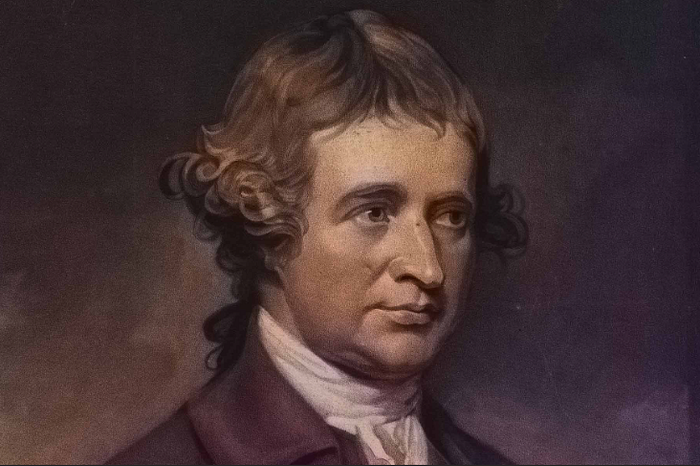
Burke, Edmund Burke, stirred but not shaken
The earliest uses of “Left” and “Right” in politics did not reflect political philosophies or ideologies. Instead, they indicated support for or opposition to a particular government. “Left” and “Right” as relative terms came from their first uses in the days of the French Revolution. In 1789 in the French Legislative Assembly, supporters of the king chose to group themselves sitting to the right of the assembly president, and opponents of the king sat opposite them on the left. The French newspapers of the time used the terms “the Left” and “the Right” to describe the opposing sides, and the usage spread throughout Europe.
Political groups in the 1790s used “Left” and “Right” to express common ground with one or the other side during the French Revolution. Before long, all political movements opposed to a sitting government were called “the Left,” with “the Right” referring to those who supported that government.
The French Legislative Assembly members who, in 1791, sat to the right of the assembly president were united by a common cause to maintain the position of the king, Louis XVI. On the one hand, their politics were a continuation of an old order that had been in place for centuries. On the other hand, their politics were a response to new events unfolding in their nation. Out of a blend of old ideas and new realities was crafted the philosophy of conservatism, the precursor to the various movements today that can be classified as right-wing.
There are three main trajectories of right-wing thought — conservatism, reactionism, and libertarianism. They are at times starkly different, but they share a fundamental belief on how power should be structured. I will discuss reactionism and libertarianism later, but first, I will address the philosophy that preceded the other two, conservatism.
The Father of Conservatism
Edmund Burke (1729–1797)is widely regarded as the father of conservative thought because of his philosophical attack on the French Revolution. He was English, but he sympathized with the French right-wingers and their cause. Burke was no absolutist, though. As a member of Parliament, he supported laws to curtail the power of the English king. His concerns were to conserve what he saw as the proper political power structure and the validity of the status and hierarchy of the aristocracy.
In Reflections on the Revolution in France (1790), Burke condemned the French revolutionary attempts to tear down the old traditional power structure and replace it with a new power structure based on rationality. Burke responded that no single generation has the right to destroy what has been built by many earlier generations. He advocated a balanced view that rulers should be responsive to the views and needs of its subjects and to the reality of social change, but that there must be a connection to tradition. The proper way to address change is to apply the values embodied in tradition to new circumstances. A nation’s traditions, Burke argued, are the repository of civilization, the source of ethical life, and the arbiter even of reason itself.
Burke’s appeal was not to, as Hobbes had appealed, the power of a sovereign, but to the broader power structure of the aristocracy. Burke’s claim was that the aristocratic institutional system of prescriptive rights and customs, had grown out of a process cultivated by learned men of the past. We should thus, with devotion akin to religion, revere this product of generations of collective intelligence and adapt it to present circumstances. We should, he insisted, presume in favor of any settled scheme of government against any untried project, because we have long existed and flourished within traditional methods and institutions.
The revolutionaries’ demand for a new power structure horrified Burke, especially in the violent manner in which they were trying to achieve it. Burke believed in citizens’ political involvement, but in the context of a body politic that delineates social ranks. A social hierarchy, he thought, was necessary for the wiser to be able to enlighten the weaker and less knowledgeable. He saw democracy as a dangerous abstract rule of mere numbers. A nation and its decision-making must be guided by the responsible rule of a hereditary aristocracy. Institutions can change and grow, but only in response to tangible social needs, never because of novel ideas or desires, and change should only happen gradually within the spirit of the nation’s tradition.
The Burkean Worldview
Burke’s rebuttal to the revolutionaries’ demands for changes in the power structure set the philosophical tone for the right-wing worldview regarding change. Central to the conservative worldview is the preference for tradition. Conservatism includes, if not requires, a resistance to principles outside of and especially contrary to established traditions and cultural realities.
The conservative worldview motivates people to political actions that seek to conserve that are viewed as tried and tested traditions. It rests on what Burke called the “latent wisdom” of prejudice — customary judgments which have accumulated over the generations. In this context, prejudice is not bigotry, though it may degenerate into it. It is a pre-judgment — the attitude that the truth has already been found, the answer has already been given, there is no need to discuss it further.
Also inherent to the worldview of Burkean conservatism is the notion that communities are held together not by independent thinking and acting but by an acceptance of membership and duty. Unity comes from one feeling that one has a place in the community even though it be but a lowly one. Being a member of a community, and being a citizen of a nation, obligates one to carry the moral burdens that one’s status traditionally imposes.
There is in Burkean conservatism a form of quietism, of knowing one’s place and accepting it. According to John Gray,
conservatism’s fundamental insight is that persons’ identities cannot be matters of choice, but are conferred on them by their unchosen histories, so that what is most essential about them is…what is most accidental. The conservative vision is that people will come to value the privileges of choice…when they see how much in their lives must always remain unchosen.”[1]
This insight reflected the traditional feudal power structure of sovereign, nobles, and serfs. It is certainly the case that one’s freedom of choice is limited by life circumstances, but conservatism gave a rational justification for an attitude of resignation to circumstances.
In all fairness, Burke placed the moral burden of accepting one’s unchosen history on the upper class, not just on the lower classes. Clearly, the aristocracy was more privileged than the working classes, but with that privilege came the obligation to use one’s position in service of the nation. The good of the nation was what was important, and this was the good that all classes should serve.
Burke stated that rulers needed to take into consideration the interests of the citizenry, but he considered interests as belonging, not to individuals, but to social groups such as the merchant class and the landowner class. The primary social group is the nation itself. An elected representative to government, Burke said, represents not the interests of a geographical area but of the common good of the nation. A representative in Parliament, of which Burke was one, should not be bound to the interests and inclinations of individual constituencies, because “government and legislation are matters of reason and judgment, and not of inclination.”[2]
It could be said that Burke and those who followed his conservative ideas on the social hierarchy are guilty of falling on the wrong side of the is-ought problem. David Hume identified the is-ought problem by separating empirical realities from value judgments. Hume stated that we cannot argue from descriptive statements of what is to prescriptive statements of what ought to be. Our ethical judgments cannot legitimately be derived from observation of how things are in the world.[3]
Contrary to Hume’s admonition, because conservatism places its faith in tradition as received wisdom, it is inclined to accept what is as what ought to be. The Burkean worldview accepts the values embodied in tradition and the need to consent to one’s unchosen history, one’s place in society. In practice, conservatism was and is a rejection of changes to the power structure, appealing to presence of tradition as the ethical verification for the rejection.
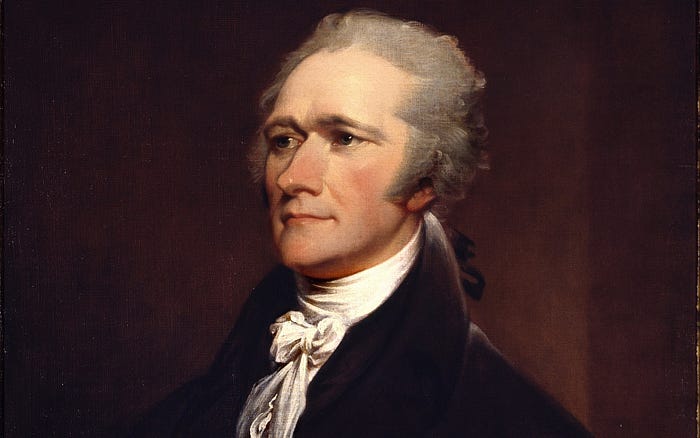
Alexander Hamilton. The real one did not sing.
The Federalists
When the American colonies fought a war seeking succession from Great Britain in the 1770s, Burke largely approved. For Burke, the American revolt was fundamentally different than the later French Revolution, and this speaks to the heart of conservative thinking. Whereas the French revolutionaries wanted to dismantle the old power structure and replace it, the American rebels sought a much less radical restructuring. Burke saw the colonies’ revolt not as a radical innovation but as a restoration of the rights and privileges of the wealthy class in those colonies. He had for the same reason approved of England’s so-called Glorious Revolution of 1688 that had replaced the legitimate sovereign, King James II, with one more agreeable to the interests of the aristocracy.
The Federalists in the newly formed United States were a group of wealthy landowners and merchants who supported the American War of Independence. They were successionists who thought that King George III and the British Parliament had too much power over the colonies, sidelining and ignoring their interests. Most Federalists were anti-monarchists, not just opposed to George III’s method of rule, but against the idea of a political structure of a single sovereign.
After the colonies won the war and gained independence, the Federalists as a political faction advocated for a political structure for the new country in which a federal government united the former colonies under the general sovereignty of a Federal government. States maintained some autonomy but were not sovereign states. Importantly, the new government would not be headed by a hereditary monarch. Equally important, the new government would be representative of the geographical territories of the states, though the representatives would be selected by the upper class. The Federalists were aristocrats in all but name, and wanted to increase the power of their class, not to the “lower” classes.
Leaders of the Federalist faction were Alexander Hamilton, John Jay, and James Madison, who later left the Federalist faction. As political thinkers, they wrote the Federalist Papers, published in 85 volumes in 1787 and 1788. In those publications, they argued for a central government of sufficient strength to safeguard the good of the nation. Its primary topic was a detailed defense of the provisions of the new US Constitution, aiming to persuade voters in the states to ratify the Constitution. A common secondary topic was to warn against the dangers from foreign intervention, dissention between the states, and domestic insurrection. Consistent throughout the Federalist Papers was the conservative idea that power should primarily be held by a central government. As described by John Jay in the “Federalist №2” publication.
Nothing is more certain than the indispensable necessity of government, and it is equally undeniable, that whenever and however it is instituted, the people must cede to it some of their natural rights in order to vest it with requisite powers.[4]
On the one hand, the American experiment of founding a new nation was novel, but on the other hand it was conservative in that its innovations were grounded within a valuing of traditional power structures.
Like Burke, the Federalists favored the wealthy class as more capable of ruling the nation, and thus rejected democracy, widespread suffrage, and open elections. Forming a political party, the Federalists were a dominant force in Congress and advanced a legislative agenda based on their conservative principles. Most notably, they passed the Alien and Sedition Acts in 1798 that restricted freedom of speech and freedom of the press, ostensibly to protect the nation from enemies.
Consistently, the Federalists, as political thinkers and political party, advocated a conservative agenda of a power structure of national over state government, and policies that favored banks, manufacturers, and protectionism of American business. During the Federalist era — the first years of the US nation, 1789 to 1800 — the Federalist faction consciously attempted to establish a new tradition for the new country. Their vision was a social power structure based on conservative principles of tradition and hierarchical power applied to the circumstances of the new nation. It is no surprise that Burke did not object. The Federalist Party fell into the minority after the election of 1800, but their legacy of conservatism remains foundational to the United States to this day.
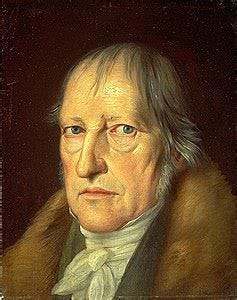
Hegel, what have you done?
The Right Hegelians
The events of the French Revolution were a catalyst for a great deal of philosophical discussion in Europe. There were those who were inspired by the idea of the revolutionaries, and there were those, like Burke, who were repelled by the prospect of the overthrow of existing traditions and institutions.
The most influential continental European philosopher who defended traditional power structures was Georg Wilhelm Friedrich Hegel (1770–1831). Hegel’s philosophy was broad and obscure, easily interpreted in various ways as philosophers took what they liked from Hegel’s ideas. Interpretations of Hegel’s political philosophy fell into two camps — the Left Hegelians and the Right Hegelians, reflecting how they applied Hegel’s insights into a Left or Right view of political power structures. The most famous of the Left Hegelians are Friedrich Engels and Karl Marx. None of the Right Hegelians ever reached prominence, it was more of a general movement that influenced later German political philosophy.
Foundational to Hegel’s political philosophy is his notion of historicism. For Hegel, the history of the world and society is to be understood as the working of an objective, rational order. Hegel observed that we can only understand events after they occur. Human reason and freedom are historical achievements, each generation dependent on earlier ones. Only through studying objective history can we know ourselves and understand how the nation should be structured. For Hegel, rationally realizing one’s role as a cog in the machine of history is the realization of freedom, and the fullest realization of this is understanding one’s role in the political nation-state.
Hegel did not advocate absolutism, as Hobbes had. Instead, Hegel called for a constitutional monarchy — the rule of a sovereign possessing power but bound to the law of the constitution and the interests of the aristocracy. All institutions and individuals are to obey the law of the land, which is Sittlichkeit, the ethical order. For Hegel, Sittlichkeit is “ethical behavior grounded in custom and tradition and developed through habit and imitation in accordance with the objective laws of the community.”[5]
Hegel’s historicist system is clearly a defense of the nation and its existing power structures. In that, it is a right-wing political philosophy. In Hegel’s view, the nation is the result of a rationally ordered system of historical development. The power of the nation is its Sittlichkeit, which provides the parameters of human rights and freedoms. Individuals can think and act freely, but only within the parameters of the ethical order.
Hegel’s insight that freedom exists within the framework of an ethical order is profound and clearly accurate. It’s an insight that has significantly inspired philosophy and the social sciences, in particular, clarifying the need to see the rule of law as the means for people’s both positive and negative freedoms. The right-wing interpretation of Hegel’s philosophy extended the notions of historical inevitability and a hierarchical rational order as the basis of the social power structure. Right Hegelians also emulated Hegel’s strong strain of nationalism and the idea of German society as superior, a bulwark to radicalism.
This chapter is by no means an exhaustive account of right-wing thought. It serves as a background for the assertions and actions made today by adherents to right-wing ideas. Conservatism is in essence a positivist standpoint — what is ought to be — that is skeptical of novel ideas to change existing power structures. Conservatism’s worldview puts trust instead in heritage and the social hierarchy.
[1] John Gray, Gray’s Anatomy: Selected Writings, Penguin. 2010. 159.
[2] Edmund Burke, Speech to the Electors of Bristol, in The Works of the Right Honourable Edmund Burke. 6 vols. London: Henry G. Bohn, 1854–56. 1774. Retrieved from The University of Chicago Press at http://press-pubs.uchicago.edu/founders/documents/v1ch13s7.html,
Philosopher by trade & temperament, professor for 21 years, bringing philosophy out of its ivory tower and into everyday life. https://linktr.ee/dgilesphd
Phil Klay, as both a participant and a writer, has been thinking deeply about war for a long time. In his two acclaimed works of fiction, the book of short stories “Redeployment,” which won a 2014 National Book Award, and the novel “Missionaries” (2020), and in the nonfiction collection “Uncertain Ground: Citizenship in an Age of Endless, Invisible War” (2022), Klay has interrogated, to profound effect and with a deeply humane and moral sensibility, what war does to our hearts and minds, individually and collectively, here and abroad. “I’m interested in the kinds of stories that we tell ourselves about war,” says Klay, who is a 40-year-old veteran of the Iraq war. “I’m interested in the uncomfortable ones, but also in the ones that feel too comfortable and need to be told alongside other types of stories that make it more troubling.”about:blank
War, understandably and probably necessarily in some ways, flattens thinking. But trying to hold on to a morally expansive perspective on war, one in which multiple things could be true at the same time — that the Hamas attack on Oct. 7 was an undeniable atrocity and also that Israel’s military response has been cruelly disproportionate — also seems necessary. Can you talk about that moral tension?There are people who feel like you cannot acknowledge, or shouldn’t acknowledge too much, horrors that are not ideologically convenient. This is why you’ll have the Palestinian National Initiative on CNN, speaking thoughtfully about the suffering of Palestinians but then denying that Hamas targets civilians,1
1 This is a reference to an interview that aired on CNN on Oct. 8. Responding to a question from the network’s Fareed Zakaria, Mustafa Barghouti, a Palestinian legislator and the general secretary of the Palestinian National Initiative political party, said it was “not true” that Hamas targets Israeli civilians, which it clearly has.
which is an insane thing to say. There was a debate in Dissent, the left-wing publication, about whether Israeli casualties should be considered “pregrieved” because their deaths will be used as a justification for whatever actions the I.D.F.2
2 The Israel Defense Forces.
takes. At the same time, if you listen to more neoconservative commentators, they feel aggrieved that the mainstream media is covering the widespread deaths of Palestinian civilians — as if that’s not a valid news story. People urgently want you to feel the moral horror of what is happening, but within a circumscribed circle. I think that is morally blinkered.about:blank
Why? The father searching for his children under rubble that had been his home in Gaza; a parent and child who were bound together and burned to death by Hamas3
3 This is a reference to reporting that appeared in The Media Line on Nov. 6 and has not been verified by The New York Times.
— to think about the horror of that in a serious way means not immediately transmuting it into ideological fodder. You can make strong moral and political arguments, but if in making those you feel like you must obscure or ignore atrocity and horror, that’s corrupt intellectually and morally. It prevents you from actually understanding the complexity of the situation which you’re attempting to speak to and in the long term will make you less effective in whatever you want to do. Out of basic humanist principles, the idea that we must close our eyes to suffering that is not ideologically useful is morally degrading to ourselves. It’s repugnant.about:blank
This is maybe overly cynical, but why do you think that having a less ideologically rigid point of view is more effective in the long term than the opposite? In the long term, if you blinker yourself to reality, it limits your ability to formulate positions that are based in reality and therefore formulate positions that will achieve something lasting and moral. You need to be open to complexity because whatever narrow thing that you want to achieve in the real world will, if it gets put into practice, be put into practice in the real world. Not in the ideologically antiseptic world that you’ve created in your head.about:blank
What might crack open in someone that they’re able to see the suffering of civilian others as just as grave a human concern as the suffering of civilians on the side they support ideologically?In war, there’s a primary experience: a terrified father in Gaza as bombs are falling, unsure of whether he can protect his family; or the Israeli soldier trying to deal with Hamas’s tunnel network. There is a responsibility when you’re thinking these things through to sit with some of those primary experiences to the extent that you can, and think about them without immediately seeking to churn them into something politically useful. Because they mean more than whatever policy cash-out we get from them.about:blank
We’ve entered this awful period, with the Russian invasion of Ukraine and then the conflict between Israel and Hamas, when war is present in many people’s minds in a way that, perhaps, it hasn’t been before. But has this moment changed anything fundamental in how we think about war?I think that Ukraine represents not a good war — because the closer you get to war, the more obvious it is that a phrase like “a good war” has no valid meaning — but rather a necessary war. The clear moral case for Ukraine is about as straightforward a case of a just defense against a vicious aggressor as you could find. There is a certain appeal for that, especially for Americans accustomed to interminable, murky operations where military activities were ranging from trying to strengthen host nations to counterterrorism as well as more straightforward combat. Here is a war with a clear front line with a clear moral imperative. That, I think, has shifted people’s perceptions.about:blank
How? Because Ukraine’s ability to resist Russia is dependent upon support from the broader international community, of which America is the leader. After the fall of Kabul,4
4 The Taliban capture of Afghanistan’s capital in August 2021. It followed President Biden’s announcement, in April of that same year, of plans for a complete withdrawal of U.S. troops. The Trump administration had negotiated a withdrawal agreement with the Taliban in February 2020.
the betrayal of Afghans who relied on us and whom we didn’t do enough to bring to safety, there was much more cynicism toward that American role around the world, especially when it came to warfare. Ukraine offered a counterexample which suggests that America’s ability to provide allies with not just material support but also intelligence and targeting could be put in service for a cause which seems more morally clear. That was a shift. Then, in terms of Israel and Palestine, there’s a circumstance that has some parallels with 9/11. You had this horrific attack that seemed to demand a military response. If you’re an Israeli and you’re looking across the border at Hamas, which has been trying to kill Israeli civilians for a long time, what is new is a sense of they actually do have the capacity, if the circumstances are right, to kill, torture and rape people in large numbers; they have no intention of stopping, and they’re right there across the border, and that is an intolerable situation about which we don’t see a diplomatic situation. At the same time, that political license to take military action is being afforded to a leader for whom there can only be the gravest questions about competence, foresight and the basic morality of his government. America, when it had a similar urgency for action that was translated into policy by a leader5
5 Former President George W. Bush.
not up to the task in terms of foresight, competence or morals — the torture program was the exemplar of the moral corruption that came from that. That is a very dry way of mentioning that I don’t think the Netanyahu government puts enough value on Palestinian life. Which is a problem if you’re waging a campaign that will lead to mass slaughter.about:blank
In one of your essays, you write, “I’m not antiwar.” Are you pro-peace? What does it mean to say you’re not “antiwar”? I think that there are necessary wars and that there are places where U.S. military presence can do good. Where, if there isn’t a U.S. presence, that doesn’t necessarily mean that you have peace in that region — it means another actor moves in. That’s the reality. A straightforward pacifist line is insufficient. To go back to the war on Ukraine: America arming Ukraine with the support of European allies — the result of that was Ukraine being able to hold Russians off from further territorial gains, and that is a way of saying there are a lot less cities totally obliterated. There were a lot less civilian casualties. There were a lot less people who faced the possibility of suffering the things that people in Bucha6
6 A Russian military unit killed dozens of civilians — some found with their hands bound and gunshot wounds to their heads — in Bucha, Ukraine, in March 2022.
suffered. When there’s a force like that, you need to respond to it with force, or, in many cases, the result is horror.about:blank
You’ve written about the need for soldiers to be able to connect their missions to the broader values of their society. How might that apply to American soldiers today, given that there seems to be less and less consensus about our shared values? The debate over what America means is nothing new. To me, the crucial aspect of American identity is a certain embrace of change. I think of American identity as being like Heraclitus’ river that you can never step in twice. It doesn’t mean that there are no riverbanks. It’s not an amorphous pool of water spilling out in all directions. Nevertheless, a certain degree of turbulence is important for growth and allows for necessary changes to come about.about:blank
But my question is more about whether that widespread contention over our values has bearing on how the military might operate. I had the opportunity of asking Donald Trump a question.7
7 Klay asked this question at a September 2016 event that was hosted by Iraq and Afghanistan Veterans of America and held at the U.S.S. Intrepid in New York City. This event was attended by the presidential candidates Donald Trump and Hillary Clinton.
He said he had a plan to defeat ISIS. I said, What is your plan for after you defeat ISIS? He gave an incoherent answer where he said we should have taken the oil. The answer was bad in terms of, is it a coherent policy that makes any sense? No. It was also bad because there was no moral value to it. To say that we should have taken the oil is purely transactional. If you’re talking about military action, where you’re asking young people to sacrifice, possibly, their lives, evacuating that of any moral content other than narrow self-interest is pathetic. So, yeah, there are aspects of the public discussion where instead of articulating a different moral vision for America, it’s an immoral vision of America, and when it comes to the military, it’s not worth dying for.about:blank
I ask this next question knowing it’s clichéd, but that doesn’t diminish my sincere interest in your answer. You didn’t walk away from a belief in God8
8 Klay is Catholic.
— or a just God — after seeing and experiencing the things you saw and experienced during your time in Iraq.9
9 Klay is a veteran of the U.S. Marine Corps. He served as a public affairs officer in the Iraq war and has written about witnessing, among other horrors, children injured in war.
How do you see God in a war zone? How do you not see God in a war zone? The God I believe in was tortured and died in agony on the cross. God is there when I see another human being and see something of infinite worth and value. God is there in this infinite horror and majesty of the world. The idea to me that all of this beauty and all of this horror is nothing but mere matter seems ridiculous, and I can’t disentangle my sense of horror from my sense of the beauty and value of what is being destroyed in war. I spoke with a veteran who talked about how when he came back from Afghanistan, he said: “I stopped believing in God because it made it easier. It meant that there were questions I didn’t have to ask.” I feel that very acutely. You have God’s answer to Job,10
10 Job 38-41, in which God answers Job’s demand for an explanation of his suffering with a series of questions of his own. E.g., “Where were you when I laid the foundation of the Earth?”; “Have you entered into the springs of the sea, Or walked in the recesses of the deep?”
which is the majesty of the world — a world which is complex and beautiful and blood-soaked and infinitely generative. I feel the power of that vision. I’m also deeply convicted by the sense that there’s a God whose ultimate experience was to suffer and die, and yet that’s not the totality of the story: That is a central image in the idea of forgiveness and unearned redemption. It is deeply, deeply important to me. I don’t know what other option there is.about:blank
You mean as far as belief? I don’t know what other option there is than on a personal level to get on one’s knees and beg for forgiveness. We’re so unequal to responding to the challenges of the world that we nevertheless have a responsibility to. I mean, we’ve been talking about the current conflict, and don’t you just feel stupefied by the horror of it?about:blank
It’s completely shattering. It is.about:blank
This interview has been edited and condensed for clarity from two conversations.
A cross-section showing Sagittarius A* at the center of the Milky Way galaxy.
Scientists found that the black hole at the center of our galaxy is spinning so fast its dragging space-time along.
Don’t worry. The distortion won’t affect us.
But it will help scientists learn more about how galaxies form and evolve.
A team of scientists has discovered that the black hole at the center of the Milky Way galaxy is spinning so fast that it’s squishing space-time.
Using NASA’s Chandra X-ray Observatory telescope, a team of physicists calculated the speed at which the supermassive black hole, Sagittarius A*, is spinning, publishing their findings last month in the Monthly Notices of the Royal Astronomical Society.
They found that Sagittarius A* — located 26,000 light-years away from Earth, according to NASA — is spinning so fast that it’s actually dragging surrounding space-time along with it, squishing it down like a football, CNN reported.
“With this spin, Sagittarius A* will be dramatically altering the shape of space-time in its vicinity,” Ruth Daly, the lead author on the study, told CNN. “We’re used to thinking and living in a world where all the spatial dimensions are equivalent — the distance to the ceiling and the distance to the wall and the distance to the floor … they all sort of are linear, it’s not like one is totally squished up compared to the others.”
Advertisement
“But if you have a rapidly rotating black hole, the space-time around it is not symmetric,” Daly said, according to CNN. “The spinning black hole is dragging all of the space-time around with it … it squishes down the space-time, and it sort of looks like a football.”
That may sound alarming, but don’t worry; the black hole is way too far away to affect us here on Earth.
But, Daly said, understanding how black holes function can help scientists learn more about the formation and evolution of galaxies like our own.
Subject : Scheduling and priorities Concluding paragraph of email dated December 1, 2023
“The question is always : What are we [The Prosperos] doing together ? In our case, being together is working within a certain system – and we must always remember that a system that is not open to changes is a closed, dead, system. Our system necessarily involves certain lines of authority, and it’s vital not to get distracted into fantasies of authoritarianism. That is the Zonta flaw.”
ETYMOLOGY: Back-formation from enthusiasm, from Latin enthusiasmus (inspiration), from Greek enthousiasmos, from enthousiazein (to be inspired by God or a god), from theos (god). Earliest documented use: 1827.
New Thinking Allowed with Jeffrey Mishlove • Dec 1, 2023 This video is a special release from the original Thinking Allowed series that ran on public television from 1986 until 2002. It was recorded in about 1988. It will remain public for only one week. “Evaluation phobia” is Dr. Michael Scriven’s term for the fear that individuals and organizations have about carefully examining the logic of their own decisions. Dr. Scriven was a philosopher and multi-disciplinary scholar who has made significant contributions to mathematics, logic, philosophy of science, ethics, education, psychology and parapsychology. He is the author of many books, including Primary Philosophy, Reasoning, and The Logic of Evaluation. His specialty was the very process of thinking itself. (He also served as Jeffrey Mishlove’s doctoral dissertation advisor.) Now you can watch all of the programs from the original Thinking Allowed Video Collection, hosted by Jeffrey Mishlove. Subscribe to the new Streaming Channel (https://thinkingallowed.vhx.tv/) and watch more than 350 programs now, with more, previously unreleased titles added weekly. Free month of the classic Thinking Allowed streaming channel for New Thinking Allowed subscribers only. Use code THINKFREELY.
Phillip Dimitrius is a middle-aged New York Cityarchitect who is going through a difficult mid-life crisis.
After learning that his wife Antonia has been having an affair with his boss, Alonzo, Phillip leaves New York and travels to Greece with his teenage daughter, Miranda. In Athens, he meets Aretha Tomalin, a singer, and they become lovers. To escape Alonzo and his wife, who also come to Greece, they move to a remote Greek island. Phillip takes a vow of celibacy after they move to the island.
On the island, they encounter Kalibanos, an eccentric hermit, who was previously its only resident.
Phillip finally seems happy, until one day Alonzo, Antonia and others are spotted in a boat approaching the island. A storm, apparently called up by Phillip, shipwrecks the boat and the passengers land on the island. Phillip and Antonia reconcile, and they leave the island together with Miranda.
The film contains multiple scenes in which the World Trade Center is visible, including a flyover of New York City near the end of the film when Philip, Antonia and Miranda travel back to New York. The aerial footage is accompanied by the song Manhattan, sung by Dinah Washington.
In December 2023, we have a record number of planets changing direction: Neptune, Chiron and Jupiter go direct, and Mercury turns retrograde!
December is that time of the year when we have the Capricorn solstice – the Sun is changing direction too.
December 2023 also features a beautiful Chirstmassy Full Moon in Cancer on December 26th sextile Jupiter and trine Saturn! This supportive Full Moon is really the feature of the month.
But let’s take a look at the most important transits of December:
December 1st, 2023 – Mercury Enters Capricorn
On December 1st, 2023, Mercury enters Capricorn. After we’ve been philosophizing and coming up with all these ideas while Mercury was in Sagittarius, now it’s time to get real. What do we want to focus on?
The energy shifts from exploration to strategic thinking. Mercury in Capricorn asks us to prioritize, organize, and come up with a practical plan of action.
December 4th, 2023 – Venus Enters Scorpio
On December 4th, 2023, Venus enters Scorpio and things get more intense out of a sudden.
Venus starts off her journey in Scorpio with a trine to Saturn in Pisces and a sextile to Mercury in Capricorn. Later this month, things spice up a bit when Venus opposes Uranus, and it all culminates well with a sextile to Pluto, Scorpio’s ruler.
Venus in Scorpio will bring a mix of depth, stability, unexpected twists, and transformative energies, encouraging us to explore the complexities of our relationships and values.
December 6th, 2023 – Neptune Goes Direct
On December 6th, 2023, Neptune goes Direct at 24° Pisces. There are several angles to interpret planetary changes in direction.
First, when a planet changes direction, its energy is intensified. Everything becomes a little bit more Neptunian – this is a generic influence, we are all affected, regardless of our natal charts.
Another angle of interpretation is more personal. Neptune governs a particular area of your life (represented by the house where you have Pisces on the cusp).
When Neptune changes direction, the affairs of that particular house come into sharper focus. There is a shift. Something can get unstuck, or change its focus, offering an opportunity for greater clarity, understanding, or spiritual growth in the related areas of life.
December 12th, 2023 – New Moon In Sagittarius
On December 12th, 2023, we have a New Moon at 20° Sagittarius. The New Moon is conjunct to Mars, square Neptune and quincunx Uranus.
The conjunction to Mars is encouraging us to pursue our goals with Sagittarius’ proverbial optimism and enthusiasm. However, the square to Neptune is asking us to be mindful of unrealistic expectations.
The quincunx to Uranus adds an element of unpredictability; at the New Moon in Sagittarius. it’s crucial you keep your options open and don’t try to ‘force’ something into existence.
December 13th, 2023 – Mercury Goes Retrograde
On December 13th, 2023, Mercury goes Retrograde at 8° Capricorn. On December 23rd, 2023 Mercury re-enters Sagittarius, and Mercury goes direct again on January 2nd, at 22° Sagittarius.
Mercury retrograde is one of those ‘dreaded’ times of the year. We all have a Mercury retrograde story to tell (or 2, or more). But as you may have noticed, not all Mercury Retrogrades are the same. Some of them seem to influence us more intensely than others.
What makes the difference? If you have a Gemini or Virgo ascendant, you are by default sensitive to Mercury retrogrades because Mercury is your chart ruler. Also, if you have planets or angles between 22° Sagittarius and 8° Capricorn, then this particular Mercury retrograde is going to be more significant.
Then we also have the general flavor of Mercury retrograde. This particular Mercury retrograde will be squaring Neptune, adding an element of confusion and potential miscommunication to the mix.
It’s a time to be extra cautious with our communications, double-check details, and be mindful of the potential for misunderstandings.
However, this alignment also comes with opportunities to refine our Sagittarian-Piscean goals and dreams. Maybe we’ve been dreaming too big. Maybe we’ve been dreaming too small. Maybe we’ve been misdirecting our energy to false goals and dreams.
Time to reassess, realign, and focus on the aspirations that truly resonate with our authentic selves.
December 21st, 2023 – Sun Enters Capricorn
On December 21st, 2023, the Sun enters Capricorn.
Sun in Capricorn marks the winter solstice in the Northern Hemisphere and the summer solstice in the Southern Hemisphere, a pivotal moment when the Sun changes direction and the day is at its shortest (or longest).
The solstice is a shift in the balance of light and darkness, connecting us to the cyclical rhythms of nature. This is a time to shift your perspective, start something new, or simply reflect on your journey ahead.
December 26th, 2023 – Full Moon In Cancer
On December 26th, 2023, we have a beautiful Full Moon at 4° Cancer. This is one of the best Full Moons of the year and it’s just perfect for an after-Christmas gathering or reflection.
The Full Moon is sextile Jupiter and trine Saturn, creating an atmosphere where we feel safe and relaxed in our small – or large – social circle.
Whether you spend time with your family, with friends, or by yourself – you will likely find a sense of community and belonging.
Your community is everywhere! Reach out to a friend or to someone you care about. Friendship and belonging are highlighted during this time of connection and celebration.
December 27th, 2023 – Chiron Goes Direct
On December 27th, 2023 – Chiron goes direct at 15° Aries. Chiron changes direction soon after the emotional Full Moon in Cancer.
Within the safe container created by the Full Moon in Cancer, we might find it easier to explore our vulnerabilities and become more intimate with others. It’s when we are vulnerable that intimacy is created.
December 27th, 2023 – Mercury Conjunct Mars
But wait, there’s more! On December 27th, 2023, Mercury is conjunct Mars at 24° Sagittarius. This is a little bit of a tricky aspect, since it’s squaring Neptune AND Mercury is retrograde.
I personally like Neptune-Mercury aspects – even the hard aspects – because they come with an opportunity to tap into heightened intuition and explore things from different angles.
However, a Neptune square is a Neptune square, and with Mercury retrograde playing trickster, it’s crucial we distinguish the profound insights from potential illusions, and make sure that our actions (Mars) are grounded in a clear understanding of reality.
December 29th, 2023 – Venus Enters Sagittarius
On December 29th, 2023, Venus enters Sagittarius. Venus in Sagittarius’ buoyant vibes are a blessing after a period of sometimes-too-intense Venus in Scorpio exploration of the deeper realms of relationships and personal values.
Venus in Sagittarius brings a refreshing energy that encourages a more open-minded approach. We are now more open to exploring different values and approaches to love and relationships.
December 30th, 2023 – Jupiter Goes Direct
More good news! On December 30th, 2023, Jupiter goes direct at 5° Taurus.
Jupiter is now officially applying a sign-based conjunction to Uranus. The Jupiter-Uranus conjunction is one of the most anticipated astrological events of 2024, and for good reasons.
There is so much to look forward to in 2024! More about this in an email dedicated to the astrology of 2024 – coming soon.
Astro Butterfly
Consciousness, spirituality, biography, sexuality, androgyny, futurism, space, the arts, science, astrology, democracy, humor, books, movies and more