The Cathars: A Modern Day Rebirth?

BY MEHMET SABEHEDDIN

From New Dawn Special Issue Vol 16 No 5 (Oct 2022) (newdawnmagazine.com)

France, the ancient land of Gaul, holds an unparalleled place in the history of the development and spread of mystical, esoteric, and occult teachings in the West.

Southern France is the region where the ‘Good Christians’ or Cathars (the name derived from the Greek word katharos, meaning ‘The Pure’) emerged in the twelfth and thirteenth centuries.

The Cathars received their central teachings from the Bogomils (meaning ‘beloved of God’), a Gnostic community active in the Balkans since at least the tenth century.

At the heart of Cathar doctrine is the notion that true Christianity (which the Cathars claimed to possess via a secret line of apostolic succession from St John) is a life lived, not simply a doctrine believed. For them, the life of Jesus was a model the ‘Good Christian’ must strive to emulate, not a vicarious sacrifice to be blindly accepted on trust.

The existence of the Cathars challenged the legitimacy of the Roman Church, as historian Zoe Oldenbourg explains in Massacre at Montségur:

The Cathars declared themselves the heirs of a tradition that was older than that held by the Church of Rome – and, by implication, both less contaminated and near in spirit to the Apostolic tradition. They claimed to be the only persons who had kept and cherished the Holy Spirit which Christ had bestowed upon His Church; and it looks as though this claim was at least partially justified….

After the manner of the Bogomils and the followers of the Eastern Gnostic Prophet Mani, the Cathars believed in a cosmic battle between the principles of Light and Darkness on whose meetings and encounters everything in the universe is based. Darkness was for them the unperfected, the transient. They identified all clerical and secular rulers as the personification of the Darkness.

“Today we are better informed than they were concerning the practices of the Early Church,” says Zoe Oldenbourg, “and have to admit that the Cathars merely followed a tradition somewhat more ancient than that of the [Roman] Church herself. It was with some appearance of reason that they claimed Rome as the party guilty of ‘heresy’ through her falling-out from the original purity which had characterised the Church of the Apostles.”

As it did with the Gnostic Christians, Rome saw the Cathars as a threat.

“Catharism was spreading with extraordinary speed in Southern France,” points out the French writer Maurice Magre. “It was the radiant cult of the pure spirit which took possession of men’s souls, and it seriously endangered the materialistic Church of the pope.”

The central tenets of the Cathars, particularly the prominence they ascribed to Mary Magdalene and St. John, confirm they were a manifestation of a hidden stream of secret teachings called by the Prophet Mani, the universal ‘Religion of Light’.

Forced underground by persecution and massacres, the Gnostics would later re-emerge at the appointed time.

The Gnostic Revival
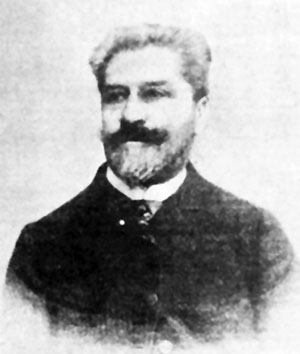
Jules-Benoit Doinel

Six hundred years after Rome launched the murderous Crusade against the ‘Good Christians’, a group of French mystics were inspired to play a unique role in the revival of the Gnostic tradition in the modern world.

Jules-Benoit Doinel (1842–1902) had frequented esoteric and mystical circles for some years. One of these, formed around the Countess of Caithness, took a particular interest in ancient Gnosticism. Dr Stephan A. Hoeller, author of Gnosticism: New Light on the Tradition of Inner Knowing, informs us:

It was into this milieu that the ancient Gnostic tradition was reborn in France in the late nineteenth century. Jules-Benoit Doinel du Val Michel, a scholarly esotericist who had been a devoted researcher of the documents of the Cathar faith, had a mystical experience in 1890, in which he received spiritual empowerment to reconstitute the Gnostic church of old. His experience occurred in the splendid chapel at the residence of the Duchess de Pomar, Countess of Caithness, in Paris. This remarkable noblewoman was a friend of Madame Blavatsky and an early Theosophist and patroness of esoteric movements….
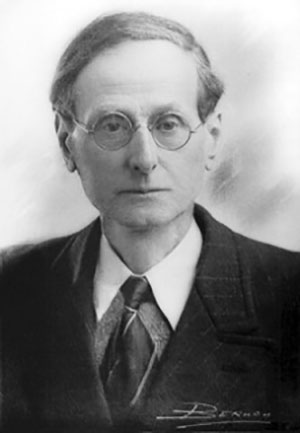
Déodat Roché

Doinel recorded an account of his ‘mystical experience’ and ‘spiritual empowerment’, which was later preserved by Déodat Roché (1877–1978), the foremost historian of Catharism.

One evening, in the autumn of 1890, at the Paris circle of Lady Caithness, Doinel received the communication, “Prepare yourselves. Soon the Bishops of the Albigensian Synod of Montségur are going to appear.” Doinel could not remember the exact words but the sense he recalled from the magical communication of Guilhabert de Castres, the famed Cathar bishop:

We came to you from the most distant of the two Empyrean circles. We bless you. That the principle of good, God, be eternally praised and blessed, glorified, and adored. Amen.

We came to you dear ones… you will establish the Assembly of the Paraclete and you will call it the Gnostic Church.

Doinel and the circle of mystic seekers were seized by “an understandable emotion,” tears streamed from their eyes. Doinel felt fire in his veins, akin to the fire the apostles felt on their heads at Pentecost. A voice was heard: “That the Holy Pleroma bless you. That the Aeons bless you. We bless you as we bless the martyrs of the Pyrenaean Tabor. Amen. Amen. Amen.”

Jules Doinel, as instructed, established the Église Gnostique (Gnostic Church), which was organised along sacramental lines. The teachings of the new church were strictly Gnostic, women were ordained to priestly and episcopal offices, and Doinel also established once again the sacrament of the Consolamentum reminiscent of the Cathars.
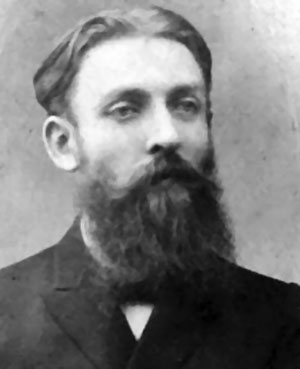
Joanny Bricaud

Soon other gifted esotericists joined the French Gnostic Church, among them Fabré des Essarts, Albert de Pouvourville, Paul Sédir, Lucien Mauchel, Victor Blanchard, and René Guénon.

Given Jules Doinel’s connections to France’s leading mystics and occultists, the Gnostic Church soon became known as “the church of the initiates.” Doinel consecrated the remarkable esoteric writer Papus (Dr Gerard Encausse) as a Gnostic bishop and joined Papus’ Martinist Order. Among Doinel’s acquaintances was Abbe Berenger Sauniere, the parish priest of Rennes-le-Château.

In 1908, at Lyon, Joanny Bricaud (1881–1934) held the Holy Synod of Gnostic Bishops which elevated him as patriarch of the Gnostic Church under the name Tau Jean II. On becoming patriarch, he declared:

The religious evolution of which we are a part shows us that a new religion is necessary. Gnosticism offers itself as the desired religion. Gnosis is the complete and definitive synthesis of all beliefs and all ideas of which humanity has need to realise its origin, its past, its end, its nature, the contradictions of existence and the problems of life….

Gnosis is the very essence of Christianity. Here, my beloved, is the just definition of Gnosticism. But, by Christianity, we do not only mean the doctrine taught since the arrival of the divine Savior, but also the one taught before Jesus’ arrival, in the old temples, the doctrine of Eternal Truth. Our Church is the antinomy of that of Rome. The name of that one is Force; the name of ours is Love.

Our Sovereign Patriarch is not Peter, the impulsive, who denied three times his master and took up the sword, but John, the Savior’s friend, the apostle who relied on his heart and in it knew best the immortal sentiment, the oracle of light, the author of the Eternal Gospel, who took up only Speech and Love.

In The Esoteric Christian Doctrine, published in 1907, a year before he became patriarch of the Gnostic Church, Bricaud wrote:

The main aim of the Universal Gnostic Church is to restore the original religious unity, that is to establish and spread a Christian Religion true to the universal religious tradition. It is not hostile towards any Church. It respects the customs and laws of all peoples. It is essentially large and tolerant, which permits it to admit all men without distinction of nationality, language, or race.

Sadly, the ecumenical brotherhood and openness of spirit cultivated by Bricaud could not prevent persecution and strife befalling the Gnostic Church in France.

Bricaud’s successor, the saintly Monsignor Constant Chevillon, Tau Harmonious (1880–1944), was cruelly executed by Nazi collaborators after the Vichy government suppressed the Gnostic Church.

Nevertheless, it was from France that the Gnostic Church spread to Portugal, Italy, Belgium, and South America.

“The Gnostic tradition, which originally had its home in France,” Dr Stephan Hoeller tells us, “came to be established in England and later in the United States, initially as a result of the efforts of a bishop of French descent who was raised in Australia.”

The Gnosis Restored

With fascism and communism on the rise across Europe, far away in Australia a young spiritual seeker began questioning the historical foundations of Christianity.
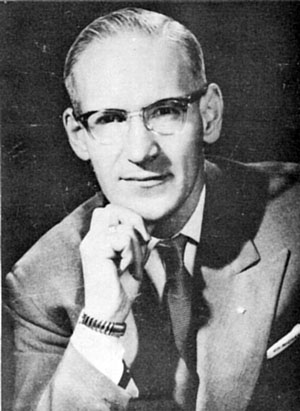
Richard, Duc de Palatine

In his quest for truth, Richard, Duc de Palatine (born Ronald Powell in 1916) joined “the biggest occult library in the Southern Hemisphere at the Theosophical Lodge in Melbourne,” where he studied “the extant writings concerning the Gnostics, Essenes and Secret Mysteries.” By 1944 he became convinced “that one day he would cause to be formed a Brotherhood which would partially restore the Sacred Lore and encourage people to prepare themselves for the Illumination and Interior Communion with the God within.”

In 1940s Melbourne, Richard, Duc de Palatine, a learned and charismatic figure, attracted much attention. His insight was uncanny, but for all this, he was perceived as being a very humble person who seemed to exude love and peace wherever he went. In 1948 he told his friends his mission was not in Australia, and he travelled to London, where in 1953 he was consecrated as Bishop Richard John Chretien Duc de Palatine by the Patriarch Hugh George de Willmott Newman. The name of Duc de Palatine being a personal and spiritual title.

In October 1953, Richard, Duc de Palatine established in London the Pre-Nicene Gnosto-Catholic Church, with the stated object of “restoring the Gnosis – Divine Wisdom to the Christian Church, and to teach the Path of Holiness which leads to God and the Inner Illumination and Interior Communion with the Soul through the mortal body of man.”

From his base in London’s Kensington, Richard, Duc de Palatine travelled on several occasions to France where he contacted the surviving bishops of the French Gnostic Church. They encouraged him to fulfil his mission of transmitting the Gnostic tradition to the English-speaking world. He was also received by representatives of France’s leading mystical orders, including the surviving Grand Master of the Johannite Templar Order.

In a profile of Richard, Duc de Palatine’s life, we read that he held high office in many esoteric bodies:

Through these Orders and his many contacts, particularly in France which he frequently visited, Richard was able to bring forth in a semi-public forum the hidden teachings, the Gnosis of the Soul, which exposed the false vestiges of truth that had been foisted onto the people.

Through his London-based Pre-Nicene Publishing House, Richard, Duc de Palatine issued a series of booklets on Christian Gnosticism, with titles like “The Inner Meaning of the Mystery Schools,” “The Christian Mysteries,” and “Christ or Jesus?” He also published The Lucis Magazine as the official organ of ‘The Sovereign Imperium of the Mysteries’.

Reviewing Richard, Duc de Palatine’s early writings, it is obvious how far-sighted and spiritually gifted he was. Articles in his magazine ranged from discussions of “The Fallen Angels” and the “Dead Sea Scrolls” to the “Christian Fathers on Reincarnation” and “Spiritual Illumination.” In the book The Key to Cosmic Consciousness, he is described as an “outstanding mystic and illumined teacher and writer” whose “knowledge and experience stems from his own illumination in 1956, after applying the teachings of the early Gnostic Fathers…”
Get the issue this article appears in

Fifty years ago, Richard, Duc de Palatine contrasted the Gnostic spirit of tolerance with the dogmatism of the mainstream Churches:

The true Gnostic or Christian makes no claim that he alone is right or that his teaching is the only one required or necessary for salvation. He demands that no one accept the statements of himself or anyone else on faith but insists that everyone should prove these things for himself.

Richard, Duc de Palatine’s magazines and booklets were disseminated around the world, and his Brotherhood and Order of the Pleroma had branches in South Africa, Nigeria, the USA, and Australia. In 1971 he moved to the United States where he continued his work up to the time of his death in 1977.

“He left behind a rich heritage, and because of his pioneering work a breach was made in the consciousness of the people…. but the keys to find the Door are still guarded and can only be found within the Wisdom Schools which through its Rite of Succession pass on the Keys to the Door.”

Within the Australian branch of the Brotherhood and Order of the Pleroma, established in the early 1950s by students of Richard Duc de Palatine, the ‘Good Christians’ or Cathars held a special place of honour and reverence.

The Good Men and Women of the Languedoc are remembered annually on 16 March, the anniversary of the fall and martyrdom of Montségur in 1244, the last Cathar stronghold.

This article was published in New Dawn Special Issue Vol 16 No 5.

If you appreciate this article, please consider a contribution to help maintain this website.

© New Dawn Magazine and the respective author.
For our reproduction notice, click here.

Support New Dawn

Minimal Ads, No Paywall, No Clickbait – help us
keep this website free with new articles regularly posted.
Show your appreciation & gratitude.

About the Author

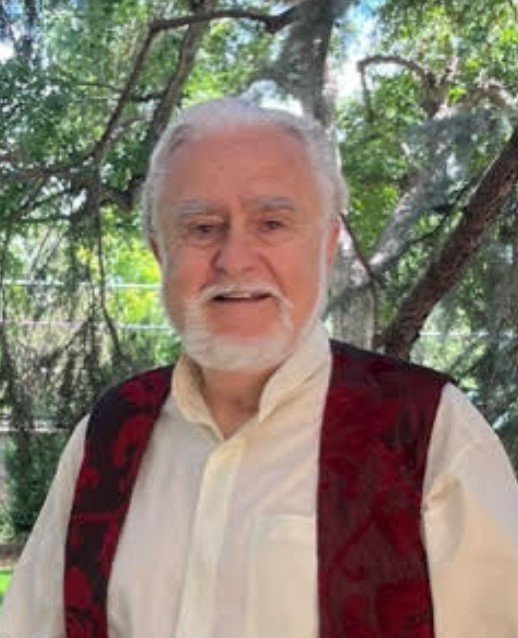
MEHMET SABEHEDDIN is a researcher, writer and inveterate global traveller. He is a long-time contributor to New Dawn magazine. A “wandering Sufi” and “spiritual swaggie,” his areas of interest are wide ranging and include mysteries, hidden history, Sufism, Eastern wisdom, and Gnostic Christianity.


The Future of Humanity Is In Our Hands

A protester gestures at a sign reading, "For humanity."

Thousands of activists, Indigenous groups, students and others take to the streets of New York for the March to End Fossil Fuels on September 17, 2023, in New York City, days before the United Nations Climate Ambition Summit. 

(Photo: Spencer Platt/Getty Images)

We can still limit the rise in global temperature to 1.5°C and build a world of clear air, green jobs, and affordable clean power for all.

ANTONIO GUTERRES

Sep 20, 2023 United Nations News Service (CommonDreams.org)

The following are remarks, as prepared for delivery, given by U.N. Secretary-General António Guterres at the start of his Climate Ambition Summit in New York on September 20, 2023. For Common Dreams’ coverage of the speech, see here.

Excellencies, friends,

Our focus here is on climate solutions—and our task is urgent. Humanity has opened the gates of hell. Horrendous heat is having horrendous effects. Distraught farmers watching crops carried away by floods; sweltering temperatures spawning disease; and thousands fleeing in fear as historic fires rage.

Climate action is dwarfed by the scale of the challenge. If nothing changes we are heading toward a 2.8°C temperature rise—toward a dangerous and unstable world.

We must make up time lost to foot-dragging, arm-twisting, and the naked greed of entrenched interests raking in billions from fossil fuels.

But the future is not fixed. It is for leaders like you to write it. We can still limit the rise in global temperature to 1.5°C. We can still build a world of clear air, green jobs, and affordable clean power for all.

The path forward is clear. It has been forged by fighters and trailblazers—some of whom are with us today: activists refusing to be silenced; Indigenous Peoples defending their lands from climate extremes; chief executives transforming their business models and financiers funding a just transition; mayors moving to a zero-carbon future; and governments working to stamp out fossil fuels and protect vulnerable communities.

But if we are to meet the 1.5°C limit and protect ourselves from climate extremes, climate champions, particularly in the developing world, need solidarity. They need support, and they need global leaders to take action. Action to reduce emissions.

The move from fossil fuels to renewables is happening—but we are decades behind. We must make up time lost to foot-dragging, arm-twisting, and the naked greed of entrenched interests raking in billions from fossil fuels.

The proposed Climate Solidarity Pact calls on major emitters—who have benefited most from fossil fuels—to make extra efforts to cut emissions, and on wealthy countries to support emerging economies to do so.

And the Acceleration Agenda I proposed calls on governments to hit fast forward so that developed countries reach net zero as close as possible to 2040, and emerging economies as close as possible to 2050 according to the principle of common but differentiated responsibilities.

It also urges countries to implement a fair, equitable, and just energy transition, while providing affordable electricity to all: by ensuring credible plans to exit coal by 2030 for OECD countries and 2040 for the rest of the world; by ending fossil fuel subsidies—which the IMF estimates reached an incredible $7 trillion in 2022; and by setting ambitious renewable energy goals in line with the 1.5°C limit.

The Acceleration Agenda also calls for climate justice. Many of the poorest nations have every right to be angry. Angry that they are suffering most from a climate crisis they did nothing to create. Angry that promised finance has not materialized. And angry that their borrowing costs are sky-high.

We need a transformation to rebuild trust. Governments must push the global financial system towards supporting climate action. That means putting a price on carbon and overhauling the business models of Multilateral Development Banks so that they leverage far more private finance at reasonable cost to developing countries.

All parties must operationalize the Loss and Damage Fund at COP28. Developed countries must meet the $100 billion commitment, replenish the Green Climate Fund, and double adaptation funding. And everyone must be covered by an early warning system by 2027—by implementing the Action Plan we launched last year.

At the same time, my Acceleration Agenda calls for business and financial institutions to embark on true net zero pathways. Shady pledges have betrayed the public trust. Shamefully, some companies have even tried to block the transition to net zero—using wealth and influence to delay, distract, and deceive. Every company that truly means business must create just transition plans that credibly cut emissions and deliver climate justice, in line with the recommendations of my High-Level Expert Group.

Excellencies, friends,

The future of humanity is in your hands—in our hands.

One Summit will not change the world. But today can be a powerful moment to generate momentum that we build on over the coming months, and in particular at the COP.

We can—and we must turn up the tempo. Turn plans into action. And turn the tide.

Thank you.

© 2023 United Nations News Service

ANTONIO GUTERRES

Antonio Guterres is Secretary-General of the United Nations.

Plato’s theory of soul

From Wikipedia, the free encyclopedia

Part of a series on
Platonism
Plato from Raphael‘s The School of Athens (1509–1511)
LifeWorksAllegory of the caveTheory of formsForm of the GoodTheory of soulEpistemologyAnalogy of the sunAnalogy of the divided linePolitical philosophyPhilosopher kingShip of StateEuthyphro dilemmaRing of GygesMyth of ErDemiurgeAtlantis
Related articles
CommentariesThe Academy in AthensMiddle PlatonismNeoplatonismAllegorical interpretations of PlatoPlato’s unwritten doctrines
Related categories
 Plato
 Philosophy portal
vte

Plato‘s theory of soul, which was inspired by the teachings of Socrates, considered the psyche (Ancient Greekψῡχήromanizedpsūkhḗlit.‘breath’) to be the essence of a person, being that which decides how people behave. Plato considered this essence to be an incorporeal, eternal occupant of a person’s being. Plato said that even after death, the soul exists and is able to think. He believed that as bodies die, the soul is continually reborn (metempsychosis) in subsequent bodies. Plato divided the soul into three parts: the logistikon (reason), the thymoeides (spirit, which houses anger, as well as other emotions), and the epithymetikon (appetite or desire, which houses the desire for physical pleasures).[1][2]

The conception of the soul

Plato was the first person in the history of philosophy to believe that the soul was both the source of life and the mind.[3] In Plato’s dialogues, we find the soul playing many disparate roles. Among other things, Plato believes that the soul is what gives life to the body (which was articulated most of all in the Laws and Phaedrus) in terms of self-motion: to be alive is to be capable of moving yourself; the soul is a self-mover. He also thinks that the soul is the bearer of moral properties (i.e., when I am virtuous, it is my soul that is virtuous as opposed to, say, my body). The soul is also the mind: it is that which thinks in us.

We see this casual oscillation between different roles of the soul in many dialogues. First of all, in the Republic:

Is there any function of the soul that you could not accomplish with anything else, such as taking care of something (epimeleisthai), ruling, and deliberating, and other such things? Could we correctly assign these things to anything besides the soul, and say that they are characteristic (idia) of it?

No, to nothing else.

What about living? Will we deny that this is a function of the soul?

That absolutely is.[4]

The Phaedo most famously caused problems to scholars who were trying to make sense of this aspect of Plato’s theory of the soul.

Accordingly, the Phaedo presents a real challenge to commentators through the way that Plato oscillates between different conceptions of the soul.

In the cyclical and Form-of-life arguments, for instance, the soul is presented as something connected with life, where, in particular in the final argument, this connection is spelled out concretely by means of the soul’s conceptual connection with life. This connection is further developed in the Phaedrus and Laws where the definition of soul is given as self-motion. Rocks, for instance, do not move unless something else moves them; inanimate, unliving objects are always said to behave this way. In contrast, living things are capable of moving themselves. Plato uses this observation to illustrate his famous doctrine that the soul is a self-mover: life is self-motion, and the soul brings life to a body by moving it.

Meanwhile, in the recollection and affinity arguments, the connection with life is not explicated or used at all. These two arguments present the soul as a knower (i.e., a mind). This is most clear in the affinity argument, where the soul is said to be immortal in virtue of its affinity with the Forms that we observe in acts of cognition.

It is not at all clear how these two roles of the soul are related to each other. Sarah Broadie famously complained that “readers of the Phaedo sometimes take Plato to task for confusing soul as mind or that which thinks, with soul as that which animates the body.”[5] Others included II.M. Crombie and Dorothea Frede.[6]

More-recent scholarship has overturned this accusation, arguing that part of the novelty of Plato’s theory of the soul is that it was the first to unite the different features and powers of the soul that became commonplace in later ancient and medieval philosophy.[3] For Plato, the soul moves things by means of its thoughts, as one scholar puts it, and accordingly, the soul is both a mover (i.e., the principle of life, where life is conceived of as self-motion) and a thinker.[3]

The tripartite soul

The Platonic soul consists of three parts which are located in different regions of the body:[7][8]

  1. the logos (λογιστικόν), or logistikon, located in the head, is related to reason and regulates the other parts.
  2. the thymos (θυμοειδές), or thumoeides, located near the chest region, is related to spirit.
  3. the eros (ἐπιθυμητικόν), or epithumetikon, located in the stomach, is related to one’s desires.

In his treatise the Republic, and also with the chariot allegory in Phaedrus, Plato asserted that the three parts of the psyche also correspond to the three classes of a society (viz. the rulers, the military, and the ordinary citizens).[9] The function of the epithymetikon is to produce and seek pleasure. The function of the logistikon is to gently rule through the love of learning. The function of the thymoeides is to obey the directions of the logistikon while ferociously defending the whole from external invasion and internal disorder.

Whether in a city or an individual, justice (δικαιοσύνηdikaiosyne) is declared to be the state of the whole in which each part fulfills its function, while temperance is the state of the whole where each part does not attempt to interfere in the functions of the others.[10] Injustice (ἀδικίαadikia) is the contrary state of the whole, often taking the specific form in which the spirited is obedient to the appetitive, while they together either ignore the logical entirely or employ it in their pursuits of pleasure.

In the Republic

In Book IV, part 4, of the RepublicSocrates and his interlocutors (Glaucon and Adeimantus) are attempting to answer whether the soul is one or made of parts. Socrates states: “It is obvious that the same thing will never do or suffer opposites in the same respect in relation to the same thing and at the same time. So that if ever we find these contradictions in the functions of the mind we shall know that it was not the same thing functioning but a plurality.”[11] (This is an example of Plato’s principle of non-contradiction.) For instance, it seems that, given each person has only one soul, it should be impossible for a person to simultaneously desire something yet also at that very moment be averse to the same thing, as when one is tempted to commit a crime but also averse to it.[12] Both Socrates and Glaucon agree that it should not be possible for the soul to be at the same time both in one state and its opposite. From this it follows that there must be at least two aspects to soul. Having named these as “reason” and “appetite”, Plato goes on to identify a third aspect, “spirit”, which in a healthy psyche ought to be aligned with reason.[12][13]

Reason (λογιστικόν)

See also: Heraclitus § Logos

The logical or logistikon (from logos) is the thinking part of the soul which loves the truth and seeks to learn it. Plato originally identifies the soul dominated by this part with the Athenian temperament.[14]

Plato makes the point that the logistikon would be the smallest part of the soul (as the rulers would be the smallest population within the Republic), but that, nevertheless, a soul can be declared just only if all three parts agree that the logistikon should rule.[15]

Spirit (θυμοειδές)

According to Plato, the spirited or thymoeides (from thymos) is the part of the soul by which we are angry or get into a temper.[16] He also calls this part ‘high spirit’ and initially identifies the soul dominated by this part with the ThraciansScythians and the people of “northern regions”.[16]

Appetite (ἐπιθυμητικόν)

The appetite or epithymetikon (from epithymia, translated to Latin as concupiscentia or desiderium).[17]

Reincarnation

Plato’s theory of the reincarnation of the soul combined the ideas of Socrates and Pythagoras, mixing the divine privileges of men with the path of reincarnations between different animal species. He believed the human prize for the virtuous or the punishment for the guilty were not placed in different parts of the underworld, but directly on Earth. After death, a guilty soul would be re-embodied first in a woman (in accordance with Plato’s belief that women occupied a lower level of the natural scale), and then in an animal species, descending from quadrupeds down to snakes and fish. According to this theory, women and the lower animals were created only in order to provide a habitation for degraded souls.[18]

Plato most of the time says that there is a distinct reward-and-punishment phase of the afterlife between reincarnations. Only in the Timaeus and Laws does the reward-and-punishment phase disappear; in these two texts, the punishment is said to be the reincarnation itself.[19] Recent scholars have argued that the theory of reincarnation is intended to be literally true.[20] In the Timaeus, for instance, it appears as a scientific theory to explain the generation of non-human animals; elsewhere, it appears as the conclusion of other philosophical commitments that Plato argues for, such as that virtue is always rewarded and vice punished, and that the only way to punish a soul is to embody it.

More at: https://en.wikipedia.org/wiki/Plato%27s_theory_of_soul#:~:text=In%20his%20treatise%20the%20Republic,to%20produce%20and%20seek%20pleasure.

Samuel Taylor Coleridge on praying and loving

“He prayeth best, who loveth best
All things both great and small;
For the dear God who loveth us,
He made and loveth all.”

― Samuel Taylor Coleridge, The Rime of the Ancient Mariner

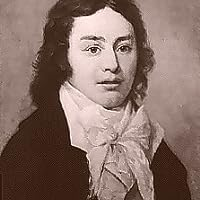
Samuel Taylor Coleridge (October 21, 1772 – July 25, 1834) was an English poet, literary critic, philosopher, and theologian who, with his friend William Wordsworth, was a founder of the Romantic Movement in England and a member of the Lake Poets. He also shared volumes and collaborated with Charles Lamb, Robert Southey, and Charles Lloyd. Wikipedia

Michel de Montaigne against the ‘infinite interpretation’ of the postmoderns

Castalian Stream

Castalian Stream

3 days ago (castalianstream.medium.com)

The awakening of the child, Montaigne, by Edouard Hamman. Image wikimedia1

Sometimes it seems like all of Montaigne’s Essays are digressions. But often the more surprising moments, the digressions amongst the digressions, are the best bits.

This is especially so in the long central ‘Apology of Raymond Sebond’, which is as close as he gets to a more traditionally ordered, or systematic piece. It’s here that Montaigne seemingly ‘outs’ himself as a Pyrrhonian sceptic, and so, a recognised kind of albeit non-dogmatic philosopher. It’s this piece that has led commentators like Pierre Villey to propose that the French essayist experienced a ‘Pyrrhonian crisis’, having discovered the old writings of Sextus Empiricus in the 1570s.

Much of the essay does use recognisable Pyrrhonian modes of argumentation, to challenge the idea that even the wisest philosophers have made any progress in understanding God or the gods, the afterlife, the soul or its relation to the body, or even ourselves.

If man was supposed to be the measure of all things, Montaigne surmises, the joke is on us, who cannot even measure ourselves, let alone fathom anything else.

Anyway, towards the end of this long ‘Apology’, Montaigne has got to musing on the way things reciprocally affect each other, which makes the clear and distinct understanding of particular things or processes tricky. Then, without further ado, he launches into a kind of proto-postmodern musing on a great theme of our times: hermeneutic indeterminacy.

Here is the opening of what he says:

This opinion put me in mind of the experience we have that there is no sense or aspect of anything, whether bitter or sweet, straight or crooked, that the human mind does not find out in the writings it undertakes to tumble over. Into the cleanest, purest, and most perfect words that can possibly be, how many lies and falsities have we suggested [i.e. the Bible, is what M. means — CS]! What heresy has not there found ground and testimony sufficient to make itself embraced and defended!

Montaigne is writing in the context of the ongoing civil wars in France. These were occasioned by the advent of Protestantism, which had challenged the authority of Popes or Councils to interpret the Bible. But if Christians were to return to the Bible, sola scriptura, how was the Bible then to be read? And how could any particular reader be certain their interpretation of the divine word?

Different readings multiplied or ‘disseminated’, in ways a Jacques Derrida used to love. Montaigne continues, that he even knew a man who supported his search for the fabled philosophers’ stone, by finding passages in Holy Writ:

A person of dignity, who would approve to me, by authority, the search of the philosopher’s stone, wherein he was head over ears engaged, lately alleged to me at least five or six passages of the Bible upon which, he said, he first founded his attempt, for the discharge of his conscience (for he is a divine); and, in truth, the idea was not only pleasant, but, moreover, very well accommodated to the defence of this fine science.

What is Montaigne’s point, beyond indulging his omnivorous curiosity and love of a good yarn?

On the one hand, there are clearly writers and speakers out there who know how to lead people on, with promises of insights and belonging, or great things just around the corner. Montaigne mentions the old pagan oracles, fortune-tellers, and the Sibyls: we will all meet a tall dark stranger, some time soon …

On the other hand, Montaigne seems to want to suggest, as the dreaded postmodernist underminers of all things civilizational were to do in Paris, nearly exactly 400 years later, that every text is like this. That is, every text just is subject to that ‘infinite interpretation’ in whose shimmering light and apparently open horizon, generations of students were taught to see a promise of freedom from all things old, staid, or stable:

There are so many ways of interpretation that it will be hard but that, either obliquely or in a direct line, an ingenious wit will find out, in every subject, some air that will serve for his purpose; therefore we find a cloudy and ambiguous style in so frequent and ancient use.

Indefence of the postmodernists, why isn’t this indeterminacy not tantamount to a promise of liberation itself? If we are unbound by any single authority, in interpreting anything, isn’t this a kind of freedom?

To speak against the same postmodernists, we would need to be sure that license was not being mistaken for liberty, and that a liberation from interpretive boundaries does not open out onto endless indeterminacy, or a hermeneutic twilight in which all cows are either grey or contain all colors at once.

We would also need to be sure that, in plying our delirious freedom to provide ever-more-unheard-of readings of established authorities, that we did not paradoxically rest this interpretive freedom … well, on the unquestioned authority of such figures as, for instance, Nietzsche, Heidegger, Derrida, Deleuze, Foucault, and c, who were supposed to have opened up this hermeneutic way.

What for instance, if critics suggested that these thinkers wanted their own ideas to be taken as more true or valid, than other authors’? Should we oppose them, since we read these authors as promoting only openness? Or should we agree with them, since these authors are indeed the ones who saw the light?

Both-and-neither-nor.

The other problem — to get back to our authority here, Montaigne — is that unquestioning love of texts and textual authorities can also provide its own motives for interpretive creativity, and this is what the French essayist also seems to have glimpsed.

That is, our freedom here would rest on prior pressing obligations. We all might for instance feel the impulse to want to square the ideas of older books and authors we love, or that we’ve been taught as authoritative, with our present values and interests. For we want the things we love, to love each other.

However, Montaigne asks:

Is it possible that Homer could design to say all that we make him say, and that he designed so many and so various figures, as that the divines, law-givers, captains, philosophers, and all sorts of men who treat of sciences, how variously and opposite soever, should indifferently quote him, and support their arguments by his authority, as the sovereign lord and master of all offices, works, and artisans, and counsellor-general of all enterprises? Whoever has had occasion for oracles and predictions has there found sufficient to serve his turn. ’Tis a wonder how many and how admirable concurrences an intelligent person, and a particular friend of mine, has there found out in favour of our religion; and cannot easily be put out of the conceit that it was Homer’s design; and yet he is as well acquainted with this author as any man whatever of his time. And what he has found in favour of our religion there, very many anciently have found in favour of theirs …

To interpret an author, smoothing away the rough edges, excising passages that could wound our sensibilities today, or bending others far enough that they are made to say something quite other than what they seem to— all of this can seem alot like a kind of gift of love. What do we mean?

The good son or daughter, after all, ought to have a tough time even conceiving that the parent they love and respect could have any faults, and should go out of their way towards defending them, before admitting the worst.

So, too, what of our textual mothers and fathers? Do we not owe them, also, a break?

What Montaigne says of Homer being read by everyone to lend authority to their perspectives, he then continues to say of Plato. In our times of cultural Nietzscheanism (difference, becoming, aestheticization of life, radical individuality …), someone could say the same about the ‘peaceful 19th century libertarian’, who has nevertheless not always been read as a peaceful libertarian.

This would be a paradoxical interpretive freedom, though, that saw itself hung from the strings of the reputations of canonised masters.

Who hasn’t tried to save their favored authors from themselves, if they realise that, alongside ideas that they have been moved and inspired by, there are also concerns and opinions which are foreign or even obnoxious?

Shouldn’t our first impulse be to turn the text into whatever shapes or aspects we can, to rebuff the critics? Isn’t that one of the bonds of love?

We certainly wouldn’t want to cast the first stone, as lovers of Montaigne, and duty-bound to uphold his name!) His point, exactly, remains:

what if, beneath the radical anarchical front of infinite postmodernist hermeneutic indeterminacy, which has indeed succeeded in creating murmors amongst the zealots, what the zealots have missed is something altogether more uncanny— a longing, if not for servitude to new masters (as Jacques Lacan ironically called it), then an almost pious or tender impulse towards certain, rough textual authorities?

Montaigne seems to have denounced the postmodernists, in advance, in such terms as these:

Let the author but make himself master of that, to busy posterity about his predictions, which not only his own parts, but the accidental favour of the matter itself, may do for him; and, as to the rest, express himself, whether after a foolish or a subtle manner, somewhat obscurely or contradictorily, ’tis no matter; — a number of wits, shaking and sifting him, will bring out a great many several forms, either according to his meaning, or collateral, or contrary, to it, which will all redound to his honour; he will see himself enriched by the means of his disciples, like the regents of colleges by their pupils’ yearly presents. This it is which has given reputation to many things of no worth at all; that has brought several writings in vogue, and given them the fame of containing all sorts of matter can be desired; one and the same thing receiving a thousand and a thousand images and various considerations; nay, as many as we please.

So, if Montaigne has identified something here — and let’s leave the ‘if’ — the trick would seem to be one of how to get students to identify when commentating on a text which has been presented and accepted by previous generations as authoritative passes over into being a kind of end in itself.

Wanting to interpret the world, we come to interpret texts about the world. This world of ‘the text’ then becomes a substitute for the wider world, like we’re in some Borges story. How else could the issue Montaigne seems to be butting against be put?

Rather than using the authority of the author only to grow our independent understanding, that authority comes to supplant or dominate our understanding:

It is very easy, upon approved foundations, to build whatever we please; for, according to the law and ordering of this beginning, the other parts of the structure are easily carried on without any failure. By this way we find our reason well-grounded, and discourse at a venture; for our masters prepossess and gain beforehand as much room in our belief as is necessary towards concluding afterwards what they please, as geometricians do by their granted demands, the consent and approbation we allow them giving them wherewith to draw us to the right and left, and to whirl us about at their pleasure. Whatever springs from these presuppositions is our master and our God; he will take the level of his foundations so ample and so easy that by them he may mount us up to the clouds, if he so please.

If he does so please, then criticism of the text upon which we have built our own positions on, becomes a criticism of our positions themselves. And where there is love, modern psychology tells us, there is identification. So this means, criticism of ‘our’ authority becomes criticism of we ourselves, which creates its own kinds of hermeneutic necessities, which would give the lie to rhetorics surrounding freedom to interpret.

Castalian Stream

Written by Castalian Stream

Articles on philosophy, psychology & classical thought (notably Stoic), aimed at renewing, spreading, and applying these ideas today.Follow

Book: “The Future of the Body: Explorations Into the Further Evolution Of Human Nature”

The Future of the Body: Explorations Into the Further Evolution Of Human Nature

Michael Murphy

In the oral and written histories of every culture, there are countless records of men and women who have displayed extraordinary physical, mental, and spiritual capacities. In modern times, those records have been supplemented by scientific studies of exceptional functioning.

Are the limits of human growth fixed?

Are extraordinary abilities latent within everyone?

Is there evidence that humanity has unrealized capacities for self-transcendence?

Are there specific practices through which ordinary people can develop these abilities?

Michael Murphy has studied these questions for over thirty years.

In The Future of the Body, he presents evidence for metanormal perception, cognition, movement, vitality, and spiritual development from more than 3,000 sources. Surveying ancient and modern records in medical science, sports, anthropology, the arts, psychical research, comparative religious studies, and dozens of other disciplines, Murphy has created an encyclopedia of exceptional functioning of body, mind, and spirit. He paints a broad and convincing picture of the possibilities of further evolutionary development of human attributes.

By studying metanormal abilities under a wide range of conditions, Murphy suggests that we can identify those activities that typically evoke these capacities and assemble them into a coherent program of transformative practice.

A few of Murphy’s central observations and proposal


About the author

Profile Image for Michael Murphy.

Michael Murphy

Bestselling author Michael Murphy has been called the father of the human potential movement, one of the most influential movements in twentieth-century American culture. His bestselling book Golf in the Kingdom (1972) inspired the creation of the Shivas Irons Society, a nonprofit group dedicated to finding beauty and discovery through the game of golf, and has recently been adapted into a movie starring Malcolm McDowell (2010). His other books include Jacob Atabet (1977), An End to Ordinary History (1982), In the Zone (1995), and The Kingdom of Shivas Irons (1997). He lives in California.

Book: “The Physical Phenomena of Mysticism”

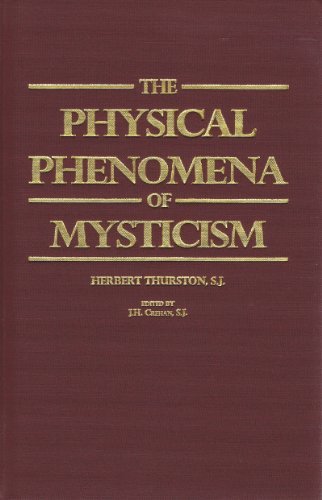
The Physical Phenomena of Mysticism

Herbert Thurston; Edited By J. H. CrehanJ. H. Crehan (Editor)

Herbert Thurston, S.J.’s “invaluable work of reference” (said the Times Literary Supplement in 1952) is back in print for Catholics crying out for guidance—and getting little—on such matters today. His topics? We’ll let all these major reviewers of his time, including the redoubtable London Tablet, outline them for you: “One by one he examines the wonder of levitation, stigmata, telekinesis (movement of a body without material connection with the moving cause), luminous phenomena, human salamanders, to mention but a few. Even the ordinary ‘thriller fan’ will find plenty of stimulus.”—Irish Ecclesiastical Record “A major section is concerned with stigmata. Is any subject more controversial?…This book certainly teaches us how very little we now know about what the human body can endure or do, and the effect of the mind upon it.

(Goodreads.com)