(Courtesy of Ben Gilberti, H.W., M.)

Beset by advertisements and noxious information, our attention is increasingly fractured. Shutterstock
Published: February 2, 2023 (theconversation.com)
Ralph Hertwig receives funding from the Volkswagen Foundation and the European Commission (HORIZON 2022 grant GA 101094752). He has collaborated with researchers in the Joint Research Centre of the European Commission.
Stephan Lewandowsky receives funding from the European Union’s Horizon 2020 research and innovation programme under grant agreement no. 964728 (JITSUVAX). He also receives funding from Jigsaw (a technology incubator created by Google), from UK Research and Innovation (through the Centre of Excellence, REPHRAIN), and from the Volkswagen Foundation in Germany. He also holds a European Research Council Advanced Grant (no. 101020961, PRODEMINFO) and receives funding from the John Templeton Foundation (via Wake Forest University’s Honesty Project). He has worked with the European Commission on issues relating to social media governance and regulation.
Anastasia Kozyreva and Sam Wineburg do not work for, consult, own shares in or receive funding from any company or organization that would benefit from this article, and have disclosed no relevant affiliations beyond their academic appointment.
University of Bristol provides funding as a founding partner of The Conversation UK.
 We believe in the free flow of information
The web is an informational paradise and a hellscape at the same time.
A boundless wealth of high-quality information is available at our fingertips right next to a ceaseless torrent of low-quality, distracting, false and manipulative information.
The platforms that control search were conceived in sin. Their business model auctions off our most precious and limited cognitive resource: attention. These platforms work overtime to hijack our attention by purveying information that arouses curiosity, outrage, or anger. The more our eyeballs remain glued to the screen, the more ads they can show us, and the greater profits accrue to their shareholders.
It is hardly surprising, therefore, all this should take a toll on our collective attention. A 2019 analysis of Twitter hashtags, Google queries, or Reddit comments found that across the past decade, the rate at which the popularity of items rises and drops has accelerated. In 2013, for example, a hashtag on Twitter was popular on average for 17.5 hours, while in 2016, its popularity faded away after 11.9 hours. More competition leads to shorter collective attention intervals, which lead to ever fiercer competition for our attention – a vicious circle.
To regain control, we need cognitive strategies that help us reclaim at least some autonomy and shield us from the excesses, traps and information disorders of today’s attention economy.
The textbook cognitive strategy is critical thinking, an intellectually disciplined, self-guided and effortful process to help identify valid information. In school, students are taught to closely and carefully read and evaluate information. Thus equipped, they can evaluate the claims and arguments they see, hear, or read. No objection. The ability to think critically is immensely important.
But is it enough in a world of information overabundance and gushing sources of disinformation? The answer is “No” for at least two reasons.
First, the digital world contains more information than the world’s libraries combined. Much of it comes from unvetted sources and lacks reliable indicators of trustworthiness. Critically thinking through all information and sources we come across would utterly paralyse us because we would never have time to actually read the valuable information we painstakingly identify.
Second, investing critical thinking in sources that should have been ignored in the first place means that attention merchants and malicious actors have been gifted what they wanted, our attention.
So, what tools do we have at our disposal beyond critical thinking? In our recent article, we – a philosopher, two cognitive scientists and an education scientist – argue that as much as we need critical thinking we also need critical ignoring.
Critical ignoring is the ability to choose what to ignore and where to invest one’s limited attentional capacities. Critical ignoring is more than just not paying attention – it’s about practising mindful and healthy habits in the face of information overabundance.
We understand it as a core competence for all citizens in the digital word.
Without it, we will drown in a sea of information that is, at best, distracting and, at worst, misleading and harmful.

Three main strategies exist for critical ignoring. Each one responds to a different type of noxious information.
In the digital world, self-nudging aims to empower people to be citizen “choice architects” by designing their informational environments in ways that work best for them and that constrain their activities in beneficial ways. We can, for instance, remove distracting and irresistible notifications. We may set specific times in which messages can be received, thereby creating pockets of time for concentrated work or socialising. Self-nudging can also help us take control of our digital default settings, for instance, by restricting the use of our personal data for purposes of targeted advertisement.
Lateral reading is a strategy that enables people to emulate how professional fact checkers establish the credibility of online information. It involves opening up new browser tabs to search for information about the organisation or individual behind a site before diving into its contents. Only after consulting the open web do skilled searchers gauge whether expending attention is worth it. Before critical thinking can begin, the first step is to ignore the lure of the site and check out what others say about its alleged factual reports. Lateral reading thus uses the power of the web to check the web.
Most students fail at that task. Past studies show that, when deciding whether a source should be trusted, students (as well as university professors) do what years of school has taught them to do – they read closely and carefully. Attention merchants as well as merchants of doubt are jubilant.
Online, looks can be deceiving. Unless one has extensive background knowledge it is often very difficult to figure out that a site, filled with the trappings of serious research, peddles falsehoods about climate change or vaccinations or any variety of historical topics, such as the Holocaust. Instead of getting entangled in the site’s reports and professional design, fact checkers exercise critical ignoring. They evaluate the site by leaving it and engage in lateral reading instead.
The do-not-feed-the-trolls heuristic targets online trolls and other malicious users who harass, cyberbully or use other antisocial tactics. Trolls thrive on attention, and deliberate spreaders of dangerous disinformation often resort to trolling tactics. One of the main strategies that science denialists use is to hijack people’s attention by creating the appearance of a debate where none exists. The heuristic advises against directly responding to trolling. Resist debating or retaliating. Of course, this strategy of critical ignoring is only a first line of defence. It should be complemented by blocking and reporting trolls and by transparent platform content moderation policies including debunking.
These three strategies are not a set of elite skills. Everybody can make use of them, but educational efforts are crucial for bringing these tools to the public.
The philosopher Michael Lynch has noted that the Internet “is both the world’s best fact-checker and the world’s best bias confirmer – often at the same time.”
Navigating it successfully requires new competencies that should be taught in school. Without the competence to choose what to ignore and where to invest one’s limited attention, we allow others to seize control of our eyes and minds. Appreciation for the importance of critically ignoring is not new but has become even more crucial in the digital world.
As the philosopher and psychologist William James astutely observed at the beginning of the 20th century: “The art of being wise is the art of knowing what to ignore.”
(Courtesy of Michael Kelly, H.W.)
Pitting boomers against millennials is a distraction from the inequality that affects us all

Bobby Duffy Mon 6 Feb 2023 (TheGuardian.com)
Defining generations is all about division. We are classified into groups based on when we were born, these are given snappy, headline-friendly labels, and all our attention is directed to the supposed conflicts between them.
We find it much easier to blame particular generations for changes we don’t like than any other kind of demographic grouping. Baby boomers, for example, have taken all the houses, stolen all the wealth and destroyed the planet; millennials are responsible for the end of marriage, the demise of office parties and even marmalade (sales have been falling since 2013).
Of course, older people have always denigrated the young: in 400BC Socrates moaned about the youth of his day and their “bad manners, contempt for authority, disrespect for elders”. But now we have the tools to communicate these perennial biases at scale.
This is a key feature of what has become a generationally tinged culture war. We’re bombarded with stories of a “woke” generation obsessed with “safe spaces” and fostering a “cancel culture”. But this is a misdirection. It is true that younger people have a different perspective on shifting social norms – but that has always been the case.
Conflict is clickable, and generational groups are often in the frontline
Younger generations are just more comfortable with new cultural ideas, because they didn’t grow up with the older ones. In fact, in my analysis of long trends, it’s pretty much a constant that the youngest generation will be twice as comfortable with the latest cultural norm than the oldest: the emergent issues when baby boomers were young adults in the 1980s were women’s roles in the workplace and the acceptability of homosexuality; for young people today, it’s more likely to be gender identity, or how we interpret history. The issues change, but the generational patterns are eerily similar.
The fact that we feel so unusually divided right now has more to do with the period we’re living through than any fundamental generational characteristics.
There are two vital changes in context that help explain this. The first is economic. We have seen an extraordinary increase in private wealth among older people, with baby boomers particular beneficiaries. As a recent Resolution Foundation report shows, this older group owns more than half of all private wealth, seven times the amount owned by millennials. Of course, there is a strong lifecycle element to wealth, in that we build it up as we age. But the chasm is of a different scale to the past, and it’s a pattern repeated in many countries. For example, in the US, when baby boomers were an average age of 45, they owned 42% of the US’s total private wealth. When generation X got to the same milestone, they owned just 15% – and millennials are sure to take this even lower. This is a significant new division, the result of historical circumstance and the protection afforded to the boomers’ interests due to their electoral weight.
Secondly, however, our increased sense of intergenerational division can’t be separated from our new, incredibly divisive information environment. Conflict is clickable, and generational groups are often in the frontline.
I inadvertently created a small example of that fake division through a survey we conducted in 2022, which examined how different generations in the UK viewed each other. One question tested a statement based on an interview with TV personality Kirstie Allsopp, in which she seemed to suggest young people couldn’t afford their own homes because they spent too much on Netflix, gym subscriptions, fancy coffees and foreign holidays. Distressingly, half the public agreed – and, even more distressingly, generation Z were just as likely to agree as older generations.
The current cohort of young people have clearly internalised a sense of self-blame, when the much more important explanations for lower levels of home ownership, for example, are the extraordinary decades-long surge in house prices, stagnating wages and stricter lending rules.
But the key lesson for me wasn’t the rights and wrongs of the assertion – it was how the results of our poll were reported. The headlines across various outlets were all variations of: “Boomers blame Netflix and takeaways for young not owning homes” – despite boomers being no more likely to think that way than anyone else. News sites know a piece that invents a generational division, particularly with boomers as the villains, will be read and shared more.
However, despite all the engineered, exaggerated, and indeed real divisions, we are unlikely to see a breakdown in relations between generations, or even much of a political fightback from younger people. That’s partly because of the tendency they have to blame themselves for their bad fortune – but there are a number of other reasons.
Despite the rhetoric, we’re actually more deeply connected up and down the generations than across them, because of our families. We love our parents and grandparents, and, more selfishly, we want them to keep what they’ve accumulated, or for them to continue to receive all the support they can – because if they don’t, it will reduce what we get or leave us footing the bill. The mindblowing amount of wealth at the top of the age range will flow down eventually. The problem is that it will do so very unevenly – and that also fractures any concerted will for change among younger generations.skip past newsletter promotion
The lack of anger and action from young people is frustrating for those of us who believe we desperately need a better generational settlement. But for that to occur, two policy graveyards would have to be traversed: the questions of how to tax wealth, and how to fix the broken housing market. Wealth and housing have become so tied to when you were born that radical action to break the chain of intergenerational privilege seems warranted. Yet this is unlikely given the lack of bitterness we feel towards the people in our lives who would be affected by such a breach. Ironically, the divisions between generations are neither clear nor passionate enough to make a fairer deal inevitable. The task before us is therefore to find another way of bringing that about.
Who Are We Now? by Jason Cowley (Picador, £20)
Poles Apart by Alison Goldsworthy, Laura Osborne and Alexandra Chesterfield (Penguin, £10.99)
The Power of Us by Jay Van Bavel and Dominic J Packer (Wildfire, £10.99)
Bobby Duffy is professor of public policy and director of the policy institute at King’s College London and author of The Generation Divide (Atlantic Books, £10.99). To support the Guardian and Observer, order your copy at guardianbookshop.com.
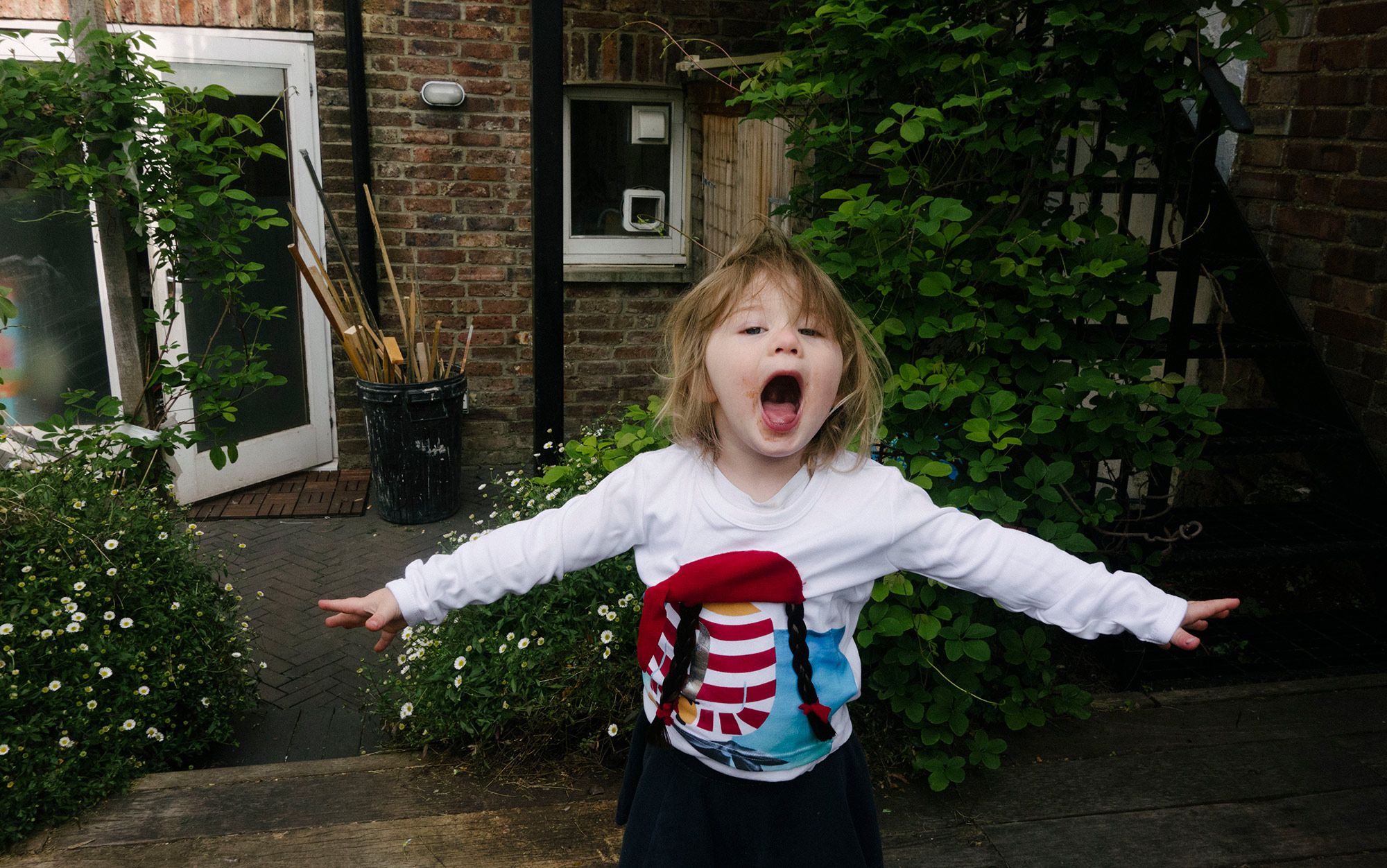
Confident or shy, our temperament is mostly baked-in from birth. But how that influences our lives is up for grabs
Photo by Olivia Arthur/Magnum Photos
17 January 2023 (aeon.co)
Gina Mireault is professor and chair of psychology and human services at Northern Vermont University. Her research is focused on emotional development in childhood.
Edited bySam Dresser
On a Saturday morning at my local pool, three one-year-old babies get ready for their weekly swim lesson, their mothers carefully outfitting them in colourful swimwear. One of them, a girl, smiles gleefully at the red ruffle resting below her chin. Another, a boy, escapes his mother’s hold and swiftly runs naked to the end of the locker room, shrieking with anticipation. The third, another boy, softly protests the entire ritual. His brow is set in a knot, despite his mother’s attempts to encourage his enthusiasm. In soothing motherese, she points out the smiling turtles and happy fish that form a little underwater parade on his swim trunks. But his assessment remains static, and his mood does not budge. Eventually, all three babies and their mothers wander out to the pool, towels and toys in tow. But it is not simply pool toys that differentiate these babies’ experience. Another variable is also in play, and it has been on full display as they get ready to swim. It’s what developmental scientists call temperament.
Psychologists define temperament as individual differences in emotional, bodily and attentional reactions to sights, sounds, smells, tastes, touch, etc, as well as in the self-regulation of emotion, behaviour and attention. Within the first few days of life, babies make their inborn temperament known to parents. Some babies are sunny and agreeable, some sober, some without any predictable sleeping and eating patterns, some incessantly cranky, and others fully adaptable to the changing circumstances that surround them. In 1956, the psychiatrists Alexander Thomas and Stella Chess, struck by the blame placed on mothers for child outcomes, launched the New York Longitudinal Study to investigate infants’ innate dispositions and their effect on long-term development including personality, school achievement, peer relationships, parent-child interactions and mental health. They recruited 133 infants (66 males, 67 females) from 82 white, middle-class families, and collected data on them in childhood, adolescence and young adulthood for 32 years. Their goal was to understand how children contributed to their own development, and to identify whether and how child temperament interacts with the environment to produce specific outcomes.
Thomas and Chess identified nine dimensions of temperament: activity level, regularity, approach, adaptability, intensity, sensory threshold, mood, distractibility and persistence. Using these dimensions, they distinguished three broad temperamental types: easy, difficult and slow-to-warm-up. Most babies, roughly 40 per cent, fit the category of ‘easy’ meaning they were generally in a positive mood, adapted well to new situations and routines, and were quickly soothed when upset. A smaller proportion, about 10 per cent, were ‘difficult’ due to their generally negative and intense reactions to minor events, the length of time required to calm down, and their lack of predictable eating, sleeping and digestive rhythms. Another 15 per cent were described as ‘slow-to-warm up’ due to their overall uneasiness and apprehension in new situations – a sort of chronic vigilance – but also their ability to adapt with time and support. If you’re doing the math, you will have noticed that about one-third of infants could not be classified using this system, suggesting that some babies had mixed dispositions or that these initial dimensions needed to be refined or extended.
Nonetheless, Thomas and Chess had effectively nixed the idea that babies are born ‘blank slates’ who passively receive and are moulded by the environment. Their work flipped the script on psychological views that had paid almost exclusive attention to the role of parents and the environment on child development, while ignoring the influence of the child’s innately endowed predispositions. Thomas and Chess, working with colleagues who progressed their original study, showed that neonates, sometimes just hours old, begin to inadvertently affect the physical and social environment by adapting, resisting, observing, reacting or ignoring it in ways nudged by their biological temperament, and that parents, siblings and other close people change the environment and/or their own behaviours in response. In other words, the environment and the baby have a dynamic bidirectional relationship from the very beginning, changing in response to each other. What’s more, this influence means that babies play a major role in their own development.
Additional work by Mary Rothbart and Jerome Kagan expanded on what Thomas and Chess had found. Rothbart explored other temperamental dimensions such as soothability and fear, as well as redefining the dimension of ‘approach’ as a baby’s positive excitement and rapid advance toward new situations. The baby in the locker room that morning who shrieked with delight while running naked toward the pool deck was the poster child for temperamental approach: he was thrilled at the prospect of the pool and did not want to wait for his mother (or his bathing suit!) to begin. Rothbart also divided mood and intensity into several additional subtypes. Weeks prior, I’d witnessed a toddler who was so intensely distressed upon arriving at the pool, she couldn’t make it into the building. She rolled on the sidewalk in front of the door, shifting between crying and screaming, and refused her parents’ gentle requests for reconsideration. Her display seemed rooted in a fear that could not be alleviated, whether by the security of her parents’ presence, or by a tiny rubber duck offered by a lifeguard entering the building. Her parents were dismayed both by her reaction and by their inability to soothe her immediately. Her reaction was not a display of wilful disobedience. Instead, it was a type of terror, a temperamental quality known as ‘reactivity’.
It is this temperamental variable – reactivity – that became the focus of Kagan’s work, partly because it is so easy to observe in young infants’ vocal, bodily, emotional and physiological arousal, even when presented with unfamiliar but innocuous situations. In one test, Kagan and colleagues presented four-month-olds with a mobile swinging gently a few feet in front of them. Most infants observed the mobile calmly, but about 20 per cent became quickly overstimulated and agitated. They vocalised, tensed their muscles, arched their backs, and fussed or cried. That simple test turned out to have strong predictive power. Using this assessment, infants deemed ‘reactive’ at four months of age were more likely to be shy as toddlers, socially inhibited as children, and anxious as adolescents. In a long-term follow-up, Kagan’s test could even distinguish between young adults who were or were not anxious; the former group had been reactive to the mobile test as infants, while the latter group had not. It appeared that infant temperament could extend its reach all the way into young adulthood.
Recent studies have found that three broad aspects of temperament in particular are especially useful in predicting long-range developmental outcomes. The first is reactivity or negative emotionality, referring to general negative mood, intense negative reactions, and distress either when limits are imposed (eg, anger) or in new situations (eg, fear). The second is self-regulation, which researchers refer to as ‘effortful control’ of feelings (eg, self-soothing) and of attention (eg, able to hold focus). The third goes by several names including approach-withdrawal, inhibition, or sociability, and refers to the tendency to approach new people and situations, or to be wary and withdraw. There are additional levels of these dimensions, but these three have best withstood scientific tests of reliability and validity across infants, children and teenagers. Hundreds of studies have subsequently and unequivocally demonstrated that temperament is a driving factor in child development that is at least as important as everything that comes after a baby enters the world, including parenting.
Aside from its early appearance, there is other evidence – from animals, neuroscience, twins, and longitudinal studies – that temperament is biologically based. First, it’s not just human infants who exhibit temperamental characteristics. Other juvenile mammals do too, including dogs, elephants, dolphins and even squirrels. This suggests temperament is part of a shared biological system. Kagan explains temperament as an inherited bias in the brain’s neurochemistry. Specifically, all mammalian brains include a small structure, the amygdala, which serves as part of a built-in alarm system. The amygdala is largely responsible for assessing threat and, if detected, for signalling the sympathetic nervous system into action via the fight-or-flight response. In reactive individuals, the amygdala is more easily excited, so the alarm system is triggered at a lower threshold. Although the environment and experience can alter the responsiveness of the amygdala in either direction, some individuals – including the reactive four-month-olds in Kagan’s study – are born with a bias to perceive threat more readily. Other work has similarly shown that negative emotionality and withdrawal in babies is marked by greater activity in the right frontal brain, while the opposite temperamental pattern is associated with greater activity in the left frontal brain.
Twin studies lend further evidence that temperament is genetically endowed. In one research design, scientists compared identical twins (who share 100 per cent of their genes) with fraternal twins (who have 50 per cent of their genes in common) on temperamental qualities. If identical twins are more similar than fraternals, then scientists can reasonably conclude the trait is heritable. In another research design, scientists used the temperament scores of one twin to predict the scores of the co-twin. Both of these paradigms consistently find high heritability for most dimensions of temperament including sociability, emotionality, activity, attention span persistence and soothability, for example.
Excessively irritable infants are more likely to become children who cannot regulate their anger or impulses
Longitudinal studies following infants over the course of their development reveal the extent to which temperament at birth influences child development. Many studies have tracked long-term developmental outcomes associated with specific dimensions of temperament. Broadly speaking, negative temperamental reactivity and overall difficult temperament are related to later oppositional behaviour, defiance and conduct issues, known collectively as ‘externalising problems’, and are also predictive of substance use in adolescence.
Using longitudinal follow-up studies that begin in infancy, Joel Nigg has found that excessively irritable infants are more likely to become children who cannot regulate their anger or impulses when frustrated, while excessively exuberant infants are more likely to become impulsive children. In both cases, the development of effortful control is inhibited. These findings have led Nigg to propose that ADHD is not a disorder of inattention or hyperactivity, but instead a disorder of temperament-based self-regulation. On the other hand, temperamental shyness and inhibition are related to ‘internalising problems’ such as anxiety. Another internalising problem, depression, has been associated with temperamental negative mood, low adaptability and the tendency to withdraw from, instead of approach, new objects and situations.
Notably, infants who exhibit the temperamental ‘approach’ may be more likely to develop into curious children. The neural basis for curiosity lies in the brain’s nucleus accumbens, a structure involved in the ‘seeking system’ that underlies the motivation to explore and understand the environment. The nucleus accumbens provides the link between motivation – for example, the drive to gain a reward, like eating food or lowering stress – and the action required to get that reward. In one study, we followed up on nearly 60 children who had participated as babies in various developmental studies conducted by my lab where we measured their temperament. The children, averaging five years of age at follow-up, were then assessed for curiosity. Temperamental approach at six-months significantly predicted childhood curiosity, suggesting that curious children may start life endowed with an inborn motivational inclination. These children may get a nudge from nature to expect that new experiences will be positive, and thus be motivated to seek and remain engaged with novelty. Importantly, these children were also endowed with the self-regulation needed to maintain their interest in and effort toward exploring. Since temperament data in infancy predicted this quality in childhood, nature likely plays a hand in this outcome.
The long reach of infant temperament into childhood and beyond speaks to its potential stability, and seems to support temperament as biological and unchanging. However, the environment can offer a consistent response to temperamental qualities encouraging them to remain intact. Imagine the shy infant, for example, who is likely to encounter similar reactions to their shyness from family members, peers, care providers and strangers. Since the shy infant will be less likely to accept social overtures and opportunities, over time, others may be less likely to offer them. Consequently, the shy baby is less likely to have the very social opportunities that could encourage boldness.
Several studies have explored cross-cultural differences and similarities in temperament, finding that although some aspects of temperament, like perceptual sensitivity and activity level, cut across cultures, other dimensions – like approach and rhythmicity – vary and may reflect culture-specific parenting practices. Since American parents tend to value independence, they are more likely to encourage independent ‘approach’ behaviour in their babies. These findings acknowledge that, although temperament is endowed by nature and makes some psychological outcomes more probable, it is also amenable to influence by the environment, such that no particular outcome is guaranteed. Welcome, parents.
Although Thomas and Chess demonstrated inborn temperamental differences, they did not assert that temperament was more responsible for child outcomes than the environment. Instead, they suggested that optimal child development rested on the ‘goodness of fit’ between the child’s innate capacities and characteristics, and the demands of the social environment, including parental expectations and practices. A loud or chaotic environment would be a particularly poor fit for a highly reactive infant with naturally low sensory thresholds and an inability to self-soothe. On the other hand, a monastic environment would be a poor fit for a child intrigued by novelty. It is this interaction, in which a child’s temperament confronts the environment – and vice versa – that Thomas and Chess proposed is responsible for long-term outcomes. In other words, the environment matters.
Most of the research on the effects of parenting on temperament has focused on infants with difficult temperamental qualities, like irritability and reactivity. Generally speaking, these qualities are associated with parental punitiveness or withdrawal, which together can contribute to the externalising behaviour problems described earlier. However, other work has shown that – depending on parents’ age and understanding of their baby’s irritability – many parents of difficult babies double down on efforts to be positive, like showing more warmth and patience.
Take the highly reactive toddler who refused to enter the swim facility whose parents showed remarkable patience and calm. They spoke in low tones, offered comfort and support, sat on the ground with her, and held her closely until she finally calmed. Eventually, she agreed to look through the oversized windows and simply watch the kids who were already inside enjoying the water. That was as far as her parents pushed their agenda, since that was as far as she was able to go that morning. These kinds of efforts have been found to enhance reactive children’s overall social development.
Gentle parental discipline is enough to promote the development of conscience in fearful children
Longitudinal work by Jay Belsky, who followed temperamentally negative babies for more than a decade, found that they thrived academically and socially – in some cases, even more than their temperamentally easy counterparts – if their parents had been warm, responsive and sensitive to their early demands. Belsky’s work has generally shown that temperamentally vulnerable children are more susceptible to the negative effects of poor parenting and environments but also gain more benefit from supportive environments, including warm, responsive parenting. Consistent with this, our lab found that babies who were temperamentally less likely to smile and laugh at six months had more secure attachments by their first birthdays. Presumably this is because parents had spent more time and effort in trying to improve their infants’ general mood, which paid off in attachment security.
Another line of research has followed infants with a fearful temperament, like the ‘slow-to-warm-up’ style first identified by Thomas and Chess. Here, parenting makes a clear difference. Although parents may be inclined to overprotect or overcontrol the vigilant child or their environment, this tends to exacerbate the child’s natural wariness and promote social withdrawal. Much of the work on fearful temperament has specifically examined its relationship to the development of moral conscience, as inhibition tends to be a marker of self-control. In fact, fearful temperament is related to the development of empathy, guilt and shame. Researchers such as Grazyna Kochanska have found that gentle parental discipline is enough to promote the development of conscience in fearful children; meanwhile, in fearless children, moral conscience relies more on the quality of the child’s attachment to their caregivers, which encourages the child to value relationships and embrace ‘the Golden Rule’.
Additional work in our lab found a difference in parental influence on fearless and fearful infants. In a recent experiment, six-month-olds were shown a white mannequin head with extra-large ‘googly eyes’, an ambiguous stimulus that could arouse wariness or amusement. In different experimental conditions, parents were instructed to either laugh at the mannequin or to show fear toward it. Temperamentally fearful infants could be persuaded to stay engaged with the stimulus simply by observing their parents’ laughter. On the other hand, parents’ fear cues toward the stimulus did nothing to dissuade fearless infants from being engrossed by the mannequin. So the environment, including parenting, can influence temperament and make some psychological outcomes – including sociability, approach and even moral conscience – more probable. However, in acutely stressful environments, a child’s temperamental capacities to self-regulate their feelings, behaviour and attention are likely to matter more.
After swimming, I again see the three babies in the locker room, all shivering under their towels, their mothers recalling their recent watery successes. The delightful shrieker is attempting to escape the tight wrap of his towel like a little Houdini, his mother laughing in disbelief at his continued energy. The baby in the red ruffle swimsuit is snacking calmly on fish-shaped crackers, looking on with an amused smile. And the previously glum baby wears a look of satisfaction as his mother, having anticipated his sensitivity to the transition, reunited him with his favourite toy. Nature and nurture on full display at a community swimming pool on a Saturday morning.
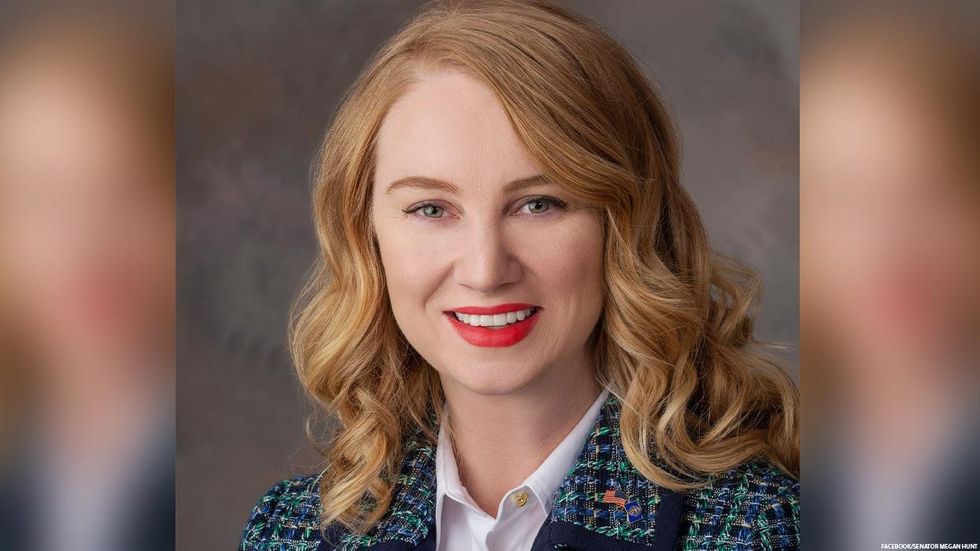
FEBRUARY 06 2023 (Advocate.com)
A bisexual state senator in Nebraska has proposed that a measure be enacted prohibiting children from enrolling in Bible studies, attending church camps, or participating in other forms of “religious indoctrination.”
Megan Hunt, the first out LGBTQ+ person elected to the Nebraska Legislature, presented this proposal as an amendment to a bill prohibiting minors from attending drag shows.
Under the bill, LB371, introduced by Republican Sen. Dave Murman, anyone under 19 would be prohibited from attending drag shows. The bill defines drag as a performance by someone who uses clothing, makeup, or other physical markers to demonstrate a gender identity that is different from what they were born with, as well as singing, lip-synching, dancing, or performing for entertainment.
Murman claims never to have attended a drag performance but relies on videos he’s seen online to judge them as inappropriate for children, Nebraska Public Media reported.
“I think the vast majority of Nebraskans would agree that sexualized dancing and enhanced genitals is not appropriate for children to view,” he said.
Because of the broad wording in the bill, critics argue it would ban children from attending theatrical performances like Shakespeare’s works and musicals, where men routinely dress to perform women’s roles.
It’s unclear how Murman’s proposed law would affect the restaurant Hooters, which features women in suggestive tank tops who serve the patrons. Nebraska has at least one Hooters in the town of La Vista. All ages are welcome in the establishment.
Hunt chose to highlight the hypocrisy of the proposed law, even if the conservative legislature passes it. Her amendment would prohibit children from attending camps that are religiously based, like Bible camps.
“There is a well-documented history of indoctrination and sexual abuse perpetrated by religious leaders and clergy people upon children,” according to the amendment. “Abusers within churches and other religious institutions often use events like church or youth-group-sponsored camps and retreats to earn children’s trust and gain unsupervised access to such children in order to commit such abuse.”
Children also are prohibited from attending religious camps where alcoholic liquor is served, regardless if such alcoholic liquor is part of a religious ceremony. The amended law would punish violators and groups that host these camps with a fine of $10,000.
“This is an amendment that I will use to make a point about the underlying bill, LB371, which bans all-ages drag shows,” Hunt told The Advocate. “This amendment obviously won’t pass, and I would withdraw it if it had the votes to pass. It’s just a device to make a point.”
Hunt says she has introduced similar amendments to other bills.
“Any manufacturer who distributes chocolate-coated candy for consumption by an individual under nineteen years of age without explicitly identifying the candy’s gender assigned at birth on the 11 packaging of such candy shall be fined ten thousand dollars,” reads an amendment she wrote in January.
“They aren’t meant to pass,” Hunt said. “They are meant to help kill harmful and discriminatory bills like LB371, which, if we are forced to debate in the full legislature, will truly be a waste of time for Nebraskans and for lawmakers.”
The Lord of Swiftness is a bright active card which comes up to mark periods of rapid, clear communication. This card will often represent the type of cathartic discussion which resolves misunderstanding and ends confusion. When passing through an event which is sign-posted by the 8 of Wands, there’s often a feeling of quick-moving energy, and a sense that obstacles are being swept out of your path.
There’s an important aspect of this card that is often overlooked – its spiritual interpretation. It can indicate the kind of direct divine instructions that causes a complete transformation – like a bolt of celestial power striking and infusing you. It provokes a sudden opening of the ways, a new level of understanding and spiritual expansion. Look for cards like the Star, The Priestess or the Hierophant close by in order to identify this not-to-be-missed effect!
The 8 of Wands always brings a new surge of energy and freshness when it appears. And it often signals entry into a new phase or project, which stands a good chance of success. Confirm with good Disk cards nearby, or Fortune. This is a happy and generous card, promising a progressive phase which may herald success and satisfaction.
The nicest aspect of the Lord of Swiftness is the part which indicates rewarding communication where old enmities can be resolved, where we can blow away the cobwebs from our pain, and heal old wounds. Those thorny situations where somebody gets hold of the wrong end of the stick and takes offence will often yield to the clarity this card brings in.
There’s just one warning – well didn’t there have to be? This is big bursting energy. It’s as well to keep your balance firmly in the centre of your being. That way you won’t get swept away by it!

(via angelpaths.com and Alan Blackman)
PBS NewsHour Feb 6, 2023 David Morrill of Portland, Oregon, was involved in conspiracy theory communities online until a mental health crisis forced him to confront his beliefs. He talked with his father about how he found his way back to reality. Their conversation is part of our Student Reporting Labs series on misinformation, “Moments of Truth.”
(Contributed by Gwyllm Llwydd)
 | Astro Butterfly Feb 7, 2023 |
One of the most important transits of the year is Jupiter conjunct Chiron in Aries.
Jupiter and Chiron only meet each other in Aries once every 50 years on average.
The exact transit happens on March 12th, 2023 at 14° Aries – but we can already feel its influence, since Jupiter and Chiron are only a few degrees away from each other.
Jupiter conjunct Chiron comes with opportunities for healing and growth. Jupiter conjunct Chiron in Aries will help us integrate our dual nature, so we can find wholeness and meaning.
“What one can be, one must be” – Abraham Maslow

I love this quote because it captures the essence of our Chiron journey.
In Maslow’s hierarchy of needs, self-actualization is at the top of the pyramid. It’s our highest goal; all the other needs (physiological, safety, love and esteem) are just a preparation for this magnificent task: to become what we are meant to be.
Our natal chart comes encrypted with our unique mission. There are 8 billion unique natal charts, and 8 billion unique humans with 8 billion unique missions.
The key to our natal chart is Chiron.
Of course, every planet and every aspect makes us who we are; but it’s Chiron, thanks to its strategic position between traditional planets and outer planets, that reveals how we can reconcile our human nature (planets up to Saturn) with our divine promise (outer planets), and fulfill our potential.
Being human is hard. Stepping out of Saturn’s rings is very difficult. Yet, we all know, deep inside, that there is ‘something’ on the other side, and this ‘knowing’ won’t’ let us live until we do something about it.
In astrology, Chiron is the archetype of the wound. We all have Chiron in our natal chart, so we are all wounded by design. The wound is divinely engineered to make us search for answers and continuously evolve.
Life is not about living a pain-free life, but about choosing the type of discomfort we want to experience:
The first type of wound is continuously stepping outside our comfort zone. Taking risks, putting ourselves out there, failing, being rejected, and starting it all over.
When you ask someone out on a date, you risk rejection. When you get a promotion, you feel awkward surrounded by people with more experience than you, who treat you like a novice. When you launch a book, you take the risk that no one might read it. When you start a business, you deal with uncertainty and responsibility. When you become a parent, you live with the constant worry of not being able to protect your child from pain and suffering.
The second type of wound is more subtle. It’s the pain of living an unfulfilled life, of sitting with your latent potential and not doing anything about it. Deep inside you KNOW you are here for more, and that with every minute that goes by you’re slowly wasting your life, YET you don’t do anything about it, either because it’s too hard, or because you don’t know what to do.
What type of pain do you want to experience?
As frightening as it may be to get out there, the 1st type of wound hurts less than the 2nd. But wound#1 require us to step outside Saturn’s rings of safety. What’s on the other side of Saturn? We don’t know. That’s why option #1 requires vulnerability.
Chiron is associated with feelings of vulnerability, shame, guilt and inadequacy. If we really think about it, the only reason why we don’t go for what we want is that we experience either shame, or guilt.
Shame: we are afraid of what others might think of us, which is really an avoidance of feedback, of getting a reality check of where we stand, or a fear of not being able to survive outside our safe social circle.
Guilt: or we feel guilty because for whatever reason (deep-rooted parental or societal conditioning, religious conditioning “you’re a sinner”) we believe there’s something fundamentally wrong with us, and that we don’t deserve “more”.
Anthropologist Ruth Benedict was the first to come up with the concept of guilt culture vs. shame culture.
In a guilt culture (blue) you know you are good or bad by what your conscience feels.
In a shame culture (red) you know you are good or bad by what your community says about you, by whether it honors or excludes you.
In a guilt culture people feel they do bad things; in a shame culture social exclusion makes people feel they are bad.
Some cultures (e.g. Western culture) are more wired towards guilt, while others (e.g. Arabic, Eastern) towards shame, but there’s no one-size-fits-all rule. You as an individual can identify with either, or with both.
You may wonder why we bring up this cultural model in a discussion about Jupiter conjunct Chiron.
In astrology, Jupiter rules society – with its norms and unwritten rules. When Jupiter conjuncts Chiron, Jupiter will show us how our individual wound (Chiron in Aries) is connected to learned models of beliefs and behaviors (Jupiter).
Chances are, a lot of your pain and suffering is rooted in some social models or behaviors. Jupiter will put the magnifying glass on your Chiron wound so that you can see it for what it is.
Jupiter expands everything it touches. When Jupiter meets Chiron, Jupiter will expose – and even blow out of proportions – our wound. Our Chiron wound WILL be triggered, there’s no way around it.
But unlike other planets, Jupiter will also come with a solution.
Jupiter is the planet of consensus and coherence. That’s why in astrology Jupiter rules knowledge, education, the moral code and the law – Jupiter is the final denominator, what everyone agrees on.
Jupiter’s role is to help us connect the dots to find a greater and more meaningful whole.
So when Jupiter meets Chiron in March 2023, our wound will finally make sense to us. Something will click, and the awareness of what our wound is about and how it is triggered, will eventually help us heal it.
Our Chiron journey doesn’t stop at healing the wound. Chiron is not only our wound, but also our gift. Chiron is the gap between who we are now, and who we could be.
“What one can be, one must be”
Jupiter conjunct Chiron will help us connect the dots and see what’s the bigger picture behind these wounds, revealing the crucial role they have served in our growth and development.
Without the wound, without the pain, we wouldn’t be motivated to grow and evolve.
When we heal our wound, when we accept our dual nature, we automatically unlock our gift.
No one is here by chance. You are here for a very special reason.
Jupiter conjunct Chiron in Aries may be that blink of clarity that will not only set you on a path of healing, but take you on a journey of (re)discovering your magnificence, so you can become the person you were meant to be.