
New Thinking Allowed with Jeffrey Mishlove Dec 18, 2016 Ruth Kastner, PhD, is a philosopher exploring the foundations of physics. She is on the faculty of the physics department at the State University of New York at Albany. She is also a research associate at the University of Maryland. She is author of The Transactional Interpretation of Quantum Mechanics: The Reality of Possibility and also Understanding Our Unseen World: Solving Quantum Riddles. Here she points out that a deterministic universe implies that free will is an illusion. Many scientists hold to this view. Since quantum mechanics is founded upon Shrodinger probability waves, i.e., the psi function, she maintains that it is not a deterministic theory – and, therefore, not incompatible with free will. There is a viewpoint, known as the block world, held by many in physics that maintains that the entire history of the universe from beginning to end is predetermined and unchangeable. This viewpoint is hard to reconcile with free will. New Thinking Allowed host, Jeffrey Mishlove, PhD, is author of The Roots of Consciousness, Psi Development Systems, and The PK Man. Between 1986 and 2002 he hosted and co-produced the original Thinking Allowed public television series. He is the recipient of the only doctoral diploma in “parapsychology” ever awarded by an accredited university (University of California, Berkeley, 1980). He is a past vice-president of the Association for Humanistic Psychology; and is the recipient of the Pathfinder Award from that Association for his contributions to the field of human consciousness. He is also past-president of the non-profit Intuition Network, an organization dedicated to creating a world in which all people are encouraged to cultivate and apply their inner, intuitive abilities. (Recorded on August 23, 2016)
Monthly Archives: September 2022
Alien Consciousness with Paul Smith
New Thinking Allowed with Jeffrey Mishlove May 20, 2022 Paul H. Smith, PhD, is a founder and past-president of the International Remote Viewing Association. A former Army intelligence officer, he served for seven years as part of the military’s top secret remote viewing program. Later, he earned a doctoral degree in philosophy. He is the author of Reading the Enemy’s Mind and The Essential Guide to Remote Viewing. He currently serves as president and chief trainer of Remote Viewing Instructional Services. His website is https://rviewer.com/. Here he points out that his remote-viewing mentor, Ingo Swann, expressed concern that alien entities were influencing earth’s population so as to stifle cultivation of our parapsychological skills. Swann felt that human have enormous psychic potentials and aliens find this threatening. He provides some details of his own potential alien encounters in the context of remote viewing. The conversation includes a philosophical analysis of the problems associated with interpreting the consciousness of other beings. New Thinking Allowed host, Jeffrey Mishlove, PhD, is author of The Roots of Consciousness, Psi Development Systems, and The PK Man. Between 1986 and 2002 he hosted and co-produced the original Thinking Allowed public television series. He is the recipient of the only doctoral diploma in “parapsychology” ever awarded by an accredited university (University of California, Berkeley, 1980). He is also the Grand Prize winner of the 2021 Bigelow Institute essay competition regarding the best evidence for survival of human consciousness after permanent bodily death. (Recorded on May 3, 2022)
“La Place de l’Europe”
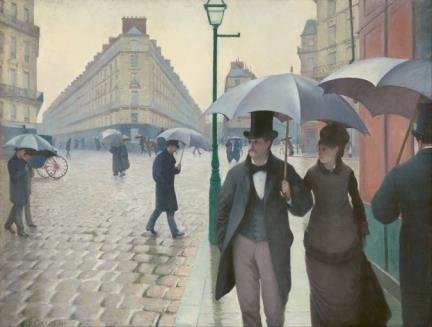
La Place de l’Europe, by Gustave Caillebotte, 1877. Oil on canvas, 276 × 212 cm. Art Institute of Chicago.
What is Omnisexuality? A Brief History

Omnisexuality is when someone is attracted to all gender identities and sexual orientations. This term falls under the category of multisexuality, which includes people attracted to more than one gender
Omnisexuality is when someone is attracted to all gender identities and sexual orientations. This term falls under the category of multisexuality, which includes people attracted to more than one gender. Folks who are omnisexual are usually categorized along with those who identify as bisexual, polysexual, and pansexual.
Like with any other sexual orientation or gender identity, there’s no single way to identify as omnisexual. Omnisexual and pansexual, both refer to being attracted to people of any gender identity, have been used interchangeably. However, there are distinct differences, which we’ll get into later.
Omnisexual people may often find that their gender identity is confused with other sexual orientations. Therefore, they may feel added pressure to label themselves in a more familiar way.
What Is the History of the Word Omnisexuality?
The word Omnisexuality first appeared at the 1959 beat poet Lawrence Lipton’s The Holy Barbarians. However, it was first noticed in a 1984 text Sexual Choices: An Introduction to Human Sexuality. This text defined Omnisexuality as “a state of attraction to all sexes.” In addition, it mentioned that some researchers believe that every person is born omnisexual before they label their sexual attractions as gay, straight, or other sexual orientations.
The term appeared more in the early 1990s when M. Jimmie Killingsworth analyzed the poet Walt Whitman. In Killingsworth’s study, he discovered that Whitman created an omnisexual character in The Leaves of Grass. In the 2010s, The Atlantic also found that Whitman’s poetry expressed sexuality towards all genders.
During the 2000s, omnisexual became a common message board term. Then, the term became more well-known when celebrities, like Janelle Monáe, came out as pansexual. As a result, many popular articles discussed Omnisexuality alongside various pansexual celebrities.
What Examples of Omnisexuality Are There in the Media?
Some fictional characters who have been confirmed to be omnisexual include Jack Harkness from Doctor Who/Torchwood, Elim Garak from Star Trek: Deep Space Nine, and Kevin Crawford from Paradise P.D. The term omnisexuality has also been featured in Big Mouth and Deadpool from Marvel Comics.
How Is Omnisexuality Different From Pansexuality?
Many people might define both terms as being attracted to every gender; however, it is more nuanced than that. According to the Oxford Dictionary, is “the state of being sexually attracted to people without regard to their sex or gender identity.”
Both pansexual and omnisexual also come from different languages. For example, the prefix pan is derived from the Greek word ‘pan’ meaning “all,” whereas the prefix omni is from the Latin word ‘omni’, which also translates to “all.” However, even though these terms have a prefix that translates to “all,” there is a distinct difference between these concepts.
The primary difference is that pansexuality is the attraction to people regardless of their gender, meaning they could date someone without their gender playing a part in whether they want to become romantically involved with them. On the other hand, omnisexual is the attraction to anyone despite their gender, which means they could date a person of any gender and notice their gender, but not care how they identify.
What Is the Omnisexual Flag?
Pastelmemer first designed the omnisexual flag around July 4, 2015. Even though the meaning of the colors is not yet confirmed, many believe that the flag signifies the following: the light pink and light blue are representative of the gender spectrum. Pink is the attraction to femininity and women. Blue is the attraction to masculinity and men. The deep purple, which can sometimes be black, represents attraction to people whose gender identities are outside these categories.
Many people have also created alternative flags for Omnisexuality.
What Are Some Myths and Misconceptions About Omnisexuality?
Omnisexual people, similar to other identities in the multisexual category, may experience intolerance regarding their sexual identity. In addition, finding resources about this sexual orientation can be challenging. People may also not recognize or know what the term means, and they may attempt to put omnisexual people in a more known category.
Since there is such a lack of information about Omnisexuality, much confusion and misconceptions can occur. For example, one common myth is that omnisexual people aren’t willing to settle down with one person. Another misconception is that there is the perception that those who identify this way are more promiscuous than others.
How Does Omnisexuality Work in Relationships?
If you are dating someone, they may not be familiar with the term omnisexuality. If this is the case, you can explain what it means to you by identifying it this way.
Understanding your preferences can help communicate your wants and needs to your partner, no matter their sexual orientation or gender identity. In essence, mutual respect can create more appreciation of each other’s differences and validate your identity.
In Summary
It can be helpful for those individuals who identify as omnisexual to share their experiences with the broader LGBTQ+ community. That way, there can be fewer misunderstandings on what being omnisexual is. Plus, further insights on Omnisexuality can help others work through their complex sexual identities.
It is essential to note that sexual orientation and gender are unique to every person, so someone’s definition of their sexuality or gender could differ from another person’s. In essence, you can choose to label yourself however you want or choose not to label yourself. All in all, there is no need to feel pressure to choose or conform to a specific sexual orientation or gender identity.
Healing with Love with Leonard Laskow
New Thinking Allowed with Jeffrey Mishlove Sep 23, 2022 This video is a special release from the original Thinking Allowed series that ran on public television from 1986 until 2002. It was recorded in about 1993. Leonard Laskow, a gynecologist and obstetrician, describes his transformation from a conventional physician to a specialist in the art of spiritual healing. He discusses visionary experiences as well as scientific experiments that led him to formulate a healing process based on the energies of love. This process requires us to extend unconditional love to our own illnesses. Now you can watch all of the programs from the original Thinking Allowed Video Collection, hosted by Jeffrey Mishlove. Subscribe to the new Streaming Channel (https://thinkingallowed.vhx.tv/) and watch more than 350 programs now, with more, previously unreleased titles added weekly. New!! Free month of the classic Thinking Allowed streaming channel for New Thinking Allowed subscribers only. Use code THINKFREELY.
Kant: A Complete Guide to Reason
Then & Now Sep 16, 2022 00:00 – Immanuel Kant 02:53 – Kant & The Enlightenment 08:00 – Empiricism & The Chaos of the World 15:05 – The Critique of Pure Reason 21:16 – Time & Space (transcendental aesthetic) 27:47 – Ordering the World (the metaphysical deduction) 39:50 – The Transcendental (deduction) 53:57 – Metaphysics of Morals 59:47 – The Categorical Imperative Then & Now is FAN-FUNDED! Support me on Patreon and pledge as little as $1 per video: http://patreon.com/user?u=3517018 Or send me a one-off tip of any amount and help me make more videos: https://www.paypal.com/cgi-bin/webscr… Buy on Amazon through this link to support the channel: https://amzn.to/2ykJe6L Follow me on: Facebook: http://fb.me/thethenandnow Instagram: https://www.instagram.com/thethenandnow/ Twitter: https://twitter.com/lewlewwaller Subscribe to the podcast: https://podcasts.apple.com/gb/podcast… https://open.spotify.com/show/1Khac2i… Description: A look at the philosophy of Immanuel Kant, exploring why his ideas matter, and the context they arose from. It looks at the Critique of Pure Reason and the Groundwork of the Metaphysics of morals, explaining concepts like transcendental idealism and the Categorical Imperative. Born in 1724, he wanted to make us a truly scientific species – he wanted to bring together reason – how we think – and experience – what we see, hear, touch through our senses – on a sure foundation – one that scientific knowledge could be built on. Sources: https://lewwaller.com/immanuel-kant-i…
Life in the buff
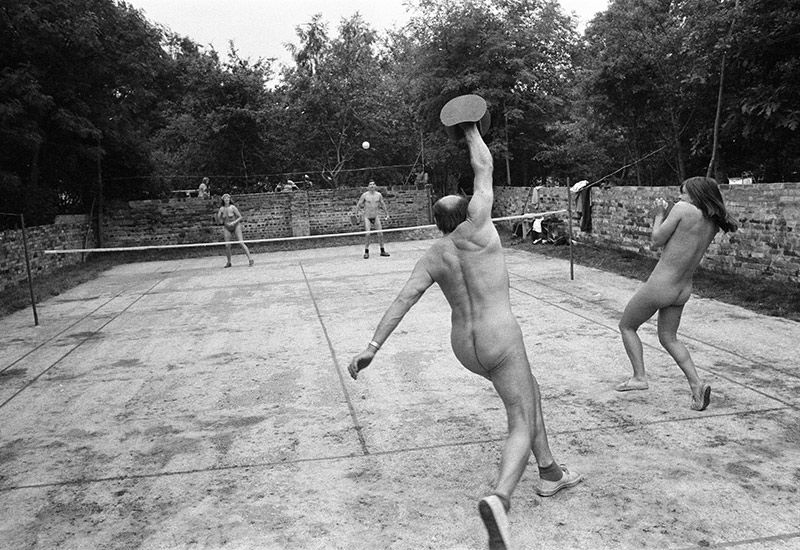
Naturists believed nudity was profoundly beneficial to society. In order to spread the message, they took to photography
England, 18 June 1975. Photo by Peter Cook/Mirrorpix/Getty
Annebella Pollen is professor of visual and material culture at the University of Brighton, UK. Her books include Mass Photography: Collective Histories of Everyday Life (2015) and Nudism in a Cold Climate (2022).
Edited byNigel Warburton
23 September 2022
Love Aeon?
Support our work
For around 100 years, naturists – formerly known as nudists – have been arguing that public disrobing is physically and morally improving. They first promoted their ideas in illustrated books and magazines in the 1920s and ’30s, and soon extended their claims to the pleasures and practices of viewing nude bodies in photographs. They did this, in Britain, in the face of an incredulous public and a hostile legal system with strict ideas about decency and obscenity.
Can looking at nudes be good for you? The lively debates raised by historical nudists about the pleasures and powers of showing the nude body are fascinating. They provide surprising perspectives on questions about physical beauty, nature, and the sexualised body.
Although we are all born naked and the nude body is as old as humanity, social nudism as a distinct cause and as an organised community has late-19th-century German origins. Philosophers, artists and social reformers sought out anti-urban and anti-industrial alternatives as a way of promoting a more natural and authentic way of life. Their interests in natural health cures through exercise, diet and the purifying exposure of the body to the sun led to a cult of nakedness practised on plots of lands dedicated to group gymnastics and open-air swimming, and promoted through a body of zealous literature in the early years of the 20th century. Some of this thinking about health, youth and the triumphant body beautiful would later inform Nazi literature about national fitness and racial superiority.
International travellers from across Europe and the United States participated in German nudist practices before and after the First World War, and they enthusiastically wrote up their experiences for non-German-speaking audiences. The New York sociologist Maurice Parmelee was one US visitor who became a convert to the cause. His much-reprinted book Nudism in Modern Life: The New Gymnosophy (1929) developed a theory of nakedness for an Anglophone readership. He claimed that ‘gymnosophy’ – his preferred term, as an ancient Greek word combining nakedness and wisdom – ‘stands for simplicity, temperance and continence in every phase of life. It is useful in the rearing of the young,’ he claimed, ‘in the relations between the sexes, and in promoting a democratic and humane organisation of society. Consequently,’ he argued, ‘the implications of gymnosophy extend far beyond the practice of nudity alone, for it connotes a thoroughgoing change in the outlook upon and mode of life.’

For Parmelee, and those who followed his line of thinking, nudism was libertarian, democratic and humanitarian. He claimed it would deliver a more egalitarian world, destroying class and caste systems, and establishing gender equality. Nudism, he asserted, ‘is a powerful aid to feminism, because it abolishes the artificial and unnecessary sex barrier and distinction of dress. The gymnosophic movement is,’ he believed, ‘the logical continuation and consummation of the woman’s movement, for it at last brings woman into the man’s world and man into the woman’s world, so that they can see each other as they really are.’ Parmelee’s study was illustrated with black-and-white photographs of naked white German youths assuming expressionist dance poses or boldly leaping for joy in the open air.
As the first tentative nudist clubs were established in Britain on a small scale in the mid-1920s, a home-grown promotional literature began to emerge. By the early 1930s, several nudist periodicals could be purchased cheaply from British newsstands, from the short-lived monthly Gymnos, which styled itself as ‘For Nudists Who Think’, to the longer-lasting quarterly Sun Bathing Review. Both were populated with high-brow articles written by physicians, psychiatrists and clergymen who detailed the physical, mental and spiritual messages of the movement.
Gymnos’s editors, like Parmelee, believed that nudism had the power to ‘unite all sects and denominations in one brotherhood’. To do this, and to maintain repute, public and social nudity needed to be divorced from any association with sex. To make this move, practitioners argued that nudism rejected ‘conventional modesty’ and produced an alternative system of ‘propriety, chastity and morality’. This was premised on ‘pure motives’ of ‘simplicity, beauty and truth’.
The psychological transformation that would come by seeing the naked bodies of others was a core tenet of early nudism. To show how this utopian world might look, British nudist magazines included nude photographs produced by professional photographers. Mostly taken in outdoor settings, these images sometimes documented practising nudists at camp, but more often showed idealised and heroic models in classical or painterly postures. Sun Bathing Review particularly promoted its status as ‘copiously illustrated’, which ensured it a readership of 50,000 by its second issue, far more than the quantities of practising nudists at the time. Bertram Park, a portraitist whose photo studio was frequented by the royal family as well as by nude dancers, was the magazine’s honorary art editor.

Park argued that ‘camera-consciousness’ on the part of the model was one of the biggest obstacles to the successful photograph. ‘Only rarely, as in so-called nudist colonies in England, and on the Continent, or at the Summer Schools of the Sun Bathing Societies, is complete unconsciousness of nudity achieved,’ he said. As a result, and owing to his claim that the dimensions of ‘the average middle-class girl are out of proportion as from the head to the hips’, he recommended statuesque professional models as photographic subjects rather than the mixed sizes and shapes of actual nudists. The persuasive power of the results, he argued, was important for ‘the moral and physical welfare of society’.

While undoubtedly assisting with magazine sales among non-nudists who eagerly embraced the new opportunity to devour images of naked bodies, looking at nudes was argued to have improving effects on mind and body. Model bodies – always slim, white and young – offered templates to live by. They encouraged the unhealthy towards fitness, and held up an instructive mirror to non-model bodies. Early nudism, for all its egalitarian claims, was founded on eugenic principles about ‘good’ and ‘bad’ bodies, which led to discriminatory statements about those who did not live up to its ideals. Parmelee, for example, felt that those with fat stomachs should look and learn: ‘This unwieldy mass of flesh, sometimes containing folds and creases, and shaking jellylike with the motion of the body,’ he observed, ‘is one of the most unpleasant sights in gymnosophic circles.’ He argued that nudism ‘is the most effective measure for eliminating this monstrous distortion by spreading an ideal of human beauty and shaming those who fall so far short of it.’
‘The bodies of the other sex are no more attractive than carcasses in a butcher’s shop’
Nudism in its early days was also seen by its adherents as a sexual corrective. The sexologist Norman Haire argued that ‘so many of the sexual difficulties of our modern society are due to excessive repression that I welcome any harmless channels for the deflection of urges which might otherwise manifest themselves in a manner harmful, or even merely disagreeable to society.’ He suggested that ‘Peeping Toms’ and exhibitionists ‘should be sentenced to regular attendance at a Nudist Camp’. Nudism’s distinctiveness came from looking at the bodies of others in a disinterested way. The founder of Spielplatz, one of Britain’s oldest nudist clubs, established as a business in 1930, argued that ‘it is just as pleasant to look upon well-kept human bodies as upon fine horses, race-hounds or birds on the wing’. In his club, he told aspiring members, ‘you will admire the beautiful, pity the others, and resolve to look to your own with an eye to its improvement.’

This was all very well in the spaces of the club, populated by nudists of all ages and sizes. One attendee, the philosopher C E M Joad, described nudist camps in 1938 as ‘the chastest places I have ever visited. After one has been there 10 minutes,’ he observed, ‘the bodies of the other sex are no more attractive than carcasses in a butcher’s shop.’ But those who produced nudist magazines had other ideas about who should be looked at. Wrinkly, paunchy or hairy nudists going about their daily camp routines – frying breakfast or digging a latrine – were side-lined in favour of photographs of naked showgirls and buff body builders arranged alluringly in pastoral settings. These, their promoters argued, provided readers with ‘inspiration’. By contrast, ‘dull and unartistic photographs of camp life’ could put off the ‘hesitant novice’. The photographs acted as a ‘shop window’ for their ‘great movement’ which, they said, ‘can only flourish if it is continually expanding. We need to convert more and more people to our beliefs to help restore sanity and simplicity to the world.’
By the end of the 1930s, nudist membership was at an all-time high in Britain, with around 40,000 members. New nudist magazines were launched, boasting readerships of more than 100,000 per issue; evidently, more people liked to look on than to join in. In wartime, nudists found new justifications for their cause, when sun and air were reconceived as ‘unrationed benefits’, and public health was a national priority. The photographic nude also took on new meanings in a wider culture where pin-ups were achieving popularity as imports from the US.
The British social research organisation Mass Observation noted the prevalence of images of women adorning servicemen’s billets, and conducted ‘an experiment in taste’ in 1944, providing soldiers, sailors and airmen with a dozen reproductions of famous paintings, graphic illustrations and photographs of cinema stars. The selection included a photograph from the nudist press of a naked model arranged around a rock under a cloudy sky, taken by the photographer Horace Roye-Narbeth. Known professionally as Roye, his photograph easily took first place in the appraisal; it was the only image no-one disliked. Reviewers used terms such as ‘full of life’ and ‘clean and decent’. A 22-year-old army private stated that the winning nude should be titled ‘Worth Fighting For’.

Nudes were perceived as a national tonic under wartime conditions, and their viewing was restorative. But nudists were aware that there could be right and wrong ways of looking. A quiz in Sun Bathing Review in 1945 asked: ‘How Good a Sun Bather are You?’ To pass the test, readers were expected to be able to identify the Sun’s actinic and abiotic rays, the relative merits of artificial sunlamps, and a list of foods containing Vitamin D. ‘Good’ nudists were those who understood the practice intellectually. But highly educated members worried that readers were looking at depictions of flesh for less than scholarly aims. The experimental psychologist J C Flügel, for example, had warned a 1938 meeting of the Sex Education Society that ‘even the editors of our nudist magazines must admit that most of their readers are attracted by a sexual interest in the pictures’.
Nudist newsstand magazines offered an accessible, cheap and morally justifiable supply of nude photographs at a time when pornographic material was illegal and hard to find in the public domain. Contributors to forums in nudist publications, however, were at pains to maintain nudism’s non-sexual status. Members argued that ‘The true naturist regards his nudity as something unaffected and natural, simple and open. This, or a proper photographic representation of it, should have no provocative effect,’ they claimed, ‘except, perhaps, to a sex-mad mind, which will, in any case, find vice in the most innocent subject.’ Others countered that nude photographs were known to be sold for sexual stimulation, but stalwarts insisted: ‘There is nothing surreptitious about the display of genuine naturist illustrations’; these ‘do more to encourage a clean view of nudity than all the morality talks in the world.’ To the general population however, public nudity remained contentious. Some religious leaders were certain that nudism was depraved. Even among those with more moderate views, nudism was often a laughing matter, the butt of smutty jokes laden with innuendo and a popular subject for comic picture postcards.
Some nudist magazine photographers were working both above and below the counter
What we might consider the ‘clean view of nudity’ offered by nude photographs in mid-century Britain was visually particular. To stay on the right side of obscenity law, genitals and pubic hair had to be concealed. This meant that the subjects of nudist photographs often turned their back to the camera (buttocks were permissible), were cropped from the hips down (breasts were allowed) or offending areas were otherwise concealed by strategically placed limbs or props. When uninterrupted full-frontal or side views were included, genitals had to be clouded out in post-production by ‘retouching’ – scratching out the offending parts on the photographic negative. Nudists complained that their principles of freedom from shame and liberation from convention were compromised by these treatments. They reinforced the idea of forbidden fruits and warped the nudist message.

By the 1950s, nudists had established their health case and were achieving some mainstream acceptance. At the same time, they were resigned to the fact that, as one regular contributor observed in Sun Bathing Review in 1951: ‘Nudism and photography seem to go hand in hand, whether we all like it or not.’ He reflected: ‘It has been said that all nudists are photographers,’ but he regretted that ‘not all photographers are nudists.’ In a period when popular magazine publishing boomed – often featuring pin-up, glamour or ‘cheesecake’ photographs of women, and ‘beefcake’ photographs of men – and when censorship was reaching new heights, the government cracked down on salacious printed material. Nudist publications mostly escaped seizure and destruction. Some nudist magazine photographers, however, were working both above and below the counter, producing outdoor nudes for health publications but also titillating content for pornographic periodicals, often using the same models. Young women might splash in the foam or roll in the hay in nudist publications like Health and Efficiency, but they wore baby-doll negligees and fishnet stockings in glamour magazines like QT.
Roye was a photographer who inhabited both domains. His outdoor nudes had roused servicemen’s spirits in the 1940s, but a decade later he was experimenting with new methods, producing 3D publications of the ‘blonde bombshell’ British film star Diana Dors, nude but for diamonds and furs. The photographs’ immersive effects were achieved by wearing red and green 3D spectacles. In the late 1950s, Roye pushed boundaries further by publishing ‘unretouched’ photographs of nude models. The photographs were those previously supplied to the nudist press but, in his private subscription editions, models’ pubic hair was now visible. For this, he was charged in 1958 with the publication of an obscene libel.

To protect himself from prosecution, the arguments that Roye presented in court from his supporters were remarkably similar to those used by the early nudist press. The ‘natural’ unretouched state of the nude models, especially when depicted in outdoor settings, helped support the claim that Roye’s nude photographs were less ‘synthetic’ than those produced with artificial light and highly made-up models in studio settings. Such photographs – described as ‘semi-clad illustrations in contemporary magazines’ – were blamed ‘for the waves of juvenile delinquency, which are sweeping the world’. Another supporter stated, unequivocally: ‘the solution to the great social problems of sex education and our responsibility to women and children lies in the revision of our publishing laws, enabling the mind to reconcile itself to regard the human body as something natural, beautiful and, above all, wholesome.’ These arguments seemed to relate to the viewing of only young women’s flesh but, nonetheless, they were persuasive enough for Roye to be acquitted.
The 1960s are associated with permissiveness and sexual liberation. Given British nudists’ 40 years of campaigning, it might seem that their ideas would come of age in the decade. Magazines and feature films calling themselves ‘nudist’ certainly proliferated, but few had genuine links to the club cultures and non-sexual principles of nudism’s founders. Instead, they co-opted nudist terminology and arguments to promote their own agendas and to stay on the right side of the law. The campaigners for sexual liberation also called for public nudity as part of a wider relaxation of moral codes but the two groups rarely overlapped. Young hippies had no need for nudist club cultures, bound by rules and committees, and whose morals seemed dated. Nudists of the old school, in consequence, faced two opposing paths. They could either restate their opposition to sexual cultures more forcefully and enforce their own separatist identity – which many did by formally rebranding themselves as naturists and organising themselves into a national campaigning body; or they could embrace the changing times, and admit the sexual aspects of public nudity. Those who took this route saw themselves as truth-tellers and liberators as they smoothly manoeuvred their magazines towards soft pornography and their clubs into swingers’ bars.
By the end of the decade, the ‘pink wars’ had been won. The showing, first, of pubic hair, and then exposed genitals, ceased to be a prosecutable offence in Britain. Nudists, however, were pushed to one side. ‘We were the hardy pioneers,’ noted a contributor to Health and Efficiency in 1970, ‘who took all our clothes off long before the mere idea of a body in the buff could be projected with as much freedom and vigour as we find today at pop festivals, in papers and magazines, on screens and stages.’ This naturist complained: ‘But the permissives of 1970 are not even grateful!’
A hundred years after the first tentative attempts to establish nudism as a collective cause in Britain, some of the founders’ ambitions may seem wrongheaded, quaint or merely curious. But as I assembled my recent book on the subject, Nudism in a Cold Climate: The Visual Culture of Naturists in Mid-20th-Century Britain (2022), the echoes of their claims were still everywhere to be heard. A book about nude photography with a nude on the cover still cannot be sold on most bookselling platforms in the 21st century. Facebook and Instagram will not allow uncensored images from the book’s contents to be shown, even those with historic retouching or otherwise concealed pubic areas. Breasts and buttocks, deemed harmless a century ago, are now forbidden by social media moderators, our new censors. Nudists have long argued that seeing the bodies of others would open minds from repressive tradition and lead to a fairer world based on knowledge. The 50-year moral battles that were won for photography in print in the 1970s are still being fought on social media more than 50 years later.
Khalil Gibran on truth

Neptune and its rings come into focus with Webb telescope

A photo provided by NASA, ESA, CSA, STScI shows Neptune with its rings and several of its moons clearly visible, as captured by the James Webb Space Telescope’s Near Infrared Camera. [NASA, ESA, CSA, STScI via The New York Times]
Jonathan O’Callaghan
23.09.2022 • (NYTimes.com)
No spacecraft has visited Neptune since 1989, when the NASA probe Voyager 2 flew past on its way out of the solar system. Neptune, which is four times as wide as Earth, is the most distant planet of our solar system. Voyager 2’s observations whetted the appetites of astronomers, who were eager to learn more about the ice giant.
Now we’ve returned. Sort of.
On Wednesday, the James Webb Space Telescope cast its powerful gold-plated eye onto this remote world. The power of this infrared machine, the largest and most advanced telescope ever sent to space, has provided some of our best views of Neptune in 30 years.
“I have been waiting so long for these images of Neptune,” said Heidi Hammel, an interdisciplinary scientist at the Space Telescope Science Institute in Baltimore, which runs the Webb telescope. “I’m so happy that it has worked.”
Ground-based observatories and the Hubble Space Telescope have taken many images of Neptune in the past three decades. But the Webb’s views of Neptune, taken in July, provide an unprecedented glimpse at the planet in infrared light.
It took just a few minutes for the telescope to image Neptune close up, and an additional 20 to take a wider view, revealing not just the planet but myriad galaxies behind it stretching into the cosmos. “It’s aesthetically fascinating to see those distant galaxies and get a sense for how small the ice giant appears,” said Klaus Pontoppidan, Webb project scientist at the Space Telescope Science Institute.
Most prominent in the telescope’s view are Neptune’s rings, seen encircling the planet at a slight tilt given its orientation to Earth. The Webb telescope will allow astronomers to measure the reflectivity of the rings, offering an unmatched insight into this remote spectacle. New images could reveal the size and composition of these thin bands, which are probably made of ice and other debris.
“The ring system was absolutely mind-boggling to me,” Hammel said. “I have not seen it in that level of detail since the Voyager encounter in 1989. It just pops right out.”
Across the planet there are bright spots believed to be clouds of methane ice, which rise high into the planet’s skies and can persist for days.
“Nobody really knows what these things are,” said Patrick Irwin, a planetary physicist at Oxford University. “They seem to come and go, a bit like cirrus clouds on Earth.” The Webb telescope’s future observations could uncover how they form and what they are made of.
Webb images also show seven of Neptune’s 14 moons. The brightest is Triton, the planet’s largest moon, which scientists suspect was captured by Neptune’s gravity early in the solar system’s history. In infrared images, Triton’s frozen nitrogen surface makes it shine like a star, brighter than Neptune itself, because methane dims the planet in infrared light. NASA recently declined to send a mission to study Triton, and not much can be gleaned about it from this image. But future Webb observations should hint at the composition of Triton’s surface and could show changes indicating geological activity.
“Triton is a geologically active world,” Hammel said. “When Voyager 2 flew by, it saw cryovolcanoes erupting. So there is a possibility that there are changes in the surface chemistry over time. We will be looking for that.”
Hammel also thinks a glimpse of Hippocampus, an eighth Neptunian moon, is pictured just above the planet. “It’s very faint, but it’s in the right location,” she said.
These images of Neptune are just the latest in Webb’s tour of the solar system. This week we were treated to the telescope’s first glimpses of Mars, while over the summer we saw amazing views of Jupiter. Much more of our solar system will come under the observatory’s roaming eye, including Saturn, Uranus and even remote icy objects beyond Neptune — such as the dwarf planet Pluto.
“It illustrates that we are an all-purpose observatory,” said Mark McCaughrean, a Webb telescope scientist and a senior scientific adviser at the European Space Agency. “We can observe very bright things like Mars and Neptune, but also very faint things. Everybody now sees that it works.”
This article originally appeared in The New York Times.