The next Ukraine Emergency Translation Group meeting is on Friday, July 29, at 11:00 AM Pacific Time, noon Mountain time, 1pm Central time, 2pm Eastern time, 8pm Greece, 9pm Turkey.
We will share your Translation with the group, if you like. You can email your Translation to me at zonta1111@aol.com.
Or perhaps you have a sense testimony you’d like to share. Or other insights or comments you may have.
Open to all Translators. Translate whatever you like or don’t Translate anything at all. Your choice.
June 27, 2022Updated: June 28, 2022 11:56 a.m. (SFChronicle.com)
FILE – In this Nov. 16, 2019, file photo, free agent quarterback Colin Kaepernick arrives for a workout for NFL football scouts and media in Riverdale, Ga. Kaepernick is getting his first chance to work out for an NFL team since last playing in the league in 2016 when he started kneeling during the national anthem to protest police brutality and racial inequality. Two people familiar with the situation said on Wednesday, May 25, 2022, that Kaepernick will work out for the Las Vegas Raiders. (AP Photo/Todd Kirkland, File)Todd Kirkland / Associated Press
It might seem like the protesters in sports are losing.
Colin Kaepernick still doesn’t have an NFL job, not even a sniff, and his recent tryout with the Raiders might have been a sham.
The LIV golf tour, financed by Saudi Arabia in a classic case of sportswashing, seems to be doing just fine. LIV is scooping up cash-crazed PGA Tour players left and right, and certainly will not go broke.
World sports bodies are excluding Russian athletes from major events, yet Russia’s relentless attack on Ukraine continues.
The Warriors’ Steve Kerr, the Giants’ Gabe Kapler and other leaders continue to take strong, public stands on gun-safety laws, and yet our country, with gun-totin’ support from the Supreme Court, is starting to feel like Tombstone 1881 — if Wyatt Earp and the boys had been packing military assault weapons.
Most big-league teams now support LGBTQ+ rights, at least on the surface, yet those rights are being systematically chiseled away.
And so on.
Lost causes? Are these protesters just spinning their wheels? Or worse, creating harmful blowback, damaging the causes they seek to promote?
Here’s some free advice to the noisemakers from this corner: Please don’t give up.
Please do not shut up and dribble.
For sure, there is much room for cynicism and discouragement. A sportswriter friend recently tweeted a photo of cool Pride gear being sold at the Atlanta Braves’ stadium souvenir shop.
Another sportswriter tweeted back, “Do they sell tomahawks in Pride colors?”
There is a growing suspicion that many pro teams see the Pride movement as a cash cow, so they show support on the surface, while quietly funding the opposition. The San Francisco Giants have led the way in American sports in showing support for Pride and LGBTQ+ causes, but the team’s majority owner donates heavily to powerful candidates opposed to gay rights.
The A’s sell Pride caps, too, and owner John Fisher is a major donor to conservative candidates who oppose gay rights, gun-safety issues and other annoyances.
Those same politicians, supported in grand style by those team owners, and others, also oppose women’s reproductive freedom, gender equality and other women’s rights. Last week, the Supreme Court struck a blow against all of those things, spoiling the 50th anniversary of Title IX.
Prayer has become an issue, as in one case in which it verges on mandatory. This week, the Supreme Court upheld the right of a high school football coach in Washington state to kneel in prayer at midfield after each game, counter to school district rules.
The school district wasn’t telling the coach not to pray, simply telling him to not make it a public display, where players might feel compelled to participate at the risk of losing favor with their coach. Was the Supreme Court backing religious freedom or knocking down the wall between church and state?
“Excited to see what happens when the coach is Muslim,” tweeted noted sports author Jeff Pearlman.
Wimbledon has started this week, and Russian and Belarusian players are banned. That shuts out men’s world No. 1 Daniil Medvedev and women’s No. 6 Aryna Sabalenka.
So Wimbledon is taking its lumps from some in media and social media. Novak Djokovic called the ban “crazy,” which certifies that the ban is not crazy.
It’s terrible to punish athletes who have no say in their country’s politics, but it’s even more terrible not to use every tool available to discredit and undermine a ruthless government that took using sports as a political tool to an entirely new and unpleasant level.
It gets complicated. Chinese athletes are not banned from Wimbledon, where 11 Chinese players will step onto the hallowed grass, even though one of China’s lesser sins against humanity is the continuing sequestration of tennis player Peng Shuai, who crossed the government by accusing a high official of sexual misconduct.
Everyone’s in bed with China, in spite of the country’s concentration camps and widespread squashing of human rights. NBA Commissioner Adam Silver recently defended his league’s deep business ties with China, noting that most Fortune 500 companies do biz with China.
It’s a relationship that will keep the NBA tiptoeing forever. It’s an awkward dance — your partner is beautiful, but carries a bag full of nitroglycerine, and the tempo of the dance music keeps increasing.
Everything seems hopeless and futile for those in sports who are fighting for positive change, but some stuff is working.
Kerr and Kapler have advanced from speaking in favor of gun-safety laws, to helping bankroll the effort. They lend their support to fundraising, and if there’s anything in America that makes more noise than an AR-15 in an enclosed classroom, it’s money.
In Georgia, where many political/social fights are being waged, Charles Barkley, Stephen Curry and the WNBA and NBA have helped change public opinions and laws, and made an impact in elections.
Kaepernick probably will not get a quarterbacking job, but he brought energy to a movement, and provides leadership and role modeling. Though Phil Mickelson, Dustin Johnson and others remind us that money is more important than anything else in the world, Kaepernick and others provide a strong counterargument.
Civil rights leaders refer to “the struggle,” and the reason they do that is because it is a struggle. Quick payoffs are not going to happen. Pushback is inevitable.
But please don’t give up, you strugglers. Keep kneeling, squealing, squawking, talking, walking the walk and leading the way. Speak up and dribble.
Scott Ostler has been a sports columnist at the San Francisco Chronicle since 1991. He has covered five Olympics for The Chronicle, as well as one soccer World Cup and numerous World Series, Super Bowls and NBA Finals.
Though he started in sports and is there now, Scott took a couple of side trips into the real world for The Chronicle. For three years he wrote a daily around-town column, and for one year, while still in sports, he wrote a weekly humorous commentary column.
He has authored several books and written for many national publications. Scott has been voted California Sportswriter of the Year 13 times, including six times while at The Chronicle. He moved to the Bay Area from Southern California, where he worked for the Los Angeles Times, the National Sports Daily and the Long Beach Press-Telegram.
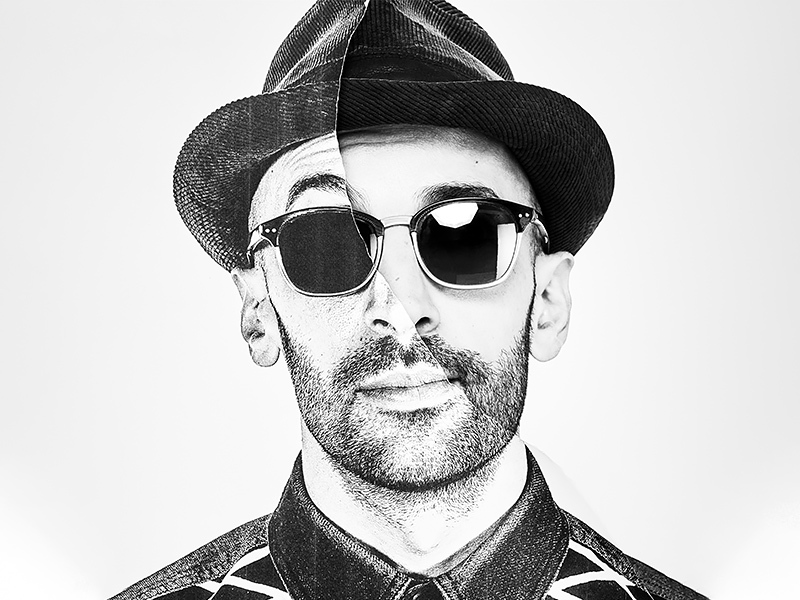
Famed for enormous black-and-white portraits that are pasted on surfaces ranging from the Louvre to the US-Mexico border wall, multimedia artist JR continues to tackle ambitious projects. In this powerfully moving talk, he shares how he made a giant mural on the courtyard floor of a maximum-security prison — with the help of guards and prisoners alike — and ended up with much more than a compelling image.Read transcript
This talk was presented at an official TED conference. TED’s editors chose to feature it for you.
Learn more about the story behind the Tehachapi Project.
New Thinking Allowed with Jeffrey Mishlove June 29, 2022 Thomas Verny, MD, DPsych, is a psychiatrist who founded the Association for Pre- and Perinatal Psychology and Health and served as its president for eight years. He is associate editor of the Journal of Pre- and Perinatal Psychology and Health and is author of Inside Groups: A Practical Guide to Encounter Groups and Group Therapy, The Secret Life of the Unborn Child, with John Kelly, Pre-And Peri-Natal Psychology: An Introduction, Parenting Your Unborn Child, Nurturing The Unborn Child with Pamela Weintraub, Gifts Of Our Fathers: Heartfelt Remembrances of Fathers and Grandfathers, Tomorrow’s Baby: The Art and Science of Parenting from Conception through Infancy, Pre-Parenting: Nurturing your Child from Conception, and The Embodied Mind: Understanding the Mysteries of Cellular Memory, Consciousness, and Our Bodies. His website is trvernymd.com. Dr. Verny shares that the mind is not totally dependent on the brain. He describes how reviving a patient, who had a near-death experience and his own near-death experience, helped him discover that consciousness is more than an epiphenomenon of the brain. The mind is both dependent on and independent of the brain and the rest of the body. After researching 5,000 books and articles he found that intelligence and memory are stored in networks throughout the body and in cells. The mind is fluid and adaptive. We may have the power to influence our genetic expression and well-being through thoughts, emotions, and environments. New Thinking Allowed Guest Host, Emmy Vadnais, OTR/L, is an occupational therapist and integrative medicine practitioner based in St. Paul, Minnesota. She is the author of Intuitive Development: How to Trust Your Inner Knowing for Guidance With Relationships, Health, and Spirituality. Her website is https://emmyvadnais.com/ (Recorded on June 6, 2022)
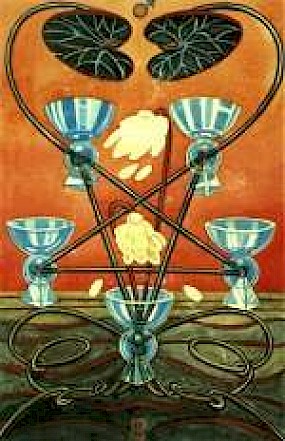
None of us feel too good when the Five of Cups, Lord of Disappointment, turns up in our readings. It almost always means that somebody somewhere is going to make us feel let down or sad about something. And often when that happens we can end up giving ourselves a hard time, and hurting ourselves unnecessarily.
But there’s one important thing to consider when we get disappointed – we feel that way because an expectation we had is not fulfilled, whether by ourselves or by somebody else. So if you get this card coming up often, it’s worth taking a good look at your expectations. Are they unrealistic? Are they geared to the abilities and characteristics of the person you hold them of? Or do you expect too much – this is an attitude we tend to apply most viciously to ourselves. Are you expecting more than you have a right to? Are you expecting things that the person in question -yourself or somebody else – is simply not able to provide? If the answer to any of the above is yes, then if you change your expectation, you’ll stop being disappointed.
When this card comes up, it warns us that either we have failed to resolved an old difficulty, or that – realistic or not – our expectations are about to be disappointed. Often this will happen in an emotional situation (because this is a Cup card) but can happen elsewhere in our lives too, because disappointment itself is an emotion and therefore belongs to Cups. Aside from locating where the problem lies, there’s rarely much that can be done except preparing ourselves to accept the inevitable consequence of being alive – into each life a little rain must fall etc.etc.
One thing that is always worth bearing in mind with a card like this is that the feelings which arise when it occurs often scare us into failing to take another risk, failing to make another effort, hiding away where we can’t be disappointed again. But then if we give in to those sort of feelings we’re expecting to be disappointed again, aren’t we? So maybe we need to think about the Nine of Wands when we see the Five of Cups, reminding ourselves of that inner reserve of strength and capability we can all release inside us!
The Astrology Podcast Mar 9, 2021 Episode 294 features a discussion with astrologer Israel Ajose about the meaning of the Moon in astrology, and some different techniques that incorporate the Moon in the western astrological tradition. This is the first in a series of new episodes on the significations of each of the planets, and I decided to start with the Moon because it is the closest celestial body to Earth. In order to ground the episode in the astrological tradition we read through several different passages from ancient and modern astrologers to see how they described the meaning of the Moon in astrology. We then used this as a jumping off point for further discussions, and in order to look at some of the different techniques that use the Moon as their focal point in western astrology. The passages that we read from different astrologers include Vettius Valens, William Lilly, Reinhold Ebertin, Robert Hand, Richard Tarnas, and Demetra George. Israel Ajose is a practicing astrologer from the UK, and is the President of the Astrological Lodge of London, which is the oldest astrological society in the English-speaking world, having been founded in 1915 by Alan and Bessie Leo. Israel previously appeared on episode 213 of The Astrology Podcast where I interviewed him about the Astrological Lodge in person while on a trip to Europe.
The Cancer New Moon attunes us to family themes, especially maternal roles modeled from previous generations. The New Moon is in its natural sign and conjunct Black Moon Lilith (a mythical figure and Zodiac point), adding a distinctive edge: the traditionally caring, devoted mother figure or wife takes a backseat to one who rejects a subservient or second-incommand role.
In Jewish mythology, Lilith was the first woman, very beautiful, and a companion and mate for Adam, the first man — created from soil, by contrast with Eve, made from Adam’s rib. Even so, it was thought that Lilith was made not from pure dust like Adam, but from “impure” dust (i.e., filth and sediment).1 In rabbinic writings, Lilith saw herself as equal to Adam and refused to “lie beneath him.” Such phrasing is open to interpretation — perhaps standing as an equal, being unwilling to adopt the missionary position, or refusing sex altogether. Either way, in the folklore, Lilith instead fled from the garden of Eden and was then punished by Jehovah for not returning. The punishment was harsh: he made her watch as 100 of her children were killed each day.
In myth, these children were demonic spawn, often identified as incubi and succubi, possibly from copulation with archangel Samael.2 And these night demons were said to engage in sexual activity when individuals were asleep — often through their dreams.3 Lilith’s revenge was to attack pregnant women — often resulting in stillbirth, or illness and death in the first three weeks after birth. Ultimately, her reputation was as a seducer and child-killer. In art, she inspired Dante Gabriel Rosetti’s 1866 painting Lady Lilith, depicting his mistress.4 For those concerned about Lilith’s destructive powers, it is said that possible protection may be achieved by wearing an amulet depicting angels.
5 How we relate to Lilith’s presence depends on context: are we in a relationship where we resist being subservient, second best, or manipulated through another’s will? Maybe we don’t have literal maternal leanings, or simply tire of playing a nurturing role. Perhaps we feel forced to take others under our wing at work, in social and committee settings, or in relation to other families and community members. Some may feel they have to parent a partner or spouse, or deal with others’ childish behavior. Possibly, we are happy as the maternal figure but feel vulnerable to a visitor in our realm who threatens to destabilize our marriage, partnership, or family equilibrium.
Whatever our connection with Lilith’s story, the square aspect between the New Moon and Jupiter in Aries suggests that support is harder to find. Someone may be so attached to self-interest — perhaps filling a deep emptiness inside — that they are unable to concern themselves with another’s needs. In this event, it’s important to emphasize our own self-care and protection, rather than rely on the goodwill of others. Opinions on how others “should” act won’t help us, even if they offer a little moral support in knowing we are probably not doing anything wrong! If we identify with Lilith, maybe feeling unfairly treated, then we also need to take special care of ourselves. This needn’t involve acting vengefully toward others — but finding our power through recognising our own, unique strengths, beauty, and equality.
References (All URLs accessed February 2022.)
1. See https://mythology.net/demons/ lilith/. 2. See https://www.britannica.com/topic/ Lilith-Jewish-folklore. 3. See https://en.wikipedia.org/wiki/ Incubus. 4. See https://en.wikipedia.org/wiki/ Lady_Lilith/. 5. See https://www.bibliotecapleyades. net/sumer_anunnaki/esp_sumer_ annunaki15d.htm
This article is from the Mountain Astrologer written by Diana McMahon Collis
A portrait of American statesman, writer and scientist Benjamin Franklin, circa 1750.
Hulton Archive/Getty Images
Benjamin Franklin is revered in history for his fixation on inventing practical ways to make everyday life easier. He was a prolific inventor and author, and spent his life tinkering and writing to share his knowledge with the masses.
One of the more surprising areas Franklin wanted to demystify for the average American? At-home abortions.
Molly Farrell is an associate professor of English at the Ohio State University and studies early American literature. She authored a recent Slate article that suggests Franklin’s role in facilitating at-home abortions all started with a popular British math textbook.
Titled The Instructor and written by George Fisher, which Farrell said was a pseudonym, the textbook was a catch-all manual that included plenty of useful information for the average person. It had the alphabet, basic arithmetic, recipes, and farriery (which is hoof care for horses). At the time, books were very expensive, and a general manual like this one was a practical choice for many families.
Franklin saw the value of this book, and decided to create an updated version for residents of the U.S, telling readers his goal was to make the text “more immediately useful to Americans.” This included updating city names, adding Colonial history, and other minor tweaks.
But as Farrell describes, the most significant change in the book was swapping out a section that included a medical textbook from London with a Virginia medical handbook from 1734 called Every Man His Own Doctor: The Poor Planter’s Physician.
This medical handbook provided home remedies for a variety of ailments, allowing people to handle their more minor illnesses at home, like a fever or gout. One entry, however, was “for the suppression of the courses”, which Farrell discovered meant a missed menstrual period.
“[The book] starts to prescribe basically all of the best-known herbal abortifacients and contraceptives that were circulating at the time,” Farrell said. “It’s just sort of a greatest hits of what 18th-century herbalists would have given a woman who wanted to end a pregnancy early.”
“It’s very explicit, very detailed, [and] also very accurate for the time in terms of what was known … for how to end a pregnancy pretty early on.”
Including this information in a widely circulated guide for everyday life bears a significance to today’s heated debate over access to abortion and contraception in the United States. In particular, the leaked Supreme Court opinion that would overturn Roe v. Wade and states that “a right to abortion is not deeply rooted in the nation’s histories and traditions.”
Farrell said the book was immensely popular, and she did not find any evidence of objections to the inclusion of the section.
“It didn’t really bother anybody that a typical instructional manual could include material like this,” she said. “It just wasn’t something to be remarked upon. It was just a part of everyday life.”
This interview was produced for radio by Megan Lim and edited by Sarah Handel. It was adapted for the web by Manuela Lopez Restrepo.
This post is part of TED’s “How to Be a Better Human” series, each of which contains a piece of helpful advice from people in the TED community; browse through all the posts here.
It was the summer of 2002, and I was sitting around a campfire with my college boyfriend and some of his friends.
He was a year younger than me and headed back to school in the fall; I was moving to Washington DC, for my first job. Even though we were spinning off in different directions, we weren’t quite ready for it to end. On a whim I said, “Let’s go to Iceland!”
I can’t remember his exact reply, but it was not enthusiastic. We broke up two months later.
Iceland was a symbol of a lot of things for me. It was an indicator of compatibility, but it was also a thing I believed I needed to do with a partner. And finding a partner was the one thing that I truly felt I needed in order to be happy in life.
This habit of saying “I’ll be happy when …” is far more insidious than it seems on the surface.
In fact, whenever anything good happened to me, I thought, “Sure, this is nice, but I’ll be happy when I find a partner.”
When I found a beautiful new apartment, I envisioned all the dinner parties that I could host if I just had the right person to host them with. “I’ll be happy when I can find someone to share this place with,” I thought.
When I got a promotion, I went out for drinks with my friends and thought, “I’ll be happy when I’m not the only one sitting here single.”
And as I saw my coupled friends share their vacations on social media while I went home to visit my family yet again, I thought, “I’ll be happy when I finally find someone who will go to Iceland with me.”
And there they are, those four joy-killing little words: “I’ll be happy when …”
You might have said them yourself, or you might be better acquainted with their cousins “When I get through ____________, I’ll feel better” or “If I just had ______________, life would be great.”
We say these words all the time casually, carelessly. They seem innocuous enough, just an expression of a desire or dream. But in fact, this habit of saying “I’ll be happy when …” is far more insidious than it seems on the surface.
That’s because “I’ll be happy when …” isn’t just a phrase. It’s a mindset — and that mindset keeps us waiting for happiness instead of cultivating joy in our lives right now.
Reaching a milestone can feel good, but eventually we start to look for the next milestone, and then we’re back to thinking “I’ll be happy when …” all over again.
Happiness and joy are not the same thing
We often use the words “happiness” and “joy” interchangeably, but in fact they’re different things — and I find it really helps to pull them apart.
Happiness is a broad evaluation of how we feel about our lives over time. It’s synonymous with what psychologists call “subjective well-being” and encompasses a range of different factors, including how we feel about our health and our work, whether we feel we have meaning and purpose in life and how connected we feel to other people.
If happiness is how we feel about our lives over time, joy is how we feel in the moment. Joy is an intense, momentary burst of positive emotion. We can tell we’re experiencing joy because we feel it in our bodies as well as our minds. We smile and laugh, our posture opens, and we may feel warm or light. Joy makes us feel like the best version of ourselves — energized, invigorated, and alive.
Because happiness is somewhat big and complex, it’s not always easy to know what will make us happy. Many of us have been conditioned to see happiness as tied to certain big milestones in life, such as finding a partner, getting a promotion, buying a house, having a child. We tell ourselves that securing these things will complete the puzzle and give us our “happily ever after.” But the reality is, we’re not always especially good at predicting what will make us happy.
Research has shown that while happiness tends to spike in the wake of this kind of big life event, it tends to return to its natural set point not long after. Reaching a milestone can feel good, but eventually we start to look for the next milestone, and then we’re back to thinking “I’ll be happy when …” all over again.
It’s also important to note that we don’t actually have a lot of control about how or when these big things happen to us. And the problem is when we fixate on these milestones, it can sabotage the joy we find in our lives right now.
In other words: In our pursuit of happiness, we end up postponing joy.
Every time we say to ourselves “I’ll be happy when …” what we’re really saying is “I can’t be happy now.”
How?
We put off spending time with the people we love to put in overtime at work so we can get that raise.
We don’t have time for hobbies because we have to take on side hustle to get ahead in our career.
We don’t decorate our rental apartment because we want to save every single penny for a down payment, but in the meantime we live in a boring blank box.
We put off the trip to Iceland until we have the right partner to go with. But then as we scroll through our Instagram feed, it feels like everyone else is living life while we’re just sitting on the sidelines.
Focusing on uncertain life events takes away our power to create joy in the present. Every time you say to yourself “I’ll be happy when …” what you’re really saying is “I can’t be happy now.” And if you can’t be happy now, because you’re missing some essential ingredient for the perfect life, then why bother trying?
The habit of saying “I’ll be happy when …” keeps us waiting for life to happen to us instead of creating a life we want right now. It makes us passive and stuck, like we’re watching a TV show about our life and looking to see what the writers have come up with for the next episode instead of being active and realizing that we are the creators of our own life. It keeps us wishing and searching instead of enjoying and living.
The habit of saying “I’ll be happy when …” keeps us wishing and searching instead of enjoying and living.
Here’s how I stopped waiting for happiness
In 2011, I’d been dating someone for most of a year and it wasn’t going very well. I took him to Bermuda for my childhood best friend’s wedding, and while I was doing bridesmaid things, he downed a bunch of dark-n-stormys in town with strangers and showed up to the ceremony drunk. Things went downhill from there. As I was trying to figure out if the relationship could be salvaged, one day I suggested, “Let’s go to Iceland!” The lack of enthusiasm I was met with felt familiar.
Two days later, I booked a New Year’s trip to Iceland — by myself. “You can come if you want,” I said to the boyfriend. “You just need to book a ticket.”
We broke up a few weeks later, and come New Year’s, I was traversing lava fields and soaking in geothermal pools by my lonesome.
What do you think happened when I finally took that trip to Iceland after nearly 10 years of thinking about it? I found joy!
I reached out to an artist I had profiled, and we met at an art museum. She ended up inviting me to her family’s New Year’s celebration, and I watched the fireworks explode over Reykjavik with three generations of Icelanders. I ate fish and chips and scribbled in my journal. I booked a trip to Snæfellsnes, which ended with spiked hot chocolate and singing carols with a crowd of farmers in an inn. I made new friends on my Iceland trip, and I visited two of them just a few years ago in Copenhagen. And I finally got to see the Northern Lights, which were more magical than I had imagined.
Even though moments of joy are small, they do something significant: They expand our world.
So often we dismiss joy because it seems like a distraction from the big happiness we’re hoping for. But even though moments of joy are small, they do something significant: They expand our world.
I think sometimes when we’re waiting for happiness, we freeze in place. It’s as if we’re stranded on a deserted island and we don’t want to move because we’re worried that the thing we’re hoping for (the rescue plane) might not be able to find us.
But what I’ve learned about leaning into the present rather than waiting for the future is that something unexpected always happens. Sometimes it’s adventure, and then you’re left with memories you never would’ve had if you’d just waited for happiness to find you. Other times, we find new friends, new opportunities, new inspiration — things that may actually help you get to the happiness you’re seeking faster or help you uncover a new definition of happiness.
And whether that happiness comes sooner or later, in the meantime you’re living a full life, one that is rich in joy.
Now, when I catch myself saying some version of “I’ll be happy when …” I try to imagine myself in the future, looking back on right now.
So what are you waiting for?
All that said, I can’t pretend I never say “I’ll be happy when …” Certainly, during these pandemic years, I found myself fantasizing about what it would be like to take my baby to a cafe or a music class without ever having to think about COVID.
But I’ve realized that waiting for happiness is a habit, and like any other habit, we can break it. Now, when I catch myself saying some version of “I’ll be happy when …” I try to imagine myself in the future, looking back on right now.
Then I ask myself: “How will I wish I’d used this time?” Asking this question always brings me back to joy, because the answer is never “Waiting for things to change.” Usually, it’s more like “Living the best version of my life as it is right now.”
See, waiting for happiness is often rooted in a kind of perfectionism, which works backwards from an imagined perfect life and measures everything else against it. Anything that falls short of that so-called perfect life is a disappointment. And since perfection is unattainable, even when you do get the thing you were hoping for, you’re constantly operating at a deficit.
Joy, on the other hand, starts where you are. Joy begins with a beautifully imperfect life and asks: How can we can make this life more vibrant, more fun, more full of the things that make us excited to wake up in the morning? It’s a creative mindset, not a comparing one.
I went to Iceland again in 2016, five years after that solo trip — this time with my husband Albert. We saw puffins nesting in the side of a cliff, foraged for wild bilberries, and went to Elf School. And you know what? That trip was better simply because I’d been there before. New memories mingled with old, and I had the joy of getting to introduce the person I loved to a place that was special to me. I was so glad I hadn’t waited.
Is there something that you’re waiting for before you can be happy? What would happen if you stopped waiting and started creating joy right now?
This post was first published on Ingrid Fetell Lee’s site, The Aesthetics of Joy. Go there, and learn about how you can build more joy into your life.
Watch her TED Talk now:
ABOUT THE AUTHOR
Ingrid Fetell Lee is the founder of the blog The Aesthetics of Joy and was formerly design director at the global innovation firm IDEO.
WASHINGTON (The Borowitz Report)—Millions of American women and girls have declared themselves corporations in order to force the United States Supreme Court to grant them rights as people, legal observers have reported.
Attorneys across the nation indicated that they have been swamped by requests from clients seeking to incorporate as soon as possible.
“The Supreme Court decided in 2010 that corporations are people, so all we want is to be treated like corporations, ” Carol Foyler, who now goes by the corporate name FoylerCo L.L.C., said.
The decision by millions of women to incorporate sent shock waves through the Court’s conservative majority, who reportedly scoured the Constitution in vain for a means to circumvent the ingenious tactic.
Even the normally taciturn Clarence Thomas was moved to issue a rare public statement. “It’s a sad day in America when the nation’s highest court is forced to treat women like people,” he wrote.
Sign up to receive more news satire by Andy Borowitz in your in-box.
Andy Borowitz is a Times best-selling author and a comedian who has written for The New Yorker since 1998. He writes The Borowitz Report, a satirical column on the news.
Consciousness, spirituality, biography, sexuality, androgyny, futurism, space, the arts, science, astrology, democracy, humor, books, movies and more



 ©2022 Hearst