Happy New Astrological Year! On March 20th, the Sun entered Aries and a new astrological year has started.
But it’s not until we have the first New Moon of the year that things really start to kick into gear.
Our first New Moon of the year is on April 1st, 2022 at 11° Aries. What stands out immediately when we look at the New Moon chart, is the conjunction to Chiron.
The Moon, the Sun and Chiron are all less than 1 degree away from each other. The Moon is at 11°30’ Aries. The Sun is at 11°30’ Aries. Chiron is at 12°18’ Aries. And if this New Moon was not intense enough, Mercury, at 9°44’ Aries is applying a conjunction to the New Moon.
New Moon Stellium In Aries – A Unique Opportunity
We basically have a stellium-New Moon with a very powerful Chiron influence.
4-planet stellium conjunctions are rare and powerful, and New Moon stelliums are even more powerful. And what’s even more unique (I’ve never seen a New Moon chart like this before) is that apart from the stellium-conjunction, we have literally zero aspects with other planets.
The whole New Moon chart is pretty much aspect-void. We have the New Moon stellium, the Venus-Mars-Saturn conjunction in Aquarius, a weak Mars-Uranus square… and that’s it!
There are no other distracting energies. The Universe is asking us to pay attention to this New Moon, to the Aries sector of our chart, and nothing else.
Whether or not you have planets in Aries, there is a sector (a house) in your chart that is ruled by Aries. Whenever planets transit Aries (like they do now) that sector or area of your chart is activated.
Chiron has been in Aries since 2018, and will stay in Aries until 2027. Chiron’s role is to help us heal that area of our chart ruled by Aries.
If Aries is your 1st house, then Aries rules your identity. If Aries is your 2nd house, then Aries rules your self-worth and everything else that it entails: your money, possessions and everything else that gives you a sense of stability and security. And so on.
Chiron by itself is a rather subtle energy, influencing us in unconscious ways. When other planets activate Chiron though, what has been otherwise locked in the dungeons of our unconscious screams for release.
New Moon In Aries – The Healing Crisis
Conjunct Chiron, the Wounded Healer, the New Moon in Aries comes with an incredible opportunity for healing.
This is the first New Moon of the year so the energies are particularly potent. It sets the stage for the upcoming 11 lunations – it is the building block for the type of energies we’re going to witness this astrological year.
The universe is asking us – it’s almost demanding us – to ‘do something’. This is Aries energy, this is a time to take action. We can no longer stay still. We can no longer brush things under the carpet. There is something acute about this energy that requires our immediate attention.
Chiron transits bring us what is called a “healing crisis”.
A healing crisis means that healing is initially preceded by a worsening of the symptoms. However, this temporary sickness is, in fact, a sign that the treatment is succeeding, even if it doesn’t feel that way.
When we have a fever, we feel sick – but the fever means that our immune system is fighting against the disease.
Similarly, if we want to heal, we first have to bring our wounds out of the unconscious and into the conscious. Of course, once the wounds become conscious, they hurt. But that’s a necessary and unavoidable part of the healing process.
Chiron asks us to pay attention to those parts of us that are or have been broken or wounded.
When these wounds are not acknowledged, they lurk in the background. Something hurts, but we don’t know exactly what. In our attempt to stop the pain, we develop overcompensation strategies.
If we have back pain for example, we may try all kinds of healing approaches, conventional and unconventional. If we lack self-worth, we may overcompensate by focusing too much on our appearance, going for draconic diets, or overworking ourselves to prove we’re worthy.
We’re not actually addressing the problem – since, remember, the wound is unconscious at this stage – but we develop all kinds of strategies that will help us later.
New Moon In Aries – Healing The Wound
Finally, there comes a point where we realize that our overcompensating approaches are simply not working. The only thing that works is actually facing our wound, and embracing it.
In AA and other rehabilitation programs, a key milestone is when members accept that they have a problem (and then to take responsibility for it). This acceptance phase is key for healing.
This acceptance is the only thing that allows us to heal. And this is exactly what a Chiron transit does. When we have a Chiron transit, the wound is brought from the subconscious to our awareness. The wound is no longer hidden. We feel it. And we do something about it.
Once the wound is acknowledged, not only do we heal, but the very suffering that pushed us to find relief transforms into a healing gift.
Our primal identity wound helps us see our beautiful uniqueness in ourselves and others.
Our self-worth wound transforms into healthy self-reliance. We are capable of taking care of ourselves and others without burning ourselves out.
Our early communication struggles make us powerful communicators.
Our feelings of anxiety or inadequacy transform into soul-touching art.
Our unsuccessful attempts to have loving relationships develop us into wonderful partners.
Chiron has this unique power – to transform what initially has been wounded, into our gift, into our vocation, into our greatest legacy.
But we need to ‘see the signs’. When the healing crisis symptoms arrive, we actually need to sit with the wound, instead of continuing to numb it down.
Chiron transits, like the powerful New Moon in Aries conjunct Chiron are unique opportunities to do the “Chiron work”.
Chiron – Your Deepest Wound, Your Greatest Gift
There has never been a better time to do the Chiron work. That’s why we have purposefully timed the release of the “Chiron – Your Deepest Wound, Your Greatest Gift” program to coincide with Chiron’s transits, so we can all take advantage of this unique celestial opportunity.
“Chiron – Your Deepest Wound, Your Greatest Gift” is now open for enrollment. From March 28th to April 17th, 2022 we embark on a 3-week journey of healing and transformation.
In the upcoming 3 weeks we gather together to create a sacred space, heal our wounds and benefit from the collective energy.
“Chiron – Your Deepest Wound, Your Greatest Gift” is a tried and tested framework – more than 1000 people have gone through the process with excellent results, and we have continuously refined the program and improved it.
In the upcoming weeks, we are offering the program in a live format. The last time the Chiron program was offered live was in 2020 and we don’t know if we will offer it again in the future. If you want to do the Chiron work, now is the best time to do so.
How does it work?
Each Monday, you get access to a step of the 3-step Chiron framework, 1) “The Wounded Healer”, 2) “The Shaman”, and 3) “The Alchemist”. You have one week to watch the content and complete the assignments.
In addition to the course modules, we also have live events. On Thursdays, we have Q&A calls where you can ask questions about your chart, and on Saturdays, we have workshops where you get support with your assignments and deepen your healing process.
These calls are offered at different times to cater to all time zones, and if you can’t make it live, you can watch the recordings. You also have the option to submit questions via email or the comment section – all questions are answered.
“Chiron – Your Deepest Wound, Your Greatest Gift” has been designed to support you in your healing process, no matter what your learning style is. You can “DIY” and apply the healing framework by yourself, you can ask for 1-on1 support, or you can benefit from group sharing.
We have another Ukraine Emergency Translation Group meeting scheduled for this Friday, March 25 at 11:00 AM Pacific Time, noon Mountain time, 1pm Central time, 2pm Eastern time, 8pm Greece, 9pm Turkey.
We will share your Translation with the group, if you like. You can email your Translation to me at zonta1111@aol.com.
Or perhaps you have a sense testimony you’d like to share. Or other insights or comments you may have.
Open to all Translators.
See you Friday.
Mike Zonta Ukraine Emergency Translation Group
Prosperos Meetings is inviting you to a scheduled Zoom meeting. Topic: Ukraine Emergency Translation GroupTime: Mar 25, 2022 11:00 AM Pacific Time (US and Canada)
One tap mobile +19292056099,,84023755291# US (New York) +13017158592,,84023755291# US (Washington DC) Dial by your location +1 929 205 6099 US (New York) +1 301 715 8592 US (Washington DC) +1 312 626 6799 US (Chicago) +1 669 900 6833 US (San Jose) +1 253 215 8782 US (Tacoma) +1 346 248 7799 US (Houston) Meeting ID: 840 2375 5291 Find your local number: https://us02web.zoom.us/u/kdNwwZt760
We’ve all heard it. In the face of COVID and climate-change denial and antivax nonsense, progressives, liberals, and sane conservatives often respond: “Trust science!”
It’s an understandable response, and far more reasonable than some of the crackpot conspiracy theories ricocheting around the intertubes. But “trust science” glosses over a lot of complexities and uncomfortable history—history that we shouldn’t ignore.
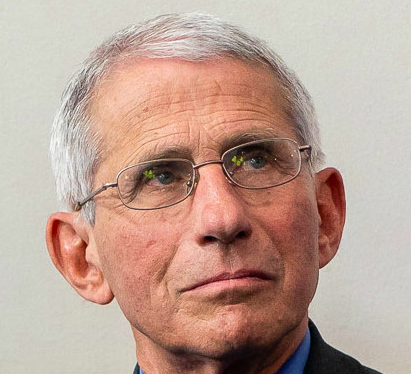
Dr. Anthony Fauci learned from AIDS activists to change his approach to treatment and research.
Science is a process, not a product. The scientific method seeks to discern facts by testing hypotheses in as objective a manner as possible, eliminating or controlling for any confounding factors that might skew the results. It’s a process that has led to astounding things, from space telescopes that can see back to the dawn of the galaxy to the open-heart surgery that added 20 years to my father’s life.
But that process is run by humans—flawed, imperfect creatures even on our best days. Humans, try as we might to be objective and impartial, have prejudices and preconceptions. We can be influenced, consciously or unconsciously, by career pressures, funding issues and all sorts of things. Scientists possess no miraculous immunity to the frailties of the human personality, and that sometimes leads science astray.
Eugenics, now generally regarded with horror, was once widely accepted. Much of it was based on so-called “intelligence tests,” as the National Education Association explains:
In his book, Not Fit for Our Society, Peter Schrag adds, “Henry H. Goddard, one of the American pioneers of intelligence testing, found that 40 percent of Ellis Island immigrants were feebleminded and that 60 percent of Jews there ‘classify as morons.’”
And this was mainstream stuff, pursued by scientists from Harvard and Princeton and published by the National Academy of Sciences, among others. It became the basis for discriminatory immigration laws and even forced sterilization.
For another kind of bias, consider the National Institute on Drug Abuse, created at the tail end of the Nixon administration to continue and expand upon the work of the Drug Abuse Warning Network and National Household Survey on Drug Abuse. NIDA, with a budget of nearly $1.5 billion last year and which describes itself as the “largest supporter of the world’s research on drug use and addiction,” has never let go of the guiding principle that drug use is a problem to be fixed, rather than a facet of human behavior with positive and negative aspects that need to be fully understood. NIDA’s FAQ page makes this abundantly clear, with sections on addiction, withdrawals and the costs of drug use to society but zero mention of non-harmful aspects of substance use.
“NIDA is political … NIDA’s mission is to frighten the American public about drugs.” says Columbia University researcher Dr. Carl Hart, author of Drug Use for Grown Ups. Hart, who’s done plenty of NIDA-funded research, isn’t referring to partisan politics but to the broader political aspect of the war on drugs: For decades the US government has pursued a policy of trying to eliminate use of unauthorized substances, and an agency within that government can’t stray too far from the official line.
UCSF researcher Dr. Donald Abrams experienced this when he attempted to study medical use of cannabis by HIV/AIDS patients in the 1990s. In a series of stories I reported for AIDS Treatment Newsand other publications when California was legalizing medical cannabis, he called the succession of rejections from NIDA and other federal authorities that needed to okay research on a Schedule I drug as “an endless labyrinth of closed doors. … The science is barely surviving the politics.” In another conversation he recalled then-NIDA Director Alan Leshner telling him, “We’re the National Institute on Drug Abuse, not the National Institute for Drug Abuse.”
Abrams only got his study approved after reconfiguring his proposal to emphasize safety questions: Were HIV patients hurting themselves by using cannabis? The feds were much more open to studying dangers of a banned substance than its potential benefits.
None of this means everything NIDA does is bad—far from it, and some attitudes may have softened over the years. Eventually, with NIDA’S blessing, Abrams did publish a study showing that cannabis safely and effectively relieved painful peripheral neuropathy in HIV patients. But Leshner’s remark described the mentality that guides the institute’s priorities.
Yale University epidemiologist Dr. Gregg Gonsalves says he wants “more people to build their own personal connection to data—understand basic concepts. This can start in schools but can also be public education campaigns.”
Gonsalves has been down that road before as a member of the ACT UP New York Treatment and Data Committee and co-founder of the Treatment Action Group. He was one of the AIDS activists who, seeing a scientific establishment blissfully unconscious of the needs of people with HIV and unwilling to listen to them, dug in, learned the science, and successfully pressured Dr. Anthony Fauci and the Food and Drug Administration to deal with them.
They didn’t disdain the scientific method, but learned it, engaged with it, and forced the research establishment to confront its own dysfunctional habits and biases.
It was hard work, but it changed how clinical drug trials are done and how medicines get approved. AIDS activists learned to tell the difference between what was useful in the traditional ways of doing things and what was merely the residue of old habits and prejudices. That’s a much grittier, more complex process than comparing Dr. Fauci to Joseph Mengele and dismissing everything he says.
Hart and Gonsalves agree that bias is real, and that confronting it requires an understanding of how science works and how to look at data—an understanding that too many Americans lack. “This is what I’ve been emphasizing to my students for decades,” Hart says. “Never trust the scientists, always look at the data. You hope that people have some ability to evaluate the data.”
Gonsalves puts it bluntly: “The point is that you have to get involved. You need to know your shit, need to be humble about your knowledge and open to learn.” That humility is central, and strikingly absent from most of the social media rantings of antivaxxers and climate deniers. To engage with science and data, you need to be open to your own biases as well as those of the people you’re critiquing. Cognitive bias is real and affects us all.
One reason Americans have so much trouble wrestling with scientific issues like COVID and climate change is that, to be blunt, we’re largely a nation of scientific illiterates. As Hart notes, too many struggle with elementary concepts like the fact that correlation or association doesn’t equal causation. That two things happen together, or even one after the other, proves nothing about what caused what. If I wake up tomorrow, make a pot of coffee, and a few minutes later it starts to rain, that does not prove that making coffee causes rain.
Similarly, the fact that teen marijuana use is “associated” with poorer grades, for example, doesn’t tell you whether weed causes poor grades. “There can be all kinds of other variables that cause that, and our job is to look for those variables,” Hart says. “Most people are fooled by that simple conversation.” It could just as easily be that doing poorly in school causes kids to distract themselves with weed or other substances, or different, unknown factors could be driving both outcomes.
Hart calls lack of scientific literacy “a huge problem.”
Other basic concepts, like statistical significance—think, for example, of a political poll’s margin of error—get ignored or misrepresented in the daily news and social media discourse on scientific matters. And that error isn’t limited to discussions of science.
How often have you seen a poll with a one- or two-point margin for one candidate reported as saying that candidate is leading? That’s wrong. Political polls almost always have a margin of error of at least three percentage points, meaning each candidate’s real number might be three points higher or lower than the reported figure, so a two-point lead is meaningless. Whether the realm is politics or science, discussion that glosses over these critical details makes us dumber.
There’s no quick fix for this. “We need a foundation of scientific and mathematical education in the US that we simply don’t have right now,” Gonsalves says. “Not a reason not to work on this, but we have to deal with the fundamental weaknesses in our educational system too.”
Still, there are things all of us can do. Hart urges people to look at the expertise and credentials of the person speaking or writing when evaluating what they say. That’s not a perfect guide—there are a few credentialed crackpots out there (just Google “Peter Duesberg”)—but it’s a start. Try not to get medical information from pundits/poll analyzers-turned-armchair-epidemiologists.
In the short term, arming oneself with these basic tools can help a lot, even as we try to sort out the longer-term task of building scientific literacy among the American public. Still, there will inevitably be times when non-scientists hear conflicting views on a scientific issue and feel lost at sea. What then?
Here’s one approach, which Hart agrees could be useful: It’s what I call the “What If I’m Wrong Test.” Look at the competing ideas, particularly the one you’re most inclined to agree with, and ask yourself, “What if I’m wrong?” That won’t tell you which side is right, but it might help guide you to the least dangerous alternative.
For example, let’s apply this test to climate change. Broadly, views on how the world should approach climate change divide into two general camps: 1) Climate change is a crisis that demands urgent action to cut greenhouse gas emissions, or 2) Climate change is overblown and we don’t need to drastically rethink our energy system.
Let’s say I believe Number one (for the record, I do). What if I’m wrong? What if society does what I want, and it turns out not to have been necessary? We’ll spend a bunch of money we didn’t have to. Needless economic dislocations will occur as fossil fuel industries shrink and low-or zero-carbon alternatives take their place. Old jobs and businesses will go away and new ones will grow, posing serious challenges for some families and communities.
Those are significant negatives.
On the other hand, air pollution—most of which comes from burning petrochemicals—will be massively reduced, improving health and cutting medical costs. And the lifespan of those finite reserves of coal, oil and gas will have been greatly extended. Not a perfect situation, all in all, but manageable.
Now let’s say I believe Number Two, and again society follows my wishes. What if we’re wrong? Coastal cities get wiped out. Out of control fires, floods and hurricanes kill millions and leave hundreds of millions homeless. Shifting rainfall patterns and droughts destroy crops and fuel mass migrations of starving populations, leading to war and violence as countries with their own struggles try to keep out the desperate masses.
We’ll save some money by not converting to clean energy but will spend many times more coping with the ensuing economic and humanitarian disaster.
Even if we’re really not sure which proposition is correct, the choice is now much clearer.
In the short term, the news media could help—but they probably won’t. They could stop chasing clicks with sensationalized headlines that distort and oversimplify. They could take the time to explain basic concepts like statistical significance and cognitive bias. And they could read the damn studies they report on.
That last one is no joke. When I worked at the Marijuana Policy Project from 2001-2009, I was continually appalled by how many news stories about scientific studies were written by reporters who never read the actual study, just the press release. Fun fact: A press release from the institution that conducted or published a study almost never highlights the study’s weaknesses. Unfortunately, we can’t wait for the media to reform or US science education to improve. In the short term, at least, it’s on us. It’s our responsibility to, as Gonsalves said, “know your shit.”
“The understanding that peace and happiness cannot be given or taken away by external circumstances is one of the greatest discoveries a person can make.“
–Rupert Spira
Rupert Spira (born March 13, 1960) is an English teacher of the “direct path”, a method of spiritual self-enquiry through talks and writing, and a notable English studio potter with work in public and private collections. Wikipedia
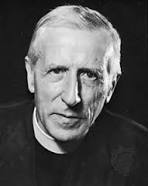
Pierre Teilhard de Chardin (May 1, 1881 – April 10, 1955) was a French Jesuit priest, scientist, paleontologist, theologian, philosopher and teacher. He was Darwinian in outlook and the author of several influential theological and philosophical books. He took part in the discovery of Peking Man. Wikipedia
The Lord of Luxury is a card with a hidden sting in its tail. On the surface it indicates a wealth of loving affection, showing a person who is lucky enough to receive a great deal of devotion and tenderness.
At first look, you would think we would be all too pleased with this situation wouldn’t you? However, the sting is this – sometimes, when we are loved deeply and for a long period of time, we are foolish enough to forget what it feels like when we are lonely and unloved. And as soon as we make that mistake, we start to undervalue the tenderness and emotional investment that others are making in us.
We begin to get careless about the ways in which we treat those people who love us. We may hanker after love from some-one outside our circle, instead of valuing those people closer to hand who love us from the bottom of their hearts.
In other words, we can begin to take love for granted. And there are three things in this world we are all silly to take for granted – love, good health and tranquillity. Every one of them slips away silently if we stop paying it due attention.
So, when the Lord of Luxury appears, whilst you will know that there is a great deal of love in the air, there’s also a warning which must be taken on board – count your blessings, reciprocate, and don’t get your priorities in a mess. That way you’ll carry on being loved for a very long time.
New Thinking Allowed with Jeffrey Mishlove James Tunney, LLM, is an Irish barrister who has lectured on legal matters throughout the world. He is a poet, a scholar, and author of The Mystery of the Trapped Light: Mystical Thoughts in the Dark Age of Scientism plus The Mystical Accord: Sutras to Suit Our Times, Lines for Spiritual Evolution; also Empire of Scientism: The Dispiriting Conspiracy and Inevitable Tyranny of Scientocracy, TechBondAge: Slavery of the Human Spirit, and Human Entrance to Transhumanism: Machine Merger and the End of Humanity. His website is http://www.jamestunney.com. Here he points out that the great science fiction writer, Philip K. Dick, was “more Greek than Geek” – meaning that he paid more attention to ancient mythological and theological traditions than he did to modern technology. He developed a friendship with the late Bishop James Pike, who wrote extensively about mediumistic communications with his deceased son. He also wrote about many varieties of alien intelligence, both friendly and hostile. Tunney emphasizes the importance of discernment in Dick’s writings. New Thinking Allowed host, Jeffrey Mishlove, PhD, is author of The Roots of Consciousness, Psi Development Systems, and The PK Man. Between 1986 and 2002 he hosted and co-produced the original Thinking Allowed public television series. He is the recipient of the only doctoral diploma in “parapsychology” ever awarded by an accredited university (University of California, Berkeley, 1980). He is also the Grand Prize winner of the 2021 Bigelow Institute essay competition regarding the best evidence for survival of human consciousness after permanent bodily death. (Recorded on March 5, 2022)
The Earth is flat, the World Trade Center collapse was a controlled demolition, planes are spraying poison to control the weather, and actors faked the Sandy Hook massacre….
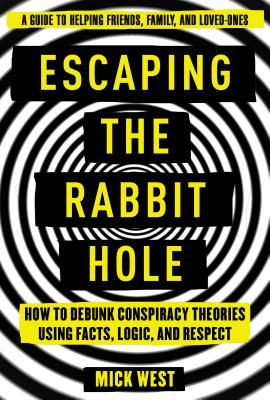
All these claims are bunk: falsehoods, mistakes, and in some cases, outright lies. But many people passionately believe one or more of these conspiracy theories. They consume countless books and videos, join like-minded online communities, try to convert those around them, and even, on occasion, alienate their own friends and family. Why is this, and how can you help people, especially those closest to you, break free from the downward spiral of conspiracy thinking?
In Escaping the Rabbit Hole, author Mick West shares over a decade’s worth of knowledge and experience investigating and debunking false conspiracy theories through his forum, MetaBunk.org, and sets forth a practical guide to helping friends and loved ones recognize these theories for what they really are.
Perhaps counter-intuitively, the most successful approaches to helping individuals escape a rabbit hole aren’t comprised of simply explaining why they are wrong; rather, West’s tried-and-tested approach emphasizes clear communication based on mutual respect, honesty, openness, and patience.
West puts his debunking techniques and best practices to the test with four of the most popular false conspiracy theories today (Chemtrails, 9/11 Controlled Demolition, False Flags, and Flat Earth) — providing road maps to help you to understand your friend and help them escape the rabbit hole. These are accompanied by real-life case studies of individuals who, with help, were able to break free from conspiracism.
With sections on: the wide spectrum of conspiracy theories avoiding the “shill” label psychological factors and other complications (and concluding with) a look at the future of debunking Mick West has put forth a conclusive, well-researched, practical reference on why people fall down the conspiracy theory rabbit hole and how you can help them escape.
Episode 124 — Why people believe in conspiracy theories, with Karen Douglas, PhD
This past year, COVID-19 and the U.S. elections have provided fertile ground for conspiracy theories—with sometimes disastrous consequences. Karen Douglas, PhD, of the University of Kent in the United Kingdom, discusses psychological research on how conspiracy theories start, why they persist, who is most likely to believe them and whether there is any way to combat them effectively.
About the expert: Karen Douglas, PhD
Karen Douglas, PhD, is a professor of social psychology at the University of Kent in the United Kingdom. Her research focus is on beliefs in conspiracy theories and their consequences. She is also interested in the social psychology of human communication, including the influence of technology on social interaction.
Kim Mills: Over the past year as COVID-19 rocketed around the world, conspiracy theories quickly followed. Last spring, dozens of cell phone towers were set a flame across Europe, amid conspiracy theories that the 5G towers were spreading COVID-19. In January, a Wisconsin pharmacist was charged with deliberately destroying hundreds of doses of the newly available COVID 19 vaccine because he believed a conspiracy theory that the vaccine would change human DNA. And some people are asserting that the virus itself was engineered by the Chinese.
These aren’t the only conspiracy theories making inroads right now. A September Pew Research Center survey found that more than half of Americans have heard at least a little about QAnon, the complicated web of pro-Trump conspiracy theories that originated on the message board 4chan. In November, two candidates who voiced support for QAnon theories were elected to Congress. So how do conspiracy theories like these get started and why do they persist?
Who is most likely to believe them and why? Is there any way to combat conspiracy theories once they’re out there? And what are the consequences for individuals and societies when they spread? Welcome to Speaking of Psychology, the flagship podcast of the American Psychological Association that examines the links between psychological science and everyday life.
I’m Kim Mills. Our guest today is Dr. Karen Douglas, a professor of social psychology at the University of Kent in the UK. Dr. Douglas has spent more than a decade studying conspiracy theories, and she joins us to talk about their history, causes, and consequences. Thank you for joining us, Dr. Douglas.
Karen Douglas, PhD: Hi Kim. Thank you very much for your invitation. Hi everybody.
Mills: So let’s start with a definition. That’s always a good place to launch. What counts as a conspiracy theory? I gave a few examples in the introduction, but how do you define conspiracy theories in your research? What are their common characteristics?
Douglas: Well, a conspiracy theory can normally be defined as a proposed plot carried out in secret, usually by a powerful group of people who have some kind of sinister goal. So something to gain from what they’re doing and they usually don’t have people’s best interests at heart. Usually, their own interests at heart.
Mills: Some people think that the belief in conspiracy theorists has been on the rise in recent years fueled by social media, but in a paper a few years ago, you concluded that wasn’t necessarily true. Instead, you found that conspiracy theories have always thrived during times of crisis and social upheaval with examples going back as far as the burning of Rome while Nero was away, and that the last decade hasn’t been particularly more conspiracy prone than the past. Can you talk about that and how do researchers measure this?
Douglas: Sure. Yes, it is definitely the case that the conspiracy theories have ways being with us. Believing in conspiracy theories and being suspicious about the actions of others is in some ways quite an adaptive thing to do. We don’t necessarily want to trust everybody and trust everything that’s happening around us. And so they have always been with us and to some extent, people are all, I guess you could call everybody a conspiracy theorist if you want to use that term at one point or another.
And so yeah, they’ve always been there. People have always believed in conspiracy theories. As far back as we can remember, people have been having these conspiracy beliefs and having these suspicions about the actions of hostile collectives of individuals. This is just the way that we are wired up to some degree. And in terms of how we measure the extent to which people believe in conspiracy theories, you can do this in a variety of different ways. And as a social psychologist now, we would normally measure a belief in conspiracy theories by simply asking people questions about the extent to which they endorse a particular idea or the extent to which they believe a particular statement is true.
And you can measure these sorts of beliefs on specific issues. So for example, if you want to know how much somebody believes in anti-vaccine conspiracy theories, then you can ask people to read a bunch of statements about anti-vaccine conspiracy theories. So for example, that the pharmaceutical companies are hiding information about vaccine efficacy and safety. And then you ask them how much they believe that statement or how much they agree with it, how much they think it’s plausible. There are various different ways that you can do this. And another way to tap into what some would argue is an underlying tendency to just believe conspiracy theories more generally.
You can ask more general questions or ask people to rate the extent to which they believe in statements such as governments often hide secrets from people to suit their own ends. So more general notions of conspiracy like that. So we’ll just ask participants to read these sort of segments and write the extent to which they agree with them. Usually on a scale from I strongly disagree to I strongly agree that kind of thing. And then usually what we will do is come up with an average conspiracy belief measure or score I suppose total for each individual. And then we’ll look for associations between that kind of belief and various other psychological factors as well.
Mills: So the belief is generally, always out there. The conspiracies may change over time, but I’m wondering, have there been times in history that you’ve seen when conspiracy theories have spiked?
Douglas: Not necessarily, it’s not something I really research in my own studies, but naturally a lot of people are very concerned at the moment that we’re seeing a bit of a spike and believing conspiracy theories with the whole coronavirus situation and also in the USA with the recent presidential election. And I guess time will tell if conspiracy theories have I guess, been on the rise in this particular point in time compared to times in the past or times in the future.
But there is definitely quite a lot of concern that conspiracy theories are on the rise. It’s difficult for me to say whether or not they are, because I don’t really have the data to support one way or another. But I think that it is definitely the case that even if we can’t say for sure that social media has increased conspiracy theories, it’s certainly changed the way in which people access this information, the ways in which they share this information, and also I feel that in many cases, for people who do have, I guess, an underlying tendency to believe in a particular conspiracy theory or conspiracy theories in general, it’s much easier for people to find this sort of information now than it ever has been before.
And people can become consumed by this information. They can only seek out this information online. So they can go to particular sources, disregard other sources that contradict their views so that they end up, if anything, their attitudes about these particular alleged conspiracies rather sorry, can become even more polarized. So people’s attitudes might become stronger. So I guess what I’m trying to say is that even if we don’t have evidence that conspiracy theorizing has increased, and time will tell whether or not that’s true. I do think that people’s attitudes have become stronger as a result of interacting and sharing and consuming this information on social media and on the internet generally.
Mills: I’m just wondering, I think I read that there may have been a measurable increase in conspiracy theorizing around the turn of the 20th century because of the industrial revolution. And then also around the end of the Second World War in the beginning of the Cold War. Is that accurate?
Douglas: I think I have come across one study which suggests that that’s the case. But yeah the evidence is really quite limited and only drawn from a particular type of sources, like letters to newspapers and that sort of thing. So it’s really difficult to tell, but it does make sense to me that there would have been particular periods in history that conspiracy theories would have been more prominent. And personally, I think we might be in one of those periods right now.
Mills: Let’s talk a little bit about the psychological factors that motivate people to believe in conspiracy theories. I know you’ve laid out in your research three areas that you call epistemic, existential and social motives. Can you explain what they are, what those terms mean?
Douglas: Yes, of course. We argue that people are drawn to conspiracy theories in order to satisfy or in an attempt to satisfy three important psychological motives. The first of these motives are epistemic motives. I guess in a nutshell, epistemic motives really just refer to the need for knowledge and certainty and I guess the motive or desire to have information. And when something major happens, when a big event happens, people naturally want to know why that happened. They want an explanation and they want to know the truth. But they also want to feel certain of that truth.
And some psychological evidence suggests that people are drawn to conspiracy theories when they do feel uncertain either in specific situations or more generally. And there are other epistemic reasons why people believe in conspiracy theories as well in relation to this sort of need for knowledge and certainty. So people with lower levels of education tend to be drawn to conspiracy theories. And we don’t argue that’s because people are not intelligent. It’s simply that they haven’t been allowed to have, or haven’t been given access to the tools to allow them to differentiate between good sources and bad sources or credible sources and non-credible sources. So they’re looking for that knowledge and certainty, but not necessarily looking in the right places.
The second set of motives, we would call existential motives. And really they just refer to people’s needs to be or to feel safe and secure in the world that they live in. And also to feel that they have some kind of power or autonomy over the things that happen to them as well. So again, when something happens, people don’t like to feel powerless. They don’t like to feel out of control. And so reaching to conspiracy theories might, I guess, at least allow people to feel that they have information that at least explains why they don’t have any control over this situation. Research has shown that people who do feel powerless and disillusioned do tend to gravitate more towards conspiracy theories.
The final set of motives we would call social motives and those refer to people’s desire to feel good about themselves as individuals and also feel good about themselves in terms of the groups that they belong to. And I guess at the individual level, people like to feel… Well, they like to have high self-esteem. They like to feel good about themselves. And potentially one way of doing that is to feel that you have access to information that other people don’t necessarily have.
And this is quite a common rhetorical tool that people use when they talk about conspiracy theories, that everybody else is some kind of sheep, but that they know the truth. They have the truth. And having that kind of belief, I guess, feeling that you’re in possession of information that other people don’t have, can give you a feeling of superiority over others. And we have found, and others have shown as well that a need for uniqueness and a need to have, I guess, stand out from others is associated with belief in conspiracy theories.
And this happens at the level of the group as well. So people who have an overinflated sense of the importance of the groups that they belong to, but at the same time, the feeling that those groups are underappreciated, those kinds of feelings as well, draw people towards conspiracy theories, especially conspiracy theories about their groups. So in having those sorts of beliefs, you can maintain the idea that your group is good and moral and upstanding, whereas others are the evil doers out there who are trying to ruin it for everybody else.
Those three main motives… Those three psychological motives, the epistemic, existential and social, it’s possible to summarize, I guess, the psychological literature on conspiracy theories into those three motivations. So yeah, that’s what we argue.
Mills: What role, if any, does narcissism play in belief in conspiracy theories? People who tend to be more narcissistic also believe in these theories as a means of getting the social capital?
Douglas: Yes, absolutely. That is true. And that’s kind of what I was referring to. It’s linked to the idea of need for uniqueness, as well. That’s another, I guess, narcissistic notion that you have. You’re in possession of information that other people don’t have. You’re different to other people and it makes you stand apart. But yes, narcissism at an individual level has been associated in quite a few studies now with belief in conspiracy theories.
And also this narcissism at the group level as well, so an over inflated sense of the importance of your own group. That kind of insecure feeling about your own group is also associated with belief in conspiracy theories. So yes, narcissism is one of those individual differences, variables that correlate with belief in conspiracy theories.
Mills: So a few moments ago, you talked about education level as being a factor. And I’m wondering what about other demographic categories such as age or gender? Do you see any associations between those and tendency to believe in conspiracy theories?
Douglas: Yes. In terms of age, we do. In our research, we generally find that older people believe in conspiracy theories less than younger people do. That tends to show up in most of the studies that we have run. So there’s simply a correlation between conspiracy belief and age. That is a negative correlation, so the older you are, the less you believe in conspiracy theories. Or the other way around the younger you are, the more you believe in conspiracy theories. And that does tend to show up pretty much all of the time. In terms of gender, at least in the research that myself and my colleagues have conducted, we’ve never found any gender differences in terms of conspiracy belief. So as we measure belief in conspiracy theories using these psychological scales, we have never found that men believe more than women or women believe more than men or whatever. We’ve never found anything like that.
I think one or two studies may have shown gender differences for specific conspiracy theories. I know of a recent study that, and I can’t remember which direction it went in actually, but that showed that in terms of COVID-19 conspiracy theories, there was some kind of gender difference. But personally, I’ve never found that, which I think is very interesting and counter-intuitive in a way. Because if people think about the prototypical conspiracy theorist, again, if you want to use that term to describe people, then they do tend to think of a middle-aged white man, usually. And that may be the case for the prominent conspiracy theorists. Your well-known people who propagate these conspiracy theories, but not necessarily your everyday person who’s consuming this information on the internet and deciding whether or not it’s true. We don’t really find those gender differences there.
Mills: That’s really interesting. I mean, because it is when we just had this overrun of the U.S. Capitol here in Washington and it looked like there were a lot of younger and middle-aged men out there. I mean, certainly there were women involved, but that was the sense. And of course that is the conspiracy theory that the Trump election was stolen.
Douglas: Yes. Yeah, that’s true. That’s extremely interesting. And of course I was watching this on the news as well and thinking very much the same thing. But I think that there probably is a difference in the person who sits at home and reads this information on the internet and then decides whether or not it’s true and the individuals who are prepared to actually go and storm a building or to go out and actively cause trouble based on these conspiracy beliefs. So there’s probably a lot going on there, but in terms of the way we measure belief in conspiracy theories, we just don’t, with these sorts of gender differences that might seem obvious, don’t seem to play out really in the research that we do on the everyday population, I suppose.
Mills: Another of your studies found that people who believe in one conspiracy theory are more likely to believe in others, even when those theories directly contradict each other. So for instance, the more your participants believe that Princess Diana faked her own death, the more they also believe that she was murdered. And of course, that doesn’t make any sense. Can you help explain that?
Douglas: Yeah, of course. Yes. We feel that is a very interesting finding. Obviously we kind of, I guess, started from the point that in the literature it’s often been found that if people believe in one conspiracy theory, then they’re likely to believe in others. So in other words, there’s something that kind of holds these beliefs together. So we were interested to find out, well, what is this? This underlying belief system or underlying attitude that might mean that these conspiracy beliefs are held at the same time, even if they do contradict one another.
So we set to do these studies, and so we asked participants in these studies to rate the extent to which they agree with different conspiracy theories. One, for example, that Princess Diana was assassinated by the royal family. Another one that she was assassinated by MI5, nothing to do with the royal family or others, also, but crucially, I think, one that she was assassinated and is dead. And another, that she was helped to fake her own death and that she’s sort of living it up somewhere on an island having a great time. So basically, it’s not possible to be dead and alive at the same time. And also, participants-
Mills: Unlike Schrodinger’s cat.
Douglas: Yeah, well, that’s it. We thought people would not entertain these two conspiracy theories at the same time, but it turned out that they did, or at least they were prepared to entertain the idea that both of those things might be true.
But we also measured the extent to which people believed in, I guess, an underlying conspiracy theory that something just isn’t right. Something’s up and something is being covered up. And what we found was that some people did indeed endorse these contradictory conspiracy theories, or again, at least were likely to entertain those two ideas at the same time. But once we also took into account the extent to which they believed that there was just something up, then that relationship actually disappeared. So it was the relationship between the contradictory beliefs was explained by the, I guess, underlying belief that just something is being covered up.
So you can explain why people will entertain these contradictory ideas, because both of those ideas are consistent with the underlying idea that there’s just something not quite right. So it’s not necessarily to say that they will definitely believe that Princess Diana is dead and at the same time believe that she’s still alive, but they’ll be happy to entertain the idea that those two things are possible, as long as they also entertain the belief that there was just something that wasn’t right about those events.
Mills: Yeah. That helps explain it, at least a little bit. Well, what makes a conspiracy theory catch on and have staying power? Are there certain types of theories that are stickier than others or some that are more enduring? Like the earth is flat has been around since forever. So are there characteristics that make them stickier?
Douglas: That’s not something that I’ve done research on myself, to be honest, but I think it’s a fascinating question. It’s very true that some conspiracy theories stand the test of time and others just disappear. I think that there must be certain features of conspiracy theories, the ones that last and the ones that don’t. I don’t personally know exactly what they are, but I guess one thing that tends to be very, very common is that the event is very, very large. The event that is explained by the conspiracy theory is very, very large and important and usually involving something of great political or social significance. A lot of other conspiracy theories that you might come across just sort of disappear. I guess a lot of the time we just don’t really know why they don’t catch on. But plenty of them do. Yeah. It’s a really interesting question.
Mills: It’s a line of research for you to pursue.
Douglas: Yeah, yeah. Oh, yeah. There definitely is. Yeah. I think that other researchers have started to ask these sorts of questions, and I have tried myself to, I guess, not taxonomize, but sort of almost, I guess, not even categorize conspiracy theories, but try to isolate some of these features. But it’s actually very difficult, because there are so many of them about so many different events.
And you pointed out the flat earth conspiracy theory, which has been around forever but kind of died away for a long time and then in recent years just seems to have gotten popular again, and I do find it quite difficult to explain that. I mean, I have a theory about that conspiracy theory, that just generally people are becoming less trustful of science and scientists at the present time, which is why we might be seeing these sorts of ideas making a bit of a comeback. But yeah, no. I think it’s a really, really fascinating question, because it’s not that even though some of them disappear, they go away, but then they come back again or come back again in a different form or certain conspiracy theories about particular things, like say anti-vaccine or health-related conspiracy theories can kind of reinvent themselves for new things that happen, like 5G conspiracy theories about people getting sick from [inaudible 00:25:10] masks and things like that.
So these sorts of conspiracy theories have always been there. They kind of mutate, I suppose, if you like. They change. But yeah, I think it is a really fascinating question and one that I can’t, as a social psychologist, can’t really answer very well, unfortunately.
Mills: Is there any way to effectively debunk a conspiracy theory once it’s out there? I mean, can you just present the facts? Like you talked about the anti-vaxxers, the fact that the Lancet article that led to a lot of beliefs that children were becoming autistic as a result of vaccines. And then it turned out that that article was bogus. It was based on faulty data and it was retracted, and yet some people are still hanging on to that. So is there a way to stop these theories from continuing to swirl?
Douglas: Yes. There are ways to do this, but of course, it’s extremely challenging. It’s very, very difficult. Once these conspiracy theories are out there and people believe them, then sometimes people can very, very strongly hold on to these beliefs and defend them very, very strongly as well. And once these attitudes are very, very strong, of course, from other areas of psychology we know that attitudes that are very strongly held are difficult to dispute, I guess. Difficult to change. It’s very difficult to change these sorts of attitudes.
And so, yes, it is a challenge, but there are things that that can be done. And a lot of research that, especially in very, very recent years as well, has started to come out in terms of how do you address misinformation? How do you address conspiracy theories? And giving people the facts does work under certain situations. In some of our own research, we’ve actually found that it’s quite effective to provide people with factual information, provide people with the facts. And this was particularly about vaccines before they’re exposed to conspiracy theories, and then the conspiracy theory fails to gain traction. But once the people have been exposed to the conspiracy theory, they’re giving them the, I guess,… Sorry, the appropriate or correct information afterwards doesn’t really work. So, others have taken this information and have started to look at ways to inoculate people against misinformation and to inoculate people against conspiracy theories and fake news and all sorts of other things, which seems to be working as well. So, in other words, you give people either the correct information or some piece of weak misinformation before they’re exposed to the worst of it, then that helps them to be able to resist it.
There are other techniques that people have used, that researchers have used, as well, and just to give you one other example, some researchers have looked at the idea of presenting people with a pre-warning or a forewarning that they might be exposed to misinformation. And if people believe that information that they might receive could be misleading, and they have that information up front, then that can sometimes help them to resist the misinformation as well. Now, I think these are all really, really valuable tools, but of course, sometimes the misinformation is all ready out there so it’s difficult to get to people beforehand. So, then, you have to resort to, I guess, traditional debunking techniques, such as going in with consistent, strong counter arguments.
But I think that these other techniques provide real opportunities to help people to resist conspiracy theories in general that they might come across in the future. So, if you give people these sorts of, I guess, ways to critically think about information and think, “Well, okay, I could be exposed to misinformation. That misinformation is out there, so I’m going to be on the lookout for it,” then it might actually help people to resist it when they come across it next time. If that makes sense.
Mills: Yeah. It sounds like the techniques that they’re trying to use right now with the COVID-19 vaccines, telling people up front that if you happen to be particularly allergic, you might have a reaction. This is what to expect. And yet, it’s like a game of whack-a-mole because they talk about all of this and they’re trying to be as transparent as possible, and yet, along comes somebody who says that the mRNA that’s involved in this is actually going to change the DNA in your body. How do you fight that?
Douglas: Yeah. It is very, very difficult, and there are new conspiracy theories all the time. It is exactly like that game. You’ve got one and then you’re constantly trying to hit another one away. It is very, very challenging. There’s a lot out there, a lot going on out there.
Mills: And of course, this is all complicated by the fact that sometimes conspiracies do exist and sometimes people may have deep-seated, valid reasons to distrust authority. So, for example, public opinion polls have found that Black Americans are less likely to say they’ll take the COVID vaccine and more wary of its safety because they have a long history of being abused and mistreated by the medical establishment. So, is there a way for people to balance this awareness with a healthy skepticism of conspiracy theories?
Douglas: Yes. Again, this is extremely challenging, and you’re absolutely right, that some people have very good reasons to be suspicious of these sorts of things because of past events. And so, the challenge becomes even greater. And I don’t know the solution to this, apart from the fact that people who are attempting to fight the misinformation will need to be sensitive to these concerns and perhaps be more targeted in their efforts to debunk misinformation, being sensitive to these historical events as well.
So, it can’t necessarily be a one size fits all approach to misinformation, just can’t be because everybody’s circumstances are different, and we know that different communities feel differently about vaccines and various other things as well, for very good reasons. So, that, of course, is a huge challenge for anybody trying to deal with potential misinformation about vaccines and other things, but also, yeah, particularly with COVID, a reluctance to take the vaccine.
Mills: So, what aspects of conspiracy theory are you looking at today? What’s your research heading toward?
Douglas: Quite a few things going on at the moment, actually. I’m really interested in, I guess, the deliberate use of conspiracy theories as a political device. So, I’ve been doing some research, I guess, looking at how people perceive others who seem to use conspiracy theories, and whether or not they see those actions as intentional or deliberate, and also what the effects are of that. I’ve also been interested in the term conspiracy theory itself and the term conspiracy theorist and how people use those terms, whether they use them to, I guess, specifically put down other people’s ideas, or if they simply use these terms when they just don’t believe… that they don’t believe a particular idea, and also the effects of these terms on whether or not someone will actually believe something.
What else have I been doing? Oh, quite quite a few things going on. I’ve been writing quite a bit about COVID-19 conspiracy theories, and also, quite generally, my research is focused a lot on the consequences of believing in conspiracy theories as well. So, in different areas like in vaccines, climate change, politics in various different domains, specifically what impact do conspiracy theories have on people’s attitudes, beliefs, and behaviors. So, I’ve been doing a lot on that sort of thing.
Mills: Well, it’s an amazing area for a scrutiny, and appreciate the work that you’re doing here and helping us to better understand some of the ways that people’s minds work. So, thank you so much for joining us today, Dr. Douglas.
Douglas: Well, thank you. It’s been a pleasure.
Mills: If you’d like to learn more about psychological research on conspiracy theories and other types of misinformation, check out the Monitor on Psychology, the magazine of the American Psychological Association. You can find it at www.apa.org/monitor. You can find previous episodes of Speaking of Psychology on our website at www.speakingofpsychology.org, or wherever you get your podcasts. If you have comments or ideas for future podcasts, email us at speakingofpsychology@apa.org. That’s speakingofpsychology, all one word, @apa.org. Speaking of Psychology is produced by Lea Winerman. Our sound editor is Rob Aneiva. Thank you for listening to the American Psychological Association. I’m Kim Mills.
LUCID DREAMING Saturday, March 26, 2022, 10:00 AM to 2:00 P.M. Pacific Presented on Zoom
We’re all swimming in our subconscious mind when we dream. With Lucid Dreaming, we bring the conscious mind to be aware that we’re dreaming (while we’re in the subconscious mind) and amazing things can happen. Come to class and learn the process of becoming a Lucid Dreamer.
Releasing the power of your Dreams • Accelerate your Personal Growth • Understand the route to your conscious evolving • Solve Problems • Realize those “not so secret” messages in your unconscious mind. • Gain ideas to help in waking life • Turn up your creativity • Learn to interpret your dreams • Practice methods to remember dreams • Review of the Latest scientific information on sleep, dreaming and health
What you’ll receive with the Class • 4 hour class delivered via an online webinar. • Class Notes • Workshop • Invitation to weekly Dream Group • Dream interpretation session with HughJohn
Class Fees: New to Class $ 50.00 Review 25.00 After registering you will be sent a Zoom meeting link to join. Looking forward to seeing you in class