Peak Experience: John Atwater

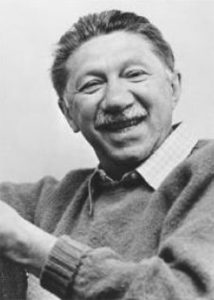
Abraham Maslow

Abraham Maslow said that the more we share our peak experiences the more likely we are to have them and the more likely we are to inspire others to have them.

With that in mind, we are beginning a series about peak experiences and we invite you to share your peak experience with us.  (Email Mike Zonta, BB editor, at zonta1111@aol.com.)

Here is the first in the series, from John Atwater, H.W.:

Scan-by-Atwater

[Zoom in for larger view.]

The Most Real and Creative Form of Human Presence: John O’Donohue on Soul Friendship

Vanessa Able (thedewdrop.org)

“Love is the only light that can truly read the secret signature of the other person’s individuality and soul. Love alone is literate in the world of origin; it can decipher identity and destiny.”

– John O’DonohueTweet


“A friend may well be reckoned the masterpiece of nature,” wrote Ralph Waldo Emerson in his essay about friendship. Echoed in C.S. Lewis’ image of friends as being two ‘angels’ who stand side by side, their eyes looking ahead. These images of true and soulful friendship, which is sometimes referred to as the rarest form of love, are amplified by writer and philosopher John O’Donohue as he digs into the ways in which ancient Celtic tradition viewed spiritual relationships and the potential for inner growth that they teased out. The name for such a person was anam ċara, a soul friend, who could also be a teacher, a spiritual guide and a companion.


In the Celtic tradition, there is a beautiful understanding of love and friendship. One of the fascinating ideas here is the idea of soul-love; the old Gaelic term for this is anam ċara. Anam is the Gaelic word for soul and ċara is the word for friend. So anam ċara in the Celtic world was the “soul friend.” In the early Celtic church, a person who acted as a teacher, companion, or spiritual guide was called an anam ċara. It originally referred to someone to whom you confessed, revealing the hidden intimacies of your life. With the anam ċara you could share your inner-most self, your mind and your heart. This friendship was an act of recognition and belonging. When you had an anam ċara, your friendship cut across all convention, morality, and category. You were joined in an ancient and eternal way with the “friend of your soul.” The Celtic understanding did not set limitations of space or time on the soul. There is no cage for the soul. The soul is a divine light that flows into you and into your Other. This art of belonging awakened and fostered a deep and special companionship. In his Conferences, John Cassian says this bond between friends is indissoluble: “This, I say, is what is broken by no chances, what no interval of time or space can sever or destroy, and what even death itself cannot part.”

In everyone’s life, there is great need for an anam ċara, a soul friend. In this love, you are understood as you are without mask or pretension. The superficial and functional lies and half-truths of social acquaintance fall away, you can be as you really are. Love allows understanding to dawn, and understanding is precious. Where you are understood, you are at home. Understanding nourishes belonging. When you really feel understood, you feel free to release yourself into the trust and shelter of the other person’s soul. This recognition is described in a beautiful line from Pablo Neruda: “You are like nobody since I love you.” This art of love discloses the special and sacred identity of the other person. Love is the only light that can truly read the secret signature of the other person’s individuality and soul. Love alone is literate in the world of origin; it can decipher identity and destiny.

“Love is the threshold where divine and human presence ebb and flow into each other.

It is precisely in awakening and exploring this rich and opaque inner landscape that the anam ċara experience illuminates the mystery and kindness of the divine. The anam ċara is God’s gift. Friendship is the nature of God. The Christian concept of god as Trinity is the most sublime articulation of otherness and intimacy, an eternal interflow of friendship. This perspective discloses the beautiful fulfillment of our immortal longing in the words of Jesus, who said, Behold, I call you friends. Jesus, as the son of God, is the first Other in the universe; he is the prism of all difference. He is the secret anam ċara of every individual. In friendship with him, we enter the tender beauty and affection of the Trinity. In the embrace of this eternal friendship, we dare to be free. There is a beautiful Trinitarian motif running through Celtic spirituality. This little invocation captures this:

The Sacred Three
My fortress be
Encircling me
Come and be round
My hearth and my home.

Consequently, love is anything but sentimental. In fact, it is the most real and creative form of human presence. Love is the threshold where divine and human presence ebb and flow into each other.

“In Celtic tradition, the anam ċara was not merely a metaphor or ideal. It was a soul-bond that existed as a recognized and admired social construct. It altered the meaning of identity and perception.

All presence depends on consciousness. Where there is a depth of awareness, there is a reverence for presence. Where consciousness is dulled, distant, or blind, the presence grows faint and vanishes. Consequently, awareness is one of the greatest gifts you can bring to your friendship. Many people have an anam ċara of whom they are not truly aware. Their lack of awareness cloaks the friend’s presence and causes feelings of distance and absence. Sadly, it is often loss that awakens presence, by then it is too late. It is wise to pray for the grace of recognition. Inspired by awareness, you may then discover beside you the anam ċara of whom your longing has always dreamed.

The Celtic tradition recognized that an anam ċara friendship was graced with affection. Friendship awakens affection. The heart learns a new art of feeling. Such friendship is neither cerebral nor abstract. In Celtic tradition, the anam ċara was not merely a metaphor or ideal. It was a soul-bond that existed as a recognized and admired social construct. It altered the meaning of identity and perception. When your affection is kindled, the world of your intellect takes on a new tenderness and compassion. The anam ċara brings epistemological integration and healing. You look and see and understand differently. Initially, this can be disruptive and awkward, but it gradually refines your sensibility and transforms your way of being in the world. Most fundamentalism, greed, violence, and oppression can be traced back to the separation of idea and affection. For too long we have been blind to the cognitive riches of feeling and the affective depth of ideas. Aristotle said in De Anima, “Perception is ex hypothesi a form of affection and being moved; and the same goes for thinking and knowing… Thinking particularly is like a peculiar affection of the soul.” The anam ċara perspective is sublime because it permits us to enter this unity of ancient belonging.

John O’Donohue (1956-2008)
From – Anam Cara: A Book of Celtic Wisdom

The open mind

The open mind | Aeon

The most vivid part of the mind bubbles up through sensation and new experience when unencumbered by analytical thoughtA rainbow of colours and textures. Photo by JoSon/Gallery Stock

Daniel J Siegel is a clinical professor of psychiatry at the UCLA School of Medicine, the founding co-director of the Mindful Awareness Research Center at UCLA, and executive director of the Mindsight Institute. His latest book is Mind: A Journey to the Heart of Being Human (2016).

Edited by Pam Weintraub

24 October 2016 (aeon.co)

Love Aeon?

Support our workDONATE

For some 2,500 years, humans have located the mind in the brain inside our heads. But we ought to consider the origin of mind with an open mind. Is the mind truly within the brain? Or is this an illusion?

I gained some insight back in the 1980s, as college drew to a close. I was in my 20s and working in Mexico for the World Health Organization on a project to study curanderos – folk healers – in a region where the press of modernisation of a local dam, La Presa Miguel Alemán, 250 miles south-east of Mexico City, was changing communities and local medical services. One morning, on a horseback journey to interview a local healer as part of my project, the saddle on my horse loosened and, with feet still strapped into the stirrups, I was dragged, they tell me, a hundred yards over gravel and rock, my head banging against the ground beneath the horse’s racing hooves. When the young and frightened horse finally came to a stop, my riding companions thought I must be dead, or at least that I’d broken my neck. I did break my teeth and nose, and damaged my arm. The head trauma induced a state of global amnesia that lasted about a day.

In the aftermath of the horse accident, I became attuned to a level of knowing beneath personal identity, personal belief and personal expectation. I had no idea what to call this change in ‘me’ so I never discussed it with anyone, putting it into a category of some existential wakeup call to lighten up, given life’s fragility following that near-death accident, to be grateful to be able to move my neck, be alive, be awake and aware. I didn’t think of it then as a gift, but I realise now it was one of those unplanned experiences that are turning points, even if we don’t realise their impact at the time.

How do all these layers of reality, these domains of life, find some common home, some common ground of understanding? Two terms that offer some insight and indicate how information is processed in our minds and brains are ‘top-down’ and ‘bottom-up’. These terms are sometimes used for the anatomical location of processing: the higher cortex (seat of executive function) at the top, the lower brainstem (heart rate, breathing) and limbic areas (emotion) at the bottom. But the same terms are also used for layers of processing not related to the anatomical distribution of up and down. Instead, they are used for the degree of processing of information.

In the view we will be using here, top-down refers to ways we have experienced things in the past and created generalised summaries or mental models, also known as schema, of those events. For example, if you’ve seen many dogs, you’ll have a general mental model or image of a generic dog. The next time you see a furry canine strolling by, your top-down processing might use that mental model to filter incoming visual input, and you won’t really see the uniqueness of this dog in front of you. You have overlaid your generalised image of ‘dog’ on top of the here-and-now perceptual stream of energy that creates the neural representation of ‘dog’. What you actually have in awareness is that amalgam of the top-down filtering of your experience.

So here, ‘top’ means that prior experience is activated, making it difficult to notice the unique and vibrant details of what is happening here and now. The top-down generalised notion of dog will shade and limit your perception of the actual animal in front of you. The benefit of top-down is that it makes your life more efficient. That’s a dog, I know what it is, I don’t need to expend any more energy than needed on insignificant, non-threatening things, so I’ll take my limited resources and apply them elsewhere. It saves time and energy, and therefore is cognitively efficient. That’s top-down processing.

On the other hand, if you’ve never seen a spiny anteater before, the first time you come across one on the trail, it will capture all of your attention, engaging your bottom-up processing so that you are seeing with beginner’s eyes. These are eyes leading to circuitry in the brain, not shaping and altering ongoing perception through the top-down filters of prior experience. You’ll be taking in as much pure sensation from eyesight as possible, without the top-down filter altering and limiting what you see now based on what you’ve seen before.

When we travel to a foreign country, bottom-up perceiving can fill our journey with a profound sense of being alive. Time seems extended, days full, and we’ve seen more details in a few hours than we might have seen in a week in our familiar life. What seen means for bottom-up perception is that we become more attentive to novelty, seeing the unique aspects of what is, literally, in front of our eyes. The social psychologist Ellen Langer at Harvard University calls this ‘mindfulness’, and has done numerous studies to reveal the health benefits of being open to the freshness of the present moment.

The novel experience of foreign travel, in contrast to the sense of dullness in our lives back home, also reminds us of what life is like in familiar terrain: top-down can dominate bottom-up and give us a familiar sense of the same-old, same-old. A street at home with just as much detail seems dull compared with the novelty of a street in a foreign town seen for the first time. This loss of attention to the familiar can be called top-down dominance. Prior learning creates top-down filters through which we screen incoming data and lose the detail of things seen for the first time.

This top-down dominance is one of the side effects, if you will, of experience and knowledge. It’s one of the downsides of expertise – we stop seeing clearly because we know so much. We know what a dog is, so let’s move on and not lose attentional energy by focusing on something we already know. We save our attentional resources for something more pressing than the familiar. Knowledge from prior experience helps us become selective in what we perceive so we can be more efficient in allocating attentional resources and more effective and rapid in our behavioural responses. But something gets lost with that efficiency. We literally walk next to the roses and pass them by, naming them, knowing them as the flowers they are, but we don’t stop to immerse ourselves in their scents or notice their unique rainbow of colours and textures.

The mind is both embodied and relational. Energy and information flow within us as well as between us

One general way of considering the distinction between these perception modes is that with the bottom-up we are experiencing the mind as a conduit of sensory experience, whereas in top-down we are additionally a constructor of information. A conduit enables something to flow freely, directing that flow but not changing it much; a constructor is fuelled by input and then generates its own output, a transformation that changes the fuel into another form: it constructs a new layer of representational information beyond the initial sensory stream.

The mind can be a bottom-up conduit and top-down constructor.

To help answer the question ‘Who are we?’ consider that we are at least a conduit and constructor. It might be that if only one or the other is utilised in our lives, we become blocked in our functioning. Without the constructor, we don’t learn; without the conduit, we don’t feel. Could this be an extreme constructor thing to say? My conduit mind somehow urges me to stay open about this – maybe being only a conduit is fine. But if I have put these thoughts into words, my conduit is connecting with my constructor to stand up for itself – a sign of the importance of both, don’t you think, don’t you feel? Both are important, each playing an important but distinct role in our experience of being alive. Use one without the balance of the other, and our lives become limited. Differentiate and then link the two, and we become integrated.

The mind is both embodied and relational. In our communications with one another, we often send linguistic packets of top-down words with narratives and explanations that are already constructing the reality we are sharing with another. Even when we try our best to use words to describe what we are experiencing, rather than explain what is going on, we are still using the construction of linguistic forms.

And in our brain? Energy and information flow within us as well as between us. The nervous system, including its brain, plays a major role in shaping our embodied energy-flow patterns. This is how brain research illuminates, though not with totality, what the mind is and who we are.

One recent finding is that in the brain there are two anatomically distinct circuits mediating conduit and constructor. A more lateralised (side) process involving sensory input areas includes the anterior insula (which some say is part of the ventrolateral prefrontal cortex) and the consciousness-mediating dorsolateral prefrontal cortex (the upper side area in the front of the brain, behind the forehead and above and to the side of the eyes). Notice the term lateral in each of these regions. These side circuits seem to be active when we focus primarily on moment-by-moment sensation. In contrast, we have a more centralised circuit in the brain that seems to generate thought and construct all sorts of top-down chatter about others and the self.

Sensation might be as bottom-up as we get. Since we live in a body, our within-mind experience is shaped by the physical apparatus that lets us take in energy flow from the outside world. We have our first five senses of sight, hearing, smell, taste and touch; we have our proprioceptive sense of motion; and we have our ‘interoceptive’ sense of the signals from the interior of the body. These perceptual capacities to sense the outer world and internal bodily world are built upon the physical neural machinery that enables energy to flow. Information is created with these energy patterns, generated as ions flow in and out of membranes and chemicals are released in the pathways of neural activity. As energy flows into the brain from our external sense organs, such as our eyes and ears, or from internal receptors of our body’s muscles, bones and internal organs, we move from sensation to perception – with pure sensation as close as we get to being fully present in the world.

When we assemble those bottom-up sensations into perceptions, or go even further and reflect on the meaning of a sensation or perception, associating it with thought and memory, we are utilising the activity of a more central circuit that involves distinct areas, including midline areas of the prefrontal cortex, and regions such as the precuneus, medial and temporal lobes, lateral and inferior parietal cortex, and cingulate cortex. All this observing circuitry is a part of a brain system that neuroscientists call the default mode network, which matures during development into a cohesive, integrated whole residing at the midline front and back areas of the brain.

This circuit is called ‘default’ because when a test subject is at rest in a scanner, the network continues to fire as the baseline without the volunteer having been assigned a specific task to perform. What does this circuit involve itself with? ‘Self and others’, also known as the OATS system. In fact, some neuroscientists have suggested that elements of the default mode circuitry give rise to our sense of personal identity and might be connected to our mental health. Studies of mindfulness meditation have pointed out that this system becomes more integrated with sustained practice. We are reflective and social beings, and it would be natural to focus on others and self as a baseline activity when we’re just hanging out with no particular assignment – even in a big blasting brain scanner.

Wording the world can make us more distant still from the sensory richness that surrounds us. We then move further in a top-down mode

Perhaps it was this OATS system that was temporarily disabled after my horse accident. Without the engagement of a more distanced constructor of this top-down circuitry, the direct sensory input of each moment at that time could then more easily fill my awareness. Without the top-down filter of prior experience and personal identity, I was literally seeing things for the first time. The lateral sensory bottom-up conduit circuit and the midline top-down constructor/observing circuit have been shown to be reciprocal in their activation: when one is turned up, the other is turned down. When my midline construction circuit was knocked offline for a day, I could experience a fuller, richer, bottom-up, sensory world through the conduit of my within-mind machinery.

Construction could have many top-down layers. One is at the level of perception, so when we see a familiar dog it is just a dog. We literally sense the visual input of the dog but do not perceive that input with any great detail of awareness. We can also have the experience of observing at a distance, having the experience of ‘Dan is seeing a dog. How interesting for him. Let’s move on.’ Such observation with the presence of an ‘observer’ – in this case, Dan – might be just the beginning of the OATS activity. Now there is a personal identity that indicates who is doing the seeing. Once I actively link autobiographical and factual memory together with linguistic forms, top-down has become the active constructor, and the OATS activity is off to the races.

We are now observing, not sensing. Such observation can then give rise to a well-defined witness – we witness an event from an even more distant stance. Language emerges from this observational flow, and wording the world can make us more distant still from the sensory richness that surrounds us. We then move further in a top-down mode to narrating what we are witnessing and observing. This is how we OWN an experience, as we observe, witness, and narrate an event – and become far more distant than if we were simply immersed in the sensory bottom-up flow of our conduit circuitry in the present moment. This is the balance we live day-by-day, moment-by-moment, between top-down and bottom-up, conduit and constructor.

The experience of living in the moment is potent and profound – and one longstanding hypothesis holds that it bubbles up from an ultra-thin layer of the upper brain. Vernon Mountcastle and other neuroscientists noted decades ago that the flow of energy in the cortex, the highest part of the brain, was bidirectional. Movement was through the cortex’s vertical columns, most of which are six cell-layers deep. The highest layer is labelled number one; the lowest is labelled six. Folded over and over itself, the cortex appears thick, but six layers of cells is actually quite thin, like six playing cards laid on top of one another. The cortex serves to make neural ‘maps’ of the world – taking in our sensory input of sight and sound and building larger maps, finally constructing our conceptual thoughts about self and other – OATS.

Imagine the possibility, yet-to-be verified, that our sense of wonder, the thrill of the new, moves from the outside world through our senses to those microscopic layers – six to five to four. Travel up one more layer, and we start to parse and analyse, then add language, and reality shifts again. We humans revel in the experience the mind provides, even as its boundaries and contours remain at large.

Reprinted from ‘Mind: Journey to the Heart of Being Human’ by Daniel J Siegel, Copyright © 2017 by Mind Your Brain, Inc. With permission of the publisher, W W Norton & Co, Inc. All rights reserved.

If you’re in London and would like to learn more about how the body speaks to us, join us for an evening of Live Philosophy on April 26 2022 at the 
Sophia Club, a new events program of immersive ideas and artistic performance from the publishers of Aeon and Psyche.

NeuroscienceConsciousness and altered states Cognition and intelligence

DIRGE WITHOUT MUSIC by Edna St. Vincent Millay

Edna St. Vincent Millay, 1920s

DIRGE WITHOUT MUSIC
by Edna St. Vincent Millay

I am not resigned to the shutting away of loving hearts in the hard ground.
So it is, and so it will be, for so it has been, time out of mind:
Into the darkness they go, the wise and the lovely. Crowned
With lilies and with laurel they go; but I am not resigned.

Lovers and thinkers, into the earth with you.
Be one with the dull, the indiscriminate dust.
A fragment of what you felt, of what you knew,
A formula, a phrase remains, — but the best is lost.

The answers quick and keen, the honest look, the laughter, the love,—
They are gone. They are gone to feed the roses. Elegant and curled
Is the blossom. Fragrant is the blossom. I know. But I do not approve.
More precious was the light in your eyes than all the roses in the world.

Down, down, down into the darkness of the grave
Gently they go, the beautiful, the tender, the kind;
Quietly they go, the intelligent, the witty, the brave.
I know. But I do not approve. And I am not resigned.

We Can Be Different: David Byrne’s Illustrated History of the Future

By Maria Popova (brainpickings.org)

“Beauty is truth, truth beauty, — that is all ye know on earth, and all ye need to know,” Keats wrote in the closing lines of his “Ode to a Grecian Urn” in the spring of 1819, in the spring of modern science. Humanity was coming abloom with new knowledge of reality as astronomy was supplanting the superstitions of astrology and chemistry was rising form the primordial waters of alchemy. Ten years earlier, when Keats was a teenager, Dalton had at last confirmed the existence of the atom — the great dream Democritus had dreamt civilizations earlier; the dream Aristotle, drunk on power and certitude, had squashed with his theory of the four elements. A beautiful truth buried in a Grecian urn and laid to rest, roused two thousand years later by the kiss of chemistry.

The story of our species is punctuated with a thousand analogous atoms of experience. Truth is beauty in the workings of the world, but in the workings of humanity, truth is often sleeping beauty. Even on the miniature timescale of our own lifetimes — these grunts in the story of the world — it can take us years or decades of hindsighted reflection to arrive at the truth of our experience, any experience, and all the more so the greater its complexity and its toll on us.

Two hundred springtimes after Keats, David Byrne explores this facet of the human condition in his felicitously uncategorizable book A History of the World (in Dingbats) (public library) — a playful yet poignant meditation, in words and drawings, on the human truths unveiled as the world came unworlded by the global pandemic that became the great shared experience of our lifetimes.

Radiating from the pages, delightfully designed and typeset by Alex Kalman, is Byrne’s buoyant vision for the new world, a world of magnified mutuality and widespread poetry of possibility; a vision for life not merely restored to how it used to be but reset, recalibrated, revitalized — life that is a little bit more alive.

In the first section, titled “Sleeping Beauty,” he writes with an eye to the history of the atom:

Throughout history, some ideas, connections, perspectives, and technologies have emerged, come into view, and then often go to sleep. Brilliant inventions, stories, and techniques can vanish from our view, sometimes for long periods, lying dormant until someone wakes them.

[…]

The list of sleepers is long. Like mountains and oceans, dark forests and remote landscapes, they surround us, interred, peaceful, and unrecognized. Concrete, steam engines, clocks — all created and forgotten.

Observing that this happens as much in art as in science — it happened to Blake, until Anne Gilchrist wrested him from Romantic obscurity; it happened to Bach, until Albert Schweitzer wrested him from classical obscurity — Byrne adds:

Surely even now many more lie slumbering among and around us. Some of them are known unknowns, like the missing works of Aristotle or Shakespeare — we know of their existence, but they are lost. Others are the unknown unknowns — works and insights so invisible to us that we have forgotten they existed.

Beautiful insights, marvels, and miracles lie everywhere, peacefully awaiting a gentle touch or recognition. As we emerge into a new world we may be able to finally remove our veils and see them all around us.

And so, dingbats — those odd glyphs born as meaningless graphical elements to give typesetters and printmakers in Keats’s era a way to liven up their layouts, which later took on a life of their own as an increasingly elaborate symbolic language, then morphed into an early computer font. The pictures in the book originated as a kind of visual library of dingbat-inspired drawings, which Byrne created for the digital-age typesetters and printmakers of the editorial team behind his boundlessly wonderful online journal Reasons to be Cheerful.

But, given his lifelong love of drawing, he soon found himself getting pleasurably carried away. “Once open, the faucet flowed,” he writes. What poured forth was a cross between Codex Seraphinianus and E.E. Cummings’s little-known philosophical line drawings.

In the time of COVID, these postmodern dingbats flooded his mind and his sketchbook with “thoughts about one’s body, one’s mental state, one’s priorities and values, one’s household routines, the world beyond one’s house or apartment,” about “what really matters” — his own thoughts, but thoughts he intuited others living through “this surreal, tragic, revelatory, and unsettling experience” were thinking, and others who had lived through other hardships over the millennia had thought.

Eventually, he noticed that the drawings were clustering into categories of thought and feeling. Themes began to emerge, contouring our collective fears and desires, mapping our transformation as we incline together toward a more possible and supranormative future that is not — for it cannot be, we learned — a mere recreation and renormalization of the past.

What emerges from these pictorial dispatches from our past selves to our future selves is a kind of abstract record of the feelings beneath and around and beyond the concrete events we so readily mistake for history. An excavation of the poetic truth beneath the facts. A truer history. (Lest we forget, history is not what happened, but what survives the shipwrecks of judgment and chance.)

At the center of the book is a subtle meditation on the power of the stories we tell ourselves about how the world works, what the world is and should be and could be — whatever shape these stories may take: “propaganda and parables, delight and deception, mystery and manipulation.”

Echoing James Baldwin’s penetrating insistence that “nothing is fixed” and Richard Powers’s electrically worded warning that “this fluke, single, huge, cross-indexed, thermodynamic experiment of a story that the world has been inventing to tell itself at bedtime is… not even the outline of a synopsis of notes toward a rough draft yet,” Byrne writes in the introduction:

The history of the world is a story we tell ourselves.

Though the permanency of writing has slowed the process, these stories we tell ourselves about the world are not fixed. They are ever and continually revised and changed. History is not what happened, but it is what we agree happened — shaped by our biases and self-serving interests.

Stories are lessons we send to ourselves — some remain vibrant and relevant while others are only useful for a moment. They serve myriad purposes that are often beyond our ken, for better or worse, and sometimes both at the same time.

In the second section of drawings, clustered around the subject of “fermentation” — a process of organic chemistry that destroys matter to release energy, from which Byrne draws an existential metaphor for “a kind of coming together, conjunction, and collaboration, resulting in merging and transformation” — he reflects:

It is the same in the realm of thought and feeling —
emotional fizziness and intellectual disruption.
Drunk on love and bubbling new insights.

We are not a brain in a box, separate from our bodies, our senses, and the billions of microbes that live within us.

Love, sex, desire, hunger, and the need to be together may make us less than rational.

We may live in a world of our own imagining, but it allows us to dance, sing, and do a thousand things that machines may never be able to do without programming.

In the third cluster, titled “Bridge to Mind,” he considers the assemblage of life-artifacts we all live with — those emblems of our past selves that we amass in the form of photographs and postcards and books and the small blue vial of golden confetti from the wedding of a long-dead friend — and ponders the eternal mystery of what makes us and our younger selves the “same” person despite a lifetime of physical, psychological, and situational changes. A generation after Joan Didion counseled that “we are well advised to keep on nodding terms with the people we used to be, whether we find them attractive company or not,” he wonders:

Who was I then? Would I like myself, even?
Would the person I’m with like me?
Is there forward momentum, as it seems to feel to us, or are we moving sideways?

Echoing Rilke’s century-old wisdom on the combinatorial nature of personhood and creativity, he adds:

Every book I’ve read, every street, face, and song. I’m made of people and things outside myself, beyond myself, and beyond my own control.

Here is the miracle.

In another section, under the cluster-heading “Cityhead,” he writes:

We live in a city in our heads. The buildings that surround us, along with our clothes and our hairstyles, we invented these things.

[…]

Everything in its right place, labeled and grouped according to elaborate and ever-changing criteria.

Only you can find the way — in the city in your head.

We replicate and impose these ways of categorizing and naming things on the outside world. Our template is our guard against chaos and an ever-changing filter.

The categories offer us both liberation and confinement. Geometries of freedom and hierarchies of restriction. Chaotic and organized, passionate and dissolute.

In the epilogue, echoing Baldwin’s abiding reminder that “we made the world we’re living in and we have to make it over,” Byrne writes:

In the new world the rules have changed — or at least there is the possibility of change.

[…]

The way things were, the way we made things, it turns out, none of it was inevitable — none of it is the way things have to be.

We can be different.

Complement A History of the World (in Dingbats) — the visual and somatic delights of which any summary and screen diminishes — with Byrne’s poetic celebration of the widest perspective with art by Maira Kalman (mother of this book’s designer, as it happens), then revisit Rebecca Solnit on rewriting the past’s broken stories for a more possible future.

Jupiter-Neptune Conjunction: April, 12, 2022: Expanding Consciousness and Making Choices

Heather Ensworth In this video, I discuss the Jupiter-Neptune conjunction that we are feeling now (mid- March through mid-May) and that goes exact on April 12th. This powerful conjunction will impact us physically, emotionally and spiritually. It can manifest in many ways. Its deeper meaning is to expand our consciousness and to guide us to release what we need to release from the past in order to move into new ways of being. It is important for us to work with these energies consciously, and then we can influence the ways in which these energies will manifest both on the individual and collective levels. Heather Ensworth: risingmoonhealingcenter.com To be come a patron: patreon.com/heatherensworth

Peace Building with Charles Eisenstein

“I call it an initiation. Therapists call it trauma, but trauma integrated is initiation.”

–Annika Mongan

Charles Eisenstein This is a community event of A New and Ancient Story Community. Timestamp: 0:00 Team saying hello 4:05 Welcome Charles 5:53 Patsy invites Charles for an opening reflection 23:10 James Governale converse with Charles 32:34 Annika Mongan converse with Charles 42:16 Angeline Marsland converse with Charles 56:40 Brian Robert converse with Charles 1:02:56 Faces of NAAS greetings and Charles comment on NAAS community. Namaste and Love! —– Thank you for your precious attention. We hope you are inspired by what you hear. See you soon. – Your host, Patsy —– Please visit https://charleseisenstein.org/ for additional content by Charles Eisenstein or make a donation. —— A New and Ancient Story Community is a reverence based online forum founded by Charles Eisenstein and Patsy Kuo Eisenstein. If you are interested in learning more about this network, we welcome you to read this essay at https://charleseisenstein.org/essays/… In that essay, you will find a link to read our online guidelines. You are welcome to request to join this community if you feel the resonance to and agree with what we present. Thank you.

The Future Trajectory of Astrology

The Astrology Podcast Astrologers Rick Levine and Chris Brennan discuss the future of astrology, and whether it will become more or less poplar in the world in general. This talk was recorded on March 19, 2022 for a webinar hosted by the International Society for Astrological Research to celebrate International Astrology Day. The theme of the two day series of webinars was predicting general trends in the world over the next decade, and so we decided to take a unique approach by trying to talk about and predict the future of astrology itself. The premise of the discussion is that astrology has seen a rapid explosion in popularity in the west over the past 5 years, especially among younger people, which has not happened since the late 1960s. The main question we focused on was whether astrology would continue to increase in popularity and eventually reach new heights of acceptance, or whether it had reached a high water mark or plateaued in some way and we are due for a decline. From a long term historical perspective the popularity of astrology has waxed and waned over the centuries, sometimes going up and other times going down, but it never stays in one state permanently. During the course of the episode we try to frame and understand the important historical moment that we are in now, anticipate what is coming up so that we can understand better what we need to work on now, and then finally also celebrate where astrology is at now by reflecting on how far it has come. This is episode 344 of The Astrology Podcast: https://theastrologypodcast.com/2022/… You can find out more about Rick Levine on his YouTube channel: https://www.youtube.com/c/RickLevine Patreon for early access to new episodes and other bonus content: https://www.patreon.com/astrologypodcast Please be sure to like and subscribe!

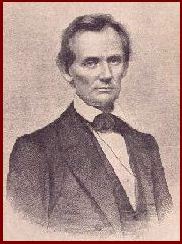
Lincoln on Right and Might

LET US HAVE FAITH THAT RIGHT MAKES MIGHT.”

–Abraham Lincoln, Cooper Union Address, New York, New York, February 27, 1860

In October 1859 Abraham Lincoln accepted an invitation to lecture at Henry Ward Beecher’s church in Brooklyn, New York, and chose a political topic which required months of painstaking research. His law partner William Herndon observed, “No former effort in the line of speech-making had cost Lincoln so much time and thought as this one,” a remarkable comment considering the previous year’s debates with Stephen Douglas.

The carefully crafted speech examined the views of the 39 signers of the Constitution. Lincoln noted that at least 21 of them — a majority — believed Congress should control slavery in the territories, rather than allow it to expand. Thus, the Republican stance of the time was not revolutionary, but similar to the Founding Fathers, and should not alarm Southerners, for radicals had threatened to secede if a Republican was elected President.

When Lincoln arrived in New York, the Young Men’s Republican Union had assumed sponsorship of the speech and moved its location to the Cooper Institute in Manhattan. The Union’s board included members such as Horace Greeley and William Cullen Bryant, who opposed William Seward for the Republican Presidential nomination. Lincoln, as an unannounced presidential aspirant, attracted a capacity crowd of 1,500 curious New Yorkers.

An eyewitness that evening said, “When Lincoln rose to speak, I was greatly disappointed. He was tall, tall, — oh, how tall! and so angular and awkward that I had, for an instant, a feeling of pity for so ungainly a man.” However, once Lincoln warmed up, “his face lighted up as with an inward fire; the whole man was transfigured. I forgot his clothes, his personal appearance, and his individual peculiarities. Presently, forgetting myself, I was on my feet like the rest, yelling like a wild Indian, cheering this wonderful man.”

Herndon, who knew the speech but was not present, said it was “devoid of all rhetorical imagry.” Rather, “it was constructed with a view to accuracy of statement, simplicity of language, and unity of thought. In some respects like a lawyer’s brief, it was logical, temperate in tone, powerful — irresistibly driving conviction home to men’s reasons and their souls.”

The speech electrified Lincoln’s listeners and gained him important political support in Seward’s home territory. Said a New York writer, “No man ever before made such an impression on his first appeal to a New York audience.” After being printed by New York newspapers, the speech was widely circulated as campaign literature.

Easily one of Lincoln’s best efforts, it revealed his singular mastery of ideas and issues in a way that justified loyal support. Here we can see him pursuing facts, forming them into meaningful patterns, pressing relentlessly toward his conclusion.

With a deft touch, Lincoln exposed the roots of sectional strife and the inconsistent positions of Senator Stephen Douglas and Chief Justice Roger Taney. He urged fellow Republicans not to capitulate to Southern demands to recognize slavery as being right, but to “stand by our duty, fearlessly and effectively.”

(abrahamlincolnonline.org)