
Monthly Archives: March 2022
Ten steps everyone can take to strengthen democracy
Jennifer Mercieca, Alternet March 03, 2022 (rawstory.com)
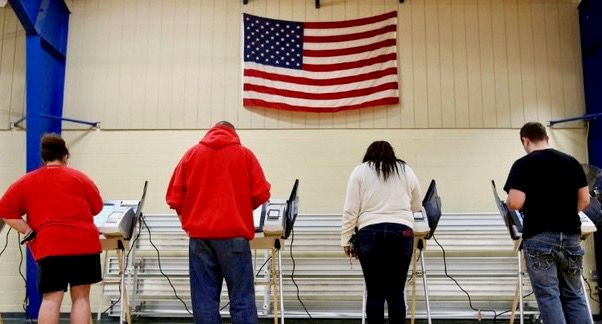
Voters REUTERS/Aaron Josefczyk/File Photo
This article was paid for by Raw Story subscribers. Not a subscriber? Try us and go ad-free for $1. Prefer to give a one-time tip? Click here.
Stories and images of Ukrainians fighting for their democracy have inspired citizens worldwide. Many Americans have wondered what we should do to defend ours. They’re right to wonder. American democracy is in grave danger from the same anti-democratic forces.
Authoritarianism — the political belief that danger and chaos require a strict obedience to authority (a strong leader or strong government), even at the expense of individual freedom — is growing in America.
Worse, authoritarians have used their scary appeals to fear and conspiracy theories to gain public office, erode protections to privacy and individual freedom, and violate democratic norms.
So far, we’ve let them. The threat to our democracy exists.
The situation is urgent.
We’re vulnerable
As community organizing scholar Marshall Ganz explains: inertia, fear, apathy, self-doubt, and isolation are all barriers to communal action.
Democracy thrives when we urgently believe that democracy is valuable, when we allow ourselves to hope for better, when our righteous anger overcomes our apathy, when we believe that we can make a difference, and when we feel solidarity with others.
Right now, we have trouble thinking and acting communally. As political scientist Robert Putnam explained in Bowling Alone, the last several generations have failed to join civic groups, bowling leagues or other “bridging” social organizations. We have cocooned ourselves in our private spaces — which means we’re more “bonded” to people who are already like us and more fearful and distrusting of others.
Trust is crucial to healthy interpersonal relationships. Ditto for healthy political relationships. It’s “the mutual confidence that no party to an exchange will exploit another’s vulnerability.” When we trust we acknowledge that relationships (whether with our constitution, friends or family) are risky. We are interdependent. That makes us vulnerable.
Political theorists know democratic stability requires a capacity for trust. It prevents our government from decaying or backsliding. We must trust in government itself, that the branches will fulfill their obligations, that decisions made by local, state and national elected officials are just and in our best interests. We must trust one another.
All of these metrics of political trust have cratered since the 1970s. Now we only trust the government when “our side” controls it.
Dangerous polarization
We gave weakened our communal ties, according to Jeffery Berry and Sarah Sobieraj, at the same time news media has shifted from the kind of “least offensive programing” that used to appeal to the entire nation to the “niche programing” that appeals to dedicated news consumers.
That niche programming attracts and keeps audiences by feeding them outrage that tells them their political opposition is their enemy. The outrage industry is thriving, but democracy is shriveling.
One effect of all this outrage is that it turned Americans into what some political scientists call “political sectarians.” That’s when good, healthy partisanship turns into bad, cancerous partisan hatred.
The nonpartisan Pew organization found that Americans don’t just have different policy preferences from their political opposition. They think of them as enemies of the American way of life – of America.
It’s a significant problem that 64 percent of Republicans and 75 percent of Democrats say the other is “close-minded.” Fifty-five percent of Republicans and 47 percent of Democrats say the other is “immoral.”
It hasn’t helped our broken public sphere that 39 percent of Trump supporters and 42 percent of Biden supporters reported that they had zero close friends who supported the other candidate in 2020.
Our failure to connect makes it difficult to trust one another. Unfamiliarity breeds contempt. It allows us to believe the worst about the opposition. It makes productive political discussions harder. This lack of communal behavior weakens communities, It foments distrust, alienation, cynicism — anti-democratic feelings eroding democracy.
Ironically, distrust makes us more vulnerable. Trust is a social, political and economic lubricant. It makes everything in human relations easier. Distrust does the opposite, though. It makes everything harder.
Democracy thrives on trust.
Authoritarianism thrives on distrust.
A whole of society approach
Global threats of the past five years — like climate change and covid — have led to partner nations adopting a “whole of society” approach to mitigating the threats. We need that same approach to mitigating the threat of authoritarianism — domestically and internationally.
A “whole of society” approach means all relevant sectors of society work together — business, education, law, governments, communal groups — to solve a problem. Each sector asks what it has done to contribute to the problem and what it can do to contribute to fixing it.
We need a whole of society approach to defending democracy. There’s already a whole of society approach to destroying it. Every sector is under threat by authoritarians. We must work together.
And of course, that means you too. Here are 10 democracy defending practices that you can do today to help to defend our democracy.
- Build trust between different sectors of society and different factions. Democracy thrives with bridge-building; it erodes with distrust and cynicism.
- Use whatever power you have, in whatever spheres of influence you are in, to ask one question, “are we doing enough to defend democracy?”
- Spread good information, online and off. Support those who are generating and distributing good information (researchers, teachers, media, librarians). Consider establishing a little free library.
- Support institutions, especially communal ones like parks, libraries, food banks and schools. Support places where people connect.
- Call people in, not out. We tend to shame those with whom we disagree, but authoritarians thrive with alienation. Shaming and shunning will drive people toward authoritarians. Call them in, befriend them. Build bridges. Bridges strengthen democracy.
- Give money, time and attention to pro-democracy politicians, organizations, institutions and movements. Look for groups already working to support democracy.
- Democracy is everybody. Everybody. Check your skepticism of people not like you. Work on that. We need all of us.
- Go out in public as a democracy defender. Talk about democracy with people. Show up to events, hearings, etc., as a democrat. Join a march. Make being pro-democracy a thing people know about you and associate with you.
- Communicate as a democrat. That means using persuasion, not compliance-gaining strategies. That means being open to new information, perspectives, values. It means being inclusive, not exclusive. Democracy is a way of life – a way of thinking and communicating.
- Finally, do not be cynical. Do not defeat democracy with your cynicism. Block or mute cynical people/accounts. Cynicism is not useful for a pro-democracy movement. Hope is necessary.
Democracy isn’t just defended with tanks. Democracy is a way of life as well as a method of politics. The authoritarian plan is to sow division, to exploit distrust, polarization and frustration.
Authoritarians love cynicism. We have to normalize democratic hope.
The political project of our time is to defend democracy.
Ukraine’s Zelenskiy vows revenge on Russian forces after fleeing family killed in shelling of Irpin
Attack on civilians in town on the outskirts of Kyiv comes as vast numbers of Ukrainian civilians attempt to flee cities under bombardment
Peter Beaumont in Lviv, Daniel Boffey in Brussels, and Graham Russell
Mon 7 Mar 2022 02.16 GMT (TheGuardian.com)
Volodymr Zelenskiy has vowed to punish “every bastard’” who committed atrocities during the invasion of Ukraine amid outrage at Russia’s shelling of civilians as they tried to flee a town on the outskirts of Kyiv, killing a young family.
The president of Ukraine said in a video address on Sunday night: “They were just trying to get out of town. To escape. The whole family. How many such families have died in Ukraine. We will not forgive. We will not forget. We will punish everyone who committed atrocities in this war.”
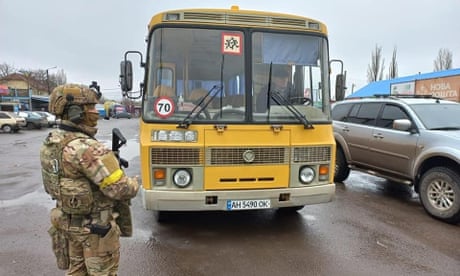
To the Russian forces behind the attack, in the town of Irpin on the western edge of the capital, Zelenskiy said: “There will be no quiet place on this earth for you. Except for the grave.”
Hundreds of civilians had gathered near the bridge at Irpin on Sunday, seeking to escape the capital, with only a dozen Ukrainian soldiers there, mostly helping them with their luggage, according to the New York Times, whose team were filming at the time of the shelling.
The mortar fire from the Russians began some distance away from the bridge, before coming nearer to the street where the civilians were caught out in the open, the Times reported. Eight died in the attack, including a woman, her teenage son and a primary school-age daughter, plus a family friend. Their belongings lay scattered around the street. In footage of the attack a group of fighters could be seen trying to help the family.
The mayor of Irpin described seeing the four killed “in front of my eyes” when a shell hit them. “It is impudence, they are monsters. Irpin is at war, Irpin has not surrendered,” Oleksandr Markushyn said on Telegram, adding that part of the city was in Russian hands. Markushyn said another evacuation effort would begin on Monday morning.
Russia’s defence ministry said on Monday morning it would cease fire to allow civilians in the cities of Kyiv, Kharkiv and Sumy to leave, but only for Russia or Belarus.
The Russian invasion of Ukraine has triggered the fasting-growing refugee crisis in Europe since the second world war, according to the head of the UN’s refugee agency. Vast numbers of Ukrainian civilians continue to flee cities under bombardment, including the besieged coastal city of Mariupol where Russian forces agreed again to allow a second urgent evacuation that ended in a fresh bombing.
“It’s murder, deliberate murder,” Zelensky said in his address as he warned of more shelling to come on Monday. “Instead of humanitarian corridors, they can only ensure bloody ones.”
Amid reports of increasingly indiscriminate attacks, the UK’s ministry of defence released its latest intelligence report, speculating that Russian forces had made “minimal ground advances” over the weekend, while a “high level of Russian air and artillery strikes” continued to hit military and civilian sites across the cities of Kharkiv, Mykolaiv, Chernihiv and Mariupol.
Ukraine will ask the international court of justice, the United Nations’ top court, on Monday to issue an emergency ruling requiring Russia to stop its invasion, arguing that Moscow’s justification for the attack is based on a faulty interpretation of genocide law.
The UN security council is also expected to hold an emergency meeting for an update on the humanitarian crisis the war has created.
In Russia, Vladimir Putin’s invasion has caused further outcry, with more than 4,300 people arrested after demonstrations in 21 cities. The jailed Russian opposition leader Alexei Navalny had called for protest across the country and the world.
Oil prices have soared more than 10% and are closing in on their all-time high levels on global markets as the US and Europe considered a ban on Russian crude and the geopolitical impact of the invasion spread.
With a humanitarian crisis spiralling inside Ukraine, it had been hoped that 200,000 of the 430,000 residents in Mariupol – where medicines and food are running short and people are living in freezing conditions with no heating – would be able to escape during an agreed nine-hour ceasefire on Sunday, but only a few hundred people are believed to have made it out before shelling resumed.
The International Committee of the Red Cross implored the two sides to renegotiate, saying there were “devastating scenes of human suffering in Mariupol”.
A third round of Russian-Ukrainian talks aimed at finding a way out of the bloody conflict is set for Monday.
During a tense call with Putin in which Macron had also emphasised the need to avoid disaster at Ukraine’s nuclear power sites after the shelling of the Zaporizhzhia plant by Russian forces last week, France’s president reiterated the west’s demand that civilians be given safe passage.
“The [humanitarian] situation is difficult” in Mariupol, a French official said. “Our demands remain the same: we want Russia to respond to these demands … very quickly and clearly.”
Very few refugees from the strategic city on the Azov Sea made it out on Saturday, but one family, who did not give their names, arrived in the central city of Dnipro and recounted their harrowing experience.
“We stayed in the basement for seven days with no heating, electricity or internet and ran out of food and water,” one of them said.
“On the road, we saw there were bodies everywhere, Russians and Ukrainians … We saw that people had been buried in their basements.”
The Kremlin said Putin had pinned the blame for the failure of the ceasefire to hold in Mariupol and neighbouring Volnovakha on “Ukrainian nationalists”.
Putin “drew attention to the fact that Kyiv still does not fulfil agreements reached on this acute humanitarian issue”, the Kremlin said. “And the pause in hostilities was again used only to build up forces and means in their positions.”
Rejecting Moscow’s denials, US secretary of state Antony Blinken told CNN: “We’ve seen very credible reports of deliberate attacks on civilians, which would constitute a war crime.”
Simone de Beauvoir recommends we fight for ourselves as we age
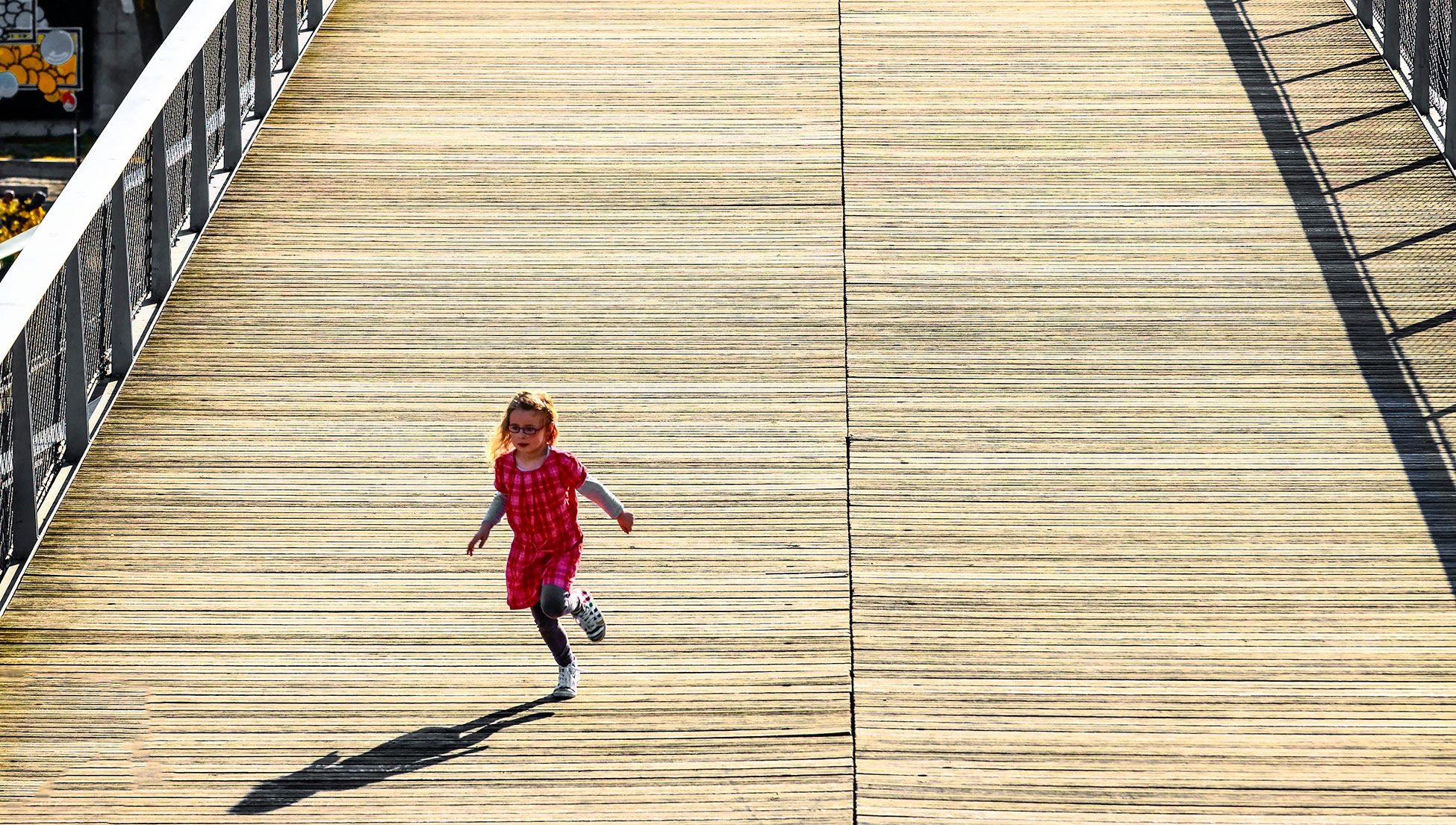
On the Simone de Beauvoir footbridge in Paris. Photo by Bruno de Hogues/Gamma-Rapho/Getty
Skye C Clearyis the author of Existentialism and Romantic Love (2015), How to Be Authentic: Simone de Beauvoir and the Quest for Fulfillment (forthcoming, August 2022), and co-editor of How to Live a Good Life (2020). She teaches at Columbia University, Barnard College, and the City University of New York.
Edited by Nigel Warburton
8 March 2022 (psyche.co)
Elderhood is what the French existential philosopher Simone de Beauvoir called the ‘crusher’ of humankind. Experiences of growing older vary radically, but lies and silencing can turn elderhood into a shameful and frightening calamity, even as medical and biotechnologies are increasing health and life spans.
In her 60s, Beauvoir wrote a 650-page book La vieillesse (1970) – translated as Old Age or The Coming of Age – to reveal the truth about ageing. She argues that ageing isn’t only a biological decline: society crushes ageing bodies through ageist discrimination. And yet, Beauvoir noted, elderhood also has the potential to bring us closer to authenticity than at any other stage of life. For her, being authentic means becoming creators of our vibrant selves, shaped through our choices. But older people face myriad challenges – many of them inescapable – that warp their choices and deter them from stretching towards authenticity.
For Beauvoir, the existential question lurking underneath the crisis of old age is: ‘Can I have become a different being while I still remain myself?’ In other words, who is this person that I am becoming who appears to be me, but who seems to be someone else too?
One of the reasons people face this crisis as they age is the tendency to treat old age as a ‘normal abnormality’. Elderhood is normal because, unless one dies young, ageing is humanity’s universal destiny. But elderhood is also an abnormality because older people are often assumed to be no longer properly functioning and capable humans. Ageism classifies older people as stagnant and powerless as time drags them towards their graves. Ageism, Beauvoir argues, is a travesty because – especially in capitalist societies where people are valued by their profitability – older people’s capabilities are undervalued and underappreciated, which oppresses and dehumanises them. Beauvoir writes: ‘Society inflicts so wretched a standard of living upon the vast majority of old people that it is almost tautological to say “old and poor”.’
Some adapt to their ageing so well that they barely notice it. Beauvoir points to the philosopher Lou Andreas-Salomé as one who didn’t notice she was ageing until she was in her 60s and her hair started to fall out. Some have the money and resources to cushion themselves against the hardships of elderhood – especially when it comes to accessing technology that can extend and enhance ageing bodies, or living in a state of such comfort that allows them to continue gliding seamlessly through life.
The problem is when other people’s gazes define us to the extent that we lose the ability to define ourselves
But, for most, elderhood grinds away at the possibility of achieving goals and completing projects. It brings loneliness when friends and family die. It often wipes out financial stability, as well as physical and sensory mobility. The likelihood of physical illness and pain intensifies too. And growing older triggers an identity crisis. Beauvoir writes: ‘Nothing should be more expected than old age: nothing is more unforeseen.’ While death is a possibility at any age, old age can seem so far off into the future that, by the time we realise it’s happening to us, it comes as a shattering blow.
Another reason for the identity crisis of elderhood, according to Beauvoir, is that our ageing is a situation that exists outside of us. We are old for others because there is a disconnect between how we feel inwardly and the ungraspable, judgmental gazes of other people. Beauvoir reflects:
A Frenchwoman, a writer, a person of 60: this is my situation as I live it. But in the surrounding world this situation exists as an objective form, one that escapes me.
When people started telling her that she reminded them of their mother, Beauvoir felt this dissonance agonisingly.
A common cliché is that you are only as old as you feel, but that is oversimplifying. Certainly, we make our own choices about who we become, but we are also defined from the outside – by other people, societies and situations that surround us. We can discover some aspects of our being by looking in the mirror and introspection, but there is a dimension that only others can see and which remains, for each of us, unrealisable.
Being defined by others isn’t a problem in itself. We coexist with other people and we come to know ourselves more intimately through our interactions with them. But the problem is when other people’s gazes define us to the extent that we lose the ability to define ourselves. Those gazes can become so harsh and omnipresent that they lock elders into a category of ‘old’, constraining their ability to create themselves in authentic ways. This attitude is conveyed in the assumption that old people can’t learn new tricks, which is false. Beauvoir writes of ageing: ‘In no other aspect of life does the indecency of the culture we have inherited show itself more nakedly.’
Not all cultures have been ageist. Many societies have revered elders, seeing them as wiser, more virtuous or closer to holiness. Respect for elders (filial piety) is a virtue in Confucianism. Cicero likens old age to piloting a ship: younger people may be climbing masts and pulling ropes, but the captain’s sagacity is as vital for navigating life as for navigating a boat. In Victor Hugo’s poem ‘Boaz Asleep’ (1859-83), with old age comes greatness: maybe the eyes of young men burn with fire, but Boaz’s octogenarian eyes sparkle with clarity – and sexiness. At Boaz’s feet lies a woman named Ruth, topless, apparently sent by God.
In her 50s, Beauvoir would catch her reflection and lament ‘that air of sadness around the mouth that wrinkles always bring’
Most societies have revered male elders and vilified female elders. Consider Amy Schumer’s ‘Last F**kable Day’ (2015) skit where she stumbles across the fellow comedian Julia Louis-Dreyfus celebrating that she has reached an age where the media will no longer portray her as sexually attractive. Given the dispiriting gaze towards older women (especially if underprivileged), it’s no wonder that many people internalise ageism. Beauvoir did.
When Beauvoir was 30 years old, she thought that older women should not have sex lives: ‘I loathed what I called “harridans” and promised myself that when I reached that stage, I would dutifully retire to the shelf.’ Aged 39, Beauvoir indeed objectified herself enough to try to retire her sexualised body. But when a younger man, Claude Lanzmann, propositioned her, she was shocked to discover she was still a passionate and desirable being.
Still, as Beauvoir grew older, she wanted to smash her mirrors like the Countess of Castiglione. The countess, a 19th-century Italian model and photographic artist, banned mirrors and darkened her house so she could not bear witness to her atrophying youth and beauty. In her 50s, Beauvoir would catch her reflection and lament her drooping eyebrows, the bags growing under her eyes, and, she said, ‘that air of sadness around the mouth that wrinkles always bring’.
There are many ways people attempt to deny their ageing. One strategy is to preserve youth in the stories we tell. One of the reasons that older people like talking about their past, Beauvoir speculates, is because they are trying to keep alive the legend of themselves, cementing themselves as the person they once were in relationships they once had. Beauvoir did this too.
She spent a lot of time writing memoirs in an attempt to resuscitate her fading memories. But according to her philosophy, wallowing in the past at the expense of the present and future is inauthentic because it’s an attempt to ossify our being into something that it was, instead of acknowledging ourselves as forever stretching and dynamically becoming into the future. Nevertheless, Beauvoir wasn’t entirely caught in this trap because, although she did focus on her past, her memoirs acted as a portal to transcend and immortalise herself as a writer.
The masks that some put on to escape their age are a form of disguise that distracts us from the real work of combating ageism
Another avoidance strategy is delaying the inevitable physical regression by physically cementing our flesh in its youthful state, such as through cosmetic surgery. Of the woman who laments ageing, Beauvoir writes: ‘[S]he witnesses, powerless, the degradation of this object of flesh with which she is one; she fights; but dyes, peeling, and plastic surgery can never do more than prolong her dying youth.’
To become authentic, in Beauvoir’s view, is to create ourselves through our own choices. In theory, there should be no problem with transcending the facts of our bodies towards new possibilities and futures. And shouldn’t we support one another in making whatever choices we choose for our own appearances?
Ideally, yes. It’s authentic to respect our ageing bodies by staying active and healthy. But mutilating our skin and body to avoid reality is inauthentic. Preserving oneself with cosmetic procedures is submitting to ageist and sexist gazes that tell us young is good, old is bad.
Classism infects anti-ageing practices too. Such procedures are available only to those who have hundreds of dollars to spend monthly, if not weekly. And when some freeze their faces, it harms others who don’t, or can’t afford to, because they look older in comparison. She with the most money (I say ‘she’ because women account for the vast majority of cosmetic surgery spending) will be most able to protect themselves against ageist and sexist blows as they entrench discrimination for less privileged women. The masks that some people put on to escape their age are a form of disguise that becomes exponentially obvious and costly to maintain, and distracts us from the real work of combating ageism.
‘Nudity begins with the face,’ writes Beauvoir in her novel The Mandarins (1954), suggesting that to reveal our faces – not only to bear our wrinkles, but to be proud of them – is a form of vulnerability. Natural faces, and indeed natural bodies, should not be objects of shame. But it is shameful that older bodies are discriminated against to such an extent that so many feel compelled to attempt to escape them. Beauvoir was well aware that the mortifying weight of ageist gazes overwhelms and punishes people, especially women – such as through employment discrimination – and acknowledges that ‘Whether we like it or not, in the end we submit to the outsider’s point of view.’
How do we then overcome the ‘identification crisis’ of old age? We must stop inauthentic strategies of clinging to our past selves and, Beauvoir writes, ‘we must unreservedly accept a new image of ourselves.’ Ageing authentically calls for us to shift our attitudes and recognise that becoming older is a fact of our condition, our normal fate, and a stage of life not radically different to adulthood. Beauvoir saw elderhood as ‘possessing its own balance and leaving a wide range of possibilities open to the individual’.
Elderhood is an opportunity to turn to ourselves, to be more responsive to our own needs, and less obliged to other people
As death looms ever nearer, it takes effort to persevere and engage in life with zeal, to overcome apathy and listlessness, and to keep oneself afloat amid melancholia and lonesomeness. It takes strength shamelessly to love and accept our own and others’ ageing bodies. Elderhood’s challenges can improve when we embrace taking care of ourselves through exercise, for example, as well as technologies that extend and enhance health spans, cure illnesses, and relieve pain – and not only for the wealthiest in society.
Elderhood does have hidden strengths: experience, wisdom and also deeper self-understanding. Because people are closer to the end of their becoming, elderhood is the stage where we find ourselves closest to fulfilment or, as Beauvoir describes it, ‘that fullness of being at which life so vainly aims’. As we grow up, many of us are overly concerned with building our reputation and cultivating the impressions we leave with others. Elderhood frees us from this slog. It is an opportunity to turn to ourselves, to be more responsive to our own needs, and less obliged to other people. According to Beauvoir:
The sweeping away of fetishes and illusions is the truest, most worthwhile of all the contributions brought by age … The truth of the human state is accomplished only at the end of our own becoming.
This is why, she writes,
There is only one solution if old age is not to be an absurd parody of our former life, and that is to go on pursuing ends that give our existence a meaning – devotion to individuals, to groups or to causes, social, political, intellectual or creative work.
Later in her life, Beauvoir produced fewer written pieces, but she threw herself into political activism, supported other writers, and worked on reaching new audiences for her work, such as with a screen adaptation of her book The Woman Destroyed (1967).
Old age, for Beauvoir, should be celebrated, but to have something to celebrate, we must keep working towards a better world, one free from ageism, so that all are free to create themselves in authentic ways, and where no one has to exist as a living corpse. After all, survival can be worse than death. Beauvoir urges us to face up to ageing with honesty and bravery:
We must stop cheating: the whole meaning of our life is in question in the future that is waiting for us. If we do not know what we are going to be, we cannot know what we are … it is harder to adopt than falsehood, but, once reached, it cannot but bring happiness.
In praise of habits – so much more than mindless reflexes
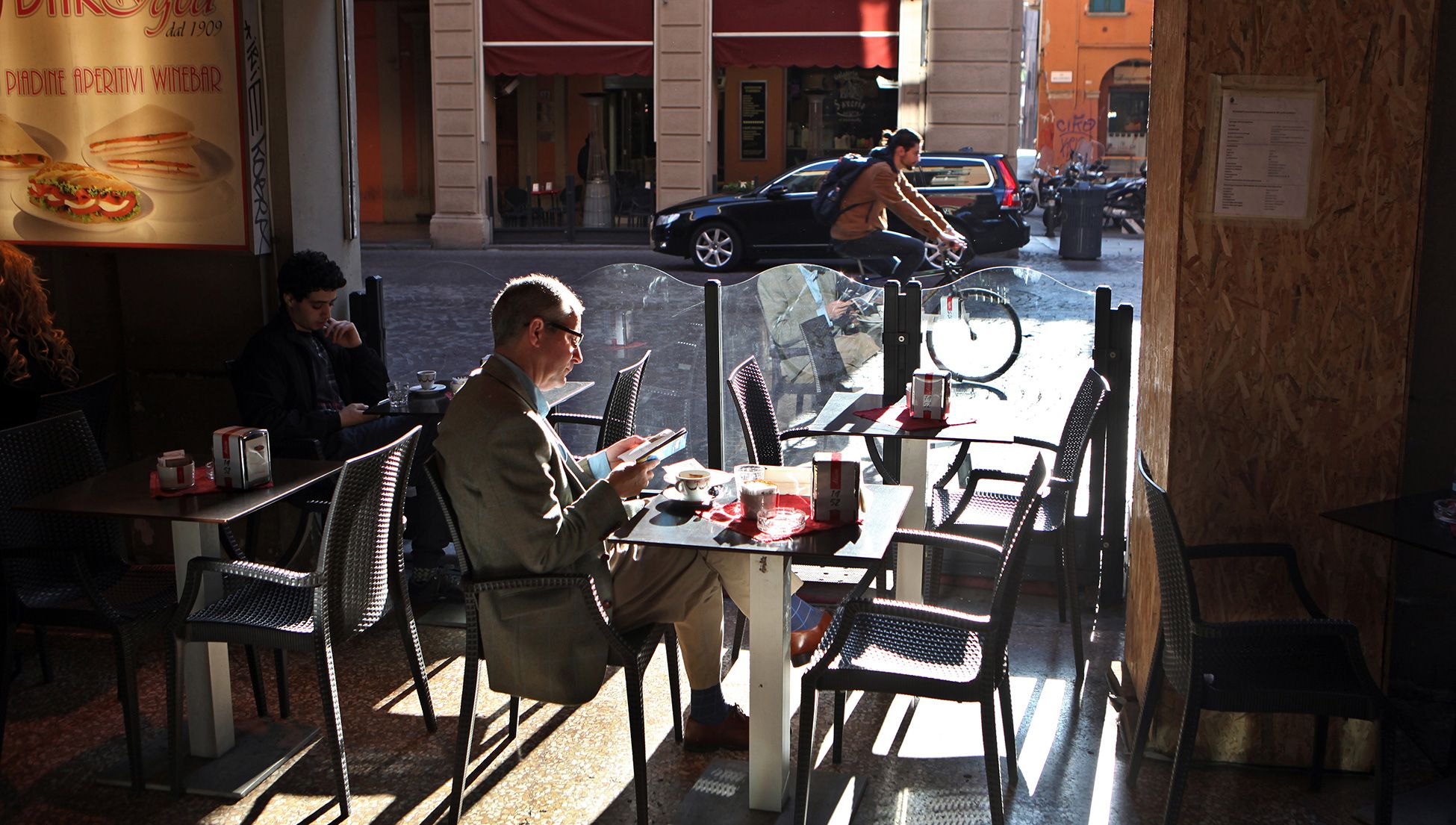
Bologna, Italy. Photo by David Silverman/Getty
Ian Robertsonis a graduate student in philosophy at the School of Liberal Arts at the University of Wollongong in Australia.
Katsunori Miyaharais a specially appointed lecturer at the Center for Human Nature, Artificial Intelligence, and Neuroscience (CHAIN) at Hokkaido University in Japan.
Edited by Sam Dresser
26 July 2021 (Psyche.co)
Habit is the foundation of the routines that comprise the vast bulk of our everyday lives. When we are not disturbed, we live our practical lives without engaging in anything like a cautious assessment of what it is we are doing at any given moment. No conscious deliberation or reflection is required to brew morning coffee, or to catch the morning train to work. As the late philosopher Hubert Dreyfus said, habits are a part of our ‘everyday coping practices’.
In tune with this characterisation, philosophers of mind and cognitive scientists alike often conceive of habits as highly mechanistic and near-automatic responses to environmental cues that unfold outside of our deliberative control. This conception of habits as mindless and reflexive might seem intuitive when we recognise that they are often counterproductive to our capacity to pursue our goals and desires. For example, many of us might have recently found ourselves habitually reaching over to shake hands with people even when we had previously acknowledged that we should refrain from doing so in light of the pandemic.
However, even our most mundane habitual routines actually display a great deal of intelligence. Indeed, they are often intelligently context-sensitive and flexible in such a way as can support and structure our goals and projects. Consider the example of driving the same route to work every morning. You might often find yourself wrapped up in thoughts about how your day will unfold, or how you might explain to your boss why you failed to complete some task, and yet you still easily navigate the roads that lead you to your destination. However, despite completing this task on something like autopilot, your drive will still be intelligently adjusted to situational intricacies, such as how fast or slow the driver in front of you is going, or when the traffic lights change. In attempting to account for the intelligent dimension of habit, researchers have moved away from construing habits as unintelligent mechanisms and towards modelling them as a species of belief. The puzzle we face in clarifying the character of habits is to explain their intelligent dimension while also acknowledging that they can often work against our intelligence and lead us astray.
Why should we care about the resolution of this puzzle? Great thinkers since before Aristotle have overwhelmingly tended to characterise humans as rational animals in virtue of our capacity to form and intelligently adjust our beliefs. On this view, constructing good habits is vital – but, once a habitual routine is established, it is not itself intelligent. However, if we are serious about attributing intelligence to our embodied interactions with the world, then our notion of how to construe human rationality will need to be revised, and profound questions will need to be raised as to our conceptions of nonhuman animal intelligence.
Gilbert Ryle, in his seminal work The Concept of Mind (1949), emphatically denied that habits were intelligent. (This might surprise some, since Ryle is widely recognised by philosophers as a historical champion of the view that intelligent behaviour is not always guided by theoretical knowledge.) For him, habits are mere mindless mechanisms. Indeed, he explicitly contrasts habitual doings with intelligent and skilful behaviours, claiming that it ‘is of the essence of merely habitual practices that one performance is a replica of its predecessors’. A habit is simply an unintelligent and stupefied way of reacting to the world.
Skill acquisition in sports is often nothing but the process of cultivating a new motor habit through repetitive practice
In On Habit (2014), Clare Carlisle notes that this sort of characterisation of habit – as unintelligent and ‘a degradation of life, reducing spontaneity and vitality to mechanical routine’ – has been held by many influential philosophers of the mind throughout history, including Baruch Spinoza, Immanuel Kant and Henri Bergson. Even today, the researchers Susana Ramírez-Vizcaya and Tom Froese identify a prevalent notion of habit across several domains of the contemporary cognitive sciences that conceives of them as ‘rigid patterns of behaviour that are automatically activated by context cues’.
One inclined to agree with this mechanical conception of habit as inherently unintelligent might argue that the puzzle we referred to above is simply ill-posed. After all, habits are stupid! On this analysis, any attempt to construe habits as intelligence-involving straightforwardly confuses habit and skill. An implication would be that our above purported examples of intelligent habits (such as the habit of driving the same route to the office every morning, which allows us to effectively reach our workplace, even when we are lost in irrelevant thoughts), insofar as they are intelligent, are not habits – they’re skills.
This view of habits is misguided. Habits are not, despite what Ryle says, simply stupefied and rigid reactions to environmental triggers, or ‘single-track dispositions’ to respond to the world with highly stereotyped reflexes. To see this, we need only note that forging any clear-cut distinction between habit and skill is not even remotely intuitive or feasible. On one hand, many of our skills consist of habits. Skill acquisition in sports, for example, is often nothing but the process of cultivating a new motor habit through repetitive practice. On the other hand, habits often comprise skills. Consider the habit of whistling when you are bored. This is a considerably skilful act, which can in some cases constitute genuine musical expertise. For just these reasons, introducing a clear-cut distinction between skill and habit, such that habitual doings cannot, by definition, be skilled or intelligent, is wrongheaded.
In opposition to the mechanistic conception of habits, some, such as the philosopher Jason Stanley, advocate for an intellectualist conception, on which habits are intelligent because they are really a kind of ‘settled belief’ about ways of achieving certain goals. In my initial weeks at a new workplace, I will have developed a belief about how I could successfully get to the office. Through my daily commute, this belief gradually becomes entirely automatic and unconscious. At this stage, I do not need to consciously consider what route I should take to the office but am instead guided by an unconscious belief about how to successfully get there. As this unconscious belief becomes entrenched, it might also become recalcitrant to counterevidence. I might, for instance, accidentally take this route to the office even after I am informed and sincerely convinced that there is a more efficient route. According to intellectualists, a habit is nothing but a deeply entrenched belief of this form. Holding this view, we could preserve the traditional view of human rationality as dependent on belief.
This intellectualist view of habit as a form of belief, however, also has serious problems in accounting for the intelligent aspect of our habitual doings. Habits are, as our above examples show, often exquisitely context-sensitive. But if Stanley takes habitual doings to be intelligent and rational only in virtue of being guided by unconscious beliefs, then he relies on the idea that the intelligent flexibility of habits depends on the flexibility and rapid updating of unconscious beliefs. Emphasising this flexibility conflicts with his claim that habits themselves are guided by stubborn and recalcitrant unconscious beliefs. It is also unclear how unconscious neural processes can even involve beliefs (philosophers have tried in vain for decades to provide a satisfactory account of how they might). As such, if an alternative notion of habits can successfully explain their context-sensitivity without requiring a commitment to positing hidden, unconscious beliefs, then such an account would be more theoretically attractive.
Seen through this pragmatist lens, habits are a treasure trove of possible responses to our environment, constrained by circumstance, but open to the world
Both mechanical and intellectual conceptions of habit encounter significant difficulties in explaining how habits sustain intelligent behaviour. These conceptions have a common root problem, which is a failure to appreciate the pivotal role of perception that philosophers working in the phenomenological and pragmatist traditions have recognised. When we follow them in recognising the crucial role of perception in guiding our habitual doings, we can explain the intelligent aspect of habits while obviating any need to identify them as beliefs.
For Dreyfus, we are no less experts at our everyday habitual routines than Serena Williams is an expert at tennis (albeit what we accomplish might be substantially less impressive). The consequence of this, for him, is that our everyday habits will be guided by expert-level perception and intuition. For instance, many of us have now cultivated social distancing practices. By that measure, as we incorporate these practices into our everyday lives, we are able to proficiently maintain an appropriate distance automatically. When someone next to you in an elevator stands too close, you immediately perceive them as standing too close, and are provoked or ‘solicited’ to move back and restore appropriate distance.
Dreyfus is correct to highlight the important role of perceptual skill in guiding our habitual doings, but we think his account should be revised in one crucial respect. For Dreyfus, as we become experts at completing some everyday routine, the world increasingly draws us to act in one optimal, appropriate way. In other words, we will, as our everyday routines become engrained, come to perceive nothing other than the possibility of pursuing a singular optimal course of action for each situation. To make a long story short, we fear that this renders Dreyfus’s view of habits too close to the mindless, mechanical view of habit that we rejected above.
The pragmatist philosopher John Dewey is instructive here. Dewey, like Dreyfus, construes habits as facilitating intelligent behaviour by shaping perception. However, he denies that, as we become experts at carrying out everyday routines, our habitual responses always become entirely automatic response patterns. Instead, for Dewey, writing in Human Nature and Conduct (1922), the ‘more numerous our habits the wider the field of possible observation and foretelling. The more flexible they are, the more refined is perception in its discrimination and the more delicate the presentation evoked by imagination …’ In other words, our habitual doings are intelligently adjusted to context precisely because we perceive the environment in which they have been cultivated in terms of the vast and discriminating habitual responses we might make to it. Habits, seen through this pragmatist lens, then, far from being blunt reflexes, amount to a treasure trove of possible responses to our situated environment, highly constrained by circumstance, but genuinely open to the world. Nor does Dewey deny that our thoughts will almost always be suffused by habit.
Contemporary philosophy of mind is positively replete with warnings that we ought not to fall into easy dichotomies between intelligent and voluntary processes on the one hand, and unintelligent and automatic processes on the other. Indeed, even psychologists such as Daniel Kahneman who have influentially advocated for dual-processing views on which the brain comprises two distinct ‘systems’ – one habitual, unconscious, and quick, and another slow, conscious, and reflective – have for years conceded that such a picture is far too simplistic. One sure-fire way to cut right through this dichotomy is to note that, while habits can distort our goals, they can also be exquisitely context-sensitive. Accounting for this context-sensitivity will require acknowledging the pivotal role perceptual skills play in guiding our habitual doings. By recognising the flexible aspects of habits, we further distance ourselves from an outmoded view of intelligent action as one that’s always guided by appropriate intellectual apprehension of knowledgeable beliefs.
Tarot Card for March 8: The Magus
The Magus
The Magician is normally numbered one and is sometimes called the Magus. The Magician is usually depicted as a powerful adept, a master of the four elements. He is able to shift events in his favour – to make the World change around him according to his Will.
He is highly skilled, highly powerful and hence a highly dynamic and charismatic figure. He is that part of us which we harness to control our own lives. When we are the Magician we make what we want happen.
However, you can be sure that we receive exactly what we ask for – “be careful what you pray for, you might just get it”! The Magician knows where to throw the pebble into the pool of the Universe in order to get exactly the ripples he wants. If we choose happiness and joy and put our Will behind them, that is what we can achieve.
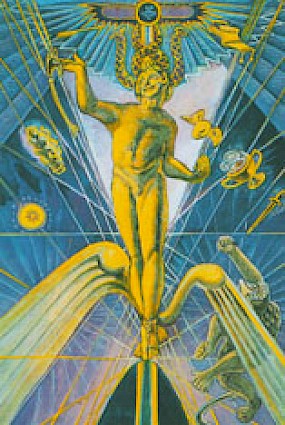
(via angelpaths.com and Alan Blackman)
Pope Francis Urges World To Respect Every Person’s Beliefs About Pizza Toppings
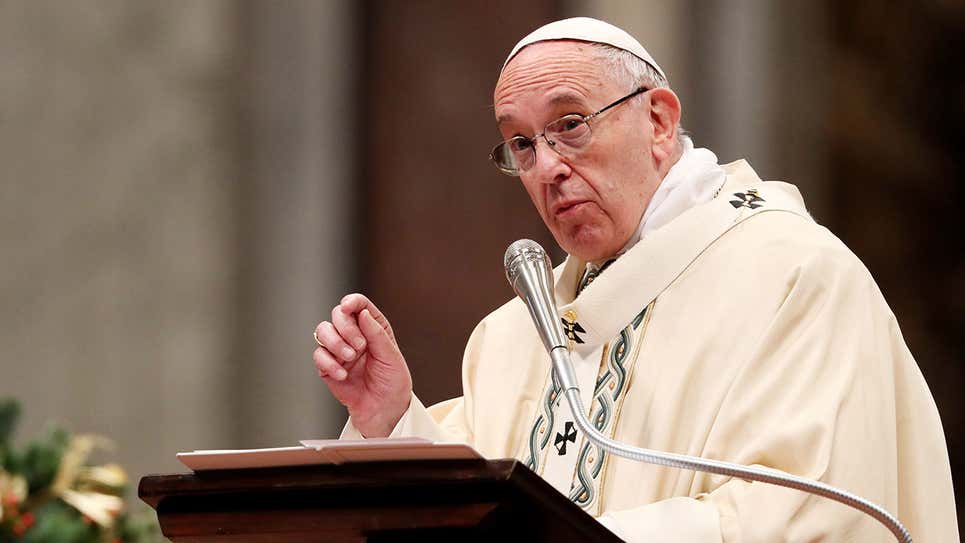
VATICAN CITY—Delivering an impassioned address from St. Peter’s Basilica to believers of all denominations across the globe, Pope Francis urged the world Tuesday to respect every person’s beliefs about pizza toppings. “I speak today to all peace-loving citizens of the world, imploring them to care for one another regardless of whether they prefer mushroom and red pepper, sausage and onion, or even meatball and ricotta,” said the supreme pontiff, often pausing for moments as he grew visibly emotional describing the necessity of universal love for even those who chose unorthodox toppings such as buffalo chicken or Philly cheesesteak. “We should not judge those who want pineapple on their pizza, lest we ourselves be judged. Indeed, the beauty of our flock lies in our diversity. I entrust each one of you, and all your pizza-eating brothers and sisters, to the Lord and to the Virgin Mary, and I bless you from my heart.” At press time, Pope Francis had asked those listening to pray for him after announcing that he now intended to sample a spicy meat lover’s pizza.
Video from outside Kyiv captures blast
This one-minute video shocked me and made me cry. While recording the video a mortar shell explodes. It kills one person and injures another. It’s so shocking to see and hear what happens when something like this occurs. And that’s just one of the tens of thousands of such explosions being inflicted on Ukrainians.
Russia: Thousands arrested in anti-war protests
Channel 4 News Despite the Kremlin’s draconian crackdown, crowds of people have turned out at anti-war protests across Russia. (Subscribe: https://bit.ly/C4_News_Subscribe) One monitoring group said more than 4,000 people had been arrested in dozens of cities across the country. But none of that could stop many ordinary Russians from simply ‘going for a walk’. We have blurred the faces of the interviewees in this report for their own safety.
Thane’s “Transcendentalism” series
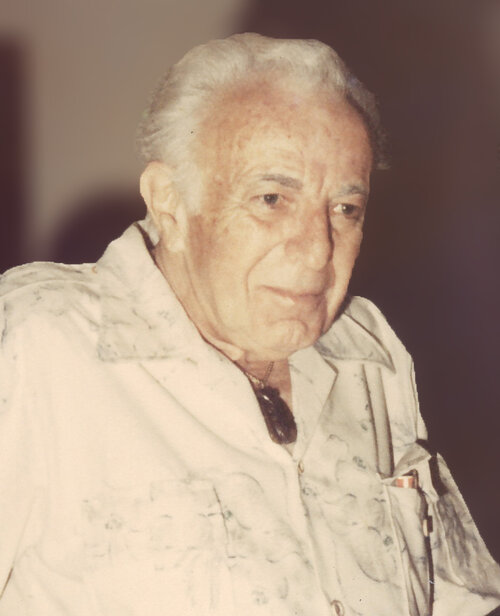
March 7, 2022
I am certain everyone should engage with this presentation,
today. https://www.theprosperos.com/trsm16
–from Randy Ramsley