
The Film Archives Neurology (from Greek: νεῦρον, neuron, and the suffix -λογία -logia “study of”) is a branch of medicine dealing with disorders of the nervous system. Neurology deals with the diagnosis and treatment of all categories of conditions and disease involving the central and peripheral nervous system (and its subdivisions, the autonomic nervous system and the somatic nervous system); including their coverings, blood vessels, and all effector tissue, such as muscle.[1] Neurological practice relies heavily on the field of neuroscience, which is the scientific study of the nervous system. A neurologist is a physician specializing in neurology and trained to investigate, or diagnose and treat neurological disorders.[2] Neurologists may also be involved in clinical research, clinical trials, and basic or translational research. While neurology is a non-surgical specialty, its corresponding surgical specialty is neurosurgery.[2] There is significant overlap between the fields of neurology and psychiatry, with the boundary between the two disciplines and the conditions they treat being somewhat nebulous. https://en.wikipedia.org/wiki/Neurology Anti-social behaviours are actions that harm or lack consideration for the well-being of others.[1] Many people also label behaviour which is deemed contrary to prevailing norms for social conduct as anti-social behaviour.[2] The term is especially used in British English.[3] Anti-social is frequently used, incorrectly, to mean either “nonsocial” or “unsociable”. The words are not synonyms.[4] The American Psychiatric Association, in its Diagnostic and Statistical Manual of Mental Disorders, diagnoses persistent anti-social behaviour as antisocial personality disorder.[5] The World Health Organization includes it in the International Classification of Diseases as “dissocial personality disorder”.[6] A pattern of persistent anti-social behaviours can also be present in children and adolescents diagnosed with conduct problems, including conduct disorder or oppositional defiant disorder under the DSM-5. https://en.wikipedia.org/wiki/Anti-so…
Monthly Archives: March 2022
Tarot Card for March 16: The Two of Disks
The Two of Disks
The Lord of Change is a card that indicates the necessity of constant change in life if we are not to stagnate. It often marks a turning point – a new job, a shift of fortune, a move of home.
Disks are an earthy suit, covering matters of material life, and the manifest Universe. If you look at the planet we live on, though in itself it seems solid and predictable (less so in recent years, mind you) it is in a constant state of change and movement. It turns in space, and if it did not, we’d all be very unhappy with the consequences. The cycle of seasons swings past us each and every year. The tides ebb and rise. Constant change is natural, normal and positive.
We do, though, often fear change in our lives. We will struggle against anything that appears to alter the pre-planned pattern we have applied to our future. But that’s exactly what this card does – instigates change. Sometimes we think that the change is bad – and on the face of it, it may appear to be – yet whenever the 2 of Disks appears, it’s warning us that change has become imperative. Something is stagnating, demanding to be broken down and made over.
It’s worth remembering that if you resist the change advocated by the Lord of Change, you might find that life imposes it upon you anyway – and then you’ll feel the effects either of the Death card, or the Tower. When this card appears, it demands a thorough re-assessment of your overall position and willingness to go with the chances that come your way.
The card is especially strengthened by cards like Fortune, and positive Disks and Wands. You can usually track down which area of life it applies to by looking at the cards that surround it – Cups would suggest you need to look at your emotional life. Disks would imply that it’s either your working or financial area that needs attention. Swords would probably indicate conflict around whatever changes you need to make, and may point to a need for clear communication. Wands would be more connected with your own application of Will, and the way you are trying to build your life. Major Arcana cards would suggest an inner, more spiritual area needs to be looked at.
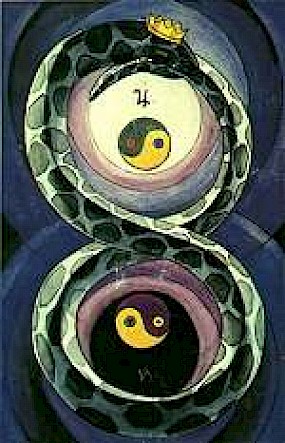
(via angelpaths.com and Alan Blackman)
Putin’s Road to War | FRONTLINE
FRONTLINE PBS | Official The story of what led to Vladimir Putin’s war on Ukraine. This journalism is made possible by viewers like you. Support your local PBS station here: http://www.pbs.org/donate. Through in-depth conversations with multiple heads of U.S. intelligence agencies, diplomats, Russian politicians, historians and journalists, this special report chronicles events that shaped the Russian leader, the grievances that drive him, and how a growing conflict with the West exploded into war in Europe. From acclaimed filmmaker Michael Kirk and his team, the documentary traces how Putin went from low-ranking KGB agent to longtime Russian president. It delves into his crackdown on dissent — and the media — inside Russia. It reveals how he has tested the West’s appetite for confrontation over and over again, including in Ukraine in 2014, as he’s tried to expand Russia’s global footprint. And it raises difficult questions about the path forward. Watch the documentary for an urgent examination of what led to this historic moment and how it could still unfold. Explore more reporting about “Putin’s Road to War” here: https://to.pbs.org/3tJoamh#Russia#Ukraine#Documentary “Putin’s Road to War” is a FRONTLINE production with the Kirk Documentary Group. The director is Michael Kirk. The producers are Michael Kirk, Mike Wiser, Vanessa Fica, Jim Gilmore and Philip Bennett. The writers are Michael Kirk and Mike Wiser. The executive producer of FRONTLINE is Raney Aronson-Rath. Find FRONTLINE on the PBS Video App, where there are more than 300 FRONTLINE documentaries available for you to watch any time: https://to.pbs.org/FLVideoApp Subscribe on YouTube: http://bit.ly/1BycsJW Instagram: https://www.instagram.com/frontlinepbs Twitter: https://twitter.com/frontlinepbs Facebook: https://www.facebook.com/frontline Funding for FRONTLINE is provided through the support of PBS viewers and by the Corporation for Public Broadcasting. Additional funding is provided by the Abrams Foundation; the John D. and Catherine T. MacArthur Foundation; Park Foundation; and the FRONTLINE Journalism Fund with major support from Jon and Jo Ann Hagler on behalf of the Jon L. Hagler Foundation, and additional support from Koo and Patricia Yuen.
Cancelling American Masculinity
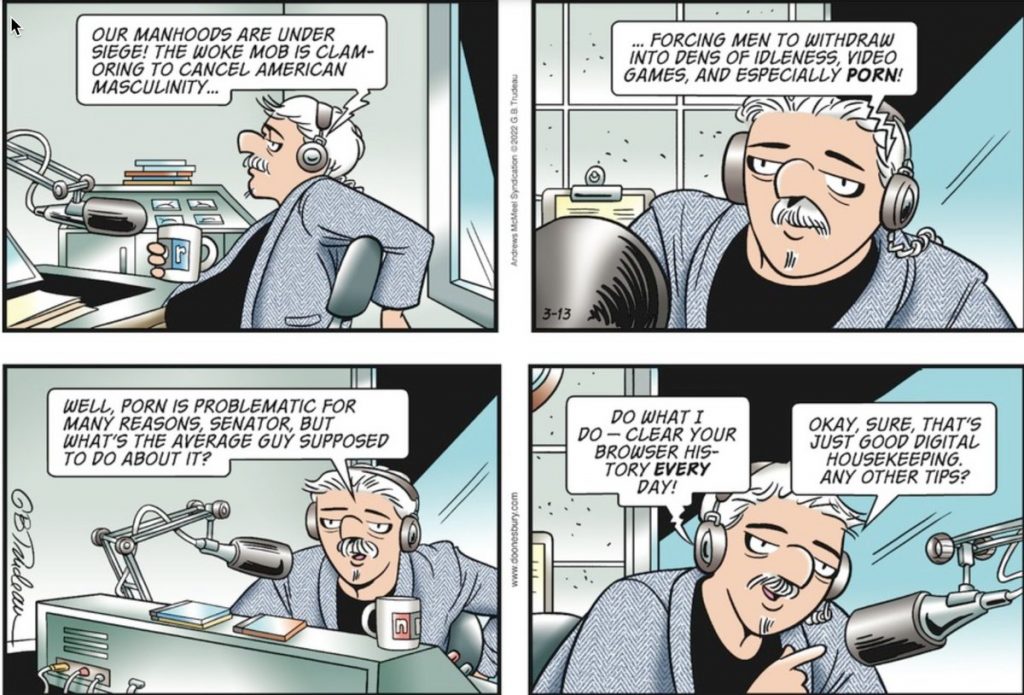
Conspirituality
Conspirituality is a neologism portmanteau describing the overlap of conspiracy theories with spirituality, typically of New Age varieties.[1][2] Contemporary conspirituality became common in the 1990s.[3]
Characterization
The Zeitgeist Movement, an activist group, has been called a part of the conspirituality movement.
The term was coined for the 2011 study “The Emergence of Conspirituality” by sociologists Charlotte Ward and David Voas published in the Journal of Contemporary Religion. They characterized the movement as follows:
“It offers a broad politico-spiritual philosophy based on two core convictions, the first traditional to conspiracy theory, the second rooted in the New Age: 1) a secret group covertly controls, or is trying to control, the political and social order, and 2) humanity is undergoing a ‘paradigm shift’ in consciousness. Proponents believe that the best strategy for dealing with the threat of a totalitarian ‘new world order‘ is to act in accordance with an awakened ‘new paradigm‘ worldview.”[4]
A 2020 opinion piece in ABC Australia said that, as with other extremist movements, the conspirituality narrative portrayed its followers as more enlightened than mainstream society and prone to persecution due to their awareness of the “real truth”.[5] Ward and Voas considered the combination of optimistic, holistic New Age culture and pessimistic, conservative conspiracy culture to be paradoxical.[3] Conspirituality includes the “dark occulture” of conspiracy culture.[6] The uniting philosophy of conspirituality movements is a belief that society is under the covert control by a group of elites, and that it can be emancipated from that control by a “paradigm shift in consciousness that harnesses cosmic forces”.[5] The appeal of conspirituality is the narcissistic idea of being the one to unravel the true explanations for all that is wrong in the world.[7]
Alex McKeen, writing in The Toronto Star, says:
Conspiritualists share a conviction that enlightenment exists in a dimension that is separate and above politics, science and everything as banal as “three dimensional” human concerns (a common spirituality trope is reaching five-dimensional consciousness). Once you experience it — and it’s a subjective, private experience — you can’t relate anymore in “3D.”[8]
Asbjørn Dyrendal counters that combining conspiracy theory with New Age spirituality is not new, and that Western esotericism is inherently suspicious. Both conspiracy culture and esotericism emphasize secrecy and the revelation of higher knowledge. He identifies Marta Steinsvik, Alf Larsen, Bertram Dybwad Brochmann, and neo-paganism as early examples of the promotion of alternate spirituality and conspiracy theory.[3] Jules Evans, an honorary research fellow at the Center for the History of Emotions at Queen Mary University of London, identifies an overlap between alternative spirituality and far-right populism among traditionalists.[7]
Ward and Voas said that sometimes those with New Age beliefs are more prone to thinking like conspiracy theorists.[1][4] The study describes The Zeitgeist Movement, an activist group, as being a part of the conspirituality movement.[4] Conspirituality has been linked to the far-right conspiracy theory QAnon and COVID-19 conspiracy theories,[1][2] as well as the Movement for Spiritual Integration into the Absolute (MISA)[9] and the New Age religious movement Love Has Won.[8] Online yoga and wellness communities have seen members posting conspiracies about Covid-19, masks, and QAnon-related child exploitation claims.[10][11] 9/11 conspiracy theories spread through new age communities such as “lightworkers” and “indigo children“.[8] Anthropologist of religion Dr. Adam Klin-Oron says that in Israel, “we are seeing people who used to talk about ‘love’ and ‘light’ standing shoulder to shoulder with those who believe there is a ring of pedophiles that drink the blood of babies”.[12]
In Norway, the online magazine Nyhetsspeilet [no] (The News Mirror) has been described[who?] as the “flagship of conspirituality”. Its goal for “triple awakening” focuses on consciousness and spirituality, extraterrestrial visitors, and New World Order conspiracy theories.[3] The Conspirituality podcast updates listeners on the intersection between the “wellness” industry and conspiracy theories, referring to it as “disaster spirituality”.[13]
More at: https://en.m.wikipedia.org/wiki/Conspirituality
(Contributed by Gwyllm Llwydd)
George Bernard Shaw on changing your mind
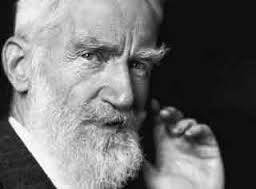
“Those who cannot change their minds cannot change anything.”
—George Bernard Shaw
George Bernard Shaw, known at his insistence simply as Bernard Shaw (July 26, 1856 – November 2, 1950), was an Irish playwright, critic, polemicist and political activist. His influence on Western theatre, culture and politics extended from the 1880s to his death and beyond. Wikipedia
(Courtesy of Rob Brezsny)
Ancestral dreams
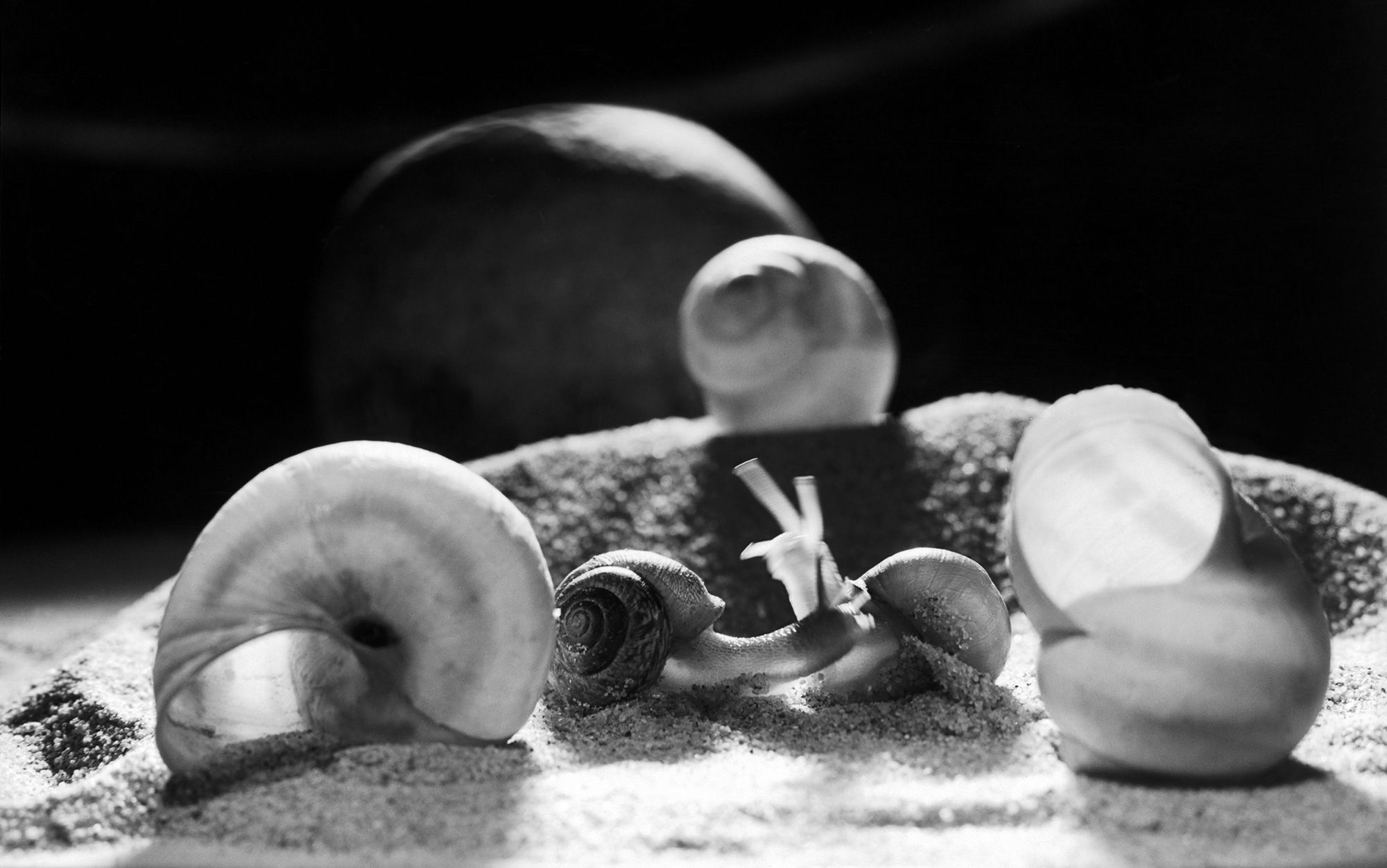
We’re not the only beings that dream. What visions might sleep bring to a cell, an insect, a mollusk, an ape?Snails (1942), Switzerland. Photo by Werner Bischof/MagnumSidarta Ribeiro
is the founder and first director of the Brain Institute of Federal University of Rio Grande do Norte in Brazil, where he is professor of neuroscience. He has a PhD in animal behaviour from Rockefeller University in New York. His research topics encompass memory, sleep and dreams, neuroplasticity, symbolic competence in in non-human animals, computational psychiatry, and psychedelics. His latest book is The Oracle of Night: The History and Science of Dreams (2021).
Edited byPam Weintraub
15 March 2022 (aeon.co)
Love Aeon?
Support our workDONATE
How many times have you woken up from a dream that has deeply stirred your emotions? Terrifying dreams of chasing and fighting, grandiose experiences of free flight through space, moving or disturbing reunions with loved ones who have drifted away or died… A single dream that is particularly remarkable for its beauty, surprise, power or sadness can completely change your day, your week, your life and even the life of all mankind, such as the dreams associated with the invention of the sewing machine by Elias Howe, or the discovery of the structure of the atom by Niels Bohr.
Even knowing that our dreams are produced by brain reactivations during a specific phase of sleep, REM sleep, we cannot avoid the intimate impact of these experiences. If we can react with such awe and diligence to our own dreams, what can we presume about our ancestors: how did they dream? How much ancestry are we talking about?
Nuna Continental Mass, 1.8 billion years Before Present (BP)
I’m a complex cell that enjoys the warm light and hot water, this wonderful top layer of green life-soup capable of multiplying indefinitely, until the atmosphere itself destroys everything that’s oxidisable, and finally other life forms have a chance to thrive. At night, the darkness, cold and progressive deceleration of molecules. Yang followed by yin followed by yang followed by yin perpetually, until the Sun explodes… The planetary rotation and the dark-light cycle from the beginning, forever inscribed in the phosphorylation cycles within the unicellular organisms that stormed the surface of the planet.
Ocean, 500 million years BP
I am composed of 85 per cent water and a multitude of cells of different types, organised in semi-transparent tissues that form the bell, mouth and venomous tentacles, incredibly connected by a delicate superficial network of neurons capable of coordinating my behaviour as a whole organism. I accelerate and brake physiological processes using neurotransmitter molecules released by information-emitting neurons, and receptor proteins of these neurotransmitters on the membranes of information-receiving neurons. These molecules make it possible to carry out harmonic pulses of cells to swim slowly towards plankton or avoid predators and toxins. At night, the pulse slows down, and the synaptic vesicles are again filled with neurotransmitters for the day ahead. This quiet, deep, regenerating sleep is the legacy I bequeath to all animals after me.
Euramerica, 400 million years BP
My agile behaviours confuse and mislead even much larger organisms. I evade all attacks with my six legs, two wings, 200,000 neurons, 750 eyes, and hundreds of ultra-sensitive hairs capable of detecting minimal changes in air pressure. When incessant attacks keep me from sleeping for some time, I need to make up for the loss with a lot more sleep afterwards. The downside is that I’m insensitive to the movements that precede the attacks. Even though it’s so dangerous to sleep, it’s so worth it. Sleep helps me learn new things. When nothing bothers me, I nap for long minutes. Distant neurons become active together, it’s as if I were awakened inside, but what I find is the same image that is found outside. A spiralling landing ramp, green and marked all the way down by black dots. I make a circular approach, land softly, and start to salivate.
Pangea, 260 million years BP
At night, but also by day, I boldly wander in search of absent-minded prey. Hard or not, I pierce their shells with my beak. By day, hidden in my den on the coral reef, I fall asleep and wake up countless times. Every half an hour, I dream restlessly for about a minute. At that moment, my eyes move in and out of my body, my skin is coloured in frantic waves, and my papillae bristle nervously. Inside me, more freely than in waking, memories reverberate in my many brains and hearts. These memories evoke wild clashes, murderous camouflage and vigorous gallantry. The terrifying shadow of a shark passes overhead. My skin, moulded into rocks and algae, feels the danger passing by. I secrete saliva until attracting a fertile female with its luminous mouth. I show her my light side while my dark side fends off the juicy opponents that have appeared. My soft body starts to want to wake up in the urge to devour them, but she calls me again with her yellow ring. Nothing is more important than this moment. We touch, taste and finally lock in a full-body, ardent kiss.
I return to dread in the electrical storm of memories my brain unleashes when I fall asleep
Central Laurasia, 185 million years BP
My life is secret, hidden in the branches, inhabitant of the twilight, among the colossal paws and shadows of all the beasts that own this land. Space is minimal, but I don’t complain because the diet is rich, and I know how to take care of myself. Leaves, fruits and insects, mainly. I have bones to hear well and teeth that can cut any food into little morsels. I know how to wait, I know how to hide, and I know how to get away. I adapt depending on what I need to do. The few dragons that notice my tiny presence mostly choose to ignore me, with the exception of those terrible ones, who stalk without a trace. That’s why I spend so much time in the den, that’s why I sleep so much. Yesterday I went to the river to drink water and a big brown crocodile almost had me for lunch. It appeared out of nowhere, was completely submerged until the attack. I fled to the den and went to sleep in shock and thirst, electrically reverberating the memories of the near-fatal encounter. I return to dread in the electrical storm of memories my brain unleashes when I fall asleep. I dream that I wake up thirsty and need to decide whether I should go back to the river in search of water or avoid that place. Thirst gives me courage and I decide to approach again, but as carefully as possible, advancing small steps every minute, attentive to everything that moves. And then I see those frightening nostrils and eyes, even more frightening because they had always been there. I wake up in a panic, my heart pounding. I need to find water, without which neither I nor my cubs will survive. I go back to sleep, go back to dreaming… This cycle repeats itself for many hours. Finally, with the first rays of sunlight, I awake from my restless sleep and face the difficult decision. With those murderous nostrils still imprinted on my mind, I finally decide to look elsewhere for drinking water.
North America, 66 million years BP
I walk on two legs with my tail outstretched, balancing the swift advance of my huge mouth. I’m not the biggest boggart in the field, but it feels like I am. Nobody faces my sharp teeth. Faced, I say. I close my eyes and see again the fireball that has fallen from the sky. The earth shook more than flaming volcanoes and the sky darkened the endless night. At first, I thought it was a good change, since it became easier to find carcasses to eat. But then everything rotted and it’s been days since I last found anything edible. The odours are unbearable. I close my eyes, my belly growls with hunger and I doze… just to see the fireball again and again.
Australasia, 22 million years BP
Soon after I hatched out, I heard your voice. It was so loud and frightening that I shivered with fear and pleasure at hearing that sound of steady cadence and strong intensity. I kept the indelible memory of that voice and started trying to copy it, trying all day a slow approximation of the model. Flying, eating, and singing. At night, perched and sleeping, I would reactivate the neurons producing that sound in renewed combinations. When I woke up the next day, I was faced with this mystery, as the similarity between my singing and yours had been partially unravelled. And so I progressed through many moons, two steps forward and one step back, arming and disarming in successive approaches my best version of that memorable melody. I spent my life dreaming of your perfection.
The hyenas burned their backs and disappeared into the night. I woke up and they were gone
Southern Africa, 1 million years BP
Children play in the mouth of the ancient cave. They’re hunting bison, one on each side, just as we’ve shown them in the shadows by the fire. From here, the entire valley can be seen. Below, a woolly rhino crosses the river. Up here, each relative helps when they can in looking at the horizon and screening the neighbourhood. With great care, we keep advancing in the stonework, which shuns the hooves and attracts the claws. That’s why even in the day the fire lives. But it’s when the sun dies that it really grows. At the fire circle, relatives tell us about the flights they take at night. I want to learn to fly without fear of the harpy or the lioness. Last night my closed eyes saw the great fire. It was particularly beautiful, very strong and very beautiful, but then suddenly a gust of wind came in and the fire went out. The hyenas came and advanced to the entrance of the cave. The children ran inside and, when it was all about to end, my dead grandfather suddenly appeared. He yelled in a voice of thunder and lit the fire again. The hyenas burned their backs and disappeared into the night. I woke up and they were gone, and so was my grandfather. Only the fire was there.
Southeast Asia, 45,000 years BP
Life in this valley wouldn’t be so good without these caves. We came from afar, walking, gathering and hunting, following the trail of wild pigs and dwarf buffaloes, fleeing the cold and hunger. Here we stop and stay, as the valley opens up and vegetation protects us. We marked the entrance stones with our hands painted orange-red, and then I sketched, in a rounded figure of the same colour, a hunt without flaws, without mistakes and without fear. We were excited by the frenzy of pursuit, and I didn’t sleep until the moon died. While our elders kept the fire and vigil, with the younger ones I entered sleep. I wandered out of the body towards the forest that hides everything good and bad. I could hear the shuffling of wild pigs running through the woods, but I didn’t see them, fearing that they would lure me to meet the tiger that always stalks. Although I was scared, I savoured the prey’s agitated breath, until I reached a beach with tepid waters and many islands in the distance. A fallen coconut tree floated on the shore, swaying with the tide. Suddenly, half-buried in the sand, I noticed a thin hook carved from a shell. When I caught it in my hand, it had in its curve a fat little fish still alive, pierced through the mouth. I started to eat, but soon stopped because I felt the stare. At the northern end of the beach the tiger glimpsed, coming towards me. I looked at him, sped up, mounted the coconut tree, and rowed quickly towards the horizon.
Western Europe, 32,000 years BP
We arrived yesterday from the long march from above the mountains of heaven. The ice corridors are still full of others, with their different scents. There aren’t reindeer skins for everyone, the progress is slow and difficult, but that’s all good. What would be really bad would be to find one of those lionesses. We had the arrival party at dusk yesterday, after making sure the bears had fully vacated the cave. The skull of our people’s bear was placed on a rock facing the main entrance. Our grandmother sang for us to share the dry sweet meat of the auroch, dancing with that swish she got after breaking her foot on the march, so many moons before now. Our grandfather played his five-hole vulture-bone flute. Today, I woke up early, bathed in the river and crawled into the warm belly of the earth and did the magic that was conducive to the abundance of slaughter and love with the prey. With full strokes and my crooked finger, I drew tomorrow in motion, then made the shadows dance and listened to the sound of horses’ hooves. Smoke clouded the view and my eyes rolled inward as our elders arrived to sing and dance too. I unfolded myself and we travelled towards what will still be. For every finger on my hand, we marched one day. After the siege, a full day of ambush. The mammoth was warned by its mother and was waiting for us in a rage, but it had no eyes on its back nor did the wind allow it to smell our odour. The spears were launched with precision. When we finally broke its massive skull with a heavy rock, only two relatives had been crushed. A naked woman with a bison’s torso appeared on top of the quarry – and from her fertile sex a lion boy was born. At that moment, the mammoth opened its eyes again and greeted our grandparents’ grandparents, proud of the people that are. When I woke up, I told them everything so that no one would forget.
Mongolia, Central Asia, 18,000 years BP
The ice recedes and the green expands. Finding prey has never been easier, but wolves are everywhere. They steal our game and we steal theirs. They devour our cubs and we devour theirs. They take good care of the puppies, like us. They’re like us, they keep stalking us, bastards. At night they howl and piss off, my relatives throw stones. Then they settle down. Looking at the Moon and chanting loud, we unfolded and saw the glistening cliffs of ice, lake and clouds. I flew in the flight of all souls but then I stood out and fell from above by myself. When I went down, I turned into a stone and got out of the uncle’s hand and flew right into a puppy’s forehead. But the damned one dodged, smart as a flash. He walked over with a waving tail and licked the stone from the palm of my hand. I tasted salt and earth. I woke up. I looked at the puppies, playing at chasing us. I offered them a piece of horse thigh. At first, they were suspicious, making strange noises, but then they all came. I sorted the sweetest ones for breeding.
My stepfather dreamed of a powerful angel who convinced him to stay with my mother despite the pregnancy
Mesopotamia, 5,000 years BP
I’m shepherd, king and husband of the goddess of love. One night I dreamed that the reeds rose against me, a single stalk shook its head, and the trees climbed over me. Water had been poured on my holy brazier, the lid of my holy churn had been removed, my holy cup was overturned, my herding staff disappeared. An owl killed a lamb, a hawk caught a sparrow, sheep scratched the ground with their legs. No milk was being served, the cups were overturned, the sheepfold was haunted, and I was dead. I consulted my sister about the meaning of this dream, and she warned me that it was the worst possible. She begged me to flee immediately from the strange men who sought to reach me. It didn’t take me long to flee, but it was too late. The demons sought me out while I hid my head in the grass. They tried to bribe my sister into revealing my hiding place, but she refused to cooperate. Next, they put pressure on a friend of mine, who betrayed me. I was captured, humiliated and beaten. I begged my brother-in-law, the Sun god, to turn my hands and feet into quick paws. My tears were accepted as an offering and I fled like a gazelle, but I was cornered again, and thrice escaped until I was captured beyond any help. When my nightmare ended, the cups were lying on their sides, the sheepfold was haunted, and I was dead.
Palestine, 2,022 years ago
Countless times we were guarded and protected by guidance received in dreams. My stepfather dreamed of a very powerful angel who convinced him to stay with my mother despite the pregnancy, for in those dreams it was revealed that my father was a divine dove and that my stepfather should adopt me as his son. That same angel guided him in dreams to flee before the chase and execution of children started. In the shadow of the pyramids, my mother was finally able to rest, and divine grace allowed us to be in peace at last. These were just the angel’s first visits. Dream is necessity.
Bavaria, 403 years ago
On the banks of the great river, I had three unforgettable dreams in the same night. In the first one, I was harassed by ghosts and carried away by a whirlwind. I tried greedily to escape this torment, but I was unable to support my own body and I walked stumbling. Then a person appeared and informed me that a certain someone had a gift to offer me. I thought it must be a fruit from faraway lands, and then I noticed that the people gathered around it were all upright, while I could barely stand upright. I awoke with a start and prayed to God to ward off any harm that had come from that nightmare. Shortly afterward I fell asleep, dreamed of thunder, and woke with a start, but this time I used reason to make sure I was really awake, opening and closing my eyes over and over until I was calm. Once again, I fell asleep, and then had a transforming dream, completely different from the previous ones. In a quiet, contemplative setting, I found a book called ‘Dictionary’ on a table – and behind it a collection of poems. I opened a page at random and found a verse in Latin by the poet Ausonius: Which path should I follow in life? A stranger suddenly appeared and showed a fragment of verse: Yes and no. I tried to indicate where in the book the poem could be found, but the volume disappeared and then mysteriously reappeared. I had the feeling that some knowledge had been lost, until I told the man that I would show him a better poem starting with the same verse. At that point the man, the book and then the whole dream disappeared. I was deeply impressed. I prayed and asked the Virgin Mary’s protection on my pilgrimage on foot from Italy to France. I feel that the dream points to the unification of all sciences through the same language and the same method.
Buenos Aires, 82 years ago
I never thought it would be possible to keep dreams alive after blindness began, but it is. I dream in excruciating colours, shapes and movements, similar in every way to the flashes of my childhood. Fortunately, as time went by, I became detached from the artificiality of nocturnal sleep, until the cataract completely freed my dream process. Sitting in the comfortable armchair, I start dreaming of a man in his smallest details. It’s not the first time, on the contrary. But this time it’s different. The grey man I dreamed of, from heart to brain, warmed up and lit up in red, yellow and white. In the centre of the light, I saw the demiurge’s mirrored eye and realised that now, finally, that man would burn in the flames. Immediately thereafter, I threw myself over the embers and screamed in pain.
London, 57 years ago
Last year, on one occasion, I went to sleep next to my girlfriend, with nothing special on my mind. I can’t tell what happened in my brain that night, but I was suddenly awakened to the nonstop reverberation of this simple melody, adorably infectious. I ran to the piano and began to reconstruct the experience. The melody echoed something I’d heard before, maybe Nat King Cole, but when everyone woke up no one knew what song it was. I showed it to my partners, other musicians, my arranger, but nobody knew the song. I spent several weeks investigating the source of inspiration, but no one could say where the melody came from. As a joke, I called it ‘scrambled eggs’. After nearly a year, a beach holiday finally gave me the chance to finish it. Yesterday, we recorded it, and I feel it can help a lot of people.
Northern Amazon, now
My people arrived by tapir tracks, it was thousands of years ago that we arrived here. The white man, only long after, he arrived, and came only to destroy, extract, poison and burn everything. And spread epidemics. It is because of the shamans that the sky you see up there doesn’t just fall on your head. Just because of the hard work of the shamans. They are the ones who sing and dance to hold the sky high, so that it doesn’t fall on our heads. In the shaman’s ritual, I received the sacred snuff and saw the spirits of parrots, macaws, ants, monkeys, hawks and wasps descend and perform their presentation dance. Then they took me flying over the clouds to watch the forest burn, and the fire rose to burn all the trees and climbed through the sky and burned everything to coal and that was it.
To read more about dreaming, visit Psyche, a digital magazine from Aeon that illuminates the human condition through psychology, philosophy and the arts.
Ben’s Sunday Meeting on March 20
 |
 SUNDAY MEETING 3/20/22 Bohm Dialogue – Spontaneity Conversation 2.0 Ben Gilberti, H.W., M. Please join us Sunday 3/20/22 for Ben’s presentation on Bohm Dialogue, where we’ll all enjoy immersing ourselves in the spirit of Dialogue as developed by David Bohm. 11:00 am Pacific/Noon Mountain/1:00 Central/2:00 Eastern https://us02web.zoom.us/j/332275676 These talks are presented by contribution: Contribution — The Prosperos Everyone is welcome! One tap mobile +16699006833,,579891643# US (San Jose) +13462487799,,579891643# US (Houston) Dial by your location +1 669 900 6833 US (San Jose) +1 346 248 7799 US (Houston) +1 301 715 8592 US +1 312 626 6799 US (Chicago) +1 929 205 6099 US (New York) +1 253 215 8782 US Meeting ID: 332 275 676 Find your local number: https://zoom.us/u/abtcyLDACK |
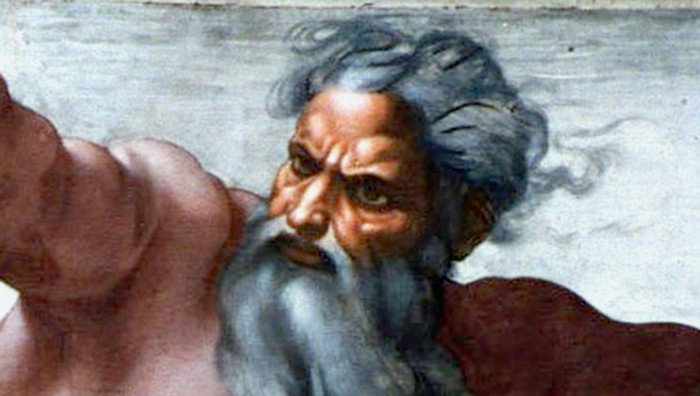
How God speaks

Utopia now

In 1890 William Morris imagined a world free from wage slavery. Thanks to technology, his vision is finally within reachCommons craft; detail of a plywood farmhouse, built using a CNC machine. Photo courtesy WikihouseVasilis Kostakis
is a senior researcher at the Ragnar Nurkse Department of Innovation and Governance at Tallinn University of Technology in Estonia, and an affiliate at the Berkman Klein Center for Internet and Society at Harvard University in Massachusetts. He is also the founder of the P2P Lab. His latest book project, Peer-to-Peer: The Commons Manifesto, with Michel Bauwens and Alex Pazaitis, is forthcoming.Wolfgang Drechsler
is professor of governance at the Ragnar Nurkse Department of Innovation and Governance at Tallinn University of Technology in Estonia, and an associate at the Davis Center at Harvard University in Massachusetts. His latest book project, Innovation Bureaucracies, with Rainer Kattel and Erkki Karo, is forthcoming.
Edited byNigel Warburton
30 April 2018 (aeon.co)
William Morris (1834-1896) is best-known today as a Victorian designer who has never gone out of fashion. You can buy Morris merchandise – from coasters to picture frames to ties to mugs – in the gift shops of every big design museum. And if you Google his name, your screen will erupt in cascades of dense, colourful ornaments. But Morris was also a radical thinker, a Socialist and, after Karl Marx’s death, a leader of the Socialist League. One of the most relevant aspects of Morris’s work today is the framework for a commons-based world of cooperation that he sketched in his utopian novel News from Nowhere (1890), which has striking applications for the age of the internet.
In News from Nowhere, Morris imagined a world in which human happiness and economic activity coincided. He reminds us that there needs to be a point to labour beyond making ends meet – and there is. Unalienated labour creates happiness for all – consumer and creator; whereas modern capitalism, in contrast, has created a treadmill in which this aspect of work has been lost. Capitalism, he explains, locks the capitalist into a horrible life, which leads nowhere but the grave.
Morris’s utopian society has no government nor a monetary system. Craftwork has made ‘wage slavery’ obsolete, and parliamentary democracy has given way to new forms of cooperation. The means of production are democratically controlled, and people find pleasure in sharing their interests, goals and resources. The central character and narrator, William Guest, finds himself in conversation with a young girl, a citizen of Morris’s utopian society:
She disappeared again, and came back with a big-bowled pipe in her hand, carved out of some hard wood very elaborately, and mounted in gold sprinkled with little gems. It was, in short, as pretty and gay a toy as I had ever seen; something like the best kind of Japanese work, but better.
‘Dear me!’ said I, when I set eyes on it, ‘this is altogether too grand for me, or for anybody but the Emperor of the World. Besides, I shall lose it: I always lose my pipes.’
The child seemed rather dashed, and said: ‘Don’t you like it, neighbour?’
‘O yes,’ I said, ‘of course I like it.’
‘Well, then, take it,’ said she, ‘and don’t trouble about losing it. What will it matter if you do? Somebody is sure to find it, and he will use it, and you can get another.’
When News from Nowhere was first published, it had many of the trappings of a classic utopia, including that it appeared practically unattainable. But today we have different technological potential: the idea of commons-based production need not be a mere pipe dream. The ‘commons’ is a social system that refers to resources managed and shared according to the rules and the norms defined by the productive community. It is an old idea that was not lost with the European land enclosures of the 16th century. Today, commons are produced, enclosed and reclaimed, arguably more than ever in the past century.
In a sense, the world has caught up with Morris. At the beginning of the 21st century, a new world is emerging. Not since Marx identified the manufacturing plants of Manchester as the blueprint for the new capitalist society has there been a deeper transformation of the fundamentals of our socioeconomic life. A new commons-based mode of production, enabled by information and communication technology (ICT), what we now call digitisation, redefines how we (can) produce, consume and distribute. This pathway is exemplified by interconnected collaborative initiatives that produce a wide range of artifacts, from encyclopaedias and software to agricultural machines, wind turbines, satellites and prosthetics. And much of this relates to the little pipe-seller’s attitude.
As recently as two decades ago, most people would have thought it absurd to countenance a free and open encyclopaedia, produced by a community of dispersed enthusiasts primarily driven by other motives than profit-maximisation, and the idea that this might displace the corporate-organised Encyclopaedia Britannica and Microsoft Encarta would have seemed preposterous. Similarly, very few people would have thought it possible that the top 500 supercomputers and the majority of websites would run on software produced in the same way, or that non-coercive cooperation using globally shared resources could produce artifacts as effectively as those produced by industrial capitalism, but more sustainably. It would have been unimaginable that such things should have been created through processes that were far more pleasant than the work conditions that typically result in such products.
Commons-based production goes against many of the assumptions of mainstream, standard-textbook economists. Individuals primarily motivated by their interest to maximise profit, competition and private property are the Holy Grail of innovation and progress – more than that: of freedom and liberty themselves. One should never forget these two everlasting ‘truths’ if one wants to understand the economy and the world, we are told. These are the two premises of the free-market economics that have dominated the discourse until today.
Wikipedians and hackers want to create something useful for themselves, not for the market or for short-term profit
So, is GNU/Linux, the free and open-source software that drives those 500 supercomputers, an exception that proves the rule? What about the Apache HTTP Server, the leading software in the web-server market, or Wikipedia? The legal scholar Yochai Benkler at Harvard University was one of the first to observe that such commons-based projects are by now too common to be considered anomalies. Already a decade ago (when smartphones were a novelty), Benkler argued in The Wealth of Networks (2006) that a new mode of production was emerging that would shape how we produce and consume information. He called this mode ‘commons-based peer production’ and claimed that it can deliver better artifacts while promoting another aspect of human nature: social cooperation. Digitisation does not change the human person (in this respect), it just allows her to develop in ways that had previously been blocked, whether by chance or design.
No matter where they are based, people today can use the internet to cooperate and globally share the products of their cooperation as a commons. Commons-based peer production (usually abbreviated as CBPP) is fundamentally different from the dominant modes of production under industrial capitalism. In the latter, owners of means of production hire workers, direct the work process, and sell products for profit-maximisation. Think how typical multinational corporations are working. Such production is organised by allocating resources through the market (pricing) and through hierarchical command. In contrast, CBPP is in principle open to anyone with the relevant skills to contribute to a common project: the knowledge of every participant is pooled.
These participants might be paid, but not necessarily. Since commons-based projects are open systems, anyone with the right knowledge and skills can contribute, either paid by companies, clients or not at all. But why do people contribute content to Wikipedia or code lines to GNU/Linux? There are many reasons to contribute beyond or beside that of receiving monetary payment. CBPP allows contributions based on all kinds of motivations such as the need to learn or to communicate. However, most importantly, a key incentive is the desire to create something mutually useful to those contributing. This also generally means that people contribute because they find it meaningful and useful, and they believe the resulting product worthwhile. Wikipedians and hackers primarily want to create something useful for themselves, and for other people, not for the market or for short-term profit.
While the first wave of CBPP included open-knowledge projects (code, culture, design), the second one is moving towards manufacturing. Imagine a prosthetic hand, an orthosis, a wheel hoe or even a house designed in the same way that the Wikipedia entries or the GNU/Linux code lines are written. This is not a far-fetched utopian vision, but something that is happening as you read this. All knowledge and software related to these artifacts are shared globally as digital commons. These are developed by the labour of often very passionate people from all over the world. Moreover, those who have access to local manufacturing machines (from 3D printing and CNC machines to low-tech crafts and tools) can, ideally with the help of an expert, manufacture a customised hand, a satellite, a wheel hoe or a house. These are the stories of the OpenBionics project, which produces designs for lightweight robotic and bionic devices; of the Libre Space Foundation in Greece, which produces small-scale satellites; of the L’Atelier Paysan collective in France, which builds agricultural machines; and of the WikiHouse, which ‘democratises’ the construction of sustainable, resource-light dwellings.
CBPP presents a radical break within the existing technological development paradigm. It enables people who previously worked in isolation to design and manufacture artifacts in collaboration imbued with values that exceed the considerations of capitalism. Technology is not neutral: it favours some outcomes over others. The ICT paradigm creates several new possibilities, and various human groups try to utilise them. Different social forces invest in this potential and use it to their advantage. Technology is therefore also a focus of social struggle, rather than a predetermined ‘given’ that creates just one possible future.
When social groups appropriate a particular technology for their own purposes, then social, political and economic systems can change. An example is the role that the invention of the printing press played in transforming European society. The fast-growing availability of digitisation enables many-to-many communication; think of electronic fora and mailing lists to wikis and Facebook, embattled though it might appear right now. Hence, an increasing number of humans communicate in ways that were not technically possible before. This in turn makes massive self-organisation up to a global scale possible. Just as digitisation – and specifically social media – can work both for emancipation and supervision, for revolution and its suppression, it also allows for the creation of a new mode of production and new types of social relations outside the market-state nexus.
What is light (knowledge, design) becomes global; what is heavy (manufacturing) is local and shared
In this commons-based scenario, there are no patent costs to pay, since the digital commons becomes available under commons licences, such as the Creative Commons licences or the General Public License. For example, in the software realm, the GNU General Public License permits anyone to see, modify and redistribute the code, under the condition that changes are made publicly available and licensed under the same licence. Further, less transportation of materials is needed, since a considerable part of the manufacturing takes place locally often through upcycling. Moreover, maintenance is easier and products are designed to last as long as possible. Costs are thus driven down.
The design is developed and improved as a global digital commons, while the manufacturing often takes place through shared infrastructures and with local biophysical conditions in mind. Put simply, this mode of production follows the logic that what is light (knowledge, design) becomes global, and what is heavy (manufacturing) is local and shared. This allows for the consideration of the limits and scarcities posed by finite resources, and the organisation of material activities according to participant-defined value systems. For example, the people of Mityal, a rural community in southwest Nepal, needed to electrify their local health clinic. They connected with national and international commons-oriented communities interested in small-scale, off-the-grid wind turbines. Together, they built a wind turbine based on digital commons of designs and software, using local manufacturing technologies and materials. Training workshops also took place so that the people of Mityal became capable of maintaining the infrastructure themselves.
Morris envisioned a future in which humans would be free to create and to ‘delight in the life of the world’. Yet in his opinion, for reasons of scope as well as human conditioning, violent events – wars, revolutions – would have to precede such freedom. But he might have been wrong about that. CBPP points to the reality of peaceful paths of radical change actually emerging.
It might be true that the examples here seem small-scale, bucolic, catering to an Arcadia, a dream-world for Leftie intellectuals. The difference with CBPP is that it takes back, through empowerment, what has already been lost, but via modern means. It makes use of digitisation, at the forefront of technological development, by interpreting it for the benefit of the people, rather than for its current protagonists. Creating public rather than private value, CBPP follows the digital logic just as much as, and maybe better than, its classic-capitalist protagonists in Silicon Valley and elsewhere. Perhaps it is best to think of these CBPP as early pilot projects, with a great radical change in our attitude to production possibly just around the corner.
The danger, were such a path to be fully co-opted by the current (very) dominant context, is obvious, and it must realistically be acknowledged. If you profit from an economic model on a large scale, if you draw your rents from it, why would you not fight for it, even when this is not good for anyone else? However, the counterculture is not only here, it is gaining ground, so far. Were Morris alive today, he certainly would have recognised its revolutionary potential. What was news from nowhere in 1890 could very soon be news from here.