On the pleasures of hand-writing letters you’ll never send

On the pleasures of hand-writing letters you’ll never send | Psyche

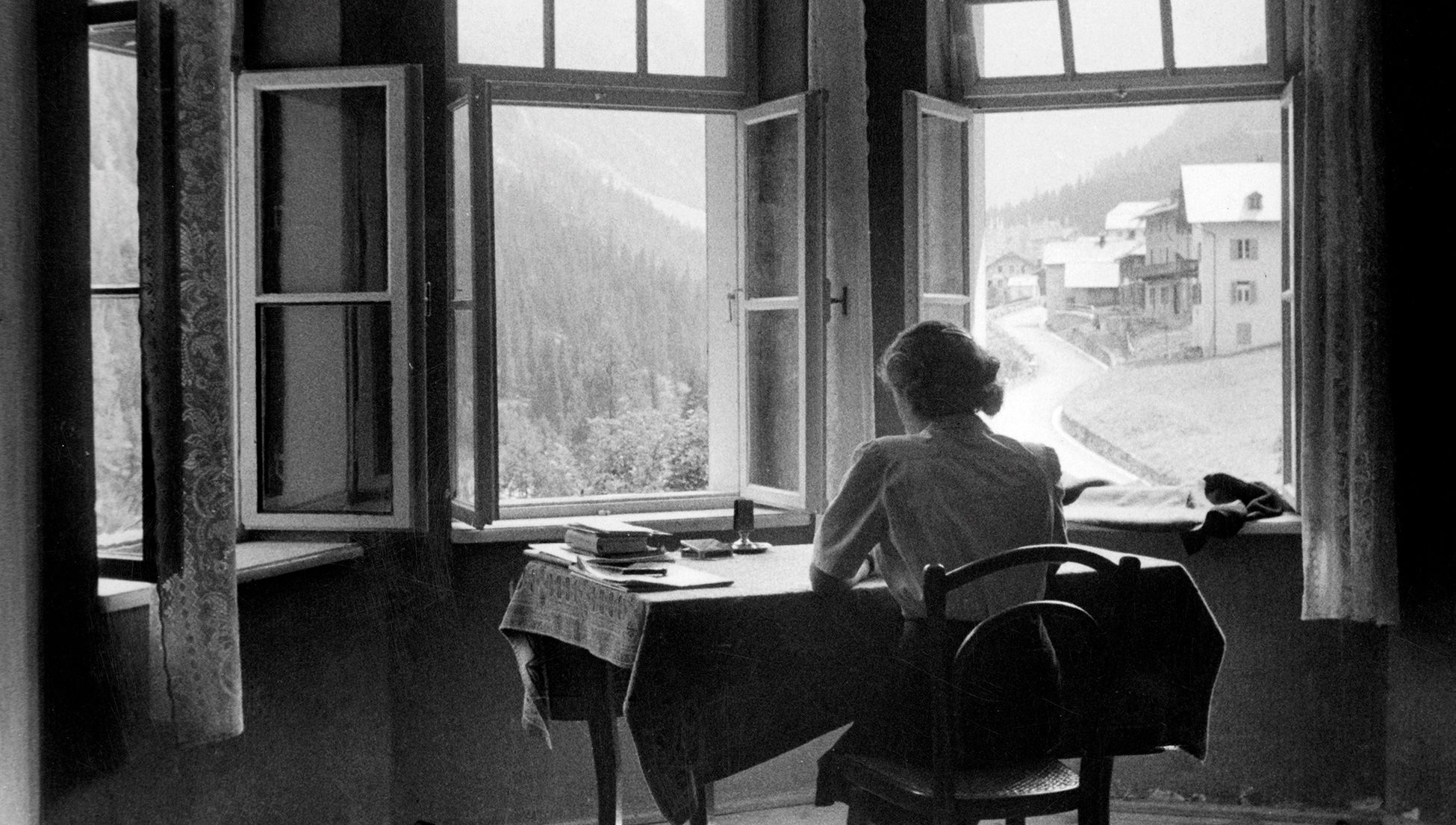
Photo by Marka/Getty

Anandi Mishrais a writer and communications professional, whose work has been published by the LA Review of Books and Electric Literature. She has also worked as a reporter for The Times of India and The Hindu. She lives in Delhi, India.

Edited by Marina Benjamin

22 February 2022 (psyche.co)

December 2016 found me alone in a new city for a job, 1,350 miles from home, renting a large two-bedroom flat whose endless emptiness reminded me how much I missed my mother, my best friend and my boyfriend. After switching off the various lights in the echoey, mostly empty rooms, I’d get into bed and pull out my writing kit: a roll of orange handmade paper and envelopes, stamps and glue. New to the city, alien to its language and people, I took to writing letters.

At first, I wrote sharp, stringent paragraphs or one-sided letters, burning with the sting of feeling alone and a longing to reach out and connect. Relieved after writing, I’d submit these letters to the inner recesses of a drawer. These were emotions I felt and did not want anyone else to be privy to: angry, sad, excited, drunk, these unsent letters mirrored my state of being.

Over the years, I continued to nurse this hobby as a private neurosis. It afforded me immediate disconnection, a semblance of closure and it helped me sleep better. Though occasionally, when moving house or city, I’ve thrown away some of these letters, lest they are found and embarrass me, I continue to write them, basking in their private glories, born of the need to express myself but not always be heard.

Of course, we live in the era of the unsent email, where drafts linger in our outboxes, and where the act of writing (and not pressing ‘send’) gives me – and many others – a semblance of calm. I can pour my heart out, unseen, then emerge as a more composed off-paper version of myself. Writing unsent letters can give me courage or work like a silent prayer. It can act as a rehearsal before I launch myself into a confrontation, or an avowed expression of love. In keeping these letters to myself, I am drawing a line, disinviting scrutiny of my bare emotions.

This collection of unsent letters and cards, accumulated over more than a decade, delivers a pleasure both sensual and immediate. But I sometimes wonder what might have happened had I sent these notes and rants and one-sided confessions. Clutching them close as I read them now, a line from the collection Living on Paper: Letters from Iris Murdoch 1934-1995 (2015) comes to mind: ‘Letters should aspire to the condition of talk. Say first thing that comes into head.’

Unsent letters in fiction can alter the course of lives

All these years, I didn’t realise that I was doing something we find dotted throughout literary history. History and literature are strewn with letters left unsent (deliberately or by mistake), those that were never written, those written but misdirected, intercepted or that otherwise failed to reach their intended recipients. Some of these letters changed the course of a life by remaining unsent, while others turned out to have been retained judiciously; indeed, US presidents from Abraham Lincoln to Harry S Truman frequently deployed unsent letters as a way of letting off steam. In the anthology Reading Myself and Others (1975), Philip Roth called the unsent letter ‘a flourishing subliterary genre with a long and moving history’.

For Janet Malcolm, letters were ‘fossils of feeling’ in acting as repositories of what and how we once felt and putting a finger to the pulse of a moment in our lives when we throbbed with emotions. In the process of researching Sylvia Plath’s life, Malcolm wrote (then decided not to send) a letter to another biographer: her thoughts, she realised, merely needed a place in the world, not a response. In her resulting biography of Plath, Malcolm comments perceptively on Plath’s mother Aurelia’s unsent letters to Ted Hughes, ‘in which she permitted herself to say what she finally decided she couldn’t permit herself to say.’ For Malcolm, ‘The genre of the unsent letter might reward study … We have all contributed to it …’

Fiction affords us insight into the way unsent letters can alter the course of lives. Because time in novels is elastic, expansive and infinite, and point of view can shift, writers can jump forward years to reveal the unintended consequences of letters mistakenly sent or misplaced. In Thomas Hardy’s Tess of the d’Urbervilles (1892), Tess pushes a letter under the door, thinking to catch her fiancé Angel Clare’s attention, not realising that it has merely slipped out of sight, under the carpet, thereby altering the course of the tale. Similarly, in Ian McEwan’s Atonement (2001), Robbie leaves a letter on his writing desk, realising his error too late, after delivering an envelope containing an erotic first draft that he’d never meant to forward.

In their personal lives, many writers have composed paragraph upon paragraph when tipsy. Jean Rhys, an indefatigable letter-writer, noted in one of her epistles: ‘This has been written with the aid of whiskey as you doubtless guess.’ Perhaps unsurprisingly, the release she experienced while writing under the influence bled into her fiction. In Rhys’s Voyage in the Dark (1934), Anna Morgan spends her days drinking, and writing unsent letters to Walter, the lover who rejects her, as she grapples with her ‘fallen’ situation: ‘every time you put your hand on my heart it used to jump well you can’t pretend that can you can pretend everything else but not that it’s the only thing you can’t pretend…’ The letters exhibit a sort of inebriated stream-of-consciousness, illuminating Anna’s alcohol-driven depression with a rawness that few diary entries could match.

It’s hard to talk about unsent letters and not mention Virginia Woolf’s response to J B Priestley’s eviscerating review of her book, The Second Common Reader (1932), in which he called Woolf ‘the High Priestess of Bloomsbury’ and said her writing belonged to that ilk of ‘terrifically sensitive, cultured, invalidish ladies with private means’. Days later, the BBC invited Priestley to deliver a derisive radio lecture, ‘To a High-brow’, which, in turn, invited a response from the writer Harold Nicolson (another target of Priestley’s scorn, and husband of Woolf’s onetime lover Vita Sackville-West). Woolf was unsettled by the literary wrangling that followed, dubbed the ‘battle of the brows’. She rushed to offer her take on the question in a letter to New Statesman, but then decided against posting. Instead, she reworked her unsent letter into an essay that appeared posthumously in The Death of the Moth and Other Essays, and in which she argued that the true social malady in need of eradication was the ‘middlebrow’ mentality, concerned with ‘neither art itself nor life itself, but both mixed indistinguishably, and rather nastily, with money, fame, power, or prestige.’

Writing letters to yourself is an exercise in immense patience, and in paying attention

Contemporary literature teems with epistolary novels. Chris Kraus’s experimental collage I Love Dick (1997) is a melange of diary entries, letters and auto-fictional elements fluctuating between seduction and stalking. Kraus’s interest lay in exploring who gets to speak and who gets to answer back. Stephen Chbosky’s The Perks of Being a Wallflower (1999) is meanwhile concerned with what is unspeakable, its coming-of-age narrative framed by the letters of the introverted Charlie to a fictional ‘dear friend’. Through these letters, Charlie opens up about his private trauma, following the senseless suicide of his middle-school friend.

Modern authors are experimenting with the form in fresh and exciting ways. Joanne Limburg’s Letters to My Weird Sisters (2021), in which Limburg addresses a series of letters to her neurodivergent progenitors, is a powerful dedication to sisterhood. In Letters to Camondo (2021), Edmund de Waal writes 58 intimate letters to the late Jewish art collector, as vehicles for profound reflections, commentary and stories on the nature of collecting, the vicissitudes of memory and the Jewish experience in France. In Things I Have Withheld (2021), the novelist and poet Kei Miller uses his experience as a Black, Jamaican, queer man to dig into the silences around Black identity through letters to James Baldwin. Miller writes to Baldwin while imagining himself in the bodies of Ahmaud Arbery, Breonna Taylor, and George Floyd at the moments of their murders.

The Nigerian writer Emmanuel Iduma has structured an entire book in the form of draft emails, unsent letters and poetry. In A Stranger’s Pose (2018), Iduma describes the deaths of people he has met, often by writing letters to the deceased or their loved ones. These unsent letters edify the impossibility of full understanding, which is a recurring theme in the book. Here, the unsent letter is equal parts memoir and literary device.

Exploring the ebbs and flows of human nature, the British psychoanalyst Darian Leader turned to the unsent letter in his book Why Do Women Write More Letters Than They Post? (1997). He asks: ‘[I]f a letter is written but not posted, at whom or what is it really aimed?’ Examining the purpose behind such letters, Leader provides insight into how men and women construct their identity and their relations to love. According to him, the differences between men and women, and, in particular, male and female sexuality, are founded on uncertainty. Likewise with the unsent letter, which expresses the ‘fundamental loneliness of each sex’, and which is not posted ‘for the simple reason that it remains eternally unfinished’. Leader ventures that ‘the letter is unfinished because the person who wrote it is unfinished.’ Human beings are ever evolving, they are perpetually unfinished: but, by posting his letter, a man might aim to obscure this, while a woman’s unposted letter ‘highlights [her] unfinished nature’. ‘A letter,’ says Leader ‘can be a letter or it can be something else. If it is something else, it doesn’t need to be posted.’

The commonality between unsent letters – whether literary, political or personal – is that they are written from a point of self-examination and, as such, they can be broadly subsumed under two categories, chronicles and confessions, both intuitively averse to modern forms of communication. Today, in a time of instant, fervent and deeply satisfying exchange on social media, of quick emails and snappy witticisms clad as arguments, writing letters to yourself is an exercise in immense patience, and in paying attention. It’s about reclaiming focus in a highly distracting world, and acknowledging that self-enlightenment requires long hours of studied introspection and self-examination. That I write my letters (sent or otherwise) in longhand helps take some edge off the heat of my feelings, but still my private writing continues to be laced with hurt or brimming with passion. Sometimes, it is not even the content that matters, but as Leader says, the act of writing itself.

In the past two years, I have written many such letters, scribbled them in haste, with love, or in tearful anger. But I did not send a single one of them. I know that, down the years, as I revisit them, I’ll see them all as drafts of a previous self. As Emily Dickinson wrote in her unsent love letters to an unidentified lover, posthumously published as The Master Letters: ‘“It is finished” can never be said of us.’ And there is, undeniably, nothing finished about all of our unsent letters.

Man Shell Of Imagined Self

Monday 8:13AM (theonion.com)

NEW YORK—Saying that when he looked in the mirror, he no longer saw the man he once deceived himself to be, local man Ron Stockton, 37, told reporters Monday that over the years he had become just a shell of his imagined self. “Somewhere along the way, I lost sight of my [wholly invented] purpose, and the [completely untenable] dreams I had just slipped away,” said Stockton, who added that he worried he was failing to maintain the deep sense of personal integrity he had never actually managed to develop in the first place. “I don’t know what became of that [nonexistent hallucination of a] person I once was, that person who [I thoroughly deluded myself into believing] had so much promise. I honestly don’t understand what happened.” At press time, Stockton reported that he was feeling much better after taking some time to think things over, getting a good night’s sleep, waking up early the next day, and joining a cult.

“Conversations with Calvin” on February 27

Conversations with Calvin and Nicholas Snow 

The Prosperos Sunday Meeting is offering another chance to gain insights that happen through interviews with interesting and provocative people in the podcasts called “Conversations With Calvin.”

This meetup features a conversation between Nicholas Snow, and your host Calvin Harris H.W., M. You won’t want to miss Calvin’s Conversation with Nicholas this Sunday. 

The conversation will introduce one man’s unique Insight into Maximizing a Life. The Interview will cover some of Nicholas Snow’s Major Turning Points in life and career, his struggle to overcome obstacles of the personality, and his pursuit of Living an Authentic Life.

Nicholas Snow has to his credit, been an Activist for many causes. He has worked in Movie and TV production,  Website and Print content development, he is an Actor and Published Writer, a Public Speaker, and an Entertainment Personality.

The event is free, one hour beginning at 11:00 a.m. Pacific time- Sunday 27th, February 2022.

Sunday, February 27, 2022, 11:00 am Pacific Time

Go to The Prosperos Sunday Meeting on Zoom:

https://us02web.zoom.us/j/332275676

Interesting people + Fun Conversation + Important Insights

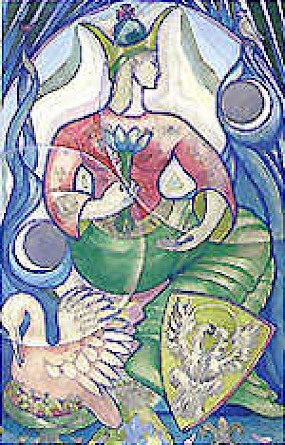
Tarot Card for February 23: The Empress

The Empress

The Empress is numbered three and symbolises one half of a perfect polarity – the Emperor being the other side of the balance. From the purity of the High Priestess we move naturally onwards to the Empress’ sense of bounty and fertility. She represents the Mother Goddess, fulfilling her part in the eternal cycle of creation.

The Empress holds the power to steadily and determinedly rebuild, renew, nurture and nourish. She has an unquenchable and generous courage, responding instantly when she sees a need to defend. Her realm is built of love, fertility and warmth. When the Empress holds us we are once again in the sure safety of the infant at its mother’s breast.

She also represents unconditional love – making no demands and setting no conditions. If we allow her love to flow through us then we too can become a pure spring through which the Universe flows. Only our fears stand between us and the Goddess.

The Empress

(via angelpaths.com and Alan Blackman)

Astro Butterfly 2022 Course Curriculum

by Astro Butterfly (astrobutterfly.com)

We are happy to announce the Astro Butterfly 2022 course curriculum

In 2022 we will run two live courses: 1), Chiron – Your Deepest Wound, Your Greatest Gift and, 2), Astro Butterfly Wings natal chart reading certification program. 

Chiron – Your Deepest Wound, Your Greatest Gift

Chiron – Your Deepest Wound, Your Greatest Gift is a 3-week program that will run from March 28th to April 17th, 2022

We first launched the Chiron course in 2018, and every year since we have updated, and improved it. With more than 1000 people completing the course, this is a students’ favorite. 

The program is not only an immersion into Chiron and the role it plays in your chart – it is also a deeply healing experience.

Many of our students take the program every year because they love the experiential approach it provides that is unique from any other program.

Chiron – Your Deepest Wound, Your Greatest Gift is open to all astrology levels.

“Astro Butterfly Wings” natal chart reading program 

Astro Butterfly Wings is a 10-week natal chart reading certification program that runs from October 10th to December 18th, 2022

The program is another students’ favorite and it’s open to everyone who wants to learn how to read natal charts.

The program comes in 3 separate tracks that run in parallel. You can only enroll in one track per year. 

  • Astro Butterfly Wings is for beginner and intermediate astrology students
  • Astro Butterfly Wings PRO is for upper-intermediate and advanced students 
  • Astro Butterfly Wings BUSINESS is for professional astrologers or aspiring professional astrologers. This track is not a chart reading program. It is a business program to help you set up your astrology business or grow your existing astrology business. For the business track, there is a selection process in place.

What makes Astro Butterfly Wings unique from other natal chart reading courses is the 360° educational experience: structured presentations with visualsquizzesassignmentstutorialschart exampleslive and recorded calls, AND the high-touch personal support – you have a personal tutor who will help you throughout your journey. 

If you complete all the assignments and quizzes, you will get a certification diploma attesting you’re proficient in reading charts. 

Are you new to Astro Butterfly’s chart reading programs? Join Astro Butterfly Wings if you’re a beginner or an intermediate student, or Astro Butterfly Wings PRO if you’re an upper-intermediate or advanced student. 

Have you graduated from any of Astro Butterfly’s chart reading programs in the past? Join Astro Butterfly Wings PRO if you want to keep improving your chart reading skills,  or Astro Butterfly Wings BUSINESS if you want to start or improve your astrology business. 

Save The Date To Get Notified

Chiron – Your Deepest Wound, Your Greatest Gift and Astro Butterfly Wings are the only programs we will be running in the Astro Butterfly school throughout 2022. 

If you’re interested in one, or both programs, simply click on the link associated with the program to save the date and be notified prior to the program(s) commencing. 

Chiron – Your Deepest Wound, Your Greatest Gift – SAVE THE DATE

Astro Butterfly Wings – SAVE THE DATE 

Astro Butterfly Wings PRO – SAVE THE DATE

Astro Butterfly Wings BUSINESS – SAVE THE DATE

Pratt & Smith – Last men hanged in England for gay sex

Pratt & Smith – Last men hanged in England for gay sex

Executed at Newgate in 1835 on questionable evidence

London, UK — 26 February, 2019 (petertatchellfoundation.org)

By Peter Tatchell

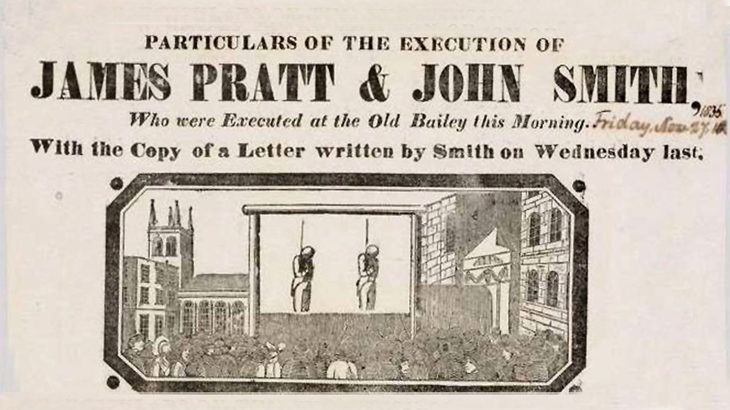
One hundred and eighty-four years ago, on 27 November 1835, a crowd gathered outside Newgate Prison in London to witness a macabre, notorious and historic event – the hanging of the last two men in England to be executed for the ‘abominable crime of buggery’ (anal sex).

Only three months earlier, in late August 1835, James Pratt (30) had said goodbye to his wife and two young daughters at their lodgings in Deptford, and headed off in a routine search for labouring work.

It proved a fruitless quest. Before returning home, Pratt paused for a drink in an ale house. There he met John Smith, also a labourer (40), and William Bonill (sometimes spelt Bonell), aged 68. Neither could offer him a job but their company was hospitable. Bonill invited Pratt and Smith back to his rented flat and they accepted.

Little did Pratt and Smith know, as they made their way to his premises in George Street, Southwark, that this get-together would result in their execution – and that Bonill would be banished to the penal colony of Australia – all within a mere three months of their chance encounter.

Bonill’s landlords, Jane and George (also known as John) Berkshire, disapproved of the behaviour their tenant, William Bonill, who they regarded as an “old villain.” He had been bringing men back to his flat on a regular basis; sometimes twice a day. George was determined to put a stop to these goings-on and get rid of what he regarded as a troublesome lodger.

Shortly after the three men arrived, a suspicious, antagonistic George spied into Bonill’s room through a nearby window. A little later, over tea, he told his wife Jane that he saw Pratt sitting on Bonill’s knees and then on Smith’s. There was much laughing and conversation between them, he said. Jane crept upstairs and peeped through Bonill’s keyhole. After a brief look, she returned to tell her husband that she had witnessed the men engaging in sexual acts. Enraged, George rushed upstairs and burst into the room to confront Pratt and Smith, who were in a compromising position, according to his account.

At this point, Bonill, who had gone out for a drink, returned and entered the room. An effort to calm down Berkshire was unsuccessful. George went off to seek the police.

Pratt, Smith and Bonill were soon arrested and taken into custody. Pratt and Smith were charged with ‘buggery’ (sodomy or anal sex) and Bonill as an accessory. They went on trial for their lives before Judge Baron Gurney at the Old Bailey on 21 September 1835.

The arresting police officer had no material evidence to support the charge. The prosecution rested solely on the evidence of George and Jane Berkshire. The account that Jane told the jury is questionable. She admitted that she watched the men for less than a minute but claimed to have witnessed them undressing, laying on the floor and the “appearance” that they were committing anal penetration. She said she saw the men’s private parts but did not answer when asked whether either man had an erection. It seems doubtful that the keyhole could have provided the range of vision needed to see what she claimed.

The testimony of George was very similar to Jane’s. It had a whiff of coordination. His evidence supported the charge that buggery had taken place. However, he failed to testify if the men had an erection or if he had seen actual penetration; though he claimed to have sighted their genitals and their bodies in motion.

The anatomical description of intimacy described by George Berkshire would have been very difficult to witness. As in the case with Jane’s testimony, the keyhole probably could not have provided a sufficient angle of sight.

Neither James Pratt nor John Smith were allowed to give evidence at their trial. Both pleaded “not guilty” to the charge. Nevertheless, the jury returned a guilty verdict.

The law against ‘buggery’ (enacted in 1533 and not repealed until 2003) was based on an interpretation of the Bible that regarded homosexual acts as an abomination and worthy of death; a particularly evil sin that must be severely punished and eradicated. It was a capital crime.

The judge had no hesitation in sentencing James Pratt and John Smith to death. He warned them their chances on appeal were hopeless and they could expect no reprieve. They had to prepare, he said, to receive God’s judgement upon departing this life. Both men left the dock in tears.

William Bonill was sentenced to 14 years transportation to Australia. He died in Tasmania in 1841.

As well as Pratt and Smith, there were many death sentences for different crimes handed down during the autumn 1835. The process of petitioning for clemency and commutation began.

While being held in Newgate Prison, Pratt and Smith were visited by Charles Dickens who wrote they “had nothing to expect from the mercy of the crown, their doom was sealed.” The turnkey whispered to Dickens that they were “dead men.”

John Smith, it seems, had no friends. But the friends of James Pratt commenced a vigorous campaign to save him from the gallows. They gathered a substantial petition, whose signatories included the trial prosecutor, former employers, neighbours and even George and Jane Berkshire, the men’s accusers.

All the documents seeking clemency were prepared for presentation to a Privy Council meeting with the King, William IV, to be held in Brighton.

At this meeting, on 24 November, 12 men sentenced to death were reprieved by the King’s mercy. Pratt and Smith were not among them. Judge Baron Gurney’s warning had prevailed. In their case, the law was to be allowed to take its course.

News of the pending execution spread around London, confirmed by the erection of the scaffold outside Newgate Prison.

On Friday 27 November 1835, the two prisoners were taken from their cells and brought to the place of execution, still protesting their innocence. Pratt was weak and had to be helped up the scaffold. The crowd began to hiss, possibly in disagreement with the execution. These were probably the last sounds the men heard. The hangman pulled the bolt and after a short struggle on the rope Pratt and Smith were dead.

They are buried in a common grave, with others executed at Newgate, in the City Cemetery, Manor Park, London E12.

In 2014, Father Frank Ryan, who researched the case and has written a book about it, petitioned the Secretary of State for Justice, Chris Grayling MP, to grant a posthumous pardon to James Pratt and John Smith on the grounds that even by the standards of those days their convictions were unsafe. Furthermore, the anti-gay ‘buggery’ law was unjust. Consenting adult homosexuality should have not been a crime.

In reply, the Justice Ministry regretted the men’s execution; acknowledging that it should have never happened but insisting that the conditions for granting a pardon had not been met.

This refusal ignores the pardoning in 2013 of Alan Turing for same-sex relations, which has established a legal precedent. The Justice Minister ought to now review the case and grant a long overdue pardon to James Pratt and John Smith. Justice for these two men has been long delayed but it should not be denied.

• The full story of Pratt and Smith is retold in the book, The law to take its course – Redeeming the past, securing our future. It is available as a self-printed manuscript from the author, Father Frank Ryan, for the cost of printing (about £14): fmryan33@hotmail.com

The book and this article are based on Ryan’s original research at the National Archives, British Library and London Metropolitan Archives, plus newspapers reports.

(Contributed by Gwyllm Llwydd)

The love story story

The love story story | Aeon

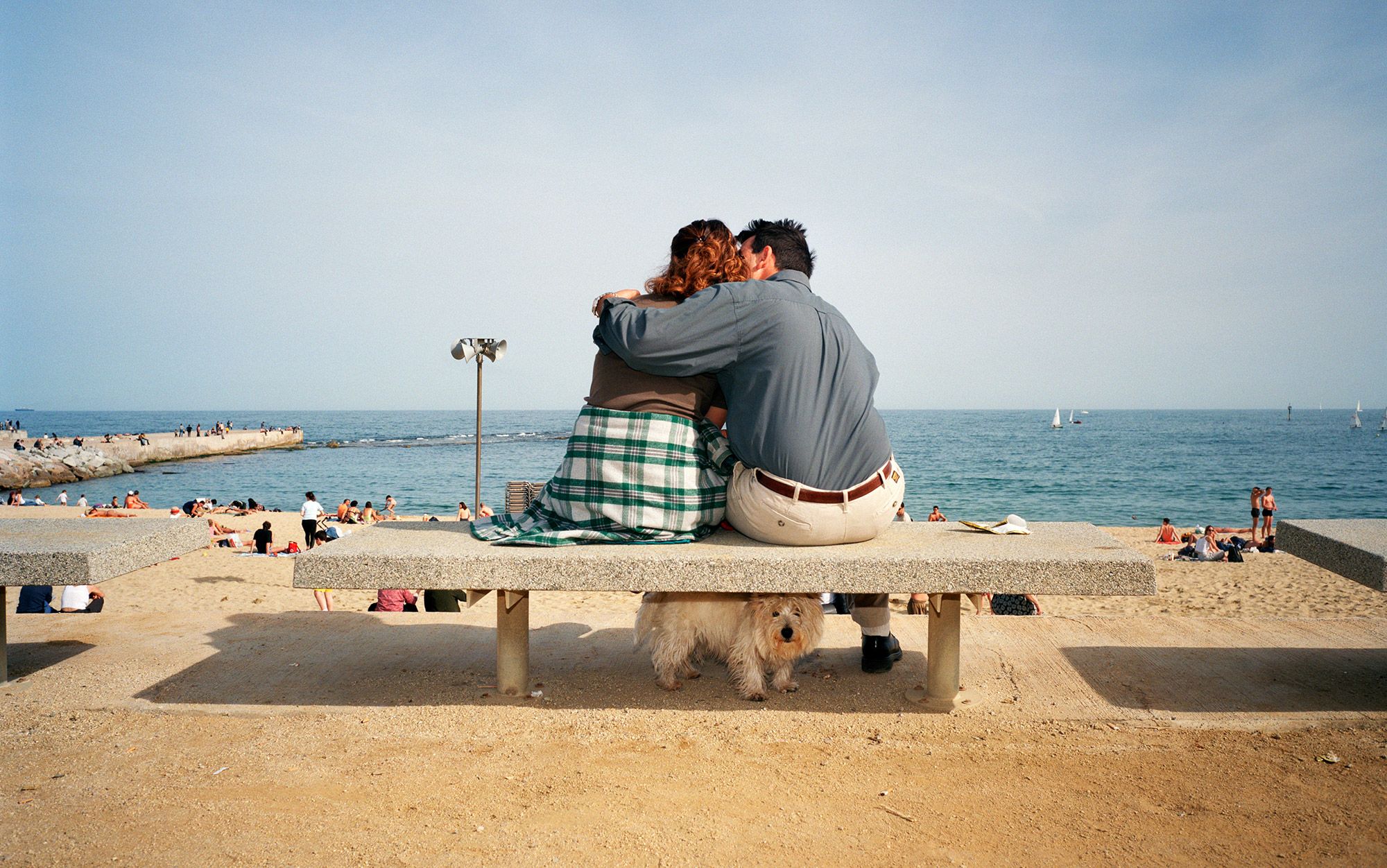
Neither psychology nor anthropology fully understand love: only history sees that it’s all about the time and the tellingPhoto by Martin Parr/Magnum

Barbara H Rosenwein is professor emerita in history at Loyola University Chicago. Her recent books include Anger: The Conflicted History of an Emotion (2020) and Love: A History in Five Fantasies (2021).

Edited by Sam Haselby

21 February 2022 (aeon.co)

Love Aeon?

Support our work DONATE

The top song on Billboard’s Rhythm & Blues chart in 1967 was Jackie Wilson’s (Your Love Keeps Lifting Me) Higher and Higher. Once (he sang), he had been ‘down-hearted’. Then he found a special girl. Now he’s flying high.

Next, compare the feeling of love in Wilson’s song with that of Odysseus in Homer’s epic The Odyssey. The eponymous hero doesn’t want to fly. When the beautiful goddess Calypso tries to keep him as her bedmate, he turns her down even though she promises him immortality – a place with the gods. He wants to go home, to his wife. He wants be grounded – quite literally, since the nuptial bed on which he and Penelope make love is constructed around a deep-rooted olive tree.

And then there is the love that the philosopher Carrie Jenkins has for her husband and, at the same time, for her boyfriend, sharing her time with one or the other. She considers hers a form of romantic love, but she knows very well that it is not the sort celebrated by Wilson or Homer. She calls it polyamory.

These examples hardly begin to cover the vastly different feelings that the simple word ‘love’ is supposed to cover. Such variations should call into question the Basic Emotions Theory accepted by the majority of psychologists today. They maintain that there are six or so emotions, most often listed as happiness, sadness, anger, surprise, disgust and fear. These are universal and hardwired, the hard-won products of long evolution. Other emotions are compounds of the basic ones or are not emotions at all.

Note that love is not among them. Love has no one recognisable facial expression, whereas (argue Basic Emotions adherents) each basic emotion is signalled by an invariable facial expression. Some cultures may try to disguise that expression, but it will nevertheless leak out via ‘micro-expressions’.

The Basic Emotions Theory dates back to a study undertaken in the 1960s by the psychologists Paul Ekman and Wallace V Friesen to test their hypothesis that emotions were universally understood ‘in the face’. They chose as their subjects the non-Westernised Fore tribespeople of Papua New Guinea. At first, they simply showed photos of faces posed to express the six basic emotions. But the Fore respondents couldn’t figure out what they were being asked to do. Therefore, Ekman and Friesen had first to make up a story to go with each emotion. For example, the story for the photos of faces sporting a wide grin was: ‘His (her) friends have come, and he (she) is happy.’ After hearing the story, 100 per cent of the Fore adult subjects chose the Happiness face rather than two faces showing (or, rather, posing) Disgust and Anger. And so it went – similarly (if less successfully) – with the other emotions. The researchers concluded that emotions were constant across cultures – basic and universal. This idea pervades numerous psychology labs today. As the scholar Ruth Leys points out in The Ascent of Affect (2017), the theory is particularly attractive to scientists because it leaves out intentionality – something too variable and messy to measure.

But the scientists who use posed faces are overlooking the fact that the original study was obliged to introduce intention – via the stories. What did the lady with the large smile intend? To greet her friends. It was the story that animated the inert photo, not the facial expression per se.

Intentionality is at the heart of the emotion of love; what a person means when he or she ‘loves’ must be expressed in words, tones of voice and gestures. Faces may play a role, but not necessarily. Before Ekman and Friesen, love had most certainly been considered an emotion. Indeed, by leaving it out, the two psychologists were bucking a long tradition that made love not only an emotion but sometimes also the premier emotion. In the 4th century BCE, love was one of 12 passions named by Aristotle (though he knew that he was leaving out many others). In the 13th century CE, Thomas Aquinas made love the prime mover of every emotion. And in the 1960s, Magda Arnold, a pioneer of cognitivism, classified love as a positive ‘impulse’ emotion. For all of these theorists, love was paradigmatic of all the other emotions.

The chief opposition to the Basic Emotions thesis today is led by ‘psychological constructionists’ such as Lisa Feldman Barrett and James A Russell. They argue that both emotions and cognitions are ‘conceptualisations’. As the human brain monitors our internal and external environments, it makes sense of what it perceives by learning repeated patterns and their labels. In the English-speaking world, the brain learns to associate certain sensations and ideations with ‘love’. In other cultures, different patterns are reinforced, connected to different feelings and perceptions, and therefore differently understood and named.

Psychological constructionism helps explain why the Fore were initially confused when presented with some photographs. It also supports the findings of anthropologists that, in other cultures, emotions are not only sorted differently than those in the West but also ‘felt’ in ways Westerners find odd. Thus, the anthropologist Andrew Beatty has written of the ‘hairy’ hearts of some of the Nias tribespeople he came to know during a two-year fieldtrip in Indonesia. In his book Emotional Worlds (2019), Beatty illustrates how two parties negotiated a bride wealth in anticipation of a marriage by using various emotional locutions unfamiliar to him: ‘we feel two-hearted’, we are ‘shrivelled-hearted’, let’s be ‘clear-hearted’.

The contributions of psychological constructionism take us a long way beyond the Basic Emotions thesis, but they leave out the glue that holds together the sensations and ideations: the stories. The brain’s sense-making does not entail simply associating feelings and connecting them with words. It involves finding and creating narratives. These narratives are both cultural givens and, at the same time, they are in a continual process of formation; they undergo modifications (in one’s lifetime, in one’s culture). They crystallise sensations, experiences, thoughts and actions (or, at least, impulses to action). They have an arc, if not always a beginning, a middle and an end. Finally, they imply value judgments: this is the way you/I/we should feel in these circumstances; this is how we should express it. And, conversely: this feeling or way of feeling is wrong, it is hateful, it is manipulative.

Stories are manipulative, for they not only make sense of what we feel but also shape those feelings, even as we struggle to mold them according to our particular needs and understandings. In that sense, they are tools of power as much as they are neutral organisers of the disparate sensations and experiences of our lives.

Western love is not – and has not been – one thing; no doubt the same is true for other cultures too

Anthropologists sometimes find love stories in the cultures that they study, but these stories are generally quite different from those that Western cultures tell – even when (as happens today) Western narratives have infiltrated them. Western culture’s influence is no doubt due to its political, military and economic hegemony. But it is also due to the fact that it invests an extraordinary amount of thought, energy and emotion into love, amore, amour, amor, Liebe – obviously, the English term is only a stand-in for the rest. Love is emoted with hearts, posted on billboards (‘You’ll love our cereal’), promoted on dating sites, printed on Christmas cards, and celebrated on Valentine’s Day. A Google Ngram of the words love and anger (anger being many psychologists’ model emotion) since 1800 shows how love indeed conquers all, especially today.

Frequency of emotion terms in printed books since 1800

The real work is ahead. What does love mean in Western culture? Arnold may have been correct to say that it is an ‘impulse’ emotion, but that is meaningless until one knows what sets off the impulse, the goal that it has, how it is experienced and expressed, the feelings it is associated with, and the moral purchase it claims. And even then, one needs to ask if everyone agrees that the same motives, goals, performances, feelings and ethical values are at work in every case.

As I argue in my book Love: A History in Five Fantasies (2021), Western love is not – and has not been – one thing, and no doubt the same is true for other cultures as well. If Jackie Wilson flew high on love, others (around the same time) were singing that ‘Love ain’t nothing but sorrow.’ And if some (like Percy Sledge) maintain that ‘When a man loves a woman/Can’t keep his mind on nothin’ else,’ polyamorists are glad to have several loves. Still others find love elsewhere, in other stories. These varieties suggest that we live in emotional communities that evaluate, use, abuse and act out emotions in ways that make sense mainly within that community.

To understand the stories that inspire, explain and keep on track these various emotional communities, it is best to look at the long haul: history. Doing so means moving away from the prevalent tendency to deny that the past can shed light on the human heart and brain. That predilection infects not only the Basic Emotions crowd but also, at least as it is now discussed, psychological constructionism, which so far does not consider whence derive the ambient associations between sensations and their conceptualisations. The caretakers who bring up baby and thus who create his/her/their emotional world in the psychological constructionist model are themselves products of their emotional communities. Those emotional communities were not constructed out of nothing but rather created over time with the bits and pieces – variously accepted, rejected and rejiggered – of the stories, experiences and performances of the past.

The past is another country, but at first it may seem nothing like those that anthropologists visit. For anthropologists (like psychologists) have living people in front of them. Historians in the main do not. They have only the writings and materials left behind by human beings. Yet the difference is not so great as some imagine. The psychologist has only what her subject says. Or she may consult her subject’s brain scans, pulse rates and so on; these do not speak and, like the material culture of the past, must be interpreted. Even speech is often opaque, hiding as much as it reveals. In a psychology lab, speech is often highly controlled and directed, and that, too, has problems. Like the forced choice given to the Fore (to decide which story the photo is about from only three options – disgust, anger or happiness), constraints inhibit spontaneity. Anthropologists understand the drawbacks inherent in a laboratory setting. That is why they live with people for many years to figure out what they are saying and doing. Even so, Beatty for one, ever alert to contexts of expression, admits that he never figured out what the Nias meant by having a ‘hairy heart’.

Percy Sledge’s inability to think about anything but his girl tapped into a Western tradition of very long-standing: love as an obsession. Plato knew about it. His Symposium is set at a party with an illustrious group of guests from an earlier generation, including Socrates. Foregoing the usual drunken orgy and dismissing the flute girls, the men (they are all men) agree to take turns speaking about the nature of love. It’s clear that the discussion is implicitly as much about one-upmanship as it is explicitly about eros, and it seems to end, as expected, with the speech of Socrates.

Then, just as the party is about to break up, in comes a gate-crasher. It is Alcibiades, roaring drunk and crazy in love with Socrates. Does the company want to know what love really is? He proposes to tell them. It is feeling your heart leap in your chest, the tears run down your cheeks. It means admiring, desiring and being endlessly frustrated. You realise how wonderful your beloved is and how you can never measure up. You wish you didn’t feel compelled to stick around, but you have to. You’re a slave. Yes! Alcibiades has ‘no idea what to do, no purpose in life; ah, no one else has ever known the real meaning of slavery.’

Alcibiades is the perfect example of the wrong sort of love, according to the lights of Plato’s emotional community. His love is messy and irrational. It turns the right order upside down: in ancient pederasty, an older man falls in love with a young one, takes him under his wing, teaches him morality and bravery, and (yes) has sex with him – though generally not penetrative. But Alcibiades is the handsome youth, and Socrates the ugly old man. Worse, the sort of love Alcibiades is feeling, while virtuous in a woman – think of Penelope, who wept for 20 years as she awaited her husband Odysseus’ return – is absurd in a man. A man should be in control of his passions. Alcibiades is led around by them.

In the context of the ancient world, where a man like Alcibiades had many slaves and was humiliated to feel like one, obsessive love was an embarrassment and the obsessive lover a fool. Percy Sledge universalised his feelings – ‘When a man loves’ means ‘When any man loves’ – because he knew his audience would joyfully identify with him. But no man in the ancient world would joyfully have felt as Alcibiades did. He wasn’t a normal guy but a sick man, the foil to the right sort of love – the kind that transcends human flesh and beauty – that Socrates had just presented in his own speech.

Even made-up stories have real-world impact

But now fast-forward to the south of France in the 12th century, when being in service to another person was the privilege of the elites, and when words of love described the relations between lords and vassals. In that context, Bernart de Ventadorn could happily sing that he is

Better than other troubadours,
For I’m more drawn to loving
And better made for its command.

He’s delighted to be love’s slave, even though his beloved (he tells us) has no more interest in him than Socrates had in Alcibiades. Indeed, he glories in his servitude, priding himself on his fidelity, no matter what:

Good lady, I ask you nothing at all
Except to make me your servant.

In songs of this tradition, obsessive love is painful – either because it is unrequited or because the lady (or lord) is far away. Yet even so, it makes the lover happy. Alcibiades is miserable as he comes to see that he will never measure up to Socrates. But for Bernart, the very feeling of love is proof of his virtue. He measures up because he loves. He’s glad to be miserable.

When, in the 18th century, service was no longer highly valued, obsessive love’s narrative became darker. In Johann Wolfgang von Goethe’s The Sorrows of Young Werther (1774), the eponymous hero is hopelessly in love with Lotte. He constantly thinks how, if only she were with him, he would cover her with kisses. He never stops wearing the outfit that he wore at their first meeting and, when it wears out, he gets another that is identical. Lotte is everywhere in his imagination. He loves her ‘solely, with such passion and so completely’ that he knows nothing except her. He’s crazy, like Alcibiades, but he glories in that craziness. When he kills himself, it is because one must go to any length for love.

The Symposium, Bernart’s poem, Werther: these are fictions. They are ‘made up’ and thus may seem less real than (for example) responses to a psychologist’s questionnaire. But, as Ekman and Friesen learned, even made-up stories have real-world impact. Plato wrote for an audience of philosophers. (Though later on, Socrates’ account of love in the Symposium would become a model for Catholic theologians.) The troubadours entertained southern French nobles and shaped the love poetry of Spain, Italy, England and Germany. Werther was the unfortunate model for many a young man’s suicide in the 18th century. Percy Sledge’s song touched enough people to make it a number-one song in 1966. Obsessive love today reverberates with all these traditions.

But, as we saw at the start of this essay, obsessive love is not the only feeling-idea of love today, nor was it in the past. Consider its near-opposite, polyamory. Already Plato talked about that, in the guise of a speech by Pausanias, who contrasted two sorts of love. The one worthy of praise was utterly attached to one life-long companion (in his view, another man). The one that was ‘shameful’ moved on from person to person – even to women!

Shameful was not, however, how all people in the ancient world considered this sort of love. After all, the gods were said to fall in love seriatim, and on the vases owned by perfectly respectable ancient Greeks (and, later, on the walls of perfectly respectable ancient Romans), satyrs were depicted merrily disporting with nymphs. In the 1st century BCE, Ovid wrote happily of the great joy of falling in love, falling out of love, and moving on. But in the next century, the Christian Church simply voided this sort of love. It was not love. The best sort of love was for God. Second best was love in marriage. All else was lust.

Feelings come in untidy combinations that need to be put into narrative order to make sense

Medieval love poets did not agree with the Church. In that very fact, we see the variety of medieval emotional communities. They are even more obvious in the 16th century, when polyamorous sentiments enjoyed a heyday. This was in part the effect of the European attitude toward the conquests of ‘virgin’ territory – the Americas were as ripe for the taking as one’s mistress, and discovery was all the rage. In part, too, it was a product of the weakening hold of the Church; praising and practising ‘lust’ was a good way to protest against its strictures. Equally important was the Renaissance’s new appreciation of ancient art and literature and all the polyamory that they seemed to imply (forgetting that many people in the ancient world implicitly agreed with Pausanias). Finally, the printing press served, as social media does today, to echo and amplify minority feeling-ideas.

Thus, the ever-satirical Pietro Aretino (1492-1556) celebrated the many loves of a courtesan named Nanna. In a nunnery, she has a fleet of lovers, until one of them, consumed by jealousy, nearly skins her alive. Her mother saves her, only to find her a husband. After that, like all the other wives, Nanna happily takes many lovers, finding them especially abundant among monks and clerics. At last, she becomes a courtesan, the best life of all, for she may not only love all the men she likes but also make money at it.

Today’s polyamory does not rely on a satirical story. Rather, it is constructed (among other things) on notions of the sexual self that were elaborated by Sigmund Freud and others at the turn of the 20th century; on the science of hormones that was discovered around the same time; and (in some quarters) on the idea that consenting adults may arrange their intimate lives however they like. But even today it includes the frisson of rebellion against majority norms.

Feelings do not come prepackaged in boxes labelled with names such as ‘love’. They come in untidy combinations that need to be put into narrative order to make sense. Some sequences come from within us, perhaps dictated by our hormones, certain are influenced by our individual ways of thinking and doing. But many of them come from without, from the narratives we hear and see and read. What is love? It’s all in the story.

To read more about the history of emotions, visit Psyche, a digital magazine from Aeon that illuminates the human condition through psychology, philosophy and the arts.

History of ideasStories and literatureLove and friendship

Tarot Card For February 22: The Eight of Disks


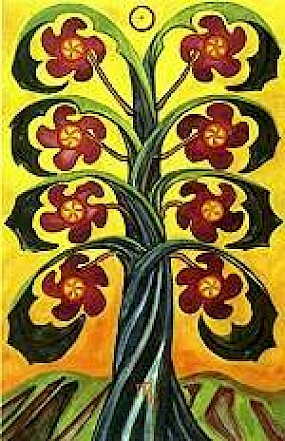
The Eight of Disks

The Lord of Prudence is not quite as austere a card as it first sounds. It’s another of those Disks that works on more than one level. In the purely material and mundane sphere it indicates a period where financial resources must be carefully managed.

So long as it does not appear with cards like the Ten of Swords or the Five of Disks, there will not normally be any grave material problem. But there is a warning here that there may be unexpected expense, and good money management will enable us to fund whatever arises.

At the next level, the Eight of Disks can apply to a period where you enter into additional training in order to enhance your career projects. In this case look for cards like the Three of Disks, or the Ace, to indicate some new area of study. Then look for cards like the Universe, or the Sun to indicate the successful outcome of your efforts.

Finally in the spiritual area, when the Lord of Prudence comes up with cards like the PriestessDeath, the Moon, or the Hierophant, you’re approaching a period of rapid spiritual development – almost an initiation. In this case, this card is warning you to be alert for opportunities, ready to deal with stress and pressure, and to manage your energies thoughtfully and carefully. You can perhaps see the correlation which exists with regard to energy management between the material and spiritual definitions of the card – in either case energy must be regulated and respected in order for life to go smoothly and for you to get the best out of your experiences.

The Eight of Disks

(via angelpaths.com and Alan Blackman)