
 Community Update February 2022 HERE’S WHAT’S HAPPENING! >> SPECIAL BULLETIN << * * * Prosperos Dean Al Haferkamp Retires * * * After 12 years of service, Al Haferkamp, H.W., M. has stepped down as Dean of The Prosperos. His heartfelt farewell message was sent out to all our students last month. We are deeply indebted to Al for his dependable guidance during the past decade, and look forward to his continuing contributions as Dean Emeritus! The Trustees have asked William Fennie, H.W., M. to assume the role of Acting Dean until the time of their next Annual Business Meeting, in Fall 2022. Welcome, William! |
| Classes Dear students and friends, The new year brings new opportunities to share The Prosperos remarkable instruction with new students, and to provide ongoing inspiration to continuing students. Our instructors are currently scheduling classes, workshops and study groups for the next few months. Watch this space for a coming announcement of educational offerings for Spring! Find out about all our classes and events at https://www.theprosperos.org/events. We look forward to seeing you soon! Sunday Meetings Presenting talks by Prosperos Mentors and inspiring guests, these online events are open to all who are interested. There is no charge, although we do encourage contributions. Join the meetings at: https://us02web.zoom.us/j/332275676! Coming up this month: SUNDAY, FEBRUARY 20 (11:00 am PDT) “Building a New World” William Fennie, H.W.,M., will address the need for changes in our approach to problem solving, and will discuss a hidden skill set that is capable of meeting that need. SUNDAY, FEBRUARY 27 (11:00 am PDT) “Conversations with Calvin” Calvin Harris, H.W.,M. will interview accomplished actor, writer, and activist Nicholas Snow about overcoming obstacles of the personality and living an authentic life. Have you missed a meeting? Recordings of selected Sunday Meetings areavailable online at https://www.theprosperos.com/podcast. Fall Event 2022 LABOR DAY WEEKEND, SEPT. 2-5, 2022 Yes, we’re still planning a major event in September! However, due to uncertainty with changing health requirements, we have decided to use an online format this year. We’ll have more information for you as plans take shape. In any case, our gathering will share all the Aloha we can possibly squeeze through those internet connections — so please plan to join us! * * * WATCH THIS SPACE FOR MORE INFORMATION! * * * >> THANE’S “GREATER FREEDOM” LESSONS ONLINE! << In these powerful lessons, Thane of Hawaii, Founder of The Prosperos, introduces fundamental principles of Mind practice. Along the way he provides insights into many metaphysical and spiritual questions, drawing upon a lifetime of experience in spiritual studies, entertainment and public speaking. There is no charge, but contributions are welcome! “The Law of the Vacuum” The distillation of decades of study and work with students, the Law of the Vacuum outlines a simple and effective practice for establishing abundance in any area of endeavor. Listen online at: www.theprosperos.com/vacuum “The Law of Assumption” “Assume a virtue if thou hast it not.” These famous words point to one of the most powerful resources available for activating talents we wish to express in our lives — the Law of Assumption. Listen online at: www.theprosperos.com/assumption MAY WE HELP YOU? High Watch Translation Service Need help with a problem? You can request Translation® for any issue: illness, relationships, professional difficulties, etc. Members of The Prosperos High Watch—students who have shown their understanding of Translation®—will work to reveal the Truth behind the appearance. Contributions are welcome; all information is confidential. Please post your request at: http://TheProsperos.org/community/hwts. Personal Counseling Our Mentors (Teacher/Counselors) offer lay counseling based on the techniques of Translation® and Releasing the Hidden Splendour™ taught through The Prosperos. If you wish to arrange for personal counseling, or need questions answered about the techniques, or just want to talk, Prosperos Mentors are ready to help. For counselor names and contact information, please contact us at info@theprosperos.org. Volunteer Opportunities WEBSITE ASSISTANCE: We are currently seeking volunteers to help with web design and social media. This is a great chance to learn about these essential communication tools! To offer your services, or to request more information on how you can help, please write to info@theprosperos.org. Thank you! FOR MORE INFORMATION…We invite you to visit our websites for information about the School, as well as for descriptions of our wide selection of printed, recorded, and online resources (many are free; others are available for purchase). General Information – For our calendar, class descriptions and blogs, as well as other articles and information, please visit https://TheProsperos.org. Audio Center – This site offers free podcasts, talks and lectures, plus a wealth of other recorded material for our students and friends. To see what’s available, please visit https://TheProsperos.com. |
Monthly Archives: February 2022
Edvard Grieg: Peer Gynt Suite No.1 & No.2 - Bjarte Engeset (op. 46, op. 55, op. 23)
Kristiansand Symphony Orchestra Composer: Edvard Hagerup Grieg Conductor: Bjarte Engeset Concertmaster: Adrian G. Selfjord Peer Gynt: Suite No.1 op. 46 Suite No.2 op. 55 Excerpts from the stage music op. 23 00:00 I. Prelude: At the Wedding (I brudlaupsgarden) op. 23 05:30 II. The Abduction of the Bride. Ingrid’s Lament (Bruderovet / Ingrids klage) op. 55 10:24 III. Dance of the Mountain King’s Daughter (Dans av Dovregubbens datter) op. 23 12:21 IV. In the Hall of the Mountain King (I Dovregubbens hall) op. 46 15:28 V. The Death of Åse (Åses død) op. 46 20:14 VI. Morning Mood (Morgenstemning) op. 46 24:39 VII. Arabian Dance (Arabisk dans) op. 55 29:42 VIII. Anitra’s Dance (Anitras dans) op. 46 33:31 IX. Peer Gynt’s Homecoming (Peer Gynts hjemfart) op. 55 36:30 X. Shipwreck (Skipsforliset) op. 23 38:19 XI. Solveig’s Song (Solveigs sang) op. 55 Edvard Griegs maleriske, dramatiske og vakre musikk til Henrik Ibsens skuespill Peer Gynt. #Grieg#EdvardGrieg#PeerGynt#BjarteEngeset#Suite#Ibsen#HenrikIbsen#SymphonyOrchestra#symphony#Violin#KSO#kristiansandsymphonyorchestra#1876 Kristiansand Symphony Orchestra
“Why do people have to die?”
Book: “The O Manuscript: The Seer, The Magdalene, The Grail”
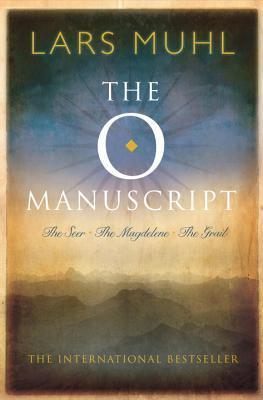
The O Manuscript #1-3
The O Manuscript: The Seer, The Magdalene, The Grail
Lars Muhl
The O Manuscript, areal-life Gnostic thriller, has sold over 60,000 copies in Denmark, the equivalent of 3 million in the United States, since it was first published in 2000. Lars Muhl was for many years a successful pop star who studied the world’s religions and esoteric knowledge between gigs and recording sessions.
When a nervous-system illness sidelined him in the mid-1990s, he turned in desperation to a spiritual healer who was able to get him back on his feet after a single phone call. Intrigued by this mysterious man, Muhl traveled to southern France to become his apprentice. Together, Muhl and the healer, who is known in the book simply as “The Seer,” embark on an adventure that is part history lesson, part Jedi-style initiation.
“My work with The Seer began on Montségur, the holiest site of the Cathars, the medieval French religious sect that was persecuted by the Roman Catholic Church,” notes Muhl.” It was the middle of summer and the hike up the mountain is pretty strenuous. At the same time that The Seer was testing my physical endurance, he was breaking down my emotional resistance. He taught me how to let go of the burdens from my past.”
Towards the end of his apprenticeship, after years of searching for Montségur’s secret cave, Muhl finally stumbles upon it. Inside he finds himself in the presence of “O,” the Messenger of Light; the source of all things; the symbol of ecstatic union. O tells Muhl, “Everything mankind longs for is, and has always been, within his reach. If he would only acknowledge this there wouldn’t be anything else to look for. When this happens mankind will step out of his self-made prison and into reality.”
The O Manuscript is not another book about positive thinking. Throughout his initiation, Muhl was forced to confront his dark side, the shadows that kept him from true health and wellness. “This is my journey,” says Muhl. “Every word of it is true and really happened to me, but it is also meant to be a kind of allegory. The lessons I learned are universal.”
Praise for The O Manuscript:
“I recommend this amazing story to anyone seeking the path to enlightenment.” —Al Jardine, The Beach Boys
“Lars Muhl tells an extraordinary tale in an extraordinary way…It is a story that, for too long, has been cyring out to be told.” —Henry Lincoln, co-author of The Holy Blood and the Holy Grail
(Goodreads.com)
Slow sex, long life
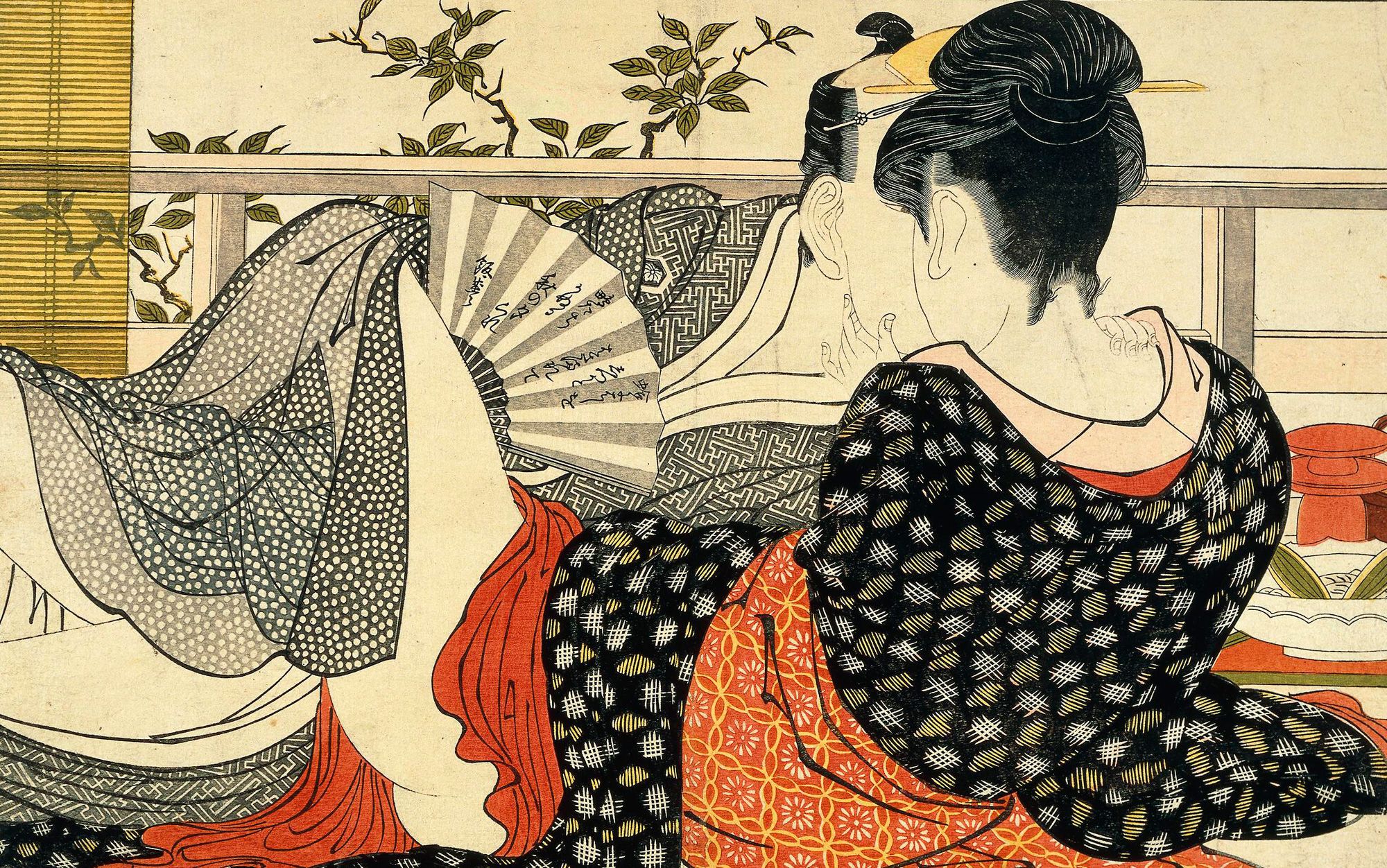
Tokyo’s imperial archives advise what science now confirms: the secret of longevity lies in the gentle arts of the bedroomFrom The Poem of the Pillow (1788) by Kitagawa Utamaro. Courtesy the Trustees of the British MuseumDenis Noble
is emeritus professor of cardiovascular physiology at the University of Oxford. He was the first to develop computer models of the heart, published in Nature in 1960, and is one of the founders of the field of systems biology. His books include The Music of Life (2006) and Dance to the Tune of Life (2016).
Edited byPam Weintraub
11 February 2022 (aeon.co)
Love Aeon?
Support our workDONATE
For more than 1,000 years, the Imperial Family of Japan and its physicians have preserved a treasure of oriental medicine: the complete 30 scrolls of the Ishinhō, or the ‘heart of medical prescription’. This compendium was derived from sources in India, China, Korea and elsewhere, though many of the original documents have since been lost or destroyed. In 2012, I found myself in the Imperial Archives in the Tokyo Palace examining the precious scrolls.
I was delighted to discover a holistic approach: not only did I find herbal remedies, and nutrition and lifestyle aids, but also, in Scroll 28, instructions for the creation and preservation of jingqi (the life force), with a focus on sexual energy. These prescriptions, which originated at least 2,000 years ago in East Asia, were almost the opposite of Western ideas, since they required the achievement of orgasm without the loss of semen.
The idea dates to the 10th century, during the Heian period, a golden age for Japanese poetry and literature. The poet Sei Shōnagon (c966-c1025) wrote The Pillow Book, while Murasaki Shikibu (c978-c1014), a fellow lady-in-waiting at the Imperial Court, wrote one of the world’s first and greatest novels, The Tale of Genji, relating the adventurous romantic life of a prince. All these works and more reveal the natural approach to sexual relations common in ancient Japan. Such naturalness was also a feature of ancient China, evident from the tomb excavation at Mawangdui in Hunan Province, revealing texts on the art of love, dating from around 200 BCE. A poem in those texts, The Union of Yin and Yang, may be the first sex manual the world has preserved. Throughout these works, colourful metaphors describe the unhurried and careful approach to the joys of sexual intercourse. The emphasis was on exceedingly slow and gentle movements, beginning with caressing what seem to be the mysterious energy meridians within the body.
What a perfect setting for the great compendium itself, written by the Japanese court physician Tamba Yasuyori in 984. It was in Scroll 28 of Tamba’s masterpiece that the classic Chinese narrative is revealed through the teachings of three women said to have advised the mythical Yellow Emperor on his longevity exercises. When I was able to revisit the scrolls again in 2018, together with leading members of the modern medical establishment in Japan, I could identify for my medical colleagues the prominent red marks over the names of the three women. One of them, whose name I translate as the ‘original woman’ (Su-Nu), a kind of Chinese Eve, uses one of the oldest of the intimacy poems, from around 200 CE:

Each line in the poem could be interpreted either as individual intimate acts or as acts with different partners, as would be the case for monarchs with multiple wives and consorts. In this translation, I have attempted to reproduce the four-character rhythm of the original. Each line, and its response, contains four Chinese characters, each pronounced as a single syllable, making eight syllables in the two lines together. The much older Mawangdui poem, The Union of Yin and Yang, is also a character poem of this type, but it uses three characters instead of four. Repetitive rhythm was important in the transmission of texts, such as sutras and poems, when writing materials were scarce, and monks and poets had to memorise long texts. That was also true in the 10th century. The rare paper on which the scrolls are written is extremely fragile, and the original version is now a national treasure kept in the National Museum in Tokyo.
Of course, this poem, like many other ancient Chinese poems on the arts of love, needs metaphorical interpretation. Words such as ‘immortal’ do not carry the same meaning as when is used in Western religions. The aim of the poem is to encourage the general improvement of health and longevity.
The deeper truth of the poem is that everything is interrelated. This is precisely what modern science finds using the associations between genes and disease. Most genes contribute to most diseases. Some modern scientists using genome sequencing go so far as to formulate the omnigenic theory, which is the theory that all genes contribute in some way or other to health and disease states. It works the other way round, too. Gene expression is also controlled by epigenetic states – when the external environment tunes genes up or down. We do not have ‘selfish’ genes. The selfishness or kindness comes from our integrated selves, not from biomolecules such as DNA. Even scientists today use metaphor to express what they mean.
The scrolls, all written in Classical Chinese, require great skill to translate into modern Japanese. This has been the life work of Sachiko Maki, who laboured for more than 40 years to produce the complete modern Japanese translation in a series of 34 volumes. A gift from the herbal remedy company Tsumura ensured that Oxford is now one of the few universities in the world to possess not only Sachiko’s translations but also a complete facsimile of the calligraphic scrolls. The translation into modern Japanese is important. Very little of the Ishinhō has been translated into English. What the Japanese version reveals is that Tamba was greatly influenced by Buddhism in his choice of what to preserve of the ancient Chinese texts. All animal products and all potential toxic metals were excluded. The only remedies are herbal, nutritional or sexual.
In fact, these medical prescriptions have long posed a translation challenge beyond just the metaphorical: they are sexually explicit, but their translators were originally late 19th- and early 20th-century Europeans with Victorian sensibilities to match. In fact, the Dutch sinologist and diplomat Robert Hans van Gulik even went so far as to translate them into Latin in 1961 in order to restrict access to their texts, as well as to their accompanying erotic prints from the Ming dynasty, to academic scholars only – if a library did not agree to this, van Gulik refused to provide them with a copy.
As a pioneer in modern systems biology and its multilevel view of organisms, I immediately appreciated the traditional Asian view that parts of the human body should not be viewed in isolation but rather as part of a whole – an integrated communicative system. Tamba clearly documented this philosophy in an unbroken line of physicians from himself all the way back to the 3rd century BCE.
It was at a chance meeting at a New Year’s brunch with Oxford academics in 2016 that I began discussing the scrolls, and specifically Scroll 28, with the entrepreneur Leslie Kenny.
Kenny was working with the scientists Katja Simon and Ghada Alsaleh from the University of Oxford on a compound called spermidine – named for its presence in semen, where it was originally discovered. Unusually, she also had experience as a sexologist in China, and was familiar with the ancient Taoist practices and beliefs around sexual arousal, intimacy and their health benefits. She also knew of Oxford research demonstrating that spermidine triggered autophagy, the body’s inbuilt ability to renew and recycle cells, the foundation of life – and a youthful life – itself. So important is autophagy that Ohsumi Yoshinori, a Japanese scientist, was awarded the Nobel Prize in Physiology or Medicine in 2016 for discovering its mechanism of action.
Kenny wondered aloud whether the reason for arousal but non-ejaculation was so that the man would resorb his own spermidine and thereby benefit from a boost in cellular autophagy and the resulting beneficial biological effects. I too had wondered about the possible benefits of resorbing sperm to male health.
In order to test our theory, we needed to define what ageing was and then prove that the instructions of Scroll 28 led to halting it.
One of the most frequently cited scientific research studies on this topic was published in 2013 in the premier biology journal, Cell. The paper – by the Spanish biochemist Carlos López-Otín and his colleagues in Madrid, Cologne, London and Paris – hypothesised nine hallmarks of ageing, and posited it was possible to halt the ageing process. Rather than simply treating the symptoms of cardiovascular disease, Alzheimer’s and cancer, among other diseases of ageing, López-Otín said, one might be able to halt the onset of ageing itself.
If spermidine prevents dysfunction in our mitochondria, then it may protect human longevity as well
One of the potential agents he mentioned was spermidine. Because spermidine triggered autophagy, it was able to prevent many of these hallmarks of ageing. But spermidine did more than that – it also protected mitochondrial DNA.
Mitochondria are the energy powerhouses of cells. It was the American biologist Lynn Margulis who first championed the theory that mitochondria were once independent microbes that joined other cells through the process of symbiogenesis to form the complex organisms we see around us today. More recently, a host of new studies reveal that spermidine guards against ageing of mitochondria. If spermidine prevents dysfunction in our mitochondria, the basis of cellular energy, then it stands to reason that it may protect human longevity as well.
And protecting mitochondria is just the start. Scientists have recently discovered that spermidine can prevent an additional four negative hallmarks of ageing: epigenetic changes that damage gene expression; impaired maintenance of proteins; impaired production of stem cells; and disruption of intercellular communication. Emerging research suggests it may also inhibit cellular senescence.
In fact, the only other compound found to prevent six of these negative markers was a drug called rapamycin – produced by a bacterium discovered on Easter Island (also known as Rapa Nui) – which unfortunately causes immunosuppression. Spermidine has no known side-effects.
That left another hallmark of ageing – erosion of telomeres, the tips that protect the ends of chromosomes from damage. Might telomeres themselves somehow be protected by the ‘lovemaking for longevity’ recipe?
Elizabeth Blackburn, another winner of a Nobel Prize in Physiology or Medicine, and professor emerita at the Salk Institute for Biological Sciences in California, discovered the power of telomeres along with an enzyme called telomerase that can lengthen those telomeres, thus extending life. Her book The Telomere Effect (2017), co-written with the health psychologist Elissa Epel at the University of California, San Francisco, showed that meditation could cause the body to produce more telomerase, thus promoting longevity. Other evidence showed that mothers who had been stressed during pregnancy gave birth to babies with shorter telomeres. Epel and her colleagues did a further study in 2017 showing that couples who were sexually intimate also benefited from longer telomeres, though the team could not explain a mechanism of action, other than possible release of oxytocin, a hormone similar to that released by breastfeeding mothers and their babies.
Kenny wondered whether the synchronisation of heartrate, breath and gaze between two lovers as described in the Ishinhō was the mechanism of action. Indeed, there was no such telomerase benefit in the control group of couples who described themselves as ‘happily married’ but who hadn’t recently been sexually intimate. Whatever the mechanism of action behind the telomerase production, it was clear that the two lovers needed to intentionally come together and physically join as one in order to receive the longevity benefit.
But if spermidine and telomerase could together hold back nearly all the markers of ageing, what was the purpose of the rest of the longevity prescription in the translated scrolls? In particular, I was intrigued by the curious Taoist fascination with human saliva. In fact, the ancient Taoists would even perform ceremonies in which cups of saliva were exchanged to enhance health.
As a scientist and historian, I’ve spent a great deal of time poring over the work of Charles Darwin, reconciling it with current scientific discoveries and making sure that Darwin’s legacy and intent is properly communicated to future generations of scientists. Darwin was a slow and thorough thinker. He integrated many processes into his work on evolution, On the Origin of Species (1859), and in several other books. Contrary to what many evolutionary biologists think today, Darwin realised that our bodies must communicate with their germ cells – sperm and eggs. One of my own recent conclusions is that modern science has discovered the tiny components involved in that communication; today, we call them extracellular vesicles or exosomes.
We also know that saliva contains exosomes. Originally discovered in 1983, exosomes were at first discarded by scientists who regarded them as extracellular rubbish. However, as more experiments were conducted, particularly with stem cells, it became clear that stem-cell therapies worked better when delivered together with exosomes. Taking these experiments one step further, it appeared that exosomes were actually more valuable than the stem cells themselves. Those exosomes have been proved to communicate with the germ cells.
I wondered whether the instructions for longevity in Scroll 28 meant that the body’s meridians or energetic channels – so fundamental to traditional Eastern medicine – were activated by the gentle touch of the intertwined couple. If the exosomes contained in the saliva exchanged when kissing followed those meridians, they might act as signposts to the omnipresent very small stem cells in the blood, telling them where to go to repair tissue but also changing cell receptors themselves. Could the mysterious meridians be some function of the exosomes?
Was it possible that the ancient Taoists had found a way not only to hold back the hands of time by intentionally activating production of spermidine and telomerase, but that the exchange of exosomes and activation of energetic meridian channels could also restore the emperor’s youth?
I think it might be. As a medical scientist, I have long been fascinated by nature’s ability to create its own pharmacopoeia, and know that the human body’s own internal pharmacy does this too by constantly sensing and assessing its internal and external state, and striving to continually stay in balance or homeostasis. The evolution of plants over hundreds of millions of years has certainly created the chemical combinations that work, whether to the advantage of organisms that eat them, or sometimes to their disadvantage when the mix is toxic. Herbal remedies exploit this evolutionary success of plants over millions of years.
Consummation should occur only three times out of 10, and only with a woman when wishing to conceive a child
I suspect that the trafficking of extracellular vesicles between all parts of the body may also be involved in another crucial feature of the ancient Chinese scrolls, since the emphasis on foreplay was on exceedingly slow and gentle movements, beginning with caressing of what seem to be the mysterious energy meridians within the body. Incidentally, those should not be confused with the channels, nerves and blood vessels familiar to Western medicine. My guess is that the caressing and massaging may trigger a release of vesicles across many areas of the body. Could this correspond to the notion of the meridian? Many scientists dismiss this concept from Chinese medicine, but not everything that exists can be visualised easily, as we well know from modern particle physics.
Breath, gaze and heartrate between lovers become synchronised during foreplay until actual coitus occurs, but it would be harmful for the man to consummate the love act at this point. The text of Su Nu suggests that consummation should occur only three times out of 10, and only with a woman when wishing to conceive a child. All other uses of a man’s precious bodily fluids – in this case, semen – would be viewed as exhausting the man’s body, ageing it prematurely. Whereas a woman and her yin energy were greatly strengthened by reaching climax, this was to be avoided at all costs by the man, whose yang energy would be robbed.
So crucial was this aspect that the physician sages gave detailed instructions on how a man could avoid ejaculation, while still reaching orgasm. Once a man mastered this life-enhancing technique, he would be capable of multiple orgasms just like a woman, and enjoy a long and healthy life.
That is especially true of the texts excavated in the early 1970s from the 2,200-year-old aristocratic tombs at the Mawangdui site in China. The remarkable poem The Union of Yin and Yang was found on a set of bamboo slips. The metaphors are different from the poem of the original woman in the Ishinhō, but the message is essentially the same. Cultivating the gentle arts of the bedroom is the secret of longevity. Tamba’s Scroll 28 therefore accurately portrays the culture of ancient China:

It makes sense that this ancient knowledge was preserved by the Japanese. Unlike China, where literature was often lost or burnt as one dynasty succeeded another, the Imperial line in Japan survived for more than 1,000 years. This may also be the reason why sexually explicit texts continued to be highly valued. Some 4,500 poems survive in the Manyōshū collection from the Nara era (710-794 CE), many of them written by women openly expressing sexual longing. The Heian era (794-1185) continued this tradition, where again women poets, such as Ono no Komachi and Izumi Shikibu, flourished, while the Ukiyo (meaning ‘floating world’ or pleasure-seeking) tradition continued until the 19th century. By contrast, China became prudish following its transition to a strong neo-Confucian ethic during the 12th century. Indeed, Ye De Hui, the first Chinese scholar to rediscover the Ishinhō scrolls, especially Scroll 28, in Japan in 1903 was denounced by his fellow Chinese literary scholars. Furthermore, in the otherwise exhaustive and magisterial work of Fung Yu Lan, A History of Chinese Philosophy, written in the 1930s, the Taoist ideas on sexual relations are conspicuous by their complete absence. References to ‘love’ use the neutral character, Ren, meaning benevolence in the filial sense.
Tamba Yasuyori’s 1,000-year-old Ishinhō is already a national treasure. It deserves to be a world treasure, or a treasured ‘Memory of the World’, as the UNESCO category puts it. As the world slowly emerges from the COVID-19 pandemic of the past two years and its disastrous effects on intimacy, we will need to rediscover how important close personal relationships are. We need to recover the will to live that inspired the longevity prescriptions of the Ishinhō. Then we can truly sing the greatest love poem of the medieval Western world, the sestina of the 12th-century Provençal troubadour Arnaut Daniel:
Qu’en paradis, n’aura doble joi m’arma
(‘In paradise, my heart’s joy will be doubled’)
As the 20th-century French sinologist Marcel Granet put it, sex for the ancient Chinese was ‘far more sacred than for us’. It can be so once again for us too.
What regret can teach you about living a good life
TED MembershipJanuary 2022| ted.com
Daniel H. PinkRegret is one of our most powerful emotions — and also one of the most misunderstood. Over the past two years, author Daniel H. Pink has collected a trove of more than 16,000 regrets from people in 105 countries in an effort to better understand this mysterious emotion. He shares the key patterns that emerged (it all boils down to the same four core regrets, he says) and explains how to transform your own regrets in order to create the life you’ve always wanted to live. (This talk and conversation, hosted by TED current affairs curator Whitney Pennington Rodgers, was part of an exclusive TED Membership event. Visit ted.com/membership to become a TED Member.)
Pope Quietly Moves God To Different Universe After Deity Caught Molesting Altar Boy
Yesterday 7:00AM (theonion.com)

VATICAN CITY—Acting swiftly and quietly in hopes of avoiding a PR nightmare, Pope Francis reportedly transferred God, Our Lord And Heavenly Father, to a different universe Friday after He was caught molesting an altar boy. “You’re obviously a hugely valuable member of our organization, but we think given recent events it would be best for you to spend some time a few billion light years out of the spotlight,” Pope Francis reportedly told The Creator Of All Things in a private meeting, recommending that the deity use His time in the desolate reaches of a farflung dimension to say His devotionals and contemplate the scripture. “I know it’ll be a change of pace from the hubbub of the entirety of creation that you’re used to, but it’ll be a chance for some rest and quiet until all the creatures in known existence calm down a bit. At that stage, we should be able to promote you to a high ranking position in the Vatican without a problem.” At press time, Pope Francis had reportedly been forced to relocate God again after several beings of incomprehensible aspect accused Him of inappropriate touching.
Talking Torsos And Other Noisy Body Parts: Deciphering Body Language Below The Face
May 21, 2021 (themerrillinstitute.com)
A Guide to Conducting Research in the Age of Covid-19: Part 4
By David M. Schneer
4-Minute Read
No, the Talking Torsos are a not a hot new rock band. While our face is today’s video diva, our ventral side has usurped the limelight. Torsos do talk, so listen up.
Often neglected in the study of nonverbal intelligence, the Torso is our “body’s billboard,” claims former FBI Agent and Profiler, Joe Navarro. Says Joe, “Our torso, while rarely recognized in the study of nonverbals, is actually a very good place to collect information about people, from life choices to how they feel.”[1] We concur.
In our last blog “Burning Down the House (In a Pandemic); Deciphering the Language of Talking Heads” we highlighted the seven emotions contained in micro expressions and what they mean as you observe them over video. In part five of our series, we’ll show you what can be deciphered on video calls when you can only see a torso and head.
Fortunately, there is much you can decipher just from the torso itself. Here are 10 tips[2] to look for when you can only see a person’s torso and head.
- Ventral facing: we turn our stomachs toward that which we like.
- Ventral denial: we turn our stomachs away from that which we do not like.
- Moving shirts: while our legs struggle to be heard, you can actually “hear” this by observing shirts, jackets or blouses that shift as a result.
- Leaning back/Elbows Up: whoever does this is conveying authority, comfort or confidence. Typically, the boss!
- Ventral Covering: people will cover their stomachs (purse, briefcase, book, arms, anything) when they dislike something.
- Leaning Forward: we lean our ventral side to that which we are attracted.
- Chest pressing: a sign of anxiety or stress when someone presses their fingers into their chest.
- Clavicle massage: a soothing gesture and another sign of anxiety of stress.
- Palm on chest: a greeting in some cultures and often an attempt at conveying authenticity (e.g., “I am to be believed”)
- Ejection seat effect: Sometimes, typically on job interviews, a person will pop up like a troubled pilot who’s been ejected from his plan. A sure sign that the person has just experienced something extremely stressful.
Wait a minute, you think. Talking heads and torsos vying for attention? What about those things flailing around in some videos? Yes, hands. They talk too. Stay tuned for our next blog which will cover the peculiar language of hands.
As a body language master and qualitative moderator, I can tell you that in-person interviewing yields significantly more information than remote methods for those who can decipher the cues, but phone and video remain powerful alternatives for quickly collecting many types of data—especially now.
Download our more in-depth comparison of the advantages and disadvantages of remote interviewing.
Most Communications is Nonverbal. Are you fluent?
[1] Excerpt From: Joe Navarro. “The Dictionary of Body Language.” Apple Books. https://books.apple.com/us/book/the-dictionary-of-body-language/id1281489160
[2] Ibid.
RHAPSODY IN BLUE – Khatia Buniatishvili
Rhapsody in Blue
Smile for a Saturday
| Dan Rather and Elliot KirschnerFeb 12 |
There are some pieces of music that are so ubiquitous that perhaps we sometimes stop hearing them. Not in a literal sense, of course. But when they enter our periphery, our minds might be tempted to shift into a certain gear of familiarity, one where we hear but don’t necessarily listen.
“Rhapsody in Blue” by George Gershwin is an iconic staple of the American canon. And it has been appropriated for countless purposes. Most famously, perhaps, its chords are the jingle that accompanies advertisements for United Airlines.
From its opening notes – the stirring clarinet glissando (a continuous slide upward or downward between notes) – one knows one is in for something special. American Heritage Magazine in its celebration of the piece’s 75th anniversary said its beginning has “become as familiar as the start of Beethoven’s Fifth.” High praise, and warranted. But we must guard against such a brilliant composition becoming a classical music ear worm.
“Rhapsody in Blue” helped jazz music crash the concert hall, and American culture was changed forever. So was Gershwin, just in his mid-20s at the piece’s release in 1924. The work helped catapult him stardom, a perch he held until his tragic early death from brain cancer before he turned 40.
Yet music can be immortal. And when we came across this performance from the young Georgian pianist Khatia Buniatishvili, accompanied by the Orchestre National de Lyon (Leonard Slatkin conducting), we were moved to remember how special, and smile-inducing, “Rhapsody in Blue” still remains. In listening to it anew, we felt both the comfort of the familiar and the allure of the unknowable.
We hope you enjoy it as well.
–Dan Rather (steady@substack.com)
Book: “The Anatomy of Melancholy”
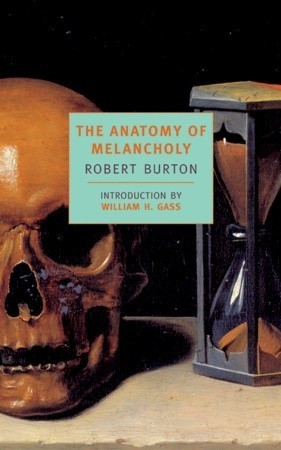
The Anatomy of Melancholy
Robert Burton, William H. Gass (Introduction)
One of the major documents of modern European civilization, Robert Burton’s astounding compendium, a survey of melancholy in all its myriad forms, has invited nothing but superlatives since its publication in the seventeenth century. Lewellyn Powys called it “the greatest work of prose of the greatest period of English prose-writing,” while the celebrated surgeon William Osler declared it the greatest of medical treatises. And Dr. Johnson, Boswell reports, said it was the only book that he rose early in the morning to read with pleasure. In this surprisingly compact and elegant new edition, Burton’s spectacular verbal labyrinth is sure to delight, instruct, and divert today’s readers as much as it has those of the past four centuries.
(Goodreads.com)