Assisi Institute Public Channel September 15, 2021
(Contributed by Ned Henry, H.W.)

18 SEPTEMBER 2021 > 3 OCTOBER 2021 (paris-arc-de-triomphe.fr)
See Christo and Jeanne-CLaude’s new temporary work : Arc de Triomphe Wrapped, Paris, 1961-2021

The Christo and Jeanne-Claude team has created the Arc de Triomphe, Wrapped, Paris, 1961-2021, as Christo wished this project to be continued after his death.
On view for 16 days from Saturday, September 18th to Sunday, October 3rd, 2021 Arc de Triomphe, Wrapped, Paris, 1961-2021 will use 25,000 square meters of recyclable polypropylene fabric in silvery blue, and 3,000 meters of red rope of the same fabric.
The Centre des monuments nationaux, the government institution that manages the Arc de Triomphe, is pleased about the realization of a project that demonstrates its commitment to contemporary creation and that honors one of the most emblematic monuments in Paris and in France. The monument and its terrace will remain open to the public throughout the project.
Access: to enter the Arc de triomphe and access the terrace with your ticket, please go to the side of the monument, the one located in front of the Kleber and Victor Hugo avenue.

The Arc de Triomphe, Wrapped will be self-financed by Christo through the sale of his preparatory studies, drawings, collages of the project as well as scale models, works from the 60s to 80s and original lithographs dedicated to other subjects. He will not benefit from any public or private funding.
In 1961, three years after they met in Paris, Christo and Jeanne-Claude began imagining and creating temporary works of art in public spaces. In 1962-63, Christo made a photomontage of the Arc de Triomphe wrapped, seen from the Avenue Foch, then, in 1988, a collage, before working again and developing the project from 2017. Almost 60 years later, the project will be concretized.
The project was submitted to the Centre des monuments nationaux by the Centre Pompidou and is supported by the Paris city council. In 2020, the Centre Pompidou presented the exhibition Christo and Jeanne-Claude. Paris!, which retraced Christo and Jeanne-Claude’s years in Paris from 1958 to 1964, as well as the story of The Pont Neuf Wrapped, Project for Paris, 1975-85.

Collage 2018 in two parts 12 x 30 1/2″ et 26 1/4 x 30 1/2″ (30.5 x 77.5 cm et 66.7 x 77.5 cm) Pencil, charcoal, wax crayon, fabric, twine, enamel paint, photograph by Wolfgang Volz, hand-drawn map and tape Photo: André Grossmann © 2018 Christo
Practical information
The monument will remain open for visitors during the project.
Dates : September 18th – October 3rd 2021
Schedule : 10 am – 11 pm
The Eternal Flame, in front of the Tomb of the Unknown Soldier at the Arc de Triomphe, will continue to burn throughout the preparation and display of the artwork. As always, veterans associations and volunteers committed to the values of the French Republic will ensure the continuity of remembrance. The daily ceremony of rekindling the Flame and the homages to the Unknown Soldier will continue with solemnity.
July 15 – September 17 : assembly operations
September 18 – October 3 : presentation of the artwork
October 4 – November 10 : disassembly operations
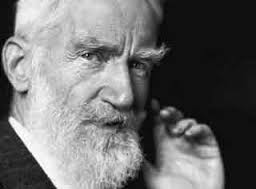
“Love is a gross exaggeration of the difference between one person and everybody else.”
George Bernard Shaw, known at his insistence simply as Bernard Shaw (July 26, 1856 – November 2, 1950), was an Irish playwright, critic, polemicist and political activist. His influence on Western theatre, culture and politics extended from the 1880s to his death and beyond. Wikipedia

While the West belonged to a European geography, its name meant something. Now it is a vague invocation, laden with fearThe Jaipur A and B teams, who competed in the Prince of Wales Cup tournament in Delhi, India, 27 February 1939. Photo by Fox Photos/GettyFaisal Devji
is professor of Indian history and fellow of St Antony’s College at the University of Oxford, where he is also the director of the Asian Studies Centre. His latest book is Muslim Zion: Pakistan as a Political Idea (2013).
Edited bySam Haselby
20 September 2021 (aeon.co)
Support our workDONATE
When asked what he thought of Western civilisation, Gandhi apparently responded that he thought it would be a good idea. While this celebrated statement is taken to be an ironic dismissal, Gandhi had in fact given the matter of Western civilisation much thought. In his manifesto of 1909 called Hind Swaraj or ‘Indian Home Rule’, the future Mahatma had described imperial Britain’s desire to spread Western civilisation not as hypocritical so much as suicidal. For he thought that this civilisation was threatened by the very effort to replicate it using the means of industrial capitalism, in much the same way as European commodities were mass-produced for colonial markets. ‘It is a civilisation only in name. Under it the nations of Europe are becoming degraded and ruined day by day,’ he said. ‘Civilisation seeks to increase bodily comforts, and it fails miserably even in doing so.’
What Gandhi called the modern civilisation of industrial capitalism sought to multiply the manufacture, desire for and consumption of its commodities the world over:
They wish to convert the whole world into a vast market for their goods. That they cannot do so is true, but the blame will not be theirs. They will leave no stone unturned to reach the goal.
The purely mechanical expansion of this process, Gandhi argued, would destroy Western civilisation in the very effort to spread it. Why? Because capitalism belonged to no particular people or history, and could be owned by anyone. Modern civilisation, in other words, was a kind of parasite that would grow strong and spread via its European host. Europe would enable it to globalise and attack other parts of the world. Its driving logic was not European domination: that was just a means to an end.
Other Asian and African thinkers upheld the distinction between Europe’s particularity and the universal history of modernity. They claimed modern industrial capitalism as a human inheritance for which the West was merely a midwife. This allowed them to adopt it without any sense of civilisational risk or inferiority, and in Gandhi’s day such men often pointed to Japan as an example of the fit between an Asian culture and modern civilisation understood in a technical way. After Japan’s defeat in the Second World War, modernisation theory, now delinked from European civilisation, continued to promote capitalist development. More recently, the ferociously anti-Western Ayman al-Zawahiri, who led al-Qaeda after Osama bin Laden, made the same point in 2008 when justifying his use of modern technology.
The Mahatma, however, considered the apparent universality of modern civilisation to be its most dangerous form. He wrote that ‘there is no end to the victims destroyed in the fire of civilisation. Its deadly effect is that people come under its scorching flames believing it to be all good.’ Gandhi saw Japan as being in thrall to the very forces of violence he thought were undermining Western civilisation, claiming that it might as well be the British flag flying over Tokyo. His compatriot and contemporary, the philosopher and poet Muhammad Iqbal, sought to rescue the European ideals both men often associated with Christianity from the destructive grip of capitalism. For Iqbal, these included Christendom itself as an arena for the universal ethics of Jesus.
Gandhi suggested that colonised countries should not achieve their freedom copying or adopting the technological prowess and institutions of the West. Instead, they should repudiate the path of the United States and Japan in favour of the true idealism of a nonviolent struggle. If they did so, the freedom of the colonised world might even redeem the West by returning it, through the force of Asian and African example, to a better way of life. Therefore, rather than following the European or American example, as in modernisation theory, the nonviolent struggles of colonised peoples should inspire the West to recall its own lost ideals. In other words, the Mahatma was not arguing for the superiority of Asian as opposed to European civilisation, but thought that the former could liberate the latter into its own truth. Indeed, apart from the Japanese who imitated Europe’s modernity, the West has never faced any foe identifying itself as belonging to the East.
The problem with modern civilisation and its vision of universality was that it inevitably escaped the West’s own grasp, as the expansion of Japan’s economy and empire demonstrated in Gandhi’s own day. Europe’s imperial powers understood the risk posed by the universality of their claims, since they routinely denied their colonial subjects had achieved modernity by arguing that they were not yet ready for self-government by reason of their poverty and illiteracy as much as customs and mutual antipathies. This was the argument the British used to deny India self-government even within the empire from the end of the First World War until the close of the Second, when the decision was taken out of their hands. The colony, for Europe, thus became a school of civilisation to which non-Europeans must be enrolled in perpetuity.
Anti-imperialists recognised the hypocrisy of this reasoning but often sought independence only so as to complete the destruction of native society. Jawaharlal Nehru, for instance, who went on to become India’s first prime minister after independence, argued that Britain was incapable of modernising India because it was too reliant upon the support of Indian aristocrats and other conservatives who had no interest in it. Only a democratic government, he claimed, would have both the determination and legitimacy to extend education, reduce poverty, abolish noxious customs and bring internecine conflicts to an end. In this way, he and other newly independent leaders proved Gandhi’s point about how anyone in the world could, in principle, fulfil modern civilisation’s universal promise.
If European imperialism represented the first effort to spread Western civilisation abroad, preceded though it sometimes was by Christian missionary activity, it also signalled the first crisis of the West as an idea. Imperialism made the West into a mobile figure for the first time, by expanding its geography well beyond Europe to include settler colonies in the Americas and Australasia.
The ‘ship of state’ was not merely a machine but mobile and replicable
Describing the way in which the British Empire became de-territorialised in its expansion, the German jurist Carl Schmitt quoted the Victorian prime minister Benjamin Disraeli’s recommendation in one of his novels that the Queen move to India should Britain be threatened. For, in doing so, she would only follow the precedent of the Portuguese crown, which moved to Brazil during the Napoleonic Wars. Schmitt saw such mobility as being made possible by the industrial technology that Gandhi had recognised as lying at the basis of modern civilisation.
In his book Land and Sea (1942), Schmitt reflected on the way in which the ship, as the most important technology of Britain’s maritime empire, represented modern civilisation in miniature. The ship, he pointed out, subordinated all its crew’s relations and activities to technical or instrumental ones. It could tolerate no principle but pure functionality, with all other ideals reduced to lower forms. The imperialist expansion of the West, therefore, entailed the diminution of its own historical and spiritual ideals in as suicidal a way. Like Gandhi, Schmitt had understood that the aptly named ‘ship of state’ was not merely a machine in which individuals were reduced to cogs, but that it was mobile and replicable, and so could never be the inalienable property of any one people or history. In this sense, the strength of national identity in such states represented nothing more than a desperate attempt to possess the country as a distinctive piece of collective property. But, like all capitalist property, its alienation was always possible in an economy defined by the universality of exchange.
As long as the West belonged to a European geography, its name possessed some meaning. But with its globalisation in empire, terms such as the ‘East’ and the ‘West’ had to be reinvented. Schmitt saw the implications of the West’s globalisation in his book The Nomos of the Earth (1950). European empires brought settler colonies in different parts of the world into the fold of the West, but it was the US that made the West into a properly political category. Empires like Britain’s, which were scattered across the world, had no geographical integrity, and so could not be politically divided into Eastern and Western domains.
Instead, with the Monroe Doctrine of 1823, an American president split the globe in half to place one hemisphere under his country’s undisputed sway. Called the Western Hemisphere, this domain had the Americas at its centre and excluded Europe along with its Asian and African empires as part of the Eastern Hemisphere. For the first time, Europe was displaced from the West and separated from its former American colonies, in whose affairs it was no longer permitted to interfere.
First enunciated in President James Monroe’s 7th annual message to Congress on 2 December 1823, the doctrine distinguished a despotic and monarchical Europe forever engaged in internecine and colonial wars. The new home of freedom was in the Americas. Monroe claimed that ‘the American continents, by the free and independent condition which they have assumed and maintain, are henceforth not to be considered as subjects for future colonisation by any European powers.’ He described Europe in much the same way as its imperial powers did their Asian and African colonies, albeit with the promise not to interfere in their internal affairs. The US also took on an imperial role in South and Central America.
The rise of the US led directly to the West’s crisis, to its doubling and displacement both as a geographical location and a political or civilisational category. This crisis has since been integral to the idea of the West. It is always in crisis and flux, and often in motion.
The end of the Second World War and the decolonisation in Asia and Africa required changing the meaning and location of the West again. It now included both ends of the Northern Atlantic Ocean, to exclude the Soviet Union and its Asian allies as part of the East in a new, Cold War division of the globe into rival hemispheres. And so the West was now NATO-claimed sovereignty, while the East was the Warsaw Pact.
Politics would reappear in battles defined by culture and civilisation that were not controlled by states
Francis Fukuyama’s book The End of History and the Last Man (1992) signalled the latest crisis of the West with the end of the Cold War. The West had emerged victorious against communism. The grand conflict, and therefore the ideological as well as the civilisational narratives of historical rivalry, had come to an end. Henceforth, all politics would become a kind of internal mopping-up operation within a liberal world order no longer divided into East and West and so made safe for capitalism. Politics was to be subordinated to economics, and the global triumph of neoliberalism represented this vision of the world made safe for the market and its mechanisms. Eastern Europe’s colour revolutions notably made no calls for equality. It was as if Gandhi’s vision of the parasite taking over its host had been fulfilled.
There was something paradoxically Soviet about Fukuyama’s argument, which seemed to mimic Vladimir Lenin’s idea about the victory of communism leading to the replacement of politics by what, citing Friedrich Engels, he called the administration of things. This notion was part of Lenin’s theory about history ending with the withering away of the state as an instrument of capital to be replaced by popular self-governance. However, Fukuyama’s move from political history to neoliberal governance simply foregrounded the problem posed by the newly internal, rather than traditionally external, enemies of a new world order no longer divided into East and West.
In his bestseller The Clash of Civilizations and the Remaking of World Order (1996), Samuel Huntington argued against Fukuyama that this enmity, and so politics or history, was unlikely to vanish into the problems of governance. Rather, politics would reappear in battles defined by culture and civilisation that were not controlled by states. In this new iteration, the West, newly reattached to its religious roots in Judaism and Christianity, was engaged in a civilisational struggle with forces such as Islam, Buddhism and Hinduism. Here, states and even geographies would play a lesser role.
With the terrorist attacks on the US of 11 September 2001, Huntington’s focus on non-state actors and religion took on urgent meaning. The French historian Michel Foucault had written extensively about the devolution of power from the sovereign and top-down politics to everyday institutional procedures of discipline and regulation that normalise children, students, soldiers, prisoners or patients into good citizens. He showed how, in this genealogy, the enemies of society were not foreign countries but internal foes such as sexual deviants, criminals and, of course, religious fanatics and terrorists.
In our own day, it is terrorism and Islam that play the role of such an enemy, one that is threatening because, like the race or class enemy of old, it is both internal and external to Western societies. Attempts are made to deny the interconnections between the West and its new enemy by externalising the latter through wars in Afghanistan or Iraq, restrictions on immigration, the surveillance of mosques and the criminalisation of practices such as veiling or ritual slaughter. Yet Islam is internal to Western societies not through immigration or conversion but because the varied trajectories of non-state militancy disallow us from defining it geographically as belonging to the non-West. The terrorist’s familiarity with jihad in Syria can coexist with his ignorance of that country and its language, while being quite at home in Europe. There is no foreign power to which he can betray the West in which he belongs. Having been smashed with the closing of the Cold War, it is no longer possible to put the Humpty Dumpty of bipolar conflict between East and West back together again.
If Islam has appeared as a new kind of civilisational foe in the 21st century, that is also because it can no longer play the role of a geopolitical rival. Dispersed among groups and individuals all over the world, it takes as its target not countries, but a global arena defined by flows of finance, commodities and migration. This post-Cold War world can be understood as a marketplace that has turned politics into a set of competing efforts by states and other actors to regulate or deregulate it. The goods subjected to such competition range from natural resources such as oil and fish, manufactures such as weaponry and nuclear technology, and individual rights such as that to life, privacy, free speech and the liberty of movement.
Like their enemies if also against them, Muslim militants want to regulate some of these goods and deregulate others for a global marketplace. But rather than defining their activities in the economic terminology of self-interest, they seem willing to sacrifice both their bodies and societies in death and destruction to achieve their ends. Islamic terrorism poses no existential threat to any state; rather, what makes it important is its promise of civil strife as an internal threat. Even the ‘Islamic state’ founded by ISIS in Iraq did not serve to define its war geographically since militants continued to attack targets in different and disconnected parts of the world. Its militancy crucially includes the apparently nihilistic repudiation of self-interest as the economic rationality that governs human behaviour.
From Turkey and Russia to India and China, the war on terror is no longer a Western project
The sacrificial form taken by Islamic militancy has led not just to attempts at opposing it but also to surprising imitations of its ethic. Among these is the return of the West as a civilisational category now set explicitly against Islam. But rather than representing the universalisation and technical rationality of modern civilisation that Gandhi had criticised, the West, as Huntington had argued, has returned in a specifically cultural and even theological incarnation. Pioneered in the war on terror, this can now be seen in the populist or ultranationalist repudiation of a universal, ‘rules-based global order’ with its freedoms of movement and standardisation. Growing in strength all over Europe and the US, this view constitutes nothing less than a refusal of the West itself in its neoliberal incarnation as a free market for goods and labour.
Brexit illustrated this form of sacrifice or repudiation. Its votaries are willing to accept economic and other losses to regain what they see as their sovereignty from the European Union as if imitating the struggles of their own former colonies. While not explicitly rejecting the principle of self-interest, they have stepped away from a vision of the post-Cold War world as a neoliberal marketplace of goods and ideas in which it can flourish. This sudden if disavowed identification with colonial subjects from Britain’s own past has been repeated all over Western Europe, where Right-wing parties and governments claim to be fighting for their sovereignty and culture against the EU as much as the colonising potential of immigration, Islam and other forms of globalisation. Does this strange historical reversal represent a perverse fulfilment of Gandhi’s prediction that the civilisation of modern capitalism would be decoupled from the West?
Like the modern civilisation Gandhi had criticised, the West’s effort to achieve global hegemony in the war on terror has been overtaken by the universalisation of its procedures, which have legitimised authoritarian states all over the world. From Turkey and Russia to India and China, the war on terror is no longer a Western project but has been deployed to join market-friendly economics with political repression. And so, the last project to reconfigure the West has also escaped its reach. Concomitantly, we have seen a tearing apart of the West’s institutional forms, whether in Donald Trump’s departure from alliances and agreements, or with Brexit and the reimposition of border controls in parts of the EU. These fraying bonds, however, have been complemented by a veritable rediscovery of the West as a civilisational entity, as if by way of compensation. Or are we indeed seeing a return of the West as a spiritual, rather than political or economic, phenomenon?
Political philosophyNations and empiresPolitics and government
TED Visit http://TED.com to get our entire library of TED Talks, transcripts, translations, personalized talk recommendations and more. Right now, billions of neurons in your brain are working together to generate a conscious experience — and not just any conscious experience, your experience of the world around you and of yourself within it. How does this happen? According to neuroscientist Anil Seth, we’re all hallucinating all the time; when we agree about our hallucinations, we call it “reality.” Join Seth for a delightfully disorienting talk that may leave you questioning the very nature of your existence. The TED Talks channel features the best talks and performances from the TED Conference, where the world’s leading thinkers and doers give the talk of their lives in 18 minutes (or less). Look for talks on Technology, Entertainment and Design — plus science, business, global issues, the arts and more. You’re welcome to link to or embed these videos, forward them to others and share these ideas with people you know. Follow TED on Twitter: http://twitter.com/TEDTalks Like TED on Facebook: http://facebook.com/TED Subscribe to our channel: http://youtube.com/TED TED’s videos may be used for non-commercial purposes under a Creative Commons License, Attribution–Non Commercial–No Derivatives (or the CC BY – NC – ND 4.0 International) and in accordance with our TED Talks Usage Policy (https://www.ted.com/about/our-organiz…). For more information on using TED for commercial purposes (e.g. employee learning, in a film or online course), please submit a Media Request at https://media-requests.ted.com
(Courtesy of Suzanne Deakins, H.W., M.)

“Some day you will be old enough to start reading fairy tales again.”
― C.S. Lewis
Clive Staples Lewis (November 29, 1898 – November 22, 1963) was a British writer and lay theologian. He held academic positions in English literature at both Oxford University and Cambridge University. Wikipedia
(Quote courtesy of Gwyllm Llwydd)
The Lord of Wealth talks not only about material wealth and its appropriate use, but about the inner wealth and resources that we all have. This is a card that teaches us that the harvest we gather in our lives is the end result of all that we have put into living – and more importantly, how we have used the riches at our disposal.
We make our own realities with every thought, every deed, every wish. And when we direct our energies positively we shall arrive – as a perfectly natural consequence – at the Ten of Disks. Of course, if we direct our energies negatively we’ll find ourselves with the Ten of Wands, or the Ten of Swords – neither of which are happy cards!
There is a warning connected to this card though. When we have created sufficient wealth to make ourselves comfortable and contented, if we have a surplus, then we must make that surplus work. We cannot expect energy to flow freely in our lives if we hoard it, and try to hang on to it. This is as pointless as trying to save up the breeze so that it will blow on a stuffy day! There are some things in life you cannot clutch tight in the hand without crushing their value out of them.
If this card comes up in an everyday reading, it re-assures that financial and material matters are proceeding well, and that there is no cause for concern.
If it comes up in a more spiritually based reading, then we need to be applying the underlying principles to our lives – so in this case, we need to be letting our inner wealth show, in order to manifest that into our lives.
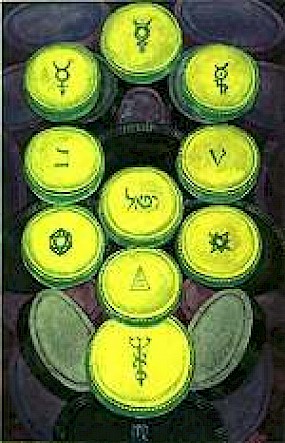
(via angelpaths.com and Alan Blackman)
Big Think 6 ways to heal trauma without medication, from the author of “The Body Keeps the Score,” Bessel van der Kolk Subscribe to Big Think on YouTube ►► https://www.youtube.com/channel/UCvQE… Up next ►► How to heal trauma with meaning: A case study in emotional evolution | BJ Miller https://youtu.be/hQAqBkKJRbs Conventional psychiatric practices tell us that if we feel bad, take this drug and it will go away. But after years of research with some of the top psychiatric practitioners in the world, we’ve found that drugs simply don’t work that well for many, and our conventional ways of healing trauma need to change. In recent years, experts in the study of trauma have been experimenting with ‘new age’ healing mechanisms that are making massive waves for trauma patients. Some of these new healing methods include EDMR, yoga, theater and movement, neural feedback, and even psychedelics. Many of these methods have proven to be more effective than conventional pharmaceuticals. But just like any other health regimen, what works for you might not work for your friend or neighbor. New age trauma therapy is all an experiment, and after enough experimenting, something can eventually work, healing your trauma in a unique and effective way. Read the video transcript: https://bigthink.com/mind-brain/heali… ———————————————————————————- About Bessel van der Kolk: Bessel van der Kolk is a psychiatrist noted for his research in the area of post-traumatic stress since the 1970s. His work focuses on the interaction of attachment, neurobiology, and developmental aspects of trauma’s effects on people. His major publication, Traumatic Stress: The Effects of Overwhelming Experience on Mind, Body, and Society, talks about how the role of trauma in psychiatric illness has changed over the past 20 years. Dr. van der Kolk is past President of the International Society for Traumatic Stress Studies, Professor of Psychiatry at Boston University Medical School, and Medical Director of the Trauma Center at JRI in Brookline, Massachusetts. He has taught at universities and hospitals across the United States and around the world, including Europe, Africa, Russia, Australia, Israel, and China. Check out Bessel van der Kolk’s latest book, “The Body Keeps the Score: Brain, Mind, and Body in the Healing of Trauma” at https://www.amazon.com/Body-Keeps-Sco… ———————————————————————————- Read more of our stories on healing trauma: How to Heal From Trauma ►► https://bigthink.com/personal-growth/… How Childhood Trauma Can Make You A Sick Adult ►► https://bigthink.com/videos/vincent-f… How to heal trauma with meaning: A case study in emotional evolution ►► https://bigthink.com/neuropsych/bj-mi… ———————————————————————————- About Big Think | Smarter Faster™ ► Big Think The leading source of expert-driven, educational content. With thousands of videos, featuring experts ranging from Bill Clinton to Bill Nye, Big Think helps you get smarter, faster by exploring the big ideas and core skills that define knowledge in the 21st century. ► Big Think Edge Learn career skills from the world’s top minds: https://bigth.ink/Edge ———————————————————————————- Want more Big Think? ► Daily editorial features: https://bigthink.com/popular/ ► Get the best of Big Think right to your inbox: https://bigthink.com/st/newsletter ► Facebook: https://bigth.ink/facebook ► Instagram: https://bigth.ink/Instagram ► Twitter: https://bigth.ink/twitter
PBS NewsHour Stream your PBS favorites with the PBS app: https://to.pbs.org/2Jb8twG Find more from PBS NewsHour at https://www.pbs.org/newshour Subscribe to our YouTube channel: https://bit.ly/2HfsCD6 Follow us: Facebook: http://www.pbs.org/newshour Twitter: http://www.twitter.com/newshour Instagram: http://www.instagram.com/newshour Subscribe: PBS NewsHour podcasts: https://www.pbs.org/newshour/podcasts Newsletters: https://www.pbs.org/newshour/subscribe