What insights might you gain by listening to interviews with interesting people? Sunday, August 29, 2021, I will be having a conversation with Dr. Mara Pennell, and myself (your host ) Calvin Harris H.W., M.
This conversation will include some fun highlights of Mara’s life journey touching on career’s choices; Tidbits about Education, Calling, Purpose, Goals, and a journey path from and to the Prosperos.
The event is free, one hour beginning at 11:00 a.m. Pacific time- Sunday, August 29, 2021
follow the link below and I will see you there.
A Prosperos SundayMeeting
Zoom Presentation
For this free, one-hour event beginning at 11: 00 a.m. Pacific time- Sunday, August 29, 2021, on Zoom.
All of a sudden there was a crow. It was squawking loud, rough, painful “caw, caw, caw” sounds, vibrations that grated against something inside me. The angular shape of the bird was clear to my inner-eye, with its oily, black feathers hanging off its slightly-raised wings, wings raised repetitively by the pumping of its chest. That’s all there was, just this crow, and somewhere in the distance was Duncan’s body and the guttural cries that were emitting from the mouth of that body. It was as if I was somehow making these cries, but also as if they had a deep meaning that I could not understand. Somehow I had become the crow and the crow was saying what so badly needed to be said.
Then the birth began: the pushing through into the light; the hopeful escape from safe confines of the womb, an escape into space, a place where I could spread my wings, a stage filled with potential. It was not only a human birth; it felt like the birth of a cosmos; perhaps it was an archetypal birth.
But I would never be one with my mother again. I would never feel her heart so close to mine. My birth could not be felt as anything but rejection, because it literally was, even though it was for my own good. In some way or another, I imagine that all births are traumatic, that all births represent loss.
I’m trying to conjure up a story about why the ugly birdsong transitioned into the wailing of a newborn child, how that process led to my own birth. I know that I was overcome with grief, inconsolable grief: grief that could not be comforted, ever, by anyone, not even by my mother.
The final acknowledgement, after forty-six years, of the presence of this primordial pain threw my body into a shaking fit of tears, wringing moisture from my core like a dirty dishrag. Somewhere in the distance, I felt Cindy’s hands on my feet, squeezing my toes, letting me know that she was there.
My mother loved me, and she still loves me; and I love my mother. Hi Mum. I know you did your best. I know you tried to be the best mother you could. I know your heart was in the right place. But there were also so many ways that you and Dad simply couldn’t give me what I needed. Maybe it’s like this for all kids; I don’t want to single you out, to point a finger at you, to make it all your fault. It’s not your fault; it’s nobody’s fault. It’s just how it is, how it was.
I was born into a world where, right around the time of my birth, my mother’s mother died; so my mother was grieving. My parents then divorced not many years after my birth. I have to assume that they were also not particularly happily married when I was born. Then my dad died. And, for years, my mum was preoccupied with one crisis after another, including dealing with seemingly endless abuse that was presumably painfully reminiscent of her own childhood. Her alcoholic abuser had, almost magically, the same unusual first name as her alcoholic and abusive father.
Her life-menu included being nearly strangled to death while her children listened in fear and being told her house would be burned to the ground (via molotov cocktail) with her and her children inside. The police reassured her that this was a domestic matter, and that they could therefore not intervene. Phew.
To truly recognize the plight of a little child born into all of that is almost impossible because it’s absolutely heart-breaking. So we look away, we minimize, we ignore. And then, on the sofa, next to Cindy, in the depths of a physician-prescribed ketamine hole, a boundless space in which my mind, freed from the input of the five senses, and swaddled in anxiolysis, was able to turn and look straight into the gaping chasm of that little child’s predicament.
The child himself cannot look; he must not acknowledge how it really is. To see that his parents cannot provide him with the safety and guidance that he so desperately needs is life-threatening, terrifying. “There has to be some other answer,” the little child seems to insist. “I don’t need safety and guidance, and, even if I did, I should be able to provide them for myself.”
When I returned from that journey, my voice was deeper and more resonant, an apparent physiological shift that persists many months later. Something held in my throat had been released. The Book of Symbols, page 248, claims that “… the crow or raven daemon perched in our psyches open[s] doors, steal[s] treasures for us from hidden places, coax[es] us out of our narrow, conventional shells.” I also wrote a poem-like piece that lets The Crow speak for itself.
With the relinquishment of hope that those needs for safety and guidance would be met, retrospectively, in a past that can never be revisited, my attention naturally turned to all the ways that I am now safe and guided. I am surrounded by people who take amazing care of me, including my mother, as she is now. I can now lean on others with a little more conviction. I can stop endlessly wrestling with my solvable life issues as an emotional surrogate for the inherently unsolvable conundrum of the orphan archetype.
Just a few days ago, as Cindy lay on the bed with her AirPods in her ears and a mask over her eyes, I noticed her hand reaching out, under the covers, to my side of the bed. I moved from where I had been standing, at the foot of the bed—watching the flow of emotions pass over her face, like the ever-changing ripples on a mountain stream—to slip under the covers next to her, to hold her hand tight, to remind her that I was with her, always.
As I watched from her side, her body started to shake and her face curled up from the chin, contorting with all the tiny muscles we don’t often use. Her gut rhythmically pumped tears up and out from under the eye mask, which then ran down her cheeks in thin streams, as mountains of grief were unburdened in that space of unconditional love; this is just how it is, how it was.
“I have felt unloved for so much of my life,” she told whatever was witnessing, “that it hurts so much to let love in.” These last few words were spoken slowly, with a quiet determination to wade through the quagmire of shame, each intentional step squeezing more juice from the rich, soft bog.
Later, after removing the dripping-wet eye mask, she told me that, “I thought the metallic sensation I have often felt was just the ketamine,” but after this session, she had become aware that it was the visceral feeling of an imprint she had been carrying—like invisible clothing—an imprint in the body of being pushed around by patriarchal energies.
Since that session, Cindy has seemed noticeably lighter, more playful and loving. This morning, as I awoke, she sat next to me and stroked my head, welcoming me back into the world for another day.
When Cindy manages to get enough ketamine into her bloodstream, by using enough lozenges, by swishing the spiked saliva long enough and hard enough across the mucous membranes of her mouth, when she is able to drop into the boundless space that is presumably what recreational users refer to as a k-hole, it invariably leads to one of these transformative cathartic releases, releases catalyzed by vivid visual and emotional journeys through distant lands: to become a tree in a forest in Southeast Asia or to be wrapped in the loving embrace of a gathering of abuelas somewhere in South America.
In contrast, for me, even when the ketamine is delivered at a higher dose, intramuscularly by a psychiatrist, there seems to be a tendency for my mind to resist the abyss, like a leaf caught in the eddy of a storm drain. Sure, as I slip away from the shackles of the senses, the black enclosure of the eye mask is replaced by a boundless blackness of unfathomable immensity, and my body gently sheds tears into the fabric of the eye mask, but, for many sessions, no significant catharsis came. “Perhaps I’ve integrated most of my trauma,” I remember saying to Cindy, naively.
Even so, I experienced many of the kind of things that Cindy reported, such as finding that she was a puddle of water in the street and feeling what it’s like to reflect the sky. I know what she means: you actually become a cell, become the earth, become a galaxy. Without the constraints of a human body, the sense of self is undefined; a continually shifting sequence of perspectives naturally ensues.
“I’m a polar bear!” Cindy once exclaimed, with glee. Later, I learned that she had been climbing up a steep hill of ice, the cold wind blowing through her fur; she had been both the polar bear and a little wolf-girl inside the bear.
But for me, before the crow came, my sessions invariably led to an experience with a particular kind of flavor that I find hard to describe. My bodily sensations seemed to be replaced with an overwhelming visceral sensation. This sensation would map to a continually changing, tumbling sequence of what seemed like embodied conceptual considerations of polar opposites. What is it like to be both infinitely small and infinitely large at the same time? What is it like to be perforated so thoroughly with so many holes that you are only empty space?
This same fundamental experience shows up in countless different forms. Another one is to feel ultra-embodied, solid, heavy, like a rock, like a mountain, like all of space and time; immovable, unchanging. But all of space and time has no real solidity nor weight, since there is nothing to which it can be referenced. Another of these experiences is to be trapped inside a kind of infinitely recursive maze from which it is clear that there is no hope of ever exiting. There is no escape from freedom; there is no getting out of something that has no inside.
I’ve spent a lot of time trying to explain this sensation to my therapist, “I can kind of feel it now; it’s like all of reality is being held together by these infinitely large opposing forces. These overwhelming forces all cancel out and what’s left is this perfect equilibrium.” It’s like there’s this constant tension, this hum, that renders reality effectively frozen in perfect balance; nothing is really changing. It’s both utterly frenetic and totally placid at the same time. “Can you feel it?” I asked, truly believing, trusting, that she would be able to feel it too.
I think she may have responded, “Um, sort of,” in her perfectly supportive and validating way. Hi Connie.
A sculpture I created in 2008 in an attempt to convey this overwhelming visceral sensation of the tension between co-occurring opposites.
I have wondered if this is a traumatic imprint that my body is carrying from some experiences in meditation that happened in 2001, when I had what some people call satori, a sudden awakening to the fundamental nature of reality. I have written about this in various places, including My Struggle with Enlightenment. It’s the bliss-filled revelation, when the self-illusion stops, that what is always happening is actually boundless, contextless, non-separable wholeness; from the perspective of self, it seems like unconditional love.
After that, my personality changed significantly, my marriage fell apart, and my previous life disintegrated; ultimately, though, a better life is being built upon a more anti-fragile foundation. I have wondered, however, if this recurring visceral struggle is part of the process of trying to integrate those experiences. It feels like wrestling with what some people refer to as non-duality, this fundamental truth, this unitive axiom that which, while it can easily be revealed (being hidden in plain sight), cannot possibly be fully comprehended by the limited mind.
Having no doubt about the illusory nature of separation (of self) pretty much pulls the rug out from the whole apparent endeavor of the self. It can be very hard for the remnants of self that are left behind, like flotsam once the ship has already been torn apart by rocks; even though some bits and pieces still may float, there is no integral ship left.
Prior to my treatment with ketamine, this overwhelming visceral sensation would appear in deep meditation, when the senses had been disconnected and the self floated in a contextless space. For example, I would experience this terrifying sense of being frozen, solid like a rock and as massive as the whole cosmos. I have discovered that this sensation is more reliably and consistently accessible via ketamine.
But I have also wondered if all of this is just a cover for a traumatic imprint that I cannot consciously recall. Perhaps this is a way for me to spiritualize and try to bypass a deeply painful and confusing early experience of, say, sexual abuse. After all, one of the ways I have found myself describing this is as if I am being crushed from the inside, “like an erection:” an unbearable internal pressure that is created by the tension of pressing against its own limits. How Freudian.
In a more recent session, after experiencing my first full-body orgasm, I said, “Wow, I’m shiva!” Shiva, a lingam, a dick; talk about possible spiritual bypass. By the way, in case you haven’t experienced one, full-body (non-genital) orgasms are insanely good, “So that’s what many women are so excited about!” The power that comes from total surrender is magnificent.
In every session, this overwhelming visceral experience appears at some point. I have learned to be curious about it, to let it wash over and through me, to try to enjoy it given there’s no escaping from it anyway. It seems as though my ability to do this has grown progressively with each session.
Once the overwhelming sensation has been explored enough, the session naturally moves on to some other experience, such as the orgasm above, or being a sail on a boat, and then being the boat, enjoying the wind pushing me wherever it will. Increasingly, there is more of a sense that life is a kind of game that I have no real control over (there is no real “I”), but which can be taken lightly and enjoyed for what it is.
It was against this backdrop of incremental surrender that I entered the session in which the crow appeared. I had been struggling with an immense personal issue that required a ton of my time and focus, that was scaring me, and that I believed to be the source of a lot of anxiety. My intention going into the session was to understand why the fuck this was so difficult, so terrifying, so complex. Going in with this anger and frustration, this feeling of having had enough, of wanting to get to the bottom of it inside myself, is what seems to have led me through the usual wrestling match with the non-duality-like-conundrum and then down to the crow, which led to the rebirth experience.
I wonder if the whole visceral struggle to integrate extreme opposites was merely a manifestation of my bracing against the tumble into the potentially deeper realization of the little child’s predicament. Perhaps this was a way of orbiting the psychological complex without falling completely into its gravity well. Perhaps this was, or still is, a kind of pompous surrogate that my psyche can get its metaphysical teeth into, simply a defense mechanism. “I’m sorry, I’m too busy wrestling with unifying the cosmos to deal with your childish problem of not having safety and guidance.”
Nevertheless, this apparent imprint has continued to appear in its ever evolving forms, in subsequent sessions. Most recently, there was a recognition of its striking familiarity, as if it is truly ancient, something that has been impinging on, or in some way included in, my awareness for an eternity.
I’ll include here a quick side-note on ketamine-assisted psychotherapy. Ketamine is a dissociative anesthetic with psychedelic (mind-manifesting) effects at sub-anesthetic doses. It is one of the safest and most important medicines in our modern armamentarium, considered by the World Health Organization, since 1985, to be an essential medicine. While it is used by veterinarians, it is not just a “horse tranquilizer.” It is one of the safest human analgesics and anesthetics available and is used in developing countries and in battle zones where there is a lack of equipment, electricity, or expertise needed to supervise other forms of anesthesia.
More recently, it has been found to be a highly effective and rapidly-acting treatment for depression. Several different potential mechanisms of this action have been proposed, with some believing that the psychedelic effects are significant. I recommend reading The Ketamine Papers, a collection of papers on the psychotherapeutic and transformational utilization of this substance.
But this story was not even supposed to be specifically about ketamine. What prompted me to write today was a reader’s comment about my Return From a Ten-Year Vacation in which I not only wrote about crying but also reported that I was crying while I wrote. He gave me permission to publicly share the following information, which was originally part of a non-public conversation:
“I was trying to relate to your experience of crying. I never cry for any reason, but this year I did — uncontrollably. I was climbing to the summit of Kilimanjaro and at 5700m, after climbing all night in snow and wind and cold, tears just started coming out. I still don’t know if it was due to the physical or emotional intensity of the situation or some other reason.”
This sounds to me like the same kind of cathartic crying that I wrote about in Return From a Ten-Year Vacation, about which I have written above (in the context of ketamine-assisted therapy), and about which I will write more below.
I was in a meeting at work, planning for a challenging, in-person meeting with Microsoft. I was trying to focus on what we needed to do, but my body started crying uncontrollably. I didn’t really know why it was crying and I didn’t know how to stop it from crying. With tears running down my cheeks, I left the room.
At that time, I was six months into an 18 month divorce process that was extremely distressing, an apparent fallout from the awakening, which I mentioned earlier. With respect to the divorce, I hadn’t broken down and cried for some time. I wonder if being in a different environment, and dealing with novel stressors, led to that release.
I decided to take some time off work and went for a tour around Northern California, which included spending a week in a non-structured solitary meditation retreat and a few days at the beautiful Fairmont Sonoma hotel. But those experiences didn’t move my internal process forward in a significant way; they brought no catharsis nor realizations.
Before the divorce started, but after the awakening, when my wife-at-the-time refused to return with my young son from a vacation in the UK, the country from which we had emigrated, I jumped deeply into psychotherapy. I remember sitting in my therapist’s office in Santa Cruz, California when I felt the sensation of a massive bubble of energy break loose from the base of my spine. It travelled quickly up through my body, like a mushrooming, shiny balloon of air rising from the depths. It left through the crown of my head, the place where the awakening had happened more than a year earlier.
I don’t know what the energy was, nor what it represented, and I don’t remember the utterance that either of us may have produced to trigger that release. I do know that I found myself after the session spending a long time simply looking at a rose outside the therapist’s office with tears coming out of my eyes. I had, and still have, no real idea of what those tears were about; grief, I suppose.
On the drive home, I felt inspired to stop next to a grove of redwood trees. Once out of the car, I collapsed onto my knees while looking up into their canopies, before falling forward into a kind automatic prostration; I sobbed for a long time, delivering tears to their roots.
That reminds me of a later time in nature, after I started a psychology graduate school. I went with some friends to Yosemite National Park. Soon after we arrived, we went for a short walk amongst the redwoods. I left the group to be on my own and found myself, again, on the ground at the foot of a tree, in a fetal position, crying.
Again, I had no idea what this cathartic release was about. But, as always, I felt relief afterwards and an increased sense of freedom, and I seemed to exhibit a greater degree of behavioral flexibility. It’s as if the emotional blockages that were released had been binding my neuroses and limiting beliefs to me.
Recently, I’ve been listening to a podcast called Anything Goes, where James English interviews a motley crew of British folks from troubled backgrounds. A general theme seems to be of people finding their way out of very difficult circumstances. I find these stories fascinating, heartwarming, and inspiring. It’s great to hear about people beating the odds, and it restores my faith in humanity to see the softness and innocence at the core hardened criminals.
In episode 194, James talks with Shane Taylor, known as Britain’s most violent prisoner. Shane reveals how a life of being bullied led to him developing fantasies of killing people. Following that was a long period of gaining great pleasure from the physical act of stabbing people to death. If anyone wronged him, he made a commitment to himself to hunt them down and kill them, to exact revenge through his personal form of justice. He once almost fatally stabbed a prison officer in the head for gloating over the punishments he had been given.
His life turned around when he ended up in a one-on-one prayer session with a priest in prison. The priest instructed him to pray from his heart. So he begged, “God if you’re real, do something. Please come into my life.” Note that this was an act of surrender. Then he stopped praying and sat back. As he then began talking again, he noticed a feeling of energy in his stomach that started to rise and shoot up through his body. Then he “uncontrollably sobbed and sobbed and sobbed and sobbed.” He realized, “the hurt I’d done, the bad I’d done.”
“Right up to that very moment, I was still active … still planning to kill people when I got out … and then, when that experience happened, I just became a totally different person. … From that moment on my life totally changed. I was no longer seeing the prison system as an enemy. I was starting to think logically. … It’s almost like someone had just gone in there and just got a couple of [those] wires [that] were loose and just connected them back up.”
He completely stopped killing and he reformed so thoroughly that he ended up getting a job in the same prison where he had almost killed that prison officer.
I have so many stories of transformational sobbing, but I’ll finish up for now, briefly, with just two more.
The first story is from my first ten-day Vipassana retreat. After the first three days of meticulously paying attention to the sensations at the opening of my nostrils, for more than ten hours per day, I was directed to move that finely-tuned focus, that mental scalpel, to the sensations throughout my body.
As I sat in that large, quiet, dimly-lit meditation hall, I became suddenly aware of the immense discomfort that I had been unconsciously carrying for most of my life. I started to shake and quietly sob, trying not to disturb the others. I was unable to prevent the release of shaky whimper. By the way, I think that this recognition of the depth and breadth of unconscious suffering is what Gautama Buddha may have truly been referring to when he putatively said that “life is suffering.”
I have now attended four of these ten-day retreats, and I believe that they have significantly contributed to my ability to live a fulfilling life.
The second story is from a friend, actually a composite of several people, who attended a transformational retreat in the Netherlands, where she ingested a therapeutic dose of psilocybin-containing truffles (psilocybin, in that form, is currently legal in the Netherlands).
She told me that as the medicine began to work its magic, her sense of self and the context of her life began to fall away, replaced by boundless freedom. At the same time, her body began to naturally weep from the eyes, as if an animal had been released from a cage and was testing the safety of its surroundings. Before long, the weeping cascaded into literally hours of uncontrollable sobbing.
After that ceremony, the severe depression that she had been burdened with for as far back as she could remember had completely left. I last spoke with her six months after that retreat; the depression was still completely gone; she felt deeply joyful and engaged with life.
Her experience is well aligned with new discoveries in the rapidly-growing field of research into the psychotherapeutic benefits of psilocybin (a psychedelic), such as this recent study, published in the New England Journal of Medicine, which showed that two separate doses of psilocybin three weeks apart produced an antidepressant effect at least as effective as daily treatment with the selective serotonin re-uptake inhibitor (SSRI) escitalopram. This study follows on from an earlier one, published in 2017 in Psychopharmacology, which demonstrated that a similar two-dose treatment regimen led to persistent remission of depressive symptoms six months later. Note that this is remission without ongoing treatment with a psychoactive medication, medications which are often intended to modify long-term brain chemistry and which also often produce numerous undesirable side-effects. Psilocybin’s efficacy in reducing depression and anxiety may be due to its ability, like ketamine, to occasion mystical-like experiences, as this paper explores.
Look at me: writing like I have a doctoral degree in the middle of a personal essay.
What do all these vignettes add up to? What’s the common factor here?
It seems that the sense of self in the body tries to control what’s happening, trying to make sense of everything, trying fit what’s happening into a larger narrative, a context about itself. That holding on, that bracing, that attempt to overcome reality, is what gets in the way of the body naturally doing what it needs to do. When that sense of self briefly relents, for one reason or another, the body is finally able to non-rationally release; it can cry; it can grieve; it can collapse and sob and shake.
As experts in the treatment of PTSD, such as Peter A. Levine (the creator of Somatic Experiencing), attest, there is a natural, physiological process of release after stressful situations that the more primitive parts of our brain will engage in automatically and effortlessly when, presumably, the newer prefrontal cortex, with its default mode network, temporarily goes offline. The default mode network is a coordinated group of brain regions that is currently thought by neuroscientists to maintain a sense of self and its relative context, both relationally and through time. The classic example from the observations of wild animals is the gazelle, which will lie down and quiver uncontrollably after escaping from a lion. Shortly afterwards, the gazelle will jump up and behave like normal, as if nothing had happened.
My thesis is that circumstances that confuse, overload, or simply attenuate your default mode network, and its emergent property of self, create space for the “soft animal of your body,” as Mary Oliver calls it in her poem Wild Geese, to perform its ancient and natural processes of recalibration. Those circumstances may include extreme stress (such as while climbing a mountain), meditation, ingestion of psychedelics, ceremonial surrender, immersion in a natural environment, and being challenged in psychotherapy.
I am aware of many other approaches to creating this space for cathartic release and healing, such as The Hoffman Process, Holotropic Breathwork, the Wim Hof Method, and various forms of creative expression, including, of course, writing (hello, sweet Reader). I’ll leave a deeper exploration of these for another time. For now, I’d like to hear from you. How do you get out of the way of your body’s grieving process?
An engineer-psychologist focused on machine intelligence. I write from my own experience to support others in living more fulfilling lives | duncanriach.com
IN THE DEEP SEA, it is always night and it is always snowing. A shower of so-called marine snow — made up of pale flecks of dead flesh, plants, sand, soot, dust and excreta — sifts down from the world above. When it strikes the seafloor, or when it is disturbed, it will sometimes light up, a phenomenon known, wonderfully, as “snow shine.”
–Michael Kelly, H.W.
Credit…Chloe Niclas
NONFICTION
The Wonders That Live at the Very Bottom of the Sea
Credit…Chloe Niclas
Two new books, Edith Widder’s “Below the Edge of Darkness” and Helen Scales’s “The Brilliant Abyss,” explore the darkest reaches and all that glows there.
By Robert Moor
In the deep sea, it is always night and it is always snowing. A shower of so-called marine snow — made up of pale flecks of dead flesh, plants, sand, soot, dust and excreta — sifts down from the world above. When it strikes the seafloor, or when it is disturbed, it will sometimes light up, a phenomenon known, wonderfully, as “snow shine.” Vampire squids, umbrella-shaped beings with skin the color of persimmons, float around collecting this luminous substance into tiny snowballs, which they calmly eat. They are not alone in this habit. Most deep-sea creatures eat snow, or they eat the snow eaters.
Until fairly recently, it was widely believed that the deep seas were mostly devoid of life. For centuries, fishermen hauled in deep-sea trawling nets filled with slime, not knowing that these were carcasses. Some animals, adapted to the pressure of the deep, are so delicate that in lighter waters a mere wave of your hand could reduce them to shreds. The myth of the dead deep sea, known as the Abyssus Theory, was disproved by a series of dredging and trawling expeditions in the 19th century, including a German scientific expedition in 1898 that pulled up the first known vampire squid. But the misconception nevertheless lingered. In 1977, a geologist piloting a submersible near the mouth of a hydrothermal vent, and finding it swarming with creatures, asked the research crew up above, “Isn’t the deep ocean supposed to be like a desert?”
The naturalist William Beebe — the man who coined the phrase “marine snow” — famously made a series of early submersible expeditions, ultimately reaching a depth of a half-mile. He returned in a state of astonishment, carrying “the memory of living scenes in a world as strange as that of Mars.” In fact, it was far stranger. (Mars, being a largely dead planet, is by comparison dead boring.) Down there, many creatures are translucent; others are Vantablack. Some are delicate; others have shells of actual iron. Pale violet octopuses — which normally prefer solitude — gather for warmth in cuddle puddles numbering in the hundreds. Sperm-shaped creatures called giant larvaceans live within a self-constructed cloud of mucous many feet wide, equipped with gorgeously vaulted, wing-shaped chambers designed to filter out food. (Forget Calatrava; not even Calvino could imagine a house as mind-bendingly lovely as these giant gobs of goo.)
And nearly all of them — the fish, the squids, the shrimp — glow.
I know all this because, on a recent trip to Fire Island, I read a pair of new books about the deep sea. Lying on the hot sand, I plunged my head into the chilly darkness of an alien world. It was thrilling, and — for a variety of reasons — more than a little terrifying.ImageImage
The first (and most gripping) book I read was “Below the Edge of Darkness,” by an oceanographer named Edith Widder. The title is derived from the suboceanic border of the Twilight Zone, where light is dim, and the Midnight Zone, where light is nil. (“I could never again use the word black with any conviction,” wrote Beebe, after reaching the edge of the Midnight Zone.) But darkness — in the optical, not maudlin, sense — is also the organizing theme of Widder’s memoir.
A tomboy who dreamed of “swashbuckling” adventures, Widder broke her back climbing a tree around age 9. (She blames the frilly Sunday school dress her parents made her wear that day). In college, she decided to undergo surgery to repair her spine, but the operation went awry; for reasons unknown, her blood began clotting spontaneously, and she awoke “flipping around like a fish on a dock while hemorrhaging nearly everywhere.” She had to be resuscitated three times; at one point, she felt her mind leave her body. When she awoke again, blood had seeped into her eyeballs, and she was almost fully blind. During a long and painful convalescence, her sight gradually returned, and, with it, a newfound appreciation for the magic of light. “My obsession with bioluminescence grew out of my brush with blindness,” she writes. In truth, her path was somewhat less narratively satisfying; she originally set out to become a neurobiologist. But what began as a short stint in a lab studying bioluminescent dinoflagellates — a way to pass time and earn cash while her husband finished his degree — led to a career change and a lifelong fascination.
She grew to believe the phenomenon of “living light” is “the most important thing happening in the ocean.” And since the deep sea makes up more than 95 percent of the earth’s habitable space, in a sense, that also makes it the most important thing happening on the planet.
All kinds of creatures luminesce in all kinds of ways, for all kinds of reasons. Light is used as a lure, a weapon, a warning, a deception, a beacon and a sexual turn-on. Individual bacteria probably evolved to glow because it minimizes the radiation from UV light, which can damage DNA; en masse, their glow helps attract predators. (Bacteria, unlike fish, want to end up in a gut.) Anglerfish grow light bulbs that dangle from their foreheads, which they use as bait. When threatened, sea cucumbers will shuck a glowing layer of skin, creating spectral apparitions of themselves as a decoy. Some species spray their attackers with a burst of glittering light — fire-breathing shrimp, fire-shooting squids, shining tubeshoulder fish. In the higher reaches of the deep sea, where there is nowhere to hide, many fish have evolved to emit blue light, a trait known as counterillumination. The most numerous vertebrate on earth, the bristlemouth fish, uses this trick to blend into the sea itself.
‘Comparisons are often made between the deep sea and the cosmos. One obvious difference between the two is that the abyss below teems with life.’
Widder originally used submersibles to reach the twilight zone. A few mishaps with leaky valves nearly killed her. (At a certain depth, a terrifying feedback loop sets in: The water streaming in makes the vessel heavier, which means the vessel sinks deeper, which means more water pressure, which means more water streams in, ad infinitum, until the vessel either implodes or the diver drowns.) She began experiencing suffocation nightmares; once she awoke to find herself clawing at the bottom of the bunk above her, convinced it was a coffin lid. “Lousy sleep. Keep having dreams of entrapment and drowning,” she stoically wrote in her diary. Understandably, she shifted some of her attention to developing cameras (“new technological eyes,” she calls them) and lures, which could dive in her stead.
Perhaps her most successful co-invention was a glowing synthetic jellyfish known as the “E-jelly.” Using this lifelike bait, she managed to capture the first video of a giant squid in its natural habitat (which she deems “the holy grail” of her field of research). Her description of these excursions, and the resulting discoveries, provides a thrilling blend of hard science and high adventure.
Widder’s voice is in turns jaunty, precise and nerdily quippy. She occasionally resorts to cliché (“At that depth, the tiniest leak could create a high-pressure jet that would cut through my flesh like a hot knife through butter”), and her jokes don’t always land. But often the prose glints. In one of my favorite passages in the book, she describes the mating rituals of the anglerfish, those toothy monsters with the dangling headlamps:
“The male anglerfish is much smaller than his female counterpart. He lacks a lure and has no teeth for consuming prey. For many anglerfish species, the male’s only hope for continued existence is as a gigolo. In the unimaginably immense black void of the deep sea, he must somehow locate a potential mate, either visually or by smell, and upon finding her, seal the relationship with an eternal kiss by latching on to her flank, where his flesh fuses with hers. Her bloodstream then grows into his body, providing him with sustenance, in return for which he provides sperm upon demand. This lifetime commitment may sound romantic, but it’s not all hearts, flowers and pillow talk. He’s a bloodsucker and a sperm bag, and she’s ugly and weighs half a million times more than he does.”
Where Widder unfortunately falls short is in the final pages of the book, where she briefly addresses environmental threats to the ocean. She hews to the old and, increasingly, outdated maxim that alarmism will cause the public to shut down rather than perk up. Given the pending cascade of catastrophes that climate change threatens to inflict on the oceans (perhaps nowhere more so than on the deep sea, which studies show will warm faster than the surface), her cheery contention that a combination of optimism, exploration and education will solve the ocean’s problems rings hollow.
Credit…Alamy
Thankfully, another new book more than makes up for this shortfall. “The Brilliant Abyss,” Helen Scales’s sweeping survey of the seafloor, is brave enough to risk a darker and, in some ways, more satisfying tone.
The deep sea that Scales portrays is a largely unseen realm that is continually being plundered, often by people who have little notion of what they are destroying. Between the two writers, Scales is the more graceful storyteller, but Widder has (by far) the more compelling story to tell. Indeed, Scales’s conceit — of traveling aboard a research vessel for a couple of weeks in the Gulf of Mexico — feels a bit thin, and not just by comparison to Widder’s heroics. She never physically ventures into the abyss, as Widder did, and as a fellow science writer, James Nestor, did in his excellent 2014 book, “Deep.” (In one nape-tingling chapter, he describes traveling to a depth of 2,500 feet in “a homemade, unlicensed submarine” cobbled together by a New Jersey eccentric.) But for its shortcomings, “The Brilliant Abyss” has many virtues. Scales’s great gift is for transmuting our awe at the wonders of the deep sea into a kind of quiet rage that they could soon be no more.
In one of the book’s most appalling chapters, she describes the sad fate of the orange roughy, a remarkably slow-growing, deep-dwelling fish. Formerly known as the slimehead, the species was rebranded in the 1970s to better appeal to consumers. Demand spiked, and a “gold rush mentality” ensued. Trawl nets were dragged along the seafloor, hauling up not just roughies, but also the wreckage of coral reefs — “millennia-old, animal-grown forests” — which were tossed overboard as bycatch. Predictably, the fish population quickly collapsed, and they — and the ecosystems that were razed to catch them — have yet to return to their former vigor.
Scales excoriates not just the killers of the orange roughy, but the entire industry. Globally, she writes, deep-sea trawlers pull in profits of just $60 million a year, and yet they receive subsidies of $152 million. “If it costs so much, provides so little food, and reaps such huge ecological damage, the glaring question is, why trawl for fish in the deep at all?” Scales asks. Some have begun calling for a global ban on deep-sea trawling. Scales goes a step further. Looking into the future, where the mining of rare earth metals and the dumping of carbon in the deep sea promise to become lucrative (if destructive) industries, she urges us to err on the side of preservation: no deep-sea mining, fishing, oil drilling or extraction of any kind. The deep, she argues, is too vulnerable, and too crucial to the working of the planet to blindly ransack. (Among other things, the ocean acts as an enormous carbon sequestration device, one we are determinedly, if inadvertently, breaking.)
She concludes: “If industrialists and powerful states have their way, and the deep is opened up to them, then it raises the ironic and dismal prospect that the deep sea will become empty and lifeless, just as people once thought it was.”
Comparisons are often made between the deep sea and the cosmos. One obvious difference between the two is that the abyss below teems with life. Another is that, unlike the stars, the twinkling lights of the deep sea are hidden from view. “As soon as you stop thinking about it, the deep can so easily vanish out of mind,” Scales warns. She and Widder have worked hard to bring the abyss to light. It is our duty, as clumsy land-bound dwellers of a water planet, to look, and to remember.
Robert Moor is the author of “On Trails: An Exploration.”
BELOW THE EDGE OF DARKNESS A Memoir of Exploring Light and Life in the Deep Sea, By Edith Widder | 353 pp. Random House. $28.
THE BRILLIANT ABYSS Exploring the Majestic Hidden Life of the Deep Ocean, and the Looming Threat That Imperils It, By Helen Scales | 288 pp. Atlantic Monthly Press. $27.
On August 22, 1920, Ray Bradbury was born in Waukegan, Illinois. He loved reading from a very young age, inhaling science fiction magazines like Amazing Stories. “The creative beast in me grew when Buck Rogers appeared, in 1928,” he wrote in 2012, the same year he died, “and I think I went a trifle mad that autumn. It’s the only way to describe the intensity with which I devoured the stories. You rarely have such fevers later in life that fill your entire day with emotion.” By the time he was 11 he was writing his own stories; his first story was published when he was just 18, and by the age of 30, after being discovered by Truman Capote (sort of), he had published The Martian Chronicles, which was quickly followed by The Illustrated Manand Fahrenheit 451. Which was, of course, only the beginning.
From national bestselling author Nick McDonell, The Council of Animals is a captivating fable for humans of all ages—dreamers and cynics alike—who believe (if nothing else) in the power of timeless storytelling. Start reading now.
With the Knight of Disks we see a man who is deeply committed to practical matters in life – work, career, home and family are his major spheres of influence. He is diligent, hard-working and pays great attention to detail.
His progress in life is a steady, sure development of ongoing projects, which he works through with great industriousness and perseverance. Not for him, risky schemes, nor extravagant business deals. He moves with caution and circumspection, consolidating each step forward before taking the next one.
Some would consider him dull and boring – others would call him prudent and reliable.
The card often comes up to represent a quiet man, whose approach to life is measured and calm. However it’s as well not to be taken in by the sturdy exterior. Disks males have a capacity for deep and boundless passion – they just don’t shout too loudly about it. Whilst life with him may not be a roller-coaster ride, you will surely know what to expect, and what you can count on.
He makes an excellent business partner, particularly for the high-flyer, because he introduces forethought and pre-planning. He’s a faithful and dependable partner, and a committed father.
Dorothy Louise Taliaferro “Del” Martin (May 5, 1921 – August 27, 2008)[1] and Phyllis Ann Lyon (November 10, 1924 – April 9, 2020)[2][3] were an American lesbian couple known as feminist and gay-rightsactivists.[1]
Martin and Lyon met in 1950, became lovers in 1952, and moved in together on Valentine’s Day 1953 in an apartment on Castro Street in San Francisco. They had been together for three years when they cofounded the Daughters of Bilitis (DOB) in San Francisco in 1955, which became the first social and political organization for lesbians in the United States. They both acted as president and editor of The Ladder until 1963, and remained involved in the DOB until joining the National Organization for Women (NOW) as the first lesbian couple to do so.
Both women worked to form the Council on Religion and the Homosexual (CRH) in northern California to persuade ministers to accept homosexuals into churches, and used their influence to decriminalize homosexuality in the late 1960s and early 1970s. They became politically active in San Francisco’s first gay political organization, the Alice B. Toklas Democratic Club, which influenced then-mayor Dianne Feinstein to sponsor a citywide bill to outlaw employment discrimination for gays and lesbians. Both served in the White House Conference on Aging in 1995.
In 1977, Martin became an associate of the Women’s Institute for Freedom of the Press (WIFP).[10] WIFP is an American nonprofit publishing organization. The organization works to increase communication between women and connect the public with forms of women-based media.[citation needed]
Phyllis Lyon was born on November 10, 1924, in Tulsa, Oklahoma.[12] She held a degree in journalism from the University of California, Berkeley, earned in 1946. During the 1940s, she worked as a reporter for the Chico Enterprise-Record, and during the 1950s, she worked as part of the editorial staff of two Seattle magazines.[8] On June 26, 2015, when the U.S. Supreme Court ruled gay marriage legal, the 90-year-old Lyon “laughed and laughed when told the news. ‘Well how about that?’ she said. ‘For goodness’ sakes.'”[13] She died on April 9, 2020, at the age of 95.[3]
Background/marriage
Martin and Lyon met in Seattle in 1950 when they began working for the same magazine. They became lovers in 1952 and entered into a partnership in 1953 when they moved to San Francisco together.[7][8][12] Many years later, Lyon and Martin recalled how they learned to live together in 1953. “We really only had problems our first year together. Del would leave her shoes in the middle of the room, and I’d throw them out the window”, said Lyon, to which Martin responded, “You’d have an argument with me and try to storm out the door. I had to teach you to fight back.”[14]
The license, along with those of several thousand other same-sex couples, was voided by the California Supreme Court on August 12, 2004.[3]
Del is 83 years old and I am 79. After being together for more than 50 years, it is a terrible blow to have the rights and protections of marriage taken away from us. At our age, we do not have the luxury of time.— Phyllis Lyon
However, they were married again on June 16, 2008, after the California Supreme Court ruled that same-sex marriage was legal.[5] Once again they were the first couple married in San Francisco, in fact the only couple married that day by the mayor.[16]
In 1955, Martin and Lyon and six other lesbian women formed the Daughters of Bilitis (DOB), the first national lesbian organization in the United States.[3][17] Lyon was the first editor of DOB’s newsletter, The Ladder, beginning in 1956. Martin took over editorship of the newsletter from 1960 to 1962, and was then replaced by other editors until the newsletter ended its connection with the Daughters of Bilitis in 1970.[7][8]
Within five years of its origin, the Daughters of Bilitis had chapters around the country, including Chicago, New York, New Orleans, San Diego, Los Angeles, Detroit, Denver, Cleveland and Philadelphia. There were 500 subscribers to The Ladder but far more readers, as copies were circulated among women who were reluctant to put their names to a subscription list.[15] For their pioneering work on The Ladder, Martin and Lyon were among the first inductees into the LGBT Journalists Hall of Fame, which was established in 2005 by the National Lesbian & Gay Journalists Association. Lyon and Martin remained involved in the DOB until the late 1960s. The Daughters of Bilitis, which had taken a conservative approach to helping lesbians deal with society, disbanded in 1970 due to the rise of more radical activism.[15]
In 1933, Stein published a quasi-memoir of her Paris years, The Autobiography of Alice B. Toklas, written in the voice of Alice B. Toklas, her life partner. The book became a literary bestseller and vaulted Stein from the relative obscurity of the cult-literature scene into the limelight of mainstream attention.[2] Two quotes from her works have become widely known: “Rose is a rose is a rose is a rose,”[3] and “there is no there there”, with the latter often taken to be a reference to her childhood home of Oakland.
Her activities during World War II have been the subject of analysis and commentary. As a Jew living in Nazi-occupied France, Stein may have only been able to sustain her lifestyle as an art collector, and indeed to ensure her physical safety, through the protection of the powerful Vichy government official and Nazi collaborator Bernard Faÿ. After the war ended, Stein expressed admiration for another Nazi collaborator, Vichy leader Marshal Pétain.[4]
Stein, the youngest of a family of five children, was born on February 3, 1874, in Allegheny, Pennsylvania (which merged with Pittsburgh in 1907), to upper-middle-class Jewish parents, Daniel Stein and Amelia (née Keyser) Stein.[5][6] Her father was a wealthy businessman with real estate holdings. German and English were spoken in their home.[7]Stein at three years of age
When Stein was three years old, she and her family moved to Vienna, and then Paris. Accompanied by governesses and tutors, the Steins endeavored to imbue their children with the cultured sensibilities of European history and life.[8] After a year-long sojourn abroad, they returned to America in 1878, settling in Oakland, California, where her father became director of San Francisco‘s streetcar lines, the Market Street Railway.[9] Stein attended First Hebrew Congregation of Oakland‘s Sabbath school.[10] During their residence in Oakland, they lived for four years on a ten-acre lot, and Stein built many memories of California there. She would often go on excursions with her brother, Leo, with whom she developed a close relationship. Stein found formal schooling in Oakland unstimulating, but she often read: Shakespeare, Wordsworth, Scott, Burns, Smollett, Fielding, and more.[6]
When Stein was 14 years old, her mother died. Three years later, her father died as well. Stein’s eldest brother, Michael Stein, then took over the family business holdings and in 1892 arranged for Gertrude and another sister, Bertha, to live with their mother’s family in Baltimore.[11] Here she lived with her uncle David Bachrach,[12] who in 1877 had married Gertrude’s maternal aunt, Fanny Keyser.
In Baltimore, Stein met Claribel and Etta Cone, who held Saturday evening salons that she would later emulate in Paris. The Cones shared an appreciation for art and conversation about it and modeled a domestic division of labor that Stein would replicate in her relationship with Alice B. Toklas.[13]
Education
Radcliffe
Stein attended Radcliffe College,[8] then an annex of Harvard University, from 1893 to 1897 and was a student of psychologist William James. With James’s supervision, Stein and another student, Leon Mendez Solomons, performed experiments on normal motor automatism, a phenomenon hypothesized to occur in people when their attention is divided between two simultaneous intelligent activities such as writing and speaking.
These experiments yielded examples of writing that appeared to represent “stream of consciousness“, a psychological theory often attributed to James and the style of modernist authors Virginia Woolf and James Joyce. In 1934, behavioral psychologist B.F. Skinner interpreted Stein’s difficult poem Tender Buttons as an example of normal motor automatism.[14] In a letter Stein wrote during the 1930s, she explained that she never accepted the theory of automatic writing: “[T]here can be automatic movements, but not automatic writing. Writing for the normal person is too complicated an activity to be indulged in automatically.”[15] She did publish an article in a psychological journal on “spontaneous automatic writing” while at Radcliffe, but “the unconscious and the intuition (even when James himself wrote about them) never concerned her”.[6]
At Radcliffe, she began a lifelong friendship with Mabel Foote Weeks, whose correspondence traces much of the progression of Stein’s life. In 1897, Stein spent the summer in Woods Hole, Massachusetts, studying embryology at the Marine Biological Laboratory.[16] She received her A.B. (Bachelor of Arts) magna cum laude from Radcliffe in 1898.[6]
Johns Hopkins School of Medicine
William James, who had become a committed mentor to Stein at Radcliffe, recognizing her intellectual potential, and declaring her his “most brilliant woman student”, encouraged Stein to enroll in medical school. Although Stein professed no interest in either the theory or practice of medicine, she enrolled at Johns Hopkins School of Medicine in 1897. In her fourth year, Stein failed an important course, lost interest, and left.[6] Ultimately, medical school had bored her, and she had spent many of her evenings not applying herself to her studies, but taking long walks and attending the opera.[8][17]
Stein’s tenure at Johns Hopkins was marked by challenges and stress. Men dominated the medical field, and the inclusion of women in the profession was not unreservedly or unanimously welcomed. Writing of this period in her life (in Things As They Are, 1903) Stein often revealed herself as a depressed young woman dealing with a paternalistic culture, struggling to find her own identity, which she realized could not conform to the conventional female role. Her uncorseted physical appearance and eccentric mode of dress aroused comment and she was described as “Big and floppy and sandaled and not caring a damn.”[18][19] According to Linda Wagner-Martin, Stein’s “controversial stance on women’s medicine caused problems with the male faculty” and contributed to her decision to leave without finishing her degree.[5]
Asked to give a lecture to a group of Baltimore women in 1899, Stein gave a controversial speech titled “The Value of College Education for Women”, undoubtedly designed to provoke the largely middle-class audience. In the lecture Stein maintained:
“average middle class woman [supported by] some male relative, a husband or father or brother,…[is] not worth her keep economically considered. [This economic dependence caused her to become] oversexed…adapting herself to the abnormal sex desire of the male…and becoming a creature that should have been first a human being and then a woman into one that is a woman first and always.”— [19]
While a student at Johns Hopkins and purportedly still naïve about sexual matters, Stein experienced an awakening of her latent sexuality. Sometime in 1899 or 1900, she became infatuated with Mary Bookstaver who was involved in a relationship with a medical student, Mabel Haynes. Witnessing the relationship between the two women served for Stein as her “erotic awakening”. The unhappy love triangle demoralized Stein, arguably contributing to her decision to abandon her medical studies.[19] In 1902, Stein’s brother Leo Stein left for London, and Stein followed. The following year the two relocated to Paris, where Leo hoped to pursue an art career.[17]
From 1903 until 1914, when they dissolved their common household, Gertrude and her brother Leo shared living quarters near the Luxembourg Gardens on the Left Bank of Paris in a two-story apartment (with the adjacent studio) located on the interior courtyard at 27 rue de Fleurus, 6th arrondissement. Here they accumulated the works of art that formed a collection that became renowned for its prescience and historical importance.
The gallery space was furnished with imposing Renaissance-era furniture from Florence, Italy. The paintings lined the walls in tiers trailing many feet to the ceiling. Initially illuminated by gaslight, the artwork was later lit by electric light shortly prior to World War I.[9]
Leo Stein cultivated important art world connections, enabling the Stein holdings to grow over time. The art historian and collector Bernard Berenson hosted Gertrude and Leo in his English country house in 1902, facilitating their introduction to Paul Cézanne and the dealer Ambroise Vollard.[20] Vollard was heavily involved in the Cézanne art market, and he was the first important contact in the Paris art world for both Leo and Gertrude.[6]
The joint collection of Gertrude and Leo Stein began in late 1904 when Michael Stein announced that their trust account had accumulated a balance of 8,000 francs. They spent this at Vollard‘s Gallery, buying Gauguin‘s Sunflowers[21] and Three Tahitians,[22] Cézanne’s Bathers,[23] and two Renoirs.[24]Stein in her Paris studio, with a portrait of her by Pablo Picasso, and other modern art paintings hanging on the wall (before 1910)
The art collection increased and the walls at Rue de Fleurus were rearranged continually to make way for new acquisitions.[25] In “the first half of 1905” the Steins acquired Cézanne‘s Portrait of Mme Cézanne and Delacroix‘s Perseus and Andromeda.[26] Shortly after the opening of the Salon d’Automne of 1905 (on October 18, 1905), the Steins acquired Matisse’s Woman with a Hat[27] and Picasso’s Young Girl with a Flower Basket.[28] In 1906, Picasso completed Portrait of Gertrude Stein, which remained in her collection until her death.[29]
Henry McBride (art critic for the New York Sun) did much for Stein’s reputation in the United States, publicizing her art acquisitions and her importance as a cultural figure. Of the art collection at 27 Rue de Fleurus, McBride commented: “[I]n proportion to its size and quality… [it is] just about the most potent of any that I have ever heard of in history.”[30] McBride also observed that Gertrude “collected geniuses rather than masterpieces. She recognized them a long way off.”[30]
By early 1906, Leo and Gertrude Stein’s studio had many paintings by Henri Manguin, Pierre Bonnard, Pablo Picasso, Paul Cézanne, Pierre-Auguste Renoir, Honoré Daumier, Henri Matisse, and Henri de Toulouse-Lautrec.[31] Their collection was representative of two famous art exhibitions that took place during their residence together in Paris, and to which they contributed, either by lending their art or by patronizing the featured artists.[32] The Steins’ elder brother, Michael, and sister-in-law Sarah (Sally) acquired a large number of Henri Matisse paintings; Gertrude’s friends from Baltimore, Claribel and Etta Cone, collected similarly, eventually donating their art collection, virtually intact, to the Baltimore Museum of Art.[33]
While numerous artists visited the Stein salon, many of these artists were not represented among the paintings on the walls at 27 Rue de Fleurus. Where Renoir, Cézanne, Matisse, and Picasso’s works dominated Leo and Gertrude’s collection, the collection of Michael and Sarah Stein emphasized Matisse.[34] In April 1914 Leo relocated to Settignano, Italy, near Florence, and the art collection was divided. The division of the Steins’ art collection was described in a letter by Leo:
The Cézanne apples have a unique importance to me that nothing can replace. The Picasso landscape is not important in any such sense. We are, as it seems to me on the whole, both so well off now that we needn’t repine. The Cézannes had to be divided. I am willing to leave you the Picasso oeuvre, as you left me the Renoir, and you can have everything except that. I want to keep the few drawings that I have. This leaves no string for me, it is financially equable either way for estimates are only rough & ready methods, & I’m afraid you’ll have to look upon the loss of the apples as an act of God. I have been anxious above all things that each should have in reason all that he wanted, and just as I was glad that Renoir was sufficiently indifferent to you so that you were ready to give them up, so I am glad that Pablo is sufficiently indifferent to me that I am willing to let you have all you want of it.[35][36]
Leo departed with sixteen Renoirs and, relinquishing the Picassos and most of Matisse to his sister, took only a portrait sketch Picasso had done of him. He remained dedicated to Cézanne, nonetheless, leaving all the artist’s works with his sister, taking with him only a Cézanne painting of “5 apples”.[9] The split between brother and sister was acrimonious. Stein did not see Leo Stein again until after World War I, and then through only a brief greeting on the street in Paris. After this accidental encounter, they never saw or spoke to each other again.[9] The Steins’ holdings were dispersed eventually by various methods and for various reasons.[37]
After Stein’s and Leo’s households separated in 1914, she continued to collect examples of Picasso’s art, which had turned to Cubism, a style Leo did not appreciate. At her death, Gertrude’s remaining collection emphasized the artwork of Picasso and Juan Gris, most of her other pictures having been sold.[38]
Gertrude Stein’s personality has dominated the provenance of the Stein art legacy. It was, however, her brother Leo who was the astute art appraiser. Alfred Barr Jr., the founding director of New York’s Museum of Modern Art, said that between the years of 1905 and 1907, “[Leo] was possibly the most discerning connoisseur and collector of 20th-century painting in the world.”[39] After the artworks were divided between the two Stein siblings, it was Gertrude who moved on to champion the works of what proved to be lesser talents in the 1930s. She concentrated on the work of Juan Gris, André Masson, and Sir Francis Rose. In 1932, Stein asserted: “Painting now after its great period has come back to be a minor art.”[9]
In 1945, in a preface for the first exhibition of Spanish painter Francisco Riba Rovira (who painted a portrait of her), Stein wrote:
I explained that for me, all modern painting is based on what Cézanne nearly made, instead of basing itself on what he almost managed to make. When he could not make a thing, he hijacked it and left it. He insisted on showing his incapacity: he spread his lack of success: showing what he could not do, became an obsession for him. People influenced by him were also obsessed with the things which they could not reach and they began the system of camouflage. It was natural to do so, even inevitable: that soon became an art, in peace and war, and Matisse concealed and insisted at the same time that Cézanne could not realize, and Picasso concealed, played, and tormented all these things. The only one who wanted to insist on this problem was Juan Gris. He persisted by deepening the things which Cézanne wanted to do, but it was too hard a task for him: it killed him. And now here we are, I find a young painter who does not follow the tendency to play with what Cézanne could not do, but who attacks any right the things which he tried to make, to create the objects which have to exist, for, and in themselves, and not in relation.[40][41]
It was Stein’s partner Alice who became the de facto hostess for the wives and girlfriends of the artists in attendance, who met in a separate room. From “Alice Entertained the Wives” (New York Times, 1977): ” ‘I am a person acted upon, not a person who acts,’ Alice told one of Gertrude’s biographers (…) When guests showed up, Alice was called upon to entertain their wives. The ladies were, of course, ‘second‐class citizens’ “[42]
Gertrude attributed the beginnings of the Saturday evening salons to Matisse, as people began visiting to see his paintings and those of Cézanne: “Matisse brought people, everybody brought somebody, and they came at any time and it began to be a nuisance, and it was in this way that Saturday evenings began.”[43]
Hemingway frequented Stein’s salon, but the two had an uneven relationship. They began as close friends, with Hemingway admiring Stein as a mentor, but they later grew apart, especially after Stein called Hemingway “yellow” in The Autobiography of Alice B. Toklas.[6] Upon the birth of his son, Hemingway asked Stein to be the godmother of his child.[45] While Stein has been credited with inventing the term “Lost Generation” for those whose defining moment in time and coming of age had been World War I and its aftermath, there are at least three versions of the story that led to the phrase, two by Hemingway and one by Stein.[46]
During the summer of 1931, Stein advised the young composer and writer Paul Bowles to go to Tangier, where she and Alice had vacationed.
Stein’s writing can be placed in three categories: “hermetic” works best illustrated by The Making of Americans: The Hersland Family; popularized writing such as The Autobiography of Alice B. Toklas; and speech writing and more accessible autobiographical writing of later years, of which Brewsie and Willie is a good example. Her works include novels, plays, stories, libretti, and poems written in a highly idiosyncratic, playful, repetitive, and humorous style. Typical quotes are: “Rose is a rose is a rose is a rose“; “Out of kindness comes redness and out of rudeness comes rapid same question, out of an eye comes research, out of selection comes painful cattle”; about her childhood home in Oakland, “There is no there there”; and “The change of color is likely and a difference a very little difference is prepared. Sugar is not a vegetable.”[citation needed]
These stream-of-consciousness experiments, rhythmical essays or “portraits”, were designed to evoke “the excitingness of pure being” and can be seen as literature’s answer to visual art styles and forms such as Cubism, plasticity, and collage. Many of the experimental works such as Tender Buttons have since been interpreted by critics as a feminist reworking of patriarchal language. These works were well received by avant-garde critics but did not initially achieve mainstream success. Despite Stein’s work on “automatic writing” with William James, she did not see her work as automatic, but as an ‘excess of consciousness’.[citation needed]
Though Stein collected cubist paintings, especially those of Picasso, the largest visual arts influence on her literary work is that of Cézanne. Particularly, he influenced her idea of equality, distinguished from universality: “the whole field of the canvas is important” (p. 8[full citation needed]). Rather than a figure/ground relationship, “Stein in her work with words used the entire text as a field in which every element mattered as much as any other.” It is a subjective relationship that includes multiple viewpoints. Stein explained: “[T]he important thing… is that you must have deep down as the deepest thing in you a sense of equality.”[47]
Her use of repetition is ascribed to her search for descriptions of the “bottom nature” of her characters, such as in The Making of Americans where the narrator is described through the repetition of narrative phrases such as “As I was saying” and “There will be now a history of her.” Stein used many Anglo-Saxon words and avoided words with “too much association”. Social judgment is absent in her writing, so the reader is given the power to decide how to think and feel about the writing. Anxiety, fear, and anger are also absent, and her work is harmonic and integrative.[citation needed]
Stein predominantly used the present progressive tense, creating a continuous presence in her work, which Grahn argues is a consequence of the previous principles, especially commonality and centeredness. Grahn describes “play” as the granting of autonomy and agency to the readers or audience: “rather than the emotional manipulation that is a characteristic of linear writing, Stein uses play.”[48] In addition, Stein’s work is funny, and multilayered, allowing a variety of interpretations and engagements. Lastly, Grahn argues that one must “insterstand… engage with the work, to mix with it in an active engagement, rather than ‘figuring it out.’ Figure it in.”[49] In 1932, using an accessible style to appeal to a wider audience, she wrote The Autobiography of Alice B. Toklas; the book would become her first best-seller. Despite the title, it was actually Stein’s autobiography. The style was quite similar to that of The Alice B. Toklas Cookbook, which was written by Toklas.[citation needed]
Several of Stein’s writings have been set to music by composers, including Virgil Thomson‘s operas Four Saints in Three Acts and The Mother of Us All, and James Tenney‘s setting of Rose is a rose is a rose is a rose as a canon dedicated to Philip Corner, beginning with “a” on an upbeat and continuing so that each repetition shuffles the words, e.g. “a/rose is a rose/is a rose is/a rose is a/rose.”[citation needed]
While living in Paris, Stein began submitting her writing for publication. Her earliest writings were mainly retellings of her college experiences. Her first critically acclaimed publication was Three Lives. In 1911, Mildred Aldrich introduced Stein to Mabel Dodge Luhan and they began a short-lived but fruitful friendship during which the wealthy Mabel Dodge promoted Gertrude’s legend in the United States.
Mabel was enthusiastic about Stein’s sprawling publication The Makings of Americans and, at a time when Stein had much difficulty selling her writing to publishers, privately published 300 copies of Portrait of Mabel Dodge at Villa Curonia.[38] Dodge was also involved in the publicity and planning of the 69th RegimentArmory Show in 1913, “the first avant-garde art exhibition in America”.[38]
In addition, she wrote the first critical analysis of Stein’s writing to appear in America, in “Speculations, or Post-Impressionists in Prose”, published in a special March 1913 publication of Arts and Decoration.[51] Foreshadowing Stein’s later critical reception, Dodge wrote in “Speculations”:
In Gertrude Stein’s writing every word lives and, apart from concept, it is so exquisitely rhythmical and cadenced that if we read it aloud and receive it as pure sound, it is like a kind of sensuous music. Just as one may stop, for once, in a way, before a canvas of Picasso, and, letting one’s reason sleep for an instant, may exclaim: “It is a fine pattern!” so, listening to Gertrude Stein’s words and forgetting to try to understand what they mean, one submits to their gradual charm.[51]
Stein and Carl Van Vechten, the noted critic and photographer, became acquainted in Paris in 1913. The two became lifelong friends, devising pet names for each other: Van Vechten was “Papa Woojums”, and Stein, “Baby Woojums”. Van Vechten served as an enthusiastic champion of Stein’s literary work in the United States, in effect becoming her American agent.[1]
America (1934–1935)
In October 1934, Stein arrived in America after a 30-year absence. Disembarking from the ocean liner in New York, she encountered a throng of reporters. Front-page articles on Stein appeared in almost every New York City newspaper. As she rode through Manhattan to her hotel, she was able to get a sense of the publicity that would hallmark her US tour. An electric sign in Times Square announced to all that “Gertrude Stein Has Arrived.”[52] Her six-month tour of the country encompassed 191 days of travel, criss-crossing 23 states and visiting 37 cities. Stein prepared her lectures for each stop-over in a formally structured way, and the audience was limited to five hundred attendees for each venue. She spoke, reading from notes, and provided for an audience question and answer period at the end of her presentation.[52]
Stein’s effectiveness as a lecture speaker received varying evaluations. At the time, some maintained that “Stein’s audiences by and large did not understand her lectures.” Some of those in the psychiatric community weighed in, judging that Stein suffered from a speech disorder, palilalia, which caused her “to stutter over words and phrases”. The predominant feeling, however, was that Stein was a compelling presence, a fascinating personality who could hold listeners with the “musicality of her language”.[52]
In Washington, D.C. Stein was invited to have tea with the President’s wife, Eleanor Roosevelt. In Beverly Hills, California, she visited actor and filmmaker Charlie Chaplin, who reportedly discussed the future of cinema with her.[52] Stein left America in May 1935, a newly minted American celebrity with a commitment from Random House, who had agreed to become the American publisher for all of her future works.[52][53] The Chicago Daily Tribune wrote after Stein’s return to Paris: “No writer in years has been so widely discussed, so much caricatured, so passionately championed.”[52]
Books
Q.E.D.
Stein completed Q.E.D., her first novel, on October 24, 1903.[54] One of the earliest coming out stories,[55] it is about a romantic affair involving Stein and her friends Mabel Haynes, Grace Lounsbury and Mary Bookstaver, and occurred between 1897 and 1901 while she was studying at Johns Hopkins in Baltimore.[56]
Fernhurst (1904)
In 1904, Stein began Fernhurst, a fictional account of a scandalous three-person romantic affair involving a dean (M. Carey Thomas), a faculty member from Bryn Mawr College (Mary Gwinn) and a Harvard graduate (Alfred Hodder).[57] Mellow asserts that Fernhurst “is a decidedly minor and awkward piece of writing”.[58] It includes some commentary that Gertrude mentioned in her autobiography when she discussed the “fateful twenty-ninth year”[58] during which:
All the forces that have been engaged through the years of childhood, adolescence and youth in confused and ferocious combat range themselves in ordered ranks (and during which) the straight and narrow gateway of maturity, and life which was all uproar and confusion narrows down to form and purpose, and we exchange a great dim possibility for a small hard reality. Also in our American life where there is no coercion in custom and it is our right to change our vocation so often as we have desire and opportunity, it is a common experience that our youth extends through the whole first twenty-nine years of our life and it is not till we reach thirty that we find at last that vocation for which we feel ourselves fit and to which we willingly devote continued labor.[59]
Mellow observes that, in 1904, 30-year-old Gertrude “had evidently determined that the ‘small hard reality’ of her life would be writing”.[60]
Three Lives (1905–1906)
Stein attributed the inception of Three Lives to the inspiration she received from a portrait Cézanne had painted of his wife and which was in the Stein collection. She credited this as a revelatory moment in the evolution of her writing style. Stein described:
that the stylistic method of (Three Lives) had been influenced by the Cézanne portrait under which she sat writing. The portrait of Madame Cézanne is one of the monumental examples of the artist’s method, each exacting, carefully negotiated plane—from the suave reds of the armchair and the gray blues of the sitter’s jacket to the vaguely figured wallpaper of the background—having been structured into existence, seeming to fix the subject for all eternity. So it was with Gertrude’s repetitive sentences, each one building up, phrase by phrase, the substance of her characters.[61]
She began Three Lives during the spring of 1905 and finished it the following year.[62]
The Making of Americans (1902–1911)
Gertrude Stein stated the date for her writing of The Making of Americans was 1906–1908. Her biographer has uncovered evidence that it actually began in 1902 and did not end until 1911.[63] Stein compared her work to James Joyce‘s Ulysses and to Marcel Proust‘s In Search of Lost Time. Her critics were less enthusiastic about it.[64] Stein wrote the bulk of the novel between 1903 and 1911, and evidence from her manuscripts suggests three major periods of revision during that time.[65] The manuscript remained mostly hidden from public view until 1924 when, at the urging of Ernest Hemingway, Ford Madox Ford agreed to publish excerpts in the transatlantic review.[66] In 1925, the Paris-based Contact Press published a limited run of the novel consisting of 500 copies. A much-abridged edition was published by Harcourt Brace in 1934, but the full version remained out of print until Something Else Press republished it in 1966. In 1995, a new, definitive edition was published by Dalkey Archive Press with a foreword by William Gass.[67]
Gertrude’s Matisse and Picasso descriptive essays appeared in Alfred Stieglitz‘s August 1912 edition of Camera Work, a special edition devoted to Picasso and Matisse, and represented her first publication.[68] Of this publication, Gertrude said, “[h]e was the first one that ever printed anything that I had done. And you can imagine what that meant to me or to any one.”[68]
Word Portraits (1908–1913)
Stein’s descriptive essays apparently began with her essay of Alice B. Toklas, “a little prose vignette, a kind of happy inspiration that had detached itself from the torrential prose of The Making of Americans“.[69] Stein’s early efforts at word portraits are catalogued by Mellow[70] and under individual’s names in Kellner, 1988. Matisse and Picasso were subjects of early essays,[71] later collected and published in Geography and Plays and Portraits and Prayers.[72][73]
Tender Buttons is the best known of Stein’s “hermetic” works. It is a small book separated into three sections—”Food, Objects and Rooms”, each containing prose under subtitles.[74] Its publication in 1914 caused a great dispute between Mabel Dodge Luhan and Stein, because Mabel had been working to have it published by another publisher.[75] Mabel wrote at length about what she viewed as the bad choice of publishing it with the press Gertrude selected.[75] Evans wrote Gertrude:
Claire Marie Press… is absolutely third rate, & in bad odor here, being called for the most part ‘decadent” and Broadwayish and that sort of thing… I think it would be a pity to publish with [Claire Marie Press] if it will emphasize the idea in the opinion of the public, that there is something degenerate & effete & decadent about the whole of the cubist movement which they all connect you with, because, hang it all, as long as they don’t understand a thing they think all sorts of things. My feeling in this is quite strong.[75]
Stein ignored Mabel’s exhortations and published 1,000 copies of the book in 1914. An antiquarian copy was valued at over $1,200 in 2007.[citation needed] It is currently in print, and was re-released as Tender Buttons: The Corrected Centennial Edition by City Lights Publishers in March 2014.
In an interview with Robert Bartlett Haas in “A Transatlantic Interview – 1946”, Stein insisted that this work was completely “realistic” in the tradition of Gustave Flaubert, stating the following: “I used to take objects on a table, like a tumbler or any kind of object and try to get the picture of it clear and separate in my mind and create a word relationship between the word and the things seen.” Commentators have indicated that what she meant was that the reference of objects remained central to her work, although the representation of them had not.[76] Scholar Marjorie Perloff had said of Stein that “[u]nlike her contemporaries (Eliot, Pound, Moore), she does not give us an image, however fractured, of a carafe on a table; rather, she forces us to reconsider how language actually constructs the world we know.”[76]
The Autobiography of Alice B. Toklas (1933)
The publication of The Autobiography of Alice B. Toklas lifted Gertrude Stein from literary obscurity to almost immediate celebrity in the United States.[77] Although popular with the American public, Stein received considerable backlash from individuals portrayed in her book. Eugene Jolas, editor of the avant-garde journal Transition, published a pamphlet titled Testimony against Gertrude Stein in which artists such as Henri Matisse and Georges Braque expressed their objections to Stein’s portrayal of the Parisian community of artists and intellectuals.[78] Braque, in his response, criticized, “she had entirely misunderstood cubism which she sees simply in terms of personalities”.[79]
Stein met her life partnerAlice B. Toklas[81] on September 8, 1907, on Toklas’s first day in Paris, at Sarah and Michael Stein’s apartment.[82] On meeting Stein, Toklas wrote:
She was a golden brown presence, burned by the Tuscan sun and with a golden glint in her warm brown hair. She was dressed in a warm brown corduroy suit. She wore a large round coral brooch and when she talked, very little, or laughed, a good deal, I thought her voice came from this brooch. It was unlike anyone else’s voice—deep, full, velvety, like a great contralto’s, like two voices.[83][84]
In 1908, they summered in Fiesole, Italy, Toklas staying with Harriet Lane Levy, the companion of her trip from the United States, and her housemate until Alice moved in with Stein and Leo in 1910. That summer, Stein stayed with Michael and Sarah Stein, their son Allan, and Leo in a nearby villa. Gertrude and Alice’s summer of 1908 is memorialized in images of the two of them in Venice, at the piazza in front of Saint Mark’s.[64]
Toklas arrived in 1907 with Harriet Levy, with Toklas maintaining living arrangements with Levy until she moved to 27 Rue de Fleurus in 1910. In an essay written at the time, Stein humorously discussed the complex efforts, involving much letter-writing and Victorian niceties, to extricate Levy from Toklas’s living arrangements.[85] In “Harriet”, Stein considers Levy’s nonexistent plans for the summer, following her nonexistent plans for the winter:
She said she did not have any plans for the summer. No one was interested in this thing in whether she had any plans for the summer. That is not the complete history of this thing, some were interested in this thing in her not having any plans for the summer… Some who were not interested in her not having made plans for the summer were interested in her not having made plans for the following winter. She had not made plans for the summer and she had not made plans for the following winter… There was then coming to be the end of the summer and she was then not answering anything when any one asked her what were her plans for the winter.[This quote needs a citation]
Stein in 1913
During the early summer of 1914, Gertrude bought three paintings by Juan Gris: Roses, Glass and Bottle, and Book and Glasses. Soon after she purchased them from Daniel-Henry Kahnweiler‘s gallery,[86] the Great War began, Kahnweiler’s stock was confiscated and he was not allowed to return to Paris. Gris, who before the war had entered a binding contract with Kahnweiler for his output, was left without income. Gertrude attempted to enter an ancillary arrangement in which she would forward Gris living expenses in exchange for future pictures. Stein and Toklas had plans to visit England to sign a contract for the publication of Three Lives, to spend a few weeks there, and then journey to Spain. They left Paris on July 6, 1914 and returned on October 17.[87] When Britain declared war on Germany, Stein and Toklas were visiting Alfred North Whitehead in England. After a supposed three-week trip to England that stretched to three months due to the War, they returned to France, where they spent the first winter of the war.
With money acquired from the sale of Stein’s last Matisse Woman with a Hat[88] to her brother Michael, she and Toklas vacationed in Spain from May 1915 through the spring of 1916.[89] During their interlude in Majorca, Spain, Gertrude continued her correspondence with Mildred Aldrich who kept her apprised of the War’s progression, and eventually inspired Gertrude and Alice to return to France to join the war effort.[90]
Toklas and Stein returned to Paris in June 1916, and acquired a Ford automobile with the help of associates in the United States; Gertrude learned to drive it with the help of her friend William Edwards Cook.[91] Gertrude and Alice then volunteered to drive supplies to French hospitals, in the Ford they named Auntie, “after Gertrude’s aunt Pauline, ‘who always behaved admirably in emergencies and behaved fairly well most times if she was flattered.'”Stein with Ernest Hemingway‘s son, Jack Hemingway, in 1924. Stein is credited with bringing the term “Lost Generation” into use.
During the 1930s, Stein and Toklas became famous with the 1933 mass-market publication of The Autobiography of Alice B. Toklas. She and Alice had an extended lecture tour in the United States during this decade. They also spent several summers in the town of Bilignin, in the Ain district of eastern France situated in the picturesque region of the Rhône-Alpes. The two women doted on their beloved poodle named “Basket” whose successor, “Basket II”, comforted Alice in the years after Gertrude’s death.
With the outbreak of World War II, Stein and Toklas relocated to a country home that they had rented for many years previously in Bilignin, Ain, in the Rhône-Alpes region. Gertrude and Alice, who were both Jewish, escaped persecution probably because of their friendship to Bernard Faÿ who was a collaborator with the Vichy regime and had connections to the Gestapo, or possibly because Gertrude was an American and a famous author. Gertrude’s book “Wars I Have Seen” written before the German surrender and before the liberation of German concentration camps, likened the German army to Keystone cops. When Faÿ was sentenced to hard labor for life after the war, Gertrude and Alice campaigned for his release. Several years later, Toklas would contribute money to Faÿ’s escape from prison. After the war, Stein was visited by many young American soldiers. The August 6, 1945 issue of Life magazine featured a photo of Stein and American soldiers posing in front of Hitler’s bunker in Berchtesgaden. They are all giving the Nazi salute and Stein is wearing the traditional Alpine cap, accompanied by the text: “Off We All Went To See Germany.”[92]
In the 1980s, a cabinet in the Yale UniversityBeinecke Library, which had been locked for an indeterminate number of years, was opened and found to contain some 300 love letters written by Stein and Toklas. They were made public for the first time, revealing intimate details of their relationship. Stein’s endearment for Toklas was “Baby Precious”, in turn Stein was for Toklas, “Mr. Cuddle-Wuddle”.[17]
Lesbian relationships
Stein is the author of one of the earliest coming out stories, “Q.E.D.” (published in 1950 as Things as They Are), written in 1903 and suppressed by the author. The story, written during travels after leaving college, is based on a three-person romantic affair in which she became involved while studying at Johns Hopkins in Baltimore. The affair was complicated, as Stein was less experienced with the social dynamics of romantic friendship as well as her own sexuality and any moral dilemmas regarding it. Stein maintained at the time that she detested “passion in its many disguised forms”. The relationships of Stein’s acquaintances Mabel Haynes and Grace Lounsbury ended as Haynes started one with Mary Bookstaver (also known as May Bookstaver). Stein became enamored of Bookstaver but was unsuccessful in advancing their relationship. Bookstaver, Haynes, and Lounsbury all later married men.[56]
Stein began to accept and define her pseudo-masculinity through the ideas of Otto Weininger‘s Sex and Character (1906). Weininger, though Jewish by birth, considered Jewish men effeminate and women as incapable of selfhood and genius, except for female homosexuals who may approximate masculinity. As Stein equated genius with masculinity, her position as a female and an intellectual becomes difficult to synthesize and modern feminist interpretations of her work have been called into question.[93]
More positive affirmations of Stein’s sexuality began with her relationship with Alice B. Toklas. Ernest Hemingway describes how Alice was Gertrude’s “wife” in that Stein rarely addressed his (Hemingway’s) wife, and he treated Alice the same, leaving the two “wives” to chat.[94]
The more affirming essay “Miss Furr and Miss Skeene” is one of the first homosexual revelation stories to be published. The work, like Q.E.D., is informed by Stein’s growing involvement with a homosexual community,[94] though it is based on lesbian partners Maud Hunt Squire and Ethel Mars.[95] The work contains the word “gay” over 100 times, perhaps the first published use of the word “gay” in reference to same-sex relationships and those who have them.[95] A similar essay of gay men begins more obviously with the line “Sometimes men are kissing” but is less well known.[95]
In Tender Buttons Stein comments on lesbian sexuality and the work abounds with “highly condensed layers of public and private meanings” created by wordplay including puns on the words “box”, “cow”, and in titles such as “tender buttons”.[95]
“There is no there there”
Along with Stein’s widely known “Rose is a rose is a rose is a rose“[96] quotation, “there is no there there” is also one of her most famous. It appears in Gertrude Stein, Everybody’s Autobiography (Random House 1937, p 289) and is often applied to the city of her childhood, Oakland, California. Defenders and critics of Oakland have debated what she really meant when she said this in 1933, after coming to San Francisco on a book tour. She took a ferry to Oakland to visit the farm she grew up on, and the house she lived in near what is now 13th Avenue and E. 25th Street in Oakland. The house had been razed, and the farmland had been developed with new housing in the three decades since her father had sold the property and moved closer to the commercial hub of the neighborhood on Washington Street (now 12th Avenue).
Stein wrote:
She took us to see her granddaughter who was teaching in the Dominican convent in San Raphael, we went across the bay on a ferry, that had not changed but Goat Island might just as well not have been there, anyway what was the use of my having come from Oakland it was not natural to have come from there yes write about it if I like or anything if I like but not there, there is no there there.[97]
…but not there, there is no there there. … Ah Thirteenth Avenue was the same it was shabby and overgrown. … Not of course the house, the house the big house and the big garden and the eucalyptus trees and the rose hedge naturally were not there any longer existing, what was the use …
It is a funny thing about addresses where you live. When you live there you know it so well that it is like an identity a thing that is so much a thing that it could not ever be any other thing and then you live somewhere else and years later, the address that was so much an address that it was like your name and you said it as if it was not an address but something that was living and then years after you do not know what the address was and when you say it is not a name anymore but something you cannot remember. That is what makes your identity not a thing that exists but something you do or do not remember.
Tommy Orange’s 2018 novel There There, about Native Americans living in Oakland, takes its name from this quotation.
This is a book about binary thinking that has led us to many conflicts about our physical, emotional, and moral life.It’s about gender and the awakening within society, and the drive to create rather than procreate. Humanity is more than body parts, DNA/genes, and a brain, We are greater than the sum of our parts. I have covered, the biology of gender, the increase of transgender individuals, and the almost infinite number of genders in humanity. Multiple genders occur in heterosexual and homosexual cultures. Gender has little to do with our genitalia or our sexual choices, but how we interpret and see ourselves in relationship to the defined rules rules of gender in our different cultures. Every culture has a history of multiple genders. In the past our cultures embraced the difference as an important part of life.The changes we are seeing around us, the adaptations are all a natural force to create and survive, carrying forth the basic structure of life, intangibly as well as corporeal. Nature is infinite. Binary thinking doesn’t exist in nature, all nature is fractals that are full of wonderful patterns, infinite designs vying to carry forth the configurations for the future. Each new fractal in life seeks to continue its’ pattern and yet will encompass new if needed for survival and adaptation. Paleontology shows us a history of adaptation of life. Life did not continue to live on an either/ or basis, or a binary decision, but rather on a wild ride of erotic intelligence moving out in a limitless manner.Our DNA is the same, As we celebrate our sameness so should we celebrate the uniqueness each of us represents.
In this quietly provocative book, Carolyn G. Heilbrun opens our eyes to the ways in which the concept of androgyny–the realization of man in woman and woman in man–has run, like a hidden river, from its source in pre-Hellenic myth through the literature of the Western world. The androgynous ideal shows itself to be a creative and civilizing force conducive to the survival of a truly human society.
(Goodreads.com and Thriftbooks.com)
Consciousness, spirituality, biography, sexuality, androgyny, futurism, space, the arts, science, astrology, democracy, humor, books, movies and more


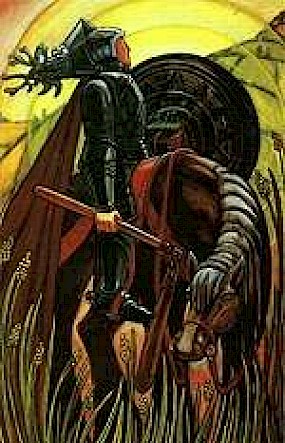

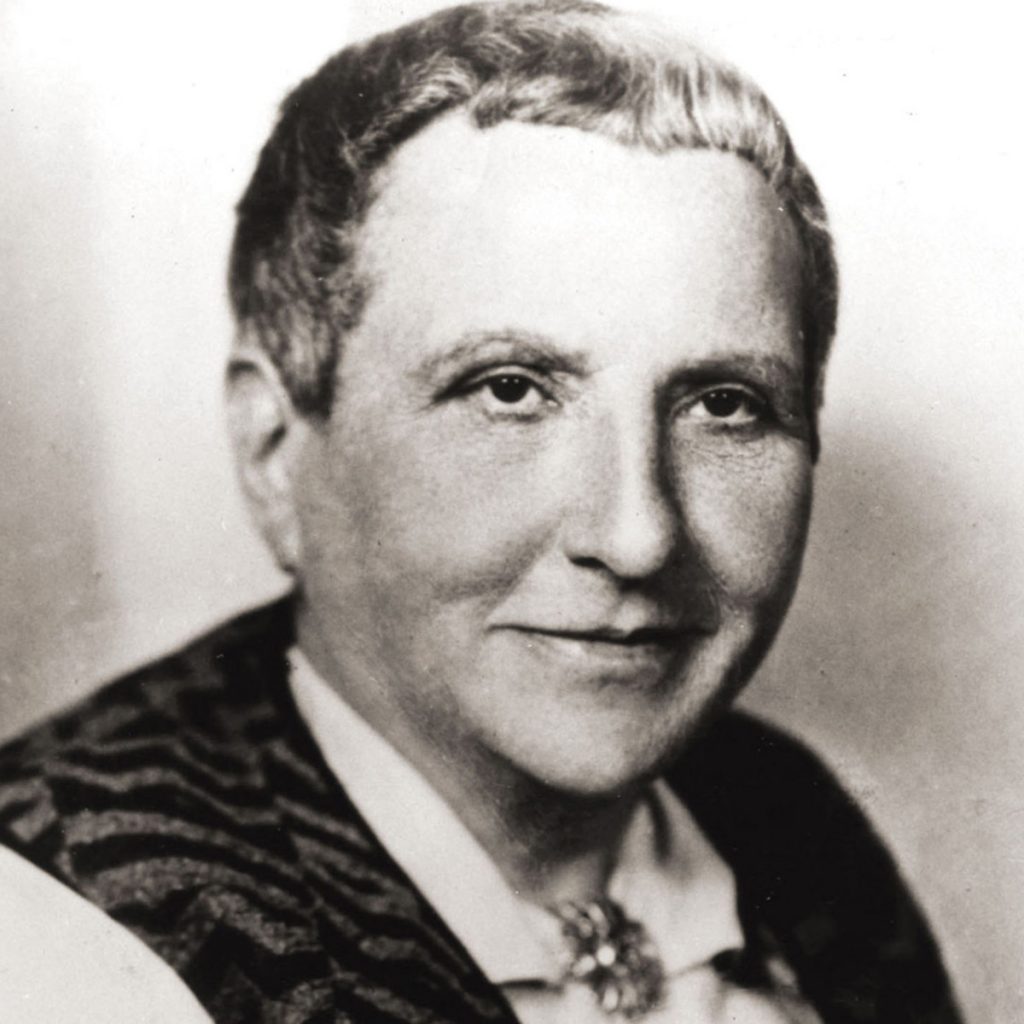

.jpg)


