Apologies to those of you unfamiliar with The Prosperos class called Translation. if you want to know more about this class, you are directed to the “Prosperos Classes” page on this website.
For those of us who have taken Translation class, we are given sample Translations at the end of the Translation workbook because these were all Translations that worked.
I am currently involved in the ongoing World Work Translation Group which meets every other week to Translate world events and sense testimony involving world problems.
For many years, I had been the chief instigator of the Sunday Night Translation Group of which I am no longer a member. What we did each week (and still do sans moi) was agree on a 2nd step sense testimony and then go off on our own and eventually come back and share our 5th step conclusions.
The new and exciting thing we are doing with the World Work Translation Group meeting every other Saturday (check the “Weekly Groups” page on this website) is that we share our entire Translations with each other.
Not everyone has to share their Translation, of course. But it has turned out to be a wonderful way to see how others work and to improve our own techniques.
I can’t say enough about what a breakthrough this is for The Prosperos community. Even when Thane (who discovered Translation) was alive, the teachers of Translation did not usually share their Translations with the students.
And the students of Translation rarely share their Translations with each other in any public forum. But why not? Are we afraid people will see our faulty conclusions? Our shaky logic? Our bad penmanship? Our poor grammar?
My friend Hanz Bolen, H.W., M., has reminded us many times that we veteran Translators have only a few years (decades?) left for us to leave behind this precious resource (Translation) to the world.
Myself, I was raised as a Christian Scientist. And we Christian Scientists always had Mary Baker Eddy’s book, Science and Health with Key to the Scripture, to look to.
Translation is a way to create our own insights into the nature of reality and not have to rely on somebody else’s insights or somebody else’s book.
That’s why I’m proposing that we share our Translations publicly, not only with each other, but with whomever happens across them.
The more we practice Translation the more we appreciate not only the science of it, but the art of it as well. And so I’m willing to get the ball rolling and showcase my most recent Translation with the general public.
It may not be a Rembrandt or even a Picasso, but it’s my own work of art:
1) Truth is that which is so. That which is not truth is not so. Therefore Truth is all that is. Truth being all is therefore total, therefore whole, therefore complete, therefore full, therefore entire, therefore safe, therefore one, therefore united, therefore harmonious, therefore orderly. I think therefore I am. Since I am and since Truth is all that is, therefore I amTruth. Since I am Truth therefore I am total, whole, complete, full, entire, safe, one, united, harmonious, orderly. I being Truth, therefore Truth is Mind, Consciousness.
2) Disequilibrium is essential for consciousness to evolve.
Word tracking: disequilibrium = unbalance, disharmonious essential = perfect, the identifying nature of something consciousness = to know, can, kin evolve = to unroll
3) Truth being harmonious cannot at the same time be disharmonious, unbalanced, therefore Truth is always in a state of equilibrium.. Truth being right, therefore correct, cannot at the same time be flawed, incorrect, therefore Truth is perfect. OR: The identifying nature of Truth is perfection. Since Truth is Consciousness and since Truth is all, therefore Truth is all-knowing, all ability, akin to all that is. Truth being perfect, therefore Truth is finished. Since Truth is finished, therefore Truth is fully unrolled, fully present, fully unveiled.
4) Truth is always in a state of equilibrium. Truth is perfect. OR: The identifying nature of Truth is perfection. Truth is all-knowing, all ability, kin to all that is. Truth is fully unrolled, fully present, fully unveiled.
5) Voila! The identifying nature of Truth is perfect all-knowing, unadorned and naked equilibrium, akin to all that is.
And if that’s incomprehensible to you, then you are invited to find our more about Translation. Or you can just skip this post and go on to the next one
Or you can share your own Translation. The Bathtub Bulletin will publish your Translation, whether you’re a beginner or a veteran Translator.
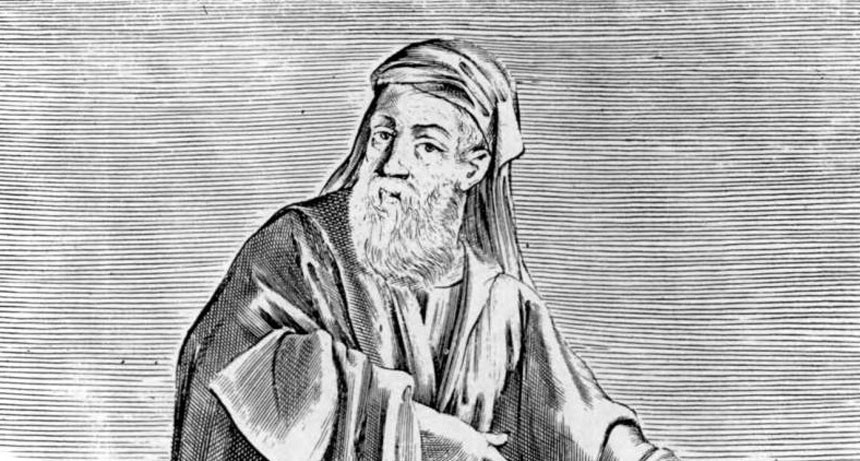
Influenced by Pythagoras (died c. 495 BC) and the Pythagoreans, Empedocles challenged the practice of animal sacrifice and killing animals for food. He developed a distinctive doctrine of reincarnation. He is generally considered the last Greek philosopher to have recorded his ideas in verse. Some of his work survives, more than is the case for any other pre-Socratic philosopher. Empedocles’ death was mythologized by ancient writers, and has been the subject of a number of literary treatments.
Life
The temple of Hera at Akragas, built when Empedocles was a young man, c. 470 BC.
Empedocles (Empedokles) was a native citizen of Akragas in Sicily.[8][9] He came from a rich and noble family.[8][10][11] Very little is known about his life. His grandfather, also called Empedokles, had won a victory in the horse-race at Olympia in [the 71st Olympiad] OL. LXXI (496–95 BC).[8][9][10] His father’s name, according to the best accounts, was Meton.[8][9][10]
All that can be said to be known about the dates of Empedocles is, that his grandfather was still alive in 496 BC; that he himself was active at Akragas after 472 BC, the date of Theron’s death; and that he died later than 444 BC.[7]
Empedocles “broke up the assembly of the Thousand. perhaps some oligarchical association or club.”[12] He is said to have been magnanimous in his support of the poor;[13] severe in persecuting the overbearing conduct of the oligarchs;[14] and he even declined the sovereignty of the city when it was offered to him.[15]
According to John Burnet: “there is another side to his public character … He claimed to be a god, and to receive the homage of his fellow-citizens in that capacity. The truth is, Empedokles was not a mere statesman; he had a good deal of the ‘medicine-man’ about him. … We can see what this means from the fragments of the Purifications. Empedokles was a preacher of the new religion which sought to secure release from the ‘wheel of birth’ by purity and abstinence. Orphicism seems to have been strong at Akragas in the days of Theron, and there are even some verbal coincidences between the poems of Empedokles and the Orphicsing Odes which Pindar addressed to that prince.”[12]
His brilliant oratory,[16] his penetrating knowledge of nature, and the reputation of his marvelous powers, including the curing of diseases, and averting epidemics,[17] produced many myths and stories surrounding his name. In his poem “Purifications” he claimed miraculous powers, including the destruction of evil, the curing of old age, and the controlling of wind and rain.
Empedocles was acquainted or connected by friendship with the physicians Pausanias, and with various Pythagoreans; and even, it is said, with Parmenides and Anaxagoras.[18] The only pupil of Empedocles who is mentioned is the sophist and rhetoricianGorgias.[19]
Timaeus and Dicaearchus spoke of the journey of Empedocles to the Peloponnese, and of the admiration, which was paid to him there;[20] others mentioned his stay at Athens, and in the newly founded colony of Thurii, 446 BC;[21] there are also fanciful reports of him travelling far to the east to the lands of the Magi.[22]
The contemporary Life of Empedocles by Xanthus has been lost.
Death
According to Aristotle, he died at the age of sixty (c. 430 BC), even though other writers have him living up to the age of one hundred and nine.[23] Likewise, there are myths concerning his death: a tradition, which is traced to Heraclides Ponticus, represented him as having been removed from the Earth; whereas others had him perishing in the flames of Mount Etna.[24]
According to Burnet: “We are told that Empedokles leapt into the crater of Etna that he might be deemed a god. This appears to be a malicious version of a tale set on foot by his adherents that he had been snatched up to heaven in the night. Both stories would easily get accepted; for there was no local tradition. Empedokles did not die in Sicily, but in the Peloponnese, or, perhaps, at Thourioi. It is not at all unlikely that he visited Athens. … Timaios refuted the common stories [about Empedokles] at some length. (Diog. viii. 71 sqq.; Ritter and. Preller [162].). He was quite positive that Empedokles never returned to Sicily after he went to Olympia to have his poem recited to the Hellenes. The plan for the colonisation of Thourioi would, of course, be discussed at Olympia, and we know that Greeks from the Peloponnese and elsewhere joined it. He may very well have gone to Athens in connexion with this.”[2]
Empedocles is considered the last Greek philosopher to write in verse. There is a debate[25] about whether the surviving fragments of his teaching should be attributed to two separate poems, “Purifications” and “On Nature”, with different subject matter, or whether they may all derive from one poem with two titles,[26] or whether one title refers to part of the whole poem. Some scholars argue that the title “Purifications” refers to the first part of a larger work called (as a whole) “On Nature”.[27] There is also a debate about which fragments should be attributed to each of the poems, if there are two poems, or if part of it is called “Purifications”; because ancient writers rarely mentioned which poem they were quoting.
Empedocles was undoubtedly acquainted with the didactic poems of Xenophanes and Parmenides[28]—allusions to the latter can be found in the fragments—but he seems to have surpassed them in the animation and richness of his style, and in the clearness of his descriptions and diction. Aristotle called him the father of rhetoric,[29] and, although he acknowledged only the meter as a point of comparison between the poems of Empedocles and the epics of Homer, he described Empedocles as Homeric and powerful in his diction.[30]Lucretius speaks of him with enthusiasm, and evidently viewed him as his model.[31] The two poems together comprised 5000 lines.[32] About 550 lines of his poetry survive.
Purifications
In the old editions of Empedocles, only about 100 lines were typically ascribed to his “Purifications”, which was taken to be a poem about ritual purification, or the poem that contained all his religious and ethical thought. Early editors supposed that it was a poem that offered a mythical account of the world which may, nevertheless, have been part of Empedocles’ philosophical system. According to Diogenes Laërtius it began with the following verses:
Friends who inhabit the mighty town by tawny Acragas which crowns the citadel, caring for good deeds, greetings; I, an immortal God, no longer mortal, wander among you, honoured by all, adorned with holy diadems and blooming garlands. To whatever illustrious towns I go, I am praised by men and women, and accompanied by thousands, who thirst for deliverance, some ask for prophecies, and some entreat, for remedies against all kinds of disease.[33]
In the older editions, it is to this work that editors attributed the story about souls,[34] where we are told that there were once spirits who lived in a state of bliss, but having committed a crime (the nature of which is unknown) they were punished by being forced to become mortal beings, reincarnated from body to body. Humans, animals, and even plants are such spirits. The moral conduct recommended in the poem may allow us to become like gods again. If, as is now widely held, this title “Purifications” refers to the poem “On Nature”, or to a part of that poem, this story will have been at the beginning of the main work on nature and the cosmic cycle. The relevant verses are also sometimes attributed to the poem of “On Nature”, even by those who think that there was a separate poem called “Purifications”.
On Nature
There are about 450 lines of his poem “On Nature” extant,[29] including 70 lines which have been reconstructed from some papyrus scraps known as the Strasbourg papyrus. The poem originally consisted of 2000 lines of hexameter verse,[35] and was addressed to Pausanias.[36] It was this poem which outlined his philosophical system. In it, Empedocles explains not only the nature and history of the universe, including his theory of the four classical elements, but he describes theories on causation, perception, and thought, as well as explanations of terrestrial phenomena and biological processes.
Although acquainted with the theories of the Eleatics and the Pythagoreans, Empedocles did not belong to any one definite school.[29] An eclectic in his thinking, he combined much that had been suggested by Parmenides, Pythagoras and the Ionian schools.[29] He was a firm believer in Orphic mysteries, as well as a scientific thinker and a precursor of physics. Aristotle mentions Empedocles among the Ionic philosophers, and he places him in very close relation to the atomist philosophers and to Anaxagoras.[37]
Another of the fragments of the dialogue On the Poets (Aristotle) treats more fully what is said in Poetics ch. i about Empedocles, for though clearly implying that he was not a poet, Aristotle there says he is Homeric, and an artist in language, skilled in metaphor and in the other devices of poetry.
Empedocles, like the Ionian philosophers and the atomists, continued the tradition of tragic thought which tried to find the basis of the relationship of the One and the Many. Each of the various philosophers, following Parmenides, derived from the Eleatics, the conviction that an existence could not pass into non-existence, and vice versa. Yet, each one had his peculiar way of describing this relation of Divine and mortal thought and thus of the relation of the One and the Many. In order to account for change in the world, in accordance with the ontological requirements of the Eleatics, they viewed changes as the result of mixture and separation of unalterable fundamental realities. Empedocles held that the four elements (Water, Air, Earth, and Fire) were those unchangeable fundamental realities, which were themselves transfigured into successive worlds by the powers of Love and Strife (Heraclitus had explicated the Logos or the “unity of opposites”).[39]
The four elements
Empedocles established four ultimate elements which make all the structures in the world—fire, air, water, earth.[29][40] Empedocles called these four elements “roots”, which he also identified with the mythical names of Zeus, Hera, Nestis, and Aidoneus[41] (e.g., “Now hear the fourfold roots of everything: enlivening Hera, Hades, shining Zeus. And Nestis, moistening mortal springs with tears”).[42] Empedocles never used the term “element” (στοιχεῖον, stoicheion), which seems to have been first used by Plato.[43] According to the different proportions in which these four indestructible and unchangeable elements are combined with each other the difference of the structure is produced.[29] It is in the aggregation and segregation of elements thus arising, that Empedocles, like the atomists, found the real process which corresponds to what is popularly termed growth, increase or decrease. Nothing new comes or can come into being; the only change that can occur is a change in the juxtaposition of element with element.[29] This theory of the four elements became the standard dogma for the next two thousand years.
Love and Strife
Not to be confused with the Greek deities of love and strife.Empedocles cosmic cycle is based on the conflict between love and strife
The four elements, however, are simple, eternal, and unalterable, and as change is the consequence of their mixture and separation, it was also necessary to suppose the existence of moving powers that bring about mixture and separation. The four elements are both eternally brought into union and parted from one another by two divine powers, Love and Strife (Philotes and Neikos).[29][44] Love (φιλότης) is responsible for the attraction of different forms of what we now call matter, and Strife (νεῖκος) is the cause of their separation.[45] If the four elements make up the universe, then Love and Strife explain their variation and harmony. Love and Strife are attractive and repulsive forces, respectively, which are plainly observable in human behavior, but also pervade the universe. The two forces wax and wane in their dominance, but neither force ever wholly escapes the imposition of the other.
According to Burnet: “Empedokles sometimes gave an efficient power to Love and Strife, and sometimes put them on a level with the other four. The fragments leave no room for doubt that they were thought of as spatial and corporeal. … Love is said to be “equal in length and breadth” to the others, and Strife is described as equal to each of them in weight (fr. 17). These physical speculations were part of a history of the universe which also dealt with the origin and development of life.”[5]
Natura naturans is a Latin term coined during the Middle Ages, meaning “Nature naturing”, or more loosely, “nature doing what nature does”. The Latin, naturans, is the present active participle of naturo, indicated by the suffix “-ans” which is akin to the English suffix “-ing“. Naturata is the perfect passive participle. These terms are most commonly associated with the philosophy of Baruch Spinoza. For Spinoza, natura naturans refers to the self-causing activity of nature, while natura naturata, meaning “nature natured”, refers to nature considered as a passive product of an infinite causal chain.[1]Samuel Taylor Coleridge defined Natura naturans as “Nature in the active sense” as opposed to natura naturata.
The distinction is expressed in Spinoza’s Ethics as follows:
[B]y Natura naturans we must understand what is in itself and is conceived through itself, or such attributes of substance as express an eternal and infinite essence, that is … God, insofar as he is considered as a free cause. But by Natura naturata I understand whatever follows from the necessity of God’s nature, or from God’s attributes, that is, all the modes of God’s attributes insofar as they are considered as things which are in God, and can neither be nor be conceived without God.[2]
To Spinoza, Nature and God were the same (see Deus sive Natura).
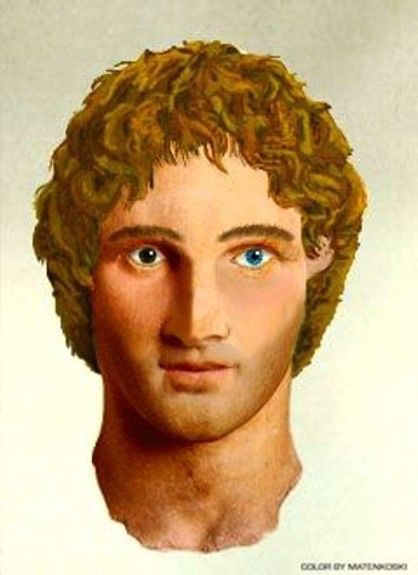
Hephaestion, Diordorus tells us, was “the most valued of his friends”, in addition to being taller and more handsome than Alexander. When Queen Sisygambis mistakenly bows before Hephaestion, Alexander tells her not to worry, “for actually he too is Alexander” (XVII, 37).
Who am I? We all ask ourselves this question, and many like it. Is my identity determined by my DNA or am I product of how I’m raised? Can I change, and if so, how much? Is my identity just one thing, or can I have more than one? Since its beginning, philosophy has grappled with these questions, which are important to how we make choices and how we interact with the world around us. Socrates thought that self-understanding was essential to knowing how to live, and how to live well with oneself and with others. Self-determination depends on self-knowledge, on knowledge of others and of the world around you. Even forms of government are grounded in how we understand ourselves and human nature. So the question ‘Who am I?’ has far-reaching implications.
Many philosophers, at least in the West, have sought to identify the invariable or essential conditions of being a self. A widely taken approach is what’s known as a psychological continuity view of the self, where the self is a consciousness with self-awareness and personal memories. Sometimes these approaches frame the self as a combination of mind and body, as René Descartes did, or as primarily or solely consciousness. John Locke’s prince/pauper thought experiment, wherein a prince’s consciousness and all his memories are transferred into the body of a cobbler, is an illustration of the idea that personhood goes with consciousness. Philosophers have devised numerous subsequent thought experiments – involving personality transfers, split brains and teleporters – to explore the psychological approach. Contemporary philosophers in the ‘animalist’ camp are critical of the psychological approach, and argue that selves are essentially human biological organisms. (Aristotle might also be closer to this approach than to the purely psychological.) Both psychological and animalist approaches are ‘container’ frameworks, positing the body as a container of psychological functions or the bounded location of bodily functions.
All these approaches reflect philosophers’ concern to focus on what the distinguishing or definitional characteristic of a self is, the thing that will pick out a self and nothing else, and that will identify selves as selves, regardless of their particular differences. On the psychological view, a self is a personal consciousness. On the animalist view, a self is a human organism or animal. This has tended to lead to a somewhat one-dimensional and simplified view of what a self is, leaving out social, cultural and interpersonal traits that are also distinctive of selves and are often what people would regard as central to their self-identity. Just as selves have different personal memories and self-awareness, they can have different social and interpersonal relations, cultural backgrounds and personalities. The latter are variable in their specificity, but are just as important to being a self as biology, memory and self-awareness.
Recognising the influence of these factors, some philosophers have pushed against such reductive approaches and argued for a framework that recognises the complexity and multidimensionality of persons. The network self view emerges from this trend. It began in the later 20th century and has continued in the 21st, when philosophers started to move toward a broader understanding of selves. Some philosophers propose narrative and anthropological views of selves. Communitarian and feminist philosophers argue for relational views that recognise the social embeddedness, relatedness and intersectionality of selves. According to relational views, social relations and identities are fundamental to understanding who persons are.
Social identities are traits of selves in virtue of membership in communities (local, professional, ethnic, religious, political), or in virtue of social categories (such as race, gender, class, political affiliation) or interpersonal relations (such as being a spouse, sibling, parent, friend, neighbour). These views imply that it’s not only embodiment and not only memory or consciousness of social relations but the relationsthemselves that also matter to who the self is. What philosophers call ‘4E views’ of cognition – for embodied, embedded, enactive and extended cognition – are also a move in the direction of a more relational, less ‘container’, view of the self. Relational views signal a paradigm shift from a reductive approach to one that seeks to recognise the complexity of the self. The network self view further develops this line of thought and says that the self is relational through and through, consisting not only of social but also physical, genetic, psychological, emotional and biological relations that together form a network self. The self also changes over time, acquiring and losing traits in virtue of new social locations and relations, even as it continues as that one self.
How do you self-identify? You probably have many aspects to yourself and would resist being reduced to or stereotyped as any one of them. But you might still identify yourself in terms of your heritage, ethnicity, race, religion: identities that are often prominent in identity politics. You might identify yourself in terms of other social and personal relationships and characteristics – ‘I’m Mary’s sister.’ ‘I’m a music-lover.’ ‘I’m Emily’s thesis advisor.’ ‘I’m a Chicagoan.’ Or you might identify personality characteristics: ‘I’m an extrovert’; or commitments: ‘I care about the environment.’ ‘I’m honest.’ You might identify yourself comparatively: ‘I’m the tallest person in my family’; or in terms of one’s political beliefs or affiliations: ‘I’m an independent’; or temporally: ‘I’m the person who lived down the hall from you in college,’ or ‘I’m getting married next year.’ Some of these are more important than others, some are fleeting. The point is that who you are is more complex than any one of your identities. Thinking of the self as a network is a way to conceptualise this complexity and fluidity.
Let’s take a concrete example. Consider Lindsey: she is spouse, mother, novelist, English speaker, Irish Catholic, feminist, professor of philosophy, automobile driver, psychobiological organism, introverted, fearful of heights, left-handed, carrier of Huntington’s disease (HD), resident of New York City. This is not an exhaustive set, just a selection of traits or identities. Traits are related to one another to form a network of traits. Lindsey is an inclusive network, a plurality of traits related to one another. The overall character – the integrity – of a self is constituted by the unique interrelatedness of its particular relational traits, psychobiological, social, political, cultural, linguistic and physical.
Figure 1 below is based on an approach to modelling ecological networks; the nodes represent traits, and the lines are relations between traits (without specifying the kind of relation).
Figure 1
We notice right away the complex interrelatedness among Lindsey’s traits. We can also see that some traits seem to be clustered, that is, related more to some traits than to others. Just as a body is a highly complex, organised network of organismic and molecular systems, the self is a highly organised network. Traits of the self can organise into clusters or hubs, such as a body cluster, a family cluster, a social cluster. There might be other clusters, but keeping it to a few is sufficient to illustrate the idea. A second approximation, Figure 2 below, captures the clustering idea.
Figure 2
Figures 1 and 2 (both from my book, The Network Self) are simplifications of the bodily, personal and social relations that make up the self. Traits can be closely clustered, but they also cross over and intersect with traits in other hubs or clusters. For instance, a genetic trait – ‘Huntington’s disease carrier’ (HD in figures 1 and 2) – is related to biological, family and social traits. If the carrier status is known, there are also psychological and social relations to other carriers and to familial and medical communities. Clusters or sub-networks are not isolated, or self-enclosed hubs, and might regroup as the self develops.
Sometimes her experience might be fractured, as when others take one of her identities as defining all of her
Some traits might be more dominant than others. Being a spouse might be strongly relevant to who Lindsey is, whereas being an aunt weakly relevant. Some traits might be more salient in some contexts than others. In Lindsey’s neighbourhood, being a parent might be more salient than being a philosopher, whereas at the university being a philosopher is more prominent.
Lindsey can have a holistic experience of her multifaceted, interconnected network identity. Sometimes, though, her experience might be fractured, as when others take one of her identities as defining all of her. Suppose that, in an employment context, she isn’t promoted, earns a lower salary or isn’t considered for a job because of her gender. Discrimination is when an identity – race, gender, ethnicity – becomes the way in which someone is identified by others, and therefore might experience herself as reduced or objectified. It is the inappropriate, arbitrary or unfair salience of a trait in a context.
Lindsey might feel conflict or tension between her identities. She might not want to be reduced to or stereotyped by any one identity. She might feel the need to dissimulate, suppress or conceal some identity, as well as associated feelings and beliefs. She might feel that some of these are not essential to who she really is. But even if some are less important than others, and some are strongly relevant to who she is and identifies as, they’re all still interconnected ways in which Lindsey is.
Figures 1 and 2 above represent the network self, Lindsey, at a cross-section of time, say at early to mid-adulthood. What about the changeableness and fluidity of the self? What about other stages of Lindsey’s life? Lindsey-at-age-five is not a spouse or a mother, and future stages of Lindsey might include different traits and relations too: she might divorce or change careers or undergo a gender identity transformation. The network self is also a process.
It might seem strange at first to think of yourself as a process. You might think that processes are just a series of events, and your self feels more substantial than that. Maybe you think of yourself as an entity that’s distinct from relations, that change is something that happens to an unchangeable core that is you. You’d be in good company if you do. There’s a long history in philosophy going back to Aristotle arguing for a distinction between a substance and its properties, between substance and relations, and between entities and events.
However, the idea that the self is a network and a process is more plausible than you might think. Paradigmatic substances, such as the body, are systems of networks that are in constant process even when we don’t see that at a macro level: cells are replaced, hair and nails grow, food is digested, cellular and molecular processes are ongoing as long as the body is alive. Consciousness or the stream of awareness itself is in constant flux. Psychological dispositions or attitudes might be subject to variation in expression and occurrence. They’re not fixed and invariable, even when they’re somewhat settled aspects of a self. Social traits evolve. For example, Lindsey-as-daughter develops and changes. Lindsey-as-mother is not only related to her current traits, but also to her own past, in how she experienced being a daughter. Many past experiences and relations have shaped how she is now. New beliefs and attitudes might be acquired and old ones revised. There’s constancy, too, as traits don’t all change at the same pace and maybe some don’t change at all. But the temporal spread, so to speak, of the self means that how a self as a whole is at any time is a cumulative upshot of what it’s been and how it’s projecting itself forward.
Anchoring and transformation, sameness and change: the cumulative network is both-and, not either-or
Rather than an underlying, unchanging substance that acquires and loses properties, we’re making a paradigm shift to seeing the self as a process, as a cumulative network with a changeable integrity. A cumulative network has structure and organisation, as many natural processes do, whether we think of biological developments, physical processes or social processes. Think of this constancy and structure as stages of the self overlapping with, or mapping on to, one another. For Lindsey, being a sibling overlaps from Lindsey-at-six to the death of the sibling; being a spouse overlaps from Lindsey-at-30 to the end of the marriage. Moreover, even if her sibling dies, or her marriage crumbles, sibling and spouse would still be traits of Lindsey’s history – a history that belongs to her and shapes the structure of the cumulative network.
If the self is its history, does that mean it can’t really change much? What about someone who wants to be liberated from her past, or from her present circumstances? Someone who emigrates or flees family and friends to start a new life or undergoes a radical transformation doesn’t cease to have been who they were. Indeed, experiences of conversion or transformation are of that self, the one who is converting, transforming, emigrating. Similarly, imagine the experience of regret or renunciation. You did something that you now regret, that you would never do again, that you feel was an expression of yourself when you were very different from who you are now. Still, regret makes sense only if you’re the person who in the past acted in some way. When you regret, renounce and apologise, you acknowledge your changed self as continuous with and owning your own past as the author of the act. Anchoring and transformation, continuity and liberation, sameness and change: the cumulative network is both-and, not either-or.
Transformation can happen to a self or it can be chosen. It can be positive or negative. It can be liberating or diminishing. Take a chosen transformation. Lindsey undergoes a gender transformation, and becomes Paul. Paul doesn’t cease to have been Lindsey, the self who experienced a mismatch between assigned gender and his own sense of self-identification, even though Paul might prefer his history as Lindsey to be a nonpublic dimension of himself. The cumulative network now known as Paul still retains many traits – biological, genetic, familial, social, psychological – of its prior configuration as Lindsey, and is shaped by the history of having been Lindsey. Or consider the immigrant. She doesn’t cease to be the self whose history includes having been a resident and citizen of another country.
The network self is changeable but continuous as it maps on to a new phase of the self. Some traits become relevant in new ways. Some might cease to be relevant in the present while remaining part of the self’s history. There’s no prescribed path for the self. The self is a cumulative network because its history persists, even if there are many aspects of its history that a self disavows going forward or even if the way in which its history is relevant changes. Recognising that the self is a cumulative network allows us to account for why radical transformation is of a self and not, literally, a different self.
Now imagine a transformation that’s not chosen but that happens to someone: for example, to a parent with Alzheimer’s disease. They are still parent, citizen, spouse, former professor. They are still their history; they are still that person undergoing debilitating change. The same is true of the person who experiences dramatic physical change, someone such as the actor Christopher Reeve who had quadriplegia after an accident, or the physicist Stephen Hawking whose capacities were severely compromised by ALS (motor neuron disease). Each was still parent, citizen, spouse, actor/scientist and former athlete. The parent with dementia experiences loss of memory, and of psychological and cognitive capacities, a diminishment in a subset of her network. The person with quadriplegia or ALS experiences loss of motor capacities, a bodily diminishment. Each undoubtedly leads to alteration in social traits and depends on extensive support from others to sustain themselves as selves.
Sometimes people say that the person with dementia who doesn’t know themselves or others anymore isn’t really the same person that they were, or maybe isn’t even a person at all. This reflects an appeal to the psychological view – that persons are essentially consciousness. But seeing the self as a network takes a different view. The integrity of the self is broader than personal memory and consciousness. A diminished self might still have many of its traits, however that self’s history might be constituted in particular.
Plato, long before Freud, recognised that self-knowledge is a hard-won and provisional achievement
The poignant account ‘Still Gloria’ (2017) by the Canadian bioethicist Françoise Baylis of her mother’s Alzheimer’s reflects this perspective. When visiting her mother, Baylis helps to sustain the integrity of Gloria’s self even when Gloria can no longer do that for herself. But she’s still herself. Does that mean that self-knowledge isn’t important? Of course not. Gloria’s diminished capacities are a contraction of her self, and might be a version of what happens in some degree for an ageing self who experiences a weakening of capacities. And there’s a lesson here for any self: none of us is completely transparent to ourselves. This isn’t a new idea; even Plato, long before Freud, recognised that there were unconscious desires, and that self-knowledge is a hard-won and provisional achievement. The process of self-questioning and self-discovery is ongoing through life because we don’t have fixed and immutable identities: our identity is multiple, complex and fluid.
This means that others don’t know us perfectly either. When people try to fix someone’s identity as one particular characteristic, it can lead to misunderstanding, stereotyping, discrimination. Our currently polarised rhetoric seems to do just that – to lock people into narrow categories: ‘white’, ‘Black’, ‘Christian’, ‘Muslim’, ‘conservative’, ‘progressive’. But selves are much more complex and rich. Seeing ourselves as a network is a fertile way to understand our complexity. Perhaps it could even help break the rigid and reductive stereotyping that dominates current cultural and political discourse, and cultivate more productive communication. We might not understand ourselves or others perfectly, but we often have overlapping identities and perspectives. Rather than seeing our multiple identities as separating us from one another, we should see them as bases for communication and understanding, even if partial. Lindsey is a white woman philosopher. Her identity as a philosopher is shared with other philosophers (men, women, white, not white). At the same time, she might share an identity as a woman philosopher with other women philosophers whose experiences as philosophers have been shaped by being women. Sometimes communication is more difficult than others, as when some identities are ideologically rejected, or seem so different that communication can’t get off the ground. But the multiple identities of the network self provide a basis for the possibility of common ground.
How else might the network self contribute to practical, living concerns? One of the most important contributors to our sense of wellbeing is the sense of being in control of our own lives, of being self-directing. You might worry that the multiplicity of the network self means that it’s determined by other factors and can’t be self-determining. The thought might be that freedom and self-determination start with a clean slate, with a self that has no characteristics, social relations, preferences or capabilities that would predetermine it. But such a self would lack resources for giving itself direction. Such a being would be buffeted by external forces rather than realising its own potentialities and making its own choices. That would be randomness, not self-determination. In contrast, rather than limiting the self, the network view sees the multiple identities as resources for a self that’s actively setting its own direction and making choices for itself. Lindsey might prioritise career over parenthood for a period of time, she might commit to finishing her novel, setting philosophical work aside. Nothing prevents a network self from freely choosing a direction or forging new ones. Self-determination expresses the self. It’s rooted in self-understanding.
The network self view envisions an enriched self and multiple possibilities for self-determination, rather than prescribing a particular way that selves ought to be. That doesn’t mean that a self doesn’t have responsibilities to and for others. Some responsibilities might be inherited, though many are chosen. That’s part of the fabric of living with others. Selves are not only ‘networked’, that is, in social networks, but are themselves networks. By embracing the complexity and fluidity of selves, we come to a better understanding of who we are and how to live well with ourselves and with one another.
To read more about the self, visit Psyche, a digital magazine from Aeon that illuminates the human condition through psychology, philosophical understanding and the arts.
Living together in sunny Santa Monica, California, in an apartment full of bright lights, colourful trinkets and candy, sisters Patte and Randa Starr are committed to having a happy childhood together – as septuagenarians. It might seem like a peculiar lifestyle choice, but once the two detail their traumatic early years, it’s easy to understand why they’ve opted for carefree lives of fun, guided by the creed: ‘Whoever wants it more, we’ll do it, and we don’t say no to each other.’ Despite the heavy topics addressed, the US filmmakers Bridey Elliott and Beth Einhorn’s portrait of the pair manages to be as charming as its subjects, matching the sisters’ irrepressible spirits with an appropriately flamboyant and eccentric visual style of its own.
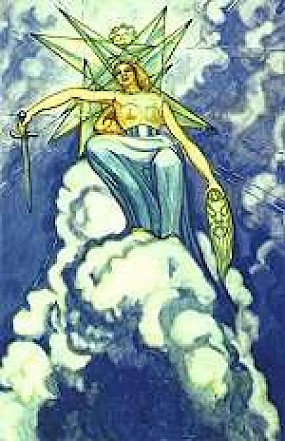
The Queen of Swords indicates a woman who is blessed (or cursed) with sharp perception, and highly honed intuition. She is acutely analytical, with a razor-sharp ability to get to the heart of a situation, seeing exactly what is, rather than what others would wish her to see.
She is a private woman, unwilling to let people too close to her until she is satisfied she thoroughly understands their motivations. But once won as a friend, she is unfailingly loyal, honest and supportive.
She’s usually very intelligent, with a dry sense of humour. Her penetrating insight will often reveal aspects of themselves to others that they had previously been unable to grasp – thus she is a capable therapist, teacher or leader.
The woman represented by this card will be experienced in the flow of life, understanding a great deal about both the great triumphs, and the deepest failings of the race. Her clarity and measured expression will be of great value at times of confusion and sadness.
Sometimes in a reading, this card will turn up to indicate a woman in a particular phase of her life, where she temporarily becomes a Sword as a result of what is happening to her. In that case the card is not quite so positively defined, for it can indicate a woman left alone, and perhaps embittered. She may be a widow, or a woman passing through the aftermath of divorce.
In this case we often see the more negative aspects of the Queen – coldness, judgementalism, criticism. At these times there is a certain sourness about her, with cynicism and sharpness making themselves felt.
It should be said that these qualities are inherent to the woman who is a Queen of Swords by nature too – if the woman concerned has not evolved sufficiently you will often find that the card represents a person who is hard and cold toward others.
The internationally renowned novel about the life and death of Jesus Christ.
Hailed as a masterpiece by critics worldwide, The Last Temptation of Christ is a monumental reinterpretation of the Gospels that brilliantly fleshes out Christ’s Passion. This literary rendering of the life of Jesus Christ has courted controversy since its publication by depicting a Christ far more human than the one seen in the Bible. He is a figure who is gloriously divine but earthy and human, a man like any other—subject to fear, doubt, and pain.
In elegant, thoughtful prose Nikos Kazantzakis, one of the greats of modern literature, follows this Jesus as he struggles to live out God’s will for him, powerfully suggesting that it was Christ’s ultimate triumph over his flawed humanity, when he gave up the temptation to run from the cross and willingly laid down his life for mankind, that truly made him the venerable redeemer of men.
“Spiritual dynamite.” —San Francisco Chronicle
“A searing, soaring, shocking novel.” —Time
(Goodreads.com)
Consciousness, spirituality, biography, sexuality, androgyny, futurism, space, the arts, science, astrology, democracy, humor, books, movies and more