Every year, we have a New Moon in each of the 12 signs of the zodiac. By the way, did you know that the reason we have 12 signs is that we have 12 Lunar cycles in a year? One Lunar cycle = one sign, 12 Lunar cycles = 12 signs.
When the Sun and the Moon meet for the 1st time after the equinox, we have a New Moon in Aries. When they meet for the 2nd time, we have a New Moon in Taurus. And so on…
Now that the Moon and the Sun meet in Leo, the Leo lunar cycle begins, so we have 30 days to manifest the Leo energy.
We have 30 days to be like Leos and make friends with this astrological archetype.
Even if you’re not a Leo, or don’t have any planets in Leo, Leo (as well as all the 12 zodiac signs) are part of the DNA of your chart. There is a part of you that is Leo. There is a part of your psyche that is ready to bloom.
And what does Leo stand for? Leo is ruled by the Sun, the life generator. Leo is the energy of warmth, light, radiance and spirit.
Leo stands for our individuality, our Ego and our creativity. Leo is what makes you unique. Leo represents those qualities that only you have, and which if you choose to share and radiate, will make the world a better place.
New Moon In Leo – The Aspects
Of course, not all New Moons in Leo have the same energy. That would be boring. Each year, the energy of the New Moon is colored by the aspects the New Moon makes with other planets.
This New Moon is at 16° Leo, it is conjunct Mercury (at 23° Leo), and forms a T-square with Saturn in Aquarius and Uranus in Taurus. The New Moon in Leo basically activates the Saturn-Uranus square – the most important transit of 2021.
The Saturn-Uranus square has been challenging, to say at least. And there is a reason for that. It is exactly the things that we have the greatest resistance towards (Saturn) that can lead to our greatest breakthroughs (Uranus). No pain, no gain.
The good news is that the New Moon is separating from the Saturn-Uranus square and it is applying to Mercury.
Separating and applying aspects have different energy.
Separating aspects are aspects that have already happened in the past (even if the two planets are still within orb). Applying aspects happen in the future. The New Moon in Leo has “been there, done that”, “that” being the Saturn-Uranus square.
Now what?
The New Moon is applying to a conjunction with Mercury, which means we are now ready to integrate the lessons of the Saturn-Uranus square into our individual mental framework (Mercury).
We will finally understand what the Saturn-Uranus square was all about, and what the implications of this square are for us, at an individual level.
Mercury is our mind. Everything that happens in our life, eventually has to go through Mercury’s filter. Without Mercury, we would never be able to understand, reflect and learn from our experiences.
New Moon In Leo – A Volunteer Choir Singing Religious Hymns
The Sabian symbol of the New Moon in Leo is “A volunteer church choir singing religious hymns”.
The volunteer church choir represents the members of the community coming together to find a deeper connection with each other, through God (the Sun).
The volunteer church choir represents the divine spark within ourselves that just wants to give, much like the Sun gives us warmth and energy. Joy and happiness emerge when we overflow with the divine love that has been lit up inside of us.
One important remark is that the church choir is a volunteer choir – is not institutionalized. The church choir just wants to sing, to give – and this is how we get to the other side of the axis, to Aquarius.
When we give from the heart (Leo), this is when we truly connect with other people, we make friends, and find a sense of community and belonging.
If you’ve been feeling disconnected from the world, the New Moon in Leo is here to remind you that it all starts with you. When you give, the world gives back. When you smile, the world smiles back.
Leo’s giving is not Virgo’s acts of service, or Pisces’ charity. Leo’s giving means simply being yourself, 100% yourself, beaming your light with no fear.
The reason why Leo follows Cancer is that in Cancer we find our safety zone → once we feel nurtured and secure (Cancer) we can relax and just BE (Leo).
The Saturn-Uranus square has not been easy on us. But the New Moon in Leo will bring much-needed redemption.
The New Moon in Leo is a reminder that no matter what life throws at you, your spirit is unbreakable. Yes, we need to change, yes, we need to adapt to catch up with the times.
But that part of you that is truly YOU is unbreakable, unchangeable, and it only shines brighter and brighter with time and experience.
When you embrace your inner Leo you automatically connect with that infinite source of light, warmth and joy that is overabundant, overflowing, and ready to change the world with its mere presence and passion.
The Devil is numbered fifteen and shows a figure, usually male and satyr-like, half-man and half-animal. Sometimes, male and female forms are shown chained or trapped at his feet. The Thoth deck (shown here) has the Devil as a goat, appearing against a background of the male sex organs. His third eye represents the Eye of God and the staff across his chest is topped with the Winged Disk symbol and double-headed snakes.
The Devil card is often misunderstood and feared. However, before Christianity became a leading religion, there were several pantheons which contained fertility gods and they were often depicted as animals – the Horned God of the Wicca for example, servant and consort of the Goddess. The Devil does not therefore necessarily represent an evil being.
The Devil is the personification of the animal, instinctual and even bestial parts of us. Pre-occupation with matters connected to the Devil can lead to degradation and sheer ugliness, but by identifying and accepting the darkness within we learn to discover that it is simply the dark side of our light.
Warner Archive Rhapsody In Blue (1945) Robert Alda stars alongside musical greats Al Jolson, Paul Whiteman, and Oscar Levant in this biopic treatment of the life of composer George Gershwin. The film traces Gershwin’s rise, from his first big hit “Swanee” (performed by Al Jolson, playing himself), to his collaborations with lyricist brother Ira (Herbert Rudley) to the heights of artistic achievement with the debut of “Rhapsody in Blue” at Aeolian Hall. Directed By Irving Rapper Starring Robert Alda, Joan Leslie, Alexis Smith
Tempting it might be, but the idea that culture has become vacuous and banal comes with unsavoury implicationsArtist Taylor Swift performs on The Voice. Photo courtesy of Trae Patton/NBC
I’ll admit that when I turn on the TV or radio or dig around on the internet, I am often appalled at what I find. When I hear the vapid pronouncements of influencers or the mind-numbing inanity of much of today’s pop culture, my reflex is to become angry and depressed. I’ve dedicated my life to the humanities, to reading and patient study, to the learning of new languages and to the refining of my mother tongue in written and spoken expression, so to see the superabundance of what I interpret as mindlessness and lowest-common-denominator aesthetics in the public square feels like a personal offence.
On most days, I keep this reflex in check, however, recognising it as curmudgeonly and slightly ridiculous. The French philosopher Michel Serres had it right in his teasing title C’était mieux avant! (‘Things used to be better!’ 2017), which exposes the silliness of the kinds of cultural nostalgia that keep us from seeing how good we’ve got it. I’d prefer to maintain a balanced judgment, one that gives credit to those artists, writers and musicians today creating important, thoughtful and complex work. And, perhaps more importantly, I want to avoid falling into a logic of cultural degeneration.
What about you? Looking toward today’s new writing, thinking, music and art, what do you make of contemporary culture? Do you see a thriving and innovative scene, replete with original forms and vibrant content? Or do you see something simple and stagnant, marked by dead-end ideas that either repeat the patterns of the past or offer only feeble attempts to craft a new aesthetic vision? In other words, is culture better or worse now than it used to be?
If the second description matches your judgment, you might be tempted by the notion of cultural degeneration. This powerful metaphor is a particular way of interpreting the changes typical of any culture, especially in an age of technical acceleration and the democratisation of culture-making. More people are producing culture; new kinds of people are producing widely consumed culture; and there are more tools to create and distribute these objects than ever before. The person who believes in cultural degeneration – a declinist philosophy by nature – will argue that this democratisation and other factors, such as lowered standards of education and failures of taste-inculcating institutions, have decreased the quality of what is produced. Culture used to be complex and highly developed; now it is rudimentary and bland.
I will push back against this pessimistic reading, offering a short history of cultural degeneration and highlighting the flaws of this way of judging the transformations that make a society look different tomorrow than it did yesterday.
Throughout history, humans have been tempted to imagine cultural production as something that is born, passes through stages of adolescence and maturity, moving toward senility or suffering some infirmity, and eventually dying and decaying. These are metaphors, of course, and show our incorrigible tendency to project our own life cycles – or those of plants or animals – on to inanimate and often abstract entities. A new republic is born. A movement is burgeoning. The novel is dead.
Of the many metaphors that belong to this organic family, one in particular has caught my attention in recent years: the metaphor of degeneration. This old trope has returned to politics, social critique and the analysis of cultural artefacts. In English, to call someone a degenerate has potentially both racist and classist connotations, and the insult implies the genetic or intellectual superiority of the one delivering it over the one receiving it. The language and logic of degeneration has been applied not only to people but also to the culture they produce. As I will show, the term bears within it a whole host of racial and class connotations and has been a hallmark of conservative and reactionary thought throughout the modern era.
Before revisiting this history and piecing together its implications for today, it is important to understand exactly what the term ‘degeneration’ means. The best explanation I’ve found is in the English psychiatrist Henry Maudsley’s book Body and Will (1883), in which he offers this description of the word’s early shift in meaning:
[Degeneration] means literally an unkinding, the undoing of a kind, and in this sense was first used to express the change of kind without regard to whether the change was to perfect or to degrade; but it is now used exclusively to denote a change from a higher to a lower kind, that is to say, from a more complex to a less complex organisation …
The move from a more complex to a less complex form also implies a decrease in quality and, by extension, value. What degenerates becomes simpler and more crude, fallen from a higher standard and worth less than its precursors. The notion of an organic worsening has been applied readily throughout modernity, first to humankind itself and later to the cultural artefacts and ideas that humans produce.
Wherever he saw the mixing of races, Gobineau saw decadence. Hybridity equals morbidity, in his view
The term has had a particularly dark history in Europe. In the 18th and 19th centuries, it was deployed to argue that climate differences between the places where people dwelled caused some human types to degenerate from an earlier, more perfect state. As scientific racism sought more concepts for its toolbox, the notion of degeneration proved a particularly helpful one. It was used to explain why some races thrived more than others, and how some had produced great scientific and artistic works and achieved a state of technological advancement as others floundered. The producers of these theories tended to rank their own civilisation as the most sophisticated, eliding or diminishing the achievements of the other civilisations to which they compared their own.
One of the founding fathers of Aryan thought was a French aristocrat, named Joseph-Arthur de Gobineau, who argued that a race begins to degenerate the moment it mixes with other races. Hybridity equals morbidity, in his view. In his book The Inequality of the Human Races (1853-55), he writes in stark terms:
The word degenerate, when applied to a people, means (as it ought to mean) that the people has no longer the same intrinsic value as it had before, because it has no longer the same blood in its veins, continual adulterations having gradually affected the quality of that blood. In other words, though the nation bears the name given by its founders, the name no longer connotes the same race; in fact, the man of a decadent time, the degenerate man properly so called, is a different being, from the racial point of view, from the heroes of the great ages … He, and his civilisation with him, will certainly die on the day when the primordial race-unit is so broken up and swamped by the influx of foreign elements, that its effective qualities have no longer a sufficient freedom of action.
Gobineau’s hogwash is easily disproven by comparing the health and vitality of endogamic and exogamic communities, that is communities that only breed with their own versus communities that invite outsiders into their genetic pool. Wherever he saw the mixing of races, Gobineau saw decadence. For him, this problem was primarily a biological one, but in Europe throughout the 19th century, this body problem became a problem of the mind and the creative spirit.
The weird science of theorists of degeneration such as Bénédict Augustin Morel, Cesare Lombroso and Max Nordau, among others, could seem laughable to us today were it not for the endurance of their ideas in the collective consciousness, even among those who’ve never read their books. Of the three, the physician and social critic Nordau’s book Degeneration (Entartung in German, 1892) strikes me as the strangest. In it, Nordau unleashes his wrath on a variety of artists, musicians and painters whose work he claims is the product of pollution, noise and urban chaos, which trigger exhaustion, general hysteria, depravity and sexual dysfunction. He takes on Wagner, Tolstoy, Verlaine, Rossetti, Zola, the Symbolists, the Pre-Raphaelites and the Decadents, to name just a few. He tries to convince his reader that the reason the Impressionists’ paintings are so bad is that they suffer from a condition called ‘nystagmus’, or a trembling of the eyeball, which explains their frenetic brush strokes and stippled canvases. Page after page, he uses medical justifications to explain why the art he doesn’t like exists.
In his framework, it is not the working class that suffers from the degenerative forces that shaped art, music and letters of his day. It is, rather, the bourgeois culture-brokers who’ve been most touched by this collective malady. He poses the question: ‘Is it possible to accelerate the recovery of the cultivated classes from the present derangement of their nervous system? I seriously believe it to be so, and for that reason alone I undertook this work.’ Nordau believed that modernity had brought with it a collective nervous illness that was ruining culture, and he thought that his diagnosis and therapeutic suggestions could somehow cure this disease of which bad art was a symptom.
Nazi ideology took up where Nordau left off. This legacy is perhaps most famously illustrated by the National Socialists’ Entartete Kunst (‘degenerate art’) show, which opened in Munich in 1937. The exhibition showcased art produced by the ‘degenerate’ populations the Nazis were bent on annihilating. Displaying roughly 650 works that today would fall under the rubric of modernist or avant-garde, the organisers of the show ridiculed these pieces produced by Jews, communists or simply non-Germans with derisive captions that implied the supremacy of ‘pure’ German art. According to its catalogue, the exhibition sought to show the ‘diverse symptoms of degeneracy’, which included poor craftsmanship, blasphemy, artistic anarchy, a Marxist/Bolshevist propagandistic tendency, moral deficiency, the dismissal of racial consciousness, and the celebration of ‘the idiot, the cretin and the paralytic’. It is clear that Nazis used the theory of degeneration as a tool to prove that inferior races can produce only inferior art.
The Enlightenment was for the surrealists a kind of devolution, an impoverishment of the true human essence
It is important to note that simultaneous to these lamentations of cultural degeneration, there were always voices loudly celebrating the very aesthetic qualities despised by the declinists. All of the artists represented in the Entartete Kunst show – including Max Ernst, Paul Klee, Otto Dix and Emil Nolde – are obvious examples. Take as another the many movements throughout the 19th and 20th centuries that celebrated primitivism, which took inspiration from Indigenous and tribal cultures across the world whose aesthetic genius had not yet been ruined by development, according to proponents of such art.
The surrealists, for example, believed that ‘primitive’ peoples, children, and those who did not fit neatly into a European logocentric framework possessed a kind of visionary superiority, capable of expressing through ‘elementary’ forms the complexity of the subconscious. The naive lines of a child’s drawing or the simple forms found in petroglyphs, folk art and tribal masks somehow tapped an essential and primordial element of the human mind in ways that academic art and ‘advanced’ forms produced by trained artists never could. In his Surrealism Manifesto (1924), the French poet André Breton defined surrealism this way:
SURREALISM, n. Psychic automatism in its pure state, by which one proposes to express – verbally, by means of the written word, or in any other manner – the actual functioning of thought. Dictated by thought, in the absence of any control exercised by reason, exempt from any aesthetic or moral concern.
The legacy of the Enlightenment, which tried to advance humanity through rationality, represented for the surrealists a kind of devolution, an impoverishment of the true human essence. In their view, good culture is simple, primordial and still connected to the originary forms of human consciousness. The more complex and advanced a society becomes, the more its people fall victim to an alienation from their own psychical structures. This is why surrealism privileges ‘psychic automatism in its pure state’ over the ‘advanced’ machinations of controlled and logical thinking.
Let’s skip ahead to today. As a scholar of contemporary French literature and thought, I’ve noticed the conspicuous appearance of the language of degeneration in many realist novels written in the past two decades that describe the (moribund) state of French society and of Western civilisation. In these narratives, not only is the West in a state of irreversible degeneration, so is reality itself. I call this phenomenon ‘degenerative realism’, and the more research I conducted, the more I realised that this kind of thinking is by no means limited to the field of literature, but extends to contemporary French political discourse, particularly among Right-wing politicians and pundits.
A good example from France’s intelligentsia is Richard Millet, a writer of fiction and inflammatory pamphlets that catalogue the many forms of what he sees as the country’s cultural degeneration: the loss of taste and historical memory, the oppressive rise of antiracism and feminism, the appalling decline in quality of French literature, the weakening of Christianity, and an impoverishment of the French language. In his view, things are just getting worse and worse all the time. How should one respond to such a cynical outlook, one that seems to be quite widely shared in our age of discontent?
On days when I feel discouraged by the kinds of cultural objects I encounter, I try to remember a few things. First, pop culture is not all culture. Upon deeper reflection, I realise that while media companies reward narcissism, shallowness, empty spectacle, hyperbole and brainlessness by giving disproportionate exposure to things that generate easy attention, there is another coexisting world, one in which thoughtful, intricate and uplifting things are being created at an unprecedented pace. Indeed, there is a surplus of extraordinary objects that illustrate and celebrate the full range of human ingenuity. Excellent culture – things that would have blown the minds of our ancestors – still exists all around us, but has simply become harder to find. The analogue and digital worlds are glutted with cultural artefacts – many of them produced more and more frequently by amateurs and hobbyists – and we have far more to wade through to find what suits our tastes and feels like some form of aesthetic progress according to our individual standards. The kinds of art, music and literature that combine technical prowess, originality, and manifest what we sometimes call genius are not necessarily rewarded by or featured in the context of fast gratification and clickbait. There is beauty, intelligence and artistry out there; we might just have to dig a little deeper to find it.
Second, those cultural artefacts that strike me at first as too basic, derivative or uninteresting surely contain a simple truth worth acknowledging: sometimes the human brain needs something soft to chew on, especially in difficult times. There is something comforting and therapeutic about the loop of a no-frills beat, the repetition of age-old platitudes, familiar plotlines, and modest shapes and colours in configurations we recognise. Those who produce these types of cultural objects are participating in the very human activity of giving significance a form that might comfort or please the beholder. Must every piece be a masterpiece? Hardly. It is best to surround oneself with cultural objects of varying complexity and purpose. Sometimes, we need objects that challenge us. Other times, we need objects that just let us coast.
The whole world has become a borderland where things are now possible that weren’t before
Finally, it is possible for a person to be democratically minded while still having standards that separate the excellent from the mediocre. There is something quite antidemocratic about flattening all differences between cultural objects, disregarding the extra work and exceptional talent of some of the world’s most creative citizens, who bring pleasure and beauty to those who know how to see it. All people’s tastes should be accommodated, even the demanding ones. In a real democracy, one can like or dislike freely, as an individual possessing a complex set of identities and affinities. One is free to be a snob or to like everything undiscerningly.
Let’s return to the original question motivating this essay: can culture degenerate? As I pointed out in the beginning, degeneration is a metaphor, so in this respect, culture cannot literally degenerate. But if we translate the sentiment expressed through this figurative language into something more literal – can culture become worse? – several new questions arise. How confidently can we speak of culture as one uniform thing? As I type, there are millions of microphenomena being produced that could count as culture. Is it plausible that they would all simultaneously find themselves in a state of degradation compared with their earlier counterparts? No. At any given moment, across this vast spinning orb on which we live, artists, writers and thinkers are producing rudimentary objects and complex ones, artefacts that take no particular skill or thought to make and others that require specialised knowledge and years of training, reflection and preparation. For each taste, there are objects and ideas to accommodate it. They are hiding in plain sight.
One could argue that globalisation has created the conditions for a richer, more expansive kind of culture-making. The more that cultures mix, the more that genres and genders get reconfigured and identities get complicated, then the more exciting the results of this combinatoric process can be. I disagree with Gobineau’s assessment that hybridity equals morbidity. On the contrary, hybridity equals creativity. We know that borderlands are the richest regions culturally because they put two cultures in productive contact, allowing for the seepage of ideas and forms from one side of the frontier to the other. The whole world has become a borderland where things are now possible that weren’t before. These conditions can only result in the proliferation of all kinds of cultural objects for all kinds of tastes, from the plainest to the most exacting.
To argue that culture is degenerating might prove only one thing, namely that you haven’t taken the time to look for the many (re)generative objects that are waiting there to be found, or that you don’t quite know how to find meaning in the ones that displease you. We have a choice: either to judge the world as embittered critics who find little beauty in new things or to feel a tingle of elation at the seemingly infinite cultural improvisations that humans keep spinning out like silk. The latter seems far more appealing to me.
When the Lord of Truce appears he brings with him a temporary respite, often after we have passed through trying times. This is a quiet period, which should be used to recover, regroup and stabilise. It’s important though, that we always bear in mind the fact that this is only a moment in time. Soon we shall be required to pick up the tools of life and continue on our journey.
So on a day ruled by him, we’re well advised to use the internal stillness he brings to think over trouble spots, or areas of difficulty. That way we see the whole issue more clearly, and are better equipped to sally forth undaunted when the time comes.
Occasionally on a day ruled by the Four of Swords there will be a requirement to bury the hatchet with somebody, or to accept their gestures of friendliness toward us. It’s important that we are reserved both in what we are prepared to offer, and what we are prepared to forgive. Truce only marks the cessation of hostilities – a brief pause during which we might negotiate a lasting peace.
The one thing this card always tells us is that we have not yet finished our business here. If we fail to hold this in the forefront of our minds, we are likely to make the mistake of being unprepared for whatever comes next.
So – on this day – rest as easy as you can, and locate areas of challenge, difficulty or sensitivity for future attention. Think carefully about trying to resolve anything until the influences are more supportive.
Lumet’s translation of the acclaimed play to a cinematic version incorporated some realism, in the use of real horses as opposed to human actors, and a graphic portrayal of the blinding. Despite some criticism of this approach, the film received positive reviews, with awards for Burton, Firth and Agutter.
Plot
Hesther Salomon, a magistrate, asks her platonic friend Martin Dysart, a disillusioned psychiatrist who works with disturbed teenagers at a hospital in Hampshire, England, to treat a 17-year-old stable boy named Alan Strang after he blinded six horses with a sickle. With Alan only singing TV commercial jingles, Martin goes to see the boy’s parents, the non-religious Frank Strang and his Christian fundamentalist wife Dora. She had taught her son the basics of sex and that God sees all, but the withdrawn Alan replaced his mother’s deity with a god he called Equus, incarnated in horses. Frank discloses to Martin that he witnessed Alan late at night in his room, haltered and flagellating himself, as he chanted a series of names in Biblical genealogy-fashion which culminated in the name Equus as he climaxed.
Martin begins winning the respect and confidence of Alan, who shares his earliest memory of a horse from when he was six and a man approached him on a horse named Trojan. Alan imagined the horse spoke to him, and said his true name was Equus, and this was the name of all horses. The man took Alan up on Trojan, which the boy found thrilling, but his parents reacted negatively and injured him taking him off the horse. Martin also meets the stable manager, who reveals Alan secured his job through another employee, Jill. Devastated at the horses’ injuries she indirectly caused, Jill has taken medical leave.
Eventually, Alan admits to Martin that he would secretly take horses away from the stables at night to ride them nude, chanting prayers to Equus until he reached orgasm, after which he caressed them lovingly. Martin envies the boy’s passionate paganism, in comparison to his own empty life, where he has ceased intimacies with his wife and is plagued by nightmares of ritualistically slaughtering children in Homer‘s Greece, wearing the Mask of Agamemnon. Given an aspirin serving as a placebo “truth drug“, Alan further reveals that one evening Jill tempted him to go to a Swedish pornographic film at a local cinema, where he was shocked to see his father. Going back with Jill to the stables, she stripped and offered him sex but he was unable to perform and, although she was sympathetic, told her to leave. Naked, and tormented that Equus sees all and is a jealous god, he blinded the horses.
Martin is left troubled by the fact that he can treat Alan to take away his pain but in the process will deprive the boy of his passion, leaving him as emotionally neutered as Martin himself.
The most important texts of the religion are those contained within the Avesta, which includes as central the writings of Zoroaster known as the Gathas, poems within the Yasna that define the teachings of the Zoroaster, the main worship service of Zoroastrianism. The religious philosophy of Zoroaster divided the early Iranian gods of the Proto-Indo-Iranian tradition into ahuras[18] and daevas,[19] the latter of which were not considered worthy of worship. Zoroaster proclaimed that Ahura Mazda was the supreme creator, the creative and sustaining force of the universe through Asha,[4] and that human beings are given a choice between supporting Ahura Mazda or not, making them responsible for their choices. Though Ahura Mazda has no equal contesting force, Angra Mainyu (destructive spirit/mentality), whose forces are born from Aka Manah (evil thought), is considered the main adversarial force of the religion, standing against Spenta Mainyu (creative spirit/mentality).[20]Middle Persian literature developed Angra Mainyu further into Ahriman and advancing him to be the direct adversary to Ahura Mazda.[21]
In Zoroastrianism, Asha (truth, cosmic order), the life force that originates from Ahura Mazda,[4][22] stands in opposition to Druj (falsehood, deceit)[23][24] and Ahura Mazda is considered to be all-good with no evil emanating from the deity.[4] Ahura Mazda works in gētīg (the visible material realm) and mēnōg (the invisible spiritual and mental realm)[25] through the seven (six when excluding Spenta Mainyu) Amesha Spentas[26] (the direct emanations of Ahura Mazda).
Zoroastrianism is not entirely uniform in theological and philosophical thought, especially with historical and modern influences having a significant impact on individual and local beliefs, practices, values and vocabulary, sometimes merging with tradition and in other cases displacing it.[27] In Zoroastrianism, the purpose in life is to become an ashavan (a master of Asha) and to bring happiness into the world, which contributes to the cosmic battle against evil. Zoroastrianism’s core teachings include:
Follow the Threefold Path of Asha: Humata, Huxta, Huvarshta (Good Thoughts, Good Words, Good Deeds).[28]
Charity is a way of keeping one’s soul aligned with Asha and thus of spreading happiness.[29]
The spiritual equality and duty of men and women alike.[30]
Being good for the sake of goodness and without the hope of reward (see Ashem Vohu).
Terminology
The name Zoroaster (Ζωροάστηρ) is a Greek rendering of the Avestan name Zarathustra. He is known as Zartosht and Zardosht in Persian and Zaratosht in Gujarati.[31] The Zoroastrian name of the religion is Mazdayasna, which combines Mazda- with the Avestan word yasna, meaning “worship, devotion”.[4] In English, an adherent of the faith is commonly called a Zoroastrian or a Zarathustrian. An older expression still used today is Behdin, meaning “The best religion|beh < Middle Persian weh ‘good’ + din < Middle Persian dēn < Avestan daēnā“. In the Zoroastrian liturgy, this term is used as a title for a lay individual who has been formally inducted into the religion in a Navjote ceremony, in contrast to the priestly titles of osta, osti, ervad (hirbod), mobed and dastur.[32][33][34]
The first surviving reference to Zoroaster in English scholarship is attributed to Thomas Browne (1605–1682), who briefly refers to Zoroaster in his 1643 Religio Medici.[35] The term Mazdaism (/ˈmæzdə.ɪzəm/) is an alternative form in English used as well for the faith, taking Mazda- from the name Ahura Mazda and adding the suffix -ism to suggest a belief system.[36]
Overview
Theology
Zoroastrians believe that there is one universal, transcendent, all-good, and uncreated supreme creator deity, Ahura Mazda, or the “Wise Lord” (Ahura meaning “Lord” and Mazda meaning “Wisdom” in Avestan).[37]Zoroaster keeps the two attributes separate as two different concepts in most of the Gathas yet sometimes combines them into one form. Zoroaster also claims that Ahura Mazda is omniscient but not omnipotent.[4] In the Gathas, Ahura Mazda is noted as working through emanations known as the Amesha Spenta[26] and with the help of “other ahuras“,[38] of which Sraosha is the only one explicitly named of the latter category.[citation needed]
Scholars and theologians have long debated on the nature of Zoroastrianism, with dualism, monotheism, and polytheism being the main terms applied to the religion.[39][38][40] Some scholars assert that Zoroastrianism’s concept of divinity covers both being and mind as immanent entities, describing Zoroastrianism as having a belief in an immanent self-creating universe with consciousness as its special attribute, thereby putting Zoroastrianism in the pantheistic fold sharing its origin with Indian Brahmanism.[41][42] In any case, Asha, the main spiritual force which comes from Ahura Mazda,[22] is the cosmic order which is the antithesis of chaos, which is evident as druj, falsehood and disorder.[23] The resulting cosmic conflict involves all of creation, mental/spiritual and material, including humanity at its core, which has an active role to play in the conflict.[43]
In the Zoroastrian tradition, druj comes from Angra Mainyu (also referred to in later texts as “Ahriman”), the destructive spirit/mentality, while the main representative of Asha in this conflict is Spenta Mainyu, the creative spirit/mentality.[20] Ahura Mazda is immanent in humankind and interacts with creation through emanations known as the Amesha Spenta, the bounteous/holy immortals, which are representative and guardians of different aspects of creation and the ideal personality.[26] Ahura Mazda, through these Amesha Spenta, is assisted by a league of countless divinities called Yazatas, meaning “worthy of worship”, and each is generally a hypostasis of a moral or physical aspect of creation. According to Zoroastrian cosmology, in articulating the Ahuna Vairya formula, Ahura Mazda made the ultimate triumph of good against Angra Mainyu evident.[44] Ahura Mazda will ultimately prevail over the evil Angra Mainyu, at which point reality will undergo a cosmic renovation called Frashokereti[45] and limited time will end. In the final renovation, all of creation—even the souls of the dead that were initially banished to or chose to descend into “darkness”—will be reunited with Ahura Mazda in the Kshatra Vairya (meaning “best dominion”),[46] being resurrected to immortality. In Middle Persian literature, the prominent belief was that at the end of time a savior-figure known as the Saoshyant would bring about the Frashokereti, while in the Gathic texts the term Saoshyant (meaning “one who brings benefit”) referred to all believers of Mazdayasna but changed into a messianic concept in later writings.[citation needed]
Zoroastrian theology includes foremost the importance of following the Threefold Path of Asha revolving around Good Thoughts, Good Words, and Good Deeds.[28] There is also a heavy emphasis on spreading happiness, mostly through charity,[29] and respecting the spiritual equality and duty of both men and women.[30] Zoroastrianism’s emphasis on the protection and veneration of nature and its elements has led some to proclaim it as the “world’s first proponent of ecology.”[47] The Avesta and other texts call for the protection of water, earth, fire and air making it, in effect, an ecological religion: “It is not surprising that Mazdaism…is called the first ecological religion. The reverence for Yazatas (divine spirits) emphasizes the preservation of nature (Avesta: Yasnas 1.19, 3.4, 16.9; Yashts 6.3–4, 10.13).”[48] However, this particular assertion is undermined by the fact that early Zoroastrians had a duty to exterminate “evil” species, a dictate no longer followed in modern Zoroastrianism.[49]
The religion states that active and ethical participation in life through good deeds formed from good thoughts and good words is necessary to ensure happiness and to keep chaos at bay. This active participation is a central element in Zoroaster’s concept of free will and Zoroastrianism as such rejects extreme forms of asceticism and monasticism but historically has allowed for moderate expressions of these concepts.[51]
In Zoroastrian tradition, life is a temporary state in which a mortal is expected actively to participate in the continuing battle between Asha and Druj. Prior to its incarnation at the birth of the child, the urvan (soul) of an individual is still united with its fravashi (personal/higher spirit), which has existed since Ahura Mazda created the universe. Prior to the splitting off of the urvan the fravashi participates in the maintenance of creation led by Ahura Mazda. During the life of a given individual, the fravashi acts as a source of inspiration to perform good actions and as a spiritual protector. The fravashis of ancestors cultural, spiritual, and heroic, associated with illustrious bloodlines, are venerated and can be called upon to aid the living.[52] On the fourth day after death, the urvan is reunited with its fravashi, whereupon the experiences of life in the material world are collected for use in the continuing battle for good in the spiritual world. For the most part, Zoroastrianism does not have a notion of reincarnation, at least not until the Frashokereti. Followers of Ilm-e-Kshnoom in India believe in reincarnation and practice vegetarianism, among other currently non-traditional opinions,[53] although there have been various theological statements supporting vegetarianism in Zoroastrianism’s history and claims that Zoroaster was vegetarian.[54]
In Zoroastrianism, water (aban) and fire (atar) are agents of ritual purity, and the associated purification ceremonies are considered the basis of ritual life. In Zoroastrian cosmogony, water and fire are respectively the second and last primordial elements to have been created, and scripture considers fire to have its origin in the waters (re. which conception see Apam Napat). Both water and fire are considered life-sustaining, and both water and fire are represented within the precinct of a fire temple. Zoroastrians usually pray in the presence of some form of fire (which can be considered evident in any source of light), and the culminating rite of the principal act of worship constitutes a “strengthening of the waters”. Fire is considered a medium through which spiritual insight and wisdom are gained, and water is considered the source of that wisdom. Both fire and water are also hypostasized as the Yazatas Atar and Anahita, which worship hymns and litanies dedicated to them.[citation needed]
A corpse is considered a host for decay, i.e., of druj. Consequently, scripture enjoins the safe disposal of the dead in a manner such that a corpse does not pollute the good creation. These injunctions are the doctrinal basis of the fast-fading traditional practice of ritual exposure, most commonly identified with the so-called Towers of Silence for which there is no standard technical term in either scripture or tradition. Ritual exposure is currently mainly practiced by Zoroastrian communities of the Indian subcontinent, in locations where it is not illegal and diclofenac poisoning has not led to the virtual extinction of scavenger birds. Other Zoroastrian communities either cremate their dead, or bury them in graves that are cased with lime mortar, though Zoroastrians are keen to dispose of their dead in the most environmentally harmless way possible.[citation needed]
For a variety of social and political factors the Zoroastrians of the Indian subcontinent, namely the Parsis and Iranis have not engaged in conversion since at least the 18th Century. Zoroastrian high priests, have historically opined there is no reason to not allow conversion which is also supported the Revayats and other scripture though later priests have condemned these judgements.[55][38] Within Iran, many of the beleaguered Zoroastrians have been also historically opposed or not practically concerned with the matter of conversion. Currently though, The Council of Tehran Mobeds (the highest ecclesastical authority within Iran) endorses conversion but conversion from Islam to Zoroastrianism is illegal under the laws of the Islamic Republic of Iran.[56][38]
The roots of Zoroastrianism are thought to lie in a common prehistoric Indo-Iranian religious system dating back to the early 2nd millennium BCE.[57] The prophet Zoroaster himself, though traditionally dated to the 6th century BCE, is thought by many modern historians to have been a reformer of the polytheistic Iranian religion who lived in the 10th century BCE.[58] Zoroastrianism as a religion was not firmly established until several centuries later. Zoroastrianism enters recorded history in the mid-5th century BCE. Herodotus‘ The Histories (completed c. 440 BCE) includes a description of Greater Iranian society with what may be recognizably Zoroastrian features, including exposure of the dead.[59]
The Histories is a primary source of information on the early period of the Achaemenid era (648–330 BCE), in particular with respect to the role of the Magi. According to Herodotus, the Magi were the sixth tribe of the Medes (until the unification of the Persian empire under Cyrus the Great, all Iranians were referred to as “Mede” or “Mada” by the peoples of the Ancient World) and wielded considerable influence at the courts of the Median emperors.[60]
Following the unification of the Median and Persian empires in 550 BCE, Cyrus the Great and later his son Cambyses II curtailed the powers of the Magi after they had attempted to sow dissent following their loss of influence. In 522 BCE, the Magi revolted and set up a rival claimant to the throne. The usurper, pretending to be Cyrus’ younger son Smerdis, took power shortly thereafter.[61] Owing to the despotic rule of Cambyses and his long absence in Egypt, “the whole people, Persians, Medes and all the other nations” acknowledged the usurper, especially as he granted a remission of taxes for three years.[60]
Darius I and later Achaemenid emperors acknowledged their devotion to Ahura Mazda in inscriptions, as attested to several times in the Behistun inscription, and appear to have continued the model of coexistence with other religions. Whether Darius was a follower of the teachings of Zoroaster has not been conclusively established as there is no indication of note that worship of Ahura Mazda was exclusively a Zoroastrian practice.[62]
According to later Zoroastrian legend (Denkard and the Book of Arda Viraf), many sacred texts were lost when Alexander the Great‘s troops invaded Persepolis and subsequently destroyed the royal library there. Diodorus Siculus‘s Bibliotheca historica, which was completed circa 60 BCE, appears to substantiate this Zoroastrian legend.[63] According to one archaeological examination, the ruins of the palace of Xerxes bear traces of having been burned.[64] Whether a vast collection of (semi-)religious texts “written on parchment in gold ink”, as suggested by the Denkard, actually existed remains a matter of speculation, but it is unlikely.[65]
Alexander’s conquests largely displaced Zoroastrianism with Hellenistic beliefs,[58] though the religion continued to be practiced many centuries following the demise of the Achaemenids in mainland Persia and the core regions of the former Achaemenid Empire, most notably Anatolia, Mesopotamia, and the Caucasus. In the Cappadocian kingdom, whose territory was formerly an Achaemenid possession, Persian colonists, cut off from their co-religionists in Iran proper, continued to practice the faith [Zoroastrianism] of their forefathers; and there Strabo, observing in the first century B.C., records (XV.3.15) that these “fire kindlers” possessed many “holy places of the Persian Gods”, as well as fire temples.[66] Strabo further states that these were “noteworthy enclosures; and in their midst there is an altar, on which there is a large quantity of ashes and where the magi keep the fire ever burning.”[66] It was not until the end of the Parthian period (247 b.c.–a.d. 224) that Zoroastrianism would receive renewed interest.[58]
Late antiquity
As late as the Parthian period, a form of Zoroastrianism was without a doubt the dominant religion in the Armenian lands.[67] The Sassanids aggressively promoted the Zurvanite form of Zoroastrianism, often building fire temples in captured territories to promote the religion. During the period of their centuries-long suzerainty over the Caucasus, the Sassanids made attempts to promote Zoroastrianism there with considerable successes, and it was prominent in the pre-Christian Caucasus (especially modern-day Azerbaijan).[citation needed]
Due to its ties to the Christian Roman Empire, Persia’s arch-rival since Parthian times, the Sassanids were suspicious of Roman Christianity, and after the reign of Constantine the Great, sometimes persecuted it.[68] The Sassanid authority clashed with their Armenian subjects in the Battle of Avarayr (a.d. 451), making them officially break with the Roman Church. But the Sassanids tolerated or even sometimes favored the Christianity of the Church of the East. The acceptance of Christianity in Georgia (Caucasian Iberia) saw the Zoroastrian religion there slowly but surely decline,[69] but as late the 5th century a.d. it was still widely practised as something like a second established religion.[70][71]
Most of the Sassanid Empire was overthrown by the Arabs over the course of 16 years in the 7th century. Although the administration of the state was rapidly Islamicized and subsumed under the Umayyad Caliphate, in the beginning “there was little serious pressure” exerted on newly subjected people to adopt Islam.[72] Because of their sheer numbers, the conquered Zoroastrians had to be treated as dhimmis (despite doubts of the validity of this identification that persisted down the centuries),[73] which made them eligible for protection. Islamic jurists took the stance that only Muslims could be perfectly moral, but “unbelievers might as well be left to their iniquities, so long as these did not vex their overlords.”[73] In the main, once the conquest was over and “local terms were agreed on”, the Arab governors protected the local populations in exchange for tribute.[73]
The Arabs adopted the Sassanid tax-system, both the land-tax levied on land owners and the poll-tax levied on individuals,[73] called jizya, a tax levied on non-Muslims (i.e., the dhimmis). In time, this poll-tax came to be used as a means to humble the non-Muslims, and a number of laws and restrictions evolved to emphasize their inferior status. Under the early orthodox caliphs, as long as the non-Muslims paid their taxes and adhered to the dhimmi laws, administrators were enjoined to leave non-Muslims “in their religion and their land.” (Caliph Abu Bakr, qtd. in Boyce 1979, p. 146).
Under Abbasid rule, Muslim Iranians (who by then were in the majority) in many instances showed severe disregard for and mistreated local Zoroastrians. For example, in the 9th century, a deeply venerated cypress tree in Khorasan (which Parthian-era legend supposed had been planted by Zoroaster himself) was felled for the construction of a palace in Baghdad, 2,000 miles (3,200 km) away. In the 10th century, on the day that a Tower of Silence had been completed at much trouble and expense, a Muslim official contrived to get up onto it, and to call the adhan (the Muslim call to prayer) from its walls. This was turned into a pretext to annex the building.[74]
Ultimately, Muslim scholars like Al-Biruni found few records left of the belief of for instance the Khawarizmians because figures like Qutayba ibn Muslim “extinguished and ruined in every possible way all those who knew how to write and read the Khawarizmi writing, who knew the history of the country and who studied their sciences.” As a result, “these things are involved in so much obscurity that it is impossible to obtain an accurate knowledge of the history of the country since the time of Islam…”[75]
Conversion
Though subject to a new leadership and harassment, the Zoroastrians were able to continue their former ways, although there was a slow but steady social and economic pressure to convert, [76][77] with the nobility and city-dwellers being the first to do so, while Islam was accepted more slowly among the peasantry and landed gentry.[78] “Power and worldly-advantage” now lay with followers of Islam, and although the “official policy was one of aloof contempt, there were individual Muslims eager to proselytize and ready to use all sorts of means to do so.”[77]
In time, a tradition evolved by which Islam was made to appear as a partly Iranian religion. One example of this was a legend that Husayn, son of the fourth caliph Ali and grandson of Islam’s prophet Muhammad, had married a captive Sassanid princess named Shahrbanu. This “wholly fictitious figure”[79] was said to have borne Husayn a son, the historical fourth Shi’aimam, who claimed that the caliphate rightly belonged to him and his descendants, and that the Umayyads had wrongfully wrested it from him. The alleged descent from the Sassanid house counterbalanced the Arab nationalism of the Umayyads, and the Iranian national association with a Zoroastrian past was disarmed. Thus, according to scholar Mary Boyce, “it was no longer the Zoroastrians alone who stood for patriotism and loyalty to the past.”[79] The “damning indictment” that becoming Muslim was Un-Iranian only remained an idiom in Zoroastrian texts.[79]
With Iranian support, the Abbasids overthrew the Umayyads in 750, and in the subsequent caliphate government—that nominally lasted until 1258—Muslim Iranians received marked favor in the new government, both in Iran and at the capital in Baghdad. This mitigated the antagonism between Arabs and Iranians, but sharpened the distinction between Muslims and non-Muslims. The Abbasids zealously persecuted heretics, and although this was directed mainly at Muslim sectarians, it also created a harsher climate for non-Muslims.[80]
Despite economic and social incentives to convert, Zoroastrianism remained strong in some regions, particularly in those furthest away from the Caliphate capital at Baghdad. In Bukhara (in present-day Uzbekistan), resistance to Islam required the 9th-century Arab commander Qutaiba to convert his province four times. The first three times the citizens reverted to their old religion. Finally, the governor made their religion “difficult for them in every way”, turned the local fire temple into a mosque, and encouraged the local population to attend Friday prayers by paying each attendee two dirhams.[77] The cities where Arab governors resided were particularly vulnerable to such pressures, and in these cases the Zoroastrians were left with no choice but to either conform or migrate to regions that had a more amicable administration.[77]
The 9th century came to define the great number of Zoroastrian texts that were composed or re-written during the 8th to 10th centuries (excluding copying and lesser amendments, which continued for some time thereafter). All of these works are in the Middle Persian dialect of that period (free of Arabic words), and written in the difficult Pahlavi script (hence the adoption of the term “Pahlavi” as the name of the variant of the language, and of the genre, of those Zoroastrian books). If read aloud, these books would still have been intelligible to the laity. Many of these texts are responses to the tribulations of the time, and all of them include exhortations to stand fast in their religious beliefs. Some, such as the “Denkard“, are doctrinal defenses of the religion, while others are explanations of theological aspects (such as the Bundahishn‘s) or practical aspects (e.g., explanation of rituals) of it.[citation needed]Fire temple in YazdMuseum of Zoroastrians in Kerman
In Khorasan in northeastern Iran, a 10th-century Iranian nobleman brought together four Zoroastrian priests to transcribe a Sassanid-era Middle Persian work titled Book of the Lord (Khwaday Namag) from Pahlavi script into Arabic script. This transcription, which remained in Middle Persian prose (an Arabic version, by al-Muqaffa, also exists), was completed in 957 and subsequently became the basis for Firdausi‘s Book of Kings. It became enormously popular among both Zoroastrians and Muslims, and also served to propagate the Sassanid justification for overthrowing the Arsacids (i.e., that the Sassanids had restored the faith to its “orthodox” form after the Hellenistic Arsacids had allowed Zoroastrianism to become corrupt).[citation needed]
Among migrations were those to cities in (or on the margins of) the great salt deserts, in particular to Yazd and Kerman, which remain centers of Iranian Zoroastrianism to this day. Yazd became the seat of the Iranian high priests during Mongol Il-Khanate rule, when the “best hope for survival [for a non-Muslim] was to be inconspicuous.”[81] Crucial to the present-day survival of Zoroastrianism was a migration from the northeastern Iranian town of “Sanjan in south-western Khorasan”,[82] to Gujarat, in western India. The descendants of that group are today known as the Parsis—”as the Gujaratis, from long tradition, called anyone from Iran”[82]—who today represent the larger of the two groups of Zoroastrians.[citation needed]
The struggle between Zoroastrianism and Islam declined in the 10th and 11th centuries. Local Iranian dynasties, “all vigorously Muslim,”[82] had emerged as largely independent vassals of the Caliphs. In the 16th century, in one of the early letters between Iranian Zoroastrians and their co-religionists in India, the priests of Yazd lamented that “no period [in human history], not even that of Alexander, had been more grievous or troublesome for the faithful than ‘this millennium of the demon of Wrath‘.”[83]
Zoroastrianism has survived into the modern period, particularly in India, where the Parsis are thought to have been present since about the 9th century.[citation needed]
Today Zoroastrianism can be divided in two main schools of thought: reformists and traditionalists. Traditionalists are mostly Parsis and accept, beside the Gathas and Avesta, also the Middle Persian literature and like the reformists mostly developed in their modern form from 19th century developments. They generally do not allow conversion to the faith and, as such, for someone to be a Zoroastrian they must be born of Zoroastrian parents. Some traditionalists recognize the children of mixed marriages as Zoroastrians, though usually only if the father is a born Zoroastrian.[84] Reformists tend to advocate a “return” to the Gathas, the universal nature of the faith, a decrease in ritualization, and an emphasis on the faith as philosophy rather than religion.[citation needed] Not all Zoroastrians identify with either school and notable examples are getting traction including Neo-Zoroastrians/Revivalists, which are usually reinterpretations of Zoroastrianism appealing towards Western concerns,[85] and centering the idea of Zoroastrianism as a living religion and advocate the revival and maintenance of old rituals and prayers while supporting ethical and social progressive reforms. Both of these latter schools tend to center the Gathas without outright rejecting other texts except the Vendidad. The Ilm-e-Khshnoom and the Pundol Group are Zoroastrian mystical schools of thought popular among a small minority of the Parsi community inspired mostly by 19th-century theosophy and typified by a spiritual ethnocentric mentality.[citation needed]
From the 19th century onward, the Parsis gained a reputation for their education and widespread influence in all aspects of society. They played an instrumental role in the economic development of the region over many decades; several of the best-known business conglomerates of India are run by Parsi-Zoroastrians, including the Tata, Godrej, Wadia families, and others.[citation needed]
Though the Armenians share a rich history affiliated with Zoroastrianism (that eventually declined with the advent of Christianity), reports indicate that there were Zoroastrian Armenians in Armenia until the 1920s.[86] A comparatively minor population persisted in Central Asia, the Caucasus, and Persia, and a growing large expatriate community has formed in the United States mostly from India and Iran, and to a lesser extent in the United Kingdom, Canada and Australia.[citation needed]
At the request of the government of Tajikistan, UNESCO declared 2003 a year to celebrate the “3000th anniversary of Zoroastrian culture”, with special events throughout the world. In 2011 the Tehran Mobeds Anjuman announced that for the first time in the history of modern Iran and of the modern Zoroastrian communities worldwide, women had been ordained in Iran and North America as mobedyars, meaning women assistant mobeds (Zoroastrian clergy).[87][88][89] The women hold official certificates and can perform the lower-rung religious functions and can initiate people into the religion.[90]
Relation to other religions and cultures
The Achaemenid Empire in the 5th century BCE was the largest empire in history by percentage of world population.[91]
The religion of Zoroastrianism is closest to Vedic religion to varying degrees. Some historians believe that Zoroastrianism, along with similar philosophical revolutions in South Asia were interconnected strings of reformation against a common Indo-Aryan thread. Many traits of Zoroastrianism can be traced back to the culture and beliefs of the prehistorical Indo-Iranian period, that is, to the time before the migrations that led to the Indo-Aryans and Iranics becoming distinct peoples. Zoroastrianism consequently shares elements with the historical Vedic religion that also has its origins in that era. Some examples include cognates between the Avestan word Ahura (“Ahura Mazda“) and the Vedic Sanskrit word Asura (“demon; evil demigod”); as well as Daeva (“demon”) and Deva (“god”) and they both descend from a common Proto-Indo-Iranian religion.[citation needed]
Manichaeism
Zoroastrianism is often compared with Manichaeism. Nominally an Iranian religion, it has its origins in Middle-EasternGnosticism. Superficially such a comparison seems apt, as both are dualistic and Manichaeism adopted many of the Yazatas for its own pantheon. Gherardo Gnoli, in The Encyclopaedia of Religion,[100] says that “we can assert that Manichaeism has its roots in the Iranian religious tradition and that its relationship to Mazdaism, or Zoroastrianism, is more or less like that of Christianity to Judaism”.[101]
But they are quite different.[102] Manichaeism equated evil with matter and good with spirit, and was therefore particularly suitable as a doctrinal basis for every form of asceticism and many forms of mysticism. Zoroastrianism, on the other hand, rejects every form of asceticism, has no dualism of matter and spirit (only of good and evil), and sees the spiritual world as not very different from the natural one (the word “paradise”, or pairi.daeza, applies equally to both.)[citation needed]
Manichaeism’s basic doctrine was that the world and all corporeal bodies were constructed from the substance of Satan, an idea that is fundamentally at odds with the Zoroastrian notion of a world that was created by God and that is all good, and any corruption of it is an effect of the bad.[citation needed]
Present-day Iran
Many aspects of Zoroastrianism are present in the culture and mythologies of the peoples of Greater Iran, not least because Zoroastrianism was a dominant influence on the people of the cultural continent for a thousand years. Even after the rise of Islam and the loss of direct influence, Zoroastrianism remained part of the cultural heritage of the Iranian language-speaking world, in part as festivals and customs, but also because Ferdowsi incorporated a number of the figures and stories from the Avesta in his epic Shāhnāme, which is pivotal to Iranian identity. One notable example is the incorporation of the Yazata Sraosha as an angel venerated within Shia Islam in Iran.[103]
The Avesta is a collection of the central religious texts of Zoroastrianism written in the old Iranian dialect of Avestan. The history of the Avesta is speculated upon in many Pahlavi texts with varying degrees of authority, with the current version of the Avesta dating at oldest from the times of the Sasanian Empire.[104] According to Middle Persian tradition, Ahura Mazda created the twenty-one Nasks of the original Avesta which Zoroaster brought to Vishtaspa. Here, two copies were created, one which was put in the house of archives and the other put in the Imperial treasury. During Alexander’s conquest of Persia, the Avesta (written on 1200 ox-hides) was burned, and the scientific sections that the Greeks could use were dispersed among themselves. However, there is no strong evidence historically towards these claims and they remain contested despite affirmations from the Zoroastrian tradition, whether it be the Denkart, Tansar-nāma, Ardāy Wirāz Nāmag, Bundahsin, Zand i Wahman Yasnor the transmitted oral tradition.[104][105]
As tradition continues, under the reign of King Valax (identified with a Vologases of the Arsacid Dynasty[106]), an attempt was made to restore what was considered the Avesta. During the Sassanid Empire, Ardeshir ordered Tansar, his high priest, to finish the work that King Valax had started. Shapur I sent priests to locate the scientific text portions of the Avesta that were in the possession of the Greeks. Under Shapur II, Arderbad Mahrespandand revised the canon to ensure its orthodox character, while under Khosrow I, the Avesta was translated into Pahlavi.
The compilation of the Avesta can be authoritatively traced, however, to the Sasanian Empire, of which only fraction survive today if the Middle Persian literature is correct.[104] The later manuscripts all date from after the fall of the Sasanian Empire, the latest being from 1288, 590 years after the fall of the Sasanian Empire. The texts that remain today are the Gathas, Yasna, Visperad and the Vendidad, of which the latter’s inclusion is disputed within the faith.[107] Along with these texts is the individual, communal, and ceremonial prayer book called the Khordeh Avesta, which contains the Yashts and other important hymns, prayers, and rituals. The rest of the materials from the Avesta are called “Avestan fragments” in that they are written in Avestan, incomplete, and generally of unknown provenance.[108]
Middle Persian (Pahlavi)
Middle Persian and Pahlavi works created in the 9th and 10th century contain many religious Zoroastrian books, as most of the writers and copyists were part of the Zoroastrian clergy. The most significant and important books of this era include the Denkard, Bundahishn, Menog-i Khrad, Selections of Zadspram, Jamasp Namag, Epistles of Manucher, Rivayats, Dadestan-i-Denig, and Arda Viraf Namag. All Middle Persian texts written on Zoroastrianism during this time period are considered secondary works on the religion, and not scripture. Nonetheless, these texts have had a strong influence on the religion.[citation needed]
Zoroastrianism was founded by Zoroaster (or Zarathushtra) in ancient Iran. The precise date of the founding of the religion is uncertain and estimates vary wildly from 2000 BCE to “200 years before Alexander”. Zoroaster was born – in either Northeast Iran or Southwest Afghanistan – into a culture with a polytheistic religion, which featured excessive animal sacrifice[109] and the excessive ritual use of intoxicants, and his life was influenced profoundly by the attempts of his people to find peace and stability in the face of constant threats of raiding and conflict. Zoroaster’s birth and early life are little documented but speculated upon heavily in later texts. What is known is recorded in the Gathas, forming the core of the Avesta, which contain hymns thought to have been composed by Zoroaster himself. Born into the Spitama clan, he refers to himself as a poet-priest and prophet. He had a wife, three sons, and three daughters, the numbers of which are gathered from various texts.[110]
Zoroaster rejected many of the gods of the Bronze Age Iranians and their oppressive class structure, in which the Kavis and Karapans (princes and priests) controlled the ordinary people. He also opposed cruel animal sacrifices and the excessive use of the possibly hallucinogenicHaoma plant (conjectured to have been a species of ephedra and/or Peganum harmala), but did not condemn either practice outright, providing moderation was observed.[111][112]
Zoroaster in legend
According to later Zoroastrian tradition, when Zoroaster was 30 years old, he went into the Daiti river to draw water for a Haoma ceremony; when he emerged, he received a vision of Vohu Manah. After this, Vohu Manah took him to the other six Amesha Spentas, where he received the completion of his vision.[113] This vision radically transformed his view of the world, and he tried to teach this view to others. Zoroaster believed in one supreme creator deity and acknowledged this creator’s emanations (Amesha Spenta) and other divinities which he called Ahuras (Yazata). Some of the deities of the old religion, the Daevas (Devas in Sanskrit), appeared to delight in war and strife and were condemned as evil workers of Angra Mainyu by Zoroaster.[citation needed]
Zoroaster’s ideas were not taken up quickly; he originally only had one convert: his cousin Maidhyoimanha.[114] The local religious authorities opposed his ideas, considering that their faith, power, and particularly their rituals were threatened by Zoroaster’s teaching against the bad and overly-complicated ritualization of religious ceremonies. Many did not like Zoroaster’s downgrading of the Daevas to evil ones not worthy of worship. After twelve years of little success, Zoroaster left his home.[citation needed]
In the country of King Vishtaspa, the king and queen heard Zoroaster debating with the religious leaders of the land and decided to accept Zoroaster’s ideas as the official religion of their kingdom after having Zoroaster prove himself by healing the king’s favorite horse. Zoroaster is believed to have died in his late 70s, either by murder by a Turanian or old age. Very little is known of the time between Zoroaster and the Achaemenian period, except that Zoroastrianism spread to Western Iran and other regions. By the time of the founding of the Achaemenid Empire, Zoroastrianism is believed to have been already a well-established religion.[citation needed]
ARIES (March 21-April 19): Filmmaker Federico Fellini had an unexpected definition of happiness. He said it was “being able to speak the truth without hurting anyone.” I suspect you will have abundant access to that kind of happiness in the coming weeks, Aries. I’ll go even further: You will have extra power to speak the truth in ways that heal and uplift people. My advice to you, therefore, is to celebrate and indulge your ability. Be bold in expressing the fullness of what’s interesting to you.
TAURUS (April 20-May 20): “Look for a long time at what pleases you, and longer still at what pains you,” wrote the novelist Colette. What?! Was she making a perverse joke? That’s wicked advice, and I hope you adopt it only on rare occasions. In fact, the exact opposite is the healthy way to live—especially for you in the coming weeks. Look at what pains you, yes. Don’t lose sight of what your problems and wounds are. But please, for the sake of your dreams, for the benefit of your spiritual and psychological health, look longer at what pleases you, energizes you and inspires you.
GEMINI (May 21-June 20): If you deepen your affection for butterflies and hummingbirds, I will love it. If you decide you want the dragonfly or bumblebee or lark to be your spirit creature, I will approve. You almost always benefit from cultivating relationships with swift, nimble, and lively influences—and that’s especially true these days. So give yourself full permission to experiment with the superpower of playful curiosity. You’re most likely to thrive when you’re zipping around in quest of zesty ripples and sprightly rhythms.
CANCER (June 21-July 22): Life is showing you truths about what you are not, what you don’t need, and what you shouldn’t strive for. That’s auspicious, although it may initially feel unsettling. I urge you to welcome these revelations with gratitude. They will help you tune in to the nuances of what it means to be radically authentic. They will boost your confidence in the rightness of the path you’ve chosen for yourself. I’m hoping they may even show you which of your fears are irrelevant. Be hungry for these extraordinary teachings.
LEO (July 23-Aug. 22): The next two months will be a propitious time for you and your intimate allies to grow closer by harnessing the power of your imaginations. I urge you to be inventive in dreaming up ways to educate and entertain each other. Seek frisky adventures together that will delight you. Here’s a poem by Vyacheslav Ivanov that I hope will stimulate you: “We are two flames in a midnight forest. We are two meteors that fly at night, a two-pointed arrow of one fate. We are two steeds whose bridle is held by one hand. We are two eyes of a single gaze, two quivering wings of one dream, two-voiced lips of single mysteries. We are two arms of a single cross.”
VIRGO (Aug. 23-Sept. 22): Virgo spiritual author Don Miguel Ruiz urges us not to take anything personally. He says that if someone treats us disrespectfully, it’s almost certainly because they are suffering from psychological wounds that make them act in vulgar, insensitive ways. Their attacks have little to do with what’s true about us. I agree with him, and will add this important caveat. Even if you refrain from taking such abuses personally, it doesn’t mean you should tolerate them. It doesn’t mean you should keep that person in your life or allow them to bully you in the future. I suspect these are important themes for you to contemplate right now.
LIBRA (Sept. 23-Oct. 22): “People who feel deeply, live deeply and love deeply are destined to suffer deeply,” writes poet Juansen Dizon. To that romanticized, juvenile nonsense, I say: NO! WRONG! People who feel and live and love deeply are more emotionally intelligent than folks who live on the surface—and are therefore less fragile. The deep ones are likely to be psychologically adept; they have skills at liberating themselves from the smothering crush of their problems. The deep ones also have access to rich spiritual resources that ensure their suffering is a source of transformative teaching—and rarely a cause of defeat. Have you guessed that I’m describing you as you will be in the coming weeks?
SCORPIO (Oct. 23-Nov. 21): Professor of psychology Ethan Kross tells us there can be healthy, creative forms of envy. “Just as hunger tells us we need to eat,” he writes, “the feeling of envy could show us what is missing from our lives that really matters to us.” The trick is to not interpret envy as a negative emotion, but to see it as useful information that shows us what we want. In my astrological opinion, that’s a valuable practice for you to deploy in the coming days. So pay close attention to the twinges of envy that pop into your awareness. Harness that volatile stuff to motivate yourself as you make plans to get the very experience or reward you envy.
SAGITTARIUS (Nov. 22-Dec. 21): Poet Walt Whitman bragged that he was “large.” He said, “I contain multitudes.” One critic compared him to “a whole continent with its waters, with its trees, with its animals.” Responding to Whitman, Sagittarian poet Gertrud Kolmar uttered an equally grandiose boast. “I too am a continent,” she wrote. “I contain mountains never-reached, scrubland unpenetrated, pond bay, river-delta, salt-licking coast-tongue.” That’s how I’m imagining you these days, dear Sagittarius: as unexplored territory: as frontier land teeming with undiscovered mysteries. I love how expansive you are as you open your mind and heart to new self-definitions. I love how you’re willing to risk being unknowable for a while as you wander out in the direction of the future.
CAPRICORN (Dec. 22-Jan. 19): Poet Ezra Pound wrote a letter to novelist James Joyce that included the following passage: “You are f—-ing with my head, and so far I’ve been enjoying it. Where is the crime?” I bring this up, Capricorn, because I believe the coming weeks will be prime time for you to engage with interesting souls who f—- with your head in enjoyable ways. You need a friendly jolt or two: a series of galvanizing prods; dialogs that catalyze you to try new ways of thinking and seeing; lively exchanges that inspire you to experiment.
AQUARIUS (Jan. 20-Feb. 18): Blogger Mandukhai Munkhbaatar offers advice on the arts of intimate communion. “Do not fall in love only with a body or with a face,” she tells us. “Do not fall in love with the idea of being in love.” She also wants you to know that it’s best for your long-term health and happiness if you don’t seek cozy involvement with a person who is afraid of your madness, or with someone who, after you fight, disappears and refuses to talk. I approve of all these suggestions. Any others you would add? It’s a favorable phase to get clearer about the qualities of people you want and don’t want as your allies.
PISCES (Feb. 19-March 20): I gave my readers homework, asking them to answer the question, “What is your favorite rule to break?” In response, Laura Grolla sent these thoughts: “My favorite rule to break is an unwritten one: that we must all stress and strive for excellence. I have come up with a stress-busting mantra, ‘It is OK to be OK.’ In my OKness, I have discovered the subtle frontier of contentment, which is vast and largely unexplored. OKness allows me not to compete for attention, but rather to pay attention to others. I love OKness for the humor and deep, renewing sleep it has generated. Best of all, OKness allows me to be happily aging rather than anxiously hot.” I bring this to your attention, Pisces, because I think the coming weeks will be a favorable time for you to investigate and embody the relaxing mysteries of OKness.
Homework: Tell me what subtle or not-so-subtle victories you plan to accomplish by Jan. 1, 2022. Newsletter@freewillastrology.com.
Field Marshal Douglas Haig, commander of the British Expeditionary Force, photographed by Lieutenant Ernest Brooks, France, 1918. Photo courtesy the Imperial War Museum, London, Q 3255
Sacha Golobis a reader in philosophy at King’s College London and co-director of the Centre for Philosophy and Visual Arts (CPVA). He has published extensively on modern French and German philosophy and the philosophy of art. His current research explores moral progress and decline.
Edited by Sam Dresser
4 AUGUST 2021 (psyche.co)
A few years before he died in exile from Nazism, the Austrian novelist Robert Musil delivered a lecture in Vienna, ‘On Stupidity’ (1937). At its heart was the idea that stupidity was not mere ‘dumbness’, not a brute lack of processing power. Dumbness, for Musil, was ‘straightforward’, indeed almost ‘honourable’. Stupidity was something very different and much more dangerous: dangerous precisely because some of the smartest people, the least dumb, were often the most stupid.
Musil’s lecture bequeaths us an important set of questions. What exactly is stupidity? How does it relate to morality: can you be morally good and stupid, for example? How does it relate to vice: is stupidity a kind of prejudice, perhaps? And why is it so domain-specific: why are people often stupid in one area and insightful in another? Musil’s own answer, which centred around pretentiousness, is too focused on the dilettantism of interwar Vienna to serve us now. But his questions, and his intuition about stupidity’s danger, are as relevant as ever.
Stupidity is a very specific cognitive failing. Crudely put, it occurs when you don’t have the right conceptual tools for the job. The result is an inability to make sense of what is happening and a resulting tendency to force phenomena into crude, distorting pigeonholes.
This is easiest to introduce with a tragic case. British high command during the First World War frequently understood trench warfare using concepts and strategies from the cavalry battles of their youth. As one of Field Marshal Douglas Haig’s subordinates later remarked, they thought of the trenches as ‘mobile operations at the halt’: ie, as fluid battle lines with the simple caveat that nothing in fact budged for years. Unsurprisingly, this did not serve them well in formulating a strategy: they were hampered, beyond the shortage of material resources, by a kind of ‘conceptual obsolescence’, a failure to update their cognitive tools to fit the task in hand.
In at least some cases, intelligence actively abets stupidity by allowing pernicious rationalisation
Stupidity will often arise in cases like this, when an outdated conceptual framework is forced into service, mangling the user’s grip on some new phenomenon. It is important to distinguish this from mere error. We make mistakes for all kinds of reasons. Stupidity is rather one specific and stubborn cause of error. Historically, philosophers have worried a great deal about the irrationality of not taking the available means to my goals: Tom wants to get fit, yet his running shoes are quietly gathering dust. The stock solution to Tom’s quandary is simple willpower. Stupidity is very different from this. It is rather a lack of the necessary means, a lack of the necessary intellectual equipment. Combatting it will typically require not brute willpower but the construction of a new way of seeing our self and our world.
Such stupidity is perfectly compatible with intelligence: Haig was by any standard a smart man. Indeed, in at least some cases, intelligence actively abets stupidity by allowing pernicious rationalisation: when Harry Houdini, the great illusionist, took Arthur Conan Doyle, the inventor of Sherlock Holmes, through the tricks underlying the seances in which Conan Doyle devoutly believed, the author’s reaction was to concoct a ludicrously elaborate counter-explanation as to why it was precisely the true mediums who would appear to be frauds.
While I have introduced it via ‘conceptual obsolescence’, stupidity is also compatible with a kind of misguided innovation. Consider a country that excitedly imports new conceptual tools not from a past time but from a very different place. Global debates over social justice, for example, are now dominated by a set of ideas and terms taken from the United States, a nation marked by an incredibly specific historical and cultural trajectory. Simply transferring that framework to other countries, such as those in which class is less starkly racialised (for example, states reliant on exploiting white migrant labour from eastern Europe), or in which it is racialised in much more complex ways (for example, states such as South Africa) is conceptually and socially risky.
Stupidity has two features that make it particularly dangerous when compared with other vices. First, unlike character flaws, stupidity is primarily a property of groups or traditions, not individuals: after all, we get most of our concepts, our mental tools, from the society we are raised in. Suppose the problem with Haig had been laziness: there was no shortage of energetic generals to replace him. But if Haig worked himself to the bone within the intellectual prison of the 19th-century military tradition, then solving the difficulty becomes harder: you will need to introduce a new conceptual framework and establish a sense of identity and military pride for it. Once stupidity has taken hold of a group or society, it is thus particularly hard to eradicate – inventing, distributing and normalising new concepts is tough work.
Dumbness alone is rarely the driving threat: at the head of almost every dumb movement, you will find the stupid in charge
Second, stupidity begets more stupidity due to a profound ambiguity in its nature. If stupidity is a matter of the wrong tools for the job, whether an action is stupid will depend on what the job is; just as a hammer is perfect for some tasks and wrong for others. Take politics, where stupidity is particularly catching: a stupid slogan chimes with a stupid voter, it mirrors the way they see the world. The result is that stupidity can, ironically, be extremely effective in the right environment: a kind of incapacity is in effect being selected for. It is vital to separate this point from familiar and condescending claims about how dumb or uneducated the ‘other side’ are: stupidity is compatible with high educational achievement, and it is more the property of a political culture than of the individuals in it, needing to be tackled at that level.
Musil’s indulgent, almost patrician, attitude to ‘honourable’ dumbness was certainly dangerously complacent: consider its role in the anti-vax phenomenon. But dumbness alone is rarely the driving threat: at the head of almost every dumb movement, you will find the stupid in charge.
We can now explain why stupidity is so domain-specific, why someone can be so smart in one area, and such an idiot in another: the relevant concepts are often domain-specific. Furthermore, we can see that there will be many cases that aren’t fully fledged stupidity but that mimic its effects. Imagine someone who had been blind to all evidence that they were being cheated on finally asking themselves ‘How could you be so stupid?’ Here the problem is not pure stupidity: the concept of a cheat is common enough. What we have here is rather someone ‘acting as if they were stupid’. It’s not just that they failed to apply the concept of betrayal, but that they literally didn’t think of it: it was effectively ‘offline’, due to emotional and other pressures. In this kind of case, agents possess the necessary intellectual tools but unwittingly lock them away. This marks an important contrast with dumbness – we can make ourselves stupid, but we don’t make ourselves dumb.
So stupidity is tough to fix. This is exacerbated by the way it dovetails with other vices: stubbornness stops me from revisiting my concepts even as they fail me. But once we understand stupidity’s nature, things are a little brighter than they might seem. To view political opponents as primarily cynical transforms them into Machiavellian monsters, leaving no space for anything but a zero-sum battle for domination. To view political opponents as primarily dumb is to suggest an irreparable flaw – one that, in our deeply hierarchical society, we often project on to those without the ‘right’ educational credentials. Both moves also offer a certain false reassurance: with a bit of reflection, we can be fairly sure that we are not cynical and, with the right credentials, we can prove that we are not dumb. But we might well, nevertheless, be caught in the net of stupidity. If history is anything to go by, a few hundred years from now, our ancestors will find at least one part of contemporary morality almost unintelligible – ‘How could decent people ever have believed that?’ If they are not to condemn us as evil, they might well have to conclude that we were stupid.
Consciousness, spirituality, biography, sexuality, androgyny, futurism, space, the arts, science, astrology, democracy, humor, books, movies and more


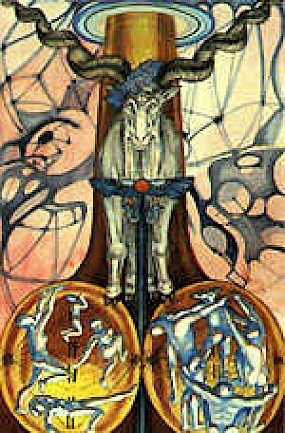

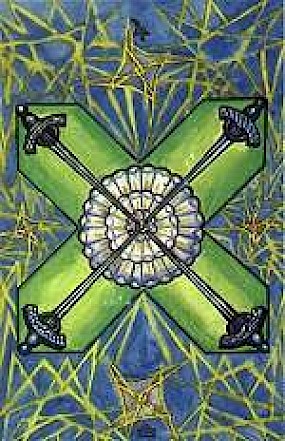





_p012_BAKU,_FIRE_TEMPLE_(cropped).jpg)


.jpg)