
Baba Ram Dass An evening with Ram Dass and Eckhart Tolle – these two teachers engage in an open conversation about spiritual awakening and the transformation of consciousness, October 28, 2011 in Maui, HI.
Monthly Archives: August 2021
Ram Dass: Fierce Grace
Music in this video
Learn more
Listen ad-free with YouTube Premium
Song
Be Here Now (2006 Digital Remaster)
Artist
Writers
George Harrison
Licensed to YouTube by
UMG (on behalf of UMC (Universal Music Catalogue)); LatinAutorPerf, Concord Music Publishing, CMRRA, LatinAutor – ACODEM, Global Music Rights LLC, and 11 Music Rights Societies
Being a f**ker
Being a f**ker.
That’s what we are.
At our heart.
It only depends on how,
not really who
we f**k.
Do we do it fearlessly?
With courage
and with lust/love?
Do we do it psychically,
with all our body
and all our mind?
Does it leave us shitless?
Are we evacuated,
body and soul?
I’m proud to call
myself a f**ker.
My father was a f**ker
at least once in his life.
My mother was a f**ker
at least once in her life.
God is the biggest f**ker
of them all.
–Mike Zonta, BB editor
Kierkegaard on walking

Søren Aabye Kierkegaard (May 5, 1813 – November 11, 1855) was a Danish philosopher, theologian, poet, social critic, and religious author who is widely considered to be the first existentialist philosopher. He wrote critical texts on organized religion, Christendom, morality, ethics, psychology, and the philosophy of religion, displaying a fondness for metaphor, irony, and parables.Wikipedia
Blowing a raspberry
From Wikipedia, the free encyclopediaJump to navigationJump to search“Bronx cheer” redirects here. For the Law & Order episode, see Bronx Cheer (Law & Order).
Blowing a raspberry, strawberry, or making a Bronx cheer, is to make a noise similar to flatulence that may signify derision, real or feigned. It may also be used in childhood phonemic play, either solely by the child, or by adults towards a child to encourage imitation to the delight of both parties. It is made by placing the tongue between the lips, or alternately placing the lips against any area of skin, and blowing. When performed against the skin of another person, it is often a form of tickling. In the terminology of phonetics, the former sound has been described as a voiceless linguolabial trill, [r̼̊],[1] and as a buccal interdental trill, [ↀ͡r̪͆].[2]
A raspberry (when used with the tongue) is never used in human language phonemically (that is, as a building block of words). However, the bilabial trill (essentially blowing a raspberry with one’s lips) is a phoneme in some languages. Blowing a raspberry is widely used across human cultures.[citation needed]
Spike Jones and His City Slickers used a “birdaphone” to create this sound on their recording of “Der Fuehrer’s Face“, repeatedly lambasting Adolf Hitler with: “We’ll Heil! (Bronx cheer) Heil! (Bronx cheer) Right in Der Fuehrer’s Face!”[3][4]
Etymology
The nomenclature varies by country. In most anglophone countries, it is known as a raspberry, which is attested from at least 1890,[5] and which in the United States came to be abbreviated as razz by 1919.[6] In the United States it has also been called a Bronx cheer since at least the early 1920s.[7][8]
Blowing a “raspberry” derives from the Cockney rhyming slang “raspberry tart” for “fart”.[9][10] Rhyming slang was particularly used in British comedy to refer to things that would be unacceptable to a polite audience. “Raspberry” was also given the pronunciation spelling “razzberry” in the US, of which “razz” is an abbreviation.
Book: “The Sexual Politics of Meat: A Feminist-Vegetarian Critical Theory”

The Sexual Politics of Meat: A Feminist-Vegetarian Critical Theory
First published in 1990, The Sexual Politics of Meat is a landmark text in the ongoing debates about animal rights. In the two decades since, the book has inspired controversy and heated debate.
Praise for The Sexual Politics of Meat:
CAROL J. ADAMS i s the author of The Pornography of Meat (Continuum, 2004), and co-author of Beyond Animal Rights (Continuum, 2000), and The Bedside, Bathtub, and Armchair Companion to Jane Austen (Continuum, 2008). She has toured as a speaker throughout the United States, Canada, and Europe. More information can be found at her website: http://www.triroc.com/caroladams
(Goodreads.com)
A COURSE IN MIRACLES: LESSON 21
1,000-Year-Old Remains May Be Of A Highly Respected Nonbinary Warrior, Study Finds
August 9, 2021 (npr.org)
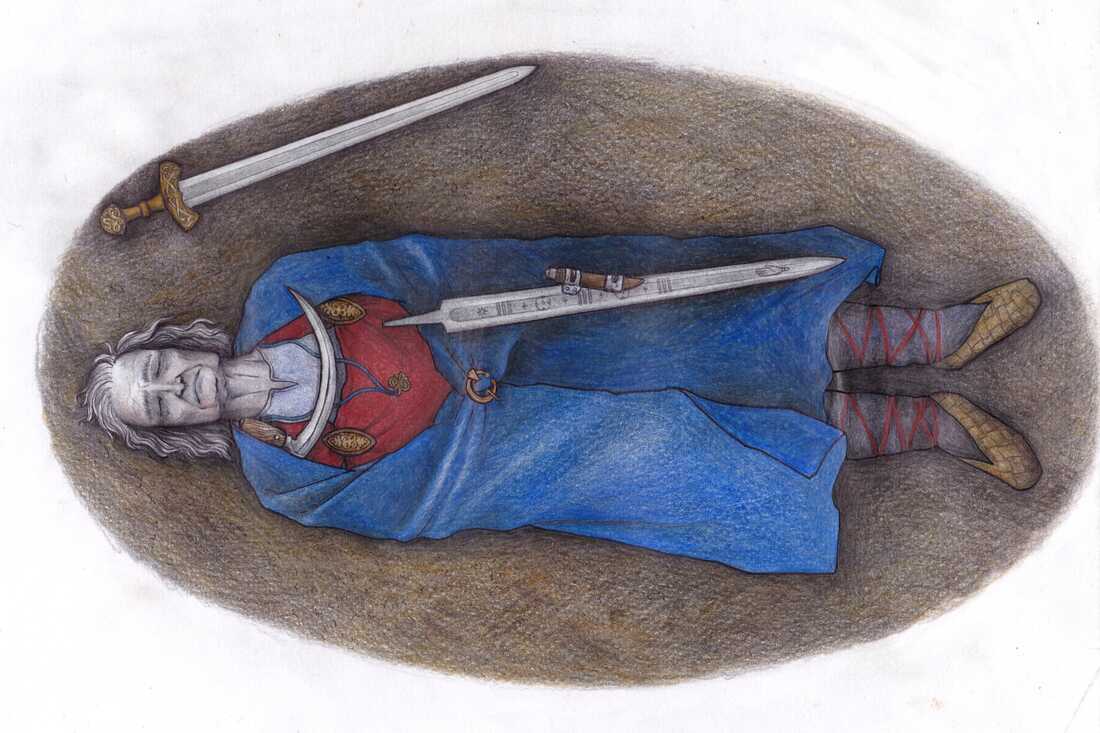
A reconstruction drawing of the Suontaka grave from 1,000 years ago and that is now thought to be the final resting place of a nonbinary warrior.Veronika Paschenko/University of Turku
Analysis of ancient DNA found in Finland has unveiled a surprise a century later – the remains of an early medieval warrior thought to be female may have been nonbinary.
The new findings challenge previous ideas about gender roles and expression and suggest that nonbinary people were valued and respected members of their communities, researchers concluded in their study, published in the peer-reviewed European Journal of Archaeology,
The findings are a reminder that “biology does not directly dictate a person’s self-identity,” said Ulla Moilanen, the study’s lead author and an archaeologist at Finland’s University of Turku.
SHOTS – HEALTH NEWS
What Ancient ‘Chewing Gum’ Can Tell Us About Life 5,700 Years Ago
Archaeologists first discovered the grave in 1968. Located in Suontaka Vesitorninmäki, southern Finland, the remains were buried alongside a sword and jewelry such as brooches and found in fragments of woolen clothes — which were “a typical feminine costume of the era,” the researchers said.
But the use of DNA analysis decades later found chromosomes that didn’t match what’s expected for males or females. The researchers — based in Finland and Germany — concluded that the buried person likely had Klinefelter syndrome and was anatomically male.Article continues after sponsor message
Females are typically born with two X chromosomes (XX) and males are born with one X and one Y chromosome (XY). Males born with Klinefelter syndrome are born with an extra X chromosome (XXY), according to the United Kingdom’s National Health Service.
The syndrome affects about 1 in 660 males. Those with Klinefelter may have low levels of testosterone, a smaller penis, undescended testes, enlarged breasts and infertility. Many people aren’t diagnosed until they are older and test their fertility levels; others are never diagnosed.
THE TWO-WAY
Researchers Dig Up ‘Homosexual Or Transsexual’ Caveman Near Prague
In their findings, the researchers noted that the remains were “badly damaged” and that they only had a small sample to test. But through the use of modeling, they said they “found overwhelming evidence that the genetic data of the Suontaka individual most closely resemble an XXY karyotype.”
The honorable way the warrior was buried led researchers to conclude that the remains were of “a respected person whose gender identity may well have been non-binary.”
“If the characteristics of the Klinefelter syndrome have been evident on the person, they might not have been considered strictly a female or a male in the Early Middle Ages community,” Moilanen said. “The abundant collection of objects buried in the grave is proof that the person was not only accepted but also valued and respected.”
SCIENCE
Ancient DNA Ties Native Americans From Two Continents To Clovis
The new research indicates that even in an “ultra-masculine environment of early medieval Scandinavia” where men with “feminine social roles and [who] dressed in feminine clothing were disrespected and considered shameful,” there may have been individuals who did not fit gender norms and were still admired, the researchers concluded.
Other archaeologists and historians not involved in these new findings told Livescience they found the work exciting, as it calls attention to conversations surrounding gender, bodies and identity.
“It is a well-researched study of an interesting burial,” said Leszek Gardela, a researcher at the National Museum of Denmark. “It demonstrates that early medieval societies had very nuanced approaches to and understandings of gender identities.”
The fog of grief
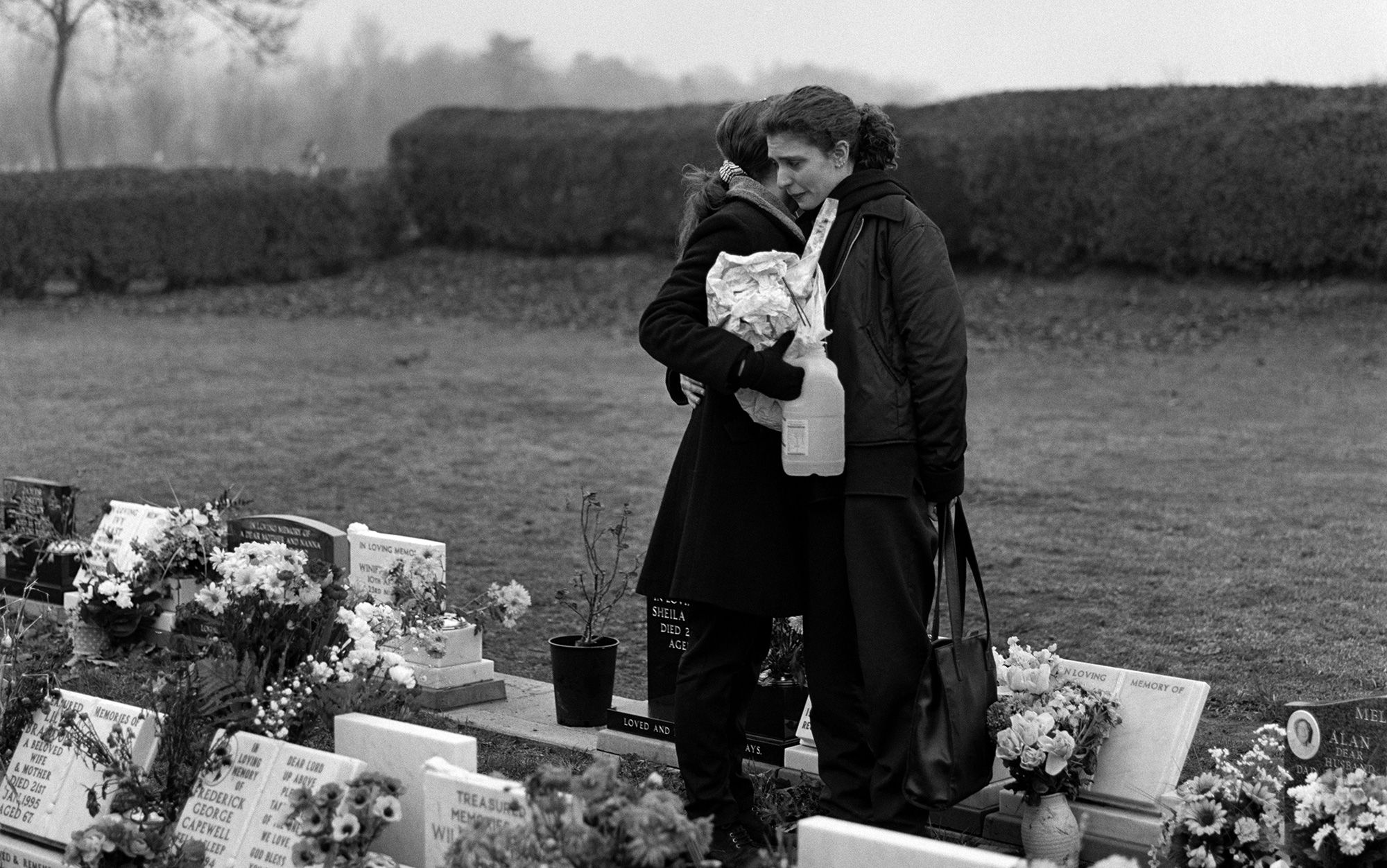
The five stages of grief can’t begin to explain it: grief affects the body, brain and sense of self, and patience is the keyPhoto by Peter Marlow/Magnum
April Reese is an independent science and environment journalist based in Santa Fe, New Mexico. Her work has appeared in Scientific American, Outside, bioGraphic and The Guardian, among many other outlets.
Edited byPam Weintraub
10 August 2021 (aeon.co)
Aeon for Friends
When the hospice nurse called on the morning of 2 April to tell me that my father had died at 7:38am, just two days after he was released from the hospital and seven hours after I arrived in town to see him, the world suddenly felt strange, half-formed. I recognised the shapes of things, but struggled to comprehend what I was seeing. I didn’t realise how much of a pillar of my existence he was, until that pillar crumbled. Since the day I was born, he was a constant presence, even at 2,000 miles away – he lived in Maryland, I lived in New Mexico – and now he no longer existed. As much as my rational mind knew this to be true, to the rest of me it just didn’t seem possible.
On the outside, I remained calm, quietly cycling through the unwanted tasks incumbent upon the eldest child of the bereaved: telling other family members, making arrangements, notifying government agencies, companies, organisations, the university where he was a librarian for 33 years. But on the inside, I was a churning maelstrom of emotions: sadness, confusion, anger, disbelief, fear, regret, guilt. At times in those first hours, days and weeks after his death, it was hard to breathe. I couldn’t concentrate. I forgot things. Fatigue was a constant, no matter how much I slept. I came to understand what Joan Didion meant in The Year of Magical Thinking (2005), a chronicle of her grief over the loss of her husband, when she wrote: ‘I realised for the time being I could not trust myself to present a coherent face to the world.’
This fog of grief, it turns out, is as common as grief itself. When the neurologist Lisa Shulman lost her husband to cancer nine years ago, ‘there was some serious sadness, but that wasn’t the main problem,’ she recalls. ‘It was the disorientation. I felt like I was waking up in a completely alien world. Because the whole infrastructure of my daily life was fundamentally gone.’
She found herself becoming lost in time, ending up in familiar places without knowing how she got there, she recalls. ‘It’s not simply a matter of discomfort or anxiety. It’s frightening,’ she says. ‘Because you feel like, as Didion said long ago, you feel like you’re going crazy.’
The idea of the five stages of grief, common in the Western world, doesn’t help. It’s become part of the zeitgeist that we go through these stages in turn, from denial to anger to bargaining to depression and finally to acceptance. The psychiatrist Elisabeth Kübler-Ross first proposed these five stages of grief in her book On Death and Dying (1969) as a way to describe the experience of people facing a terminal illness. Later, with the death and dying expert David Kessler, she extended the idea to explain the bereaved’s response to loss in On Grief and Grieving (2005). But in recent years, psychologists and neurobiologists have come to realise that grief is far more complex and individualistic. The ravages of grief are many and varied. A bereaved person feels sad, of course, but they might also feel angry, irritable, tired, unmotivated, deflated, even bothered more than usual by noise. Like Shulman, a neurologist at the University of Maryland School of Medicine, they might question their identity, their place in the world.
The five stages of grief theory, it turns out, is not a particularly helpful way to think about bereavement. In fact, it can be harmful: if the way we feel doesn’t fit the mould, we might think that there’s something wrong with us – or with the people around us.
‘Importantly, we may turn away from our instinct to do things that comfort us in the belief that there are right and wrong ways to behave,’ Shulman writes in her book Before and After Loss (2018). ‘But our experience of loss is personal and intimate. It doesn’t lend itself well to generalisation; it’s as unique as we are.’
The study of the bereaved has revealed just how diverse people’s experiences of grief are – but also some interesting patterns. In a remarkable study of depression in the bereaved, published in the Journal of Psychiatric Research in 2015, researchers monitored 2,512 people who had lost a spouse or child – once before and three times after the loss, over a span of 18 years. They found that, while 7 per cent had chronic depression that persisted throughout the study period, most of the participants – about 68 per cent – experienced only mild depression, or none at all. Meanwhile, 11 per cent reported dealing with depression before the death, but the depression eventually lessened over time, and 13 per cent experienced chronic grief – an onset of depression after the death.
Her own experience inspired Shulman, who studies Parkinson’s disease, to investigate the neurology of grief as a way to understand what was happening to her. In her book, which interweaves her grief story with the science of bereavement, she notes that grief is a universal human experience that our brains have evolved to manage. Over millennia of collective loss, the brain has developed a sophisticated strategy to help us endure bereavement and, eventually, to heal, says the psychologist Natalia Skritskaya. ‘Grief is a natural reaction,’ she says. ‘However unsettling, and however strange those reactions are, there are good reasons for them.’
Grief has such a powerful effect on us, I learned, that it rewires the brain: the limbic system, a primal part of the brain controlling emotions and behaviours that ensure our survival, takes centre stage, while the prefrontal cortex – the centre of reasoning and decision-making – retreats to the wings.
‘From an evolutionary standpoint, we are strongly hardwired to respond to something that is a threat,’ Shulman says. ‘We oftentimes don’t think of a loss of a loved one as a threat in that way, but, from the perspective of the brain, that’s the way it is literally perceived.’
Like a stern nurse imposing bed rest, the brain suppresses the control centres of decision-making and planning
That perception of threat means that our survival response – ‘fight or flight’ – kicks in, and stress hormones flood the body. The work of the psychologist Mary-Frances O’Connor at the University of Arizona and others has found heightened levels of the stress hormone cortisol in the bereaved.
While the cortisol is flowing fast, the brain remakes itself – at least temporarily – to help us endure the trauma of grief. In the weeks after a loss, the brain, like a stern nurse imposing temporary bed rest for itself, suppresses the control centres of higher functions, such as decision-making and planning. At the same time, Shulman says, areas involved in emotion and memory work overtime, gatekeeping which emotions and memories get through. Brain scans of the bereaved show that grief activates parts of the limbic system – sometimes referred to as the ‘emotional brain’. Among the limbic regions impacted are the amygdala, which governs the intensity of emotions and threat perception; the cingulate cortex, involved in the interplay between emotions and memory; and the thalamus, a sort of relay station that conveys sensory signals to the cerebral cortex, the brain’s information-processing centre.
‘To sustain function and survival, the brain acts as a filter sensing the threshold of emotions and memories that we can and cannot handle,’ Shulman writes in her book. There is little we can do to change this response, she adds, though we wouldn’t necessarily want to; it’s essential for adjusting to the loss. ‘We’re at the mercy of this whole process, basically,’ Shulman says.
So my inability to form coherent sentences or remember what I opened the refrigerator to get is nothing to be worried about, Skritskaya assures me; my brain has simply powered down my thinking to enable me to tolerate the loss. The tradeoff is fuzzy cognition – what I’ve come to describe to friends as ‘grief brain’.
‘Grief takes up a lot of bandwidth in the brain,’ Shulman writes in her book. ‘Odd behaviour and incoherence are expected consequences of the brain’s protective responses following emotional trauma.’
Just as the body knows what to do to heal a wound, the brain knows what to do to heal itself after a loss. But that healing takes time, Skritskaya says: ‘It requires kindness and being gentle with yourself.’
How long grief lasts varies from one person to another. For some people, the pain of loss can pass within a few weeks or months, while others might still feel deep sorrow a year later.
If the grief is too intense for too long, though, it can become problematic, recent research suggests. If there’s a preoccupation with the loss that lasts more than a year, treatment might be needed to help the bereaved come back to themselves, many psychologists now believe. The condition, called prolonged grief disorder or complicated grief, is included in the latest volume of the Diagnostic and Statistical Manual of Mental Disorders (DSM-5), which psychologists and psychiatrists use to diagnose clients.
That’s not to say that if someone is still grieving deeply on the 366th day after a loss, their bereavement has suddenly become disordered. ‘There’s some arbitrariness to that [one-year] time point,’ says Skritskaya, who is also a researcher at the Centre for Complicated Grief at Columbia University in New York. ‘It’s a balance between making sure we don’t pathologise normal reactions, but then also that we do give attention to people who seem to be struggling and need more help – those who are having a more intense experience.’
Most bereaved people vacillate between actively grieving and moving through the obligations of daily life
People who lost loved ones to violence, or had a very close relationship to the deceased, tend to be more vulnerable to complicated grief, a 2019 study by researchers in the Netherlands and the US found. While it can be easy to assume that prolonged grief is simply a form of depression, and can be treated the same way, it’s not. The same study notes that complicated grief is distinct from depression, and from post-traumatic stress or anxiety, though there is some overlap in symptoms, such as a diminished sense of self and social isolation. Other research has found that cognitive decline is more pronounced in people with complicated grief.
Cases of complicated grief are rare, though; only about 10 per cent of bereaved people will develop the disorder, according to a 2017 study by researchers at Aarhus University in Denmark. Most bereaved people vacillate between actively grieving and moving through the obligations of daily life with some semblance of normality.
This oscillation between sorrow and kind-of-OK describes my own experience. While working on this essay, for example, at times I was able to enter states of flow – extended periods of unfettered, focused writing – much as I could before my father’s death. But at other times, often in the same work session, I was overcome by despair and an acute awareness of my father’s absence from the world, an incomprehensible erasure. When thoughts of him surfaced, either wending their way into my consciousness of their own accord or through the trigger of an email from a friend or family member, an unbidden memory, even a letter from the hospice centre, there was nothing I could do but stop and let the sobs come.
It’s like my primal brain knows exactly what I need and will make sure I get it.
Indeed, researchers now recognise that the vagaries of grief, however unpleasant, are a way of helping the brain, mind and body cope with the loss – and, eventually, adapt to the new reality of life without a loved one.
Gradually, in ‘the process of dealing with loss, coming to terms with that world where you don’t want to be’, grief becomes more integrated into the bereaved’s everyday life, rather than a dominant force in it, says Judith Murray, a psychologist with the University of Queensland in Australia.
‘That’s the incredible power of healing from grief,’ she says. ‘We’ve got this idea that you get over your grief, but it becomes a part of who we are.’
With the cerebral cortex back at the helm and a return to higher-level thinking, the mind is able to spend more time reflecting on the loss and the relationship, and grappling with the meaning of it all can lead to positive growth. Loss can inspire people to examine life more deeply than they did before, and foster a greater awareness of their own fragility and a stronger sense of purpose, Shulman writes in her book. She cites a 2004 study that found that loss can lead to positive growth in a number of different ways: a new sense of priorities and a greater appreciation of life; better relationships; feeling stronger; a tendency to see new possibilities; and spiritual development. In her own life, Shulman found that journalling helped her to process her grief. In reflecting on her loss, she found meaning in it.
Not everyone experiences such growth after a deep loss, however. For some, the consequences can diminish their own health – and even hasten their own demise. Writing in the journal Psychosomatic Medicine in 2019, O’Connor notes that multiple studies have found increased rates of mortality among bereaved people. My dad might be yet another sad example of grief contributing to a premature death. Four months before he passed, his wife died, and his health deteriorated. When he finally went to the hospital, the doctors eventually diagnosed the source of the pain that had left him bedridden: he had developed severe stomach ulcers. I can’t know for sure, but my last conversations with him in the months before his death have left me with a deep suspicion that his own grief and loneliness contributed to his rapid demise.
Even for those who navigate the rough rapids of grief without falling overboard, grief never recedes completely. A 1995 study found that two to 15 years after bereavement, people who’d lost a child or a partner reported lower overall satisfaction with their lives – but greater coping skills.
Understanding the neurological underpinnings of my grief, and that growth often follows it, is a comfort – though I know any growth I gain from my father’s death is a long way off. For now, I’m tending to the emotions that arise as they come, (mostly) without judgment, and seeking comfort from supportive friends and immersion in the ponderosa pine forests near my home.
An email I received the other day from my father’s oldest friend, who knew him for 70 of his 79 years, gives me hope for a future in which this irrevocable loss no longer feels so potent, when my neural pathways re-order themselves once again and my ‘grief brain’ yields to a new reality, and a new way of remembering.
‘When we lose a friend, we have grief accompanied by fond memories,’ he wrote. ‘Eventually fond memories push the grief into the background. I’m waiting sadly, but patiently.’
To read more about the emotions, visit Psyche, a digital magazine from Aeon that illuminates the human condition through psychology, philosophical understanding and the arts.