The Creative Urge: John Coltrane on Perseverance Against Rejection, the Innovator’s Mindset, and How Hardship Fuels Art

By Maria Popova (brainpickings.org)

coltrane_simpkins.jpg?fit=320%2C501

To create anything of beauty, daring, and substance that makes the world see itself afresh — be it a revolutionary law of planetary motion or the Starry Night — is the work of lonely persistence against the tides of convention and conformity, often at the cost of the visionary’s aching ostracism from the status quo they are challenging with their vision. Rilke recognized this when he observed that “works of art are of an infinite loneliness” and Baldwin recognized it in his classic investigation of the creative process, in which he argued that the primary distinction of the artist is the willingness to maintain the state everyone else most zealously avoids: aloneness — not the romantic solitude of the hermit by the silver stream, but the raw existential and creative loneliness Baldwin likened to “the aloneness of birth or death” or “the aloneness of love, the force and mystery that so many have extolled and so many have cursed, but which no one has ever understood or ever really been able to control.”

This love-like force — the creative force — is what fuels the perseverance necessary to usher in a new way of seeing or a new way of being. It is the life-force by which visionaries survive the aloneness of their countercultural lives.

That is what jazz legend John Coltrane (September 23, 1926–July 17, 1967) addressed in an extraordinary letter penned in the late spring of 1962, posthumously included in Cuthbert Ormond Simpkins’s excellent 1975 biography Coltrane (public library).johncoltrane.jpg?resize=680%2C487

John Coltrane (Courtesy of johncoltrane.com.)

One June morning two years after the release of his epoch-making Giant Steps and five years before his untimely death of cancer, Coltrane opened his mailbox to discover a package from the editor of Downbeat magazine, the premier journal of jazz, containing a gift: a copy of Music and Imagination — a book of the six lectures the great composer and creativity-contemplator Aaron Copland had delivered at Harvard a decade earlier.

Coltrane’s letter of thanks for the gift unspools into one of those rare miracles when something small and seemingly peripheral prompts a sweeping yet succinct formulation of a visionary’s personal philosophy and creative credo — Coltrane’s most direct meditation on what it means to be an artist.

Millennia after Pythagoras’s revolutionary yet limited mathematics of music forked the sonic path of the modern world by laying the structural foundation of the Western canon but failing to account for the intricate unstructured musical styles of the African diaspora and my own native Balkans — a cultural irony, given Pythagoras developed his theory on the island of Samos, a thriving cross-pollinator of the Ancient Greek world perched midway between Africa and the Balkans — Coltrane observes that Copland’s lectures, while erudite and philosophically insightful, speak more to musicians in the Western tradition than they do to jazz musicians. Against Copland’s concern about how difficult it can be for artists to find “a positive philosophy or justification” for their art, Coltrane holds up jazz as living counterpoint — a musical tradition that began as an affirmation of life amid unimaginable hardship, provided a lifeline for those who conceived it and partook of it, and has thrived on the wings of this inherent buoyancy.firstbookofjazz_hughes1.jpg

Art from The First Book of Jazz by Langston Hughes, 1954

He writes:

2e292385-dc1c-4cfe-b95e-845f6f98c2ec.pngIt is really easy for us [jazz musicians] to create. We are born with this feeling that just comes out no matter what conditions exist. Otherwise, how could our founding fathers have produced this music in the first place when they surely found themselves (as many of us do today) existing in hostile communities when there was everything to fear and damn few to trust. Any music which could grow and propagate itself as our music has, must have a hell of an affirmative belief inherent in it.

Since we read (and write) about other lives to make sense of our own, he reflects on a biography he has been reading of Van Gogh — an artist who spent his short, revolutionary, tragic life negotiating between his private suffering and the irrepressible affirmative belief that forever changed art. With an eye to Van Gogh, Coltrane writes:

2e292385-dc1c-4cfe-b95e-845f6f98c2ec.pngTruth is indestructible… History shows (and it’s the same way today) that the innovator is more often than not met with some degree of condemnation; usually according to the degree of his departure from the prevailing modes of expression or what have you. Change is always so hard to accept.

vangogh_mulberry.jpg?resize=680%2C567

Vincent van Gogh: The Mulberry Tree, 1889.

In a sentiment evocative of artist Egon Schiele’s observation that visionaries tend to come from the minority and echoing the seventh of Bertrand Russell’s ten commandments of critical thinking — “Do not fear to be eccentric in opinion, for every opinion now accepted was once eccentric.” — Coltrane adds:

2e292385-dc1c-4cfe-b95e-845f6f98c2ec.pngInnovators always seek to revitalize, extend and reconstruct the status quo in their given fields, wherever it is needed. Quite often they are the rejects, outcasts, sub-citizens, etc. of the very societies to which they bring so much sustenance. Often they are people who endure great personal tragedy in their lives. Whatever the case, whether accepted or rejected, rich or poor, they are forever guided by that great and eternal constant — the creative urge.

This might be the most succinct summation of my creative choice of historical figures to celebrate in Figuring. It is also what Virginia Woolf meant when she wrote of the “shock-receiving capacity” necessary for being an artist, and what Patti Smith meant when, with an eye to Coltrane, she considered the shamanistic channeling at the heart of the creative impulse.

Complement with Coltrane’s contemporary and fellow jazz legend Bill Evans on the creative process, then revisit Walt Whitman on how to keep criticism from sinking your creative confidence.

Jack Kerouac Takes His First Cross-Country Road Trip

Jack Kerouac Takes His First Cross-Country Road Trip

July 11, 2021 (Lithub.com)

In 1947, Jack Kerouac was 25 years old and living with his widowed mother in Ozone Park, Queens. He had dropped out of Columbia, his friends had scattered, and he was working hard on his first novel, The Town and the City. He was about halfway done with his manuscript when he decided to take a little break—in the form of a cross-country road trip, his very first. He planned to go all the way from New York to San Francisco, stopping in Denver to meet Allen Ginsberg and their friend (and burgeoning official Beat Muse) Neal Cassady, on the way. On July 17, he set off, and it was this trip, mostly accomplished by bus and by hitchhiking, that would become the inspiration for the first part of On the Road

But first, Kerouac had to finish The Town and the City, which he did in May 1948. His style was still more Thomas Wolfe’s than his own, and when the novel was eventually published by Harcourt Brace in 1950, it was met with positive but not exactly effusive reviews, little fanfare, and fewer sales. By then, he had already been struggling for years to make his idea for a “road novel” work, though without much success—yet. But as the story goes, after filling many notebooks with ideas based on his travels, he sat down one day in April 1951 and, over the next three weeks, typed out the whole book in one go, on a scroll made from long pieces of paper taped together, aided only by a “Self-Instructions” list, which he used as a sort of outline.

That little novel, as you may have heard, turned out to be quite a success. Love it or hate itOn the Road has become an enduring American literary classic. It is a master class in repetition; it inspired countless artists, including Bob Dylan and Tom Waits; it defined not only a decade, but a generation. “After 1957 On The Road sold a trillion Levis and a million espresso coffee machines, and also sent countless kids on the road,” William S. Burroughs once said. “This was of course due in part to the media, the arch-opportunists. They know a story when they see one, and the Beat movement was a story, and a big one . . . The Beat literary movement came at exactly the right time and said something that millions of people of all nationalities all over the world were waiting to hear. You can’t tell anybody anything he doesn’t know already. The alienation, the restlessness, the dissatisfaction were already there waiting when Kerouac pointed out the road.” Not bad for a Gap model.

The Future of God: A Call to Consciously Evolve

Craig Hamilton Find more inspiring videos, audios, and articles at https://craighamiltonglobal.com How can we resurrect our sense of the sacred within a scientifically enlightened, evolutionary worldview? How can we discover a unifying context of meaning and purpose without adopting any dogmatic or superstitious belief systems? In this 2-hour talk, Craig explores the future of religion, spirituality, and God in an evolving universe.

Near-death experiences have long inspired afterlife beliefs

Near-death experiences have long inspired afterlife beliefs | Psyche

Detail from The Ascent of the Blessed (c1500-04) by Hieronymus Bosch at the Palazzo Ducale, Venice. Courtesy Wikipedia

Gregory Shushanis a researcher of near-death experiences and the afterlife across cultures and throughout history. He is the author of Conceptions of the Afterlife in Early Civilizations (2009), Near-Death Experience in Indigenous Religions (2018), The Historical Anthology of Near-Death Experiences (forthcoming) and The Next World (forthcoming, 2021). He is currently based in Santa Fe, New Mexico.

Edited by Matt Huston

12 JULY 2021 (psyche.co)

In 1881, a Native American man named Squ-sacht-un of the Squaxin Island Tribe in Washington territory fell ill and, by all appearances, died. His wife began funeral preparations. As Squ-sacht-un later recounted:

My breath was out and I died. All at once I saw a shining light – great light – trying my soul. I looked and saw my body had no soul – looked at my own body – it was dead.

His soul, according to one account, had ascended to a house where a man asked him if he believed in God. Inside the house, he encountered a photograph of himself that somehow revealed all the bad deeds he had committed in life. He then witnessed people he knew being burned in a furnace. Ultimately, he met God and was given a choice between returning to Earth to preach Christianity or going to hell. Before awakening, Squ-sacht-un was shown a beautiful, luminescent world where he experienced feelings of peace and comfort. Squ-sacht-un was transformed by the experience, explaining: ‘I have seen a great light in my soul from that good land; I have [understood] all Christ wants us to do. Before I came alive, I saw I was [a] sinner.’

This is an example of what would later be known as a near-death experience (NDE). NDEs have been popularly recognised in the West since the mid-1970s, but people from the largest empires to the smallest hunter-gatherer societies have been having them throughout history. Accounts are found in ancient sacred texts, historical documents, the journals of explorers and missionaries, and the ethnographic reports of anthropologists. Among the hundreds I’ve collected are those of a 7th-century BCE Chinese provincial ruler, a 4th-century BCE Greek soldier, a 12th-century Belgian saint, a 15th-century Mexica princess, an 18th-century British admiral, a 19th-century Ghanaian victim of human sacrifice, and a Soviet man who’d apparently killed himself but was revived during resuscitation experiments. NDEs can happen to followers of any religion, and to those of none.

Descriptions of NDEs from around the world often bear striking similarities to myths of afterlife journeys in different religions. In stories from ancient Sumer and Egypt to India and China and beyond, a soul leaves the body, travels through a dark place to a bright other realm, is greeted by deceased relatives, undergoes some kind of evaluation based on one’s life on Earth, meets a deity or other entity that’s often described as radiating light, and so on. It’s important to keep in mind that these common features are found despite the vast stretches of time and space that separate these cultures.

Not only were these religions grounded in NDEs, they served to democratise NDEs and allow their followers to experience them without having to die

Is it possible that this type of extraordinary experience that is universally associated with nearly dying is a fundamental source of beliefs about the afterlife? For many societies, there’s no need to speculate. In historical as well as modern accounts, NDEs are often said to lead directly to new beliefs, including the belief that consciousness can separate from the body and that it continues after death. I’ve unearthed more than 70 Native American NDE accounts dating from the 16th-19th centuries, and in more than 20 of them it was stated that the experience was a source of knowledge about the afterlife. Likewise, from the Pacific islands, 19 of the 36 NDE accounts I found had similar claims.

In a fascinating example from 1634, the Innu of eastern Quebec and Labrador told the French Jesuit missionary Paul Le Jeune that their knowledge about the afterlife came from two of their people who had travelled to the spirit world and returned. Their NDEs empowered the Innu to challenge Le Jeune’s claims about the Christian heaven and hell, for, according to the evidence of their people who’d had NDEs, everyone went to the same single realm after death.

NDEs have even been foundational to entire religious movements. Some NDE-based movements promoted a revitalisation – a symbolic rebirth – of local culture. A major example is the Ghost Dance religion founded by the Northern Paiute shaman Wodziwob following his NDE and other visionary experiences. But these movements have occurred around the world. In Brazil, Guyana and Venezuela, the Hallelujah religion of the Akawaio people had its origins in the NDEs and visions of its founder. The resulting teachings of such traditions included ritual practices (such as repetitive drumming and dancing, or hallucinogenic drug use) to bring about visionary experiences similar to NDEs. Not only were these religions grounded in individuals’ NDEs, they served to democratise NDEs and allow their followers to experience them without having to die.

Some larger religions, such as Pure Land Buddhism in East Asia, valorise NDEs and include numerous accounts of them in their sacred texts. In one example from 705 CE, an assistant governor of the Miyako district of Japan named Hirokuni was apparently dead for four days but then revived. He described how messengers had led his soul across a bridge and took him to a golden palace where he met the king of the other world. He saw punishments being inflicted on his father for his transgressions on Earth, and was told how to avoid such a fate:

Those who have Buddhist scriptures recited will live in the eastern golden palace and be born in the heaven according to their wish; those who have Buddha-images made will be born in the Western Pure Land of Unlimited Life; those who set living beings free will be born in the Northern Pure Land of Unlimited Life.

Whether such accounts have a basis in any actual historical NDE is unknown, though they do demonstrate how the phenomenon is commonly seen in a religious or spiritual context. As with numerous examples from medieval Europe and from 19th- to early 20th-century Mormons, Hirokuni’s story was obviously written to promote religious teachings, for like many people who’d had an NDE, he was reportedly transformed by the experience, and he became a model for pious behaviour within his tradition.

It’s important to note that NDEs don’t always emerge from a religious context, and that their impact on spiritual beliefs is not limited to people who are already religious. Committed atheists can also alter their beliefs and worldviews following an NDE. Upon revival from his NDE, the British logical positivist philosopher A J Ayer allegedly told his doctor: ‘I saw a Divine Being. I’m afraid I’m going to have to revise all my various books and opinions.’

Near-death experiences can make it rational to believe in an afterlife while remaining an atheist

We must also be careful not to overstate the crosscultural similarities with regard to NDEs. Although they share similar themes wherever they occur, no two NDEs are exactly alike. As with any other experience, they are filtered through our complex layers of culture, language and individuality. Given that he was a converted Christian, Squ-sacht-un’s NDE featured Christian imagery and instructions to preach the religion on his return to life. In Eastern examples, people who’d had NDEs are often sent back to the body due to a mistaken identity: the otherworld entities got the wrong person. In Western accounts, however, it is more often in order to complete some Earthly task, such as taking care of a child. One thing the various NDEs have in common, however, is that they’re virtually always understood as revealing ‘what happens when we die’.

Today, the NDE phenomenon continues to play a major role in our beliefs about souls, bodies, death and beyond. It is both a staple of popular culture and firmly a part of many alternative spiritualities. There are even NDE groups and societies in which members seek to renegotiate their spirituality in light of such experiences. These groups share much in common with religious movements, elevating those who’ve had NDEs to a higher, often guru-like status, and attempting to codify and disseminate beliefs derived from the experiences. They provide a way for unaffiliated ‘spiritual but not religious’ people to find a community with certain common beliefs. The testimonies of people who’ve had NDEs also give comfort to those who grieve the loss of loved ones, and to those who are fearful of death. These benefits come without the attendant commitments and potential philosophical compromises involved in mainstream religious affiliation. After all, believing in an afterlife based on personal experience doesn’t necessitate believing in myths of deities and their alleged concern for our daily lives. Near-death experiences can make it rational to believe in an afterlife while remaining an atheist.

There have been many explanations for why people believe in an afterlife at all. Afterlife beliefs have been described as a ‘carrot and stick’ invention of the ruling class to control behaviour with threats of ultimate punishment and promises of eternal reward. Others argue that such beliefs arose from observations of the dying-and-returning cycles of nature – the setting and rising of the Sun, the waning and waxing of the Moon, the annual rebirth of plants and trees. Or perhaps they stem from our yearnings for justice after a life of Earthly disappointments, and are essentially wish-fulfilment fantasies. Most recently, cognitive science has suggested that we’re actually hard-wired to intuitively believe in an afterlife.

Each of these theories might play a role in explaining certain aspects of particular beliefs in specific societies. But they all ignore the single human experience most obviously relevant to beliefs in an afterlife: near-death experiences. Whatever the true source of NDEs – biological, psychological or metaphysical – there’s no question that they’re part of human experience, that they can influence our beliefs about an afterlife, and that they can even contribute to the formation of new religious movements. The phenomenon of NDEs reinforces what humans already seem predisposed to believe: that, in fact, we do not die.

When Squ-sacht-un returned from his NDE, he fulfilled the promise he’d made in the spirit world and began to teach Christianity – though with a markedly Indigenous character. This was the foundation of the Indian Shaker Church, so named because of the ecstatic convulsions of its members during ceremonies. While the Shakers considered themselves Christians, they did not favour the Bible as a revelatory source – relying instead on the testimony of Squ-sacht-un, who was also known as John Slocum. Louis Yowaluch, the head of the Church in 1893, noted the NDE’s foundational role in the Church’s beginning: ‘We heard there was a God from John Slocum … We [had] never heard such a thing as a man dying and bring[ing] word that there was a God.’

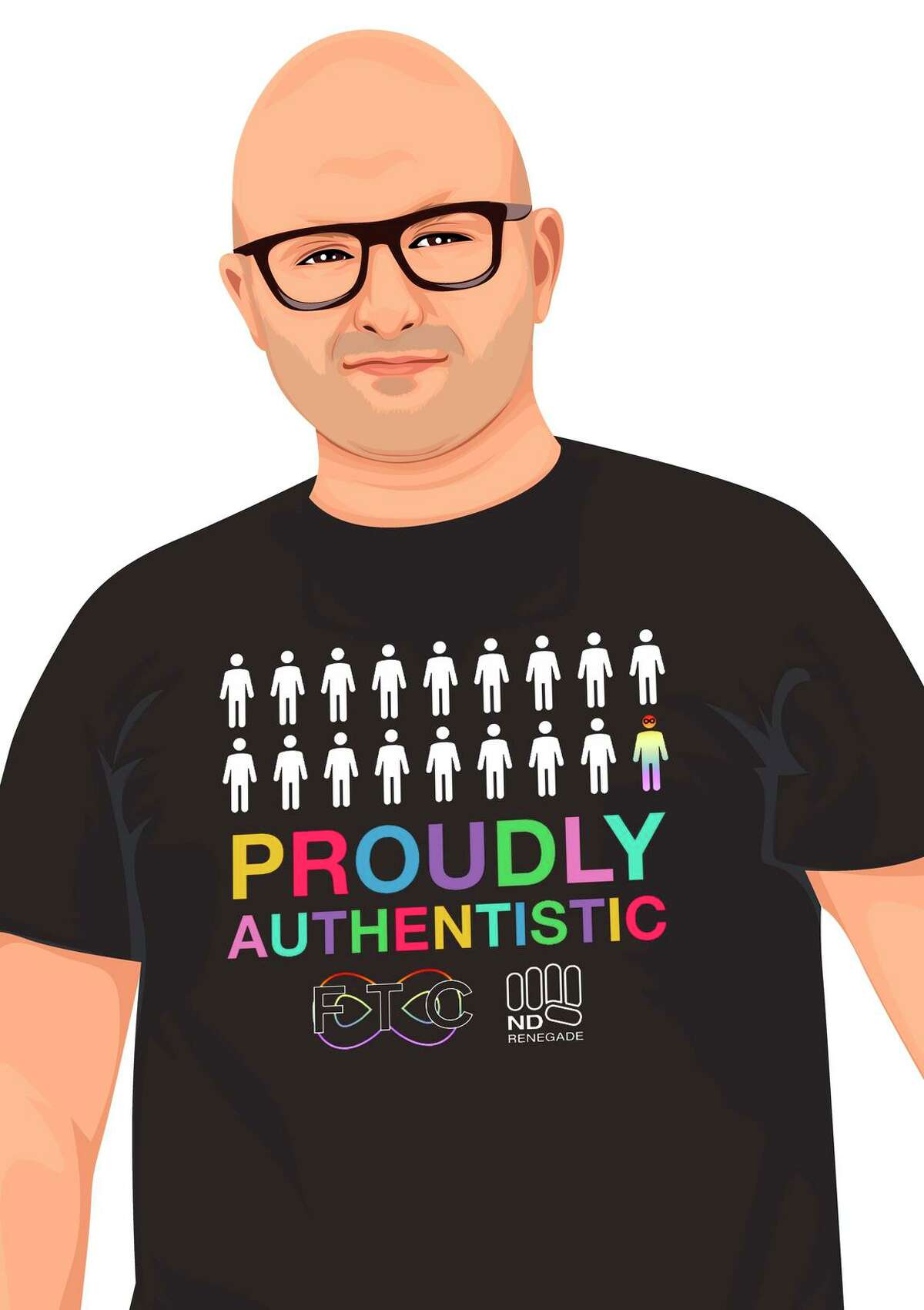
I’m autistic. Deal with it

Armon Owlia July 12, 2021 (SFChronicle.com)

"I cannot and do not need or want to be cured. I am, in fact, alive, expressive and capable," writes Armon Owlia, a longtime advocate for autism awareness.
“I cannot and do not need or want to be cured. I am, in fact, alive, expressive and capable,” writes Armon Owlia, a longtime advocate for autism awareness.Sally Willibanks and Armon Owlia / TheCartoonist

It’s difficult being autistic in a neurotypical world. We, a culture of over 6 million strong, live amongst you. Some of us live in secret, others loud and proud, but we are united by a self-evident truth that we should be treated equally.

And yet equality for us routinely means adapting to the world as it is, rather than having neurotypicals meet us halfway.

Ableism, discriminating against disability, whether visible or not, is still acceptable. For most on the spectrum, our disability lies hidden.

On your television and film screens, autism is a one-dimensional trait. We are either the silent savant or the smartest in the room, with conveniently amusing social miscues and “quirks” advancing the plot. We are the easy punchlines and internet memes.

When observing how we get through a day, people often ask, “What’s wrong with you?”

There’s a simple answer to that: nothing.

For those of you not connected in some way to autism: Do you know what a “stim” is or how a sensory overload feels?

You probably don’t.

A stim is a repetitive action that varies from person to person. It helps relieve tension and stress. For some it’s dancing. Others could snap, rock, or even sing.

Sensory overloads, too, are a gigantic pain. Imagine your heart is beating out of your chest, breathing becomes more and more difficult, the walls close in. Muscles begin to tense up and you feel as though you’re going to snap at any second. At least that’s what it feels like for me.

It’s miserable. But I persist.

If “advocacy” groups had their way, and they do, they would say autistic people are meant to be pitied and grieved. There needs to be a cure so we can make you feel comfortable.

I hate to break it to you: We are also human beings. It’s difficult to express how we feel, but we are not empty vessels.

I cannot and do not need or want to be cured. I am, in fact, more alive, expressive and capable than you give me credit for.

But the discrimination against people like me is real. Only 15% of autistic people are employed. When you mention autism on an application, you expect it to get tossed without a second thought.

Upon graduating from college, I applied to countless jobs in a wide variety of industries, all of which I was qualified for. On the Equal Employment Opportunity form, under the question of whether or not I have a disability, I disclosed either that I was autistic, or that I would not answer the question.

I have never once heard back from an employer.

I am heading to UC Berkeley in the fall to work toward a graduate degree. Time will tell if even that lofty achievement can insulate me from further discrimination.

So what can you do to turn the tide as a neurotypical power broker?

First, look at yourself in the mirror. You have two eyes, two ears and one mouth. Don’t speak for us; listen to what we have to say. No two autistic people have the same experience.

Allow us to voice our opinions. Take notes on everything you hear. And then, after we explain it, share it with other neurotypicals. Take our truth and make it contagious.

Importantly, in an age where you would cancel someone over a racial slur, sexist remark, or homophobic comment, call out ableism in word or action.

To neurotypical parents, if you suspect your child is autistic, get them tested now. Don’t feel ashamed or grieve. There is no one to blame.

Let your children know they are loved and supported. Have their back as they go through the ups and downs of finding themselves, learning how to live as a neurodivergent person in a neurotypical society.

To neurotypical creators in media: realize your importance and how much having openly autistic characters in media will move the needle.

Even bad portrayals, such as Maddie Ziegler’s recent abysmal stereotype of an autistic person in “Music,” can move the needle. It showed the world that the old tropes and stereotypes perpetuated by films such as “Rain Man” were not going to cut it anymore.

With better awareness and acceptance comes better representation. It also increases the demand for more accurate portrayals, with both autistic and neurotypical actors playing the parts.

We are multidimensional people.

Great recent portrayals of us include Matilda Moss on “Everything’s Gonna Be Okay” and Sonya Cross on the short-lived TV show “The Bridge.”

Both of these characters have positives and negatives and are people first before they are autistic. Yes, they are openly on the spectrum, but the spectrum doesn’t define them.

That is the bar we should be setting.

Not every neurotypical person in the world is ill-informed about autism awareness and acceptance. No one knows everything about autism, and even the current information is not evergreen.

As difficult as it may be, we must listen to each other to create a better, more inclusive world. We must all show decency, helping each other up. We must stay inquisitive and hungry.

It shouldn’t take another century to make progress. Let’s begin the journey today and walk forward together.

Here’s to that journey.Armon Owlia is an incoming master’s in journalism student at UC Berkeley who has been a longtime advocate for autism awareness and acceptance. He is the creator and host of the YouTube series “For the Culture,” and the upcoming podcast “The Aut Cast.”

Written By Armon Owlia

HEARST newspapers logo©2021 Hearst

TEDxAdelaide – Lorimer Moseley – Why Things Hurt

TEDx Talks Why do we hurt? Do we actually experience pain, or is it merely illusion? In this video, Lorimer Moseley explores these questions, and position the pain that we feel as our bodies’ way of protecting us from damaging tissues further. He also looks at what this might mean for those who suffer from chronic pain. In the spirit of ideas worth spreading, TEDx is a program of local, self-organized events that bring people together to share a TED-like experience. At a TEDx event, TEDTalks video and live speakers combine to spark deep discussion and connection in a small group. These local, self-organized events are branded TEDx, where x = independently organized TED event. The TED Conference provides general guidance for the TEDx program, but individual TEDx events are self-organized.* (*Subject to certain rules and regulations)

TRANSLATION WORKSHOP on July 16

Friday, July 16 at 4:00pm Pacific Time

Al Haferkamp, H.W. M.
 
In response to requests from some of our new Translators, there will be a Translation workshop this Friday July 16 at 4:00pm Pacific Time.  The workshop, presented via Zoom, will be one hour and will focus on the needs of new Translators, especially in the area of the 3rd Step Argument.
 
If you will be attending the workshop, write out an argument regarding the sense testimony:  “Other persons can work against another”.  We will share and discuss our sample arguments.  We will also discuss other questions you may have as time allows.
 
Feel free to contact me with any questions.  The meeting link is below.
 
–Al Haferkamp, Host
 
Topic: Translation Workshop
Time: Friday July 16 4:00 pm USA Pacific Time  (7:00pm ET) (7:00am Western AUS) (9:00am Brisbane AUS)
 
Join Zoom Meeting
https://us02web.zoom.us/j/4502615790
 
Meeting ID: 450 261 5790
One tap mobile
+16699006833,,4502615790# US (San Jose)
+12532158782,,4502615790# US (Tacoma)
 
Dial by your location
        +1 669 900 6833 US (San Jose)
        +1 253 215 8782 US (Tacoma)
        +1 346 248 7799 US (Houston)
        +1 301 715 8592 US (Washington DC)
        +1 312 626 6799 US (Chicago)
        +1 929 205 6099 US (New York)
Meeting ID: 450 261 5790
Find your local number: https://us02web.zoom.us/u/k75FEK1OU

The Power of Coincidence on the Spiritual Path – with David Richo Phd and Brother Jude Hill SSF

Analytical Psychology Club of San Francisco APC-SF The Power of Coincidence on the Spiritual Path David Richo Brother Jude Hill SSF The Analytical Psychology Club of San Francisco A series of unusual events or a combination of similar happenings may not be mere coincidence. Synchronicity is the meaningful coincidence or connection of events that can set the course of our life. They can guide us, warn us, and confirm us on our life’s path. Drawing on Jung’s concept of synchronicity—and combining insights from psychology and Buddhism—we explore how synchronicity, i.e., meaningful coincidences operate in our daily lives, in our intimate relationships, and in our creative endeavors. David Richo, PhD, MFT, is a psychotherapist, teacher, workshop leader, and writer who works in Santa Barbara and San Francisco California. He combines Jungian, poetic, and mythic perspectives in his work with the intention of integrating the psychological and the spiritual. His books and workshops include attention to Buddhist and Christian spiritual practices. Brother Jude Hill, SSF, PhD, IAAP has been an Episcopal Franciscan Friar in England and the United States for almost 40 years. He trained as an analyst in London with the Guild of Analytical Psychologists founded by Baroness Vera von der Heydt who was his tutor. He is an Associate Priest at the Church of the Advent of Christ the King in San Francisco and combines Analytical Psychology and Spirituality in his work as a priest, spiritual director and retreat conductor.

Very Rare Moon-Venus-Mars Triple Conjunction Tonight (July 11, 2021)!

Matthew Stelzner Tonight and tomorrow night there is a very special opportunity to observe a rare celestial event: a tight Moon-Venus-Mars triple conjunction. The last time we could have seen an alignment like this was in February of 2017. The next time won’t be until November of 2027, nearly 6 1/2 years from now. So get outside somewhere special tonight, with someone you love, and where there is a great view for the sunset. After sunset wait to see Venus and the Moon emerge from the twilight, and then wait until it’s darker, (about an hour after sunset), and you should be able to see Mars very close to Venus. They are within about a degree of each other these next five nights, and if you have good conditions it should be pretty easy to spot Mars, though it is not much brighter than a star right now. This is because Mars is nearly as far as it gets from the Earth, and is about to disappear from view behind the Sun in about a month. On Sunday night the Moon will be below them both, within 4-5 degrees. If you have a pair of binoculars it is worth bringing them to see Mars really pop, revealing Mars’ striking red color. I saw them this way last night, and it is beautiful to see them all within the field of view of the lens. Venus and Mars are truly the dance partners of the solar system. No other pair has the cycles of visibility that these two do, sometimes appearing in the evening sky and then coming back for another dance in the morning sky six months later. Sometimes they can conjoin twice in the evening or the morning skies, and sometimes they don’t quite meet, but stay close together for a longer period of time. Every six 1/2 years they cannot be seen at all when they meet for an unseen dance in the underworld, where they are obscured by the light of the Sun. When they meet in the evening sky Venus is moving towards the Earth and is growing brighter in the western sky night by night. Mars, on the other hand, appears to dim in brightness as we on the Earth move further away towards the other side of the Sun. It is Venus on their return from the underworld meeting with Mars who is on their way there. Venus shares her light and love with Mars, granting him courage as he embarks into the depths that she has just returned from. Wishing you all happy sky watching, and sending blessings. Love! Sign up for my mailing list here: http://stelz.biz/register-for-my-emai… If you sign up for my mailing list you will receive my newsletter and special promotions. Daniel Giamario’s Shamanic Astrology article on Venus: https://shamanicastrology.com/wp-cont… Cayelin K Castel on the Venus Gates, Inanna and the Chakras: https://shamanicastrology.com/wp-cont… Check me out on Instagram where you will find unique content that is not shared here: @tarot_and_lola To explore more of my work, see my blog, and get information about my intuitive readings: Visit my website at http://stelz.biz/ Check out my recent videos on the powerful alignments of 2021 at: Very Powerful Astrology December 2020 – March 2021: https://youtu.be/JsCEDaGVuSs Very Powerful Astrology December 2020 – March 2021 –Part Two: https://youtu.be/uBdtf9H5K10 6 Planets in Aquarius: Is this the Dawning of a New Age?- https://youtu.be/tMqeEInj14E Astrology 2021: The Year of the Philosopher’s Stone- https://youtu.be/UNZmumsTy4w