Last Monday, I was walking backwards on Market Street, checking out this interesting-looking guy and I tripped on the curb and fell on my right hand. For a day or two it was painful to write or do anything with it. Being right-handed didn’t help. But in a few days, all was back to normal. The body did whatever it knew how to do to heal my hand and get it back to normal functioning.
Now why doesn’t this happen with the psyche? If we have a psychic wound, the tendency is to keep repeating the behavior over and over again, expecting a better result.
As Einstein is reputed to have said, “The definition of insanity is doing the same thing over and over again and expecting different results.”
But the psyche is not insane. The psyche knows that it is whole. Just like the body, wholeness is the default. If a healing is needed, if a psychic wound has taken place, then it is up to the psyche to heal itself, just like the body heals itself.
So the psyche will seek out situations and conditions and relationships to do just that. The idea is not to re-enact the trauma over and over again so that it becomes our new reality. The idea is to re-enact the trauma over and over again in our lives until we can add insight and perspective and context that was not present in the initial trauma.
Or we can just do this in our minds. In The Prosperos, we call this Releasing the Hidden Splendour or RHS. Also called the Joseph Technique. “You meant this for evil,” Joseph tells his brothers in Genesis, “But God [Consciousness] meant it for good.”
So that I might have a greater psyche and thereby nourish the consciousness of others and “save much people alive.”
The seated figure is part of the Harlem-based artist’s Chimera series of sculptures that combine African masks and European figures to explore mythologies of those cultures
By: Reuters | New York | May 8, 2021 4:20:09 pm (indianexpress.com)Sanford Biggers poses for a photo in front of his statue ‘Oracle’ at Rockefeller Center in the Manhattan borough of New York City, New York, U.S. (Photo: REUTERS/Carlo Allegri)
A massive new bronze sculpture welcomes visitors to Rockefeller Center in the New York landmark’s first campus-wide show by a single artist.
The 25-foot (7.6 m) tall black “Oracle” with a huge head joins murals, flags and videos at the venue, all created by Sanford Biggers, whose artwork also includes music and performance.
The seated figure is part of the Harlem-based artist’s Chimera series of sculptures that combine African masks and European figures to explore mythologies of those cultures.
“I’ve always been intrigued by Rockefeller Center for its architectural history and mythological references,” Biggers said in a statement, calling the Art Deco-styled venue “an ideal context for myth creation.”
The show by Rockefeller Center and Art Production Fund was slated to open in September, but was delayed by the coronaviruspandemic.
The works will be on view until 29 June, with plans to take the centerpiece sculpture on tour later.
Using self-mesmerism I felt overtaken on a cellular level by a serene form of concentration. I began to accumulate pages and finish my projects.
Credit…Illustration by Lossapardo
By Ingrid Rojas Contreras
Published May 26, 2021 Updated May 27, 2021 (NYTimes.com)
One thing I knew as an aspiring writer was that I was supposed to sit in front of a page for more than 10 minutes. I could not. I had grown up in Colombia during a violent time in the country’s history; my family and I had fled, but I suffered from PTSD. Fear had worked its way under my skin. I wrote a sentence, then questioned whether my surroundings were safe. I got up to check the locks, turn every available light on. The writing came a sentence at a time, but I could hardly finish anything. Even so, I loved writing and longed to do it in spite of personal distress.
First, I tried imagining myself as a cranky office manager. I monitored data. I clocked in and out with timecards. I created pie charts to track my time and the time it took to track my time. I drew elaborate graphs where Y measured the rise and fall of quality pages and X stood for possible culprits — starches, desk locations, prying eyes, news consumption, anxiety.
The data did not bring me closer to the state of mind I had identified as the most conducive for writing: a floating between presence and absence, a sense of stillness, awareness and listening.
Reflecting on that ideal mental state, I thought of mesmerism, the precursor to hypnosis, conceived in the 1770s by the German physician Franz Anton Mesmer. One school of his followers favored the somnambulistic trance, instigated by a choreography of visuals and touch. I began to wonder whether such trances could be of use to me, whether they would induce that floating sensation I needed in order to quiet the disturbances of trauma and dedicate myself to writing. And so I began to develop a ritual — a way of hypnotizing myself.
This love of ritual has metastasized into a way of life. There is an order to the cups I pull from the kitchen cupboard, a sameness to how I daily prepare what I ingest, five steps to my morning skin-care routine, four steps at night. Once, upon finishing the work of knitting a six-foot blanket, I immediately unspooled it, then reknit the thing.
It began with a color, a muted ultramarine blue that is warmer than navy and bright like royal blue. I found it while scanning the racks for a slip in a hue I did not much wear, one I intended to wear exclusively for writing. Each day, in preparation for my work, I put on the slip and actively imagined for 10 minutes that the color was a place in which intrusive thoughts might not enter. Then I forced myself to sit and write. When I wore the slip, I felt overtaken on a cellular level by a serene form of concentration. Under the spell of chromatic conditioning, I began to accumulate pages and finish my projects.
It began with a color, a muted ultramarine blue that is warmer than navy and bright like royal blue.
Over the 13 years I’ve dedicated myself to the somnambulistic trance, I’ve collected a number of outfits — silk slips, slinky tops, linen shorts, acrylic sweaters — all in muted ultramarine. At this point, I can no more resist wearing the color and sitting down to write than I can keep myself from taking a breath after an exhale. This mesmerism quiets my mind via an onslaught of repetition. The longer the repetition goes on, the stronger its mesmeric force.
My ritual for self-mesmerism has grown more elaborate over the years. On my designated writing days, I plod to the closet and pick out something in that muted ultramarine, after which I pick a song to play on repeat. It will loop for the next hour (or sometimes the rest of the day). There is always an initial moment of claustrophobia, but the looping music encourages a trance. The operational chatter of my mind grows quiet before it grinds to a halt. I transition into the territory of concentration. I don’t have to think about what I will do next: After doing it thousands of times, I’ve turned writing into muscle memory.
The best music for self-mesmerism is the kind that embraces repeating and minimally evolving phrases — Kali Malone, Caterina Barbieri, Ben Vida and William Basinski are artists I turn to with frequency. They are demanding, beautiful, blisteringly austere. Past the initial weariness of sonic repetition, I experience self-dissolution. I stop hearing the song. It becomes a series of staticky sonic impressions.
At a glance, repetition may look like invariability. But repeated listenings of a song are never identical: Differences emerge out of the drone of a routinized task. A glass may slip, the water I splash myself with may be colder or hotter than I expect. I knit the stitches of my blanket tightly, then loose. The sameness of repetition is never the point. It is a daily door I step through, on the other side of which I am emptied and am filled with something better. I leave the familiar behind to embrace what is unfamiliar and mysterious. No matter what is happening in my life, choosing repetition lets me deliver myself to the moment at hand.
Before self-mesmerism, trauma was something that exiled me from the present, causing me to revisit horrific events. It eroded my perception, until I came to believe that long-gone dangers were extant in the middle of my peaceful everyday. Repetition is how I shed skins of anxiety. The highest abundance I know comes from stripping myself to the minimum. There, I am boundless, timeless and surprising, a magnificent condensation of life.
Ingrid Rojas Contreras is the author of ‘‘Fruit of the Drunken Tree’’ (Doubleday, 2018). ‘‘The Man Who Could Move Clouds,’’ a family memoir, is forthcoming from Doubleday.
You may have heard that you should be pooping once a day — but that’s a load of crap, says Dr. Jen Gunter. From the enzymes in your mouth to the nutrient-absorbing power of your large intestine, she journeys through the digestive tract to explain why it’s okay to poop at your own pace — and shares the many regulating benefits of a fiber-rich diet. For more on how your body works, tune in weekly to her podcast Body Stuff with Dr. Jen Gunter, from the TED Audio Collective.
Eckhart Tolle In this video, Eckhart explains the relationship between disruptions and the evolution of consciousness. Subscribe to find greater fulfillment in life: http://bit.ly/EckhartYT Want to watch and hear more of Eckhart’s Teachings? Become a member today and join our growing YouTube community! http://bit.ly/ETmembership Interested in diving deeper into Eckhart Tolle’s work? Enjoy a FREE 10-DAY TRIAL to Eckhart Tolle Now: http://bit.ly/ET10Day
“The most beautiful people we have known are those who have known defeat, known suffering, known struggle, known loss, and have found their way out of the depths. These persons have an appreciation, a sensitivity, and an understanding of life that fills them with compassion, gentleness, and a deep loving concern.
“BEAUTIFUL PEOPLE DO NOT JUST HAPPEN.”
~Elisabeth Kübler-Ross
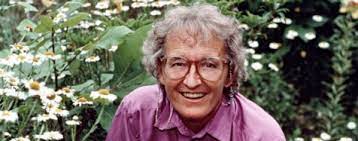
Elisabeth Kübler-Ross (July 8, 1926 – August 24, 2004) was a Swiss-American psychiatrist, a pioneer in near-death studies, and author of the internationally best-selling book, On Death and Dying, where she first discussed her theory of the five stages of grief, also known as the “Kübler-Ross model”. Wikipedia
“This work is not about healing others. We can’t heal another person. We can only heal ourselves until our presence is healing.”
–Irene Smith
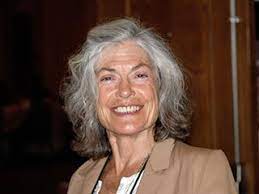
Irene began her journey as a massage therapist in 1974, certified from the Los Angeles School of Massage. She is a member of the Associated Bodywork and Massage Professionals ABMP, Hospice Volunteer Association, the San Francisco Bay Area End of Life Coalition and serves as a member of the Advisory Council for the Elisabeth Kubler Ross Foundation.
In 2001, Irene founded and currently directs Everflowing, an educational outreach program dedicated to teaching mindful touching, as an integral component to end of life care. Having introduced massage into hospice care on the West coast in 1982, Irene has worked with hundreds of persons in hospital, home, hospice, and skilled nursing environments.
As Director of the internationally acclaimed non-profit organization Service Through Touch (1982-1999), Irene established massage projects for persons with HIV/AIDS worldwide.
A respected author and educator, Irene teaches health care providers, and body workers tactile support skills for caring for ill and dying persons and creates resource materials utilized by institutions worldwide.
Her written contributions include Providing Massage in Hospice Care, Touch Awareness® In Caregiving, The Emotional Impact Of Working With The Dying, chapter four in Psycho Immunity and the Healing Process by Jason Serinus and chapter nine in Aids The Ultimate Challenge by Elisabeth Kübler-Ross MD.
Irene’s work has been honored by the somatic and health care communities as an outstanding contribution to community wellbeing. Irene’s awards for community service include For Those Who Care by KRON TV; Eight Who Matter awarded by the Associated Bodywork and Massage Professionals; two Cable Car awards for providing massage volunteers to hospitals for persons with Aids; the first National AIDS Memorial Grove’s inductee for AIDS service, and 2014 World Massage Festival lifetime achievement award recipient.
Irene continues to teach Providing Massage in Hospice Care in various locations in the US, teach Touch Awareness for several San Francisco Bay Area hospice organizations, and consults in the development and implementation of hospice massage programs.
As a West Coast assistant for over 10 years to her teacher, the late pioneering thanatologist, Elisabeth Kübler-Ross, MD, Irene brings remarkable depth, wisdom, and therapeutic presence to her work.

 Sanford Biggers poses for a photo in front of his statue ‘Oracle’ at Rockefeller Center in the Manhattan borough of New York City, New York, U.S. (Photo: REUTERS/Carlo Allegri)