When Walt Whitman contemplated the wisdom of trees, he saw in them qualities “almost emotional, palpably artistic, heroic,” and found in their resolute being a counterpoint to the human charade of seeming. “When we have learned how to listen to trees,” Hermann Hesse rhapsodized in his lyrical love letter to our arboreal companions, “then the brevity and the quickness and the childlike hastiness of our thoughts achieve an incomparable joy.” A century and a half earlier, William Blake wrote in his most beautiful letter: “The tree which moves some to tears of joy is in the eyes of others only a green thing which stands in the way… As a man is, so he sees.”
But to truly see and listen to a tree — or to any being beyond ourselves — as more than a teaching, more than an object of envy or worship or desire, more than a metaphor for our own lives, requires a special kind of regard — the kind to which Ursula K. Le Guin alluded in contemplating the difference between objectifying and subjectifying the universe.
This unsolipsistic orientation to another’s reality does not come easily to us, being such colonizers of the experience and essence of others as we are. What it takes to cultivate it is what philosopher Martin Buber (February 8, 1878–June 13, 1965) explores in poignant passage from I and Thou (public library) — his 1923 existentialist masterpiece, laying out Buber’s visionary lens on what makes us real to one another and extracting from it abiding insight into the meaning of love and presence.
I can look on it as a picture: stiff column in a shock of light, or splash of green shot with the delicate blue and silver of the background.
I can perceive it as movement: flowing veins on clinging, pressing pith, suck of the roots, breathing of the leaves, ceaseless commerce with earth and air—and the obscure growth itself.
I can classify it in a species and study it as a type in its structure and mode of life.
I can subdue its actual presence and form so sternly that I recognise it only as an expression of law — of the laws in accordance with which a constant opposition of forces is continually adjusted, or of those in accordance with which the component substances mingle and separate.
I can dissipate it and perpetuate it in number, in pure numerical relation.
In all this the tree remains my object, occupies space and time, and has its nature and constitution.
It can, however, also come about, if I have both will and grace, that in considering the tree I become bound up in relation to it. The tree is now no longer It. I have been seized by the power of exclusiveness.
To effect this it is not necessary for me to give up any of the ways in which I consider the tree. There is nothing from which I would have to turn my eyes away in order to see, and no knowledge that I would have to forget. Rather is everything, picture and movement, species and type, law and number, indivisibly united in this event.
Everything belonging to the tree is in this: its form and structure, its colours and chemical composition, its intercourse with the elements and with the stars, are all present in a single whole.
The tree is no impression, no play of my imagination, no value depending on my mood; but it is bodied over against me and has to do with me, as I with it — only in a different way.
Let no attempt be made to sap the strength from the meaning of the relation: relation is mutual.
Illustration by Arthur Rackham for a rare 1917 edition of the Brothers Grimm fairy tales. (Available as a print.)
The tree will have a consciousness, then, similar to our own? Of that I have no experience. But do you wish, through seeming to succeed in it with yourself, once again to disintegrate that which cannot be disintegrated? I encounter no soul or dryad of the tree, but the tree itself.
New research finds the organism can remember the location of food by altering the diameter of the creeping tendrils it uses to explore its surroundings
Slime mold in a petri dish. New research finds that slime molds can store memories by changing the diameter of the branching tubes they use to explore their environment, allowing them to keep track of food sources. (Nico Schramma / MPI-DS / TUM)
Slime molds, which are not actually fungi but cousins of single-celled amoebas, are goopy organisms that can find their way through a maze and remember the location of food—all without the benefit of a brain or nervous system. Now, new research brings us a step closer to understanding how exactly these slimy blobs store the “memories” that allow them to do things like relocate food, reports Nicoletta Lanese for Live Science.
When placed in a new environment, a slime mold sends out a fractal net of oozing tendrils to explore its surroundings. According to the new research, published this week in the journal Proceedings of the National Academy of Sciences, the slime mold encodes information about what it finds during these searches by changing the diameter of its exploratory tubes.
“There is previous work that biological signals within slime molds can store information about previous experiences,” Karen Alim, a biological physicist at the Technical University of Munich and co-author of the study tells Tara Yarlagadda of Inverse. “Yet, that the network architecture can store memories is [a] novel concept in the context of slime mold and fungi.”
The study’s main finding emerged from simply watching a bright yellow slime mold named Physarum polycephalum do its thing under a microscope. When the slime mold found food, the researchers noticed the network of tubes and tendrils changed its architecture in response, with some getting thicker and others getting thinner. What’s more, that pattern persisted long after the slime mold finished its meal.
“Given P. polycephalum‘s highly dynamic network reorganization, the persistence of this imprint sparked the idea that the network architecture itself could serve as memory of the past“, says Alim in a statement.
By measuring the changing diameters of the slime mold’s tubes when it found food and by developing a computer simulation of the organism’s behavior, the researchers found that the tubes closest to a morsel of food got thicker while those farther away withered and sometimes disappeared entirely, according to Inverse.
That pattern of thicker and thinner tubes ends up serving as a persistent imprint, that is, a rudimentary form of memory.
Per the paper, “memories stored in the hierarchy of tube diameters, and particularly in the location of thick tubes, are subsequently layered on top of each other, with every new stimulus differentially reinforcing and weakening existing thick tubes in superposition of existing memories.”
Given their observations, the researchers think that when the slime mold detects food it releases some chemical that softens the walls of nearby tubes, allowing them to expand. However, Alim tells Live Science that their results give no clues as to what chemical this might be, adding that this will be the subject of future studies.
“These results present an important piece of the puzzle in understanding the behavior of this ancient organism and at the same time points to universal principles underlying behavior,” says Alim in the statement. “We envision potential applications of our findings in designing smart materials and building soft robots that navigate through complex environments.”Like this article? SIGN UP for our newsletter
About Alex Fox
Alex Fox is a freelance science journalist based in Washington, D.C. He has written for Science, Nature, Science News, the San Jose Mercury News, and Mongabay. You can find him at Alexfoxscience.com.
Stop panicking about the COVID-19 variants, says UCSF’s Monica Gandhi.Photo Illustration: SFGATE/Courtesy of Monica Gandhi
COVID-19 case counts and hospitalizations are plummeting. Vaccine distribution is accelerating. After nearly a year, it seems we have finally reached the beginning of the end of the pandemic. As things continue to wind down, we’re starting a series called “Pandemic Exit Interviews” — a weekly series with a person of local interest who played a central role in the pandemic. We’ll ask each figure to share what they’ve learned, what they regret and where they see things going from here.
Dr. Monica Gandhi is not your typical epidemiologist in the era of COVID-19.
While the vast majority of experts in her field call for the most stringent business closures and other mitigation measures, Gandhi — a professor of medicine at UCSF — has called for a “harm reduction” approach that also considers other risks beyond COVID-19 infection when making public policy.
That view has not been a popular one among policymakers and experts in her city and state. But Gandhi is confident that one day, she’ll be vindicated.
The interview has been lightly edited for clarity and length.
SFGATE: You are one of the few “harm reductionists” in public health. Can you describe the difference between the “harm reductionists” and the “lockdownists,” as you’ve referred to them in the past?
Gandhi: I would say that harm reductionists like myself believe we can’t completely keep people away from each other, and that using really extreme language like “stay-at-home order,” or “see no one else” does not take into account human nature, loneliness and the economic reality that a lot of people need to go to work to survive.
I’ve long been concerned that the public health messages are only tailored to people who can work from home, people who work in tech and people with intact families and no need to see other people. Harm reductionists believe we should be giving messages that acknowledge some people will need to take some risks regarding COVID-19, and we should try to tell them how to keep safe in situations when in they’re in public or seeing others.
San Francisco was a place of harm reduction when it came to HIV and sexual health. Therefore, I was surprised that there were so few scientists in San Francisco (out loud, anyway) speaking of the need for harm reduction in San Francisco when it came to COVID-19 protection.
SFGATE: The lockdownists have much more power than the harm reductionists do in public health, and have at times expressed scorn for those with different opinions. Can you speak to what it’s been like to receive blowback for your views?
Gandhi: I have been surprised by the party lines that were drawn in terms of how to respond to pandemic, as opposed to having everyone take in new data as it comes, incorporate the data and then make decisions that can change over time.
It seems that we decided early on that there’s only one way to respond, and any dissent from standard messaging was met with dismay and criticism. For example, in terms of the winter lockdown in California, I was dismayed by the degree of profound shutdowns for outdoor playgrounds, outdoor dining and also this idea that no one from two households could see each other.
It was those three things that concerned me, since we knew outdoor spaces were safe, and going into holiday season, loneliness and the desire to see loved ones is a real phenomenon. And when I spoke out about that, I took a lot of criticism for not toeing the party line.
What I was trying to do was use harm reductionist principles, use the science we have that masks and distancing work, and then make recommendations along those lines.
What surprised me was this: My impulse in speaking out came out of a concern for the economic situations of the working class and the impacts on health that come from economic insecurity on things like housing and hunger. And those questions of, “How are they going to feed their families?” were met by scientific community with, “We’ll deal with that later, we’re only thinking about the virus right now.” And I was surprised by that.
SFGATE: What would you say is the most important thing you’ve learned during the pandemic?
Gandhi: I have learned a lot about nonpharmaceutical interventions to mitigate COVID-19 risk. I have thought deeply about the impact of mask wearing, as well as what distances are required to keep people safe, and how inexact the distancing science is. I have also learned a lot about the need for ventilation and the incredibly reduced transmission rates outside versus inside, and how prohibiting outdoor activities is counterproductive.
I have also learned a lot about the vaccines and their efficacy. And I’m surprised that the messaging today is all about how the vaccines don’t cover the variants, which is misleading. We should be spreading more optimism and talking less about mutations.
The vaccines are effective at preventing severe disease even against variants, so it’s very important not to panic.
SFGATE: Can you elaborate on that?
Gandhi: The best way to think about it is that all the vaccines down the line will offer 100% protection against hospitalization from COVID-19. During the trials, anyone who got hospitalized received the placebo in their arms. The Johnson & Johnson trial was conducted at a time the variants were circulating in both the U.S. and Latin America.
We can also quantify that 95% of the virus in South Africa when the trials were going on was the B.1.351 variant and despite that, the Johnson & Johnson single dose still offered 100% protection against hospitalization and 85% protection against severe disease, which is where you’re at home but not feeling well.
It was the same across the board whether it was South Africa, the U.K. or Latin America. The difference in the Johnson & Johnson vaccine is in mild disease; it had less efficacy against mild disease when dealing with the South African variant.
This kind of incredible efficacy is done by T cell responses, which are long-lasting and prevent the scariest thing about COVID-19, which is severe illness. I’ve been surprised by all the doom and gloom messaging about the variants and the vaccines, and I’m concerned it will lead to vaccine hesitancy. We should be pushing more optimism about the vaccines.
SFGATE: What’s the biggest thing you regret doing, saying or believing during the pandemic?
Gandhi: I’ve been extremely consistent on multiple messages around the benefits of masks and not closing schools. I was very consistent in saying we should not close schools, and once they were closed, I called for reopening them.
If I do have any hesitations, it’s that it has been difficult to not be fully embraced by the rest of the scientific community when I message the nuanced ways of learning about the virus. It’s been very difficult, and I’ve felt attacked at times.
When the outdoor dining thing came up, part of me wondered if I shouldn’t message anything and just be quiet. But I talked to a lot of people including friends, and someone said to me, “When you look at yourself in mirror when this all over, you’d rather be the person who took the trouble in the short run but was seen as being right later on.”
SFGATE: What would you say was your lowest point during the pandemic?
Gandhi: There were two low points: One was being piled on by multiple sides since I don’t toe the party line either way. I’ve already talked about the larger scientific community, but I also get lots of angry emails from anti-mask people about being pro-mask and “wanting to smother children” with masks.
The second low point was early on watching what was happening in New York, and wanting to go there while feeling completely helpless as a doctor. I remember being nonfunctional just watching the news one day. Those were two lowest points I’ve had.
SFGATE: In last week’s installment, your colleague Dr. Bob Wachter delivered a pretty strong defense of the city of San Francisco’s response to the pandemic, defending the fallout from prolonged closures by stating, “There are at least a few thousand people in San Francisco that are alive today that would not be if we didn’t respond way we did.” Do you agree or disagree with his argument?
Gandhi: I would say that San Francisco did extremely well in controlling the severity of illness, and I’m not even sure it’s all the Department of Public Health’s doing. We have the natural advantage of ventilation by virtue of our geography, so we had ventilation, mask wearing and lots of lockdowns, which gave us a fantastically low death rate.
However, San Francisco has been one of those cities where our response to other aspects besides COVID-19 has been worse than other places. So economics, school closures, mental health, substance abuse, homelessness and overdose deaths.
I’m concerned that the overemphasis on COVID means that we will have deal with the fallout for years to come. For example, I fear we have set back students in low-income communities greatly. In my mind, given the fact that vaccines are here, and given the fact that San Francisco has low disease severity, we should turn our attention at this point to all of the other collateral damage that occurs from business and school shutdowns and pay attention to that damage.
SFGATE: Do you believe we’re truly near the end?
Gandhi: Yes. I truly believe we’re panicking way too much about the variants.
It’s quite common for any RNA virus to mutate at high rate. I’m extremely optimistic that all of the vaccines will prevent severe illness — even against variants. To me, severe illness is why we started paying attention to COVID-19 in first place. Otherwise, we would have never even noticed an odd stray cold virus that came out of Wuhan.
We need to keep our eye on the most important thing about this pandemic: severe illness and death. We should be focusing less on variants, and more on the mass vaccination required to completely end the pandemic before the end of the year, which is something I believe we will accomplish.
Eric Ting is a reporter for SFGATE who covers politics, the coronavirus pandemic and sports.
The End Of The Pandemic (w/Dr. Monica Gandhi)
ZDoggMD A UCSF infectious disease doctor is convinced this pandemic is ending, and sooner than you think…here’s why. Transcript, podcast, and more: https://zdoggmd.com/monica-gandhi-3
1in6 “The harm you cause me really is to you because I’ve already forgiven you for what you’ve done because I wish you no harm.” To help raise awareness around the sexual abuse and assault of boys and men, please like, subscribe, & share. Find information and support regarding male sexual abuse and assault: https://1in6.org/ Chat with an advocate through the national helpline for male survivors: https://1in6.org/helpline OR 1-877-628-1in6 Join a weekly online support group for male survivors: https://1in6.org/supportgroups View other male survivor stories: https://1in6.org/bristlecone Request a training around male sexual trauma for service providers: https://1in6.org/training Give to help sustain and grow services for men who have experienced sexual abuse or assault: https://1in6.org/give Like us on Facebook: https://facebook.com/1in6org Follow us on Twitter: https://twitter.com/1in6org Find us on Instagram: https://instagram.com/1in6org ————————- When Tony was raped as a small boy, the deep wound might have shuttered his soul and severed his emotional ties to others. But the opposite happened. Perhaps because of the gentle, bone-deep love of his grandmother, who nurtured him tenderly in the months following the rape, and because of the elements of Tony’s own old soul, his heart never closed. Instead, the traumas of Tony’s childhood opened him to the pain and vulnerability of others, a gift that he is slowly learning how to manage. As a veteran teacher in the Oakland public schools, he is immersed in the wounds of countless young students. Breathing in their pain, he is learning also to breathe it out. A recent, life-changing visit to his ancestral home in Africa has catalyzed a new period of reckoning in Tony. Standing alone in the dungeon of the Cape Coast Castle in Ghana, where the agony of his ancestors reverberated through his bones; walking the streets of Addis Ababa, where a many-thousands year old culture resonated deeply within him; Tony is coming to grasp the fine weave of personal and ancestral threads that have come together to create him. Holding the beaded necklace representing his ancestors, he is beginning to look ahead, and to ponder where that unfinished tapestry might yet lead him. ————————- 1in6 is a national nonprofit organization supporting the estimated 1 in 6 men who have experienced sexual abuse or assault. At 1in6, we believe that the tens of millions of male survivors who have had such experiences deserve to live whole, meaningful lives, but we know that isn’t always easy. Entrenched myths about masculinity, the stigma and silence around the issue, and a lack of male-specific services are just some of the barriers men face to seeking help and addressing emotional wounds in a healthy way. Men who feel unsafe to disclose and seek help may risk exposure to social dysfunction and mental and physical health issues, including but not limited to: depression, PTSD, suicidal ideation, addiction, isolation, fear of intimacy, confusion about sexuality, interpersonal violence, and feelings such as anger, guilt, shame, and distrust. We help men overcome the negative effects of past experiences and reclaim their lives by offering information, outreach, and free and anonymous services for men and their loved ones, as well as service providers working with men.
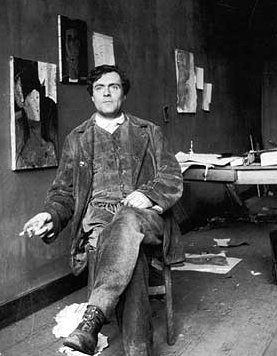
Amedeo Clemente Modigliani (US: /ˌmoʊdiːlˈjɑːni/, Italian: [ameˈdɛːo modiʎˈʎaːni]; 12 July 1884 – 24 January 1920) was an ItalianJewishpainter and sculptor who worked mainly in France. He is known for portraits and nudes in a modern style characterized by a surreal elongation of faces, necks, and figures that were not received well during his lifetime, but later became much sought-after. Modigliani spent his youth in Italy, where he studied the art of antiquity and the Renaissance. In 1906, he moved to Paris, where he came into contact with such artists as Pablo Picasso and Constantin Brâncuși. By 1912 Modigliani was exhibiting highly stylized sculptures with Cubists of the Section d’Or group at the Salon d’Automne.
Modigliani’s oeuvre includes paintings and drawings. From 1909 to 1914, he devoted himself mainly to sculpture. His main subject was portraits and full figures, both in the images and in the sculptures. Modigliani had little success while alive, but after his death achieved great popularity. He died of tubercular meningitis, at the age of 35, in Paris.
Modigliani was born into a Sephardic Jewish family in Livorno, Italy.[1] A port city, Livorno had long served as a refuge for those persecuted for their religion, and was home to a large Jewish community. His maternal great-great-grandfather, Solomon Garsin, had immigrated to Livorno in the 18th century as a refugee.[2]
Modigliani’s mother, Eugénie Garsin, born and raised in Marseille, was descended from an intellectual, scholarly family of Sephardic ancestry that for generations had lived along the Mediterranean coastline. Fluent in many languages, her ancestors were authorities on sacred Jewish texts and had founded a school of Talmudic studies. Family legend traced the family lineage to the 17th-century Dutch philosopher Baruch Spinoza. The family business was a credit agency with branches in Livorno, Marseille, Tunis, and London, though their fortunes ebbed and flowed.[3][4]
Modigliani’s father, Flaminio, was a member of an Italian Jewish family of successful businessmen and entrepreneurs. While not as culturally sophisticated as the Garsins, they knew how to invest in and develop thriving business endeavors. When the Garsin and Modigliani families announced the engagement of their children, Flaminio was a wealthy young mining engineer. He managed the mine in Sardinia and also managed the almost 30,000 acres (12,141 ha) of timberland the family owned.[5]
A reversal in fortune occurred to this prosperous family in 1883. An economic downturn in the price of metal plunged the Modiglianis into bankruptcy. Ever resourceful, Modigliani’s mother used her social contacts to establish a school and, along with her two sisters, made the school into a successful enterprise.[6]
Amedeo Modigliani was the fourth child, whose birth coincided with the disastrous financial collapse of his father’s business interests. Amedeo’s birth saved the family from ruin; according to an ancient law, creditors could not seize the bed of a pregnant woman or a mother with a newborn child. The bailiffs entered the family’s home just as Eugénie went into labour; the family protected their most valuable assets by piling them on top of her.
Modigliani had a close relationship with his mother, who taught him at home until he was 10. Beset with health problems after an attack of pleurisy when he was about 11, a few years later he developed a case of typhoid fever. When he was 16 he was taken ill again and contracted the tuberculosis which would later claim his life. After Modigliani recovered from the second bout of pleurisy, his mother took him on a tour of southern Italy: Naples, Capri, Rome and Amalfi, then north to Florence and Venice.[7][8][9]
His mother was, in many ways, instrumental in his ability to pursue art as a vocation. When he was 11 years of age, she had noted in her diary: “The child’s character is still so unformed that I cannot say what I think of it. He behaves like a spoiled child, but he does not lack intelligence. We shall have to wait and see what is inside this chrysalis. Perhaps an artist?”[10]
Art student years
Modigliani is known to have drawn and painted from a very early age, and thought himself “already a painter”, his mother wrote,[11] even before beginning formal studies. Despite her misgivings that launching him on a course of studying art would impinge upon his other studies, his mother indulged the young Modigliani’s passion for the subject.
At the age of fourteen, while sick with typhoid fever, he raved in his delirium that he wanted, above all else, to see the paintings in the Palazzo Pitti and the Uffizi in Florence. As Livorno’s local museum housed only a sparse few paintings by the Italian Renaissance masters, the tales he had heard about the great works held in Florence intrigued him, and it was a source of considerable despair to him, in his sickened state, that he might never get the chance to view them in person. His mother promised that she would take him to Florence herself, the moment he was recovered. Not only did she fulfil this promise, but she also undertook to enroll him with the best painting master in Livorno, Guglielmo Micheli.
Micheli and the Macchiaioli
Portrait of Pablo Picasso, 1915, private collectionHis home in Venice.
Modigliani worked in Micheli’s Art School from 1898 to 1900. Among his colleagues in that studio would have been Llewelyn Lloyd, Giulio Cesare Vinzio, Manlio Martinelli, Gino Romiti, Renato Natali, and Oscar Ghiglia. Here his earliest formal artistic instruction took place in an atmosphere steeped in a study of the styles and themes of 19th-century Italian art. In his earliest Parisian work, traces of this influence, and that of his studies of Renaissance art, can still be seen. His nascent work was influenced by such Parisian artists as Giovanni Boldini and Toulouse-Lautrec.
Modigliani showed great promise while with Micheli, and ceased his studies only when he was forced to, by the onset of tuberculosis.
In 1901, whilst in Rome, Modigliani admired the work of Domenico Morelli, a painter of dramatic religious and literary scenes. Morelli had served as an inspiration for a group of iconoclasts who were known by the title “the Macchiaioli” (from macchia —”dash of colour”, or, more derogatively, “stain”), and Modigliani had already been exposed to the influences of the Macchiaioli. This localized landscape movement reacted against the bourgeois stylings of the academic genre painters. While sympathetically connected to (and actually pre-dating) the French Impressionists, the Macchiaioli did not make the same impact upon international art culture as did the contemporaries and followers of Monet, and are today largely forgotten outside Italy.
Modigliani’s connection with the movement was through Guglielmo Micheli, his first art teacher. Micheli was not only a Macchiaiolo himself, but had been a pupil of the famous Giovanni Fattori, a founder of the movement. Micheli’s work, however, was so fashionable and the genre so commonplace that the young Modigliani reacted against it, preferring to ignore the obsession with landscape that, as with French Impressionism, characterized the movement. Micheli also tried to encourage his pupils to paint en plein air, but Modigliani never really got a taste for this style of working, sketching in cafés, but preferring to paint indoors, and especially in his own studio. Even when compelled to paint landscapes (three are known to exist),[12] Modigliani chose a proto-Cubist palette more akin to Cézanne than to the Macchiaioli.
While with Micheli, Modigliani studied not only landscape, but also portraiture, still life, and the nude. His fellow students recall that the last was where he displayed his greatest talent, and apparently this was not an entirely academic pursuit for the teenager: when not painting nudes, he was occupied with seducing the household maid.[11]
Despite his rejection of the Macchiaioli approach, Modigliani nonetheless found favour with his teacher, who referred to him as “Superman”, a pet name reflecting the fact that Modigliani was not only quite adept at his art, but also that he regularly quoted from Nietzsche’s Thus Spoke Zarathustra. Fattori himself would often visit the studio, and approved of the young artist’s innovations.[13]
In 1902, Modigliani continued what was to be a lifelong infatuation with life drawing, enrolling in the Scuola Libera di Nudo, or “Free School of Nude Studies”, of the Accademia di Belle Arti in Florence. A year later, while still suffering from tuberculosis, he moved to Venice, where he registered to study at the Regia Accademia ed Istituto di Belle Arti. It is in Venice that he first smoked hashish and, rather than studying, began to spend time frequenting disreputable parts of the city. The impact of these lifestyle choices upon his developing artistic style is open to conjecture, although these choices do seem to be more than simple teenage rebellion, or the clichéd hedonism and bohemianism that was almost expected of artists of the time; his pursuit of the seedier side of life appears to have roots in his appreciation of radical philosophies, including those of Nietzsche.Portrait of Chaim Soutine, 1916
Early literary influences
Having been exposed to erudite philosophical literature as a young boy under the tutelage of Isaco Garsin, his maternal grandfather, he continued to read and be influenced through his art studies by the writings of Nietzsche, Baudelaire, Carducci, Comte de Lautréamont, and others, and developed the belief that the only route to true creativity was through defiance and disorder.
Letters that he wrote from his ‘sabbatical’ in Capri in 1901 clearly indicate that he is being more and more influenced by the thinking of Nietzsche. In these letters, he advised friend Oscar Ghiglia;
(hold sacred all) which can exalt and excite your intelligence… (and) … seek to provoke … and to perpetuate … these fertile stimuli, because they can push the intelligence to its maximum creative power.[14]
The work of Lautréamont was equally influential at this time. This doomed poet’s Les Chants de Maldoror became the seminal work for the Parisian Surrealists of Modigliani’s generation, and the book became Modigliani’s favourite to the extent that he learnt it by heart.[13] The poetry of Lautréamont is characterized by the juxtaposition of fantastical elements, and by sadistic imagery; the fact that Modigliani was so taken by this text in his early teens gives a good indication of his developing tastes. Baudelaire and D’Annunzio similarly appealed to the young artist, with their interest in corrupted beauty, and the expression of that insight through Symbolist imagery.
Modigliani wrote to Ghiglia extensively from Capri, where his mother had taken him to assist in his recovery from tuberculosis. These letters are a sounding board for the developing ideas brewing in Modigliani’s mind. Ghiglia was seven years Modigliani’s senior, and it is likely that it was he who showed the young man the limits of his horizons in Livorno. Like all precocious teenagers, Modigliani preferred the company of older companions, and Ghiglia’s role in his adolescence was to be a sympathetic ear as he worked himself out, principally in the convoluted letters that he regularly sent, and which survive today.[15]
Dear friend, I write to pour myself out to you and to affirm myself to myself. I am the prey of great powers that surge forth and then disintegrate … A bourgeois told me today–insulted me–that I or at least my brain was lazy. It did me good. I should like such a warning every morning upon awakening: but they cannot understand us nor can they understand life…[16]
In 1906, Modigliani moved to Paris, then the focal point of the avant-garde. In fact, his arrival at the centre of artistic experimentation coincided with the arrival of two other foreigners who were also to leave their marks upon the art world: Gino Severini and Juan Gris.
He later befriended Jacob Epstein, they aimed to set up a studio together with a shared vision to create a Temple of Beauty to be enjoyed by all, for which Modigliani created drawings and paintings of the intended stone caryatids for ‘The Pillars of Tenderness’ which would support the imagined temple.[17]Le Bateau-Lavoir in 1910
Modigliani squatted in the Bateau-Lavoir,[18] a commune for penniless artists in Montmartre, renting himself a studio in Rue Caulaincourt. Even though this artists’ quarter of Montmartre was characterized by generalized poverty, Modigliani himself presented—initially, at least—as one would expect the son of a family trying to maintain the appearances of its lost financial standing to present: his wardrobe was dapper without ostentation, and the studio he rented was appointed in a style appropriate to someone with a finely attuned taste in plush drapery and Renaissance reproductions. He soon made efforts to assume the guise of the bohemian artist, but, even in his brown corduroys, scarlet scarf and large black hat, he continued to appear as if he were slumming it, having fallen upon harder times.[14]
When he first arrived in Paris, he wrote home regularly to his mother, he sketched his nudes at the Académie Colarossi, and he drank wine in moderation. He was at that time considered by those who knew him as a bit reserved, verging on the asocial.[14] He is noted to have commented, upon meeting Picasso who, at the time, was wearing his trademark workmen’s clothes, that even though the man was a genius, that did not excuse his uncouth appearance.[14]
Transformation
Within a year of arriving in Paris, however, his demeanour and reputation had changed dramatically. He transformed himself from a dapper academician artist into a sort of prince of vagabonds.
The poet and journalist Louis Latourette, upon visiting the artist’s previously well-appointed studio after his transformation, discovered the place in upheaval, the Renaissance reproductions discarded from the walls, the plush drapes in disarray. Modigliani was already an alcoholic and a drug addict by this time, and his studio reflected this. Modigliani’s behaviour at this time sheds some light upon his developing style as an artist, in that the studio had become almost a sacrificial effigy for all that he resented about the academic art that had marked his life and his training up to that point.
Not only did he remove all the trappings of his bourgeois heritage from his studio, but he also set about destroying practically all of his own early work, which he described as “Childish baubles, done when I was a dirty bourgeois”.[19]
The motivation for this violent rejection of his earlier self is the subject of considerable speculation. From the time of his arrival in Paris, Modigliani consciously crafted a charade persona for himself and cultivated his reputation as a hopeless drunk and voracious drug user. His escalating intake of drugs and alcohol may have been a means by which Modigliani masked his tuberculosis from his acquaintances, few of whom knew of his condition.[20] Tuberculosis—the leading cause of death in France by 1900[21]—was highly communicable, there was no cure, and those who had it were feared, ostracized, and pitied. Modigliani thrived on camaraderie and would not let himself be isolated as an invalid; he used drink and drugs as palliatives to ease his physical pain, helping him to maintain a façade of vitality and allowing him to continue to create his art.[22]
Modigliani’s use of drink and drugs intensified from about 1914 onward. After years of remission and recurrence, this was the period during which the symptoms of his tuberculosis worsened, signaling that the disease had reached an advanced stage.[23]Nu Couché au coussin Bleu, one of the finest examples of reclining nudes by Modigliani, 1916[24]
He sought the company of artists such as Utrillo and Soutine, seeking acceptance and validation for his work from his colleagues.[19] Modigliani’s behavior stood out even in these Bohemian surroundings: he carried on frequent affairs, drank heavily, and used absinthe and hashish. While drunk, he would sometimes strip himself naked at social gatherings.[25] He died in Paris, aged 35. He became the epitome of the tragic artist, creating a posthumous legend almost as well known as that of Vincent van Gogh.
During the 1920s, in the wake of Modigliani’s career and spurred on by comments by André Salmon crediting hashish and absinthe with the genesis of Modigliani’s style, many hopefuls tried to emulate his “success” by embarking on a path of substance abuse and bohemian excess. Salmon claimed that whereas Modigliani was a totally pedestrian artist when sober, “…from the day that he abandoned himself to certain forms of debauchery, an unexpected light came upon him, transforming his art. From that day on, he became one who must be counted among the masters of living art.”[26]
Some art historians suggest[26] that it is entirely possible that Modigliani would have achieved even greater artistic heights had he not been immured in, and destroyed by, his own self-indulgences.
Output
During his early years in Paris, Modigliani worked at a furious pace. He was constantly sketching, making as many as a hundred drawings a day. However, many of his works were lost—destroyed by him as inferior, left behind in his frequent changes of address, or given to girlfriends who did not keep them.[25]
He was first influenced by Henri de Toulouse-Lautrec, but around 1907 he became fascinated with the work of Paul Cézanne. Eventually he developed his own unique style, one that cannot be adequately categorized with those of other artists.
He met the first serious love of his life, Russian poet Anna Akhmatova, in 1910, when he was 26. They had studios in the same building, and although 21-year-old Anna had recently married, they began an affair.[27] Anna was tall with dark hair, pale skin and grey-green eyes: she embodied Modigliani’s aesthetic ideal and the pair became engrossed in each other. After a year, however, Anna returned to her husband.[28]
In 1909, Modigliani returned home to Livorno, sickly and tired from his wild lifestyle. Soon he was back in Paris, this time renting a studio in Montparnasse. He originally saw himself as a sculptor rather than a painter, and was encouraged to continue after Paul Guillaume, an ambitious young art dealer, took an interest in his work and introduced him to sculptor Constantin Brâncuși. He was Constantin Brâncuși’s disciple for one year.
Although a series of Modigliani’s sculptures were exhibited in the Salon d’Automne of 1912, by 1914 he abandoned sculpting and focused solely on his painting, a move precipitated by the difficulty in acquiring sculptural materials due to the outbreak of war, and by Modigliani’s physical debilitation.[4]
At the outset of World War I, Modigliani tried to enlist in the army but was refused because of his poor health.[29]
Known as Modì (which plays on the French word ‘maudit’, meaning ‘cursed’) by many Parisians, but as Dedo to his family and friends, Modigliani was a handsome man, and attracted much female attention.[30] Women came and went until Beatrice Hastings entered his life. She stayed with him for almost two years, was the subject of several of his portraits, including Madame Pompadour, and the object of much of his drunken wrath.[30]
When the British painter Nina Hamnett arrived in Montparnasse in 1914, on her first evening there the smiling man at the next table in the café introduced himself as “Modigliani, painter and Jew”. They became great friends.
In 1916, Modigliani befriended the Polish poet and art dealer Léopold Zborowski and his wife Anna. Zborowski became Modigliani’s primary art dealer and friend during the artist’s final years, helping him financially, and also organizing his show in Paris in 1917.
The several dozen nudes Modigliani painted between 1916 and 1919 constitute many of his best-known works. This series of nudes was commissioned by Modigliani’s dealer and friend Léopold Zborowski, who lent the artist use of his apartment, supplied models and painting materials, and paid him between fifteen and twenty francs each day for his work.[31]
The paintings from this arrangement were thus different from his previous depictions of friends and lovers in that they were funded by Zborowski either for his own collection, as a favor to his friend, or with an eye to their “commercial potential”, rather than originating from the artist’s personal circle of acquaintances.[32]
The Paris show of 1917 was Modigliani’s only solo exhibition during his life, and is “notorious” in modern art history for its sensational public reception and the attendant issues of obscenity.[33] The show was closed by police on its opening day, but continued thereafter, most likely after the removal of paintings from the gallery’s streetfront window.[33]
Nude Sitting on a Divan is one of a series of nudes painted by Modigliani in 1917 that created a sensation when exhibited in Paris that year. According to the catalogue description from the 2010 sale of the painting at Sotheby’s, seven nudes were exhibited in the 1917 show.
On a trip to Nice which had been conceived and organized by Zborowski, Modigliani, Foujita and other artists tried to sell their works to rich tourists. Modigliani managed to sell a few pictures, but only for a few francs each. Despite this, during this time he produced most of the paintings that later became his most popular and valued works.[citation needed]
During his lifetime, he sold a number of his works, but never for any great amount of money. What funds he did receive soon vanished for his habits.[36]
In the spring of 1917, the Russian sculptor Chana Orloff introduced him to a 19-year-old art student named Jeanne Hébuterne[37] who had posed for Tsuguharu Foujita. From a conservative bourgeois background, Hébuterne was renounced by her devout Roman Catholic family for her liaison with Modigliani, whom they saw as little more than a debauched derelict. Despite her family’s objections, soon they were living together.JEANNE HEBUTERNE WITH HAT AND NECKLACE, 1917 BY AMEDEO MODIGLIANI (1884-1920, ITALY)
Modigliani ended his relationship with the English poet and art critic Beatrice Hastings and a short time later Hébuterne and Modigliani moved together into a studio on the Rue de la Grande Chaumière. Jeanne began to pose for him and appears in several of his paintings. Jeanne Hébuterne became a principal subject for Modigliani’s art.
Towards the end of the First World War, early in 1918, Modigliani left Paris with Hébuterne to escape from the war and travelled to Nice and Cagnes-sur-Mer. They would spend a year in France. During that time they had a busy social life with many friends, including Pierre-Auguste Renoir, Pablo Picasso, Giorgio de Chirico and André Derain.Portrait of Jeanne Hébuterne, 1918
After he and Hébuterne moved to Nice on 29 November 1918, she gave birth to a daughter whom they named Jeanne (1918–1984). Modigliani already had a son from his relationship with Simone Thiroux, Gérard Thiroux (1917–2004),[38] and at least two other illegitimate children.[39] In May 1919 they returned to Paris with their infant daughter and moved into an apartment on the rue de la Grande Chaumière.
Hébuterne became pregnant again. Modigliani then got engaged to her, but Jeanne’s parents were against the marriage, especially because of Modigliani’s reputation as an alcoholic and drug user. However, Modigliani officially recognized her daughter as his child. The wedding plans were shattered independently of Jeanne’s parents’ resistance when Modigliani discovered he had a severe form of tuberculosis.
Death and funeral
Although he continued to paint, Modigliani’s health deteriorated rapidly, and his alcohol-induced blackouts became more frequent.
In 1920, after not hearing from him for several days, a neighbour checked on the family and found Modigliani in bed delirious and holding onto Hébuterne. A doctor was summoned, but little could be done because Modigliani was in the final stage of his disease, tubercular meningitis. He died on 24 January 1920, at the Hôpital de la Charité.
There was an enormous funeral, attended by many from the artistic communities in Montmartre and Montparnasse. When Modigliani died, twenty-one-year-old Hébuterne was eight months pregnant with their second child.
A day later, Hébuterne was taken to her parents’ home. There, inconsolable, she threw herself out of a fifth-floor window, two days after Modigliani’s death, killing herself and her unborn child. Modigliani was buried in Père Lachaise Cemetery. Hébuterne was buried at the Cimetière de Bagneux near Paris, and it was not until 1930 that her embittered family allowed her body to be moved to rest beside Modigliani. A single tombstone honors them both. His epitaph reads: “Struck down by death at the moment of glory”. Hers reads: “Devoted companion to the extreme sacrifice”.[40]
Managing only one solo exhibition in his life and giving his work away in exchange for meals in restaurants, Modigliani died destitute.
Legacy
Modigliani in 1919, near the end of his lifeGrave of Modigliani and Hébuterne in Père Lachaise Cemetery
Influences
The linear form of African sculpture and the depictive humanism of the figurative Renaissance painters informed his work. Working during that fertile period of “isms,” Cubism, Dadaism, Surrealism, Futurism, Modigliani did not choose to be categorized within any of these prevailing, defining confines. He was unclassifiable, stubbornly insisting on his difference. He was an artist putting down paint on canvas creating works not to shock and outrage, but to say, “This is what I see.”
More appreciated over the years by collectors than academicians and critics, Modigliani was indifferent to staking a claim for himself in the intellectual avant-garde of the art world. One can say he recognized the merit of Jean Cocteau’s proclamation: “Ne t’attardes pas avec l’avant-garde” (“Don’t wait with the avant-garde”).[41]Pseudo-goitre, a medical condition is also known as Modigliani syndrome. This name was derived from the curved neck of women in Modigliani’s paintings which appeared like pseudogoitre.[42]
Since his death, Modigliani’s reputation has soared. Nine novels, a play, a documentary, and three feature films have been devoted to his life. Modigliani’s sister in Florence adopted his daughter, Jeanne (1918–1984). As an adult, she wrote a biography of her father titled Modigliani: Man and Myth.
Catalogue raisonnés
The Modigliani estate is one of the most problematic in the art world. There are at least five catalogues raisonnés of the artist’s work including two volumes by Ambrogio Ceroni, last updated in 1972. Arthur Pfannstiel (1929 and 1956) and Joseph Lanthemann‘s (1970) books are widely dismissed today. Milanese scholar Osvaldo Patani produced three volumes: paintings (1991), drawings (1992) and one on the Paul Alexandre period (1994), while Christian Parisot has published Volumes I, II and IV (in 1970, 1971 and 1996) of a catalogue raisonné.[43]
In 2006, about 6,000 documents from the estate—believed to be the only ones existing—were moved permanently from France to Italy. Parisot, as president of the Modigliani Institut Archives Légales in Rome, had the legal right to authenticate Modigliani’s work.[44] In 2013, Parisot was arrested by the Italian Art forgery unit after a two-year investigation (following a largely advertised exhibition in Catania, presenting original artworks[45]); the police seized works attributed to the artist, along with suspect authenticity certificates.[46]
The French art historian Marc Restellini is preparing Modigliani’s catalogue raisonné.[47]
The Modigliani Project, headed by Dr. Kenneth Wayne, was founded in 2012 to aid in the researching of Modigliani artworks.[48] As part of this endeavor the organization is preparing a new catalogue raisonné of Modigliani’s artwork.[47]
Art market
In November 2010, a painting of a nude by Amedeo Modigliani, part of a series of nudes he created around 1917, sold for more than $68.9m (£42.7m) at an auction in New York—a record for the artist’s work. Bidding for La Belle Romaine pushed its price well past its $40m (£24.8m) estimate. Modigliani’s previous auction record was 43.2m euros (£35.8m), set earlier in 2010 in Paris. Another painting by the artist—Jeanne Hébuterne (au chapeau), one of the first portraits he painted of his lover—sold for $19.1m (£11.8m), much higher than its pre-sale estimate of $9–12m (£5.6–7.4m).[49]
On 9 November 2015 the 1917 painting Nu couché, sold at Christie’s in New York for US$170.4 million.[50] On 14 May 2018 the 1917 painting Nu couché (sur le côté gauche) sold at Sotheby’s in New York for $157.2 million. This was the highest auction price in Sotheby’s history.[51]
Forgeries
Modigliani is one of the most faked artists in the world[52] Rising prices for works attributed to him as well as the legend surrounding his short life have fueled a market for forgeries of both paintings and sculptures.[53] In 1984, students carved three stone heads in a Modigliani style which caused a sensation when they were discovered in a canal in Livorno, Italy, so eager people were to believe the heads were authentic, but the students had filmed themselves making the heads with a Black and Decker drill.[54] In 2018 twenty fake Modiglianis were seized at an exhibition in Genoa.[55]
Modigliani’s art was an influence on director Andy Muschietti, who found his works frightening as a child. Creatures based on Modigliani’s style have appeared in his films Mama (2013) and It (2017).[56]
“Whether you think you can, or you think you can’t–you’re right.”
― Henry Ford
Henry Ford (July 30, 1863 – April 7, 1947) was an American industrialist and business magnate, founder of the Ford Motor Company, and chief developer of the assembly line technique of mass production. Wikipedia
Severing a cherished relationship is one of the most painful experiences in life—and cutting those emotional ties to a loved one can feel almost like ending an addiction. Up till now, people recovering from other problems were able to get real help—like AA and rehab—while those struggling in the aftermath of traumatic breaks dealt with platitudes and friends insisting they should “get over it already.” But now Exaholics Anonymous treats getting over an ex like kicking a chemical habit.
Written by counselor and therapist Dr. Lisa Bobby, Exaholics offers meaningful support and advice to anyone trapped in the obsessive pain of a broken, or dying, attachment. She helps the brokenhearted heal, showing them, on a deep level, how to develop a conceptual framework for their experience, understand the emotional processes at work inside themselves, find the path to recovery, and free themselves of shame, injured ego, and remorse. In-depth case studies of others’ journeys will illuminate the way to future happiness.
Hanuabada-Elevala village is considered one of the few places in Papua New Guinea where gay men can live in safety. Despite this prohibition, ‘Gelegele’ (gay men) play various female roles in society. Photo by Vlad Sokhin/Panos Pictures
Joanna Wuestis a lecturer and the Fund for Reunion-Cotsen Postdoctoral Fellow in LGBT Studies at Princeton University. Her current book project is Born This Way: Science, Citizenship, and Inequality in the American LGBTQ+ Movement.
Edited by Sam Haselby
February 24, 2021 (psyche.co)
The gay gene has loomed large in our social imagination since first coming out nearly three decades ago. In a 1993 issue of Science, the cancer researcher-turned-sexologist Dean Hamer employed cutting-edge genomic technologies in an attempt to reveal what it means to be queer. Though novel in its genetic claims, Hamer’s study joined a growing cohort of bio-driven theories including Simon LeVay’s work on neuroanatomical causes (ie, the ‘gay brain’ hypothesis) and similar searches for hormonal ones. Flush with funding from the Human Genome Project’s boosters, many others probed strands of DNA in the hopes of elucidating the nature of human identity and social life. Just as a range of traits from IQ to alcoholism were being pinned down to discrete genomic markers, so too was sexual orientation deemed a desire encoded deep within one’s biological makeup.
There are overtly political reasons for the production and popularisation of this brand of sexual science. Since the 1950s, when the first national gay and lesbian rights organisations formed across the United States, LGBTQ+ advocates have worked closely alongside sympathetic researchers to assist in conducting and promoting such work. In recent years, the American Civil Liberties Union and the National LGBTQ Task Force have even begun to marshal neuroanatomical research concerning the nature of gender identity – ie, a ‘trans brain’ hypothesis – in challenges to discriminatory bathroom policies.
This political investment in sexology has paid dividends for equal rights. Though the studies themselves have been at times vigorously contested, the ‘born this way’ sentiment has thrived. Public opinion research shows that Americans have adopted the explanation, often positing even stronger evidence of the innate than science has provided. Generally liberals prefer the biological thesis, which is likely due to how central the theme has been to campaigns for acceptance and civil rights.
Why is it, then, that LGBTQ+ advocates recently assisted in the production of new genomic research that found evidence that, at least at first blush, appears to undermine their claims about ontology? When a 2019 investigation of sexual orientation invited a slew of headlines declaring that ‘There Is No “Gay Gene”’, how did equal rights proponents reconcile their previous efforts with this reinterpretation of the human genome?
In August 2019, an international team of scientists – accompanied by researchers from the ancestry home-testing firm 23andMe – published the largest study to date on the biological determinants of sexual orientation. Drawing from a sample of nearly 500,000 individuals, culled from data from the UK Biobank and 23andMe, a group led by the geneticist Andrea Ganna put to the test an updated perspective on sexuality’s nature and origins.
By using a genome-wide association study (known in the field as a GWAS), the scientists weren’t looking for a direct gene-to-trait relationship. Instead of charting the kind of causal pathway that runs from a chromosomal location to a characteristic like height or hair colour, they examined how many different bits of genetic material might contribute to sexual behaviour. In the technical parlance, they observed how a multitude of single nucleotide polymorphisms (SNPs for short) give some direction to desire.
This marks a shift from bold pronouncements on the biological origins of sexual orientation to a more nuanced story
The abandonment of the singular gay gene thesis wasn’t nearly the most shocking feature of the study. After accounting for all of the SNPs that could be traced back to same-sex behaviour, Ganna and his team concluded that the genetic contribution was at most between 8 and 25 per cent. Even more notably, the researchers discerned the actual location of only five individual SNPs accounting for this variance – together, those SNPs could explain less than 1 per cent of the variation in sexual behaviour. Ergo, the findings provided essentially no predictive power to genetically assess any one individual’s orientation. While some scant biological element might be at play, what this deep dive into the human genome ironically revealed is that social and cultural factors likely play the greatest role in shaping human sexuality.
This is remarkable given that sexologists and gay rights advocates have long regarded such emphasis on social determinants as anathema. In the late 1960s and early ’70s, reformers in mental healthcare and gay rights activists worked jointly to rid psychology of those accounts that cast blame on effeminate fathers, overbearing and brutish mothers, and other allegedly adverse conditions. Just as soon as the virulently homophobic psychoanalytic old guard was ousted from the American Psychiatric Association in 1973 and replaced by liberal reformers, psychology began to bring the bio back in, where it has remained prominent. Ever since, the refrain of ‘cultural influence’, ‘choice’ and ‘lifestyle’ has been largely the domain of social conservatives housed in the Republican Party and at the fringes of mental healthcare.
At the risk of overstating its novelty, the Ganna GWAS retained some privileged position for genetic determinants and related hormonal explanations. And though activists and sexologists in decades past touted biological research as definitively disclosing the nature of sexual orientation, the studies themselves almost always retained some role for social and environmental factors. However, this study’s political and cultural reception marks a shift from bold pronouncements on the biological origins of sexual orientation to a more nuanced, more sociocultural, story.
The fact that LGBTQ+ movement leaders could bear to embrace these findings says much more about changes in the broader social world than it does about the malleability of queer advocates’ own attitudes. Since the early rights activists and their allies in mental health and sexology first sanitised gay identity with a neat, nonthreatening genetic origins story, the nuclear family and its sexual norms have transformed dramatically. The strict policing of sexuality and gender expression throughout most of the 20th century was an extension of the way that work, consumption and the family were organised. Due to reigning beliefs about the aberrant, potentially contagious nature of ‘deviant’ sexualities, the early homophile and lesbian political associations of the 1950s and ’60s often positioned themselves as a naturally occurring and benign minority group. If, as the sociobiologist Edward O Wilson mused, homosexuality was an adaptive trait that reserved a handful of effeminate men to watch over female gatherers, then there was no threat to the straight majority.
Gradually, over the course of the 20th century, the male breadwinner and the patriarchal family have been replaced by a less gendered division of work and greater freedom to choose how one associates, couples, or sleeps around. Notably, the economic necessity of having multiple wage earners in a family is an important part of that story. US corporations also now find it lucrative to hire queer employees and sell to a queer clientele. Of course, none of this could have been achieved without the struggle of activists, gay employee groups, nonprofit advocacy organisations and law firms. Nevertheless, the world has been steadily transforming beyond the apparent need for such rigid categories of gender expression and sexual experience.
At first, some queer activists and intellectuals saw lingering troubles in this new normal, characterised by the respectability culture of gay and lesbian life and its own strict tenets regarding marriage, monogamy and heteronormativity. However, that moment when the stark line between gay and straight was made benign, yet untraversable, lasted for only about the past three decades. Today, many people are eschewing standard social scripts and living fluid and abundantly diverse sexual and gendered lives; 20 per cent of millennials now identify as LGBTQ+ and more than a quarter of Californian schoolchildren between the ages of 12 and 17 are identified as gender-nonconforming. Even the conservative-dominated US Supreme Court found cause, in June 2020, to protect ostensibly any number of boundary-breaking sexual and gender behaviours by declaring all incidents of sex stereotyping by employers (eg, not promoting overtly masculine women or prohibiting men from wearing makeup) as a violation of federal civil rights law.
Postgenomics is playing out the rationalising functions that scientific inquiries into identities always perform
So, while the Ganna GWAS keeps the ‘born this way’ idea alive for those inspired by the promissory note that so often accompanies sociogenomic research – ‘if not today’s genetic research, then tomorrow’s will surely reveal the greater truth of human nature’ – it also reflects a reality in which equal rights advocates no longer fear that the loss of a strict ‘by nature’ narrative would be an existential one.
For all its merits, this postgenomic research wasn’t guided by a preternatural insight into the truer nature of our sexual selves. Like the leading scientific paradigms of previous epochs, postgenomic inquiries tend to rationalise – not merely reflect – the present status quo of society as the natural order of things. Other GWAS research, for instance, demonstrates how markers such as IQ, education and income are frequently rendered heritable in ways that treat their relationships to one another as natural, thereby rationalising today’s socioeconomic inequalities.
One such study mapped geographic clustering of genetic variants associated with traits like education. Its authors observed how those who fled dying coal towns also took their genetic predispositions for educational attainment out of the countryside’s genomic pool and into the cities. This study on education and migration lends support to those who would perceive the poor of the postindustrial British north and the affluent of the urbanised south as the product of natural sorting mechanisms, rather than the consequence of political decisions such as the assault on miners’ unions and the welfare state. Just like the Ganna GWAS, this research indexes changes in the social world and depicts their effects as more or less natural.
It is, of course, hard to deny that measures of intelligence and levels of formal education correlate with some heritable cognitive element, particularly one that might assist individuals in the steep climb up present-day social hierarchies. And although the researchers did indeed observe that a stronger social safety net would benefit the ravaged towns, their foundational commitment to a tight, naturalistic relationship between education and prosperity shifts the sources of inequality away from the very structural conditions that made educational talent and resources a precondition for a middle-class livelihood. Translated for an American audience, this narrative about uplift, education and ability could have easily been spun by the Appalachian exile J D Vance of Hillbilly Elegy fame.
Postgenomics today is thus playing out the rationalising functions that scientific inquiries into rather historically contingent identities and behavioural patterns always perform. Accordingly, the paradigm can generate some relatively valid postulates – it’s likely that our sexualities and genders are textured by a mix of social experience, the firings off of neurons, hormonal swirls and the transcription of DNA. But such science also allows defenders of the status quo – in all its libidinally liberated, economically devastated glory – to cast the world as it appears as the way that the world was meant to be. For all the high-powered machinery, impressive statistical methods and massive datasets that go into this knowledge production, we have inherited once again a collection of ‘just-so stories’ – that is, accounts of human nature depicted through a diverse confluence of causes rather than strictly genetic factors – now updated for our postgenomic age.
Guardian News Nasa has released first-of-its-kind footage of the Perseverance rover landing on Mars. The video shows the final minutes of last week’s descent, up to the point where the rover touches down on Mars’ surface. The rover is covered with cameras – including seven dedicated to recording the rover’s landing. More than 30GB of information has already been collected from the rover – along with 23,000 images as the vehicle descended. Nasa releases video of Perseverance rover landing on Mars ► https://www.theguardian.com/science/2… The Guardian publishes independent journalism, made possible by supporters. Contribute to The Guardian today ► https://support.theguardian.com/contr… Website ► https://www.theguardian.com Facebook ► https://www.facebook.com/theguardian Twitter ► https://twitter.com/guardian Instagram ► https://www.instagram.com/guardian
If there had been only
one Buddhist in the woodpile
In Waco Texas
to teach us how to sit still
one saffron Buddhist in the back rooms
just one Tibetan lama
just one Taoist
just one Zen
just one Thomas Merton Trappist
just one saint in the wilderness
of Waco USA
If there had been only one
calm little Gandhi
in a white sheet or suit
one not-so-silent partner
who at the last moment shouted Wait
If there had been just one
majority of one
in the lotus position
in the inner sanctum
who bowed his shaved head to the
Chief of All Police
and raised his hands in a mudra
and chanted the Great Paramita Sutra
the Diamond Sutra
the Lotus Sutra
If there had somehow been
just one Gandhian spinner
with Brian Wilson at the gates
  of the White House
at the Gates of Eden
then it wouldn’t have been
Vietnam once again
and its “One two three four
What’re we waitin’ for?”
If one single ray of the light
of the Dalai Lama
when he visited this land
had penetrated somehow
the Land of the Brave
where the lion never
lies down with the lamb —
But not a glimmer got through
The Security screened it out
screened out the Buddha
and his not-so-crazy wisdom
If only in the land of Sam Houston
If only in the land of the Alamo
If only in Wacoland USA
If only in Reno
If only on CNN CBS NBC
one had comprehended
one single syllable
of the Gautama Buddha
of the young Siddartha
one single whisper of
Gandhi’s spinning wheel
one lost syllable
of Martin Luther King
or of the Early Christians
or of Mother Teresa
of Thoreau or Whitman or Allen Ginsberg
or of the millions in America tuned to them
If the inner ears of the inner sanctums
had only been half open
to any vibrations except
those of the national security state
and had only been attuned
to the sound of one hand clapping
and not one hand punching
then that sick cult and its children
might still be breathing
the Free American air
of the First Amendment
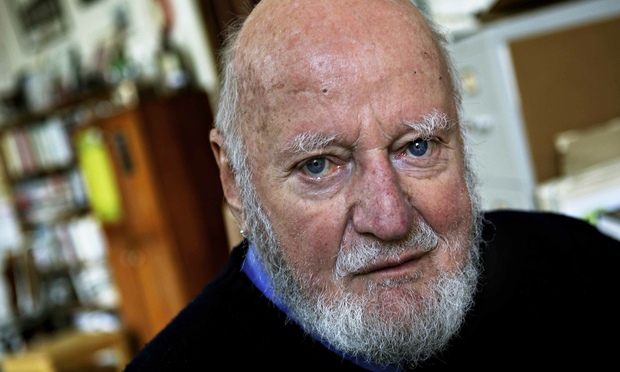
Lawrence Monsanto Ferlinghetti (March 24, 1919 – February 22, 2021) was an American poet, painter, social activist, and the co-founder of City Lights Booksellers & Publishers. He was the author of poetry, translations, fiction, theatre, art criticism, and film narration. Wikipedia
“Has moved to another Bardo… Lawrence Ferlinghetti passed away this morning at 101 years old. What a life well lived.” –Gwyllm Llwydd
Consciousness, spirituality, biography, sexuality, androgyny, futurism, space, the arts, science, astrology, democracy, humor, books, movies and more


I consider a tree.

:focal(1189x936:1190x937)/https://public-media.si-cdn.com/filer/54/f3/54f39e16-17a5-4b13-97d8-d24770ae3a9b/1597417.jpg)
/https://public-media.si-cdn.com/accounts/headshot/Alex_Fox_Headshot.jpg)







,_1633.jpg)
.jpg)


.jpg)


.jpg)


,_Koninklijk_Museum_voor_Schone_Kunsten_Antwerpen,_2060.jpg)


.jpg)

_-_Seated_Nude,_1918.jpg)


