This passionate, epic account of the Vietnam War centres on Lt Col John Paul Vann, whose story illuminates America’s failures & disillusionment in SE Asia. A field adviser to the army when US involvement was just beginning, he quickly became appalled at the corruption of the S. Vietnamese regime, their incompetence in fighting the Communists & their brutal alienation of their own people. Finding his superiors too blinded by political lies to understand the war was being thrown away, he secretly briefed reporters on what was really happening. One of those reporters was Neil Sheehan.–Amazon (edited)
Neil Sheehan was a Vietnam War correspondent for United Press International & the NY Times & won a number of awards for reporting. In 1971 he obtained the Pentagon Papers, which brought the Times the Pulitzer gold medal for meritorious public service. A Bright Shining Lie won the National Book Award & the Pulitzer Prize for Non-Fiction. He lives in Washington DC.
Undecided with Matt Ferrell Thorium explained – the future of cheap, clean energy? Go to https://brilliant.org/Undecided you can sign up for free. And also, the first 200 people will get 20% off their annual premium membership. Thorium is often held up as one of the best paths forward for achieving a mix of cheap, clean energy for our grid. Even former presidential candidate Andrew Yang was pushing for Thorium reactors along with wind and solar. So what is it? Why are there so many people excited about it? And is it really the future of clean energy? ▻ Watch Liquid Air Battery Explained – Rival to Lithium Ion Batteries? https://youtu.be/yb1Nuk3_t_4 ▻ Follow-up podcast episode: https://geni.us/episode22 ▻ Full script and citations: https://undecidedmf.com/episodes/2020…
Wenders has been the president of the European Film Academy in Berlin since 1996. Alongside filmmaking, he is an active photographer, emphasizing images of desolate landscapes.[1][2] He is considered to be an auteur director.[3]
Early life
Wenders was born in Düsseldorf, Germany, into a traditionally Catholic family. His father, Heinrich Wenders, was a surgeon. The Dutch name “Wim” is a shortened version of the baptismal name “Wilhelm”. As a boy, Wenders took unaccompanied trips to Amsterdam to visit the Rijksmuseum. He graduated from high school in Oberhausen in the Ruhr area. He then studied medicine at the University of Freiburg (1963–64) and philosophy at the University of Dusseldorf (1964–65), but dropped out and moved to Paris in October 1966 in order to become a painter.[4] Wenders failed his entry test at France’s national film school, IDHEC (now La Fémis), and instead became an engraver at Johnny Friedlaender‘s studio in Montparnasse.[4] During this time Wenders became fascinated with cinema, and saw up to five movies a day at the local movie theater.
Set on making his obsession his life’s work, he returned to Germany in 1967 to work in the Düsseldorf office of United Artists. That fall, he entered the Hochschule für Fernsehen und Film München (University of Television and Film Munich).[4] Between 1967 and 1970, while at the “HFF”, he also worked as a film critic for FilmKritik, the Munich daily newspaper Süddeutsche Zeitung, Twen magazine, and Der Spiegel.[4]
Wenders completed several short films before graduating from the Hochschule with a 16mm black-and-white film, Summer in the City (1970), his feature directorial debut.
In 2015, Wenders collaborated with artist/journalist and longtime friend Melinda Camber Porter on a documentary feature about his body of work, Wim Wenders – Visions on Film, when Porter died. The film remains incomplete.[6]
Wenders is a member of the advisory board of World Cinema Foundation. The project was founded by Martin Scorsese and aims to find and reconstruct world cinema films that have been neglected. As of 2015 he served as a Jury Member for the digital studio Filmaka, a platform for undiscovered filmmakers to show their work to industry professionals.[7]Wim Wenders in 2008
In 2012, while promoting his 3-D dance film, Pina, Wenders told the Documentary channel Blog in December 2011 that he had begun work on a new 3-D documentary about architecture.[11] He also said he would only work in 3-D from then on.[12] Wenders had admired the dance choreographer Pina Bausch since 1985, but only with the advent of digital 3-D cinema did he decide that he could sufficiently capture her work on screen.[13]
In a 2018 interview, Wenders said his favorite movie of all time was his film about Pope Francis, and that his entire career had been building up to it. His admiration for Francis is profound; he said he felt the Pope is doing his best in a difficult time, in a world full of calamities. He also said that, though raised Catholic, he had converted to Protestantism years earlier.[14]
In 2019 Wenders acted as executive producer for his former assistant director Luca Lucchesi‘s documentary A Black Jesus, which has similar themes to Pope Francis: A Man of His Word. The film explores the role of religion in communal identity and how this can create or dissolve differences in a small Sicilian town during the height of the refugee crisis.[15] Lucchesi noted that Wenders pushed the film to be more symbolic and philosophical, saying that Wenders wanted the film to have a “universal fairy-tale aspect” and to represent “Europe in a nutshell.”[16]
Photography
Wenders has worked with photographic images of desolate landscapes and themes of memory, time, loss, nostalgia and movement.[1][2] He began his long-running project “Pictures from the Surface of the Earth” in the early 1980s and pursued it for 20 years. The initial photographic series was titled “Written in the West” and was produced while Wenders criss-crossed the American West in preparation for his film Paris, Texas (1984).[4] It became the starting point for a nomadic journey across the globe, including Germany, Australia, Cuba, Israel and Japan, to take photographs capturing the essence of a moment, place or space.[17]
He has traveled in over 120 countries for his photographic projects. Most of these have appeared in numerous press publications and books. Touring exhibitions of his work have been presented throughout the world.
Salgado was born on February 8, 1944 in Aimorés, in the state of Minas Gerais, Brazil. After a somewhat itinerant childhood, Salgado initially trained as an economist, earning a master’s degree in economics from the University of São Paulo in Brazil. He began work as an economist for the International Coffee Organization, often traveling to Africa on missions for the World Bank, when he first started seriously taking photographs. He chose to abandon a career as an economist and switched to photography in 1973, working initially on news assignments before veering more towards documentary-type work. Salgado initially worked with the photo agency Sygma and the Paris-based Gamma, but in 1979, he joined the international cooperative of photographers Magnum Photos. He left Magnum in 1994 and with his wife Lélia Wanick Salgado formed his own agency, Amazonas Images, in Paris, to represent his work. He is particularly noted for his social documentary photography of workers in less developed nations.[8] They reside in Paris.[9]
Salgado works on long term, self-assigned projects many of which have been published as books: The Other Americas, Sahel, Workers, Migrations, and Genesis. The latter three are mammoth collections with hundreds of images each from all around the world. His most famous pictures are of a gold mine in Brazil called Serra Pelada.[11]Reforestation of Fazenda Bulcão, or Bulcão Farm, by Instituto Terra
Together, Lélia and Sebastião have worked since the 1990s on the restoration of a part of the Atlantic Forest in Brazil. In 1998, they succeeded in turning 17,000 acres into a nature reserve and created the Instituto Terra. The institute is dedicated to a mission of reforestation, conservation and environmental education.[12]
Between 2004 and 2011, Salgado worked on Genesis, aiming at the presentation of the unblemished faces of nature and humanity. It consists of a series of photographs of landscapes and wildlife, as well as of human communities that continue to live in accordance with their ancestral traditions and cultures. This body of work is conceived as a potential path to humanity’s rediscovery of itself in nature.[13]
In September and October 2007, Salgado displayed his photographs of coffee workers from India, Guatemala, Ethiopia and Brazil at the Brazilian Embassy in London. The aim of the project was to raise public awareness of the origins of the popular drink.[14]
I’m just gonna start here again and see what happens. Let me just post a couple of the updates I sent out to family and friends about my journey so far. I just want the documentation to be here. Most everyone who will want to read this already gotten these emails. But there might be a few from the past — I am 70 so I’ve been around a while.
From December 11:
SPILLING THE BEANS
Hello my friends,
I’ve been holding this inside for a couple of months now sharing mostly with just my family. But it’s time to let you all know what’s going with me.
I have stage 4 Diffuse Large B-Cell Lymphoma and will begin an aggressive chemo program on December 29.
This started with some lesions on my right leg which showed up in late September. After 2 biopsies on the leg, I got the confirmation of cancer a few days before Thanksgiving. In early November some ulcers showed up on my gums and I went to the dentist to find out what was going on. He sent me to an oral pathologist who did a biopsy of my gums and confirmed the same cancer there as on my leg. This past Monday, I went in for a PET CT scan and just met with the oncologist this morning. The cancer has spread into my bones (my left femur, left hip and spinal column and the bone in my upper pallet in my mouth). This is a very aggressive type of cancer but the good news is that it is very treatable and a particular chemo regimen has proven to be very effective in about 70% of patients. I will begin that regime called R-CHOP (5 drugs) on December 29. Next week I will have a bone marrow biopsy and a spinal tap to make sure it has not spread to the nervous system and an echo cardiogram. I will undergo 6 chemo treatments 3 weeks apart. I will likely undergo all the side effects from chemo — hair loss, nausea, fatigue, constipation etc. You know them all.
I am immune compromised right now due to the cancer and will be even more compromised once chemo begins. So that means in this age of Covid-19, I have to be very very very careful. I will not be able to go out at all and for those interested, I may need to lean on some of you for local support for things like shopping, etc. When the vaccine for Covid is available, I may not be eligible for it and even if I am, it will not be as strong or effective as it is for healthy people. We just have to wait for it and see. I am going to the Winship Cancer Center at Emory University which is very close to my house.
I am encouraged that the R-CHOP chemo regimen has proven to be very effective for treating Diffuse Large B-Cell Lymphoma. I am going to have some difficult days ahead but I fully expect to be my normal healthy self by this time next year. The Lymphoma Research Foundation website and YouTube pages have lots of good information and videos on this type of cancer and treatments if you’re interested. https://lymphoma.org and https://www.youtube.com/user/LymphomaResearch/featured
You can share this news with anyone you know who might care. I’m just sending this to a few close friends.
I will need support, prayers, translations, meditations and understanding in the tough days ahead.
I’m keeping my chin up and you should too. I’ll be OK.
Ned
Just Being “Not Racist” is Not Good Enough Anymore
From December 29:
DAY 1 OF CHEMO
Hi all,
Just thought I’d broadcast a short report on the first day of chemo where I FINALLY get to enlist medicine in this fight of my life. Short answer it all went well and right now I am not sick. They warned me about all the side effects from my fingernails will turn black to my pee will be red to you know all the ugly shit like losing my hair (my beautiful long hair again — I hate this one) and throwing up all the time. We’ll see what materializes or not in coming days. WE did not finish the chemo today. I’m on a regimen called RCHOP which is 5 drugs. Well we only got to the R — Rituximab. They gave to me very slowly since and have to monitor heart function. I had a reaction to it — one’s body wants to reject these medicines and see them as threats (which they are to the cancer). My reaction was itching all over so they stopped, gave me Benadryl and steroids and after an hour started up again. It took till 7 before I had gotten the full dose of it in my body. I was at the cancer center from 9 to 7 but some of that was labs and meeting with doctors and nurses. Tomorrow morning I go back for the rest of RCHOP — the CHOP drugs. That will be faster — about an hour and a half or so.
So I feel good right now. I’m taking the anti nausea drugs and hope to get a good night sleep tonight.
Couple of updates on my tests — The bone marrow biopsy confirmed Diffuse Large B-Cell lymphoma in my bones. This is just moving so fast. My entire upper mouth is now covered in sores. They looked at that today and did another test but they told me it looked like the lymphoma I have and it’s just spreading like wildfire. The spinal tap showed lymphocytes in my spinal fluid which is a precursor to the lymphoma. So they have ordered a brain MRI and another spinal tap. In the next spinal tap they will give me more chemo in the spinal column so it will also get to my nervous system and brain. The RCHOP does not penetrate that barrier.
So I get the RCHOP every 3 weeks for 6 cycles. I’ll be in chemo until May or so. I am absolutely delighted that we are started. I don’t care if I throw up all night or if my hair falls out (my beautiful long hair) or if I am constipated or have black fingernails. This is my best shot to beat this. The team at Emory has been amazing so far. Really compassionate and caring people at the cancer center.
So that’s it for now. I’m fine and the battle has now begun with the medicine on my side. I know some folks can fight this with the mind alone but I’m not that good. I am happy to add medicine to my meditations and prayers and translations.
Love you all. Didn’t have emails for many folks so feel free to share if you want. I think each distribution list I come up with is different. Just know that I know that you all love me and that you are all pulling for me in your own unique and effective way. And I love you and I feel your love.
Ned
Just Being “Not Racist” is Not Good Enough Anymore
OK that’s out of the way. There might be folks out there I haven’t found yet who might want to know what’s going on with me. I do know this is tough stuff. Not easy for most folks to deal with or talk about. That’s all OK. I don’t take any of it personally. It’s all good. And I’m doing just fine.
I wonder if I can post music here. Wouldn’t that be cool. Especially since music and cannibas are helping me break my addiction to TV. Guess not doesn’t seem to be an option for that. I’m building new playlists and have found so much new and old music. I want to post the playlists someplace — maybe Spotify — we’ll see if that works out. I might be getting redundant. It’s OK. “Just breathe. You’re OK.” Thanks Bob. Miss you sooo much.
Wish I could figure out how to make the image smaller. It’s not like I want this whole thing to become a huge photo gallery. Oh well. Moving on. Bob was a cool guy. Died of Liver disease. Was on the transplant list But his name came up too late. He actually got the transplant but it was a waste because he was too far gone to accept it. If it would have come up earlier then he would have made it. So the liver was wasted. Such a dumb way they handled the transplant list. Maybe it’s changed by now. He loved to party. We smoked weed together (whenever one of us had it — it wasn’t quite as ubiquitous as it is now) and he could drink a bottle of wine by himself in one gulp if you’d let him. Married to wonderful woman named Carol. Both meditation instructors at Shambhala. That’s a buddhist center I hung out at for some 5 years or so. Also met Liz there. We’ll talk about Liz later. You know the first noble truth in Buddhism is Life is Suffering. Well I never did get that one and one thing I loved about Bob was He didn’t take that one very seriously either. He taught that the first thing to being able to mediate was to be able to relax. If you couldn’t relax you couldn’t meditate. I wonder sometime to this day if all those hours I spent on the cushion crushing my knees contributed a bit to my needing knee replacements. My own fault. I didn’t listen. Catholics love to suffer too. Bob used to spend hours and hours in his basement workshop playing with LED’s. He had shelves and shelves of electronic stuff and tools and soldering irons and all these fine fine things. Small. He would build these LED displays that dis all kinds of things — patterns of flashing — different colors — changing colors. Very elaborate very useless. He just built these rather small displays for his own enjoyment. And I didn’t realize it at the time but he would keep them for a week or 2 or 3 and then take them apart and build a new one. It was like a lesson in impermanace. I wonder if Jeffrey — another kind Buddhist from the center has some of Bob’s displays left. I’d love to borrow or buy one for a while. Buddhists are mostly kind. Bob and I used to walk around the Cherokee trail at Stone Mountain park. Not the sidewalk — the trail. It was about 6–7 miles long I guess and went around the mountain. Bob was also a photgrapher so he was always on the lookout for a good photo. I have a couple of his photos hanging in my kitchen. One is this tiny caterpillar (blue) inching its way along a shelf. Bob cared about all the sentient beings. He celebrated them. And none more than Kelly — the big German Shepherd Wolf dog that he and Carol ADORED. We would take Kelly for those walks sometimes on that trail. Later Bob couldn’t go so far as his liver began to fail. But we got Kelly out there even when he was too weak to walk. WE’D THOW TENNIS BALLS IN THE LAKE AND SHE WOULD GO SWIM AND GET THEM OVER AND OVER AND OVER. After Bob died and even sometimes before then, I would hike that trail alone with a precursor device to the Ipod mini that Bob found on some electronics website. He loaded Eckhard Tolle for me on the device. I listened to Power of Now and A New Earth over and over and over. Me and Eckhardt walking around the mountain. Wonderful wonderful times. I decided to leave that center after something called a Dathun which was a month long retreat in Colorado (in December) in silence and on the cushion. Ate all the meals in silence. It was basically sit (meditate), walking meditation for a few minutes to kind of stretch your legs mindfully, sit some more, walk some more, hear a talk (by a really heavy guy named Reggie Ray) sit, walk, sit sit sit. After a month of it I was fucked up. In Shambhala they have something called the genuine heart of sadness. Bob asked me if the dathun had created that or just uncovered it. I told him it didn’t fucking matter. I was debilitated. I had to MOVE. I realized that sitting alone wasn’t going to do it for me. Bob supported me when most all the Sangha dropped me like a hot potato because I decided to drop them. Understandable. But Bob and Liz and Jane stayed friends for life. Here’s Jane.
If not THE most KIND person I have ever met, certainly in the top 3. Jane and I drove out ot Colorado together for that dathun. She went through it all with me and it was hard. I met Jane when I first learned how to play bridge. My folks played bridge all the time with their friends. I decided that I wanted to learn how to play so I could play with them. I eventually got pretty good. That’s a relative term. I was ALMOST a life master — just 5 Gold points shy. I had all my silvers and blacks and reds. Anyway I met Jane when I took adult education class at Emory (again) I live close by so it’s the university that’s 5 minutes from where I live in Decatur. Beginning Bridge. There was a group of 4 of us — Jane and Shirley and Katherine who decided that we would get together once a month at one of our houses and practice playing bridge. The host had to provide dinner. We became a pretty close knit group. And we all learned the game. Shirley and I took it more seriously and we both joined the Atlanta Duplicate Bridge center and started the never ending (until I decided to) chase for master points. Bridge is a great game. A partner game and partners are human and they sometimes make mistakes. Bridge is a memory game but most of all it’s so damn strategic. And there is no bottom to the game. It’s not like one day you wake up and say I know how to play this game. It just gets deeper and deeper. Well, Jane worked at the local rather major theater in town — The Alliance. She was a theater person. Not on the performing side but on the business side. How do I tell this without getting sidetracked. I got laid off after 9/11 from my lucrative job in technology sales. The tech crash — remember? Moved to San Diego — helped my folks for a year or so — and then came back to Atlanta and my sales career was gone gone gone. I was over 50 by then and too high priced and I had lost my contacts by going away. Nobody would even talk to me about a real job again. At that time Jane and Kenny Leon (a theater legend in town who now directs plays on broadway — even won a Toni I think) decided to open a new theater company in Atlanta. The called it TRUE COLORS. It was based on diversity and like the name says, one’s true colors. I was hired by Jane as the 4th employee on board behind Jane and Kenny (the founders) and the marketing manager, Jenny. I was the accountant. Watched over the $$. And did a good job. Learned a cool finance program for non profits that Jane found. Job didn’t pay much — that was the beginning of the next 10 years of working for not much money for non profits and cheap consultants. But Jane bailed me out at a time when I had thought that I might be broke by the time I was 60. She gave some income. Non profits don’t pay much and start up non profits even less since they are just trying to survive what was then a reasonably competitive theater scene here. Jane loved basketball. I used to play basketball. That’s how I met Pete. We’ll get to him later I hope. So Jane and I would get together for the first weekend of March Madness and watch all the games on TV. Jane came down with a form of ALS and had to move to Asheville with her wife Sandra and into an assisted living facility. A really nice one. On March madness opening weekend it seemed Sandra always went to some spiritual retreat someplace. I drove up to Asheville and spent the weekend hanging out and watching hoops. Amazing times. We did this for a couple of years before Jane died about maybe 10 years ago or so. I remember she used to go around and put quarters in phone booths. She said it cost her nothing but think of the joy it brings to someone that finds it. That’s just who she was. Always spreading joy. An amazing woman.
Hey it’s 2021. 2020 left a half hour ago. I’m tired. Hope you’re enjoying this or some of it. It is so good for me to write and remember. Good night. More tomorrow.
So it’s the next morning about 6 AM. I did not sleep very well. Thinkng about my story and really feeling compelled to get my thoughts down on paper. I was thinking that you know I am not a good typist. I make typos. I try to catch them and fix them but I miss them sometimes. so if that bothers you, well that’s how it is. My life is full of blemishes and mistakes. It’s just the way it is. I try to correct them — sometimes I catch them sometimes I don’t. Some lessons take a very very long time to learn and ultimately isn’t that what this writing for me is all about. If I’m going to die, I want to spend the time I have left figuring out what I need to learn so I don’t have to repeat this life all over the next time. That’s a Buddhist thing you kids. (some of my nieces and nephews might read this.)
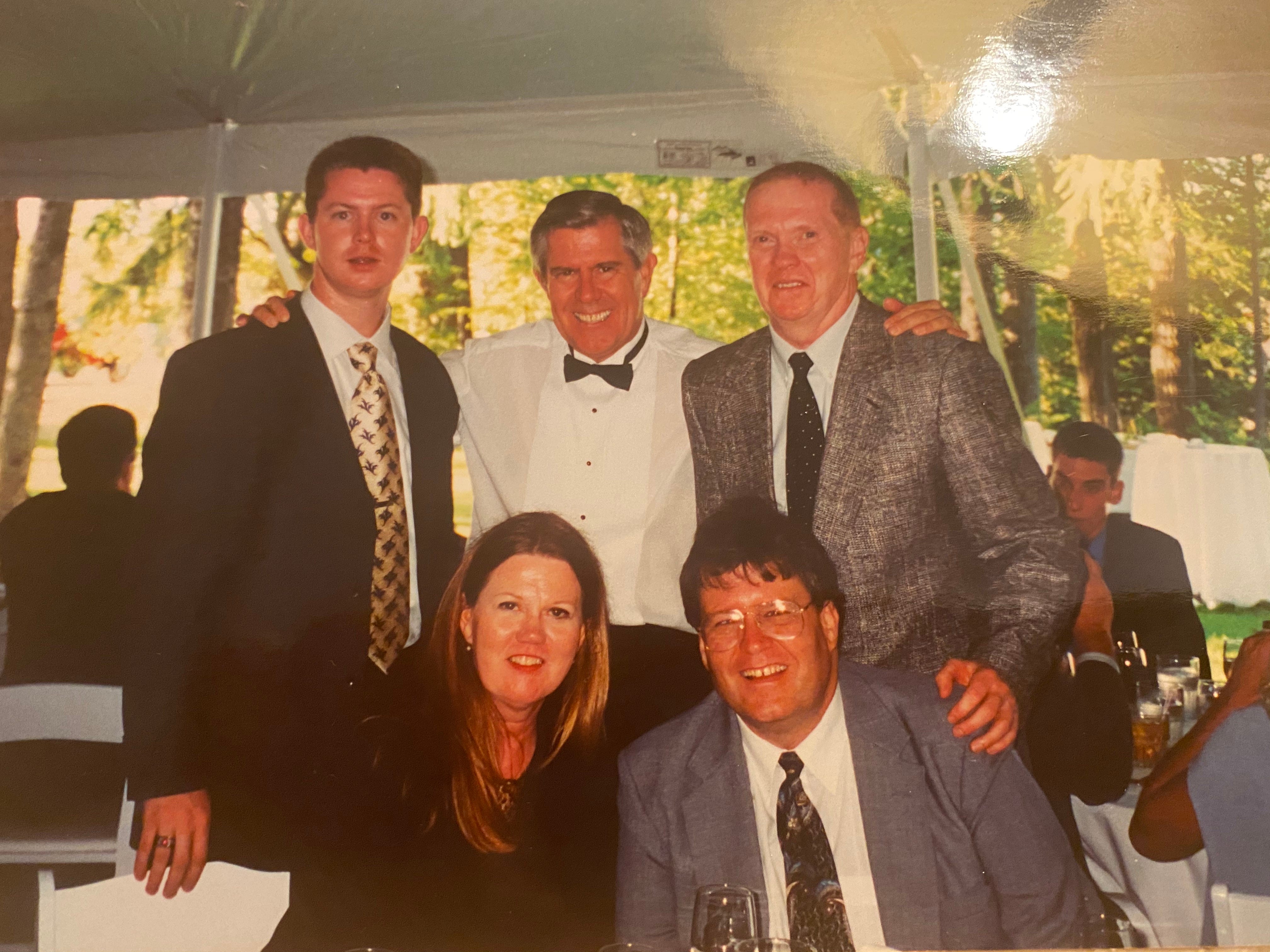
ALS — ALS is an even more cruel disease than cancer. With cancer I have some hope. In fact I have real hope. Evidence says that this RCHOP chemo will work on my cancer some 60- maybe 70% of the time. That’s a really good shot. It’s a race but I’m finally running the race against it. With ALS you just waste away. There is no cure. There is no hope. There is just the possibility of greeting imminent death. Jane knew that and she greeted it elegantly as far as I know. I wasn’t there in Asheville when she passed. But this is the time to talk about Johnny. John is the one in the lower right side of this picture. The others are my sister Jan sitting next to John, her son Steven behind her on the left, me in the middle and my cousin Mike on the right. Mike is the oldest of the cousins by one year on me. I’m just the oldest in my immediate family.
Our family is humongous. I have relatives I have never met. My grandma and grandpa on my mother’s side — which is where all these folks come from had 7 kids and they all had kids. My mom had 12 (13 if you count my older brother Brian who died when she was pregnant with me). Aunt Fran had 7 I guess. Aunt Mary had one — Cathy. Aunt Jean had 4 I think, Helen had 6 or 7, I don’t know. Virginia had 2 and Uncle Jack had 3 I think. I could look all this up but I don’t want to take the time right now. Anyway suffice it to say that all these cousins had kids and all their kids are now having kids. It’s huge. We had a big family reunion on the Indiana/Michigan border the summer before COVID and many of us all came together and really met each other for the first time in some cases and for the first time in a long time in others. This photo was taken at my brother Jack’s wedding in Northern Michigan — what was that town — Leland. Jack now has teen agers on their way toward college so this was taken 15–16 years ago. How long have you been married to Carey Jack? Johnny was a long haul truck driver. He drove the big rigs across the country. He lived in Lansing near his dad and brothers. He would stop by and visit my parents in their retirement in San Diego and stay for a day before he had to take the next load to wherever the hell hje was going — Texas or Virginia or Ohio. Who knows. His life was on the road in the big rig. John got ALS. His company fired him immediately so they didn’t have to cover his insurance. John was one of the most inspirtational people I have ever met. He was really a pretty simple guy. Not sophisticated AT ALL or really well educated as I remember. His outlook on life was pretty simple. “How ya doing YOUNG MAN?” he would say. He said this to my dad who was well quite a bit older. At first dad was taken aback but he came to see that this was John’s way of just making him feel good about himself so he came to accept it. We all cherished John. Such a just plain good human being. John wasted away in hospice for some 3 years. I would plan a business trip to Michigan and so spend a weekend with him every 6 months or so. They let me stay in his room with him and fed me and all that. Really nice hospice. Really kind people. Sometimes my brother Jack and Cousin Mike would come up with me from Chicago. Maybe others. And I’m sure John had lots of people dropping in. I often saw his brother Greg I think. I can’t even keep all the names straight in my family it’s so damn big. Greg dropped in often to visit John. Big Michigan State fan — Mike (also in the picture remember) went to Michigan. so yeah there was some Big 10 jawing. John was just such a happy guy. There was not one hint of an iota of why me, poor me, I don’t deserve this. It’s just wasn’t in his DNA. He just wanted to make people feel good. His nurses loved him. And John was a BIG guy. Not easy to move around as he lost muscle control. He hung in there in hospice when they thought he might last for 6 months for close to 3 years. They planted a tree outside his window when he passed so they could all remember him.
I’m writing about these people who have passed on because I talk to them. They are all helping me through this time in my life. I call on them. I ask for advice and encouragement. And it’s funny — you know they all know each other. There like my team on the other side. There are others on the team over there that I’ll talk about but these 3 are the strongest voices. They’re the ones that answer back all the time. Bob says “just relax and breathe”, Jane says “it’s all good” and John says, “How ya doin’ Young Man?”
There are others who have passed who I have reached out to but their voices are not as strong yet. Even mom and Dad haven’t come through very strong yet. I’m sure they will. The are the very definition of love — as any of us can attest. Here are a few others whose stories I will tell. After that we’ll see where this blog thing goes — hopefully to the Living.
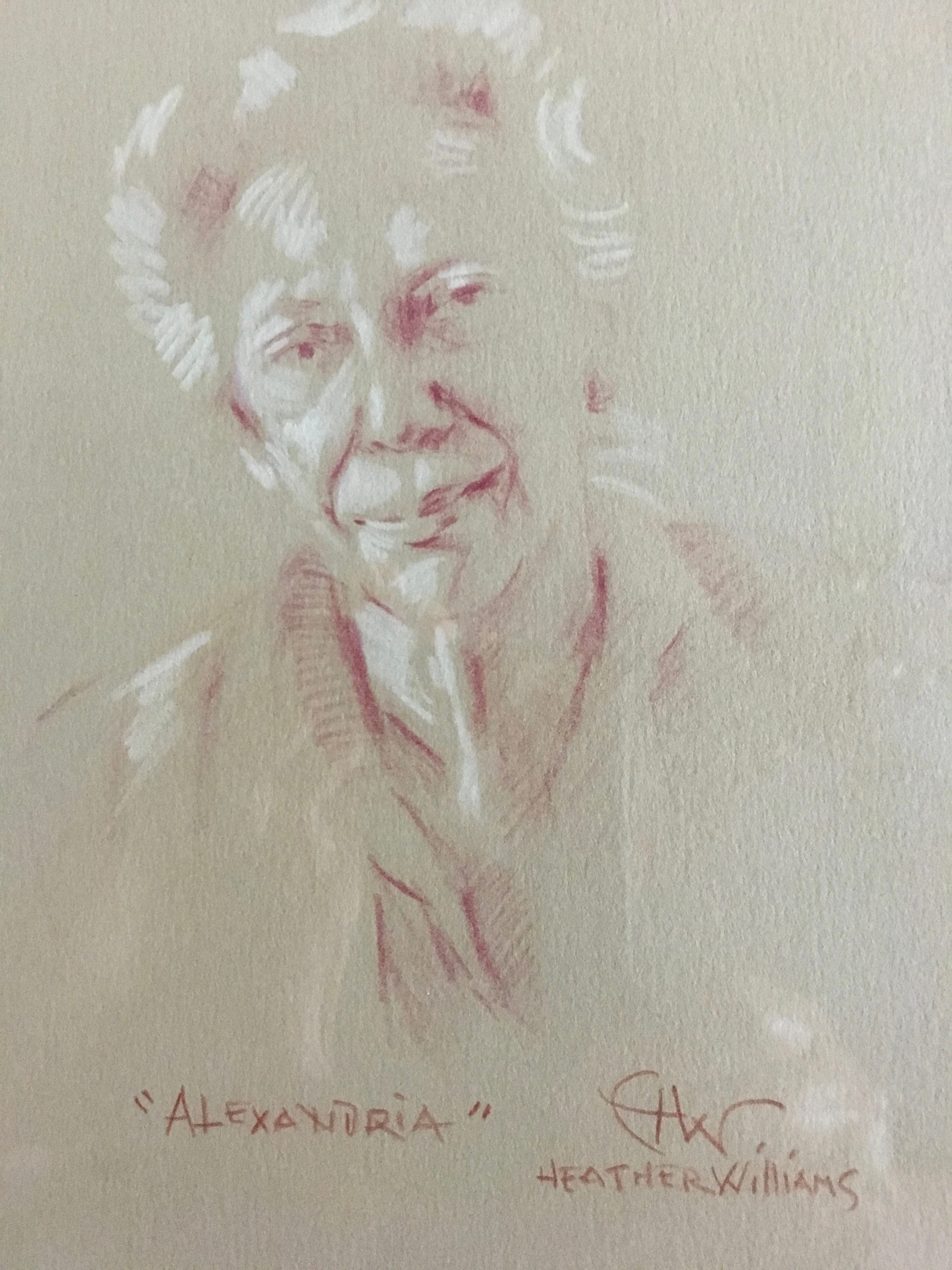
Alice — really Alexandria Peterson. I don’t have a photo of Alice but I do have a drawing that my friend Heather did. She is a rather quite good artist.
I knew Alice when I lived in San Francisco. I lived there for a couple of 3 year stints I guess. Was mostly in the bay area after college (in Santa Cruz). I first moved there for a construction job. I was living in LA at age 23 trying to figure out how to get my life together after a 8 month trip to Mexico on virtally no money. Just a hippie drug trip mostly alone although I started the trip with a French girlfriend name Caroline. She flew back to France from Mexico City after I flipped a coin to see if she would stay or go. I was so fucking dumb. Anyway, I found myself back in LA living at home in complete and total shut down culture shock mode. I mean really fucked up. Besides all my other psychological and cultural issue in adjusting back to life in the US from Life in Mexico where everything is bargained for and there are no set prices and everyone wants to take advantage of the gringo. I did learn Spanish kind of and I did do magic mushrooms. Whole new story that maybe we’ll get to or maybe we won’t. But Besides all my problems at that time, my teeth were falling out. I had been on an anti seizure drug called dilantin. I first got seizures after a motorcycle accident in Santa Cruz. A couple of us hippies joy riding on smaller hondas stoned. No helmets in those days. Well I crashed and knock myself out for an hour or so. And developed a seizure disorder a few months later. The neurologist said the accident had jarred some brain connection loose and so I have been taking anti siezure drugs mostly ever since. Dilantin is a particular nasty drug. I causes the gums to swell so you can’t clean your teeth. And brushing teeth in Mexico when you are throwing a hammock over a tree for the night just wasn’t the most hygenic of places anyway. I had no money. As one of 12 we were on our own after high school. So I went ot USC dental school for dentistry work and met a guy there named Randy who was my student dentist. Since we were about the same age and since I was starved for a friend at that time and really very needy, I tried to strike up a friendship. He wasn’t very interested in that but he did do one thing that changed my life. He took me to a Prosperos Sunday meeting where I heard Thane talk for the first time. I was blown away. Never has anyone in my life reached so deeply into my soul and gave me exactly what I needed to hear to come back to life. I jumped in with both feet and for the next 6 weeks I took all the classes — Advance Seminar, Translation, RHS, Comprehensive Workshop, Life Class and Crown Mysteries. And a month later went on an Aloha retreat which was a weekend of intense therapy in Palm Springs. I finally had begun to pull myself back up out of the hole I had been stuck in. It was hard work but eventually I got a decent job in construction (I did office work not trade work)and that company Chanen Construction company — there’s a whole story to getting that job in the first place but this could take forever if I go there — moved me to San Francisco to work on the construction of the Sheraton Hotel at Fisherman’s Wharf — a project that was in deep deep trouble. That hotel had underground parking so they could use all the real estate for revenue producing rooms and zoning laws wouldn’t let them build higher than 3 stories I think so they didn’t obstruct the views behind them. So the parking was underground. It took half of the entire construction budget to get the water out of the hole before they could pour the concrete for the parking lot. So we were behind the 8 ball from the day I got there. They had made me Assistant Project Manager — heck I was just a kid about 25 years old. I worked my ass off. There is more of my blood and guts in that building than you’ll ever know. I did the purchasing, payroll, expediting, some estimating and even had to hold the weekly safety meetings where I basically was tasked with coming up with a new joke each week. Well I was desperate to fit in and be one of the guys. Well these big burly construction workers like to drink after work at a bar across the street called the Wharf Rat. They would just line up drinks in front of me and I would pour them down. I couldn’t keep up but I tried. I would wake up sometimes asleep on the front seat of this old 56 light blue Chevy that I drove around in some neighborhood whre I didn’t;’t know where I was. I lived in the Upper tenderloin on Bush street and would wake up in Pacific Heights or something. I t was crazy. I had become a full fledged drunk. So one night a group of fishermen came into the bar. We were all drunk and so were they I guess and they picked a fight. Everyone scattered. I’m not a fighter so I ran toward Scoma’s down an alleyway. A guy followed me and kicked the shit out of me. I played dead and he eventually got bored. I was so mad. I slammed my hand into the glass display case in front of Castagnolias and was bleeding down my arm. I wandered into a Holiday Inn and they called an ambulance took me to San Francsico general where they sewed me up. I called a guy from the Prosperos named Skip Byron. Good guy. Saved me really. He marched me into AA meeting every day for a month until I sobered up. I came to recognize that place when drinking was no longer fun. I got it under control and have had it under control relaly for the rest of my life. I’m not a big drinker now at all. Well part of getting myself better was working with Alice. Alice was my Mentor in San Fransciso. Perry was the traditional mentor there for The Prosperos. Mentorship is whole thing but it’s really just what the word means. Alice was non traditional. She lived on top of Nob Hill at the CLAY JONES at the corner of Clay and Jones. A prestigious building. I think she was on the 17h floor if I remember. A very elegant lady. She was half Italian and half Inca Indian. And was married to a scandanavian I think named Magnus. Magnus was a cabbie. Well he started as a cabbie but he owned medallions for cabs which was like gold in a cab town like San Franscico. He was with Veterans Cab Company. I wonder if they even exist anymore. I wonder if Uber has put all the cabs in San Francisco out of business by now. I haven’t been back in a long long time. Alice worked with me and helped me get back on track. Our counsleing sessions mostly were sitting around her table looking out at the bay playing cards (she liked to play Casino) — a simple enough game to keep the conversation flowing. And we would talk. She would tell me stories about her life — ask me questions about mine and just talk things out. She knew Thane for a long long time and was a devotee so to speak but not a teacher like most mentors were. Her work was one on one with moslty tough cases. Cases like John Bunyard a convicted murderer and rapist who spent his life in Soledad prison.
Here’s apicture of John Bunyard taken at Soledad. Tom Charlesworth, another good old buddy of mine who lives in Seattle and might be retired in Portugal by now, John’s in the middle, Tom on the left and me on the right. John wanted me to send him the raunchiest porn I could possible find in San Francisco. And I did it. They let prisoners have all the porn they wanted and he wanted it all the time. Porn is a whole different part of my cancer story which I hope we get to later in this journal. Anyway, Alice got the tough cases. I was one I guess. But she was so kind. We ate many meals together at the restaurants on Nob Hill. I lived in an apartment on Clay street then just down the block from her building. She had 2 very old cats — Sabrina and Patches. I mean those cats were the most well fed cats that have ever lived on God’s green earth. She would ask me to go down to the fish market on Polk and get fresh scallops for their dinner that night or something else tasty and expensive. They never ate out of cans and god forbid boxes of dry food. I think Sabina was 17 when she died. Alice loved that cat. I never had pets. Never understood the love for an animal that people have. I didn’t want anything to “depend” on me. I was too selfish for that and so I missed out on alot of uncomplicated companionship. I’ve been alone most of my life. As you will come to see as we get further. But Alice was a special lady who helped me alot mostly by just listening and being a good mirror.
And here is a quote from Thane. “You are an individuation of infinite mind. You are an individuation of creative intuition. Being an individuation of infinite mind, you know what to do, and you will do it; you know what to say, and you will say it; you know what to write and you will write it.” –Thane of Hawaii
“True attention is a state so difficult for any human creature, so violent, that any emotional disturbance can derail it. Therefore, one must always endeavour strenuously to protect one’s inner faculty of judgment against the turmoil of personal hopes and fears.”
BY MARIA POPOVA
At the age of nineteen, Simone Weil (February 3, 1909–August 24, 1943) placed first in France’s competitive exam for certification in “General Philosophy and Logic”; Simone de Beauvoir placed second. In her short life, Weil went on to become one of the most penetrating and far-seeing minds of her era. Albert Camus lauded her as “the only great spirit of our times.” The Polish poet and Nobel laureate Czesław Miłosz considered her France’s “rare gift to the contemporary world.” She was an idealist who lived out her ideals. Born into a family of Jewish intellectuals, the 24-year-old Weil took a year off teaching to labor incognito in a car factory — despite a rare neuropathy that gave her frequent debilitating headaches — in order to better understand the struggles of the working poor. At twenty-seven, she enlisted as a soldier in the anarchist brigade during the Spanish Civil War. At only thirty-four, she died of starvation in an English sanatorium, where she was being treated for tuberculosis, having refused to receive more food than what her compatriots were rationed in Nazi-occupied France. Along the way, she wrote with uncommon insight and rhetorical rigor about such elemental questions as the essence of attention, the meaning of rights, how to make use of our suffering, and what it means to be a complete human being.
That Weil should languish so underappreciated and obscure today is a tragic function of the dual forces of collective amnesia and the systemic erasure of women’s ideas from the historical record. And yet her ideas, which influenced such luminaries as Hannah Arendt, Susan Sontag, Iris Murdoch, Michel Foucault, Flannery O’Connor, and Cornel West, resonate with intense relevance today.
Simone Weil
In the final months of her life, as she watched the Nazis devastate humanity and fragment even the rational and the righteous into factions of increasingly divisive opinions, Weil composed a short, searing treatise titled On the Abolition of All Political Parties (public library). It was never published in her lifetime. Nearly a century later, it speaks with astonishing and terrifying precision to the underlying forces ripping our world asunder.
Weil begins by posing the foundational question of whether the apparent evils of political divisiveness can be compensated for by the alleged good of adopting the views of any given party. She writes:
First, we must ascertain what is the criterion of goodness.
It can only be truth and justice; and, then, the public interest.
Democracy, majority rule, are not good in themselves. They are merely means towards goodness, and their effectiveness is uncertain. For instance, if, instead of Hitler, it had been the Weimar Republic that decided, through a most rigorous democratic and legal process, to put the Jews in concentration camps, and cruelly torture them to death, such measures would not have been one atom more legitimate than the present Nazi policies (and such a possibility is by no means far-fetched). Only what is just can be legitimate. In no circumstances can crime and mendacity ever be legitimate.
With these three elemental criteria of truth, justice, and public interest in mind, Weil frames the core characteristics of all political parties:
A political party is a machine to generate collective passions.
A political party is an organisation designed to exert collective pressure upon the minds of all its individual members.
The first objective and also the ultimate goal of any political party is its own growth, without limit.
Because of these three characteristics, every party is totalitarian — potentially, and by aspiration. If one party is not actually totalitarian, it is simply because those parties that surround it are no less so. These three characteristics are factual truths — evident to anyone who has ever had anything to do with the every-day activities of political parties.
As to the third: it is a particular instance of the phenomenon which always occurs whenever thinking individuals are dominated by a collective structure — a reversal of the relation between ends and means.
Everywhere, without exception, all the things that are generally considered ends are in fact, by nature, by essence, and in a most obvious way, mere means. One could cite countless examples of this from every area of life: money, power, the state, national pride, economic production, universities, etc., etc.
Collective thinking… is an animal form of thinking. Its dim perception of goodness merely enables it to mistake this or that means for an absolute good.
The same applies to political parties. In principle, a party is an instrument to serve a certain conception of the public interest. This is true even for parties which represent the interests of one particular social group, for there is always a certain conception of the public interest according to which the public interest and these particular interests should coincide. Yet this conception is extremely vague. This is true without exception and quite uniformly.
She examines how the second and third defining features of political parties — the determination to influence people’s minds and the ultimate goal of infinite growth — conspire to effect the total manipulation of truth and the corruption of justice:
Once the growth of the party becomes a criterion of goodness, it follows inevitably that the party will exert a collective pressure upon people’s minds. This pressure is very real; it is openly displayed; it is professed and proclaimed. It should horrify us, but we are already too much accustomed to it.
Political parties are organisations that are publicly and officially designed for the purpose of killing in all souls the sense of truth and of justice. Collective pressure is exerted upon a wide public by the means of propaganda. The avowed purpose of propaganda is not to impart light, but to persuade… All political parties make propaganda.
She frames the grim effect on the individual:
A man who has not taken the decision to remain exclusively faithful to the inner light establishes mendacity at the very centre of his soul. For this, his punishment is inner darkness.
With an eye to the three types of lies by which this manipulation occurs — “lying to the party, lying to the public, lying to oneself” — Weil examines the nature and paradoxes of truth:
Truth is all the thoughts that surge in the mind of a thinking creature whose unique, total, exclusive desire is for the truth.
Mendacity, error (the two words are synonymous), are the thoughts of those who do not desire truth, or those who desire truth plus something else. For instance, they desire truth, but they also desire conformity with such or such received ideas.
Yet how can we desire truth if we have no prior knowledge of it? This is the mystery of all mysteries. Words that express a perfection which no mind can conceive of — God, truth, justice — silently evoked with desire, but without any preconception, have the power to lift up the soul and flood it with light.
It is when we desire truth with an empty soul and without attempting to guess its content that we receive the light. Therein resides the entire mechanism of attention.
Perhaps due to her beautifully phrased belief that “attention is the rarest and purest form of generosity,” Weil suggests that protecting our attention from manipulation is our greatest and most generous contribution to public life and public good — something which human nature, so hopelessly governed by hope and fear, makes immensely challenging to achieve and therefore all the more triumphant when achieved:
True attention is a state so difficult for any human creature, so violent, that any emotional disturbance can derail it. Therefore, one must always endeavour strenuously to protect one’s inner faculty of judgment against the turmoil of personal hopes and fears.
She considers the particular and supreme peril of what philosopher Martha Nussbaum would term, nearly a century later, our political emotions — the unthinking, affect-driven impulse toward belief and action, which politicians so deftly manipulate by playing on our hopes and fears. Weil terms this “collective passion” and writes:
When a country is in the grip of a collective passion, it becomes unanimous in crime. If it becomes prey to two, or four, or five, or ten collective passions, it is divided among several criminal gangs. Divergent passions do not neutralise one another… they clash with infernal noise, and amid such din the fragile voices of justice and truth are drowned.
[…]
Collective passion is the only source of energy at the disposal of parties with which to make propaganda and to exert pressure upon the soul of every member.
One recognises that the partisan spirit makes people blind, makes them deaf to justice, pushes even decent men cruelly to persecute innocent targets. One recognises it, and yet nobody suggests getting rid of the organisations that generate such evils.
Intoxicating drugs are prohibited. Some people are nevertheless addicted to them. But there would be many more addicts if the state were to organise the sale of opium and cocaine in all tobacconists, accompanied by advertising posters to encourage consumption.
The most toxic effect of collective passion, Weil argues, is that it narrows the locus of attention to particular points of heightened affect — isolated ideas we feel, or are made to feel, strongly for or against — to the exclusion of all attendant ideas that come bundled in that particular party ideology. People are impelled to join a party or a cause because it speaks to a few things they feel strongly about, but they rarely examine closely all the other ideas the party espouses — including many with which, upon reflection and examination, they might wholly disagree. (We have seen this, for instance, with the tidal shift in support by women who initially voted for Donald Trump, having been drawn to some of his economic campaign promises, either unwitting of or turning a willfully blind eye to his reckless misogyny until its undeniable evils came to eclipse any alleged economic goods promised them.)
Weil admonishes that while this manipulative fragmentation of thought to the detriment of truth, justice, and public interest originates in our politics, it has permeated nearly every domain of human life:
People have progressively developed the habit of thinking, in all domains, only in terms of being “in favour of” or “against” any opinion, and afterwards they seek arguments to support one of these two options… There are broad-minded people willing to acknowledge the value of opinions with which they disagree. They have completely lost the concept of true and false.
Others, having taken a position in favour of a certain opinion, refuse to examine any dissenting view. This is a transposition of the totalitarian spirit.
When Einstein visited France, all the people who more or less belonged to the intellectual circles, including other scientists, divided themselves into two camps: for Einstein or against him. Any new scientific idea finds in the scientific world supporters and enemies — both sides inflamed to a deplorable degree with the partisan spirit. The intellectual world is permanently full of trends and factions, in various stages of crystallisation.
In art and literature, this phenomenon is even more prevalent. Cubism and Surrealism were each a sort of party. Some people were Gidian and some Maurrassian. To achieve celebrity, it is useful to be surrounded by a gang of admirers, all possessed by the partisan spirit.
However feasible Weil’s central insistence on the abolition of all political parties may be in reality, her deeper point — the importance of refusing to adopt divisive black-and-white opinions among and within us — may be the single most significant, most countercultural act of courage and resistance each of us can perform today. She concludes:
Nearly everywhere — often even when dealing with purely technical problems — instead of thinking, one merely takes sides: for or against. Such a choice replaces the activity of the mind. This is an intellectual leprosy; it originated in the political world and then spread through the land, contaminating all forms of thinking. This leprosy is killing us.
Many of us are rejoicing that Trump’s attempted coup didn’t work. And we are rightly outraged at those who stormed the Capitol.
Yet the upsurge of feeling about protecting democracy is a good time to suggest that we seek fundamental changes in our system to make it a real democracy that could work for everyone.
Trump is a perfect embodiment of the values of selfishness and “looking out for number one” that is the bottom line of the capitalist marketplace. It was that marketplace and its media that made him a pop hero to millions long before he became a politician. Anyone who has worked inside a large corporation has been conditioned day after day, year after year, to seek to maximize profits without regard to the consequences for others. After years of being in those institutions, and watching the media that it shapes, most people come away believing that this is “reality” and that it would be unrealistic to try to challenge it.
The Democratic Party is dominated at the top by people who share this assumption, but who also believe that the government should alleviate the worst suffering that the inequalities of wealth and power have engendered, as long as doing so does not significantly weaken the capitalist marketplace. Meanwhile, the Left of that party correctly pushed for considering and repairing the suffering of previously exploited groups including people of color, women, LGBTQI, immigrants, etc. But it is rare to hear an open critique of the ethos of selfishness which underlies and reinforces all the inequalities and all the oppressive practices, and thus makes it almost impossible to get the changes needed to make our country truly a democracy. We need your support to bring the kind of analyses and information Tikkun provides. Click Here to make a tax-deductible contribution.
The most important thing we can do is to recast progressive forces to place at the center of our public discourse (and eventually into our educational system) a campaign to recognize every other human being on this planet as fundamentally valuable and to care about them as though they were part of our extended family. We must replace the old bottom line of money. We must judge efficiency, productivity, and rationality in our corporations, political system, education system, health care system, media and cultural system by a new bottom line: the extent to which they maximizes our capacities to be loving and kind, generous and forgiving, committed to environmental and social justice, seeing other human beings as embodiments of the sacred rather than seeing them thru the perspective of how they can “be of use” to us, and responding to the earth and the larger universe with awe, wonder, and radical amazement at the mystery and grandeur of this life. Using this New Bottom Line will appeal to many who would love to live in such a world but have never heard a political force explicitly and systematically putting that vision at the center of their discourse. These same people then fall back into “being realistic” and settling for the world of selfishness, and the Right begins to look most realistic when it promotes selfishness and the Left most unrealistic when it calls for reform within the contours of the capitalist worldview.
Articulating that New Bottom Line will help us build the public support we need to actually win the specific transformations needed to democracy a reality in America.
Abolish the Electoral College The president should be chosen by popular vote, and should take office immediately upon receiving the votes of a majority of voters.
Significant Changes to Our Voting System We need to pass legislation to ensure automatic voting registration when a person turns 18, online voting registration, restoring voting rights to felons, protecting voting rights throughout our country, and more.
Limit Presidential Pardons The President must not have the power to grant pardons to any member of her/his/their family, presidential staff, cabinet members, and top assistants to their cabinet members, or highest 20% of donors to their corporations, campaigns, or any other project to which they are identified.
Abolish the Senate The Senate was created to protect the slave-owners and the rich from democratic measures that would promote democratic redistribution of wealth or income, and it now serves the elites of wealth and power more than the interests of the bottom 50% of wealth holders or income earners. The House of Representatives would have the power to confirm or reject presidential nominees to the Supreme Court and other federal courts, and to impeach the president and call for a new general election every two years. There must be a 12-year time limit on serving in the Supreme Court of the U.S. and state supreme courts, in Congress, and in all state legislatures.
Publicly Funded Elections All federal and state elections must be publicly funded, with all other money banned from any source. Public money used to fund elections would be distributed equally to the 2-4 largest political parties. All major media must provide the largest 2-4 political parties free access to at least 5 hours of prime time that the parties and their candidates may shape in any way that they choose. This shall apply to all federal and state elections.
Initiative Process Empower the people of the U.S. to generate policies thru an initiative process that would require the support of 5% of the population supporting it before it could be put on the next ballot in national elections or local elections, and with a ban on spending money to collect signatures except as granted equally to those who support and those who oppose the proposed measures.
Abolish Wealth Inequality Ban major inequalities in wealth by mandating a tax on wealth and income so its actual outcome is to ensure that no individual or family shall receive income more than seven (7) times the income of the median income of our society, and ensure that no individual or family can retain ownership of wealth that is more than ten (10) times the wealth of the median wealth of families in this society, excluding ownership of a person’s primary residence.
Corporate Responsibility Every corporation with incomes of $50 million or more per year shall be required to prove to a jury of ordinary citizens once every five years that they have a satisfactory history of environmental and social responsibility. They will be prevented from moving their jobs and investments out of the U.S. until they pay local communities reparations for the anticipated damage to the well being of the communities where they employed people.
These are important first steps toward democratization. If pursued in association with campaigns for the New Bottom Line and with an explicit connection to programs to repair the damage already done to the earth and to the animals who live on it, democracy would come alive, become unbeatable, and many who currently are too timid to actually implement it would be empowered to win many other aspects of “the Caring Society: Caring for Each Other and Caring for the Earth.
And when these steps have been instituted, we will have a working democracy rather than the thin elements of democracy that people are seeking to protect from those who do not value democracy at all.
Releasing the Hidden Splendour Sat/Sun January 16 and 17 Live Zoom Class
RELEASING THE HIDDEN SPLENDOUR CLASS: if we have emotions or patterns where we are stuck in an endless cycle of repetition, or negative emotional reactions, then that part of our past represents where and what we need to let go of or release.
Releasing the Hidden Splendour is a tool to do just that. Learn how to use ARCHETYPE stories and symbols to help explore and break patterns to free yourself using what we call the Give For technique.
Team Taught by Richard Hartnett H.W., M. & Rick Thomas H.W., M.
Two full days of class on this weekend. Class fees: $150 New to class / $75 Review
“On January 20, 2021, Mars moves to form a conjunction aspect with Uranus and it’s an extremely dangerous red-alert moment. The strife, conflict, unrest, and violence that’s inclined to happen will erupt with cataclysmic suddenness.” https://astrologyforaquarius.com/articles/11329/
Let me explain.
Uranus represents all unusual aspects of life. It symbolizes inventive power, change, tension, and revolution. Mars is the planet of desires, actions, energy, passion, and assertion.I would say that Mars will be energizing inventive power, change, and revolution, and indeed, Biden’s election will certainly be a revolution from the ugly, heavy, mesmeric and fascist energies of Trump’s reign.
But none of this is deterministic. They’re just energies that we can work with and harmonize with, and that makes all the difference in how they play out.





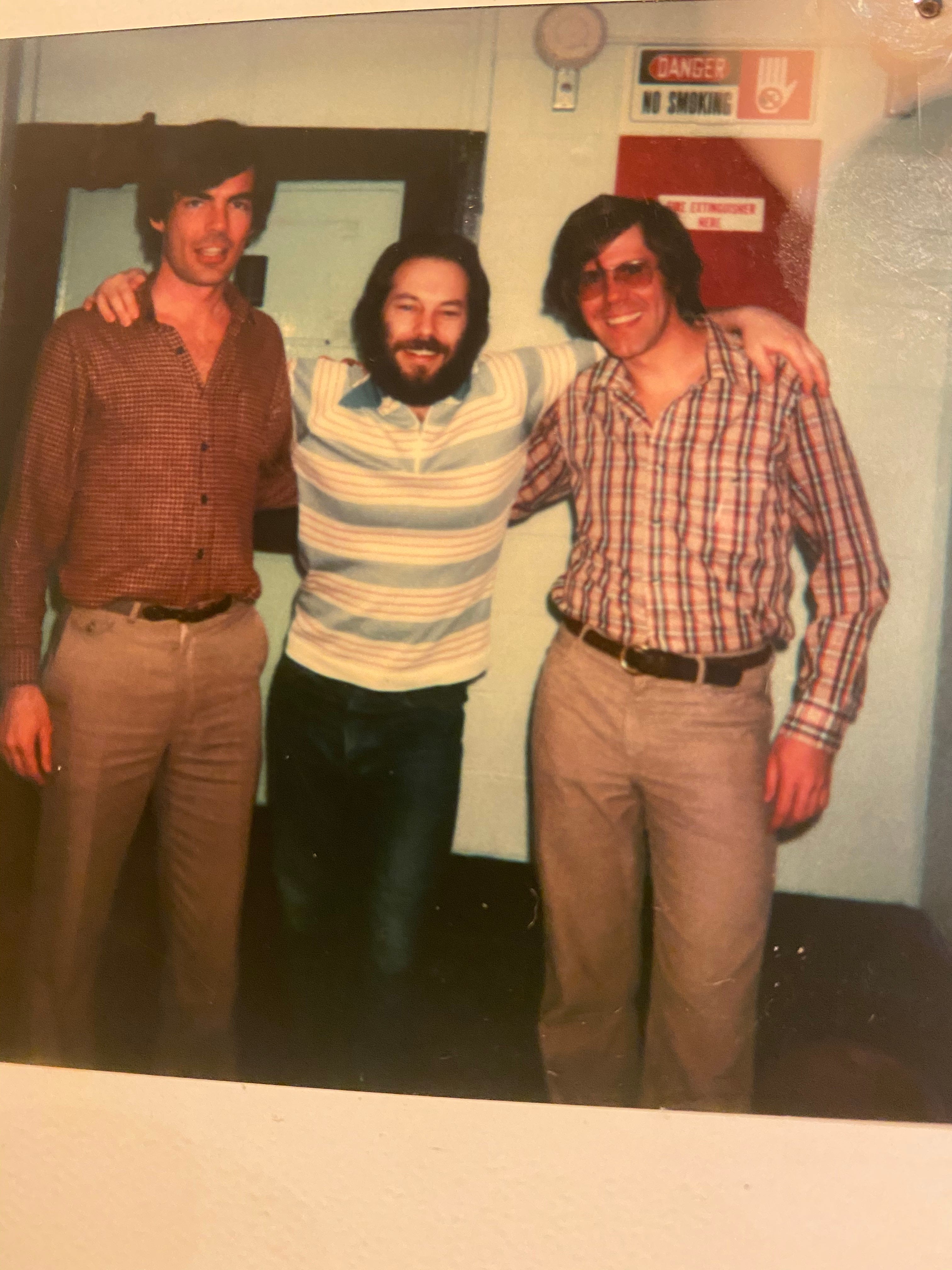




 Richard Hartnett H.W., M. Rick Thomas H.W., M.
.jpg)

-.jpg)


