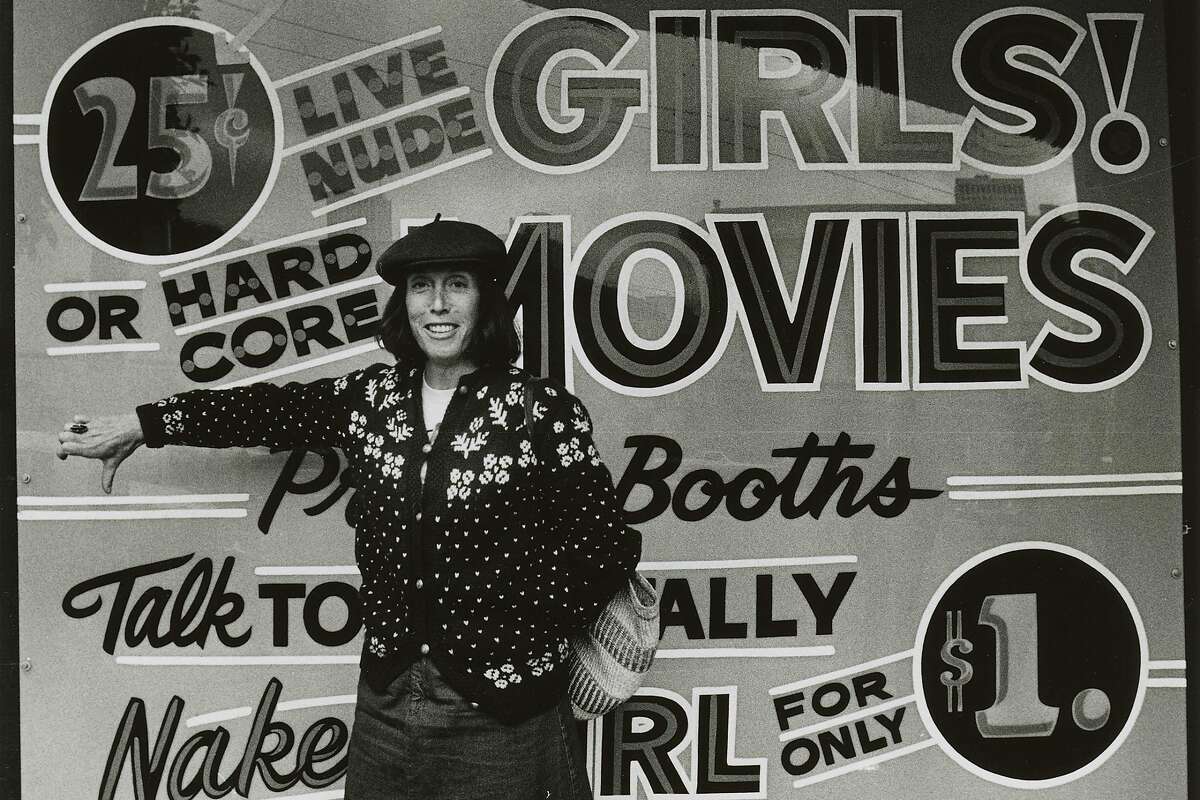
Margo St. James, the sex workers’ ‘Joan of Arc,’ dies at 83

Sam Whiting Jan. 14, 2021  (SFChronicle.com)

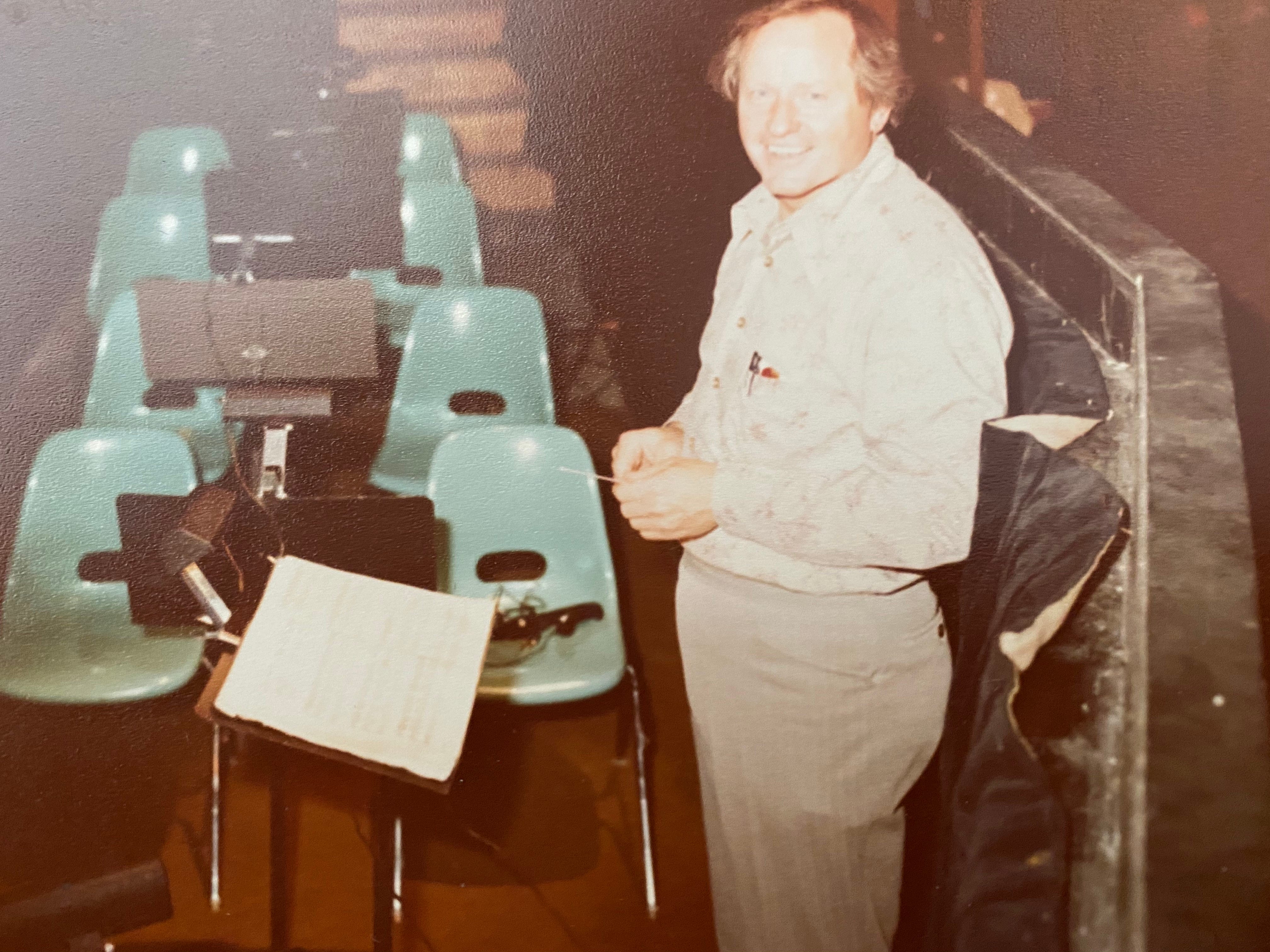
Margo St. James was a proud advocate for the rights of sex workers. A one-time prostitute herself, St. James died on Jan. 13. She’s shown here on Sept. 10, 1980.
1of4Margo St. James was a proud advocate for the rights of sex workers. A one-time prostitute herself, St. James died on Jan. 13. She’s shown here on Sept. 10, 1980.Photo: John O’Hara / The Chronicle 1980
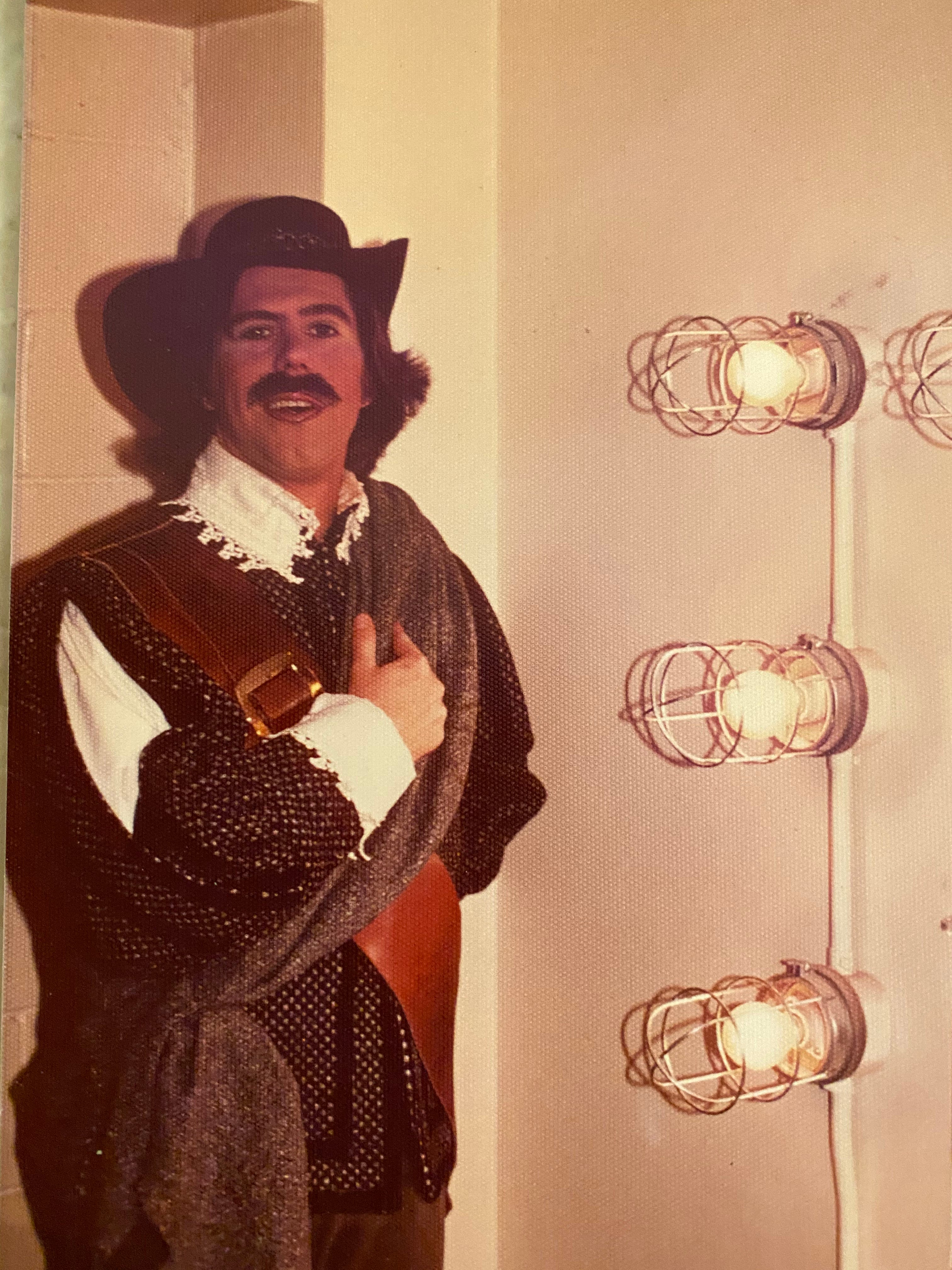
Margo St. James created COYOTE, a group focused on fighting for the rights of sex workers.
3of4Margo St. James created COYOTE, a group focused on fighting for the rights of sex workers.Photo: John O’Hara / The Chronicle 1996

Margo St. James, proud prostitute, union organizer for her trade, founder of the famed Hookers Ball to honor them and a flamboyant San Francisco character from back in the day when there were a lot more of them, has died at 83.

Best known for the creation of COYOTE, which stood for Call Off Your Old Tired Ethics, to fight for the rights of sex workers, St. James was also a social activist who helped start St. James Infirmary, an occupational health and safety clinic for sex workers, in the Tenderloin. Her death on Monday was later announced on the St. James website, and confirmed for The Chronicle by her sister, Claudette Sterk of Everson, Wash. St. James had been suffering from dementia for years and living in an assisted care facility in Bellingham, Wash., the city where she was born.

“Margo might be the single most important sexual liberationist and feminist revolutionary who ever slapped society upside its head,” said Santa Cruz journalist and longtime friend Susie Bright. “She was our combat soldier, field nurse and Joan of Arc.”

St. James had come to San Francisco in 1959 from Bellingham as an escaped housewife, mom and aspiring fine arts painter. Once she switched mediums, she became maybe the most prominent sex work advocate since Sally Stanford ran a bordello on Nob Hill.

“Margo only did the most idiosyncratic whoring,” said Bright. “But once she found the political kernel of what she was doing, she never shut up.”

Among the people she never shut up to were lecture audiences worldwide, various government commissions and national daytime TV hosts like Phil Donahue. She also never shut up in San Francisco, where she narrowly lost a campaign for a seat on the Board of Supervisors in 1996.

Articulate and engaging, she was always good for a publicity stunt. This included dressing in a nun’s habit and making out with a man on the street, and running for the Republican nomination for president in 1980.

“Margo was close to about a thousand people,” said Ron Turner, publisher of Last Gasp books and comics. “She was plainspoken and welcoming, but she took on extremely large adversaries, including just about every pastor in the country.”Margo St. James, former prostitute, gets a kiss from Robert McNie, a friend, on the way to her party to find out if she is voted as S.F. Supervisor.Margo St. James, former prostitute, gets a kiss from Robert McNie, a friend, on the way to her party to find out if she is voted as S.F. Supervisor.Photo: Deanne Fitzmaurice / The Chronicle 1996

Margaret Jean St. James was born Sept. 12, 1937, the oldest of three children to George and Dorothy St. James, who ran a dairy farm. Known as Peggy, St. James had so much excess energy that when she finished her farm chores, she would take off and run in the hills. While at Bellingham High School, she established herself as a realist painter. One of her works was entered in a New York contest and was chosen to hang in Carnegie Hall, said Sterk.

This artistic calling was derailed when she met Don Sobjack in high school. They were married shortly before their son, Don Jr., was born, which was one month after her high school graduation, Sterk said.

Sobjack was a commercial fisherman and St. James was a housewife, which lasted about two years. “She just realized that she was not cut out to be a mother,” Sterk said. “She was going insane, and she just left her son with his dad and came to San Francisco to pursue her art career.”

St. James was derailed from her artist calling a second time, when she had some of her canvases stolen and lost the rest in a fire on a pier where she kept her studio. Sometime in 1962, she was picked up in a sweep of prostitutes, “though she hadn’t actually done it yet,” Sterk said. But when the judge insisted she did, it set St. James on a whole new trajectory.

“What’s a nice girl like you … ?” was the usual reaction of men to my becoming a feminist as well as to my becoming a prostitute,” St. James wrote in a preface to her then-lover Gail Pheterson’s 1989 nonfiction treatise, “A Vindication of the Rights of Whores.” “The difference for me was that I chose to be a feminist, but I decided to work as a prostitute after being labeled officially by a misogynist judge in San Francisco at age twenty-five. I said in court, ‘Your Honor, I’ve never turned a trick in my life!’ He responded, ‘Anyone who knows the language is obviously a professional.’ ”

So she followed his advice and became one, though it has been debated as to how hard she worked at it. This led to the 1973 creation of COYOTE, which came out of a sister organization called WHO, which stood for “Whores, Housewives and Others,” the others being lesbians who had not yet come out. These included belly dancers, topless dancers and bottomless dancers, along with a supporting cadre of feminist and liberal intellectuals, politicians and even police.

Chronicle columnist Herb Caen was an obvious fan due to the copy generated, most prominently when COYOTE announced itself in the early 1970s and the first Hookers Ball was held in the meeting room at Glide Memorial Church in October 1974. In an on-site TV interview, St. James, wearing an eye mask, said, “My goal is the complete decriminalization of sex for human beings, even commercial sex. Just because we are getting paid for our time doesn’t mean we have to go to jail for it.”

“There were 100 or 200 people there,” said Turner, who attended. “People wore very little clothing but dressed very nicely with what they had on.”

The Hookers Ball became a standard event that moved on to the Civic Auditorium, an event cut short by a bomb scare that left all of the attendees standing out in the cold in their skimpy attire. At another Hookers Ball, at Maritime Hall, “Margo came out riding an elephant,” said Turner, who also once saw her at the Pride Parade dressed as a doctor, in white coat and mustache.

“That was Margo,” Turner said, “she always liked to make a big entrance.”

The ball peaked at 20,000 attendees at the Cow Palace in 1978.

Once when St. James was invited to lecture at Western Washington University, she invited Sterk, by then a country gospel singer with three records out, to come sing a gospel hymn as part of the lecture.

“She liked to shock people,” said Sterk. “From the time that we were little, sister would do whatever she felt like doing.”

Dr. Eugene Schoenfeld, the San Rafael psychiatrist known as Dr. Hip, met St. James in the late 1960s, in a hot tub in a hillside Mill Valley neighborhood known as Druid Heights. She had no clothes on at the moment of introduction and neither did he. At the time, St. James was supplementing her other sources of income with work as a private investigator, and this was one way she gathered information.

From that night on, St. James and Schoenfeld were clothed and close, though it almost cost him his radio talk show and KSAN its license. As an invited guest, she was giving a pleasurable experience to Paul Krassner, while they both were waiting to appear on Dr. Hip’s program. After warming up Krassner, St. James went on the air to offer tips for successful oral sex.

“She was very intelligent and warm and helpful to people,” Schoenfeld said, “and she had a wonderful sense of humor and taste for the outrageous.”

When St. James told Schoenfeld she was settling down again, by marrying Chronicle crime reporter Paul Avery (later portrayed in the film “Zodiac”), she gave a logical reason. Avery at the time was suffering from emphysema and in a wheelchair, carrying an oxygen tank.

“This is one who can’t run away from me,” she said. But she didn’t run away from him either. Married in 1993, she eventually left the Bay Area to take Avery to Orcas Island, Wash., where her family had a cabin.

Avery died in 2000, but St. James stayed on the island. She lived there quietly until memory loss issues overtook her and she was moved onto the Washington mainland.

Survivors include her son, Don Sobjack of Custer, Wash.; sister Claudette Sterk of Everson, Wash.; brother George St. James of Kanaskat, Wash.; half brother John Wachter of Orcas Island; three grandchildren; and 10 great-grandchildren.

In the summer, there will be a celebration of life on Orcas Island, where St. James asked that her ashes be spread alongside the ashes of Avery.Sam Whiting is a San Francisco Chronicle staff writer. Email: swhiting@sfchronicle.com Twitter: @samwhitingsf

Sam Whiting

Follow Sam on:https://www.facebook.com/SFChronicle/samwhitingsf

Sam Whiting has been a feature writer at The San Francisco Chronicle for 30 years. He started in the People section, which was anchored by Herb Caen’s column, and has written about people ever since. For five years he had a weekly Sunday magazine column called Neighborhoods. He currently covers art, culture and entertainment for the Datebook section. He walks a minimum of three miles a day in San Francisco, searching out public art and street art for posting on Instagram @sfchronicle_art.

©2021 Hearst

My Heart Leaps Up

by William Wordsworth

My heart leaps up when I behold
A rainbow in the sky:
So was it when my life began;
So is it now I am a man;
So be it when I shall grow old,
Or let me die!
The Child is father of the Man;
And I could wish my days to be
Bound each to each by natural piety.

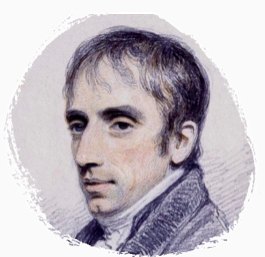
William Wordsworth

William Wordsworth, who rallied for “common speech” within poems and argued against the poetic biases of the period, wrote some of the most influential poetry in western literature, including his most famous work, The Prelude.

(nationalpoetryday.co.uk)

Beyond true and false

Buddhist philosophy is full of contradictions. Now modern logic is learning why that might be a good thing

Graham Priest is distinguished professor of philosophy at City University of New York and professor emeritus at the University of Melbourne. His latest book is One (2014). He lives in New York.

Edited by Ed Lake

May 5, 2014 (aeon.co)

Western philosophers have not, on the whole, regarded Buddhist thought with much enthusiasm. As a colleague once said to me: ‘It’s all just mysticism.’ This attitude is due, in part, to ignorance. But it is also due to incomprehension. When Western philosophers look East, they find things they do not understand – not least the fact that the Asian traditions seem to accept, and even endorse, contradictions. Thus we find the great second-century Buddhist philosopher Nagarjuna saying:

The nature of things is to have no nature; it is their non-nature that is their nature. For they have only one nature: no-nature.

An abhorrence of contradiction has been high orthodoxy in the West for more than 2,000 years. Statements such as Nagarjuna’s are therefore wont to produce looks of blank incomprehension, or worse. As Avicenna, the father of Medieval Aristotelianism, declared:

Anyone who denies the law of non-contradiction should be beaten and burned until he admits that to be beaten is not the same as not to be beaten, and to be burned is not the same as not to be burned.

One can hear similar sentiments, expressed with comparable ferocity, in many faculty common rooms today. Yet Western philosophers are slowly learning to outgrow their parochialism. And help is coming from a most unexpected direction: modern mathematical logic, not a field that is renowned for its tolerance of obscurity.

Let’s start by turning back the clock. It is India in the fifth century BCE, the age of the historical Buddha, and a rather peculiar principle of reasoning appears to be in general use. This principle is called the catuskoti, meaning ‘four corners’. It insists that there are four possibilities regarding any statement: it might be true (and true only), false (and false only), both true and false, or neither true nor false.

We know that the catuskoti was in the air because of certain questions that people asked the Buddha, in exchanges that come down to us in the sutras. Questions such as: what happens to enlightened people after they die? It was commonly assumed that an unenlightened person would keep being reborn, but the whole point of enlightenment was to get out of this vicious circle. And then what? Did you exist, not, both or neither? The Buddha’s disciples clearly expected him to endorse one and only one of these possibilities. This, it appears, was just how people thought.

At around the same time, 5,000km to the west in Ancient Athens, Aristotle was laying the foundations of Western logic along very different lines. Among his innovations were two singularly important rules. One of them was the Principle of Excluded Middle (PEM), which says that every claim must be either true or false with no other options (the Latin name for this rule, tertium non datur, means literally ‘a third is not given’). The other rule was the Principle of Non-Contradiction (PNC): nothing can be both true and false at the same time.

Writing in his Metaphysics, Aristotle defended both of these principles against transgressors such as Heraklitus (nicknamed ‘the Obscure’). Unfortunately, Aristotle’s own arguments are somewhat tortured – to put it mildly – and modern scholars find it difficult even to say what they are supposed to be. Yet Aristotle succeeded in locking the PEM and the PNC into Western orthodoxy, where they have remained ever since. Only a few intrepid spirits, most notably G W F Hegel in the 19th century, ever thought to challenge them. And now many of Aristotle’s intellectual descendants find it very difficult to imagine life without them.

That is why Western thinkers – even those sympathetic to Buddhist thought – have struggled to grasp how something such as the catuskoti might be possible. Never mind a third not being given, here was a fourth – and that fourth was itself a contradiction. How to make sense of that?

Well, contemporary developments in mathematical logic show exactly how to do it. In fact, it’s not hard at all.

At the core of the explanation, one has to grasp a very basic mathematical distinction. I speak of the difference between a relation and a function. A relation is something that relates a certain kind of object to some number of others (zero, one, two, etc). A function, on the other hand, is a special kind of relation that links each such object to exactly one thing. Suppose we are talking about people. Mother of and father of are functions, because every person has exactly one (biological) mother and exactly one father. But son of and daughter of are relations, because parents might have any number of sons and daughters. Functions give a unique output; relations can give any number of outputs. Keep that distinction in mind; we’ll come back to it a lot.

Now, in logic, one is generally interested in whether a given claim is true or false. Logicians call true and false truth values. Normally, and following Aristotle, it is assumed that ‘value of’ is a function: the value of any given assertion is exactly one of true (or T), and false (or F). In this way, the principles of excluded middle (PEM) and non-contradiction (PNC) are built into the mathematics from the start. But they needn’t be.

To get back to something that the Buddha might recognise, all we need to do is make value of into a relation instead of a function. Thus T might be a value of a sentence, as can F, both, or neither. We now have four possibilities: {T}, {F}, {T,F} and { }. The curly brackets, by the way, indicate that we are dealing with sets of truth values rather than individual ones, as befits a relation rather than a function. The last pair of brackets denotes what mathematicians call the empty set: it is a collection with no members, like the set of humans with 17 legs. It would be conventional in mathematics to represent our four values using something called a Hasse diagram, like so:

{T}
↗ ↖
{T, F} { }
↖ ↗
{F}

Thus the four kotis (corners) of the catuskoti appear before us.

In case this all sounds rather convenient for the purposes of Buddhist apologism, I should mention that the logic I have just described is called First Degree Entailment (FDE). It was originally constructed in the 1960s in an area called relevant logic. Exactly what this is need not concern us, but the US logician Nuel Belnap argued that FDE was a sensible system for databases that might have been fed inconsistent or incomplete information. All of which is to say, it had nothing to do with Buddhism whatsoever.

Even so, you might be wondering how on earth something could be both true and false, or neither true nor false. In fact, the idea that some claims are neither true nor false is a very old one in Western philosophy. None other than Aristotle himself argued for one kind of example. In the somewhat infamous Chapter 9 of De Interpretatione, he claims that contingent statements about the future, such as ‘the first pope in the 22nd century will be African’, are neither true nor false. The future is, as yet, indeterminate. So much for his arguments in the Metaphysics.

The notion that some things might be both true and false is much more unorthodox. But here, too, we can find some plausible examples. Take the notorious ‘paradoxes of self-reference’, the oldest of which, reputedly discovered by Eubulides in the fourth century BCE, is called the Liar Paradox. Here’s its commonest expression:

This statement is false.

Where’s the paradox? If the statement is true, then it is indeed false. But if it is false, well, then it is true. So it seems to be both true and false.

Many similar puzzles turned up at the end of the 19th century, to the dismay of the scholars who were then trying to place mathematics as a whole on solid foundations. It was the leader of these efforts, Bertrand Russell, who in 1901 discovered the most famous such paradox (hence its name, Russell’s Paradox). And it goes like this:

Some sets are members of themselves; the set of all sets, for example, is a set, so it belongs to itself. But some sets are not members of themselves. The set of cats, for example, is not a cat, so it’s not a member of the set of cats. But what about the set of all the sets that are not members of themselves? If it is a member of itself, then it isn’t. But if it isn’t, then it is. It seems that it both is and isn’t. So, goodbye Principle of Non-Contradiction. The catuskoti beckons.

Here you might wish to pause for a brief sanity check. Do scenarios such as these really break the chains of Aristotelian logic? Well, an increasing number of logicians are coming to think so – though matters remain highly contentious. Still, if nothing else, examples of this kind might help to remove the blinkers imposed by what Wittgenstein called ‘a one-sided diet’ of examples. We’ll need to keep those blinkers off as we return to those tricky questions that the Buddha’s disciples asked him. After all, what does happen to an enlightened person after death? Things are going to get only more disconcerting from here on in.

The Buddha, in fact, refused to answer such queries. In some sutras, he just says that they are a waste of time: you don’t need to bother with them to achieve enlightenment. But in other texts there is a suggestion that something more is going on. Though the idea is never really elaborated, there are hints that none of the four possibilities in the catuskoti ‘fits the case’.

For a long time, this riddle lay dormant in Buddhist philosophy. It was only around the second century CE that it was taken up by Nagarjuna, probably the most important and influential Buddhist philosopher after the Buddha himself. Nagarjuna’s writings defined the new version of Buddhism that was emerging at the time: Mahayana. Central to his teachings is the view that things are ‘empty’ (sunya). This does not mean that they are non-existent; only that they are what they are because of how they relate to other things. As the quotation at the beginning of this essay explains, their nature is to have no intrinsic nature (and the task of making precise logical sense of this claim I leave for the reader to ponder; suffice it to say, it can be done).

The most important of Nagarjuna’s writings is the Mulamadhyamakakarika, the ‘Fundamental Verses of the Middle Way’. This is a profound and cryptic book, whose principle theme is precisely that everything is empty. In the course of making his arguments, Nagarjuna often runs through the four cases of the catuskoti. In some places, moreover, he clearly states that there are situations in which none of the four applies. They don’t cover the status of an enlightened person after death, for example.

Why might that be? Nagarjuna’s reasoning is somewhat opaque, but essentially it seems to go something like this. The language we use frames our conventional reality (our Lebenswelt, as it is called in the German phenomenological tradition). Beneath that there is an ultimate reality, such as the condition of the enlightened dead person. One can experience this directly in certain meditative states, but one cannot describe it. To say anything about it would merely succeed in making it part of our conventional reality; it is, therefore, ineffable. In particular, one cannot describe it by using any of the four possibilities furnished by the catuskoti.

It is striking how useful his invention proves in the context of Buddhist metaphysics, though Buddhism played no part in inspiring it

We now have a fifth possibility. Let us write the four original possibilities, {T}, {F}, {TF} and {}, as tfb and n, respectively. The way we set things up earlier, value of was a relation and the sets were the possibilities that each statement might relate to. But we could have taken value of as a function and allowed tfb and n to be the values that the function can take. And now there is a fifth possible value – none of the above, ineffable, that which lies beyond language. Call it i. (Strictly speaking, it is states of affairs that are ineffable, not claims, so our values have to be thought of as the values of states of affairs; but let us slide over this subtlety.)

If something is ineffable, i, it is certainly neither true nor false. But then how does i differ from nneither true nor false? If we are looking at individual propositions, it is indeed tricky to discern any difference. However, the contrast comes out quite clearly when we try to join two sentences together.

Look at the sentence ‘Crows can fly and pigs can fly.’ You’ll notice that it is made up of two distinct claims, fused together by the word ‘and’. Expressions that are formed in this way are called conjunctions, and the individual claims that make them up are known as conjuncts. A conjunction is true only if both conjuncts are true. That means it is false if even one conjunct is false. ‘Crows can fly and pigs can fly’, for example, is false as a whole because of the falsity of the second conjunct alone. Similarly, if p is any sentence that is neither true nor false, that means ‘p and pigs can fly’ is false. By contrast, if p is ineffable, then ‘p and pigs can fly’ is ineffable too. After all, if we could express the conjunction, we could express p as well – which we can’t. So and n behave differently in conjunctions: trumps n and i trumps f.

What I have just described is an example of a many-valued logic, though not a common one. Such logics were invented by the Polish logician Jan Łukasiewicz in the 1920s. He was motivated, as it happens, by Aristotle’s arguments that contingent statements about the future are neither true nor false. In order to make sense of such claims, Łukasiewicz came up with a third truth value. It is indeed striking how useful his invention proves in the context of Buddhist metaphysics, though once again, Buddhism played no part in inspiring it. His innovation is entirely the product of the Western philosophical tradition.

On the other hand, if Łukasiewicz really wanted to get to grips with Buddhist thought, he shouldn’t have stopped with his many-valued logics. Perhaps you have already seen what’s coming next…

Philosophers in the Mahayana traditions hold some things to be ineffable; but they also explain why they are ineffable, in much the way that I did. Now, you can’t explain why something is ineffable without talking about it. That’s a plain contradiction: talking of the ineffable.

Embarrassing as this predicament might appear, Nagarjuna is far from being the only one stuck in it. The great lodestar of the German Enlightenment, Immanuel Kant, said that there are things one cannot experience (noumena), and that we cannot talk about such things. He also explained why this is so: our concepts apply only to things we can experience. Clearly, he is in the same fix as Nagarjuna. So are two of the greatest 20th-century Western philosophers. Ludwig Wittgenstein claimed that many things can be shown but not said, and wrote a whole book (the Tractatus), explaining what and why. Martin Heidegger made himself famous by asking what Being is, and then spent much of the rest of his life explaining why you can’t even ask this question. Call it mysticism if you want; the label has little enough meaning. But whatever you call it, it is rife in great philosophy – Eastern and Western.

Anyway, what did Nagarjuna make of this problem? Nothing much. He didn’t even comment on it. Perhaps that’s not so surprising: after all, he thought that certain things might be simultaneously true and false. But later Buddhist philosophers did try to wriggle out of it, not least the influential 15th-century Tibetan philosopher, Gorampa.

Pardon? In explaining what they do, are we not talking about them? Well, yes, of course we are

Gorampa was troubled enough by the situation that he attempted to distinguish between two ultimate realities: a real ultimate reality, which is ineffable, and a ‘nominal’ ultimate reality, which is what we end up talking about when we try to talk about the real ultimate. But wait a minute – the nominal ultimate is obviously effable: by definition, it is the reality that we can talk about. In that case, if we say that ultimate reality is ineffable and we are actually talking about the nominal ultimate, what we are saying is false. Thus Gorampa’s proposal refutes itself.

Interestingly, Kant made a similar move. He distinguished between two notions of noumenon, the realm beyond the senses: a positive one and a negative one. According to him, only the negative one is legitimate. We cannot talk about things of this kind; we just need to be aware of them to mark the limit of what we can talk about. Pardon? In explaining what they do, are we not talking about them? Well, yes, of course we are.

The Gorampa/Kant predicament is, in fact, inevitable. If one wishes to explain why something is ineffable, one must refer to it and say something about it. To refer to something else is just to change the subject.

So we have now hit a new problem: the contradiction involved in talking of the ineffable. In a sense, the possibility of a true contradiction is already accommodated by that both option of the catuskoti. (Our Western thinkers could not even say this much.) Alas, our contradiction is of a rather special kind. It requires something to take both the values true and ineffable, which, on the understanding at hand, is impossible. Yet the resources of mathematical logic are not so easily exhausted.

In fact, we have met something like this before. We started with two possible values, T and F. In order to allow things to have both of these values, we simply took value of to be a relation, not a function. Now we have five possible values, tfbn and i, and we assumed that value of was a function that took exactly one of these values. Why not make it a relation instead? That would allow it to relate something to any number of those five values (giving us 32 possibilities, if you count). In this construction, something can relate to both t and i: and so one can say something true about something ineffable after all.

The similarities between this and our Buddhist paradox of ineffability are, you must admit, pretty unnerving

The technique we are using here is called plurivalent logic, and it was invented in the 1980s in connection with the aforementioned paradoxes of self-reference. In fact, one of those paradoxes is not a million miles away from our ineffability predicament. It is called König’s paradox, after the Hungarian mathematician Julius König who wrote it up in 1905, and it concerns ordinals.

Ordinals are numbers that extend the familiar counting numbers, 0, 1, 2, etc, beyond the finite. After we have been through all the finite numbers (of which there is, of course, an infinity), there is a next number, ω, and then a next, ω+1, and so on, forever. These ordinals share an interesting property with the counting numbers: for any set of them, if there are any members at all, there must be a least one. How far, exactly, the ordinals go is a vexed question both mathematically and philosophically. Nevertheless, one fact is beyond dispute: there are many more ordinals than can be referred to using a noun phrase in a language with a finite vocabulary, such as English. This can be shown by a perfectly rigorous mathematical proof.

Now, if there are ordinals that cannot be referred to in this way, it follows that one of them must be less than all the others, for that is true of any collection of ordinals. Consider the phrase ‘the least ordinal that cannot be referred to’. It obviously refers to the number in question. This number, then, both can and cannot be referred to. That’s our paradox. And since it cannot be referred to, one cannot say anything about it. So the facts about it are ineffable; but we can say things about it, such as that it is the least ordinal that can’t be referred to. We have said ineffable things.

The similarities between this and our Buddhist paradox of ineffability are, you must admit, pretty unnerving. But those who developed plurivalent logic were entirely unaware of any Buddhist connections. (I say this with authority, since I was one of them.) Once again, the strange claims of our Buddhist philosophers fall into precise mathematical place.

There is, of course, much more to be said about all these matters. But we have now seen something of the lie of the land. So let me end by stepping back and asking what lessons are to be drawn from all this.

One is a familiar one. Mathematical techniques often find unexpected applications. Group theory was developed in the 19th century to chart the commonality of various mathematical structures. It found an application in physics in the 20th century, notably in connection with the Special Theory of Relativity. Similarly, those who developed the logical techniques described above had no idea of the Buddhist applications, and would, I am sure, have been very surprised by them.

The second lesson is quite different and more striking. Buddhist thought, and Asian thought in general, has often been written off by Western philosophers. How can contradictions be true? What’s all this talk of ineffability? This is all nonsense. The constructions I have described show how to make precise mathematical sense of the Buddhist views. This does not, of course, show that they are true. That’s a different matter. But it does show that these ideas can be made as logically rigorous and coherent as ideas can be. As the Buddha may or may not have said (or both, or neither): ‘There are only two mistakes one can make along the road to truth: not going all the way, and not starting.’

How your brain responds to stories — and why they’re crucial for leaders

Karen Eber|TEDxPurdueU (ted.com)

How do the world’s best leaders and visionaries earn trust? They don’t just present data — they also tell great stories. Leadership consultant Karen Eber demystifies what makes for effective storytelling and explains how anyone can harness it to create empathy and inspire action.

This talk was presented to a local audience at TEDxPurdueU, an independent event. TED’s editors chose to feature it for you.

ABOUT THE SPEAKER

Karen Eber · Leadership consultantKaren Eber believes storytelling is one of the most impactful ways to shape culture, and engage people.

My Cancer Journey 1/14

Ned Henry January 14, 2021 · nedhenry.medium.com

It’s 3:33 AM and I can’t sleep again. Sleeplessness has been by far my biggest side effect. I have talen and Ambien and a Bendryl. Hope they kick in. I’ll talk about Beowulf tomorrow but it the greatest story ever told. Tonight I was thinking about my graduation from UCSC. I had quit college one quarter short of graduation and needed just 20 credits to finish. I go back in Spring of 1979. I still had no major, I just wanted the damn degree because by now I could see the degree was important to make money. I made up a major and called it Human Development and it consisted of all the classes I had taken. It was an Independet major. They let you do that back then. So I got an advisor to sign off on the major and on my thesis. I got 10 credits for the thesis and had to find another 10. I took and TA’d at a kind of American Indian experience in one of the meadows on campus. We did all kinds of shit — dancing, pottery, making tee pees. Since I was older (29 by then) they had me TA a section of maybe 10 kids. Don’t remember that much about it except it was an easy 10 credits that I could fit into my new major. The other 10 were the thesis. I proposed to write a thesis comparing Thane from The Prosperos to Gurdjieff.George GurdjieffGeorge Ivanovich Gurdjieff (, Russian: Гео́ргий Ива́нович Гурджи́ев, Greek: Γεώργιος Γεωργιάδης, Armenian: Գեորգի…en.wikipedia.org

Thesis wasn’t that good but it got the job done and I got my BA in Spring of 1979 and never picked up my diploma. But I am legit.

Noon — Just got up. Once I crashed I crashed hard. Gotta shower and go wake up. Wow — the day’s getting away.

CIM — Lesson 13 — “ A Meaningless World Engenders Fear.”

It’s 3:30 PM — I’m finally sitting at my desk listening to “A Sea Symphony” by Vaughn Williams. What a day so far. It takes so much more energy just to do simple things like take a shower. It took 2 hours to shower (pulling hair out in the process) Hair is everywhere. Once it’s all gone I want to pay someone a lot of money on a nice day. I will sit out on the deck and they will come in and do a thorough Spring cleaning. I would pay several hundred dollars for that. So I shower and then dry off, tend to the open sore on my leg, spread lotion on my back with this applicator I got from Amazon, get dressed. I got a load of laundry in. It’s a big load but it’s been through the wash cycle. I ran it again through the entire cycle with no soap. That’s how I do laundry. I run the full cycle with the soap and stuff and then I do it again with no soap so the clothes get rinsed like 3 times. They are in the dryer now. That will take 90–120 minutes. Then fold and put away. It’s a BIG load and I have more to do another day. Ate the last of the fish eyes with my morning meds and then after the shower had a bowl of those steel cut oats.

Pete came over and brought me some chicken soup which I’ll have for dinner. We had a nice visit on the back deck. I gave him a serving of the shepherd’s pie. I’ll be interested if he likes it since he is such a good cook. He took another picture of me with more hair falling out.

Image for post

It’s getting thinner. Pete is going to bring me s big meal this weekend which I can eat for a few days before I go into the next round of chemo. Good guy. We are dead opposite politically but he is a good friend who I know cares about me.

So I KNOW that there are folks out there reading this. even if they are not the “followers” that I see on the site. I keep getting things in the mail. Today I got an XL BODY HEATING WRAP from Amazon and I have no idea who sent it. But I will give it a try. And then I got the most thoughtful and loving C.A.R.E. package from Allison. Your card brought tears of joy to my eyes Allison. I have it in front of me on this desk and I am going to go back to it over and over again. This is what sustains me. Allison also sent her favorite socks for hiking in the Cascades and some 5 hour foot warmers and toe warmers — like the ones we used to use while skiing. You just break the seal and pop one in each ski boot and they keep your toes warm all day. I used them often on ski trips. Thank you Allison you so very special young woman. You are in my heart always.

So I want to talk about Beowulf for a minute. It’s on Amazon Prime not Netflix. I forgot I had a Blue Ray of it so I went ahead and bought the HD version on Amazon as well. This is a movie to watch many many times.Beowulf (2007 film)Beowulf is a 2007 3D computer-animated fantasy action film directed and co-produced by Robert Zemeckis, written by Neil…en.wikipedia.org

I would not recommend the free version with commercials. The Beowulf story is my story. I literally can see myself in every single second of this film. I am all the characters — major, minor, incidental without regard to gender or species. Now someone will come along and make a better movie of this story someday but this is the best one so far. If you liked Game of Thrones, then you will like this movie. Watching this last night was an incredible experience once again. Do yourself a favor and watch this film for the first, second or third time. It is that good. Now the version on Amazon has at least 3 edits that I noticed. I am going to go look for an unedited version. But even the edited version on Amazon is just fine. The unedited version if it’s available is just a little bit better in some crucial scenes. Such a good movie.

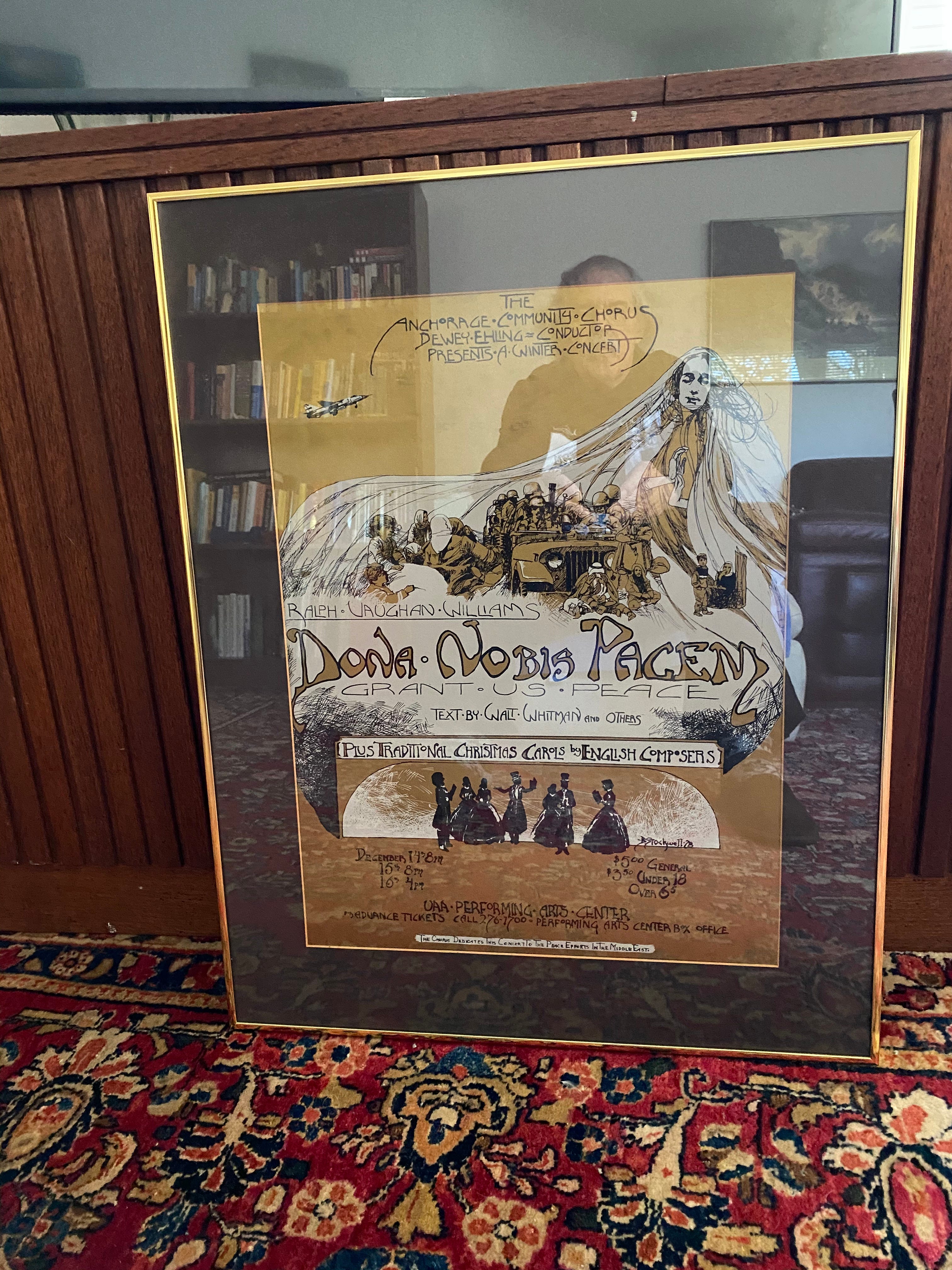
This is a lovely piece of music. (A Sea Symphony) The very first concert I sang with a chorus was by Ralph Vaugh Williams, “Dona Nobis Pacem”. I sang with Anchorage Community Chorus. My mom framed the poster and gave it to me for Christmas. Here’s a picture.

Image for post

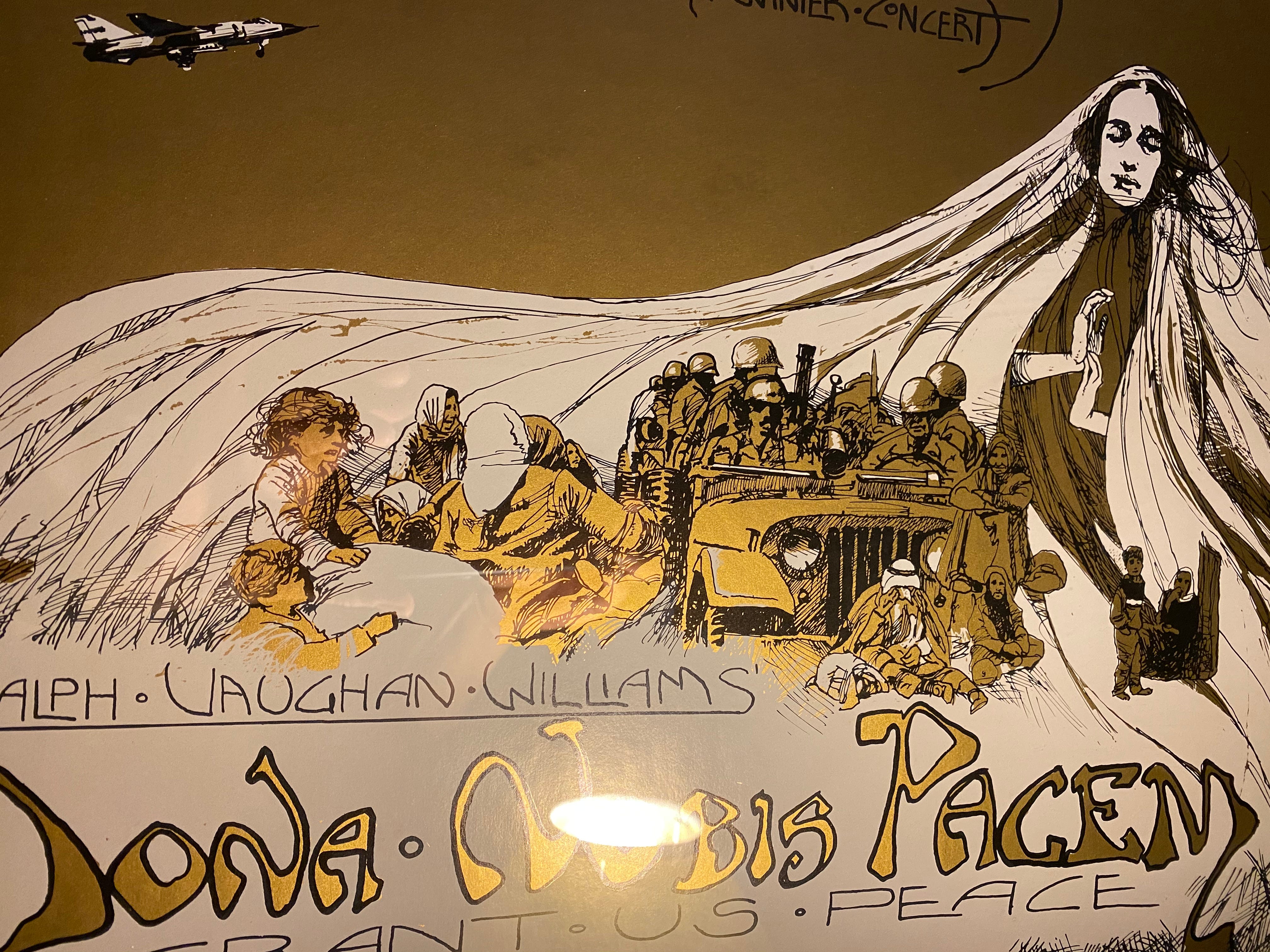
Tried to take pic hanging on the wall over the piano but too much glare so I took it down. The hook fell out of the wall. So anyway I took a couple more shots but this is the best I could do. Sorry about the glare. I decided the post the one with me in it. So this was a Christmas concert in 1974 on Demember 14,15 and 16. The first half was Dona Nobis Pacem. I’m gonna go find it and turn it on. So the first half was Dona Nobis Pacem — a mass for peace (in the Middle East). Words were written by Walt Wittman and others. This is the detail on the poster of

Image for post

the soldiers. The best I could get without taking it down again. It’s a pretty short piece so we sang it and then there was an intermission and then we sang traditional Christmas Carols by English composers for the second half of the concert and my choral singing career was off to a start. Here’s are the some of the lyrics.

“We looked for peace, but no good came; and for a time of health, and behold trouble! The snorting of his horses was heard from Dan; the whole land trembled at the sound of the neighing of his strong ones; for they are come, and have devoured the land…and those that dwell therein… The harvest is past, the summer is ended, and we are not saved… Is there no balm in Gilead?; is there no physician there? Why then is not the health of the daughter of my people recovered? — Jeremiah 8: 15–16, 20, 22 [6] O man greatly beloved, fear not, peace be unto thee, be strong, yea be strong. — Daniel 10: 19 The glory of this latter house shall be greater than of the former … and in this place will I give peace. — Haggai 2: 9 Nation shall not lift up a sword against nation, neither shall they learn war any more. — Isaiah 2: 4 And none shall make them afraid,…neither shall the sword go through their land. — Leviticus, 26: 6 Mercy and truth are met together; righteousness and peace have kissed each other. Truth shall spring out of the earth, and righteousness shall look down from heaven. — Psalm 85: 10 Open to me the gates of righteousness, I will go into them. — Psalm 118: 19 Let all the nations be gathered together, and let the people be assembled; … and let them hear, and say, it is the truth. — Isaiah 43: 9 And it shall come, that I will gather all nations and tongues. And they shall come and see my glory. And I will set a sign among them … and they shall declare my glory among the nations. For as the new heavens and the new earth, which I will make, shall remain before me, so shall your seed and your name remain forever’. — Isaiah 66: 18–19, 22 Glory to God in the highest, and on earth peace, good will toward men. — Luke 2: 14

Image for post

This Dewey Ehling, my first choral director. I was SOLD on choral singing after this first concert. And it has been the source of so much richness and joy in my life ever since. When you go through old photos you find the darnedest things. But I owe a huge sense of gratitude to this man for accepting me in the chorus with no experience and first exposing me to the magnificence of choral singing.

The next piece The Anchorage Community Chorus took on was the Verdi Requiem. This is a HUGE piece so this chorus must have been at least 130 voices. You just don’t take on the Verdi Requiem with a small ensemble. I have never sung again it in Atlanta after some 20+ years. I’ve heard the Atlanta symphony and chorus do it at the Woodruff Arts Center. I put it on so I’ll listen to it as I continue to write away. Verdi and Donizetti are by far my favorite opera composers. So let’s talk about opera since it’s on the brain. Here is Elvira Voth.

Image for post

She’s on the left. The girl on the right I dated for a little while. Elvira was the Director of the Achorage Civic Opera. And she is who got me started singing in opera choruses. The accompanist for the Community Chorus suggested I audition for the opera chorus. I did and got in. Now singing opera is FUN FUN FUN. I have loved opera ever since I guess because I have seen it from the inside and I understand from experience just how rich and rewarding opera really is. It is larger than life, over the top with implausible coincidences leading to tragic results. Again the word Magnificence comes to mind. I have lots of pictures of me in opera costumes. let me go find

Image for post

some. I’ll just throw a few in here and keep writing next to them. So I sang in La Traviata and Lucia di Lamermoor with the Acnhcoarge Civic Opera. We started rehearsals for Rigoletto but I did not stay in Anchorage to perform it. I just couldn’t take the darkness in the winter anymore. The cold never bothered me. You dress for it. You have a parka and can deal with it but the darkeness is a

Image for post
Image for post

whole different animal. In Anchorage the sun would come up at 11 AM and set at 2 PM. It was night for 21 hours a day. That is really really hard to take. I got depressed, drank too much, and just got to where I could not take the cabin fever any longer. I left Anchorage for good in 1978 and that’s a whole nother story driving back to California with my twin sisters. Besides Traviata and Lucia,I sang in a production of Camelot that Dewey Ehling directed with the Anchorage Community Theater. That was so fun. Very low budget so you would do the backstage work as well as go on stage when you had to do something there. I was one of Mordred’s henchman but also was pulling the curtain and doing all sorts of stuff. Rehearsals were going back and forth between performing and

Image for post

doing production stuff. I would move back and forth seamlessly. We all did. And finally after I was back in San Francico for the second time in 1981 I sang with the Gilbert and Sullivan group there at the time called The Lamplighters. We did an HMS Pinafore that KQED showed on TV and I have a recording of it now transferred to DVD. That’s what I watched with Kay Redmond when I was helping

Image for post

her out at the end. She wanted to watch it so we did. I never got a chance with True Colors to be on stage. I was always behind the scenes. Same with Theatrical Outfit when I worked there. I did accounting, project management and company management for theater in Atlanta but in Anchorage and San Francisco I got to perform. And that was more fun. I just love the idea of collaboration. Opera, Theater, Project Management, Choral singing, Sales, Sports, everything I do in my life is so much richer when done in collaboration with others.

Image for post

This is me as Dracula for a Halloween party in San Francisco one year. Dressing up is fun. Pretending is fun. Playing is fun. It’s funny how as I “grew up” I ended up playing less and less. Life got so serious and intense. And now with cancer even more so.

I remember a guy I went to seminary with. His name was Vince Lins. I’ve long lost touch

Image for post

with him. Here he is. We were at seminary both wanting to be priests as freshman and sophmores in high school. Vince was a troubled guy. He never quite found himself. He wasn’t so in touch with reality some of the time and it got worse over time. Sure he did lots of drugs in those hippie years but Vince never seemed to come back to reality. I ended out friendship after he came into my “quite

Image for post

respectable” office building in downtown San Francisco. This is me working there. Well I’m in an office I share with a woman and we are auditing these huge invoices from contractors on the North Slope. I mean we are approving payments for millions and millions of dollars a week. This was a serious job. Ties, nice clothes, the whole deal. And I’m doing pretty good. This is after the hotel at Fisherman’s wharf job was done. I’m getting a career together to be able to make money. Still don’t have my degree but I’m seeing the real monetary value of having it. Well Vince rides up the elevator to the 17th floor — barefoot, no shirt just jeans — he looked like he is in the picture. And I am working in a respectable and good job. He just wanted to hang out. He didn’t get the concept that I was working, had a job I wanted to keep and couldn’t just leave and go hang out with him. I was pretty mean in retrospect but I just told him to go away and never come back. And he did and he never came back. I wonder if he ever got the help he needed with mental illness. It’s 7 PM. I’m gonna stop for awhile and get some of that chicken soup Pete brought over. Later.

Almost 9 PM — The soup was wonderful as expected. Watched the PBS Newshour just to keep up. folded the laundry and I have the Met on TV in the other room. I’m just gonna tell you about that and then boogie and go watch this opera.

During Covid, the Met started showing one opera a day every day for free and they are still doing it. In the beginning that’s all I did. I watched an opera every night. All of them either were older prodcutions with STARS like Pavoratti or Domingo or Price. But most were more recent prodcutions and these guys know how to do opera. Now I like some operas better than other but watching so many this year on TV has helped me expand my appreciateion of the art form as well as composers I didn’t think I would like like Wagner. So here is the link. They put a new one up every day. Today isOn DemandFrom old-school legends to today’s great stars, experience more than 700 full-length Met performances with our online…www.metopera.org

one I have never seen or heard by Rossini. Armida. It’s lovely. Bookmark this link so you can come back to it. Get on their mailing list so you know if an opera you might like is coming up. they put out a weekly schedule of what they will be showing. Some folks get all caught up in that since they can’t follow (almost always in another language) the story, they just don’t like opera. They can’t just forget about the story and listen to the music. You can read the story before you ever sit down to see an opera if you want. But it’s not necessary. Just listen to the music. Enjoy the pagentry and spectacle of the staging and costumes and light design, get the story if you can. But it’s really all about the music. Get out of it whatever you can. And the more you put into it the more you will get out of it. It is a most fulfilling experience. So I am going to go now and watch the rest of this opera. It’s been a fun day.

My Cancer Journey 1/13

Ned Henry January 13, 2021 · nedhenry.medium.com

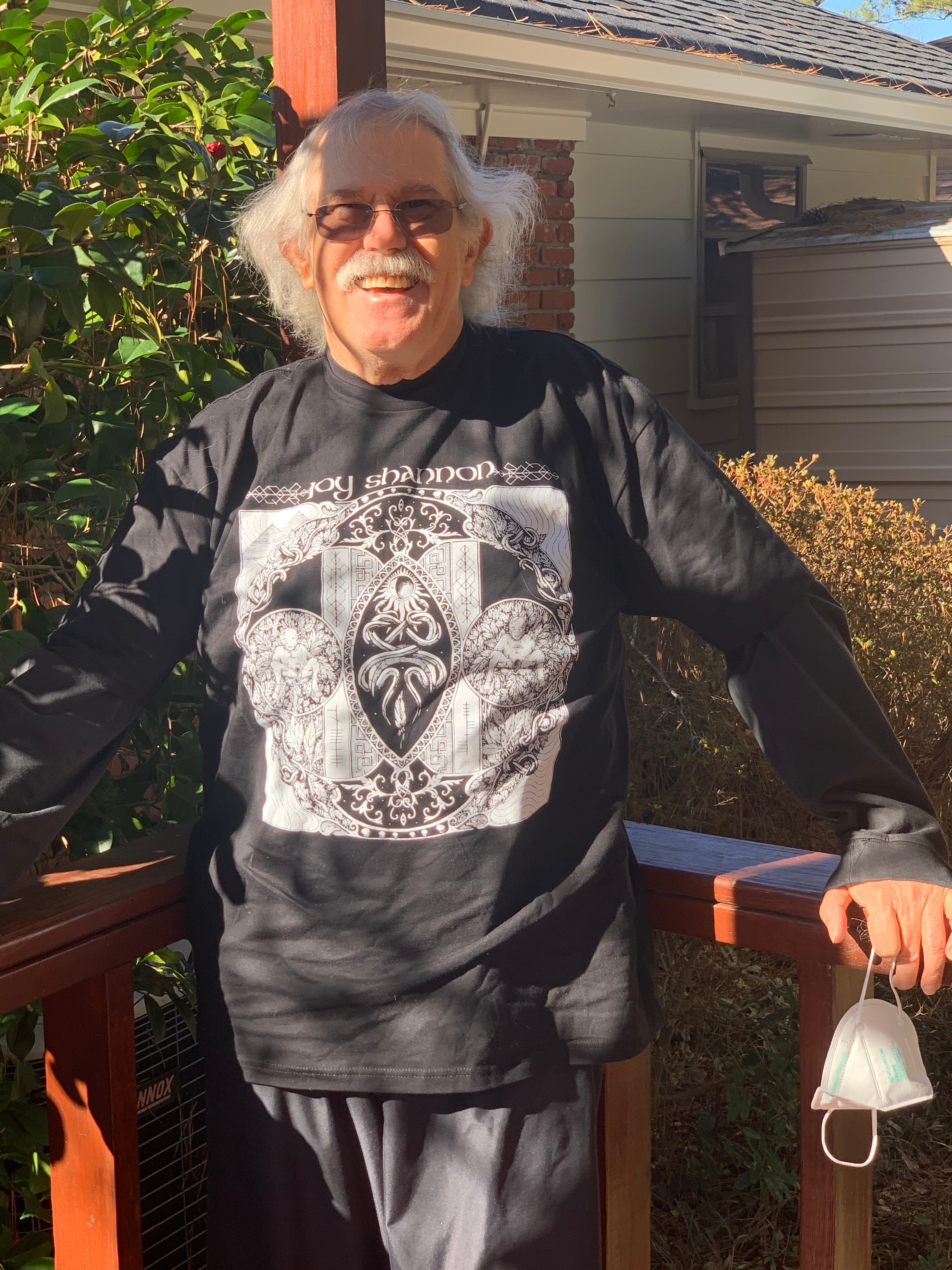
Slept fine. Took a while to fall asleep. Couldn’t turn my thoughts off. Eventually nodded off. It took that sleeping pill and an ambien a little later. Sleeplessness is by far the worst side effect I have had from the chemo. And cold feet. So my next translation when get to it will be about my cold feet. Last night they were cold but Sue’s little heating pad at the bottom of the bed kept them warmer. Jack is also sending some kind of thing you put in the microwave for a specific amount of time that will hold heat and go at the foot of the bed and stay warm for a couple of hours while you fall asleep. Blankets were fine and flannel sheets are really cool. Had never tried them before and they are wonderful. Comforter did it’s job once it took it out of the duvet. So I was plenty warm last night. Won’t bother to buy an electric blanket. Don’t need it especially if I can’t find one with a zone for feet. So I’ll give Sue the new heating pad that came for me and just keep her old one. It’s the same thing. Just want to read the instructions so I know about turning it off and stuff. So my bed problem solved. Busy day today. I have to negotiate with Sirius XM and I have tutoring with Yunus at some time but still don’t know when. I have him on the calendar at 3 PM. I do hope he wants to continue. It is important for a refugee kid in this country to try to learn basic stuff like math. But when you’re 14 you have other priorities. My NEW summer-ry T-shirts came today. I’ll wear one when I take my nexty selfy with less hair. Listening to the Brahm’s requiem. One of my foavorites. Have sung it several times and never miss a chance to join a choir singing it. Sang it in Anchorage, with the Emory student chorus and with Summer Singers another group led by Bill Baker. It’s too big a piece for Collegium and doesn’t fit our charter of singing lesser known works. The Brahms German requiem is filled with Joy. We sing “Freude! Freude! Freude!” Joy! Joy! Joy! It’s beautiful.

Image for post

This is Mike Hastings with the amount he raised for Dana Farber during the Covid year when he rode the miles by himself across Michigan instead of Massachusetts since Massachusetts was closed to public events. It is much less than usual. They adjusted their total goal this year to down to $42M. Mike gave them $20K. My $100 is in there. Prepandemic they usually raise $65M with this event and Mike has been riding in it for 31 years now. So do the math. Let’s say on average he raises $25K per year for 31 years. That’s over Three Quarter of a Million dollars ($750,000) raised by one man who rides his bike for one weekend a year across the state of Massachusetts for 100 miles each day for 2 days. It’s call the Pan Mass Challenge. Even YOU can donate in MIKE HASTINGS name.PMC | Pan-Mass ChallengeRegister to Ride The PMC is a fully supported bike-a-thon to benefit Dana-Farber Cancer Institute. Routes from 25 to…www.pmc.org

Image for post

Here’s Allen. I talk about him a lot because well he’s around a lot and he takes care of literally everything I need him to. He butt dialed me this morning and he was toodling around his kitchen whistling. But wouldn’t answer the phone. So I called him back and he told me a story about a Vonneget book he read a long time go. Allen made me dinner last night. He fixes my plumbing, tunes up the leaf blower, shows up with a chain saw when one of my pine trees falls down. He’s done alot for me over the years. I’ve told you what a good guitarist he has become. Great guy and my best friend. He’s loyal but silly to a fault. Not deep and intense like me — just goes with the flow – a very giving man who likes to laugh alot and always has a new girlfriend. Allen is who told Mike Hastings I had cancer. We’re part of that Kay Redmond Ski Group, remember?

Just got the BEST email from Louisa at the Refugee Ministry at All Saints. Here it is…”Hi Ned,

Hope you are feeling ok today. Yunus is such a sweet boy. I spoke with him on Monday evening and let him know that you had received a cancer diagnosis but still wanted to work with him, and he was quite upset about it. He wanted some time to take it in so I told him I would get back in touch with him. I have offered him whatever support he needs, talking on zoom, going to Clarkston… whatever he needs.

I spoke with him today and asked if he wanted to meet with you at 3pm and his main concern was fear that you wouldn’t feel well or working with him would make you sicker. He told me what a nice man you are, what good advice you give him and how much he enjoys working with you. ​ I assured him that if you didn’t feel up to it, you would just let me know and wouldn’t do the session.

I asked Yunus if he wanted to work with another tutor for the times you might not feel up to it and he said no. He only wants you.

Sue, if you want to check in with Yunus at some point that would be awesome.

Thank you so much, Ned, for your love and care and if you need anything, please let me know.

Louisa”

I wrote back….”I am so happy. I will tell Yunus that this makes me feel better not sicker. I am fine. Very strong right now. Losing my hair but doing really well. So I will join the Zoom as normal at 3 PM and go to IXL and get something ready for us to work on. It will be great for me to see him again after school break. And who knows, maybe he’ll take his math just a little more seriously.

Thanks so much.

Ned

Just Being “Not Racist” is Not Good Enough Anymore”

So I am back on tutoring Yunus in Math at 3 PM. Makes me so happy. Gotta go eat some of those steel cuts oats I made last night with pecans, banana and cinnamon. Then go call Sirus XM and see if I can work a deal to keep it on my phone but not in the car. They should go for it. Their expenses for the satellite have long been recovered. They just have maintenance and operation costs and they are raking in the revenue. So they really lose nothing by making me a good deal. It’s all just upside for them.

CIM Lesson 12 — I am upset because I see a meaningless world.

1 PM — All good. Breakfast was great. Made a batch of oats last night that will last several days. Cut a deal with Sirius XM and so now I have the Grateful Dead channel blaring in the living room. It’s a concert from 1976 in San Francisco when they first added Micky Hart, the second drummer to the band. I think this concert is the first one with 2 drummers which they have had ever since. So I have XM in both the car and the house for $72 for the next year. Marked my calendar for Jan 13, 2022 to renegotiate with them. So with Apple music and Sirius XM, I won’t need to fool around with Spotify. And if I WANT to tune in to CNN or MSNBC I can on the radio. And of course there are so many podcasts out there. I really do not need TV at all. Want to finish Wonder Woman 1984 and then I’ll cancel HBO Max. Will likely keep Netflix for a little while longer. I want to watch Beowulf again soon. So my entertainment needs are looking good. Just need a little coaching on classical music. Wish Ramon was still here. He’d know some things to pull up on search.

2 PM — Horlick’s won’t work with hummus. I’m drinking a cup of it and it’s good but won’t work with hummus. I’ll try something else.

7:30 PM Shepherd’s Pie is in the oven. I don’t know. Never made it before and didn’t have all the ingredients so I had to substitute a lot. We’ll see. I’m giving half to Allen after it’s done and rests. It’s been a great day. Really great. Listened to the Brahm German Requiem all day. It’s my favorite. Here’s Denn Alles Fleisch — movement 2. go ahead and take 14 minutes out of your day and listen to this. There are very tender places and very powerful places. There are better recording of it but this one on YouTube is OK.

This is my favorite Requiem. I never miss a chance to sing it. You can find the whole thing and listen to it on your own. It is magnificent.

So for those interested in the medical stuff the link to that 2020 update on lymphoma treatments conference yesterday came out today. Here it is:On-demand contentEdit descriptionbeacon360.content.online

And here’s what I wrote to my oncologist about it.

Dr. Allen:

I attended conference yesterday at LRF about 2020 advances in Lymphoma treatments. The on demand link to the conference came out today. Here it is:

https://beacon360.content.online/xbcs/S1791/catalog/resource.xhtml?eid=28522&xbc-enc=tUrjprlfzCy2csZei_6nmLQaNuQ0u73F

Timeline for conference is as follows and you can skip as needed.

0:00 Introductions

4:15 — B-cell lymphoma advances

7:00 Signaling inhibitors for slow growth lymphoma

11:00 begin discussion about cellular therapy for DLBCL — CAR-T.

14:00 R-CHOP PROS AND CONS

14:50 NEW TRIAL RESULTS (I know I am not double hit and have an IPI of 3)

16:17 Key question: How should we treat patients with DLBCL in the future? Should Car-T be used if PET scan shows no progress with R-CHOP after 2 treatments?

16:40 the conference moves on to slow growth, T-cell and Q & A.

So that is my question to you Dr. Allen. I do not want a quick response to this but want to discuss the Key question when next we meet.

Thank you.

Edmund Henry

So for the nerds you can listen to as much or as little or nothing at all about the advances in treatment for Diffuse Large B Cell Lymphoma (DLBCL) (what I have) and all lymphoma advances made in 2020 in this one hour conference.

Shepherd’s Pie is out of the oven and resting. Time to eat in 15 minutes. I told Allen to come and get it. Hope it’s OK. Have not done anything yet with his bland hummus. Did NOT get to laundry today. Allen in the car so and it’s cold out there so I am going to go fix him a plate and go eat dinner.

9 PM — Let me go find some music. I put a playlist on I’ve started called Drowning. Only 5 songs in it so far.

So the Shepherd’s Pie turned out good. Allen liked it and so did I. I used some ready made mashed potatoes from Debbie so all I had to do was throw a few things together. I used what I could from this recipe. Had to make some substitutions but it turned out good. Here’s the recipe just cuz I’m sharing shit these days. You can just skip it if you want. The recipe does not say what temp to cook it at so I did 350 for about 40 minutes and then some 5 minutes or so under the broiler to brown the top.

Shepherd’s Pie

Ingredients

Meat Filling:

  • 2 tablespoons olive oil
  • 1 cup chopped yellow onion
  • 1 lb. 90% lean ground beef -or ground lamb
  • 2 teaspoons dried parsley leaves
  • 1 teaspoon dried rosemary leaves
  • 1 teaspoon dried thyme leaves
  • 1/2 teaspoon salt
  • 1/2 teaspoon ground black pepper
  • 1 tablespoon Worcestershire sauce
  • 2 garlic cloves -minced
  • 2 tablespoons all purpose flour
  • 2 tablespoons tomato paste
  • 1 cup beef broth
  • 1 cup frozen mixed peas & carrots*
  • 1/2 cup frozen corn kernels

Potato Topping:

  • 1 1/2–2 lb. russet potatoes -about 2 large potatoes peeled and cut into 1 inch cubes
  • 8 tablespoons unsalted butter -1 stick
  • 1/3 cup half & half
  • 1/2 teaspoon garlic powder
  • 1/2 teaspoon salt
  • 1/4 teaspoon ground black pepper
  • 1/4 cup parmesan cheese

Instructions

Make the Meat Filling.

  • Add the oil to a large skillet and place it over medium-high heat for 2 minutes. Add the onions. Cook 5 minutes, stirring occasionally.
  • Add the ground beef (or ground lamb) to the skillet and break it apart with a wooden spoon. Add the parsley, rosemary, thyme, salt, and and pepper. Stir well. Cook for 6–8 minutes, until the meat is browned, stirring occasionally.
  • Add the Worcestershire sauce and garlic. Stir to combine. Cook for 1 minute.
  • Add the flour and tomato paste. Stir until well incorporated and no clumps of tomato paste remain.
  • Add the broth, frozen peas and carrots, and frozen corn. Bring the liquid to a boil then reduce to simmer. Simmer for 5 minutes, stirring occasionally.
  • Set the meat mixture aside. Preheat oven to 400 degrees F.

Make the potato topping.

  • Place the potatoes in a large pot. Cover the potatoes with water. Bring the water to a boil. Reduce to a simmer. Cook until potatoes are fork tender, 10–15 minutes.
  • Drain the potatoes in a colander. Return the potatoes to the hot pot. Let the potatoes rest in the hot pot for 1 minute to evaporate any remaining liquid.
  • Add butter, half & half, garlic powder, salt, and pepper. Mash the potatoes and stir until all the ingredients are mixed together.
  • Add the parmesan cheese to the potatoes. Stir until well combined.

Assemble the casserole.

  • Pour the meat mixture into a 9×9 (or 7×11) inch baking dish. Spread it out into an even layer. Spoon the mashed potatoes on top of the meat. Carefully spread into an even layer.
  • If the baking dish looks very full, place it on a rimmed baking sheet so that the filling doesn’t bubble over into your oven. Bake uncovered for 25–30 minutes.** Cool for 15 minutes before serving.

Watched the first 25 minutes of PBS Newshour. Good to catch up without being caught up in it. This just came on. This is bootleg video but you can find the movie video in Netflix. They opened the movie with this performance. The last song The Band ever played together.

Gonna play a Cream playlist on Apple music. so the tutoring session with Yunus. What a great kid. 14 years old and he was scared for me. I assured him I was fine and that I feel strong and I wanted ot keep working together if he did. He said he did. So we talked for a while and got caught up. He told me he wanted a career in real estate. Then he told me about a “side hustle” he heard about where he could make $1,000 for walking around the neighborhood and finding old broken down houses and telling someone about them. So we started with a long talk. I told him that a career is real estate is a great thing but it would take him another 10 years or so of learning to get good enough at it to make real money. And that this was a scam. Someone trying to take advantage of him. He’s had a hard life — I won’t go into details but refugee camps and family problems and all kinds of stuff this kid has had to deal with in his young life. I told him there was no such thing as an easy $1,000 and that this would just make his life that much harder than it already was because he would never get the $1,000 and they would make him keep doing stuff. I think he got it. So after 10 minutes or so of going over this he told me he got 100% on a test. I said in MATH? and he said no…in American Government. I was overjoyed. I told him how proud I was of him and that in the news these days we see what happens when the American government does not work as it was designed to work but that if he could understand the right way for it to work, then he could see that it is a good system of government and better than in a lot of places in the world. We talked about this for a little while. I asked him when he had to go pray and he said at 3:45. We began the call at 3 PM so now we only had 20 -25 minutes left so I said let’s do some math. I picked a spot to start earlier in the day. Since we can’t do high school Algebra — either him or me — we are working through 5th grade math to get him caught up on some basic things. I picked addition of fractions with unlike denominators. So the first problem came up.IXL | Add fractions with unlike denominators | 5th grade mathImprove your math knowledge with free questions in “Add fractions with unlike denominators” and thousands of other math…www.ixl.com

You can check it out. I have a login so I can stay on as long as we need to — you might not be able to. So the first problem comes up — 7/10 + 1/5 = what?

I ask him if he knows. Told him it was OK if he didn’t that I would show him. He didn’t. So I wrote on the screen about how to find a common denominator — that 1/5 was exactly the same number as 2/10. So 7/10 plus 2/10 equals 9/10. Plugged in the answer and it came back “Terrific.” I’m sharing my screen with him so he can see what I’m doing. So we go one. These are not in order. The questions you see are the next ones we would have done. nbd. So 1/12 + 2/3 = what? Well we go over finding the common denominator of 12. 2/3 is the same number as 8/12. So 1/12 plus 8/12 is 9/12. Now we talk about how to reduce that to the lowest common denominator. Is there a number that we can divide into both 9 and 12? He says 3. I say exactly. So if we divide 9 by 3 we get 3 and if we divide 12 by 3 we get 4. so… 9/12 is the same number as 3/4 just stated a different way and that 3/4 was a more common way to express that number. You get the idea. He had to go pray so we decided to go from 12 to 1 from now on on Wednesdays so we could have a full hour. I told him again I was OK but that my hair would be falling out and that did not mean I was getting sicker but that the medicine was working. I told him I was proud of him and asked that if in muslim prayers you can pray for someone else then he could pray for me if he wanted. We signed off and we’ll meet again next week. He was really worried about me and afraid that it would make me sicker to keep helping him so it took some reassurance for me to convince him that tutoring him was helping me get better not hurting me. Great kid but at 14 in a country he does not know very well and with so many questions about the future. I am just glad I can be there for him one hour a week.

Sunshine of your love is playing… Is10 PM and I’m gonna go take a hit and sip some cognac. May come back or may just send this before I go to bed.

High and watching Beowulf. Out.

Sunday Meeting with Al Haferkamp

SUNDAY MEETING 1/17/2021

2021 – A New Wilderness?

Al Haferkamp, H.W., M.
Dean of The Prosperos
 
11:00 am Pacific/Noon Mountain/1:00 Central/2:00 Eastern
https://us02web.zoom.us/j/332275676  
One tap mobile+16699006833,,579891643# US (San Jose)+13462487799,,579891643# US (Houston)Dial by your location        +1 669 900 6833 US (San Jose)        +1 346 248 7799 US (Houston)        +1 301 715 8592 US        +1 312 626 6799 US (Chicago)        +1 929 205 6099 US (New York)        +1 253 215 8782 USMeeting ID: 579 891 643Find your local number: https://zoom.us/u/abtcyLDACK

“Taxpayer” as a euphemism for White Supremacy

Since the end of the Confederacy, the cult of the “taxpayer” has provided a socially acceptable veneer for racist attacks on democracy.

Vanessa Williamson ▪ Winter 2021 (dissentmagazine.org)

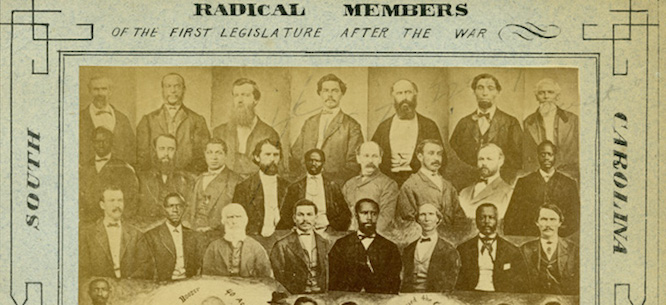
A composite photograph of South Carolina’s majority-black legislature created and circulated by opponents of Reconstruction (Library of Congress)

From the Southern strategy of the 1960s to Donald Trump’s refusal to concede the presidential election, it is easy to trace the Republican Party’s decades-long descent into racial authoritarianism. Despite the president’s unhinged response to the election results, the real locus of power is the Senate, where Republican legislators have been striking sober-sounding notes about the need for smaller government, an end to relief spending, and the danger of higher taxes. Those desperate to see a return to normalcy may hail this born-again fiscal conservatism as a departure from Trump’s racist, antidemocratic politics. Historically speaking, this is a false distinction.

Long before Barry Goldwater and Ronald Reagan, the dog-whistle rhetoric of austerity provided a socially acceptable veneer for racism. And long before the Trumpist GOP, the agenda of the American right was undermining democracy and passing tax cuts for the rich. When the former Confederate elite mobilized to successfully overthrow the multiracial Reconstruction-era governments in the South 150 years ago, it was under the banner of fiscal conservatism.

In the South after the Civil War, under the protection of federal troops and a radical Republican Congress, black legislators in coalition with white allies from the North and from the South’s poorer regions set to work rebuilding their states’ infrastructure and constructing a public school system. Reconstruction-era economic policies were relatively moderate, eschewing land reform, but included new forays in social spending in support of the poor and sick, as well as efforts to increase the taxes paid by landowners.

Across the South, the planter class engaged in massive resistance to the new state governments. The campaign came to be known as the “Redemption” of the South, and its participants as “Redeemers.” In South Carolina, democratic rule posed a particularly big obstacle to the opponents of Reconstruction; the majority of the state was black, and under universal male suffrage, a majority of the state legislature was black, too.

South Carolina’s white elite developed a two-part strategy of opposition. First, they focused their critique of Reconstruction on rising government debt and excessive spending, painting government by black people and poor whites as intrinsically corrupt. Adopting a new identity as concerned taxpayers helped the rich bridge the divide with small white farmers, for whom new land taxes were heavy, while avoiding explicit opposition to black male suffrage, which might smack of treason to Northerners.

While the opponents of Reconstruction were painting themselves as staid and respectable fiscal conservatives, they were simultaneously engaged in a radical plan to subvert democratic elections across the South. In principle, the Redeemers’ open campaign of voter suppression, political intimidation, and violence risked further federal intervention, but the North was losing the will to defend black political freedom. In fact, wealthy Northerners—even those who had been strongly anti-slavery—began doubting the logic of universal male suffrage as it empowered the immigrant working class in their cities. The political identity of the “taxpayer” was born in this reaction to black freedom and working-class political power, and it has existed ever since to oppose the specter of a multi-racial working-class alliance.

Called together by the Charleston Chamber of Commerce and the Charleston Board of Trade, the Tax-Payers’ Convention of South Carolina met in Columbia in May 1871 and again in February 1874 to seek, “for the holders of property and the payers of taxes, a voice and a representation in the councils of that State.” They had a duty to speak up, the Tax-Payers argued, because the state of South Carolina was suffering from “the fearful and unnecessary increase of the public debt”; “wild, reckless and profligate” spending; and “excessive taxation.”

Until recently, most of these “holders of property” had owned rather a lot more property, in the form of human beings. Surrounded by former governors, senators, bankers, and other elites of the Old South, convention president W.D. Porter welcomed the “old familiar faces” he had known as a member of the South Carolina legislature before the Civil War.

Even by South Carolina standards, the leading Tax-Payers were among the most ardent defenders of slavery and the most unreconstructed of Confederates. Most active in the convention’s proceedings were former Confederate General James Chesnut Jr., one of the figures who had in 1861 ordered the firing on Fort Sumter; former Confederate General Matthew C. Butler, first cousin to Preston Brooks, who had beaten Charles Sumner nearly to death on the Senate floor; and former Confederate General Martin W. Gary, who had literally refused to surrender at Appomattox.

Though the proceedings are interspersed with laments for the “elegant hospitality” afforded by chattel slavery, the Tax-Payers took pains to note that they accepted defeat in war and emancipation as “finalities” and “dead issues.” Most remarkably, however, the Tax-Payers also insisted that they were not motivated by racism. In his 1874 opening address, convention president Porter claimed that the problem with South Carolina’s Reconstruction government was not a matter of “race, or color,” but “simply and exclusively” that the government was run by those who did not own property.

Emphatic color-blindness was, to say the least, a recent development in the public rhetoric of South Carolina’s white elite. As recently as 1868, a number of Tax-Payers had signed a petition to the U.S. Congress, entitled a “Respectful Remonstrance on Behalf of the White People of South Carolina,” that opposed black male suffrage because “the superior race is to be made subservient to the inferior.” Porter himself had argued that black people had “traits, intellectual and moral,” and “credulous natures” that left them with an “incapacity” to rule.

At their Tax-Payers’ Conventions, however, these same men, despite sporadic remarks on the “negro character,” no longer officially identified themselves as advocates on behalf of the white race; they were simply representatives of the “over-burthened tax-payers.” This self-appointed role was ironic: as slaveholders, the Southern elite had done everything in their power to cripple the tax capacity of both their states and the federal government. Now, the South Carolina Tax-Payers called into question the right of black people and poor whites to govern because they believed these voters did not pay a substantial amount of taxes. “They who lay the taxes do not pay them, and that they who are to pay them have no voice in the laying of them,” Porter asserted, wondering if “a greater wrong or greater tyranny in republican government” could be conceived.

As W.E.B. Du Bois would later explain in Black Reconstruction in America, the “fact that poor men were ruling and taxing rich men” was the “center of the corruption charge” made by wealthy Southern whites against the Reconstruction governments. The Tax-Payers deemed all government spending under Reconstruction suspect, so they did not feel obliged to engage in subtle, or even plausible, analyses of public finance. For instance, the Tax-Payers consistently compared pre- and postwar expenses, ignoring the fact that emancipation had doubled the state’s citizen population while war had decimated its infrastructure and economy. There was no need to specify what particular spending was objectionable—which was convenient, because a number of the Tax-Payers were themselves involved in rather shady dealings involving railroads and government bonds.

The fundamental problem for the Tax-Payers was their numerical inferiority in a system of majority rule. They estimated that South Carolina had 60,000 taxpayers, and “90,000 voters who pay no taxes.” They considered, halfheartedly, two plans to improve their prospects within the confines of a democratic system: a proportional voting system they referred to as “cumulative voting,” and encouraging white immigration to the state. But such plans were inadequate. General Matthew W. Gary, chair of the committee on elections and suffrage, said he would accept cumulative voting “in the same spirit that I would receive a half loaf as being better than no bread at all.” “We, by this cumulative voting, shall be confined to one-third the power to which we are entitled,” complained former Governor John L. Manning.

They settled on another solution: bring poorer whites to their side, intimidate black voters, and reclaim power in the state by any means necessary—all without provoking the ire of Northerners, whose commitment to federal troops in the South was an essential protection for black voters. Taking up the mantle of the taxpayer aided the convention in all three endeavors.

Early in Reconstruction, Democrats across the South had been astonished to find that straightforward appeals to racism had not produced consistently favorable electoral outcomes. A troubling number of whites in the hilly, poorer “upcountry” were willing to vote with the freedmen in the Republican Party. “Let no foolish prejudice stand in the way” of an alliance against the “rebels,” argued one Republican newspaper in North Carolina.

Taxes offered a different electoral entry point for the aristocracy of the Old South. Reconstruction governments desperately needed revenue for infrastructure and schools, and the resulting tax increases hit small farmers hard. By focusing on their identity as “taxpayers,” planters could elide the vast economic gulf between themselves and subsistence farmers in Appalachia.

Accordingly, the South Carolina Tax-Payers called for the organization of “tax unions.” On the surface, these organizations were intended to track local government revenue and spending, but the Tax-Payers hinted at their true purpose when they suggested that the unions would be able to exact “just punishment” on government officials. Taxpayer leagues across the former Confederacy began a concerted campaign of tax resistance. In close coordination with openly violent white supremacist groups like the Ku Klux Klan, they threatened, attacked, and sometimes killed government representatives, especially when those officials were black. The strategy worked to bring poorer whites into the Democratic fold. When its members began intimidating and murdering revenue agents responsible for imposing a much-hated tax on liquor, the Klan found a toehold in white areas that had previously shown Republican strength.

The line between tax resistance and paramilitary antidemocratic violence was vanishingly thin. In the Vicksburg Massacre in Mississippi in 1874, the local taxpayer league marched to the courthouse on Tax Day and demanded that all black officeholders resign, including the sheriff responsible for collecting taxes. After a standoff that lasted over a week, they opened fire on the black militia, killing between 75 and 300 people. “Those that fell wounded were murdered,” reported Blanche Ames, the governor’s wife. And still, the respectability of the “taxpayer” provided protection; in a hearing investigating the massacre, one member of the local taxpayer league insisted that “there was nothing political in it; colored men, if tax payers, could join.”

The Vicksburg Massacre was no anomaly. Economist Trevon Logan finds that public finance was directly related to the strength of the violent reaction to Reconstruction. The chances of a local black politician being attacked increased three percentage points “for each additional dollar of per capita tax revenue collected in 1870.” Where taxes had increased more, the violence against black politicians was higher.

South Carolina was, as usual, the most extreme case. While Chesnut, chair of the South Carolina Tax-Payers’ executive committee, was assuring a congressional committee investigating Klan attacks that violence was “local and limited” and not “political” in nature, Gary, the leader of the South Carolina Tax-Payers’ committee on elections, was personally plotting the violent overthrow of local democracy.

Remarkably, Gary’s original draft of his “Plan of the Campaign 1876,” which was edited and sent to Democratic county leaders across South Carolina, has been preserved. “Democratic Military Clubs are to be armed with rifles and pistols,” he wrote. “Every Democrat must feel honor bound to control the vote of at least one Negro, by intimidation, purchase, keeping him away or as each individual may determine, how he may best accomplish it.” Gary’s original plan told Democrats to “Never threaten a man individually if he deserves to be threatened, the necessities of the times require that he should die.” This campaign was part of a wave of violence and intimidation that swept white supremacists back to power; it would be nearly a century before black men in South Carolina would again be able to exercise their right to vote.

Just over a decade after the Civil War had ended, Northerners might be expected to balk at a Confederate general who had refused to surrender at Appomattox organizing paramilitary forces to seize power in South Carolina. Instead, Northern elites were a highly receptive audience for plans to empower the “taxpayers” against rule by the corrupt and incompetent poor.

In July 1871, the Nation, like many other Northern media outlets, covered the proceedings of the Tax-Payers’ Convention of South Carolina. Though the magazine was founded by abolitionists, the article’s tone was sympathetic. “The Convention was a most respectable body and represented almost the whole of the taxpaying portion of the population”—the very people who “it is conceded on all hands . . . must eventually purify Southern politics, if they can be purified.” The friendly coverage stemmed in large part from a feeling of shared struggle. The convention’s report of corruption in South Carolina mirrored those “financial exhibits which municipal reformers occasionally lay before the public in [New York City].”

In its report, the Nation gestured toward the defense of universal male suffrage; the Tax-Payers “will have the hearty sympathy of the best Northerners” only “as long as they show a determination to accept the fact that the people of the South now means the whole population of it.” But this caveat must have rung hollow even at the time. Just two months after their positive review of the convention, the Nation considered the “vast horde” of immigrants coming to New York and concluded that democratic city government was a “ridiculous anachronism.”

The Nation was giving voice to an increasingly popular opinion among the Northern economic elite. Spurred by fear of the Paris Commune, the flood of European immigrants bringing class consciousness to American cities, and the growing organization of labor, wealthy Northerners came to see themselves as a victimized minority under attack. By the late 1870s, an “anti-corruption” commission of New York business leaders organized by Democratic Governor Samuel Tilden would publicly demand that “the excesses of democracy be corrected” by the passage of an amendment to the state constitution bringing an end to universal male suffrage. The amendment would have put all decisions concerning municipal taxation, spending, and debt in the hands of a “Board of Finance,” elected by those who paid at least $500 in annual property taxes, or a yearly rent of at least $250 (approximately half the salary of a skilled worker). The proposal would have disenfranchised between one- and two-thirds of the voting public.

After initially lobbying to limit suffrage even further by excluding rent-payers from the electorate, the recently founded New York Taxpayers’ Association organized in support of the amendment. Their meetings were, as the New York Times put it, “a notable demonstration of the solid wealth and respectability of the Metropolis.”

It takes a certain audacity to argue that men of property were the proper custodians of government just as the term “robber baron” was entering the national lexicon, but the anti-tax, antidemocratic attitudes in New York’s business leaders were shared by elites in other major cities. Francis Parkman, the prominent Boston historian, wrote an article in 1878 entitled “The Failure of Universal Suffrage.” In cities, the “dangerous” effect of “flinging the suffrage to the mob,” Parkman argued, was that the “industrious are taxed to feed the idle.” Rather than civic institutions beholden to the public, Parkman reimagined cities as business entities: “great municipal corporations, the property of those who hold in stock in them.” Working-class men in New York City managed to protect their suffrage rights against the taxpayer-citizen amendment, but new tax standards for suffrage passed in towns in upstate New York, Maryland, Vermont, and Kentucky, and were seriously considered by several Northern state legislatures.

It was in this context that the North abandoned its commitment to black freedom. To end a stalemate brought about by an unclear count in the Electoral College, the Republican Party traded their defense of black voting rights for continued control of the presidency. Federal troops were removed from the Southern states, and Rutherford B. Hayes became the nineteenth president. America’s first brief experiment with multiracial democracy was over, and it would not be tried again for one hundred years.

After the Reconstruction governments fell, a new fiscal state served to reinforce white supremacy and strengthen antidemocratic institutions. Under the guise of protecting the taxpayer, the white supremacist Redeemer governments slashed public budgets and shifted taxes onto the poor. Oppressive fees and fines forced black people into a new slavery of convict leases and chain gangs. Eventually, new state constitutions included poll taxes to reinforce black disenfranchisement, and tax limitations that required supermajorities to overturn, ensuring that wealthy whites could shield themselves even if most citizens wanted to raise taxes.

It is no coincidence that when the Jim Crow laws were finally dismantled, the reaction to the civil rights movement once again featured paeans to “the taxpayer” and a new wave of tax limitations. The rhetoric of the taxpayer is readymade to call into question the right of black and poor Americans to participate in or benefit from their government. The taxpayer was the foil to Reagan’s welfare queen, who he claimed had a “tax-free cash income” of $150,000 a year. Reagan’s story was a fiction—he’d change the numbers from speech to speech—but that hardly mattered. Talking about taxes allowed voters to put a dollar figure on their resentments, and to experience the poverty of others as persecution.

Over thirty years later, GOP presidential candidates were still singing the same tune. Mitt Romney interpreted federal income tax data as evidence that 47 percent of Americans “are dependent upon government” and “believe that they are victims.” The state, local, and payroll taxes that fall heavily on lower-income people did not, for Romney, qualify as contributions to government. “My job is not to worry about those people,” Romney continued. “I’ll never convince them that they should take personal responsibility and care for their lives.”

Romney was widely criticized for his comments in the mainstream press, but his views were not out of line with his party. A survey in 2014 found that half of all Republicans agree that only taxpayers should have the right to vote. An electoral map circulated through social media that claimed to show a landslide victory for Romney, if “only taxpayers voted.” Tellingly, the doctored map was actually based on the Electoral College result if suffrage were limited to white people. The reality of taxpaying never had much to do with who was meant by “taxpayer”—a point driven home by President Trump’s popularity with the Republican base even as he celebrated his own tax avoidance.

Given how long racial oligarchy has found a friend in fiscal conservatism, the strategy of the contemporary GOP seems highly unlikely to change. Only repeated electoral defeat massive enough to overcome our inertial and minoritarian institutions would change the incentives of the party. Instead, we should expect to see a low-key variation on the Redeemers’ politics: continued subversion of the institutions of representative democracy accompanied by calls for tax cuts, deregulation, and austerity.

What is perhaps most troubling is that the rhetoric of the taxpayer will likely continue to provide antidemocratic reactionaries with allies in much the way it did at the end of Reconstruction. Fiscal conservative rhetoric appeals to the wealthy in liberal enclaves. Across parties, rich people are markedly more economically conservative than other Americans, and they tend to get what they want from policymakers. In preparation for a Biden White House, Republican legislators have already readopted the austerity-by-gridlock posture they held under the Obama and Clinton administrations, and Democrats do not seem prepared to make a fight of it. There are already deficit-hawk rumblings from the Biden administration.

We have had 150 years of the dog-whistle politics of the taxpayer. If the Democratic Party is to be the party of racial justice, it cannot also be the party of austerity.

Vanessa Williamson is a senior fellow in governance studies at the Brookings Institution.