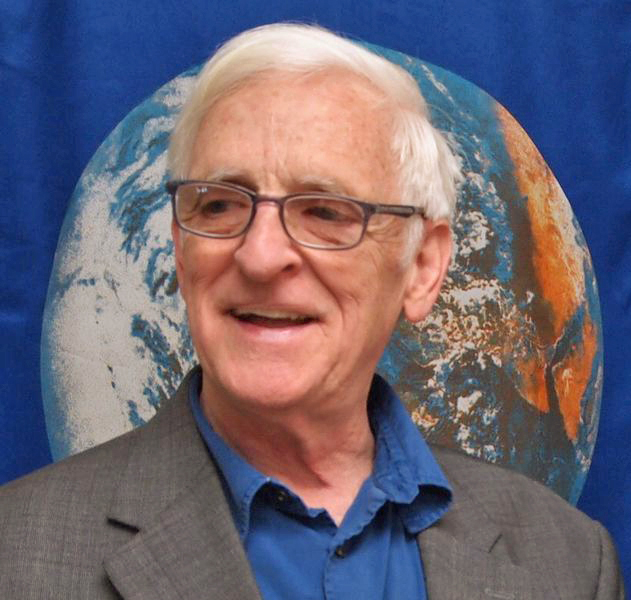
Lewis Mumford (October 19, 1895 – January 26, 1990) was an American historian and philosopher of technology and science. Particularly noted for his study of cities and urban architecture, he had a tremendously broad career as a writer that also included a period as an influential literary critic. Mumford was influenced by the work of Scottish theorist Sir Patrick Geddes.
Terry Tempest Williams searches for what is revealed when worlds unravel, tracing the entangled nature of undoing and becoming.
Unravel   un·rav·el  |  \ ˌənˈravəl \

verb
gerund or present participle: unraveling

1. undo (twisted, knitted, or woven threads)

Similar: untangle, disentangle, straighten out, separate out, unsnarl, unknot, unwind, untwist, undo, untie, unkink, unjumble

2. (of an intricate process, system, or arrangement) disintegrate or be destroyed

Similar: fall apart, come apart (at the seams), fail, collapse, go wrong

3. investigate and solve or explain (something complicated or puzzling)

Similar: solve, resolve, work out, clear up, puzzle out, find an answer to, get to the bottom of, explain, elucidate, fathom, decipher, decode, crack, penetrate, untangle, unfold, settle, reveal, clarify, sort out, make head or tail of, figure out, suss (out)
Iam unraveling. I am unraveling like a rattlesnake in the desert tightly coiled, my tail issuing a warning I cannot yet decipher. My mind is unraveling as I move to free my thoughts from being held captive for too long in such a tensely wound space. For months, I have been in a defensive stance visible only to surrounding ghosts. Fear brought me here. Uncertainty brought me here. Two hundred and fifty thousand dead from the coronavirus brought me here. My capacity to strike, from one emotion to the next, frightens me. After isolating myself in a landscape of arid beauty for the past nine months during a global pandemic, why do I find myself in the process of unraveling now? What is waiting and wanting to come forth?
When I don’t know what something means, I do three things: consult a dictionary; ask someone I respect and listen; go for a walk.
The dictionary gave me definitions, but what caught my attention was the word “reveal” in the list of synonyms. To unravel is to reveal what has been hidden. And when I asked my father (now 87 years old and weathering the pandemic at home with his partner and a borrowed dog named Sparky) what he thought it meant to “unravel,” he simply said, “I’m too bored to think about it.”
I understand.
An hour later, Brooke and I went for a walk. We found a small, unexpected pioneer cemetery, adorned with plastic red and blue roses, on a bluff overlooking the Dolores River. We stopped to watch a great blue heron fish the shallows. The long-legged bird was not unraveling; she was paying attention, focused on her task. Within minutes, she speared a trout, most likely a rainbow. We watched her slowly, deliberately walk back to the mudflats, toss her head back, releasing the fish into the air, and on its way down gulp the trout whole. The narrow body of the trout, now a bulge, was moving down her neck in a series of muscular swallows. The heron stood still for some time along the riverbank, then waded back into the depths of her perfect concentration.
What interested me in this particular moment was how the heron could live her life, as her species was meant to live, with an integrity of purpose in place—even as the ecosystem to which she belongs is unraveling around her. Climate change is affecting the flow of the Colorado River, with its incoming tributaries, like the Dolores, waning. We are now in what climate scientists are calling “a megadrought.” Moab’s average annual rainfall is 10 inches. In 2020, we have received 4.9 inches, less than half the norm. Monitoring the health of the Dolores River, the nonprofit group Conservation Colorado gave the Dolores River a grade of D− in terms of its water quality. Why? Dams and reservoirs disrupt the natural flows and displace sediments, deeply altering the character of the river. Abandoned mines and uranium tailings continue to leach into the headwaters, carrying on a toxic history familiar to the Four Corners region of the American Southwest. Increased fossil fuel development, including fracked gas, is affecting water tables and aquifers, all contributing to its failing grade.
Could we read the health of the great blue heron fishing along the Dolores River through this poisonous narrative now alive in her bloodstream? Like us, each species large and small—feathered, furred, or finned—carries the larger story of planetary health in their cells. The difference between our species and other species is that we are responsible for much of the demise of all the others.
As life on the planet is unraveling, in ways seen and unseen, we are also unraveling the natural consequences that these larger narratives of unconscious behavior are inflicting on populations, both human and wild. For example, the heinous, illegal wildlife trafficking infiltrating “wet markets” (where fresh meat, fish, and produce are sold) from Asia to Africa and across the globe is responsible for 75 percent of zoonotic viruses. COVID-19, the disease caused by the SARS-CoV-2 virus, is a zoonotic disease. That means it came from an animal or animals. SARS-CoV-2 is not the first novel coronavirus to infect humans—it’s the seventh.
A report from the Center for Biological Diversity (CBD) found “that the United States imported almost 23 million whole animals, parts, samples and products made from bats, primates and rodents over a recent five-year period. These animals harbor 75% of known zoonotic viruses—pathogens that spread from animals to people.”
Wildlife markets in China—where animals are “kept in cramped cages for purchase and slaughter”—are believed to be the source of the global pandemic we now find ourselves in. The CBD goes on to say that, “…many researchers believe it originated from a bat, a scaly mammal called a pangolin (globally the most heavily trafficked mammal), or potentially both. The virus may have spilled over to humans from an unknown animal. Or it may have evolved after infecting people.”
We are unraveling in inexplicable ways given how tightly and mysteriously the world is woven together. Pull one strand and all the strands are disrupted, threatening the integrity of the overall pattern.
We are Earth unraveling and reforming creation.
Along with dictionaries, scientists, and the land itself, I consult the Dead. I hear my grandmother telling me to focus on “the golden thread” that shows us “the through line” that weaves the world back together again. Where might this golden thread be found now?
In March, early in the novel coronavirus pandemic, a global prayer was held at a designated time on a Sunday morning for the Earth and all its inhabitants. Like so many collective rituals, this reached me on the wind by word of mouth.
I walked outside and faced Round Mountain, an ancient volcano plug in the southern end of the valley where we live. I held my grandmother’s “hand stone”—an egg-shaped, polished amethyst—in my right hand as I had seen her do repeatedly. It was her talisman, which she bequeathed to me in her will. She told me it calmed her heart and opened it. I closed my eyes in prayer—believing in the power and connectivity of people gathered together in the name of health and peace on the planet. My mind was quiet, receptive.
In time, I began to feel a heat rising in me from the ground up. To quell my fears and skepticism, I kept my attention focused on how the warmth was settling in my body. In my mind’s eye, I saw a flame coming toward me from the center of Round Mountain, gaining in heat and size and intensity, until it entered my heart, becoming “a burning core of care”—those were the words that came to me as this force burned with a ferocity of intent that I have never known. My grandmother’s hand stone was hot, almost too hot to hold. Opening my eyes, I opened my hand. The stone was shattered inside, with dozens of fracture lines appearing that had not been there before. It didn’t make sense. My eye focused on a particularly large and complex fracture that occurred at the intersection where the deepest purple merged with the brightest, clearest part of the crystal. Within that broken angle, it appeared brown, burnt. I lifted the crystal up toward the light, and therein, I saw a flame.
I have no explanation for this other than to say that what was burning in me burned through the gemstone in my hand, shattering it. The energy I felt rising from the Earth through the soles of my feet and from Round Mountain itself reached directly into my heart with the radiance of a million prayers circulating around the planet and in that moment created a fire in me of inexhaustible light.
In my desire to understand my own unraveling in this global pandemic, I could not have imagined that it would be my grandmother’s golden thread that would lead me to the source of both my undoing and becoming: isolation and engagement. The golden thread became the gilded sunlight woven into the wings of the great blue heron fishing along the banks of the Dolores River. This same shimmering thread exposed the facts that deciphered the toxic residues from abandoned mines and uranium tailings which are poisoning our rivers, poisoning us, and killing creatures. In a similar way, it cinched the illegal wildlife trade that taunted wet markets with “bush meat,” ripe with tainted blood, a spillover causing a global virus infecting us all, threatening what we have taken for granted: Life.
This golden strand reveals what binds awe and terror together, as it travels through shadow and light—illuminating the loose threads waiting to be picked up by each of us so we can mend, repair, and restore what has come apart. We can reweave the world anew, not from the places of fear and doubt, but from the intimate spaces of belonging we must retrieve for ourselves. We are Earth unraveling and reforming creation. We are meant to engage not isolate. These are difficult days. What causes us to recoil, strike, and retreat is also what allows us to reach out from the anxiety of unknowing and dare to trust what is to come—a reassembling of our humanity.
There is something deeper than hope. Between the hours of darkness and dawn, the voices of our ancestors are amplified in the dreamtime—warning us of our awakening wisdom—a blessing to behold and a burden to enact.
Terry Tempest Williams is one of the many visionary voices who will be presenting at their annual conference, which will be exploring the theme “Beyond the Great Unraveling: Weaving the World Anew.” The conference is being held virtually over two weekends, Dec 5–6 and 12–13. To attend the conference, in part or in full, visit their website here, and use the discount code emergence20 to receive 20% off of your registration.Credits
WriterTerry Tempest WilliamsTerry Tempest Williams is the author of numerous books, including the classic in environmental literature, Refuge: An Unnatural History of Family and Place; Finding Beauty in a Broken World; The Hour of Land: A Personal Topography of America’s National Parks; and most recently, Erosion: Essays of Undoing. She is a recipient of a Lannan Literary Fellowship, a John Simon Guggenheim Fellowship, and is currently Writer in Residence at the Harvard Divinity School. She divides her time between Cambridge, Massachusetts, and Castle Valley, Utah.
ArtistRhonda Lashley LopezRhonda Lashley Lopez is a photographer who uses both contemporary and traditional printing methods—most often with gampi paper and gold leaf—to explore our inextricable connection to nature. She received an honorable mention at the 2019 IPA International Photo Awards and was shortlisted for the 2019 Hariban Award. She is currently working on a book of her work, We are everything, we are nothing, to be published in Spring 2021.
Matthew Fox (bornDecember 21, 1940) is an American priest and theologian. Formerly a member of the Dominican Order within the Catholic Church, he became a member of the Episcopal Church following his expulsion from the order in 1993. Wikipedia
Pisces Justin Bieber, who famously challenged Tom Cruise to a martial arts fight in 2019, then backed down, might very well prevail if the contest were carried out today. (Courtesy Mike Rosenthal)
ARIES(March 21-April 19): An anonymous blogger on Tumblr writes the following: “What I’d really like is for someone to objectively watch me for a week and then sit down with me for a few hours and explain to me what I am like and how I look to others and what my personality is in detail and how I need to improve. Where do I sign up for that?” I can assure you that the person who composed this message is not an Aries. More than any other sign of the zodiac, you Rams want to be yourself, to inhabit your experience purely and completely — not see yourself from the perspective of outside observers. Now is a good time to emphasize this specialty.
TAURUS(April 20-May 20): “Humans like to be scared,” declares author Cathy Bell. “We love the wicked witch’s cackle, the wolf’s hot breath and the old lady who eats children, because sometimes, when the scary is over, all we remember is the magic.” I suppose that what she says is a tiny bit true. But there are also many ways to access the magic that don’t require encounters with dread. And that’s exactly what I predict for you in the coming weeks, Taurus: marvelous experiences — including catharses, epiphanies, and breakthroughs—that are neither spurred by fear nor infused with it.
GEMINI(May 21-June 20): In 1994, the animated movie “The Lion King” told the story of the difficult journey made by a young lion as he struggled to claim his destiny as rightful king. A remake of the film appeared in 2019. During the intervening 25 years, the number of real lions living in nature declined dramatically. There are now just 20,000. Why am I telling you such bad news? I hope to inspire you to make 2021 a year when you will resist trends like this. Your assignment is to nurture and foster wildness in every way that’s meaningful for you — whether that means helping to preserve habitats of animals in danger of extinction or feeding and championing the wildness inside you and those you care about. Get started!
CANCER(June 21-July 22): Is there anyone whose forgiveness you would like to have? Is there anyone to whom you should make atonement? Now is a favorable phase to initiate such actions. In a related subject, would you benefit from forgiving a certain person whom you feel wronged you? Might there be healing for you in asking that person to make amends? The coming weeks will provide the best opportunity you have had in a long time to seek these changes.
LEO(July 23-Aug. 22): Scientists know that the Earth’s rotation is gradually slowing down — but at the very slow rate of two milliseconds every 100 years. What that means is that 200 million years from now, one day will last 25 hours. Think of how much more we humans will be able to get done with an extra hour every day! I suspect you may get a preview of this effect in the coming weeks, Leo. You’ll be extra efficient. You’ll be focused and intense in a relaxing way. Not only that: You will also be extra appreciative of the monumental privilege of being alive. As a result, you will seem to have more of the precious luxury of time.
VIRGO(Aug. 23-Sept. 22): Adventurer Tim Peck says there are three kinds of fun. The first is pure pleasure, enjoyed in full as it’s happening. The second kind of fun feels challenging when it’s underway, but interesting and meaningful in retrospect. Examples are giving birth to a baby or taking an arduous hike uphill through deep snow. The third variety is no fun at all. It’s irksome while you’re doing it, and equally disagreeable as you think about it later. Now I’ll propose a fourth type of fun, which I suspect you’ll specialize in during the coming weeks. It’s rather boring or tedious or nondescript while it’s going on, but in retrospect you are very glad you did it.
LIBRA(Sept. 23-Oct. 22): “I made the wrong mistakes,” said Libran composer and jazz pianist Thelonious Monk. He had just completed an improvisatory performance he wasn’t satisfied with. On countless other occasions, however, he made the right mistakes. The unexpected notes and tempo shifts he tried often resulted in music that pleased him. I hope that in the coming weeks you make a clear demarcation between wrong mistakes and right mistakes, dear Libra. The latter could help bring about just the transformations you need.
SCORPIO(Oct. 23-Nov. 21): “Home is not where you were born,” writes Naguib Mahfouz. “Home is where all your attempts to escape cease.” I propose we make that one of your mottoes for the next 12 months, Scorpio. According to my astrological analysis, you will receive all the inspiration and support you need as you strive to be at peace with exactly who you are. You’ll feel an ever-diminishing urge to wish you were doing something else besides what you’re actually doing. You’ll be less and less tempted to believe your destiny lies elsewhere, with different companions and different adventures. To your growing satisfaction, you will refrain from trying to flee from the gifts that have been given you, and you will instead accept the gifts just as they are. And it all starts now.
SAGITTARIUS(Nov. 22-Dec. 21): “Pictures of perfection, as you know, make me sick and wicked,” observed Sagittarian author Jane Austen. She wrote this confession in a letter to her niece, Fanny, whose boyfriend thought that the women characters in Jane’s novels were too naughty. In the coming weeks, I encourage you Sagittarians to regard pictures of perfection with a similar disdain. To accomplish all the brisk innovations you have a mandate to generate, you must cultivate a deep respect for the messiness of creativity; you must understand that your dynamic imagination needs room to experiment with possibilities that may at first appear disorderly. For inspiration, keep in mind this quote from Pulitzer Prize-winning historian Laurel Thatcher Ulrich: “Well-behaved women seldom make history.”
CAPRICORN(Dec. 22-Jan. 19): Capricorn novelist Anne Brontë (1820–1849) said, “Smiles and tears are so alike with me, they are neither of them confined to any particular feelings: I often cry when I am happy, and smile when I am sad.” I suspect you could have experiences like hers in the coming weeks. I bet you’ll feel a welter of unique and unfamiliar emotions. Some of them may seem paradoxical or mysterious, although I think they’ll all be interesting and catalytic. I suggest you welcome them and allow them to teach you new secrets about your deep self and the mysterious nature of your life.
AQUARIUS(Jan. 20-Feb. 18): Aquarian philosopher Simone Weil formulated resolutions so as to avoid undermining herself. First, she vowed she would only deal with difficulties that actually confronted her, not far-off or hypothetical problems. Second, she would allow herself to feel only those feelings that were needed to inspire her and make her take effective action. All other feelings were to be shed, including imaginary feelings — that is, those not rooted in any real, objective situation. Third, she vowed, she would “never react to evil in such a way as to augment it.” Dear Aquarius, I think all of these resolutions would be very useful for you to adopt in the coming weeks.
PISCES(Feb. 19-March 20): In June 2019, the young Piscean singer Justin Bieber addressed a tweet to 56-year-old actor Tom Cruise, challenging him to a mixed martial arts cage fight. “If you don’t take this fight,” said Bieber, “you will never live it down.” A few days later, Bieber retracted his dare, confessing that Cruise “would probably whoop my ass in a fight.” If Bieber had waited until December 2020 to make his proposal, he might have had more confidence to follow through—and he might also have been better able to whoop Cruise’s ass. You Pisceans are currently at the peak of your power and prowess.
Homework: What parts of your past weigh you down and limit your imagination? What can you do to free yourself? Testify at FreeWillAstrology.com.
Years ago, the great revolutionaries were forced to carry a firearm around their waist to promote their changes. Today the new world can be built without taking a single shot thanks to a powerful weapon of transformation: the web. During the last two decades, we have witnessed the impact of the internet on culture, commerce, communication, and many other fronts. The revolution that the printing press generated more than five hundred years ago today is taking place at a much faster rate thanks to the Internet. And it is not a force that is going to stop soon: nothing in history offers so much potential to democratize power. Is it possible to hack the political system? Santiago Siri, a technology pioneer, uses his vast experience to tell us what the virtues of the internet are and how we can use this extraordinary instrument of change to move from turmoil to construction.
“El que no sabe soltar no sabe crecer. (He who does not know how to let go does not know how to grow.)”
–Santiago Siri
Founder of Democracy Earth Foundation, a non-profit organization backed by Y Combinator and Templeton Foundation building open source censorship resistant digital democracies. Author of “Hacktivismo”, published in 2015 by Random House.
The UK approves its first coronavirus vaccine, lawmakers announce a $908 billion stimulus plan, and two teams search for the virus’s origin. Here’s what you should know:Headlines
The UK medicine regulator has approved Pfizer and BioNTech’s coronavirus vaccine, making the country the first in the world to do so. The UK has already ordered 40 million doses—enough for 20 million people—and the first 800,000 are due to arrive in the next few days. They will go first to elderly people living in group homes and their caretakers, then to anyone over 80 as well as to healthcare and social workers. The first vaccinations are likely to happen at hospitals that already have the facilities to store the vaccine at ultra-cold temperatures.
On Tuesday a bipartisan group of lawmakers put forth a $908 billion coronavirus stimulus plan. It includes provisions for $300 a week in unemployment benefits for the next four months, $160 billion in funding for state and local governments, a temporary moratorium on some coronavirus-related lawsuits against companies, and more. It was drafted as negotiations between Senate leadership and the administration stalled.
Two teams of international researchers are working to trace SARS-CoV-2 back to its origin and, hopefully, discern lessons that can help stop something like this from happening again. Spearheaded by the WHO and The Lancet, the missions face both scientific and political obstacles. Virus spillovers from animals to humans are often less linear than one would think. And the Chinese and US governments have both peddled questionable theories about the virus’s origins for political gain.
He was called “filthy” because his skin was dark, unintelligent because he could barely speak English. When he arrived in this country, he was placed in a special class for immigrants. But, a few of his teachers saw something in the way he expressed himself, through his drawings, through his view of the world. He would soon master his new language.His mother had made a difficult decision to take him, his two younger sisters and a half-brother to America, seeking a better life for their family. They settled in Boston’s South End, at the time the second-largest Syrian-Lebanese-American community. The family would struggle and the young boy would lose one sister and his half-brother to tuberculosis. His mother would die of cancer.
He would write, “Out of suffering have emerged the strongest souls; the most massive characters are seared with scars.” He was born in poverty on January 6, 1883, in what is now modern-day Lebanon. He believed in love, he believed in peace, and he believed in understanding. His name was Kahlil Gibran, and he is primarily known for his book, “The Prophet.” The book, published in 1923, would sell tens of millions of copies, making him the third best-selling poet of all time, behind Shakespeare and Lao Tzu. Published in 108 languages around the world, passages from “The Prophet” are quoted at weddings, in political speeches, and at funerals, inspiring influential figures such as John F. Kennedy, Indira Gandhi, Elvis Presley, John Lennon, and David Bowie. He was very outspoken, attacking hypocrisy and corruption. His books were burned in Beirut — and in America, he would receive death threats. Gibran was the only member of his family to pursue scholastic education. His sisters were not allowed to enter school, primarily because of Middle Eastern traditions as well as financial difficulties. Gibran, however, was inspired by the strength of the women in his family, especially his mother. After one sister, his mother, and his half-brother died, his other sister, Mariana would support Gibran and herself by working at a dressmaker’s shop. Of his mother, he would write: “The most beautiful word on the lips of mankind is the word ‘Mother,’ and the most beautiful call is the call of ‘My mother.’ It is a word full of hope and love, a sweet and kind word coming from the depths of the heart. The mother is everything – she is our consolation in sorrow, our hope in misery, and our strength in weakness. She is the source of love, mercy, sympathy, and forgiveness.”Gibran would later champion the cause of women’s emancipation and education. He believed that “Safeguarding the rights of others is the noblest and beautiful end of a human being.”In a poem to new immigrants, he would write, “I believe you can say to the founders of this great nation. ‘Here I am. A youth. A young tree. Whose roots were plucked from the hills of Lebanon? Yet I am deeply rooted here. And I would be fruitful.'”He would write in “The Prophet”: “Let there be spaces in your togetherness. And let the winds of the heavens dance between you. Love one another but make not a bond of love: Let it rather be a moving sea between the shores of your souls. Fill each other’s cup but drink not from one cup. Give one another of your bread but eat not from the same loaf. Sing and dance together and be joyous, but let each one of you be alone, even as the strings of a lute are alone though they quiver with the same music. Give your hearts, but not into each other’s keeping. For only the hand of Life can contain your hearts. And stand together, yet not too near together: For the pillars of the temple stand apart, and the oak tree and the cypress grow not in each other’s shadow.”
Lin Weaver Lin Weaver interviews science fiction legend, Kim Stanley Robinson, about his latest novel, “The Ministry for the Future” Topics include a discussion on how changing climate brings devastation, suffering, and death; and what a transnational agency (the Ministry for the Future) is doing to combat those woes.
WSAV3 Gabriel Sterling, Georgia’s voting system implementation manager, condemns President Donald Trump and senators for not denouncing threats to the state’s election officials.
Consciousness, spirituality, biography, sexuality, androgyny, futurism, space, the arts, science, astrology, democracy, humor, books, movies and more