
Merrie Monarch Festival It takes a lot of effort and dedication before the hālau arrive in Hilo.
Monthly Archives: December 2020
What is “Real”?
Shelly Fagan · Sep 11, 2019 · Medium.com

You are out of touch with what is reality.
We think everything we experience is “real.” We believe something exists when we can touch or see it like nature, technology, and other people. In this view, reality is shared. It is an environment we move through which is separate and distinct from us.
Experiences which have the potential to change our definition of reality must be validated by others. If we see a flaming meteor streaking across the night sky, invariably we will turn to others and ask, “Did you see that?” Not only are we calling attention to something unusual, but we want outside verification of what we experienced.
Can someone else validate our reality, please?
Objective Reality

If others agree with our view, that consensus makes it fact. “Yes, I saw that flaming rock flying overhead,” therefore, it happened, and it is real. If enough people agree, it becomes unassailable truth.
Facts are what is meant by “objective” reality. It means something exists independent of our opinions on the matter. It is unbiased and not subject to interpretation. It just is.
This causes a great deal of problems when not everyone agrees.
Reality and Religion

If everyone in the town believes the meteor is a sign of God’s favor, then we accept that as true. It moves from a subjective belief based on faith and becomes our objective reality. We don’t acknowledge the possibility for error or allow for ambiguity.
We “know” we have the ultimate truth. We remain steadfast in our position that we are right because everyone else agrees.
One lone voice says it is a space rock from the outer edges of the solar system and has nothing to do with God or signs from the heavens. Their scientific view will be labeled dangerous, kooky, and ultimately, they will be silenced. Usually, this comes in extreme forms of censure or even death.
This dynamic occurs not because the scientist is wrong, but because they went against the popular view of the world.
Reality is a Numbers Game

There is power in numbers, even if everyone is wrong.
If you side with the scientist, you risk being labeled mentally ill, incarcerated and forcibly medicated. This diagnosis may result in all sorts of problems for an individual to move through society. Popular opinion has the power to destroy your future. Ironically, it might be said one would have to be crazy to speak up considering the potential consequences.
As one example, many philosophers reject the notion of solipsism, that is the belief that one cannot know anything outside one’s own mind. Basically, the assertion is that reality is wholly subjective and therefore, nothing matters.
Metaphysical solipsism is the idea that everything outside of the self is an illusion, and that reality exists only for the individual. The trouble with this notion is that some believe this excuses people from ethical behavior, ignoring the possibility that we may personally benefit from our good actions toward others. In turn, this opens the door to moral relativism as one’s experience is the only thing that is real.
Because of this, the philosophy is largely rejected in academic circles. It is often ridiculed.
Mental health professionals view this sort of personal philosophy as a pathology, calling it “Solipsism Syndrome” — although it is not yet officially recognized as a disorder.
In the future, your belief that you cannot know anything to be real outside yourself, and that your observation is the only objective reality, could result in you being labeled mentally ill. You risk losing your rights to move freely in society, to hold certain jobs, or to live without being forcibly medicated.
Life Does Not Happen to You
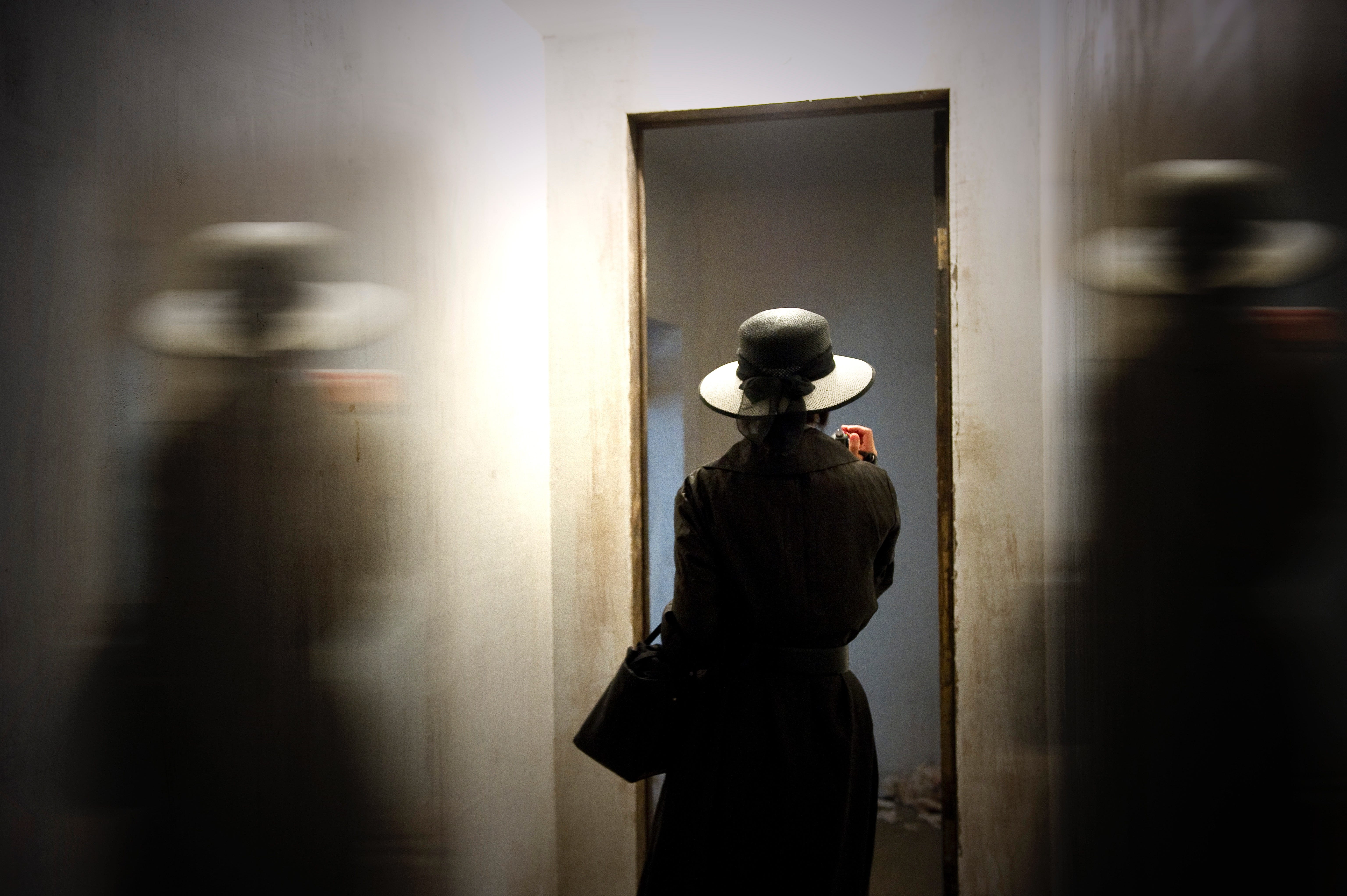
Despite what philosophers and psychologists say, your reality is unique to you and your perception is purely subjective. We don’t acknowledge that another’s perception might be different than our own because it challenges our consensus-building view of the universe.
Reality isn’t a shared external environment you are moving through along with everyone else, but this is how we expect it to work.
According to the MIT Technology Review, an experiment by physicists from Heriot-Watt University demonstrated two people can observe the same event and see two different things happen. Both observers would be correct.
While some will argue phenomenon at the quantum level is largely irrelevant to the operation of day-to-day existence, it demonstrates how we selectively choose what information we incorporate into our version of reality.What Happens When You Live in a Simulated Reality?If reality is a computer simulation, how does that work?medium.com
We don’t reject it because we feel it is invalid, but because it challenges our reality and requires that we reexamine our worldview. It is easier to accept our erroneous views than to make allowances for an evolving reality.
You Do Not Recognize Your View of Reality is Wrong
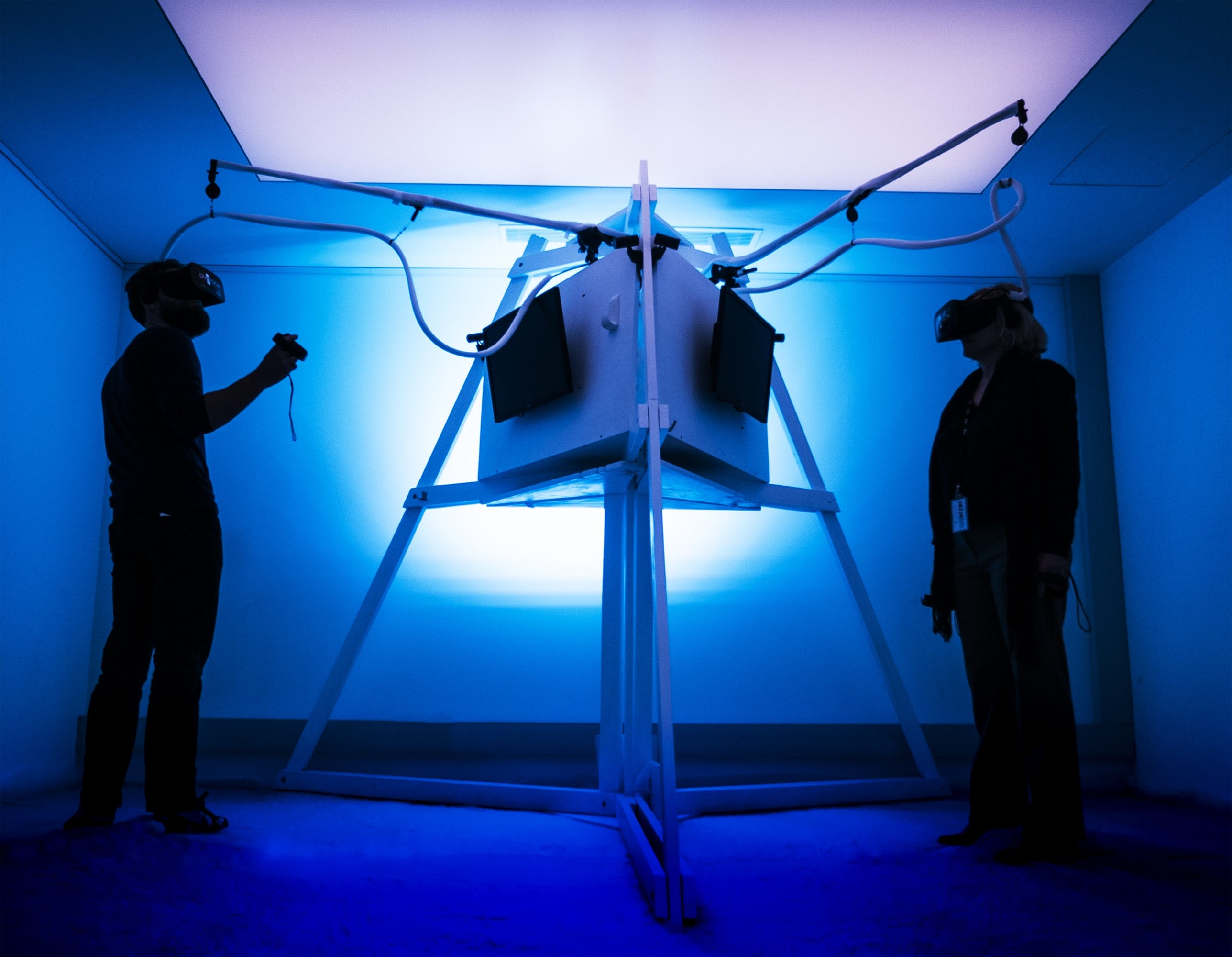
According to George Mobus, Professor Emeritus at the University of Washington, the answer is simple. In his paper, A Theory of Sapience: Using Systems Science to Understand the Nature of Wisdom and the Mind, he demonstrates that most people frequently do not even recognize their own mistakes, let alone be able to learn from them.
Whether you acknowledge your flawed perceptions or not, what you experience is unique to you. It evolves over your life and it will die at your death. Others don’t agree with your view of the universe because they perceive a separate reality. Someone else may experience something completely different. Both can be correct and still not reach an agreement regarding what is real. Yet both will argue when challenged because they need assurances that they are right.
While you and others may share many of the elements of your reality, this does not make your view of the universe objective. It simply means you agree in your subjective view of the world.
WRITTEN BY Shelly Fagan
Complicated subjects accessible. Politics, Basic Income, Philosophy. I follow back. Ghostwriter. https://tiny.cc/Dimensional
Report: Majority Of Psychological Experiments Conducted In 1970s Just Crimes
December 6, 2020 • TheOnion.com
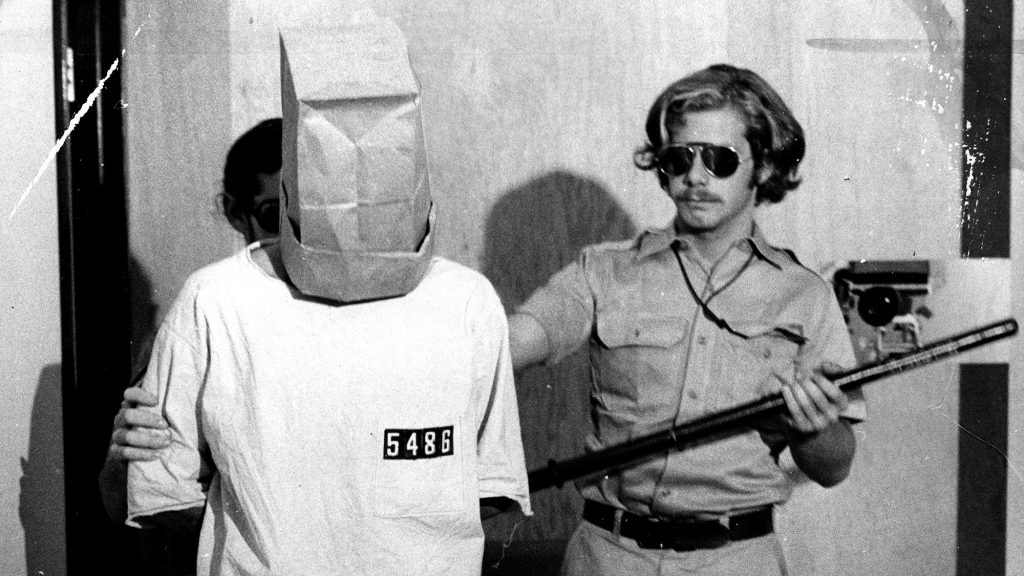
WASHINGTON—Unable to discern any legitimate form of inquiry in the past procedures, a new report released Monday by the American Psychological Association found that nearly eight out of every 10 psychological experiments conducted in the 1970s were just crimes. “After analyzing hundreds of academic papers from the decade, we found that 79% of these experiments served no scientific purpose, but in most cases were conducted simply to inflict pain and distress on their test subjects,” the report read in part, adding that the studies, in which participants were sometimes electrocuted repeatedly or locked in a dark basement for days on end without food or water, did little to advance knowledge and constituted very serious felonies in all 50 states. “Much of the time these researchers didn’t even bother to test a hypothesis or collect data, but instead just tortured student volunteers for amusement by burning them with hot irons or beating them over and over again with a sack of hammers. However, not all experiments that broke the law involved physical or emotional agony. We also found a 1974 study at Yale in which PhD candidates were given a $30,000 grant to just do a bunch of cocaine without any apparent research goals.” The report went on to mention that the remaining 21% of experiments, while not rising to the level of crimes, were still flat-out racist.
James Thurber
From Wikipedia, the free encyclopedia

| James Thurber | |
|---|---|
| Thurber in 1954 | |
| Born | James Grover Thurber December 8, 1894 Columbus, Ohio, U.S. |
| Died | November 2, 1961 (aged 66) New York City, U.S. |
| Resting place | Green Lawn Cemetery, Columbus, Ohio, U.S. |
| Occupation | Cartoonist, author, humorist, journalist, playwright |
| Period | 1929–1961 |
| Genre | Short stories, cartoons, essays |
| Subject | Humor, language |
| Notable works | My Life and Hard TimesMy World—and Welcome to It“The Catbird Seat“”The Secret Life of Walter Mitty“ |
| Notable awards | Tony Award for “A Thurber Carnival” (1960) |
| Spouse | Althea Adams Thurber(m. 1925–1935)Helen Wismer Thurber(m. 1935–1961) |
| Children | 1 |

James Grover Thurber (December 8, 1894 – November 2, 1961) was an American cartoonist, author, humorist, journalist, playwright, and celebrated wit. He was best known for his cartoons and short stories, published mainly in The New Yorker and collected in his numerous books.
Thurber was one of the most popular humorists of his time and celebrated the comic frustrations and eccentricities of ordinary people. His works have frequently been adapted into films, including The Male Animal (1942), The Battle of the Sexes (1959, based on Thurber’s “The Catbird Seat“), and The Secret Life of Walter Mitty (adapted twice, in 1947 and in 2013).
Life
Thurber was born in Columbus, Ohio, to Charles L. Thurber and Mary Agnes “Mame” (née Fisher) Thurber on December 8, 1894. Both of his parents greatly influenced his work. His father was a sporadically employed clerk and minor politician who dreamed of being a lawyer or an actor. Thurber described his mother as a “born comedian” and “one of the finest comic talents I think I have ever known.” She was a practical joker and, on one occasion, pretended to be crippled and attended a faith healer revival, only to jump up and proclaim herself healed.[1]Thurber at age 14

When Thurber was seven years old, he and one of his brothers were playing a game of William Tell, when his brother shot James in the eye with an arrow.[2] He lost that eye, and the injury later caused him to become almost entirely blind. He was unable to participate in sports and other activities in his childhood because of this injury, but he developed a creative mind which he used to express himself in writings.[1] Neurologist V .S. Ramachandran suggests that Thurber’s imagination may be partly explained by Charles Bonnet syndrome, a neurological condition which causes complex visual hallucinations in people who have suffered some level of visual loss.[3] (This was the basis for the piece “The Admiral on the Wheel”.)High school graduation photo, East high schoolThurber family portrait taken in Columbus, Ohio in 1915. From left to right: seated: Robert and Charles. Back row: William, James, and Mame


From 1913 to 1918, Thurber attended Ohio State University where he was a member of the Phi Kappa Psi fraternity and editor of the student magazine, the Sun-Dial. It was during this time he rented the house on 77 Jefferson Avenue, which became Thurber House in 1984. He never graduated from the university because his poor eyesight prevented him from taking a mandatory Reserve Officers’ Training Corps (ROTC) course.[4] In 1995 he was posthumously awarded a degree.[5]The Thurber House in Columbus, Ohio

From 1918 to 1920, Thurber worked as a code clerk for the United States Department of State, first in Washington, D.C. and then at the embassy in Paris. On returning to Columbus, he began his career as a reporter for The Columbus Dispatch from 1921 to 1924. During part of this time, he reviewed books, films, and plays in a weekly column called “Credos and Curios”, a title that was given to a posthumous collection of his work. Thurber returned to Paris during this period, where he wrote for the Chicago Tribune and other newspapers.[5]
Move to New York
In 1925, Thurber moved to Greenwich Village in New York City, getting a job as a reporter for the New York Evening Post. He joined the staff of The New Yorker in 1927 as an editor, with the help of E.B. White, his friend and fellow New Yorker contributor. His career as a cartoonist began in 1930 after White found some of Thurber’s drawings in a trash can and submitted them for publication; White inked-in some of these earlier drawings to make them reproduce better for the magazine, and years later expressed deep regret that he had done such a thing. Thurber contributed both his writings and his drawings to The New Yorker until the 1950s.
Marriage and family
Thurber married Althea Adams in 1922, but the marriage, as he later wrote to a friend, devolved into “a relationship charming, fine, and hurting.”[6] The marriage ended in divorce in May 1935.[1] They lived in Fairfield County, Connecticut, with their daughter Rosemary (b. 1931).[7] He married Helen Wismer (1902–1986) in June 1935.[8] After meeting Mark Van Doren on a ferry to Martha’s Vineyard Thurber began summering in Cornwall, along with many other prominent artists and authors of the time. After three years of renting Thurber found a home, which he referred to as “The Great Good Place.”[9]
Death
Thurber’s behavior became erratic and unpredictable in his last year. At a party hosted by Noël Coward, Thurber was taken back to the Algonquin Hotel at six in the morning. Thurber was stricken with a blood clot on the brain on October 4, 1961, and underwent emergency surgery, drifting in and out of consciousness. The operation was initially successful, but Thurber died a few weeks later, on November 2, aged 66, due to complications from pneumonia. The doctors said his brain was senescent from several small strokes and hardening of the arteries. His last words, aside from the repeated word “God”, were “God bless… God damn”, according to his wife, Helen.[10]
Legacy and honors
- Established in 1997, the annual Thurber Prize honors outstanding examples of American humor.[11]
- In 2008, The Library of America selected Thurber’s story, “A Sort of Genius,” first published in The New Yorker, for inclusion in its two-century retrospective of American True Crime.[12]
- Two of his residences have been listed on the U.S. National Register of Historic Places: his childhood Thurber House in Ohio and the Sanford-Curtis-Thurber House in Fairfield County, Connecticut.[13][14]
Career
Uniquely among major American literary figures, he became equally well known for his simple, surrealistic drawings and cartoons. Both his skills were helped along by the support of, and collaboration with, fellow New Yorker staff member E. B. White, who insisted that Thurber’s sketches could stand on their own as artistic expressions. Thurber drew six covers and numerous classic illustrations for The New Yorker.[15]
Writer
The last twenty years of Thurber’s life were filled with material and professional success in spite of his blindness. He published at least fourteen more books, including The Thurber Carnival (1945), Thurber Country (1953), and the extremely popular account of the life of New Yorker editor Harold Ross, The Years with Ross (1959). A number of his short stories were made into movies, including The Secret Life of Walter Mitty (1947). Many of his short stories are humorous fictional memoirs from his life, but he also wrote darker material, such as “The Whip-Poor-Will”, a story of madness and murder. His best-known short stories are “The Dog That Bit People” and “The Night the Bed Fell”; they can be found in My Life and Hard Times, which was his “break-out” book. Among his other classics are The Secret Life of Walter Mitty, The Catbird Seat, A Couple of Hamburgers, The Greatest Man in the World, If Grant Had Been Drinking at Appomattox. The Middle-Aged Man on the Flying Trapeze has several short stories with a tense undercurrent of marital discord. The book was published the year of his divorce and remarriage. His 1941 story “You Could Look It Up”,[16] about a three-foot adult being brought in to take a walk in a baseball game, is said to have inspired Bill Veeck‘s stunt with Eddie Gaedel with the St. Louis Browns in 1951. Veeck claimed an older provenance for the stunt, but was certainly aware of the Thurber story.[17]
In addition to his other fiction, Thurber wrote over seventy-five fables, some of which were first published in “The New Yorker” (1939), then collected in Fables for Our Time & Famous Poems Illustrated (1940) and Further Fables for Our Time (1956). These were short stories that featured anthropomorphic animals (e.g. The Little Girl and the Wolf, his version of Little Red Riding Hood) as main characters, and ended with a moral as a tagline. An exception to this format was his most famous fable, The Unicorn in the Garden, which featured an all-human cast except for the unicorn, which doesn’t speak. Thurber’s fables were satirical, and the morals served as punchlines as well as advice to the reader, demonstrating “the complexity of life by depicting the world as an uncertain, precarious place, where few reliable guidelines exist.”[18]
His stories also included several book-length fairy tales, such as The White Deer (1945), The 13 Clocks (1950) and The Wonderful O (1957). The latter was one of several of Thurber’s works illustrated by Marc Simont. Thurber’s prose for The New Yorker and other venues included numerous humorous essays. A favorite subject, especially toward the end of his life, was the English language. Pieces on this subject included “The Spreading ‘You Know’,” which decried the overuse of that pair of words in conversation, “The New Vocabularianism”, “What Do You Mean It Was Brillig?”, and many others. His short pieces – whether stories, essays or something in between – were referred to as “casuals” by Thurber and the staff of The New Yorker.[19]
Thurber wrote a biographical memoir about the founder/publisher of The New Yorker, Harold Ross, entitled The Years with Ross (1958). He wrote a five-part New Yorker series, between 1947 and 1948, examining in depth the radio soap opera phenomenon, based on near-constant listening and researching over the same period. Leaving nearly no element of these programs unexamined, including their writers, producers, sponsors, performers, and listeners alike, Thurber republished the series in his anthology, The Beast in Me and Other Animals (1948), under the section title “Soapland.” The series was one of the first to examine such a pop-culture phenomenon in depth.
Cartoonist
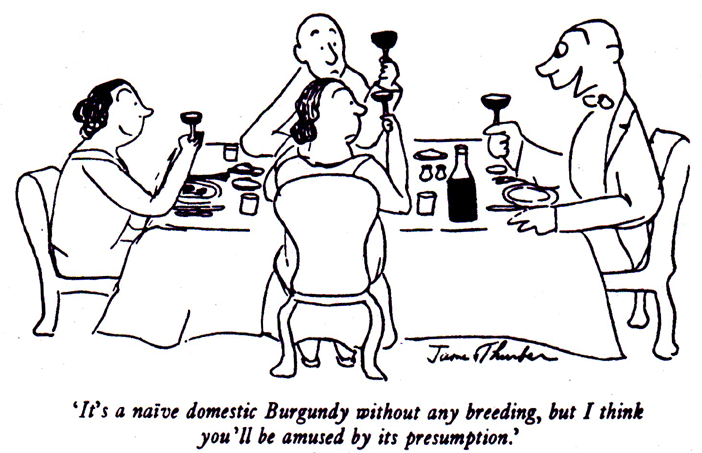
While Thurber drew his cartoons in the usual fashion in the 1920s and 1930s, his failing eyesight later required changes. He drew them on very large sheets of paper using a thick black crayon (or on black paper using white chalk, from which they were photographed and the colors reversed for publication). Regardless of method, his cartoons became as noted as his writings; they possessed an eerie, wobbly feel that seems to mirror his idiosyncratic view on life. He once wrote that people said it looked like he drew them under water. Dorothy Parker, a contemporary and friend of Thurber, referred to his cartoons as having the “semblance of unbaked cookies”. The last drawing Thurber completed was a self-portrait in yellow crayon on black paper, which was featured as the cover of Time magazine on July 9, 1951.[20] The same drawing was used for the dust jacket of The Thurber Album (1952).
2-Minute Intro to Climate Mobilization
The Climate Mobilization We are called the Climate Mobilization because the only precedent for the scale of action required to solve the climate crisis is the United States homefront mobilization during WWII. During that time, our economy transformed for the war effort in four years, industry shattered every record for production speed, up to 40 percent of vegetables were grown in peoples’ lawns and the country saw virtually full employment. The attacks on Pearl Harbor woke Americans up after years of denial about the Axis threat. But it’s up to ordinary people to wake America up to the climate crisis and initiate a just emergency climate mobilization from the bottom up.
Orwell’s Review of Hitler’s “Mein Kampf”: A Lesson for Today
Acts17Apologetics In 1940, George Orwell (of “1984” and “Animal Farm” fame) reviewed Adolf Hitler’s “Mein Kampf.” In explaining Hitler’s rise to power, however, Orwell explained much of what we see around us now. David Wood discusses Orwell’s book review and the lesson for today. PATREON: https://www.patreon.com/user?u=3615911 CHANNEL MEMBERSHIPS: https://www.youtube.com/channel/UCy5H… PARLER: https://parler.com/profile/Acts17/posts SUBSCRIBESTAR: https://www.subscribestar.com/david-wood STORE: https://teespring.com/stores/acts-17-… PAYPAL: https://www.paypal.me/Acts17Apologetics
Change Your Brain: Neuroscientist Dr. Andrew Huberman | Rich Roll Podcast
Rich Roll Thanks for watching! Read all about Dr. Andrew Huberman here ??https://bit.ly/richroll533 Dr. Andrew Huberman is a neuroscientist and tenured professor in the Department of Neurobiology at Stanford University School of Medicine. He is an expert in neuroplasticity, and his work in the Huberman Lab has been featured in Science, Discover, Scientific American, Time, the New York Times, and countless peer-reviewed journals. Dr. Huberman is here to school us on all things neuroplasticity—and how we can use it to our advantage through intense focus, mindfulness, and restorative sleep. Enjoy! ✌?? – Rich EPISODE 533 FULL AUDIO PODCAST Blog & Show Notes: https://bit.ly/richroll533 LISTEN / SUBSCRIBE TO THE PODCAST Apple Podcasts: http://bit.ly/rrpitunes Spotify: http://bit.ly/rrpspotify Android: http://bit.ly/rrpgoogle DR. ANDREW HUBERMAN http://www.hubermanlab.comhttps://twitter.com/hubermanlabhttps://www.instagram.com/hubermanlab FILMED AND EDITED BY BLAKE CURTIS https://www.blakecurtis.net/ * * * * * CONNECT WITH RICH ✩ Website – http://richroll.com ✩ Pod: Rich Roll Podcast – http://bit.ly/richrollpod ✩ Memoir: Finding Ultra – http://bit.ly/rrfindingultrarev ✩ Meals – http://meals.richroll.com ✩ Cook – The Plantpower Way – http://bit.ly/rrppwbook ✩ Italian! – The Plantpower Way: Italia – http://bit.ly/rrppwitalia ✩ Support – https://www.patreon.com/richroll SOCIALS ✩ Instagram – http://instagram.com/richroll ✩ Twitter – http://twitter.com/richroll ✩ Facebook – https://www.facebook.com/richrollfans ✩ Strava – http://www.strava.com/athletes/richroll NEW TO ME? Hi I’m Rich Roll. I’m a vegan ultra-endurance athlete, author, podcaster, public speaker & wellness evangelist at large. But mainly I’m a dad of four. If you want to know more, visit my website or check out these two the NY Times articles: http://bit.ly/otillonythttp://bit.ly/vegansglam I LOVE MAIL! SEND IT HERE: 2630 Conejo Spectrum St. Thousand Oaks, CA 91320 0:00 – Introduction 1:26 – Andrew’s Background 15:29 – How Andrew Turned His Life Around 23:47 – How Andrew Combines Neuroscience with His Past 26:43 – The Human Brain: Internal State & External State 35:06 – Neural Plasticity – Steering the Nervous System 42:25 – State of Flow – The Dopamine System 59:07 – Process of Internal Rewards 1:05:55 – Studying Fear, Courage, and Resilience 1:16:03 – How to Deal with Problems of Motivation and Focus 1:24:41 – Panoramic Vision vs Focal Vision 1:30:45 – Methods of Focus and Deep Rest 1:34:50 – Optic Flow and EMDR 1:38:50 – Andrew’s Work in Addiction 1:47:06 – A Bio-Marker for Addicts to Avoid Relapse 1:49:36 – Neuroscience Perspective on Political Polarization 1:59:15 – The Importance of Internal Control 2:04:57 – Is There Hope for Us?
(Contributed by Richard Branam.)
‘Small’ acts of love and kindness
The Sit-In: Harry Belafonte Hosts The Tonight Show | Official Trailer│Peacock
Peacock The Sit-in: Harry Belafonte Hosts The Tonight Show is coming to Peacock on September 10th. From executive producer and MSNBC host Joy Reid and director Yoruba Richen, THE SIT-IN: HARRY BELAFONTE HOSTS THE TONIGHT SHOW is a documentary film that chronicles the seminal event and almost-forgotten moment in American history during which legendary entertainer and civil rights activist Harry Belafonte hosted the iconic “Tonight Show” in place of Johnny Carson for an entire week. THE SIT-IN follows the history-making week in February 1968 when an African American got the opportunity to host the whole week of the popular show for the first time ever. Amidst a backdrop of riots across the country and the Vietnam War, Belafonte introduced a fractured, changing country to itself for five nights with guests that included entertainment icons Aretha Franklin and Sidney Poitier as well as Dr. Martin Luther King, Jr. and Robert Kennedy. THE SIT-IN highlights never-before-seen footage from this pivotal week, which set the stage for the confluence of late-night and politics that we see today. Belafonte appears in the film, along Questlove and Whoopi Goldberg who recount the historic moment. THE SIT-IN is a production of Big Beach and is directed by Yoruba Richen and executive produced by Joy Reid. Valerie Thomas and Joan Walsh serve as producers. Leah Holzer and Peter Saraf also executive produce. — Peacock. Stream Now. https://www.peacocktv.com?cid=2020010…
Saturn in Aquarius 2020-2023 – What to Expect
| by Astro Butterfly (astrobutterfly.com) |
Saturn in Aquarius is one of the most anticipated transits of the year.
Saturn enters Aquarius on December 17, 2020 and will stay in Aquarius until March 2023.
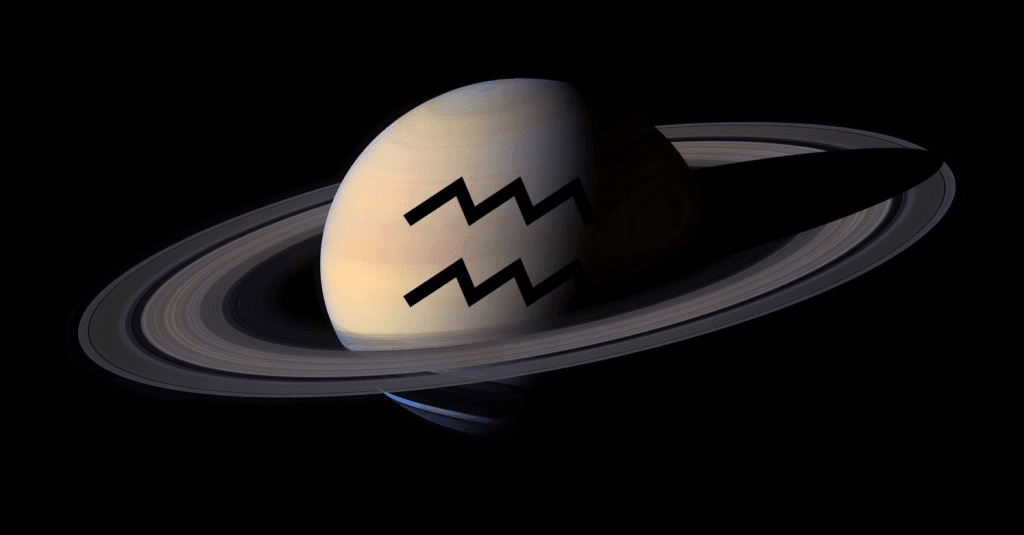
We cannot talk about Saturn in Aquarius without putting it into the context of Jupiter-Saturn conjunction on December 21st, 2020, at 0° Aquarius.
This is not ‘just’ a Saturn-Jupiter conjunction – this is the first conjunction in an Aquarius since the early 15th century and the cherry on top is that it occurs exactly at 0° Aquarius.
As you may already know, Jupiter-Saturn conjunctions are very cyclical and belong to 200-year elemental cycles. The current Earth cycle will end on December 20th, 2020 and the AIR elemental cycle will begin on December 21st, 2020. This is BIG.
In the light of a Jupiter-Saturn conjunction – which will revolutionize our society – you really want to pay attention to Saturn’s ingress in Aquarius on December 17th, 2020.
Saturn And Aquarius
To see what to expect from this transit let’s review what Saturn and Aquarius stand for.
Saturn is the great teacher. Some of Saturn’s keywords are rules, discipline, patience, responsibility, and maturity. Saturn wants us to grow up!
Saturn has spent 2.5 years in Capricorn. Our job in the last 2.5 was to “master” Capricorn, i.e. to learn everything we can about rules, hierarchies and control. And we did (willingly or less willingly).
Now it’s Aquarius’ turn to get scrutinized by the Great Teacher. Of course, any change is uncomfortable at first. Saturn was in Aquarius early this year when the lockdown measures were implemented. These measures forever changed the way we interact with others. We had:
Social (Aquarius) distancing (Saturn).
Air travel (Aquarius) delays (Saturn).
Online (Aquarius) and remote working (Saturn).
Does it mean Saturn in Aquarius is all about restrictions? No. Saturn initially ‘forces’ us to go into unfamiliar territories so that we can have a paradigm shift, and develop the positive qualities of the sign.
With Saturn in Aquarius we bring the following shifts:
- From herd mentality (blindly and irrationally following the crowd without checking in with one own’s integrity) to good fellowship. We care for others not because we expect something in return, but from a true desire to contribute and make a difference
- From false democracy (expecting to exercise one’s individual rights, without fulfilling one’s obligations) to true democracy. Democracy means rights, but also obligations. Real democracy happens when people contribute to the best of their ability to a better society
- From a false sense of freedom (rebellion without taking responsibility) to true freedom that comes from the ability to manage oneself
- From intellectual snobbery (promoting ‘scientific’ information without fully understanding it, while bullying those who have a different perspective) to expertise based on critical, bias-free thinking, and years and years of study
- From technology addiction to value creation through technology. Technology was supposed to make our life easier or more enjoyable, not to get us subdued by it. Saturn in Aquarius will expose the limitations of technology and make us use it for what was meant for: to spread knowledge and bring like-minded people together
- From human resources (people seen as production units) to human capital. When empowered, the human mind can achieve incredible things
There is a reason why Aquarius follows Capricorn. We can not have Aquarius’ promise of freedom unless we learn how to deal with rules, processes, and hierarchies (Capricorn) first.
But with Saturn’s departure from Capricorn, there is nothing left to learn about top-down rules and structures. Saturn in Aquarius will bring us a different type of order.
Saturn is Saturn. It is about structure, discipline and order. But while Capricorn order is top-down (from the leader) – with Aquarius, progress comes bottom-up (from the individual).
With Saturn in Aquarius, the authority is YOU. No need to look for it on the outside. It has to come from within.
Saturn in Aquarius – Holding Space
Step by step, cell by cell, human by human, together, we will change the world.
From December 2020 until March 2023, Saturn in Aquarius will create new structures that will revolutionize our society.
How will it do that?
Aquarius is a YANG sign (as opposed to Capricorn, a YIN sign). If Saturn in Capricorn is concerned with the material world, Saturn in Aquarius is concerned with the spiritual, abstract world.
It’s less about what’s tangible, it’s less about resources. It is more about ideas, policies and new visions for the future. Even if Saturn rules Aquarius, this is not the same Saturn we had in Capricorn!
Aquarius is ruled by both Saturn and Uranus. Saturn and Uranus couldn’t be more different. Saturn is rules and discipline, and Uranus is freedom. And it is exactly this inner conflict and paradox that makes Aquarius so original and innovative.
Many people believe Aquarius people are revolutionaries. Not necessarily. Aquarius is a cool, rational, air sign. And it’s exactly because it is rational and unimpressed with tradition, that it sometimes goes against the norm and shocks everyone.
However, at its core, Aquarius is NOT the street revolutionary that throws Molotov cocktails and gets into fights. Aquarius’ freedom and rebellion come from somewhere else.
Aquarius is an Air sign, so it is about space. Aquarius is also a fixed sign, so it has an immovable quality. If we put the two concepts together we get “holding space”.
Holding space is a term used in coaching and it means being physically, mentally and emotionally present for someone. Holding space means putting your focus on someone, while being judgment-free and allowing the other to ‘just be’.
You are there, you care, but you don’t judge. This is not aloofness (a quality Aquarius is sometimes ‘accused’ of) – this is actually holding space, without allowing your subjective perspective to take over and influence the other.
Saturn in Aquarius will help us create frameworks where we can hold space for others and allow them to express themselves without judgment. Being in that space that Aquarius holds pretty much sounds like the definition of freedom.
What Will Saturn in Aquarius Bring?
What you make of it!
Saturn is the planet of responsibility, and Aquarius the sign of self-autonomy.
One thing for sure. While Saturn is in Aquarius, it will be pretty difficult to blame the government/establishment (Capricorn) for what goes wrong. That’s because Aquarius is NOT the Government. Aquarius is “We, the people”.
Aquarius is that freedom we can only find when we take responsibility for our lives and become fully autonomous.
This type of freedom cannot be found by fighting against the establishment. It can only be found when we stop looking up to the establishment.
It can only be found when we stop looking for answers from the outside. It can only be found when we stop giving our power to another governing entity – from politicians, to our leaders, or our mobile phones.
Any Aquarius transits bring a paradigm shift. Saturn in Aquarius is no exception.
A paradigm shift is a fundamental change in approach or our underlying assumptions – whatever these assumptions may be.
For example, in some parts of the world, people have gone out to vote in higher numbers than ever before, motivated by Aquarius’ civic spirit. They took action.
In other parts of the world, people chose not to vote. Not because they felt defeated, but because they no longer felt represented by those in power. They ‘unplugged’ from the system and just walked away. They become their own authority.
Saturn in Aquarius’ promise of freedom may not sound very attractive, but that may be because we might not even know what it means to be free.
There is no right or wrong way to pursue freedom. As long as we take responsibility for our lives, as long as our choices come from a place of true self-autonomy – we will probably do the ‘right thing’ – for ourselves, and for society as a whole.
The real Saturn in Aquarius revolution will take place within. Not that we won’t have a ‘proper’ revolution. With Saturn square Uranus most of 2021, and with an angry Mars conjunct Uranus and Black Moon Lilith in January 2021, you can bet that people will take to the streets as well.
However, ultimately the real revolution can only take place inside ourselves.
In the next 2.5 years, the fight is not against “them”, but against our own limiting beliefs – against what keeps us small, enslaved and out of integrity.
Instead of delegating the power and responsibility to states and corporations, Saturn in Aquarius will pass the responsibility back to us – how can we, as individuals, contribute to society and make the world a better place?
Saturn in Aquarius is truly our opportunity to build sustainable foundations based on Aquarian values like freedom, personal autonomy, insight, clarity, sharing knowledge, and collaboration.
Most importantly, Saturn in Aquarius is about acknowledging the value of humanity.
Saturn in Aquarius is about how we, as individuals – every single one of us – contribute to a better world – by helping ourselves, our fellow humans and other living beings. The highest manifestation of Saturn in Aquarius is the sum of the sustained actions of each individual to make the world a better place.