“The greatest revolution of our generation is the discovery that human beings, by changing the inner attitudes of their minds, can change the outer aspects of their lives.”
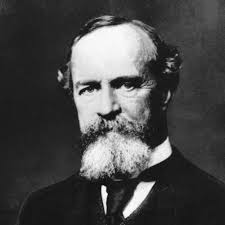
William James (January 11, 1842 – August 26, 1910) was an American philosopher and psychologist, and the first educator to offer a psychology course in the United States. James is considered to be a leading thinker of the late nineteenth century, one of the most influential philosophers of the United States, and the “Father of American psychology”. Wikipedia
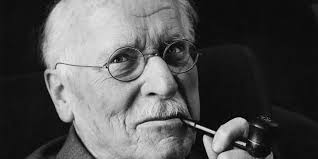
“We discover that the ‘other’ in us is indeed ‘another,’ a real man, who actually thinks, does, feels, and desires all the things that are despicable and odious…. A whole man, however, knows that his bitterest foe, or indeed a host of enemies, does not equal that one worst adversary, the ‘other self’ who dwells in his bosom.”
–Carl Jung
Carl Gustav Jung (July 26, 1875 – June 6, 1961) was a Swiss psychiatrist and psychoanalyst who founded analytical psychology. Jung’s work was influential in the fields of psychiatry, anthropology, archaeology, literature, philosophy, and religious studies. Jung worked as a research scientist at the famous Burghölzli hospital, under Eugen Bleuler. Wikipedia
This is the first inexpensive edition of the complete Long Course in Principles of Psychology, one of the great classics of modern Western literature and science and the source of the ripest thoughts of America’s most important philosopher. As such, it should not be confused with the many abridgements that omit key sections.
The book presents lucid descriptions of human mental activity, with detailed considerations of the stream of thought, consciousness, time perception, memory, imagination, emotions, reason, abnormal phenomena, and similar topics. In its course it takes into account the work of Berkeley, Binet, Bradley, Darwin, Descartes, Fechner, Galton, Green, Helmholtz, Herbart, Hume, Janet, Kant, Lange, Lotze, Locke, Mill, Royce, Schopenhauer, Spinoza, Wundt, and scores of others. It examines contrasting interpretations of mental phenomena, treating introspective analysis, philosophical interpretations, and experimental research. It remains unsurpassed today as a brilliantly written survey of William James’ timeless view of psychology.
On November 30th, 2020 we have a Full Moon and Lunar Eclipse at 8° Gemini.
Full Moons are when things are revealed for what they truly are. The Full Moon is the only time in the lunar cycle when the disk of the Moon is fully illuminated. By definition, Full Moons bring clarity, transparency, and DISCLOSURE.
Now, since this Full Moon is ALSO a Lunar Eclipse, we change gears to a whole new level of disclosure.
The Lunar Eclipse in Gemini is a Penumbral North Node eclipse and we know that North Node eclipses are concerned with the future (unlike the South Node eclipses, which are concerned with karma and the past).
When we have a North Node Eclipse, something new comes up and changes the trajectory of our destiny.
Since this North Node Eclipse is in the sign of Gemini, that ‘thing’ that comes up is likely connected with a piece of information since Gemini is ruled by Mercury, the planet of intellect and communication.
And it is not any old piece of trivial information. It is something that is striking, something we haven’t known about, or ever imagined was possible.
The Full Moon and Lunar Eclipse in Gemini is quincunx Venus in Scorpio. The ruler of the Full Moon, Mercury, is sextile Jupiter and Saturn. Whatever it is that the Full Moon will reveal, it will feel awkward at first (Moon quincunx Venus).
However, it will eventually bring us the much-needed clarity (Mercury sextile Jupiter and Saturn).
When we say ‘clarity’ – the ‘Gemini clarity’ is not your usual definition of clarity – it does not necessarily mean the absence of ambiguity, but more likely, the revelation that reality is sometimes contradictory.
Gemini – Learning About Duality
Gemini is a mutable, dual sign. Gemini doesn’t have a “yes or no” type of energy – in a way that Aries, Leo or Scorpio have.
Gemini is synonymous with the concept of “duality”. We are half divine, half nature, half YIN, half YANG, half Sun, half Moon. Duality is inherent in everything.
To understand the Gemini concept of duality, let’s take a look at the journey of the 12 signs of the zodiac.
Aries, the 1st sign of the zodiac, is the spark of life – where life as we know it gets birthed. Aries is the impulse of creation – without shape, or form; Aries is pure energy.
And this is where the next sign, Taurus takes over. Taurus is the material container that allows this spark of consciousness to take shape and to ‘exist’ in the physical reality. In Taurus, the seed of creation becomes a sprout.
Next, when this new form of life is shaped, we move to the next astrological archetype, Gemini. Gemini rules the process of cellular division. This is where we get the 3rd dimension of reality, “space”.
Space can only exist when we have 2 different objects. When we have plus and minus, yin and yang, white and black. This process of division is absolutely necessary in our development. In the next sign, Cancer, the Yin and Yang unite to birth new life, however, to get there, we need Gemini.
And this is exactly what the role of Gemini is: to show us that duality is necessary, to show us that we are different. When you talk to someone for example (communication is ruled by Gemini) you become aware of this duality.
The person you’re talking to is not like you, and they cannot be like you, because we are all different. When you talk to them, you share a little bit of your universe and take it a little bit of the other person’s universe.
This process of exchange is absolutely necessary and it fulfills its purpose when it is done from a place of genuine curiosity.
If it doesn’t come from a place of curiosity, we get the dark side of Gemini (“I only believe in what I see, touch and feel. Everything else is a lie”) OR the dark side of the opposite sign, Sagittarius (“I’m right and you’re wrong”).
While duality and division are a necessary process in the development of our psyche, being “divided” and having black-or-white thinking is the result of failing to embrace what Gemini really stands for: curiosity, critical thinking, and diversity of thought.
If you’re a Black and White type of person, the truth the Eclipse in Gemini will reveal, might shock you. “How come what I thought to be the truth, is not actually THE truth, but at best, half the truth?”.
Lunar Eclipse In Gemini – Think Differently
North Node eclipses are usually more auspicious than the South Node eclipses, however, they can make us feel uncomfortable at first.
They teach us to get outside our comfort zone, get out of our bubble, and ‘experience’ the world. The great thing about North Node eclipses is that there’s no need to fear them: whatever you are called to embrace, it is part of your life purpose.
You can’t go wrong when you take action at a North Node eclipse. You can’t go wrong if you do things a bit differently. You can’t go wrong if you change your mind, or even your world view.
The worst thing you could do, is to do nothing at all, to dismiss what life offers you. If you don’t feel challenged in the process, if you don’t feel resistance, you’re saying NO to your North Node.
It is ok to feel challenged, it is ok to feel out of your depth – because this is exactly what the role of the North Node is.
The Full Moon and Lunar Eclipse in Gemini is our opportunity to open our minds and have the courage to think differently. This is a time of full disclosure – this is a time when the Universe will speak to you directly.
Pay attention to what it has to say, because it may change your life.
“Communicating fully is the opposite of being traumatized.”
–Bessel van der Kolk
Bessel van der Kolk (born July 8, 1943) is a psychiatrist, author, researcher and educator based in Boston, USA. Since the 1970s his research has been in the area of post-traumatic stress. He is the author of the New York Times best seller, The Body Keeps the Score. Wikipedia
New England Historic Genealogical Society Helen Keller and Anne Sullivan, 1888.
April 05, 2012 by findingDulcinea Staff (findingdulcinia.com)
On April 5, 1887, teacher Anne Sullivan taught her blind and deaf pupil, Helen Keller, the meaning of the word “water” as spelled out in the manual alphabet.
Helen Keller’s world fell dark and silent when she was just 19 months old, when an unknown disease left her deaf and blind. She became an unruly child who often lashed out in anger at her inability to communicate and her failure to comprehend the world around her. When Helen tipped over her sister’s crib one day, her parents knew they needed to find help.
With the assistance of Alexander Graham Bell, the Kellers were able to engage Anne Sullivan, a teacher at the Perkins School for the Blind in Boston, to tutor their daughter at their Alabama plantation. Sullivan helped Helen gain self-control and then began teaching her using a technique first employed by Perkins tutor Samuel Gridley Howe to teach deaf-blind girl Laura Bridgman to read.
Sullivan spelled words into Helen’s hand and tried to help the girl connect letters and words with objects’ names. At first, Helen thought her teacher was just playing a game. Helen memorized words but failed to understand that they did, in fact, have meaning.
It wasn’t until April 5, 1887, when Anne took Helen to an old pump house, that Helen finally understood that everything has a name. Sullivan put Helen’s hand under the stream and began spelling “w-a-t-e-r” into her palm, first slowly, then more quickly.
Keller later wrote in her autobiography, “As the cool stream gushed over one hand she spelled into the other the word water, first slowly, then rapidly. I stood still, my whole attention fixed upon the motions of her fingers. Suddenly I felt a misty consciousness as of something forgotten–-a thrill of returning thought; and somehow the mystery of language was revealed to me. I knew then that ‘w-a-t-e-r’ meant the wonderful cool something that was flowing over my hand. That living word awakened my soul, gave it light, hope, joy, set it free! There were barriers still, it is true, but barriers that could in time be swept away.”
Sullivan described the event in a letter to the matron of the Perkins School: “The word coming so close upon the sensation of cold water rushing over her hand seemed to startle her. She dropped the mug and stood as one transfixed. A new light came into her face.”
Keller began asking what the words for other objects were, and learned dozens of new words in the following days. From that breakthrough moment, Helen’s world continued to expand. She learned to read, write and even speak.
Read Helen Keller’s most famous work, the autobiographical “The Story of My Life,” written while she was in college and released as a book in 1903. It also features letters written by Sullivan as she tutored Keller.
Helen Keller In 1888, Keller traveled to Boston to attend Perkins, where she learned Braille and studied many subjects. In 1890, she moved to the Horace Mann School for the Deaf in Boston, where her new tutor, Sarah Fuller, taught her to understand words by placing her hands on the speaker’s face.
In 1890, she was accepted to Radcliffe College, where she graduated with honors. After her schooling was complete, Keller became a prolific writer and public speaker. She campaigned for the rights of the disabled, and also took strong and often controversial stances on political and social issues. She supported the women’s suffrage movement, spoke out against U.S. involvement in World War I, and was a devoted socialist.
When she died in 1968, Helen left an inspirational legacy for blind and deaf individuals. Many organizations, including the American Foundation for the Blind, honor her today.
Anne Sullivan Anne Sullivan, born in 1866 in Massachusetts, suffered from the eye disease trachoma, which left her nearly blind as a child. Her parents were poor Irish immigrants; her mother died when she was young and her father, an alcoholic, abandoned her and her brother, leaving them in a poorhouse.
In 1880, she convinced an inspector at the poorhouse to allow her to enroll at the Perkins School, where she was taught to read and write. She became close with Laura Bridgman, who taught her the manual alphabet. She received surgery to correct her vision and went on to graduate as the class valedictorian in 1886, after which she became a tutor at the school.
Sullivan remained close friends with Keller for her entire life. The two lived together for many years along with Sullivan’s husband, John Macy. Sullivan accompanied Keller to many of her speeches and other public appearances.
Helen met numerous famous individuals during her life, including Alexander Graham Bell, Charlie Chaplin, Mark Twain, and presidents Calvin Coolidge and John F. Kennedy. Photographs of her and her acquaintances are available at the Helen Keller Foundation for Research and Education.
From the Senior Scholar-in-residence and Ambassador for the famed Kripalu Center for Yoga and Health comes an incisive and inspiring meditation on living the life you were born to live.
In this fast-paced age, the often overwhelming realities of daily life may leave you feeling uncertain about how to realize your life’s true purpose—what spiritual teachers call dharma. But yoga master Stephen Cope says that in order to have a fulfilling life you must, in fact, discover the deep purpose hidden at the very core of your self. In The Great Work of Your Life, Cope describes the process of unlocking the unique possibility harbored within every human soul. The secret, he asserts, can be found in the pages of a two-thousand-year-old spiritual classic called the Bhagavad Gita—an ancient allegory about the path to dharma, told through a timeless dialogue between the fabled archer, Arjuna, and his divine mentor, Krishna.
Cope takes readers on a step-by-step tour of this revered tale, and in order to make it relevant to contemporary readers, he highlights well-known Western lives that embody its central principles—including such luminaries as Jane Goodall, whose life trajectory shows us the power of honoring The Gift; Walt Whitman, who listened for the call of the times; Susan B. Anthony, whose example demonstrates the power of focused energy; John Keats, who was able to let his desire give birth to aspiration; and Harriet Tubman, whose life was nothing if not a lesson in learning to walk by faith. This essential guide also includes everyday stories about following the path to dharma, which illustrate the astonishingly contemporary relevance and practicality of this classic yogic story.
If you’re feeling lost in your own life’s journey, The Great Work of Your Life may provide you with answers to the questions you most urgently need addressed—and may help you to find and to embrace your true calling.
Praise for The Great Work of Your Life
“Keep a pen and paper handy as you read this remarkable book: It’s like an owner’s manual for the soul.”—Dani Shapiro, author of Devotion
“A masterwork . . . You’ll find inspiration in these pages. You’ll gain a better appreciation of divine guidance and perhaps even understand how you might better hear it in your own life.”—Yoga Journal
“I am moved and inspired by this book, the clarity and beauty of the lives lived in it, and the timeless dharma it teaches.”—Jack Kornfield, author of A Path with Heart
“A rich source of contemplation and inspiration [that] encourages readers . . . to discover and fully pursue their inner self’s calling.”—Publishers Weekly
“Fabulous . . . If you have ever wondered what your purpose is, this book is a great guide to help you on your path.”—YogaHara
From the Hardcover edition
(Goodreads.com)
Consciousness, spirituality, biography, sexuality, androgyny, futurism, space, the arts, science, astrology, democracy, humor, books, movies and more