Monthly Archives: November 2020
Single-atom Qubits for Next Generation computers

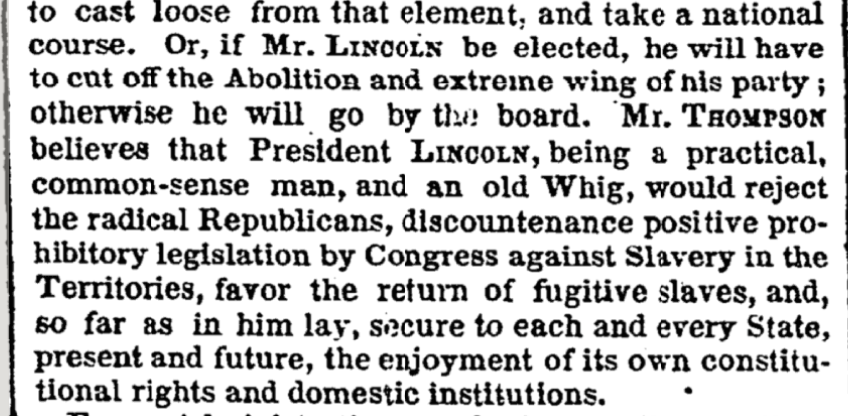
New York Times of 1864 on the “rancorous and abusive” Abolitionists
Tweet by Waleed Shahid on November 12, 2020:
New York Times covering the abolitionist movement in 1859: “They are as rancorous and abusive as if they were on the point of utter annihilation. Their speeches sound more like the ravings of Bedlamites than the utterances of men seeking the accomplishment of a practical object.”
Waleed Shahid@_waleedshahid replying to @_waleedshahid
“If Mr. LINCOLN be elected, he will have to cut off the Abolition and extreme wing of his party; otherwise he will go by the board. Mr. THOMPSON believes that President LINCOLN, being a practical, common-sense man, and an old Whig, would reject the radical Republicans.”
Joe’s Violin | 2017 Oscar Nominee | The Screening Room | The New Yorker
The New Yorker In the short documentary “Joe’s Violin,” a Holocaust survivor donates his violin to a local instrument drive, changing the life of a schoolgirl from the nation’s poorest congressional district. Still haven’t subscribed to The New Yorker on YouTube ►► http://bit.ly/newyorkeryoutubesub Joe’s Violin | 2017 Oscar Nominee | The Screening Room | The New Yorker
In Burbank schools, a book-banning debate over how to teach antiracism
By DORANY PINEDA STAFF WRITER NOV. 12, 2020 (LATimes.com)
During a virtual meeting on Sept. 9, middle and high school English teachers in the Burbank Unified School District received a bit of surprising news: Until further notice, they would not be allowed to teach some of the books on their curriculum.
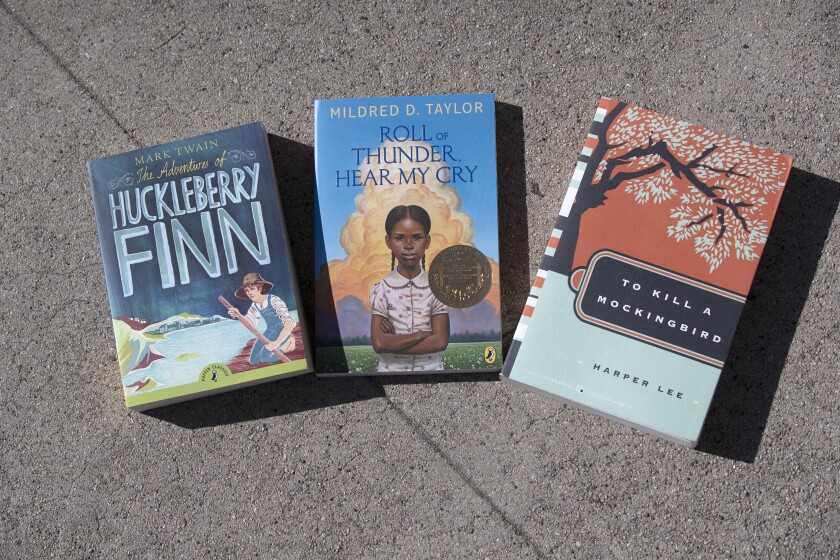
Five novels had been challenged in Burbank: Harper Lee’s “To Kill a Mockingbird,” Mark Twain’s “The Adventures of Huckleberry Finn,” John Steinbeck’s “Of Mice and Men,” Theodore Taylor’s “The Cay” and Mildred D. Taylor’s Newbery Medal-winning young-adult classic “Roll of Thunder, Hear My Cry.”
The challenges came from four parents (three of them Black) for alleged potential harm to the public-school district’s roughly 400 Black students. All but “Huckleberry Finn” have been required reading in the BUSD.
The ongoing case has drawn the attention of free-speech organizations across the country, which are decrying it as the latest act of school censorship. The charge against these books — racism — has been invoked in the past, but in contrast to earlier fights across the country, this one is heavily inflected by an atmosphere of urgent reckoning, as both opponents and defenders of the novels claim the mantle of antiracism.
The debate within the district comes after a summer of mass protests calling for an end to the unjust treatment of Black people. As a result, many institutions and school districts like BUSD are taking a hard look at themselves, their policies, curriculums and practices, in many cases publishing antiracist statements. And while book banning has a long history in America, the situation in Burbank — once a sundown town that practiced racial segregation — is freshly complicated.
In the abstract, it’s a dispute about the meaning of free speech and who gets heard. More specifically, it’s about what should be taught to the district’s roughly 15,200 enrolled students — who are 47.2% white, 34.5% Latino, 9.2% Asian and 2.6% Black — and how Burbank can move forward on race boldly but sensitively.
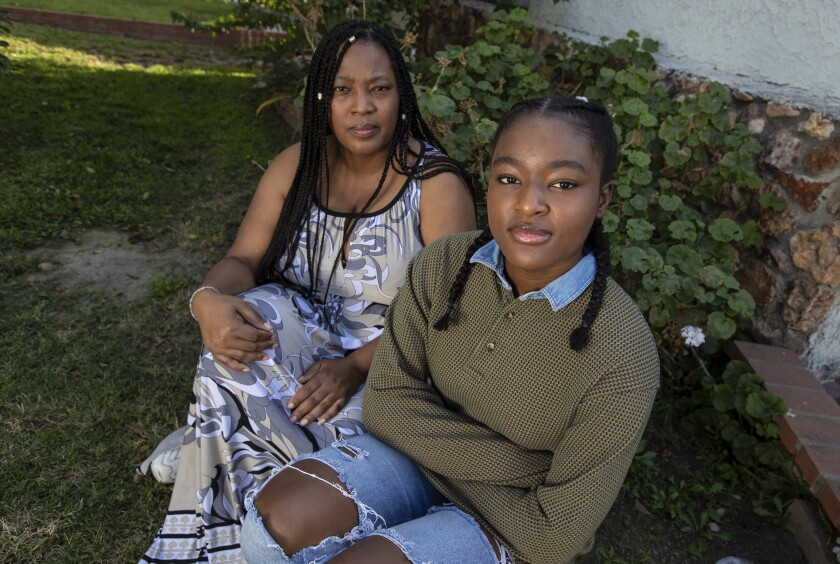
And at its root, it stems from a painful personal story. Destiny Helligar, now 15 and in high school, recently told her mom about an incident that took place when she was a student at David Starr Jordan Middle School. According to Destiny’s mother, Carmenita Helligar, a white student approached Destiny in math class using a racial taunt including the N-word, which he’d learned from reading “Roll of Thunder, Hear My Cry.”
They reached a turning point. People share why they switched relapsing MS treatment. What will your turning point be?
Another time, Helligar added, a different boy went up to Destiny and other students and said: “My family used to own your family and now I want a dollar from each of you for the week.” When the principal was notified, the boy’s excuse was that he had read it in class — also in “Roll of Thunder, Hear My Cry.” Helligar believed the principal was dismissive of the incident.
“My daughter was literally traumatized,” said Helligar. “These books are problematic … you feel helpless because you can’t even protect your child from the hurt that she’s going through.”
Helligar is one of the parents who filed complaints. But as the books were put on hold and the review process inched forward, a diverse group of teachers and students came out against the novels’ removal, arguing that their teaching was essential. A report to the superintendent is due from a 15-member review committee on Nov. 13, but that will only be the beginning of a long debate — in Burbank and beyond.
Essential history or outdated fictions?
A week after teachers learned of the removal, the National Coalition Against Censorship (NCAC) sent a letter to BUSD urging the district to allow teaching of the books while the challenges are under review. On Oct. 14, PEN America released a petition calling for the same.
“[W]e believe that the books … have a great pedagogical value and should be retained in the curriculum,” read letter from the NCAC.
Books written by or featuring people of color are “disproportionately likely to be banned,” said James Tager, PEN’s deputy director of free expression research and policy. “That is a decades-long trend that advocates and observers have seen.”
Book-banning has a long history in America. Such challenges have sometimes been rooted in bigotry. Harriet Beecher Stowe’s “Uncle Tom’s Cabin” is cited by many historians as the first book to be banned on a national scale. Published in 1852, it was barred by the Confederacy for its abolitionist agenda.
A century and a half later, Khaled Hosseini’s bestseller “The Kite Runner” was challenged for, among other reasons, allegedly promoting Islam and inspiring terrorism.
“Typically these book bans come down from people who are concerned about the books’ challenge to established order,” said Alaina Morgan, assistant professor of history at USC. It’s what makes the situation at BUSD “novel,” she said.
“I think that for Black parents in these districts, there is a very long history of them dealing with microaggressions … and now they’re seeing their children go through the same things in an allegedly more racially just society,” Morgan said.
Although she believes cancel culture plays a role in the debate, “I think there’s a difference between the gut reaction that cancel culture is — which is people saying, ‘Oh they said something racist they’re [canceled] now’ — and what’s happening here,” she said.
None of the five novels in dispute is openly supportive of segregation or bigotry. All were flagged for words we now find offensive. But the parents’ objections are not merely over language. They also worry about the way these books portray Black history and the lessons they might impart to modern readers.
“The Cay” and “Huckleberry Finn” feature white children learning from the suffering and wisdom of older Black men. “To Kill a Mockingbird” stars Atticus Finch, a white lawyer who defends a Black man accused of raping a white woman. Its white-savior story line reads much differently nearly 60 years after its publication.
“Roll of Thunder, Hear My Cry” may have instigated Helligar’s complaint, but it is something of an outlier. Narrated by a young Black girl growing up in the South during the Great Depression and Jim Crow era, it’s the only novel on the list by a Black author.
Notably, the BUSD’s reading list hasn’t been revised in three decades. “For over 30 years,” said Helligar, “these books have been on this list. The true ban is that there aren’t other books of other voices that could ever be on there.”
Nadra Ostrom, another Black parent who filed a complaint, agrees that the perspectives are badly in need of an update. “The portrayal of Black people is mostly from the white perspective,” said Ostrom. “There’s no counter-narrative to this Black person dealing with racism and a white person saving them.”
And that, she said, is doing more harm than good. “The education that students are basically getting is that racism is something in the past,” she added. “And that’s not the conversation that we should be having in 2020. … Unless teachers have been specifically trained to teach these texts through an antiracist lens, they are probably reinforcing racism rather than dismantling it.”
Others believe that changed lens is not only feasible but necessary — that the books remain essential to helping frame in-class discussions about contemporary racism. Rather than ban the books, they argue, the district should reevaluate how they’re being taught.
For one Burbank High School teacher who also asked to remain anonymous for fear of retaliation, the Black Lives Matter protests only amplify these books’ relevance.
“‘To Kill a Mockingbird’ was written 60 years ago, and we read it with horror at the unfairness and terrors of a segregated society,” she said. “It’s set in the 1930s, and we look at how things were then and how we feel like we’ve come a long way, but we can note the serious inequities that still exist.”
Plenty of district students agree. On Oct. 22, Sungjoo Yoon, a sophomore at Burbank High School, launched a petition to stop what he called a “ban on antiracist books.” As of Nov. 11, more than 2,600 people had signed it. Some 80 students also sent personal statements of protest to district officials.
Yoon, 15, started the petition because he remembered the impact the books had on him. “I didn’t know much about race relations or anything regarding critical race theory when I was younger,” he said, “and when I read ‘Roll of Thunder, Hear My Cry,’ that was my first glimpse, and it really did touch me.” He hopes students can continue to have the “breakthrough moment” he did.
“There are people who have actively been harmed by some of these books in the past,” Yoon acknowledges. “I’ve been in classrooms where teachers, white teachers specifically, unconditionally say the N-word without anybody’s concern or single out a single African American student to become the spokesperson for the entire class. I think that’s where the harm is coming from.”
Chloe Bauer remembers being in tears when she first read “Roll of Thunder, Hear My Cry” in her seventh grade English class at John Muir Middle School.
Bauer, now 14, called the novel her first lesson in America’s “bloody and gruesome” past. When she heard that teachers were told to pause instruction of the book, she felt “confused,” “frustrated” and “saddened.” She thought of her sister, a sixth-grader at John Muir.
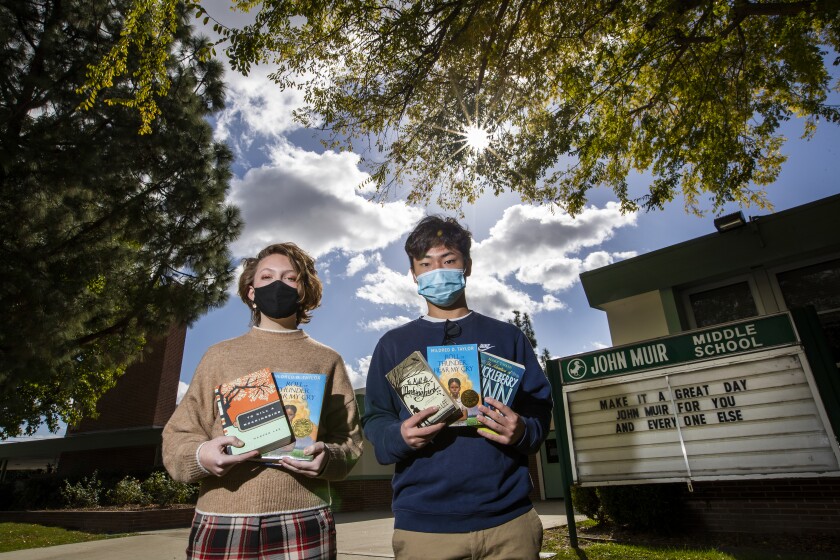
So Bauer wrote an email to Sharon Cuseo, Burbank’s assistant superintendent of instructional services, describing her experience. She felt Cuseo’s response was dismissive, so she went to the board of education.
During a Sept. 17 school board meeting, Bauer spoke up: She said the novel had taught her and her peers how “disgusting” the slurs were. “This is an incredibly important lesson to learn at age 13, when seventh-graders are being exposed to music, TV, films and pop culture with conflicting messages about using offensive language, specifically the N-word.”
Helligar doesn’t buy that. She believes the core message being taught is that racism is an artifact of history. “They get to read about racism whereas my children have to experience it. That is the privilege that they get to walk around in.”
She told the review committee that the incidents she reported were themselves proof the books had failed in their mission: “You’re not doing well as an education system if the people you have educated still haven’t learned empathy.”
Some Black parents in the district see both sides of the argument.
Dawn Parker, a Black mother of fourth- and seventh-grade students, empathizes with the parents who’ve complained. “But I think our kids now don’t know how the [N-word] came about, how it was used, the history of it. They hear it in rap music and they think it’s OK to say, and it’s not. They need to know why and where it came from,” she said. They need to learn it in a “safe environment.”
A controversial process
The question of what exactly to do with the challenged books in Burbank has not only divided the community but caused frustration over the district’s procedures for handling complaints.
The process in Burbank can be long and complicated, involving five stages consisting of complaints (formal and informal), an ad hoc committee and multiple appeals. Although it seems to be designed to ensure that parents are heard, the rulebook doesn’t address the core issue of how to improve teaching practices.
Some parents and teachers were initially troubled by the superintendent’s decision to pause instruction of the books before a formal, written complaint was even made. Four official complaints have since been filed. Under district policy AR 1312.2, “challenged material may remain in use until a final decision has been reached,” with children given the chance to opt out from the reading.
Asked why the district removed the books right away, BUSD Superintendent Matt Hill told The Times: “Given the nature of the complaint, the fact that we would have to ask for Black children to opt out of their class and receive an alternative assignment — I did not think that was the most prudent approach. I thought it would be better for us to work together and see if we can get to a resolution.”
The five books in question are currently at step four of the district’s process. The review committee has until Nov. 13 to make a recommendation to Hill, who will make a decision that can then be appealed to the board of education. Its last meeting was Nov. 4, but no consensus was reached.
“We are not removing books from our classrooms or schools,” Hill said; they’ll remain in libraries and on optional reading lists. “What we are doing is looking at our reading list and our core novels to identify: Are there concerns with these books? Are these the best books?”
While some teachers and parents believe the superintendent is acting in good faith, they are troubled by the process.
“It seems to have gone directly from an experiences at one of the schools to becoming a district-wide prohibition,” said a Burbank middle school teacher who asked to remain anonymous. He and several colleagues felt excluded from the review. “A lot of teachers were unaware of these concerns and didn’t get the ability to address their practices or … respond until the decision was made,” he said. He believes the superintendent “did not take steps to include a broader net of parents, students and community members in making this decision.”
It certainly is easier to make top-down, yes-or-no decisions than engage a sprawling school district in the difficult business of how to teach old books in new times. If “Roll of Thunder, Hear My Cry” and the other novels make their way back to the curriculum, the most difficult challenge might be to ensure that students of all backgrounds can find in these books what Bauer and Yoon did.

Dorany Pineda writes about books, publishing and the local literary scene for the Los Angeles Times.
These 6 LGBTQ politicians won big on Election Day 2020. Here’s what you should know about them.
November 4, 2020 (usatoday.coom)
At least six politicians made strides crucial to the LGBTQ community in the election, expanding the model of what a political leader can be in the United States.
In New York, two U.S. House Candidates will become the first Black gay representatives to serve in Congress; elsewhere in the nation, four transgender and nonbinary politicians kicked open state political doors.
Sarah McBride will be the highest-ranking trans legislator in the country as she serves as Delaware’s first transgender state senator.
These wins come at a crucial juncture for the LGBTQ community as the Supreme Court is poised to rule Wednesday on a case involving a Catholic social services agency in Philadelphia not fostering children to same-sex couples – which may have far-reaching implications for religious freedom and religious groups claiming moral objections.
Here are the LGBTQ politicians that made history on Election Day.
Ritchie Torres

Ritchie Torres is one of the first gay Black men to serve in Congress and the first gay Afro-Latino person to serve in Congress.
Torres was the first LGBTQ person to represent the Bronx in the New York City Council, where he was also the city’s youngest elected official.
“It is the honor of a lifetime to represent the essential borough, the Bronx,” he wrote in a tweet Tuesday night.
He beat out fellow council member Rubén Díaz Sr. in the Democratic primary in New York’s 15th Congressional District. Díaz repeatedly voted against same-sex marriage legislation in the state.
Torres will replace Rep. José Serrano, who has served in the House since 1990 and opted against running for reelection after he was diagnosed with Parkinson’s disease.
Mondaire Jones

Jones, 33, an attorney with a Harvard Law education, joins Torres as one of the first Black gay men to serve in the House of Representatives. He has worked in Westchester County’s law department.
“I’m running to be a transformational figure in American politics,” he told The Rockland/Westchester Journal News, part of the USA TODAY Network, in an interview in June.
Jones beat Republican candidate Maureen McArdle Schulman, as well as three others in a five-way election, in New York’s historically blue 17th Congressional District.
Jones will replace Rep. Nita Lowey, who has represented the district since 1989 and announced her retirement last year.
Sarah McBride
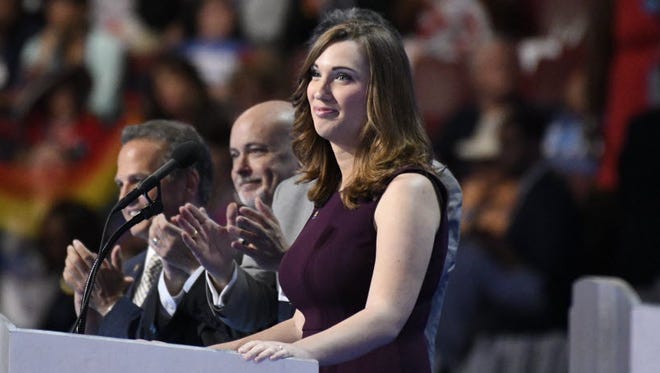
Sarah McBride, national press secretary for the Human Rights Campaign, will be the first transgender state senator in the United States. She also holds the distinction of being the first trans person elected to political office in Delaware.
McBride is something of a political star – the first transgender person to speak on stage at a political party convention when she addressed the crowd at the 2016 Democratic National Committee convention.
“From the start, I knew I wanted to be the health care and paid leave candidate,” she told the Delaware News Journal, part of the USA TODAY Network. “Even before COVID, people were feeling that need. This has just reinforced and deepened that need.”
More:Sarah McBride becomes first openly transgender state senator in the nation, elected in Delaware
Mauree Turner

Progressive community organizer Mauree Turner won their race in House District 88 and will break barriers in Oklahoma’s statehouse as the first Muslim in the Oklahoma Legislature and the first nonbinary legislator in America.
Turner took more than 71 percent of the votes in Oklahoma’s 88th congressional district, which includes Oklahoma City, beating out Republican candidate Kelly Barlean, a retired attorney.
Turner is nonbinary, meaning their gender identity is not strictly male or female. They are also Black and queer.
Prior to their campaign, Turner worked as the regional field director for the American Civil Liberties Union’s Campaign for Smart Justice.
“For me, this means a lot,” they said. “I have lived my whole life in the margins.”
More:Oklahoma elects Mauree Turner, the nation’s first Muslim, nonbinary state legislator
Taylor Small

In Vermont, Taylor Small will be the first transgender person to serve in the state Legislature. She won nearly 30% of total votes, enough to nab one of two Chittenden 6-7 district seats in the state House of Representatives.
Small works as a director at the nonprofit Pride Center of Vermont, which helps LGBTQ people in the state. She made headlines as a drag queen, Nikki Champagne, leading children’s reading sessions.
“I’m not doing it for myself,” Small told the Burlington Free Press, part of the USA TODAY Network. “It’s about being community-centered.”
Stephanie Byers

Stephanie Byers will become the first ever trans Native American woman to serve in the country if early results in the election for the Kansas Legislature are confirmed.
Byers, a retired teacher, claimed victory over Republican Cyndi Howerton – leading by nearly 500 votes in unofficial results, according to the Wichita Eagle. Byers’ victory won’t be official until mail-in votes and provisional ballots are counted.
She told the newspaper, “If Kansas, the big red Republican state, can elect a trans person to a state legislator, the doors open up in a lot of other places for people.”
Contributing: William Cummings, Wyatte Grantham-Phillips, USA TODAY; Natalia Alamdari, Delaware News Journal; Brent Hallenbeck, Burlington Free Press; Mark Lungariello, Rockland/Westchester Journal News.
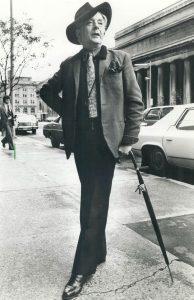
Bio: Quentin Crisp
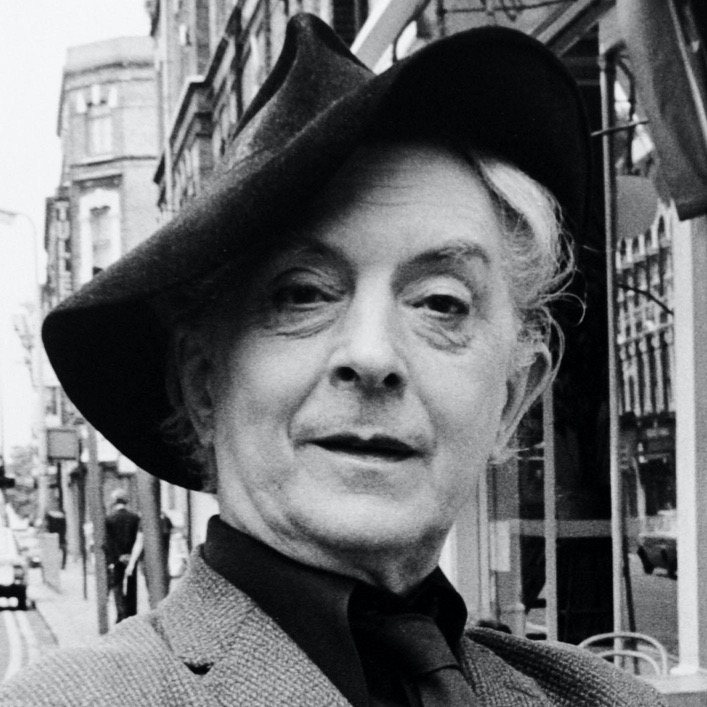 Quentin Crisp, London, 1980. Credit: Simon Dack Archive/Alamy Stock Photo.
Episode Notes
From a young age, Quentin Crisp was determined to be himself—makeup, painted nails, dramatically dyed hair, and all—even if it consigned him to a life of poverty and isolation. Hear the author, raconteur, and provocateur in a 1970 conversation with Studs Terkel before he found late-in-life fame.
———
For a brief overview of Quentin Crisp’s life, read this 1999 New York Times obituary. Find out more in the three installments of Crisp’s autobiography: The Naked Civil Servant (1968), How to Become a Virgin (1981), and The Last Word (published posthumously in 2017; excerpt here).
To better understand Crisp’s world, read this short history of LGBTQ rights in the UK or take a deeper dive with Peter Ackroyd’s Queer City: Gay London from the Romans to the Present Day and Queer London: Perils and Pleasures in the Sexual Metropolis, 1918-1957 by Matt Houlbrook. Also check out LGBTQ-related items from the London Metropolitan Archives and the Museum of London.
Crisp’s first memoir, The Naked Civil Servant, brought him to the attention of documentarian Denis Mitchell. Mitchell interviewed Crisp in his famously grubby one-room apartment for the investigative current affairs program World in Action; watch the segment here.
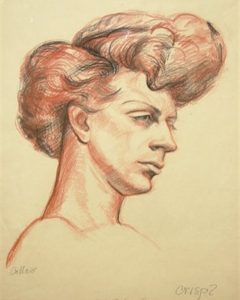
For most of his adult life, Crisp earned a modest living by working as an artist’s model. You can see some of the portraits he sat for (as well as some glamorous photos of young Crisp by Angus McBean) in the National Portrait Gallery’s collection.
In 1975, The Naked Civil Servant was adapted for the screen. See Crisp introduce the film here. John Hurt starred as Crisp and earned a BAFTA award for his performance. He reprised the role in a sequel over 30 years later.
Following the film’s success, Crisp toured the UK and North America with a celebrated one-man show titled An Evening with Quentin Crisp. You can watch it in its entirety here. The show opened at the Players Theatre in New York City on December 20, 1978. Crisp revisited the play 20 years later to rave reviews.
In 1987, the musician Sting was inspired by Crisp to write the song “An Englishman in New York.” Crisp starred in the music video, which you can see here. Watch Sting talk about the song and his friendship with Crisp in this interview.
In addition to his autobiographies, Crisp also wrote books like How to Have a Life Style (1975), Doing It with Style (1981), Manners from Heaven (1985) and Resident Alien: The New York Diaries (1997), a compilation of columns he wrote for the New York Native, a gay New York City newspaper.
Crisp was a frequent guest on talk shows throughout the ’70s, ’80s, and ’90s. Watch a few of his appearances on Late Night with David Letterman here.
Crisp had plenty of detractors in the LGBTQ community and was criticized for the provocative statements he made equating homosexuality with mental illness, dismissing gay liberation, and downplaying the AIDS epidemic (though he later donated regularly to AIDS organizations). Watch him talk on the subject of gay liberation here.
In 1993, Crisp played Queen Elizabeth I in Sally Potter’s Orlando. You can see him in the trailer here and read his recollections of the experience here.
Crisp’s estate is tended by his longtime friend Phillip Ward. Ward also co-edited the final installment of Crisp’s autobiography and created Crisperanto: The Quentin Crisp Archives from personal effects left to him in Crisp’s will to keep his memory alive.
Crisp died on November 21, 1999. Listen to his friends and family share their memories of Crisp in this recording of his memorial service.
Scorpio New Moon, November 14th, 2020

Of the five lunations across these two months, the Scorpio New Moon is the least complex. Scorpio is often considered a deep and hidden sign, and as one of the fixed signs in the zodiac, it demonstrates consistency and reliability. In modern astrology, Pluto connects us with the void, wherever it appears in our lives. At this time of year in some countries, it is the fallow field of farming, where the land is left to regenerate for the good of future crops. This symbolically applies to an area of our lives where we have been extremely busy and fruitful but where we now need a break or rest.
That is not to suggest that all activity is going to stop or that positive growth will cease. The New Moon exactly sextiles Jupiter, indicating opportunities for expansion and progress, if that’s what we want — and if we have the energy to put into our projects. But while Jupiter remains in Capricorn and conjunct Saturn, our energy is limited, or our vision is not quite as wide as before. We may be dealing with more restrictions or reduced supplies. This could seem frustrating to some, though it might be oddly comforting to others. Regardless, you can better navigate through this time by drawing on the Scorpio ability to manage well with whatever resources are available.
It can also be that we find new energy for a fresh project because this is a New Moon, after all. That could involve waving goodbye to something else or recognizing that a chapter of life has come to a close. If we need room to grieve and acknowledge a loss, then this period is ideal for doing so. Alternatively, if we simply need some down time to recharge our batteries, that should also be possible.
A slightly different story emerges when we consider Mars, the traditional ruler of Scorpio planets and luminaries, which is stationed in the middle of its orbit through Aries. Mars is a highly dynamic, often impatient planet and isn’t usually indicative of anyone who wants to sit around meditating on the meaning of life for too long. Instead, we have an urgent, energetic go-getter, eager to do something active. This initiatory, ready-to-go approach is in tune with the emergent energy of the New Moon, leading us into new territory. So, there is definitely something brewing and with a cosmic thumbs-up behind it.
In fact, it’s a little like being at the starting line of a race, since Mars in Aries squares Pluto in Capricorn, suggesting a need to defend our position — at least for a little while. As squares often present obstacles, we could explore what really stands in our way. An astrological argument holds that oppositions come from the outside, but the tension of a 90° square aspect emanates from the inside. In other words, we have inner tensions around a proposed course of action that cause us to hesitate and hold back, rather than someone or something literally blocking the path.
With Mars in Aries opposing Venus in Libra, there is a concern about a plan being too personal or a little too selfish. We are aware that others could object, at some future point, if we gather up our courage to take that leap ahead. Pluto is linked to deep feelings, including dread and anxiety, so we may be in touch with our emotional well pool of more complex emotions, silently but firmly putting the brakes on! If something really matters to us, though — if we are deeply passionate about it — we could let the Mars in Aries energy propel us forward in spite of any misgivings. It just depends on how brave or impetuous we feel at a particular moment!
If you struggle to find an interest or hobby that you are passionate about, then the Scorpio New Moon lends a clue for what can be developed in the future. Scorpio is a sign strongly associated with feelings of jealousy. If this lunation shines light on someone or something we envy, this could point to something we want in our lives that we could begin pursuing in the near future. In other words, rather than feel pain because we see that we don’t have something, we can now see how to reach for it. Perhaps all that can stop us is imagining that it’s not possible; but Jupiter, so closely sextile the New Moon, says that it can be!
This article is from the Mountain Astrologer, written by Diana Collis.
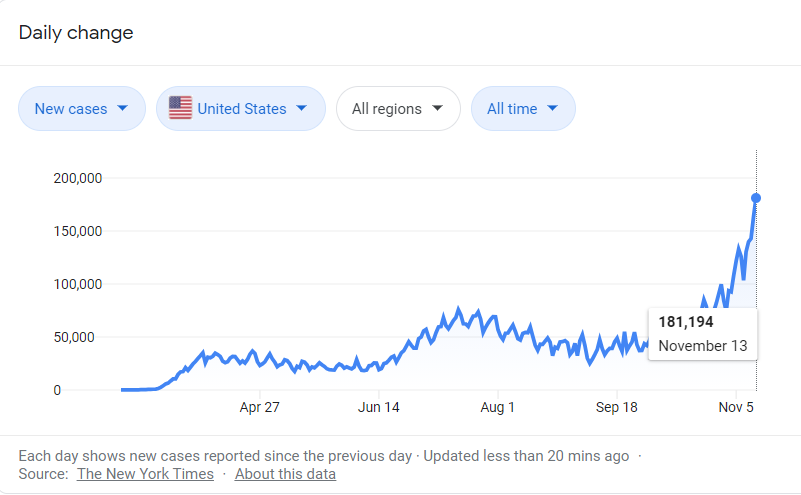
The Coronavirus Update

11.13.20 (wired.com)
| The vaccine process nears a new phase, Biden plans his pandemic response, and the winter surge arrives. Here’s what you should know:Headlines Pfizer may soon have a vaccine—but challenges lie ahead Pfizer and BioNTech put out a press release this week announcing that its Covid-19 vaccine is more than 90 percent effective for participants who were definitely Covid-free before the trial started then developed symptomatic cases. So far, there have been no serious safety concerns. The first of its kind, this vaccine is made up of mRNA that helps the body make proteins that train the immune system to recognize SARS-CoV-2. Pfizer will likely have the safety data it needs to apply for FDA approval by the end of the month. If it’s greenlit, it will be the first mRNA vaccine cleared for use in humans. Moderna, which is also making an mRNA vaccine, is expected to release early data in the coming days as well.Though an approved vaccine would be exciting, distributing the Pfizer shot comes with its share of logistical problems. It requires two doses and must be stored at -94 degrees Fahrenheit or -70 degrees Celcius in order to be effective, which will make distribution across the US—not to mention worldwide—difficult and complicated. Then there’s the fraught question of who should get it first. Regardless, inoculating the whole world will require more than Pfizer’s vaccine alone. |