The Phenomenon: A brief review

(bernardokastrup.com)
In the next few hours a new documentary film about unidentified aerial phenomena—a.k.a. UFOs—and close encounters is going to be released. It’s called The Phenomenon, by director James Fox. I have had the privilege of watching it a few days before launch, so I could share my views on it with you. What follows are my unbiased opinions. I am under no contractual obligation to issue a review and have no financial stake at all in the film or this review.

James Fox has clearly been working on this film for years, following his previous documentary on the subject, Out of the Blue (2003). As we have come to expect from him, The Phenomenon is a serious, cautious, level-headed work. James’s strength is not so much in breaking news on the subject, but in thoroughly examining—under the light of reason and evidence—what is already known, filtering out the abundance of garbage, gullibility, hysteria and nonsense that, unfortunately, prevails in this field. Just like before, he serves us a distilled summary of what is reliable and significant—yet no less astounding—about the phenomenon.

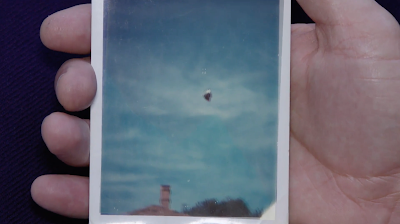
In addition, James has once again proven himself able to dig one layer deeper than the rest, exploring the subject from more telling—albeit non-traditional—angles. His revisitation of the 1966 Westall school incident in Australia, and the 1994 Ariel school event in Zimbabwe, are cases in point. Both are examples of close encounters involving dozens of witnesses. In both cases, the narrative clearly transcends the common storyline of aliens from another solar system dropping by for some kind of research purpose. James has managed to bring back the direct witnesses of these events, decades later, and re-interview them with the insights of today. This was just about what I had wished someone would do; and he did it.

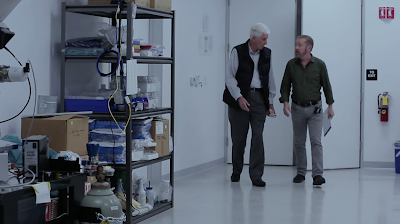
The most significant part of the movie is—without a doubt, in my mind—the examination, at the Stanford School of Medicine, of metal samples collected from alleged UFO visitation sites by respected researcher Dr. Jacques Vallée, over decades of investigation. This is the much hoped-for hard evidence. An analysis of the atomic structure of these samples was conducted with a state-of-the-art ion beam microscope, which yielded surprising results: the isotope ratios in these samples are unlike anything known to occur on Earth. Such a finding may sound too highbrow to be significant—especially in light of the much more incredible claims routinely made in this field by suspicious characters—but it certainly is. In fact, my only criticism against the film is that James—perhaps in a concession to mainstream tastes and expectations—hardly explores the finding in the final cut. The subject was left behind just as I thought we were warming up to it. Perhaps we will read more about it in academic publications, but I confess to have been annoyed at the brevity of the coverage of what was perhaps the one truly new news in this film.
If your interest lies in new UFO and close encounter cases never before reported, this film is going to disappoint you. Breaking news is not what James is trying to achieve here. But if, instead, you are looking for a more thoughtful review of previously reported cases, then this is for you. More than probably any other subject of general public interest, the UFO field is fraught with nonsense, charlatanism, fraud, gullibility, wishful thinking, and in-your-face idiocy. Although I have always been interested in the subject, I very quickly become nauseated by what I find each time I dare dip a toe in it. James’s movies, however, are refreshing; they represent a breath of fresh air in a foul-smelling mad house. This is the great value of his and Vallée’s efforts: a welcome injection of reason and honesty in an otherwise toxic space.

In this context, The Phenomenon subtly and unpretentiously distills what is credible and significant in the long history of unidentified aerial phenomena and close encounters, serving the viewer a clean platter, freed from trash and nonsense. James has left out not only the nonsensical or questionable cases, but also the nonsensical or questionable elements of the cases he does cover. Parasitic claims and ‘witnesses’ that feed on otherwise credible events are, to my relief, nowhere to be seen. This judicious filtering clearly involved a lot of care and thought, having been accomplished discretely, elegantly, without furor. Indeed, it is delightful the see the film’s narrative steer clear of every mine in the field. What is left may not be as spectacular as the vivid imagination of charlatans, but it remains extraordinarily interesting for the more discerning and levelheaded tastes. The value of this documentary thus resides as much in what it doesn’t say as in what it does say. Such discernment makes it rather unique.

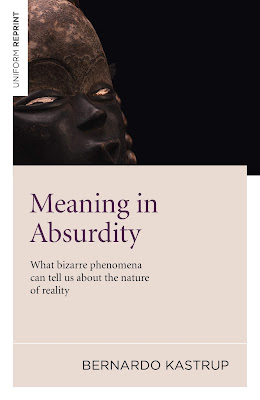
As a matter of fact, although UFO and close encounter cases have obvious scientific significance, I believe they have even more metaphysical significance. I say this because the phenomenon seems to defy not only the limits of our technology, but also the laws of physics and—even more significantly—the laws of logic. Many of these reports are absurd, their very absurdity speaking to the sincerity of the witnesses and the courage of those who are now making the hard evidence available, as well as acknowledging the bewilderment of the highest instances of government. The Phenomenon does include what many of you will consider headline-making new admissions by well-known, high-ranking government officials and politicians. But for me this is not the cream; the cream is how the cases reported consistently instantiate the seemingly absurd features I discussed in my book, Meaning in Absurditywhere I cover the UFO and contact phenomena from an angle you are certainly not used to: nonsensical flight paths and movements, weird angles of attack in flight, alleged telepathic communications more akin to spiritual experiences than encounters with explorers from another planet, illogical behavior on the part of the ‘visitors,’ etc. There is much food for thought in there.
It is this absurdity of behavior so often seen in the phenomenon that makes me believe that its relevance is as much metaphysical as it is scientific. Here we have nature behaving in a way that defies its own known laws and our very logic. The phenomenon is telling us something important about the nature of reality and ourselves, rather than the exploratory interests of aliens from another star system. And it is under this light that I invite you to check out The Phenomenon. For the more significant hints about the nature of reality are to be found not in the headlines, but the subtle aspects of what is, most definitely, a very strange phenomenon indeed.

There’s Water and Ice on the Moon, and in More Places Than NASA Thought

Future astronauts seeking water on the moon may not need to go into the most treacherous craters in its polar regions to find it.

A visualization, using data from the Lunar Reconnaissance Orbiter, of the Shackleton crater at the moon’s south pole.
A visualization, using data from the Lunar Reconnaissance Orbiter, of the Shackleton crater at the moon’s south pole.Credit…NASA’s Scientific Visualization Studio
Kenneth Chang

By Kenneth Chang

  • Oct. 26, 2020 (NYTimes.com)

Future astronauts headed to the moon may have an easier time finding water and digging up ice than had been thought.

In a paper published in Monday’s Nature Astronomy, a team of scientists used SOFIA, an infrared telescope mounted inside a 747 jumbo jet, to make observations that showed unambiguous evidence of water on parts of the moon where the sun shines.

“This discovery reveals that water might be distributed across the lunar surface and not limited to the cold shadowed places near the lunar poles,” Paul Hertz, the director of NASA’s astrophysics division, said during a news conference on Monday.

Although that water could be difficult to collect by astronauts, another group of researchers also reported on Monday that in addition to big, frigid, deep and potentially treacherous craters in the moon’s polar regions, smaller and shallower depressions in the same areas may also be cold enough to hold onto water ice for millions, if not billions, of years.

These small water ice deposits could be a “real game changer,” Paul O. Hayne, a professor of astrophysical and planetary sciences at the University of Colorado, who led that research, said in an interview. “It could make it much more accessible to future astronauts and rover missions.”

The moon’s South Pole has become a desired destination for a number of robotic missions by NASA, China and other space programs.

Such ice might not only provide water for future astronauts to drink, but water molecules can also be broken apart into their constituent hydrogen and oxygen atoms. The oxygen would give the astronauts something to breathe. Hydrogen and oxygen can also be used as rocket propellant for trips home to Earth or even some day to Mars and beyond.

“Anytime we don’t need to pack water for our trip, we have an opportunity to take other useful items with us,” said Jacob Bleacher, chief exploration scientist for the NASA’s human exploration and operations directorate.

In the observations taken by NASA’s flying telescope, scientists were able to observe a wavelength of infrared light, at six microns, emitted by water molecules. Those emissions were seen in sunlit parts of the Clavius crater near the South Pole but not near the lunar Equator where temperatures get warmer.

Observations by spacecraft a decade ago had also suggested a more widespread distribution of water on the moon. Those measurements focused on a shorter, three-micron wavelength that was more ambiguous, unable to differentiate between a water molecule, which consists of two hydrogen atoms and one oxygen atom or hydroxyl, which has one hydrogen atom and one oxygen atom.

“Hydroxyl is actually the active ingredient in drain cleaners,” said Casey I. Honniball, a postdoctoral researcher at NASA’s Goddard Spaceflight Center in Greenbelt, Md., and lead author of the study that used SOFIA. “Hypothetically, if drain cleaner were on the moon, we could not tell the difference between the drain cleaner and water using the three-micron wavelength.”

The six-micron emissions are a “distinct chemical fingerprint” for water, Dr. Honniball said.

These observations cannot be performed from Earth’s surface because there is too much water in the lower atmosphere. Also, no lunar spacecraft, present or planned, has an instrument to examine this particular wavelength.

But SOFIA can. The aircraft, NASA’s Stratospheric Observatory for Infrared Astronomy, is a 747 with a sliding door that opens to allow a 106-inch, 17-ton telescope to peer into the night sky. But the observatory, a collaboration between NASA and the German Aerospace Center that has been in operation since 2010, is expensive, and the Obama and Trump administrations both sought to end the program. Each time, Congress has restored financing and SOFIA has continued flying.

Monday’s reported findings would not have been possible without it. At an altitude of some 45,000 feet, SOFIA rises above 99.9 percent of the water vapor in the atmosphere, said Naseem Rangwala, SOFIA’s project scientist.

The SOFIA results are in rough agreement with the earlier measurements and do not change the estimate of the amount of water on the moon. The concentration at Clavius is low — “roughly equivalent to a 12 ounce bottle of water within a cubic meter,” Dr. Honniball said.

“To be clear, it’s not puddles of water, but instead water molecules that are so spread apart that they do not form ice or liquid water,” Dr. Honniball said.

She said the water molecules may be formed by particles of the solar wind hitting the moon or by the impacts of micrometeorites on the lunar surface. What remains unclear is how the water persists there. The heat of sunlight would be expected to knock the molecules into space.

“We think the water is trapped within glass beads in the soil that form during these micrometeorite impacts,” Dr. Honniball said.

Also not known is how difficult it might be to extract the water.

“If it’s locked into the glass beads, as Casey mentioned, it may require more energy to extract it,” Dr. Bleacher said. “If the water is mixed up in the soil, it might be a little easier.”

Until now, the search for water ice on the moon has focused in the shadows of large polar craters, among the coldest places in the solar system, with temperatures dipping down to minus-400 degrees Fahrenheit. That is so cold that anything that lands there rarely leaves.

There, the evidence has not been in question. But landing in a big, cold, dark crater is potentially dangerous and not the easiest of places to work.

Dr. Hayne’s work found what they call micro cold traps — small patches of the moon that are not as big or as deep but can be just as cold.

Back in 2014, Dr. Hayne started wondering if there might be other parts of the moon that also remain frigid. The axis of the moon is tilted only 1.5 degrees and does not wobble much. That means the path of the sun through the lunar sky does not change, and even small, shallow craters near the poles can lie in permanent shadow.

“The sun never rises higher than 10 degrees in the sky,” Dr. Hayne said. “The sunlight is coming in at very grazing angles so they don’t need to be very deep at all. Just a fraction of a centimeter is sufficient.”

In addition, the rocks and soil on the moon do not easily conduct heat, and even a shadowed patch less than an inch across could still be cold enough to trap water.

“If we could prove that these tiny shadows exist, then those tiny shadows could also have very cold temperatures,” Dr. Hayne said.

Using images from NASA’s Lunar Reconnaissance Orbiter, which has been orbiting the moon since 2009, the scientists calculated that such micro cold traps could add up to 15,000 square miles of the lunar surface where ice could exist. They could not estimate the volume of water because they do not know how deep the water deposits extend.

The larger craters still constitute a large fraction of the permanently shadowed regions.

The accumulated layers of ice could record billions of years of the solar system’s history, almost like tree rings. “Where did Earth’s water come from?” Dr. Hayne said. “That’s still an open question.”

Knowledge of water on the moon “helps us understand the origins of Earth’s water,” he said.

NASA is scheduled to send a small robotic lander to the moon’s South Pole in 2022. An infrared camera on board built by a team led by Dr. Hayne will “be able to tell, to test our hypothesis directly for the first time,” he said.

Michael Moore: Why I Still Think Trump Could Win

The Hill Filmmaker, Michael Moore, shares his thoughts on the presidential race ahead of election day. About Rising: Rising is a weekday morning show with bipartisan hosts that breaks the mold of morning TV by taking viewers inside the halls of Washington power like never before. The show leans into the day’s political cycle with cutting edge analysis from DC insiders who can predict what is going to happen. It also sets the day’s political agenda by breaking exclusive news with a team of scoop-driven reporters and demanding answers during interviews with the country’s most important political newsmakers. Follow Rising on social media: Website: Hill.TV Facebook: facebook.com/HillTVLive/ Instagram: @HillTVLive Twitter: @HillTVLive Follow Saagar Enjeti & Krystal Ball on social media: Twitter: @esaagar and @krystalball Instagram: @esaagar and @krystalmball

Love After Love: Derek Walcott’s Poetic Ode to Relearning to Be at Home in Ourselves After Heartbreak

By Maria Popova (brainpickings.org)

The great Zen teacher Thich Nhat Hanh has written beautifully about why learning to love others begins with learning to love ourselves — a sentiment that the reactive modern cynic might dismiss as the vacant fodder of self-help books, but one which more considered reflection reveals to be deeply truthful and deeply uncomfortable. What, after all, does loving oneself even mean — particularly if we’re aspiring to be unselfish and generous, and to outgrow the illusory ego-shell we call a self?

That’s what Caribbean poet and playwright Derek Walcott (January 23, 1930–March 17, 2017) — a writer of such extraordinary poetic prowess that his 1992 Nobel Prize in Literature appears a wholly inadequate measure of his mastery and mesmerism — addresses with a luminous sidewise gleam in a poem titled “Love After Love,” found in his Collected Poems: 1948–1984 (public library).derekwalcott.jpg?zoom=2&w=680

Derek Walcott

On an archival On Being episode titled “Opening to Our Lives,” mindfulness pioneer Jon Kabat-Zinn reads Walcott’s masterpiece — undoubtedly one of the greatest, most soul-stretching poems ever written. Please enjoy:

96fc31f7-b00b-4415-89ad-aeb8d28e6c94.png

2e292385-dc1c-4cfe-b95e-845f6f98c2ec.pngLOVE AFTER LOVE

The time will come
when, with elation,
you will greet yourself arriving
at your own door, in your own mirror,
and each will smile at the other’s welcome,
and say, sit here. Eat.
You will love again the stranger who was your self.
Give wine. Give bread. Give back your heart
to itself, to the stranger who has loved you

all your life, whom you ignored
for another, who knows you by heart.
Take down the love letters from the bookshelf,

the photographs, the desperate notes,
peel your own image from the mirror.
Sit. Feast on your life.

This reading is part of On Being’s altogether wonderful poetry archive. Complement it with other poetry-lovers’ readings of favorite poems: Amanda Palmer reads Wislawa SzymborskaDavid Whyte reads Mary OliverJoanna Macy reads Rainer Maria Rilke, and my reading of Mark Strand.

RELATED READING:

Sappho_VA_sm.jpg

Sappho’s Timeless Elegy for Heartbreak at the End of Love, Reimagined in a Haunting Choral Invocation

* * *

abzlove.jpg

Hannah Arendt on Love and How to Live with the Fundamental Fear of Loss

* * *

epictetus1.jpg

Epictetus on Love and Loss: The Stoic Strategy for Surviving Heartbreak

How to lead in a crisis

Amy C. Edmondson|The Way We Work (ted.com)

Humility, transparency and urgency are the keys to successfully steering an organization — big or small — through the challenges that come your way. Leadership expert Amy C. Edmondson provides clear advice and examples to help any leader rise to the occasion.

ABOUT THE SPEAKER

Amy C. Edmondson · Leadership expertAmy C. Edmondson studies people and teams seeking to make a positive difference through the work they do.

Jubilation as Chile votes to rewrite constitution

October 26, 2020 (bbc.com)

There have been jubilant scenes in Chile after an overwhelming majority voted in support of rewriting Chile’s constitution, which dates to the military rule of Gen Augusto Pinochet.

With almost all the ballots counted, 78% had voted “yes” in a referendum that was called after mass protests against inequality.

President Sebastián Piñera praised the peaceful vote.

He said it was “the beginning of a path that we must all walk together”.

How did we get here?

Right-wing President Piñera agreed in November 2019 to hold the referendum after a month of huge and almost daily protests across Chile which saw more than a million people take to the streets in the capital, Santiago.

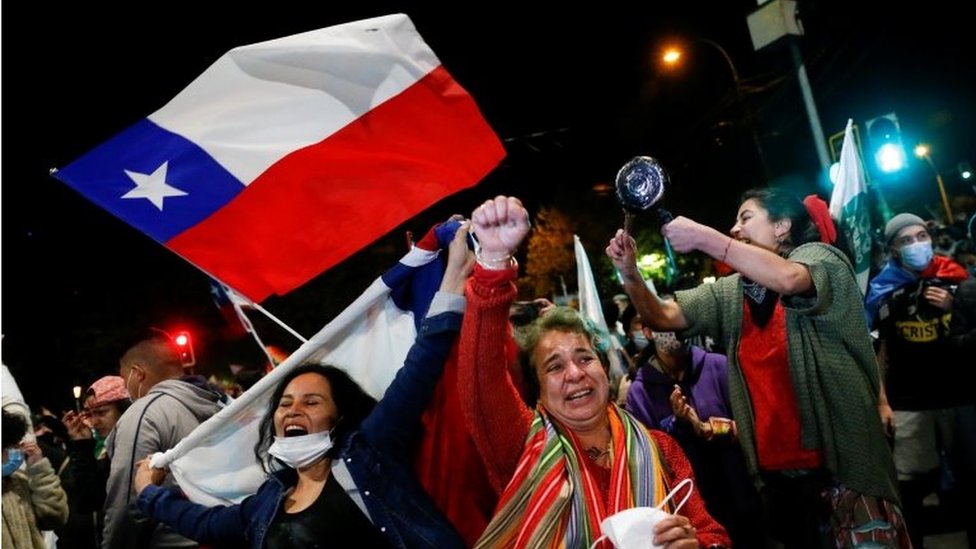
Supporters of the "I Approve" option react after hearing the results of the referendum on a new Chilean constitution in Valparaiso, Chile, October 25, 2020.
image captionSupporters of the “yes” vote celebrated their win in the streets of Valparaiso and other cities

The protests, which had originally been triggered by a fare hike on the Santiago metro, drew a wide variety of Chileans who shared an anger about the high levels of inequality in Chile onto the streets.

One of their key demands was to reform the old dictatorship-era constitution, which they argued entrenched inequalities by putting the private sector in control of health, education, housing and pensions.

The referendum, which was originally due to be held in April, was postponed to October due to the coronavirus pandemic.

What did Chileans vote on?

The referendum asked Chileans two questions: firstly, if they wanted a new constitution, and secondly, what kind of body they would want to draw it up.

People react to the results of a referendum on a new Chilean constitution in Santiago, Chile, October 25, 2020
image captionThe referendum was one of the key demands made by protesters

Election officials said almost 7.5m Chileans turned out to cast their vote.

With almost all the votes counted, more than 78% voted in favour of a new constitution.

An overwhelming majority of 79% also voted in favour of the new constitution being drawn up by a body which will be 100% elected by a popular vote rather than one which would have been made up by 50% of members of Congress.

What has the reaction been?

President Piñera acknowledged that the current constitution had been “divisive” and urged Chileans to “work together so that the new constitution is the great framework of unity, stability and the future”.

He also praised the democratic nature of the vote: “Today citizens and democracy have triumphed, today unity has prevailed over division and peace over violence. And this is a triumph for all Chileans who love democracy, unity and peace, without a doubt.”

2px presentational grey line

Celebration but hard work has just begun

Analysis box by Katy Watson, South America correspondent

As the results came in, the word REBIRTH was projected onto a building in downtown Santiago.

For so many Chileans, this is exactly what this vote represents: goodbye to a dictatorship-era constitution, and hello to a new beginning that people feel is more fitting for a modern democracy.

Sunday’s vote caps a turbulent year for Chile – and this vote is the result of months of mass protests, calling for meaningful change.

But in a way, the hard work has only just begun, because it kickstarts a whole new process whereby Chileans now have to choose who will draft the constitution and what it will say.

This evening’s jubilation is uplifting but the demands are many and the expectations are high.

2px presentational grey line

Those who had campaigned in favour of the “yes” vote took to the streets en masse to celebrate.

One of those celebrating, Juan Pablo Naranjo, told Reuters news agency that he was grateful to the youth who had started the protest: “If it were not for the brave young people who fought for us, no one would have gone out on to the streets. I had wanted this to happen for a long time and it happened and thanks to them, today we have won.”

Another said that “we are giving birth to a new constitution and we are leaving behind the constitution of Pinochet and his entourage.”

Senator Juan Antonio Coloma, who led the campaign for the “no” vote, admitted defeat, saying that the referendum had “clearly taken a different turn from what we’d hoped”.

What happens next?

Voters will return to the ballot boxes on 11 April 2021 to choose the 155 people who will make up the convention which will draw up the new constitution.

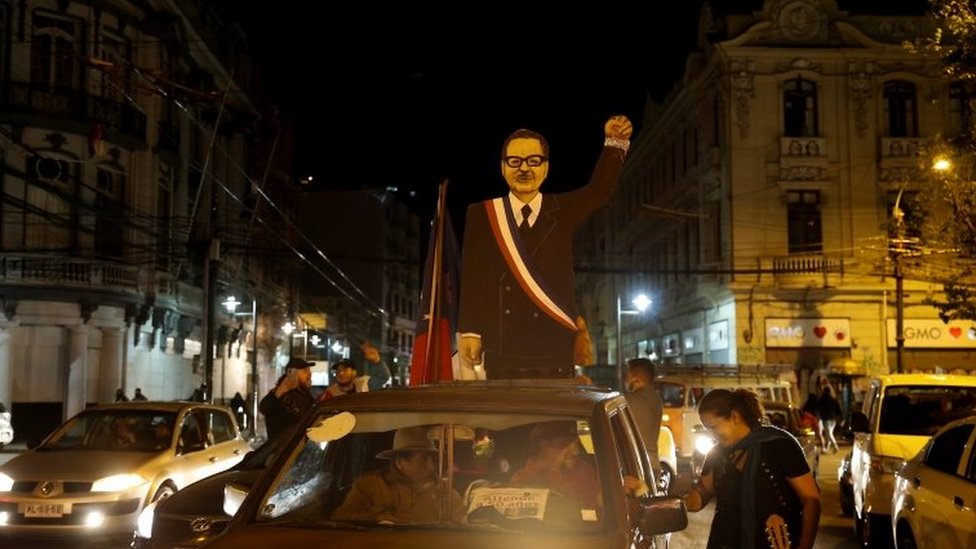
A cardboard figure depicting former Chilean President Salvador Allende is seen on the roof of a car after people voted during a referendum on a new Chilean constitution, in Valparaiso, Chile October 25, 2020
image captionThe old constitution dates back to the era of Gen Pinochet, who overthrew President Allende, whose cardboard figure was paraded through the streets of Valparaiso

The convention will have nine months, with the option of a one-time extension of three months, to come up with a new text.

The new constitution will then be put to the Chilean people in another referendum in 2022.

What do Chileans want from their new constitution?

Poverty levels have dropped dramatically in Chile over the last 20 years; it is now the richest country in South America on a per capita basis. But it remains one of the world’s most unequal nations and many Chileans want to see the country’s wealth distributed more equally.

Fernanda Namur told the BBC that she wanted the new constitution to “represent our lower class and give them a fighting chance in this seemingly rigged game through decent education and accessible medical care”.

Meanwhile, Mario Bustos Mansilla told the BBC: “I want there to be a written record of our basic rights, which for me are education, healthcare, housing.”

Mr Bustos’ demands were echoed by Pamela Charad who said that she wanted “better healthcare and education for everyone”.

“The country is like a pressure cooker that’s exploded,” Ms Charad said of the months of protests in 2019 and early 2020 in which more than 30 people died.

“This is our chance to make things right.”

Is this likely to change anything?

The overwhelming “yes” vote is a clear victory for those who joined the anti-inequality protests last year even in the face of police repression.

While many constitutional experts say that this is only the first step towards change, it is not the first time that Chileans have achieved change through means of a referendum. In October 1988, Chileans voted “no” to Gen Pinochet extending his military rule for another eight years.

Christian Democrat Patricio Aylwin won the presidential election in 1989 and Gen Pinochet stepped down as president in 1990.

The Road To Dharma Official Trailer Release! | Sattva Connect

Sattva Connect The Road To Dharma follows a group of real people seeking freedom at Sacred Indian Himalayan sites while facing their fears when dropped into Himalayan cliff roads, monsoon rains, Indian road-killer traffic and high altitude hiking. Join the adventure in this innovative docu-series and online course. Watch Episodes 1, 2, and 3 of THE ROAD TO DHARMA docu-series for FREE. PLUS you’ll receive Chapter 3 and Meditation 3 from the online companion Course, Living In Freedom. =========================================== Click On the link to Register: https://courses.sattvaconnect.com/cou… ====================================== Join our global, vibrant and living community of inspired yogis! We come together in truth, and support each other’s evolution. For more join us at https://www.sattvaconnect.com/ You can follow us on: Facebook: https://www.facebook.com/sattvaconnect/ Instagram: https://www.instagram.com/sattvaconnect/ Twitter: https://twitter.com/SattvaConnect Pinterest: https://www.pinterest.com/sattvaconnect/ “Your purpose here is to evolve, to transform, to experience your radical aliveness, to awaken to your true nature. You are the path. The path is you. The time is now.” – Anand Mehrotra. #sattvaconnect#roadtodharma#anandmehrotra#sattvayogaacademy

New Parents Freaked Out Upon Learning That Babies Can Live Up To 100 Years

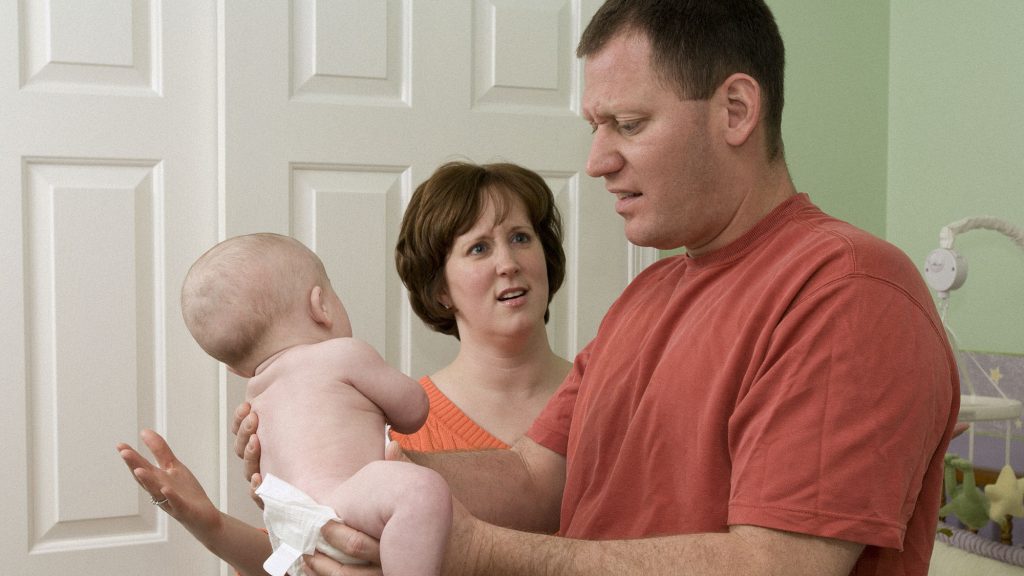
A new dad is wondering what to do with the diaper.

October 27, 2020 • TheOnion.com

NEWBURYPORT, MA—Panicking after encountering the information while reading through an article online, new parents Lindsey Conway and Michael Rhodes reportedly freaked out Tuesday upon learning that babies can often live up to 100 years. “Oh God, we got this baby thinking it would just be a few year commitment, tops,” said Conway, who grew increasingly distressed with her partner as she discovered that some infants can be expected to grow up to six feet long. “Jesus Christ, do you know how much feeding this thing is eventually going to cost? And it’s not even going to stay that cute. It looks like they can get pretty dangerous after the first decade or so. Why don’t they tell you all this before you bring them home?”At press time, the parents had resolved drop the baby off at the shelter first thing tomorrow morning.

Climate change is becoming a problem you can taste

Amanda Little|TED Salon: Dell Technologies (ted.com)

Our food systems have not been designed to adapt to major disruptions like climate change, says environmental journalist Amanda Little. In this eye-opening talk, she shows how the climate crisis could devastate our food supply — and introduces us to the farmers, entrepreneurs and engineers who are radically rethinking what we grow and how we eat, combining traditional agriculture with state-of-the-art technology to create a robust, resilient and sustainable food future.

This talk was presented at a TED Salon event given in partnership with Dell Technologies. TED editors featured it among our selections on the home page. Read more about TED Salons.

ABOUT THE SPEAKER

Amanda Little · Author, journalist, professorAmanda Little is a professor of journalism and science writing at Vanderbilt University.