
Kurzweil is agnostic about the existence of a soul. On the possibility of divine intelligence, Kurzweil has said, “Does God exist? I would say, ‘Not yet. ‘”

Ashamed by the way she racially profiled two young men after a theft on her property, one woman took a deep dive into what it means to truly love one’s neighbor.
August 21, 2019 (csmonitor.com)
Many years ago, I had an experience that taught me a lot about racism. It showed me that improving racial harmony in society begins on the individual level.
Since girlhood I’ve loved and tried to live by the idea of loving my neighbor as myself. I’d been taught to take to heart this biblical injunction, which appears in many religious traditions in various forms. When I was a young adult, however, I had an experience in which I badly missed the mark and let in an unloving, prejudiced reaction that really hurt someone – and deeply disturbed me.
One morning as I was leaving for work, I discovered my car (which had been in the driveway) had been broken into and an expensive built-in radio had been dismantled and stolen. I immediately called the police. When asked by the officer if I had seen anyone at the car, I said no, but my mind immediately went to two young black men who had been in my yard the day before, checking out a small yard sale I was having, so I mentioned them.
They lived not far from my apartment, so the officer paid a visit. Their mother was visibly upset when she walked over to confront me afterward. I could not summon the courage to speak with her, because I felt so ashamed by how I had rushed to judgment without any basis for doing so.
I began some serious soul-searching. Why had I concluded that these young men were responsible for the theft? Was it simply on the basis of their race? I had to admit that my immediate blaming of them had been racial profiling and was totally unjust. I could see that I had no valid reason to assume they had stolen the radio, and every reason to assume they hadn’t.This Georgia city beat back COVID-19. It wishes states would pay attention.
Racial profiling, or profiling on any similar basis, is always wrong, but I realized I had also gone against the spiritual standpoint I value. My study of Christian Science has helped me see that the starting point for rightly judging others is to see that every individual is actually a child of God, made in God’s image, spiritual and good.
One aspect of this that I have always loved is the idea that physical appearance does not make up our identity. In fact, the opposite is true. God’s creation is totally spiritual, expressing all the qualities of goodness, beauty, grace, and love that our divine creator includes. As divine Love itself (see I John 4:8), God is infinitely good. So the divine creation must be also.
However, this grand spiritual fact must be understood and lived, not simply professed. I realized I had slipped into thinking of my neighbors as merely physical, defined by their skin color, and had allowed a distorted, uncharitable suspicion to associate itself with that outer form in my thought.
In an essay titled “Love your enemies,” the discoverer of Christian Science, Mary Baker Eddy, makes plain that even in a case where someone has done something wrong, we have to choose our thoughts carefully, based on the higher, spiritual understanding of God’s creation. She writes: “Who is thine enemy that thou shouldst love him? Is it a creature or a thing outside thine own creation?
“Can you see an enemy, except you first formulate this enemy and then look upon the object of your own conception?” (“Miscellaneous Writings 1883-1896,” p. 8).
I thought deeply about how in this case I had formulated an enemy in thought without cause, and how Christ Jesus gave us the opposite example. He loved everyone, regardless of their background. In fact, as the Son of God, he came into the world to correct distorted, material views of manhood and womanhood. He saw each individual for what they really were: God’s perfect, spiritual reflection.
This compassionate view, flowing from the heavenly Father, enabled him to heal the sick and redeem the sinning, and by lovingly interacting with individuals from marginalized groups like the Samaritans, he gave clear proof that he saw everyone in their true, spiritual nature, as genuinely holy and pure.
Inspired by these ideas, I saw my need to recognize that we are all absolutely equal in the sight of divine Love, our Father-Mother, and I prayed to become truly conscious of this. This Christlike view lifts the deceptive shade of ignorance, pride, and suspicious distrust of others based on race, cultural background, or other stereotyping. As I prayed, the spiritually correct picture of myself and those young men became clearer to me. We were brothers and sister.
Soon after, an opportunity arose to visit the family and to offer a heartfelt apology and also a gift. They seemed to appreciate this.
Get the Monitor Stories you care about delivered to your inbox. By signing up, you agree to our Privacy Policy.
I couldn’t leave it there, though. I resolved to pay more attention to my thoughts daily and to be more alert to racial and cultural stereotyping, and to take a stand against it in my prayers and actions. This has also led to more meaningful relationships with others, such as the wonderfully diverse group of people I’ve gotten to know through monthly volunteer work. It truly feels like family when we are together.
Each of us can let God, Love, shape our outlook and lift us to a higher, more loving standpoint of ourselves and everyone we meet as God’s blessed creation – spiritual, beautiful, and pure. This dissolves the clouds of fear, racism, and undue suspicion that block harmony and progress.
By Jane Hickson
From the Christian Science Sentinel – June 11, 2020
Originally published in The Christian Science Monitor’s Christian Science Perspective column, June 5, 2020.
As I consider recent tragic events in my home state of Georgia and in Minnesota that have become global headlines, I find hope in these words by Mary Baker Eddy, the Discoverer of Christian Science: “The necessity for uplifting the race is father to the fact that Mind can do it; for Mind can impart purity instead of impurity, strength instead of weakness, and health instead of disease” (Science and Health with Key to the Scriptures, p. 371).
I experienced the healing, purifying power of God, divine Mind, firsthand as a teenager in the 1960s, when I worked in a kindergarten program for rural Black children. One evening I was at my friend’s house when her dad called an after-dinner meeting with us in the living room, which always meant he was upset with one of us, and this time it was me. He said he had heard about the work I was doing, and that I had been seen holding one of the children’s hands while crossing the street and seen with another of the children sitting in my lap. He felt these loving actions merited the harsh retribution of corporal punishment.
He asked, “Do you deny this?” Instead of immediately admitting to the facts, I reached out quickly to God as an ever-present help in trouble (see Psalms 46:1). I thought about the Bible story of Daniel, who was thrown into a lions’ den for worshipping God instead of the king. The following morning, the king went to see if God had kept Daniel safe. Daniel responded, “God hath sent his angel, and hath shut the lions’ mouths, that they have not hurt me: forasmuch as before him innocency was found in me; and also before thee, O king, have I done no hurt” (Daniel 6:22).
I experienced the healing, purifying power of God when I worked in a kindergarten program for rural Black children.
It seemed to me that Daniel expected the king to perceive his innocence. And he did. But this meant the king must have had an innate sense of innocence himself, in order to discern it in another. Christian Science explains that as God’s children, the spiritual expression of divine purity and goodness, we each have innocence as part of our very nature.
So fundamentally, the king was a child of God, and the pull to wrongdoing was an imposition upon the king’s true, spiritual nature (and he hadn’t wanted to put Daniel in the lions’ den in the first place, but was tricked into it). God, divine Love, is the only legitimate cause. Only this Love can truly act and prevail. Man as God made him is not an evil mortal but innocent, free from all wrongdoing.
It became so clear to me that the only true power and motivator is God, divine Love, who could not let any of His children hate or harm others. In an article called “Love,” Mrs. Eddy writes: “What a word! I am in awe before it. Over what worlds on worlds it hath range and is sovereign! the underived, the incomparable, the infinite All of good, the alone God, is Love” (Miscellaneous Writings 1883–1896, pp. 249–250).
I replied to my friend’s dad: “God loves that little boy. Why don’t you?” That seemed to inflame his anger even further, and then I added, “God loves you too, and you must love all whom God loves.”
Innocence is native to man and woman as God created them.
I was surprised at the reaction. He threw down the belt he’d been holding, hugged me, and began sobbing. When he regained control of himself, he stood up and said, “You girls get out of here and go do whatever it is you have to do.” That was the end of it.
It is the mistaken belief that man is fundamentally material and subject to a carnal mind that would pull us toward hating, belittling, or harming another. Innocence is native to man and woman as God created them, in His spiritual image, capable of only good and free from ill will, hate, self-righteousness, or self-importance.
The book of Revelation refers to a Lamb and to a dragon that wars against innocence. The Lamb represents Christ, Truth, which is present with everyone to overrule the seeming validity of the carnal mind. We can all bear witness to the power and presence of the Christ, revealing everyone’s true nature as spiritual, flawless, the image of Love, as God has made us.
“Innocence and Truth overcome guilt and error,” Science and Health explains (p. 568). What a powerful statement. As we take a stand for the spiritual innocence that’s native to all, we will witness more and more the all-powerful love of divine Mind “uplifting the race.”
Originally published in The Christian Science Monitor’s Christian Science Perspective column, June 5, 2020.

07.27.20 (wired.com)
| Moderna’s vaccine candidate heads into final trials, studies show Covid’s effect on the heart, and reopened countries provide guidance on schools. Here’s what you should know:HeadlinesCovid-19 vaccine candidate heads to widespread testing in the USOne of the leading Covid-19 vaccine candidates, made by the biotech company Moderna, will head into its final stage of testing today. Up to 30,000 volunteers will test its effectiveness in preventing the disease, now that it has been shown to be safe in previous trials. Though this is the final stage of testing, the process will likely take months to complete. |
Aion Media Today we have a live Aiologue between the Uberboyo himself and Roman McClay, author of the incredible book “Sanction.” Uberboyo: https://t.co/cE6kz46Pex Email List: https://t.co/759aMB8fPZ Roman: https://www.sanctionthebook.com/
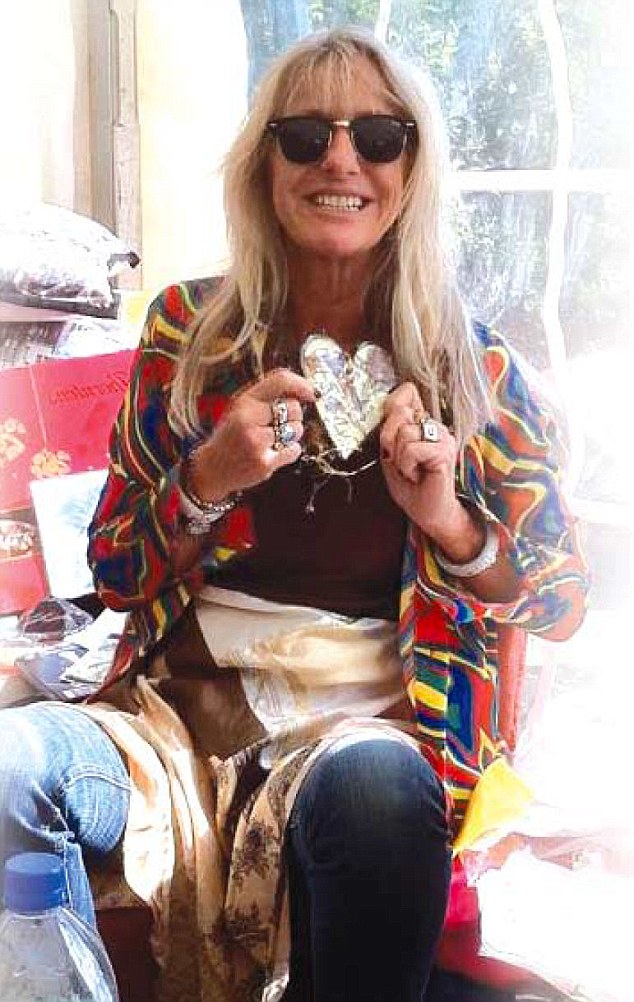
| By Wendy Mandy |
| Hello there everyone. I thought I would explore the idea of masks! The latest “guideline” is you can sit and eat in the cafe with no mask, but you must wear a mask to get a takeaway! It doesn’t make sense! Soon we won’t be able to do anything without a mask, and just as we get on top of plastic bags into landfill we are filling up the bins with the ubiquitous blue masks and the plastic covers we wear in hairdressers and the takeaway plates etc etc! Aargh! Masks have been around for a long time. Makeup Is a mask that we put on to face the world (me included). Masks have been put on for theatre and film and shamanic practise in indigenous society to allow one to create another character for art . We mask our feelings with a different face to the one we feel. This affects children and babies. In a study done recently, children show stress because the mother does not show emotion In her face as it can’t move due to Botox treatment. The burqa was originally worn to keep sand off the face and body while riding on a camel in the desert. Now it is used for many reasons not ever mentioned in the Koran. If they can illegally make us wear a mask, please know that it cuts down oxygen and limits our ability to take in sunlight for vitamin D by covering our face. I understand that in some social situations where people are frightened, it is courteous to wear a mask. However, to keep our freedoms in society I feel each and every one of us could look into our own hearts for our own truth around this strange narrative. I would like my newsletters to inform you so you can make up your own mind. And by covering our face, I wonder what we will agree to next? I remember not long ago a doctor would say there is no medicine for a virus. Instead, go home, rest, take aspirin, drink water and look after your immune system. Take vitamin D and C. If you were to get a complication like pneumonia, it would be treated with antibiotics. I don’t blame the governments as such, I blame the main stream media and their funders for spreading fear and the promise of a vaccine for something that is not a disease. It’s a virus. They mutate and die out . We must THINK and own our own bodies and stop imagining we can make each other sick. It’s all about the immune system and being calm and remembering how incredible human beings are. On the legal aspect of whether we have to wear a mask, Caroline Stephens has written a very thorough summary which will hopefully give you some clarity. There has also been a lot of talk about masks. Russell Brand says some very interesting things. Dr. Rashid Buttar also gives his opinion here. Here is some further scientific comment from these Oxford epidemiologists. And then the government’s message over the past few months – something to make you laugh and cry. Overall, the important thing is to keep your vibrational frequency high for your immune system to be healthy. Try to be in nature as much as you can even if it’s 1 house plant you talk to , Shine a light into all negativity. To know Love we need to know our collective shadow and face our fears to truly live. Love Wendy |
| Copyright © 2020 *Wendy Mandy, All rights reserved. You can contact me at www.wendymandy.uk |
OpenmindconferenceDK www.openmindconference.com Ian R Crane is an ex-oilfield executive, who has lived in the UK, Europe, the Middle East and the USA. He now lectures, writes and broadcasts on the geo-political webs that are being spun; with particular focus on US Hegemony and the NWO agenda for control of global resources. Ian primarily focuses his attention and research on the geopolicital arena, but has a deep personal interest in folklore, mythology and the cosmological belief systems of ancient and indigenous cultures. His research and understanding of these systems and beliefs provides him with a unique insight into the unfolding global drama providing the catalyst for humanity’s evolution into a new plane of existence.
(Contributed by Paul Gardner)
Eugene McCarraher is an associate professor of humanities and history at Villanova University in Pennsylvania. His work has appeared in Dissent, The Nation, Commonweal, The Hedgehog Review and Raritan. His latest book is The Enchantments of Mammon: How Capitalism Became the Religion of Modernity (2019).
October 22, 2019 (aeon.co)
Perhaps the grandest tale of capitalist modernity is entitled ‘The Disenchantment of the World’. Crystallised in the work of Max Weber but eloquently anticipated by Karl Marx, the story goes something like this: before the advent of capitalism, people believed that the world was enchanted, pervaded by mysterious, incalculable forces that ruled and animated the cosmos. Gods, spirits and other supernatural beings infused the material world, anchoring the most sublime and ultimate values in the ontological architecture of the Universe. In premodern Europe, Catholic Christianity epitomised enchantment in its sacramental cosmology and rituals, in which matter could serve as a conduit or mediator of God’s immeasurable grace. But as Calvinism, science and especially capitalism eroded this sacramental worldview, matter became nothing more than dumb, inert and manipulable stuff, disenchanted raw material open to the discovery of scientists, the mastery of technicians, and the exploitation of merchants and industrialists. Discredited in the course of enlightenment, the enchanted cosmos either withered into historical oblivion or went into the exile of private belief in liberal democracies. As Marx put it, all that was solid melted into air, and the most heavenly ecstasies drowned in the icy water of egotistical calculation.
With slight variations, ‘The Disenchantment of the World’ is the orthodox account of the birth and denouement of modernity, certified not only by secular intellectuals but by the religious intelligentsia as well. In A Secular Age (2007), his leviathan survey of intellectual history, Catholic philosopher Charles Taylor gestured toward a possible recovery of the numinous at ‘the unquiet frontiers of modernity’: the poetry and philosophy of Romanticism, as well as the efflorescence of spiritualities that constitute ‘New Age’. The resurgence of religious fundamentalism throughout the world over the past two generations (even in societies where ‘disenchantment’ was supposed to have vanquished the company of the spirits) is not the only event that casts doubt on the veracity of the disenchantment thesis.
Since the 17th century, much modern history has provided good reasons to show that ‘disenchantment’ is more of a fable, a mythology that conceals the persistence of enchantment in ‘secular’ disguise. Capitalism, it turns out, might be modernity’s most beguiling form of enchantment, remaking the moral and ontological universe in its pecuniary image and likeness. For some of the dissenters from the disenchantment thesis, capitalism perverted the sacramental character of the world. As the poet Gerard Manley Hopkins declared with late-19th-century industrial squalor in mind, ‘the world is charged with the grandeur of God … There lives the dearest freshness deep down things’ – a trace of divine radiance ‘seared with trade; bleared, smeared with toil’. Capitalist enterprise obscures and disfigures the graceful quintessence of the material world.
Weber and Marx themselves pointed, though inadvertently, to an alternative account of capitalism that suggests the tenacity of enchantment. At the conclusion of The Protestant Ethic and the Spirit of Capitalism (1905), Weber announced the twilight of the spirits not with exhilaration but with dread: the disenchanted world, he feared, would degenerate into ‘mechanised petrification’, ruled by ‘specialists without spirit, sensualists without heart’, philistines who believe they’ve attained ‘a level of civilisation never before achieved’. Maybe, he wrote, ‘new prophets will arise’ to herald ‘a great rebirth of old ideas and ideals’. Indeed, Weber wrote in ‘Science as a Vocation’ (1919): ‘We live as did the ancients when their world was not yet disenchanted of its gods and demons,’ adding: ‘only we live in a different sense.’ Where the Christian God replaced the dying pagan deities, ‘we’ had no supreme beings in waiting. In the interim, ‘many old gods ascend from their graves’ and take ‘the form of impersonal forces’; Weber’s intuition that the gods had assumed a modern, ‘secular’ façade – especially in the ‘laws’ of the market that had acquired something like a divine status – suggests that the hegemonic version of ‘disenchantment’ is at least partly mistaken, if not fallacious.
Though renowned for describing religion as ‘the opium of the people’, Marx was emphatic that enchantment had also taken refuge in the capitalist marketplace. While in the Communist Manifesto (1848) Marx identified capitalism as driving disenchantment – immersing those ‘heavenly ecstasies’ in the gelid whirlpool of ‘egotistical calculation’ – he also referred to the capitalist as ‘a sorcerer, who is no longer able to control the powers of the nether world he has called up by his spells’. Rhetorical flair, to be sure; but elsewhere – in his ‘1844 manuscripts’, and in the Grundrisse (1857) and Capital (1867) – Marx called attention to the enchantment of money and commodities under capitalism. Having drowned traditional religion, money morphed, he asserted, into ‘the almighty being’, ‘the god among commodities’, ‘the truly creative power’. This is more than literary grandiloquence; for Marx, money is, in effect, the ontological leaven and foundation of the capitalist world: ‘If I have the vocation for study but no money for it, I have no vocation for study – that is, no effective, no true vocation.’ (In economics, it’s called ‘effective demand’: if I’m thirsty but have no money for water, my thirst doesn’t exist.) Money is not just a medium of exchange; like the God who creates ex nihilo, out of nothing, it becomes the source and arbitrator of ontological validity under capitalism.
Marx expanded on the ontological sorcery of money when he wrote, in Capital, on commodity fetishism. The commodity, he writes, abounds in ‘metaphysical subtleties and theological niceties’. Those ‘subtleties’ and ‘niceties’ arise from the very nature of commodities themselves, divided between their ‘use-value’ – the qualitatively different purposes and uses of goods (shoes for feet, cups for drinking, etc) – and their ‘exchange-value’ – their status as commodities produced for sale to make money and accumulate capital. In order to be exchanged for money, an abstract equivalence among commodities must be established; their incommensurable use-values must be erased and their ‘value’ or ‘worth’ expressed in monetary terms. Thus – like the vocation whose effective existence depends on the size of one’s bank account – ‘value’ is not only assessed but determined in the ontological crucible of money. Money is what anthropologists might call the mana of capitalism: the spirit that inhabits all material things, and whose departure decrees oblivion. Purchase, sale and investment become acts of mercenary divination; Marx describes ‘all the magic and necromancy that surrounds the products of labour’. Commodity fetishism is the equivalent, in capitalism, of the Roman Catholic sacramental system: where the latter conveys divine power and grace through material objects and rituals, the former channels the power of money through the pecuniary transubstantiation of objects.
Marx expected revolution to dispel the venal alchemy of commodity fetishism, as political struggle against the power of money disenchanted the apparatus of fetishism. Simone Weil, the French mystic and radical, long ago offered an explanation for the continuing failure of Marxism to secure its Hollywood ending. Because it envisioned socialism as the dialectical culmination of capitalism, Marxism, in her words, represented ‘the highest spiritual expression of bourgeois society’. Weil observed that, like the industrial bourgeoisie and both its religious and secular ideologues, Marx and his followers subscribed to a disenchanted conception of matter. Marx might have considered his materialism ‘historical’, but if matter – even historical matter – is governed by the immutable and unyielding law of force, then on Marx’s own terms capitalism is insurmountable. Embedded in a disenchanted materialism, Marx’s trust in the forces of history required him to affirm dispossession, proletarianisation, the industrial division of labour, and the mounting concentration of economic and political power – a historical momentum that portended, not the demise, but the entrenchment of capitalist hegemony.
Weil rejected the Marxian theory of modern disenchantment on the grounds that it presumed an erroneous and truncated account of matter, one that rejected out of hand any possibility that matter could convey any spiritual import or power to historical action. The spiritual and material worlds did not, to Weil’s mind, constitute a dualism; they were complementary rather than antithetical or antagonistic, and the corporeal realm could mediate divinity while still structured by the laws of nature. Weil preferred an enchanted or sacramental materialism with its own social theory and political implications. ‘The true knowledge of social mechanics,’ she wrote in Oppression and Liberty (posthumous, 1955), involved a conviction that ‘there exist certain material conditions for the supernatural operation of the divine that is present on earth’. In other words, because matter was capable of conveying the supernatural, she saw Marx’s disenchanted materialism as, in a sense, not materialist enough. There is ‘a divine order of the universe’, Weil insisted, and the historical mediations of ‘labour, art and science are only different ways of entering into contact with it.’
Long before Weil, enchanted materialism found an exponent in Gerrard Winstanley, the leader of the Diggers, the most radical of the movements that appeared during the English Revolution of the mid-17th century. A band of landless men who occupied and cultivated St George’s Hill outside London in the spring of 1649, the Diggers (or ‘True Levellers’ as they called themselves) called for common ownership of land and an end to enclosure – the eviction of farmers and the fencing of the commons, the first steps in what Marx called the ‘primitive accumulation’ that gave birth to capitalism.
Seeing many ‘cheated by false-spirited men’, Winstanley – in tracts he wrote from 1648 to 1652 – sketched an unorthodox theology of communism. He insisted that the nascent capitalist order was not just an injustice but a desecration. God, he thought, permeated all things in radical, panentheist immanence, vibrating and shimmering through the material world like Hopkins’s dearest freshness. ‘The whole creation … is the clothing of God,’ he avowed; He ‘fills all with himselfe, he is in all things, and by him all things consist.’ God, or ‘the Great Creator Reason’, had ‘made the Earth to be a Common Treasury’; ‘the Living Earth is the very Garden of Eden, wherein that Spirit of Love did walke.’ The world was charged with this spirit of Love, communism pulsed through the marrow of creation.
Winstanley envisioned a material version of the Christian fall from grace, whereby man began to ‘delight himselfe in the objects of the Creation, more than in the Spirit Reason and Righteousness’. The Fall into idolatry triggered the emergence of property, class and despotism – ‘civil propriety’, as Winstanley called it, with disdain. Greed induced a mis-enchantment of the world; ‘the Ayre and Earth is all poysoned, and the curse dwels in both.’ By occupying St George’s Hill, Winstanley and his comrades had commenced a crusade against the ‘disturbing devil’ of enclosure, or agrarian capitalism metastasising through the English countryside. Winstanley called for English men and women to revive the original communism and reclaim the common treasury of the holy earth. Imbued with the spirit of love, True Levellers would ‘restore all things from the curse’, building a beloved Eden of enchanted communards on the ruins of enclosure. (Alas, the curse remained. Driven from St George’s Hill and silenced in the wake of Oliver Cromwell’s Protectorate, Winstanley eventually joined the Society of Friends and became a respectable corn merchant in London.)
In his masterpiece The World Turned Upside Down (1972), the historian Christopher Hill tried to turn Winstanley into a proto-Marxist, arguing that his merger of God and ‘Reason’ indicated he was ‘struggling towards’ insights conveyed more credibly in ‘non-theological materialisms’. Yet there is no reason to characterise Winstanley in this way other than Hill’s own assumption that religion is an impediment to revolution. Winstanley’s sacramental sensibility galvanised him to political action and afforded him a keen discernment of the iniquity of capitalism.
The Romantics criticised industrial capitalism as a kind of demonic enchantment
Winstanley’s sacramental materialism found later exponents in the Romantic movement, which inherited the sacramental imagination from Christianity. Some of the best-known passages in Romantic poetry exhibit this sacramental quality: William Blake’s ‘auguries of innocence’ that enable him to perceive ‘Heaven in a Wild Flower’; William Wordsworth’s awareness of a ‘presence’ or a ‘sense sublime … Whose dwelling is the light of setting suns, / And the round ocean, and the living air, / And the blue sky, and in the mind of man’. Romantics discerned this world of wonders through ‘imagination’ – a perceptual and rational as well as creative faculty, a kind of vision that enabled the visionary to see more keenly into reality. ‘How can we sing and paint when we do not yet believe and see?’ as Thomas Carlyle asked. Imagination was, Wordsworth explained, ‘reason in her most exalted mood’.
Relying on imagination, the Romantics criticised industrial capitalism as a kind of demonic enchantment. ‘Commercial nations, if they acknowledged the deity whom they serve, might call him All-Gold,’ wrote the poet Robert Southey; indeed, Mammon was ‘a more merciless fiend than Moloch’. ‘Rapine, avarice, expense / This is idolatry; and these we adore,’ Wordsworth wrote of mercantile London. In an early poem, ‘Mammon’, Blake confessed his attraction to the demon: ‘I took it to be the throne of God.’ Mammon was the owner and manager of the ‘dark Satanic mills’ that despoiled England’s green and pleasant land. Like Winstanley, Blake perceived cosmological defilement as well as venality in Lucifer’s factories, a contagion of ‘the spirit of evil in things heavenly’ that turned the world into a ‘Babylon … in the waste.’
In the second quarter of the 19th century – after the Luddite rebellion of the 1810s, the Peterloo Massacre of 1819, and the rapid acceleration of British industrial development – ‘Tory radicals’ such as Carlyle and John Ruskin translated the epiphanies of Diggers and Romantics into the new genre of social criticism. In Sartor Resartus (1833-34), Carlyle wrote of the need to re-tailor ‘the Mythus of the Christian Religion’; the gospel, he asserted, must be re-clothed ‘in a new Mythus, in a new vehicle and vesture, that our Souls … may live.’ Like Winstanley’s, Carlyle’s unorthodox gospel portrayed the world as both a source of sustenance and a portal onto divinity: ‘the Universe is an Oracle and Temple, as well as a Kitchen and Cattle-stall’. Yet there was an insidious new ‘mythus’ that stalked the world: ‘the Gospel of Mammonism’, as Carlyle decried it in Past and Present (1843), a counterfeit evangel proclaiming the ‘miraculous facilities’ enabled by money. Mammon’s gospel had rendered people ‘spell-bound’ in ‘horrid enchantment’; ‘invisible Enchantments’ suffused the ‘plethoric wealth’ churned out by the immiserating factories.
Carlyle’s friend Ruskin rooted his Romantic view of capitalism in a robust imagination of mercenary mis-enchantment. An art critic and historian, Ruskin was mostly known to his contemporaries as a prophet against industrialism: the second volume of The Stones of Venice (1851-3) brought us one of the earliest invectives against mechanisation, and Unto This Last (1862) – one of the greatest (and most vilified) artifacts of social criticism of the Victorian era – inspired not only the Arts and Crafts movement but trade union and Labour Party rank and file.
Marking the stark antagonism between the necessities of capitalist competition and Christian charity, Ruskin observed in Unto This Last that he ‘knew no previous instance in history of a nation’s establishing a systematic disobedience to the first principles of its professed religion’. Ruskin traced the national apostasy to a mis-enchantment that wrought human and ecological devastation. Throughout the five volumes of Modern Painters (1843-1860), he espoused a heterodox sacramental ontology and humanism, praising the ‘ceaseless, inconceivable, inexhaustible loveliness, which God has stamped upon all things’ – especially human beings, whose souls were ‘a mirror of the mind of God’. To Ruskin, capitalism violated earthly beatitude. Devoting their ‘Mammon-matins’ and ‘Mammon-vespers’ to ‘the Goddess of Getting-on’, capitalist societies, he remarked in The Political Economy of Art (1857), worshipped ‘the great evil Spirit of false and fond desire, or Covetousness, which is Idolatry’. (In Unto This Last, Ruskin compared economics to witchcraft and alchemy.) In The Storm-Cloud of the Nineteenth Century (1884), Ruskin’s prescient account recorded the pervasive ecological despoliation of the ‘visible Heaven’ of the atmosphere: clouds infected by ‘bitterness and malice’, and the earth polluted into a hellscape of ‘Blanched sun, – blighted grass, – blinded man.’
From early 19th-century Transcendentalists to the 1960s counterculture, American thinkers have also spoken against capitalist mis-enchantment. Though alienated from organised Christianity, Henry David Thoreau possessed a vivid sense of the holy and sacred. ‘The earth I tread on,’ he wrote in his journals, ‘is a body – has a spirit – is organic – and fluid to the influence of its spirit …’ The market economy profaned the spirit he saw animating the earth. Condemning his pious and enterprising neighbours who lived near Walden Pond, Thoreau focused his fury on one devout yeoman in particular who worshipped ‘the infernal Plutus’. As the farmer was a devotee of pecuniary metaphysics, ‘fruits are not ripe for him till they are turned to dollars’.
With the development of American capitalism after the Civil War, a number of Populists, Social Gospelers, and Arts and Crafters continued the critical tradition of mis-enchantment. Ignatius Donnelly, a popular firebrand and autodidact, promoted a producerist cosmology that echoed Carlyle and Ruskin. The myriad forms of energy and matter were, he asserted, ‘God’s glorious stamp’ on creation; confounding this emblem of divinity, bankers idolising gold ensured the ‘survival of primeval superstition’.
Social Gospelers articulated a similar remonstrance in a more Christian idiom. George Herron spoke for many when he declared that material goods were ‘sacraments of grace’, and that labour and technology were media through which ‘God creates and unfolds the power of men’. If all material reality was sacramental – conveying the grace and power of God – then human making, rightly conceived and performed, was as legitimate a path to righteousness as the more ritualised forms of sacrament. Affirming this ontology, W D P Bliss claimed that George Pullman’s exploitative company town outside Chicago was ‘a devil’s sacrament’, a moral and metaphysical depravity. In Socialism and Character (1912), an important work of socialist theology, Vida Dutton Scudder avowed that ‘the material universe … is a sacrament ordained to convey spiritual life to us’. She contended that God is so present in nature and society ‘it is easy to confuse Him with the very world which He inspires’ – the idolatry into which capitalists fell, worshipping the creation rather than the creator.
Peter Burrowes, a representative voice of the Arts and Crafts intelligentsia, marvelled at craftsmanship in 1904 as ‘the sacrament of common things’, while Horace Traubel, another prominent practitioner, saw ‘God woven in tapestries and beaten in brasses and bound in the covers of books’. Industrial technology, they thought, dehumanised production and deprived men and women of sacramental agency; it posed, in Mary Ware Dennett’s view, ‘a religious problem’ as well as a social question.
‘The task of our generation … is one of metaphysical reconstruction’
William James also echoed Romantic anti-capitalism. In ‘On a Certain Blindness in Human Beings’ (1899), he lamented the ‘jaded and unquickened eye’ of disenchanted moderns, caught up in the scramble for riches. In The Varieties of Religious Experience (1902), James wrote of his alarm at the extent to which acquisitiveness had cancered ‘the very bone and marrow’ of his generation, and he offered ‘saintliness’ as the existential antidote to avarice. Saintliness, to James, was neither callow nor sanctimonious; the saint dwelled in a ‘rapture’ or ‘ontological wonder’ at the beauty and vastness of the Universe – ‘rapt’, he wrote, ‘to the mere spectacle of the world’s existence’.
These religious indictments of capitalism found, in the 1960s, a later generation of exponents. Of all the era’s Left-wing mystics – the Catholic monk Thomas Merton, the poets Kenneth Rexroth, Allen Ginsberg and Gary Snyder, among many others – it was Theodore Roszak in The Making of a Counter Culture (1969) who gave the richest and most cogent alternative to the myth of disenchantment. In Where the Wasteland Ends (1972), Roszak developed a more ambitious account of how radicals needed to enlist the wisdom of older, premodern beliefs, accentuating ‘visionary splendour and the experience of human communion’.
Pointing toward the Romantics, Roszak urged readers to take up the ‘battle cry of a new Reality Principle’: a ‘sacramental consciousness’ more vivid than its ‘objective’ (but not erroneous) antagonist. Politics, he admonished, ‘is metaphysically and psychologically grounded’ – our conceptions of the world and our place within it determine both how we structure communities and how we seek and allocate power. By reducing the world to inanimate stuff that could be understood and manipulated only by experts, ‘disenchantment’ or ‘objective consciousness’ served the interests of business and professional elites – ‘the technocracy’, in Roszak’s shorthand. It allowed them to establish what he called a deadly ‘monopoly of the sacramental powers’. ‘Disenchantment’ disempowered the people; but in organic farms, rural and city communes, cooperatives, free clinics and ‘open universities’, as well as in a mélange of genres and traditions – poetry, Gestalt psychology, Catholic mysticism, Hindu and Zen Buddhist spirituality, Native American animisms – Roszak saw the human and spiritual lineaments of a sacramental, ‘visionary commonwealth’. The restoration of a ‘sacramental vision of nature’ would discredit disenchantment and ‘the technocracy’, and usher in a more humane, democratic and green political economy. As one of Roszak’s visionary vanguard, the economist E F Schumacher, wrote in Small is Beautiful (1973), ‘the task of our generation … is one of metaphysical reconstruction.’
With ecological as well as economic calamity looming today, understanding and addressing the ontological assumptions of capitalist modernity is imperative. Indeed, ‘metaphysical reconstruction’ must lie at the basis of any revolutionary struggle in our day – in fact, it’s necessary for the survival of the species. If it’s long past time to deny that ‘there is no alternative’ to capitalism, the time has come to renounce the parochial secular dogma of ‘the disenchantment of the world’. The pre-modern belief in the enchantment of the world – modernised in Romanticism, blending scientific rationality with Hopkins’s conviction of God’s worldly grandeur – offers a more humane and generous account of our place in creation, and it provides the most compelling foundation for opposition to capitalism.
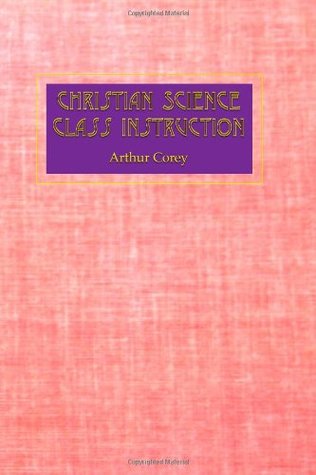
by Arthur Corey
This volume is the only publication of Christian Science Class Instruction authorized by a duly accredited practitioner while in good standing with the Church. As such, this book has great value not only to the students of Mary Baker Eddy’s teachings but the historian, the philosopher, the metaphysician as well as the critic. Many valuable and historic sources are quoted in this work. This is one of those rare volumes that has as much pertinence today as when it was first published in 1945.
(Goodreads.com)
Translators: Mike Zonta, Melissa Goodnight, Hanz Bolen, Sarah Flynn, Richard Branam
SENSE TESTIMONY: Erroneous identity promotes separations and limitations.
5th Step Conclusions:
1) True Consciousness is the only identity of who or what is, the only conception/perception of who or what is, therefore all that can be promoted is boundless indivisible Being.
2) Truth is One Infinite Consciousness, that is the Being of All expression manifesting — it is the only Reality of every expression, and so is eternally abiding, birthless and deathless, beginningless and endless — it might be ignored, but can never be deleted.
3) Truth/consciousness is infinitely expanding oneness, wholeness expressing and promoting the only true identity that is or can be always on the straight path of perfect beingness.
4) Truth I AM is the One Presence powerfully, knowingly expressing Unlimited, Inseparable abundant Universal Integrity, evidencing harmonious complete Self Evident value in all expression. — Self Evident Value is Only and All that is Ever expressed
5) Truth the Only Principled Influence pushing forward this most suitable Impetus Consciousness Awareness, this Authorized momentum; ultimately timely characterized by rendering culture Abstract Metanoia; Structured in Axiomatic Cosmic Intention. OR: Truth is Always Fully prepared Priori Universal Principle, Being Orchestrated Androgynous Concerto Carrying the Loved over the Threshold of Dynamic Living; Cosmic Intention Fully observed.
All Translators are welcome to join this group every Sunday at 7 p.m. Pacific time. Zoom link:
https://us02web.zoom.us/j/652387027