Nikola Tesla: The Extraordinary Life of a Modern Prometheus

The eccentric inventor set the stage for many modern technologies amassing a fortune in the process. Yet he died nearly penniless.

The Conversation (getpocket.com)

  • Richard Gunderman
file-20180102-26163-8mp710.jpg

The inventor at rest, with a Tesla coil (thanks to a double exposure). Photo from Dickenson V. Alley, Wellcome Collection, CC BY.

Match the following figures – Albert Einstein, Thomas Edison, Guglielmo Marconi, Alfred Nobel and Nikola Tesla – with these biographical facts:

  • Spoke eight languages
  • Produced the first motor that ran on AC current
  • Developed the underlying technology for wireless communication over long distances
  • Held approximately 300 patents
  • Claimed to have developed a “superweapon” that would end all war

The match for each, of course, is Tesla. Surprised? Most people have heard his name, but few know much about his place in modern science and technology.

The 75th anniversary of Tesla’s death on Jan. 7, 2018 provides an opportunity to review the life of a man who came from nowhere yet became world famous; claimed to be devoted solely to discovery but relished the role of a showman; attracted the attention of many women but never married; and generated ideas that transformed daily life and created multiple fortunes but died nearly penniless.

Early Years

Tesla was born in what is now Croatia on a summer night in 1856, during what he claimed was a lightning storm – which led the midwife to say, “He will be a child of the storm,” and his mother to counter prophetically, “No, of the light.” As a student, Tesla displayed such remarkable abilities to calculate mathematical problems that teachers accused him of cheating. During his teen years, he fell seriously ill, recovering once his father abandoned his demand that Nikola become a priest and agreed he could attend engineering school instead.

file-20180102-26163-d9wlms.jpg

AC electric lights lit up the night at the Chicago World’s Fair. Photo from Napoleon Sarony.

Although an outstanding student, Tesla eventually withdrew from polytechnic school and ended up working for the Continental Edison Company, where he focused on electrical lighting and motors. Wishing to meet Edison himself, Tesla immigrated to the U.S. in 1884, and he later claimed he was offered the sum of US$50,000 if he could solve a series of engineering problems Edison’s company faced. Having achieved the feat, Tesla said he was then told that the offer had just been a joke, and he left the company after six months.

Tesla then developed a relationship with two businessmen that led to the founding of Tesla Electric Light and Manufacturing. He filed a number of electrical patents, which he assigned to the company. When his partners decided that they wanted to focus strictly on supplying electricity, they took the company’s intellectual property and founded another firm, leaving Tesla with nothing.

Tesla reported that he then worked as a ditch digger for $2 a day, tortured by the sense that his great talent and education were going to waste.

Success as an Inventor

In 1887, Tesla met two investors who agreed to back the formation of the Tesla Electric Company. He set up a laboratory in Manhattan, where he developed the alternating current induction motor, which solved a number of technical problems that had bedeviled other designs. When Tesla demonstrated his device at an engineering meeting, the Westinghouse Company made arrangements to license the technology, providing an upfront payment and royalties on each horsepower generated.

The so-called “War of the Currents” was raging in the late 1880s. Thomas Edison promoted direct current, asserting that it was safer than AC. George Westinghouse backed AC, since it could transmit power over long distances. Because the two were undercutting each other’s prices, Westinghouse lacked capital. He explained the difficulty and asked Tesla to sell his patents to him for a single lump sum, to which Tesla agreed, forgoing what would have been a vast fortune had he held on to them.

file-20180102-26139-cx22cw.jpg

AC electric lights lit up the night at the Chicago World’s Fair. 

With the World’s Columbian Exposition of 1893 looming in Chicago, Westinghouse asked Tesla to help supply power; they’d have a huge platform for demonstrating the merits of AC. Tesla helped the fair illuminate more light bulbs than could be found in the entire city of Chicago, and wowed audiences with a variety of wonders, including an electric light that required no wires. Later Tesla also helped Westinghouse win a contract to generate electrical power at Niagara Falls, helping to build the first large-scale AC power plant in the world.

Challenges Along the Way

Tesla encountered many obstacles. In 1895, his Manhattan laboratory was devastated by a fire, which destroyed his notes and prototypes. At Madison Square Garden in 1898, he demonstrated wireless control of a boat, a stunt that many branded a hoax. Soon after he turned his attention to the wireless transmission of electric power. He believed that his system could not only distribute electricity around the globe but also provide for worldwide wireless communication.

Seeking to test his ideas, Tesla built a laboratory in Colorado Springs. There he once drew so much power that he caused a regional power outage. He also detected signals that he claimed emanated from an extraterrestrial source. In 1901 Tesla persuaded J.P. Morgan to invest in the construction of a tower on Long Island that he believed would vindicate his plan to electrify the world. Yet Tesla’s dream did not materialize, and Morgan soon withdrew funding.

In 1909, Marconi received the Nobel Prize for the development of radio. In 1915, Tesla unsuccessfully sued Marconi, claiming infringement on his patents. That same year, it was rumored that Edison and Tesla would share the Nobel Prize, but it didn’t happen. Unsubstantiated speculation suggested their mutual animosity was the cause. However, Tesla did receive numerous honors and awards over his life, including, ironically, the American Institute of Electrical Engineers Edison Medal.

A Singular Man

Tesla was a remarkable person. He said that he had a photographic memory, which helped him memorize whole books and speak eight languages. He also claimed that many of his best ideas came to him in a flash, and that he saw detailed pictures of many of his inventions in his mind before he ever set about constructing prototypes. As a result, he didn’t initially prepare drawings and plans for many of his devices.

The 6-foot-2-inch Tesla cut a dashing figure and was popular with women, though he never married, claiming that his celibacy played an important role in his creativity. Perhaps because of his nearly fatal illness as a teenager, he feared germs and practiced very strict hygiene, likely a barrier to the development of interpersonal relationships. He also exhibited unusual phobias, such as an aversion to pearls, which led him to refuse to speak to any woman wearing them.

file-20180102-26142-cqrkk2.jpg

Mark Twain holding Tesla’s experimental vacuum lamp, 1894.

Tesla held that his greatest ideas came to him in solitude. Yet he was no hermit, socializing with many of the most famous people of his day at elegant dinner parties he hosted. Mark Twain frequented his laboratory and promoted some of his inventions. Tesla enjoyed a reputation as not only a great engineer and inventor but also a philosopher, poet and connoisseur. On his 75th birthday he received a congratulatory letter from Einstein and was featured on the cover of Time magazine.

Tesla’s Last Years

In the popular imagination, Tesla played the part of a mad scientist. He claimed that he had developed a motor that ran on cosmic rays; that he was working on a new non-Einsteinian physics that would supply a new form of energy; that he had discovered a new technique for photographing thoughts; and that he had developed a new ray, alternately labeled the death ray and the peace ray, with vastly greater military potential than Nobel’s munitions.

file-20180102-26145-1fn6hdj.jpg

A renaissance man of sorts, on the occasion of his 75th birthday. Photo from Time.

His money long gone, Tesla spent his later years moving from place to place, leaving behind unpaid bills. Eventually, he settled in at a New York hotel, where his rent was paid by Westinghouse. Always living alone, he frequented the local park, where he was regularly seen feeding and tending to the pigeons, with which he claimed to share a special affinity. On the morning of Jan. 7, 1943, he was found dead in his room by a hotel maid at age 86.

Today the name Tesla is still very much in circulation. The airport in Belgrade bears his name, as does the world’s best-known electric car, and the magnetic field strength of MRI scanners is measured in Teslas. Tesla was a real-life Prometheus: the mythical Greek titan who raided heaven to bring fire to mankind, yet in punishment was chained to a rock where each day an eagle ate his liver. Tesla scaled great heights to bring lightning down to earth, yet his rare cast of mind and uncommon habits eventually led to his downfall, leaving him nearly penniless and alone.

Richard Gunderman is Chancellor’s Professor of Medicine, Liberal Arts, and Philanthropy at Indiana University.


This post originally appeared on The Conversation and was published January 2, 2018. This article is republished here with permission.

Book: “The Great Mother: An Analysis of the Archetype”

The Great Mother: An Analysis of the Archetype (Bollingen)

The Great Mother: An Analysis of the Archetype (Bollingen)

by Erich NeumannRalph Manheim (translator) 

Neumann examines how the Feminine has been experienced and expressed in many cultures from prehistory to our own time. Appearing as goddess and demon, gate and pillar, garden and tree, hovering sky and containing vessel, the Feminine is seen as an essential factor in the dialectical relation of individual consciousness, symbolized by the child, to the ungraspable matrix, symbolized by the Great Mother.

(Goodreads.com)

Book: “The Origins and History of Consciousness”

The Origins and History of Consciousness

The Origins and History of Consciousness

by Erich NeumannC.G. Jung (Foreword by) 

The first of Erich Neumann’s works to be translated into English, this eloquent book draws on a full range of world mythology to show that individual consciousness undergoes the same archetypal stages of development as has human consciousness as a whole. Neumann, one of Jung’s most creative students and a renowned practitioner of analytical psychology in his own right, shows how the stages begin and end with the symbol of the Uroboros, or tail-eating serpent. The intermediate stages are projected in the universal myths of the World Creation, Great Mother, Separation of the World Parents, Birth of the Hero, Slaying of the Dragon, Rescue of the Captive, and Transformation and Deification of the Hero. Throughout the sequence the Hero is the evolving ego consciousness.

(Goodreads.com)

TRANSLATION® class

Ten-day virtual class with Heather C. Williams, H.W., M.

  • What Mentor presentationFoundation ClassTranslation
  • When Jul 20, 2020 from 09:00 AM to 10:00 AM Pacific
  • All dates Jul 20, 2020 thru Jul 29, 2020
  • Where Madison, Wisconsin / Online anywhere
  • Contact Name Heather Williams
  • Contact Phone 760-213-6060
  • Add event to calendar iCal

Practice this Mindful Tool ! Re-identify yourself as Consciousness and become a “Self-Directed Individual” rather than an impulsive reactor

WHAT IS THIS TRANSLATIONⓇ CLASS?

You will learn to do “STRAIGHT THINKING IN THE ABSTRACT” – a process of seeing through the limitations of the physical senses (what you see, hear, smell, taste, touch, etc.) back to the Universal language of the deeper TRUTH, MIND or Consciousness – your True Identity.

WHY IS IT WORTH YOUR TIME TO LEARN AND PRACTICE TRANSLATIONⓇ?

  1. Like all tools – you must practice the tool to reap the benefits. When you practice “Straight Thinking in the Abstract” you use a problem as a doorway to the underlying, previously unknown ever present TRUTH. Remember, as you change your view of the world – the world you view changes.
  2. As you consciously align your personal self with the ever present TRUTH – you become a more “Self-Directed Individual”; you begin to respond from conscious choice rather than from habit; and with practice you will naturally develop a more centered, balanced and creative life expression.

WHAT WILL YOU RECEIVE FROM THIS CLASS?

  1. Ten, 1-hour classes (vibrant instruction, drawing/writing exercises, open discussion and some video).
  2. The TRANSLATIONⓇ workbook
  3. A FREE 1-hour Mentor counseling session
  4. Ability to participate in the Find Yourself and Live – a weekly, inexpensive online Group Dynamic study course that is offered to all Prosperos students.

CLASS TIME

  • 09:00 Pacific Time
  • 10:00 Mountain Time
  • 11:00 Central Time
  • 12:00 Eastern Time

FEES

New to Class, $135

Reviewer, $75

ABOUT HEATHER

Heather Williams, artist

Heather C. Williams is a Prosperos Mentor and author of Drawing as a Sacred Activity

REGISTRATION

Follow the link below to our registration form

REGISTER NOW !

Space Research Can Save the Planet—Again

The solutions to climate change lie far, far away.

Foreign Policy

  • Greg Autry (getpocket.com)
GettyImages-dv028074.jpg

Photo from Digital Vision. / Getty Images.

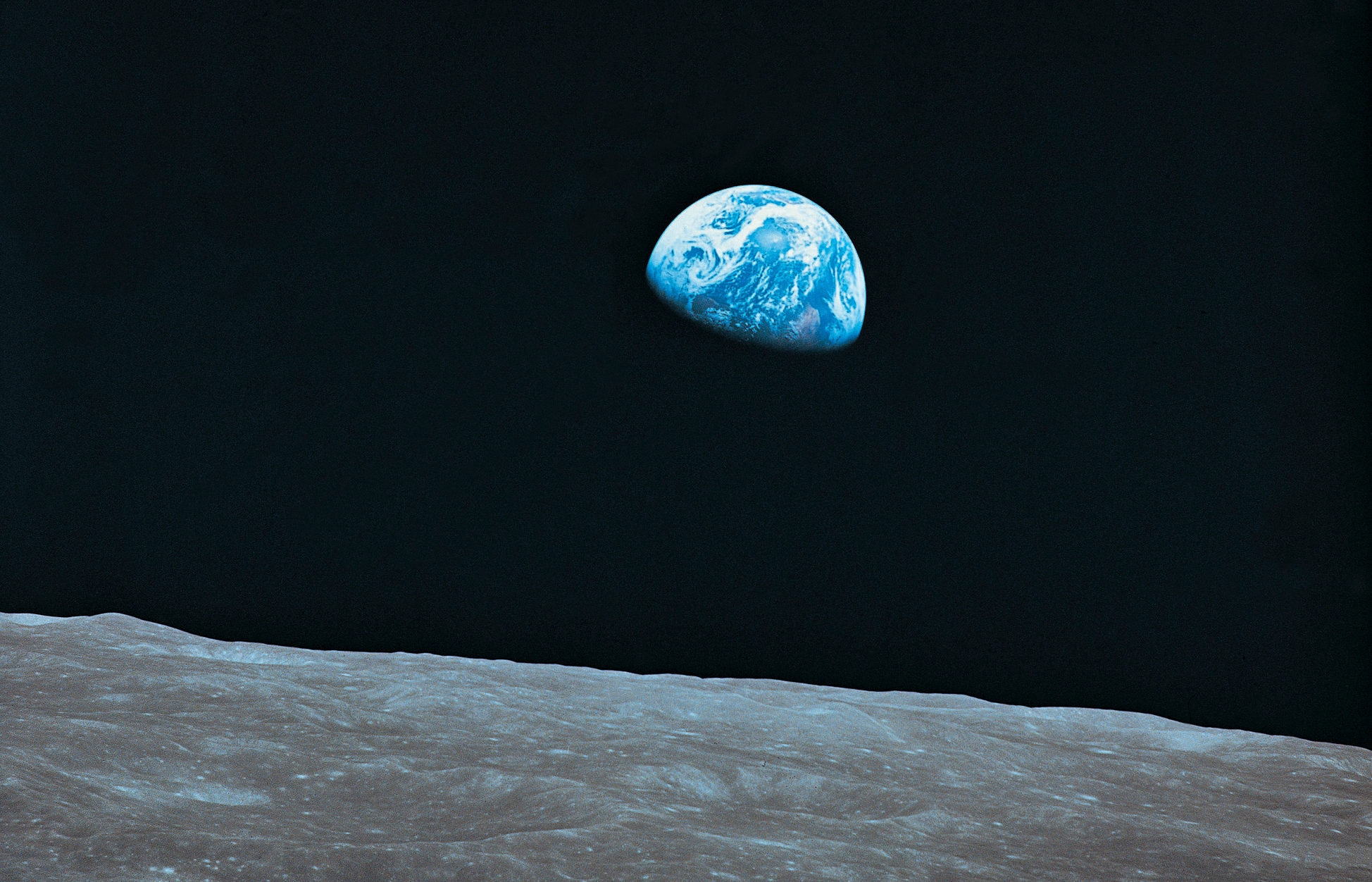
The first glimpse humanity got of the world from above was transformative. In 1968, the U.S. astronaut William Anders returned from circling the moon in Apollo 8 with a photograph. It was a simple snapshot of the Earth, the whole Earth, rising above the desolate lunar surface. But it was also momentous, representing the very first time anyone had gotten far enough away to view how fragile the world was. The contrast between the lone blue-and-green marble and the cold emptiness of space was beautiful and shocking. As Anders later remarked, “We came all this way to explore the moon, and the most important thing is that we discovered the Earth.”

Anders’s Earthrise photo provided conservationists with the iconic illustration they needed. On April 22, 1970, 20 million people turned out for the largest civic event in U.S. history: Earth Day.

Today conservationists and other critics are more likely to see space programs as militaristic splurges that squander billions of dollars better applied to solving problems on Earth. These well-meaning complaints are misguided, however. Earth’s problems—most urgently, climate change—can be solved only from space. That’s where the tools and data already being used to tackle these issues were forged and where the solutions of the future will be too.

Space research has already been critical in averting one major environmental disaster. It was NASA satellite data that revealed a frightening and growing hole in the ozone layer over the South Pole, galvanizing public concern that, in 1987, produced the Montreal Protocol: the first international agreement addressing a global environmental problem. Since then, thanks to worldwide restrictions on damaging chlorofluorocarbons, the ozone situation has stabilized, and a full planetary recovery is expected. As this case showed, space can provide the vital information needed to understand a problem—and a surprising range of ways to solve it.

Climate change is a poster child for the critical role of space data. Trekking across the globe to measure ice sheets with drills and gauge sea temperatures from the sides of ships is an expensive, slow, and insufficient way to assay the state of the planet. Satellites operated by NASA, the U.S. National Oceanic and Atmospheric Administration, and an increasing number of commercial firms provide a plethora of multispectral imaging and radar measurements of developments such as coral reef degradation, harmful plankton blooms, and polar bears negotiating thinning ice. Much of the technology involved in observing the Earth today was initially developed for probes sent to explore other planets in our solar system.

Indeed, understanding the evolution of other planets’ climates is essential for modeling possible outcomes on Earth. NASA probes revealed how, roughly 4 billion years ago, a runaway greenhouse gas syndrome turned Venus into a hot, hellish, and uninhabitable planet of acid rain. Orbiters, landers, and rovers continue to unravel the processes that transformed a once warm and wet Mars into a frigid, dry dust ball—and scientists even to conceive of future scenarios that might terraform it back into a livable planet. Discovering other worlds’ history and imagining their future offers important visions for climate change mitigation strategies on Earth, such as mining helium from the moon itself for future clean energy.

Spinoff technologies from space research, from GPS to semiconductor solar cells, are already helping to reduce emissions; the efficiency gains of GPS-guided navigation shrink fuel expenditures on sea, land, and air by between 15 and 21 percent—a greater reduction than better engines or fuel changes have so far provided. Modern solar photovoltaic power also owes its existence to space. The first real customer for solar energy was the U.S. space program; applications such as the giant solar wings that power the International Space Station have continually driven improvements in solar cell performance, and NASA first demonstrated the value of the sun for powering communities on Earth by using solar in its own facilities.

Promisingly, space-based solar power stations could overcome the inconvenient truth that wind and solar will never get us anywhere near zero emissions because their output is inherently intermittent and there is, so far, no environmentally acceptable way to store their power at a global scale, even for one night. Orbital solar power stations, on the other hand, would continually face the sun, beaming clean power back through targeted radiation to Earth day or night, regardless of weather. They would also be free from clouds and atmospheric interference and therefore operate with many times the efficiency of current solar technology. Moving solar power generation away from Earth—already possible but held back by the current steep costs of lifting the materials into space—would preserve land and cultural resources from the blight of huge panel farms and save landfills from the growing problem of discarded old solar panels.

Sustainable energy advocates in the U.S. military and the Chinese government are actively pursuing space-based solar power, but just making solar cells damages the environment due to the caustic chemicals employed. Space technology offers the possibility of freeing the Earth’s fragile biosphere and culturally important sites from the otherwise unavoidable damage caused by manufacturing and mining.

The U.S. start-up Made in Space is currently taking the first steps toward manufacturing in orbit. The company’s fiber-optic cable, produced by machinery on the International Space Station, is orders of magnitude more efficient than anything made on Earth, where the heavy gravity creates tiny flaws in the material. Made in Space and others are eventually planning to build large structures, such as solar power stations, in space. As these technologies develop, they will augment each other, bringing costs down dramatically; space manufacturing, for instance, slashes the cost of solar installations in space.

Eventually, firms will be able to supply endeavors in space with materials from the moon and asteroids, avoiding the cost and environmental impact of lifting them into orbit. Mining the solar system comes with its own potential impacts, but extracting resources from distant and lifeless worlds is clearly preferable to the continued degradation of the Earth.

Perhaps the most powerful role space can play is as inspiration. Space tourism might seem like a frivolity for the rich, but it can be so much more. I’ve spent some time with astronauts, and they all report that seeing the Earth without borders and observing its fragile atmosphere shook them to their core, inspiring in them a powerful sense of connection and respect for the environment. As Andrew Newberg, a neuroscientist and physician who has studied this “overview effect,” put it, “You can often tell when you’re with someone who has flown in space. It’s palpable.” Subjecting thousands of the world’s wealthiest and most powerful individuals to a transcendent experience couldn’t hurt—especially if less wealthy Earthlings soon get a chance to follow them.

The leaders of the biggest space firms are already thinking way beyond tourism. Tory Bruno, the CEO of United Launch Alliance, envisions a future in which a thousand or more people work in Earth and moon orbits. These people would build stations, conduct research, and produce goods for use in space and on Earth. The Amazon mogul Jeff Bezos imagines a spacefaring civilization that keeps our home planet pristine and protected, as a sort of national park, while dirty extractive and manufacturing processes take place in orbital facilities. SpaceX’s Elon Musk wants to transform Mars back into the healthy world it once was and then fill it with life-forms from Earth—including a significant human population. Some experts have mocked this idea. But experts also lampooned Musk’s plans for reusing rocket boosters and building a high-performance electric car for the masses.

The fact is that while some of the plans described by Musk, Bezos, and others might seem utopian or hubristic, given the realities of climate change, humanity needs hope. A future that concentrates only on managing apocalypse, without offering the potential for something better, is no future at all. In the worst scenario, our precious blue-and-green marble will end up looking like its neighbors Venus or Mars simply because we chose not to learn from them.

Greg Autry (@GregWAutry) is the director of the Southern California Commercial Spaceflight Initiative at the University of Southern California, vice president at the National Space Society, and chair of the International Space Development Conference. 


This post originally appeared on Foreign Policy and was published July 19, 2019. This article is republished here with permission.

Gemini New Moon, May 22, 2020

Wendy Cicchetti

This article was written prior to the pandemic, but still contains relevant and applicable information.

The Gemini New Moon helps us to make greater progress by working on more than one option at a time. This could be confusing and tiring, though, and might require concentration and patience. Besides, whilst one person may be strongly motivated, another person may be less willing to move ahead. Perhaps we need to allow others to catch up, or wait until they can participate more fully. Alternatively, someone else might be better suited to participate in the task at hand.

There is sometimes a push–pull that goes on when we’re overloaded, which leads to friction with others. With the Sun and Moon in square to Mars in Pisces, patience may be in short supply. Yet, Gemini’s strength is its flexibility. If it’s really impossible to wait for someone’s input, then allowing another to step forward could be the best solution. After all, some initiatives really cannot wait; it is simply vital to act on the situation.

Mars in Pisces might also manifest in an individual being determined to do things their own way, annoyingly putting a spanner in the works of what was supposed to have been a team effort. We should probably say something to register our feelings or to avoid this kind of situation in the future, but now may not be the right time to speak out. Instead, try to let feelings subside until it is possible to have a conversation without it escalating into a mud-slinging exercise. This would probably increase chances of finding a positive outcome.

There may also be a scenario where it’s clear that all has been achieved that can be. The Gemini Moon’s trine to Pluto in Capricorn suggests it’s all right to call it a day and move on. This trine could easily be missed in the lunation chart, with its element mismatch. Rather than a “pure” air-sign pairing, Pluto introduces the earth element, reflecting a potential realization that the foundation of the current situation was not fully sound. No matter how hard anyone has tried, the effort was never really going to work.

This understanding adds clarity, showing that no one person is entirely to blame. There is probably no need to do anything much more than admit this — and stop flogging the proverbial dead horse. We should also observe Pluto’s conjunction with Jupiter, associated with blessings. Being able to say that this isn’t working and can’t work may provide a welcome sense of freedom. Energies can then be turned towards an aim with a better chance of success.

Pallas and Saturn in early Aquarius are also trine the Moon. The air sign focus and early degrees emphasis sweeping with a new broom. Older methods may no longer be relevant; we might need more knowledge and acceptance of certain aspects of technology — for example, becoming better versed in its basic usage or more complex territory. This might include learning about the tricks fraudsters employ, which make technology procedures thornier than we may expect. It may not be enough to just say, “Okay, bring on the new system!” We also need to understand the pitfalls involved, once we do take it on.

Pallas may be acting a bit like a celestial police officer in this regard, reminding us of protocols and procedures. So, even if we do feel annoyed by having to remember endless, different passwords, needing to switch up plug connectors, or change to new service providers, we can know that there’s a sensible reason behind all of this. Somebody is trying to help protect our security, for instance — a point that can easily be overlooked when we are eager to reach a goal. We may just need to dig into reserves of patience, and play by the rules more often.

This article is from the Mountain Astrologer, written by Diana Collis.

EXPERTS: CHINA IS PULLING AHEAD IN RACE TO IDENTIFY EXTRATERRESTRIALS

MAY 21ST 2020 by DAN ROBITZSKI (Futurism.com)

First Contact

With China’s Five-hundred-meter Aperture Spherical radio Telescope (FAST) in place, astronomers say the country is positioning itself as the new leader in the search for extraterrestrial life.

Traditionally, SETI research has been a largely Western pursuit, scientists told Space.com. But FAST bucks that trend — if there’s any first contact to be made with alien civilizations, researchers suspect that FAST will be the instrument that does it.

Shifting Landscape

To some, like scientific author Michael Michaud, it’s not surprising that China would emerge as the leader of the search for extraterrestrial life, given the singular focus its government can lend to projects like FAST.

“Most scientific fields had been dominated by Americans and other Westerners since the end of World War II. China is now catching up with, and in some areas surpassing, Western achievements,” Michaud told Space.com. “Already, China has the resources to become the world’s leading nation in several fields of scientific research and technology development.”

Three-Legged Race

While China’s emerging leadership changes the dynamic of the international hunt for aliens, experts in the field see it as more of an opportunity for collaboration than a matter of national pride.

“Anyone hoping for a redo of the 1960s ‘space race’ between the Soviet Union and the United States in today’s international SETI scene is going to be disappointed,” Douglas Vakoch, president of the extraterrestrial research group METI International, told Space.com. “In SETI, international cooperation wins over competition.”

READ MORE: Ready, SETI, go: Is there a race to contact E.T.? [Space.com]

More on SETI: SETI Scientist: Nobody Takes Alien Hunting Seriously

How Santa Monica’s pedestrian mall became too successful for its own good

Aerial view of a wide, tree-lined street where lots of people are walking.

At the height of car culture, Santa Monica made a radical decision

By Hadley Meares  May 22, 2020 (la.curbed.com)

In the 1950s, with urban sprawl, the creation of the indoor shopping mall, and the rise of the mega-department store, downtowns across the country began to lose patrons. As downtowns were drained of high-traffic commerce, they became a mishmash of lower-tier shopping experiences, like thrift stores and convenience markets. Santa Monica was no exception.

Since the Victorian era, Third Street in downtown Santa Monica had been a bustling, vibrant commercial center of brick office buildings, entertainment venues, and civic organizations. But the Third Street of the postwar era, according to architecture critic Aaron Betsky, was “in many ways reminiscent of the somewhat seedy Santa Monica celebrated by Raymond Chandler, a stagnant downtown sitting next to the homes of movie stars and lawyers.”

Local business leaders knew something had to be done. “Our city’s retail area seems to be standing still while major new developments are being planned in Century City, West Los Angeles, Culver City, and the San Fernando Valley. No planning seems to be taking place here,” Santa Monica Chamber of Commerce president Ernest Gulsrud .

So how did this outdated street, which seemed fated to go the way of many a downtown ghost town, become one of the most popular walking streets in Southern California? The story of the evolution of the Third Street Promenade is one of innovation, persistence, and, above all, adaptability in the face of social and civic changes. It is a success story almost 150 years in the making.

Vintage photo of a downtown street where people are walking in front of small shops.
In 1963, at the recommendation of Victor Gruen, Santa Monica decided to close Third Street to cars.

In 1959, according to Sara Crown of the Santa Monica History Museum, city leaders began to look into a way to a to compete with new Southern California shopping centers like the Lakewood Center in Long Beach and Crenshaw Plaza in Baldwin Hills. That same year, Kalamazoo, Michigan, became the first of around 200 cities in the United States to close its downtown shopping streets to cars, making them pedestrian-only destinations, radically rejecting the car culture that had come to define America.

“For a period of time, civic leaders were just desperate. They would latch on to anything to get people to come downtown,” says Adrian Scott Fine of the LA Conservancy. “These kinds of things were just one of many that communities attempted to try to get people to come to downtown, when everyone didn’t think they were relevant anymore.”

In 1960, Victor Gruen, who designed the first open-air shopping center in the suburbs of Detroit in 1954, was commissioned by the Santa Monica Chamber of Commerce to study their central business district. His recommendation—to convert Third Street into a pedestrian mall and add parking facilities—was adopted by the city of Santa Monica in 1963. According to KCET’s Nathan Masters:

Their plan was controversial. Although 65 percent of merchants along the proposed mall supported it, property owners were initially cool to the idea, and Ralphs, which operated a supermarket at Third and Wilshire, challenged the plan’s constitutionality in court. But the city council pledged its support, and by 1965 the plan had overcome all its legal and political obstacles.

Charles Luckman and Associates, architect of the 1964 Federal Pavilion at the New York World’s Fair, was hired for the project (future designs would include the Forum, Inglewood Civic Center, and the Wilshire Federal Building). The firm designed a three-block open-air pedestrian mall landscaped with trees, planters, and decorative fountains. The new open-air Santa Monica Mall (also called the Third Street Mall) opened on November 8, 1965, just in time for the holiday rush.

According to the LA Times, the mall was a “modest initial success.” Public parking garages were soon added to Second and Fourth streets to aid in access, but this resulted in the forced closure of many local businesses.

In 1981, to compete with the rise of air-conditioned indoor malls, the indoor three-level Frank Gehry-designed Santa Monica Place opened at the southern end of Third Street. It was hoped that the new mall would bring life back to the pedestrian portion, but it had the opposite effect. “Unfortunately, it was such a draw that it pulled shoppers away to the detriment of stores on Third Street,” Crown says.

Vintage photo of people shopping on a downtown street. The signs on the front of the businesses read “Beach Drugs,” “The Jerry Brills,” and “Singer.”
The promenade, then known as the Third Street Mall, was only a “modest” success at first.

The Santa Monica Mall may have been a failure, but it was not alone. Throughout the late ’70s and early ’80s, pedestrian-only downtowns across America were becoming commerce dead zones. In 1987, the Los Angeles Times called the Third Street Mall “both Santa Monica’s heart and one of its eyesores,” a place where merchants joked that homeless residents outnumbered shoppers.

“The early results of that were positive for businesses, but generally over time most of those pedestrian malls in downtown environments proved to be less than successful,” says Alan Loomis, who until recently served as the city of Santa Monica’s urban designer. “By the ’80s we start to see a lot of cities tear out their pedestrian malls, and restore the street back to a conventional street with cars and sidewalks and on-street parking. The logic for that decision is that it’s hard to know that you have a business if nobody drives past you.”

Although nearby cities including Burbank and Pomona reopened their downtowns, the city of Santa Monica was wary of letting go of the no-car concept. In 1983, the city created the Third Street Development Corp. and began to study different ways to revitalize the mall.

“They ended up doubling down on kind of the pedestrian-only experience,” Loomis says. “When you talk to people who were involved in that decision-making process in the mid-’80s, they were actually really trying to create first and foremost a kind of town square, a kind of place that the community could gather.”

In 1987, the city approved a $10 million renovation of Third Street, to be designed by the San Francisco-based ROMA Design Group, known as experts in revitalizing urban districts. Planners carefully studied what had gone wrong with the original design and sought to correct these problems. “They did time-lapse photography of the original ’65 mall and realized that without there being any clues as to how people should walk, they walk like they did in a park… kind of like lost sheep in the meadow,” Loomis says. “They just kind of wandered all over the place.”

Aerial view of a downtown at sunset, with tall and mid-size buildings lining a wide boulevard open only to pedestrians. Hills are present in the background.
In the late 1980s, curbed sidewalks were installed to lead customers into stores and restaurants. 

To correct this, the plaza was redesigned with a narrow 20-foot-wide road and large 30-foot curbed sidewalks. Initial plans called for limited two-way car traffic in the late afternoon and evenings. But the curbed sidewalks also were installed to lead potential customers into stores and restaurants.

“They built the street with curbs to give the street a sense of scale, because we all instinctively behave when we see a curb—we walk on the sidewalk, right?” Loomis says. “Having curbs really gives pedestrians a cue to how they should behave—and if you go to like the Grove or the Americana it’s a similar kind of arrangement.”

Construction began in 1988. On September 19, 1989, the newly christened Third Street Promenade was open to the public. City boosters were thrilled with the result. “I think the design of the public space is lovely,” said Santa Monica Mayor Dennis Zane. “It was on a slow death march, and we have saved it.”

According to Loomis, this smart new design was backed up by clever public policy. “The city of Santa Monica basically made it illegal to allow movie theaters to go anywhere but the downtown, specifically on Third Street, so the idea was that when you went out for a movie you would come to the downtown. That would be the only place you would go to see a movie,” Loomis says.

The city also invested millions of dollars in the area surrounding the new promenade. In 1990, 3,000 parking spaces were added. Retail space was put in the ground floors of the Second and Fourth street garages, and mixed-use housing was built throughout the downtown area, bringing it back to life.

“They brought back street vendors, outdoor dining. So, with a venue a couple of blocks from the beach, in a high tourist destination, they really had all the markings for success to occur here, and fortunately they’ve been able to sustain that long-term,” says Scott Fine. “They kind of had a leg up just based on where they were, and who they were.”

The Third Street Promenade soon became a must-visit sea-breeze-tinged strolling destination for locals and tourists. “It has exceeded our wildest dreams in terms of generating a new social center for the city,” Santa Monica mayor pro tem David Finkel said in 1989. “It’s just amazing to see and feel the electricity of the people.”

The promenade may have been a hit with the public and city officials, but some critics, including Betsky in the Los Angeles Timesdecried it as “just another Disneyland facsimile”:

The actual design of the new components of the mall ranges from serviceable to atrocious. The copper-roofed pavilions that provide focal points at the center of the mall are confused little structures trying to be 19th-Century market stalls. The lighting fixtures are anonymous, green-painted poles from which pots of plants hang precariously. The street benches look inviting while being designed to discourage the homeless from using them as resting places. Ivy-covered dinosaurs spouting water stand in for public sculpture. The cineplexes and office buildings loom over their smaller neighbors, their bulk decorated with a ridiculous collection of arches, columns and parapets.

The 1990s were the golden age for the Third Street Promenade. Loomis remembers this as an era when the mall boasted five bookstores—two national chains and three independents—as well as one-off shops, three movie theaters, and restaurants. The promenade’s success, however, would be its Achilles heel.

“They did not anticipate, and did not plan for the promenade to become the kind of economic juggernaut that it became by the late ’90s,” Loomis says. “What happened by the late ’90s, early 2000s is that the promenade became so successful that the real estate prices just went skyrocketing, and at that point only national retailers could afford the rent that property owners were expecting. So, you end up losing a lot of the kind of local shops that gave the street a kind of local flavor.”

The 2000s saw the rise of the national chain store on the promenade. “I think if you talk to a lot of people … their criticism of the promenade would be: ‘It doesn’t say anything about Santa Monica. There’s no reason for me to shop there because the retailers are all national retailers, the local flavor is gone,’” Loomis says.

The other problem facing the promenade in the last few years has been the same thing affecting all malls across the country, be they indoor or outdoor. With the rise of the internet and the iPhone, companies such as Amazon, Netflix, and Postmates have made them virtually obsolete.

Proactive once again, the city of Santa Monica, along with the nonprofit organization Downtown Santa Monica Inc., was planning for a top-to-bottom, multimillion-dollar redesign when the pandemic hit. Called “Promenade 3.0,” and designed by the Rios Clementi Hale Studios, it was hoped the new plan would reassert the promenade as the cultural heart of Santa Monica once again. In the plan, the street curbs are removed so that the promenade can be used as programmable space for in-person experiences like food festivals, book fairs, and farmers markets.

The pandemic has put these plans on hold for at least a few years. But this doesn’t mean the promenade is down for the count. According to Loomis, new conversations about a “European-style beer garden” and safe waiting areas in front of popular stores are taking place.

From a Wild West dirt road to a slick corporate tourist trap, the Third Street Promenade has faced many challenges. Despite shifting trends and the march of time, it remains a unique, ingenious public space, and serves as a lesson to us all: Embracing change can be a good thing.

Bio: Carl Panzram

From Wikipedia, the free encyclopedia

Carl Panzram
Panzram in 1915
BornCharles Panzram
June 28, 1891
East Grand Forks, Minnesota, US
DiedSeptember 5, 1930 (aged 39)
Fort LeavenworthKansas, US
Other namesList of aliases[show]
Years active1899–1929
Notable workKiller: A Journal of Murder
Height6 ft (1.83 m)
Conviction(s)First degree murder
Criminal chargeArsonbatteryburglarycriminal possession of a handgunraperobberyvandalism
PenaltyCapital punishment (hanged)
Details
CountryUnited States, Portuguese Angola
Location(s)ConnecticutKansasLuandaMarylandMassachusettsNew YorkPennsylvaniaTexas
Killed22 confessed; 5 confirmed
Imprisoned atUpwards of seven prisons[show]

Charles “Carl” Panzram (June 28, 1891 – September 5, 1930) was an American serial killer, rapist, arsonist, robber, and burglar. In prison confessions and his autobiography, he claimed to have committed 22 murders, most of which could not be corroborated, and over 1000 acts of sodomy of boys and men. After a series of imprisonments and escapes, he was executed in 1930 for the murder of a prison employee at Leavenworth Federal Prison.

Early life

Born in East Grand Forks, Minnesota, the son of East Prussian immigrants Johann and Matilda Gottlieb Panzram, Panzram was raised on his family’s farm with five siblings. Carl Panzram felt odd from a young age: by the age of five or six he was a liar and thief and claimed to become meaner the older he grew.[1][2] In 1899, Panzram was in juvenile court on a charge of being drunk and disorderly. In 1903, he was arrested and jailed for being drunk and incorrigible.[3]

In 1903, at the age of 11, he stole some cake, apples, and a revolver from a neighbor’s home. In October 1903, his parents sent him to the Minnesota State Training School. While there, he was repeatedly beaten, tortured, and raped by staff members in what attendees dubbed “the paint shop”, because children would leave “painted” with bruises and blood. Panzram hated this place of torture so much that he decided to burn it down, and did so without detection on[4] July 7, 1905.[5]

In January 1906, Panzram was paroled from Red Wing Training School after stealing money from his mother’s pocketbook.[6][7][8] By his teens, he was an alcoholic and was repeatedly in trouble with the authorities, often for burglary and theft. He ran away from home at the age of 14, a couple of weeks after his parole and merely two weeks after attempting to kill a Lutheran cleric with a revolver, to become a hobo. He often traveled via train cars. He later claimed that he was once gang raped by a group of hobos aboard a train.

Early crimes

Panzram claimed that after escaping from a Montana State Reform School—along with an inmate named Jimmie Benson—both were involved in a string of burglaries, robberies, and arsons throughout the Midwest until they split up. In 1907, at the age of 15, after getting drunk in a saloon in Montana, Panzram enlisted in the United States Army. Shortly thereafter, he was convicted of larceny and served a prison sentence from April 20, 1908 to 1910 at Fort Leavenworth‘s United States Disciplinary Barracks. Secretary of War William Howard Taft approved the sentence. Panzram later claimed that any goodness left in him was smashed out during his Leavenworth imprisonment.[9]

After his release and dishonorable discharge, Panzram resumed his career as a thief, stealing anything from bicycles to yachts, and was caught and imprisoned multiple times. He served time under his own name and various aliases in FresnoRusk, TexasThe Dalles, OregonHarrison, IdahoButte, Montana; Montana State Reform School; Montana State PrisonOregon State PenitentiaryBridgeport, ConnecticutSing Sing Correctional FacilityClinton Correctional Facility; and Washington, D.C. While incarcerated, Panzram frequently attacked officers and refused to follow their orders. The officers retaliated, subjecting him to beatings and other punishments.[10]

In his autobiography, Panzram wrote that he was “rage personified” and that he would often rape men whom he had robbed. He was noted for his large stature and great physical strength—due to years of hard labor at Leavenworth and other prisons – which aided him in overpowering most men he encountered.[10] He also engaged in vandalism and arson. By his own admission, one of the few times he did not engage in criminal activities was when he was employed as a strikebreaker against union employees. On one occasion, he tried to sign aboard as a ship’s steward on an Army transport vessel, but was discharged when he reported to work intoxicated.[9]

Escalating violence

Panzram claimed in his 1929 autobiography, that after serving a short sentence at Rusk, Texas, he went to Ciudad Juárez in the winter of 1910, to try to enlist in the Federal Mexican Army. He then left on a train for Del Rio, Texas, and got off in a small town 50 to 100 miles (80 to 161 km) east of El Paso, where about a mile south of that town he claimed to have abducted, assaulted, kicked, and strangled a man and then stole $35 from the victim.[11]

In the summer of 1911, Panzram, going by the alias “Jefferson Davis”, was arrested in Fresno, for stealing a bicycle. He was sentenced to six months’ in county jail, but escaped after 30 days.[12] In 1913, Panzram, going by the alias “Jack Allen”, was arrested in The Dalles, Oregon, for highway robbery, assault, and sodomy. He broke out of jail after two to three months. While he was on the run, he used the alias “Jeff Davis”. He was arrested in Harrison, Idaho, but again he escaped from county jail. He was arrested in Chinook, Montana, under the alias “Jefferson Davis” and sentenced to one year in prison for burglary to be served at the Montana State Prison.

On April 27, 1913, Panzram, using his “Jefferson Davis” alias, was admitted to the state prison at Deer Lodge, Montana. He escaped on November 13. Within a week, he was arrested, giving his name as “Jeff Rhoades” in Three Forks, for burglary, and returned to Deer Lodge for an additional year. He was released on March 3, 1915. On June 1, Panzram burglarized a house in Astoria, Oregon, and was arrested soon after while attempting to sell some of the stolen items.

He was sentenced to seven years’ in prison, to be served at the Oregon State Penitentiary in Salem, Oregon, where he arrived on June 24. Warden Harry Minto believed in harsh treatment of inmates, including beatings and isolation, among other disciplinary measures. Later, Panzram stated that he swore he “would never do that seven years and I defied the warden and all his officers to make me.”[10]

Later that year, Panzram helped fellow inmate Otto Hooker escape from the prison. While attempting to evade recapture, Hooker killed Minto, marking Panzram’s first known involvement in a murder, as an accessory before the fact.[10] In his prison record he falsely gave his age as 30, and his place of birth as Alabama. The one true bit of autobiography he did give was his occupation: “thief”.

Panzram was disciplined several times while at Salem, including 61 days in solitary confinement, before escaping on September 18, 1917. After two shootouts, he was recaptured and returned to the prison. On May 12, 1918, he escaped once again by sawing through the bars of his cell, and caught a freight train heading east. He began going by the name “John O’Leary” and shaved off his moustache. He would never return to the Northwest.[10]Allegedly he ended up in New York City and got a Seaman Identification card; sailed on the steamship James S. Whitney to Panama, where he tried to steal a small boat with the help of a drunken sailor who killed everyone on board and was arrested. Panzram travelled to Peru to work in a copper mine, and then traveled to Chile, Port Arthur, Texas, London, Edinburgh, Paris, and Hamburg.

Murder spree

In August 1920, Panzram burglarized the William H. Taft Mansion in New Haven, Connecticut, a home of William Howard Taft, whom he held responsible for his Leavenworth imprisonment. He stole a large amount of jewelry and bonds,[fn 1] as well as Taft’s Colt M1911 .45-caliber handgun. He then began a murder spree that spanned eight years and multiple countries. With the money stolen from Taft he bought a yacht, the Akista. He lured sailors away from New York City bars, got them drunk, raped them, and shot them with Taft’s pistol, then dumped their bodies near Execution Rocks Light in Long Island Sound. He claimed to have killed ten in all.[14] The sailor murders ended only after the Akista ran aground and sank near Atlantic City, his last two potential victims escaping to parts unknown.[15] On October 26, 1920 Panzram, using the pseudonym “John O’Leary”, was arrested in Stamford, Connecticut, for burglary and possession of a loaded handgun. In 1921, he served six months’ in jail in Bridgeport, Connecticut.[16]

Panzram then caught a ship to Southern Africa and landed in Luanda, the capital of colonial Portuguese Angola. In 1921, Panzram was foreman of an oil rig in Angola, and later burned the rig down out of spitefulness. He later claimed that, while there, he raped and killed a boy estimated to be 11-years-old. In his confession to this murder, he wrote: “His brains were coming out of his ears when I left him and he will never be any deader.” He also claimed that he hired a boat with six rowers, shot the rowers with a Luger pistol, and threw their bodies to the crocodiles.[9]

After his return to the United States, Panzram asserted that he raped and killed two small boys,[9] beating one to death with a rock on July 18, 1922, in Salem, Massachusetts,[fn 2][18] and strangling the other later that year near New Haven.[fn 3] After his murder spree in Salem, Panzram had gotten job as a night watchman at Abeeco Mill factory at Yonkers, where he made a—sexual—acquaintance with a 15-year-old boy named George Walosin. In Providence, he stole a yawl and sailed to New Haven, for victims to rob and rape and boats to steal. In June 1923, in New Rochelle, New York, he stole a yacht that belonged to the police chief of New Rochelle. He picked up Walosin and promised him a job on the boat, but instead, sodomized him.

On June 27, on the river near Kingston, New York, Panzram claimed to have used a .38 caliber pistol from the stolen yacht to kill a man who tried to rob him while on the yacht. Panzram threw the body into the river.[12] On June 28, Panzram and Walosin docked at Poughkeepsie. Panzram stole $1,000 worth of fishing nets. At Newburgh, New York, Walosin, who had witnessed the murder, jumped overboard and swam to shore. He reported to the police at Yonkers that he had been sexually assaulted by Panzram. An alert went out for “Captain John O’Leary”. On June 29, “John O’Leary” was arrested in Nyack, New York.

On July 9, Panzram tried to escape from jail. He later conned his lawyer by giving him ownership of a stolen boat in return for bail money. Panzram then skipped bail and the boat was confiscated by the police. On August 26, “O’Leary” was arrested in Larchmont, New York, after breaking into a train depot. Three days later, on August 29, “O’Leary” was cleared as a suspect in a stabbing death committed a month prior, of Dorothy Kaufman of Greenberg, New York.[26] He was sentenced to five years’ imprisonment. While in county jail, he confessed to being “Jeff Baldwin”, and that he was wanted in Oregon. In October, Panzram was imprisoned at Clinton Prison in Dannemora, New York. He was discharged in July 1928, and is alleged to have committed a murder in Baltimore, in the summer of 1928.

Capture and execution

On August 30, 1928 Panzram was arrested in Baltimore for a Washington, D.C. burglary – stealing a radio and jewelry from the home of a dentist on August 20.[27][28] During his interrogation, he confessed to killing three young boys earlier that month – one in Salem, one in Connecticut, and a 14-year-old newsboy in Philadelphia.[25][29][30] Panzram later wrote that he had contemplated mass killings and other acts of mayhem such as poisoning a city’s water supply with arsenic, or scuttling a British warship in New York Harbor to provoke a war between the United States and Britain.[9]

In light of his extensive criminal record, he received a 25-years-to-life sentence. Upon arriving at Leavenworth Federal Penitentiary inmate #31614, he warned the warden, “I’ll kill the first man that bothers me”, and was given a solitary job in the prison laundry room. On June 20, 1929, he beat the prison laundry foreman Robert Warnke to death with an iron bar, and was sentenced to death.[31] He refused to allow any appeals of his sentence. In response to offers from death penalty opponents and human rights activists to intervene, he wrote, “The only thanks you and your kind will ever get from me for your efforts on my behalf is that I wish you all had one neck and that I had my hands on it.”[10]

While on death row, Panzram was befriended by an officer named Henry Lesser,[32][33] who would give him money to buy cigarettes. Panzram was so astonished by this one act of kindness that after Lesser provided him with writing materials Panzram, while awaiting his execution, wrote a detailed summary of his crimes and nihilistic philosophy. In this he made it quite clear that he did not repent in the least of all the robberies, murders, rapes, and arsons he had been involved in.[34] It began with a straightforward statement: “In my lifetime I have murdered 21 human beings, I have committed thousands of burglaries, robberies, larcenies, arsons and, last but not least, I have committed sodomy on more than 1,000 male human beings. For all these things I am not in the least bit sorry.”[This quote needs a citation]

Panzram was hanged on September 5, 1930. As officers attempted to place a black hood over his head, he allegedly spat in the executioner’s face.[35] When asked for any last words, he responded, “Yes, hurry it up, you Hoosier bastard! I could kill a dozen men while you’re screwing around!” His grave, at the Leavenworth Penitentiary Cemetery, is marked only with his prison number, 31614.[10]

Legacy

In 1938, Karl Menninger wrote Man Against Himself, including writing about Panzram using the pen name of “John Smith,” with Panzram prison No. 31614. Lesser preserved Panzram’s letters and autobiographical manuscript, then spent the next four decades in search of a publisher willing to print the material. It was released in 1970 under the title Killer: A Journal of Murder.[36]

In 1996, the book formed the basis of a film of the same name, starring James Woods as Panzram and Robert Sean Leonard as Lesser. In 1980, Lesser donated Panzram’s material to San Diego State University, where they are housed, as the “Carl Panzram papers,” in the Malcolm A. Love Library.[36] In 2012, filmmaker John Borowski released a documentary entitled Carl Panzram: The Spirit of Hatred and Vengeance.

More at: https://en.wikipedia.org/wiki/Carl_Panzram