
Monthly Archives: May 2020
“Humankind: A Hopeful History” with Rutger Bregman
Novara Media Last year Davos viral sensation Rutger Bregman toured the tv studios of Britain finding that “on average, British journalists are the least curious of all.” He found just one exception to this rule, his interview with Aaron Bastani for Novara Media. Rutger is back, this time promoting his new book Humankind which argues that altruism and cooperation define our species, not barbarism as most would have you believe. 05:24 – The Rise of ‘Homo Puppy’, Humans Came to Dominate Because of Their Friendliness 07:51 – Why Jean-Jacques Rousseau Was Right 12:18 – Was the Neolithic Revolution a Mistake? 18:10 – The ‘Blitz Spirit’ is Human Nature 23:30 – Why the Stanford Prison Experiment Tells Us Nothing About Human Nature 33:24 – How People Don’t Like Fighting in War 40:42 – Why British and American Prisons Should Be Like Norway’s 45:34 – Why You Shouldn’t Watch The News 50:35 – Should You Punch Nazis? You can listen to the audio version of this podcast here: https://podfollow.com/novaramedia/epi… Subscribe to Novara Media on YouTube ⇛ http://novara.media/youtube Support our work ⇛ https://novaramedia.com/support Subscribe to The Burner podcast ⇛ https://novara.media/followtheburner Subscribe to the TyskySour podcast ⇛ https://novara.media/tyskysourpodcast
Vox Populi, Vox Dei
From Wikipedia, the free encyclopedia
Vox Populi, Vox Dei (Latin, ‘the voice of the people is the voice of God’) was used as the title of a Whig tract of 1709, which was expanded in 1710 and later reprintings as The Judgment of whole Kingdoms and Nations. The author is unknown but was probably either Robert Ferguson or Thomas Harrison.[1][2] There is no evidence for persistent attribution to Daniel Defoe or John Somers as authors.
The most cited section of the revised (1710) version of the pamphlet read:
“There being no natural or divine Law for any Form of Government, or that one Person rather than another should have the sovereign Administration of Affairs, or have Power over many thousand different Families, who are by Nature all equal, being of the same Rank, promiscuously born to the same Advantages of Nature, and to the Use of the same common Faculties; therefore Mankind is at Liberty to choose what Form of Government they like best.”
The 1709 tract’s use of the Latin phrase was consistent with earlier usage of vox populi, vox Dei in English political history since at least as early as 1327 when the Archbishop of Canterbury Walter Reynolds brought charges against King Edward II in a sermon “Vox populi, vox Dei”.[3] From Reynolds onwards English political use of the phrase was favorable, not referencing the original context of the usage by Alcuin (739) who in a letter advised the emperor Charlemagne to resist such a dangerous democratic idea on the grounds that “the riotousness of the crowd is always very close to madness”.[4]
Vox Populi, Vox Dei : being true Maxims of Government was the next year, 1710, republished under the title of The Judgment of whole Kingdoms and Nations, with considerable alterations.[5] The 10th printing of the revised tract was in 1771.[6]
The scientific Method was originally the Newtonian Method
From Wikipedia, the free encyclopedia
The history of scientific method considers changes in the methodology of scientific inquiry, as distinct from the history of science itself. The development of rules for scientific reasoning has not been straightforward; scientific method has been the subject of intense and recurring debate throughout the history of science, and eminent natural philosophers and scientists have argued for the primacy of one or another approach to establishing scientific knowledge. Despite the disagreements about approaches, scientific method has advanced in definite steps. Rationalist explanations of nature, including atomism, appeared both in ancient Greece in the thought of Leucippus and Democritus, and in ancient India, in the Nyaya, Vaisesika and Buddhist schools, while Charvaka materialism rejected inference as a source of knowledge in favour of an empiricism that was always subject to doubt. Aristotle pioneered scientific method in ancient Greece alongside his empirical biology and his work on logic, rejecting a purely deductive framework in favour of generalisations made from observations of nature.
Some of the most important debates in the history of scientific method center on: rationalism, especially as advocated by René Descartes; inductivism, which rose to particular prominence with Isaac Newton and his followers; and hypothetico-deductivism, which came to the fore in the early 19th century. In the late 19th and early 20th centuries, a debate over realism vs. antirealism was central to discussions of scientific method as powerful scientific theories extended beyond the realm of the observable, while in the mid-20th century some prominent philosophers argued against any universal rules of science at all.[1]
More at: https://en.wikipedia.org/wiki/History_of_scientific_method
The world is a machine and mathematics describes how it works
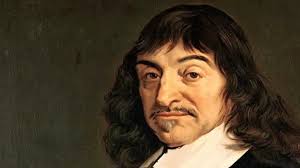
Randall,Jr., John Herman The Making of the Modern Mind, 1976 Columbia University Press, New York [extract— 840 words]
Galileo was a physicist who confined himself to his study of mechanical and astronomical phenomena, and hesitated to generalize his methods and principles. Descartes, his contemporary, brilliant mathematician, formulator of optics, was able to see with startling distinctness the wider significance of these things. He it was who first brought to the learned world a realization of the consequences of the scientific work we have been examining, and sketched out in clear words the full outline of the new universe into which men had been ushered.
In 1637 he published his first works, his Discourse Upon Method and the first fruits of its application in geometry, optics, and general physics. At his death in 1650 he had spread the fame of the mathematical interpretation of nature through the length and breadth of Europe, given confidence to many a lonely investigator to pursue his work…
The ground was prepared for Newton, who may almost be called the greatest of the Cartesians, to effect his great synthesis, and for the public to receive with awe and reverence his harmonious world-machine.
The vision that was Descartes’ was well expressed in the epitaph written by his closest friend Chanut: “In his winter furlough comparing the mysteries of nature with the laws of mathematics he dared hope that the secrets of both could be unlocked with the same key.” The reference is to the incident that determined the course of his whole life. After the best education that France afforded, disgusted with all that had been taught him save mathematics, he had turned to “the great book of the world.”
…The diversity he found in men’s beliefs taught him to distrust custom and listen only to reason. One day, confined to his room by the cold, he resolved to discard speculating much on mathematical problems, and now there came to him the vision that here, in combining the best in geometrical analysis and algebra, lay the source of all true science. “As I considered the matter carefully it gradually came to light that all those matters only are referred to mathematics in which order and measurement are investigated, and that it makes no difference whether it be in numbers, figures, stars, sounds or any other object that the question of measurement arises. I saw consequently that there must be some general science to explain that element as a whole which gives rise to problems about order and measurement, restricted as these are to no special subject matter. This, I perceived, was called universal mathematics… Such a science should contain the primary rudiments of human reason, and its province ought to extend to the eliciting of true results in every subject. To speak freely, I am convinced that it is a more powerful instrument of knowledge than any other that has been bequeathed to us by human agency, as being the source of all others.”
That night Descartes seems to have had an intense vision in which the Angel of Truth appeared and bade him trust his new science; it would indeed give him all knowledge. He rose on fire to carry out his analysis in geometry, and soon had perfected the branch we now call analytical geometry. This meant nothing less than the complete correspondence between algebra and the realm of space — that is, the real world. By algebra man could hope to discover the secrets of the universe; this was the key to the great cipher of nature, this the new method men had been seeking.
To Descartes thenceforth space or extension became the fundamental reality in the world, motion the source of all change, and mathematics the only relation between its parts. It is significant that this Cartesian faith, so similar to that of the pioneers in astronomy and physics, lacked any trace of the mystic Platonism that had marked all of them. He had made of nature a machine and nothing but a machine; purposes and spiritual significance had alike been banished. Descartes himself worked out the principles of optics in detail; but his significance lies rather in his general conception. He had reached the notion of seeking an explanation of all things in the world in purely mechanical terms.
Intoxicated by his vision and his success, he boasted, “Give me extension and motion, and I will construct the universe.” The whole working-out of mechanical physics in the next two centuries is but the development of this idea. All energy is reduced to kinetic energy, the energy of motion; all qualitative differences in the world to quantitative differences of the size, shape, and speed of motion of particles of matter. Living beings form no exception; life becomes a mere matter of chemical and physical changes, all animals are mere automata, even the body of man is a purely physical machine. The world of the Middle Ages has been explicitly and entirely rejected for the world of modern physics.
Gods: Athena
From Wikipedia, the free encyclopedia
| Athena Ἀθηνᾶ | |
|---|---|
| Goddess of wisdom, olives, weaving, and battle strategy | |
| Mattei Athena at Louvre. Roman copy from the 1st century BC/AD after a Greek original of the 4th century BC, attributed to Cephisodotos or Euphranor. | |
| Abode | Mount Olympus |
| Symbol | Owls, olive trees, snakes, Aegis, armour, helmets, spears, Gorgoneion |
| Personal information | |
| Parents | In the Iliad: Zeus alone In Theogony: Zeus and Metis[a] |
| Siblings | Aeacus, Angelos, Aphrodite, Apollo, Ares, Artemis, Dionysus, Eileithyia, Enyo, Eris, Ersa, Hebe, Helen of Troy, Hephaestus, Heracles, Hermes, Minos, Pandia, Persephone, Perseus, Rhadamanthus, the Graces, the Horae, the Litae, the Muses, the Moirai |
| Children | No natural children, but Erichthonius of Athens was her adoptive son |
| Equivalents | |
| Roman equivalent | Minerva |
| Etruscan equivalent | Menrva |
| Canaanite equivalent | Anat[2] |
| Egyptian equivalent | Neith |
| Celtic equivalent | Sulis |

| This article contains special characters. Without proper rendering support, you may see question marks, boxes, or other symbols. |
| Part of a series on |
| Ancient Greek religion |
|---|
| Features[show] |
| Deities[show] |
| Ethics[show] |
| Practices[show] |
| Sacred places[show] |
| Texts[show] |
| History[show] |
| Religion portal Ancient Greece portal |
| vte |


Athena[b] or Athene,[c] often given the epithet Pallas,[d] is an ancient Greek goddess associated with wisdom, handicraft, and warfare[3] who was later syncretized with the Roman goddess Minerva.[4] Athena was regarded as the patron and protectress of various cities across Greece, particularly the city of Athens, from which she most likely received her name.[5] She’s usually shown in art wearing a helmet and holding a spear. Her major symbols include owls, olive trees, snakes, and the Gorgoneion.
From her origin as an Aegean palace goddess, Athena was closely associated with the city. She was known as Polias and Poliouchos (both derived from polis, meaning “city-state”), and her temples were usually located atop the fortified acropolis in the central part of the city. The Parthenon on the Athenian Acropolis is dedicated to her, along with numerous other temples and monuments. As the patron of craft and weaving, Athena was known as Ergane. She’s also a warrior goddess, and was believed to lead soldiers into battle as Athena Promachos. Her main festival in Athens was the Panathenaia, which was celebrated during the month of Hekatombaion in midsummer and was the most important festival on the Athenian calendar.
In Greek mythology, Athena was believed to have been born from the head of her father Zeus. In the founding myth of Athens, Athena bested Poseidon in a competition over patronage of the city by creating the first olive tree. She’s known as Athena Parthenos “Athena the Virgin,” but in one archaic Attic myth, the god Hephaestus tried and failed to rape her, resulting in Gaia giving birth to Erichthonius, an important Athenian founding hero.
Athena was the patron goddess of heroic endeavor; she’s believed to have aided the heroes Perseus, Heracles, Bellerophon, and Jason. Along with Aphrodite and Hera, Athena was one of the three goddesses whose feud resulted in the beginning of the Trojan War. She plays an active role in the Iliad, in which she assists the Achaeans and, in the Odyssey, she is the divine counselor to Odysseus.
In the later writings of the Roman poet Ovid, Athena was said to have competed against the mortal Arachne in a weaving competition, afterwards transforming Arachne into the first spider; Ovid also describes how she transformed Medusa into a Gorgon after witnessing her being raped by Poseidon in her temple. Since the Renaissance, Athena has become an international symbol of wisdom, the arts, and classical learning. Western artists and allegorists have often used Athena as a symbol of freedom and democracy.
Etymology

The Acropolis at Athens (1846) by Leo von Klenze. Athena’s name probably comes from the name of the city of Athens.[5][6]
Athena is associated with the city of Athens.[5][7] The name of the city in ancient Greek is Ἀθῆναι (Athȇnai), a plural toponym, designating the place where—according to myth—she presided over the Athenai, a sisterhood devoted to her worship.[6] In ancient times, scholars argued whether Athena was named after Athens or Athens after Athena.[5] Now scholars generally agree that the goddess takes her name from the city;[5][7] the ending –ene is common in names of locations, but rare for personal names.[5] Testimonies from different cities in ancient Greece attest that similar city goddesses were worshipped in other cities[6] and, like Athena, took their names from the cities where they were worshipped.[6] For example, in Mycenae there was a goddess called Mykene, whose sisterhood was known as Mykenai,[6] whereas at Thebes an analogous deity was called Thebe, and the city was known under the plural form Thebai (or Thebes, in English, where the ‘s’ is the plural formation).[6] The name Athenai is likely of Pre-Greek origin because it contains the presumably Pre-Greek morpheme *-ān-.[8]
In his dialogue Cratylus, the ancient Greek philosopher Plato (428–347 BC) gives some rather imaginative etymologies of Athena’s name, based on the theories of the ancient Athenians and his own etymological speculations:
That is a graver matter, and there, my friend, the modern interpreters of Homer may, I think, assist in explaining the view of the ancients. For most of these in their explanations of the poet, assert that he meant by Athena “mind” [νοῦς, noũs] and “intelligence” [διάνοια, diánoia], and the maker of names appears to have had a singular notion about her; and indeed calls her by a still higher title, “divine intelligence” [θεοῦ νόησις, theoũ nóēsis], as though he would say: This is she who has the mind of God [ἁ θεονόα, a theonóa). Perhaps, however, the name Theonoe may mean “she who knows divine things” [τὰ θεῖα νοοῦσα, ta theia noousa] better than others. Nor shall we be far wrong in supposing that the author of it wished to identify this Goddess with moral intelligence [εν έθει νόεσιν, en éthei nóesin], and therefore gave her the name Etheonoe; which, however, either he or his successors have altered into what they thought a nicer form, and called her Athena.— Plato, Cratylus 407b
Thus, Plato believed that Athena’s name was derived from Greek Ἀθεονόα, Atheonóa—which the later Greeks rationalised as from the deity’s (θεός, theós) mind (νοῦς, noũs). The second-century AD orator Aelius Aristides attempted to derive natural symbols from the etymological roots of Athena’s names to be aether, air, earth, and moon.[9]
More at: https://en.wikipedia.org/wiki/Athena
Gods: Odin
From Wikipedia, the free encyclopedia
.jpg)
Odin, in his guise as a wanderer, by Georg von Rosen (1886)
Odin (/ˈoʊdɪn/;[1] from Old Norse: Óðinn, IPA: [ˈoːðinː]) is a widely revered god in Germanic mythology. Norse mythology, the source of most surviving information about him, associates Odin with wisdom, healing, death, royalty, the gallows, knowledge, war, battle, victory, sorcery, poetry, frenzy, and the runic alphabet, and portrays him as the husband of the goddess Frigg. In wider Germanic mythology and paganism, the god was known in Old English as Wōden, in Old Saxon as Wōdan, in Old Dutch as Wuodan[2]and in Old High German as Wuotan.
Odin appears as a prominent god throughout the recorded history of Europe, from the Roman occupation of regions of Germania (from c. 12 BCE) through the tribal expansions of the Migration Period (4th to 6th centuries CE) and the Viking Age (8th to 11th centuries CE). In the modern period the rural folklore of Germanic Europe continued to acknowledge Odin. References to him appear in place names throughout regions historically inhabited by the ancient Germanic peoples, and the day of the week Wednesday bears his name in many Germanic languages, including in English.
In Old English texts, Odin holds a particular place as a euhemerized ancestral figure among royalty, and he is frequently referred to as a founding figure among various other Germanic peoples, such as the Langobards. Forms of his name appear frequently throughout the Germanic record, though narratives regarding Odin are mainly found in Old Norse works recorded in Iceland, primarily around the 13th century. These texts make up the bulk of modern understanding of Norse mythology.
Old Norse texts portray Odin as one-eyed and long-bearded, frequently wielding a spear named Gungnir and wearing a cloak and a broad hat. He is often accompanied by his animal companions and familiars—the wolves Geri and Freki and the ravens Huginn and Muninn, who bring him information from all over Midgard—and rides the flying, eight-legged steed Sleipnir across the sky and into the underworld. Odin is the son of Bestla and Borr and has two brothers, Vili and Vé. Odin is attested as having many sons, most famously the gods Thor (with Jörð) and Baldr (with Frigg), and is known by hundreds of names. In these texts he frequently seeks greater knowledge, at times in disguise (most famously by obtaining the Mead of Poetry), makes wagers with his wife Frigg over the outcome of exploits, and takes part both in the creation of the world by way of slaying the primordial being Ymir and in giving the gift of life to the first two humans Ask and Embla. Odin has a particular association with Yule, and mankind’s knowledge of both the runes and poetry is also attributed to him, giving Odin aspects of the culture hero.
Old Norse texts associate female beings connected with the battlefield—the valkyries—with the god, and Odin oversees Valhalla, where he receives half of those who die in battle, the einherjar. The other half are chosen by the goddess Freyja for her afterlife-location, Fólkvangr. Odin consults the disembodied, herb-embalmed head of the wise being Mímir for advice, and during the foretold events of Ragnarök Odin is told to lead the einherjar into battle before being consumed by the monstrous wolf Fenrir. In later folklore Odin appears as a leader of the Wild Hunt, a ghostly procession of the dead through the winter sky. He is associated with charms and other forms of magic, particularly in Old English and Old Norse texts.
Odin is a frequent subject of interest in Germanic studies, and scholars have advanced numerous theories regarding his development. Some of these focus on Odin’s particular relation to other figures; for example, the fact that Freyja’s husband Óðr appears to be something of an etymological doublet of the god, whereas Odin’s wife Frigg is in many ways similar to Freyja, and that Odin has a particular relation to the figure of Loki. Other approaches focus on Odin’s place in the historical record, a frequent question being whether the figure of Odin derives from Proto-Indo-European mythology, or whether he developed later in Germanic society. In the modern period the figure of Odin has inspired numerous works of poetry, music, and other cultural expressions. He is venerated in most forms of the new religious movement Heathenry, together with other gods venerated by the ancient Germanic peoples; some branches focus particularly on him.
More at: https://en.wikipedia.org/wiki/Odin
When Did Time Really Begin? The Little Loophole in the Big Bang
A pleasurable warping of the figuring faculty to contemplate what was there before the before.
BY MARIA POPOVA

“Time says ‘Let there be,’” Ursula K. Le Guin wrote shortly before her death in her splendid “Hymn to Time,” saluting the invisible dimension that pervades and encompasses the whole of life: “the radiance of each bright galaxy. And eyes beholding radiance. And the gnats’ flickering dance. And the seas’ expanse. And death, and chance.”
But what does time say of the time before there was anything to let be, the time before being?
“The concept of time has no meaning before the beginning of the universe,” Stephen Hawking wrote in his groundbreaking 1988 book A Brief History of Time (public library) — a work of such far-reaching and lasting impact that it awakened the popular imagination to the fundamental physics of reality and, thirty years later, inspired one of the most beautiful and poignant poems of all time.
In the foreword to the final edition of the book published in his lifetime, Hawking quoted Richard Feynman’s exultation at how fortunate we are to live in an age when we are still discovering the fundamental laws of nature. Inevitably, this means we are still understanding the nature of time. As we come closer and closer to accepting that the universe might be not infinite but finite, and that Einstein’s relativity, as revolutionary as it was, has important limitations, the notion that time began at the Big Bang singularity has begun to dissolve into something more complex — and more thrilling: We might say that in the beginning of time, there was no time; but we might equally say that in the beginning of time, there was only time. (Borges touched the poetic truth behind and before the scientific fact in his exquisite refutation of time.)
In this invigorating PBS segment, New York-based Australian astrophysicist Matt O’Dowd delves into the science and splendor of when time actually began and what that illuminates about the nature of a universe which contains everything we know, including the mind that does the knowing, yet one which we are still getting to know:
In this next segment, O’Dowd considers the possibilities, as presently understood, of what might have happened before the Big Bang:
Complement with science historian James Gleick on how our cultural obsession with the scientific impossibility of time travel illuminates the central mystery of consciousness, then treat yourself to Nina Simone’s meditation on time and poet Marie Howe’s stunning ode to Hawking’s singularity.
France has lowest daily increase in new Covid-19 cases, deaths since lockdown
Issued on: 25/05/2020 – France24.com

Text by: NEWS WIRES
French authorities reported the smallest daily rise in new coronavirus cases and deaths on Sunday since before a lockdown began on March 17, raising hopes that the worst of the epidemic is over in France.
The number of confirmed cases rose by 115 to 144,921, health ministry data showed, and the death toll increased by 35 to 28,367 – an increase of just 0.1% for both tallies.
The weekend totals for new cases and deaths were also both the lowest since France began easing its strict coronavirus restrictions on May 11.
Epidemiologist Laurent Toubiana, director of the IRSAN health data institute, suggested the worst of the epidemic had passed and said the coronavirus may not come back, unlike previous pandemics such as the 1918 Spanish flu.
“If we do not see a quick resurgence of the epidemic, we might get a break for a few weeks,” he said on BFM TV.
Despite the easing of restrictions, social distancing rules remain in place in France and Environment Minister Elisabeth Borne told France Inter radio the government did not want people to travel abroad this summer.
She also said Paris parks must remain closed for now as the capital is still a “red zone” for circulation of the coronavirus.
The new data showed that, because of slower data reporting and with patients staying in hospital longer over the long holiday weekend, the number of people admitted to hospital with the coronavirus had increased by seven to 17,185.
It was the first increase in weeks. Until now, the number had fallen every day since April 15.
But the number of people in intensive care continued its uninterrupted decline, falling by 10 to 1,655. It was the slowest decline since the peak of the crisis, when 7,148 people were in intensive care.
(REUTERS)
The Coronavirus Update

05.26.20 (wired.com)
| Japan ends its state of emergency, New Zealand floats a four-day workweek, and the US approaches 100,000 deaths. Here’s what you should know:HeadlinesJapan ended its coronavirus emergency with 851 deaths and no lockdownJapan’s prime minister announced the end of the nation’s state of emergency, but said its “battle against the virus will continue.” While Japan never implemented a true lockdown, it did bar travelers from hard-hit countries and shut down karaoke bars, live music venues, and gyms, which will remain closed in the coming weeks. New Zealand’s prime minister is touting a 4-day workweekAs New Zealand reopens, Prime Minister Jacinda Ardern is suggesting that a four-day workweek could spur domestic travel. She says the decision to shorten the workweek is between employers and employees, but she encourages businesses to think about this option to boost tourism and the nation’s economy. It’s an idea Microsoft had tested before the pandemic in Japan, finding that it actually boosted productivity by 40%. The US is approaching 100,000 coronavirus deathsOver the weekend, The New York Times published this viral cover story putting names to numbers of the nearly 100,000 lives lost in the last few months to Covid-19. The CDC projects the US will cross this threshold by June 1, but more grimly, they also predict these death rates will continue to rise as states around the country reopen. |