During the first months of this year, we have seen once again how fragile is our global world, how great the danger of sliding into chaos. The COVID-19 pandemic is facing all countries with a common threat, and no country can cope with it alone.
The immediate challenge today is to defeat this new, vicious enemy. But even today, we need to start thinking about life after it retreats.
Many are now saying the world will never be the same. But what will it be like? That depends on what lessons will be learned.
I recall how in the mid-1980s, we addressed the nuclear threat. The breakthrough came when we understood that it is our common enemy, a threat to all of us. The leaders of the Soviet Union and the U.S. declared that a nuclear war cannot be won and must never be fought. Then came Reykjavik and the first treaties eliminating nuclear weapons. But even though by now 85% of those arsenals have been destroyed, the threat is still there.
Yet other global challenges remain and have even become more urgent: poverty and inequality, the degradation of the environment, the depletion of the earth and the oceans, the migration crisis. And now, a grim reminder of another threat: diseases and epidemics that in a global, interconnected world can spread with unprecedented speed.
The response to this new challenge cannot be purely national. While it is the national governments that now bear the brunt of making difficult choices, decisions will be have to be made by the entire world community.
We have so far failed to develop and implement strategies and goals common to all mankind. Progress toward the Millennium Development Goals, adopted by the U.N. in 2000, has been extremely uneven. We see today that the pandemic and its consequences are hitting the poor particularly hard, thus exacerbating the problem of inequality.
What we urgently need now is a rethinking of the entire concept of security. Even after the end of the Cold War, it has been envisioned mostly in military terms. Over the past few years, all we’ve been hearing is talk about weapons, missiles and airstrikes.
This year, the world has already been on the brink of clashes that could involve great powers, with serious hostilities in Iran, Iraq and Syria. And though the participants eventually stepped back, it was the same dangerous and reckless policy of brinkmanship.
Is it not clear by now that wars and the arms race cannot solve today’s global problems? War is a sign of defeat, a failure of politics.
The overriding goal must be human security: providing food, water and a clean environment and caring for people’s health. To achieve it, we need to develop strategies, make preparations, plan and create reserves. But all efforts will fail if governments continue to waste money by fueling the arms race.
I’ll never tire of repeating: we need to demilitarize world affairs, international politics and political thinking.
To address this at the highest international level, I am calling on world leaders to convene an emergency special session of the U.N. General Assembly, to be held as soon as the situation is stabilized. It should be about nothing less than revising the entire global agenda. Specifically, I call upon them to cut military spending by 10% to 15%. This is the least they should do now, as a first step toward a new consciousness, a new civilization.
Gorbachev, a Nobel Peace Prize laureate, was the only President of the Soviet Union
This article is part of a special series on how the coronavirus is changing our lives, with insights and advice from the TIME 100 community. Sign up for access to TIME 100 Talks, our virtual event series, featuring live conversations with influential newsmakers.
“Your work is to keep cranking the flywheel that turns the gears that spin the belt in the engine of belief that keeps you and your desk in midair.“
–Annie Dillard (born April 30, 1945) is an American author, best known for her narrative prose in both fiction and non-fiction. She has published works of poetry, essays, prose, and literary criticism, as well as two novels and one memoir. Her 1974 work Pilgrim at Tinker Creek won the 1975 Pulitzer Prize for General Nonfiction. Wikipedia
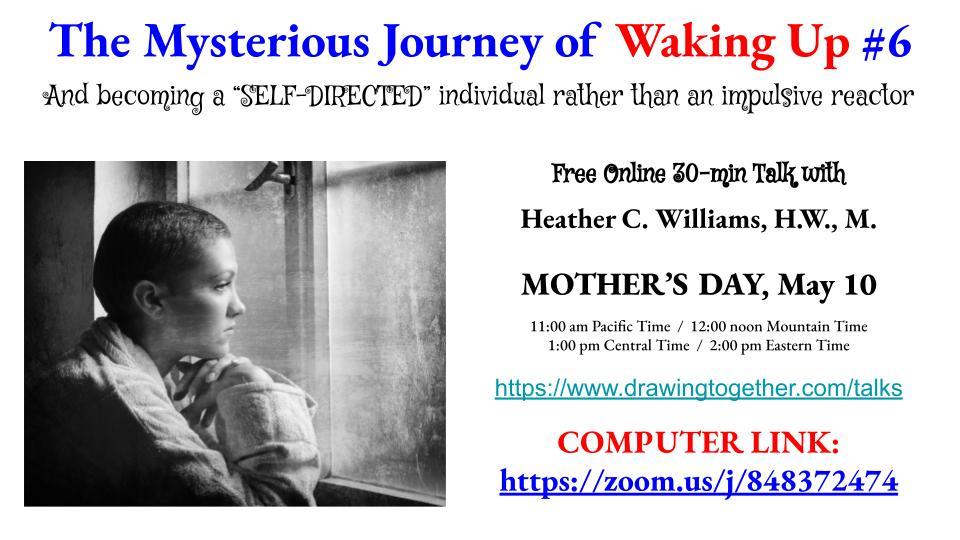
Hope you can join us! We will honor our mothers, discuss life lessons we’ve learned from our mothers and share stories of how the CORONAVIRUS is challenging us to WAKE UP and become “Self-Directed” individuals.
DATE: Sunday, May 10, 2020 TIME: 11:00 am Pacific / Noon Mtn / 1:00 pm Central / 2:00 pm Eastern FEE: Free (NOTE: Contributions are always accepted by The Prosperos School of Ontology, a non-profit organization whose mission statement is: “To make Spiritual Truth an effective force for ordered freedom and common good.”) ZOOM LINK: https://zoom.us/j/848372474
The Black Death (1347-1350) was a pandemic that devastated the populations of Europe and Asia. The plague was an unprecedented human tragedy in Italy. It not only shook Italian society but transformed it. The Black Death marked an end of an era in Italy, its impact was profound, and it resulted in wide-ranging social, economic, cultural and religious changes.[1] These changes, directly and indirectly, led to the emergence of the Renaissance, one of the greatest epochs for art, architecture, and literature in human history.
The Impact of the Plague of Italy
To Black Death spread to Italy from modern-day Russia. Genoese merchants spread the plague while fleeing a Mongol attack on their trading post in Crimea. The plague was carried and spread by the fleas that lived on the Black Rat and brought to Italy on the Genoese ships.[2] The population of Italy was ill prepared for the spread of the disease. There had been a series of famine and food shortages in the region, and the population was weak and vulnerable to disease, and furthermore, the population did not have any natural resistance to the disease. Italy was the most urbanized society in Europe, Milan, Rome, Florence, and other Italian centers among the largest on the continent.[3]
The majority of the urban population in cities such as Naples were impoverished and lived in squalid and dirty conditions. These factors ensured that the diseases spread quickly and that there was a high level of mortality, among the poor, although even the rich could not escape the plague.[4] From the cities, the plague spread like wildfire to the small towns and villages of the peninsula.
Dance of Death image from 15th-century woodcut
There is no firm data on the impact of the plague on the population of Italy. However, some examples show the full extent of the disease in Italy. The plague halved the population of Florence. The population crashed and fell from approximately 100,000 to 50,000. The experience of Florence was replicated across all the major cities of Italy which also experienced similar drastic declines. The death rate in rural Italy was not nearly as high, but there was a significant loss of life. In general, the total population of Italy may have dropped by as much as a third.[5]
The Black Death was also an economic crisis as trade ceased because of fear of the spread of plague. As trade stagnated, businesses failed, and unemployment rose. The plague caused a complete social breakdown in many areas. Boccaccio in the Decameron, describes people abandoning their occupations, ignoring the sick and living lives of wild excess, as everyone expected to die.
“Thus, doing exactly as they prescribed, they spent day and night moving from one tavern to the next, drinking without mode or measure, or doing the same thing in other people’s homes, engaging only in those activities that gave them pleasure….. And they combined this bestial behavior with as complete an avoidance of the sick as they could manage.”[6]
Socio-Economic Consequences
The social consequences of the plague on society came to be profound. The high mortality rate resulted in a drastic decline in the labor force.[7] Wages rose for both agricultural and urban workers. The survivors of the Black Death generally had a higher standard of living than before the plague.[8] This was a phenomenon that occurred in both urban and rural areas. The crisis caused by the Black Death led to many changes in the economy, in response to the fall in the population. Because of the labor shortages, there was a move from labor-intensive farming such as cereal to livestock and increase both in industry and agriculture more labor-saving devices employed.[9] The impact of the Black Death was contrary on feudalism in Italy. Feudalism was a system whereby peasants and farm laborers bound, as serfs, to serve a local lord. In the north of Italy, good farmland was plentiful, and wages increased, and the last vestiges of feudalism disappeared as serfs increasingly could purchase their freedom.
In the south of Italy the opposite occurred, here, since the Norman kings, the aristocracy had been consolidating feudalism. After the Black Death, the elite responded to the labor shortages by strengthening the restrictions on the peasants and thereby strengthened feudalism in southern Italy. The consequences of the plague resulted in a growing divide between the North and South of Italy that persists to this day.[10] In general, after a period of recovery, much of Italy became very wealthy as a more sophisticated economy emerged, especially in the North of Italy. This was crucial, as the increased wealth of Italy allowed the elite, such as the De Medici’s in Florence to become the patrons of great artists such as Michelangelo and Leonardo da Vinci.[11]
Religious Consequences
Initially, in Italy, the plague led to a revival in religion among many. The middle ages was a time when people believed that events are a result of God’s will. Many viewed the plague as punishment for God for the wickedness and immorality of the people. There was an upsurge in religious observance, and many sections of the public became swept by religious fervor, as many sincerely believed that the Black Death was a sign that the end of the world was coming.[12] Religious fanaticism spread throughout the peninsula and many men and women performed in extreme religious practices, such as the flagellants. The flagellants whipped themselves into a frenzy to atone for their sins. The Church suffered greatly during the plague, many priests and especially monks died. The monasteries proved ideal breeding grounds for the plague while many priests contracted the sickness as they gave the last rites to the dying. [13]
The result was a shortage of trained monks and priests. To deal with this, the Church hastily trained new monks and priests to serve the spiritual needs of the community, still coming to terms with the trauma of the Black Death. This meant that many unsuitable individuals became clerics and this led to a drop in standards among parish priests, in particular.[14] The Church became corrupt and gradually over time lost the respect of many believers. In the short term the Black Death strengthened the Catholic Church in Italy, but in the long run, an increasingly corrupt institution meant that many people lost their faith. This led to the increasing secularisation of Italian society as many increasingly turned away from the church in disgust as the worldliness of prelates and priests. The contempt that many felt is evident in the stories of Boccaccio of venal and depraved priests, monks and nuns.[15] The church had traditionally monopolized education, but after the Black Death, there was more secular education, especially in the cities. This was decisive in the emergence of the Renaissance, with its emphasis on human values and experiences rather than religion.[16]
Questioning of authority
Petrarch- poet and scholar
The world was turned upside down by the Black Death. The mental outlook of people changed dramatically. Previously, people assumed that the world was fixed and God-ordained. The Black Death overturned old certainties. As we have seen the plague and its devastation undermined religious orthodoxy and beliefs. People at the time were no longer willing to accept the status quo. This change manifested in the numerous political revolts of the time.[17] The most famous of these, led by the poor workers and weavers called popularly the Ciompi, that took place in Florence in 1378. For four years, the poor formed the government of the city. The revolt was one of several in Italy at the time. No longer are people as willing to question the old ways of doing things and no longer accepted things because they were sanctioned by tradition.
The Black Death led to a great questioning of the old certainties. This led many, especially among the urban elite to use reason to understand the world. They also increasingly turned to the classics to find answers to the problems of life. The new spirit of inquiry helped to ignite the Renaissance, especially in politics and philosophy.[18] However, that is not to say, that Italy rejected all traditions, it was still a very conservative society in many ways. However, those who questioned authority and the received wisdom, such as the Poet and Scholar Petrarch inspired the Humanist movement, which valued reason and critical thinking. The Humanist are essential in the development and progress of the Renaissance.[19]
Cultural Change
Primevera by Botticelli
Initially, the Black Death led to a fascination with death among many Italians. The loss of life and the suffering led many to become obsessed with death.[20] The Dance of Death was a popular motif in art and architecture at this time. The general mood was one of pessimism, and indeed many expected that sooner or later that the world would end. Alongside this fear of death and the general mood of pessimism, there was a desire to experience the pleasures of life and to seize any happiness that was on offer. This contradictory impact of the Black Death on the culture of the time can be seen in the writings of two of the greatest figures in European literature, Petrarch and Boccaccio.[21] These two writers at times wrote in despair about the human condition yet they also wrote about the joys of life and the beauties of nature.
This sense that life was fleeting and that every happiness should be seized, led many Italians to seek solace in art and literature and this was one of the factors in the development of the Renaissance. Many of the elite were eager to enjoy the pleasures of life, and this led them to patronize artists. It also resulted in a shift in the themes of artists.[22] Religious topics remained popular, however, there was also a fascination with secular themes, especially from the classical world. The new interest in secular subjects can be seen in a comparison between Giotto and Botticelli. Giotto painted almost exclusively religious paintings. While Giotto, painted both secular and religious themes, indeed he is best known for his secular works as in masterpieces such as Primavera.[23]
Social Mobility
The plague disrupted society to an unprecedented state. It overturned the existing social structure. Previous, to the outbreak of the plague, Italy was a rigid and stratified society. The Black Death changed everything. Increasingly, because of the demographic disaster caused by the plague were able to take advantage of the opportunities caused by the high death rate. In the period after the Black Death, an unprecedented amount of social mobility took place. Laborers became merchants and merchants become members of the nobility. No longer was a person’s destiny to be fixed by their birth. Previously, people assumed that one’s station was fixed at one’s birth and that one had to remain a member of the class you were born into.[24] People believed that a peasant would always be a peasant, an aristocrat, and aristocrat. Italians, like other peoples, in Europe, believed that one’s birth determined one’s future and that this was determined by God.[25]
However, as social mobility became more widespread because of the Black Death, many people, came to believe that a person’s merits or abilities were what mattered and not one’s birth.[26] This led to a growing individualism in Italian society. This, in turn, encouraged people to strive and to develop their talents and achieve excellence or virtue.[27] The belief in the individual was central to the Renaissance and it inspired many of the greatest artists, architects, sculptures and writers, the world have ever seen to create peerless works.
Decline of the Nobility
One group that was adversely impacted by the Black Death was the nobility. This was also the case in many other European regions and kingdoms. The nobility suffered as much as many others classes as a result of the plague and many families died out during the period. In the aftermath of the epidemic, they found themselves in serious financial difficulties. The loss of population meant that there was no longer a high demand for their land and rents fell.[28]
Many of their laborers simply left the land, and they were not replaced. Many of the nobility found themselves obliged to sell their serfs their freedom or to sell land to merchants from the cities. At this time, many wealthy merchants purchased new estates. The demise of the traditional elite meant that a new elite came to the fore, composed of merchants and self-made men. This new elite often keen to patronize arts. They were very conscious of their lack of birth and humble origins.[29]
They were keen to use art and to patronize men of letters to compensate for the lack of traditional authority. In order to appear the equal of the old aristocracy, they sought to sponsor artists who would win the esteem of the public.[30] This was one of the reasons for the lavish patronage of the de Medici’s in Florence. They were keen patrons of the arts, to justify their status in society and to impress the general population. This meant that the great artists had many patrons, who often competed for their talents and this allowed them to concentrate on their art and to produce some of the greatest art, ever known.[31]
Who benefitted from the Renaissance in Italy?
While the Renaissance may have laid the foundation for broad changes in Europe over the longterm, the wealthy in Italy were the primary people who benefitted during the Renaissance. While wages for agricultural workers increased after the plague arrived, wages did not increase throughout the Renaissance. Additionally in Florence, life expectancy declined for people during the Renaissance. Wealthy Italians during the Renaissance did clearly did benefit. Their wealth essentially funded the artistic achievements of the era, but most Italian peasants probably would have preferred higher wages rather than the Mona Lisa.[32]
Conclusion
The Black Death devastated Italian society in the middle of the 14th century. It led to great socio-economic, cultural and religious changes. After the initial horrors of the plague, Italian society, staged a spectacular recovery. Italy became richer than before. The impact of the plague reduced the influence of the Catholic Church as diminished, and the culture became more secular. The new social mobility meant that individualism came to be respected. The Black Death unleashed the forces in Italian society that made the Renaissance possible.
Translators: Mike Zonta, Melissa Goodnight, Richard Branam, Hanz Bolen
SENSE TESTIMONY: Recovery to normality is urgent for sake of physical, mental, and economic health
5th Step Conclusions:
1) The norm of Truth is infinite, limitless ability; the nature of Truth is birthless, deathless Cosmic intention; Truth leaps for joy in self-evident expectation of prosperity.
2) All is One Infinite Consciousness, limitlessly outpicturing in expressively prosperous manifestations: the perfect intact integrity, and whole sound complete wellbeing, that is always already ongoing and abiding.
3) Truth is the Abstract capacious Androgynous Boccaccio, this captivating balance of participation in conceiving, receiving, accepting its own worthy developments in practical utopian affairs, is the guiding prerogative Being highly appropriate behavior with the motive, and purpose in One Infinite Universal Principle: commonwealth community.
4) All is the One Abundant Powerful Knowing Presence of Sound Well Being, Emanating Value physically, mentally, economically, instantaneously and universally now and always. OR: Well Being Emanating Value is all there is.
All Translators are welcome to join this group. See Weekly Groups page/tab.
Russell Brand Under The Skin with illusionist and mentalist Derren Brown. Sign up at luminary.link/russell to subscribe to the podcast from 23rd April. Derren’s new live show, SHOWMAN, will be on tour in the UK from March 27, 2020, and you will be able to book tickets from April 25th from www.derrenbrown.co.uk Get his latest book “Happy” here: https://www.amazon.com/Happy-More-Les… And check out Sacrifice on Netflix!
Many of us might not realize it, but today’s “Democrat vs Republican” duopoly that dominates mainstream American electoral politics is not a given- our party system has been different before, and it will be different again, likely soon. As entrenched and unshakable as it might seem, history teaches us that America’s party system has seen an on-average once-in-a-generation reorganization as a result of demographic and ideological shifts reflecting new policy priorities.
Donald Trump and Bernie Sanders each played a pivotal role in laying the foundations for what will come to be America’s next great party system shift, changing the nature of the Republican and Democratic parties respectively so much that there’s no where left to go other than an outright reorganization of our political party system altogether.
And it’s about time.
Part 1: American Party Systems: A Brief History
The United States began its first presidency without a political party. George Washington not only ran the nation for two terms unaffiliated with any party, but famously warned against them in his farewell address.
“However [political parties] may now and then answer popular ends, they are likely in the course of time and things, to become potent engines, by which cunning, ambitious, and unprincipled men will be enabled to subvert the power of the people and to usurp for themselves the reins of government, destroying afterwards the very engines which have lifted them to unjust dominion.” — George Washington
John Adams wrote not long after:
“There is nothing which I dread so much as a division of the Republic into two great parties, each arranged under its leader, and concerting measures in opposition to each other. This, in my humble apprehension, is to be dreaded as the greatest political evil under our Constitution.”
Another founding father, Alexander Hamilton, wrote:
“Nothing could be more ill-judged than that intolerant spirit which has, at all times, characterized political parties.”
Early warnings against political factions went unheeded. Following the only independent presidency in US history would begin an American tradition that has dominated to this day- the duopoly of two major political factions, as John Adams feared. Every generation, however, the makeup of that duopoly has shifted, with new parties emerging and old ones fading away or shifting, creating what has been dubbed new “Party Systems.” Understanding the trend of party systems will help us to understand what is happening right now.
The First Party System began with the election of 1796. The Federalists, headed by John Adams, were pro big business and strong central government, supportive of conservative England, against the French Revolution and supported by northern businessmen, bankers and merchants. The Democratic-Republicans– led by Thomas Jefferson, were supported by southern artisans and farmers, were pro-states rights and favored Revolutionary France. The Federalists collapsed in 1815, sparking what would come to be known as the Era of Good Feelings, where for almost a decade the Democrat-Republican party was the only show in town, and there was a reduced emphasis on political party affiliation. President James Monroe even wanted to end political parties outright in the name of national unity.
This election is one of the most contested in history, so much so that it had to be decided by the House. The factional tensions that arose within the then-dominant Democratic-Republican party led to the party fracturing. The winner, Andrew Jackson, started off as a Democrat-Republican but his presidency went on to launch the 2nd party system. Out of the remnants of the old Democratic-Republican Party, he would go on to found the Democratic Party. Jackson made many political rivals, especially for his role in the dramatic Bank War, which led to the dissolving of the Bank of the US (the forerunner to the Federal Reserve) and the development of public state banks. His opponents would coalesce under the newly formed Whig Party, which was socially conservative and pro-business. The Democrat/Whig divide would mark the great political duopoly of the 2nd party era. As the 1850’s approached, new political questions were forming, especially around slavery.
In 1860 the anti-slavery Republican party burst onto the national scene- with the election of Abraham Lincoln, ushering in the 3rd party system. Every election from then on would be between Democrats and Republicans, but over time the parties’ composition, who supported them, and what they stood for changed enough that we think of those shifts as creating new party systems.
After the Civil War, the parties were an odd mix, the former Confederates were Democrats, rightly seeing Republicans as responsible for ending slavery, but as the Republicans shifted towards being an anti-immigrant party, northern immigrants shifted towards the Democratic party, beginning the demographic and cultural shifts within these two dominant parties.
The Fourth Party system officially began with the election of 1896, but its seeds began in 1892, when the Populist Party formed in the southern and western parts of the US, which had a generally anti banker and plutocracy leaning with a platform of regulating farm prices and railroad shipping rates, and supporting a national income tax. They won a few congressional elections, but eventually merged with the Democrats for the election of 1896.
The Progressive Era and the fourth party system brought a change in the composition of electoral politics. This era, which lasted into the early 1930’s, was marked by attacks on political machines, regulations on big business, antitrust laws, women’s suffrage, labor movements, worker’s rights, the establishment of the Public Bank of North Dakota and credit unions, and other similar progressive policies. Following the rise of the People’s Party, the Socialist Party was created in 1901, and then in the election of 1912, former Republican president Theodore Roosevelt came roaring back to make a historical 2nd bid for the presidency under his newly formed Progressive Party, which under Roosevelt’s brand of “New Nationalism” would mark the only time in American history a third party would win 2nd place in a national election.
The rise and fall of the People’s, Socialist and Progressive parties taught us that in American presidential politics, 3rd parties haven’t won due to how American elections are structured. That doesn’t mean they’re inconsequential though. While the progressive zeitgeist of the fourth party system was never truly reflected at the highest echelons of power in the United States, it still served to galvanize local and state politics, inspire the masses to organize from the grassroots, and get the mainstream parties to drift leftward. Today, for example, the Green New Deal, proposed by Democrats after the 2018 midterm elections, was first proposed on the Green Party platform in 2006.
The great depression began in 1929 after years of pro-business Republican policies leading to a boom-bust cycle that finally imploded in that year, ensuring that by the upcoming election of 1932, the people would be clamoring for something different. The pattern of years of Republican domination in politics was upended when Franklin Roosevelt, after barely winning a contested democratic convention, defeated the Republican incumbent in a landslide, carrying 46 states in the general election on his New Deal platform. The Democratic party under FDR’s leadership so shifted its priorities that a new party system was born.
The New Deal Democratic Party and it’s big government leftward lean would reverberate through the Voting Rights Act and Lyndon Johnson’s “Great Society” initiative. It is during this era that New Deal Democrats brought in a wider coalition of progressives and the working class, southern farmers who were drawn to New Deal farm policies and Catholic immigrants and African Americans who would now be shifting their support away from what was once the party of Lincoln. This “New Deal Coalition” would more or less solidify the demographic makeup of the Democratic party for generations.
Unlike the previous five party systems, there is no clear electoral event to delineate the sixth. But it is widely interpreted to have begun in the 1960’s when the South, a former Democrat stronghold, became firmly Republican and the party generally increased in strength, into the slowly morphing cultural shifts of the 1990’s. Whereas the national parties were once mostly aligned based on class, today they are aligned more on social values. For example, white working class men, who were once a demographic stronghold for progressive democrats, are now more likely to vote Republican along cultural lines, while many in the middle and upper economic classes are social liberals who vote Democrat.
Part 2: The State of Affairs Today
This equilibrium was upended by the 2016 election, when Trump trounced the Republican Party establishment on his unconventional nationalist agenda and Bernie Sanders, a Progressive and New Deal style Democrat posed a credible threat to the Democratic front-runner and galvanized a new progressive movement, which has only been strengthening since. Bernie forced the mainstream democratic establishment to reluctantly contend with calls to free college, universal healthcare and regulations on the big banks due to their growing grassroots following.
In 2016, the Republican Party can consider to have had a significant realignment, both as the result of long-term trends and the Trump factor. Whether these seeds of disruption are headed towards party restructuring (as happened during the Southern switch) or outright dissolving to make way for a successor party (as happened to the Federalists and the Whigs) is yet to be seen.
As for the Democratic Party, the path is different, but the destination seems similar. Internal contradictions indicate lack of long term viability for status quo preservation. The party has settled into two distinct camps: the “Moderate” and “Progressive” wings as they call themselves, or the “Corporate” and “Radical” wings as they call each other, respectively. In the case of the Democrats, it’s clearer that the likelihood is much higher for party destruction. Disillusionment with the progressive wing of the Democratic Party grew in 2016 when Sanders supporters felt muscled out by the Party machine via superdelegate tipping of primary elections that many considered outright rigging.
Progressives bided the years under Trump’s administration. “Hindsight,” they said, “is 2020.” The Bernie campaign would come roaring back from the grassroots, with rally crowds and volunteer door knockers and phone bankers far outnumbering his opponents, spurred by the influence of the newly arrived Alexandria Ocasio-Cortez, a new generation of Berniecrat that would come to epitomize the millennial progressive wing of the increasingly fracturing Democratic Party.
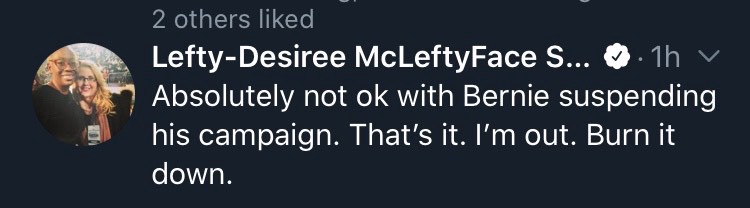
While elements of the mainstream-minded Democrats pronounce “blue no matter who,” and pledge to support whoever the candidate is because “they are better than Trump,” the Progressive wing of the party has now reached a fever-pitch of impatience. To vote anything “no matter who” is a total repudiation of the very purpose of voting itself, which is to exercise the power of choice towards a candidate that reflects your values. With what progressives feel is a back-to-back betrayal of their movement, there is significant disillusionment and in echo of 2016’s “Bernie or Bust” sentiment, a #neverbiden wing of Bernie supporters are committed to standing their ground, regardless of mainstream Democrats’ threats that that will help Trump’s chances in November. That rationale, they feel, is blackmail.
Bernie’s role, ultimately, was not to become president and reign over a Democratic-Socialist administration of the country from the top-down, like Roosevelt. His role was more cultural and nuanced, but no less profound-it was to inspire a leftward consciousness shift, galvanize a grassroots movement, and ultimately, in the end, lay the seeds for the destruction of the Democratic Party. Remember, Bernie Sanders is himself not a Democrat. From the beginning of his political career in 1981 until 2015, just before his 2016 candidacy, he was registered Independent, and only switched to run under the party banner. Yes, he pledged loyalty to the party, and endorsed Hillary and Biden after his losses, but he did so as political chess moves to keep his role as a power player on the inside while his legacy winks and nods to the grassroots. Make no mistake, this was an infiltration. That’s why Party insiders fought to the hilt to keep him out.
2020, or maybe 2024, will join the ranks of 1796, 1824, 1860, 1896 and 1932- years where a decisive election caused an irreversible party realignment and the birth of a new Party System.
Bernie’s role echoes the role of the left during the progressive era, a force that didn’t quite take power at the top, but which nonetheless sparked a grassroots cultural shift that made progressive policies comprehended, sought after, and eventually achieved.
The rise of the progressives led to a shift from the 3rd to the 4th party systems. The Great Depression led to rise of the 5th party system. The transition from the more amorphous 6th party system to the upcoming 7th party system has not only the rise of progressivism fracturing the Democratic Party, but an unfolding economic crisis, Trump’s realignment of the Republican Party, and a cultural divide centrifugally widening by radicalizing social media bubbles. It’s the perfect storm.
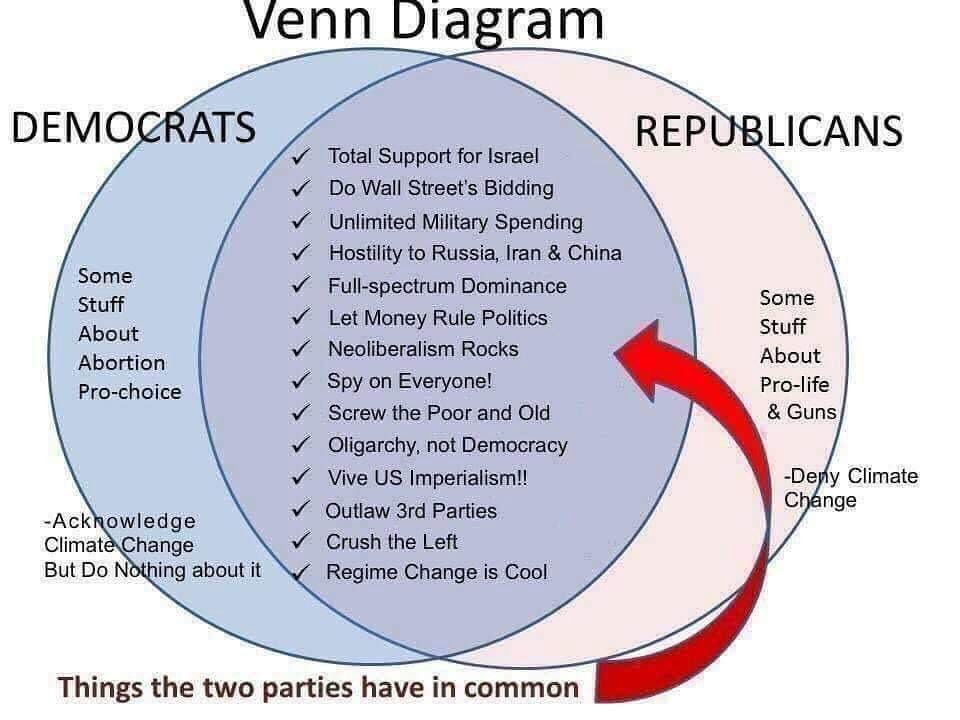
There has been a long-brewing disillusionment with the duopoly that is only now coming to fever-pitch. For over a decade, “Independent” has been the fastest-growing party affiliation.
While the Democratic party, riding the coattails of its New Deal legacy, is assumed to be the “party of the working class,” the sixth party system has seen the Democratic Party as sympathetic towards Wall St. as its supposed rival, while many working class voters flocked to Trump, plutocrat member of the elite, in an ironic protest against the elite.
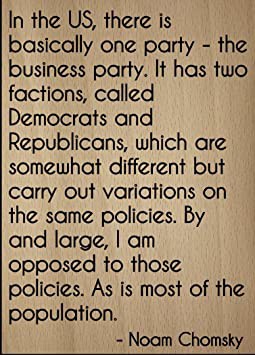
“The smart way to keep people passive and obedient is to strictly limit the spectrum of acceptable opinion, but allow very lively debate within that spectrum” -Noam Chomsky
There is no longer a party based on class interests, merely liberal and conservative culture and lifestyle– class, except for within the emerging progressive wing, has been left out of it, and that means the center will not be able to hold for long.
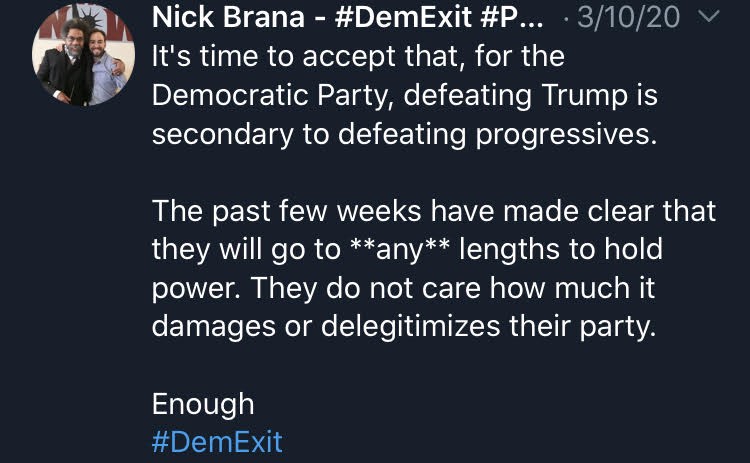
Now, #demexit is trending, and what began as a hole in the Democratic dam in 2016 is culminating into a full on Democratic Party crisis.
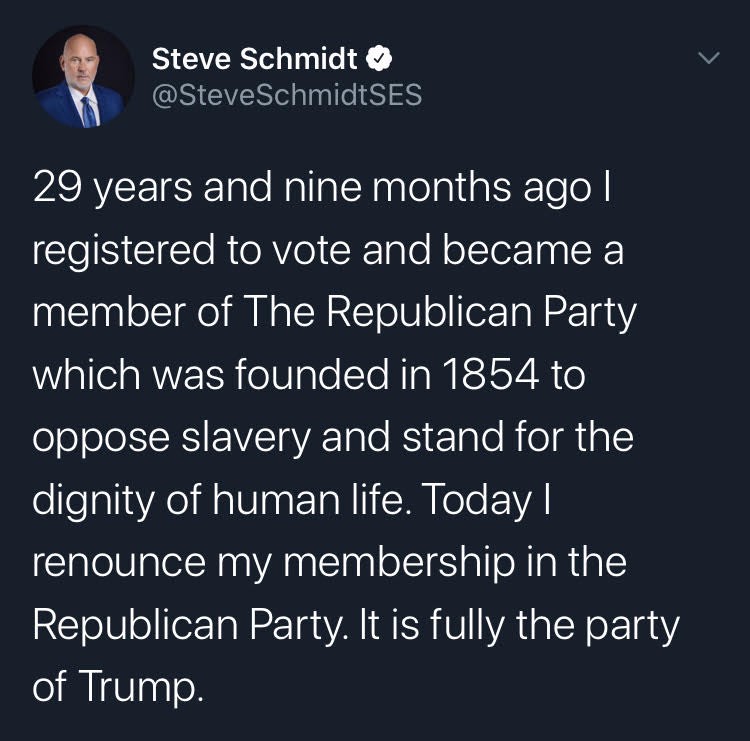
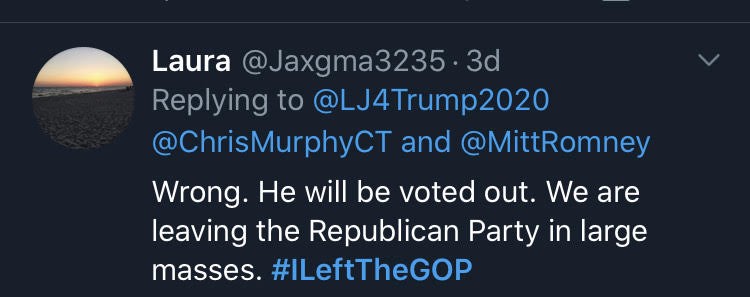
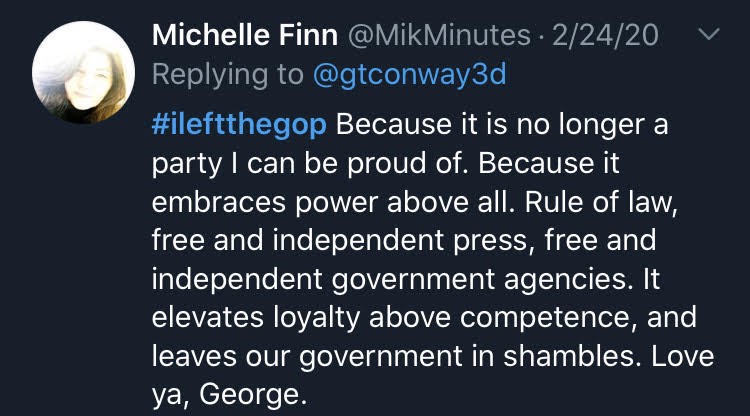
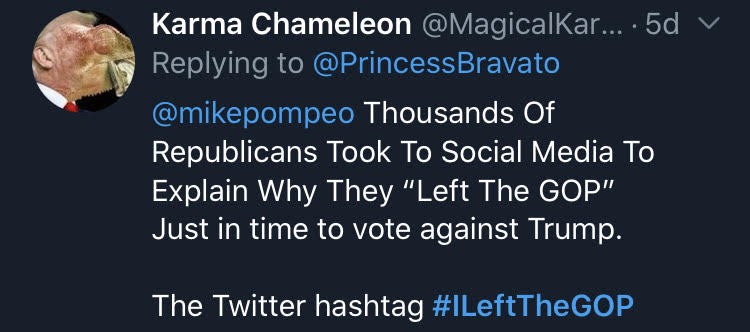
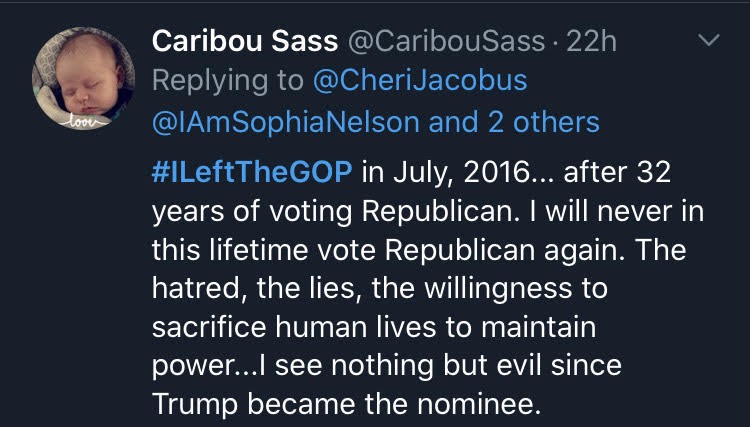
…and the Republican Party is facing its own crisis of identity as #ileftthegop is beginning to trend.
In 2012, Jesse Ventura published DemoCRIPS and ReBLOODicans, a book that likened the political parties to thuggish gangs. He’s called for the outright abolition of political parties and for their conversion into political action committees, as well as removing party designations from ballots, which would force voters to educate themselves on policies rather than blindly following a “D” or “R”. He echoes the sentiment of Washington, Adams and Hamilton in their aversion to parties, or ‘factions’ as they called them. Perhaps the 7th party will see the rise of a new conservative party and a rising Progressive Party that completes the job Teddy Roosevelt started, or perhaps the 7th party will be an outright political paradigm shift away from our party system altogether. The way the roaring 2020’s is starting, anything is possible.
America’s two party system has transformed before, and it will transform again. It’s degenerated into a duopoly of narrow corporate interests and is already on the inevitable throes of upheaval. Why wait? Many of us have known this for some time but clung on to a sliver of hope that the party might come to serve our interests. With the epic upheaval of the Coronavirus, the massively organized and inspired grassroots, and the 100% loss of hope that progressives have for the Democratic Party, the iron is as hot as it’s ever going to be.
“That which is falling should also be pushed.” Nietzsche
Today, I’m pleading with you to be bold and help build a new system from the ground up. I look forward to my follow up- when a progressive party has gained real traction and I then plead with the progressive leaders inside the Democratic establishment, like AOC, to jump ship. Once the dominoes start falling, the New Era will have begun.
The coronavirus is telling us that NOW is the time for us to WAKE UP to our True Identity as consciousness! When you identify AS Consciousness – your creativity flows! And no one but you can WAKE UP and draw this out! It is your unique life signature!
Come to my ZOOM DRAWING CLASS! It begins Wednesday, May 6 and ends June 24! We’ll meet weekly for one hour to meditate upon the power of our perception. We’ll learn and practice SEEING WITH NEW EYES.
DATE: Every Wednesday May 6 through June 24, 2020 TIME: 9:00 am Pacific / 10:00 am Mtn / 11:00 am Central / Noon Eastern FEE: Contribution basis ZOOM LINK:https://us02web.zoom.us/j/87487726434
(Right click on Open Image in New Tab)
Consciousness, spirituality, biography, sexuality, androgyny, futurism, space, the arts, science, astrology, democracy, humor, books, movies and more