Non-Buddhist response: Panic! Panic! Everything’s out of control.
Buddhist response: Relax. Relax. Everything’s out of control.
–Courtesy of Gabor Maté.

Tolosa Choral Contest European Grand Prix Association For Choral Singing 44th Tolosa Choral Contest 2012, Basque Country, Spain APOLLO5 from London, UNITED KINGDOM MY SOUL, THERE IS A COUNTRY, C. Hubert H. Parry (1848-1918)
From Wikipedia, the free encyclopedia
| 1930s title page German edition | |
| Author | Sigmund Freud |
|---|---|
| Original title | Das Unbehagen in der Kultur |
| Country | Austria |
| Language | German |
| Subject | Political philosophy |
| Publisher | Internationaler Psychoanalytischer Verlag Wien |
| Publication date | 1930 |
| Media type | |
| Pages | 127 |
| ISBN | 978-0-393-30158-8 |
| Preceded by | The Future of an Illusion |
| Followed by | Moses and Monotheism |
Civilization and Its Discontents is a book by Sigmund Freud, the founder of psychoanalysis. It was written in 1929 and first published in German in 1930 as Das Unbehagen in der Kultur (“The Uneasiness in Civilization”). Exploring what Freud sees as the important clash between the desire for individuality and the expectations of society, the book is considered one of Freud’s most important and widely read works, and one of the most influential and studied books in the field of modern psychology.[1]
Freud enumerates what he sees as the fundamental tensions between civilization and the individual. The primary friction, he asserts, stems from the individual’s quest for instinctive freedom and civilization‘s contrary demand for conformity and repression of instincts. Freud states that when any situation that is desired by the pleasure principle is prolonged, it creates a feeling of mild contentment. Many of humankind’s primitive instincts (for example, the desire to kill and the insatiable craving for sexual gratification) are clearly harmful to the well-being of a human community. As a result, civilization creates laws that prohibit killing, rape, and adultery, and it implements severe punishments if these rules are broken. Thus our possibilities for happiness are restricted by the law. This process, argues Freud, is an inherent quality of civilization that gives rise to perpetual feelings of discontent among its citizens.
Freud’s theory is based on the notion that humans have certain characteristic instincts that are immutable[citation needed]. These include, most notably, the desires for sex, and the predisposition to violent aggression towards authority figures and sexual competitors, who obstruct the individual’s path to gratification.
Freud begins this work by taking up a possible source of religious feeling that his previous book, The Future of an Illusion, overlooked: the “oceanic feeling” of wholeness, limitlessness, and eternity.[2] Freud himself cannot experience this feeling of dissolution, but notes there exist different pathological and healthy states (e.g. love) where the boundary between ego and object is lost, blurred, or distorted. Freud categorizes the oceanic feeling as being a regression into an earlier state of consciousness — before the ego had differentiated itself from the world of objects. The need for this religious feeling, he writes, arises out of “the infant’s helplessness and the longing for the father,” as there is no greater infantile need than a father’s protection.[3] Freud “imagine[s] that the oceanic feeling became connected with religion later on” in cultural practices.
The second chapter delves into how religion is one coping strategy that arises out of a need for the individual to distance himself from all of the suffering in the world. The ego of the child forms over the oceanic feeling when it grasps that there are negative aspects of reality from which it would prefer to distance itself. But at the same time as the ego is hoping to avoid displeasure, it is also building itself so that it may be better able to act towards securing happiness, and these are the twin aims of the pleasure principle when the ego realizes that it must also deal with ‘reality‘. Freud claims that the ‘purpose of life is simply the programme of the pleasure principle’[4] and the rest of the chapter is an exploration of various styles of adaptation that humans use to secure happiness from the world while also trying to limit their exposure to suffering or avoid it altogether. Freud points out three main sources of displeasure that we attempt to master: our own painful and mortal existence, the cruel and destructive aspects of the natural world, and the suffering endemic to the reality that we must live with other human beings in a society. Freud regards this last source of displeasure as “perhaps more painful to us than any other”,[5] and the remainder of this book will extrapolate on the conflict between the individual’s instinct for seeking gratification and the reality of societal life.
The third chapter of the book addresses a fundamental paradox of civilization: it is a tool we have created to protect ourselves from unhappiness, and yet it is our largest source of unhappiness. People become neurotic because they cannot tolerate the frustration which society imposes in the service of its cultural ideals. Freud points out that advances in science and technology have been, at best, a mixed blessing for human happiness. He asks what society is for if not to satisfy the pleasure principle, but concedes that as well as pursuing happiness, civilization must also compromise happiness in order to fulfill its primary goal of bringing individuals into peaceful relationship with one another, which it does by making them subject to a higher, communal authority. Civilization is built out of wish-fulfillments of the human ideals of control, beauty, hygiene, order, and especially for the exercise of humanity’s highest intellectual functions. Freud draws a key analogy between the development of civilization and libidinal development in the individual, which allows Freud to speak of civilization in his own terms: there is anal eroticism that develops into a need for order and cleanliness, a sublimation of instincts into useful actions, alongside a more repressive renunciation of instinct. This final point Freud sees as the most important character of civilization, and if it is not compensated for, then “one can be certain that serious disorders will ensue.”.[6] The structure of civilization serves to circumvent the natural processes and feelings of human development and eroticism. It is no wonder then, that this repression could lead to discontent among civilians.
In the fourth chapter, Freud attempts a conjecture on the developmental history of civilization, which he supposes coincided with man learning to stand upright. This stage is followed by Freud’s hypothesis from Totem and Taboo that human culture is bound up in an ancient Oedipal drama of brothers banding together to kill their father, and then creating a culture of rules to mediate ambivalent instinctual desires. Gradually, love of a single sexual object becomes diffused and distributed towards all of one’s culture and humanity in the form of a diluted ‘aim-inhibited affection’. Freud discounts the idea that this passive and non-judgmental affection for all is the pinnacle of human love and purpose. Freud notes that while love is essential for bringing people together in a civilization, at the same time society creates laws, restrictions, and taboos to try to suppress this same instinct, and Freud wonders if there may not be more than sexual desire within the term ‘libido’.
“Psycho-analytic work has shown us that it is precisely these frustrations of sexual life which people known as neurotics cannot tolerate”.[7] So Freud begins the fifth section of this work, which explores the reasons why love cannot be the answer, and concludes that there exists a genuine and irreducible aggressive drive within all human beings. And while the love instinct (eros) can be commandeered by society to bind its members together, the aggressive instinct runs counter to this tendency and must either be repressed or be directed against a rival culture. Thus, Freud acknowledges there is irrevocable ill-will within the hearts of man, and that civilization primarily exists to curb and restrain these impulses.
In the sixth chapter, Freud reviews the development of his concept of libido to explain why it must now be separated into two distinct instincts: the object-instinct of eros and the ego-instinct of thanatos. This ‘new’ concept of the death drive actually has a long developmental history in Freud’s writings, including his investigations into narcissism and sadomasochism. Freud admits it may be difficult to accept his view of human nature as being predisposed towards death and destruction, but he reasons that the suppression of this instinct is the true cause behind civilization’s need for restrictions. Life and civilization, then, are born and develop out of an eternal struggle between these two interpersonal forces of love and hate.
Freud begins the seventh chapter by clearly explaining how the repression of the death instinct gives rise to neurosis in the individual: the natural aggressiveness of the human child is suppressed by society (and its local representative, the father-figure) and turned inward, introjected, directed back against the ego. These aggressive energies develop into the super-ego as conscience, which punishes the ego both for transgressions committed (remorse) but also for sins it has only fantasized about (guilt). All individuals must submit themselves to forming these feelings of guilt, for their aggressive instincts must be repressed if they hope to share in the love which civilized society has appropriated for its members. Guilt and the neurotic repression of instinct are simply the price we pay in order to live together harmoniously in families and communities.
The guilty conscience is the price paid by the individual to belong to civilized society, but often this guilt is left unconscious and is experienced as anxiety or ‘discontent’. Freud also considers that in addition to the individual super-ego, there may exist a ‘cultural super-ego’ that sets itself up as a conscience for society, and that his recommendation for it is the same as his recommendation for many of his neurotic patients: that it must lower its demands on the frail ego. Freud concludes this book by expanding on his distinction between eros and thanatos: “When an instinctual trend undergoes repression, its libidinal elements are turned into symptoms, and its aggressive components into a sense of guilt”,[8] and he ponders on how the eternal battle between these heavenly powers will play out in mankind.
This work should be understood in the context of contemporary events: World War I undoubtedly influenced Freud and his central observation about the tension between the individual and civilization. In a nation still recovering from a particularly brutal war, Freud developed thoughts published two years earlier in The Future of an Illusion (1927), wherein he criticized organized religion as a collective neurosis. Freud, an avowed atheist, argued that religion has tamed asocial instincts and created a sense of community around a shared set of beliefs, thus helping a civilization. Yet at the same time, organized religion exacts an enormous psychological cost on the individual by making him or her perpetually subordinate to the primal father figure embodied by God.[9]
More at: https://en.wikipedia.org/wiki/Civilization_and_Its_Discontents
Saturn in Aquarius is one of the most anticipated transits of the year. In the light of the Coronavirus crisis, with its domino effects, Saturn in Aquarius seems to be a key transit that will show us where all of this is heading.
Saturn enters Aquarius on March 21st, 2020 to spend – initially – 3 months here, until July 1st, when Saturn (retrograde) moves back into Capricorn. In the coming months, Saturn will give us a taste of what’s to come in the next couple of years.
Saturn eventually leaves Capricorn and moves back into Aquarius on December 17th, 2020. Saturn will stay in Aquarius until March 2023.
We cannot talk about Saturn in Aquarius without talking about the Jupiter-Saturn conjunction which will occur on December 21st, 2020, at 0° Aquarius.

This is not ‘just’ a Saturn-Jupiter conjunction – although a Jupiter-Saturn conjunction alone is an extremely important event, since it occurs only once every 20 years – but what makes this Jupiter-Saturn conjunction truly special is that it occurs at 0° in an Air sign.
Jupiter-Saturn conjunctions are very cyclical and belong to 200-year elemental cycles. The current Jupiter-Saturn cycle started in 1802 and is an Earth cycle.
The current Earth cycle will end on December 20th, and a new elemental cycle will begin on December 21st, 2020, this time in the Air element. This is BIG.
The energy will shift from Earth (consumerism, material values, hierarchies) to Air (intellect, information, collaboration).
In the light of a Jupiter-Saturn conjunction – which will revolutionize our society – you really want to pay attention to Saturn’s first ingress in Aquarius on March 21st.
To understand what to expect from this transit, let’s go back to the basics, to understand what Saturn and Aquarius stand for in astrology.
Saturn is the great teacher. Some of Saturn’s keywords are rules, discipline, patience, responsibility, and maturity. Saturn wants us to grow up!
Saturn exposes the limits of the sign it transits – what’s working, and especially what’s not working.
Saturn has spent 2.5 years in Capricorn, exposing the good, and especially the bad and the ugly of the Capricorn archetype: lack of integrity, misused power, materialism and corruption.
Now it’s Aquarius’ turn to get scrutinized by the Great Teacher. By the end of this transit, Saturn will sort out what needs sorting out… especially considering that in 2024 Pluto also moves into Aquarius, to completely transform and revolutionize our society.
Given the background of the Coronavirus, we already know what’s ahead of us, and what’s ahead of us sounds very much like Saturn in Aquarius:
Social (Aquarius) distancing (Saturn).
Air travel (Aquarius) delays (Saturn).
Online (Aquarius) and remote working (Saturn).
Whether or not the infection will escalate, the pandemic threat is already challenging what is at the core of what makes us human: social engagement and belonging. The virus is asking us to stop this interaction and replace it with social distance.
But that’s so much more than social distancing that we need to come to terms with. Saturn will ask Aquarius to ‘uplevel’ and transform from a rebellious and spoiled adolescent into a responsible, society’s-interests-first citizen of the future.
Let’s have a look at how this can work in practice:
There is a reason why Aquarius follows Capricorn. In Capricorn, we learn how to deal with authority, systems, and top-down hierarchies.
When Saturn was in Capricorn we’ve seen the limits, but also the crucial role authorities play in society.
In every single society we need authorities, we need to have systems in place, we need decisive top-down action “the schools are closing” or “stay home”. A society without Capricorn is total chaos. And we can not have Aquarius’ promise of total freedom unless we learn how to deal with restrictions first.
But of course, Capricorn’s top-down systems are very vulnerable to corruption – and we all know this by now. Too much emphasis on a top-down hierarchical structure can lead to power imbalances that are not in the best interest of the system.
And if the top-down order has shown its weaknesses and limitations, it’s time to look for a different type of order.
An order that installs organically, bottom-up and which reflects more accurately the needs and realities of our society.
Saturn in Aquarius suggests that the solution is NOT looking for ‘another’ politician or ‘another’ top-down system to replace the existing one.
Socialism, neo-communism and even environmentalism may seem like appropriate solutions to a corrupted, power-abused society… but inherently, they are just another political, top-down structure. They are just another Capricorn institution.
And the Capricorn / Earth era is over. The solution to the crisis we are currently facing does not exist yet.
We have to create it ourselves.
BOTTOM UP. Organically.
Saturn in Aquarius is not about finding the “right” system. The “right” politicians. It is about CREATING a new system organically, from the bottom-up.
A shift from capitalism to human capital – Capricorn and the Earth element value “capitalism” while Aquarius and the Air element value the ‘human capital’. The world will start valuing more the human capital, at the expense of material aspects of production.
A shift from top-down hierarchies to bottom-up innovation – both Capricorn and Aquarius are ruled by Saturn, so both signs are concerned with bringing order into chaos. But while with Capricorn order comes top-down (from the leader) – with Aquarius, progress comes bottom up (from the individual).
A shift from big cities to smart cities and small communities – Aquarius thrives in communities – but very importantly, it thrives in micro-communities, which can be self-governing. It is not excluded that the role of the big city, of the big metropolis, will change, and we may slowly return to smaller communities, where we can take better care of each other.
A shift from duty to true altruism – If Capricorn is duty, Aquarius goes beyond duty. The evolved Aquarius energy does something not only because it is morally right, but from a place of true altruism and from a genuine desire to make the world a better place.
A shift from a taxpayer status to civil responsibility – Instead of delegating the power and responsibility to states and corporations through taxes or donations, Saturn in Aquarius will pass the responsibility back to us – how can we, as individuals, contribute to a society and make the world a better place?
Ultimately, Saturn in Aquarius is about acknowledging the value of humanity. Governments and corporations have taken people for granted for way too long, without appreciating, rewarding and giving them the recognition they deserve.
And now, thanks to Saturn in Aquarius, we will have to rethink everything – forms of organization, relationships, and the distribution of resources.
It is increasingly obvious that what we have built does not serve us anymore, does not help us, and it does not make us more human or happy. On the contrary: it makes us increasingly depressed, inhuman and fragile.
Saturn in Aquarius is about how we, as individuals – every single one of us – contribute to a better world – by helping ourselves, our fellow humans and other living beings from a place of love and support.
(Contributed by Richard Burns, H.W., M.)

Aaron Ginn · Mar 20 · Medium.com

After watching the outbreak of COVID-19 for the past two months, I’ve followed the pace of the infection, its severity, and how our world is tackling the virus. While we should be concerned and diligent, the situation has dramatically elevated to a mob-like fear spreading faster than COVID-19 itself. When 13% of Americans believe they are currently infected with COVID-19 (mathematically impossible), full-on panic is blocking our ability to think clearly and determine how to deploy our resources to stop this virus. Over three-fourths of Americans are scared of what we are doing to our society through law and hysteria, not of infection or spreading COVID-19 to those most vulnerable.
The following article is a systematic overview of COVID-19 driven by data from medical professionals and academic articles that will help you understand what is going on (sources include CDC, WHO, NIH, NHS, University of Oxford, Stanford, Harvard, NEJM, JAMA, and several others). I’m quite experienced at understanding virality, how things grow, and data. In my vocation, I’m most known for popularizing the “growth hacking movement” in Silicon Valley that specializes in driving rapid and viral adoption of technology products. Data is data. Our focus here isn’t treatments but numbers. You don’t need a special degree to understand what the data says and doesn’t say. Numbers are universal.
I hope you walk away with a more informed perspective on how you can help and fight back against the hysteria that is driving our country into a dark place. You can help us focus our scarce resources on those who are most vulnerable, who need our help.
Note: The following graphs and numbers are as of mid-March 2020. Things are moving quickly, so I update this article twice a day. Most graphs are as of March 20th, 2020.
Best,
Aaron Ginn
A critical question to ask yourself when you first look at a data set is, “What is our metric for success?”.
Let’s start at the top. How is it possible that more than 20% of Americans believe they will catch COVID-19? Here’s how. Vanity metrics — a single data point with no context. Wouldn’t this picture scare you?

Look at all of those large red scary circles!
These images come from the now infamous John Hopkins COVID-19 tracking map. What started as a data transparency effort has now molded into an unintentional tool for hysteria and panic.
An important question to ask yourself is what do these bubbles actually mean? Each bubble represents the total number of COVID-19 cases per country. The situation looks serious, yet we know that this virus is over four months old, so how many of these cases are active?

Immediately, we now see that just under half of those terrifying red bubbles aren’t relevant or actionable. The total number of cases isn’t illustrative of what we should do now. This is a single vanity data point with no context; it isn’t information or knowledge. To know how to respond, we need more numbers to tell a story and to paint the full picture. As a metaphor, the daily revenue of a business doesn’t tell you a whole lot about profitability, capital structure, or overhead. The same goes for the total number of cases. The data isn’t actionable. We need to look at ratios and percentages to tell us what to do next — conversion rate, growth rate, and severity.
Breaking down each country by the date of the first infection helps us track the growth and impact of the virus. We can see how total cases are growing against a consistent time scale.
Here are new cases time lapsed by country and date of first 100 total cases.
Here is a better picture of US confirmed case daily growth.

The United States is tracking with other European nations at doubling every three days or so. As we measure and test more Americans, this will continue to grow. Our time-lapse growth is lower than China, but not as good as South Korea, Japan, Singapore, or Taiwan. All are considered models of how to beat COVID-19. The United States is performing average, not great, compared to the other modern countries by this metric.
Still, there is a massive blindspot with this type of graph. None of these charts are weighted on a per-capita basis. It treats every country as a single entity, as we will see this fails to tell us what is going on in several aspects.
Every country has a different population size which skews aggregate and cumulative case comparisons. By controlling for population, you can properly weigh the number of cases in the context of the local population size. Viruses don’t acknowledge our human borders. The US population is 5.5X greater than Italy, 6X larger than South Korea, and 25% the size of China. Comparing the US total number of cases in absolute terms is rather silly.
Rank ordering based on the total number of cases shows that the US on a per-capita basis is significantly lower than the top six nations by case volume. On a 1 million citizen per-capita basis, the US moves to above mid-pack of all countries and rising, with similar case volume as Singapore (385 cases), Cyprus (75 cases), and United Kingdom(3,983 cases). This is data as of March 20th, 2020.

Here is a visualization of a similar per-capita analysis.

But total cases even on a per-capita basis will always be a losing metric. The denominator (total population) is more or less fixed. We aren’t having babies at the pace of viral growth. Per-capita won’t explain how fast the virus is moving and if it is truly “exponential”.
Growth rates are tricky to track over time. Smaller numbers are easy to move than larger numbers. As an example, GDP growth of 3% for the US means billions of dollars while 3% for Bermuda means millions. Generally, growth rates decline over time, but the nominal increase may still be significant. This holds true of daily confirmed case increases. Daily growth rates declined over time across all countries regardless of particular policy solutions, such as shutting the borders or social distancing.

The daily growth data across the world is a little noisy. Weighing daily growth of confirmed cases by a relative daily growth factor cleans up the picture, more than 1 is increasing and below 1 is declining. For all of March, the world has hovered around 1.1. This translates to an average daily growth rate of 10%, with ups and downs on a daily basis. This isn’t great, but it is good news as COVID-19 most likely isn’t increasing in virality. The growth rate of the growth rate is approximately 10%; however, the data is quite noisy. With inconsistent country-to-country reporting and what qualifies as a confirmed case, the more likely explanation is that we are increasing our measurement, but the virus hasn’t increased in viral capability. Recommended containment and prevention strategies are still quite effective at stopping the spread.

Cases globally are increasing (it is a virus after all!), but beware of believing metrics designed to intentionally scare like “cases doubling”. These are typically small numbers over small numbers and sliced on a per-country basis. Globally, COVID-19’s growth rate is rather steady. Remember, viruses ignore our national boundaries.
Viruses though don’t grow infinitely forever and forever. As with most things in nature, viruses follow a common pattern — a bell curve.
As COVID-19 spreads and declines (which it will decline despite what the media tells you), every country will follow a similar pattern. The following is a more detailed graph of S. Korea’s successful defeat of COVID-19 compared also to China with thousands of more cases and deaths. It is a bell curve:
Here is a more detailed graph of S. Korea graphed against the total number of cases.
Here is a graph from Italy showing a bell curve in symptom onset and number of cases, which may point to the beginning of the end for Italy —

Bell curves is the dominant trait of outbreaks. A virus doesn’t grow linearly forever. It accelerates, plateaus, and then declines. Whether it is environmental or our own efforts, viruses accelerate and quickly decline. This fact of nature is represented in Farr’s law. CDC’s of “bend the curve” or “flatten the curve” reflects this natural reality.
It is important to note that in both scenarios, the total number of COVID-19 cases will be similar. “Flattening the curve”’s focus is a shock to the healthcare system which can increase fatalities due to capacity constraints. In the long-term, it isn’t infection prevention. Unfortunately, “flattening the curve” doesn’t include other downsides and costs of execution.
Both the CDC and WHO are optimizing virality and healthcare utilization, while ignoring the economic shock to our system. Both organizations assume you are going to get infected, eventually, and it won’t be that bad.
The World Health Organization (“WHO”) released a study on how China responded to COVID-19. Currently, this study is one of the most exhaustive pieces published on how the virus spreads.
The results of their research show that COVID-19 doesn’t spread as easily as we first thought or the media had us believe (remember people abandoned their dogs out of fear of getting infected). According to their report if you come in contact with someone who tests positive for COVID-19 you have a 1–5% chance of catching it as well. The variability is large because the infection is based on the type of contact and how long.
The majority of viral infections come from prolonged exposures in confined spaces with other infected individuals. Person-to-person and surface contact is by far the most common cause. From the WHO report, “When a cluster of several infected people occurred in China, it was most often (78–85%) caused by an infection within the family by droplets and other carriers of infection in close contact with an infected person.
From the CDC’s study on transmission in China and Princess Cruise outbreak –
A growing body of evidence indicates that COVID-19 transmission is facilitated in confined settings; for example, a large cluster (634 confirmed cases) of COVID-19 secondary infections occurred aboard a cruise ship in Japan, representing about one fifth of the persons aboard who were tested for the virus. This finding indicates the high transmissibility of COVID-19 in enclosed spaces
Dr. Paul Auwaerter, the Clinical Director for the Division of Infectious Diseases at Johns Hopkins University School of Medicine echoes this finding,
“If you have a COVID-19 patient in your household, your risk of developing the infection is about 10%….If you were casually exposed to the virus in the workplace (e.g., you were not locked up in conference room for six hours with someone who was infected [like a hospital]), your chance of infection is about 0.5%”
According to Dr. Auwaerter, these transmission rates are very similar to the seasonal flu.
Air-based transmission or untraceable community spread is very unlikely. According to WHO’s COVID-19 lead Maria Van Kerkhove, true community based spreading is very rare. The data from China shows that community-based spread was only a very small handful of cases. “This virus is not circulating in the community, even in the highest incidence areas across China,” Van Kerkhove said.
“Transmission by fine aerosols in the air over long distances is not one of the main causes of spread. Most of the 2,055 infected hospital workers were either infected at home or in the early phase of the outbreak in Wuhan when hospital safeguards were not raised yet,” she said.
True community spread involves transmission where people get infected in public spaces and there is no way to trace back the source of infection. WHO believes that is not what the Chinese data shows. If community spread was super common, it wouldn’t be possible to reduce the new cases through “social distancing”.
“We have never seen before a respiratory pathogen that’s capable of community transmission but at the same time which can also be contained with the right measures. If this was an influenza epidemic, we would have expected to see widespread community transmission across the globe by now and efforts to slow it down or contain it would not be feasible,” said Tedros Adhanom, Director-General of WHO.
An author of a working paper from the Department of Ecology and Evolutionary Biology at Princeton University said, “The current scientific consensus is that most transmission via respiratory secretions happens in the form of large respiratory droplets … rather than small aerosols. Droplets, fortunately, are heavy enough that they don’t travel very far and instead fall from the air after traveling only a few feet.”
The media was put into a frenzy when the above authors released their study on COVID-19’s ability to survive in the air. The study did find the virus could survive in the air for a couple of hours; however, this study was designed as academic exercise rather than a real-world test. This study put COVID-19 into a spray bottle to “mist” it into the air. I don’t know anyone who coughs in mist form and it is unclear if the viral load was large enough to infect another individual As one doctor, who wants to remain anonymous, told me, “Corona doesn’t have wings”.
To summarize, China, Singapore, and South Korea’s containment efforts worked because community-based and airborne transmission aren’t common. The most common form of transmission is person-to-person or surface-based.
COVID-19’s ability to live for a long period of time is limited on most surfaces and it is quite easy to kill with typical household cleaners, just like the normal flu.
Presence doesn’t mean infectious. The viral concentration falls significantly over time. The virus showed a half-life of about 0.8 hours on copper, 3.46 hours on cardboard, 5.6 hours on steel and 6.8 hours on plastic.
According to Dylan Morris, one of the authors, “We do not know how much virus is actually needed to infect a human being with high probability, nor how easily the virus is transferred from the cardboard to one’s hand when touching a package”
According to Dr. Auwaerter, “It’s thought that this virus can survive on surfaces such as hands, hard surfaces, and fabrics. Preliminary data indicates up to 72 hours on hard surfaces like steel and plastic, and up to 12 hours on fabric.”
Due to COVID-19’s sensitivity to UV light and heat (just like the normal influenza virus), it is very likely that it will “burn off” as humidity increases and temperatures rise.
Released on March 10th, one study mapped COVID-19 virality capability by high temperature and high humidity. It found that both significantly reduced the ability of the virus to spread from person-to-person. From the study,
“This result is consistent with the fact that the high temperature and high humidity significantly reduce the transmission of influenza. It indicates that the arrival of summer and rainy season in the northern hemisphere can effectively reduce the transmission of the COVID-19.”
The University of Maryland mapped severe COVID-19 outbreaks with local weather patterns around the world, from the US to China. They found that the virus thrives in a certain temperature and humidity channel. “The researchers found that all cities experiencing significant outbreaks of COVID-19 have very similar winter climates with an average temperature of 41 to 52 degrees Fahrenheit, an average humidity level of 47% to 79% with a narrow east-west distribution along the same 30–50 N” latitude”, said the University of Maryland.
“Based on what we have documented so far, it appears that the virus has a harder time spreading between people in warmer, tropical climates,” said study leader Mohammad Sajadi, MD, Associate Professor of Medicine in the UMSOM, physician-scientist at the Institute of Human Virology and a member of GVN.
In the image below, the zone at risk for a significant community spread in the near-term includes land areas within the green bands.
As of right now reported cases as a function of latitude, about one-third of the world’s population is below 22.5°N yet has not experienced meaningfully high levels of infections.

About 95% of all infections in a latitude band encompassing 55% of the world’s population, which includes a large portion of America.

Infections as a function of temperature and humidity: 90% still in the blue zone

It’s already well established that the young aren’t particularly vulnerable. In fact, there isn’t a single death reported below the age of 10 in the world and most children who test positive don’t show symptoms. As well, infection rates are lower for individuals below the age of 19, which is similar to SARS and MERS (COVID-19’s sister viruses).
According to the WHO’s COVID-19 mission in China, only 8.1% of cases were 20-somethings, 1.2% were teens, and 0.9% were 9 or younger. As of the study date February 20th, 78% of the cases reported were ages 30 to 69. The WHO hypothesizes this is for a biological reason and isn’t related to lifestyle or exposure.
“Even when we looked at households, we did not find a single example of a child bringing the infection into the household and transmitting to the parents. It was the other way around. And the children tend to have a mild disease,” said Van Kerkhove.
According to a WSJ article, children have a near-zero chance of becoming ill. They are more likely to get normal flu than COVID-19.
However even if children and teens are not suffering severe symptoms themselves, they may “shed” large amounts of virus and may do so for many days, says James Campbell, a professor of pediatrics at the University of Maryland School of Medicine.
Children had a virus in their secretions for six to 22 days or an average of 12 days. “Shedding virus doesn’t always mean you’re able to transmit the virus”, he notes. It is still important to consider that prolonged shedding of high viral loads from children is still a risky combination within the home since the majority of transmission occurs within a home-like confined environment.
While the true viral capacity is unknown at this moment, it is theorized that COVID-19 is more than the seasonal flu but less than other viruses. The average number of people to which a single infected person will transmit the virus, or Ro, range from as low as 1.5 to a high of 3.0
Newer analysis suggests that this viral rate is declining. According to Nobel Laureate and biophysicist Michael Levitt, the infection rate is declining –
“Every coronavirus patient in China infected on average 2.2 people a day — spelling exponential growth that can only lead to disaster. But then it started dropping, and the number of new daily infections is now close to zero.” He compared it to interest rates again: “even if the interest rate keeps dropping, you still make money. The sum you invested does not lessen, it just grows more slowly. When discussing diseases, it frightens people a lot because they keep hearing about new cases every day. But the fact that the infection rate is slowing down means the end of the pandemic is near.”
The majority of cases see symptoms within a few days, not two weeks as originally believed.
On true asymptomatic spread, the data is still unclear but increasingly unlikely. Two studies point to a low infection rate from pre-symptomatic and asymptomatic individuals. One study said 10% of infections come from people who don’t show symptoms, yet. Another WHO study reported 1.2% of confirmed cases were truly asymptomatic. Several studies confirming asymptotic spread have ended up disproven. It is important to note there is a difference between “never showing symptoms” and “pre-symptomatic” and the media is promoting an unproven narrative. Almost all people end up in the latter camp within five days, almost never the former. It is very unlikely for individuals with COVID-19 to never show symptoms. WHO and CDC claim that asymptomatic spread isn’t a concern and quite rare.
Iceland is leading the global in testing its entire population of ~300,000 for asymptomatic spread, not just those that show symptoms. They randomly tested 1,800 citizens who don’t show symptoms and, as far as they knew, were not exposed to positive individuals. Of this sample, only 19 tested positive for COVID-19, or 1.1% of the sample.
Obviously, this type of viral spread is the most concerning; however based on the level of media attention and the global size of positive infections, it seems more probable we keep looking for a COVID-19 viral trait that doesn’t exist.
Another way of looking at virality and asymptotic spread is the number of flight attendants, airport staff, or pilots that have tested positive for COVID-19. Out of the thousands of flights since November 2019, only a handful of airport and airline staff have tested positive (such as AA pilot, some BA staff, and several TSA employees).
Outside of medical and hospital staff, these individuals are in greatest contact with infected persons in confined spaces. Despite having no protective gear and most likely these people were asymptomatic, airline and airport staff aren’t likely to catch COVID-19 compared to the rest of the population. Those employed in the travel sector are infected at a lower rate than the general population or healthcare workers.
“We still believe, looking at the data, that the force of infection here, the major driver, is people who are symptomatic, unwell, and transmitting to others along the human-to-human route,” Dr. Mike Ryan of WHO Emergencies Program.
If the symptoms are so close to other less fatal coronaviruses, what is the positivity rate of those tested?
Looking at the success in S. Korea and Singapore, the important tool in our war chest is measurement. If we are concerned about the general non-infected population, what is the probability those who show symptoms actually test positive? What is the chance that the cough from your neighbor is COVID-19? This “conversion rate” will show whether or not you have a cold (another coronavirus) or heading to isolation for two weeks. Global data shows that ~95% of people who are tested aren’t positive. The positivity rate varies by country.
In the US, drive-thru testing facilities are being deployed around the nation. Gov. Cuomo of NY released initial data from their drive-thru testing. Out of the 600~ that was tested in a single day, ~7% were positive. Tested individuals actively show symptoms and present a doctor’s note. This result is similar to public tracking on US nationwide positivity rate.
University of Oxford’s Our World in Data attempts to track public reporting on individuals tested vs positive cases of COVID-19. For the US, it estimates 14.25% of those tested are positive.

Last week, the US was significantly behind in testing, near the bottom of all countries worldwide. As of March 20th, a week later, the US is much closer to other G8 and European countries, but there is a long way to go.


Based on the initial results and the results from other countries, the total number of positive COVID-19 cases will increase as testing increases, but the fatality rate will continue to fall and the severity case mix will fall.
In general, the size of the US population infected with COVID-19 will be much smaller than originally estimated as most symptomatic individuals aren’t positive. 93% — 99% have other conditions.

Globally, the US has a long way to go to catch up in testing. As testing expands, the total number of cases will increase, but the mild to severe case ratio will decline dramatically.
Looking at the whole funnel from top to bottom, ~1% of everyone who is tested for COVID-19 with the US will have a severe case that will require a hospital visit or long-term admission.
Globally, 80–85% of all cases are mild. These will not require a hospital visit and home-based treatment/ no treatment is effective.
As of mid-March, the US has a significantly lower case severity rate than other countries. Our current severe caseload is similar to South Korea. This data has been spotty in the past; however, lower severity is reflected in the US COVID-19 fatality rates (addressed later).
Early reports from CDC, suggest that 12% of COVID-19 cases need some form of hospitalization, which is lower than the projected severity rate of 20%, with 80% being mild cases.
For context, this year’s flu season has led to at least 17 million medical visits and 370,000 hospitalizations (0.1%) out of 30–50 million infections. Recalling that only comparing aggregate total cases isn’t helpful, breaking down active cases on a per-capita basis paints a different picture on severity. This is data as of March 20th, 2020.

As the US continues to expand testing, the case fatality rate will decline over the next few weeks. There is little doubt that serious and fatal cases of COVID-19 are being properly recorded. What is unclear is the total size of mild cases. WHO originally estimated a case fatality rate of 4% at the beginning of the outbreak but revised estimates downward 2.3% — 3% for all age groups. CDC estimates 0.5% — 3%, however stresses that closer to 1% is more probable. Dr. Paul Auwaerter estimated 0.5% — 2%, leaning towards the lower end. A paper released on March 19th analyzed a wider data set from China and lowered the fatality rate to 1.4%. This won’t be clear for the US until we see the broader population that is positive but with mild cases. With little doubt, the fatality rate and severity rate will decline as more people are tested and more mild cases are counted.
Higher fatality rates in China, Iran, and Italy are more likely associated with a sudden shock to the healthcare system unable to address demands and doesn’t accurately reflect viral fatality rates. As COVID-19 spread throughout China, the fatality rate drastically fell outside of Hubei. This was attributed to the outbreak slowing spreading to several provinces with low infection rates.
John P.A. Ioannidis is professor of medicine, of epidemiology and population health, of biomedical data science, and of statistics at Stanford University and co-director of Stanford’s Meta-Research Innovation Center recently wrote about fatality rates and how our current instrumentation is leading to faulty policy solutions:
“The one situation where an entire, closed population was tested was the Diamond Princess cruise ship and its quarantine passengers. The case fatality rate there was 1.0%, but this was a largely elderly population, in which the death rate from Covid-19 is much higher.
Projecting the Diamond Princess mortality rate onto the age structure of the U.S. population, the death rate among people infected with Covid-19 would be 0.125%. But since this estimate is based on extremely thin data — there were just seven deaths among the 700 infected passengers and crew — the real death rate could stretch from five times lower (0.025%) to five times higher (0.625%). It is also possible that some of the passengers who were infected might die later, and that tourists may have different frequencies of chronic diseases — a risk factor for worse outcomes with SARS-CoV-2 infection — than the general population. Adding these extra sources of uncertainty…”
“Reasonable estimates for the case fatality ratio in the general U.S. population vary from 0.05% to 1%.”
Looking at the US fatality, the fatality rate is drastically declining as the number of cases increases, halving every four or five days. The fatality rate will eventually level off and plateau as the US case-mix becomes apparent.
Source: Worldometers.info
Mapped against other countries, our fatality rate and case-mix are following a similar pattern to South Korea which is a good sign, a supposed model of how to manage COVID-19.
Here are deaths weighted by the total number of cases as of March 20th, 2020. Ranked by the total number of cases, our death rate is closer to South Korea’s than Spain’s or Italy’s.

The initial higher fatality rate for the US is trending much lower than originally estimated. A study of about half deaths within the US (154 of 264), almost all fit a similar demographic profile as the other global ~11,000 fatalities.
Another analysis by Nature, comparing the fatality rate (since revised down) and infectious rate of COVID-19 to other illnesses. COVID-19 is now within range of its other sisters of less potent coronaviruses.
As the global health community continues to gather and report data, the claim that “COVID-19 isn’t just like the flu” (though still severe) is looking less credible as fatality rates continue to decline and measuring of mild cases increases.

It is important to consider case-mix when looking at fatality rates. The fatality rate is significantly higher for patients with an underlying condition.

The fatality rates by underling condition mimics the rise in the average fatality rate with those with underlying conditions who get the seasonal flu.
Comparing case-mix across countries with a wide range of fatality (China and Italy) and those with low fatality rates (S. Korea) reveals a stark difference in age; therefore, underlying conditions also vary significantly across countries. These two factors contribute the most to a country’s fatality rate.
Divided by most at risk and low risk, Italy had significantly more cases of high at-risk patients than Germany or Korea
Based on an initial CDC study of 2,449 COVID-19 cases (almost half of current US cases have missing demographic data), the United States case-mix looks more like S. Korea and Germany rather than China or Italy. Approximately 69% of COVID-19 cases are in the lower at-risk population of under 65, while 31% are older than 65 higher risk population. This suggests the US will experience a declining fatality rate; however, the US has over 100 million adults with underlying and chronic illnesses that will negatively impact our fatality rate.


An older population skew within the infected population explains most of the disparity in fatality rates between high and low countries. According to a study of the fatalities of COVID-19 cases in Italy, 99% of all deaths had an underlying pathology. Only 0.8% had no underlying condition.
Most of those infected in Italy were over the age of 60, but the median age of a fatality was 80. All of Italy’s fatality under the age of 40 were males with serious pre-existing medical conditions.
This doesn’t factor in a wide variance in healthcare capacity, such as hospital beds per 1,000 citizens which could affect health outcomes; however, this doesn’t seem to be highly correlated with fatality rates at this moment.
The first rule of medicine is to do no harm.
Local governments and politicians are inflicting massive harm and disruption with little evidence to support their draconian edicts. Every local government is in a mimetic race to one-up each other in authoritarian city ordinances to show us who has more “abundance of caution”. Politicians are competing, not on more evidence or more COVID-19 cures but more caution. As unemployment rises and families feel unbearably burdened already, they feel pressure to “fix” the situation they created with even more radical and “creative” policy solutions. This only creates more problems and an even larger snowball effect. The first place to start is to stop killing the patient and focus on what works.
The most effective means to reduce spread is basic hygiene. Most American’s don’t wash their hands enough and aren’t aware of how to actually wash your hands. Masks aren’t particularly effective if you touch your eyes with infected hands. Ask businesses and public places to freely distribute disinfectant wipes and hand sanitizer to the customers and patrons. If you get sick or feel sick, stay home. These are basic rules for preventing illness that doesn’t require trillions of dollars.
The best examples of defeating COVID-19 requires lots of data. We are very behind in measuring our population and the impact of the virus but this has turned a corner the last few days. The swift change in direction should be applauded. Private companies are quickly developing and deploying tests, much faster than CDC could ever imagine. The inclusion of private businesses in developing solutions is creative and admirable. Data will calm nerves and allow us to utilize more evidence in our strategy. Once we have proper measurement implemented (the ability to test hundreds every day in a given metro), let’s add even more data into that funnel — reopen public life.
Taiwan is held up as a model for its approach. They embraced both data, tracking, free movement of people, evidence-based prevention, and focused their energy on those most vulnerable — preexisting conditions and those over the age of 65. Here are some of the steps they took:
Closing schools is counterproductive. The economic cost for closing schools in the U.S. for four weeks could cost between $10 and $47 billion dollars (0.1–0.3% of GDP) and lead to a reduction of 6% to 19% in key health care personnel.
CDC’s guidance on closing schools specifically for COVID-19 –
Available modeling data indicate that early, short to medium closures do not impact the epi curve of COVID-19 or available health care measures (e.g., hospitalizations). There may be some impact of much longer closures (8 weeks, 20 weeks) further into community spread, but that modeling also shows that other mitigation efforts (e.g., handwashing, home isolation) have more impact on both spread of disease and health care measures. In other countries, those places who closed school (e.g., Hong Kong) have not had more success in reducing spread than those that did not (e.g., Singapore).
Based on transmission evidence children are more likely to catch COVID-19 in the home than at school. As well, they are more likely to expose older vulnerable adults as multi-generational homes are more common. As well, the school provides a single point of testing a large population for a possible infection in the home to prevent community spread.
With such little evidence of prolific community spread and our guiding healthcare institutions reporting the same results, shuttering the local economy is a distraction and arbitrary with limited accretive gain outside of greatly annoying millions and bankrupting hundreds of businesses. The data is overwhelming at this point that community-based spread and airborne transmission is not a threat. We don’t have significant examples of spreading through restaurants or gyms. When you consider the environment COVID-19 prefers, isolating every family in their home is a perfect situation for infection and transmission among other family members. Evidence from South Korea and Singapore shows that it is completely possible and preferred to continue on with life while making accommodations that are data-driven, such as social distancing and regular temperature checks.
The data shows that the overwhelming majority of the working population will not be personally impacted, both individually or their children. This is an unnecessary burden that is distracting resources and energy away from those who need it the most. By preventing Americans from being productive and specializing at what they do best (their vocation), we are pulling resources towards unproductive tasks and damaging the economy. We will need money for this fight.
At this rate, we will spend more money on “shelter-in-place” than if we completely rebuilt our acute care and emergency capacity.

Americans won’t have the freedom to go help those who get sick, volunteer their time at a hospital, or give generously to a charity. Instead, big government came barrelling in like a bull in a china shop claiming they could solve COVID-19. The same government that continued to not test incoming passengers from Europe and who couldn’t manufacture enough test kits with two months’ notice.
Let Americans be free to be a part of the solution, calling us to a higher civic duty to help those most in need and protect the vulnerable. Not sitting in isolation like losers.
Rampant hoarding and a volatile stock market aren’t being driven by COVID-19. An overwhelming majority of American’s don’t believe they will be infected. Rather hoarding behavior strongly demonstrates an irrational hysteria, from purchasing infective household masks to buying toilet paper in the troves. This fear is being driven by government action, fearing what the government will do next. In South Korea, most citizens didn’t fear infection but the government and public shaming. By presenting a consistent and clear plan that is targeted and specific to those who need the most help will reduce the volatility and hysteria. A sign the logic behind these government actions aren’t widely accepted, nor believed as rational by the American people is the existence itself of the volatility and hysteria. Over three-fourths of Americans are scared not of COVID-19 but what it is doing to our society.
In CDC’s worst-case scenario, CDC expects more than 150–200 million infections within the US. This estimate is hundreds of times bigger than China’s infection rate (30% of our population compared to 0.006% in China). Does that really sound plausible to you? China has a sub-par healthcare system, attempted to suppress the news about COVID-19 early on, a lack of transparency, an authoritarian government, and millions of Chinese traveling for the Lunar Festival at the height of the outbreak. In the US, we have a significant lead time, several therapies proving successful, transparency, a top tier healthcare system, a democratic government, and media providing ample accountability.
Infection isn’t our primary risk at this point.
COVID-19 is a significant medical threat that needs to be tackled, both finding a cure and limiting spread; however, some would argue that a country’s authoritarian response to COVID-19 helped stop the spread. Probably not. In South Korea and Taiwan, I can go to the gym and eat at a restaurant which is more than I can say about San Francisco and New York, despite a significantly lower caseload on a per-capita basis.
None of the countries the global health authorities admire for their approach issued “shelter-in-place” orders, rather they used data, measurement,and promoted common sense self-hygiene.
Does stopping air travel have a greater impact than closing all restaurants? Does closing schools reduce the infection rate by 10%? Not one policymaker has offered evidence of any of these approaches. Typically, the argument given is “out of an abundance of caution”. I didn’t know there was such a law. Let’s be frank, these acts are emotionally driven by fear, not evidence-based thinking in the process of destroying people’s lives overnight. While all of these decisions are made by elites isolated in their castles of power and ego, the shock is utterly devastating Main Street.
A friend who runs a guy will run out of cash in a few weeks. A friend who is a pastor let go of half of his staff as donations fell by 60%. A waitress at my favorite breakfast place told me her family will have no income in a few days as they force the closure of restaurants. While political elites twiddle their thumbs with models and projections based on faulty assumptions, people’s lives are being destroyed with Marxian vigor. The best compromise elites can come up with is $2,000.
Does it make more sense for us to pay a tax to expand medical capacity quickly or pay the cost to our whole nation of a recession?Take the example of closing schools which will easily cost our economy $50 billion. For that single unanimous totalitarian act, we could have built 50 hospitals with 500+ beds per hospital.
Eliminate arcane certificate of need and expand acute medical capacity to support possible higher healthcare utilization this season.
These days are precarious as Governors float the idea of martial law for not following “social distancing”, as well as they liked while they violate those same rules on national TV. Remember this tone is for a virus that has impacted 0.004% of our population. Imagine if this was a truly existential threat to our Republic.
The COVID-19 hysteria is pushing aside our protections as individual citizens and permanently harming our free, tolerant, open civil society. Data is data. Facts are facts. We should be focused on resolving COVID-19 with continued testing, measuring, and be vigilant about protecting those with underlying conditions and the elderly from exposure. We are blessed in one way, there is an election in November. Never forget what happened and vote.
You may ask yourself. Who is this guy? Who is this author? I’m a nobody. That is also the point. The average American feels utterly powerless right now. I’m an individual American who sees his community and loved ones being decimated without given a choice, without empathy, and while the media cheers on with high ratings.
When this is all over, look for massive confirmation bias and pyrrhic celebration by elites. There will be vain cheering in the halls of power as Main Street sits in pieces. Expect no apology, that would be political suicide. Rather, expect to be given a Jedi mind trick of “I’m the government and I helped.”
The health of the State will be even stronger with more Americans dependent on welfare, another trillion stimulus filled with pork for powerful friends, and a bailout for companies that charged us $200 change fees for nearly a decade. Washington DC will be fine. New York will still have all of the money in the world. Our communities will be left with nothing but a shadow of the longest bull market in the history of our country.Six Four Six Nine
Follow
Stay current with comprehensive, up-to-the-minute information, all in one place, at the new Medium Coronavirus Blog. Sign up for our Coronavirus newsletter here.

WRITTEN BY
(Contributed by Ben Gilberti, H.W., M.)
By Kurt M. Campbell and Rush Doshi March 18, 2020 (foreignaffairs.com)

With hundreds of millions of people now isolating themselves around the world, the novel coronavirus pandemic has become a truly global event. And while its geopolitical implications should be considered secondary to matters of health and safety, those implications may, in the long term, prove just as consequential—especially when it comes to the United States’ global position. Global orders have a tendency to change gradually at first and then all at once. In 1956, a botched intervention in the Suez laid bare the decay in British power and marked the end of the United Kingdom’s reign as a global power. Today, U.S. policymakers should recognize that if the United States does not rise to meet the moment, the coronavirus pandemic could mark another “Suez moment.”
It is now clear to all but the most blinkered partisans that Washington has botched its initial response. Missteps by key institutions, from the White House and the Department of Homeland Security to the Centers for Disease Control and Prevention (CDC), have undermined confidence in the capacity and competence of U.S. governance. Public statements by President Donald Trump, whether Oval Office addresses or early-morning tweets, have largely served to sow confusion and spread uncertainty. Both public and private sectors have proved ill-prepared to produce and distribute the tools necessary for testing and response. And internationally, the pandemic has amplified Trump’s instincts to go it alone and exposed just how unprepared Washington is to lead a global response.
The status of the United States as a global leader over the past seven decades has been built not just on wealth and power but also, and just as important, on the legitimacy that flows from the United States’ domestic governance, provision of global public goods, and ability and willingness to muster and coordinate a global response to crises. The coronavirus pandemic is testing all three elements of U.S. leadership. So far, Washington is failing the test.
As Washington falters, Beijing is moving quickly and adeptly to take advantage of the opening created by U.S. mistakes, filling the vacuum to position itself as the global leader in pandemic response. It is working to tout its own system, provide material assistance to other countries, and even organize other governments. The sheer chutzpah of China’s move is hard to overstate. After all, it was Beijing’s own missteps—especially its efforts at first to cover up the severity and spread of the outbreak—that helped create the very crisis now afflicting much of the world. Yet Beijing understands that if it is seen as leading, and Washington is seen as unable or unwilling to do so, this perception could fundamentally alter the United States’ position in global politics and the contest for leadership in the twenty-first century.
In the immediate aftermath of the outbreak of the novel coronavirus, which causes the disease now referred to as COVID-19, the missteps of Chinese leaders cast a pall on their country’s global standing. The virus was first detected in November 2019 in the city of Wuhan, but officials didn’t disclose it for months and even punished the doctors who first reported it, squandering precious time and delaying by at least five weeks measures that would educate the public, halt travel, and enable widespread testing. Even as the full scale of the crisis emerged, Beijing tightly controlled information, shunned assistance from the CDC, limited World Health Organization travel to Wuhan, likely undercounted infections and deaths, and repeatedly altered the criteria for registering new COVID-19 cases—perhaps in a deliberate effort to manipulate the official number of cases.
As the crisis worsened through January and February, some observers speculated that the coronavirus might even undermine the leadership of the Chinese Communist Party. It was called China’s “Chernobyl”; Dr. Li Wenliang—the young whistleblower silenced by the government who later succumbed to complications from the COVID-19—was likened to the Tiananmen Square “tank man.”
Yet by early March, China was claiming victory.Mass quarantines, a halt to travel, and a complete shutdown of most daily life nationwide were credited with having stemmed the tide; official statistics, such as they are, reported that daily new cases had fallen into the single digits in mid-March from the hundreds in early February. In a surprise to most observers, Chinese leader Xi Jinping—who had been uncharacteristically quiet in the first weeks—began to put himself squarely at the center of the response. This month, he personally visited Wuhan.
Even though life in China has yet to return to normal (and despite continuing questions over the accuracy of China’s statistics), Beijing is working to turn these early signs of success into a larger narrative to broadcast to the rest of the world—one that makes China the essential player in a coming global recovery while airbrushing away its earlier mismanagement of the crisis.
Beijing is working to turn early signs of success into a larger narrative to broadcast to the rest of the world.
A critical part of this narrative is Beijing’s supposed success in battling the virus. A steady stream of propaganda articles, tweets, and public messaging, in a wide variety of languages, touts China’s achievements and highlights the effectiveness of its model of domestic governance. “China’s signature strength, efficiency and speed in this fight has been widely acclaimed,” declared Foreign Ministry spokesman Zhao Lijian. China, he added, set “a new standard for the global efforts against the epidemic.” Central authorities have instituted tight informational control and discipline at state organs to snuff out contradictory narratives.
These messages are helped by the implicit contrast with efforts to battle the virus in the West, particularly in the United States—Washington’s failure to produce adequate numbers of testing kits, which means the United States has tested relatively few people per capita, or the Trump administration’s ongoing disassembly of the U.S. government’s pandemic-response infrastructure. Beijing has seized the narrative opportunity provided by American disarray, its state media and diplomats regularly reminding a global audience of the superiority of Chinese efforts and criticizing the “irresponsibility and incompetence” of the “so-called political elite in Washington,” as the state-run Xinhua news agency put it in an editorial.
Chinese officials and state media have even insisted that the coronavirus did not in fact emerge from China—despite overwhelming evidence to the contrary—in order to reduce China’s blame for the global pandemic. This effort has elements of a full-blown Russian-style disinformation campaign, with China’s Foreign Ministry spokesman and over a dozen diplomats sharing poorly sourced articles accusing the U.S. military of spreading the coronavirus in Wuhan. These actions, combined with China’s unprecedented mass expulsion of journalists from three leading American papers, damage China’s pretensions to leadership.
Xi understands that providing global goods can burnish a rising power’s leadership credentials. He has spent the last several years pushing China’s foreign policy apparatus to think harder about leading reforms to “global governance,” and the coronavirus offers an opportunity to put that theory into action. Consider China’s increasingly well-publicized displays of material assistance—including masks, respirators, ventilators, and medicine. At the outset of the crisis, China purchased and produced (and received as aid) vast quantities of these goods. Now it is in a position to hand them out to others.
When no European state answered Italy’s urgent appeal for medical equipment and protective gear, China publicly committed to sending 1,000 ventilators, two million masks, 100,000 respirators, 20,000 protective suits, and 50,000 test kits. China has also dispatched medical teams and 250,000 masks to Iran and sent supplies to Serbia, whose president dismissed European solidarity as “a fairy tale” and proclaimed that “the only country that can help us is China.” Alibaba co-founder Jack Ma has promised to send large quantities of testing kits and masks to the United States, as well as 20,000 test kits and 100,000 masks to each of Africa’s 54 countries.
Beijing’s edge in material assistance is enhanced by the simple fact that much of what the world depends on to fight the coronavirus is made in China. It was already the major producer of surgical masks; now, through wartime-like industrial mobilization, it has boosted production of masks more than tenfold, giving it the capacity to provide them to the world. China also produces roughly half of the N95 respirators critical for protecting health workers (it has forced foreign factories in China to make them and then sell them directly to the government), giving it another foreign policy tool in the form of medical equipment. Meanwhile, antibiotics are critical for addressing emerging secondary infections from COVID-19, and China produces the vast majority of active pharmaceutical ingredients necessary to make them.
Beijing’s edge in material assistance is enhanced by the fact that much of what the world depends on to fight the coronavirus is made in China.
The United States, by contrast, lacks the supply and capacity to meet many of its own demands, let alone to provide aid in crisis zones elsewhere. The picture is grim. The U.S. Strategic National Stockpile, the nation’s reserve of critical medical supplies, is believed to have only one percent of the masks and respirators and perhaps ten percent of the ventilators needed to deal with the pandemic. The rest will have to be made up with imports from China or rapidly increased domestic manufacturing. Similarly, China’s share of the U.S. antibiotics market is more than 95 percent, and most of the ingredients cannot be manufactured domestically. Although Washington offered assistance to China and others at the outset of the crisis, it is less able to do so now, as its own needs grow; Beijing, in contrast, is offering aid precisely when the global need is greatest.
Crisis response, however, is not only about material goods. During the 2014–15 Ebola crisis, the United States assembled and led a coalition of dozens of countries to counter the spread of the disease. The Trump administration has so far shunned a similar leadership effort to respond to the coronavirus. Even coordination with allies has been lacking. Washington appears, for example, not to have given its European allies any prior notice before instituting a ban on travel from Europe.
China, by contrast, has undertaken a robust diplomatic campaign to convene dozens of countries and hundreds of officials, generally by videoconference, to share information about the pandemic and lessons from China’s own experience battling the disease. Like much of China’s diplomacy, these convening efforts are largely conducted at the regional level or through regional bodies. They include calls with central and eastern European states through the “17 + 1” mechanism, with the Shanghai Cooperation Organization’s secretariat, with ten Pacific Island states, and with other groupings across Africa, Europe, and Asia. And China is working hard to publicize such initiatives. Virtually every story on the front page of its foreign-facing propaganda organs advertises China’s efforts to help different countries with goods and information while underscoring the superiority of Beijing’s approach.
China’s chief asset in its pursuit of global leadership—in the face of the coronavirus and more broadly—is the perceived inadequacy and inward focus of U.S. policy. The ultimate success of China’s pursuit, therefore, will depend as much on what happens in Washington as on what happens in Beijing. In the current crisis, Washington can still turn the tide if it proves capable of doing what is expected of a leader: managing the problem at home, supplying global public goods, and coordinating a global response.
The first of those tasks—stopping the spread of the disease and protecting vulnerable populations in the United States—is most urgent and largely a question of domestic governance rather than geopolitics. But how Washington goes about it will have geopolitical implications, and not just insofar as it does or does not reestablish confidence in the U.S. response. For example, if the federal government immediately supports and subsidizes expansion of domestic production of masks, respirators, and ventilators—a response befitting the wartime urgency of this pandemic—it would both save American lives and help others around the world by reducing the scarcity of global supplies.
While the United States isn’t currently able to meet the urgent material demands of the pandemic, its continuing global edge in the life sciences and biotechnology can be instrumental in finding a real solution to the crisis: a vaccine. The U.S. government can help by providing incentives to U.S. labs and companies to undertake a medical “Manhattan Project” to devise, rapidly test in clinical trials, and mass-produce a vaccine. Because these efforts are costly and require dauntingly high upfront investments, generous government financing and bonuses for successful vaccine production could make a difference. And it is worth noting that despite Washington’s mismanagement, state and local governments, nonprofit and religious organizations, universities, and companies are not waiting for the federal government to get its act together before taking action. U.S.-funded companies and researchers are already making progress toward a vaccine—though even in the best-case scenario, it will be some time before one is ready for widespread use.
Yet even as it focuses on efforts at home, Washington cannot simply ignore the need for a coordinated global response. Only strong leadership can solve global coordination problems related to travel restrictions, information sharing, and the flow of critical goods. The United States has successfully provided such leadership for decades, and it must do so again.
That leadership will also require effectively cooperating with China, rather than getting consumed by a war of narratives about who responded better. Little is gained by repeatedly emphasizing the origins of the coronavirus—which are already widely known despite China’s propaganda—or engaging in petty tit-for-tat rhetorical exchanges with Beijing. As Chinese officials accuse the U.S. military of spreading the virus and lambaste U.S. efforts, Washington should respond when necessary but generally resist the temptation to put China at the center of its coronavirus messaging. Most countries coping with the challenge would rather see a public message that stresses the seriousness of a shared global challenge and possible paths forward (including successful examples of coronavirus response in democratic societies such as Taiwan and South Korea). And there is much Washington and Beijing could do together for the world’s benefit: coordinating vaccine research and clinical trials as well as fiscal stimulus; sharing information; cooperating on industrial mobilization (on machines for producing critical respirator components or ventilator parts, for instance); and offering joint assistance to others.
Ultimately, the coronavirus might even serve as a wake-up call, spurring progress on other global challenges requiring U.S.-Chinese cooperation, such as climate change. Such a step should not be seen—and would not be seen by the rest of the world—as a concession to Chinese power. Rather, it would go some way toward restoring faith in the future of U.S. leadership. In the current crisis, as in geopolitics today more generally, the United States can do well by doing good.
MAR. 18, 2020 (nymag.com)
By Justin Davidson@JDavidsonNYC
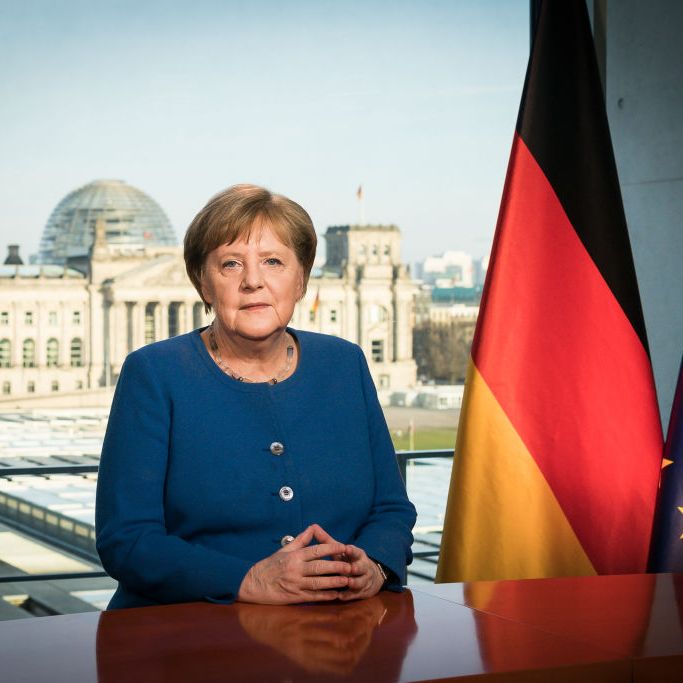
Photo: Handout/Getty Images
Angela Merkel doesn’t do drama and she doesn’t give speeches on TV. So the mere fact that the German chancellor faced the camera across a desk and spoke to the nation Wednesday evening made the gravity of the situation clear. “Es ist ernst,” she said—“This is serious”— and those three bland words had more power than a hellfire sermon. Then she pivoted from statement to plea: “Take it seriously.” Quickly, she moved on to historical context, the reason for her unprecedented impromptu appearance: “Since German unification—no, since the Second World War—no challenge to our nation has ever demanded such a degree of common and united action.”
Merkel made no specific announcements and called for no nationwide curfews or additional closures. Yet what gave her address its force was her tone, which was direct, honest, and searingly empathic. She laid bare not just the test we all face but also the solace that leadership can provide. Without accusations, boasts, hedges, obfuscations, dubious claims, or apocalyptic metaphors she did what a leader is supposed to do: explain the gravity of the situation and promise that the government’s help would flow to everyone who needed it. She gave full-throated thanks to front-line medical workers, assured Germans that there is no need to hoard, and paused to offer gratitude to a group of workers who rarely get recognized by heads of state on national TV: “Those who sit at supermarket cash registers or restock shelves are doing one of the hardest jobs there is right now.”
This is a war without a human enemy, and Merkel lay no blame. She asked for the sacrifice of discipline, for heroic acts of kindness. She acknowledged the paradox in calling for solidarity and apartness at the same time. She understood how painful it is that just when people desperately want to come together, families and friends have to endure separation. To Americans, Merkel’s appeals to democracy, and her sadness at having to use the full weight of her authority, come as a welcome shock. No German could listen to her calls for self-policing without recalling that she grew up in East Germany under the eye of the Stasi. “For someone like myself, for whom freedom of travel and movement were hard-won rights,” she said, “such restrictions can only be justified when they are absolutely necessary.” No American could hear that statement and fail to contrast it with our own leader’s ringing words: “I don’t take responsibility at all.”

March 20, 2020 from Facebook.com
From somewhere in the digital ether:
“In the last week:
Air pollution has cleared up
The homeless have been housed
Evictions have been banned
The stock market is no longer an indicator of public wellness
Water shutoffs have been suspended
Political prisoners have been freed and jails have been emptied
The debt system has been halted
Universal Basic Income has been proposed by conservatives
People care about our elders, our vulnerable and our frontline workers
Mutual aid networks are in full swing
People are taking responsibility to keep our communities safe and healthy
And we are all slowing down, paying attention to our bodies and finding intentional ways to connect with our loved ones.
It’s like Mother Nature is trying to tell us something…..”
| New post on Conscious Community Newsletter by kuhlgroup7 By Heather C. Williams This is my third article in the wonderful Conscious Community Newsletter. What is a “Conscious Community”? A conscious community, to me, is composed of individuals who are aware of the value of people working together and caring for the things they share (the common good – ie air, water, soil, nutritional, housing and healthcare needs, to name a few). One of our shared needs that is forgotten today is our need to have “a meaningful reason for BEING”. Jungian analyst, Dr. Edward F. Edinger says “Human society cannot long survive unless its members are psychologically contained within a central living myth and such a myth provides each individual with a reason for being.” Edinger goes on to say, “It is evident to thoughtful people that Western society no longer has a viable, functioning myth. Meaning is lost. In its place, primitive contents are reactivated and elemental motivations of power and pleasure are activated.”Today we are living in a reactionary kind of world. Completely different viewpoints about what is going on in our world are presented on TV News (Fox, MSNBC, CNN) and social media. We have conspiracy theories, fears of the “deep state”, gun violence, addictions, white supremacy. We also have a pretty strong cultural belief that if you are rich you are good – if you are poor you are not good. All this pretty much describes the “mythless” world we live in today. What are myths? Myths are ageless stories about the search for truth, meaning and significance. Joseph Campbell says, “Myths are clues to the spiritual potentialities of the human life.”The Mysterious Journey of Waking Up is my way of describing the story of our search for the deeper truth – a meaningful reason for being and an understanding of the deeper story of our True Identity: Beingness. Yes, we are physical beings on a physical planet in a universe full of energy and other solar systems. But there is more to you and me than our physical identity. We are MIND! It is MIND or Consciousness that is our true yet invisible identity. We do not know much about being Consciousness, yet I think you will agree that it is our thoughts, beliefs, habits, fears, assumptions, prejudices and memories that construct our daily lives. We must become more aware of this invisible part of us. My Teacher, Thane said: “We all must learn to live back and forth between matter space and mind space.”We are facing HUGE problems today – climate change, plastic in the ocean, PFAS in the water, gun violence, to name a few. We each need to engage the Mysterious Journey of Waking Up to our True Identity. Myths and stories once helped us understand this divine, spiritual part of us. |

Leave the conspiracy theories for later and take heart from these plague novels about action and resilience.
BY VALERIE SCHLOREDT MAR 19, 2020 (yesmagazine.org)
As the coronavirus spread across the world in the past month, book publishers reported spikes in sales for novels about pandemics. Thrillers such as The Stand by Stephen King and The Eyes of Darkness by Dean Koontz flew off bookstore shelves and landed on doorsteps along with deliveries of hand sanitizer and disinfectant.
I’ll leave King and Koontz for now. Life here in Seattle, close to ground zero for COVID-19 infections in the United States, is providing plenty of real-life suspense, dread, and plot twists. Instead I’m turning to some favorite books that offer, if not comfort, examples of encountering a new reality with dignity—and maybe even courage.
Pale Horse, Pale Rider by Katherine Anne Porter

I learned that pandemics were serious business thanks to my college reading of Katherine Anne Porter’s perfect 1936 novella, Pale Horse, Pale Rider. In 1918—the year of the “Spanish flu” that actually started in Kansas—newspaper reporter Miranda meets Adam, a soldier on leave. Their courtship is conducted in the jaunty dialogue of their generation of youth, but influenza, funerals, and “this filthy war” are omnipresent, and Miranda falls ill. Porter herself nearly died from influenza in 1918 and suffered months of complications. Her description of Miranda’s descent into the netherworld of delirium is a revelation—a near-death experience and recovery told by a veteran of this mental, physical, and spiritual battle.
The influenza pandemic of 1918 was made possible by the conditions of WWI—soldiers living in close proximity, populations on the move, malnutrition—and took an even greater human toll than the war, itself for nothing but hubris and imperialism. Pale Horse is a different sort of anti-war novel, a work of art about fighting for life and the wonder of just being alive.
Station Eleven by Emily St. John Mandel

This 2014 novel has been haunting me recently. It starts with a standard setup for speculative fiction: a pandemic has wiped out most of humanity and brought the world to a standstill. Twenty years later, people in search of safety wander through the wreckage. There’s danger and violence, but daily experience is marked more by absence—of almost everything that makes for civilization. No zombie apocalypse, just empty suburbs and an airport where flights are canceled forever. Electricity and the internet, remembered with awe and tenderness, aren’t possible in a ruined world without enough trained people to run them. Tentatively and with ingenuity, groups of roaming humans come together to make shelter, care for each other, and start over again.
By describing the blank spaces left after the disaster, Mandel evokes appreciation for the real, interconnected world we often take for granted. Interspersed with the post-collapse narrative is the life story of one Arthur Leander, an actor who dies on stage just before the pandemic takes hold. Compared to a sparsely populated post-plague dystopia, the quotidian details of Arthur’s life and relationships at first seem mysteriously random. Added up and viewed from a distance, where the many intersections of one imperfect human life become clear, the details indicate that there might be a pattern or importance to even one life that is beyond our understanding. There’s a stillness at the center of Station Eleven that invites contemplation: a quietness that resonates in our own cities at the present moment, where streets are calmer, restaurants are shut down, and buses nearly empty—where bus transportation is still operating. Listening, we understand how much we value our usual, everyday, imperfect world.
The Plague, by Albert Camus
The novel’s setting is distant—an Algerian city during French colonialism—but the beginnings of a pandemic in The Plague parallel some of what we’ve seen recently in the United States. Early indications of impending crisis are ignored by most of the townspeople and denied by bureaucratic obfuscation. When action is finally taken, an emergency is already underway. Suddenly residents awaken to a new reality—they’re captives in a closed town where contagious disease is around every corner and they have little control over their own fates.
The plague in this case is bubonic, the literary mother of all plagues, and the terrible deaths of its victims are described with realistic detail. Camus, who fought in the French Resistance, began the novel in the early 1940s and published it a few years after the Second World War, when it was understood as a powerful allegory for the incremental creep of fascism.
We are not facing the bubonic plague. Creeping fascism, on the other hand, may be another question. There’s guidance to be found in the novel’s central question: How should humans respond to the reality of extreme suffering? Some characters attempt to escape the existential battle, and some seek to profit from it. Some choose another path, like the central character of Dr. Rieux, who repeatedly exposes himself to contagion to tend to the sick, and the writer Jean Tarrou, who organizes a crew to clear the streets of bodies, risking his own life for public safety.
It’s one thing to behave with social responsibility in the short term. Camus knew something about people who dedicate themselves to the common good even when the struggle against the plague—whatever sort of plague it may be—seems endless. “Heroism and sanctity don’t really appeal to me, I imagine. What interests me is being a man,” says Dr. Rieux, referring to his personal code for a meaningful human life. He and Tarrou do what needs to be done in the moment—care for the sick, tend to the dead, and keep faith with the living.
| VALERIE SCHLOREDT is the books editor at YES! CONNECT: LinkedIn |
