

Monthly Archives: August 2019
Tulsa, Oklahoma, Translation class of August 10-11, 2019


Gabriel Byrne on getting to the top

(When) Will Americans Learn to Be Citizens Before They’re Consumers?
Americans Were Told to Put the Economy Before Society. But Their Challenge Now is Putting Society Before the Economy.

Aug 10, 2019 (medium.com)
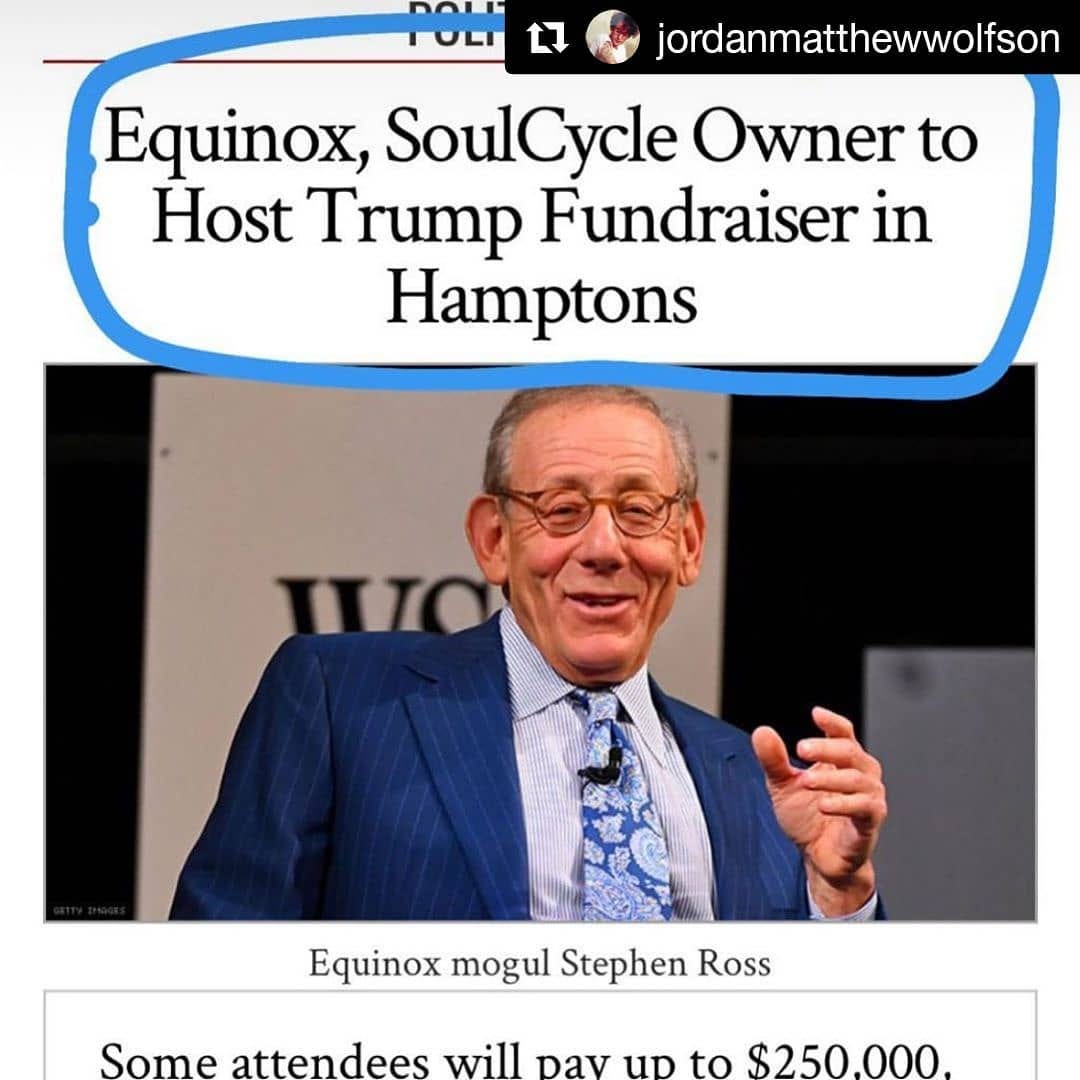
In case you haven’t heard, the owner of Equinox and Soulcycle was revealed to be a major Trump supporter and donor. A fact which caused shock and consternation amongst the customers of these businesses, who tend to be if not gays and women, then at least the city-dwelling urban elites so despised by Trumpists. People called for a boycott. And in response, the GOP declared it all “harassment.” It’s verging on comedy, isn’t it? It raises the question — to me, at least: why don’t Americans care more who they do business with?
Let me put that to you a different way. One of the things that mystifies Europeans about Americans is that Americans, well, happily do business with terrible people. That’s not to say that Europeans never do — but there’s certainly a more conscious attitude to shopping, buying, the act of being a “consumer.” Where there’s happiness, there’s a kind of grudging reluctance — if there’s business at all. In other words, we might say that Europeans put being citizens before being consumers. Or at least they try to. In Europe, if a business is a bad actor, it will be hit with boycotts, protests, quiet but stern government intervention. Attitudes change, and change fast. Such a business will pay a real price — so European business are far better behaved, by and large.
Every society has norms and attitudes. And one of the attitudes that makes America really genuinely different from almost anywhere else in the world is that the average American doesn’t seem to care very much — not nearly enough — who he or she does business with. That company’s pillaging the planet? That one’s killing the dolphins? That one’s using child labour? That one’s corroding our democracy? Never mind! That’s not my problem. I just want my stuff. I need my stuff. Give me my stuff! Now!! I don’t care who else pays the hidden price!!
That matters. Because capitalism’s hardly going to be able to survive if people go on acting like brain-dead zombies of pleasure — that just proves all it’s fiercest critics right. So how did Americans get here? Americans don’t care enough about who they do business with — at least historically — for many reasons, I think.
The first one is the most obvious. Caring about who you do business with is a luxury — and America’s a nation of bew poor people. Yes, really — the average American struggles to make ends meet, can’t pay his bills, and therefore dies in debt. No, it’s not abject poverty like the Congo — it’s the weird paradox of poor rich people. Yet that poverty carries real costs with it: you’re too poor, in terms of time, money, attention, and emotion, to afford anything but the cheapest thing. But the cheapest thing is also usually the most exploitative thing. Bang! A vicious cycle. A race to the bottom. That’s how the heart got ripped out of the American economy. Cheap stuff..bad jobs..giant monopolies…a bought democracy. Catch-22.
The second reason Americans don’t care enough who they do business with is that they’ve been told not to, over and over again, their whole lives long. The impersonal, anonymous market is the answer to all society’s problems — so generations of American economists, and the crackpot politicians who’ve believed them, have told people. It’s true that markets are tremendous forces of creativity and commerce — but it’s also true that personal relations matter in markets a very great deal, to weed out the bad apples, to enforce basic norms of decency and good behaviour. So Americans don’t care enough who they do business with because intellectually, they’re not supposed to — it’s something of a thoughtcrime in America to imagine that people should care about anything than the Everyday Low Price.
In other words, American thinking, which puts economics on a weird, deified pedestal, puts being a consumer before being a citizen. How’s that worked out? Disastrously, I think it’s self-self-evidently fair to say.
The third reason that Americans don’t care enough who they do business with is that it’s historically been hard to do so. Even when the North was imagining that it rejected slavery — it was quite happy to enjoy the fruits of the South, which is to say, slave labour. Northern stock markets traded in Southern companies, and Northern speculators got rich. Upscale Northern department stores were stock full of the latest Southern products — as were the grocery stores and liquor stores and so on. For Americans to care who they did business with, because their economy was powered by slavery the way ours is powered by oil today, would have meant that they couldn’t have consumed much at all. And who would’ve wanted to do that?
All three of those reasons are powerful enough. But I think there’s a fourth one, which is hidden in plain sight.
Americans don’t care enough who they do business with because the central belief of American society has always been in a kind of individualistic freedom taken to an absurd extreme. Hey, you want to buy stuff made with child labour? Stuff that destroys the forests and the oceans? Not my problem, buddy! Yours! But what if the kid being exploited is mine? What is the forest being ripped down is in my yard?
But you can’t have a society of extreme individualists, my friends. It’s impossible. To have a society, you need to have citizens, and to be a citizen means putting the common wealth, the public interest, at least on par with your own — if not above it. If each of us is only ever looking out for ourselves — we are not a society, and this is the part that American still don’t seem to get.
You know those guys who carry AK-47s to Walmart? Can you have a society of such people? What would it look like? It wouldn’t have roads, schools, hospitals, or universities. What it would have is a lot of guns, a lot of violence, and the rule of the predatory over everyone else. In other words, it wouldn’t be a society as we know it — something much more like a jungle. It would be the ultimate free market, in other words. But markets must have limits. Americans don’t seem to understand this point very well. There are many things that should never be traded in markets. Like what? Like people. Like brides. Like kids. Like slaves. Like democracy, truth, equality, justice.
Now, those might sound like abstractions, but they are not. If I’m willing to buy something that’s built on the back of your kids’ labour, I’m also saying that your kid doesn’t deserve to be educated, just exploited. And the same goes for the planet, democracy, justice, equality, truth, and so on. If I’m willing to buy something that’s made in a way that exploits and preys on these things, I’m also saying that they come last for me. But that’s precisely the same thing as saying I’m an extreme individualist — who believes only in the social atom, the survival of the strong over the weak, in myself, in ego, in appetite. And that’s the equivalent of saying society doesn’t exist for me. Bang! The vicious spiral kicks off. People don’t invest in each other — and soon enough, poverty sets in for all, or most.
(Let me put that to you more formally. In economist-speak, we might say that Americans are now too poor to be able to afford the positive externalities of social goods, like democracy. And yet they’re also too poor now to be able to go on internalizing the negative externalities of things like pollution, stagnation, inequality, corruption, and despair.)
The difference between being a citizen and a consumer couldn’t simpler — or starker. A consumer looks out for themselves. Using a simple equation: do I get the most pleasure for the least money? Do I get the most status, the biggest rush, the most necessity, the most use — for the lowest amount I can possibly spend? I might be willing to pay more some things — a designer pair of shoes — if I know it will give me kinds of pleasure I crave more, like status. But the equation remains the same: it is an infantile narcissistic one, concerned with egoistic pleasure, in a simplistic way. To make this system go, capitalism must forever make people feel like they’re not worth very much to begin with.
Being a citizen is the polar opposite. It means I have to think about what’s best for everyone — not just me. And this is the part Americans haven’t gotten for a very long time. Most Americans think voting is about expressing what they want for themselves — not what they want for everyone. But being a citizen is squarely about me defending the common wealth, the public interest. Expressing it. Enacting it. Living it. It means that I must believe everyone in society — including me — has intrinsic, inalienable, inherent worth, that must be nurtured, carefully nourished, protected, delicately cultivated.
Now. What happens to a nation that’s a set of consumers before it’s a set of citizens — if it bothers to be citizens at all? Well, everyone looks out for themselves — in an infantile way. They maximize their pleasure, their consumption, and minimize their investment. And that’s exactly what happened to America. It has had a severe, chronic, shortage of investment for decades now — precisely because people have reduced themselves to consumers. Money trickles upwards to terrible people, who then use it to fund extremist causes — but it never gets invested back in society in a positive way that reflects any notion of a common wealth.
Americans have been — have reduced themselves to being — mere consumers far too long. It’s economy has been driven by consumption, it’s society has been withered away by consumerism, why people feel so depressed and hopeless, and it’s democracy has imploded as a result of those three things — because when you don’t care about who you do business with, bad guys will get rich, and spend their money ripping apart the foundations of decency, humanity, and sanity, by selling you back the self-worth they took from you in the first place. They install demagogues, they buy influence, they build monopolies, they shred norms and values, they corrode and twist. Soon enough, a whole society comes to be just a pale reflection of their greed, vanity, violence, ignorance, and egotism.
I can put that in a simple way. Americans have long been told to put the economy before society. Consume, consume, consume. But now their challenge is to put society before the economy. Invest, invest, invest. In the big sense: society, meaning democracy, civilization, modernity, decency, humanity. That’s because a functioning society is the point of an economy — the point of society isn’t the economy. If we put “the economy” first — which is just an abstraction — there’s no solid basis for the foundations of prosperity in the first place, whether hospitals, schools, or well-behaved businesses…there’s just aggressive individualism, which grows more extreme, until we’re all carrying AK-47s to Walmart.
It’s an old story — as old as time. Are Americans finally learning its lesson? Are they going to finally be citizens before consumers? Let us hope so.
Umair
August 2019

What is Translation?
A few days ago, a mass email was sent out about the upcoming online Translation Workshop on August 18 at 11 a.m. Pacific time. It was sent to our usual list of people, many of whom have never taken The Prosperos class called Translation.
I apologize if this was confusing to some of you. So I thought I’d try to give you a taste of what Translation is. Translation is a class developed by Thane of Hawaii (co-founder of The Prosperos) back in 1956 or so. Translation uses syllogistic reasoning (major premise, minor premise, and conclusion) and the abstract meaning of words to Translate apparent reality back into Universal Truth.
Heather Williams, H.W., M., approaches it in an interesting way. Translating from English to French, she says, could be considered a horizontal translation, from one language to another. But Translation as we teach it in The Prosperos, is a vertical Translation. We are Translating words (in the form of sense testimonies which are inherently limited and possibly even unwell) into their elders which are always abstract, complete, indivisible and whole.
We are Translating apparent facts into Truth. And what is Truth?you ask. Well, Truth is that which is so. That which is not Truth is not so. Therefore Truth is all there is.
That’s a pretty good start and that is, in fact, how we start each and every Translation. It’s the major premise of the first step of a Translation. And it’s the foundation on which the entire Translation rests.
The rest is up to you.
Translation is a class which is given frequently, sometimes live and sometimes online. Watch this space for further information.
–Mike Zonta, H.W., M., editor of the Bathtub Bulletin
And now a few words from Ben Gilberti, H.W., M., who will be instructing the Translation workshop on August 18:
Consistent Translation results in the elevation of the quality of the flow of one’s life as it moves more in alignment and harmony with attributes of Truth newly revealed.
Your life feels like it’s becoming symphonic. Extraordinary coincidences chime perfectly in place. Every encounter is the perfect encounter and ripe with the most extraordinary of all opportunities: The opportunity to Translate yet another mass-consciousness belief, and as a consequence reveal attributes of Truth that were previously concealed. As you flow into being one note in the divine symphony, you find yourself feeling more intimate with the whole symphony.
Your life becomes the great adventure of discovering the limitlessness of Truth. Any appearance, great or small, is another opportunity to discover yet even more of Truth’s limitlessness.
–Ben Gilberti, H.W., M.
SUNDAY NIGHT TRANSLATION GROUP – 8/11/19
Translators: Mike Zonta, Hanz Bolen, Melissa Goodnight, Richard Branam, Alex Gambeau
SENSE TESTIMONY: Debt can be misrepresented and inflated such that it causes victimization.
5th Step Conclusions:
1) Truth, the only premise, the only conclusion, presents its presents/presence presently, by committing Truth, openly, flawlessly and uninflatably, its only obligation being to Itself.
2) Truth is the Infinite establish Eternal Awareness at the speed of Atomic Light.
3) One Infinite Consciousness is always presenting and knowing the Perfect Truth of Itself, which is completely unopposed and inviolate — thus assuring absolute deliverance of safety, surety, and security — its limitlessly invaluable currency.
4) Truth is the Magnificent unchangeable Essence: Wholly Sacred Embodiment of well shaped Manifestations, this Consecrated strength of skillset, the only Open Ended Deposit made unto itself aa God centered Equanimous Identity in pleasing Gratitude.
5) Truth I AM, Touching All, Powering All, The Presence of All, Knowing All, is only always everywhere Valuable Agreeable and Clear. Truth is Valuable Agreeable and Clear.
All Translators are welcome to join this group. See BB Upcoming Events.
In first for Arab world, openly gay candidate runs for Tunisia’s presidency
Text by:FRANCE 24
Video by: Ethan HAJJI
Liberal Party leader Mounir Baatour, an openly gay lawyer, announced on Thursday he would stand in Tunisia’s presidential elections, marking a first for the Arab world.
Baatour’s candidacy marks “a first which will without doubt be a benchmark in history”, his party said.
A lawyer at the Court of Cassation, Tunisia’s highest court, the Liberal Party leader presents himself as a defender of LGBT rights.
But ahead of his announcement, a petition signed by 18 groups who campaign for those rights warned his candidacy would represent a “danger” for their communities.
Baatour was jailed for three months in 2013 for “sodomy” with a 17-year-old student, an accusation he has always denied.
Having a criminal record does not automatically ban Tunisians from standing in elections.
‘The fact that I’m gay doesn’t change anything’
“The fact that I’m gay doesn’t change anything. It’s a candidacy like all the others,” Baatour told AFP.
“I have an economic, social, cultural and educational programme for everything that affects Tunisians in their daily lives,” he added.
Baatour is co-founder of the Shams association, through which he has for years campaigned against Tunisia’s criminalisation of gay sex, which carries a sentence of up to three years.
Convictions for same-sex relations rose by 60% last year to 127 from 79 in 2017, according to Shams, which documents arrests and cases. It recorded more than 25 convictions in the first quarter of 2019.
Last month’s petition against his potential candidacy was signed by numerous organisations for lesbian, gay, bisexual, transgender, intersex and queer rights.
‘Danger to our community’
“We think that Mr Baatour represents not only a threat but also a huge danger for our community,” the petition read.
But in an interview with REUTERS last month, the Liberal Party candidate said it was important to open a debate on LGBT rights in the country.
“I saw there is no progress on this matter in Tunisia: there is no politician who is endorsing these cases and in my opinion I am the best person who can change the Tunisian society,” he said.
Presidential hopefuls have until Friday to submit their candidacy, ahead of September 15 polls.
(FRANCE 24 with AFP, REUTERS)
Translation Workshop online on Sunday, August 18, 2019 at 11 a.m. Pacific time
Toni Morrison (February 18, 1931 to August 5, 2019)

Chloe Anthony Wofford “Toni” Morrison was an African-American novelist, essayist, editor, teacher, and professor emeritus at Princeton University. Her first novel, The Bluest Eye, was published in 1970. Wikipedia
Did we evolve to see reality as it exists? No, says cognitive psychologist Donald Hoffman.
- Donald Hoffman theorizes experiencing reality is disadvantageous to evolutionary fitness.
- His hypothesis calls for ditching the objectivity of matter and space-time and replacing them with a mathematical theory of consciousness.
- If correct, it could help us progress such intractable questions as the mind-body problem and the conflict between general relativity and quantum mechanics.
What is reality and how do we know? For many the answer is simple: What you see — hear, feel, touch, and taste — is what you get.
Your skin feels warm on a summer day because the sun exists. That apple you just tasted sweet and that left juices on your fingers, it must have existed. Our senses tell us that reality is there, and we use reason to fill in the blanks — that is, we know the sun doesn’t cease to exist at night even if we can’t see it.
But cognitive psychologist Donald Hoffman says we’re misunderstanding our relationship with objective reality. In fact, he argues that evolution has cloaked us in a perceptional virtual reality. For our own good.
Experiencing a virtual interface

Donald Hoffman says that we we perceive of as reality is an interface of symbols hiding vastly more complex interactions. He likens this to how desktop icons represent software. Image source: Pixabay
The idea that we can’t perceive objective reality in totality isn’t new. We know everyone comes installed with cognitive biases and ego defense mechanisms. Our senses can be tricked by mirages and magicians. And for every person who sees a duck, another sees a rabbit.
But Hoffman’s hypothesis, which he wrote about in a recent issue of New Scientist, takes it a step further. He argues our perceptions don’t contain the slightest approximation of reality; rather, they evolved to feed us a collective delusion to improve our fitness.
Using evolutionary game theory, Hoffman and his collaborators created computer simulations to observe how “truth strategies” (which see objective reality as is) compared with “pay-off strategies” (which focus on survival value). The simulations put organisms in an environment with a resource necessary to survival but only in Goldilocks proportions.
Consider water. Too much water, the organism drowns. Too little, it dies of thirst. Between these extremes, the organism slakes its thirst and lives on to breed another day.
Truth-strategy organisms who see the water level on a color scale — from red for low to green for high — see the reality of the water level. However, they don’t know whether the water level is high enough to kill them. Pay-off-strategy organisms, conversely, simply see red when water levels would kill them and green for levels that won’t. They are better equipped to survive.
“[E]volution ruthlessly selects against truth strategies and for pay-off strategies,” writes Hoffman. “An organism that sees objective reality is always less fit than an organism of equal complexity that sees fitness pay-offs. Seeing objective reality will make you extinct.”
Since humans aren’t extinct, the simulation suggests we see an approximation of reality that shows us what we need to see, not how things really are.
Hoffman likens this approximation to a desktop interface. When a novelist boots up their computer, they see an icon on their desktop that represents their novel. It’s green, rectangular, and sits on the screen, but the document has none of those qualities intrinsically. It’s a complex string of 1s and 0s that manifests as software running as an electric current through a circuit board.
If writers had to manipulate binary to write a novel, or hunter-gatherers had to perceive physics to throw a spear, chances are both would have gone extinct a long time ago.
“In like manner, we create an apple when we look, and destroy it when we look away. Something exists when we don’t look, but it isn’t an apple, and is probably nothing like an apple,” Hoffman writes. “The human perception of an apple is a data structure that indicates something edible (a fitness pay-off) and how to eat it. We create these data structures with a glance, and erase them with a blink. Physical objects, and indeed the space and time they exist in, are evolution’s way of presenting fitness pay-offs in a compact and usable form.”
Consciousness all the way down
At this point, you are likely wondering, “Well, then what is reality? If my dog is only a data structure indicating a furry creature that enjoys fetch and hates baths, then what lies beneath that representation?”
For Hoffman the answer is consciousness.
When neuroscientists and philosophers develop theories of consciousness, they traditionally look at the brain. If Hoffman is correct, they can’t completely understand consciousness via brain activity, because they are looking at an icon of a material organ that exists in space and time. Not reality.
Hoffman wants to start with a mathematical theory of consciousness as a baseline — looking at consciousness outside of matter and the space-time it may not inhabit. His theory further calls for a potentially infinite interaction of conscious agents, from the simple to the complex. In this formulation, consciousness may even exist beyond the organic world, all the way down to electrons and protons.
“I’m denying that there is such a thing in objective reality as an electron with a position. I’m saying that the very framework of space and time and matter and spin is the wrong framework, it’s the wrong language to describe reality,” Hoffman told journalist Robert Wright in an interview. “I’m saying let’s go all the way: It’s consciousness, and only consciousness, all the way down.”
Hoffman calls this view “conscious realism.” If proven correct, he argues it could make headway on such intractable quandaries like the mind-body problem, the odd nature of the quantum world, and the much sought-after “theory of everything.”
“Reality may never seem the same again,” Hoffman writes.
Simulation tested, science approved?
Hoffman’s hypothesis is fascinating, and if you need a subject for a bar-side bull session, you could do worse. But before anybody suffers an existential meltdown, it’s worth noting that the hypothesis is just that. A hypothesis. It has a way to go before overturning the hypothesis that the brain manifests consciousness, and its detractors have thrown down a few gauntlets.
One such critique argues that while we may not perceive reality as it is that doesn’t mean our perception is not reasonably accurate. Hoffman would argue we see an icon that represents a snake, not a snake. But then why do nonpoisonous snakes evolve colorings to match poisonous ones? If there is no objective reality to mimic, why would mimicry prove a useful adaptation, and why would the interfaces of multiple species be fooled by such tricks?
Another concern is a chicken-and-egg problem, as Wright pointed out in their discussion. Current orthodoxy argues the universe existed for billions of years before life emerged. This means the first living organisms began their evolutionary tracks by responding to a preexistent inorganic, unconscious environment.
If Hoffman’s argument is correct and consciousness is primary, then why develop life and the illusion of reality? Why are some of these unreal symbols ultimately so harmful to consciousness? The network of consciousnesses, one assumes, got along without life for billions of years.
This is why Michael Shermer equates Hoffman’s argument to something akin to the “God of the gaps.” He writes:
“No one denies that consciousness is a hard problem. But before we reify consciousness to the level of an independent agency capable of creating its own reality, let’s give the hypotheses we do have for how brains create mind more time. Because we know for a fact that measurable consciousness dies when the brain dies, until proved otherwise, the default hypothesis must be that brains cause consciousness. I am, therefore I think.”
Then there’s the issue of whether Hoffman’s hypothesis is self-defeating. If our perceptions of reality are merely species-specific interfaces overlaid upon reality, how do we know consciousness is not simply another such icon? Maybe the “I” of everyday experience is a useful fantasy adapted to benefit the survival and reproduction of the gene and not part of the operating system of reality.
None of this is to say that Hoffman and others can’t meet these challenges with further research. We’ll see. It’s just to say that there’s a lot of room for exploration into some fascinating ideas. As Hoffman would agree:
“[This theory] has made life far more interesting,” he told Wright. “There’s lots to explore, a lot I don’t know, and things that I thought I knew I had to give up. And so, it makes life far more interesting for me.”