
From Wikipedia, the free encyclopedia
Encore: Shakespeare And Power! | Under The Skin #41 with Russell Brand & Tony Howard
Russell Brand
Published on Jan 6, 2018
Is Shakespeare still at the heart of British culture? Tony Howard discusses Shakespeare’s continued relevance in reflecting the shifts in British society; the marginalisation of Black and Asian performers; and how the entertainment sector still faces urgent calls for greater diversity.
Unf*ck Yourself From The Modern World with my new book Recovery
Get it here in US: http://tinyurl.com/ydcwz3kd
Your Horoscopes — Week Of May 14, 2019 (theonion.com)

Taurus | April 20 to May 20
This is a great time for romance to bloom at work because they’re about to lay everyone off and inspire an office shooting spree, so hey, gather ye rosebuds.

Gemini | May 21 to June 20
You’re wasting your potential by living life as you do now, but not as much as you’re wasting your potential energy by not falling from high places.

Cancer | June 21 to July 22
You’re not the kind of person who lets social conventions dictate how you live your life, but it would be nice if you could pull that off without being such an asshole.
Leo | July 23 to Aug. 22
The FBI will have to ask you some tough questions next week, such as whether true love really exists and what happens after we die.

Virgo | Aug. 23 to Sept. 22
You’ve tried everything you can think of to get that special person to like you, which of course explains why you’re fleeing a nationwide manhunt.

Libra | Sept. 23 to Oct. 22
It turns out there are actually plenty of problems you can’t solve with a smile, a sincere heartfelt talk, or a large, heavy piece of lumber.

Scorpio | Oct. 23 to Nov. 21
In hard economic times like these, people tend to spend more money on booze and entertainment, but they don’t have to as long as you’re there to go into hilarious convulsions after drinking wood alcohol.

Sagittarius | Nov. 22 to Dec. 21
They say you can never step into the same river twice, but thanks to crocodiles and your refusal to learn how to swim, once is all you’ll need.

Capricorn | Dec. 22 to Jan. 19
There aren’t many people who get as angry at a poorly made Manhattan cocktail as you do, making it very easy for investigators to figure out what happened.

Aquarius | Jan. 20 to Feb. 18
Everyone has a part to play in God’s plan. For instance, your job is to create a distraction so that God can get away with the money in all the confusion.

Pisces | Feb. 19 to March 20
They say hard work never hurt anyone, and that’s true, as far as it goes. The work you do at the combination gasoline refinery and drill-bit plant isn’t exactly hard.

Aries | March 21 to April 19
Your belief that everything happens for a reason may remain unshaken in the face of personal tragedy, but you’ll certainly be upset when you find out the reason is “to get the Zodiac some chicks.”
Could a tattoo help you stay healthy?
Can we make tattoos both beautiful and functional? Nanotechnologist Carson Bruns shares his work creating high-tech tattoos that react to their environment — like color-changing ink that can tell you when you’re getting a sunburn — and shows exciting ways they can deliver real-time information about our health.
This talk was presented to a local audience at TEDxMileHigh, an independent event. TED’s editors chose to feature it for you.
ABOUT THE SPEAKER
Carson Bruns · Chemist, visual artist
A creator of color-changing tattoo inks and shape-shifting molecular machines, Carson Bruns uses nanoscience to invent new materials and technologies.
Wendy Mandy’s four mantras

1) DIN ( Do It Now )
Many people procrastinate on actions for fear of failure, making the ‘wrong’ decision or fear of judgement. In truth there is no ‘wrong’ decision or anyone else’s opinion that matters. It is only learning.
We learn from ‘mistakes,’ we don’t learn from doing nothing. Consciousness, like nature, is fundamentally benevolent and loves flow & movement.
2) Stay Present
Most people enjoy life if they stay present to what is. If you are caught in an airport for example, chill out, trust you will get where you’re going when you are meant to, and watch people.
If your bus is late in the rain, watch the raindrops fall off umbrellas or the bus stop window. Raindrops are fascinating.
If you are alone, try to meditate. If you are with people try to concentrate on showing up for yourself in the interaction and don’t get drawn into dramas so you can be strong for others (especially children).
Most anxiety comes from an inability to trust being present to the moment and to experience what is happening. Nothing will ever be as bad as it felt when we were anxious as a child. It is just a memory that is triggered. If we can stay present and breathe through the discomfort it will pass. If we try to escape it through addiction to an outside source we will never understand or overcome the discomfort.
3) Inner Discipline
If you care for yourself you can care for others. This means you have to be disciplined when you are creating good habits, not bad habits, around self-care. Don’t be lazy with yourself, try to motivate yourself as though you were motivating someone else. No one else can do it for you. If you didn’t get what you needed as a child, no one else but yourself will parent you now.
Also, no one can do anything ‘to’ you. They can only trigger your desire to grow. This takes out blame from any situation.
4) Gracious Vagueness
This term means that if you show compassion for yourself you can show compassion for others. This includes saying ‘no’ graciously to others when they want something of you, if you are unable to give it.
For example, a child may nag you for new trainers. Rather than be stern, rude, or annoyed, all you have to do is direct them kindly to another subject. Or have compassion for their desire and staying firm in a kind way about your inability to buy them the new trainers, rather than getting into an argument.
If a person interrupts you on the street for money for a charity, you don’t have to be hostile, you can just say “well done for trying to help the charity, but I can’t give you any time or money today.”
In other words, even if you can’t fulfil someone else’s expectations there is no reason to be rude or hostile. Just show compassion for their desires and be firm and kind in your approach.
….
Obviously all these mantras are easier if you can experience some kind of process work. I encourage you to seek out any practitioners, workshops, The Fellowship, or plant medicine (taken properly in ceremony) to help you do this.
Love,
Wendy
Wendy Mandy is a wonderful healer and leader and you will LOVE this episode of #UnderTheSkin…. You can listen to it this Sat 6th April! 460460. 109 Comments47 Shares. Related Videos.Russell Brand – Under The Skin with Russell Brand & Wendy Mandy …Facebook
Liberal Relieved He Never Has To Introspect Again After Assembling All The Correct Opinions
May 13, 2019 (theonion.com)
MADISON, WI—Taking a moment to reflect on his hard-won personal accomplishment, area liberal Tom Hudson expressed relief Monday that he would never again have to engage in self-examination after finally assembling all the correct opinions. “It definitely wasn’t easy, but now that I have all the proper perspectives on the world all perfectly arranged inside of my head, I know I’ll never need to question my own thoughts, beliefs, or opinions ever again,” said Hudson, proudly recounting his previous efforts at researching all necessary sociopolitical issues, conducting a rigorous self-exploration to determine which of his behaviors were problematic or harmful, and finally achieving the proper balance of beliefs to ensure once and for all that he is an indisputably good person. “It’s such a huge weight off my shoulders. I never have to consider my place in society or my impact on the issues ever again now that I know exactly how to present myself as one of the good guys. This feels amazing.” Hudson was then immediately and savagely attacked by his fellow liberals, who insist that his current views are nowhere near progressive enough.
Digital humans that look just like us
In an astonishing talk and tech demo, software researcher Doug Roble debuts “DigiDoug”: a real-time, 3-D, digital rendering of his likeness that’s accurate down to the scale of pores and wrinkles. Powered by an inertial motion capture suit, deep neural networks and enormous amounts of data, DigiDoug renders the real Doug’s emotions (and even how his blood flows and eyelashes move) in striking detail. Learn more about how this exciting tech was built — and its applications in movies, virtual assistants and beyond.
This talk was presented at an official TED conference, and was featured by our editors on the home page.
ABOUT THE SPEAKER
Doug Roble · Computer graphics software researcher
Doug Roble has found a career combining the things he loves: math, computers, movies and imagination.
Study finds that children raised without religion show more empathy and kindness
NOVEMBER 5, 2015 BY DAN AREL (patheos.com)
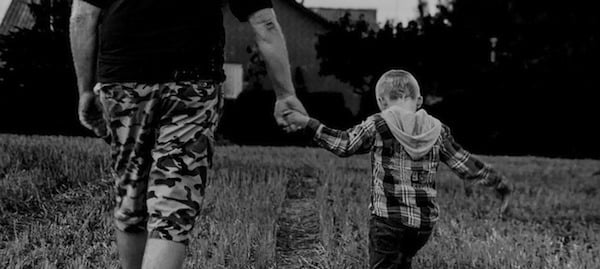
A study conducted by the University of Chicago has found that children raised in non-religious households are kinder and more altruistic than those raised with religion.
The study which was published in the journal Current Biology looked at 1170 children between the ages of 5 and 12 years in six countries (Canada, China, Jordan, Turkey, USA, and South Africa) and examined “the religiousness of their household, and parent-reported child empathy and sensitivity to justice.”
The study found that “family religious identification decreases children’s altruistic behaviors” and “children from religious households are harsher in their punitive tendencies.”
In other words, children raised in the absence of religion are more giving and generous, as the study states:
Across all countries, parents in religious households reported that their children expressed more empathy and sensitivity for justice in everyday life than non-religious parents. However, religiousness was inversely predictive of children’s altruism and positively correlated with their punitive tendencies. Together these results reveal the similarity across countries in how religion negatively influences children’s altruism, challenging the view that religiosity facilitates prosocial behavior.
“Our findings contradict the common-sense and popular assumption that children from religious households are more altruistic and kind toward others. In our study, kids from atheist and non-religious families were, in fact, more generous,” said Prof. Jean Decety who led the study.
According to the study as well, the findings did not change much over time and children raised in very religious households didn’t follow the natural trend of being more giving with age.
Consistent with previous studies, in general the children were more likely to share as they got older. But children from households identifying as Christian and Muslim were significantly less likely than children from non-religious households to share their stickers. The negative relation between religiosity and altruism grew stronger with age; children with a longer experience of religion in the household were the least likely to share.
The study also showed that punishment in religious households was much more severe as religious parents “favored stronger punishments for anti-social behavior and judged such behavior more harshly than non-religious children. These results support previous studies of adults, which have found religiousness is linked with punitive attitudes toward interpersonal offenses.”“Together, these results reveal the similarity across countries in how religion negatively influences children’s altruism. They challenge the view that religiosity facilitates prosocial behavior, and call into question whether religion is vital for moral development—suggesting the secularization of moral discourse does not reduce human kindness. In fact, it does just the opposite,” Decety said.
The study comes as little surprise to those of us who raise kids outside of religion as I outlined in my own book Parenting Without God. Children raised without dictatorship type rules and threats of eternal punishment just seem to turn out nicer.
This does not mean that religious children cannot be good people or even grow up to be good people, but it does imply strongly that religious parenting is not an ideal parenting method and as Decety points out, it gives evidence to the case for a stronger secularization of the U.S. and the world.
Update: Since this studies release, other social scientists have questioned the findings. You can read more about that on Matthew Facciani’s post.
[Image: Creative Commons]
(Submitted by Don Smith on Facebook)
Doris Day on riches

“Gratitude is riches. Complaint is poverty.” —Doris Day
Virginia Woolf on Being Ill and the Strange Transcendence Accessible Amid the Terrors of the Ailing Body
By Maria Popova (brainpickings.org)

“The body provides something for the spirit to look after and use,” computing pioneer Alan Turing wrote as he contemplated the binary code of body and spirit in the spring of his twenty-first year, having just lost the love of his life to tuberculosis. Nothing garbles that code more violently than illness — from the temporary terrors of food poisoning to the existential tumult of a terminal diagnosis — our entire mental and emotional being is hijacked by the demands of a malcontented body as dis-ease, in the most literal sense, fills sinew and spirit alike. These rude reminders of our atomic fragility are perhaps the most discomfiting yet most common human experience — it is difficult, if at all possible, to find a person unaffected by illness, for we have all been or will be ill, and have all loved or will love someone afflicted by illness.
No one has articulated the peculiar vexations of illness, nor addressed the psychic transcendence accessible amid the terrors of the body, more thoughtfully than Virginia Woolf (January 25, 1882–March 28, 1941) in her 1926 essay “On Being Ill,” later included in the indispensable posthumous collection of her Selected Essays (public library).

Portrait of Virginia Woolf from Literary Witches.
Half a century before Susan Sontag’s landmark book Illness as Metaphor, Woolf writes:
Considering how common illness is, how tremendous the spiritual change that it brings, how astonishing, when the lights of health go down, the undiscovered countries that are then disclosed, what wastes and deserts of the soul a slight attack of influenza brings to view, what precipices and lawns sprinkled with bright flowers a little rise of temperature reveals, what ancient and obdurate oaks are uprooted in us by the act of sickness, how we go down into the pit of death and feel the waters of annihilation close above our heads and wake thinking to find ourselves in the presence of the angels and the harpers when we have a tooth out and come to the surface in the dentist’s arm-chair and confuse his “Rinse the mouth — rinse the mouth” with the greeting of the Deity stooping from the floor of Heaven to welcome us — when we think of this, as we are so frequently forced to think of it, it becomes strange indeed that illness has not taken its place with love and battle and jealousy among the prime themes of literature. Novels, one would have thought, would have been devoted to influenza; epic poems to typhoid; odes to pneumonia; lyrics to toothache. But no; with a few exceptions — De Quincey attempted something of the sort in The Opium Eater; there must be a volume or two about disease scattered through the pages of Proust — literature does its best to maintain that its concern is with the mind; that the body is a sheet of plain glass through which the soul looks straight and clear, and, save for one or two passions such as desire and greed, is null, and negligible and non-existent.
Five years earlier, the ailing Rilke had written in a letter to a young woman: “I am not one of those who neglect the body in order to make of it a sacrificial offering for the soul, since my soul would thoroughly dislike being served in such a fashion.” Woolf, writing in the year of Rilke’s death and well ahead of the modern scientific inquiry into how the life of the body shapes the life of the mind, rebels against the residual Cartesianism of the mind-body divide with her characteristic fusion of wisdom and wry humor, channeled in exquisite prose:

Art from the vintage science primer The Human Body: What It Is and How It Works.
“Is language the adequate expression of all realities?” Nietzsche had asked when Woolf was just genetic potential in her parents’ DNA. Language, the fully formed human argues as she considers the unreality of illness, has been utterly inadequate in conferring upon this commonest experience the dignity of representation it confers upon just about every other universal human experience:
In a passage Oliver Sacks could have written, Woolf pivots to the humorous, somehow without losing the profundity of the larger point:
And then, just like that, in classic Woolfian fashion, she fangs into the meat of the matter — the way we plunge into the universality of illness, so universal as to border on the banal, until we reach the rock bottom of utter existential aloneness:

Art by Nina Cosford from the illustrated biography of Virginia Woolf
In health, Woolf argues, we maintain the illusion, both psychological and outwardly performative, of being cradled in the arms of civilization and society. Illness jolts us out of it, orphans us from belonging. But it also does something else, something beautiful and transcendent: In piercing the trance of busyness and obligation, it awakens us to the world about us, whose smallest details, neglected by our regular societal conscience, suddenly throb with aliveness and magnetic curiosity. It renders us “able, perhaps for the first time for years, to look round, to look up — to look, for example, at the sky”:
But in the consolations of this transcendent communion with nature resides the most disquieting fact of existence — the awareness of an unfeeling universe, operating by impartial laws unconcerned with our individual fates:

Drawing from The Comet Book — a 16th-century pre-astronomical document of magical thinking about the laws of the universe.
It would take Woolf more than a decade to fully formulate, in a most stunning reflection, the paradoxical way in which these heartless laws are the very reason we are called to make beauty and meaning within their unfeeling parameters: “There is no Shakespeare, there is no Beethoven; certainly and emphatically there is no God; we are the words; we are the music; we are the thing itself,” she would write in 1939. Now, in her meditation on illness, she hones the anchor of these ideas:
[…]
It is only the recumbent who know what, after all, Nature is at no pains to conceal — that she in the end will conquer; heat will leave the world; stiff with frost we shall cease to drag ourselves about the fields; ice will lie thick upon factory and engine; the sun will go out.
This sudden awareness of elemental truth renders the ill person a sort of seer, imbued with an almost mystical understanding of existence, beyond any intellectual interpretation. Nearly a century before Patti Smith came to contemplate how illness expands the field of poetic awareness, Woolf writes:
Complement this portion of Woolf’s thoroughly fantastic Selected Essays with Roald Dahl on how illness emboldens creativity and Alice James — Henry and William James’s brilliant sister, whom Woolf greatly admired — on how to live fully while dying, then revisit Woolf on the art of letters, the relationship between loneliness and creativity, the creative potency of the androgynous mind, and her transcendent account of a total solar eclipse.