Pelkey’s Ponderings

As citizens who participate in and enjoy the benefits of the
democracy guaranteed by our government, we are as
philosophically oathbound as any president-elect to “preserve,
protect and defend the Constitution of the United States”. It is
to be hoped that each of the citizens in our society remain
intelligently informed as to the the intentions and behavior of
any of the elected officials we have entrusted with the safety of
our democratic rights and traditions. In this era of sound-bites,
twitter and opinion presented as news it is increasingly
challenging to remain so informed.

The responsibilities associated with citizenship in a
democracy can be subtle and often unstated. However, the right
and obligation to vote for what we believe to be ethically
necessary is obvious and readily to hand. Failure to exercise this
opportunity to demonstrate one’s moral u convictions is an insult to both citizenship and self-esteem.

As we approach November’s elections, it is useful to note that
despite the action of an outdated electoral college system, the
current Washington administration was not elected by a
majority of our fellow citizens and therefore holds no popular
mandate. The notion that currently emplaced policies represent
the will or intent of America is fundamentally false and ought be
repudiated at every opportunity.

With these thoughts in mind it is the more critical that each
of us who honor and respect the ethics and morality embedded
in our unique and humane constitution encourage all of our
friends and associates to get out the vote in November.
To paraphrase Benjamin Franklin, there are only two ways to

remove an unfit elected official – bullets or ballots. Since
violence is morally unconscionable we must place our faith and
hope in the voting booth as a remedy for the current ongoing
violations of the public trust.

Respectfully submitted for your consideration,

Mark Pelkey, Arizona registered voter

More at:  http://www.pelkeysponderings.com/

Two slits and one hell of a quantum conundrum (from Michael Kelly)

Below this message is a review ofm a book, from the journal Nature, about the still-unresolved double-slit experiment. By ‘unresolved’ I mean having a satisfying sense of why this happens the way it does. Although we can describe the effects of the experiments, as described in the review, as showing that quantum particles also have wave properties, this is not really an explanation for what is going on.

For example, we know that water molecules comprise liquid water, steam, and ice, yet we don’t say the H­2O molecule has liquid, vapor, and crystalline properties. Instead, we explain why at different temperatures and pressures collections of water molecules behave the way they do, and why other molecules behave in similar ways under similar conditions.

This is the kind of general insight we lack at the quantum level. Maybe one problem is that this kind of understanding is not possible at the quantum level; knowing that that would be a profound kind of knowledge, and hopefully would lend itself to constructively knowing how to know these phenomena.

My own belief is that we need more powerful particle accelerators to produce some new phenomena, which, when worked out, will yield a better grip on a more rigorous general theory of how physical reality works at this level.

What do you think?

–Michael

Two slits and one hell of a quantum conundrum

Philip Ball lauds a study of a famous experiment and the insights it offers into a thoroughly maddening theory.

07 August 2018

BOOKS AND ARTS

Philip Ball

Blue light splitting into wave like interference pattern during a double slit experiment.

Bands of light in a double-slit experiment. Credit: Timm Weitkamp/CC BY 3.0

Through Two Doors at Once: The Elegant Experiment That Captures the Enigma of Our Quantum Reality Anil Ananthaswamy Dutton (2018)

According to the eminent physicist Richard Feynman, the quantum double-slit experiment puts us “up against the paradoxes and mysteries and peculiarities of nature”. By Feynman’s logic, if we could understand what is going on in this deceptively simple experiment, we would penetrate to the heart of quantum theory — and perhaps all its puzzles would dissolve.

That’s the premise of Through Two Doors at Once. Science writer Anil Ananthaswamy focuses on this single experiment, which has taken many forms since quantum mechanics debuted in the early twentieth century with the work of Max Planck, Albert Einstein, Niels Bohr and others. In some versions, nature seems magically to discern our intentions before we enact them — or perhaps retroactively to alter the past. In others, the outcome seems dependent on what we know, not what we do. In yet others, we can deduce something about a system without looking at it. All in all, the double-slit experiment seems, to borrow from Feynman again, “screwy”.

The original experiment, as Ananthaswamy notes, was classical, conducted by British polymath Thomas Young in the early 1800s to show that light is a wave. He passed light through two closely spaced parallel slits in a screen, and on the far side saw several bright bands. This, he realized, was an ‘interference’ pattern. Caused by the interaction of waves emanating from the openings, it’s not unlike the pattern that appears when two pebbles are dropped into water and the ripples they create add to or dampen each other’s peaks and troughs. With ordinary particles, the slits would act more like stencils for sprayed paint, creating two defined bands.

We now know that quantum particles create such an interference pattern, too — evidence that they have a wave-like nature. Postulated in 1924 by French physicist Louis de Broglie, this idea was verified for electrons a few years later by US physicists Clinton Davisson and Lester Germer. Even large molecules such as buckminsterfullerene — made of 60 carbon atoms — will behave in this way.

You can get used to that. What’s odd is that the interference pattern remains — accumulating over many particle impacts — even if particles go through the slits one at a time. The particles seem to interfere with themselves. Odder, the pattern vanishes if we use a detector to measure which slit the particle goes through: it’s truly particle-like, with no more waviness. Oddest of all, that remains true if we delay the measurement until after the particle has traversed the slits (but before it hits the screen). And if we make the measurement but then delete the result without looking at it, interference returns.

It’s not the physical act of measurement that seems to make the difference, but the “act of noticing”, as physicist Carl von Weizsäcker (who worked closely with quantum pioneer Werner Heisenberg) put it in 1941. Ananthaswamy explains that this is what is so strange about quantum mechanics: it can seem impossible to eliminate a decisive role for our conscious intervention in the outcome of experiments. That fact drove physicist Eugene Wigner to suppose at one point that the mind itself causes the ‘collapse’ that turns a wave into a particle.

Ananthaswamy offers some of the most lucid explanations I’ve seen of other interpretations. Bohr’s answer was that quantum mechanics doesn’t let us say anything about the particle’s ‘path’ — one slit or two — before it is measured. The role of the theory, said Bohr, is to furnish predictions of measurement outcomes; in that regard, it has never been found to fail. (However, he did not, as is often implied, deny that there is any physical reality beyond measurement.) Yet this does feel rather unsatisfactory. Ananthaswamy seems tempted by the alternative idea offered by David Bohm in the 1950s. Here, quantum objects are both particle and wave, the wave somehow ‘piloting’ the particle through space while being sensitive to influences beyond the particle’s location. But Ananthaswamy concludes that “physics has yet to complete its passage through the double-slit experiment. The case remains unsolved.”

With apologies to researchers convinced that they have the answer, this is true: there is no consensus. At any rate, Bohr was right to advise caution in how we use language. There is nothing in quantum mechanics as it stands, shorn of interpretation, that lets us speak of particles becoming waves or taking two paths at once. And there is no reason to regard the wavefunction as more or less than an abstraction. This mathematical function, which embodies all we can know about a quantum object (and features in the iconic equation devised by Erwin Schrödinger to describe the object’s wave-like behaviour) was characterized rather nicely by physicist Roland Omnès. He called it “the fuel of a machine that manufactures probabilities” — that is, probabilities of measurement outcomes.

Refracting all of quantum mechanics through the double slits is both a strength and a weakness of Through Two Doors at Once. It brings unity to a knotty subject, but downplays some important strands. Those include John Bell’s 1964 thought experiment on the nature of quantum entanglement (conducted for real many times since the 1970s); the role of decoherence in the emergence of classical physics from quantum phenomena (adduced in the 1970s and 1980s); and the emphasis on information and causality in the past two decades. Still, given that popularization of quantum mechanics seems to be the flavour of the month — summoning Adam Becker’s 2018 book What is Real?, Jean Bricmont’s 2017Quantum Sense and Nonsense, a forthcoming book by physicist Sean Carroll, and my own 2018 Beyond Weird — there’s no lack of a wider perspective.

And we need that. Ananthaswamy’s conclusion — that perhaps all the major interpretations are “touching the truth in their own way” — is not a shrugging capitulation. It’s a well-advised commitment to pluralism, shared with Becker’s book and mine. For now, uncertainty seems the wisest position in the quantum world.

Nature

Introducing Democracy Earth? VOTE token economics


Dear Earth Citizen, 

We are well into summer and the decline of democracy continues to make headlines around the world, with citizen voices – like those of Nicaragua ?? and Cambodia ?? – either suppressed under authoritarian regimes or depressed by political and capital controls marginalizing participants. According to the Freedom House Freedom in the World 2018 report, 55% of the world’s population live in countries that are not free – the 12th consecutive year of decline in global freedom.

At Democracy Earth we see this as a liquidity problem, to be solved with new forms of democratic participation and representation through liquid democracy. In July the team came together from all points of the globe to finalize the VOTE token economics with a team of advisers. We invite you to read our Token Economics enabling economic and political liquidity as a human right at token.democracy.earth.

Development Update

CoinDesk features Santi Siri in its 2Q State of Blockchain Sentiment Survey – check it out here and find out if you are a crypto-libertarian, an anarcho-capitalist, a conservative…or something else altogether!

Continued updates to our v.1.0 alpha release include improved scalability, the enablement of single-vote issues, MetaMask login, and multi-token support.  We’ve got an exciting release around the corner – stay tuned.

We are proud to be partnering with The Fourth Group on its global inquiry into citizens in the digital age, wth the mission to develop citizen-led Sustainable Development Goals for technology.  You can join the #UnitedCitizens effort and hep set the global agenda by submitting your views to this important initiative on the Democracy Earth platform – just click the button below.

Democracy Earth Around the World ??????????

  • We attended the 10th anniversary of the Oslo Freedom Forum in May. 
  • Co-founder Santi Siri spent time with the hacker community in Israel.
  • Co-founder Herb Stephens gave the keynote address at the2018 Connect AI in Taipei.
  • Design lead Alex Jupiter represented DEF in the panel discussion Blockchain, Voting and Democracy held by the London Chapter of the Government Blockchain Association
  • CTO Eduardo Medina was part of a winning hacker team of Venezuelan ?? developers at EthBuenosAires.
  • In June, co-founder and chairwoman Pia Mancini delivered the keynote address to the Personal Democracy Forum in New York – click below to watch!

DEF Ambassadors Program ??????????????
This summer we welcomed ten new student ambassadors to the Democracy Earth Student Ambassador program, representing universities in the US, Canada, UK, Hong Kong, India, Singapore and Nigeria. Check our our latest student profile from Cornell University and keep up with all the latest student profiles here. 

Token Pre-Sale and ICO Update
The pre-sale will remain open until the cap is reached. Verified accredited investors can start the pre-sale SAFT execution process; find a review copy of the SAFT here. Reminder: although the pre-sale is open to CoinList-verified accredited global investors (excluding NY and China) only, the public token sale launching in late September/early October will be open to all. 

What’s Next ???? 

  • Chicago Blockchain Project will host 5,000 attendees at the August 24-25 Voice of Blockchain conference at Navy Pier.  Santi Siri will take the stage with popular podcaster Marty Bent (Tales From the Crypt). Get a discount code here
  • Santi Siri will deliver the keynote at the DGov 2018 distributed governance conference in Athens Greece.

Thank you for reading! Follow us on Medium to stay up to date on interesting news (like this post on the always-on voting feature). And as always, thanks for being part of the Democracy Earth community!

Democracy Earth Foundation is a 501(c)(3) nonprofit in San Francisco, California. Democracy.EarthOn twitter.
Donate: opencollective.com/democracyearth
BTC Support:

Our mailing address is:

Democracy Earth Foundation

3450 Sacramento St. #349

San FranciscoCA 94118

Your Horoscopes — Week Of August 7, 2018 (theonion.com)

Leo | July 23 to Aug. 22

There’s absolutely no reason you can’t become successful and happy in the next six months, which will make it all that much sadder when you don’t.

Virgo | Aug. 23 to Sept. 22

You’ll answer an ad seeking participants in the Most Dangerous Game, but it turns out they mean Scrabble played against an extremely well-armed logophile.

Libra | Sept. 23 to Oct. 22

For the third year in a row, no one responds to your well-meaning letters concerning what you consider to be fairly large errors in just about everything.

Scorpio | Oct. 23 to Nov. 21

There’s nothing in the world like a post-coital smoke, or so all the former lovers you’ve driven to smoke through sheer frustration keep telling you.

Sagittarius | Nov. 22 to Dec. 21

Change is right around the corner for you, and it’s raising a nine-iron above its head and watching your shadow grow larger as you approach.

Capricorn | Dec. 22 to Jan. 19

Look, just because someone puts a diving board somewhere doesn’t mean you have to jump off it in order to fulfill the social contract.

Aquarius | Jan. 20 to Feb. 18

Letting your fists speak for you turns out to be a good idea after all, as they make some excellent points and reach a mutually satisfying conclusion that your mind would never have come up with.

Pisces | Feb. 19 to March 20

Romantic success is coming at you fast, and will soon leave you battered, broken, and crawling through the burning wreckage of your life as it passes over you without even slowing down.

Aries | March 21 to April 19

You’re usually pretty good at following instructions, but what you’re doing now is not what anyone had in mind when they instructed you to “boogie down.”

Taurus | April 20 to May 20

The problems you have may be insignificant next to those of starving millions, but you can’t help thinking that at least their problems will be over soon.

Gemini | May 21 to June 20

Expressing yourself clearly has never been your strong point, so it should come as no surprise that it’ll take a few readings before people stop laughing and realize it’s your suicide note.

Cancer | June 21 to July 22

Just because other people get away with being tremendous snobs doesn’t mean you can, too, mostly because you’re not as good as they are.

10 quotes from Confucius that explain his philosophy

Article Image
Confucius as immortalized in marble.

It is impossible to discuss either Eastern philosophy or the history of China without discussing Confucius.

Raised in poverty by a single mother, he would go on to become one of the most influential philosophers of all time. He looked at the chaotic age he lived in and longed for a return to the golden age of the Zhou dynasty of several centuries past.

He decided that the cause of China’s strife was a moral decline and that a return to virtue in both individuals and governance could restore the glory, harmony, and progress of ages past. To that end, he developed a philosophy of self-cultivation and ritual. He then toured the various states of northern China in an attempt to find a court that would enact his ideas.

While he failed in this venture, he did teach many students who went on to promote his work after his death. After the adoption of Confucian ideals by the Han dynasty, Confucianism went on to have a 2000-year run of being the dominant ideology of China, with only a few interludes on the sidelines.

The red guards
One such deviation was the latter half of the 20th century and the Cultural Revolution in particular. At the height of the chaos, Red Guards, fanatic young students as seen above, attacked temples, statues, worshipers, and even Confucius’ cemetery. (Photo by Keystone/Getty Images)

What does Confucius teach?

To help you get an introduction to one of the greatest thinkers of all time, we have ten quotes from Confucius that explain the major points of his philosophy.

The goal of Confucianism: How to become a ‘junzi’

“From the Son of Heaven on down to commoners, all without exception should regard self-cultivation as the root.”

Confucius’ teachings encourage everybody to pursue self-cultivation as a means to moral perfection. The goal of this cultivation is to become a junzi (君子 literally: ruler’s son), translated as “gentleman” or “superior person”.

Such a person will be sincere, trustworthy, compassionate, humble, and righteous. A junzi can also inspire others to improve themselves, starting a chain of moral development that, eventually, leads to social harmony.

This idea was radical when he proposed it; he was suggesting in a feudal society that anybody with the right education could become a great person, not just the nobility.

How do you build virtue? Rituals, lots of rituals

“A man who is not good, what can he have to do with ritual?”

Confucius was big on ritual, ceremony, and etiquette, discussing at length the proper ways to eat, revere ancestors, and address others. He saw these seemingly superfluous actions as a vital part of our moral education. By engaging in these actions day in and day out, we are driven towards the good and away from vice.  

The idea here is that when you practice a ritual, like bowing to an elder, you must also feel the proper emotions, respect in the case of bowing, to do it correctly. By practicing like this, you eventually come to master the virtues.

This means that even when the ritual seems dumb, you ought to do it. As he once explained to a disciple who objected to the needless sacrifice of an animal, “You love the sheep; I love the ceremony.” Showing us that the action is needed to help us grow, not merely an understanding of why we are doing it.

Learning is good in and of itself

“To learn something and rehearse it constantly, is this indeed not a pleasure?”

Confucius maintained that his only advantage was his love of learning and that education was the first step on the road to moral improvement. To that end, he supported removing social and economic barriers to education and took on many students without regard to their backgrounds.

However, he also warns against mere memorization of facts and data, and speaks many times against the idea that the mere hoarder of information is wise. He reminds us that acting on this knowledge is also required when he says, “To be fond of learning is to be near to knowledge. To practice with vigor is to be near to magnanimity.”

Virtue starts at home

“Surely proper behavior towards parents and elder brothers is the trunk of goodness?”

Confucius saw the family as the fundamental moral unit. In the family, we get our first taste of the relationships that constitute society and a chance to practice the rituals and virtues that later make us good people.

The virtue of being a good family member, filial piety, is also a cardinal virtue in Chinese culture.

students at a Confucian temple

Students stand before a statue of Confucius at a temple in Changchun. (Photo by China Photos/Getty Images)

It’s a long way to the top if you want to be a moral exemplar

“At fifteen I set my heart upon learning.
At thirty, I had planted my feet firm upon the ground.
At forty, I no longer suffered from perplexities.
At fifty, I knew what were the biddings of Heaven.
At sixty, I heard them with docile ear.
At seventy, I could follow the dictates of my own heart; for what I desired no longer overstepped the boundaries of right.”

Mastering your desires, thoughts, and actions is a lifelong process. You can’t become the ideal “superior person” over a weekend. When you feel like you’ll never succeed, remember that it took Confucius himself a lifetime to master his own teachings.

A government must be virtuous

“You are governing; what need is there for killing? If you desire the good, the people will be good. The virtue of the superior man is wind; the virtue of the small person is grass. When wind passes over it, the grass is sure to bend.” — Confucius’ response to the ruler of the Chinese state Lu, when asked if it was wise to exterminate those without virtue.

Just as a single upstanding person can cause those around them to become virtuous, Confucius held that a righteous ruler could help an entire people become better citizens. It is therefore vital to the ideal state that the rulers, ministers, and officials be virtuous and well educated.

He also held the opposite to be true and warned that a vicious ruler would cultivate a cruel people. It was vital, then, that the best leaders possible be found to govern.

This dedication to meritocracy is seen elsewhere in his teachings and lead to the creation of comprehensive civil service exams by Confucian ministers to help find the junzi who could best run things. The west would later steal this very good idea.

Know the ways of heaven, but don’t be concerned with your afterlife

“If we don’t know life, how can we know death?”

Confucianism is a philosophy for living. As such, it is unconcerned with the exact details of what happens after death and Confucius himself refused to speculate on it.

He did believe in a cosmic order, referred to as 天 (tian) and often translated as “heaven,” which intervened in human affairs. He argued that we should respect and seek to emulate this order, but spoke of it only occasionally in his teachings.

Confucianism also maintains the existence of spirits, ghosts, and Gods which should be worshiped and adequately respected though ritual.

The simple form of morality

“What you do not want done to yourself, do not do to others.”

Yep, China did it first. The silver rule, as this negative phrasing of the golden rule is often called, is dated to more than 400 years before Christ’s birth.

While following this rule is not a replacement for the personal development explained above, Confucius did see this as an excellent rule to follow, and the virtuous person would act this way in any case.

If you would like to learn more about Confucius, there is an excellent documentary on his life and ideas here. You can also find books on his life and his philosophy at your local library.

Be careful though, Harvard historian Michael Puett explains in this interview how easy it is for Westerners to misinterpret Eastern philosophy.

“A Translation Secret Uncovered” by Calvin Harris, H.W., M.

Having finished my pool aerobics excise class, pulling myself out of the water like a beached whale,  I’ve dressed and moved to the front of the Gym to a table adjacent to the plate glass windows and a glance of the desert mountains beyond. This is a routine I do while waiting for my Bus to pick me up to take me home.

I would take out a pen and my journal notebook and began to write. But this time I heard a voice behind me say

“I’ve been watching you.”

I looked up into the voice and found a face of a young pensive man, with darting eyes. I suggested he sit down and explain his statement to me. As he moved to a seat and sat,  he went on to say,

“where is your computer? Why do you use paper and pen?” And then a little annoyed ask “why was I smiling? Are you one of those hippie love children? if you are you don’t look that old to be one.”

Seeing that he was asking these questions in earnest. I chuckled to my self and took a moment to consider how to answer. I said “I am doing a Translation,  and I guess one of the easiest ways to explain it is to say it is like doing a Meditation but in writing. I am doing an action Meditation.” I knew the word meditation had gone mainstream where I knew if I  used the term Translation and tried to explain that concept he would think for sure I was some sort of hippie, gurus seeking,  rock star want a to be.

Well, why do you write it using pen and paper?

I said because it helps me slow down, like when you would want to slow your breathing down after a long run. You have to admit with all the chaos in the world, our dependence on electrical devices,  and that “need -it -now” mentality,  all that has caused stress and an acceleration in the pace of how we live our life’s. I think you would agree to have a chance to slow it down and come into some sort of balance within yourself is at times necessary.  My use of pen and paper in the action of processing my thoughts gives me that way to slow down and just Be. I, like so many others, who have looked for their place of calm and center, and who have found techniques, that are the right match for keeping them on point, balanced, and in touch with their authentic essence.

Well, I couldn’t do that he said.  “

But as you told me, you’ve been watching me, and I would guess for several months now,” I said, “why?”

And he said: You looked Happy.

 I said that is a byproduct of Translation.

I think, if I did that, I would lose my edge, I’d reduce my drive, I am afraid no that is not for me he said.

Hmmm, so when you are in one of those hypervigilant states of productivity how much do you really get done without clarity or focus? I might suggest, Translation like its namesake meditation, allows for focus and clarity, and in your case, a cause for purpose.  Since you are here at the gym you can easily find some observational evidence for benefits of a practice like Translation…such as in reducing stress, clarifying your thoughts for a clearer focus, having less anxiety and fear. Attributes that I feel will enhance or sharpen your edge and maybe even make you happier along the way.

 Why he asked

I think I said, Happy, is a product of being aware, an awareness that is sometimes called Awake.  Elizabeth Lesser put it this way –

“If we can stay awake when our lives are changing, secrets will be revealed to us-secrets about ourselves, about the nature of life, and about the eternal source of happiness and peace that is always available, always renewable, already within us.”

Oh my, I said as I looked out the window, it is that time, my bus is here and I must go. It was a pleasure talking to you. Let’s talk again. I gathered my things, turned, handed him my card, but not before I wrote on the back of it….unlock the secrets and be happy.

Symeon of Emesa and John: Holy fool and hermit who loved each other

Sixth-century Syrian monks Symeon and John were joined in a same-sex union and lived together as desert-dwelling hermits for 29 years. After a tearful split-up, Symeon went on to become known as the Holy Fool of Emesa, the patron saint of all holy fools (and puppeteers.) Their feast day is July 21.

These Byzantine saints are important for LGBTQ people because of their loving same-sex bond and Symeon’s role as holy fool. In the tradition of “fools for Christ,” believers deliberately challenge social norms for spiritual purposes. LGBTQ Christians, who face insults from both sides for being queer AND Christian, may be able to relate to the motivations and experiences of the holy fools.

Symeon the Holy Fool (or Simeon Salus) of Emesa (c. 522 – c.588) and John of Edessa were close friends starting in childhood, although Symeon was six years older. Both came from wealthy families. When Symeon was 30, they made a pilgrimage to Jerusalem. On the journey home they were both filled with an irresistible desire to leave their families and join a monastery together.

They took vows in the monastery of Abba Gerasimus in Syria. The two men were tonsured by the abbot who blessed them together in an early monastic version of the adelphopoiesis ceremony — the “brother-making” ritual that historian John Boswell calls a “same-sex union.” They were referred to as the “pure bridegrooms (nymphoi) of Christ.”

Scholar Claudia Rapp writes about Symeon and John as “the original context for the practice of blessing a bond between two men, making them ‘brothers’” in her 2016 book “Brother-Making in Late Antiquity and Byzantium: Monks, Laymen, and Christian Ritual.” She discusses their relationship in a detailed case study.

Symeon the Holy Food and his friend John, Eastern Orthodox icon

“Symeon the Holy Fool and his friend John,” Eastern Orthodox icon (Wikipedia)

Soon after being joined in a same-sex union, the two men went together to live as hermits in the desert near the Dead Sea, where they could practice spiritual exercises in solitude. There is no suggestion that their relationship was sexual, but they shared a life together in the wilderness with all the emotional intensity of a same-sex couple for 29 years.

At that point Symeon decided to leave his longtime companion and move to the city of Emesa in modern Lebanon.  He wanted to do charity work while mocking social norms as a “fool for Christ.” John begged him not to go. John’s passionate plea is recorded in “Symeon the Holy Fool” by Derek Krueger:

“Please, for the Lord’s sake, do not leave wretched me. For I have not yet reached this level, so that I can mock the world. Rather for the sake of Him who joined us, do not wish to be parted from your brother. You know that, after God, I have no one except you, my brother, but I renounced all and was bound to you, and now you wish to leave me in the desert, as in an open sea. Remember that day when we drew lots and went down to lord Nikon, that we agreed not to be separated from one another. Remember that fearful hour when we were clothed in the holy habit, and we two were as one soul, so that all were astonished at our love. Don’t forget the words of the great monk….Please don’t lest I die and God demands an account of my soul from you.”

Even this heartfelt appeal did not change Symeon’s mind. Instead he invited John into a long, intimate prayer session as described by Krueger:

“After they had prayed for many hours and had kissed each other on the breast and drenched them with their tears, John let go of Symeon and traveled together with him a long distance, for his soul would not let him be separated from him, but whenever Abba Symeon said to him ‘Turn back, brother,’ he heard the word as if a knife separated him from his body, and again he asked if he could accompany him a little further. Therefore, when Abba Symeon forced him, he turned back to his cell drenching the earth with tears.”

Symeon went on to help the poor, heal the sick and do other good works in Emesa. In order to avoid public praise, he shocked people by deliberately acting crazy, making himself a “holy fool.”

Not long before his death, Symeon had a vision in which he saw his beloved John wearing a crown with the inscription, “For endurance in the desert.”

Symeon and John were honored together as saints on July 21 in many ancient calendars. In the 16th century Caesar Baronius separated them and moved Symeon to July 1, but some traditions still celebrate them both on July 21.

Artist Jim Ru was inspired to paint the Symeon and John as a couple, with John’s fervent words to his beloved, “Please don’t leave lest I die and God demands an account of my soul from you.” The painting was displayed in his show “Transcendent Faith: Gay, Lesbian and Transgendered Saints” in Bisbee, Arizona in the 1990s.

The Byzantine dismissal hymn for the Feast of Symeon and John includes these lines:

Venerable John and divine Symeon,
united to God and united in soul to one another…
ever watch over us.

___
Top image credit:
“Symeon and John” by Jim Ru
____
This post is part of the LGBTQ Saints series by Kittredge Cherry. Traditional and alternative saints, people in the Bible, LGBTQ martyrs, authors, theologians, religious leaders, artists, deities and other figures of special interest to lesbian, gay, bisexual and transgender and queer (LGBTQ) people and our allies are covered.

Copyright © Kittredge Cherry. All rights reserved.
Qspirit.net presents the Jesus in Love Blog on LGBTQ spirituality.

Kittredge Cherry
Follow

Kittredge Cherry

Founder at Q Spirit
Kittredge Cherry is a lesbian Christian author who writes regularly about LGBTQ spirituality.She holds degrees in religion, journalism and art history.She was ordained by Metropolitan Community Churches and served as its national ecumenical officer, advocating for LGBTQ rights at the National Council of Churches and World Council of Churches.

Bathtub Bulletin Episode 2


New blog posts on the Bathtub Bulletin (www.bathtubbulletin.com): The Onion’s Chet Kirkendall, a Christian pornographer; The Onion horoscope for the week of July 31; Nathaniel Rich’s New York Times Magazine article “Losing Earth: the decade we almost stopped climate change”; Leonard Da Vinci’s final words; and John Bryden reading from “Ulysses” by Alfred Lord Tennyson

Remembering “Sufi Sam”

URS: January 15, 1971 (sufipaths.net)

(Sufi Ahmed Murad Chisti)
1896 – 1971

sam

“On that day the sun will rise in the West, and all people seeing will believe.”
–Hadith (saying) of the Prophet Mohammed)

Murshid Samuel L. Lewis, aka Murshid S.A.M. (Sufi Ahmed Murad), dubbed ‘Sufi Sam’ by newpaper columnists in San Francisco in the 1960’s, was a forerunner of universal religion and unitive mystical experience in our time. Along with his mentors Hazrat Pir-o-Murshid Inayat Khan, Swami Papa Ramdas, Mataji Krishnabai, Sensei Nyogen Senzaki, and other illuminated souls, he sought to answer the cry of humanity by the sharing of spiritual teachings and practices, as well as by his own awakened presence.

As a soil scientist and horticulturist concerned with feeding the world’s hungry, he endeavored to improve the quality and quantity of food production planet-wide by promoting organic gardening, seed exchange, sea water desalinization and desert reclamation.

To heal the wounds of violence and war, he received a simple yet profound peace program from the spirit of Jesus: “Eat, dance, and pray with the peoples of the world.”

Here is a sketch of the life of Murshid S.A.M.:

1896: Born on October 18th in San Francisco to Harriet Rothschild and Jacob Lewis. He reads the Bible at the age of three, and proceeds to dismay his parents by showing religious interests outside of Judaism, and a lack of interest in business. His mother sympathizes with him more than his father, and says, “He was born a prophet.”

1915: His interest in Eastern Philosophy and World Religions blooms when he visits the booth of the Theosophical Society at the San Francisco World’s Fair.

1916: He studies non-Euclidean geometry and mathematical philosophy with Professor Cassius Keyser of Columbia University, who later introduces him to Dr. Alfred Korzybski and thus to General Semantics.

1919: At 23 years of age, he returns to California to live and work with a community of Sufis in Fairfax. They have come together to study and practice the teachings of Hazrat Inayat Khan, the Sufi teacher and musician from India. Samuel will embrace and develop these teachings throughout his whole life.

1920: He begins Zen study with Sogaku Shaku, a disciple of the Rinzai Zen Buddhist Abbot Shaku Soyen. When Sogaku Shaku is assigned to teach in Hawai’i, Samuel continues his study with the Zen monk Nyogen Senzaki.

1923: At the age of 27, he receives spiritual initiation from Hazrat Inayat Khan, the first person to deeply touch and awaken his heart.

1925: During a spiritual retreat in Fairfax, Samuel receives inner initiation from Khwaja Khidr, often identified with Elijah and known to Sufis as “the Green Man of the Desert.” This initiation leads to appearances by all the prophets in turn, culminating with Mohammed.

1926: As a result of the preceding experience, Pir-o-Murshid Inayat Khan conducts a series of six interviews with Samuel at the Beverly Hills Hotel in Hollywood. He is appointed “Protector of the Message” by Hazrat Inayat Khan who dies the following year. Nyogen Senzaki, aided by Samuel, opens the first official Zendo in America in San Francisco. Samuel introduces fellow Sufi student Paul Reps to Nyogen Senzaki, and the book Zen Flesh, Zen Bones results from their collaboration.

1930: He travels to New York and receives Dharma Transmission from the Zen teacher Sokei-An Sasaki. The vision of the world’s future is opened to him, including the rise and fall of Germany and Japan. These visions are recorded in his Book of Cosmic Prophecy.

1937: Samuel studies the Yoga of Ramana Maharshi with Paul Brunton.

1945: He is awarded a Certificate of Service by Army Intelligence (G2) for top secret clairvoyant work. During the War, he “saw” Rommel’s troop movements in North Africa, and submitted reports to G2.

1946: In the inner world, Hazrat Inayat Khan turns Samuel over to Mohammed and Jesus for guidance. He begins world food and peace concentrations.

1956: Samuel carries out a seed exchange program during his first voyage abroad. In Japan, he enters Samadhi in the presence of Roshi Sogen Asahina, and is appointed “Fudo, Protector of the Dharma.” In India, he receives initiation from Swami Papa Ramdas who gives him the mantra Om Sri Ram Jai Ram Jai Jai Ram. This mantra will later inspire many of the Dances of Universal Peace. In India and Pakistan, he is initiated into various Sufi orders, including Chisti and Nakshibandi.

1960: During his second trip abroad, he is initiated into the Rifai and Shadhili orders in Egypt. In Pakistan, he is publicly recognized as a Murshid by Pir Barkat Ali of the combined Chisti-Kadri-Sabri orders. Pir Dewwal Shereef of the University of Islamabad appoints Samuel as his American representative.

1961: He meets with India’s President Radhakrishnan. He studies with Swami Ranganathananda of the Ramakrishna Order. He visits Papa Ramdas and Mataji Krishnabai at Anandashram in South India.

1962: He returns to the United States. At this point in his life, he considers his work in America to be like that of Moineddin Chisti who brought Sufism to India many centuries earlier.

1966: Samuel is ordained “Zen-shi” by Korean Grand Master Kyung Bo Seo.

1967: He begins to initiate young people of the “Love Generation” into Sufism. He suffers a mild heart attack; the Voice of God speaks to Samuel in the hospital and says, “I make you spiritual leader of the hippies.”

1968: He meets Pir Vilayat Khan, a son and successor of Samuel’s first Sufi teacher Hazrat Inayat Khan. Their meeting is of signal importance, for it leads to the revitalization and spread of Sufism in the West, which had been divided and ailing since Hazrat Inayat Khan’s death in 1927.

1969: Samuel travels to New Mexico and stays at Lama Foundation for a week, teaching spiritual dances, giving darshan, watering the garden, etc. He visits several other intentional communities between Questa and Santa Fe. It seems that this journey marks a major turning point in his life and work. After many years of rejection by the academic community, he is paid to travel in the fully-accepted role of teacher and guru. He teaches various communes and family groups how to dance together. When he returns to Lama one year later, the dancing has spread through the Taos Valley north into Colorado and south to Albuquerque.

At Lama Foundation he finds a place where his own teachings are being practiced. Lama’s view that spirituality is made real by practical application, is his own message. Samuel and Lama find friendship and common ground in their universal and eclectic approach to spiritual practice and realization.

Back in San Francisco, his work is in full bloom. More and more dances come to him in vision. He initiates increasing numbers of young people, and quips: “There was an old Murshid who lived in a super-shoe. He had over one hundred disciples, and he knew exactly what to do!”

1970: In November, Samuel drafts Articles of Incorporation and By-laws for the Sufi Islamia Ruhaniat Society, the initiatic Order which is to represent and oversee the spread of his work in the world. [The name of the Order was changed to Sufi Ruhaniat International in 2002]

On December 28th, shortly before sunrise, Samuel slips and falls down the front stairs of his home, suffering a severe concussion. He is taken to the hospital in a state of shock. For two and a half weeks he is in and out of coma, sometimes unconscious, sometimes delirious and incoherent, and sometimes perfectly clear and rational.

1971: On January 2nd, Samuel becomes lucid and dictates the following letter to Pir Barkat Ali: “Praise be to Allah! This has been a glorious exit, and one which will go down in history, a sign of all the beauty, truth and goodness in the universe. One has been truly saved from the jaws of death and adversity, and may live on indefinitely, as God wills. It is the sign and symbol of all goodness, and the establishment of God’s message in the Western world forever, praise be to Allah! For I am the first one born in the West to have received the divine message, and believe to have representatives in all the purity and goodness of which Allah is capable, and which will now be presumed done forever.”

On January 15th, at the age of 75, Samuel dies at Chinese Hospital in San Francisco. His body is taken to Lama Foundation, north of Taos Pueblo, and buried in a sacred ceremony. His gravesite is known as the Maqbara.

The Maqbara of Murshid Samuel Lewis, like the shrines and dargahs of Sufi teachers in the East, is a place of baraka, of blessing, of peace. Nestled on Lama Mountain, it is a place of pilgrimage where we can reconnect with spiritual reality, recharge our batteries, seek an answer to life’s problems.

The Maqbara is a place of life. Its subtle atmosphere enlivens and blesses the everyday life of Lama Foundation. Here is the last letter this ordinary yet extraordinary man wrote to Lama in June1970:

“I am not enthusiastic about the large meeting of ‘holy men’ in Boulder. I am far more interested in every dance session you have, in every prayer and ceremony in the Prayer Room, and in the least of your folk art projects. While I am not offering direct advice, I feel that when you are pulled by the winds of high-sounding emotional endeavors you may be wasting time and energy. Look after the crops, goats, and now the cow. Then God will bless you directly. At least that is how I feel. Love and blessings. . .”

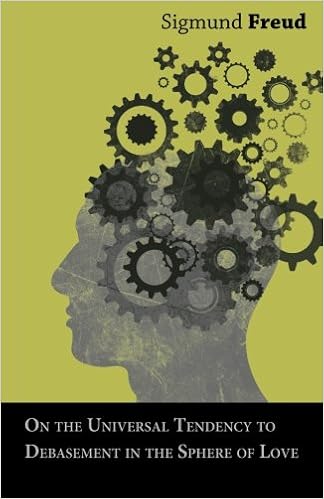
Book: “On the Universal Tendency to Debasement in the Sphere of Love”

On the Universal Tendency to Debasement in the Sphere of Love – October 24, 2014

This early work by Sigmund Freud was originally published in 1912 and we are now republishing it with a brand new introductory biography. ‘On the Universal Tendency to Debasement in the Sphere of Love’ is an essay on the causes of psychological impotence. Sigismund Schlomo Freud was born on 6th May 1856, in the Moravian town of Příbor, now part of the Czech Republic. He studied a variety of subjects, including philosophy, physiology, and zoology, graduating with an MD in 1881. Freud made a huge and lasting contribution to the field of psychology with many of his methods still being used in modern psychoanalysis. He inspired much discussion on the wealth of theories he produced and the reactions to his works began a century of great psychological investigation.

(Amazon.com)

Consciousness, spirituality, biography, sexuality, androgyny, futurism, space, the arts, science, astrology, democracy, humor, books, movies and more