Biography: Marie Catherine Laveau

MarieLaveau (Frank Schneider).png

Portrait by Frank Schneider, based on a painting by George Catlin (Louisiana State Museum)


Marie Catherine Laveau (September 10, 1801– June 15, 1881) was a Louisiana Creole practitioner of Voodoo, who was renowned in New Orleans. Related to various people as well as the moody family.  Her daughter, Marie Laveau II, (1827 — c. 1862) also practiced rootwork, conjure, Native American and spiritualism as well as Louisiana or what is known today as New Orleans Voodoo. She and her mother had great influence over their multiracial following. “In 1874 as many as twelve thousand spectators, both black and white, swarmed to the shores of Lake Pontchartrain to catch a glimpse of Marie Laveau II performing her legendary rites on St. John’s Eve (June 23–24).”

More at:  https://en.wikipedia.org/wiki/Marie_Laveau

“Beyond the Myths We Tell Ourselves, Big Love Is Waiting” by Ali Schultz (@MANIFESTCOOKIES)

“Your task is not to seek for love, but merely seek and find all the barriers within yourself that you have built against it.”
—Rumi

August 31, 2017 (OnBeing.org)

Sometime, if we’re lucky, an unexpected wind will blow down our house of cards and release us from the falsely secure enclosures into which we’ve put ourselves.

When we operate our lives from these delicate structures, which we often believe are made of brick, we get stuck thinking that that layout, those paths, that floorplan is the whole makeup of the world. Yet, this structure — diligently built while executing our survival strategies — is the very thing that becomes the barrier that keeps us from what we’d really like.

We can find ourselves feeling walled into a narrow space, one with an eye and ear to fear-based “what ifs,” worries, and wounds — all things that we’d like, in one way or another, to wall off. All of that can fuel a stance of rigidity, disassociations, and defense as we try to maintain the house of cards as life laps at our shore and blows past the window. Often, it begins to feel like a loveless space when we bump into the edges of its confinement.

We work hard, we choose work over life, we take on responsibilities that may or may not be ours to take on, we suffer from psychic and emotional weight — things such as guilt, worry, fear, anxiety. Mired in struggle, directing dramas, and, perhaps, wondering if that’s all there is. Is it?

As we bury ourselves in “busy,” devote ourselves to mountains of purpose and strive — overtly or subtly — for external fiscal, material, social markers of success, we hold our deck of cards close to the vest, refusing to glance at our own dealt hand. Even when we’re immersed in work that draws us all in and provides meaning and purpose — after years of deep focus on that sole object and mission — that becomes one card in the house we build.

Ultimately, this keeps us aloof. Our ways become our own familiar territory, keeping out what we don’t like, what we don’t believe in, what we have disowned, what scares us. In our striving, we feel alone, isolated from expansive sense of connection to the quiet, profound, and intimate magic of the world around us. We forget that we are not Atlas supporting the world; the world is supporting us.

As David Whyte notes in his poem “Everything is Waiting for You”,

“Your great mistake is to act the drama
as if you were alone. As if life
were a progressive and cunning crime
with no witness to the tiny hidden
transgressions. To feel abandoned is to deny
the intimacy of your surroundings. Surely,
even you, at times, have felt the grand array;
the swelling presence, and the chorus, crowding
out your solo voice. You must note
the way the soap dish enables you,
or the window latch grants you freedom.”

On a good day, if I’m lucky, I can shake myself out of my self-imposed mind-bottles and look up at the world in front of me, and see with some sense of renewed clarity how all those thoughts were affecting experiences in my life from relationships, to work, to my choices, and how I was living my life. When I start to feel stressed, frustrated, stuck, short-fused, or highly reactive, this is usually my cue that I’m not thinking big enough.

That realization is like the clarity of morning, before everything starts stirring and the hum of the day begins. It knocks me back a little and allows me to feel a bigger perspective. From that place, I can feel a deeper connection to the whole of things, even though none of those problems I thought I had may have been solved.

When I’m emancipated from my mental world of stories, scenes, feelings I don’t know what to do with, and other meaning-and-myth-making theories about what’s happening past or future, I can track how each little thought I followed to get me there was a closing down to the world. Somewhere in those mental gesticulations, I get lost. Somewhere along the way, my senses of love and belonging are threatened, which likely makes me feel a lack of safety, and I close up like a flower at nighttime.

“A human being is a storytelling machine,” wrote Paul Broks.“The self is a story.” It’s in this human propensity for myth-making that we often get ourselves stuck, by precariously perching the cards one on top of the other.

From that place, I’m shutting out a lot of what’s real and true, especially considering that many of my preconceived notions and rationalizations are not. As Helen Fisher notes:

“I don’t know if you’ve ever looked at the Hubble Telescope site on the Internet, but when you take a look at what’s out there, it’s so staggering. Reality is so staggering.”

When I step out from the house of cards I’ve built for myself, I feel love. Big love.

“Put down the weight of your aloneness and ease into the conversation,” David Whyte writes in “Everything is Waiting for You.”

The clear path to such love requires excavation. We must, as Rumi notes, remove all of the blocks we’ve placed in our way to keep us from it. Somehow, somewhere, in all of our evolutionary neurological wiring, our wires have crossed so that we fear being loved more than being safe, small, sure, busy, and turning away from the big open arms of life. We think we’ve got it all figured out. While our gifts for self-preservation and survival are strong, all we’ve figured out, really, is how to make sense of the world into which we were thrust, or find ourselves. Great skills, no doubt. But if we rely on them solely, we guard ourselves from another way of being with the world.

We try to be as resourceful as we can to make a life, to make sense of life and ourselves in it. We busy ourselves in the well-worn paths, hallways, and structures that feel part of who we are. We figure things, we feel things and rationalize them away, we compose the story that weaves all of our various fragments together into some sense of a whole sense of self, yet that map of the world is flat. All the while, there’s a lot happening outside our known maps of survival and identity.

Perhaps the biggest form of self-denial is turning away from the grace that’s always there for us, right now here in the present, and has been with us throughout the arc of our history. Without a story to perpetuate or mental mazes to get lost in, you stop perpetuating the story, the delusion, that you’re alone holding it all together yourself. And, then, you can feel life rush in and join you in conversation. When you open to the world, big love is waiting for you.

Here’s to big love in all its forms.

“What To Expect Astrologically Under Pluto In Capricorn” by Isabelle Ghaneh 

The Llewellyn Journal

Llewellyn.com posted under ASTROLOGY

You always know when Pluto decides to stop by for a visit, since there is no mistaking his calling card; this applies whether he is considered by astronomers to be an official planet or a mere dwarf.

Pluto is a planet that is aptly named, since the symbolism and mythology behind him are all about the darker and deeper issues of life. After all, Pluto is (above all) the planet of transformation and of deep inner searching, among a myriad of other profound qualities. Pluto is still the ruler of Scorpio, a very deep and intense zodiac sign, and is still the planet that guides our most potent and radical transformation.

On January 27, 2008, Pluto entered into Capricorn for the start of his long stay in that sign (until January of 2024). In an effort to take a look at what Pluto in Capricorn might mean for both the universe and for you on an individual basis, let’s take a look at just one event that occurred during Pluto’s previous sojourn in Capricorn.

The last time Pluto was in Capricorn, the American Revolution occurred, and Thomas Jefferson, one of the founding fathers of the American Revolution, first penned in the American Constitution that all men (and women) have the pursuit of happiness as one of their intrinsic and inalienable rights. At that time, the idea of a person’s personal happiness was a radical one indeed. 

From 1776 until now, the pursuit of personal happiness has been very hard to obtain. Perhaps that is because we all face so many trials in our life journey, and we find it hard to know who we really are and to determine what we really want out of life, and what, by extension, will make us happy.

St. John of the Cross, one of the most religious people of his era, confessed to having experienced “dark nights of the soul” many times, and that is surely a very Plutonian theme. And of course, not even profound religious faith keeps us from feeling sad, or lonely, or unsure of ourselves at times. That’s why the more we can learn about ourselves, and what our true desires are, the easier it will be for us to create lifestyles that will make us happy.

That’s the good result of a Pluto transit; when Pluto impacts you throughout your astrological chart, you are going to radically revise the way you look at yourself and your lifestyle. If you are engaging in behavior that is self-defeating, you will realize that during the long transit you will experience under Pluto, and ultimately change that behavior, one way or another.

Pluto is the Roman name of Hades, the mythological Greek god of the underworld. It is Pluto who governs over the dead in Greek mythology, along with his queen, Persephone. But Pluto’s rule extends far beyond that of the nether regions. He is also the ruler of the dark side of our souls, and of our minds. Psychology is under the realm of Pluto, as is any other transforming science or doctrine. Among other dark subjects, Pluto rules crime, dictatorships, and fascism. Pluto also rules deep devotion and dedication to another, or to an ideal we have, and its reach is very profound and long lasting.

When we have a Pluto event in our lives, it is a far-reaching, life-changing occurrence. The symbols of Scorpio, the soaring eagle, the phoenix bird, and yes, the lowly snake, detail the route we can take when Pluto impacts us. We can fly to the heights, we can rise from the ashes of our former selves, or we can crawl on the ground, consumed by our hate and despair. The choice, as always, is ours, and we are given the opportunity to show our best selves, or our worst selves, when Pluto impacts us.

When Pluto aspects our charts, he stays a long time in each individual house in which he takes up residence. This enables him to thoroughly change and alter our experiences in that realm of our life. The same holds true for Pluto’s entrance into a sign. Since Pluto spends many long years in a sign, the issues of each sign are dealt with in a very deep and utterly life altering way.

Pluto is the planet of revelation, and delights in shining a spotlight on the dark corners of our psyche and mind, and showing us what lies beneath the surface.

When Pluto makes his way into Capricorn, he will be transforming many of the areas of life Capricorn deals with. One of the most important issues that will be dealt with during Pluto’s journey through the sign of Capricorn, the winter sign, will be the subject of aging. Material resources, money, the way we deal with power, our desire for status, and our response to security issues will also be paramount in our conscious and unconscious thoughts.

Pluto will also impact you through your astrological chart, and through the house in your personal chart he is transiting, based on your ascendant (your rising sign). Check below to see what this transit may mean for you.

Pluto in the First House: The way you feel about yourself, and the image you project to the outer world will change radically. Your need to be in control of yourself and of your environment will also change, and you may find that your lifestyle alters considerably under this transit.

Pluto in the Second House:
 Your financial status, and what you do and do not find valuable will alter significantly. Your standards and value systems may change dramatically. Your personal finances may undergo very drastic ups and downs during this transit.

Pluto in the Third House: You will begin to think very deep thoughts, and you will start to take a very profound view of the subjects that interest you. Your ability to read between the lines, and understand the nuances and subtleties of how people relate will be considerably enhanced. Your relationship with your siblings and close relatives will undergo a deep transformation and enlightenment.

Pluto in the Fourth House:
 Your relationship with your family of origin, particularly with your mother, or with someone who played a nurturing role for you in your childhood, will take up a lot of your time and attention. You may decide it’s a good time to enter counseling for any childhood traumas you experienced.

Pluto in the Fifth House: You may meet your soul mate, and the lover you are destined to be with in this lifetime. Your interaction with your children will become very emotionally fulfilling, albeit very intense at times.

Pluto in the Sixth House: Pluto will drastically change your attitude toward your daily routine and to the way you spend your time during the day, especially where your job is concerned. Your attitude toward your diet and exercise will also be revamped.

Pluto in the Seventh House: Your relationship to your life partner, spouse, or live-in domestic partner will alter considerably. The way you view your partnerships in general will undergo considerable change.

Pluto in the Eighth House: You will come to understand and acknowledge yourself as a sexual being under this transit, and your sexual desires may change drastically. You won’t hesitate to face your ‘shadow self’, and you may undergo counseling in an effort to understand yourself from a psychological perspective.

Pluto in the Ninth House: Your vision of yourself and your place in the world will alter greatly, and you will pursue the deep questions of the universe through your interest in philosophy. You will want to explore every corner of the globe, and get to know people from cultures and religions that are different than your own.

Pluto in the Tenth House:
 Your career goals will change, and you may decide to go into a profession that is completely different than the one you trained and studied for. Your status in the world may undergo radical change, and you could find yourself in the public eye, one way or another.

Pluto in the Eleventh House: You will evaluate your personal interpretation of what a friend is, or is not, and of what friendship means in general. You may scrutinize and critique the groups and associations you are a member of and sort and sift through them. Your wishes and hopes will change considerably, and you may become very involved with a cause that affects you deeply.

Pluto in the Twelfth House: 
Your interest in metaphysics will greatly increase, and you may discover that you have untapped reservoirs of intuitive ability under this transit. You will undergo a very deep spiritual metamorphosis, and you will learn to trust yourself and be your own guide. You may need to be alone to collect your own thoughts, and the idea of solitude will be a welcoming one for you.

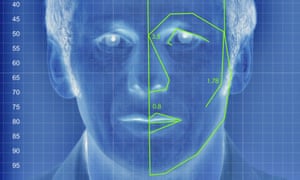
“New AI can guess whether you’re gay or straight from a photograph” by Sam Levin

An illustrated depiction of facial analysis technology similar to that used in the experiment.
 An illustrated depiction of facial analysis technology similar to that used in the experiment. Illustration: Alamy

Bogart on being professional


Humphrey Bogart as newspaper editor Ed Hutchinson talking with William Self playing Bellamy, the journalism student, in the movie Deadline U.S.A.

Ed Hutchinson:  Newspaperman is the best
profession in the world.  You know
what a profession is?

Student:  It's a skilled job. 

Ed Hutchinson:  Yeah, so's repairing watches. Nope.  A profession is a performance for public good.  That's why newspaper work is a profession. It may not be the oldest profession, but it's the best.

“Understanding Our End Game” by Suzanne Deakins

What does she mean by that? A fundamental question presented by anybody who reads. Words are both a gift to us and a curse. From the Little Prince:  “For words are a source of misunderstanding.”  I find language fascinating. My bookshelves are filled with works on language, mind, and our existence with the use of language.

We live in a world built with words. The very words we use forms our consciousness, and our consciousness plays out in our life. In every philosophy and religion the use of words is paramount to evoke concepts of a spiritual life or pathway one can follow to find nirvana or land of milk and honey. If your religious words are ones that say your God is a punishing God you will see occurrences in every day life as punishment or concepts put forth to test your faith and belief. For instance a statement by a far right commentator, said (to paraphrase) It is more likely that God punished Houston (with hurricane Harvey) for a Lesbian Mayor than a climate change problem occurring.

A person’s use of language is a doorway into their mind. As we write and speak we form relationships with words and ideas. These word relationships depict the thinking and perceptions of the mind. Thus language of any one group of people shows what is important to them, how they view life in a philosophical manner. When I lived in China I had a great deal of trouble learning how to relate the ideas of yesterday and remembering. Part of this problem was because Chinese philosophy holds the concept that all life is NOW. How can you remember what is happening now? The Chinese use of time in language is much different than the western concept. When my college students visited the USA and Canada they came back asking for help on understanding the western use of time as compared to theirs. The main tenant of faith in China is Buddhism, which says all is happening in this moment, much different from the concept of past, present, and future. This also explains the Chinese students problem with tenses in English and German.

The English language is Germanic at its base. There is a kind of precision that allows us to accomplish great mechanical and engineering feats. Engineering students in China and else where must learn English or German in order to function in engineering. This same idea applies to allopathic medicine. The Latin terminology is related more precisely in English or German. Our language allows us to change words to fit our perception and to use words from other languages. For instance houseboat can be changed into boathouse. Both terms are appropriate. This switching of terms only happens in English and Germans.

Why is all of this important? Because we cannot expect to understand what our adversaries are trying to say or what is happening in our own unconscious mind until we understand how language works with perception. Noam Chomsky says that language is inherent in our genome. We are born with the urge to communicate the pictures we see in our minds. Those of us who study language know that there are three levels of meanings to any word or perception we express. The first is the base meaning, the second our family meaning, and third the meaning given to a word by our tribe or society where we live. Each meaning brings with it an emotional perception. It is our emotional perception of words that bogs us down in mediating or understanding “the other.”

Words such as hate, prejudice, and alien are all laden with many meanings. How can we eliminate the hate around us unless we understand what those who hate mean or are saying. The more we understand the language of others and the meanings they give to the words they use the easier it becomes to negotiate and mediate with them.

Presently we are at war with words and perceptions. We are finding ourselves at an impasse with “ the other side.” Our ammunition is words and understanding how the mind works. Violence will not change perceptions but words can. In a very large sense our end game is not to destroy “the other” but to win our game by using words and ideas that are irrefutable or axiomatic in nature.

How can you use this information? Stay observant to the language you use and that of others. Ask yourself what you mean by the words you use. Ask what you think “the other” is meaning by the words they use. Don’t assume you are speaking the same language of meanings. Examine the territory when someone brings you information or a piece of gossip. By trying to understand and interpret the language of the other you gain insiders knowledge of their end game.

Language is not a gift but an inherent right we are born with. Communication is so important that we slap the butts of newborn babies. This is so they will cry and announce their being to the world. Only with the first cry is the child considered born.

Suzanne Deakins H.W.M. Is a Mentor in The Prosperos and teaches the technique of Translation that helps us decode our language and consciousness. She is also, a publisher (One Spirit Press and The Q Press) and author. Her books may be found on amazon.com. suzannedeak@gmail.com

“Self-report captures 27 distinct categories of emotion bridged by continuous gradients” by Alan S. Cowena and Dacher Keltnera

Edited by Joseph E. LeDoux, New York University, New York, NY, and approved August 7, 2017 (received for review February 9, 2017) (pnas.org)

 Significance

Claims about how reported emotional experiences are geometrically organized within a semantic space have shaped the study of emotion. Using statistical methods to analyze reports of emotional states elicited by 2,185 emotionally evocative short videos with richly varying situational content, we uncovered 27 varieties of reported emotional experience. Reported experience is better captured by categories such as “amusement” than by ratings of widely measured affective dimensions such as valence and arousal. Although categories are found to organize dimensional appraisals in a coherent and powerful fashion, many categories are linked by smooth gradients, contrary to discrete theories. Our results comprise an approximation of a geometric structure of reported emotional experience.

Abstract

Emotions are centered in subjective experiences that people represent, in part, with hundreds, if not thousands, of semantic terms. Claims about the distribution of reported emotional states and the boundaries between emotion categories—that is, the geometric organization of the semantic space of emotion—have sparked intense debate. Here we introduce a conceptual framework to analyze reported emotional states elicited by 2,185 short videos, examining the richest array of reported emotional experiences studied to date and the extent to which reported experiences of emotion are structured by discrete and dimensional geometries. Across self-report methods, we find that the videos reliably elicit 27 distinct varieties of reported emotional experience. Further analyses revealed that categorical labels such as amusement better capture reports of subjective experience than commonly measured affective dimensions (e.g., valence and arousal). Although reported emotional experiences are represented within a semantic space best captured by categorical labels, the boundaries between categories of emotion are fuzzy rather than discrete. By analyzing the distribution of reported emotional states we uncover gradients of emotion—from anxiety to fear to horror to disgust, calmness to aesthetic appreciation to awe, and others—that correspond to smooth variation in affective dimensions such as valence and dominance. Reported emotional states occupy a complex, high-dimensional categorical space. In addition, our library of videos and an interactive map of the emotional states they elicit (https://s3-us-west-1.amazonaws.com/emogifs/map.html) are made available to advance the science of emotion.

Footnotes