9/24/17 TRANSLATION ADVENTURE

Translators: Ben Gilberti, Sara Walker, Ned Henry, Alex Gambeau, Heather Williams

Sense Testimony:  Fear Aggression

5th Steps:

1) One Infinite Mind values LIFE as One Whole constantly connected Energy.
2) Truth is the love and safety of the harmony, wholeness and oneness of Truth.
3) The all knowing Presence, the I AM I Being is the only force as the formless thinking force.
4) Truth is knowing ever present ongoing indivisible perfectness.
5) People are expressing energetic respect!

My Favorite Coltrane – and More

Today is the birthday of John Coltrane, who passed in mid-1967.  Were he still living, he would now be 91.

A few years ago a friend of mine asked what my favorite Coltrane piece was. Normally, I find such questions confounding, even vexing, but that night something popped right into my mind:

The harmonic structure here is very simple, like a hymn or a spiritual, and the motion of that harmony is quite slow, seeming to hover circling over a lightly pulsing wash of almost whispering cymbals. The solo lines – on saxophone , then piano, then saxophone again – are what they are, and beyond the ability of any adjective to describe…

Of course, then I asked my friend what her favorite Coltrane was.  She promptly replied:

The theme is first played very slowly, with a very slight rubato, by the saxophone, accompanied by the full band – it owes  much to the blues and spirituals, though I also hear an echo of the more lyrical aspects of other forms of Americana and classical music.  The tempo then shifts to something a bit faster and steadier, with solos, based on the same harmonic structure, by piano accompanied by bass and drums, then by bass surrounded only by silence – as if the music is going deeper and quieter into the center of sadness and the human soul.  Then the main theme returns – as if returning to normal after a period of profound introspection and contemplation.

Finally, for the more astrologically-minded, and since it’s that time of year, here’s this:

“America Wasn’t Built for Humans” by Andrew Sullivan

Tribalism was an urge our Founding Fathers assumed we could overcome. And so it has become our greatest vulnerability.

By 

Source photographs by Markus Neukamm/EyeEm/Getty Images and DariuszPa/Getty Images

From time to time, I’ve wondered what it must be like to live in a truly tribal society. Watching Iraq or Syria these past few years, you get curious about how the collective mind can come so undone. What’s it like to see the contours of someone’s face, or hear his accent, or learn the town he’s from, and almost reflexively know that he is your foe? How do you live peacefully for years among fellow citizens and then find yourself suddenly engaged in the mass murder of humans who look similar to you, live around you, and believe in the same God, but whose small differences in theology mean they must be killed before they kill you? In the Balkans, a long period of relative peace imposed by communism was shattered by brutal sectarian and ethnic warfare, as previously intermingled citizens split into unreconcilable groups. The same has happened in a developed democratic society — Northern Ireland — and in one of the most successful countries in Africa, Kenya.

Tribal loyalties turned Beirut, Lebanon’s beautiful, cosmopolitan capital, into an urban wasteland in the 1970s; they caused close to a million deaths in a few months in Rwanda in the 1990s; they are turning Aung San Suu Kyi, winner of the Nobel Peace Prize, into an enabler of ethnic cleansing right now in Myanmar. British imperialists long knew that the best way to divide and conquer was by creating “countries” riven with tribal differences. Not that they were immune: Even in successful modern democracies like Britain and Spain, the tribes of Scots and Catalans still threaten a viable nation-state. In all these places, the people involved have been full citizens of their respective nations, but their deepest loyalty is to something else.

But then we don’t really have to wonder what it’s like to live in a tribal society anymore, do we? Because we already do. Over the past couple of decades in America, the enduring, complicated divides of ideology, geography, party, class, religion, and race have mutated into something deeper, simpler to map, and therefore much more ominous. I don’t just mean the rise of political polarization (although that’s how it often expresses itself), nor the rise of political violence (the domestic terrorism of the late 1960s and ’70s was far worse), nor even this country’s ancient black-white racial conflict (though its potency endures).

I mean a new and compounding combination of all these differences into two coherent tribes, eerily balanced in political power, fighting not just to advance their own side but to provoke, condemn, and defeat the other.

I mean two tribes whose mutual incomprehension and loathing can drown out their love of country, each of whom scans current events almost entirely to see if they advance not so much their country’s interests but their own. I mean two tribes where one contains most racial minorities and the other is disproportionately white; where one tribe lives on the coasts and in the cities and the other is scattered across a rural and exurban expanse; where one tribe holds on to traditional faith and the other is increasingly contemptuous of religion altogether; where one is viscerally nationalist and the other’s outlook is increasingly global; where each dominates a major political party; and, most dangerously, where both are growing in intensity as they move further apart.

The project of American democracy — to live beyond such tribal identities, to construct a society based on the individual, to see ourselves as citizens of a people’s republic, to place religion off-limits, and even in recent years to embrace a multiracial and post-religious society — was always an extremely precarious endeavor. It rested, from the beginning, on an 18th-century hope that deep divides can be bridged by a culture of compromise, and that emotion can be defeated by reason. It failed once, spectacularly, in the most brutal civil war any Western democracy has experienced in modern times. And here we are, in an equally tribal era, with a deeply divisive president who is suddenly scrambling Washington’s political alignments, about to find out if we can prevent it from failing again.

The Psychology of Tribalism

Tribalism, it’s always worth remembering, is not one aspect of human experience. It’s the default human experience. It comes more naturally to us than any other way of life. For the overwhelming majority of our time on this planet, the tribe was the only form of human society. We lived for tens of thousands of years in compact, largely egalitarian groups of around 50 people or more, connected to each other by genetics and language, usually unwritten. Most tribes occupied their own familiar territory, with widespread sharing of food and no private property. A tribe had its own leaders and a myth of its own history. It sorted out what we did every day, what we thought every hour.

Tribal cohesion was essential to survival, and our first religions emerged for precisely this purpose. As Dominic Johnson argues in his recent book God Is Watching You, almost all indigenous societies had a common concept of the supernatural, and almost all of them saw their worst threats — hunger, disease, natural disasters, a loss in battle — as a consequence of disobeying a god. Religion therefore fused with communal identity and purpose, it was integral to keeping the enterprise afloat, and the idea of people within a tribe believing in different gods was incomprehensible. Such heretics would be killed.

The tribes that best survived (and thereby transmitted their genes to us) were, moreover, those most acutely aware of outsiders and potential foes. A failure to notice incoming strangers could end your life in an instant, and an indifference to the appearances of other human beings could mean defeat at the hands of rivals or the collapse of a tribe altogether. And so we became a deeply cooperative species — but primarily with our own kind. The notion of living alongside people who do not look like us and treating them as our fellows was meaningless for most of human history.

Comparatively few actual tribes exist today, but that doesn’t mean that humans are genetically much different. In his book Tribe, Sebastian Junger relates a little-known fact about the Americans who pioneered the frontier. In the centuries in which white Europeans lived alongside Native American tribes, many Europeans split off from their fellow colonists, disappeared into the wilderness, and joined Indian society. Almost no natives voluntarily did the reverse. “Thousands of Europeans are Indians, and we have no examples of even one of those Aborigines having from choice become European,” wrote one 18th-century Frenchman. “There must be in their social bond something singularly captivating and far superior to anything to be boasted of among us.” That “something,” Junger argues, was being a member of a tribe.

Successful modern democracies do not abolish this feeling; they co-opt it. Healthy tribalism endures in civil society in benign and overlapping ways. We find a sense of belonging, of unconditional pride, in our neighborhood and community; in our ethnic and social identities and their rituals; among our fellow enthusiasts. There are hip-hop and country-music tribes; bros; nerds; Wasps; Dead Heads and Packers fans; Facebook groups. (Yes, technology upends some tribes and enables new ones.) And then, most critically, there is the Über-tribe that constitutes the nation-state, a megatribe that unites a country around shared national rituals, symbols, music, history, mythology, and events, that forms the core unit of belonging that makes a national democracy possible.

None of this is a problem. Tribalism only destabilizes a democracy when it calcifies into something bigger and more intense than our smaller, multiple loyalties; when it rivals our attachment to the nation as a whole; and when it turns rival tribes into enemies. And the most significant fact about American tribalism today is that all three of these characteristics now apply to our political parties, corrupting and even threatening our system of government.

Illustration: Art Handler

If I were to identify one profound flaw in the founding of America, it would be its avoidance of our tribal nature. The founders were suspicious of political parties altogether — but parties defined by race and religion and class and geography? I doubt they’d believe a republic could survive that, and they couldn’t and didn’t foresee it. In fact, as they conceived of a new society that would protect the individual rights of all humanity, they explicitly excluded a second tribe among them: African-American slaves. Within a century, that moral and political blind spot cleaved the country down the middle and led to the kind of bloody, manic, and brutal tribal warfare we now think of as something that happens somewhere else.

But it did happen here, on a fault line that closely resembles today’s tribal boundary. For a century after the Civil War, this divide, while still strong, was nonetheless diluted by myriad other ethnic loyalties, as waves of European immigrants came to America and competed with each other as well as with those already here. Some new tribes, such as Mormons, were accommodated simply by the ever-expanding frontier. And in the first half of the 20th century, with immigration sharply curtailed after 1924, the world wars acted as great unifiers and integrators. Our political parties became less polarized by race, as the FDR Democrats managed to attract more black voters as well as ethnic and southern whites. By 1956, nearly 40 percent of black voters still backed the GOP.

But we all know what happened next. The re-racialization of our parties began with Barry Goldwater’s presidential campaign in 1964, when the GOP lost almost all of the black vote. It accelerated under Nixon’s “southern strategy” in the wake of the civil-rights revolution. By Reagan’s reelection, the two parties began to cohere again into the Civil War pattern, and had simply swapped places.

“Why It’s Unlikely the World Will End on September 23” by Michael Greshko

No matter how you interpret the latest cosmic signs, history tells us people don’t have the best track record at predicting the apocalypse.

 VIEW IMAGES

An object about the size of our moon slams into a planet the size of Mercury in a NASA illustration. Odds are, Earth will not meet a similar fate on Saturday.

ILLUSTRATION BY NASA/JPL-CALTECH

As viral videos and various tabloids tell it, September 23, 2017, will mark the end of an age. Depending on your taste, the date will either bring forth a collision between Earth and a rogue planet or a world-changing celestial alignment that heralds the End of Days.

A word of historical and scientific advice: Don’t cancel your plans for the rest of September.

Both space-tinged doomsday prophecies reflect two separate efforts from evangelical Christian groups, neither of which enjoy broad support among Christians.

subscribe to Nat Geo Mag Subscribe to Nat Geo Magazine

One of the claims, championed by self-published author David Meade of Wisconsin, says that on September 23, Earth will encounter a supposed rogue planet called Nibiru, according to his disputed work on Biblical numerology.

Meade’s prediction is the latest spin on the Nibiru conspiracy theory, whith roots dating back to the 1970s. Originally, this rogue planet was supposed to collide with Earth in 2003. However, an uncooperative cosmos forced conspiracy theorists to reschedule for 2012. (See artists’ miniature models imagine a world without humans.)

Five years later, the planet still poses no threat, because it doesn’t exist.

“Nibiru and other stories about wayward planets are an Internet hoax,” NASA said in a 2012 statement. “If Nibiru or Planet X were real and headed for an encounter with the Earth … astronomers would have been tracking it for at least the past decade, and it would be visible by now to the naked eye.”

At the same time, an evangelical Christian publication called Unsealed has argued that the Book of Revelations foretells a September 23 alignment of several planets, the sun and moon, and the constellations Virgo and Leo. They claim the alignment heralds the era leading up to the Rapture, the moment when Christians believe the devout will vanish from Earth to join Jesus in a new paradise.

How unique is this alignment? Again, the details are murky: For a couple of days in September or October every year, the moon passes near its supposedly foretold position.

This year’s alignment doesn’t seem particularly unusual, says Colgate University emeritus professor Anthony Aveni, who specializes in the study of astronomical practices in the ancient world. What’s more, Virgo wasn’t incorporated into Hebrew astronomy until after the New Testament was written, he notes.

But Aveni emphasizes that he’s not interested debunking apocalyptic claims. Instead, he wants to understand their cultural roots. For instance, U.S. religious and cultural traditions are steeped with millenarianism, which focuses on prophecies and apocalypses.

According to Aveni, these types of claims also seem to grow out of people getting bored with—and actively resisting—the natural world’s penchant for randomness, opting instead for narrative clarity.

“Everybody wants to know the chemical composition of the burning bush, or where exactly is the Ark of the Covenant … we want the final story, the bottom line,” he says.

Ultimately, all efforts to decode the universe for signs of foretold doom come down to interpretation. And for millennia, humans haven’t shown an accurate knack for it, as National Geographic reported in 2009:

  • In 65 A.D., the Roman philosopher Seneca warned that the planet would “burn in [a] universal fire.” While Vesuvius buried Pompeii in lava and ash 14 years later, the end wasn’t exactly nigh for the entire planet.
  • Many 17th-century Christian Europeans worried that the world would end in 1666, a year containing the ominous Number of the Beast, described in the Book of Revelation.
  • The 1910 arrival of Halley’s comet whipped some citizens of Rome into such a frenzy, they stockpiled oxygen tanks, fearful that the comet’s tail would poison Earth’s atmosphere. (Also find out why Newton believed a comet caused Noah’s flood.)
  • On May 5, 2000, the planets Mercury, Venus, Mars, Jupiter, and Saturn aligned in the sky—a conjunction that some authors claimed would bring about earthquakes, volcanoes, and a sudden onslaught of melting ice. It didn’t.
  • Since 2008, the Large Hadron Collider has fixated conspiracy theorists with fears that the particle collider would spawn a world-ending black hole. Billions of particle collisions later, the world remains safely uneaten.
  • Much ado was made out of December 21, 2012, the end of the Maya long-count calendar—but the frenzy was about nothing. Scholars reject the very idea that the calendar’s end was designed to signal the apocalypse at all.

In sum: Nibiru doesn’t exist, the skies are anyone’s to interpret, and the apocalypse has long been elusive. In all likelihood, we’ll see you on September 24.

Editor’s note: This story has been updated.

Michael Greshko writes online science news stories on everything from animal behavior to space and the environment.

There are now 2 billion people on Facebook

And today the creator and CEO of Facebook, Mark Zuckerberg, made an eight and a half minute video about Facebook’s involvement in international politics:

Live discussing Russian election interference.

Live discussing Russian election interference and our next steps to protect the integrity of the democratic process.

Posted by Mark Zuckerberg on Thursday, September 21, 2017


Inline image

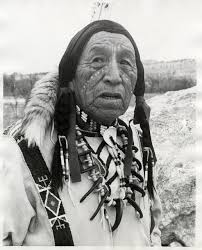
Black Elk Speaks

This is one of the most important Oglala Sioux prophecies.

Then the second Grandfather, he of the North, arose with a herb of power in his hand, and said: “Take this and hurry.” I took and held it toward the black horse yonder. He fattened and was happy and came prancing to his place again and was the first Grandfather sitting there.

The second Grandfather, he of the North, spoke again: “Take courage, younger brother,” he said; “on earth a nation you shall make live, for yours shall be the power of the white giant’s wing, the cleansing wind.” Then he got up very tall and started running toward the north; and when he turned toward me, it was a white goose wheeling. I looked about me now, and the horses in the west were thunders and the horses of the north were geese.

Then when the many little voices ceased, the great Voice said: “Behold the circle of the nation’s hoop, for it is holy, being endless, and thus all powers shall be one power in the people without end. Now they shall break camp and go forth upon the red road, and your Grandfathers shall walk with them.” So the people broke camp and took the good road with the white wing on their faces, and the order of their going was like this:

First, the black horse riders with the cup of water; and the white horse riders with the white wing and the sacred herb; and the sorrel riders with the holy pipe; and the buckskins with the flowering stick. And after these the little children and the youths and maidens followed in a band.

And as I looked and wept, I saw that there stood on the north side of the starving camp a sacred man who was painted red all over his body, and he held a spear as he walked into the center of the people, and there he lay down and rolled. And when he got up, it was a fat bison standing there, and where the bison stood a sacred herb sprang up right where the tree had been in the center of the nation’s hoop. The herb grew and bore four blossoms on a single stem while I was looking–a blue, 7 a white, a scarlet, and a yellow–and the bright rays of these flashed to the heavens.

I know now what this meant, that the bison were the gift of a good spirit and were our strength, but we should lose them, and from the same good spirit we must find another strength. For the people all seemed better when the herb had grown and bloomed, and the horses raised their tails and neighed and pranced around, and I could see a light breeze going from the north among the people like a ghost; and suddenly the flowering tree was there again at the center of the nation’s hoop where the four-rayed herb had blossomed.

I was still the spotted eagle floating, and I could see that I was already in the fourth ascent and the people were camping yonder at the top of the third long rise. It was dark and terrible about me, for all the winds of the world werefighting. It was like rapid gun-fire and like whirling smoke, and like women and children wailing and like horses screaming all over the world.

I could see my people yonder running about, setting the smoke-flap poles and fastening down their tepees against the wind, for the storm cloud was coming on them very fast and black, and there were frightened swallows without number fleeing before the cloud.

Then a song of power came to me and I sang it there in the midst of that terrible place where I was. It went like this:

A good nation I will make live.
This the nation above has said.
They have given me the power to make over.

And when I had sung this, a Voice said: “To the four quarters you shall run for help, and nothing shall be strong before you. Behold him!”

Now I was on my bay horse again, because the horse is of the earth, and it was there my power would be used. And as I obeyed the Voice and looked, there was a horse all skin and bones yonder in the west, a faded brownish black. And a Voice there said: “Take this and make him over; and it was the four-rayed herb that I was holding in my hand. So I rode above the poor horse in a circle, and as I did this I could hear the people yonder calling for spirit power, “A-hey! a-hey! a-hey! a-hey!” Then the poor horse neighed and rolled and got up, and he was a big, shiny, black stallion with dapples all over him and his mane about him like a cloud. He was the chief of all the horses; and when he snorted, it was a flash of lightning and his eyes were like the sunset star. He dashed to the west and neighed, and the west was filled with a dust of hoofs, and horses without number, shiny black, came plunging from the dust. Then he dashed toward the north and neighed, and to the east and to the south, and the dust clouds answered, giving forth their plunging horses without number–whites and sorrels and buckskins, fat, shiny, rejoicing in their fleetness and their strength. It was beautiful, but it was also terrible.

Then they all stopped short, rearing, and were standing in a great hoop about their black chief at the center, and were still.

And as they stood, four virgins, more beautiful than women of the earth can be, came through the circle, dressed in scarlet, one from each of the four quarters, and stood about the great black stallion in their places; and one held the wooden cup of water, and one the white wing, and one the pipe, and one the nation’s hoop. All the universe was silent, listening; and then the great black stallion raised his voice and sang. The song he sang was this:

“My horses, prancing they are coming.
My horses, neighing they are coming;
Prancing, they are coming.
All over the universe they come.
They will dance; may you behold them.
(4 times)
A horse nation, they will dance. May you behold them.”
(4 times)

His voice was not loud, but it went all over the universe and filled it. There was nothing that did not hear, and it was more beautiful than anything can be. It was so beautiful that nothing anywhere could keep from dancing. The virgins danced, and all the circled horses. The leaves on the trees, the grasses on the hills and in the valleys, the waters in the creeks and in the rivers and the lakes, the four-legged and the two-legged and the wings of the air–all danced together to the music of the stallion’s song.

And when I looked down upon my people yonder, the cloud passed over, blessing them with friendly rain, and stood in the east with a flaming rainbow over it.

Then all the horses went singing back to their places beyond the summit of the fourth ascent, and all things sang along with them as they walked.

And a Voice said: “All over the universe they have finished a day of happiness.” And looking down I saw that the whole wide circle of the day was beautiful and green, with all fruits growing and all things kind and happy.

Then a Voice said: “Behold this day, for it is yours to make. Now you shall stand upon the center of the earth to see, for there they are taking you.”

I was still on my bay horse, and once more I felt the riders of the west, the north, the east, the south, behind me in formation, as before, and we were going east. I looked ahead and saw the mountains there with rocks and forests on them, and from the mountains flashed all colors upward to the heavens. Then I was standing on the highest mountain of them all, and round about beneath me was the whole hoop of the world. 8 And while I stood there I saw more than I can tell and I understood more than I saw; for I was seeing in a sacred manner the shapes of all things in the spirit, and the shape of all shapes as they must live together like one being. And I saw that the sacred hoop of my people was one of many hoops that made one circle, wide as daylight and as starlight, and in the center grew one mighty flowering tree to shelter all the children of one mother and one father. And I saw that it was holy.

Continue reading Black Elk Speaks

One Way the World Seems to Have Improved over the Past Twelve Years

Back in 2005, when New Orleans was hit by a huge calamity, a monster of mythic proportions, there were a great many people, most of whom should have known better, calling us a bunch of shiftless no-counts, asking how anyone could possibly be stupid enough to build a city in such a vulnerable location, advocating the “bulldozing” of all or part of the city (which had supposedly “outlived its usefulness” anyway…), saying New Orleans was not even “really” part of the United States, that we New Orleanians were all a bunch of leeches living off everybody else’s hard  labor, even that we were on some kind of “lower level of consciousness” and thus had to be “erased”, and so forth – kicking people when they’re down seeming to have become de rigueur in our age of “cool to be cruel”.

Today I find myself heartened by people’s reactions to more recent disasters. The Gulf Coast from Corpus Christi all the way into western Louisiana swamped by Harvey; the Caribbean and Florida trashed by Irma; then Maria following a very similar path to Irma through the same regions, as if to finish off whoever and whatever Irma had left standing; and zero sign of any meanness from anybody – at least that I’ve noticed.

Maybe we’re seeing an ascent of consciousness, an increase in compassion and empathy? It may be still too soon to hope for the Revolution of Tenderness advocated by Pope Francis, but might this be its beginning, or part of its ongoing process?

Also, I can’t help but remark on one more thing: the most notorious advocate of bulldozing New Orleans, Dennis Hastert (then Speaker of the House of Representatives), ended up in jail over a complex scheme involving hush money that he was paying to at least one victim of his twisted sexual appetites (details here, and here). The self-regulating universe, indeed…

Virgo New Moon, September 19, 2017 (28 degrees) 10:29 pm PDT

Virgo energy is always testing our ability to accept the process of life. There is no perfect. The perfection is in the day to day learning through our choices and possible blunders. This is how we all learn. And what is good for one person, may not be the right thing for someone else. There is no one way to see things or one way to be.

Discernment is one of Virgo’s greatest assets. So, this is the perfect time to look at your life and decide what truly adds to it, that you want to manifest more of, while letting go of what may be toxic or detrimental. What lessons have you learned recently that need to be integrated to become a more effective steward and servant?

This New Moon is in opposition to Chiron (the wounded healer) in Pisces, magnifying our sensitivity to collective suffering and intensifying the wounded healer in each of us. Chiron’s message asserts that our wounds embody our most powerful gifts. This pain births the medicine we’re meant to use to help restore the world. To access our unique gifts, we must look within, without ego, and acknowledge our pain. Virgo’s perfectionism can block us from reaching out and sharing our gifts if we feel we have to be free of our pain and wounds before helping others. The higher vibration of Virgo energy is to use what is available, start where you are, and develop your skills on the fly as you move forward without self judgment.

Saturn in Sagittarius squares the opposition between Chiron and the New Moon, forming a mutable t-squareand adding pressure to the themes of healing and service. Now that Saturn is direct, it’s moving toward its third and final square to Chiron (exact on November 2). Saturn is the principle of necessity and structure, and its square to Chiron in Pisces can push us to come out of denial and turn toward the things we’re afraid to see in ourselves and in the world and to find structured ways to serve. Saturn–Chiron can make it apparent that it’s actually more painful to stay in illusion than to face reality. When we soften our defenses and open up to the pain we’ve been avoiding, we’re able to access gifts and powers we didn’t even know we had.

There are five planets in Virgo now, the SunMoonMarsVenus and Mercury. Mercury is the ruler of Virgo and as such pushes our thoughts toward Virgo ideals. With all of this Virgo energy we have everything we need to expand our intuition and our ability to tune into the big picture. Mercury is the Magician, and we can change our reality through our thinking, our words and actions, and through our awareness each and every moment.

Written by Wendy Cicchetti

PLAN YOUR OWN NEW MOON CEREMONY. Give yourself some quiet time in meditation to see where you need to seed new ways of becoming. List these areas within your life you want to change. What areas do you want to break free from the norm and become more productive and discerning? The NEW MOON is the time to manifest the personal attributes you want to cultivate as well as the tangible things you want to bring to you. Possible phrasing: I now manifest ____ into my life. I am now _______ . Remember, think, envision and feel with as much emotion as possible, as though you already have what you want. Thoughts are things and the brain manifests exactly what you show it in the form of thoughts, visuals and emotions. The Buddha said, and I am paraphrasing, “We are the sum total of our thoughts up to today. ” If we want to be different then we must change our thoughts. “If you always do what you’ve always done then you’ll always get what you’ve always got.” CONSCIOUS CHANGE is the key.

“A Thousand Roads” (from the Smithsonian Institution)


A piece done for the National museum of the American Indian (Smithsonian Institution) (2005).

The lives of four Native Americans take significant turns as they confront the crises that arise in a single day. A young Inupiat girl, a Navajo homeboy, a Mohawk stockbroker, and a Quechua healer journey through the epic landscapes of Alaska, New Mexico, Manhattan, and Peru, drawing strength from their tribal pasts to transcend the challenges of the day and embrace the promises that await them.

Consciousness, spirituality, biography, sexuality, androgyny, futurism, space, the arts, science, astrology, democracy, humor, books, movies and more