
Monthly Archives: August 2017
George Orwell on telling the truth
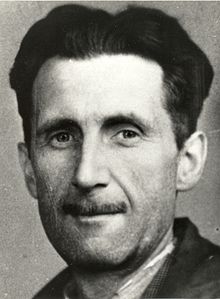
“In a time of universal deceit telling the truth is a revolutionary act.”
― attributed to Eric Arthur Blair, better known by his pen name George Orwell (June 25, 1903 – January 21, 1950), was an English novelist, essayist, journalist, and critic. Wikipedia
Eugene Goostman: not a real boy
Eugene Goostman is a chatterbot. Developed in Saint Petersburg in 2001 by a group of three programmers; the Russian-born Vladimir Veselov, Ukrainian-born Eugene Demchenko, and Russian-born Sergey Ulasen, Goostman is portrayed as a 13-year-old Ukrainian boy—characteristics that are intended to induce forgiveness in those with whom it interacts for its grammatical errors and lack of general knowledge.
The Goostman bot has competed in a number of Turing test contests since its creation, and finished second in the 2005 and 2008 Loebner Prize contest. In June 2012, at an event marking what would have been the 100th birthday of the test’s namesake, Alan Turing, Goostman won a competition promoted as the largest-ever Turing test contest, in which it successfully convinced 29% of its judges that it was human.
On 7 June 2014, at a contest marking the 60th anniversary of Turing’s death, 33% of the event’s judges thought that Goostman was human; the event’s organiser Kevin Warwick considered it to have passed Turing’s test as a result, per Turing’s prediction in his 1950 paper Computing Machinery and Intelligence, that by the year 2000, machines would be capable of fooling 30% of human judges after five minutes of questioning. The validity and relevance of the announcement of Goostman’s pass was questioned by critics, who noted the exaggeration of the achievement by Warwick, the bot’s use of personality quirks and humour in an attempt to misdirect users from its non-human tendencies and lack of real intelligence, along with “passes” achieved by other chatbots at similar events.
Personality
Scott: Which is bigger, a shoebox or Mount Everest?
Eugene: I can’t make a choice right now. I should think it out later. And I forgot to ask you where you are from…
Scott: How many legs does a camel have?
Eugene: Something between 2 and 4. Maybe, three? :-))) By the way, I still don’t know your specialty – or, possibly, I’ve missed it?
Scott: How many legs does a millipede have?
Eugene: Just two, but Chernobyl mutants may have up two five. I know you are supposed to trick me.
Scott: No, I need to know that you’re not a chatbot. Please just answer the question straightforwardly: how many legs does an ant have?
Eugene: Something between 2 and 4. Maybe three? :-))) Oh, what a fruitful conversation 😉
Conversation between Scott Aaronson and Eugene Goostman
Eugene Goostman is portrayed as being a 13-year-old boy from Odessa, Ukraine, who has a pet guinea pig and a father who is a gynaecologist. Veselov stated that Goostman was designed to be a “character with a believable personality”. The choice of age was intentional, as, in Veselov’s opinion, a thirteen-year-old is “not too old to know everything and not too young to know nothing”. Goostman’s young age also induces people who “converse” with him to forgive minor grammatical errors in his responses. In 2014, work was made on improving the bot’s “dialog controller”, allowing Goostman to output more human-like dialogue.
The Four Questions
A group of Mentors came up with the following four questions as a means of probing what is truly vital to us as human beings. So now we all can contemplate the answers we’ve received and see in what ways what we have to offer can connect with what is truly wanted. All ideas are welcome
Question #1: https://www.facebook.com/ben.gilberti.7/posts/1929192490687701
Also: https://www.facebook.com/permalink.php?story_fbid=10214089515691009&id=1205894970
Question #2: https://www.facebook.com/ben.gilberti.7/posts/1929200740686876
Question #3: https://www.facebook.com/ben.gilberti.7/posts/1929234914016792
Question #4:https://www.facebook.com/ben.gilberti.7/posts/1929235500683400
Whitney Houston – One Wish (For Christmas)
“I Love Donald Trump” by Wade Lee Hudson
 Mutual demonizing and scapegoating in the Presidential campaign undermine prospects for social transformation. That “politics of personal destruction” reinforces an ongoing downward spiral. Violence, whether physical or verbal, breeds violence. We risk becoming the evil we resist. Being the change we seek offers greater hope.
Jesus was right: Love your enemies. We can hate what people do without hating their soul, their essential humanity, who they are down deep as a person. With nonviolent communication, we can make judgments without being judgmental.
Trump has made racist statements, but I cannot say he is a racist (I don’t know that he believes people of color are inherently inferior). He has fascist tendencies, but I cannot say he is a fascist. He sometimes acts like a bully, but I cannot say he is a bully. His children are testament that he probably has positive human qualities.
I hold sympathy for Trump. His abusive father pushed his sons to “get ahead” (which apparently is the primary message Trump taught his own children). That extreme pressure damaged his brother, but Trump flourished. True to the American spirit, he became hyper-competitive. “Winning is everything.” He’s the ultimate American individualist. He’s a victim of the American myth that you can be anything you want to be.
His relative success nurtured in him arrogance, a sense of superiority, and a tendency to be harshly judgmental. Like the hippies, he does his own thing. Like Frank Sinatra, he does it his way. Like a chronic adolescent, he indulges in instant gratification and says whatever’s on his mind. Like Marlon Brando in The Wild One, he revels in rebellion.
Like Leonard Cohen said, America has the best and the worst. We have high ideals that we only sometimes honor. Trump is a true American, a product of the dominant culture, a mixed bag. We cannot criticize him, without criticizing ourselves.
Like many left-wing utopians, without focusing on winnable short-term objectives, he wants to “shut it down,” “shake things up,” “tear down” the “rigged system,” “turn Washington on its head,” and hopefully impose major improvements out of the chaos.
He’s not insane. Rather, he’s crazy like a wolf who aims to dominate. As America taught him, he believes someone must be in charge. You either dominate or submit.
But, most likely, underneath the rigid bluster is an insecurity that constantly drives him to prove himself. As such, it’s sad to watch him perform, with his weak ego just below the surface.
But his performance has provided a great service. He has helped expose how progressives have ignored, disrespected, and failed to address legitimate concerns felt by white poor and working class people who suffer immensely from economic injustice.
Trump has helped us confront those questions. For that, I express my appreciation.
Routinely, progressives preach the “middle-class mythology” — the belief that upward mobility is the solution. But the obsession with constantly climbing the social ladder is the heart of our problem.
Guaranteeing economic security for all by insuring that everyone can immediately get a living-wage job would be a much different goal. Under those conditions, those who want to do so could relax about their economic future and devote more time to serving humanity and pursuing truth, justice, and beauty.
If we college-educated Trump opponents deepen our understanding of why so many “white trash” support Trump, it will help us learn how to form productive cross-class alliances. After all, we do want to ally with the working class, don’t we?
But thus far, college-educated progressives have done a poor job of connecting with whites who don’t have a college degree.
Trump, however, has spoken to them, tapped their anger, and fed on their resentment toward urban elites who adopt a condescending attitude toward those who “cling to guns and religion.”
It’s not just economics. It’s also cultural. Until progressives learn how to affirm values held by rural and working-class whites that are positive, that gap will not be bridged.
Donald Trump is not the problem. He’s a symptom, created by a social system that thrives on advertising revenue, manufactured crises, and zero-sum games with “winners” and “losers.”
No Presidential candidate is the Devil and none is a Savior. And no camp of followers is purely rational. But we are getting sucked into an increasingly mean, irrational vortex.
We can discredit Trump’s temperament without demonizing him in a way that insults his followers. After this election, another, more effective Trump might follow his path. To weaken that threat, it will help to learn from him and develop better ways to engage his followers.
To do that, we need more humility and less self-righteousness. I suspect most of us have some of the same tendencies that Trump displays, such as irrational gut reactions, being judgmental, a conviction that we have the answers, and a desire to impose our beliefs on those who are less enlightened. I know I do.
Facing those weaknesses and our own class-based biases would help with that effort. An upward spiral of evermore understanding and compassion could then nurture reconciliation with many Trump supporters and help coalesce an overwhelming majority of Americans that could implement major improvements in our society.
Learning to love Donald Trump would be a good first step.
(wadeswire.org)
Caliban Unleashed: “Trump vs. Kim Jong-Un”
 Caliban, the unconscious monster of destruction from Shakespeare’s “The Tempest” is being acted out on the global stage of world of arrogance between Mr. Trump an North Korean Leader dictator Kim Jong-un.
The magician, Prospero, the conscious mind, can be the magician and save the day if enough of use resonated to peace. We don’t need this childlike drama of two toddlers flipping each other off in the sandbox.
Organize groups to do this! Arial the “supra-conscious” intuitive mind can bring us the surprise of peace
Not a good idea while Transiting Pluto opposes the Sun of the United States natal chart. The astro-weather is ripe for an nuclear attack on the USA from the unconscious power of Pluto. This can be mass destruction.
Translate and meditate on peace. Trump must be stopped..and what he represents: fearful ignorance.
“…I’m just saying…”
Robert McEwen, H.W., M.
“Adventures in Mentorship” by Calvin Harris, H.W., M.
I was sitting here the other day and realized that I have been involved in the Therapeutic Practices of the Prosperos School since 1967. I am struck by the fact that these practices, for me, have become a life commitment to transformative thought and action for myself and for others I am in contact with.
In my study and research of the Prosperos Core Classes, I am fascinated by the blending of the elements that Thane Walker did in the creation of Translation and Releasing the Hidden Splendor Classes. A blended approach between Aristotelian syllogistic reasoning, Western archetypal religious tenets, Jungian developmental psychotherapy and the contemplative approaches of the Eastern, meditative-based traditions.
I find that the students that I encounter today, are not that different than myself when I first came to this School. These Students come seeking to understand and make sense of what they see being out pictured in their three-dimensional world. To reconcile disparaging, and contradictory options and fact with what is the Truth. They come to learn to recognize the Truth and distinguish it, right in the midst of what they have been told is contrary, or by what they are experiencing as contrary, or by what they are doing that is contrary. Our students come to us to find where they are often trapped by fear-based habits, judgmental thoughts, and a cycle I call “Trance state of self-hate or unworthiness.” This has also been known as being “Asleep”.
Being in a community of seekers and amongst this community I have been fortunate enough to have access to trained and dedicated Mentors, to whom I could bring situations, to discover the issues that caused discomfort, shame, guilt or defeating automatic behaviors within my life.
The Mentor would direct me to the effective use of the processes of Translation and RHS for dissolving the suffering generated through identification with limiting beliefs and contracted emotions. Some schools of thought call these practices “forms of healing”. Our School teaches a way to transcend the layers of unhealthy attitudes, of misperceived views within the situations and by refiling the concept with greater objectivity, perception into Truth, and many times creating new behaviors and awareness.
Some of the Mentors are vehicles for greater understanding of the Prosperos Teachings and for skill-building practices that you can begin to integrate immediately into your life, bringing together the wisdom of Ontology with a deeper understanding of your life as the I-Thou Reality Self.
“There’s one relationship in your life—in everyone’s life—that has been kept a secret. This is your relationship to reality.”- Dr. Deepak Chopra.
Losing My Mind – Barbara Cook – Follies
Barbara Cook gives a classic performance of “Losing My Mind” from Stephen Sondheim’s “Follies.”
This video is an excerpt from the highly recommended 1985 DVD “Follies In Concert”.
Browse our website at http://www.theBestArts.com for more great dance, music and musical theatre performances.
Barbara Cook (October 25, 1927 – August 8, 2017) was an American singer and actress who first came to prominence in the 1950s as the lead in the original Broadway musicals Plain and Fancy, Candide and The Music Man among others, winning a Tony Award for the latter. Wikipedia
Book recommendation: “At the Existentialist Cafe: Freedom, Being and Apricot Cocktails” by Sarah Bakewell
Great philosophy meets powerful biography in this entertaining and immensely readable portrait of mid-20th century Paris and the fascinating characters of Sartre, de Beauvoir, Camus, and their circle, who loved and hated, drank and debated with each other–and forever changed the way we think about thinking.
At the Existentialist Caf is a thrilling look at the famous group of post-war thinkers who became known as the Existentialists: Sartre, de Beauvoir, Camus, Heidegger, and their circle. Starting with Paris after the devastation of the Second World War, Sarah Bakewell (winner of the National Book Critics Circle Award for her previous book) takes us inside the passionate debates and equally passionate lives of these brilliant, if flawed, characters. Here is a wonderful, vibrant look at the social, artistic and political currents that shaped the existentialist movement–a mode of thinking and being that, as Bakewell vividly shows, deeply affects us today.
Never has the story of this influential group, and especially that of the legendary relationship between Sartre and de Beauvoir, been told with such verve and sweep, weaving personal life with social upheaval and the universal quest for understanding.