Open letter from Gwyllm Llwydd requesting Translation, prayer, meditation and/or attention to the present world crisis/opportunity

Dear Friends,

I think that we may be at an important juncture in our collective lives on this planet.

I remember Thane talking about spiritual groups and individuals around the world working in coordination during the height of the Cuban Missile Crisis to avert world cataclysm.  Does anyone else remember this?

Perhaps we could reach out to all and sundry that we know to translate, meditate, pray, or perform what ever practice they are comfortable with to bridge this delicate time. The world is in peril, and I feel we cannot sit on the sidelines watching madness transpire in our time.

Thoughts?

Bright Blessings,

Gwyllm

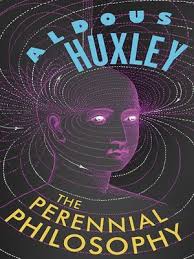
Book recommendation: “The Perennial Philosophy” by Aldous Huxley

An inspired gathering of religious writings that reveals the “divine reality” common to all faiths, collected by Aldous Huxley

“The Perennial Philosophy,” Aldous Huxley writes, “may be found among the traditional lore of peoples in every region of the world, and in its fully developed forms it has a place in every one of the higher religions.”

With great wit and stunning intellect—drawing on a diverse array of faiths, including Zen Buddhism, Hinduism, Taoism, Christian mysticism, and Islam—Huxley examines the spiritual beliefs of various religious traditions and explains how they are united by a common human yearning to experience the divine. The Perennial Philosophy includes selections from Meister Eckhart, Rumi, and Lao Tzu, as well as the Bhagavad Gita, Tibetan Book of the Dead, Diamond Sutra, and Upanishads, among many others.

link to pdf of book: http://silkworth.net/pdf/the_perennial_philosophy.pdf

(Recommended by Robert McEwen, H.W., M.)

“Moonwobble August 2017” by William Fennie & Alana Fennie (theprosperos.org)

Peak is 20-21-22 August, with total solar eclipse on 21 August
Moonwobble August 2017

New Moon for July 23, 2017, Washington DC (Click to enlarge)

By William Fennie & Alana Fennie

This report was outlined 10 days before being posted on 4 August. The correspondence between the indicated energies and the chaotic developments in the U.S. political scene, and scenes elsewhere, is very interesting. -WF

Signs impacted : While this cycle affects everyone, those with placements in Leo, Aquarius, Scorpio, Taurus may notice stronger effects.

Important dates : Review the chart at the end of this report to identify specific dates of interest.

The July-August 2017 Moonwobble Report: New Moon in Leo

For general information about lunar node instability see the About Moonwobble write-up.

Probably the most prominent pattern in the New Moon chart for this Moonwobble (MW) cycle is a grand trine in fire involving Mercury (Leo), Saturn (Sagittarius) and Uranus (Aries). Uranus is at the top of the chart and is also accented by a square to the New Moon configuration (Sun, Moon, Mars) at zero degrees Leo.

There is compelling mixture of challenging and “easy” aspects that can signify a time of energetic, constructive movement but equally could express as upheaval spreading rapidly and with ease. A sense of severe criticism afflicts associations and relationships and only can be moderated by profound application of imagination and idealism.

Mars conjunct the New Moon configuration, in the first house, suggests we are in for a bellicose ride. The President’s natal chart has a late-Leo ascendant that will put Sun, Moon, Mars, and Mercury in his 12th House, with Mercury closest his ascendent. That placement suggests strong stimulation of unconscious content resulting in unreflective action.

There is a real danger of very easily slipping down a slope into confrontation, oiled with fiery words and a revulsion of compromise. Efforts at diplomacy and third-party intervention will be stymied; It will take imagination, art, spirituality – something that tempers the materialistic obsessions of the powers that be – to meet the challenge.

The ongoing sextile between Neptune (Pisces) and Pluto (Capricorn) serves as a more positive context to this heady mix.

We should remember that Uranus is still with a 15 degree orb of its square with Pluto and that orb will tighten when it goes retrograde on August 3. Jupiter in the third house of communication also squares Pluto with a much tighter orb of about 1.5 degrees. An excess of words can flatter and cajole, but they are too much and driven by vulgarity. “Hot words bring hot deeds,” and they are made even hotter by a rebellious and uncompromising imperative coming from Uranus at the top of the chart and its square to Mars and the New Moon conjunction.

It all seems tailor-made for Donald Trump, but there is plenty in this fiery MW cycle for each of us to find in our own world and “bring into the tribunal of our mind”.

In addition to the weather described above, this cycle will present an opportunity – possibly perceived as a requirement – to review habitual behavior / thinking. All of the resources for such a review are present. Working on “shadow” issues can be undertaken in a fun and playful way, although it’s recommended that the urge to share your insights with the world should be put off until after the cycle is over around August 26-27.

For a glance at stronger and weaker points in the cycle, see the graph by Rick Thomas at the end of this post.

Exploring Moonwobble Energy: Journal Prompts

The July – August 2017 Moonwobble cycle provides a boost of energy to constructively and – with its Leonine energy – playfully think about:

  • how we approach our world
  • how we show-up or identify in that world
  • how memory and mass consciousness shape our sense of identity

Additionally, the Sun / Moon conjunction in the 1st house brings to the forefront how we (individually and as a society) balance masculine / feminine energies. This conjunction is asking us whether the masculine / feminine balance is supportive or something we “put on” as an act.

Consider any of the following reflective exercises as a way to connect with the energetics of this Moonwobble cycle.

We recommend keeping your insights private until this Moonwobble cycle is over, since one of the lessons of the fire Trine here is to consider when, with whom, how, and how much we share of private self and creativity with the outside world.

1. You Meeting the World

Spend a day (or week if you’re really feeling the energy) observing how you communicate your identity, your personal opinion and your creativity with others, whether in person or through social media.

Make a game of it and have fun! For example, set up a chart or table that lists typical ways you express yourself: phone call with friends or family; Instagram; Facebook; Twitter; meetings with business colleagues; in person coffee with friends.

For each category, consider what you shared that day; what was the emotion or inspiration behind it; and what the outcomes were.

What patterns do you observe? Upon reflection, are you happy with the amount and depth of your sharing?

Note: This exercise works really well with bullet journaling.

2. Memory and Mass Consciousness

Take 30 minutes to consider how much your actions and conscious awareness are shaped by patterns lodged in deep memories or the ceaseless and all-pervasive messages you receive from mass communication / social media.

You could start by examining a behavior or communication pattern that you do, but find mystifying in some way. For example, why do I check my news feed every few minutes? What happens when I do?

Note: This activity would work well with a mind map, in which you list the behavior or communication pattern you want to explore in the middle of the page. Then, list reasons why it bothers you, what may cause you to do it, and what the consequences are.

As you complete this activity, if a word stands out to you, you could bring that word to a Translation (Prosperos technique). If a memory surfaces, you could apply Releasing the Hidden Splendour.

3. The Masculine / Feminine Dynamic

Where are you particularly active in your life and where are you reflective? If you want and have your birth chart handy, consider doing a polarity analysis of your birth chart. Fire and Air signs are considered masculine or active, while Earth and Water signs are feminine and reflective.

Does your actual day-to-day life reflect what’s in the chart? Explain.

How important is exploring the masculine / feminine dynamic to you? Are there other categories you prefer to use to make sense of your world?

Important Notice: If you would like to speak to a Prosperos Mentor about any issues that may come up while working through these exercises, please .

Rick Thomas has prepared a graph describing the ebb and flow of energies involved in this cycle, below.

Graph - Moonwobble Aug 2017

Sacred geometry

Sacred geometry ascribes symbolic and sacred meanings to certain geometric shapes and certain geometric proportions. It is associated with the belief that a god is the geometer of the world. The geometry used in the design and construction of religious structures such as churchestemplesmosques, religious monumentsaltars, and tabernacles has sometimes been considered sacred. The concept applies also to sacred spaces such as temenoisacred grovesvillage greens and holy wells, and the creation of religious art.

As worldview and cosmology

The belief that a god created the universe according to a geometric plan has ancient origins. Plutarch attributed the belief to Plato, writing that “Plato said god geometrizes continually” (Convivialium disputationum, liber 8,2). In modern times, the mathematician Carl Friedrich Gauss adapted this quote, saying “God arithmetizes”.

As late as Johannes Kepler (1571–1630), a belief in the geometric underpinnings of the cosmos persisted among some scientists.

Natural forms

Nautilus shell’s logarithmicgrowth spiral

According to Stephen Skinner, the study of sacred geometry has its roots in the study of nature, and the mathematical principles at work therein.[4] Many forms observed in nature can be related to geometry; for example, the chambered nautilus grows at a constant rate and so its shell forms a logarithmic spiral to accommodate that growth without changing shape. Also, honeybees construct hexagonal cells to hold their honey. These and other correspondences are sometimes interpreted in terms of sacred geometry and considered to be further proof of the natural significance of geometric forms.

Art and architecture

Geometric ratios, and geometric figures were often employed in the architectural designs of ancient Egyptian, ancient Indian, Greekand Roman. Medieval European cathedrals also incorporated symbolic geometry. Indian and Himalayan spiritual communities often constructed temples and fortifications on design plans of mandala and yantra.

Many of the sacred geometry principles of the human body and of ancient architecture were compiled into the Vitruvian Man drawing by Leonardo da Vinci. The latter drawing was itself based on the much older writings of the Roman architect Vitruvius.

More at:  https://en.wikipedia.org/wiki/Sacred_geometry

The “oral tradition”

Oral tradition, or oral lore, is a form of human communication where in knowledge, art, ideas and cultural material is received, preserved and transmitted orally from one generation to another. The transmission is through speech or song and may include folktales, ballads, chants, prose or verses. In this way, it is possible for a society to transmit oral historyoral literatureoral law and other knowledge across generations without a writing system, or in parallel to a writing system. Indian religions such as Buddhism, Hinduism and Jainism, for example, have used an oral tradition, in parallel to a writing system, to transmit their canonical scriptures, secular knowledge such as Sushruta Samhita, hymns and mythologies from one generation to the next.

Oral tradition is information, memories and knowledge held in common by a group of people, over many generations, and it is not same as testimony or oral history In a general sense, “oral tradition” refers to the recall and transmission of a specific, preserved textual and cultural knowledge through vocal utterance. As an academic discipline, it refers both to a set of objects of study and a method by which they are studied.

The study of oral tradition is distinct from the academic discipline of oral history, which is the recording of personal memories and histories of those who experienced historical eras or events. Oral tradition is also distinct from the study of oralitydefined as thought and its verbal expression in societies where the technologies of literacy (especially writing and print) are unfamiliar to most of the population. A folklore is a type of oral tradition, but knowledge other than folklore has been orally transmitted and thus preserved in human history.

History

According to John Foley, oral tradition has been an ancient human tradition found in “all corners of the world”. Modern archeology has been unveiling evidence of the human efforts to preserve and transmit arts and knowledge that depended completely or partially on an oral tradition, across various cultures:

The Judeo-Christian Bible reveals its oral traditional roots; medieval European manuscripts are penned by performing scribes; geometric vases from archaic Greece mirror Homer’s oral style. (…) Indeed, if these final decades of the millennium have taught us anything, it must be that oral tradition never was the other we accused it of being; it never was the primitive, preliminary technology of communication we thought it to be. Rather, if the whole truth is told, oral tradition stands out as the single most dominant communicative technology of our species as both a historical fact and, in many areas still, a contemporary reality.

— John Foley, Signs of Orality

In Asia, the transmission of folklore, mythologies as well as scriptures in ancient India, in different Indian religions, was by oral tradition, preserved with precision with the help of elaborate mnemonic techniques. Some scholars such as Jack Goody state that the Vedas are not the product strictly of an oral tradition, basing this view by comparing inconsistencies in the transmitted versions of literature from various oral societies such as the Greek, Serbia and other cultures, then noting that the Vedic literature is too consistent and vast to have been composed and transmitted orally across generations, without being written down. According to Goody, the Vedic texts likely involved both a written and oral tradition, calling it a “parallel products of a literate society”.

In ancient Greece, the oral tradition was a dominant tradition. Homer‘s epic poetry, states Michael Gagarin, was largely composed, performed and transmitted orally. As folklores and legends were performed in front of distant audiences, the singers would substitute the names in the stories with local characters or rulers to give the stories a local flavor and thus connect with the audience, but making the historicity embedded in the oral tradition as unreliable. The lack of surviving texts about the Greek and Roman religious traditions have led scholars to presume that these were ritualistic and transmitted as oral traditions, but some scholars disagree that the complex rituals in the ancient Greek and Roman civilizations were an exclusive product of an oral tradition. The Torah and other ancient Jewish literature, the Judeo-Christian Bible and texts of early centuries of Christianity are rooted in an oral tradition, and the term “People of the Book” is a medieval construct. This is evidenced, for example, by the multiple scriptural statements by Paul admitting “previously remembered tradition which he received” orally.

More at:  https://en.wikipedia.org/wiki/Oral_tradition

Bible Series X: Abraham: Father of Nations


Published on Aug 8, 2017

The Abrahamic adventures continue with this, the tenth lecture in my 12-part initial Biblical lecture series. Abraham’s life is presented as a series of encapsulated narratives, punctuated by sacrifice, and the rekindling of his covenant with God. This seems to reflect the pattern of human life: the journey towards a goal, or destination, and the completion of a stage or epoch of life, followed by the necessity of revaluation and reconsideration of identity, prior to the next step forward. Abraham, for his part, makes the sacrifices necessary to continue to walk with God, or before God (as the terminology in this section has it). It is this decision that allows him to transcend the vicissitudes of life, and to take his role as the father of nations.

Patreon: https://www.patreon.com/jordanbpeterson
Self Authoring: http://selfauthoring.com/
Jordan Peterson Website: http://jordanbpeterson.com/
Podcast: http://jordanbpeterson.com/jordan-b-p…
Reading List: http://jordanbpeterson.com/2017/03/gr…
Twitter: https://twitter.com/jordanbpeterson