“The Invitation” by Oriah

#
It doesn’t interest me
what you do for a living.
I want to know
what you ache for
and if you dare to dream
of meeting your heart’s longing.

It doesn’t interest me
how old you are.
I want to know
if you will risk
looking like a fool
for love
for your dream
for the adventure of being alive.

It doesn’t interest me
what planets are
squaring your moon…
I want to know
if you have touched
the centre of your own sorrow
if you have been opened
by life’s betrayals
or have become shrivelled and closed
from fear of further pain.

I want to know
if you can sit with pain
mine or your own
without moving to hide it
or fade it
or fix it.

I want to know
if you can be with joy
mine or your own
if you can dance with wildness
and let the ecstasy fill you
to the tips of your fingers and toes
without cautioning us
to be careful
to be realistic
to remember the limitations
of being human.

It doesn’t interest me
if the story you are telling me
is true.
I want to know if you can
disappoint another
to be true to yourself.
If you can bear
the accusation of betrayal
and not betray your own soul.
If you can be faithless
and therefore trustworthy.

I want to know if you can see Beauty
even when it is not pretty
every day.
And if you can source your own life
from its presence.

I want to know
if you can live with failure
yours and mine
and still stand at the edge of the lake
and shout to the silver of the full moon,
“Yes.”

It doesn’t interest me
to know where you live
or how much money you have.
I want to know if you can get up
after the night of grief and despair
weary and bruised to the bone
and do what needs to be done
to feed the children.

It doesn’t interest me
who you know
or how you came to be here.
I want to know if you will stand
in the centre of the fire
with me
and not shrink back.

It doesn’t interest me
where or what or with whom
you have studied.
I want to know
what sustains you
from the inside
when all else falls away.

I want to know
if you can be alone
with yourself
and if you truly like
the company you keep
in the empty moments.

By Oriah © Mountain Dreaming,
from the book The Invitation
published by HarperONE, San Francisco,
1999 All rights reserved

(Contributed by Robert McEwen, H.W., M.)

“Jordan Peterson Exposes the Postmodernist Agenda” by Joshua Philipp, Epoch Times


Communist principles in postmodernism were spread under the guise of identity politics

June 21, 2017

Communism was not popularized in the West under the direct banner of communism. Instead, it came largely under the banner of postmodernism, and aimed to transform the values and beliefs of our societies through its Marxist idea that knowledge and truth are social constructs.

Under it, a new wave of skepticism and distrust was applied to philosophy, culture, history, and all beliefs and institutions at the foundations of Western society.

The postmodern philosophy “came into vogue” in the 1970s, according to Jordan Peterson, Canadian clinical psychologist and professor of psychology at the University of Toronto, “after classic Marxism, especially of the economic type, had been so thoroughly discredited that no one but an absolute reprobate could support it publicly.”

Peterson said it’s not possible to understand our current society without considering the role postmodernism plays within it, “because postmodernism, in many ways—especially as it’s played out politically—is the new skin that the old Marxism now inhabits.”

“That’s where identity politics came from,” he said. And from there, it “spread like wildfire” from France, to the United States through the English department at Yale University, “and then everywhere.”Marxism preached that the natural and economic landscape is a battle between the so-called proletariat and the bourgeois. It claimed that economic systems were going to enslave people and keep them down, Peterson said.

In practice, however, communism repeatedly showed it made things worse. It was put into place in many parts of the world throughout the 20th century “with absolutely murderous results,” Peterson said. “It was the most destructive economic and political doctrine I think that has ever been invented by mankind,” surpassing even the terror seen under Adolf Hitler, with its system of murder that would kill over 100 million people in less than a century.

Peterson said the “full breadth of that catastrophe” of communism is something students rarely learn in school. “The students I teach usually know nothing at all about what happened in the Soviet Union under Stalin and Lenin between 1919 and 1959. They have no idea that millions, tens of millions, of people were killed and far more tortured and brutalized by that particular regime—to say nothing of Mao.”

By the end of the 1960s, he said, even French intellectuals like Jean-Paul Sartre had to admit that the communist experiment—whether under Marxism, Stalinism, Maoism, or any other variant—was “an absolute, catastrophic failure.”

Rather than do away with the ideology, however, they merely gave it a new face and a new name. “They were all Marxists. But they couldn’t be Marxists anymore, because you couldn’t be a Marxist and claim you were a human being by the end of the 1960s,” said Peterson.

The postmodernists built on the Marxist ideology, Peterson said. “They started to play a sleight of hand, and instead of pitting the proletariat, the working class, against the bourgeois, they started to pit the oppressed against the oppressor. That opened up the avenue to identifying any number of groups as oppressed and oppressor and to continue the same narrative under a different name.”

“It was no longer specifically about economics,” he said. “It was about power. And everything to the postmodernists is about power. And that’s actually why they’re so dangerous, because if you’re engaged in a discussion with someone who believes in nothing but power, all they are motivated to do is to accrue all the power to them, because what else is there?” he said. “There’s no logic, there’s no investigation, there’s no negotiation, there’s no dialogue, there’s no discussion, there’s no meeting of minds and consensus. There’s power.”

“And so since the 1970s, under the guise of postmodernism, we’ve seen the rapid expansion of identity politics throughout the universities,” he said. “It’s come to dominate all of the humanities—which are dead as far as I can tell—and a huge proportion of the social sciences.”

And so since the 1970s, under the guise of postmodernism, we’ve seen the rapid expansion of identity politics throughout the universities.

Jordan Peterson, professor of psychology at the University of Toronto:

“We’ve been publicly funding extremely radical, postmodern leftist thinkers who are hellbent on demolishing the fundamental substructure of Western civilization. And that’s no paranoid delusion. That’s their self-admitted goal,” he said, noting that their philosophy is heavily based in the ideas of French philosopher Jacques Derrida, “who, I think, most trenchantly formulated the anti-Western philosophy that is being pursued so assiduously by the radical left.”

“The people who hold this doctrine—this radical, postmodern, communitarian doctrine that makes racial identity or sexual identity or gender identity or some kind of group identity paramount—they’ve got control over most low-to-mid level bureaucratic structures, and many governments as well,” he said. “But even in the United States, where you know a lot of the governmental institutions have swung back to the Republican side, the postmodernist types have infiltrated bureaucratic organizations at the mid-to-upper level.”

“I don’t think its dangers can be overstated,” Peterson said. “And I also don’t think the degree to which it’s already infiltrated our culture can be overstated.”


“Political Morality” by Suzanne Deakins, H.W., M.

This article started out about our moral and ethical deficits. Morality and Ethics are perceived based on our belief structure. The more I thought about the topic the deeper into the concept of consciousness and mind I delved.  To me, morals and ethics are based on our worldview, how we see our self in relationship to the environment and our fellow travelers. In this, we make decisions based on our early years and what we were taught as a good person, idea, and thought.  As a student of mind and consciousness, I can say about 90% of all decisions we make are from our unconscious mind based on our early years’ experiences. It is my hope, that the body of this commentary will help all of us see what we must do to protect our democracy, ethical actions, and moral core of existence.

The day-to-day convictions of most of our fellow citizens can be divided into a moral division that we often see as political progressive (liberal) or conservative. This division is defined or depends on what you see as a good person and the right thing to do. Exploring deeper the concept of “good” we can see this division is based on what kind of family we have. How we think and explain what a good parent is to us. According to George Lakoff, the split of conservative and liberal can be reduced to two kinds of parenting strictness or nurturance. These qualities apply to morals and ethics in all facets of our life. 

This division pertains to our thinking and understanding of our family, to morality, religion, and our politics. As a nation, we do not have discourse on this aspect of the political division simply because these concepts reside in our cognitive unconscious and we are not aware of the part they play in our day-to-day decisions and actions.

An example of this is how we see our parents. Parents are the first concept of God to a small child. A child cannot understand the abstraction of God, so in defining God they are told God gives all things. Everything a child receives comes from a parenting figure, thus if parenting figures are punitive and strict the child will grow into adulthood thinking of God as a punitive source of life. Out of this religious choices are made as well as political choices. Political choices are made because a person chooses elected officials out personal beliefs, rather than any abstract future presented by candidates during campaigns.

If we are to remain a democracy as a country we must come to grips with the profound divisions we see in the function of government, social programs (entitlements), accessibility of education, environmental issues, gun control, the death penalty, abortion, energy, civil rights, taxation and not least religious freedoms. The essential division in our thinking of these concerns can be reduced to strictness and nurturance.

The conservative leadership has spent quite a bit of time and money defining the meaning of family, morality (as they see it), as well as education and other topics of political division. They define the topics in a way that their constituents can clearly see and understand and in fact see the proposals as common sense. The conservative platforms, bills, executive orders, press releases, are all stated in language that leaves little digression from the concept of strictness, is fraught with ideas that conservatives can relate to as common sense, and lack any room for abstract thinking. The conservative platforms present a strict cohesion to the definitions put forth leaving very little wiggle room in the thinking or enacting of rules/laws set down by government officials. This kind of thinking is what I call black and white, either /or thinking. All thought is based on excluding any outlying thoughts or circumstances. For instance to allow Trans people to choose the restroom that fits their identity falls outside of the strict definition of male or female. To the conservative mind, the concept of a Trans person is not conceivable. Thus the move to force anything that deals with possible sexuality variations (from the strict sense of gender definition) is required to move back into the either/or mode of male or female.  

We are a blend of many different ideas. We all are a blend of conservative and progressive thinking and beliefs. This perhaps easier understood when we think of education. As a progressive voter and thinker, I still believe that education should air on a conservative side teaching cursive handwriting skills and math without calculators. At the same time, I believe school age Trans Children should choose which restrooms they want to use.

No division is ever black and white there are nuances that lend shades of gray to our thinking. A common symbol (or metaphor) is when we say something is hot we are saying to me it is hot and not that it is hot 100% as there is no 100% cold or hot. The space between is a blend and thus becomes shaded as a gray space. To understand what our adversaries are we must begin to understand the subtleties of language and mind/consciousness. As we speak of the unconscious mind we are speaking of those beliefs and thoughts we are not aware of playing a part in our life.

Conceptual metaphors are used in our thinking and speaking to explain abstract ideas. We Commonly use the metaphor of an eight on its side to explain infinity as having no beginning or end. We think in pictures, which we try to convert to words. Infinity to be understood is reduced from abstract to a visual.

This same process happens with morality many often think in financial terms and transaction. For instance, Karma is thought of as payback for deeds done. Morality is thought of in the sense of  “you did me a favor and now I owe you.” We often talk of morality in terms of debts and think of it in that manner. Think of such concepts of reprisal, justice, retribution, and compensation are often thought of in financial terms. Much of our moral reasoning is thought of in this type of metaphorical ideas. Progressive thinkers say many immigrants pay taxes and add to the workforce, conservatives say the law is the law and you can’t stay in this country without legal papers.

Returning to the idea of our beliefs coming from family experiences. Morality and ethics radiate from categories in our belief system (archetypical symbols). Morals and ethics are radial emanating from a central model, which has many subcategories but four main sections.

In many ways, our country is in the middle of a divorce. Parental conservative (strictness) father symbols outlining how we are to live and behave while the liberal mother (nurturance) is struggling to feed and nurture our new sense of inclusion of the diversity of humanity in many areas of life. For those of us who are primarily liberals, the new administration feels abusive. The father sees their role as protection (hence the travel band and wall). The overstepping where there is exclusion feels abusive and non- nurturing to the liberal mind. Those who are capable of doing straight thinking in the abstract know that guidelines for safety don’t need to be exclusive or abusive. Children need guidelines in which they can explore and learn (thus nurturing the soul of the child). To me, and many others, the soul of our country and democracy is immigration that brings new ideas and diversity to the palate of our nation.

If we are to sustain our freedom and democracy as a progressive community we must quickly learn to define our concept of morality and ethics in such a way that it seems to be common sense and obtainable. We need parameters that keep us safe and yet allow us to grow and create using the diversity we represent. In many ways, it is a new way of thinking and educating our nemeses so they see the benefit and common sense of nurturing with parameters. Through community brainstorming, we must develop a vocabulary that expresses our ideals and can be understood by the conservative mind and thinker. Discipline and parameters are a necessary part of creative growth. BUT they must be malleable, in such a manner, that we are not thrown into either /or thinking.

 It is my belief that we can make Truth an effective force for all humanity.

 Suzanne Deakins, is a publisher (One Spirit Press and The Q Press) and author. Her books may be found on amazon.com. She teaches seminars on straight thinking and ontology, as well as Radical Forgiveness. She maybe reached at suzannedeak@gmail.com

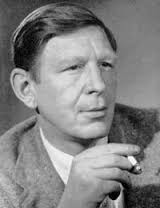
“W.H. Auden’s Cheeky Tribute to Sigmund Freud” by W.H. Auden (newrepublic.com)

Today, thanks to Freud, the man-in-the-street knows (to quote by an inaccurate memory from Punch) that, when he thinks a thing, the thing he thinks is not the thing he thinks he thinks, but only the thing he thinks he thinks he thinks. Fifty years ago, a girl who sprained her ankle on the eve of a long-looked-forward-to-ball, or a man who suffered from a shrewish wife, could be certain of the neighbors’ sympathy; today the latter will probably decide that misfortune is their real pleasure. The letter of apology to the hostess whose dinner invitation you have forgotten is much more difficult to write than it used to be. If an Isolde worries all day lest her absent Tristan should be run over by a bus, the dumbest Brangaene could warn her that her love includes a hope that will never return. As for parents, not only the few who have read up on the Oedipus Complex and Erogenous Zones, but also the newspaper-reading mass, the poor things are today scared out of their wits that they will make some terrible mistake; the Victorian, even the Edwardian, paterfamilias who knew what was right is almost extinct, which is, perhaps, a pity. (However, if the bearded thunder god has turned into a clean-shaven pale, there is still the iron-toothed witch.)

It always comes as a shock to me to remember that, when Freud was born, The Origin of Species had not yet appeared, and that he was in his fortieth year before he published his first “freudian” papers. Freud’s formative years, that is, were a time when the great intellectual battle was between Science and the sort of bourgeois idealist manicheeism of which, in 1875, Mrs. Eddy became Popess. The feeling that matter and the body are low or unreal and that the god and the real are spiritual or mental is always likely to become popular in a society where wealth and social prestige go to those who work with their heads; as long as the aristocracy thinks of itself as the warrior class, it is protected from this heresy because, while it may despise manual labor, athletic fitness is a badge of class: further, as long as their work is really manual, the market value of physical strength and manual skill prevents the working-classes from underestimating the body, but with the coming of the machine which can be minded perfectly well by an unskilled child, white-collar manicheeism infects them as well. The great dramatic interest of the second half of the nineteenth century lies in the fact that, at the very time when the scientific advances which were being made in the natural sciences like chemistry and biology seemed to suggest that all reality might ultimately be explicable in terms of quantity and necessity, the development of society was making the notion of any relation of the good and the beautiful to matter peculiarly repugnant. One cannot read either the scientists or the naturalistic novelists of the period without feeling, in the very passion with which they assert that man is only an animal, their selection for portrayal of the ugliest “nature” they can find, the same horror as was exhibited by their episcopal opponents; they see themselves as preaching the truth, but none of them thinks that the truth is good news. Freud is no exception; the very man who has done most to free us form a manicheean horror of sex quotes more than once, with an unmistakable shudder of distaste, the Church Father who pointed out that we are born inter urinas et faeces. Some wag once summed up the message of psychoanalysis as saying: “We are born mad; we grow sane and unhappy; then we die.” There are photographs of Freud in which he almost looks as if he would agree.

In this battle between those who asserted that the egg is only a dream of the hen and those who asserted that the hen is only a dream of the egg, Freud certainly thought of himself as a dyed-in-the-wool-egg-fancier. He observes all the egg-fancier tabus; Beatrice, for instance, becomes the Love Object and the four-letter words always appear veiled in the decent obscurity of the Latin language. (The child-like faith of even the most anticlerical members of the medical profession in the magical properties of the tongue is extremely comic and warrants psychoanalytic investigation.)

But Freud is a clear and beautiful example of a revolutionary thinker—it probably holds good for them all—who is much more revolutionary and in quite another way than he himself realizes.

Had one asked a doctor in the ‘80s and ‘90s to forecast the future of psychology, he would almost certainly have replied as follows:

“It seems probably that we shall soon be able to describe all mental events in terms of physical events in the brain, but even if we cannot, we may safely assume:

1. Like the human body, the human mind has a constant nature, typical for the species; individual variations are either pathological or insignificant.

2. The behavior of this mind can be explained in terms of stimulus and response. Similar stimuli will necessarily produce similar responses. Both are quantitatively measurable in terms of intensity and duration.

3. Mental development is like physical growth, i.e., the mind passes from a younger or earlier phrase into an older or later one. This process can be arrested or become morbid, but two phases cannot exist simultaneously any more than an oak can be an acorn at the same time.

4. The neuroses and psychoses must be typical diagnostic entities, identical in every patient. To discover a cure for one means to discover the procedure which is effective independently of the individual doctor or the individual patient.

One has only to read a few lines of Freud to realize that one is moving in a very different world, one in which there are decisive battles, defeats, victories, decisions, doubts, where things happen that need not have happened and even things which ought not to have happened, a world where novelties exist side by side with ancient monuments, a world of guilt and responsibility, a world, heaven help us, that has to be described with analogical metaphors. The Master may sometimes write as if he thought that saying a three-year-old child wishes to commit incest with his mother were the same kind of statement as saying he wishes to go to the bathroom, but we are not deceived. Whatever we may think of that famous trio Ego, Super-Ego, and Id, we can see that they are like Prince Tamino, Zorastro, and The Queen of the Night and not like mathematical equations. We may find the account of the Fall in Totem and Taboo more or less plausible than the account in Genesis (the Bible version which makes the psychological sin, and therefore the sense of guilt, prior to the moral crime seems to me the more “freudian”), but we shall not dream of applying the standards of “scientific” evidence employed in Chemistry or Biology to either.

In fact, if everyone of his theories should turn out to be false, Freud would still tower up as the genius who perceived that psychological events are not natural events but historical and that, therefore, psychology as distinct from neurology, must be based on the pre-suppositions and methodology, not of the biologist but of the historian. As a child of his age who was consciously in a polemic with the “idealists” he may officially subscribe to the “realist” dogma that human nature and animal nature are the same, but the moment he gets down to work, every thing he says denies it. In his theories of infantile sexuality, repression, etc., he pushes back the beginnings of free-will and responsibility earlier than even most theologians had previously dared; his therapeutic technique of making the patient relive his past and discover the truth for himself with a minimum of prompting and interference from the analyst (meanwhile, one might add, doing penance by paying till it hurts), the importance of Transference to the outcome of the therapy, imply that every patient is a unique historical person and not a typical case.

Freud is not always aware of what he is doing and some of the difficulties he gets into arise from his trying to retain biological notions of development when he is actually thinking historically. For example, he sometimes talks as if civilization were a morbid growth caused by sexual inhibition; at other times he attacks conventional morality on the grounds that the conformists exhaust in repression the energies which should be available for cultural tasks: similarly, he sometimes speaks of dream symbolism as if it were pure allegory, whereas the actual descriptions he gives of the dreaming mind at work demonstrate that, in addition to its need to disguise truth, it has an even greater need to create truth, to make historical sense of its experience by discovering analogies, an activity in which it shows the most extraordinary skill and humor. In a biological organism, everything was once something else which it now no longer is, and change is cyclical, soma-germasoma; a normal condition is one that regularly reoccurs in the cycle, a morbid one is an exception. But history is the realm of unique and novel events and of monuments—the historical past is present in the present and the norm of health or pathology cannot be based on regularity.

Freud certainly expected opposition and obloquy from the conventional moralists and the man-in-the-street for his theories about human sexuality; in actual fact, the general public took him to their bosoms rather less critically, perhaps, than they should have done, while the real opposition came and still comes from the behaviorists, the neurologists and all the schools of psychiatry that regard their subject as a natural science and are therefore outraged by the whole approach of the psychoanalysts, irrespective of any particular theory they may hold.

The opposition can certainly find plenty of ammunition in psychoanalytic literature; for, while it is possible to do important work (though not, I believe, the greatest) in the natural sciences without being a wise and great man, the most routine exercises in a field that involves the personal and historical demand wisdom, and a psychoanalyst who lacks it cannot write a five-minute paper without giving himself away as a vulgar nincompoop.

The same holds for the reader; a man may fail to understand a text-book of physics but he knows he has not understood it and that is the end of the matter; but he may read a psychoanalytical treatise and come out more of a damned fool at the end than he was before he began it. Or more of a crook—every defense lawyer in a seemingly hopeless criminal case knows how to instruct his client in his unloved childhood to embarrass Bench and Jury.

In the long run, however, the welcome given to psychoanalysis by the public is based on a sound intuition that stands for treating every one as a unique and morally responsible person, not as a keyboard—it speaks of the narcissism of the Ego, but it believes in the existence of that Ego and its capacity to recognize its own limitations—and that in these days is a great deal. The behaviorists are certainly right in one thing; the human mind does have a nature which can be tampered with: with a few drugs and a little regular torture every human mind can be reduced to a condition in which it is no longer a subject for psychology.

Psychoanalysts and their patients may sometimes seem funny little people, but the fact that they exist is evidence that society is still partly human.

 (Contributed by Bruce King.)

SUNDAY NIGHT TRANSLATION GROUP — JUNE 25, 2017

To quote Heather Williams, H.W., M., “Translation is the creative process of re-engineering the outdated software of your mind.” Translation is a 5-step process using syllogistic reasoning to transform apparent man and the universe back into its essential whole, complete and perfect nature.  Through the process of Translation, reality is uncovered and thus revealed. Through word tracking, getting to the essence of the words we use to express our current view of reality, we are uncovering the underlying timeless reality of the Universe.

Sense testimony:

The government lies to us and voting capacity can be manipulated.

Conclusions:

  1. I am a singular entity, unrestrained in my capacity and participation; the only direction, no matter what direction I take.
  2. Absolute Perfect is I AM I, indivisible and collective Consciousness to manifest power eternal flow of Mind illumination.
  3. To come.
  4. To come.

[The Sunday Night Translation Group meets at 7pm Pacific time on Skype.  Translators are welcome to join or start your own group.]

Development of the child’s brain in our mother’s womb

1 Joseph Chilton Pearce education and the young child’s brain development, Very interesting development of child’ s brain in the mother’s womb, that can change in mid stream of pregnancy, if the environment of the mother’s experience,  changes from peaceful, to otherwise, WOW? There is so much more here also, the narrator speaks about our educational system, as to anxiety within the learning context, learning is impossible because anxiety engages’ our older reptilian brain? This is beautifully enlightening :>). Our children cannot learn in any other environment accept, a fully safe accepting environment :>).

Consciousness, spirituality, biography, sexuality, androgyny, futurism, space, the arts, science, astrology, democracy, humor, books, movies and more