The Word as a Physiological and Therapeutic Factor: The Theory and Practice of Psychotherapy According to I. P. Pavlov

theword

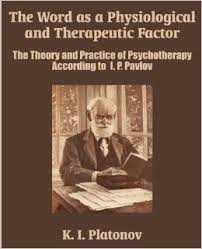
“In outlining the sequence of our material, we deemed it necessary to show ways of eliminating functional disorders of the higher nervous activity of man by psychotherapeutic methods. In this our investigations were concerned both with the nearest subcortical region and the two signal systems of reality, the normal co-ordination of which underlies the healthy personality, the integrity of our ‘ego.’ .”The object of our monograph is to show precisely what psychotherapy can and does effect under certain conditions. Not only somatologists but frequently even psychiatrists, have inadequate knowledge of the efficacy of psychotherapy. In order that the methods of psychotherapy be extensively introduced into medical practice, we need facts directly testifying to its efficacy. It has been our object to give these facts since, according to Pavlov, ‘facts are the breath of life for the scientist.’ At the same time, we intended to acquaint the reader with our methods of studying and employing psychotherapy on the basis of Pavlov’s teachings.”

(Google Books)

“The Center of the Cyclone: An Autobiography of Inner Space”

cyclone

The Center of the Cyclone: An Autobiography of Inner Space is a 1972 book by John C. Lilly published by the Julian Press.

The book explores the question of consciousness and the inner world of the mind, refracted through the experience of Lilly himself in the 1960s using the drug LSD and, particularly, flotation tanks and isolation. It also examines Lilly’s notion of self-metaprogramming as a means to shape and direct certain experiences and gain autonomy and mastery over the direction that they take.

The book also recounted Lilly’s interactions with other explorers of consciousness such as Oscar Ichazo in Chile whose work was based in part on that of Gurdijeff. Lilly adapted Ichazo’s concepts of a range of different levels of experience, using pre-existing concepts such as satori or samadhi, to create a composite framework of consciousness ranging on the one hand from the death of the ego and fusion with the Universal Mind to a state of the ‘quintessence of evil’ and ‘deepest hell imaginable’ on the other hand.

One of the key insights put forward by Lilly is the view that “in the province of the mind, what is believed to be true is true or becomes true, within certain limits to be found experientially and experimentally. These limits are further beliefs to be transcended. In the province of the mind, there are no limits.” In this context, Lilly draws a distinction between the limitless province of the mind and the realm of the body, in which there are limits that cannot be transcended.

(Wikipedia.org)

Confirmation bias (for students of Translation and Releasing the Hidden Splendour)

dilbert

Confirmation bias, also called confirmatory bias or myside bias, is the tendency to search for, interpret, favor, and recall information in a way that confirms one’s preexisting beliefs or hypotheses, while giving disproportionately less consideration to alternative possibilities. It is a type of cognitive bias and a systematic error of inductive reasoning. People display this bias when they gather or remember information selectively, or when they interpret it in a biased way. The effect is stronger for emotionally charged issues and for deeply entrenched beliefs. People also tend to interpret ambiguous evidence as supporting their existing position. Biased search, interpretation and memory have been invoked to explain attitude polarization (when a disagreement becomes more extreme even though the different parties are exposed to the same evidence), belief perseverance (when beliefs persist after the evidence for them is shown to be false), the irrational primacy effect (a greater reliance on information encountered early in a series) and illusory correlation (when people falsely perceive an association between two events or situations).

A series of experiments in the 1960s suggested that people are biased toward confirming their existing beliefs. Later work re-interpreted these results as a tendency to test ideas in a one-sided way, focusing on one possibility and ignoring alternatives. In certain situations, this tendency can bias people’s conclusions. Explanations for the observed biases include wishful thinking and the limited human capacity to process information. Another explanation is that people show confirmation bias because they are weighing up the costs of being wrong, rather than investigating in a neutral, scientific way.

Confirmation biases contribute to overconfidence in personal beliefs and can maintain or strengthen beliefs in the face of contrary evidence. Poordecisions due to these biases have been found in political and organizational contexts.

More at:  https://en.wikipedia.org/wiki/Confirmation_bias

THE WOMAN WHO SAVED OUR CITIES by Randy Shaw (beyondchron.org)

janejacobsbook

Jane Jacobs is the leading urban visionary for post-WWII cities. Fittingly, her 100th birthday this year is being celebrated by books, events and a new documentary film. I recently spoke at a SPUR panel titled “What Would Jane Jacobs Do?,” and answering that question increasingly charts policy decisions about cities and neighborhoods.

Peter Laurence wrote an exceptional book on how Jacobs came to challenge the planning establishment that I reviewed earlier this year (“The Roots of Jane Jacobs’ Urban Vision”, June 2, 2016). I described Laurence’sBecoming Jane Jacobs as “an enormous contribution both to our understanding of Jacobs and more importantly to the 1950’s era that shaped both Jacobs’ perceptions and the future of urban and suburban America. “ I deemed it a “must read for anyone working to improve the quality of life in cities today.”

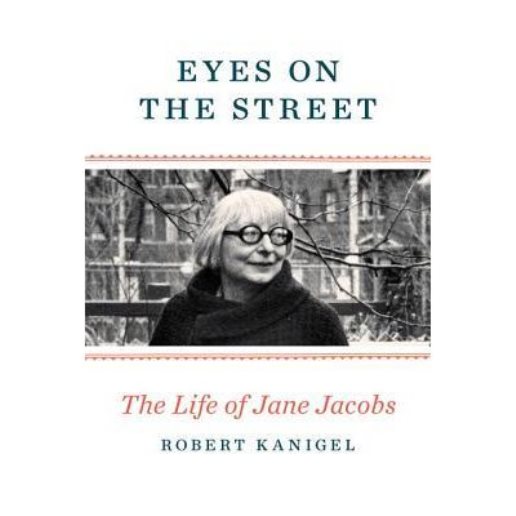
Robert Kanigel’s new book, Eyes on the Street: The Life of Jane Jacobs, offers the first full biography of Jacobs. Kanigel traces Jacobs’ life with a particular focus on her often overlooked social activism in her adopted city of Toronto. Although Jacobs is typically identified with living in New York City’s West Village, she actually lived longer in Toronto.  It was in Toronto where Jacobs skill at promoting livable cities was most appreciated by city officials, and Kanigel brings to light this critical chapter of Jacobs’ legacy

Jacobs, Pre-Death and Life

Kanigel’s search for the roots that explain why Jacobs emerged as the nation’s most powerful voice against massive, planning-driven urban development schemes begins with her childhood years. While Kanigel tries to find evidence that she might have been shaped by her experiences in Scranton, Pennsylvania, he ultimately concludes as Laurence does that it was the time she spent in post-redevelopment areas of East Harlem, West Boston, and Philadelphia that led her to conclude that the people’s needs had been left out of planners’ plans.

Jacobs was also influenced by her walk through Boston’s North End, which remains one of the city’s most popular walking areas for tourists. The North End was precisely the type of mixed commercial/residential neighborhood that the planning establishment destroyed throughout the nation. Planners preferred highrise apartments with surrounding greenery, creating neighborhoods that lacked vitality, social interactions and were fundamentally impractical due to the lack of nearby small businesses.

Kanigel primarily focuses on Jacobs’ insights gleaned from personal visits to these failed areas, whereas Laurence shows how her research and investigation went much deeper. Nevertheless, a reader unfamiliar with how Jacobs came to her views will get the answer from this book.

Jacobs’ Activism

Kanigel particularly explores Jacobs’ lifetime of community-based grassroots activism. Most Jacobs followers know how her publication of the classic Death and Life of Great American Cities coincided with her efforts to stop a highway from going through Washington Square Park. Jacobs also spent years working to stop a proposed Manhattan Expressway from wrecking  the Village, Soho, Chinatown and Little Italy. Jacobs began that struggle in 1961  and the highway plan was not killed until 1968.

Jacobs’ anti-Vietnam War activism led her to leave New York City for Toronto in 1968 to protect her sons from the draft. She would live in Toronto until her death in 2006.

In Toronto, Jacobs quickly got involved in batting the long planned Spadina Expressway. Proposed in the 1950’s as part of a network of expressways designed to circle Toronto, Jacobs helped defeat the project in 1971. That victory resulted in the abandonment of the entire freeway project.

Kanigel shows Jacobs to be an effective but ambivalent activist. She repeatedly bemoaned that time spent at public hearings was taking away from her writing time; yet she was continued her activism while writing books into her 80’s.

Jacobs Legacy

Has Jane Jacobs’ legacy been overhyped? Was she right that “eyes on the street,” a mix of residential and commercial uses, and preserving old and historic buildings made for successful neighborhoods?

Kanigel addresses Jacobs critics, particularly sociologist Herbert Gans. Gans argued upon the release of Death and Life that Jacobs underestimated the role of cultural and economic factors—as opposed to the surrounding housing type— that made Boston’s Italian North End a successful neighborhood. He also felt Jacobs was “blind to issues of race and class.”

Gans is not alone in criticizing Jacobs for offering a vision for successful neighborhoods, particularly through historic preservation, that often became a blueprint for gentrification.

In my book on San Francisco’s Tenderloin I describe how fears of gentrification led residents in 1983 to oppose becoming a National Historic District.  Most neighborhoods are eager to embrace this designation, which is now associated with increased property values  (the national Uptown Tenderloin Historic District covering 31 blocks was created in 2009).

But while the low-income Tenderloin and its 409 historic buildings fulfill Jacobs’ vision, others point to more typical outcomes such as what occurred in New York City, where real estate speculators promoted the idea of “Brownstone Brooklyn” to get upscale buyers to purchase properties that long housed tenants. Transformed neighborhoods like Park Slope also embody Jane Jacobs’ vision for cities, leading some to accuse Jacobs of ignoring the class implications of her work (often cited is the gentrification of her own former West Village neighborhood).

Such criticisms blame Jacobs for developments out of her control. Jane Jacobs could not promise that following her blueprint for successful neighborhoods would keep them low income or prevent tenant displacement, though neighborhoods of mixed incomes was clearly her preference.

Yet critics should acknowledge that Jane Jacobs did more than anyone of her time to publicize the horrors caused to working-class neighborhoods and low income residents by massive new expressways and urban renewal projects. Gans’ claim that she ignored class and race ignores the core arguments of her work.  Such criticisms seem to be based not on the impacts of her work but on Jacobs’ own middle-class sensibilities and the white communities where she lived and organized.

Those familiar with Jacobs prior to reading this book will come away even more impressed with her legacy. Her enormous impact on Toronto—which she is widely credited with transforming into a far more livable city—was a complete surprise to me and may be the case with most readers who only know Jacobs through Death and Life and her New York City battles with Robert Moses.

Kanigel has created what will likely become the definitive biography of Jane Jacobs in her centenary year. A documentary film, Citizen Jane: Battle for the City, will soon be out and further events are planned commemorating her remarkable life. Jane Jacobs was a woman in an overwhelming male field and lacked a planning degree; yet as Kanigel shows, she became and remains the most important urban visionary of our time.

Randy Shaw is Editor of Beyond Chron. He is the author of The Tenderloin: Sex, Crime and Resistance in the Heart of San Francisco

To leave feedback, go to feedback@beyondchron.org

Tabrizi’s “string theory”

tabrizi

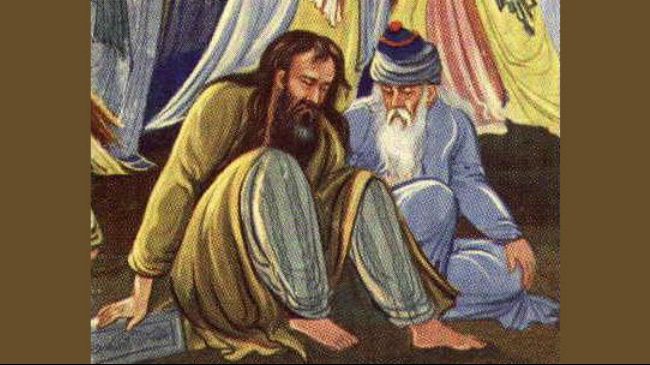
“The universe is a complete unique entity. Everything and everyone is bound together with some invisible strings. Do not break anyone’s heart; do not look down on weaker than you. One’s sorrow at the other side of the world can make the entire world suffer; one’s happiness can make the entire world smile.”
― Shams-i-Tabrīzī or Shams al-Din Mohammad (1185 – 1248) was an Persian Sunni Muslim, who is credited as the spiritual instructor of Mewlānā Jalāl ad-Dīn Muhammad Balkhi, also known as Rumi and is referenced with great … Wikipedia

(Courtesy of Gwyllm Llwydd.)

“PROSPEROS ASSEMBLY 2016” by Amy Cuff-Wall

prosperosassembly
Amy Cuff-Wall on the right from a previous Assembly.  Click here for a wonderful picture of Amy at Assembly 2016:  DSC_0806

* * * * *

This year I truly wanted to go to The Assembly.  My husband & I did so much this summer, that I didn’t think it possible.  I told my husband Frank, that I was sad that I couldn’t go.  To my surprise he said I should go.

Wow!  I get to go to The Assembly this year!  Yeah!  So, I e-mailed Al Haferkamp, and told him I was going. We worked out that I would room with Anne Bollman & Janet Cromwell.  Great roommates too, thank you both.

This was one of the best Assemblies I have attended.  Reconnecting with old friends, and making new ones too.  Prosperos people are family.  There is always acceptance, love, non-judgement.  Even when we’ve been away from each other for years it seems as though no time has passed.  So many of my Prospero friends share the same kinds of issues with me, and we are all working through them.

Sara Walker and I reconnected after almost 40 years of not seeing each other.  We have so much in common it’s amazing.  I asked Sara if she remembered that I bought her 1976 Subaru in 1978, and she did not.  That was my very first car, and it served me well.  Thank you, Sara for the car & for reconnecting at The Assembly.  The last day I think it was Al that said we intend to keep in touch with each other through e-mails, or other online communications.  I’m all for that!

Calvin, Tibor, Annie, Sara, and I went out to dinner one night and had the best time.  We were just eating, drinking wine, and enjoying great company.  We went to the very fine La Traviata Restaurant in Long Beach.

Thank you Al, Calvin, Anne, Janet, and the rest of those who made this wonderful weekend possible for all of us “Companions at the Crossroads”.

Aloha, Amy

“Re-Connecting at Our Recent Prosperos Assembly” by Sara Walker

sarawalker

I knew it was time to get out of Oregon (where I live) and back around my Prosperos friends plus meet friends to be–while expanding awareness, releasing, and having a good time. And all that happened, it was wonderful.

What was an extra special part of being at the Prosperos Assembly this year was re-connecting with someone I hadn’t seen in nearly 40 years–Amy Cuff-Wall. You know the concept that time is a human-made construct and that in Truth there is only oneness, wholeness, timelessness.  Years disappeared and there we were, catching up with our lives and “comfortably” sharing like we last saw each other last month–plus the intensity and joy of re-discovery of so much in common, so much to help each other with, so much recalled, share, and yet we could pick right up where we left off –

[Amy] “Hey Sara, remember when I bought your car in 1977 or 78?  No?  Well I did and I kept it and enjoyed it for a good long time.”

And

[Sara] “Amy, remember when we went to the Jekyll Island Assembly, off of the coast of Georgia? and danced and danced?? That and group hugs (Love Balls).

and then also a chance to catch up to where each of our lives are today.