
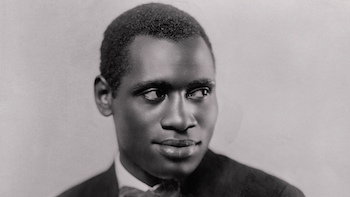
(Image from aaregistry.org)
Paul Leroy Robeson (April 9, 1898 – January 23, 1976) was an American bass-baritone concert artist, actor, professional football player, and activist who became famous both for his cultural accomplishments and for his political stances. Wikipedia
Google AI Overview
While Paul Robeson was a strong supporter of socialist ideology and the Soviet Union, calling him a “Stalinist” is an oversimplification. He was drawn to the Soviet Union’s ideals of racial equality and social justice, and remained a vocal advocate for the USSR even after evidence of Stalin’s atrocities emerged. His unwavering support, despite the realities of Stalinism, is a complex and often debated aspect of his legacy.
Here’s a more detailed look:
- Initial Attraction:Robeson’s visit to the Soviet Union in 1934 deeply impressed him, leading him to embrace socialist ideology and become a vocal advocate for the Soviet Union.
- Ignoring Contradictions:Robeson continued to support the Soviet Union even as reports of Stalin’s purges and human rights abuses became public.
- Complicated Legacy:This unwavering support, despite the evidence of Stalin’s crimes, is a source of debate and controversy. Some historians argue that he was naive or willfully ignorant, while others emphasize the difficult circumstances he faced as a Black man in America and his deep-seated belief in the Soviet Union as a beacon of equality.
- Not a Member of the Communist Party:While Robeson was a vocal supporter of communist and leftist causes, there is no evidence that he formally joined the Communist Party.
- Symbolic Importance:The Soviet Union awarded Robeson the International Stalin Prize in 1952, and he continued to praise Stalin even after the dictator’s death.
- Consequences of Support:Robeson’s support for the Soviet Union, especially his criticism of the US government, led to him being blacklisted and facing significant hardship in the United States.