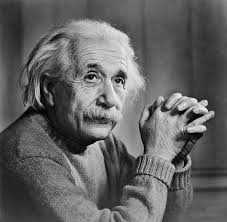
“A human being is a part of the whole, called by us ‘universe,’ a part limited in time and space. He experiences himself, his thoughts and feelings as something separate from the rest – a kind of optical delusion of his consciousness. This delusion is a kind of prison for us, restricting us to our personal desires and to affection for a few persons nearest to us. Our task must be to free ourselves from this prison by widening our circle of compassion to embrace all living creatures and the whole nature in its beauty. Nobody is able to achieve this completely, but striving for such achievement is in itself a part of the liberation and a foundation for inner security.”
Some of you may recognize the above passage as a quote from Albert Einstein in a letter he wrote in 1950 to an ordained rabbi, Norman Salit, who was seeking in vain to comfort his 19-year-old daughter over the death of her 16-year-old sister. In addition to his lifetime attempt to unify into a single, comprehensive theory the laws governing gravity and electromagnetism, his voluminous correspondences reflect a deep conviction that such a unity must exist throughout nature.
Albert Einstein (March 14, 1879 – April 18, 1955) was a German-born theoretical physicist who is widely held to be one of the greatest and most influential scientists of all time. Wikipedia
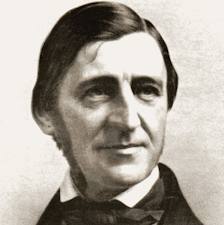
Jesus Christ belonged to the true race of prophets. He saw with open eye the mystery of the soul. Drawn by its severe harmony, ravished with its beauty, he lived in it, and had his being there. Alone in all history, he estimated the greatness of man. One man was true to what is in you and me. He saw that God incarnates himself in man, and evermore goes forth anew to take possession of his world. He said, in this jubilee of sublime emotion, `I am divine. Through me, God acts; through me, speaks. Would you see God, see me; or, see thee, when thou also thinkest as I now think.’
–Excerpt from Ralph Waldo Emerson’s Harvard Divinity School Address of July 15, 1838 (emersoncentral.com)
Ralph Waldo Emerson, who went by his middle name Waldo (May 25, 1803 – April 27, 1882), was an American essayist, lecturer, philosopher, abolitionist and poet who led the transcendentalist movement of the mid-19th century. Wikipedia
“The fate of unborn millions now depends, under God, on the courage and conduct of this Army.”
–First commander of the Continental Army, George Washington, spoke at the start of the Revolutionary War
George Washington (February 22, 1732 – December 14, 1799) was an American Founding Father, military officer, and statesman who served as the first president of the United States from 1789 to 1797. Wikipedia
MEANING: adjective: Using pretentious words and language.
ETYMOLOGY: After Lexiphanes, a bombastic speaker, in the satire of the same name by Lucian (2nd century CE). From Greek lexis (speech, diction, word) + phainein (to show). Earliest documented use: 1767.
NOTES: Lexiphanes, the title character of the satire, likes to use pretentious words and convoluted sentences in the belief that it shows his intellect. His friend Lycinus is concerned and has a doctor treat him. The doctor prescribes an emetic to purge Lexiphanes of his vocal clogging.
With Lexiphanes’s system cleaned, the doctor leaves him in his friend’s care. Lycinus prescribes reading great poets, orators, and philosophers, saying “We do not like even poetry to read like the dictionary.”
Lexiphanes is also a genus of leaf beetles. It’s not known what these beetles talk about when they use their fancy long words.
New Thinking Allowed with Jeffrey Mishlove • Dec 15, 2023 This video is a special release from the original Thinking Allowed series that ran on public television from 1986 until 2002. It was recorded in about 1998. It will remain public for only one week. Sylvia Boorstein, PhD, clinical psychologist and Buddhist meditation teacher, is author of It’s Easier Than You Think, Don’t Just Do Something, Sit There and That’s Funny, You Don’t Look Buddhist. Here she presents the essence of the eightfold path and the four noble truths of Buddhism. She discusses Vipassana–or mindfulness–meditation which entails detaching from the thoughts, cravings and aversions that pass through the mind. Through this practice one gains insight into the impermanence of all mental states. Now you can watch all of the programs from the original Thinking Allowed Video Collection, hosted by Jeffrey Mishlove. Subscribe to the new Streaming Channel (https://thinkingallowed.vhx.tv/) and watch more than 350 programs now, with more, previously unreleased titles added weekly. Free month of the classic Thinking Allowed streaming channel for New Thinking Allowed subscribers only. Use code THINKFREELY.
“Truth, which only doth judge itself, teacheth that the enquiry of truth, which is the love-making or wooing of it, the knowledge of truth, which is the presence of it, and the belief of truth, which is the enjoying of it, is the sovereign good of human nature.”
–Francis Bacon, Essay, Of Truth.
“Next unto God, Love is the Cause of Causes, itself without any Cause.”[
–Francis Bacon, On Principles and Origins, According to the Fables of Cupid and Cœlum (1609).
Francis Bacon, 1st Viscount St Alban PC, also known as Lord Verulam (January 22, 1561 – April 9, 1626), was an English philosopher and statesman who served as Attorney General and Lord Chancellor of England under King James I. Bacon led … Wikipedia
Scientists did an experiment not too long ago where they asked volunteers to solve tricky problems, like stabilizing a shaky Lego tower or figuring out geometric puzzles. Almost always, they observed, the study subjects tried to add something. This was true even when taking away bricks or shapes was objectively the faster, easier way to solve the problem.
The scientists called this phenomenon “subtraction bias” and declared it a shared feature of the human mind. People just tend to prefer to solve problems by addition rather than subtraction. And what holds true of engineering challenges and brainteasers also holds true of happiness (and intelligence).
For greater well-being, subtract misery
If you would like to be happier in your work and life, chances are excellent your first impulse will be to add something. Maybe you could exercise or meditate more? Perhaps a new career direction would solve your woes? Indeed, those are often good happiness moves, but as Harvard happiness researcher Arthur Brooks recently pointed out in The Atlantic, they are only half the happiness equation.
Yes, we can improve well-being by adding joy to our lives. But we can also achieve the same aim by subtracting misery. Brooks even links to a test that can tell you which approach is likely to be more successful for you. What practices or habits should be on the chopping block if you want to stop overlooking the subtractive approach to greater happiness? For inspiration, Brooks looks to the writings of the great philosopher and Nobel laureate in literature Bertrand Russell.
Russell, who has been coming up strangely often in my reading lately, believed “unhappiness to be very largely due to mistaken views of the world,” and broke these common misery-inducing mistakes into eight categories.
1. Fashionable pessimism
In plenty of circles these days, being grumpy and cynical is taken as a sign of depth and intelligence. This is not a new phenomenon, Brooks points out. Melancholy was all the rage in Victorian times, too. Choosing moodiness to look cool was dumb then, continued to be dumb in Russell’s time, when he mocked it mercilessly, and is dumb now.
2. Social comparison
Russell believed that “what most people fear is not falling into destitution but ‘that they will fail to outshine their neighbors,’” Brooks explains. Keeping up with the Jones is a never-ending game that can lead to lifelong discontent. And if you don’t believe the Nobel laureate, there’s modern science to prove it. The solution to social comparison, according to Russell, is to “focus on what you have and feel grateful.”
3. Envy
Closely linked to the above mistake, envy is the condition of feeling bad because someone else has more than you. Russell’s proposed this cure for envy: “Whoever wishes to increase human happiness must wish to increase admiration.” Rather than suffer because of other people’s excellence, celebrate and learn from it.
4. Evading boredom
“We are less bored than our ancestors were,” Russell wrote in 1930, “but we are more afraid of boredom.” Imagine what he would have made of the smartphone era! But the truth is, no gadget or streaming service can fully save you from boredom. They can, however, distract you from essential but uncomfortable reflection and creative growth. The solution is to fight to regain your capacity to just sit quietly and notice the world around you.
5. Coping with fear
Anxiety has only increased since Russell’s day, and it remains a thief of joy. “Russell believed that anxiety is rooted in fear of ‘some danger which we are unwilling to face,’” Brooks notes before highlighting modern science on the biological basis of anxiety disorders. But whatever the cause of your free-floating fear, not going to the effort of finding ways to tame it will make you miserable. Russell — and Tim Ferriss — suggests the best cure is forcing yourself to mentally face your fears until they lose some of their terror.
6. Senseless guilt
Should you feel guilty and make amends if you did something wrong and hurt someone? Of course, but Russell argued against a baseless sense of sin or feeling guilty just because you are doing well and others are doing less well.
7. Virtuous victimhood
Russell again feels ahead of his time with his warnings against playing the victim. “Russell was critical of what he called ‘persecution mania,’ in which one is ‘perpetually the victim of ingratitude, unkindness, and treachery.’ One version of this is what some researchers have called ‘virtuous victimhood,’” explains Brooks. Of course, sometimes people really are victims of injustice, but putting unending victimhood at the heart of your identity is a recipe for unhappiness.
8. Fear of public opinion
According to hospice nurses and others who work with the dying, among the most common deathbed regrets is living a life you thought others expected of you rather than one that was true to you. Russell apparently would not have been surprised. “One should as a rule respect public opinion in so far as is necessary to avoid starvation and to keep out of prison, but anything that goes beyond this is voluntary submission to an unnecessary tyranny,” he wrote.
This is just a taste of what Brooks and Russell have to say on each of these categories, so if you’d like to learn more, check out the complete article.
Medium (and its writers) relies upon memberships from people like you, and not advertisers. If you become a member using my link, it supports me directly and gets you access to all the content on this site.
This post originally appeared on Inc.com. Books and authors mentioned have affiliate links, meaning I receive a small commission if you click and go on to buy them.
There is a single line that keeps popping up throughout the Buddha’s most famous discourse on mindfulness.
I listened to the entire thing in its original Pali language to learn more deeply the spirit behind the words. This one line was what most powerfully imprinted itself into my mind.
Atapi sampajjano satima, a refrain of the Satipatthana Sutta is probably the most succinct definition and description of mindfulness in the Buddha’s own words.
In an age of commercialization of mindfulness, the original definition can often get obscured.
This is why elucidating the logic behind these three words helped me so profoundly; and I hope that it can do the same for you.
Atapi: Ardently; With Vigor; Intensely.
The root of this word comes from Sanskrit tap which means heat.
It’s the basis for the concept of tapasya or penance in yoga, which isn’t as scary as it sounds.
It’s merely an increase of the intensity level of our practice so that we are shifted out of our habitual mode, into a more growth-oriented and malleable state of plasticity.
To pursue mindfulness more intensely means to be ready for all the impurity that might come up as a result of it.
This is the entire process of purification; one where impurities arise and pass, just as they would when a piece of iron ore is being heated & refined to produce pure metal.
Without the heat, the practice falls short, and won’t help us reach the depths of profundity taught by the Buddha.
The root sam denotes completeness or orderliness. Pajjano refers to a contextual awareness or understanding.
What the Buddha is trying to describe is a mental state where you know exactly what you are supposed to be doing. Continusly.
This is (depending on the tradition) usually a focus on the phenomena that are arising and passing: impermanent, absent of selfhood, and unsatisfactory.
This examining erodes our clinging & identification with the causes of suffering!
It is with this context in mind that Buddha’s teachings act as a profound & potent medicine for long-term wellbeing.
Satima: Bearing in Mind; With Remembrance.
The Pali word sati and Sanskrit word smrti translate quite literally into “remembrance.”
It’s not quite ‘mindfulness’ as we understand it today (being just in the present moment) but a more widely-encompassing state of awareness.
Past events can be recalled skillfully, such as meditation instructions.
Present events arising/passing are the conscious anchor for the mind.
You can plan the future, but never get lost inside its conceptualization.
This calls for a serious expansion of our mode of conduct to be able to access the past, present, and future — rather than be unconsciously torn between the three!
Remembrance is all about bearing something in mind; of ensuring that this candle of knowing is maintained continuously, so the process of purification continues.
If You Feel Lost, Re-Digest Some Wisdom.
When I realized how my meditation practice was being watered down by my habits, weaknesses and laziness, I went back to the source.
And I found a wellspring of insistence and inspiration from the Buddha to re-vamp my practice for a long time to come.
It is my hope that continuing to learn and share insights such as these is of some benefit to others.
The belief that we are individual entities walking around in an objective world that more or less is like our perception of it is arguably the most common belief.
Yes, the existence of an objective world is a belief and one that we can disprove.
Every concept is based on experience.
The concept of an objective world is based on your subjective experience of the world.
All you ever experience are sensations.
From your first-person perspective the world is made up of sensations, not of atoms or other subatomic particles.
There are only first-person perspectives.
The trifecta of perceiver, perceiving, and perceived is conceptual.
There is no line of separation between them.
Seer, seeing, and seen are the same function.
Everything seen is color.
The presence of color is what we mean by seeing. Therefore, seeing and color are the same.
There are no objects. There is only color which is the same as seeing.
For an objective world to exist, there must be an independent space. But space is only a concept.
The experience of space is seeing and feeling.
You don’t see space. Space is the extension of color, not the container. Space as a feeling is sensations, which is the same as feeling. Feeling = Felt.
Space is an aspect of experience, not of the world.
Every aspect of the world is really an aspect of experience.
Saying an objective world exists is like saying an experience without experience exists.
An objective world is like a square circle — a logical and experiential impossibility.
Experience and the world are dependently co-arising. They are the same.
An objective world cannot be like your experience of it because it is by definition not experienced.
Although it’s considered common sense, the objective world is a fairytale.