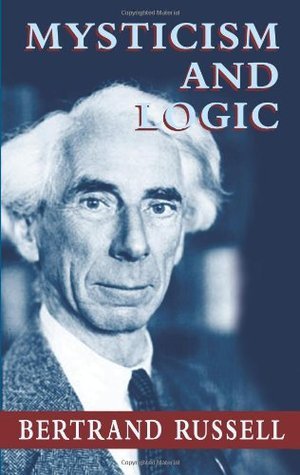
10 brilliant essays by a Nobel Prize-winning philosopher challenge romantic mysticism and promote a scientific view of society and nature. Russell explains his theory of logical atomism in these witty, cogent writings, which include popular treatments of religious and educational issues as well as more technical examinations of problems of logic.
Bertrand Arthur William Russell, 3rd Earl Russell, OM, FRS, was a Welsh philosopher, historian, logician, mathematician, advocate for social reform, pacifist, and prominent rationalist. Although he was usually regarded as English, as he spent the majority of his life in England, he was born in Wales, where he also died.
He was awarded the Nobel Prize in Literature in 1950 “in recognition of his varied and significant writings in which he champions humanitarian ideals and freedom of thought.”
Along the way of life, I have discovered three things you can almost always do in your darkest hour that almost never fail to recover the light:
Learn something.
Help someone.
Feel it all.
We need our sciences to learn how the universe works, to know what we don’t yet know and to comprehend it. We need our arts to learn how the heart works, to feel what we are unwilling or unable to feel and hold it without apprehension. We need both — knowledge and feeling, intelligent comprehension and emotional intelligence — to be capable of empathy, as well as self-compassion.
The damage of our time is that it pragmatizes everything, reducing the wonder of curiosity to the practical application of discoveries, reducing the symphony of feeling to the hold music of self-help, reducing human beings to data points in a log of user statistics and political polls. It is not only an insult but a violence to our humanity, the only antidote to which is a passionate defense of the irreducible things that make us human — those things useless as moonlight, unnecessary as music, as love: There is no practical value to apprehending the magnificent eye of the scallop or the mystery of the ghost pipe, no practical value to Leaves of Grass, yet these are the things that mediate the worst propensities of our kind — our capacity for despair, which is the price of consciousness, and our capacity for war, which is the cost of despair.
A century ago, as the world was recovering from its first global war, Bertrand Russell (May 18, 1872–February 2, 1970) foresaw another unless humanity could find a way to resist this dehumanizing cult of utility. We didn’t then, but maybe, just maybe, we can now with the prescription Russell offers in his wonderful essay “‘Useless Knowledge,’” later included in the altogether revelatory collection In Praise of Idleness and Other Essays (public library).
Bertrand Russell
Observing that the Renaissance was so transformative because its “main motive” was delight — “the restoration of a certain richness and freedom in art and speculation which had been lost while ignorance and superstition kept the mind’s eye in blinkers” — and that the Enlightenment was so transformative because it probed the workings of the universe without expectation of practical gain, he writes:
Throughout the last hundred and fifty years, men have questioned more and more vigorously the value of “useless” knowledge, and have come increasingly to believe that the only knowledge worth having is that which is applicable to some part of the economic life of the community… Knowledge, everywhere, is coming to be regarded not as a good in itself, or as a means of creating a broad and humane outlook on life in general, but as merely an ingredient in technical skill… This is part and parcel of the same movement which has led to compulsory military service, boy scouts, the organisation of political parties, and the dissemination of political passion by the Press.
We do not like to think of anyone lazily enjoying life, however refined may be the quality of his enjoyment. We feel that everybody ought to be doing something to help on the great cause (whatever it may be), the more so as so many bad men are working against it and ought to be stopped. We have not leisure of mind, therefore, to acquire any knowledge except such as will help us in the fight for whatever it may happen to be that we think important.
But while the usefulness of “useful” knowledge in making the modern world cannot be denied — here we are, with our computers and airplanes and ever-growing life-expectancies — we need its “useless” counterpart to make life not longer, not more productive, but wider and deeper and more present. Russell writes:
There is indirect utility, of various different kinds, in the possession of knowledge which does not contribute to technical efficiency. I think some of the worst features of the modern world could be improved by a greater encouragement of such knowledge and a less ruthless pursuit of mere professional competence… When conscious activity is wholly concentrated on some one definite purpose, the ultimate result, for most people, is lack of balance accompanied by some form of nervous disorder… Narrowness of outlook has caused oblivion of some powerful counteracting force.
Several years before the Dutch art historian Johan Huizinga composed his revelatory treatise on how play made us human, Russell adds:
Men as well as children have need of play, that is to say, of periods of activity having no purpose beyond present enjoyment. But if play is to serve its purpose, it must be possible to find pleasure and interest in matters not connected with work.
And yet play is an active rather than passive form of leisure. In a prophetic sentiment anticipating the menacing mesmerism of social media, the way it would turn the human animal into a screen zombie, he observes:
The amusements of modern urban populations tend more and more to be passive and collective, and to consist of inactive observation of the skilled activities of others… If a leisured population is to be happy, it must be an educated population, and must be educated with a view to mental enjoyment as well as to the direct usefulness of technical knowledge.
Half a lifetime before he looked back to reflect on the key to growing old contentedly — “make your interests gradually wider and more impersonal, until bit by bit the walls of the ego recede, and your life becomes increasingly merged in the universal life” — he writes:
[Such useless] knowledge, when it is successfully assimilated, forms the character of a man’s thoughts and desires, making them concern themselves, in part at least, with large impersonal objects, not only with matters of immediate importance to himself. It has been too readily assumed that, when a man has acquired certain capacities by means of knowledge, he will use them in ways that are socially beneficial. The narrowly utilitarian conception of education ignores the necessity of training a man’s purposes as well as his skill… It must be admitted that highly educated people are sometimes cruel, I think there can be no doubt that they are less often so than people whose minds have lain fallow. The bully in a school is seldom a boy whose proficiency in learning is up to the average. When a lynching takes place, the ring-leaders are almost invariably very ignorant men. This is not because mental cultivation produces positive humanitarian feelings, though it may do so; it is rather because it gives other interests than the ill-treatment of neighbours, and other sources of self-respect than the assertion of domination.
Even Bertrand Russell did not foresee that within a century bullies and lynchers with fallow minds would take the reins of superpowers, waging wars by whims and feeding the fragile ego’s lust for power by terrorizing the powerless. But he did give us, as plainly and precisely as possible, a prescription for prevention:
Perhaps the most important advantage of “useless” knowledge is that it promotes a contemplative habit of mind. There is in the world too much readiness, not only for action without adequate previous reflection, but also for some sort of action on occasions on which wisdom would counsel inaction… Hamlet is held up as an awful warning against thought without action, but no one holds up Othello as a warning against action without thought… For my part, I think action is best when it emerges from a profound apprehension of the universe and human destiny, not from some wildly passionate impulse of romantic but disproportioned self-assertion. A habit of finding pleasure in thought rather than in action is a safeguard against unwisdom and excessive love of power, a means of preserving serenity in misfortune and peace of mind among worries.
Describing what Iris Murdoch would later term “unselfing,” which she identified as the chief reward of engaging with art and nature, he adds:
A life confined to what is personal is likely, sooner or later, to become unbearably painful; it is only by windows into a larger and less fretful cosmos that the more tragic parts of life become endurable.
These contemplative acts of unselfing, Russell notes, have “advantages ranging from the most trivial to the most profound, [from] minor vexations, such as fleas, missing trains, or cantankerous business associates [to] the difficulty of securing international co-operation.” In passage evocative of physicist Richard Feynman’s classic Ode to a Flower, he reflects:
Curious learning not only makes unpleasant things less unpleasant, but also makes pleasant things more pleasant. I have enjoyed peaches and apricots more since I have known that they were first cultivated in China in the early days of the Han dynasty; that Chinese hostages held by the great King Kaniska introduced them into India, whence they spread to Persia, reaching the Roman Empire in the first century of our era; that the word “apricot” is derived from the same Latin source as the word “precocious,” because the apricot ripens early; and that the A at the beginning was added by mistake, owing to a false etymology. All this makes the fruit taste much sweeter.
[…]
But while the trivial pleasures of culture have their place as a relief from the trivial worries of practical life, the more important merits of contemplation are in relation to the greater evils of life, death and pain and cruelty, and the blind march of nations into unnecessary disaster. For those to whom dogmatic religion can no longer bring comfort, there is need of some substitute, if life is not to become dusty and harsh and filled with trivial self-assertion.
In a passage of overwhelming prescience, he adds:
The world at present is full of angry self-centred groups, each incapable of viewing human life as a whole, each willing to destroy civilisation rather than yield an inch. To this narrowness no amount of technical instruction will provide an antidote. The antidote, in so far as it is a matter of individual psychology, is to be found in history, biology, astronomy, and all those studies which, without destroying self-respect, enable the individual to see himself in his proper perspective. What is needed is not this or that specific piece of information, but such knowledge as inspires a conception of the ends of human life as a whole: art and history, acquaintance with the lives of heroic individuals, and some understanding of the strangely accidental and ephemeral position of man in the cosmos — all this touched with an emotion of pride in what is distinctively human, the power to see and to know, to feel magnanimously and to think with understanding. It is from large perceptions combined with impersonal emotion that wisdom most readily springs.
Scientists did an experiment not too long ago where they asked volunteers to solve tricky problems, like stabilizing a shaky Lego tower or figuring out geometric puzzles. Almost always, they observed, the study subjects tried to add something. This was true even when taking away bricks or shapes was objectively the faster, easier way to solve the problem.
The scientists called this phenomenon “subtraction bias” and declared it a shared feature of the human mind. People just tend to prefer to solve problems by addition rather than subtraction. And what holds true of engineering challenges and brainteasers also holds true of happiness (and intelligence).
For greater well-being, subtract misery
If you would like to be happier in your work and life, chances are excellent your first impulse will be to add something. Maybe you could exercise or meditate more? Perhaps a new career direction would solve your woes? Indeed, those are often good happiness moves, but as Harvard happiness researcher Arthur Brooks recently pointed out in The Atlantic, they are only half the happiness equation.
Yes, we can improve well-being by adding joy to our lives. But we can also achieve the same aim by subtracting misery. Brooks even links to a test that can tell you which approach is likely to be more successful for you. What practices or habits should be on the chopping block if you want to stop overlooking the subtractive approach to greater happiness? For inspiration, Brooks looks to the writings of the great philosopher and Nobel laureate in literature Bertrand Russell.
Russell, who has been coming up strangely often in my reading lately, believed “unhappiness to be very largely due to mistaken views of the world,” and broke these common misery-inducing mistakes into eight categories.
1. Fashionable pessimism
In plenty of circles these days, being grumpy and cynical is taken as a sign of depth and intelligence. This is not a new phenomenon, Brooks points out. Melancholy was all the rage in Victorian times, too. Choosing moodiness to look cool was dumb then, continued to be dumb in Russell’s time, when he mocked it mercilessly, and is dumb now.
2. Social comparison
Russell believed that “what most people fear is not falling into destitution but ‘that they will fail to outshine their neighbors,’” Brooks explains. Keeping up with the Jones is a never-ending game that can lead to lifelong discontent. And if you don’t believe the Nobel laureate, there’s modern science to prove it. The solution to social comparison, according to Russell, is to “focus on what you have and feel grateful.”
3. Envy
Closely linked to the above mistake, envy is the condition of feeling bad because someone else has more than you. Russell’s proposed this cure for envy: “Whoever wishes to increase human happiness must wish to increase admiration.” Rather than suffer because of other people’s excellence, celebrate and learn from it.
4. Evading boredom
“We are less bored than our ancestors were,” Russell wrote in 1930, “but we are more afraid of boredom.” Imagine what he would have made of the smartphone era! But the truth is, no gadget or streaming service can fully save you from boredom. They can, however, distract you from essential but uncomfortable reflection and creative growth. The solution is to fight to regain your capacity to just sit quietly and notice the world around you.
5. Coping with fear
Anxiety has only increased since Russell’s day, and it remains a thief of joy. “Russell believed that anxiety is rooted in fear of ‘some danger which we are unwilling to face,’” Brooks notes before highlighting modern science on the biological basis of anxiety disorders. But whatever the cause of your free-floating fear, not going to the effort of finding ways to tame it will make you miserable. Russell — and Tim Ferriss — suggests the best cure is forcing yourself to mentally face your fears until they lose some of their terror.
6. Senseless guilt
Should you feel guilty and make amends if you did something wrong and hurt someone? Of course, but Russell argued against a baseless sense of sin or feeling guilty just because you are doing well and others are doing less well.
7. Virtuous victimhood
Russell again feels ahead of his time with his warnings against playing the victim. “Russell was critical of what he called ‘persecution mania,’ in which one is ‘perpetually the victim of ingratitude, unkindness, and treachery.’ One version of this is what some researchers have called ‘virtuous victimhood,’” explains Brooks. Of course, sometimes people really are victims of injustice, but putting unending victimhood at the heart of your identity is a recipe for unhappiness.
8. Fear of public opinion
According to hospice nurses and others who work with the dying, among the most common deathbed regrets is living a life you thought others expected of you rather than one that was true to you. Russell apparently would not have been surprised. “One should as a rule respect public opinion in so far as is necessary to avoid starvation and to keep out of prison, but anything that goes beyond this is voluntary submission to an unnecessary tyranny,” he wrote.
This is just a taste of what Brooks and Russell have to say on each of these categories, so if you’d like to learn more, check out the complete article.
Medium (and its writers) relies upon memberships from people like you, and not advertisers. If you become a member using my link, it supports me directly and gets you access to all the content on this site.
This post originally appeared on Inc.com. Books and authors mentioned have affiliate links, meaning I receive a small commission if you click and go on to buy them.
“To be a good human being is to have a kind of openness to the world, an ability to trust uncertain things beyond your own control,” philosopher Martha Nussbaum concluded in considering how to live with our human fragility. And yet in the face of overwhelming uncertainty, when the world seems to splinter and crumble in the palm of our civilization’s hand, something deeper and more robust than blind trust is needed to keep us anchored to our own goodness — something pulsating with rational faith in the human spirit and a profound commitment to goodness.
That is what Bertrand Russell (May 18, 1872–February 2, 1970) explores in the out-of-print treasure New Hopes for a Changing World (public library), composed a year after he received the Nobel Prize, while humanity was still shaking off the dust and dread of its Second World War and already shuddering with the catastrophic nuclear threat of the Cold War.
Bertrand Russell
Observing that his time, like ours, is marked by “a feeling of impotent perplexity” and “a deep division in our souls between the sane and the insane parts,” Russell considers the consequence such total world-overwhelm has on the human spirit:
One of the painful things about our time is that those who feel certainty are stupid, and those with any imagination and understanding are filled with doubt and indecision.
And yet, with his unfaltering reasoned optimism, he insists that there is an alternate view of our human destiny — one that vitalizes rather than paralyzes, based on “the completest understanding of the moods, the despairs, and the maddening doubts” that beset us; one that helps mitigate the worst of Western culture — “our restlessness, our militarism, our fanaticism, and our ruthless belief in mechanism” — and amplifies the best in it: “the spirit of free inquiry, the understanding of the conditions of general prosperity, and emancipation from superstition.” He examines the root of our modern perplexity, perhaps even more pronounced in our time than it was in his:
Traditional systems of dogma and traditional codes of conduct have not the hold that they formerly had. Men and women are often in genuine doubt as to what is right and what is wrong, and even as to whether right and wrong are anything more than ancient superstitions. When they try to decide such questions for themselves they find them too difficult. They cannot discover any clear purpose that they ought to pursue or any clear principle by which they should be guided. Stable societies may have principles that, to the outsider, seem absurd. But so long as the societies remain stable their principles are subjectively adequate. That is to say they are accepted by almost everybody unquestioningly, and they make the rules of conduct as clear and precise as those of the minuet or the heroic couplet. Modern life, in the West, is not at all like a minuet or a heroic couplet. It is like free verse which only the poet can distinguish from prose.
This torment, Russell argues, is simply the growing pains of our civilization. When we reach maturity, we would attain a life “full of joy and vigour and mental health.” Building on his lifelong reckoning with the meaning of the good life and the nature of happiness, he writes:
The good life, as I conceive it, is a happy life. I do not mean that if you are good you will be happy; I mean that if you are happy you will be good. Unhappiness is deeply implanted in the souls of most of us.
[…]
A way of life cannot be successful so long as it is a mere intellectual conviction. It must be deeply felt, deeply believed, dominant even in dreams.
He offers a lucid and luminous prescription for attaining the good life, individually and as a society:
What I should put in the place of an ethic in the old sense is encouragement and opportunity for all the impulses that are creative and expansive. I should do everything possible to liberate men from fear, not only conscious fears, but the old imprisoned primeval terrors that we brought with us out of the jungle. I should make it clear, not merely as an intellectual proposition, but as something that the heart spontaneously believes, that it is not by making others suffer that we shall achieve our own happiness, but that happiness and the means to happiness depend upon harmony with other men. When all this is not only understood but deeply felt, it will be easy to live in a way that brings happiness equally to ourselves and to others. If men could think and feel in this way, not only their personal problems, but all the problems of world politics, even the most abstruse and difficult, would melt away. Suddenly, as when the mist dissolves from a mountain top, the landscape would be visible and the way would be clear. It is only necessary to open the doors of our hearts and minds to let the imprisoned demons escape and the beauty of the world take possession.
In my darkest hours, what has saved me again and again is some action of unselfing — some instinctive wakefulness to an aspect of the world other than myself: a helping hand extended to someone else’s struggle, the dazzling galaxy just discovered millions of lightyears away, the cardinal trembling in the tree outside my window. We know this by its mirror-image — to contact happiness of any kind is “to be dissolved into something complete and great,” something beyond the bruising boundaries of the ego. The attainment of happiness is then less a matter of pursuit than of surrender — to the world’s wonder, ready as it comes.
The world is vast and our own powers are limited. If all our happiness is bound up entirely in our personal circumstances it is difficult not to demand of life more than it has to give. And to demand too much is the surest way of getting even less than is possible. The man* who can forget his worries by means of a genuine interest in, say, the Council of Trent, or the life history of stars, will find that, when he returns from his excursion into the impersonal world, he has acquired a poise and calm which enable him to deal with his worries in the best way, and he will in the meantime have experienced a genuine even if temporary happiness.
The secret of happiness is this: let your interests be as wide as possible, and let your reactions to the things and persons that interest you be as far as possible friendly rather than hostile.


 Throughout the last hundred and fifty years,





 One of the painful things about our time is that those who feel certainty are stupid, and those with any imagination and understanding are filled with doubt and indecision.


 The world is vast and our own powers are limited. If all our happiness is bound up entirely in our personal circumstances it is difficult not to demand of life more than it has to give. And to demand too much is the surest way of getting even less than is possible. The man