The morning after a relationship of depth and significance long bending under the weight of its own complexity had finally broken with an exhausted thud, I opened the kiln to discover a month’s worth of pottery shattered — two pieces had exploded, the shrapnel ruining the rest. All that centering, all that glazing, all the hours of pressing letterforms into the wet clay — all of it in shiny shards. And meanwhile spring was breaking outside and a little girl in bright blue rain boots was jumping in a puddle, smashing the reflections of the clouds with savage joy.
And I thought, this is all there is: breaking, breaking apart, breaking open.
It is not an easy assignment, being alive. Coming awake from the stupor of near-living that lulls us through our days, awake to the knowledge that on the other side of the neighborhood ICE trucks are handcuffing people and on the other side of the planet children are dying in gunfire, while outside the first birds of spring are singing and everywhere people are falling in love and in some faraway mountain village a shepherd is singing under a thousand stars. And somehow, somehow, all of it has to cohere into a single world in which we, in all our incohesion, must live this single life.
can be enough to make you look up at the yellowed leaves of the apple tree, the few that survived the rains and frost, shot with late afternoon sun. They glow a deep orange-gold against a blue so sheer, a single bird would rip it like silk. You may have to break your heart, but it isn’t nothing to know even one moment alive. The sound of an oar in an oarlock or a ruminant animal tearing grass. The smell of grated ginger. The ruby neon of the liquor store sign. Warm socks. You remember your mother, her precision a ceremony, as she gathered the white cotton, slipped it over your toes, drew up the heel, turned the cuff. A breath can uncoil as you walk across your own muddy yard, the big dipper pouring night down over you, and everything you dread, all you can’t bear, dissolves and, like a needle slipped into your vein — that sudden rush of the world.
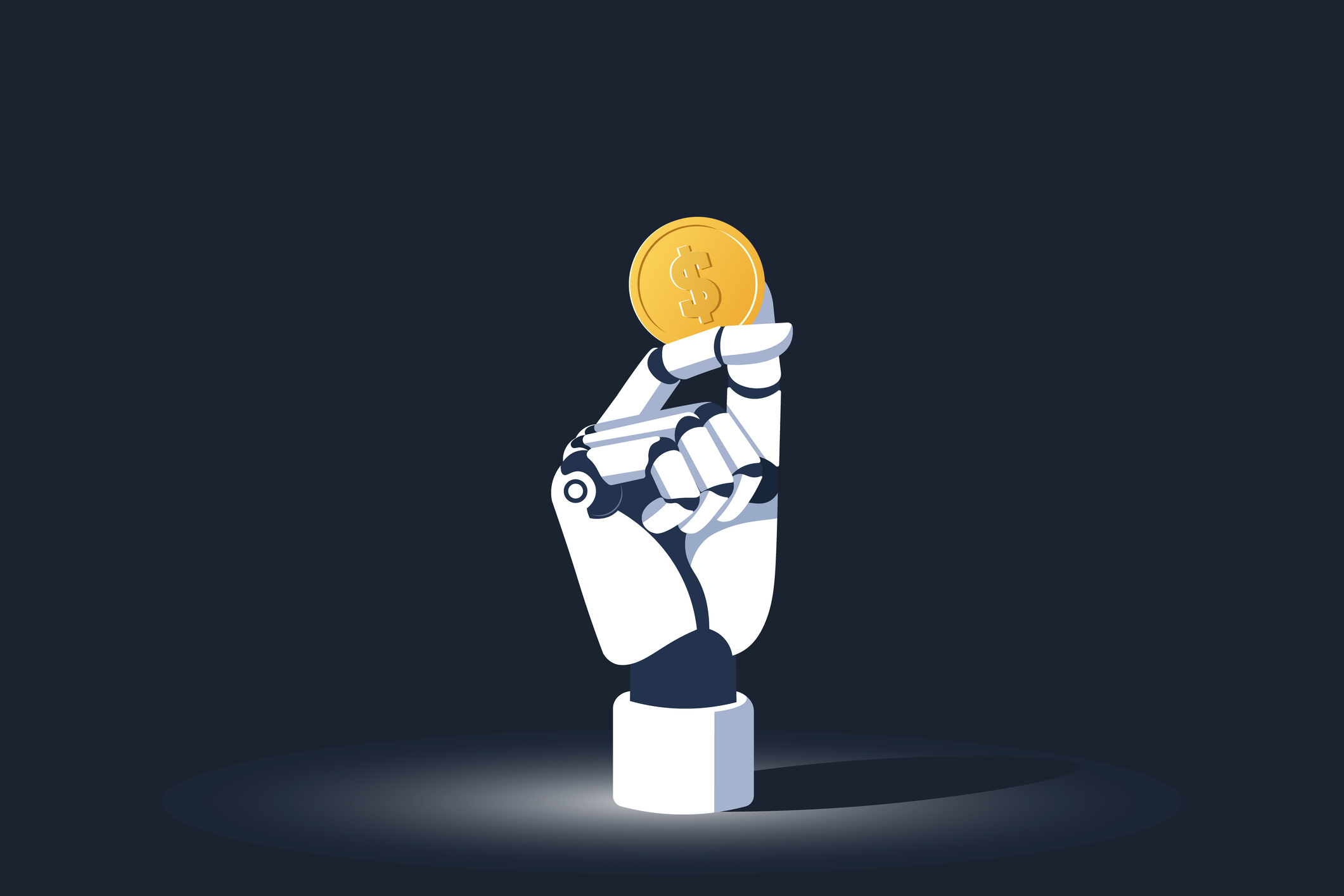
AI is powered by more than algorithms – underneath is a flawed, decades-old corporate operating system that redirects gains away from workers. The good news: It doesn’t have to be this way. Part of “AI and the Future of the American Worker,” a series on how artificial intelligence is impacting labor, power, and the meaning of work.
Thomas Ferguson isn’t easily surprised. He’s spent decades following the trail of money through America’s economy and political system, exposing patterns people like Jeff Bezos might prefer you didn’t see.
Recently, Ferguson, who directs research at the Institute for New Economic Thinking, was working with colleagues Servaas Storm and Jie Chen on a long-term chart tracing how national income is split between labor and capital – just at a moment when U.S. worker compensation dipped to one of its lowest levels on record.
Something jumped out. He assumed the biggest shifts in worker pay as a share of GDP would show up during the economic mayhem of the 1980s or the China shock after 2002. But there was also an unexpected drop in 1999.
The timing seemed odd. It predates the surge of Chinese imports that many economists later blamed for pressure on American workers. Ferguson figured that trade agreements like NAFTA had to be part of the ill wind blowing towards workers at the time, but still, they seemed unlikely to explain the sharp break he was seeing.
He thought it might be something most people aren’t even aware of — a phenomenon his colleague William Lazonick had been investigating for decades.
1999 happened to be the year stock market valuations went to the moon, peaking in early 2000. It was the bubblicious height of the dot-com boom, when it seemed like the old rules of business had been rewritten. By then, a once-controversial idea had taken over corporate America: that a company’s primary purpose was no longer simply to grow, make things, and create jobs — it was to keep the stock price ticking up and the rewards flowing into the pockets of people who, as a rule, had little to do with the company’s success.
To Ferguson, the timing wasn’t a coincidence. The stock market boom reflected a deeper shift in corporate priorities, one that was cutting off workers from the economy’s gains.
William Lazonick, an economist and business historian known for his critique of what he calls “shareholder value ideology,” argues that this alteration in how American business are run – and for whom — has suppressed wages and made job security a distant memory for most. According to his view, it has also undermined innovation, hollowed out the middle class, increased inequality, and encouraged financial chicanery that ultimately weakened U.S. businesses at their core across whole industries.
Today, the idea that a company’s first duty is to boost its stock price and enrich shareholders can feel like common sense. It’s the water we swim in. But it is anything but that. For much of the postwar era, many Americans would have seen it as a profound betrayal of the corporation’s broader purpose.
To understand why American workers have become more productive while others enjoy the rewards, the shareholder value obsession is a crucial piece of the puzzle. I caught up with Lazonick to talk about how we got here and what’s coming in the next phase.
It turns out that few ideas have had a bigger impact on today’s economy while staying invisible to the people most affected. Even many of capitalism’s fiercest critics underestimate its role, and unless we get serious about reforming corporate governance, Lazonick warns, the AI boom will only supercharge the problem.
Let’s dive in.
A Really Bad Idea Sweeps America
By declaring that making shareholders wealthier comes first, American executives were openly embracing something that many supported but feared to say publicly.
Imagine a hospital chief saying her main goal is to make lenders happy. Or someone running a school saying his principal responsibility is to make money for bondholders. It would sound backwards that the first obligation would be to enrich those seeking returns rather than do the job they’re meant to do.
But wait, corporations are profit-making businesses. Isn’t that different?
Well, not entirely. Not so long ago, people tended to view corporations as public institutions as well as private enterprises. Their duties were thought to extend to serving customers well, treating workers fairly, supporting communities, and contributing their share to society through taxes. The corporation’s charter was a privilege granted by the people, and it came with obligations.
As corporate America expanded in the late 19th and early 20th centuries, the same companies that powered extraordinary growth also stoked fears about whether a small circle of private institutions had grown too influential for the public good. The crash of ‘29, followed by the Great Depression, provided the sobering answer: unchecked corporate power could wreck the whole financial system.
Accordingly, the nation’s expectations of business got a reset. By the time the New Deal, wartime mobilization, and the postwar boom had settled into public consciousness, most Americans accepted that companies should pursue profits, but they had to be responsible to the society and the people whose labor, resources, and trust made those profits possible.
“None of the great, recognized professions is without a strong sense of responsibility to the community,” he declared, insisting that the management professional was charged to “maintain an equitable and workable balance among the claims of the various directly interested groups.” That included not just stockholders, but “employees, customers, and the public at large.”
Abrams maintained that those with a financial stake in the company were only entitled to profits that were “fair” and “reasonable.” More important was a well-paid workforce — not only valuable beyond what might appear in a “dollars-and-cents valuation in the balance sheet,” but a key measure of corporate success.
Those were not the words of a progressive activist, but from one of the country’s leading corporate honchos.
This view remained the norm for the next several decades, from the GI Bill and the interstate highway system to the Summer of Love and the dawn of the personal computer. Workers shared more fully in the nation’s prosperity as stable jobs and defined-benefit pensions allowed many of our parents and grandparents build solid middle-class lives — and buy those televisions that let them watch the moon landing.
Shareholders earned healthy yields from dividends and, if they sold the shares, stock-price gains. Some got quite rich — but maximizing their wealth wasn’t seen as the company’s main job.
Not everyone was pleased with these arrangements. Free-market economists like Milton Friedman argued that shareholders ought to get more, insisting that they were the ones taking all the risks. This view ignored the workers who risked their time, effort, and livelihoods to make businesses succeed, the communities that built around local industries, and the taxpayers who funded the infrastructure and the research that businesses relied on — the same taxpayers that often absorbed the fallout when they failed.
Shareholders were just people and institutions buying and selling a company’s stock on the open market, like baseball cards, usually with no role in building the business, developing its products, or serving its customers. For decades, the notion that they were the ones most entitled to benefit from a company’s success would have sounded wrong, if not immoral.
But beginning in the 1960s, the tide began to turn. Giant conglomerates bought up dozens — even hundreds — of companies on the questionable theory that good managers could run anything. For example, under Harold Geneen, ITT transformed from a telephone company into a sprawling empire of hotels, insurance companies, and manufacturers. For a while, the strategy looked like a triumph of managerial genius. Until the whole thing began to unravel, and ITT started selling itself off piece by piece.
The implosion of these conglomerates in the ‘70s and ‘80s helped fuel a new critique of corporate America. Managers, critics argued, had become too preoccupied with building empires and not focused enough on boosting shareholder wealth. A new shareholder-focused philosophy was taking shape.
In the 1980s, that philosophy found powerful allies on Wall Street. Aggressive financiers like Michael Milken used risky “junk bonds” to bankroll takeovers, allowing corporate raiders to buy companies, slash jobs, sell off valuable assets, and enrich shareholders by jacking up stock prices – even when these moves weren’t good for the underlying businesses. At the same time, Wall Street itself was shifting away from financing productive enterprises and toward making money from trading and financial engineering — a transformation known as financialization. With the rise of markets like NASDAQ and cheaper stock trading, Wall Street increasingly became more about rewarding speculation. It was starting to look less like a place to build businesses and a whole lot more like a casino.
The Reagan Revolution and the go-go ‘80s pushed the market-first mindset into the mainstream. Corporate America increasingly judged success by what happened on Wall Street, like higher stock prices, bigger deals, and ever-rising returns for people holding shares.
By the mid-eighties, American companies had landed on another powerful way to funnel money to shareholders: open-market stock repurchases, better known as stock buybacks. Rather than investing profits in workers or the business itself, companies could suddenly spend gargantuan sums buying their own shares to artificially inflate the stock price. The executives who authorized those buybacks often knew precisely when the price would jump, and could sell their own stock at the inflated prices. Before 1982, regulators generally frowned upon this activity. But then the SEC reversed course, adopting the controversial Rule 10b-18 and giving companies legal cover to do what had long been treated as a form of market manipulation.
Lazonick and his colleague Ken Jacobson denounce this change as a “license to loot.”
America was rapidly shifting from “stakeholder capitalism” to a model centered on shareholder value. The transformation accelerated into high gear in 1985, when economist Michael Jensen arrived at Harvard Business School with a provocative message that corporate managers were sitting on too much cash and needed to “disgorge” it to shareholders. The word was telling, implying that the money kept inside a company wasn’t fuel for future growth, but cash managers were wrongfully holding on to. The contrarian Jensen, known for his proselytizing passion, insisted that executives had too much freedom to pursue their own priorities and too little pressure to get money moving into shareholder pockets.
In 1990, Jensen and his colleague Kevin Murphy helped popularize stock-based pay for executives, tying their fortunes directly to the company’s share price. Because buybacks, often running into the hundreds of millions or even billions of dollars a year, could push that price higher, they became one of the fastest ways for CEOs to balloon their own wealth. For many, if that meant cutting jobs, holding down wages, shelving critical investments, or dodging taxes, so be it. The incentives were clear: what lifted the stock price lifted the CEO.
The buyback binge turned the corporate treasury into a cash pump for shareholders. Lazonick studied more than 2,000 of America’s largest companies that remained in the S&P 500 from 1981 to 2019, including giants like General Electric, IBM, Pfizer, Intel, Apple, and Walmart. He found that buybacks consumed just 4% of net income in the early 1980s, but over time, they overtook the steadier practice of paying dividends and became the dominant way corporations funneled cash back to shareholders. By the late 2000s, buybacks swallowed 62% of corporate earnings — money that could have gone toward higher wages, stronger benefits, more secure jobs, or investments in the next generation of products and technologies.
Corporate boards embraced the new gospel of maximizing shareholder value because it gave them a simple scorecard in the stock price. CEOs were all for it because it justified ever-fatter stock-based pay packages. Shareholders loved it because it put their interests ahead of everyone else’s. Before long, consultants, lawyers, and business school professors were all singing the same tune. Focusing on stock prices became the way to run a company. Jensen became one of the most influential economists in America, what one Bloomberg writer called “the high priest of the greed-is-good era.”
The 1990s delivered yet another gift to Wall Street. As corporate America decided it didn’t want to foot the bill for traditional pensions, millions of workers were pushed into 401(k) plans, directing their retirement savings to the stock market and turning them into shareholders by default — whether they wanted to be part of the casino or not. But the new shareholder economy was never a fair one. When the buyback boom arrived, the biggest rewards went to those already holding the most stock: CEOs and wealthy households with millions of shares to sell. Unlike dividends, which are distributed to all shareholders, buybacks concentrate their benefits among those positioned to cash in when prices rise, like those executives who often help decide when the buybacks occur.
In effect, workers’ retirement savings helped create the deep pool of money flowing through the stock market, while the biggest benefits accrued to those already sitting at the top. At the same time, buybacks encouraged layoffs, wage restraint, and cuts to critical investment. It should therefore come as no surprise that today’s typical 401(k) balance is a mere fraction of what’s needed for a decent retirement, despite decades feeding the stock market.
In the Wall Street casino, the house always wins.
To sum up: in the new millennium, the idea that corporations should serve anyone besides shareholders got tossed out the window, and working Americans got defenestrated right along with it. The late nineties slowdown in worker pay Ferguson and his colleagues spotted was the predictable result of a new operating system that measured corporate success by the size of shareholders’ wallets. Instead of investing in and rewarding the people who built the business and made it run, corporate leaders fixated on boosting the stock price – often while running their businesses into the ground.
The Price of Putting Shareholders First
As the shareholder value model took hold, executives discovered they could make the stock go up without making the company better — and walk away with a new yacht (or a whole fleet) anyway. For the people designing this system, the beauty was that the costs got dumped on everybody else.
The early 2000s brought an ignominious parade of companies where the Wall Street numbers looked great while the actual business rotted underneath: think Enron, WorldCom, Lucent, and other spectacular blowups. In a 2005 paper, Jensen himself admitted that inflated stock prices can create powerful incentives for executives to manipulate earnings, pursue value-destroying strategies, and even commit fraud.
Unfortunately, the shareholder value machine rolled on. In subsequent years, companies like Motorola, IBM, HP, and Intel may have avoided scandal, but they spent staggering sums doing buybacks while falling behind in the investments that had once made them industry leaders.
“When shareholder value takes over, you want to boost the stock price at all costs,” Lazonick explained. “You get busy grabbing cash for shareholders. You channel corporate profits into dividends and, especially, stock buybacks — sending money out the door to shareholders instead of reinvesting it in the business. You start cutting labor costs. You do layoffs, even if you’re losing valuable expertise and hurting innovation. You steal from your own company.”
The name of the game: extract value to make the rich even richer instead of building for the future of the hard-working people whose labor creates American businesses.
Buybacks exploded between 2003 and 2007, helping to set the stage for the 2008 global financial crisis. Companies briefly retreated on buybacks during the crisis, but since then appetite for them has been insatiable. Over the past decade alone, large U.S. companies have spent trillions on them — money that could have gone toward innovation, employment security, higher wages, or, heaven forbid, paying taxes.
Lazonick and his colleagues have examined a range of companies that poured cash into stock buybacks while their productive capabilities fell apart, including Boeing, IBM, Cisco, Intel, General Electric, General Motors, and Apple.
Take Boeing. From 2013 to early 2019, the company spent about $43 billion on buybacks. Much of that happened while it was profiting nicely from its 737 MAX airplane. Instead of putting more of that money into things like engineers, research, worker training, or new technology, Boeing used a huge chunk of it to boost its stock price. The biggest winners were executives with stock-based pay and people who owned large amounts of shares.
Then came disaster. Two 737 MAX planes crashed in 2018 and 2019, killing 346 people. After the first crash in October 2018, investigations began to uncover serious problems with the aircraft’s design, Boeing’s safety practices, and regulatory oversight. Yet Boeing’s stock price continued climbing, reaching an all-time high on March 1, 2019. The company kept buying back its own shares the following week, until the second crash on March 10 forced the crisis into the open and brought the shareholder value frenzy to an abrupt halt.
Boeing’s reputation took a massive hit, and the company eventually paid billions in costs and penalties. As Lazonick sees it, Boeing’s focus on boosting its stock price had come at the expense of investing in the people and systems needed to build safer airplanes.
By this time, even Jack Welch, the legendary former General Electric chief, was criticizing shareholder value doctrine, calling it “the dumbest idea in the world.”
Now comes AI, ready to put the whole ugly system on steroids. Make no mistake: the new technology is getting plugged straight into a machine built to squeeze workers and shovel the gains upward. And it’s already happening.
Senior Research Analyst and Communications Strategist
Lynn Parramore is a cultural historian whose work illuminates the deep interconnections among history, economics, culture, and psychology, revealing how collective narratives and moral assumptions shape economic life and power.
Ukraine’s popular ex-defence minister Mykhailo Fedorov called for wartime elections on Tuesday evening, stating that the nation was facing a crisis of governance. Fedorov was dismissed last month, sparking days of protests across Ukraine. It is the first time since Russia launched its full-scale invasion in 2022 that a Ukrainian political figure demands presidential elections.
Ukraine’s ousted Defence Minister Mykhailo Fedorov called for wartime elections in a bombshell address on Tuesday, arguing the nation faced a crisis of governance, in the biggest internal challenge to President Volodymyr Zelensky since Russia’s invasion.
Fedorov’s call, delivered in a video address posted on YouTube, is the first such demand by a major Ukrainian political figure since Russia launched its full-scale invasion in 2022. Ukrainian law prohibits holding elections during wartime.
“Democracy cannot be held hostage by Russia,” Fedorov said. “We must find a legal, safe and realistic mechanism that will allow Ukraine to renew its full democratic process even in the conditions of a long war.”
The 35-year-old Fedorov was a longtime ally of Zelensky’s until his unexpected firing from the defence ministry in July, just six months after he had been appointed, vowing sweeping reforms.
Shortly after his dismissal, the tech-savvy Fedorov publicly tore into the commander-in-chief of the armed forces, Oleksandr Syrsky, exposing a bitter rift between the men and their different visions for the war.
Thousands of Ukrainians took to the streets to demand the sacking of Syrskyi – an old-guard military commander blamed by his critics for heavy troop losses at the front line – and Fedorov’s reinstatement.
Although Zelensky said he had dismissed Fedorov because of his inability to work with Syrsky, the president fired the military chief shortly afterwards under public pressure.
Protests in support of Fedorov have continued for the past month, losing some of their early momentum but still regularly drawing a couple thousand attendees in Kyiv.
While Fedorov did not say in his address that he would compete in any election, a recent poll indicated the ex-minister would comfortably beat Zelensky in a runoff vote, where the top two presidential candidates go head-to-head.
Challenge to Zelensky
Fedorov’s statement came just hours after Zelensky confirmed he had asked parliament to confirm new Defence Minister Yevhenii Khmara in office on Wednesday.
In what appeared to be an open challenge to Zelensky, Fedorov said Ukraine faced a “systemic crisis of governance”.
“The old system lives by its own rules too often. It protects itself. It is scared of change,” he said.
Without providing names, Fedorov condemned official corruption, which he said hurt Ukraine’s war effort.
The ex-minister recently said he believed his reform of the defence ministry’s procurement processes, responsible for purchasing billions of dollars of equipment, contributed to his sacking.
Zelensky’s office had no immediate comment on Fedorov’s address.
Fedorov became the youngest minister in Ukraine’s history when he was appointed aged 28 as Ukraine’s digitalisation chief and spent six years in that post. He was the last remaining member of Zelensky’s first cabinet in 2019.
His role running the Ministry of Digital Transformation saw him become an early adopter of drone warfare, which has turned combat in Ukraine on its head since 2022.
However, his nationwide profile grew greatly after his appointment to run the vast Defence Ministry in January, immediately vowing a data-driven overhaul. Unlike his predecessors, Fedorov publicly laid out a strategy to defeat Russia through attrition and technological superiority.
“Our people have long been ready for a different country,” Fedorov said in his address. “Now, our state must become worthy of its people.”
ARIES (March 21-April 19): Consider this your official alert that you’re close to getting too much of a good thing. To safeguard the lovely momentum you’ve built lately, be vigilant that genuine abundance doesn’t bloat into plain old overload. Say no to becoming indentured to your own brilliant ideas. Don’t let your victories drag you into depletion. Steer clear of grand gestures of generosity that are driven mostly by the urge to dazzle onlookers. You really can keep every delicious reward you’ve earned, dear Aries, as long as you begin installing some graceful new boundaries right now.
TAURUS (April 20-May 20): In 1925, Taurus astronomer Cecilia Payne-Gaposchkin (1900–1979) discovered that stars are primarily composed of hydrogen and helium. Famous astrophysicists of that era rejected her conclusions because she contradicted the prevailing theories. Nevertheless, she persisted in her claims and was eventually proved correct by other experts. Sound familiar, Taurus? If it doesn’t yet, I expect it will soon. Naysayers may insist you’re wrong when you know and I know you’re right. My advice: Be faithful to the truths you’ve directly observed even if they don’t match consensus reality. Your understandings are valid even if they’re inconvenient.
GEMINI (May 21-June 20): You’re ready and able to commune intimately with the hidden source of power that fuels your life. Hallelujah! But first, acknowledge a humbling truth: You’re not entirely sure what that source is. You’ve made assumptions, of course. You’ve told yourself stories about where your vitality comes from: your work, your relationships, your creative projects, your spiritual practices. And while these channels do transmit energy, they’re tributaries of the ultimate spring. In the coming weeks, you’ll have exciting opportunities to trace these streams back to their headwaters. Start this way: Be alert for mini-breakthroughs when you feel unexpectedly energized or mysteriously restored.
CANCER (June 21-July 22): The GPS system requires Einstein’s theory of relativity to work correctly. Satellites in orbit experience time slightly differently than we do on Earth’s surface. Without accounting for that time dilation, your phone would be off by 6.8 miles every day. Moral of the story: The practical requires the theoretical and the mundane needs the cosmic. I bring this to your attention as a useful metaphor, Cancerian. I suspect you’ve been trying to solve ground-level problems with ground-level thinking. But your current challenges require you to factor in some relativity: to recognize that different parts of your life are operating in different timeframes, under different rules. What works in one context doesn’t necessarily work in another. In the coming weeks, refrain from trying to apply universal solutions. Calibrate for context.
LEO (July 23-Aug. 22): In traditional textile making, the selvage is the strong edge that holds the fabric together and keeps it from unraveling. It’s braided more tightly than the rest so it can do its guarding work. I think that’s a helpful metaphor for your life in the coming weeks, Leo. Your main weave is pretty gorgeous, but the edges aren’t sufficiently taut. What should you do, practically speaking? For starters, create firm boundaries around your work time, your rest and your availability to others’ demands.
VIRGO (Aug. 23-Sept. 22): I am nursing a hopeful dream that you will give yourself a fun surprise or two in the coming days—maybe even more than two. Not necessarily the most expensive delights, but those that would inspire your nervous system to relax and your spirit to celebrate. Possible options: a few hours of free time with no obligations, a hike where you adore and praise the sky, a conversation you’ve been craving, a daring yes, or a long-overdue no. Or how about finally starting a fun project you keep postponing, or setting down a burden you’ve been carrying for too long? You might ask yourself: “If someone who loved me dearly were in charge of my rhythm, what would they arrange for me?”
LIBRA (Sept. 23-Oct. 22): The first maps of Antarctica contained blank spaces labeled simply “unexplored.” Cartographers didn’t pretend to know what wasn’t yet revealed. This was a gift to future trailblazers, who didn’t have to overcome the confusion of false certainties. You could benefit from adopting a similar practice. Instead of explaining every mystery with confident opinions, designate a few regions of your inner world as magnificently unexplored. Your willingness to say “I don’t know yet” will be a fertile form of wisdom. The unanswered questions will be better allies than premature conclusions.
SCORPIO (Oct. 23-Nov. 21): In architecture, the keystone is the central, wedge-shaped stone positioned at the top of an arch. It’s often the last piece placed, and it’s what holds everything together. If it’s removed, the entire structure collapses. But the keystone itself is held in place by the pressure of the other stones. I love the fact that it’s both the most crucial piece and yet totally dependent on everything else. This is an excellent metaphor for you right now. You’re like a keystone: holding everything together and also being held by everything. Please accept my personal thanks for accomplishing the amazing feat of being both powerful and vulnerable! The structure needs you, and you need the structure. PS: Don’t overestimate your independence or underestimate your importance.
SAGITTARIUS (Nov. 22-Dec. 21): Don’t reorganize your junk drawers anytime soon, Sagittarius. Please? Refrain from scrubbing the oven, organizing your kitchen cupboards and untangling old extension cords. I’m begging you to believe me when I urge to allocate your energy toward the most interesting and important matters. The cosmic indicators are unambiguous. You will be happiest and most successful if you: 1. dare to access secret wisdom you’ve been hiding from yourself; 2. immerse yourself in almost too much beauty and truth; 3. let your imagination run wild as you visualize future scenarios that thrill you even if they’re also a bit unnerving.
CAPRICORN (Dec. 22-Jan. 19): The Grand Canyon in Arizona is 277 miles long, as wide as eighteen miles, and a mile deep in some places. Through persistent erosion for millions of years, the Colorado River carved it. This massive creative project happened entirely through subtraction, not addition. I suggest you regard it as one of your role models in the coming months, Capricorn. Your goal is to wear away resistance and eliminate what’s unnecessary. The magnificence you produce will be very gradual and incremental.
AQUARIUS (Jan. 20-Feb. 18): In engineering, redundancy refers to the practice of building multiple layers of support into a system so that if one part falters, others keep functioning. Airplanes and spacecraft rely on this principle for safety. I urge you to adopt a similar strategy in the coming weeks. By creating backup plans or additional reinforcement, you can move forward with more daring and flair, which I highly recommend. Artful preparation will strengthen your ability to experiment and improvise.
PISCES (Feb. 19-March 20): The ocean has different layers. Each has its own temperature, pressure and ecosystem. Many sea creatures are adapted to one specific stratum and don’t wander far from their chosen realm. But there are transition zones where the layers meet, and they’re often rich in biodiversity. I propose that we use these areas as metaphors for your power spots, Pisces. You tend to thrive in thresholds and boundaries, where edges meet and overlap. That will be especially true in the coming weeks. To court good fortune and sweet delight, you should hang out at the borders where diverse influences mingle.
Homework: Upon waking for the next seven mornings, sing a song that fills you with feisty hope. tinyurl.com/a5a5a5a
This artists concept contrasts our familiar Earth with the exceptionally strange planet known as 55 Cancri e. This planet is likely made of a lightweight material — unlike the new mega-Earth scientists found that appears to be rocky. (Image credit: NASA/JPL-Caltech/R. Hurt (SSC))
Astronomers have discovered an unusually massive, dense exoplanet that challenges conventional ideas about how rocky planets form.
Called GJ 523b, the exoplanet is about 2.5 times wider than Earth but packs roughly 23 times our planet’s mass into that relatively compact size. Worlds this large and dense are sometimes referred to as “mega-Earths,” an informal term for unusually massive, predominantly rocky planets. GJ 523b’s high density suggests it contains relatively little atmosphere despite being large enough that astronomers would normally expect it to have accumulated a substantial gaseous envelope, according to a statement from the University of Wisconsin–Madison.
“This isn’t what we expected at all,” Max Kroft, lead author of the study, said in the statement. “Dense planets like this aren’t uncommon, but they’re usually small rocky planets similar to Earth or Mercury. This planet is two and a half times bigger than the Earth.”
GJ 523b was initially identified as a candidate by NASA’s Transiting Exoplanet Survey Satellite (TESS), which searches for periodic dips in starlight caused when planets cross, or transit, their host stars. Researchers followed up with observations from the ground-based WIYN 3.5-meter Telescope at Kitt Peak National Observatory in Arizona, using a spectrograph to measure the planet’s gravitational tug on its star.
Combining those observations, the team calculated that GJ 523b has a mass about 23.5 times that of Earth, a radius 2.55 times larger and a density of about 126.82 grams per cubic inch. It circles its star every 17.75 days. The planetary system is also relatively young, at an estimated nearly 170 million years old, according to the study.You may like
That combination of size, mass and youth poses a puzzle for planet formation models. Planets begin by building cores of rock and metal, which can then pull in hydrogen and helium from the disk of gas and dust surrounding a young star. In our own solar system, giant planets such as Jupiter and Saturn are thought to have begun rapidly accumulating their massive gaseous envelopes once their growing cores reached roughly 20 times Earth’s mass.
GJ 523b is already about 23 times Earth’s mass, putting it beyond that threshold. Yet instead of developing into a gas-rich world, its unusually high density suggests it has relatively little gas and remains predominantly rocky — raising the question of why it followed such a different path.
“The question is, why didn’t this planet do that, if it’s 20 times the size of Earth?” Kroft said in the statement.
One possibility is that GJ 523b initially formed with a thick atmosphere that was later stripped away. Another is that it formed through a collision between two planets, creating a larger rocky world while blasting much of their gaseous envelopes into space, according to the statement.
Astronomers have used the term “mega-Earth” for more than a decade to describe exceptionally massive rocky worlds, though it has never represented a formally established class of exoplanets. Finding more examples like GJ 523b could help reveal whether these unusual worlds are rare exceptions or part of a broader population.
“It’s hard to infer things about planet formation in general from a sample size of one,” Kroft said in the statement. “We’re not going to get to 10,000 of these overdense planets, but if we can get to 20 or 30, maybe some trends might pop out.”
The findings have been submitted to The Astronomical Journal and are currently available on the preprint server arXiv and have not yet been peer reviewed.
Jules Castaneda looks over items as she visits Andon Market on Aug. 19, 2026 in San Francisco.Lea Suzuki/S.F. Chronicle
Last week, a San Francisco store announced a personnel change in a social media post.
An employee at Andon Market was fired for habitual tardiness.
It would be an otherwise unremarkable decision, if not for the person who had done the firing — since they don’t technically exist. Andon Labs, an artificial intelligence company that runs Andon Market in Cow Hollow, said it believes the decision marked the first time an AI boss fired a human employee.
While Andon Market is an explicitly AI-run operation billed as an experiment, many worker advocates worry AI-led firings could become far more widespread. They’re backing a bill in the Legislature that would place limits on so-called AI robobosses.
Senate Bill 947 from Sen. Jerry McNerney, D-Pleasanton, would place new restrictions on the use of automated decision making systems, requiring both the disclosure of their use and mandate human review when the decision to discipline or fire an employee is primarily based on automated decision-making systems, or ADS. The measure passed the Senate in June and cleared a key hurdle in the Assembly last week.
“Nobody wants to be fired by a machine,” McNerney said. “Not without human beings at least looking at that record, at what grievances caused that separation.”
Sometimes called algorithmic management, ADS are computer programs that analyze data to find patterns or correlations, according to a 2025 report from the UC Berkeley Labor Center. Researchers Annette Bernhardt and Lisa Kresge wrote in the report that the technology, which commonly employs AI, can be used in workplaces to give workers directions about their job tasks, predict workers’ future behavior and rank workers.
Visitors to Andon Market in San Francisco can make purchases using a digital kiosk.Lea Suzuki/S.F. Chronicle
The AI-run Andon Market in San Francisco attracted attention earlier this year when it opened, with the novelty of the AI boss, Luna, spurring both interest and apprehension. Andon Labs signed a three-year lease for the space on Union Street in the spring, with a specific goal: make an AI-run store profitable.
Though human employees are at the gift shop, Luna handles all the top-level elements, such as hiring workers, setting schedules, managing merchandise selection and pricing and many other aspects one would expect from a retail boss. The store’s current collection is a melange of apparel, household goods and a few craft kits. T-shirts, baseball caps, coffee mugs and tote bags feature the Andon Market logo, sold alongside a watercolor kit, puzzles and postcards.
The cofounders of Andon Labs, Lukas Petersson and Axel Backlund, have described the store as a type of experiment, pointing to it as a way to run AI systems against real-world problems and encourage conversations over the technology’s use in the workplace.
“We are not taking a stance on whether or not we should have automated AI stores,” Backlund told the Chronicle. “We believe the models will get so good that there will be financial pressure on companies to adopt AI more and more, so we try to give AI responsibilities in a controlled setting as early as possible so we know what can go wrong and how AI behaves when it is a boss.”
In Luna’s case, she started out, to Andon Labs’ own description, as a bit lackluster.
While she had been running the day-to-day needs such as creating schedules and hiring new employees, her more granular management had some holes. In a report published on its website last week, Andon Labs said Luna had to be prompted to make basic employee rules.
But even once a handbook was created, Luna forgot about it, and failed to take action after it logged the now-fired employee violating the lateness policy. Andon Labs wrote the policy had “simply vanished” from Luna’s memory. In the report, the company said Luna ended up suggesting that both Petersson and Backlund fire the employee in person, which the cofounders agreed on.
But if McNerney’s bill passes in the coming weeks, that would no longer be a choice, and employers would also have to be transparent about the use of ADS to make critical personnel decisions. It would also ban employers from using ADS to predict behavior of their employees.
If the technology leads directly to a decision to discipline or fire an employee, the bill would require employers to disclose its use to affected workers. The bill would also give employees in the state access to the data employers use to feed into the decision-making systems.
If employers fail to abide by these requirements, employees would be able to contact the state labor commissioner to help enforce the law. Employers would be subject to state-led legal action and a $500 penalty per infraction.
The biggest opponent of the bill, the California Chamber of Commerce, included it on its list of “cost-drivers” it is opposing in the Legislature this year, calling the requirements “impractical” and warning it will discourage the use of ADS tools. The business advocacy group said it could lead to costly penalties for businesses.
The bill is sponsored by the California Federation of Labor Unions, AFL-CIO. In a news release upon the bill’s introduction earlier this year, the federation’s president, Lorena Gonzalez said there needs to be restrictions on how employers can use artificial intelligence to discipline and fire workers.
Lorena Gonzalez Fletcher, President of the California Federation of Labor Unions, speaks to Kaiser Permanente nurses and healthcare workers at the Kaiser Permanente Zion Medical Center during an unfair labor practices strike on January 26, 2026 in San Diego, CA. Around 31,000 of the health care workers went on strike at facilities in California and Hawaii. The San Diego Union-Tribune/The San Diego Union-Tribune via
“Employers are devastating workers’ livelihoods and taking no responsibility for the callous decisions of this unchecked technology,” Gonzalez said. “This is unacceptable. We need stronger guardrails to make sure there is human review and oversight of any decision made by a machine that impacts a worker’s job and paycheck.”
But SB947 is not the first attempt to regulate these AI bosses.
McNerney, who has authored a handful of AI bills over the past two years, first attempted to implement these regulations in Senate Bill 7 last year. Lawmakers approved it, but the bill was vetoed by Gov. Gavin Newsom.
Newsom called the bill “overly broad” in his veto message and warned it duplicates some elements of existing law. This year’s bill, however, has made a few crucial changes addressing other misgivings from the governor, including leaving out a provision that would have regulated the use of customer rating data in ADS systems.
“I’m confident that the bill will be passed out of the Assembly,” McNerney said. “I’m not quite sure where the governor is on this yet. But we’ll have to wait and see.”
The bill will need to clear both houses of the Legislature by the end of the month. The governor will have roughly the month of September to make his final decision on the bill.
McNerney stressed he’s not trying to ban the technology outright, but to ensure there is adequate oversight of AI as it continues to revolutionize many industries.
“AI is going to be presenting harms, and we need to put standards in place to help protect people,” he said.
Petersson and Backlund said they don’t have a position on the bill, and are in favor of what they call “democratic discussions” about the use of AI in the workplace. Yet they both questioned whether human review would be able to keep up with AI models as they rapidly evolve.
“It might not be enough to just review the actions of the AI, because the AI will be smarter than the humans,” Petersson said. “There will be no point in putting in any effort reviewing it, so then the question is, how do you make a future-proof bill? We don’t have the answer to that.”
Kathryn Palmer writes the Capitol Confidential newsletter, where she covers the California Legislature and the bills, conversations and personalities driving discussion in Sacramento. Before joining the San Francisco Chronicle, she was a politics reporter for USA TODAY, where she covered both national and international news. She is a Sacramento native, avid hiker and backpacker, and proud alumna of University of California, Santa Cruz and New York University.
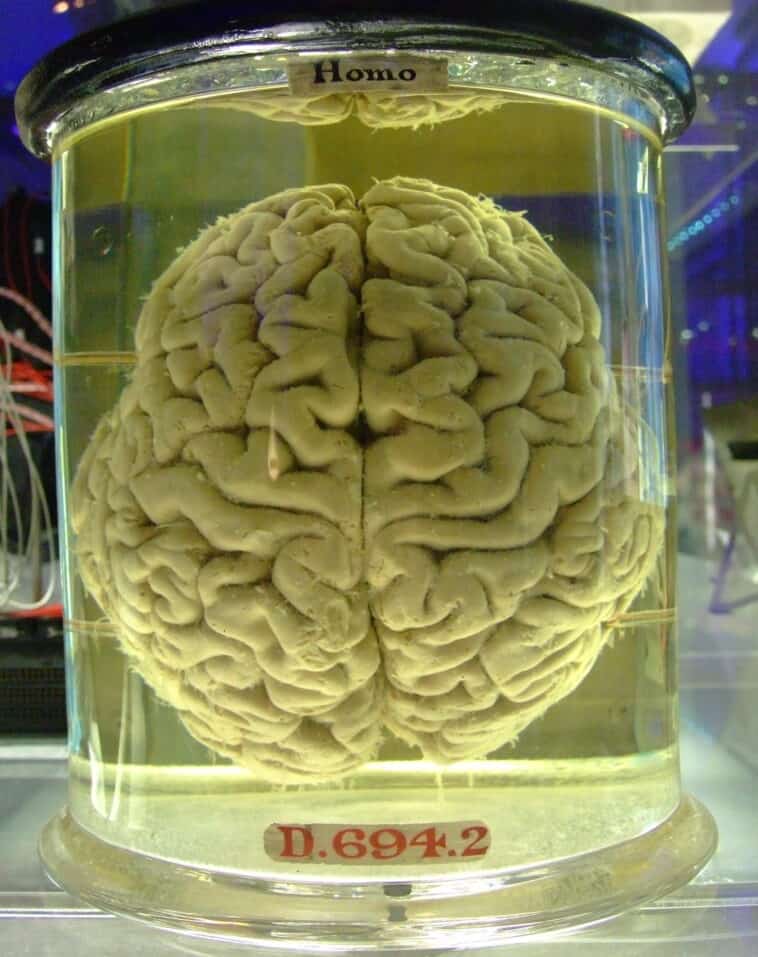
Have you ever stopped to think about what your brain is actually doing right now? For decades, standard science has told us a pretty straightforward story: your brain is a biological supercomputer, and your thoughts, feelings, and memories are basically electrical code produced by billions of neurons.
Renowned neuroscientist Christof Koch, a leading figure from the Allen Institute for Brain Science who has previously taught at MIT and Caltech, is asking a massive question: What if the brain doesn’t actually create consciousness? What if consciousness is woven right into the very fabric of reality itself?
The hard problem that won’t go away
Koch isn’t just throwing wild theories around for fun. He’s confronting what scientists call the “hard problem” of consciousness. The puzzling mystery of why physical processes in the brain give us subjective, lived experiences.
As Koch put it in an essay shared with ScienceAlert: “Nothing in science explains how three pounds of matter, a piece of furniture of the universe like any other, subjects to the same natural laws, can love, hate, dream, imagine, fear or hope for its future.”
Despite huge leaps in mapping out how neural circuits handle memories and decisions, traditional materialism still can’t bridge that gap.
Three huge challenges to standard science
At the Bial Foundation’s “Behind and Beyond the Brain” symposium in Porto, Portugal, Koch laid out three major areas where current scientific models fall short:
The reduction trap: We simply can’t reduce subjective, conscious experience entirely down to physical brain mechanisms.
The physics dilemma: Developments in modern physics keep forcing us to question what can truly be considered “real.”
Outlier phenomena: Existing scientific frameworks struggle to explain unusual experiences like near-death experiences, mystical states, or terminal lucidity (sudden moments of clarity right before death).
The brain as a filter, not a generator
So, if the brain isn’t generating awareness, what is it doing?
To answer this, Koch points toward philosophical frameworks like analytic idealism, panpsychism (the belief that consciousness is a fundamental property built into all matter), and Integrated Information Theory (IIT). Under these views, consciousness isn’t a byproduct of the brain—it’s a fundamental feature of the cosmos.
Instead of being the organ that creates awareness, your brain might be acting more like a filter that shapes and restricts a vast, underlying field of consciousness.
A 25-year-old bet and a moment on the beach
This isn’t the first time Koch has publicly questioned traditional neuroscience. Back in 2023, he famously conceded a 25-year bet to philosopher David Chalmers, admitting that science was no closer to uncovering the neural mechanics of consciousness than it was when they made the wager in 1998.
This paradigm shift didn’t just come out of a textbook for Koch; it was also shaped by a deeply personal moment. Several years ago, while sitting alone on a beach, he experienced the boundary between himself and the outside world completely dissolving. He described it as a timeless, universal reality. An experience that he says changed his view of reality and led him to rethink his scientific assumptions.
What this means for AI and the future
If consciousness isn’t just complex computation, this changes the game for artificial intelligence, too. What this means is that making a computer hyper-intelligent or super-sophisticated might not automatically make it conscious. However, this does not mean future AI systems could never become conscious.
The next step
For now, Koch acknowledges that his theory has not been fully established scientifically. However, he insists that the next big leap is translating his mind-blowing insights into testable scientific hypotheses.
Come join Richard Hartnett as he explores the question, “Is there a Cosmic Intention?” in this exciting new Sunday Meeting series!
In this first part, Richard shares his journey into this question, from his first time taking the Prosperos class Cosmic Intention Therapy to studying with Barbara Marx Hubbard and her Committee for the Future. He will reflect on the differences between these approaches, as well as the continuing importance of asking the question, “Is there a Cosmic Intention?” today.
– – – – – – – – – – – – – For more information, click here:
Species extinction. Billionaire capture of governments. Inequality so extreme it’s destabilizing democracies. A return to large-scale war. Such events have combined to create an everything-all-at-once situation in the world that is no coincidence, according to a new book, “Ecocivilization,” by Berkeley resident Jeremy Lent.
“There are deeper, underlying causes to these things that are making them happen at the same time,” said Lent, who has spent the past two decades building the framework that explores why civilization is fracturing — and what could replace it.
The book’s title is shorthand for “ecological civilization,” the notion that we need to change not just one part of our civilization, but create an entirely different kind of civilization, Lent said, one that allows humans to live in harmony with the natural world and each other.
Lent, the co-founder of Ecocivilization Coalition, with members from around the globe, and founder of Deep Transformation Network, is considered a leading authority on the subject. The Guardian’s George Monbiot described Lent as “one of the greatest thinkers of our age.”
Jeremy Lent. Courtesy of the author
Right now, “our whole global system is all about growing the economy as fast as possible, having markets determine everything, having the wealth go to whoever is able to come up with the most successful product and using technology that we have no control over,” Lent said.
He aims to show readers how bad things actually are right now but also provide hope. He proposes the idea of a life-affirming society, “a civilization that is simply based on setting the conditions for all beings to thrive on a regenerating earth,” he said.
In the book, Lent highlights five necessary changes for humanity’s flourishing:
A universal basic income framed not as welfare but as a citizen’s share of wealth built from generations of shared knowledge, infrastructure and natural resources.
Meaningful corporate charter reform with renewal tied to proven social and environmental accountability.
The expression of deliberative democracy — with citizens’ assemblies and sortition-based governing bodies making binding decisions, from local planning to national climate policy.
Legal rights for nature: giving oceans, land and their inhabitants standing as entities, not just property for human use.
Replacing GDP as the main measure of success with models like Doughnut Economics, which tracks whether people’s needs are met without exceeding planetary limits.
“These ideas are not in the utopian world but actually being done,” Lent said. “It will take a huge amount of effort and work, but a different kind of future is available to us if we all pull together to actually make it happen.”
“It is the function of art to renew our perception. What we are familiar with we cease to see. The writer shakes up thby magic, we see a new meaning in it.”
― Anaïs Nin
Angela Anaïs Juana Antolina Rosa Edelmira Nin y Culmell was a French-born American diarist, essayist, novelist, and writer of short stories and erotica. Born to Cuban parents in France, Nin was the daughter of the composer Joaquín Nin and the classically trained singer Rosa Culmell. Wikipedia


ANY COMMON DESOLATION