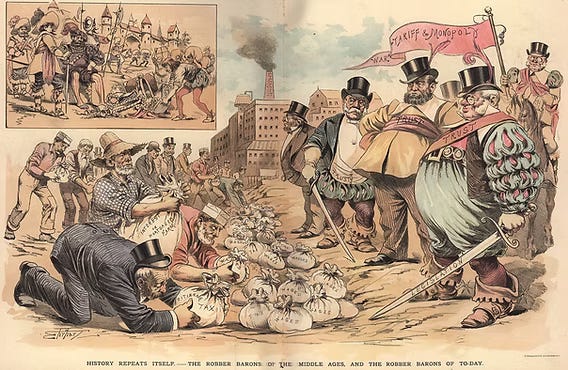
Weekly Invitational Translation: “The powers that be are ordained of God.” (Romans 13:1)

Translation is a 5-step process of “straight thinking in the abstract” comparing and contrasting what seems to be truth with what you can syllogistically, axiomatically and mathematically (using word equations) prove is the truth. It is not an effort to change, alter or heal anything.

The claims in a Translation may seem outrageous, but they are always (or should always be) based on self-evident syllogistic reasoning. Here is one Translation from this week. 

1)    Truth is that which is so.  That which is not truth is not so.  Therefore truth is all that is.  Truth being all is therefore total, therefore whole, therefore one, therefore united, therefore harmonious, therefore orderly.  Truth being all that is is therefore without limit, therefore infinite.  I think therefore I am.  Since I am and since Truth is all that is, therefore I, being, am Truth.  Since I, being, am Triuth, therefore I, being, have all the attributes of Truth.  Therefore I, being, am total, whole, one, united, harmonious, orderly, without limit, infinite.  Since I am mind (self-evident) and since I (being) am Truth, therefore Truth is Mind. (Two things being equal to a third thing are equal to each other.)  Since Truth is Mind, therefore Mind has all the attributes of Truth, therefore Mind is total, whole, one, united, harmonious, orderly, without limit, infinite.

2)   “The powers that be are ordained of God.” (Romans 13:1)

Word-tracking:
power:  potent, the ability to be
ordain:  order, orderly, ordinary, normal
God:  The Supreme Being

3)    Truth being orderly and since to ordain is the put in order, therefore to be ordained is to be put in the order of Truth or to be made Normal.  But since Truth is all that is, there is no other place to put anything, therefore all powers that be are ordained by Truth.  But since Truth is one, there are not many powers, there is only one power, therefore all power is ordained by Truth.  Truth being one, there is no Supreme Being and lots of lesser beings, therefore Truth/God is the singularity of being.

4)    To be ordained is to be put in the order of Truth OR to be made Normal
        All powers that be are ordained by Truth. 
        There is only one power.
        All power is ordained by Truth.
        Truth/God is the singularity of being.

5)    All is ordained in the Singularity of the magnificent Normal.

Weekly Invitational Translation Group invites your participation.  If you would like to submit a Translation on any subject, feel free to send your weekly Translation to  zonta1111@aol.com and we will anonymously post it on the Bathtub Bulletin on Friday.

For information about Translation or other Prosperos classes go to: https://www.theprosperos.org/teaching.

Book: “The AI Con: How to Fight Big Tech’s Hype and Create the Future We Want”

The AI Con: How to Fight Big Tech’s Hype and Create the Future We Want

Emily M. BenderAlex Hanna

Not yet published Expected 13 May 25

A smart, incisive look at the technologies sold as artificial intelligence, the drawbacks and pitfalls of technology sold under this banner, and why it’s crucial to recognize the many ways in which AI hype covers for a small set of power-hungry actors at work and in the world.

Is artificial intelligence going to take over the world? Have big tech scientists created an artificial lifeform that can think on its own? Is it going to put authors, artists, and others out of business? Are we about to enter an age where computers are better than humans at everything?

The answer to these questions, linguist Emily M. Bender and sociologist Alex Hanna make clear, is “no,” “they wish,” “LOL,” and “definitely not.” This kind of thinking is a symptom of a phenomenon known as “AI hype.” Hype looks and smells It twists words and helps the rich get richer by justifying data theft, motivating surveillance capitalism, and devaluing human creativity in order to replace meaningful work with jobs that treat people like machines. In The AI Con, Bender and Hanna offer a sharp, witty, and wide-ranging take-down of AI hype across its many forms.

Bender and Hanna show you how to spot AI hype, how to deconstruct it, and how to expose the power grabs it aims to hide. Armed with these tools, you will be prepared to push back against AI hype at work, as a consumer in the marketplace, as a skeptical newsreader, and as a citizen holding policymakers to account. Together, Bender and Hanna expose AI hype for what it a mask for Big Tech’s drive for profit, with little concern for who it affects.

(Goodreads.com)

Are we still human if robots help raise our babies?

Sarah Blaffer Hrdy | TED2025

• April 2025

AI is transforming the way we work — could it also reshape what makes us human? In this quick and insightful talk, evolutionary anthropologist Sarah Blaffer Hrdy explores how the human brain was shaped by millions of years of shared childcare and mutually supportive communities, asking a provocative question: If robots help raise the next generation, will we lose the empathy that defines us?

Want to use TED Talks in your organization?

Start here

About the speaker

Sarah Blaffer Hrdy

Evolutionary anthropologist

A Life of One’s Own: A Penetrating Century-Old Field Guide to Self-Possession, Mindful Perception, and the Art of Knowing What You Really Want

By Maria Popova (themarginalian.org)

“One must know what one wants to be,” the eighteenth-century French mathematician Émilie du Châtelet wrote in weighing the nature of genius“In the latter endeavors irresolution produces false steps, and in the life of the mind confused ideas.” And yet that inner knowing is the work of a lifetime, for our confusions are ample and our missteps constant amid a world that is constantly telling us who we are and who we ought to be — a world which, in the sobering words of E.E. Cummings, “is doing its best, night and day, to make you everybody else.” Try as we might not to be blinded by society’s prescriptions for happiness, we are still social creatures porous to the values of our peers — creatures surprisingly and often maddeningly myopic about the things we believe furnish our completeness as human beings, habitually aspiring to the wrong things for the wrong reasons.

In 1926, more than a decade before a team of Harvard psychologists commenced history’s longest and most revelatory study of human happiness and half a century before the humanistic philosopher Erich Fromm penned his classic on the art of living, the British psychoanalyst and writer Marion Milner (February 1, 1900–May 29, 1998) undertook a seven-year experiment in living, aimed at unpeeling the existential rind of all we chronically mistake for fulfillment — prestige, pleasure, popularity — to reveal the succulent, pulsating core of what makes for genuine happiness. Along her journey of “doubts, delays, and expeditions on false trails,” which she chronicled in a diary with a field scientist’s rigor of observation, Milner ultimately discovered that we are beings profoundly different from what we imagine ourselves to be — that the things we pursue most frantically are the least likely to give us lasting joy and contentment, but there are other, truer things that we can train ourselves to attend to in the elusive pursuit of happiness.

Art by Jean-Pierre Weill from The Well of Being

In 1934, under the pen name Joanna Field, Milner released the results of her inquiry in A Life of One’s Own (public library) — a small, enormously insightful book, beloved by W.H. Auden and titled in homage to Virginia Woolf’s A Room of One’s Own, published three years after Milner began her existential experiment. Milner would go on to fill her ninety-eight years with life of uncommon contentment, informed by her learnings from this intensive seven-year self-examination.

In the preface to the original edition, Milner admonishes:

Let no one think it is an easy way because it is concerned with moments of happiness rather than with stern duty or high moral endeavour. For what is really easy, as I found, is to blind one’s eyes to what one really likes, to drift into accepting one’s wants ready-made from other people, and to evade the continual day to day sifting of values. And finally, let no one undertake such an experiment who is not prepared to find himself more of a fool than he thought.

This disorienting yet illuminating task of turning the mind’s eye inward requires a practice of recalibrating our conditioned perception. Drawing on Descartes’s tenets of critical thinking, she set out to doubt her most fundamental assumptions about what made her happy, trying to learn not from reason alone but from the life of the senses. Half a century before Annie Dillard offered her beautiful lens on the two ways of seeing, Milner writes:

As soon as I began to study my perception, to look at my own experience, I found that there were different ways of perceiving and that the different ways provided me with different facts. There was a narrow focus which meant seeing life as if from blinkers and with the centre of awareness in my head; and there was a wide focus which meant knowing with the whole of my body, a way of looking which quite altered my perception of whatever I saw. And I found that the narrow focus way was the way of reason. If one was in the habit of arguing about life it was very difficult not to approach sensation with the same concentrated attention and so shut out its width and depth and height. But it was the wide focus way that made me happy.

She reflects on the sense of extreme alienation and the terror of missing out she felt at the outset of the experiment, at twenty-six:

Although I could not have told about it at the time, I can now remember the feeling of being cut off from other people, separate, shut away from whatever might be real in living. I was so dependent on other people’s opinion of me that I lived in a constant dread of offending, and if it occurred to me that something I had done was not approved of I was full of uneasiness until I had put it right. I always seemed to be looking for something, always a little distracted because there was something more important to be attended to just ahead of the moment.

Illustration by Lisbeth Zwerger for a special edition of Alice in Wonderland

Throughout the book, Milner illustrates the trajectory of her growth with the living record that led to her insights, punctuating her narrative with passages from her diary penned during the seven years. One, evocative of eighteen-year-old Sylvia Plath’s journal, captures the disquieting restlessness she felt:

I want to feel myself part of things, of the great drift and swirl: not cut off, missing things, like being sent to bed early as a child, the blinds being drawn while the sun and cheerful voices came through the chink from the garden.

In another, she distills the interior experience of that achingly longed-for sense of belonging to with world:

I want… the patterns and colourings on the vase on my table took on a new and intense vitality — I want to be so harmonious in myself that I can think of others and share their experiences.

Looking back on the young self who penned those journal entries at the outset of the experiment, Milner reflects:

I had felt my life to be of a dull dead-level mediocrity, with the sense of real and vital things going on round the corner, out in the streets, in other people’s lives. For I had taken the surface ripples for all there was, when actually happenings of vital importance to me had been going on, not somewhere away from me, but just underneath the calm surface of my own mind. Though some of these discoveries were not entirely pleasant, bringing with them echoes of terror and despair, at least they gave me a sense of being alive.

Much of that aliveness, she notes, came from the very act of chronicling the process of self-examination, for attention is what confers interest and vitality upon life. Joining the ranks of celebrated authors who championed the benefits of keeping a diary, Milner writes:

Not only did I find that trying to describe my experience enhanced the quality of it, but also this effort to describe had made me more observant of the small movements of the mind. So now I began to discover that there were a multitude of ways of perceiving, ways that were controllable by what I can only describe as an internal gesture of the mind. It was as if one’s self-awareness had a central point of interest being, the very core of one’s I-ness. And this core of being could, I now discovered, be moved about at will; but to explain just how it is done to someone who has never felt it for himself is like trying to explain how to move one’s ears.

Art by Katrin Stangl from Strong as a Bear

This inarticulable internal gesture, Milner found, was a matter of recalibrating her habits of perceiving, looking not directly at an object of attention but taking in a fuller picture with a diffuse awareness that is “more like a spreading of invisible sentient feelers, as a sea anemone spreads wide its feathery fingers.” One morning, she found herself in the forest, mesmerized by the play of sunlight and shadow through the glistening leaves of the trees, which left her awash in “wave after wave of delight” — an experience not cerebral but sensorial, animating every cell of her body. Wondering whether such full-body surrender to dimensional delight could provide an antidote to her feelings of anger and self-pity, she considers the trap of busyness by which we so often flee from the living reality of our being:

If just looking could be so satisfying, why was I always striving to have things or to get things done? Certainly I had never suspected that the key to my private reality might lie in so apparently simple a skill as the ability to let the senses roam unfettered by purposes. I began to wonder whether eyes and ears might not have a wisdom of their own.

That tuning into one’s most elemental being, she came to realize, was the mightiest conduit to inhabiting one’s own life with truthfulness and integrity undiluted by borrowed standards of self-actualization. Nearly half a century before the poet Robert Penn Warren contemplated the trouble with “finding yourself,” Milner writes:

I had been continually exhorted to define my purpose in life, but I was now beginning to doubt whether life might not be too complex a thing to be kept within the bounds of a single formulated purpose, whether it would not burst its way out, or if the purpose were too strong, perhaps grow distorted like an oak whose trunk has been encircled with an iron band. I began to guess that my self’s need was for an equilibrium, for sun, but not too much, for rain, but not always… So I began to have an idea of my life, not as the slow shaping of achievement to fit my preconceived purposes, but as the gradual discovery and growth of a purpose which I did not know. I wrote: “It will mean walking in a fog for a bit, but it’s the only way which is not a presumption, forcing the self into a theory.”

Distilling the essence of this reorientation of being, she adds:

I did not know that I could only get the most out of life by giving myself up to it.

Several decades later, Jeanette Winterson would write beautifully of “the paradox of active surrender” essential to our experience of art. As in art, so in life — Milner writes:

Here then was a deadlock. I wanted to get the most out of life, but the more I tried to grasp, the more I felt that I was ever outside, missing things. At that time I could not understand at all that my real purpose might be to learn to have no purposes.

Half a century after Nietzsche proclaimed that “no one can build you the bridge on which you, and only you, must cross the river of life,” Milner considers the difficulty — and the triumph — of recognizing that you are crossing life on someone else’s bridge:

I had at least begun to guess that my greatest need might be to let go and be free from the drive after achievement — if only I dared. I had also guessed that perhaps when I had let these go, then I might be free to become aware of some other purpose that was more fundamental, not self-imposed private ambitions but some thing which grew out of the essence of one’s own nature. People said: ‘Oh, be yourself at all costs’. But I had found that it was not so easy to know just what one’s self was. It was far easier to want what other people seemed to want and then imagine that the choice was one’s own.

Art from Kenny’s Window, Maurice Sendak’s forgotten philosophical children’s book about knowing what you really want

“One can’t write directly about the soul,” Virginia Woolf wrote in her own diary in the same era. “Looked at, it vanishes.” Happiness, Milner found, was similarly elusive to direct pursuit. Rather, its attainment required a wide-open attentiveness to reality, a benevolent curiosity about all that life has to offer, and a commitment not to argue with its offerings but to accept them as they come, congruous or incongruous as they may be with our desires.

Looking back on the diary entires from the final stretch of her seven-year experiment, she reflects on the hard-earned mastery of this unarguing surrender:

It struck me as odd that it had taken me so long to reach a feeling of sureness that there was something in me that would get on with the job of living without my continual tampering. I suppose I did not really reach it until I had discovered how to sink down beneath the level of chattering thoughts and simply feel what it meant to be alive.

Having termed this nonjudgmental receptivity “continual mindfulness” in her journal from the time, Milner evokes Plato’s metaphor of the two charioteers of thought and reflects:

I came to the conclusion then that “continual mindfulness” could certainly not mean that my little conscious self should be entirely responsible for marshalling and arranging all my thoughts, for it simply did not know enough. It must mean, not a sergeant-major-like drilling of thoughts, but a continual readiness to look and readiness to accept whatever came…. Whenever I did so manage to win its services I began to suspect that thought, which I had always before looked on as a cart-horse, to be driven, whipped and plodding between shafts, might be really a Pegasus, so suddenly did it alight beside me from places I had no knowledge of.

Those interior unknowns, Milner discovered, were the recesses where insecurity lurked, in that ancient here-be-monsters way we humans have of filling unmapped territories with dread. She examines the vital relationship between inner security and happiness:

I had just begun to ponder over the fact that all the things which I had found to be sources of happiness seemed to depend upon the capacity to relax all straining, to widen my attention beyond the circle of personal interest, and to look detachedly at my own experience. I had just realized that this relaxing and detachment must depend on a fundamental sense of security, and yet that I could apparently never feel safe enough to do it, because there was an urge in me which I had dimly perceived but had never yet been able to face. It was then that the idea occurred to me that until you have, once at least, faced everything you know — the whole universe — with utter giving in, and let all that is “not you” flow over and engulf you, there can be no lasting sense of security.

Art by Vern Kousky from The Blue Songbird, an illustrated parable of belonging and finding one’s authentic voice

Looking back on her seven-year study of what her moments of happiness depended on and how her thought wrapped itself around her lived experience to extract from it a felt sense, Milner summarizes how she came to discover her most authentic existential needs as a human being:

By continual watching and expression I must learn to observe my thought and maintain a vigilance, not against “wrong” thoughts, but against refusal to recognize any thought. Further, this introspection meant continual expression, not continual analysis; it meant that I must bring my thoughts and feelings up in their wholeness, not argue about them and try to pretend they were something different from what they were.

I had also learnt how to know what I wanted; to know that this is not a simple matter of momentary decision, but that it needs a rigorous watching and fierce discipline, if the clamouring conflict of likes is to be welded into a single desire. It had taught me that my day-to-day personal “wants” were really the expression of deep underlying needs, though often the distorted expression because of the confusions of blind thinking. I had learnt that if I kept my thoughts still enough and looked beneath them, then I might sometimes know what was the real need, feel it like a child leaping in the womb, though so remotely that I might easily miss it when over-busy with purposes. Really, then, I had found that there was an intuitive sense of how to live. For I had been forced to the conclusion that there was more in the mind than just reason and blind thinking, if only you knew how to look for it; the unconscious part of my mind seemed to be definitely something more than a storehouse for the confusions and shames I dared not face.

[…]

It was only when I was actively passive, and content to wait and watch, that I really knew what I wanted.

Art by Jacqueline Ayer from The Paper-Flower Tree

That knowledge, Milner found, arises from breaking the inertia of mindless thought that governs much of our perception, which in turn shapes our entire experience of reality. She considers what it means, and what it takes, to apprehend the world with unclouded and receptive eyes:

Blind thinking… could make me pretend I was being true to myself when really I was only being true to an infantile fear and confusion of situations; and the more confused it was the more it would call to its aid a sense of conviction. Yet for all its parade there was as much in common between its certainties and the fundamental sense of my own happiness as between the windy flappings of a newspaper in the gutter and the poise of a hovering kestrel. And only by experience of both, by digging down deep enough and watching sincerely enough, could I be sure of recognizing the difference.

By keeping a diary of what made me happy I had discovered that happiness came when I was most widely aware. So I had finally come to the conclusion that my task was to become more and more aware, more and more understanding with an understanding that was not at all the same thing as intellectual comprehension…. Without understanding, I was at the mercy of blind habit; with understanding, I could develop my own rules for living and find out which of the conflicting exhortations of a changing civilization was appropriate to my needs. And, by finding that in order to be more and more aware I had to be more and more still, I had not only come to see through my own eyes instead of at second hand, but I had also finally come to discover what was the way of escape from the imprisoning island of my own self-consciousness.

Complement the uncommonly penetrating A Life of One’s Own with Hermann Hesse on the most important habit for living with presence, E.E. Cummings on being unafraid to feel, and Maurice Sendak’s forgotten debut — a magnificent philosophical children’s book about knowing what you really want.

National Endowment For The Arts Lays Off 30,000 Muses

Published: May 7, 2025 (TheOnion.com)

WASHINGTON—In a move the Trump administration claims will reduce government waste and remove redundancies from federally funded programs, the National Endowment for the Arts announced a sweeping round of layoffs Wednesday that terminated the employment of roughly 30,000 muses. “An independent audit of the NEA revealed a significant glut of unnecessary sources of inspiration, all of which are reliant on taxpayer funding,” read a statement from the White House addressing the cuts, which are said to include an additional 35% reduction in the ingenues, figure drawing models, and strikingly beautiful baristas currently providing full-time inspiration to the agency. “This unchecked creativity has gone on for far too long, and our independent audit of the agency found that the NEA can easily make do with a mere dozen muses. Under this new budget, American taxpayers will no longer be forced to foot the bill for the inflated levels of inspiration formerly enjoyed by lazy poets, novelists, and painters.” The statement went on to advocate for additional budget cuts that would eliminate the agency’s 10,000 superfluous copies of The Artist’s Way.

Teacher Can Tell Child With Spiky Hair, Sunglasses Comes From A Rad Home

Published: May 7, 2025 (TheOnion.com)

TUCSON, AZ—Expressing concerns after she observed several of the telltale warning signs, fourth-grade teacher Patricia Cormac told reporters Wednesday that she could tell a student in her class with spiky hair and sunglasses came from a rad home. “When you’ve been in this profession as long as I have, little behavioral tics like skateboarding into school 10 minutes late or repeatedly hitting classmates with a thumbs-ups can be a red flag that a child is experiencing some totally sick behavior behind the scenes,” said Cormac, confirming that her suspicions began when she saw markings around her student’s arms and shoulders that were likely left by a badass temporary tattoo of a dinosaur. “At this point, it’s too early to say how severe the situation is. It could just be that the family is going through a pretty awesome period and things will settle back to normal, but it could be something larger. I remember we had a case a couple years ago where it turned out a student had nothing to eat at home but Mountain Dew Code Red and triple pepperoni pizzas with extra cheese.” Cormac added that in this case it was likely a social worker would eventually be called in to do a chillness check.

Tarot Card for May 8: The Lord of Luxury

The Four of Cups

The Lord of Luxury, as I said in my first analysis of it, is a card with a sting in the tail. Whilst it indicates a great deal of loving affection surrounding us, it also warns that we stand the very real possibility of committing a great sin – that of taking love for granted.One thing you might have noticed in life is the strange way in which we value the love of people we feel deeply affectionate toward more highly than the love of people we are less attracted to. From my perspective this is an odd, and rather unkind attitude to have.It’s natural to want those we love to return our feelings, of course. But just because we do not feel strongly about a person, we may not imagine that the love they offer us is less valuable. If we are careless of their feelings, we will hurt them just as thoroughly as if we were careless of the feelings of our beloved – or they of ours. And there is no justification for such behaviour.Love is a mighty and precious emotion. It both creates and destroys with ease. That some-one loves us is a priceless gift from the Universe. Whether we necessarily reciprocate in quite the same way is totally irrelevant. This person’s love exists in isolation of our judgement of its importance.So on a day ruled by the Lord of Luxury, count the loving feelings that people hold for you. Treasure each and every one of these as the inestimable compliment and treasure it is. Do not stand in judgement. Rather, take a harder look at the people who offer you love, where you may not have sought it. And adjust your view of that love until you respect its worth, even though you may not return it.Do not fall into the trap of doing things because somebody loves you… simply hold their feelings in the high regard they deserve. And be very grateful and glad to be loved… There are a great many people out there who never experience the warmth of being held dear and special. And that is a very lonely experience.And if, for the time, you feel as though you are one of those people who is not loved and held dear, then use this day to seek out at least one place where there is an abundance of love, and go to it… everybody deserves to feel that they are not completely alone.

Affirmation: “I see love around me and celebrate its presence.”

(Angelpaths.com)

Free Will Astrology: Week of May 8, 2025

BY ROB BREZSNY | MAY 6, 2025

Photo: Leon JL

ARIES (March 21-April 19): Just for now, you might benefit from moderating your intensity. I am pleased to see how much good stuff you have generated lately, but it may be time to scale back a bit. At least consider the possibility of pursuing modest, sustainable production rather than daring to indulge in spectacular bursts of energy. In conclusion, dear Aries, the coming days will be a favorable time for finding the sweet spot between driving ambition and practical self-care. Your natural radiance won’t have to burn at maximum brightness to be effective.

TAURUS (April 20-May 20): Classical ballet dancers often seek to convey the illusion of weightlessness through highly stylized movements. Innovative Taurus choreographer Martha Graham had a different aim, emphasizing groundedness. Emotional depth and rooted physicality were crucial to her art of movement. “The body never lies” is a motto attributed to her, along with “Don’t be nice, be real.” I recommend you make those themes your guides for now, Taurus. Ask your body to reveal truths unavailable to your rational mind. Value raw honesty and unembellished authenticity over mere decorum.

GEMINI (May 21-June 20): Gemini photographer Margaret Bourke-White (1904–1971) was a trailblazer. She was the first American woman war photojournalist, the first professional photographer permitted into the Soviet Union, and among the first to photograph a Nazi concentration camp. She was consistently at the right place at the right time to record key historical moments. She’s your role model in the coming months. You, too, will have a knack for being in the right place and time to experience weighty turning points. Be vigilant for such opportunities. Be alert and ready to gracefully pounce.

CANCER (June 21-July 22): “Each negative word in a news headline increases click-through rates,” writes Joan Westenberg. “Negative political posts on social media get twice the engagement. The system rewards pessimism.” She wants to be clear: “Doomsayers aren’t necessarily wrong. Many concerns are valid. But they’ve built an attention economy that profits from perpetual panic. It’s a challenge to distinguish between actionable information and algorithmic amplification, genuine concern and manufactured outrage.” Westenberg’s excellent points are true for all of us. But it’s especially important that you Cancerians take measures to protect yourself now. For the sake of your mental and physical health, you need extra high doses of optimism, hope and compassion. Seek out tales of triumph, liberation, pleasure and ingenuity far more than tales of affliction, mayhem and corruption.

LEO (July 23-Aug. 22): Bees are smart. The robust and lightweight honeycombs they create for their homes are designed with high efficiency, maximizing storage space while using the least amount of resources. Let’s make the bees’ genius your inspirational role model for the coming weeks, Leo. It will be a favorable time to optimize your own routines and systems. Where can you reduce unnecessary effort and create more efficiency? Whether it’s refining your schedule, streamlining a project, or organizing your workspace, small adjustments will yield pleasing rewards.

VIRGO (Aug. 23-Sept. 22): In 1971, Virgo poet Kay Ryan began teaching English at a small community college. Though she wrote steadily, working hard to improve her craft and publish books, she never promoted herself. For years, she was virtually unknown. Finally, in 2008, she flamed into prominence. In quick succession, she served as the U.S. Poet Laureate, won a Pulitzer Prize, and received a $500,000 “genius grant” as a MacArthur Fellow. Why am I telling you about her long toil before getting her rightful honors? Because I believe that if you are ever going to receive the acclaim, recognition, appreciation and full respect you deserve, it will happen in the coming months.

LIBRA (Sept. 23-Oct. 22): Libran author Diane Ackerman combines an elegant poetic sensibility and a deft skill at scientific observation. She is lyrical and precise, imaginative and logical, inventive and factual. I would love for you to be inspired by her example in the coming weeks. Your greatest success and pleasure will arise as you blend creativity with pragmatism. You will make good decisions as you focus on both the big picture and the intimate details. PS: If you immerse yourself in the natural world and seek out sensory-rich experiences, I bet you will inspire a smart solution to an achy dilemma.

SCORPIO (Oct. 23-Nov. 21): Scorpio-born Sabina Spielrein (1885–1942) was one of the earliest woman psychoanalysts. In the twenty-first century, she is increasingly recognized as a great thinker who got marginalized because of her feminist approach to psychology. Several of her big contributions were Scorpionic to the core: She observed how breakdown can lead to breakthrough, how most transformations require the death of an old form, and how dissolution often serves creation. These will be useful themes for you to ruminate about in the coming weeks. For best results, be your deep, true, Scorpio self.

SAGITTARIUS (Nov. 22-Dec. 21): In the middle of his art career, Sagittarian painter Paul Klee (1879–1940) was drafted into the German army as a soldier in World War I. Rather than fighting on the front lines, he managed to get a job painting camouflage on military airplanes. This enabled him to conduct artistic explorations and experiments. The metal hulls became his canvases. I am predicting a comparable opportunity disguised as an obstacle for you, Sagittarius. Just as the apparent constraint on Klee actually advanced his artistic development, you will discover luck in unexpected places.

CAPRICORN (Dec. 22-Jan. 19): “To live is so startling it leaves little time for anything else,” wrote poet Emily Dickinson. I often feel that truth. As much as I would love to devote over seventy hours a week to creative writing and making music, I am continually diverted by the endless surprises of the daily rhythm. One of these weeks, maybe I’ll be brave enough to simply give myself unconditionally to ordinary life’s startling flow and forget about trying to accomplish anything great. If you have ever felt a similar pull, Capricorn, the coming days will be prime time to indulge. There will be no karmic cost incurred.

AQUARIUS (Jan. 20-Feb. 18): David Bowie was a brilliant musical composer and performer. His artistry extended to how he crafted his persona. He was constantly revising and reshaping his identity, his appearance, and his style. The Ziggy Stardust character he portrayed on stage, for example, had little in common with his later phase as the Thin White Duke. “I’ve always collected personalities,” he quipped. If you have ever felt an inclination to experiment with your image and identity, Aquarius, the coming weeks will be an excellent time. Shape-shifting could be fun and productive. Transforming your outer style may generate interesting inner growth. What would be interesting ways to play with your self-expression?

PISCES (Feb. 19-March 20): The Voynich manuscript is a famous text written in an unfamiliar script filled with bizarre illustrations. Carbon-dated to the early fifteenth century, it has resisted all attempts at deciphering its content. Even Artificial Intelligence has not penetrated its meaning. I propose we make this enigmatic document an iconic metaphor for your life in the coming weeks. It will symbolize the power you can generate by celebrating and honoring mystery. It will affirm the fact that you don’t necessarily require logical explanations, but can instead appreciate the beauty of the unknown. Your natural comfort with ambiguity will be a potent asset, enabling you to work effectively with situations others find too uncertain.

Homework: What’s your worst excuse for not being completely devoted to your dreams? Newsletter.FreeWillAstrology.com

Consciousness, spirituality, biography, sexuality, androgyny, futurism, space, the arts, science, astrology, democracy, humor, books, movies and more