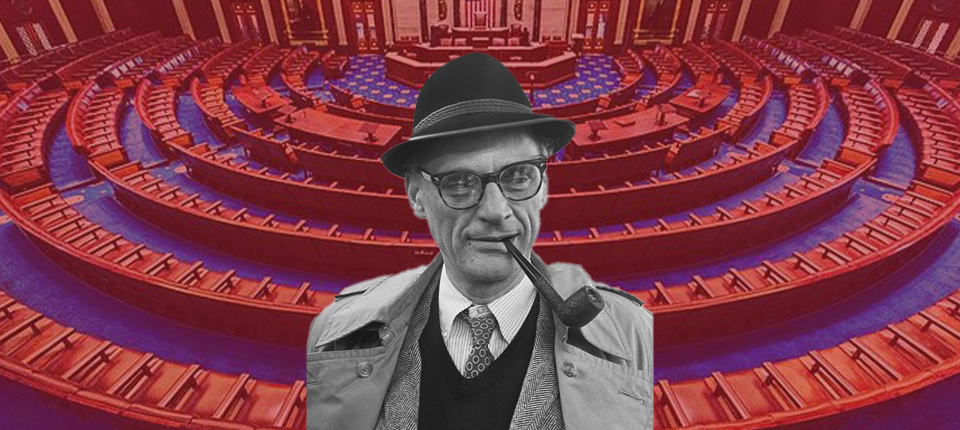
Oklahoma will teach high school students debunked 2020 election-fraud theories as fact

The new academic standards promote U.S. President Donald Trump and his allies’ groundless 2020 election conspiracy theories.

Grace Deng

Published May 5, 2025 (Snopes.com)

 (Getty Images)

Image courtesy of Getty Images

Claim:

Oklahoma instituted updated academic standards in 2025 requiring schools to teach high school students that widespread fraud impacted the outcome of the 2020 U.S. presidential election.

Rating:

True

True

About this rating

In late April and early May 2025, a rumor spread online that Oklahoma would soon require schools to teach students that widespread voter fraud occurred during the 2020 presidential election, echoing baseless conspiracy theories promoted by U.S. President Donald Trump to explain why he lost that election to former President Joe Biden. 

“Next school year, thousands of high school students in Oklahoma will be required to learn about Trump’s debunked claims that the 2020 election was tainted by fraud,” said one X post by independent reporter Judd Legum. “The lesson will not be part of a course on conspiracy theories, but an official component of the new social studies curriculum.”

Similar claims spread on platforms like FacebookReddit and Blueskymany posts alleged the state’s Department of Education head, Republican Superintendent Ryan Walters, was responsible for the new curriculum requirements. 

Oklahoma’s new social studies standards for high school students, which take effect in the 2025-2026 school year, do, in fact, require students to learn about so-called “discrepancies” in the 2020 election. The updated guidelines list examples for these discrepancies, all of which are theories not based in evidence — and many of which Snopes has independently debunked. Thus, we rate this claim true. 

Walters did not immediately return a request for comment left for the agency’s spokesperson. In an April 29 statement on X, Walters called the new benchmarks a “major victory” for the state. 

“The most unapologetically conservative, pro-America social studies standards in the nation are moving forward,” Walters’ post said. “These reforms will reset our classrooms back to educating our children without liberal indoctrination.” 

Oklahoma’s new educational standards

Oklahoma’s 2025 social studies standards are available here. See Page 118 for the academic benchmarks outlined under “United States History” for 9th through 12th grade, which clearly require students to study debunked claims of election fraud, but with the perspective that these theories are legitimate, rather than misinformation. 

Here is the relevant language from the document: 

Identify discrepancies in 2020 elections results by looking at graphs and other information, including the sudden halting of ballot-counting in select cities in key battleground states, the security risks of mail-in balloting, sudden batch dumps, an unforeseen record number of voters, and the unprecedented contradiction of “bellwether county” trends.

Oklahoma’s new academic benchmarks are available for download on the Oklahoma State Board of Education’s webpage under the “Handouts” section for the Feb. 27, 2025, meeting in a document titled “22725 Final SS OAS 2-27” (which presumably stands for “Feb. 27, 2025, Final Social Studies Oklahoma Academic Standards Feb. 27”). 

Snopes has repeatedly debunked many of these supposed 2020 election “discrepancies” listed in Oklahoma’s new learning targets, including supposed mail-in ballot security issues and the idea that “sudden batch dumps” of voting ballots or an “unforeseen record number of voters” indicates fraud. We have also previously explained that delayed ballot counting doesn’t mean voter fraud is happening. Peer-reviewed research published in the National Academy of Sciences’ journal shows that trends for so-called “bellwether counties” — areas in the United States which often choose the winning presidential candidate — were not unusual during the 2020 election.

A timeline for approval

In Oklahoma, the state Department of Education releases proposed updated social studies standards every six years, which the Oklahoma State Board of Education and the Oklahoma Legislature are, in theory, supposed to approve in order for them to go into effect. 

But if the Legislature takes no action, then the draft rules will go into effect by default 30 days after they are proposed, per state law on academic standards and their review:

If the Legislature fails to adopt a joint resolution within thirty (30) legislative days following submission of the standards, the standards shall be deemed approved.

That is what happened in this case: Oklahoma’s Republican-controlled Legislature did not take action by the May 1 deadline, allowing the new language to go into effect. Attempts by both Democratic and Republican lawmakers to block Walters’ effort failed to pass

Initial draft language available for public comment differs; that document, dated Dec. 14, 2024, and available on the official Oklahoma State Department of Education website, simply directs students to “examine issues related to the election of 2020 and its outcome” (see Page 118 here).

According to Oklahoma Voice, a news outlet focused on the state’s government, several State Board of Education officials said they were unaware of last-minute changes in the document when they voted, including the added 2020 election-fraud language.

The new learning targets also call for teaching the controversial theory that COVID-19 began in a Chinese laboratory as undisputed fact, as well as describing the “challenges and accomplishments” of Biden’s administration (see Page 118.)  

Sources

By Grace Deng

Grace Deng specializes in government/politics and is based in Tacoma, Wash.

Ocean Vuong Was Ready to Kill. Then a Moment of Grace Changed His Life.

The Interview

By David Marchese

  • May 3, 2025 (NYTimes.com)

Seen in a soft light, Ocean Vuong’s life looks like a modern American fairy tale. In 1990, he and his mother came to this country as refugees from Vietnam. They landed in small-town Connecticut and began muddling their way through an existence limited by low-paying work and cultural and personal alienation. Vuong seemed destined to stay stuck on society’s margins. Until, that is, he discovered literature and his own enormous gift for writing.

Now Vuong is one of the country’s most esteemed poets, winner of a prestigious MacArthur Fellowship (a.k.a. a “genius grant”) and a tenured professor in the creative-writing department at New York University. His bittersweet debut novel, “On Earth We’re Briefly Gorgeous,” a marvel of emotional and narrative compression published in 2019, became a best seller and, over time, a bona fide millennial classic. All this, and he’s only 36.

But there’s another side to Vuong’s narrative, one that doesn’t resolve so neatly. It’s that side of his history that informs his new novel, “The Emperor of Gladness,” which will be published on May 13.

At 400-plus pages, with a large cast of characters and comedic set pieces and touching on fast-food jobs, elder care and the static nature of most American lives, “Emperor” is a bigger book in every way than Vuong’s first. It also provided the occasion for what turned out to be one of the most emotionally intense interviews I’ve ever done.

Subscribe: Apple Podcasts | Spotify | YouTube | Amazon | iHeart | NYT Audio App

Your new novel is based in part on your experiences working at fast-food restaurants. Where did you work? I worked at a place called Boston Market and a place called Panera. I was living in HUD housing with my mother and my brother. It was this situation where if your family income surpassed [a certain minimum], then you can’t live there anymore. In the summers, I worked on a tobacco farm, which was $9.50 cash, no Uncle Sam involved. You confront, as a teenager, this antithesis of American prosperity and upward mobility where it’s like, “Don’t make too much money, or we’ll be homeless.” So I went to Boston Market, which is a very eye-opening experience of American life.

What did you learn about people from working there? What I learned was that a huge portion of how this country is formed is through circumstantial family: labor, this arbitrary cobbling of strangers thrown together. Human beings, no matter where they are, will find relationships. A month in, you’ll start to know whose cough belongs to who. You’ll know when Joe’s deodorant will wear off. There’s nothing more intimate than that. But you’re also dependent on each other. Especially when you’re about to close and a bus pulls up and it’s a bunch of Catholic-school kids after their prom. There’s a kindness that arises out of that. There’s also a deep frustration.

What’s the frustration? Underneath it all, every employee knows this is not the way out. It’s the elephant in the room. The manager is paid a little more than us. At that time, they were paid maybe $13 to $15. We were paid $7.15, but the suffering that they went through showed us it wasn’t enough. I watched someone get promoted and then turn it down. It was a grand thing where the manager was like: “We’re going to promote Jennifer today. Welcome, Jennifer!” and she’s just like, “I don’t want it.”

A small, solemn dark-haired boy in a T-shirt and shorts sitting on a bench between two smiling women. One wears a flowered dress; the other, a flowered blouse and white pants.
Vuong with his mother, Rose, left, and his aunt, Kim, in 1990 at the Bataan Refugee Camp in the Philippines.Credit…From Ocean Vuong

I worked as a waiter for a catering company, and so much of what you just said paralleled my experience. You’re thrown in with this group of disparate people, but somehow you make it work. And you learn so much about people from the way they treat their presumed subordinates. The fast-food restaurant obfuscates the workers’ humanity, because everyone is in a uniform. Your most valuable asset is your hands, not your personhood. What I’m interested in, in this novel and in general, is when humanity breaches these moments. Until the end of my life, I will remember this one moment: I was being trained by this man. One day we were cleaning the freezer, and I don’t know what to do with this fact; I didn’t put it in the book, because sometimes life is both cornier and more dramatic than any fiction. It’s been haunting me for forever. I’m 19, we have our backs together — the freezer is maybe six feet wide — and we’re cleaning and talking about family. He stops and says, “This is something I can never tell my wife.”

Uh-oh. He says, “I have three sons, and I only love one of them.” I don’t know how to receive this. I said: “Oh, OK. Why?” He says, “I don’t understand it, but I knew it early on.” Why did that happen? Why in a freezer in East Hartford, Conn., does a man tell me something that I think has only been uttered in that freezer to this day?

That story and your book connect to a larger question I have about the country: What do you understand about places like East Hartford that doesn’t get communicated widely enough? As a culture, we always want this grand arc: rags to riches, gets the girl, gets the guy. I wondered if I could write a book that didn’t have improvement arcs, because it aligned with my observation of my communities. My brother has worked at Dick’s Sporting Goods his whole life. My stepdad works at this auto-parts company. For 25 years, he worked from 3 p.m. to 12 a.m. We want stories of change, yet American life is often static. You drive the same car, people live in the same apartment, but it doesn’t mean that their lives are worthless. This book — it’s not a spoiler to say that nobody gets a better job, no one gets a raise. So what happens? I’ve been interested in this idea of kindness without hope. What I saw working in fast food growing up in Hartford County was that people are kind even when they know it won’t matter. Where does that come from? I watched co-workers get together and dig each other out of blizzards. They could just dig themselves out and leave, go home sooner, hug their families, but they all stayed, and they dug each other out. What is kindness exhibited knowing there is no payoff?

Where do you think it comes from? I don’t know. My brother has it. I had a desire to understand goodness, but I never had it the way my brother does. I’ve been in dicey situations in my life where I realized early on, I just don’t have it.

Editors’ Picks

There’s No ‘Undo’ Button for Extinct SpeciesI Saw a Neighbor on the Sex-Offender Registry. Should I Tell Others?How Much Are We Paying for Newsletters? $50, $100 … How About $3,000 a Year.

Credit…Philip Montgomery for The New York Times

Situations where you exhibited cruelty? I don’t know if it would be cruelty, but anger, rage, certain desires that would have never exhibited in my brother. There was a moment when I was 15 — I’ve been trying to articulate this for so long, and your question is putting me down the slippery slope. I’ve been trying to articulate it, because it’s important, but I’ve been ashamed. People ask me, why did you become a writer? I give the answer that makes sense: I went to Pace University, I tried business school because I wanted to help my mother. I couldn’t do it, and I went to Brooklyn College and to an English department, and then I became a writer. That’s not untrue, although I don’t know if it’s honest, and your question is now bringing me to this idea of cruelty and goodness. There was this one event when I was 15 that I think altered the course of my life, although at that time it was not an epiphanic moment. But the desire to be a writer probably started with the desire to commit myself to understanding suffering.

What was the moment? I’m trying to be eloquent. I don’t know if I will be. I’ll say it first, then describe it. When I was 15, I decided to kill somebody.

Oh, my God. I didn’t do it. Ah, my God. [Long pause.] I was working on the tobacco farm, and I rode my bike every day. It was five miles out. You wake up at 6 in the morning. I rode my bike, and I went to work mostly with migrant farmers. You’d get paid under the table, and if you show up every day, you get a $1,000 bonus at the end of the season. It was this hot July evening. I was in my room and I look out the window and see that someone has stolen my bike. It was someone I knew in our neighborhood. He was a drug dealer. You would put your bike outside on the stoop when you’re running in and out, and this guy was known to grab your bike, and there’s nothing you could do about it. But I snapped that day. I saw him, and I was so angry, because I knew: I’m not going to get this back, I’m going to lose my $1,000. For context: My mom made $13,000. I go outside and say, “Give me back my bike.” And essentially he said, “Eff off.” I lost it. I went across the street to my friend Big Joe’s house. I knocked on his window. I remember putting both of my hands on the windowsill. I have no shirt on. I’m sweating, I’m so angry, and I said, “Please let me borrow your gun.” [Vuong begins to cry.] I’m so sorry.

Can I give you a hug? [Vuong and I embrace.] I appreciate that you’re being honest, but if it’s too much, we can stop. OK? I think what I’m trying to get at is that I didn’t become an author to have a photo in the back of a book. Writing became a medium for me to try to understand what goodness is. Because when I was begging my friend, “Please give me your gun,” he said: “Ocean, I’m not going to do that. You need to go home.” What was so touching to me is that I was not responsible for that. Someone else’s better sense saved me. In Buddhism, we have this idea called satori.

A small boy with dark close-cropped hair in short blue overalls and a white T-shirt, standing in front of a tall white Buddhist statue surrounded by signs and an incense burner; in the background is a lush green landscape.
Vuong as a child in 1990 at the Bataan Refugee camp.Credit…From Ocean Vuong

Explain what that is. Satori is kind of enlightenment in life. These moments of illumination: Lying in bed at night, and all of a sudden you realize, I need to be a better partner, a better brother, be more patient, stop being petty. Then you wake up and life happens — a bad work email, someone’s being annoying — and you lose sight of all of that. So satori is a brief window, and the idea for Buddhists is to allow the understanding in that brief window to alter your life. I think I was spared because of Big Joe’s satori. You tell yourself you’re in control of your life, but moments like that happen and you’re just like: Wow. I don’t know that it was up to me that I got here. A week after that, I went to the public library. I would take my grandmother. She would go to the library and steal pictures of Buddha and frame it for her altars. I started reading Buddhism books. I was deeply interested in understanding suffering, and Buddhism was so enticing for me, serendipitously, because [in] the four noble truths is “life is suffering.” I was like, Oh, my God, yes. I wanted to be a monk. My guidance counselor persuaded me to go to community college. My first class there, the syllabus was Baldwin, Annie Dillard, Foucault. And I realized writing was not writing a respectable email to get a job. It was a medium of understanding suffering. That’s when it changed.

As we move forward, you tell me if you need a break or if anything feels too intense, because I’m looking at my questions and they’re not going to get easier. [Laughs.] I didn’t think I would be here this quick!

Sign up for The Interview  Hosts David Marchese and Lulu Garcia-Navarro talk to the world’s most fascinating people. Get it sent to your inbox.

The central relationship of “The Emperor of Gladness” is between a young Vietnamese immigrant named Hai and an 82-year-old Lithuanian woman with dementia named Grazina. Hai winds up becoming her caregiver. The novel is dedicated to a real-life Grazina. Can you tell me who she was? She’s my partner’s grandmother. After I dropped out of Pace University, I lost housing. I hesitate to call myself homeless, because it was just two and a half weeks. I stayed in Penn Station for two and a half weeks. One day my partner and I got to Penn, and he was like, “Where are you going?” I was like, “Um, I’m here.” He was like, “Oh, my God.” And I was like, “Well, we don’t have to talk again, this is really weird, I’ll text you.” Then the next day he called me and said, “My grandmother, she lives in Richmond Hill, she will not go anywhere, but she has some kind of illness.” I ended up living there for two and a half years and helping take care of her. We kind of started a family. My partner, Peter, would start visiting more, and I’m like: “Are we dating, are we not, what is happening? I’m living with your grandmother.” [Laughs.] It was kind of beautiful in that we didn’t name it.

A young man with dark hair and a dark plaid shirt sitting with a white-haired woman in an inpatient medical setting. She is wearing a red plaid shirt and has a knit sweater draped over her shoulders. Both are smiling.
Vuong with his partner’s grandmother, Grazina Verselis, with whom he lived for two and a half years after dropping out of Pace University.Credit…From Ocean Vuong

You also had the experience of being a caregiver for your mom when she was dying from cancer. What did it teach you? Because I think until we’ve gone through that kind of situation, we can look at it almost as something that’s solely to be endured. It certainly requires endurance, because you are in a heightened place of selflessness and giving with no determinate end. So there’s a kind of faith in the act itself: I’m just going to be here for as long as it takes. But it’s sad, because it should be what is possible without illness — giving your loved one your best self.

It’s not a world away from kindness without hope. Yeah, God, that’s good. Because there is no hope. When I was on my mother’s deathbed, often she was very poetical. She kept saying, “Raise me up.” We have this hospice bed, I’m like, “Mom, it’s the highest it can go,” and she’s like, “Yeah, but keep raising me up.” As a poet, all I could think about was the metaphor. I’m like: Raise you up where? Are you going up there? It changed everything for me.

Did it change the kind of writer you are? I don’t know yet. This is the first book I wrote from start to finish without her being alive. I told myself that I was this avant-garde counterformalist. I saw myself on this high horse. I thought, I write whatever I want, and I was very proud of that. But I realized after my mother passed that I was actually trying to do well in the world so that I could take care of my mom. Everything was strategic: I gotta get this job, I gotta be a professor, I gotta get tenure. And when my mom died, I was like, That was it. Everything was for her, and ultimately I’ve got to ask the question I didn’t want to ask: What would I write for myself? Existentially it’s like, Now what? When I finally got to do what I thought I was doing this whole time, which is writing on my own terms, it felt empty to me. But I don’t fetishize an identity of “writer.” To me, what you and I are doing is the same work. My teaching is the same work. When I give a talk at a university, it’s the same thing.

How do you characterize that work? A kind of sincerity, of figuring this out. I think that’s it. A Buddhist sutra says to engage the phenomena of the world with earnestness. I’ve always valued that.

I know that your mom had a sense of your accomplishments as a writer. But she was illiterate. Do you know if anyone ever read your work to her? I think it was hard for her to be in proximity of my reading and writing, because I was evidence of what she could have done if she had a normal life untouched by war. When I realized that, I stopped reading in front of her, because it was almost mocking. Also, where I’m from, reading itself is a class betrayal. Oh, you’re too good for us. You’re trying to read to go to college. You’re trying too hard to get out.

How did becoming more educated and changing your social milieu affect your relationships with people? David, I still don’t understand it, because I’ve met so few people who’ve gone through it. I tried to explain this to my mother, the loneliness of class movement. It’s a lot of grief. You enter these rooms, and even with my colleagues, they’re all lovely, but it’s hard to explain what we were talking about earlier. I never say that stuff, because I feel like it’s going to stop the room. I feel really alone in these spaces, and then when I come home, no one cares.

Credit…Philip Montgomery for The New York Times

What do you mean? Two years ago I was bailing out my cousin. I get a call from my aunt saying, “Come to this 24-hour bail bond.” I’ve never bailed anybody out. MacArthur genius? Who cares? New Yorker? Who cares? In a way, that’s refreshing. I don’t come home as Ocean Vuong, the writer. I come home as Ocean, the nephew, the cousin who’s gonna bail me out, the cousin who’s gonna buy my new Yeezys.

Is there any way in which your awareness of the cruelty that you had inside yourself, which we talked about earlier, gives you an understanding of the strain of our culture in which cruelty has become almost fashionable? Yes. I was in a world where anger, rage and violence was a way to control the environment for people who had no control of their lives. A lot of them were hurt and wounded. Another memory, and I think about this often, was seeing a kid get jumped for the first time. I was maybe 12, 13, and there was a kid called D-Nice. I remember a group of 15, 20 kids, they went up behind him, pulled his shirt over his head and then went in — a flurry of fists. So much of that was close to me. I had to look at it. It behooved me to understand it. So when I see cruelty, I look closer and I say, Where is this coming from? A lot of times it comes from fear and vulnerability. You’re too scared, and you have to strike first. In a way, I have great compassion for that, because the doorway through violence has always been suffering. I’ve never seen anyone commit violence and feel joy after. But it’s almost like the doorway’s in the middle of a field, and you’re like, My goodness, I can take one step to the side and the whole world is before me. There was a threshold in front of me that day with Big Joe. In a way, my career so far has been a slow attempt at stepping back from that door.

This interview has been edited and condensed from two conversations. Listen to and follow “The Interview” on Apple PodcastsSpotifyYouTubeiHeartRadioAmazon Music or the New York Times Audio app.

You can listen to an excerpt from Ocean Vuong’s new novel, “The Emperor of Gladness,” on the New York Times Audio App.

Director of photography (video): Tre Cassetta

David Marchese is a writer and co-host of The Interview, a regular series featuring influential people across culture, politics, business, sports and beyond.

(Contributed by Michael Kelly, H.W.)

Hope Is the Thing with Feathers, and with Fangs: The Alchemy of Unrequited Love and the Story Behind Emily Dickinson’s Most Famous Poem

By Maria Popova (themarginalian.org)

This essay is adapted from the nineteenth chapter of my book Figuring.

In the first autumn of her thirties, Emily Dickinson wrote to her confidante and eventual editor Thomas Wentworth Higginson:

I had a terror — since September — I could tell to none, and so I sing, as the Boy does by the Burying Ground — because I am afraid.

Not a “fright,” not a “shock,” but a terror. What lay behind this enormity implied by a woman who measured her words so meticulously? Generations of biographers have filled pages with conjectures of varying persuasiveness — a death, some unrecorded heartbreak in her volcanic relationship with Susan, the first attack of epilepsy — but the most intriguing theory came nearly a century after the poet encrypted these words.

In 1951, after years of research and travel to various archives, the scholar Rebecca Patterson proposed a wholly novel candidate for the “terror” of 1861: Kate Scott Anthon — a newly widowed young woman Susan had befriended during their studies at the Utica Female Academy and then introduced to Emily, who fell into an intense romantic and possibly physical affair with the enticing newcomer before Kate severed the relationship without explanation, dealing a blow Emily would experience as deathly and furnishing the raw material for much of her mournful poetry.

Their story is a mosaic assembled from various surviving documents, as direct as Emily’s letters and as oblique as the marginalia in Kate’s favorite books.

Unauthenticated daguerreotype of (most scholars believe) Emily Dickinson and Kate Scott Anthon

In the late winter of 1859, Kate descended a sleigh in her fashionable black hat and widow’s veil in front of her former classmate’s home in Amherst. Almost immediately, Susan introduced her to the beloved auburn-haired friend who lived across the hedge in the brick house painted deep red and who had been hearing of her for nearly a decade. When Emily, wrapped in a merino shawl, met the tall, handsome woman with the penetrating dark eyes, musical voice, and lively passion for literature and astronomy, she was instantly entranced.

During the three weeks of Kate’s first stay in Amherst, the two women, both twenty-eight, became inseparable. They took long walks with Emily’s dog, Carlo, read Aurora Leigh aloud to each other, and spent evenings at the piano as Emily improvised — “weird and beautiful melodies, all from her own inspiration,” Kate would remember. As Emily played, Kate towered behind her — “Goliath,” the petite poet would call her.

When Kate left to go home, Emily beckoned her for another visit to Amherst:

I am pleasantly located in the deep sea, but love will row you out, if her hands are strong, and don’t wait till I land, for I’m going ashore on the other side.

Art by Giuliano Cucco from Before I Grew Up.

Emily’s early letters to Kate pulsate with electricity. Writing weeks after they first met, she tries to disguise with playfulness the push-and-pull of irrepressible, frustrated longing in the code language of botany that was her first poetic tongue:

I never missed a Kate before. . . . Sweet at my door this March night another Candidate — Go Home! We don’t like Katies here! — Stay! My heart votes for you, and what am I indeed to dispute her ballot –? What are your qualifications? Dare you dwell in the East where we dwell? Are you afraid of the Sun? — When you hear the new violet sucking her way among the sods, shall you be resolute?… Will you still come?… Kate gathered in March! It is a small bouquet, dear — but what it lacks in size, it gains in fadelessness, — Many can boast a hollyhock, but few can bear a rose! … So I rise, wearing her — so I sleep, holding, — Sleep at last with her fast in my hand and wake bearing my flower. —

Page from Emily Dickinson’s herbarium

In the late winter of 1860, they spent a night together in Emily’s bedroom — unrecorded, inarticulable, except perhaps in verse:

Her sweet Weight on my Heart a Night
Had scarcely deigned to lie —
When, stirring, for Belief’s delight,
My Bride had slipped away —

If ’twas a Dream — made solid — just
The Heaven to confirm —
Or if Myself were dreamed of Her —
The power to presume —

Several weeks after that momentous night, Emily would channel this precious perishability in a letter to Kate:

Finding is slow, facilities for losing so frequent, in a world like this, I hold with extreme caution. A prudence so astute may seem unnecessary, but plenty moves those most, dear, who have been in want… Were you ever poor? I have been a Beggar.

Whatever took place between them, they never addressed it overtly — it is always impossible to articulate the possibility between two people, but especially in a time and place that confined the possible to such narrow parameters for permissible love. Feeling the impossibility of it all, Emily shuddered with anticipatory loss:

Kate, Distinctly sweet your face stands in its phantom niche — I touch your hand — my cheek your cheek — I stroke your vanished hair, Why did you enter, sister, since you must depart? Had not its heart been torn enough but you must send your shred?… There is a subject, dear, on which we never touch.

Little is known of Kate’s side of the experience. None of her letters to Emily survive. (The poet had instructed her sister that all letters be burned after her death — a request which Lavinia Dickinson promptly obliged before discovering the trove of poems that made her realize her sister’s correspondence might have immense literary value.) But Kate — who signed many of her surviving letters to other correspondents “Thomas” or “Tommy” — did have an unambiguous and lifelong proclivity for romantic attachment to women, culminating later in life with a longtime relationship with a young Englishwoman.

Perhaps at twenty-eight, she was simply not ready to so radically dismantle the superstructure of her life as she knew it. In April 1861, she severed the relationship with Emily. There is no record of what was said, but the devastation was complete and lifelong. Many years later, Emily would write to Higginson:

If ever you lost a friend… you remember you could not begin again because there was no world —

A breathless Death is not so cold as a Death that breathes.

Art from An Almanac of Birds: 100 Divinations for Uncertain Days.

In the immediacy of the loss, she interpolated between hope and despair, as we all do when discomposed by a sudden abandonment. A month after her “terror,” which might just be her painful acceptance that Kate was gone, her friend Samuel Bowles — whose newspaper had printed one of the only four poems published in her lifetime — came to Amherst. She refused to see him. Most of her letters from that period were burned, but Samuel was one of her most intimate friends — it is likely that she had confided in him the intensity of her heartbreak, if not its source. “We tell a Hurt to cool it,” she would write in a poem. Among his own letters is one from that summer to a recipient whose name has been scrubbed — an extraordinary letter of consolation to somebody anguishing with unrequited love, somebody who may well have been Emily:

My dear — :

… You must give if you expect to receive — give happiness, friendship, love, joy, and you will find them floating back to you. Sometimes you will give more than you receive. We all do that in some of our relations, but it is as true a pleasure often to give without return as life can afford us. We must not make bargains with the heart, as we would with the butcher for his meat. Our business is to give what we have to give — what we can get to give. The return we have nothing to do with… One will not give us what we give them — others will more than we can or do give them — and so the accounts will balance themselves. It is so with my loves and friendships — it is so with everybody’s.

Emily was not ready to let go of the love she had given, of the hope that it might one day be returned, though alchemised and transmuted into a different form. She wrote to Kate plaintively:

How many years, I wonder, will sow the moss upon them, before we bind again, a little altered, it may be, elder a little it will be, and yet the same, as suns which shine between our lives and loss, and violets.

That season, she composed her most famous poem — read here by twenty-first-century children who are yet to have their loves and losses, and animated by artist Olga Ptashnik:

“Hope” is the thing with feathers —
That perches in the soul —
And sings the tune without the words —
And never stops — at all —

And sweetest — in the Gale — is heard —
And sore must be the storm —
That could abash the little Bird
That kept so many warm —

I’ve heard it in the chillest land —
And on the strangest Sea —
Yet — never — in Extremity,
It asked a crumb — of me.

“Life is long,” a poet friend said to me recently as I was reckoning with a similar rupture. But life was not long for Emily Dickinson, who died suddenly in her fifties, not a single grey on her auburn hair in the small white casket cradling her body and a posy of violets. Life is a feather borrowed from the swift wing of time. If she had lived longer, perhaps Kate would have returned to spend her remaining days with Emily and not with her English lover, or perhaps they would have met again in perfect disenchantment, in perfect friendship. “If” is the widest word of all, the immense alternate universe in which all of our possible lives live. Hope is what we call the bridge between this universe and that one.

Ocean Vuong on Anger

By Maria Popova (themarginalian.org)

“To be an artist is a guarantee to your fellow humans that the wear and tear of living will not let you become a murderer,” Louise Bourgeois wrote in her diary as a young artist. “The poets (by which I mean all artists),” James Baldwin wrote in his late thirties, “are finally the only people who know the truth about us. Soldiers don’t. Statesmen don’t… Only poets.” And the truth about us, as I know it, is that how we love, how we give, and how we suffer is just about the sum of who we are. The transmutation of suffering into love — the transmutation of the wear and tear and helplessness of living, of the rage it can induce, into compassion and care — is what we call art. Anyone who performs that alchemy within and then gives another the means to it — whether with a poem or a painting or an act of kindness — is what I would call an artist.

I know of no one who has articulated this task of transmutation more beautifully than the poet (in the largest Baldwinian sense) Ocean Vuong.

Ocean Vuong. (Photograph: Tom Hines)

In a deeply felt New York Times interview — a public reckoning, really — Vuong recounts his improbable beginnings as a writer: how he went from wanting to borrow a friend’s gun at fifteen and, despite his Buddhist upbringing, kill a man (the local drug dealer who had stolen his bicycle and kept him from making his shift on the tobacco farm where he was laboring for $9.50 an hour alongside other refugees and migrants) to reading James Baldwin and Annie Dillard at the community college until he came to see writing as “a medium for understanding suffering” — for understanding what hurts us and why we hurt each other and how to stop. He reflects:

I was in a world where anger, rage, and violence was a way to control the environment, and it was a way to control the environment for people who had no control of their lives. A lot of them were hurt and wounded… Because so much was close to me, I always had to look at it. And it behooved me to understand it in order to survive. So when I see cruelty, I look closer, and I say: “Where is this coming from?” And a lot of times, it comes from fear and vulnerability — you’re too scared, and you have to strike first… I have great compassion to that, because the doorway through to violence has always been suffering…

It’s interesting: You see the doorway in front of you and it feels so immense — it feels like the only path — but when you step back… it’s almost like the doorway is in the middle of a field. And you’re like, “Oh my goodness — I can step back, and I can just take one step to the side and go around, and the whole world is in front of me.”

[…]

In a way, my career so far has been a slow attempt at stepping back and stepping aside from that door.

Art from An Almanac of Birds: 100 Divinations for Uncertain Days, also available as a stand-alone print and as stationery cards.

A couple of years earlier, speaking at San Francisco’s endlessly wonderful City Arts & Lectures, Vuong considered the place of anger — that handmaiden of suffering — in art, and in his own work animated by the belief that the poet’s task is to look more closely at this world, a task resinous with the consolations of causality: the more we see, the more we understand; the more we understand — ourselves and each other — the less we suffer; the less we suffer, the less we lash the world with our suffering and the more we can transmute the anger of helplessness into something more tender and tenacious. Vuong reflects:

When you feel the somatic experience of anger, you throw things, you shout (perhaps at the people you love), you’re on the floor (metaphorically, physically). And then, after a while, you have to get up. You have to feed your dog, answer emails, meet a student — in other words, you have to move towards care… For me, care is anger improved. It’s part of the same ecosystem. And I’m interested in dismantling the border between these two things, because we’re told that they’re two opposite sides of a spectrum, but I think they’re actually very close together. They inform each other.

Because language is a container for thought and feeling that shapes the contents, the care we take with language is care for the world. Vuong reflects on the ministrations of words:

Writers have produced incredible amounts of work with the energy of rage and anger. But, for me, that care that I have to give the sentence is then the medic — it almost calms me down. It’s hard to be rageful when you’re working with something that needs your care. If each word is a citizen in this world of the text, they are so dependent on me to think clearly and with restraint and with a sense of compassion and dignity to them. And I would lose their confidence in me, in a way, if I were to approach it with too much of myself.

Art from An Almanac of Birds: 100 Divinations for Uncertain Days, also available as a stand-alone print and as stationery cards.

Vuong’s most elegant and countercultural point is that while anger need not be absent or suppressed in our inner lives, it must not become the end point of our work in the world but rather an opening — a handle on the door to compassion:

If you’re not awake, you wouldn’t feel angry. But to be alive in American bones is to be enraged by what’s happening. And, of course, I feel anger. But I will say… I’m not proud of many things… but I’m incredibly proud that not a single sentence or page I’ve ever written in my work was written out of anger… It’s not that I’m not angry, but I’m not useful — as a writer, as an artist — when I’m angry.

An essential part of the artist’s task is also this — to find out, and stand by, how you are most useful in the world. This takes especial courage in our culture, where the self-appointed custodians of virtue bully artists with the shoulds of what to stand for, what themes to take up in their work, and how to address them. (Mistrust anyone who tries to tell another human being what their best contribution to the world is.) To be an artist is also a guarantee to your fellow humans that the wear and tear of living will not let you become someone other than yourself.

Ocean Vuong by Nan Goldin for Document Journal

Couple with the great Zen teacher and peace activist Thich Nhat Hanh’s poetic antidote to anger, then revisit Ursula K. Le Guin’s excellent meditation on the uses and misuses of anger in an imperfect world.

Stalactite & Stalagmite: A Brief Illustrated History of Earth and One Great Truth about Love

By Maria Popova (themarginalian.org)

We are always either drawing closer or drifting apart — there is no stasis in relationships. The direction of movement may change over the course of a relationship, but there is no stasis. Despite our culture’s bias for the drama of cataclysm — the violent heartbreaks, the very notion of falling in love, implying a sudden tripping along the path of life — the most profound of these motions of the soul are the work of gradualism, their pace geologic, their velocity that of continents, so incremental as to be imperceptible, until one day two people find themselves a sum greater than its parts: infinity, or zero.

This elemental tendency comes to life with great levity and charm in Drew Beckmeyer’s picture-book Stalactite & Stalagmite: A Big Tale from a Little Cave (public library). The tale is big because its theme is the largest of feelings, but also because tucked into the love story is the evolutionary history of how our rocky planet became a living world — something I especially appreciate as a kindred practitioner of Trojan-horsing science into life through love.

Just like those who have lived a long love become each other’s memory-keepers, Stalactite and Stalagmite pass the time by recounting their shared memories of bygone eras and extinct creatures: their first visitor, a trilobite — one of the earliest arthropods, who told them tales of life at the bottom of the deep sea; the thirsty giant ground sloth who licked them for every precious drop and casually informed them about the evolution of fur; the immense triceratops who made the whole cave tremble with the echo of his roar; the meteors that turned the sky black and lashed the Earth with acid rain so that for a long while nothing could grow and thrive.

Stalactite bonds with the bat over having the same vantage on the cave, and Stalagmite snuggles with the ichthyostega — one of the first walkers of the land, who tells the story of how fish grew legs.

Stalactite and Stalagmite were there, inching closer still together, when we came onto the scene to draw our dreams and myths and fears on the cave wall, to invent fire and language and science, so that one day tour guides could shine flashlights onto the cavernous darkness and tell children how stalactites and stalagmites form.

The formation of that “something new” is what Adrienne Rich meant when she wrote of love as “a process, delicate, violent, often terrifying to both persons involved.” What terrifies us most is the fear that the new formation might be a merging so total and irrevocable that we lose ourselves in the other, lose every last boundary of where one ends and the other begins, fall prey to the self-abandonment many mistake for love.

Overhearing the tour guide, Stalactite and Stalagmite reflect on their destiny, facing that fundamental fear but regarding the new formation with the awareness, honed on eons of observing change, that we never really know what lies on the other side of a transformation — we can only envision what we lose of the past we know, but not the future we stand to gain.

The key, in love as in evolution, is not to mistake the limits of the imaginable for the limits of the possible.

Próspera

From Wikipedia, the free encyclopedia

Próspera ZEDE
Zone for Employment and Economic Development
The Beta Building, situated within Próspera, which serves as the ZEDE operational center.
FlagSealLogo of Honduras Próspera, Inc., the developer and “guarantor” behind Próspera ZEDE.
Nickname: “The Hong Kong of the Caribbean[1]
Wikimedia | © OpenStreetMap
Próspera ZEDEPróspera ZEDE
Coordinates: 16°22′21″N 86°27′45″W
Country Honduras
DepartmentBay Islands
Government
 • BodyTechnical SecretaryHonduras Próspera LLCCouncil of TrusteesPZ Trust
Time zoneUTC-6
Websitepzgps.hn (official gazette)prospera.co (e-governance)

Próspera, officially known as Próspera ZEDE, is a charter city on the island of RoatánHonduras.[2] It is one of the three ZEDEs (Zones for Employment and Economic Development) in the country, operating under a distinct fiscal, legal and regulatory framework that grants it autonomy from the national government.[3]

The project is led by Honduras Próspera Inc., which itself is funded by venture capitalists and has a veto vote in Próspera’s governing council.[4]

History

Background

Main article: Zone for Employment and Economic Development

According to Canadian historian Quinn Slobodian, Próspera is part of a broader trend of projects aimed at implementing libertarian theory in practice.[5]

The first attempts to create jurisdictions similar to Próspera in Honduras emerged with the Special Development Regions (Regiones Especiales de Desarrollo, REDs),[6] which were intended to be administered by a developed guarantor country rather than private entities.[7] However, the REDs were later declared unconstitutional for violating national sovereignty, and the ZEDEs subsequently served as their successors.[8][6]

In 2013, during the presidency of Porfirio Lobo, the Constitution of Honduras was amended to allow the creation of Zones for Employment and Economic Development (Zonas de Empleo y Desarrollo Económico, or ZEDEs). These zones function as subnational territorial units with a high degree of autonomy, operating under a distinct legal and fiscal system. Unlike conventional local governments, ZEDEs possess independent administrative systems and laws, much like in special economic zones.[9]

The past president of Honduras Juan Orlando Hernández championed the special economic zones (ZEDEs) which enabled Próspera to be formed.[10]

Próspera, located on the island of Roatán, is one of the most prominent ZEDEs and has been described as a modern iteration of the charter city model, initially proposed by former World Bank chief economist and Nobel laureate Paul Romer. The idea behind charter cities is to establish new urban areas with governance structures that attract investment by ensuring rule of laweconomic freedom, and regulatory efficiency. Próspera’s model follows this logic, offering streamlined business regulations, lower taxes, and private arbitration for dispute resolution. It has also been heavily influenced by the Charter Cities Institute (CCI), a Washington, DC-based organization that promotes the development of such special jurisdictions worldwide.[11] The ZEDEs have been touted as “prosperity zones” where the law can be tailored to attract capital, and where the private city does not adhere to governmental powers like taxation or policing; the ZEDEs have been tried in the U.S. but found pushback, which is why organizers have gone to places like Honduras.[10]

Development of Próspera

Duna Tower under construction in 2023, the tallest building in Roatán.[12]

Wealth fund manager Erick Brimen, a Venezuelan, created the idea of Próspera and is its CEO, along with being the CEO of NeWay Capital; Brimen said in 2024 that he conceived of the city as a “poverty relief initiative” for Honduras.[10][13] Brimen formally applied for a charter city in Honduras in 2017.[10] He has used intermediate companies with names like Brimont Holding and North Shore Development Company to buy land on the island where Próspera resides, as well as mainland Honduras.[10]

Próspera is also backed by multiple investors, including Balaji SrinivasanPeter Thiel, and Marc Andreessen, through the venture capital firm Pronomos Capital.[14] In January 2025, Coinbase CEO Brian Armstrong said that his company’s venture capital division would be an additional investor in Próspera to “grow financial inclusion and innovation.”[10]

Construction

Construction began in 2021, with initial buildings designed by German architect Patrik Schumacher.[15] In 2025 it was reported that robots were turning wooden blocks into construction materials at a location called “The Circular Factory.” [10]

Economy

Other than real estate sales, the city has held conferences such as 2024’s biotech startup events which led to $1.5 million in venture capital investments; one of the theme was “Make death optional.”[10] Próspera also hosted a “crypto cities summit” in February 2025.[10]

88% of revenue brought in by Próspera goes to the city, with the rest in a trust that is supposed to be spent on Honduran development.[10]

Governance and regulation

Administrative structure

Próspera is governed by a council composed of nine members, five of whom are elected and four appointed by Honduras Próspera Inc. Decisions require a two-thirds majority, effectively granting Honduras Próspera Inc. veto power.[16] Above this, there is a Committee of Best Practices, an unelected body whose members are appointed by the Honduran government and tasked with approving internal regulations and providing policy guidance.[17]

Security

Visitors wishing to enter Próspera must pass through gates with armed guards at a booth. These guards have clipboards and pens for visitors to sign a “temporary touristic access permit” that adheres to the community’s legal code.[10]

Regulatory environment

While subject to Honduran criminal law, Próspera maintains its own civil and commercial codes, allowing businesses to select regulations from approved foreign jurisdictions, propose custom regulations subject to Próspera’s ZEDE (Zone for Employment and Economic Development) approval, or operate under common law.[18] Its charter disallows land expropriation.

Taxation and residency

Tax rates within Próspera are set at 1% on business revenue, 5% on wages, and a 2.5% sales tax.[19] 2025 data says there is also a 5% personal income tax.[10] Bitcoin is recognized as legal tender within the city.[20]

Controversy

Repeal efforts

During her 2021 presidential campaignXiomara Castro made the repeal of the ZEDE law a key issue. In April 2022, Honduran President Xiomara Castro signed legislation to repeal the ZEDEs, citing sovereignty concerns.[21] She referred to Próspera as a creation of a “narco-regime” and declaring self-governing ZEDE zones like Próspera unconstitutional.[22][10] Despite this, Próspera continues to operate, arguing that existing ZEDE agreements grant it legal stability for 50 years. In response to the repeal, Honduras Próspera Inc. sued Honduras for up to $10.7 billion in damages, equivalent to one-third of the country’s GDP.[23] In July 2022, the U.S. State Department expressed concerns that repealing the ZEDE law might violate international trade agreements, including the DR-CAFTA free trade agreement.[24]

The founder of Próspera, Erick Brimen, also has spent hundreds of thousands of dollars to lobby U.S. legislators to put sanctions on Honduras and end U.S. aid to the country if the Honduran government does not allow Próspera to continue operations.[10] In 2024, U.S. Representative Steven Horsford pressured Honduras by advocating for denying visas to their government officials if Honduras did not do as Próspera wanted (Brimen donated $5,000 to Horsford’s campaign in 2023).[10] In the 2024 U.S. House budget, members also tried to pressure Honduras to allow ZEDEs to continue how they wish.[25] And U.S. Representative María Elvira Salazar has claimed that the current Honduran leadership are socialists who don’t care about their country when they don’t allow ZEDEs to do as they like.[10] As of 2025, ZEDEs—including Próspera—remain operational despite ongoing legal disputes.[26]

ICSID ruling on Próspera et al. vs. Honduras

In 2024, the International Centre for Settlement of Investment Disputes (ICSID) rejected Honduras’ argument that Honduras Próspera Inc. and its affiliates should have exhausted domestic legal remedies before initiating arbitration, ruling that such a requirement was a matter of admissibility, not jurisdiction. The tribunal found that Honduras had unconventionally inserted this requirement into domestic law in 1988, yet it was never recognized in ICSID treaties, including CAFTA-DR. It also highlighted the contradiction in Honduras’ position, which both required investors to exhaust local remedies and simultaneously forced them to waive their right to pursue local proceedings before arbitration. The ruling allows Próspera’s $10.7 billion claim against Honduras to proceed, following the 2022 ban on ZEDEs by President Xiomara Castro and the 2024 Supreme Court decision declaring the ZEDEs unconstitutional with retroactive effect. The dispute was a major factor in Honduras’ decision to withdraw from ICSID in August 2024, raising concerns about the country’s commitment to international investment agreements.[27]

Land expropriation

Neighbors of the project in the nearby village of Crawfish Rock (which directly abuts Próspera) expressed a fear that their land might be expropriated after a drawing of later stages of Próspera appeared on the project website including parts of Crawfish Rock.[28][10] Honduras Próspera’s CEO has publicly supported legal reform to make the practice of expropriation illegal nationwide.[29]

Isolationist

Paul Romer, a Nobel-winning economist and World Bank leader, proposed the idea of charter cities as early as 2012,[30] but rejects Próspera as “living in this libertarian fantasy that … they can be free of the government. That’s not gonna turn out well.”[10]

Lack of supposed Próspera earmarked development funds for Honduras have not made their way to the nextdoor Crawfish Rock where roads are still unpaved; and there are ongoing issues about ground water rights and sewage problems, as well as Próspera utilizing Roatan’s garbage dump, electricity, and airports with inequities.[10]

More at: https://en.wikipedia.org/wiki/Pr%C3%B3spera

Naomi Klein on “End Times Fascism”

Democracy Now! • May 5, 2025 • Latest Shows Support our work: https://democracynow.org/donate/sm-de… An alliance between the far right and Silicon Valley oligarchs has given rise to a form of “end times fascism,” says journalist Naomi Klein, who details in a recent essay co-authored with Astra Taylor how many wealthy elites are preparing for the end of the world even as they contribute to growing inequality, political instability and the climate crisis. Klein says that while billionaires dream of escaping to bunkered enclaves or even to space, President Donald Trump and other right-wing leaders are turning their countries into militarized fortress states to keep out immigrants from abroad and ramp up authoritarian control domestically.

Implications of Metaphysical Idealism with Bernardo Kastrup

New Thinking • May 10, 2025 Bernardo Kastrup, PhD, is a computer scientist. He is author of Rationalist Spirituality, Why Materialism is Baloney, Dreamed Up Reality, Meaning in Absurdity, Brief Peeks Beyond, More Than Allegory, and The Idea of the World. He has published several papers in Scientific American arguing for metaphysical idealism. Here he suggests that it is possible to develop spiritual principles on the basis of logic — starting with the premise that existence is meaningful and the observation that all exists within consciousness. He draws upon information theory to deduce that unbounded consciousness, as postulated by philosophical idealism, in order to actualize its full potential for self-understanding (or meta-cognition) would manifest existence as we know it. He explains this further using the analogy of the Mars Rover. New Thinking Allowed host, Jeffrey Mishlove, PhD, is author of The Roots of Consciousness, Psi Development Systems, and The PK Man. Between 1986 and 2002 he hosted and co-produced the original Thinking Allowed public television series. He is the recipient of the only doctoral diploma in “parapsychology” ever awarded by an accredited university (University of California, Berkeley, 1980). He is also the Grand Prize winner of the 2021 Bigelow Institute essay competition regarding the best evidence for survival of human consciousness after permanent bodily death. He is Co-Director of Parapsychology Education at the California Institute for Human Science. (Recorded on February 11, 2019)

Full Moon In Scorpio May 2025 – No Turning Back

(Astrobutterfly.com)

On May 12th, 2025, we have a Full Moon at 22° Scorpio

The Full Moon in Scorpio marks a “no turning back” threshold. A choice has been made, whether consciously or not, and from this point on, the road only moves forward.

We are living interesting astrological times.

Right now, we have a foot in 2 worlds. A long, long chapter is coming to an end. Saturn is still in Pisces – at 29 degrees, ready to step into Aries. Uranus is in its final stretch in Taurus. Jupiter will soon move into a new sign – but for now, still in Gemini.

Yet, we can see glimpses of what’s on the other side. Pluto has switched signs, moving into Aquarius back in November. Neptune has recently moved into Aries. Energetically, we are already in this new Pluto-Neptune chapter of our lives.

But there are still things to untangle, make sense of, and release.

Full Moon in Scorpio

Here, at the cross between 2 worlds – between an old chapter and a new one – the Full Moon in Scorpio comes to illuminate the emotional depth of this transition.

Because times are a-changin’, as Bob Dylan said. Whether we like it or not. Whether we’re ready or not. There’s no turning back now.

At the upcoming New Moon in Gemini, Saturn will already be into Aries, following in Neptune’s footsteps – pressing the RESET button.

But we’re not there yet. There’s still something that needs to happen. Something that needs to be brought into light. Something that needs to be processed.  

Full Moon in Scorpio – The Aspects

The Full Moon in Scorpio is opposite Uranus (at 26° Taurus) and trine Saturn (at 28° Pisces).

The Full Moon activates the mythical father and son archetypes, Uranus and Saturn.
These are 2 very interesting planets because on the surface they couldn’t be more different, yet if we look closer, both deal with the same core theme: structural change. It’s just that their approach differs.

Saturn wants to keep us inside the ring – literally and metaphorically – with all that comes with structure, reliable boundaries, and rules.
And Uranus wants to break us free – to venture outside the ring.

When these two interact, structural change happens.

We have 2 scenarios that lead to transformation:

  • A hard Saturn aspect + supportive Uranus aspect
  • Or a hard Uranus aspect + supportive Saturn aspect

In the first scenario – the Saturn-driven one – we hit friction. Something is no longer working, we fail to achieve results through discipline, and then ultimately, after trials and tribulations, we find our freedom (Uranus) by changing the way we’re doing things.

And in the second scenario – our Full Moon in Scorpio scenario – we first get the Uranian thunder and lightning: the shake-up, the Tower card moment. 

But then, after Uranus shows us the alternative reality – the mind-blow, the jolt – we end up in a much better place than we were before.

Things fall into place. Our life immediately accommodates the change, as if somewhere, on a deeper plane, we were already planning for it.

How many times – and how many Uranus transits later – has leaving a relationship that has run its course, an unfulfilling job, or a draining friendship – things we would have NEVER dared with Saturn alone – turned out to be the best thing that ever happened to us?

The gift of this Full Moon in Scorpio is the humility to admit that perhaps our understanding was limited, that we don’t have all the answers – and to allow the peace that comes with that realization to reorganize our inner world.

“Now that I don’t need to prove to everyone I’m right… now that I take the ego out of the situation… I can actually look at this situation for what it is.”

It’s incredible that when we get to that stage, a whole world of opportunities opens in front of us.

The opportunities were always there – but we were blind to them, being too caught up in the narrative that belonged to stories and roles well past their expiration date.

Full Moon In Scorpio – No Turning Back

In this time of profound transition, everything is shifting – some things crumbling, others emerging.

And no one knows this better than Scorpio, the sign that has ‘transformation’ woven into its DNA.

Transformation means we take something that is important to us and let it evolve into something else—something better suited to the next phase.

While we might be moving into completely new territories, we always carry the distilled essence of our past, our experiences, and our soul’s memory.

“The only baggage you can bring is all that you can’t leave behind.” – Walk On, U2

If we were forced to leave in a rush, or start again, we would probably fill our one bag with only the true valuables – what really matters. Everything else, while it may carry memories, meaning, or attachments, can be left behind. It’s not really that important. We can leave – and live without it.

Similarly, it’s the core, distilled truth of our identity that truly matters. Whenever we drift off course, it’s usually because we’ve forgotten who we are – that essential spark, the drive, the WHY of our existence.

The Full Moon in Scorpio invites us to let go of the non-essential, while at the same time holding onto what’s deeply meaningful.

At this threshold moment in time, when we still have one foot in 2 worlds, let’s take what truly matters – the wisdom we’ve gathered on our long journey all the way to Pisces – and let’s open ourselves to new possibilities.

Soon, very soon, we’ll be standing fully in a new world – birthing something new from the ashes of what we’ve outgrown.

Consciousness, spirituality, biography, sexuality, androgyny, futurism, space, the arts, science, astrology, democracy, humor, books, movies and more