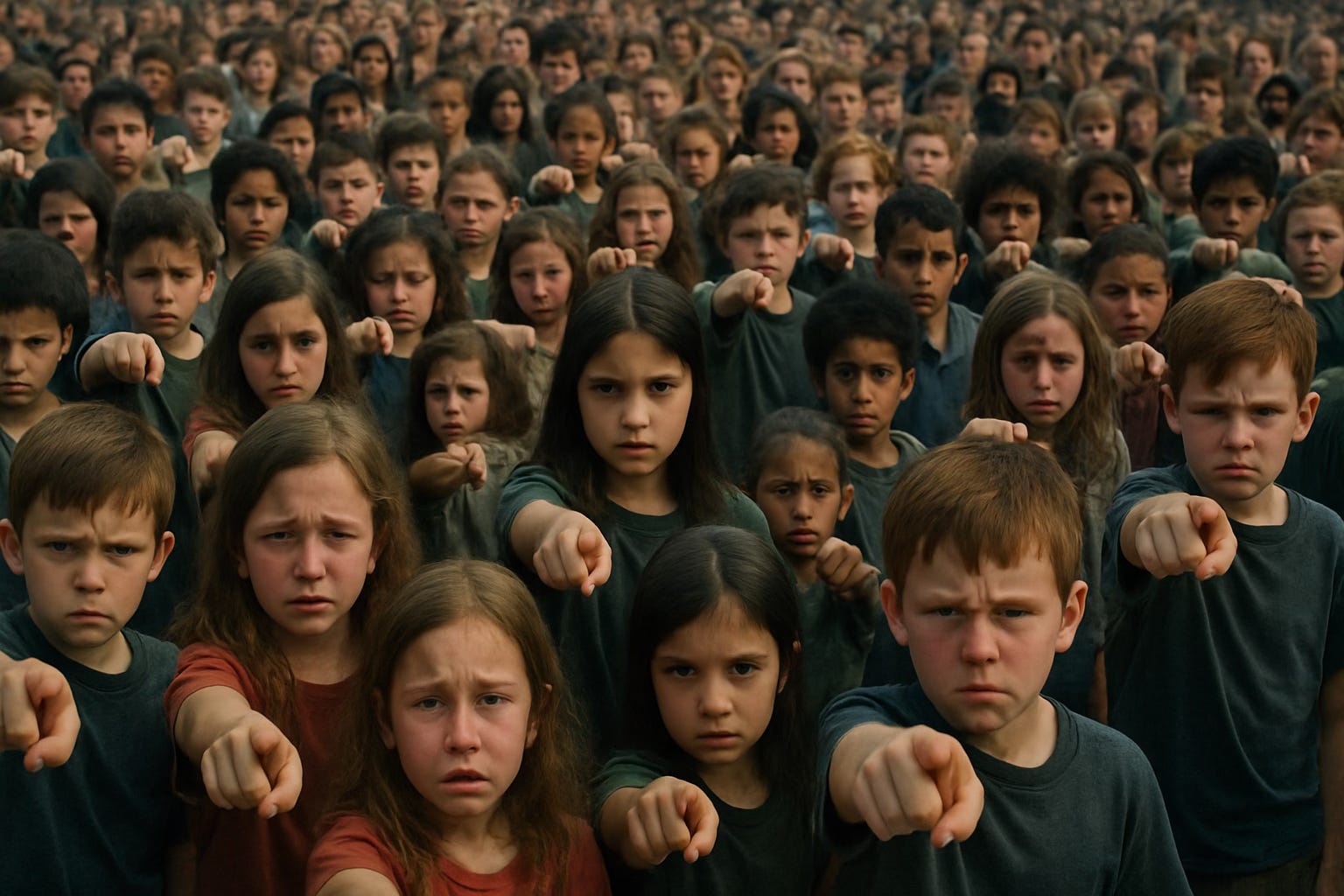
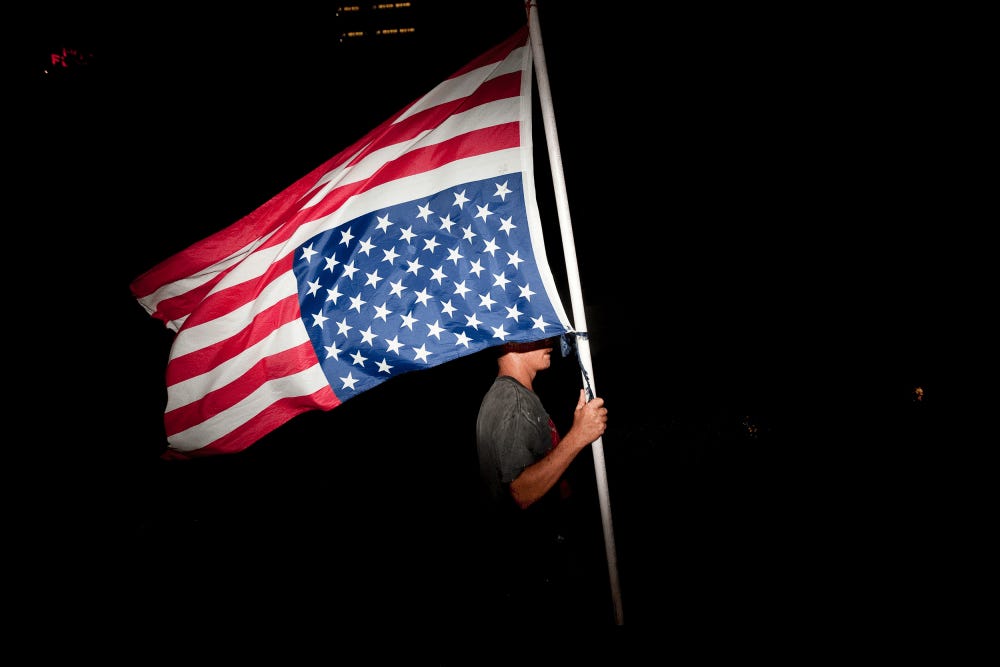
Scientists and doctors at Princeton’s Institute for Advanced Studies, working around the clock in pursuit of a cure for the mysterious new “SeloThoxxyn-P Five” virus, yesterday announced the stunning discovery that the virus is “real squiggly.” The news comes as a surprise to many medical observers who had previously known only that it was “circle-ish” and “red with purple spots.”
The virus kills humans over a three-day period by causing intense swelling of the neck, tremendous pressure buildup and eventual explosive decapitation, rocketing the severed head distances of up to 50 feet at speeds measured at 95 miles per hour.
Though the virus, which can only be transmitted when the human head is inserted in the colon of a black bear, is a top medical priority, yesterday’s squiggliness discovery marks the first breakthrough in the search for a cure.
“Now that we have a clearly defined picture of the virus’s squiggly nature, we are in a better position to assess and measure its other characteristics, such as its wiggliness and how blobby it is,” Dr. Andover Phlebehausen, Chief Medical Researcher in charge of the team, told reporters.
Phlebehausen noted that not only is the virus squiggly, but it is also 73% more squiggly than the microorganic squiggliness average, approaching levels of squiggliness previously thought to exist only in such extra-squiggly things as jellyfish and Gummi Worm™ candy products. The virus has thus been classified not just as squiggly, but what scientists call “real squiggly.”
“We know that it is squiggly,” the Institute’s report states. “But there is still much to be learned: Is it sticky? Smooshy? How yucko is it? Does it go ‘blurp’ and, if not, why? If you put salt on it, what happens? If you had two of the viruses in a jar, and you shook the jar, would they fight? We may never know the answers to these questions.”
Despite the $10 billion poured into ST-p5, or “Neck Bomb” as it is commonly known, since mid-December, authorities stress that more funding is needed if the search for a cure is to continue. “We’re very proud of our findings,” Phlebehausen said. “But we simply cannot do more without an additional, oh, say, $200 billion.”
Johns Hopkins’s Dr. Jergens Heuyk-Haak agreed. “Mi-croscopes and those little glass slidey things that go under them are expensive, finely tuned instruments that need to be thrown away and replaced after each use to ensure proper freshness. Then there’s the matter of the astronomical fees required to hire experts like myself.”
Sen. Harlan Stenstrom (R-PA), an outspoken critic of government funding for non-military pursuits, expressed his dissatisfaction with the report.
“I may not be a rocket scientist, but what I’m seeing in this picture is certainly not anything I’d call ‘squiggly.’ The blob is much more, I would say, ‘squishy’ than ‘squiggly,’ yet this 12,000- page report makes no reference to the squishiness of the virus.”
Stenstrom, whose wife’s head blew off last week during a Congressional golf outing, is widely rumored to have the virus himself, and may soon opt for suicide, according to an anonymous spokesperson.
“Day by day I am approaching the goal which I apprehend but cannot describe,” Ludwig van Beethoven (December 16, 1770–March 26, 1827) wrote to his boyhood friend, rallying his own resilience as he began losing his hearing. A year later, shortly after completing his Second Symphony, he sent his brothers a stunning letter about the joy of suffering overcome, in which he resolved:
Ah! how could I possibly quit the world before bringing forth all that I felt it was my vocation to produce?
That year, he began — though he did not yet know it, as we never do — the long gestation of what would become not only his greatest creative and spiritual triumph, not only a turning point in the history of music that revolutionized the symphony and planted the seed of the pop song, but an eternal masterwork of the supreme human art: making meaning out of chaos, beauty out of sorrow.
Across the epochs, “Ode to Joy” rises vast and eternal, transcending all of spacetime and at the same time compacting it into something so intimate, so immediate, that nothing seems to exist outside this singularity of all-pervading possibility. Inside its total drama, a total tranquility; inside its revolt, an oasis of refuge. The story of its making is as vitalizing as the masterpiece itself — or, rather, its story is the very reason for its vitality.
Beethoven by Josef Willibrord Mähler circa 1804-1805. (Available as a print.)
As a teenager, while auditing Kant’s lectures at the University of Bonn, Beethoven had fallen under the spell of transcendental idealism and the ideas of the Enlightenment — ideas permeating the poetry of Friedrich Schiller. A volume of it became the young Beethoven’s most cherished book and so began the dream of setting it to music. (There is singular magic in a timeless poem set to music.)
One particular poem especially entranced him: Written when Beethoven was fifteen and the electric spirit of revolution saturated Europe’s atmosphere, Schiller’s “Ode to Joy” was at heart an ode to freedom — a blazing manifesto for the Enlightenment ethos that if freedom, justice, and human happiness are placed at the center of life and made its primary devotion, politically and personally, then peace and kindness would envelop humankind as an inevitable consequence. A “kiss for the whole world,” Schiller had written, and the teenage Beethoven longed to be lips of the possible.
This Elysian dream ended not even a decade later as the Reign of Terror dropped the blade of the guillotine upon Marie Antoinette, then upon ten thousand other heads and the dreams they carried. Schiller died considering his “Ode to Joy” a failure — an idealist’s fantasy unmoored from reality, a work of art that might have been of service perhaps for him, perhaps for a handful of others, “but not for the world.”
The young Beethoven was among those few it touched, and this was enough, more than enough — he took Schiller’s bright beam of possibility and magnified it through the lens of his own genius to illuminate all of humanity for all of time. Epochs later, in the savage century of the World Wars and the Holocaust, Rebecca West — another uncommon visionary, who understood that “art is not a plaything, but a necessity” — would contemplate how those rare few help the rest of humanity endure, observing that “if during the next million generations there is but one human being born in every generation who will not cease to inquire into the nature of his fate, even while it strips and bludgeons him, some day we shall read the riddle of our universe.”
While Schiller’s poem was ripening in Beethoven’s imagination, the decade-long Napoleonic Wars stripped and bludgeoned Europe. When Napoleon’s armies invaded and occupied Vienna — where Beethoven had moved at twenty-one to study with his great musical hero, Haydn — most of the wealthy fled to the country. He took refuge with his brother, sister-in-law, and young nephew in the city. Thirty-nine and almost entirely deaf, Beethoven found himself “suffering misery in a most concentrated form” — misery that “affected both body and soul” so profoundly that he produced “very little coherent work.” From inside the vortex of uncertainty and suffering, he wrote:
The existence I had built up only a short time ago rests on shaky foundations. What a destructive, disorderly life I see and hear around me: nothing but drums, cannons, and human misery in every form.
That spring, Haydn’s death only deepened his despair at life. The next six years were an unremitting heartache. His love went unreturned. He grew estranged from one of his brothers, who married a woman Beethoven disliked. His other brother died. He entered an endless legal combat over guardianship of his young nephew. He spent a year bedridden with a mysterious illness he called “an inflammatory fever,” riddled with skull-splitting headaches. His hearing almost completely deteriorated. He grew repulsed by the trendy mysticism of new musical developments, which made no room for the raw human emotion that was to him both the truest material and truest product of art.
One of William Blake’s paintings for The Book of Job, 1806. (Available as a print.)
Somehow, he kept composing, the act itself becoming the fulcrum by which Beethoven lifted himself out of the black hole to perch on the event horizon of a new period of great creative fertility. While Blake — his twin in the tragic genius of outsiderdom — was painting the music of the heavens, Beethoven was grounding a possible heaven onto a disillusioned earth with music.
And then he ended up in jail.
One autumn day in 1822, the fifty-two-year-old composer put on his moth-eaten coat and set out for what he intended as a short morning walk in the city, his mind a tempest of ideas. Walking had always been his primary laboratory for creative problem-solving, so the morning stroll unspooled into a long half-conscious walk along the Danube. In a classic manifestation of the self-forgetting that marks the intense creative state now known as “flow,” Beethoven lost track of time, of distance, of the demands of his own body.
Beethoven by Julius Schmid
He walked and walked, hatless and absorbed, not realizing how famished and fatigued he was growing, until the afternoon found him wandering disheveled and disoriented in a river basin far into the countryside. There, he was arrested by local police for “behaving in a suspicious manner,” taken to jail as “a tramp” with no identity papers, and mocked for claiming that he was the great Beethoven — by then a national icon, with a corpus of celebrated concertos and sonatas to his name, and eight whole symphonies.
The tramp raged and raged, until eventually, close to midnight, the police dispatched a nervous officer to wake up a local musical director, who Beethoven demanded could identify him. Instant recognition. Righteous rage. Apologies. Immediate release. More rage. More apologies. Beethoven spent the night at his liberator’s house. In the morning, the town’s apologetic mayor collected him and drove him back to Vienna in the mayoral carriage.
What had so distracted Beethoven from space and time and self was that, twenty-seven years after falling under the spell of Schiller’s poem, he was at last ferocious with ideas for bringing it to life in music. He had been thinking about it incessantly for months. “Ode to Joy” would become the crowning achievement of his crowning achievement — the choral finale of his ninth and final symphony. It would distill the transcendent torment of his creative life: how to integrate rage and redemption, the solace of poetry with the drama of music; how to channel his own poetic fury as a force of beauty, of vitality, of meaning; how to turn the human darkness he had witnessed and suffered into something incandescent, something superhuman.
It had to be in a symphony, although he had not composed one in a decade and no composer — not Bach, not Mozart, not his hero Haydn — had ever woven lyric poetry or any words at all into a symphony before; the word “lyrics” was yet to enter the lexicon in its musical sense. It had to be the crowning choral finale of the symphony, although he had not written much choral music before. But the light of the idea beamed bright and irrefutable as spring. This was no time for old laurels, no time for catering to proven populisms — this was the time for creation. A decade earlier, Beethoven had written back to a young girl aspiring to become a great pianist, offering his advice on the central urgency of the creative calling:
The true artist is not proud… Though he may be admired by others, he is sad not to have reached that point to which his better genius only appears as a distant, guiding sun.
So often, in advising others, we are advising ourselves — the most innocent, vulnerable, and visionary parts of us, those parts from which the spontaneity and daring central to creative work spring. I wonder whether Beethoven remembered his own advice to Emilie as he faced the blank page that spring in 1822 when the first radiant contours of his “Ode to Joy” filled his mind and his footfall.
By summer, he was actively seeking out commissions to live on as he labored. He managed to procure a meager £50 from London’s Harmony Society, but that was enough subsistence and assurance to get to work. For more than a year, he labored unremittingly, stumbling over creative challenge after creative challenge — the price of making anything unexampled. His greatest puzzle was how to introduce the words into the final movement and how to choose the voices that would best carry them.
Meanwhile, word was spreading in Vienna that its most beloved composer was working on something wildly ambitious — his first symphony in a decade, and no ordinary symphony. But just as theater managers began vying for the premiere, Beethoven stunned everyone with the announcement that it was going to premiere in Berlin. He gave no reason. Viennese musicians took it as an affront — did he think they were too traditional to appreciate something so bold? He had been born in Germany, yes, but he had become himself in Austria. Surely, he owed the seedbed of his creative blossoming some measure of faith.
At the harsh peak of winter, Karoline Unger — the nineteen-year-old contralto Beethoven had already chosen to voice the deepest feeling-tones of his “Ode to Joy” — exhorted him to premiere his masterwork in Vienna. Writing in his Conversation Books — the notebooks through which the deaf composer communicated with the hearing world — she told him he had “too little self-confidence” in the Viennese public’s reception of his masterwork, urged him to go forward with the concert, then exclaimed: “O Obstinacy!”
Karolin Unger
Within a month, thirty of his most esteemed Austrian admirers — musicians and poets, composers and chamberlains — had co-written and signed an impassioned open letter to Beethoven, laced with patriotism and flattery, telling him that while his “name and creations belong to all contemporaneous humanity and every country which opens a susceptible bosom to art,” it is his artistic duty to complete the Austrian triad of Mozart and Haydn; imploring him not to entrust “the appreciation for the pure and eternally beautiful” to unworthy “foreign power” and to establish instead “a new sovereignty of the True and the Beautiful” in Vienna. The letter was hand-delivered to him by a court secretary who tutored the royal family.
Not even the most stubborn and single-minded artist is impervious to the sway of adulation. “It’s very beautiful, it makes me very happy!” The Viennese concert was on.
But Beethoven bent under the weight of his own expectations in a crippling combination of micro-managing and indecision. Eager to control every littlest detail to perfection, he committed to one theater, then changed his mind and committed to another, then it all became too much to bear — he cancelled the concert altogether.
After a monthlong tailspin, the finitude of time — concert season was almost over — pinned him to the still point of decision. He uncancelled the concert and, once again confounding everyone, signed with one of the underbidding imperial court theaters he had at first rejected.
The date was set for early May. He hand-picked the four soloists who would anchor the choir and assembled an orchestra dwarfing all convention: two dozen violins, two dozen wind instruments, a dozen cellos and basses, ten violas, and all that percussion.
It was to be not only a performance, not only a premiere, but something more — the emblem of a credo, musical and humanistic. The reception of the symphony would make or break the reception of the ideals behind it. Against this backdrop, it is slightly less shocking — but only slightly — that, in an astonishing final bid for total control of his creation, Beethoven demanded that he conduct the symphony himself.
Everyone knew he was deaf. Now they feared he was demented.
Beethoven by Joseph Karl Stieler
The theater, having won the coveted premiere, reluctantly conceded, fearing Beethoven might change his mind again if his demand went unmet, but persuaded him to have the original conductor onstage with him, with every assurance that he would only be there for backup. The conductor, meanwhile, instructed the choir and orchestra to follow only his motions and “pay no attention whatever to Beethoven’s beating of the time.” The best assurance even one of Beethoven’s closest friends — who later became his biographer — could muster was that the theater would be too dim for anyone to notice that Beethoven was conducting in his old green frock and not in the fashionable black coat a conductor was supposed to wear.
After two catastrophic rehearsals — the only two the enormous ensemble could manage in the brief time before the performance — the soloists railed that their parts were simply impossible to sing. Karoline Unger called him a “tyrant over all the vocal organs.” One of the two male soloists quit altogether and had to be replaced by a member of the choir who had memorized the part.
Somehow, the show went on.
On the early evening of May 7, 1824, the Viennese crowded into the concert hall — but they were not the usual patrons. Looking up to the royal box, Beethoven was crushed to see it empty. He had journeyed to the palace to personally invite the Emperor and Empress but, like most of the aristocracy, they had vanished into their country estate as soon as spring broke the harsh Austrian winter. He was going to be playing for the people. But it was the people, after all, that Schiller had yearned to vitalize with his poem.
Beethoven walked onto the grand stage, faced the orchestra, and raised his arms. Despite the natural imperfections of a performance built on such tensions, something shifted as soon as the music — exalted, sublime, total — rose above the individual lives and their individual strife, subsuming every body and every soul in a single harmonious transcendence.
After the final chord of “Ode to Joy” resounded, the gasping silence broke into a scream of applause. People leapt to their feet, waving their handkerchiefs and chanting his name. Beethoven, still facing the orchestra and still waving his arms to the delayed internal time of music only he could hear, noticed none of it, until Karoline Unger stood up, took his arm, and gently turned him around.
With the birth of photography still fifteen years of trial and triumph away, it is only in the mind’s eye that one can picture the cascade of confusion, disbelief, and elation that must have washed over Beethoven’s face in that sublime moment when his guiding sun seemed suddenly so proximate, almost blinding with triumph.
As soon as he faced the audience, the entire human mass erupted with not one, not two, not three, but four volcanic bursts of applause, until the Police Commissioner managed to yell “Silence!” over the fifth. These were still revolutionary times, after all, and art that roused so fierce a response in the human soul — even if that response was exultant joy — was dangerous art. Here, in the unassailable message of “Ode to Joy,” was a clarion call to humanity to discard all the false gods that had fueled a century of unremitting wars and millennia of inequality — the divisions of nation and rank, the oppressions of dogma and tradition — and band together in universal sympathy and solidarity.
Woodcut by Vanessa Bell from “A String Quartet” by Virginia Woolf, 1921. (Available as a print.)
The sound of Beethoven’s call resounded long after its creator was gone. Whitman celebrated it as the profoundest expression of nature and human nature. Helen Keller “heard” it with her hand pressed against the radio speaker and suddenly understood the meaning of music. Chilean protesters sang it as they took down the Pinochet dictatorship. Japanese musicians performed it after the Tōhoku earthquake and tsunami. Chinese students blasted it in Tiananmen Square. Leonard Bernstein, patron saint of music as an instrument of humanism, conducted a group of musicians who had lived on both sides of the Berlin Wall in a Christmas Day concert after its fall. Ukrainian composer Victoria Poleva reimagined it for an international concert commemorating the fiftieth anniversary. A decade later, the National Symphony Orchestra of Ukraine performed her reimagining not long before a twenty-first century tyrant with a Napoleonic complex and a soul deaf to the music of life bludgeoned the small country with his lust for power.
But this, I suspect, was Beethoven’s stubborn, sacred point — the reason he never gave up on Schiller’s dream, even as he lived through nightmares: this unassailable insistence that although the Napoleons and Putins of the world will rise to power again and again over the centuries, they will also fall, because there is something in us more powerful as long as we continue placing freedom, justice, and universal happiness at the center of our commitment to life, even as we live through nightmares. Two centuries after Beethoven, Zadie Smith affirmed this elemental reality in her own life-honed conviction that “progress is never permanent, will always be threatened, must be redoubled, restated and reimagined if it is to survive.”
In the winter of my thirteenth year, two centuries after Beethoven’s day and a few fragile years after the fall of Bulgaria’s communist dictatorship, I stood in the holiday-bedazzled National Symphony Hall alongside a dozen classmates from the Sofia Mathematics Gymnasium, our choir about to perform Beethoven’s “Ode to Joy,” recently adopted as the anthem of Europe by the European Union, of which the newly liberated Bulgaria longed to be a part.
We sang the lyrics in Bulgarian, but “joy” has no direct translation. “Felicity” might come the closest, or “mirth” — those wing-clipped cousins of joy, bearing the same bright feeling-tone, but lacking its elation, its all-pervading exhale — a diminishment reflecting the spirit of a people just emerging from five centuries of Ottoman occupation closely followed by a half-century Communist dictatorship.
And yet we stood there in our best clothes, in the spring of life, singing together, our teenage minds abloom with quadratic equations and a lust for life, our teenage bodies reverberating with the redemptive dream of a visionary who had died epochs before any of our lives was but a glimmer in a great-great-grandparent’s eye, our teenage spirits longing to kiss the whole world with possibility.
Today, “Ode to Joy” — a recording by the Berlin Philharmonic from the year I was born — streams into my wireless headphones as I cross the Brooklyn Bridge on my bicycle, riding into a life undreamt in that teenage girl’s wildest dreams, into a world unimaginable to Beethoven, a world where suffering remains our constant companion but life is infinitely more possible for infinitely more people, and more kinds of people, than even the farthest seer of 1822 could have envisioned.
I ride into the spring night, singing. This, in the end, might be the truest translation of “joy” — this ecstatic fusion of presence and possibility.
Marianne Williamson Jul 10, 2025″ As our case is new, so we must think anew and act anew.” — Abraham Lincoln’s 1862 Annual Message to Congress. Could not be truer today… I want to talk to you about what’s happening these days, because a lot of people are feeling helpless, frustrated and angry. Within the material world of politics as we know it, we have some undemocratic forces, authoritarian forces, leaning at this point with their use of military forces in Los Angeles and elsewhere, trying to establish a dictatorship in the United States. They’re succeeding at the moment. What do we do? That’s the conversation I want to have with you. We want to do more than stir the pot. We need to move the needle, and that’s what I want to talk to you about. Now, old traditional political thinking will not get us out of this mess. Old traditional political thinking is what got us into this mess. There is a saying in Alcoholics Anonymous that every problem comes bearing its own solution. American values of patriots is what will counterbalance the agendas of Donald Trump, Elon Musk, Pam, Bondi, JD Vance, and all the rest. At this point, we have to find a place within ourselves that is different and a new kind of thinking. But there’s something bigger going on here, and that is really the evolution of the human race.
How this content was made
Auto-dubbed
Audio tracks for some languages were automatically generated. Learn more
Understanding the Energy of the Capricorn Full Moon
The Full Moon in Capricorn on July 10, 2025, offers a grounded, serious, and highly motivating energy. It illuminates themes of long-term goals, emotional maturity, and practical achievement, making it an ideal time for reflection and recommitment to your life’s purpose.
Themes of the Capricorn Full Moon
Capricorn is ruled by Saturn, the planet of discipline, structure, and responsibility. This Full Moon emphasizes: • Career direction and public image • Accountability and personal responsibility • Setting and maintaining healthy boundaries • Long-term goals and legacy building • Emotional resilience and self-control Since Full Moons mark a peak or culmination, this one can bring closure, revelations, or the need to release outdated structures that no longer support your growth.
Reflect and Release
Use this moon to evaluate what’s been building since the Capricorn New Moon (approximately six months ago). Ask yourself: • What have I accomplished in that time? • What still feels aligned with my long-term path? • What burdens or responsibilities do I need to release? Writing down your answers and burning the list is a symbolic way to clear emotional and energetic space.
Set Intentions Through Structure
Although Full Moons are typically about release, the Capricorn influence makes this a powerful moment to refocus your goals with intention and discipline. Consider: • Revisiting your professional ambitions • Breaking big goals into manageable steps • Reinforcing healthy boundaries that support your growth Journaling prompts to explore include: • What legacy do I want to build? • How can I show up consistently for my goals?
Reconnect with Earth Energy
As an Earth sign, Capricorn reminds us to stay grounded and connected to the physical world. To align with this energy: • Spend time in nature (especially high places or mountainous areas) • Engage in grounding activities like walking barefoot, gardening, or cooking • Take slow, methodical steps rather than chasing quick fixes
Strengthen Boundaries
Capricorn governs emotional boundaries and structural integrity. This is an ideal time to: • Say no to overextension • Clarify limits in relationships or work • Rebuild routines or containers that support your well-being Ask yourself: • Where do I need to reinforce my boundaries to protect my peace and purpose?
Celebrate Your Progress
This Full Moon also invites you to acknowledge achievements, especially those that took time, effort, and personal growth. Try this: • Write down what you’ve accomplished this year • Recognize emotional or internal progress—not just external success • Celebrate your discipline, not just the outcome
Capricorn Full Moon Affirmation
“I honor the wisdom of steady progress. I release what no longer supports my purpose and embrace the structure I need to thrive.”
How Each Zodiac Sign Can Use the Energy of the Capricorn Full Moon
Fire Signs
Aries – Focus: Career goals and leadership • Reassess your professional trajectory • Let go of impulsive patterns • Commit to a structured path forward
Leo – Focus: Health, habits, and self-discipline • Eliminate draining habits • Create a sustainable wellness routine • Prioritize consistency over drama
Sagittarius – Focus: Finances and self-worth • Rework your money mindset • Let go of financial recklessness • Ground your value in long-term goals
Earth Signs
Taurus – Focus: Spirituality and belief systems • Release outdated views • Ground your practice in reality • Take tangible steps toward learning or travel
Virgo – Focus: Creativity and joy • Reclaim joy through structure • Let go of creative perfectionism • Commit to your passions with focus
Capricorn – Focus: Identity and purpose • Redefine who you’re becoming • Let go of self-judgment or limitation • Realign with your long-term personal mission
Air Signs
Gemini – Focus: Emotional depth and shared energy • Heal fear around vulnerability • Let go of power struggles • Create shared goals in partnerships
Libra – Focus: Home, family, and foundation • Strengthen your emotional base • Release unhealthy family dynamics • Redesign your home to reflect peace
Aquarius – Focus: Rest and spiritual renewal • Detach from overwork • Protect your mental health • Embrace meditation or quiet reflection
Water Signs
Cancer – Focus: Relationships and mutual growth • Rebalance emotional labor • Set firmer relationship boundaries • Release past dynamics that no longer serve
Scorpio – Focus: Mindset and communication • Let go of obsessive thinking • Focus on practical learning • Communicate with grounded intention
Pisces – Focus: Community and collective vision • Reevaluate your social circle • Let go of unrealistic group expectations • Take real steps toward manifesting your dream
ARIES (March 21-April 19): In the days before lighthouses, some coastal communities used “fire beacons”—elevated structures where people tended open flames to guide sailors. In the coming weeks, Aries, I invite you to be like both the keeper and the flame. People will be drawn to your brightness, warmth and persistence as they navigate through their haze and fog. And surprise! You may find your own way more clearly as you tend to others’ wayfinding. Don’t underestimate the value of your steady, luminous signal. For some travelers, your presence could be the difference between drifting and docking. So burn with purpose, please. Keep your gleam strong and visible.
TAURUS (April 20-May 20): The ancestors of my American friend Arisa lived in Ukraine, Indonesia, the Choctaw nation and the Great Lakes region. Her new husband Anselme is of Japanese, Italian and French descent. Their wedding was a celebration of multi-cultural influences. Guests delivered toasts in five languages. Their marriage vows borrowed texts from three religious traditions. The music included a gamelan ensemble, a band that played Ukrainian folk music, and a DJ spinning Choctaw and Navajo prayers set to Indian ragas. I bring this to your attention in the hope you will seek comparable cross-fertilization in the coming weeks. It’s an excellent time to weave richly diverse textures into your life.
GEMINI (May 21-June 20): I predict a future when women will hold half of the leadership roles, when their income and time devoted to childcare will match men’s, when women’s orgasms are as common as men’s, and when most guys know that misogyny is perilous to their health. Until the bloom of that wonderful era, I invite Geminis of all genders to invoke your tender ingenuity as you strengthen female opportunities and power. In my view, this work is always crucial to your maximum spiritual and psychological health—but even more so than usual in the coming weeks. Boost the feminine in every way you can imagine.
CANCER (June 21-July 22): In Yoruba cosmology, ase is the sacred life force that animates the universe. It’s divine energy that can be harnessed by humans to make things happen, to speak and act with ardent intention so that words and deeds shape reality. I am pleased to report that you Cancerians are extra aligned with ase these days. Your words are not casual. Your actions are not mild or minor. You have the power to speak what you mean so robustly that it has an enhanced possibility to come into being. What you command with love and clarity will carry enduring potency.
LEO (July 23-Aug. 22): In medieval bestiaries, unicorns were said to be fierce, wild creatures. They were very real but also hidden. Only people with pure hearts could see or commune with them. I suspect you now have the chance to glide into a potent “pure heart” phase, Leo. My fervent hope is that you will take this opportunity to cleanse yourself of irrelevancies and rededicate yourself to your deepest yearnings and most authentic self-expressions. If you do, you just may encounter the equivalent of a unicorn.
VIRGO (Aug. 23-Sept. 22): Some Buddhist monks create mandalas on floors from colored sand. They work meticulously for days or weeks to build intricate, symmetrical masterpieces. Once their beautiful work is done, however, it typically doesn’t last long. The creators sweep it away either immediately or soon. The sand may be disposed of, perhaps poured into a river or stream. What’s the purpose of this strange practice? Most importantly, it displays a reverence for the impermanence of all things—an appreciation for beauty but not an attachment to it. I recommend you consider taking a cue from the sand mandalas in the coming weeks. Is there anything you love that you should let go of? A creation you can allow to transform into a new shape? An act of sacred relinquishing?
LIBRA (Sept. 23-Oct. 22): Glassblowers shape molten sand with breath and fire, knowing the material can only be formed while it’s hot and glowing. If they wait too long, the stuff stiffens, turns brittle, and resists change. But if they push too soon, it collapses into a misshapen blob. In this spirit, Libra, I urge you to recognize which parts of your life are now just the right temperature to be reshaped. Your timing must be impeccable. Where and when will you direct the flame of your willpower? Don’t wait until the opportunity cools. Art and magic will happen with just the right amount of heat applied at just the right moment.
SCORPIO (Oct. 23-Nov. 21): “I have often been racked by obsessive urges that plague me until I act them out.” So says my Scorpio friend Fatima, a conceptual artist. “Fortunately,” she continues, “I have finally retrained myself to focus on creative obsessions that fuel my art rather than on anxious, trivial obsessions that disorder my life. I’d be an offensive maniac if I couldn’t use my work as an outlet for my vehement fantasy life.” I recommend Fatima’s strategy to Scorpios most of the time, but especially so in the coming days. Your imagination is even more cornucopian than usual. To harness its beautiful but unruly power, you must channel it into noble goals.
SAGITTARIUS (Nov. 22-Dec. 21): The Igbo people of Nigeria have a term: ogwugwu na-adi n’ulo. It means “the medicine is in the house.” It’s the belief that healing doesn’t necessarily come from afar. It may already be here, hidden among the familiar, waiting to be acknowledged or discovered. Dear Sagittarius, your natural instinct is to look outward and afar for answers and help. But in the coming weeks, you should look close to home. What unnoticed or underestimated thing might be a cure or inspiration you’ve been overlooking? How can you find new uses for what you already have?
CAPRICORN (Dec. 22-Jan. 19): I invite you to celebrate the holiday known as Be Your Own Best Helper. How should you observe this potentially pivotal transformation in your relationship with yourself? Divest yourself of yearnings to have someone clean up after you and service your baseline necessities. Renounce any wishes you harbor for some special person to telepathically guess and attend to your every need. Vow that from now on, you will be an expert at taking excellent care of yourself. Do you dare to imagine what it might feel like to be your own best helper?
AQUARIUS (Jan. 20-Feb. 18): In the ancient practice of astronomy, the stars were considered “incorruptible.” Unlike the planets, their movements were unchanging, their lights stationary, their destinies steady and stable. We human beings are the opposite of all those descriptors, of course. There’s no use in hoping otherwise, because constancy just isn’t an option for us. The good news, Aquarius, is that you are now poised to thrive on these truths. The inevitability of change can and should be a treasured gift for you. You’re being offered chances to revise plans that do indeed need to be revised. You are being invited to let go of roles that don’t serve you. But what initially feels like a loss or sacrifice may actually be permission. Evolution is a tremendous privilege!
PISCES (Feb. 19-March 20): The axolotl is an amphibian that never outgrows its larval form. Unlike most creatures, it retains its youthful traits into adulthood. Amazingly, it can regenerate its limbs, its spinal cord and parts of its brain. Let’s make the axolotl your inspirational animal, Pisces. What part of your “youth” is worth keeping—not as immaturity, but as righteous design? Where are you being asked not to evolve past a stage, but to deepen within it? And what might be regenerated in you that seemed to have been lost? Your magic will come from being like an axolotl. Be strange. Be playful. Be ageless and original and irrepressible.
Nike’s “Just Do It” sounds like an Aries – or at least a fire sign slogan, right?
Maybe – if we focus on the word ‘just’, with its impulse-driven, zero-hesitation kind of vibe.
But if we focus on ‘do it’ – well, ‘reality’ says it all. It’s the Earth signs that actually get things done.
Yes, we might look to a fire sign for inspiration… for the ignition, the spark, the passion.
…but when we talk results, actual things happening – like concretely – we talk Taurus. We talk Virgo. And we especially talk Capricorn – the cardinal (doer) Earth sign of the zodiac.
On July 10th, 2025, we have the Capricorn Full Moon of the year – our opportunity to take something that deeply matters to us and actually move it forward.
This is a results-oriented, energized Full Moon at 18° Capricorn, trine Mars in Virgo.
Manifestation (Full Moon) + achievement (Capricorn) + action (Mars) + productivity (Virgo) – here is the astro recipe to start building something real, brick by brick.
Full Moon In Capricorn – The GOAT
Capricorn is the GOAT of the zodiac – not just because of the mountain goat symbolism, but also because it consistently produces GOATs – the Greatest Of All Time:
Muhammad Ali, the GOAT of boxing, is a Capricorn Sun
Tiger Woods, the GOAT of golfing, is a Capricorn Sun
Usain Bolt, the GOAT of sprinting, has Capricorn Mars
Michael Jordan, the GOAT of basketball, has Capricorn Venus
Serena Williams, the GOAT of tennis, has a Capricorn MC
There’s something about the determination, the relentless climb, the agility to navigate complex systems and frameworks while never losing sight of the goal that makes Capricorn so good at mastering ‘reality’.’
Capricorn gets things done, and it’s better at it than anyone else.
But let’s come back to “Just do it” for a bit – because even Michael Jordan, with all his perseverance and GOAT-worthy qualities, was still fueled by something internal: a desire to birth, to win, to express, to get into ‘the zone’.
…which takes us to the ruler of this Full Moon in Capricorn, Saturn – now closer than it has ever been to a conjunction with Neptune, at 1° Aries.
Neptune and Saturn in Aries have been stirring beneath the surface to awaken a personal dream. Something so real, so personal, and so meaningful – that it HAS to be birthed.
With the outer planets having stayed in collective signs for decades – and with Neptune, the planet of dreams, not having touched ground zero in Aries for more than 150 years – we’ve forgotten what it’s like to have a dream of our own. To be fueled by something that speaks directly to our soul.
Not ‘as inspired’ by the collective imagination. Not ‘as dreamed’ through other people’s desires. Not ‘as seen’ on Instagram.
Yes, the exact Saturn-Neptune conjunction in Aries won’t happen until February 2026. But Saturn and Neptune are now closer than they have ever been. The longing, the instinct, the pull toward something deeply authentic is now impossible to ignore.
The vision is palpable. It’s no longer just a dream. This time we CAN make it real.
… and in the process of turning that dream into reality, we need some good Earth energy.
Full Moon In Capricorn – Just Do It
That’s what the Full Moon in Capricorn is here for – to help us get serious about honoring that dream.
Perhaps you don’t even know what your dream is – perhaps you’ve forgotten it. But we all have dreams because we are all born from the same source of infinite potential.
What made you feel alive as a child? What brought you joy and a sense of aliveness?
That childhood dream – or the spark behind it – might have evolved. It may no longer be the exact same storyline. Still, that seed, that energy of aliveness, carries the DNA of your creative purpose today.
What’s the next concrete action you can take toward your goal? How can you harness Capricorn’s focus to plan smart, move with purpose, and start building? What adjustments will help you create real momentum?
The Full Moon in Capricorn says: don’t just dream it. Do it.
Helen Adams Keller (June 27, 1880 – June 1, 1968) was an American author, disability rights advocate, political activist and lecturer. Born in West Tuscumbia, Alabama, she lost her sight and her hearing after a bout of illness when she was 19 months old. She then communicated primarily using home signs until the age of seven, when she met her first teacher and life-long companion Anne Sullivan. Sullivan taught Keller language, including reading and writing. After an education at both specialist and mainstream schools, Keller attended Radcliffe College of Harvard University and became the first deafblind person in the United States to earn a Bachelor of Arts degree.[1]
Keller’s autobiography, The Story of My Life (1903), publicized her education and life with Sullivan. It was adapted as a play by William Gibson, later adapted as a film under the same title, The Miracle Worker. Her birthplace has been designated and preserved as a National Historic Landmark. Since 1954, it has been operated as a house museum,[4] and sponsors an annual “Helen Keller Day“.[5] (Wikipedia.org)
We are the generation that broke the Earth, and now we’re out of time to pretend otherwise. I know you don’t want to hear this. Nobody does.
Just like nobody wanted to hear that 9-year-old girl’s screams echoing through the Texas Hill Country last week as floodwaters ripped through her summer camp. She was washed away before rescuers could reach her. Her story is heartbreaking, and emblematic.
Trump cynically dismissed it as “a hundred year flood” and added, “Nobody saw it; nobody expected it.”
He lied.
It wasn’t just a freak accident and Republicans know it, even though they won’t acknowledge it. It was the new climate reality. The one we’ve been warned about for decades. It’s here, now. And if we don’t act now, it’s going to get irreversibly worse.
Because here’s the part nobody in power wants to admit out loud: it’s too late to prevent more of the “minor” disasters like we just witnessed. (For the “major disasters,” see the 11-minute YouTube video that Leonardo DiCaprio and I wrote and narrated )
“I’ve never said this before to the media, but it’s too late,” said David Suzuki, scientist, broadcaster, and lifelong environmental champion, in a July 2nd interview. “We’ve passed seven of the nine planetary boundaries… If we pass one, we should be shitting our pants. We’ve passed seven!”
Let that sink in.
Suzuki is talking about the nine thresholds scientists have identified: the very limits of a livable planet. Once breached, the systems that support life on Earth begin to collapse. And now we’ve broken through seven of them.
Johan Rockström, the director of the Potsdam Institute, and his colleagues have mapped out the nine limits. They are:
— Climate change: The most obvious. We’ve gone well beyond safe CO₂ levels. — Biosphere integrity: Species are vanishing at a mass-extinction pace. — Biogeochemical flows: Runoff of nitrogen and phosphorus from agriculture is killing ecosystems. — Land-system change: Forests and wetlands are being razed for short-term profits. — Freshwater use: Droughts are getting deadlier; aquifers are being depleted. — Ocean acidification: CO₂ absorption is turning oceans into acid baths, killing coral reefs and other marine life. — Novel entities: Plastics, forever chemicals, synthetic toxins that are mostly unregulated and now everywhere.
Only two boundaries remain “unbroken”: the stratospheric ozone layer (partially healed through heroic efforts in the 1990s when politicians in both parties listened to scientists), and atmospheric aerosols (ditto), at least for now.
We are way past “concern” or “urgent.” We’re now in what Rockström calls the “danger zone.”
And what is the Republican Party’s official response? Essentially, “To hell with future generations. Let our grandchildren die, so fossil fuel billionaires can buy another yacht.”
The Trump administration — back in office through sheer disinformation, gerrymandering, billionaire money, and massive voter suppression — has made their strategy painfully clear: if the ship is going down, they’re going to loot the cabins before it sinks.
In just the first six months of 2025, the new Republican Congress and Trump White House have already:
— Slashed clean energy subsidies in what they call the “Big Beautiful Bill,” redirecting billions to oil and gas exploration. — Revoked tax credits for EVs, solar panels, heat pumps, and green home upgrades. — Lifted regulations on methane emissions and offshore drilling. — Cut funding to NOAA and weather satellites, even rolling back the “weather watchers” who otherwise would have warned that Texas camp about the deadly July 4th flood. — Gutted FEMA’s climate preparedness, leaving communities vulnerable and unassisted.
All as a gift to the fossil fuel industry and to pay for tax breaks for billionaires.
They’re not even pretending anymore. This is extraction capitalism on steroids: “Burn it all, bank the profits, and let the next generation deal with the ashes.”
The new survival strategy being pushed by the GOP is, essentially, “Hunker down, average people, while the billionaires who own us secure their massive estates against the rabble.”
This is where Suzuki’s voice grows cold and clear: we’re not going to be rescued by governments as long as they’re controlled by greedy, psychopathic, on-the-take “conservatives.” He urges communities to prepare like wartime neighborhoods:
“Start assessing the routes of escape… Who has wheelchairs? Who has batteries or generators? Where is the water? You’re going to have to inventory your community…”
This isn’t prepper paranoia. This is adaptation in the face of ecological collapse: a call to get real, to get local, and to get ready.
Because, according to the world’s top scientists, we’re no longer fighting for victory: we’re simply fighting for survival.
The Iroquois Confederacy taught that every decision should be weighed for its impact on the next seven generations. Not just the next quarter. Not just the next election.
And now we know why.
Because once the line is crossed — once the planet’s equilibrium tips — you can’t buy your way back. You can’t deregulate the atmosphere. You can’t frack your way out of collapse.
And the people who knew this — the indigenous leaders, the climate scientists, the youth activists — were mocked by cynical, greedy Republicans and billionaire-owned media like Fox “News.” Ignored. Laughed off by fossil fuel-funded media and bought-off Republicans.
As the brilliant historian Heather Cox Richardson noted yesterday:
“Project 2025 called for breaking up and downsizing the National Oceanic and Atmospheric Administration, claiming its six main offices—including the National Weather Service— ‘form a colossal operation that has become one of the main drivers of the climate change alarm industry and, as such, is harmful to future U.S. prosperity,’ by which it meant the fossil fuel industry.”
And now we’re out of time, at least for our ability to prevent more disasters like Kentucky and Texas, when the Trump-gutted National Weather Service failed to warn against disasters that are clearly caused by a warmer atmosphere holding massively more water than during previous generations.
You’re still reading. That means you still care.
So, please, don’t look away.
Don’t let your neighbors, your family, your community pretend this isn’t happening. Don’t let them buy the GOP’s and rightwing media’s lie that we can still drill, build, burn, and somehow bounce back.
We won’t.
But we can still build lifeboats. We can build resilient communities and uncouple ourselves from fossil fuels and the billionaires who sell them to us. We can build justice and empathy and courage to work with what remains. We can wake up enough people to reclaim our democracy and, with it, our efforts to stop this disaster from getting far, far worse.
This fight isn’t over. It’s just changed.
Hope, now, looks like readiness and unrelenting political action.
And that starts with sharing the truth as far and wide as possible.
Tag, you’re it.
If this piece moved you, outraged you, or opened your eyes, please help me keep sounding the alarm while we still have time to act. To receive new posts and support my daily work to rescue our planet and our children and grandchildren, please consider becoming a free or paid subscriber.Subscribe
A Declaration of Independence from Tyranny: Effective July 4, 2025
When in the course of human events it becomes necessary for a people to break from a leader who governs with cruelty, contempt, and corruption, a decent respect to the opinions of humankind requires that they should declare the causes which impel them to the separation.
We hold these truths to be self-evident: that all people are created equal, endowed with inherent dignity and unalienable rights—among these are life, liberty, equality, and the pursuit of justice.
To secure these rights, governments derive their power from the consent of the governed. When a leader becomes destructive of these ends, it is the right and duty of the people to refuse allegiance and to stand united in the defense of their freedoms.
The current holder of high office has shown himself to be unfit to lead a free and just society.
* He disrespects women, mocking survivors of violence and stripping away their rights.
* He fuels racism and white supremacy, scapegoating communities of color and denying their equality.
* He assaults free speech, attacking the press, punishing dissent, and spreading disinformation.
* He exploits public office for private gain, enriching himself and the billionaire class while abandoning the poor and working people.
* He undermines justice, ignores the rule of law, and places himself above accountability.
* He disregards science, endangering lives in times of crisis and sacrificing the planet for profit.
* He fans division and incites violence to maintain power, wielding fear as a weapon against the people.
Time and again, we have protested peacefully, spoken truthfully, and appealed to our shared humanity. We have been met with indifference, hostility, and violence. A leader who governs through hatred and greed is unfit to govern at all.
Therefore, we, the people of conscience and conviction, do solemnly declare our independence from this tyrant and all he represents.
We withdraw our consent.
We refuse to be complicit in cruelty.
We reject the abuse of power for personal gain.
We stand for dignity, truth, equality, and justice for all people.
With firm reliance on each other and unwavering hope in our collective strength,
We pledge to resist oppression in all its forms,
To uphold the rights of the vulnerable,
And to build a future grounded in compassion, courage, and shared humanity.
Let this declaration be both a breaking and a beginning.
In a moment that stunned the world in 2019, the famed Notre-Dame in Paris went up in flames, threatening the future of the centuries-old Gothic treasure. Philippe Villeneuve, the chief architect of the cathedral’s restoration, recounts the collective effort to bring the building back to life while honoring its history. Listen for a story of craftsmanship, devotion and innovation — and learn how more than 2,000 hands worked to return this landmark to the world.



 Ah! how could I possibly quit the world before bringing forth all that I felt it was my vocation to produce?