“Heavens to Betsy!” is an old-fashioned American expression used as an exclamation of surprise, shock, or even mild annoyance. While the exact origin of the phrase is unknown, it’s believed to be a euphemism, possibly replacing “Hell’s bells” or a similar expression. There’s no definitive evidence to connect it to Betsy Ross, the maker of the first American flag, or any specific individual named Betsy. The phrase is thought to have originated in the late 19th or early 20th century.
Here’s a more detailed breakdown:
Euphemism:The phrase is likely a way to avoid using more direct, potentially offensive, expressions of surprise or shock.
Unknown Origin:Despite speculation, there’s no concrete evidence to link the phrase to a particular person or event, says a 1955 book cited by etymologists on StackExchange.
Possible Connections:Some have suggested a link to Betsy Ross or to an old rifle (also called Betsy), but these theories remain unproven, says World Wide Words.
Historical Usage:The phrase gained popularity in the late 19th and early 20th centuries, particularly in the United States.
Modern Usage:While considered old-fashioned, it still appears occasionally in literature, music, and popular culture.
If it feels like the world is being deluged with bad news lately, here’s an actual bright spot: the Sun has become the go-to source of energy for tens of millions across the globe.
A recent story by The New Yorker dove into the astonishing growth of solar energy over the past few years. Among other extensive data, the magazine notes that renewables made up 96 percent of demand for new energy throughout the globe in 2024; In the United States, 93 percent of new energy capacity came from solar and wind.
But while renewables writ large are having their day, the speed at which solar energy in particular is growing blows everything else out of the water.
For example, it’s now estimated that the world is now installing one gigawatt worth of solar energy infrastructure every 15 hours — or about the output of a new coal plant.
For some historical context, the New Yorker notes that it took 68 years since the invention of the first photovoltaic solar cell in 1954 to construct a single terawatt’s worth of solar power. It took just two years to hit the second terawatt in 2024, and the third is expected within mere months.
In theory, those gains in production, coupled with ever more-efficient recycling methods, will continue to pay off for years down the line.
As the New Yorker noted, Oxford University researcher Hannah Ritchie recently calculated that the “silver used in one solar panel solar panel built in 2010 would be enough for around five panels today.”
Though countries like the US, Germany and Japan are near the top of the leaderboard for solar capacity, the undisputed leader is China, which in 2023 installed more solar infrastructure than the next nine countries combined.
For its part, China is following through on its 10-year plan to triple its solar capacity by 2030 — a target it could hit as early as 2026, if it keeps up the current pace. While that has clear benefits for the environment and health of Chinese citizens, it also serves a geopolitical purpose, namely ending its dependence on American energy sources like oil and coal.
The US under Donald Trump, meanwhile, is drastically reversing course on a renewable future. His recent Big Beautiful Bill includes an end to tax incentives for new buyers of solar panels and batteries, and grants massive subsidies to the fossil and biofuel industries.
To justify the move, Trump blamed solar and wind infrastructure for skyrocketing energy costs, despite overwhelming evidence that solar energy makes the broader energy grid more stable, and energy much cheaper. That being the case, it’s probably no shock to discover the president has more than a few ulterior motives.
As US regulators restrict Covid mRNA vaccines and as independent vaccine advisers re-examine the shots, scientists fear that an unlikely target could be next: cancer research.
Messenger RNA, or mRNA, vaccines have shown promise in treating and preventing cancers that have often been difficult to address, such as pancreatic cancer, brain tumors and others.
But groundbreaking research could stall as federal and state officials target mRNA shots, including ending federal funding for bird flu mRNA vaccines, restricting who may receive existing mRNA vaccines and, in some places, proposing laws against the vaccines.
The Trump administration has also implemented unprecedented cuts to cancer research, among other research cuts and widespread layoffs at the National Institutes of Health (NIH).
At least 16 grants involving the word “mRNA” have been terminated or frozen, according to the crowdsourced project Grant Watch, and scientists have been told to remove mentions of mRNA vaccines from their research applications, KFF Health News reported in March.
Researchers fear that therapeutic cancer vaccines will get “swept up in that tidal wave” against mRNA vaccines, Aaron Sasson, chief of surgical oncology at Stony Brook University, said in April.
When it comes to mRNA breakthroughs, “the next couple of years are the most critical”, Elias Sayour, a professor for pediatric oncology research at the University of Florida, said.
“If the progress we’ve made to date – which has been prodigious – if that is just stopped or stymied, it can absolutely affect the trajectory and the arc,” he said.
The uncertainty around mRNA specifically, and research broadly, could also discourage researchers and institutions from beginning new projects, he said.
“If we continue to seize on these gains in the next 10, 20 years, I do see a scenario where we’ve completely transformed how we take care of a large swath of human disease,” he said.
Pancreatic cancer has a 10% survival rate and is the second leading cause of cancer deaths in the US, but in a small study, about half of the patients who received an mRNA vaccine did not see their cancer return, and they still had strong immune responses three years later.
Early mRNA vaccine trials also indicated the recurrence of melanoma could be cut in half. And a small study co-authored by Sayour on glioblastoma showed the vaccines started affecting the tumors within 48 hours.
Like any vaccine, mRNA cancer vaccines train the body to recognize and destroy harmful cells.
Unlike foreign pathogens, such as infectious diseases, cancer is caused by the growth of the patient’s own cells.
Some cancer vaccines are highly personalized, using a patient’s own cancer cells to treat their tumors or train their immune system to kill off those dangerous cells if they recur.
“The ability to create specific vaccines for patients has tremendous, tremendous promise, but that was technology not possible five or 10 years ago,” said Sasson. “It really is a shift in the paradigm of how we treat cancers.”
Researchers are also investigating vaccines that would target cancer cells more broadly by identifying “fingerprints” of certain cancers, said Sayour.
Additionally, the vaccines could be created for other conditions, such as type 1 diabetes and multiple sclerosis, he said.
“It has potential to get rid of a lot of the chronic morbidity we see from disease, to cure diseases that are degenerative, to overcome cancer evolution and cure patients,” Sayour said. “mRNA could be the healthcare that the movable-type printing press was for human knowledge.”
Yet federal and state decision-makers have targeted mRNA vaccines in recent months.
Vinay Prasad, director of the Center for Biologics Evaluation and Research at the US Food and Drug Administration (FDA), reportedlyoverrodescientists at the agency to limit some Covid vaccines, including a new mRNA shot from Moderna, to children older than 12. Prasad also introduced similar limitations on the Covid shot from Novavax, which does not use mRNA.
On Thursday, the FDA approved the original Covid mRNA vaccine from Moderna for children between the ages of six months and 11 years – but they narrowed its use to children with at least one underlying condition. (The vaccine for people older than 12 was approved in 2022.)
Prasad argued, in two memos recently released by the FDA, that the risks of Covid had dropped, while “known and unknown” side-effects could outweigh the benefits of getting vaccinated.
Covid remains a leading cause of death in the US, with 178 deaths in the week ending 7 June, the last week for which the US Centers for Disease Control and Prevention (CDC) offers complete data.
At the meeting of the CDC’s advisory committee on immunization practices (ACIP) in June, two of the new vaccine advisers – appointed by the health and human services (HHS) secretary, Robert F Kennedy Jr, after he fired the previous 17 advisers – broached the safety of Covid mRNA vaccines, indicating future scrutiny of these shots.
Vicky Pebsworth, a registered nurse who has volunteered for years with the National Vaccine Information Center, said she was “very concerned” about side-effects from the Covid mRNA shots and asked for more data on safety, including “reproductive toxicity”.
Shortly before being appointed to the ACIP, Pebsworth and the founder of the National Vaccine Information Center argued that the FDA should not recommend mRNA Covid-19 shots for anyone “until adequate scientific evidence demonstrates safety and effectiveness for both the healthy and those who are elderly or chronically ill”.
At the June ACIP meeting, Retsef Levi, a professor of operations management at the MIT Sloan School of Management, said he believed mRNA side-effects were “being reported at rates that are far exceeding other vaccines even when you normalize to the number of doses, which does suggest something, I think”.skip past newsletter promotion
Sign up to This Week in Trumpland
Free newsletter
A deep dive into the policies, controversies and oddities surrounding the Trump administration
Enter your email addressSign up
https://www.google.com/recaptcha/api2/anchor?ar=1&k=6Le7mFsrAAAAAD07aRCTHZe9u0EfvOiNe8Y0DMMV&co=aHR0cHM6Ly93d3cudGhlZ3VhcmRpYW4uY29tOjQ0Mw..&hl=en&type=image&v=_cn5mBoBXIA0_T7xBjxkUqUA&theme=light&size=invisible&badge=bottomright&cb=pg9z9kykm6gsPrivacy Notice: Newsletters may contain info about charities, online ads, and content funded by outside parties. For more information see our Privacy Policy. We use Google reCaptcha to protect our website and the Google Privacy Policy and Terms of Service apply.
after newsletter promotion
Previously, Levi argued: “The evidence is mounting and indisputable that mRNA vaccines cause serious harm including death, especially among young people. We have to stop giving them immediately!”
In 2021, Kennedy, then chair of the anti-vaccine organization Children’s Health Defense, petitioned the FDA to revoke all approvals, and ban future approvals, of all Covid vaccines. He has called Covid shots the “deadliest vaccine ever made”.
In May, Kennedy changed Covid vaccine recommendations from “should” to “may” for children, and eliminated the recommendation for pregnant women entirely.
Also in May, the US canceled $766m in contracts for research on mRNA vaccines against H5N1 bird flu. Investment in the mRNA vaccine was not “scientifically or ethically justifiable”, Andrew Nixon, the HHS communications director, said in statements to the media, adding that the “mRNA technology remains under-tested”.
Millions of mRNA vaccines have been given around the world, and the vaccines have been shown to be safe and effective in multiple studies.
Bans or limitations on mRNA vaccinations have been introduced in seven states. One such bill in Idaho sought to pause “gene therapy immunizations” for 10 years – a category in which they incorrectly place Covid vaccines, and which could affect other therapeutics.
Similarly, in Washington state, commissioners in Franklin county passed a resolution urging the local health facility to stop providing and promoting gene-therapy vaccines; they also incorrectly included Covid mRNA shots in this category.
“There’s this scorched-earth mentality now, but I’m hopeful that once the dust settles, we’ll be able to reinstate or allow vaccine work for cancer purposes to proceed,” Sasson said.
Cancer is the second leading cause of death in the US, and two in five people will be diagnosed with some form of cancer in their lifetime.
There are currently only two FDA-approved vaccines that prevent cancer – hepatitis B and human papillomavirus (HPV) – and both have been targeted by anti-vaccine activists.
In January, Trump hosted the launch of Stargate AI at the White House. The project could eventually identify cancers and develop mRNA vaccines in days, Larry Ellison, the chair of the tech company Oracle who is involved with the project, said at the launch.
The project will be funded by private, not federal, dollars, but the work on cancer would draw upon research on cancer and mRNA, among other fields.
Yet the Trump administration has slashed other critical funding for cancer research, prevention and treatment.
The administration canceled more than $180m in grants through the National Cancer Institute (NCI) in the first three months of its term, and proposed cutting $2.7bn from the cancer center in the next NIH budget.
The administration has cut back funding for some family planning providers, which frequently offer screenings for HPV and other cancer markers.
Lawmakers have also made enormous cuts to Medicaid and insurance through the Affordable Care Act (ACA), which could mean uninsured and underinsured people wait longer for cancer treatment – or forgo it entirely.
“There’s the potential for great harm, for massive public health issues to be set aside during this really broad approach of canceling research,” said Sasson. “There’s significant harm that’s going to happen by these sweeping changes.”
For scientists who still have funding or those who are entering the field, “there’s tremendous uncertainty as to what the future will look like”, Sasson said.
But he is optimistic that mRNA vaccines for cancer and other illnesses will be able to move forward.
Scientists are often portrayed as “just trying to survive” funding cuts, but that’s not entirely accurate, said Sayour, before adding: “I don’t think many people in my field do this because they’re just trying to survive. I would want nothing more, honest to God, than to put myself out of business. We do this because we want to make a difference.”
Sayour echoed concerns about both indirect and direct forces shaping progress on mRNA vaccines.
“But I also want to be optimistic that our best days are ahead of us,” he said.
“We need to be aware, as a country, how quickly this can get much, much worse.”
That is the warning from Andrea Pitzer–an expert on concentration camps who wrote the 2017 book, “One Long Night: A Global History of Concentration Camps”-on where we find ourselves today under the Trump regime.
I’ve written repeatedly since Donald Trump won in November that his second term will be worse than we want to imagine. That has obviously come to be.
The question now is how much darker will things become and how do we effectively fight back? Pitzer in our conversation this week (which you can watch below) powerfully and very informatively addressed both points.
Pitzer explained that in writing her book documenting the history of concentration camps, she found that when the leaders go down the path of dehumanizing a group of people as a political tool – be it Jews in Nazi Germany or migrants today with Trump—we must understand it doesn’t end there. It continues down a road that can lead to mass detentions or even genocide.
What is deeply disturbingly is just how fast Trump has—and continues to move—in his embrace of this age-old playbook. Pitzer noted that in just the first few months into his term, “We were already seeing people being kidnapped off the streets by agents who are masked.” Now we are at the next step in the fascist playbook with the “Alligator Alcatraz” camp that opened in Florida.
Pitzer stated point blank that “Alligator Alcatraz” is a “concentration camp.” She noted that a “concentration camp”—as opposed to prisons that are part of the criminal justice system—involve “mass detention of civilians without any real trial. If there’s any kind of trial, it’s a show trial.” And the reason for their imprisonment is not for “some crime that they’ve committed, but instead, on the basis of identity.”
Pitzer—a journalist who has written articles for a range of outlets—did not hesitate to connect the tactics of the Nazis in regard to Jews to what we are seeing from Trump and his regime officials with immigrants. She explained that the first goal of the Nazis was to make life so difficult for the Jewish population—such as with the anti-Jewish Nuremberg laws— that they would self-deport from Germany. However, when that didn’t have the intended impact, it was then—five years into Hitler’s time as the German leader–that the Nazis began to put Jews in concentration camps, which ushered in The Holocaust. (The first Nazi concentration camps created in 1933 were primarily for political opponents.)
As Pitzer highlighted, DHS Secretary Kristi Noem invoked that same concept of self-deportation when she visited Alligator Alcatraz last week. Noem noted that the Everglades camp was meant to frighten immigrants into self-deporting, declaring, “If you don’t, you may end up here.”
When the self-deportation of millions of undocumented immigrants does not happen—and it won’t—what more will the Trump regime do? As a reminder, thanks to the Trump big billionaires bill, Trump will now have more than $100 billion dollars for immigration enforcement including more than doubling the number of ICE officers and building a swath of concentration camps.
However, history is warning us that Trump will not be content to simply focus on migrants. In fact, in the past few weeks we’ve seen the Trump regime expanding their actions to target U.S. citizens. Trump’s DOJ announced in June they are now focused on “prioritizing denaturalization” of U.S. citizens. These are people who have come to the United States legally, followed all the rules and become U.S. citizens. But per the DOJ memo, they will seek to strip people of U.S. citizenship based on a list of ten grounds—including if a citizen simply “poses a potential danger to national security.” That could mean any of the 25 million naturalized citizens are at risk if they become critics of Trump and he dubs them a “potential danger.”
We also learned from a federal court decision on Friday that Trump’s ICE has not only been unconstitutionally rounding up migrants by way of “roving patrols,” but they have also been detaining U.S. citizens in their raids and refusing to immediately release them.
In addition, Trump’s DOJ is now criminally investigating two of Trump’s critics, former CIA Director John Brennan and former FBI Director James Comey. In addition, Trump in April signed an executive orders directing his DOJ to find crimes to punish two former aides, Miles Taylor, a former Homeland Security official who criticized Trump, and Christopher Krebs, a top cybersecurity official who refused after the 2020 election to back up Trump’s lie that the 2020 election was stolen.
And on Saturday morning, Trump threatened to strip U.S. born Rosie O’Donnell of her citizenship, writing on Truth Social: “Rosie O’Donnell is not in the best interests of our Great Country, I am giving serious consideration to taking away her Citizenship.” From a legal point of view, there is no current provision to strip a U.S. born citizen of their citizenship. Clearly, Trump is desperate to distract from his cover up of the Jeffrey Epstein files.
But with that said, what we know from Trump is that he always tells us exactly what he wants to do and then tries to achieve that. Don’t be surprised when he tries to strip an American born critic of U.S. citizenship in the hopes the corrupt GOP Supreme Court will allow him to do just that.
From there, Trump will deport his now stateless critics to other nations—or take a page from other fascist leaders–and simply imprison them in the new concentration camps he is building.
As Pitzer stated, “We’re in a bad place, and I really think Americans who don’t want it to happen will need to stand up against it in some way, because the other thing that we’ve seen is these things do not stop on their own.” She added, “They absolutely do not.”
Yes, these are challenging times. But we still have the power to build a movement to stop Trump and take back our power—be that via elections or other ways. As Pitzer noted, “the independent judiciary and especially the right to protest are critical.” She noted that that the idea of protesting “doesn’t just mean does mean nationally.” In fact, she emphasized that “what you do in your community on a small local level is absolutely critical.”
When people even in red areas see others from their community say, “this is wrong,” history shows it has an impact on their views, Pitzer explained. That is why she urges people to get involved with local community organizations, the mayor and council, etc. It’s this local engagement she believes will help us build coalitions to win the 2026 elections and beyond.
I don’t want to sugarcoat where we find ourselves as a nation. I can’t tell you it’s all going to be okay. But I can tell you that if we check out, Trump will succeed at his fascist takeover of the United States. I can also tell you with great confidence that if unite, organize and prepare for the fight ahead—whatever form that takes–we have the power to defeat the dark forces of Trumpism.
I hope you will watch my discussion below with Andrea Pitzer. It is truly worth your time:
“Those who can make you believe absurdities, can make you commit atrocities.”
― Voltaire
François-Marie Arouet, known by his nom de plume Voltaire (November 21, 1694 – May 31, 1778), was a French Enlightenment writer, philosopher, satirist, and historian. Famous for his wit and his criticism of Christianity and of slavery, Voltaire was an advocate of freedom of speech, freedom of religion, and separation of church and state. Wikipedia
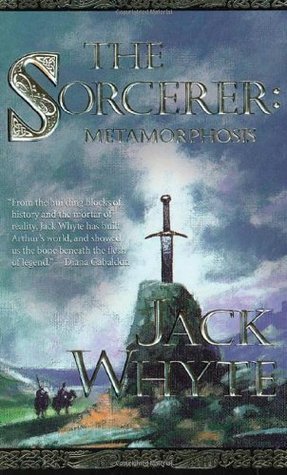
The Sorcerer: Metamorphosis, Arthur learns several important lessons about leadership through his journey towards becoming the high king of Britain.
Here’s a breakdown of the key leadership lessons from the book:
Responsibility and Duty: Arthur’s education by Merlyn Britannicus emphasizes the heavy responsibilities that come with leadership, especially the duty to defend and unite Britain against invaders and internal threats.
The Importance of Justice and Fairness: Merlyn’s overarching goal is to see Britain united under a “just, powerful king”. This implies that a true leader must prioritize justice and fairness in their rule, not just power or personal gain.
Action and Battle-Readiness: The book portrays Arthur as “battle-proven” and highlights the need for a leader to be capable of defending their people, both through strategic thinking and through direct involvement in military campaigns when necessary.
Earning Trust and Respect: While the act of drawing the sword from the stone symbolizes his right to rule, the narrative also suggests that Arthur has to prove himself through his actions to gain the respect and loyalty of his people.
Seeking Wisdom and Guidance: Merlyn’s continued guidance and role in Arthur’s education are crucial throughout the story, signifying the value of seeking wisdom and advice in leadership, even for a battle-proven warrior.
Facing Challenges and Adaptability: Arthur faces threats from within Britain and from invaders, requiring him to confront challenges and adapt to evolving circumstances as a leader.
In essence, The Sorcerer: Metamorphosis emphasizes that effective leadership, as shown through Arthur’s journey, requires a combination of justice, strength, battle experience, earning the trust of the people, seeking wisdom, and the willingness to face challenges head-on.
This sixth volume of the Camulod Chronicles follows Merlyn as he finally realizes his quest and, after Arthur successfully withdraws the Sword of Kingship from the stone, presents him as the rightful High King of Britain. 25,000 first printing.
Jack Whyte is an author and writer born and raised in Scotland, but has been living in western Canada since 1967, and in Kelowna, British Columbia, since 1996.
Whyte’s major work to date is the A Dream of Eagles series (as it is titled in Canada, but known as The Camulod Chronicles in the United States and elsewhere). This series of historical novels presents the tale of King Arthur set against the backdrop of Roman Britain. This retelling of the popular legend eschews the use of magic (as in T. H. White’s The Sword in the Stone) to explain Arthur’s ascent to power and instead relies on the historical condition (with some artistic license) of post-Roman Britain to support the theory that Arthur was meant to counter the anarchy left by the Roman departure from Britain in 410 AD and the subsequent colonization and invasion of Britain by various peoples from Northwestern Europe, including the Saxons, Jutes, Franks, and Angles). Whyte incorporates both traditional Arthurian names, places and events (albeit in gaelic or Latin form) as well as the names of various historical figures that have been suggested as being the possible basis for the original King Arthur legend. The tacit implication is that Whyte’s version of history is the true story that has become distorted over time to become the legend and stories of magic that we know today.
Jack Whyte served as the official bard of The Calgary Highlanders and performed several tracks of poetry and song on the 1990 recording by the Regimental Pipes and Drums of The Calgary Highlanders entitled Eighty Years of Glory: The Regimental Pipes, Drums and Bard of The Calgary Highlanders.
Summer is the season of blockbuster movies designed to draw enormous crowds. Since the success of “Jaws” in 1975, Americans have loved capping off a day at the beach with a spectacular film that captures their imagination, inspires them, or scares them senseless.
But as with almost everything else these days, movies can quickly become the center of a political firestorm. Nothing is safe from the culture wars. Last week on The Long View, I wrote about music. This week, movies were on my mind.
In August 1988, Martin Scorsese’s “The Last Temptation of Christ” caused a massive stir. The film was based on the 1955 novel of the same name by Nikos Kazantzakis. Scorsese optioned the book in the 1970s after receiving a copy from the actress Barbara Hershey (who ended up playing Magdalene in the movie). Paul Schrader wrote the screenplay (and some writing work by Jay Cocks as well).
When one of the greatest directors of all time, known for 1970s hard-hitting classics such as “Mean Streets” and “Taxi Driver,” released a film that depicted Jesus Christ (played by Willem Dafoe) as a real, flawed, and sexual human being, conservative religious organizations were outraged.
The movie came out in the last year of Ronald Reagan’s presidency, by which time the conservative movement had already been growing increasingly powerful for a decade. Evangelical Christians, a key part of Reagan’s coalition, reached new levels of political influence.
Movie Trailer:
Given the political times, and the subject matter, Scorsese and the studio anticipated controversy. While at one point the film was moved off the production schedule, Universal Studios moved it back on track, though with a tighter budget. During the filming, Universal enforced a closed set, using the title “The Passion” in order to protect their project from protesters. Scorsese’s publicist told the LA Times that they wanted to “throw off any possible religious protesters. The idea was to keep a very low profile.” Of course, word got out. Studio executives offered advance screenings for religious leaders in an attempt to allay their concerns. Generally, they failed to persuade. Reverend Donald Wildmon, head of the American Family Association, announced a boycott in July—though he had not yet seen the film.
New Thinking Allowed with Jeffrey Mishlove Jul 11, 2025 This video is a special release from the original Thinking Allowed series that ran on public television from 1986 until 2002. It was recorded in about 1991. It will remain public for only one week. Daniel Matt, PhD, is professor of Jewish spirituality at the Graduate Theological Union in Berkeley. He is author of God and the Big Bang and The Essential Kabbalah. Here he discusses the core teachings of Jewish kabbalistic mysticism, and describes the qualities that connect the divine being to the human being. Now you can watch all of the programs from the original Thinking Allowed Video Collection, hosted by Jeffrey Mishlove. Subscribe to the new Streaming Channel (https://thinkingallowed.vhx.tv/) and watch more than 350 programs now, with more, previously unreleased titles added weekly. Free month of the classic Thinking Allowed streaming channel for New Thinking Allowed subscribers only. Use code THINKFREELY.
ASMR’s popularity stems from its ability to induce relaxation and potentially reduce stress, anxiety, and even improve sleep through specific auditory and visual triggers. The feeling of a “brain massage” that many experience with ASMR is a compelling draw for individuals seeking a calming digital experience. Furthermore, the sense of community fostered by ASMR content and the easy accessibility of videos on platforms like YouTube and TikTok have contributed to its widespread appeal.
Here’s a more detailed breakdown:
1. Relaxation and Stress Reduction:
ASMR is characterized by a tingling sensation, often accompanied by feelings of relaxation and calm, triggered by specific sounds and visuals.
This response can be particularly appealing to those experiencing stress, anxiety, or sleep issues, providing a digital escape.
Some studies suggest ASMR can lower heart rates and potentially have mood-boosting effects.
2. Digital Accessibility and Community:
ASMR content is readily available on platforms like YouTube and TikTok, making it easily accessible to a wide audience.
The community aspect of ASMR allows viewers to connect with others who share their interest and experiences, further reinforcing the appeal.
3. Potential Mental Health Benefits:
While more research is needed, some suggest ASMR may offer therapeutic potential for conditions like anxiety, depression, and chronic pain.
The calming effects of ASMR could potentially improve sleep quality and reduce stress, making it a popular tool for those seeking mental well-being.
4. Mimicking Bonding and Grooming Behaviors:
Some researchers theorize that ASMR taps into primal responses related to bonding and grooming, as the triggers often involve gentle touch and close attention.
This may explain why some people find ASMR so soothing and comforting, as it can mimic the positive feelings associated with physical closeness and care.
This video explains why ASMR is so popular and how it creates a soothing experience:
The word is spelled kayfabe. It refers to the professional wrestling practice of maintaining the illusion that staged events, storylines, and characters are real. It can also refer to the broader concept of pretending something is genuine when it is not.
Elaboration:
In Professional Wrestling:Kayfabe is the code of secrecy and performance that wrestling maintains, where wrestlers act as if their rivalries, injuries, and matches are genuine, even though they are scripted.
Beyond Wrestling:The term has also been used in other contexts to describe the act of maintaining a pretense of reality, even when it’s known to be a fiction.
Breaking Kayfabe:When a wrestler publicly acknowledges the scripted nature of wrestling, it’s called “breaking kayfabe”.
Etymology:The origin of the word is uncertain, but it is believed to be derived from carnival slang or pig Latin.
Examples:A wrestler refusing to break character backstage or a company releasing behind-the-scenes footage that reveals the scripted nature of wrestling could both be examples of breaking kayfabe, according to a YouTube video.
“Dancing is a vertical expression of a horizontal desire.”
–Blindboy
Novara Media Premiered Jul 6, 2025 Ash Sarkar in Conversation with William Dalrymple https://dice.fm/event/92dq5d-downstre… Support our work: http://novara.media/support Blindboy is an artist, podcaster, and author. His storytelling style weaves anti-colonial histories with perspectives on modern masculinity, politics, and mental health, all cut with an absurdist sense of humour. In public Blindboy wears a mask made from a plastic bag, maintaining anonymity while developing a cult following as a podcaster. In this interview, Blindboy delves into the historical connections between Ireland and Palestine, going as far back as the 1920s when the two countries were occupied by the same units of the British army. How has this history shaped the politics of Irish rap group Kneecap? And how are anti-colonial folk songs being misappropriated by the far-right in Ireland today? 00:00 Intro 05:27 Trump And Professional Wrestling 10:53 Social Media Is Changing How We Connect 15:51 How Dating Is Changing 29:43 The Magdalene Laundries 36:11 How Sex Ed Is Changing 46:10 On Wearing The Mask And Escaping The Pitfalls Of Fame 54:28 Masculinity 1:07:48 Hip Hop And Performative Aggression 1:13:40 The Trials of Kneecap 1:30:02 The Irish Far-Right
Consciousness, spirituality, biography, sexuality, androgyny, futurism, space, the arts, science, astrology, democracy, humor, books, movies and more